



Abstract
In this article, I use the concept of ‘plant-people intimacies’ for the social-mediated web of cognitions, rituals, affects and embodied memories that connect some human groups and some plant species. I test the concept in the transformed landscapes of plantation Hawai‘i, where sugar canes, pineapples and other crops replaced the traditional taro gardens and displaced their human gardeners while producing a multi-ethnic population with migrant workers-settlers. I will analyse how evocations of special bonds to some crops among diasporic persons express a vegetal nexus with ancestral geographies and act as a code to negotiate social and historical positionalities.
Plant-people intimacies
In this article, I use the concept ‘plant-people intimacies’ for the web of cognitive, behavioural, emotional, ritual, routinized and imagined entanglements of peoples and plants that emerge in a variety of contexts – from indigenous ecologies to the colonial plantations that destroyed and displaced them, from the kitchen gardens of plantation labourers to the crops of maroon settlements, from today's industrial agribusiness to biodynamic reparative farming. The analytical relevance of ‘intimacies’ is multifold. Productively used for transcontinental connections by Lisa Lowe (2015), ‘intimacies’ will in this article synthesize the material, social and symbolic co-production of plants and peoples, under the analytical framework of ‘plant-anthropo-genesis’ (Introduction to this issue; Bastos and Heath, forthcoming).
I shall test the concept of plant-people intimacies in the context of plantation Hawai‘i, where sugar canes and, in a lesser degree, pineapples, with their owners, labourers, managers, investors, markets, machineries, technologies, and ideologies replaced the traditional Hawaiian taro gardens and displaced their Hawaiian gardeners. With the transformed landscapes of sugar monocrops and their mills and, later, pineapples and their canneries, also came the transformed social landscapes of settler Hawai‘i. Plantations, mills and canneries were mostly owned by the ‘haole’ class of White, protestant missionaries who settled in Hawai‘i in the first half of the 19th century for evangelizing purposes and soon expanded their mission into the economic and political spheres. As for the labour hands and bodies, they belonged to people who came from a variety of places – China, Japan, Portugal, and, later, Korea, the Philippines, and Puerto Rico (Bastos 2018, 2020; Beechert 1985; Dusinberre 2019; Jung 2010; Labrador 2015; Takaki 1983). The plantation produced them as ethnicities, divided and hierarchized. Their descendants – who eventually intermarried and now claim multiple identifications – celebrate ancestrality and often engage in genealogical and genomic research to assess who they are. This is well illustrated in the case of the Portuguese of Hawai‘i, whose ancestors came to the archipelago as contract labourers in the late 19th and early 20th centuries, mostly from the Atlantic islands of Madeira and the Azores (Bastos 2018, 2020; Correa and Knowlton 1982; Curammeng 2018; de Mattos 2022; Felix and Senecal 1978; Ponta-Garca 2018). I will describe how they became one of the distinctive local groups of Hawai‘i – along with the Japanese, the Chinese, the Filipinos, and others – and reflect on their expressions of intimacy with sugar canes and pineapples. 1
Plant-produced humans
Exploring plantation legacies helps illustrating how human-plant interactions are not solely about the domestication of plants by humans, but also about the domestication of humans by plants; in other words, while humans produce plants via agriculture, plants produce people via the plantation – first as labour, then as race (Bastos, forthcoming). Sugar canes, pineapples, coffee, cocoa, cotton, and other plants, through the enslaved, indentured, contracted or precarious labour of humans, generate ranks, ethnicities, racializations, cognitions and collective histories. 2
Sugar better epitomizes how a plant species shaped human ‘races’. In the Caribbean-American world, sugar plantations created ‘Blacks’ out of the enslaved labourers originally from Africa and ‘Whites’ out of the plantation owners originally from Europe. It also produced ‘browns’, ‘yellows’ or ‘coolies’ out of the indentured labourers that later came from Asia. In the words of sociologist Edgar Thompson, the plantation is itself a ‘race-making situation’ (Thompson 1975, 115). Or, to use a contemporary concept, a race-making device. So efficient a device, I argue, that it keeps generating and sustaining social inequalities as racialized categories well beyond its original format which produced blackness out of enslaved labour. After abolition, beyond the Black/White racialized hierarchy created by the system, the plantation kept producing hierarchies that were reinforced by pay-scales, management techniques, and ideologies of race that often came in colours and expressions of prejudice. The process was also at work in Hawai‘i, even if submerged under the ideology of a ‘multi-racial paradise’ thematized by Robert Park's disciples Romanzo Adams (1937) and Andrew Lind (1938).
Some analytic tendencies on plant-people dynamics
My argument is aligned with recent developments in human-plant studies in the disciplines of ethnobiology, STS, and anthropology, which moved away from the traditionally anthropocentric readings of the domestication of plants by humans and embraced a dynamic analysis of the co-production of people and plants through social, historical, political and economic processes.
Ethnobiology provides a number of examples of how human-plant interactions exist beyond the material domestication of plants and involve complex systems of care, love, appraisal, identification and knowledge transmission in different contemporary, historical, and archeological periods, be it with cereals, fruits, seaweed, firewood specimens or others, be it in plantation, post-plantation or counter plantation societies (Doumecq et al. 2023; Fowler 2005; Gonçalves et al. 2022; Kahn and Lepofsky 2022; Ostraff 2006; Parra, Folchi and Simonetti 2019; Steward and Lima 2017). The articles included in this special issue ‘plan-anthropo-genesis’ engage in a further level of analysis of plant-people co-production (Blickstein 2024; Flachs 2024; Macedo 2021; Maurer 2024).
On another front, the convergence of anthropology and STS developed a multi-species angle addressing today's complex interactions of humans, plants, animals, pests, fungi, chemicals, knowledge, economies and environments all through the planet, from the intensive monocultures of palm, soy, canes, fruits and flowers, to the labs where they are managed, the fields of human abandonment or resistance, the creative restorative cultures, the future scenarios of re-arrangement of species (Battaglia 2017; Bray et al. 2019; Chao 2021; Chao, Bolender and Kirksey 2022; Haraway 2015; Hetherington 2020; Macedo 2021; Paredes 2023; Tsing et al. 2017; Wolford 2021).
In matters of human-plant interactions, anthropology has come a long way from its mid-twentieth-century ethnographies depicting the rituals, prayers and emotions of south-sea islanders in their yam gardens (Malinowski 1935). Suspended in time and space for ethnographic enchantment, those gardens and their magic were being jeopardized then and there by the plantation system – an entity that only entered the discipline later in the century (Curtin 1990; Mintz 1985; Stoler 1995; Thompson 2010; Wolf 1982). It came to stay, however, and now a vibrant body of scholarship addresses plantations, their afterlives, the plantationocene, the counterplantation initiatives and the restorative practices of biodynamic agriculture (Chao 2022; Haraway 2015; Heath 2023; Ishikawa & Soda 2020; Le Petitcorps, Macedo & Peano 2023; Li and Semedi 2021; Mitman 2019; Paredes, Chao and Araya, forthcoming; Thomas 2019).
Human-plant landscapes of settler Hawai‘i
The predicaments of Hawaiians under plantation-oriented settler colonialism, their tormented dispossession, the struggle for sovereignty, the Kanaka maoli nativist movement, and the special bond with traditional plant species like taro, breadfruit, sweet potato, and others, are the subject of a rich body of scholarly and activist literature (Goldberg-Hiller and Silva 2015; Kauanui 2008; Okihiro 2009; Osorio 2002; Schweizer 2005; Silva 2004).
There are also extensive bodies of literature on the dynamics and politics of the sugar economy in Hawai‘i (Jones and Osgood 2015; Kessler 2015; MacLennan 2014); on the making of a multi-ethnic labour force (Beechert 1985; Jung 2010; Lal, Munro and Beechert 1993; Merry 2003; Takaki 1983); and on the different groups of ethnic/national reference formed in plantation Hawai‘i, like the Japanese (Dusinberre 2019; Okamura 2014; Okihiro 1991), the Chinese (Lutz 2009), the Portuguese (Bastos 2018; Correa and Knowlton 1982; Felix and Senecal 1978), the Filipinos (Labrador 2015; Teodoro 1981), the Puerto-Ricans (Lopez 2005; Poblete 2012).
Yet not much is known about the bonds between those groups and the living environment in which they settled and which they shaped through their labour and their existence. Most works on the Portuguese, Japanese, Chinese, Filipinos and other labouring settlers account for their heritage, migration history, cultural practices, social achievements, but not for their intimacies with plant species. This article will address that subject and explore what it tells us about shared identifications and representations of diasporic connections symbolically mediated by plants.
The Portuguese of Hawai‘i
The Portuguese of Hawai‘i mostly descend from the Madeiran and Azorean islanders who joined Hawai‘i's plantation labour force between 1878 and 1913, during the last period of Hawaiian monarchy and the early period of annexation to the United States (Bastos 2018; Caldeira 2010; de Mattos 2022; Felix and Senecal 1978; Miller 2020). They formed a distinct ethnicity in a society that has long been represented as multi-racial or multi-ethnic (Adams 1937; Anderson 2012; Lind 1938; Lee and Baldoz 2008).
Contrary to what happens with the Portuguese-descent communities that emerged as a consequence of Early Modern transoceanic travels and conquest, the Portuguese of Hawai‘i are a labour-related diaspora, like others in New England, California, post-independence Brazil, or the Caribbean (Collins-Gonsalves 2020; Newitt 2015; Williams 2007). Like other groups, the Portuguese were recruited by Hawai‘i's Board of Immigration and the Sugar Planters Association to provide a steady contingent of labourers for the rapidly growing, labour-devouring sugar economy, while also fulfiling the aim of re-populating an archipelago whose indigenous population, ever since the first contacts with Europeans in 1778, was under a dramatic decline linked to diseases, distress and displacement (Daws 1968; Inglis 2013; Kuykendall and Day 1976; Miller 2020; Okihiro 2009).
Hawaiian royals and missionary-descent planters favoured the recruitment of East Asians and Europeans as workers and future settlers: Chinese, Japanese and Portuguese groups became the main labour force, with contracts that challenge the traditional analytic categories of ‘indentured labourers’ and ‘free migrants’ (Coman 1903; Miller 2020). There were also, but in smaller number, contingents of workers from the South Pacific islands, from Russia, and from European nations like Spain, Germany, Norway and Sweden. None of them settled for good as a distinct local group like the Portuguese, who by the turn of the 20th century were about 12% of the population counted in the census of Hawai‘i (Forstall 1966).
Sponsoring Portuguese migrants could be an expensive endeavour, due to their double oceanic journey, their demands regarding travelling in families, and their relatively higher pay. But a number of factors weighted in their favour, whether emerging from a racialist calculus to counterweight the Asian presence, or from particular circumstances, like the role of King Kalākaua's adviser Wilhelm Hillebrand, who lobbied for Madeira after visiting the island and finding the striking similarities with Hawai‘i (Caldeira 2018; Meier 2005), or the influence of an earlier community of Portuguese-born whalers and sailors who had jumped ship in Hawai‘i (Caldeira 2010; Felix and Senecal 1978). Moreover, Portuguese Atlantic islanders had a long tradition of long-distance migration (Newitt 2015; Williams 2007).
After their three- or five-year contracts in the sugar plantations, many Portuguese Madeirans and Azoreans settled for good in the islands of O‘ahu, Kaua‘i, Maui and Hawai‘i. Some remained in the fields, whether working in large plantations, ranches, or homesteading as small or medium-scale farmers. Others embraced commerce, industry, construction, services, education, health, office jobs, business and other white- or blue-collar activities. Many of their descendants cultivate Portuguese heritage with pride, promoting community centres, solidarity associations, genealogical societies, religious feasts, non-religious festivals, foods, monuments, symbols and publications (Bastos 2020; Punchbowl 1991). The number of those claiming part-Portuguese descent is immense in contemporary Hawai‘i, where multiple belongings and combined heritages predominate over claims of single-descendancy (Bastos 2018; de Mattos 2022; Ponta-Garca 2018).
In the Hawaiian kingdom period and early years of annexation, the Portuguese fell under the odd category of ‘caucasian but not White’ (Geschwender, Carroll-Seguin and Brill 1988; Lassale 2016). For decades, the census categories kept changing to accommodate those ethnic Whites – as opposed to the ‘true White’ Anglo-descendants, supposedly free of colour and of ethnicity. As Geschwender, Caroll-Seguin and Brill argue (1988), the Portuguese were positionally not White precisely because they came as work force; whiteness was, like in the Caribbean and the Americas, reserved for the class of plantation owners – class spoke in colours. Along those lines, the local Portuguese were like off-White – White enough to be coopted for voting or engrossing statistics, when convenient, as it happened with at the time of the ‘republic of planters’, but still ‘ethnic Whites’, that is, not quite, and definitely not haoles (De Mattos 2022; Daws 1968; Rohrer 2010, 40, 55–6). Only in the 1940 census did the Portuguese become classified as simply White.
The history of the Portuguese who moved to Hawai‘i was enmeshed in the history of sugar: With sugar's needs of human labour, with its practicalities, its politics, its history and its agency in shaping the conditions of humans. Sugar produced them as a local group, labelled Portogee, pocho, pukiki, or simply Portuguese (Bastos 2019). Sugar remained on their horizon when they moved out of the cane fields; and for Madeirans, that horizon was also projected to the past, as a long-lived historical intimacy with the plant. Interestingly, a parallel intimacy is echoed in the Azorean diaspora for pineapples. Chronologically later than sugar, economically lesser than sugar, but symbolically prominent up to our days, pineapples are the second main crop of plantation Hawai‘i. And, in original ways, pineapples were at some point inscribed in Azorean collective identities too.
The connection with sugar canes and pineapples evoked by Madeirans and by Azoreans functions as an identifier that establishes nexuses across geographies and histories, bringing together the three archipelagoes (Madeira, Azores, and Hawai‘i). The actual historical trajectories of those plants across the globe deserve further attention, and, in the next sections, I will address the routes of sugar and pineapples as plants, crops and commodities in and out of Hawai‘i, Madeira, and the Azores, looking both at their vegetal history and at the ways in which they produced culture, social relations, hierarchies, affects, identifications.
The travels of sugar canes
Plant historians converge in locating the early domestication of sugar canes in the South Pacific area, roughly corresponding to what is today New Guinea. Domesticated canes made their way to Hawai‘i via two major different routes: through the Pacific, along the travels of those who became the Hawaiian islanders; and, much later, through the long westward route via Asia, the Mediterranean, the Atlantic, the Americas (Kessler 2015; MacLennan 2014; Mintz 1985; Okihiro 2009; Vieira 2004).
The Polynesian travellers who brought the kō sugar canes (Saccharum officinarum) to Hawai‘i, along with taro, breadfruit, sweet potato, pigs, and other plants and animals, are believed to have crossed the Pacific from Tahiti and the Marquese Islands, in the southern hemisphere, all the way to Hawai‘i, back and forth, until when, about 1000 years ago, those travels were discontinued. Humans and other living species that settled in Hawai‘i remained on their own for centuries; if there were Asian or Iberian vessels passing by, as some speculate, they had no consequence (Daws 1968; Okihiro 2009).
The situation was disrupted by the arrival of the British fleet led by Captain James Cook in 1778 on the quest for the Northern passage connecting the Pacific and the Atlantic. That passage was nowhere to be found, but the contact between Hawaiians and the British crew became a historical landmark of massive consequences. Renamed Sandwich Islands by the British, the archipelago turned into a regular stop-over for whalers and traders from everywhere and a land of mission for Christians. With the incoming humans also came new species and new diseases, some of them with devastating effects on the local population (Inglis 2013). In the meantime, the archipelago was politically unified in 1795 (with Kaua‘i joining only in 1810) by the armies of King Kamehameha, originally a local chief in the island of Hawai‘i (Big Island). His dynasty lasted until the death of Kamehameha V in 1872. After that, by election, followed king David Kalākaua and, for a brief period after his death in 1891, his sister Queen Lili‘uokalani, defeated in 1893 by a republic of planters that would ultimately promote the annexation to the United States in 1898 (Coffman 2016; Kuykendall and Day 1976).
At least since the death of Kamehameha I (1819), the traditional kapu (tabu) system that structured life and society started giving way to foreign influences and to Christianity (Creager 1991). As in other places, Catholics and Protestants competed for local souls; and while there were several Catholic missions in Hawai‘i, with French, Belgium and Portuguese clergy, the US Protestant influence predominated, both over the spirits and worldly matters of politics and business. There were some alliances, marriages and joint ventures between the class of White US protestant missionaries (haole) and the Hawaiian aristocracy (ali‘i). The society and economy changed over time and eventually even some of the tools meant to keep the land for Hawaiians – the great mahele, or land partition – ended up facilitating the new economic order of the plantations (Okihiro 2009). In a few decades, Hawai‘i turned into a sugar paradise – and nightmare.
The new sugar economy relied on canes that had travelled all around the world, from their original South Pacific site to Asia, from there to the Mediterranean, and then the Atlantic, including the Caribbean and Brazil, and finally the Pacific. Along the way, sugar canes were transformed and co-evolved with humans who in the process were domesticated, captured, enslaved, bonded, or contracted to be their caretakers and tenders, cultivators, cutters, threshers, carriers, gang masters, supervisors – not for their own joyful consumption, as with ko, or taro, or yams, but for the tables, pantries, pastries and rum shops abroad, and to the profit of owners and investors.
A peculiar moment for sugar canes: Madeira and the ‘birth of the modern plantation’
From their original place of domestication and humanization in Oceania, sugar canes made their way to continental Asia and lived there productively for many centuries (Bosma 2023). Their sugary content travelled to the Mediterranean as a rare commodity, a spice, a medicine; later, the canes would themselves travel and settle all through the Mediterranean, from Palestine and Egypt to Iberia and Sicily (Galloway 1977; Okihiro 2009). But it was on the Atlantic Island of Madeira that sugarcanes became agents of something entirely new. For a short historical moment, in the late 15th and early 16th centuries, Madeira was, according to some historians, the setting of a most transformative process in history: The birth of the modern plantation (Greenfield 1977; Moore 2009). It was there that a particular combination of technology, capital, and enslaved labour was adopted and later replicated as a dispositive of generating immense wealth for some, at a cost of immense pain for others, on top of a brutal impact on the landscape.
The archipelago, composed of the main island of Madeira, the smaller Porto Santo and a few rocky islets, had no people when encountered by Portuguese sailors in the early 15th century (as opposed to the Canaries, who had an indigenous Guanche population). Madeira was settled mostly with men and women from mainland Portugal under a feudalist model of land use, which perpetuated a very rigid, pyramidal society with the landed gentry on top and landless labourers at the bottom (Branco 2019; Greenfield 1977). In a short span of time, Madeira's ‘sugar revolution’ transformed the island; at play was the combination of capital from Northern Europe, expert mill knowledge from local masters, and enslaved labour from the Canaries, from the Berber coast and from Sub-Saharan Africa (Greenfield 1977, 537, 545–6). Between 1494 and 1500, the number of working mills in Funchal jumped from 16 to 150 (Greenfield 1977, 546). Soon, the forests that provided the fuel for the engines were exhausted (Moore 2009). The ecological limitations of the islands were evident. The business moved elsewhere.
From Madeira the sugar plantations moved to the Spanish-ruled Canary islands and the Portuguese ruled São Tomé, and most successfully to Brazil and to the Caribbean, where a variety of European merchants and traders settled in search of wealth, where indigenous peoples were displaced or annihilated, and to where the traffic in enslaved Africans brought the main labour force. The Caribbean and Brazil represent the maximalist version of the sugar plantation system in what it produced social inequalities and naturalized social hierarchies as ‘races’. Other plant-commodities like coffee, cotton, tobacco, cocoa, etc., replicated the ways of sugar in producing hierarchized societies. For the sake of sugar production, people were bought and sold, chained, flagged, tortured, raped, brutalized, de-humanized and casted as naturally inferior. The plantation's fragile ecosystem depended on violence, both physical and ideological. After Abolition in the British empire (in 1808, with full Emancipation in 1833–1834) there were new arrangements regarding plantation labour and different contingents of labourers were brought in – above all from India, in some extent from China, occasionally from the Portuguese Atlantic islands. By then, ‘race’ had become currency in commerce, in philosophy, in society. Asians became ‘coolies’, metaphors of slavery and race pervaded, and groups accommodated one another in different ways, depending on local circumstance (Carter and Torabuly 2002)
Madeirans, in the meantime, kept sugar in their habitus, up to our days (Figure 1), and long after another crop – the vineyards – moved in and took most of the island. With the vineyards came the British merchants, the routinized connections with the British Caribbean, and, in the mid-19th century, what became a route of escape from Madeira's years of famine: the Guiana plantations in Post-Emancipation times (Bastos and Spranger 2021; Bastos 2023; Mello 2023).
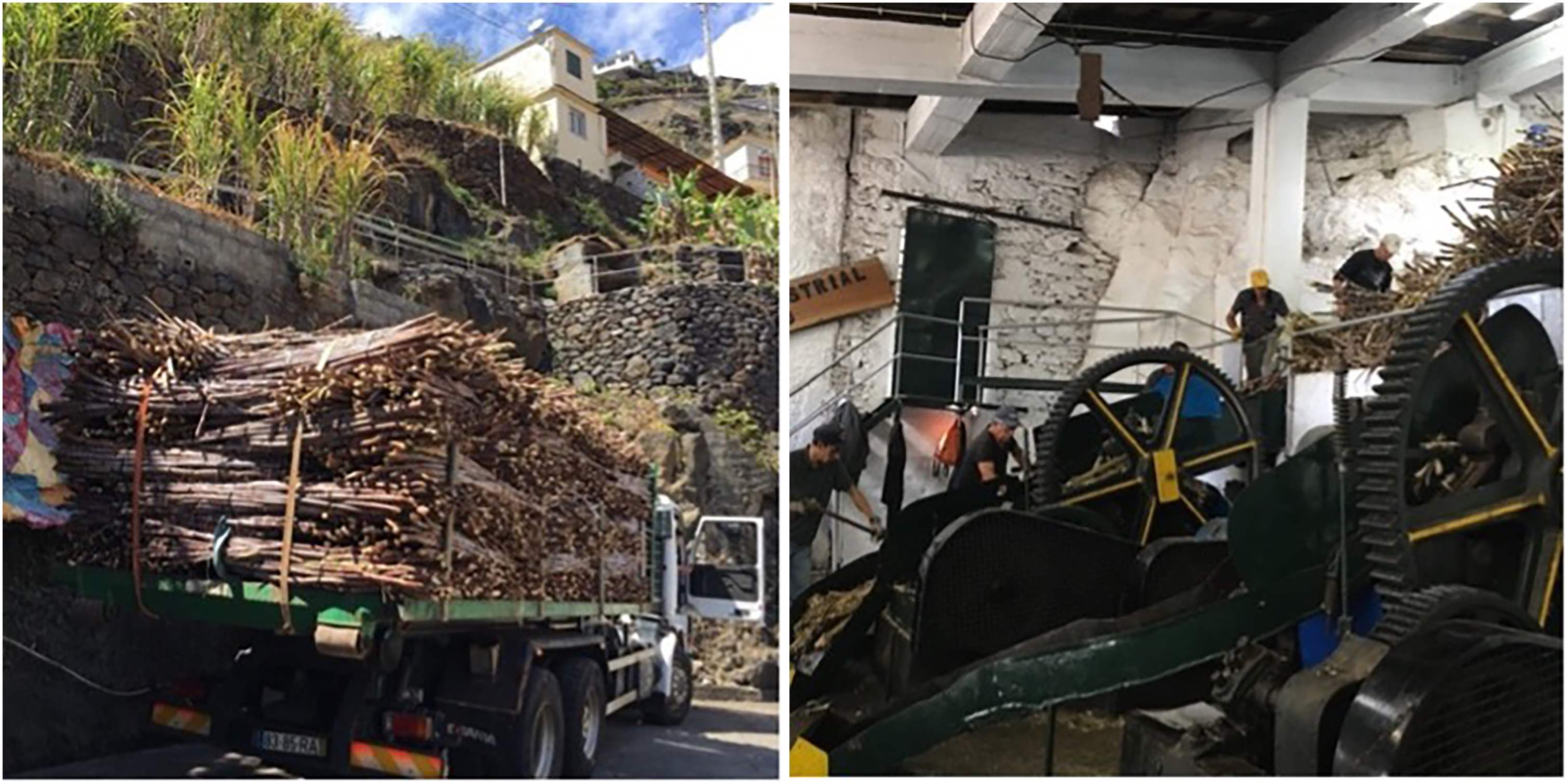
Contemporary small-scale sugar processing in Engenho da Calheta, Madeira: Transporting the canes and threshing operations (photos by C Bastos, 2019).
Perhaps no place like colonial Guiana illustrates the ways in which the plantation produces people, first as labour, then as race. After centuries of Dutch and British planters and enslaved African labourers, Guiana plantations mobilized new contingents pf workforce and produced inequalities to which racialist ideas were attached; British Guiana (later Guyana) became the land of six races –Black, White, Amerindian, Indian, Portuguese and Chinese. 3 The flexible positionality of the Portuguese in the racialized system gave them relative privileges of whiteness – e.g., getting credit for business and displacing Africans in commerce (Collins-Gonsalves 2020; Laurence 1965; Mello 2023; Moore 1975). Over the years, Madeirans became traders of rum, dry goods and all types of merchandise; they evolved as a prosperous community that attracted more people from Madeira directly to business and commerce (Collins-Gonsalves 2020; Mohamed 1993; Williams 1991). Sugar canes had brought them there in the first place, and related businesses kept bringing more. The process generated a distinct and wealthy group of Portuguese in Guiana, one that was near whiteness but, by definition, not White – a sort of off-white, in the colourizing terminology of our days. Such colourized positionality coincides with the one the Portuguese in Hawai‘i found themselves: Caucasian but not White, White but not haole, and other enunciations of not-quiteness. Sugar labour was inscribed on their skin, and skin, in the plantation hierarchies, was a metonym for class.
Pineapples
The trajectories of pineapples at the hands of humans were very different from those of sugar canes – and so was their impact on the shaping of human societies. Originated in South America, a variety of bromeliaceous that was possibly domesticated by Tupi-Guarani peoples, the pineapple (anãnã) moved through the continent and made its way to the hands of Christopher Columbus in his 1493 voyage to Guadeloupe (Beaumam 2006; Levitt 2014; Okihiro 2009). At a time when sugar canes had already travelled widely around the globe and were about to settle in the Caribbean, transforming the entire human society, pineapples had remained ‘South America's little secret’ (Beaumam 2006, ii). They became part of the vegetal component of the Columbian exchange: Columbus himself brought the pineapple to the royals of Spain, most likely as a crown or sprout growing in a vase aboard the vessel. 4 A royal aura was added to the exquisite fruit – perhaps as a consequence of having crossed the ocean as a royal gift (Beaumam 2006; Okihiro 2009, 163).
Pineapples became a synonym of exquisiteness and luxury in the Modern Age. Now the fruit connected several continents through taste, demand, money, enterprise, as a commodity, a luxury, a symbol, an extravaganza, a plantation, a market, an industry, a job, a memory. Porcelain pineapple holders became fixtures in high-class settings, and so did pineapple motif decorations of tea sets and furniture (Figure 2(a)). Britons and Germans had become fascinated with the exquisite tropical fruit and attempted to grow them in greenhouses since the 18th century (Levitt 2014). A Dunmore gigantic pineapple stands above the landscape in the Dunmore pineapple house in Scotland (Figure 2(b)).
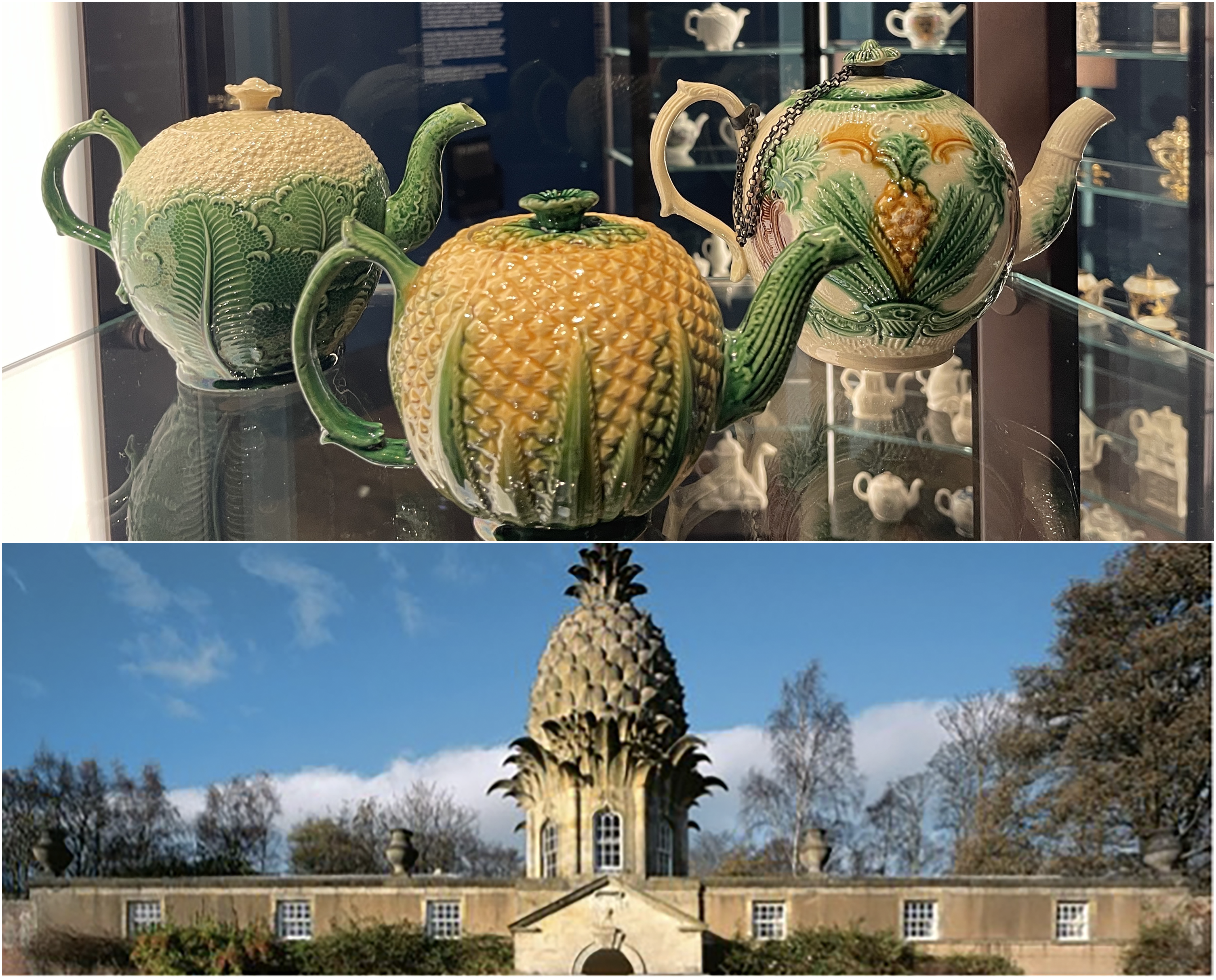
Eighteen-century pineapple art in Britain: (a) glazed earthenware pineapple and cauliflower teapots by Staffordshire potter Thomas Whieldon (Metropolitan Museum of Art, New York, photo C. Bastos, 2023); (b) Pineapple House, Dunmore, Scotland (Source: https://www.nts.org.uk/visit/places/the-pineapple).
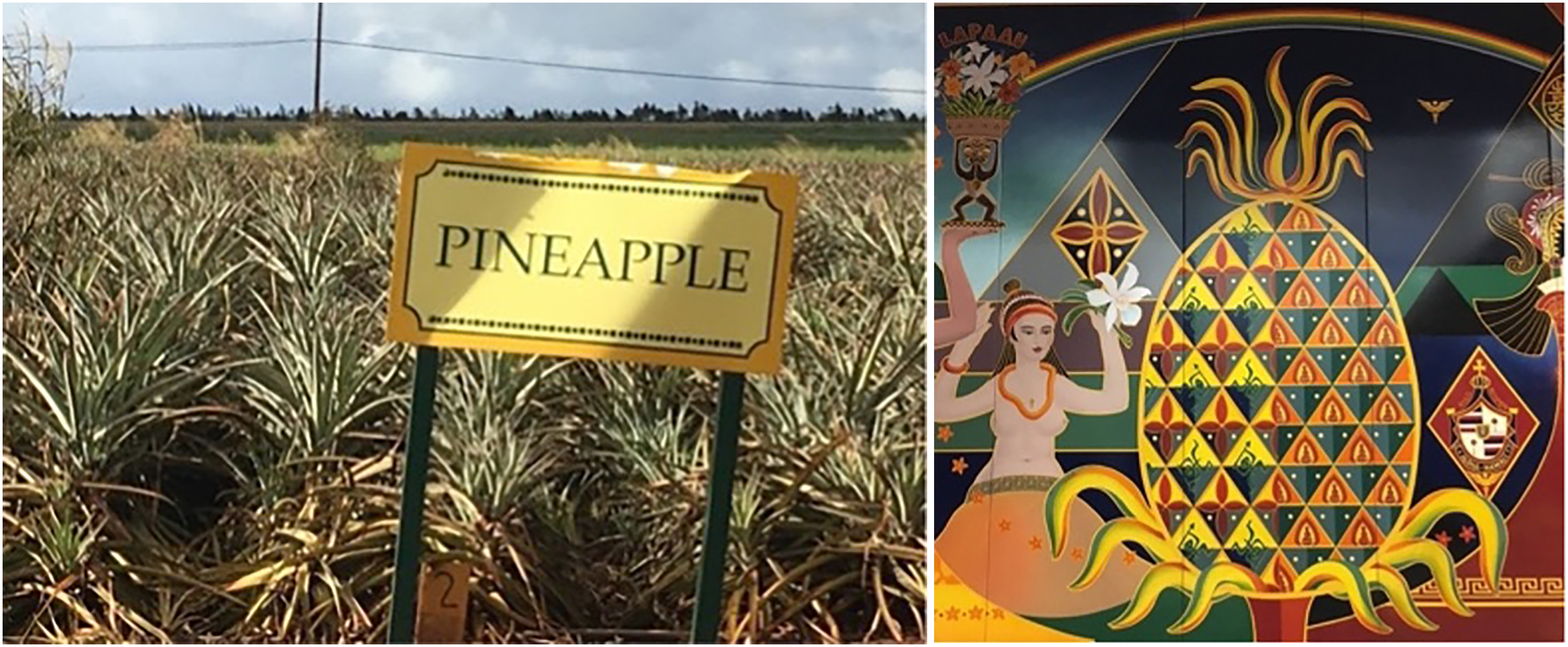
Pineapples in Hawai‘i: (a) Pineapple fields as seen from the ‘Pineapple Express’ train ride at Dole Plantation in O‘ahu (photo C Bastos, 2017); (b) pineapple detail, Hon Chew Hee's mural History of Medicine, Hilo Medical Center (photo of detail C Bastos, 2018).
How did pineapples make their way to Hawai‘i (Figure 3)? It is not impossible that the fruit travelled in some form in Polynesian vessels that crossed the Pacific much before the Europeans did so, but there is no account of it. The earliest date recorded for its arrival is 1813, brought by the Spaniard Francisco de Paula Marín (Beaumam 2006; Hawkins 2011; Okihiro 2009). There were brief attempts of cultivating it for commercial purposes, especially during the gold rush in California (Beaumam 2006; Hawkins 2011, 6). Pineapples were not an easy export; if picked green, they do not ripe; if picked ripe, they may go bad. Yet they can be preserved – in cans. It was the technology of canning that enabled the Hawaiian pineapple production and its brilliant career in the overseas market, especially in the United States. But that did not arrive easily either: there was competition, tariffs, and a yet restricted market (Hawkins 2011, 6, 13–14). One extra step was needed for success: creating an expanded mass of consumers. Marketing became the key.
Pineapples, cans and advertising came together at the hands of James Drummond Dole – the person most credited for putting Hawaiian pineapples in the world and bring the world's desire and demand to Hawaii's pineapple plantations and canneries (Beaumam 2006; Hawkins 2007, 2011; Okihiro 2009). Dole is said to have come from Boston to Hawai‘i in 1899 with the plans of planting coffee, a crop that had proven quite rewarding all through the plantation world and the stock markets, but one that did not work for him in Hawai‘i; however, his experiment with pineapples excelled (Hawkins 2007). He merged pineapples and cans into a single entity, one that was promoted to an expanded universe of potential consumers abroad – much beyond the niche market of extravagant luxury in which the pineapple had lived in the temperate zones. ‘The modern pineapple industry of Hawai‘i was a product of its times’, analyses Gary Okihiro, ‘when modernity and consumer society engrossed the domestic core and colonialism engulfed the tropical peripheries’ (2009, 155).
Pineapple plantations never got the dimension of the sugar plantations in Hawai‘i – they were less in number, in size, in extension, in production volume, in ecological impact, and demanded less from labourers. Labour was seasonable and more amenable than in the cane; workers were now associates of machinery that at once liberated them from backbreaking actions but also disciplined them (Okihiro 2009, 140). Sugar paved the way for the pineapples not solely by providing the syrup needed for canning, but by enabling the recruitment of pineapple workers among those working in sugar plantations (Okihiro 2009, 132, 136, 143).
A parallel and contrasting history of pineapples evolved in the Azores. Like Madeira, the Azores had been colonized mostly by people from mainland Portugal under a rigid social hierarchy. The western islands were connected to long-distance maritime trade and whaling; Azorean men were crew in many of the whalers that cruised the oceans (Williams 2007). The main and most fertile eastern island of São Miguel was more oriented towards agriculture and had gone through a sequence of monocrops, including sugar, wheat, woad, and oranges; the latter were a prosperous business as an export to Northern Europe and a supply to passing vessels (Dias 2008). However, as plagues devastated the orange orchards in the mid-19th century, and the local economy collapsed, producers searched for alternative crops in coffee, tobacco, tea, and pineapple. Pineapple was potentially most lucrative, exported to the high-end market of the British Isles, the traditional purchasers of São Miguel's oranges; British consumers, which included the royals, were ready to pay a high price for the ‘king of fruits’ (Beaumam 2006; Dias 2008, 75–8).
Not being a tropical island, but benefiting from very fertile volcanic soil, São Miguel became an experimental station of greenhouses for pineapples, starting in 1864, oriented to export (Dias 2008, 75). Agriculturalist organizations gathered the producers and shared information on the cultivation techniques and commercial potential of the new plant. Rather than large-scale plantations, the Azorean production of pineapple was conducted in small to medium farms and required a combination of locally developed technologies that involve a number of expert, time-consuming procedures: The making of plant-based organic compost beds, transplantations, cutting of leaves, growth under white-washed glass greenhouses and – what came out of a serendipitous discovery – the use of plant-based smoke inside the green-house. Estufeiros, or the pineapple greenhouse crop experts, became highly demanded skilled labourers.
All through the 20th century, São Miguel's farmers and politicians promoted and protected ‘their’ pineapple, ananás, produced in greenhouses and subject to a complex sequence of operations that take a two-year cycle to produce a full-bodied, highly aromatic and tasty roundish shaped fruit. The process and the fruit contrast with the open-air grown, larger tropical pineapple, abacaxi, regarded as inferior to the eyes of Azorean producers. However, the less costly abacaxi ultimately won the global markets, leaving the Azorean ananás to a niche of luxury that echoes its past glamour, when it was exported in custom-made cases decorated with creative labels that advertised it as the best in the world (Figure 4).
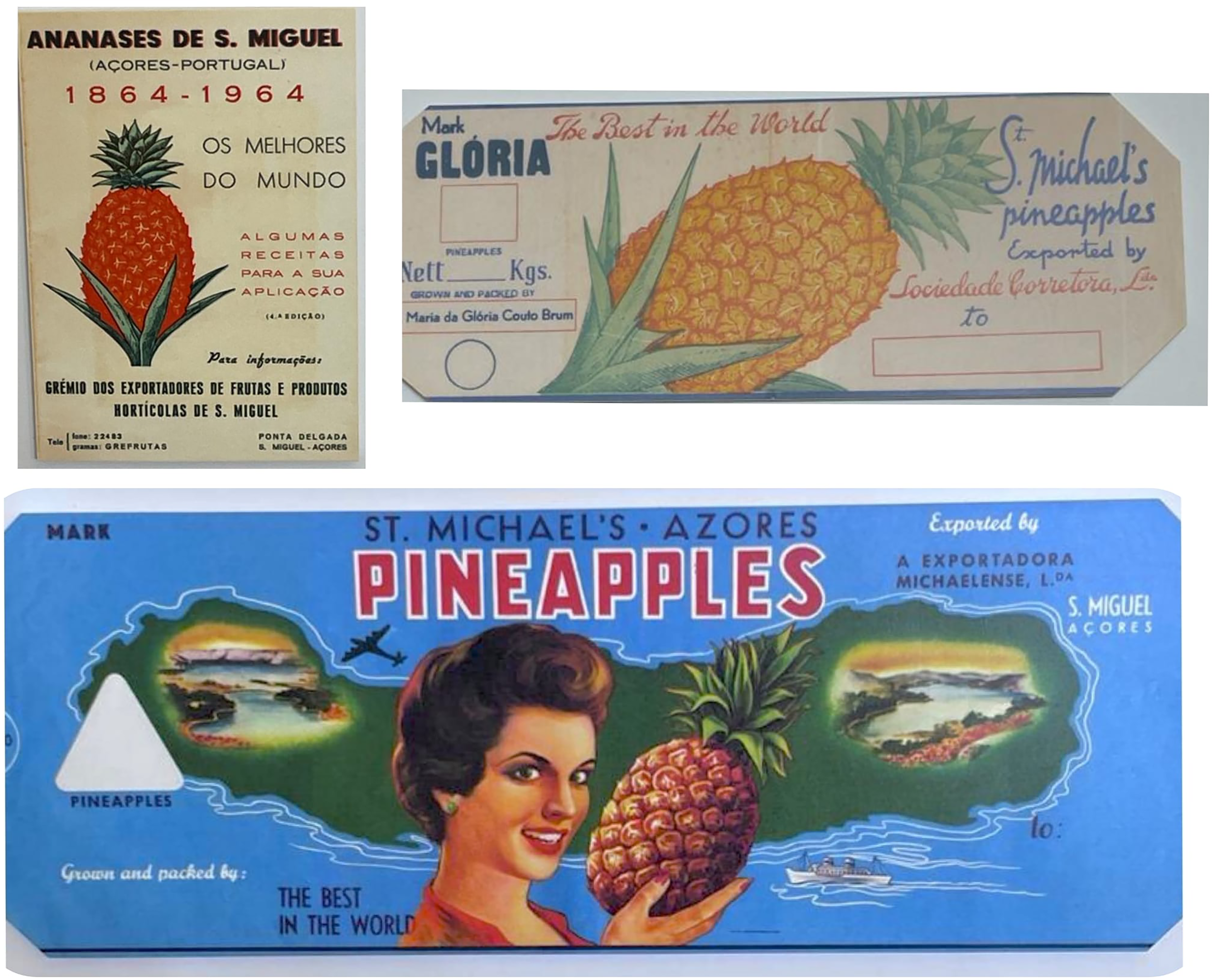
‘The Best in the World’ – early 20th century advertising for São Miguel's pineapples (source: Center for the Interpretation of Pineapple Culture, São Miguel, Azores, photos C Bastos 2022).
Today, the pineapple economy in the Azores is quite fragile, and the iconic glass houses of São Miguel (Figure 5), now classified landmarks, can only be maintained with the support of public funds (Dias 2008). Still, the symbolic power of the Azorean pineapple is immense and highly entrenched as a local emblem, a source of pride, a symbol that made their way to local heraldic and to a myriad of merchandising products, a decorative motif that appears inscribed everywhere – from cobblestones, cement pavements and painted murals to glassware, silverware, woodcarvings, cloth, tiles and tattoos (Bastos and Heath forthcoming).
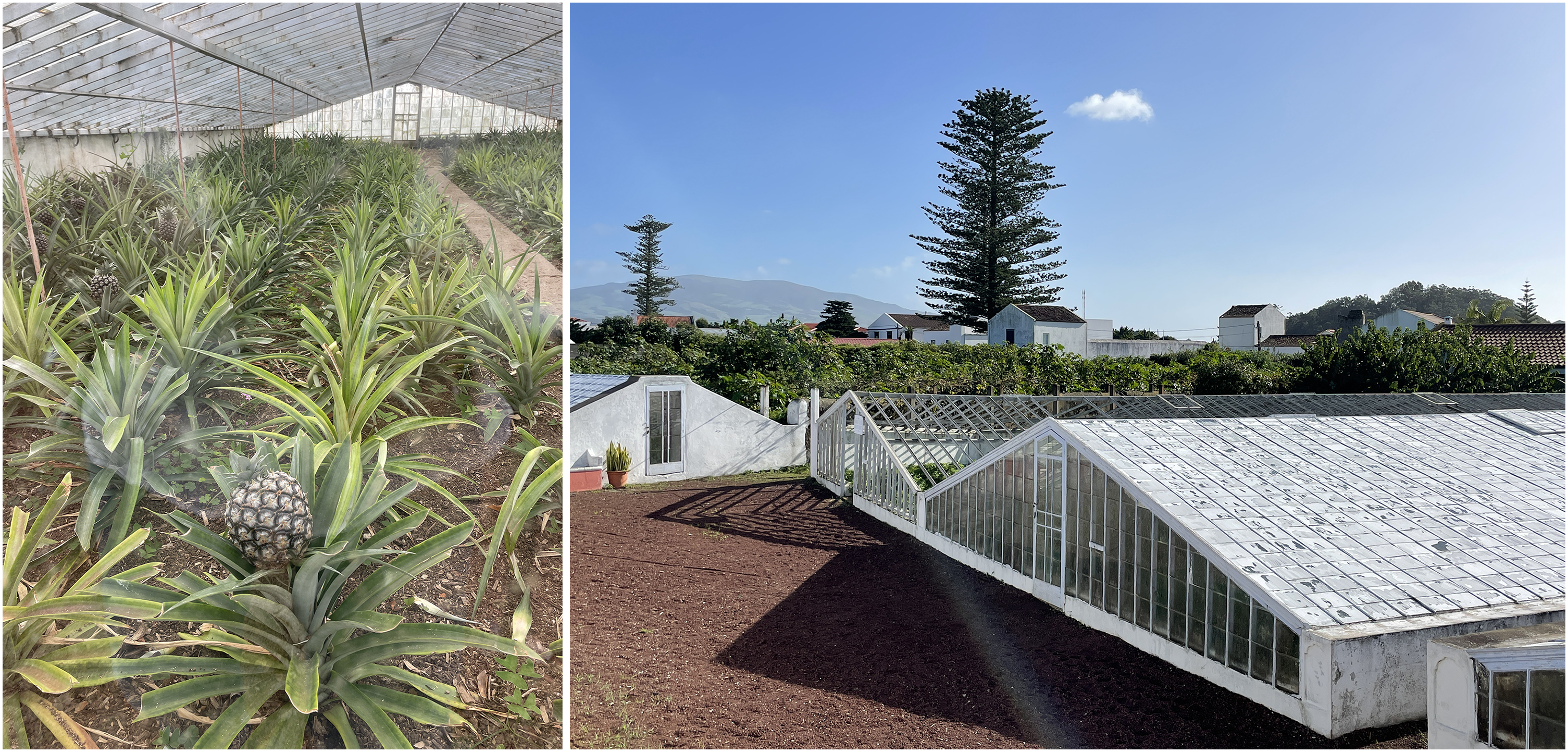
São Miguel's pineapple greenhouses (Arruda and Santo Antonio, photo C Bastos 2022).
In the meantime, in Hawai‘i, the plantation-industries of pineapple were reconfigured. Canneries are no longer at their centre. The fresh fruit remains a cherished product and a metonym for the islands: ‘pineapples and the islands of Hawai‘i remain a familiar coupling’, notes Okihiro (2009, 152). In the archipelago, the evocation of the pineapple remains ubiquitous: in the new condominiums and resorts that in places like Maui grew where plantations used to be, a discreet pineapple may appear in the logo as a link to the past and to an imagined essence of the place. 5 And, finally, a parallel link to the festive celebration of Azorean pineapple emerges in the Azorean diaspora, connecting the migration of their folks to Hawai‘i to the precious fruit shared by the two archipelagoes, and projecting the role of pineapple expert caregivers to the Azorean workers recruited by the sugar planters and the board of immigration.
Concluding note
Sugar canes and pineapples have complex histories intertwined with human endeavours, markets, capital ventures, agricultural projects, labour diasporas. In our case-study, they appear in dyads of plant-people intimacies that connect the disparate geographies of Madeira, Azores and Hawai‘i, as well as distant generations of labour migrants and well-off descendants, through a tale that helps spelling collective existences in the negotiated identities of Hawai‘i's locals. In imaginative ways, migrant islanders whose destinies were shaped by the plantation economy reframe their collective identities in association with the plantation species while projecting them to a distant, quasi-mythical beloved place of origin and investing them in a unique intimacy. The claim, among some diasporic Madeirans and Azoreans, that their folks were contracted to Hawai‘i due to their expertise in the archipelago's iconic crops of sugar and pineapples does not necessarily have a factual counterpart – they were above all recruited to fulfil demands of labour and of population replacement. And yet, in that context of plantation, harsh labour, long-distance migration, and formidable personal and family challenges, meaningful bonds with plant species emerge as pointers of distinctiveness. The plant-people intimacies connecting Madeirans and sugar canes and Azoreans and pineapples stand thus as collectively produced signs of distinctiveness and distinction, and as expression of affective links binding ancestors and descendants, binding them all to Hawai‘i, and binding Hawai‘i to their ancestral islands in the Atlantic.
Footnotes
Declaration of Conflicting Interests
The authors declared no potential conflicts of interest with respect to the research, authorship, and/or publication of this article.
Funding
The author disclosed receipt of the following financial support for the research, authorship, and/or publication of this article: H2020 European Research Council, Advanced Grant # 695773 The Colour of Labour – the Racialized Lives of Migrants.