




Abstract
This study investigated the impact of viewing context on the aesthetic evaluation of street art (the gray cube effect), considering viewers’ art interest and place familiarity, and explored the role of street art figurativeness. Eighty participants viewed six street artworks either on the street or in the laboratory. They rated their place familiarity with each artwork's location and their aesthetic evaluation of each artwork, and they reported their art interest. Results supported the gray cube effect, showing higher evaluations for artworks seen on the street, especially representational pieces with figurative elements. These effects were unaffected by art interest or place familiarity. The findings suggest that an optimal viewing context combined with figurative artistic content enhances appreciation of street art. Limitations are discussed.
Street art is much more than colorful images on public walls—it is an aesthetic part of city life that interacts with its urban surroundings. Street art is created to be encountered and experienced on the street, where the urban environment may shape how it is perceived and appreciated. But what happens when street art is viewed outside this natural context? This report examines how experiencing street art in street settings compares to experiencing it in laboratory settings, testing the gray cube effect—the idea that street art's aesthetic appreciation is strongest when experienced in its original context, the street. In doing so, it also considers viewers’ art interest and familiarity with artwork locations and explores the role of art figurativeness, providing a comprehensive view of factors shaping the gray cube effect.
Street Art Appreciation
Urbanization is increasing rapidly worldwide, with the global urban population projected to grow by approximately 2.2 billion by 2050 (UN-Habitat, 2022). Concurrently, street art—murals and graffiti—has become a prominent feature in many cities, playing a significant role in urban regeneration and creative tourism (Andron, 2018; Crespi-Vallbona & Mascarilla-Miró, 2021; Yan et al., 2019). In light of these developments, the aesthetic qualities of urban public spaces and the influence of art freely available in these spaces have attracted growing attention, particularly due to their potential effects on city dwellers’ well-being (Dehove, Mikuni, Podolin, Leder et al., 2024; Dehove, Mikuni, Podolin, Moser et al., 2024; Estrada Gonzalez et al., 2025; Knoll et al., 2025; Kühnapfel et al., 2025; Mikuni et al., 2024). Correspondingly, research on the aesthetic experience of street art has expanded considerably over the past decade (Chamberlain et al., 2020; Dehove, Mikuni, Podolin, Leder et al., 2024; Dehove, Mikuni, Podolin, Moser et al., 2024; Gartus et al., 2015; Gartus & Leder, 2014; Ho & Szubielska, 2025; Mikuni et al., 2024; Mitschke et al., 2017; Szubielska et al., 2024; Szubielska & Ho, 2022). Mitschke et al. (2017), using eye tracking in a naturalistic setting, found that people spent up to half of their overall fixation time exploring street artworks, indicating the significance of street art in the urban visual experience. Recently, Chamberlain et al. (2020) and Szubielska and Ho (2022) compared the aesthetic values attributed to street art with those of conventional visual arts, further establishing street art as a distinct class of aesthetic objects suitable for empirical investigation. The present study contributes to this literature by examining the empirical aesthetics of street art, aiming to deepen understanding of an increasingly prevalent urban phenomenon.
The Gray Cube Effect
The present study investigates the gray cube effect, which suggests that street artworks are perceived, experienced, or appreciated more positively in their authentic viewing context—the street (Gartus et al., 2015; Gartus & Leder, 2014; Szubielska et al., 2024). The term “gray cube” was coined to describe urban streets where street art is authentically experienced (Gartus et al., 2015; Gartus & Leder, 2014; Szubielska et al., 2024), paralleling the concept of the “white cube”, which refers to museums or galleries where conventional arts are typically experienced (Brieber, Nadal et al., 2015). The colors serve as metaphors: while white cubes feature white, neutral walls that separate art from everyday life, gray cubes feature gray, urban walls that merge art with everyday life (Ho & Szubielska, 2025; Riggle, 2010). Similar to the white cube effect, which is intended to promote museum or gallery art experience, the gray cube effect is proposed to promote street art experience.
Aesthetic experience generally depends strongly on the viewing context (Leder et al., 2004; Pelowski, Markey et al., 2017), a phenomenon supported by empirical findings (Brieber, Nadal et al., 2015; Grüner et al., 2019; Iosifyan & Wolfe, 2023). For instance, artworks tend to receive more positive evaluations, such as increased liking and interest, when viewed genuinely in museums compared to laboratory-based reproductions (Brieber, Nadal et al., 2015; Grüner et al., 2019; Szubielska & Imbir, 2021; Szubielska et al., 2021). Also, Iosifyan and Wolfe (2023) demonstrated that an art context could enhance symbolic associations, processes crucial to making meaning in aesthetic processing. These perspectives imply that viewing context should similarly influence the aesthetic experience of street art (Ho & Szubielska, 2025). According to Riggle (2010), street art possesses both material and immaterial connections to its surrounding urban environment; therefore, its physical structure and symbolic meaning are best perceived and understood when experienced on the street.
Empirical research examining viewing context in street art appreciation has emerged (Gartus et al., 2015; Gartus & Leder, 2014; Szubielska et al., 2024). Laboratory experiments by Gartus and Leder (2014) and Gartus et al. (2015) first showed that graffiti artworks embedded in street scenes received higher ratings of aesthetic emotion and beauty than when embedded in museum scenes. Recently, Szubielska et al. (2024), in twin studies incorporating field data from Western and Eastern samples, found that street artworks were liked more and better understood when viewed on site compared to laboratory reproductions. Together, these theoretical perspectives and empirical findings—spanning traditional museum contexts and emerging studies on street art—provide support for the gray cube effect hypothesis.
Current Research Gaps
Despite emerging research supporting the gray cube effect, several important gaps warrant further clarification. First, ecologically valid data remain limited. Both Gartus and Leder (2014) and Gartus et al. (2015) conducted laboratory experiments, which may constrain the ecological validity of their findings. To our knowledge, Szubielska et al. (2024) is the only study to have collected field data in examining the gray cube effect, underscoring the need for more research employing naturalistic settings.
Second, it is necessary to clarify whether individual art interest confounds the gray cube effect. It is well established that art viewers’ interest and personal taste can influence various stages of processing within an aesthetic experience (Leder et al., 2004; Pelowski, Markey et al., 2017). Indeed, the gray cube effect observed in the experiments by Gartus and Leder (2014) and Gartus et al. (2015) appeared to apply only to viewers with a strong interest in graffiti art, emphasizing the importance of considering this potential confound.
Third, it remains unknown whether the gray cube effect can be alternatively explained by people's familiarity with the artwork's location (place familiarity). Since street artworks are inherently situated within distinctive urban environments, one might argue that place familiarity contributes to the appreciation of street art. Previous ecologically valid work, while valuable, did not assess the potential confounding role of place familiarity in the model (Szubielska et al., 2024), leaving this issue open for clarification.
Last but not least, the importance of figurativeness of street art in the gray cube effect has yet to be explored. Street artworks featuring figurative or representational elements are possibly more recognizable and comprehensible to viewers and, thereby, more likely to be identified as art and appreciated by viewers (Ho & Szubielska, 2025). Hence, it is worth exploring whether the gray cube effect could also depend on the figurativeness of street art.
In light of these gaps, this study aims to provide ecologically valid data on the gray cube effect while addressing the roles of art interest, place familiarity, and street art figurativeness.
The Present Study
Addressing prior research gaps, this study examines the gray cube effect by comparing aesthetic evaluations of street artworks viewed on the street (genuine works) vs. in the laboratory (digital reproductions). It considers the potential influences of viewers’ art interest and place familiarity. Furthermore, the study explores whether the gray cube effect is moderated by street art figurativeness. Using a mixed factorial design, the study tests the hypothesis that street artworks will be evaluated more positively when experienced on site.
Method
This study was part of a larger project investigating environmental aesthetics. The method followed Szubielska et al. (2024).
Participants
Eighty psychology undergraduates (67 women, 11 men, and 2 others; age range = 18–43 years, M = 20.1, SD = 3.2) participated in the study. All participants provided informed consent prior to data collection. Participants were assigned to one of two viewing contexts—street (n = 41) or laboratory (n = 39)—and one of two counterbalanced viewing orders (Order 1: n = 32; Order 2: n = 48), resulting in four conditions. Each participant received approximately 12 euros (in local currency, i.e., Polish złoty) as compensation for their time.
Materials
Six street artworks (see Figure 1), located along a single walking route of approximately 1.64 km within the same neighborhood in Toruń, Poland (see Figure 2), were selected as stimuli. Artworks 1 and 3–5 were created on building façades, and Artworks 2 and 6 were billboards. Artworks 1, 4, and 6 contained figurative elements, while Artworks 2, 3, and 5 were nonfigurative. These artworks were not the only street artworks present in the neighborhood. However, they were chosen to maximize their proximity to one another while maintaining sufficient distance and limited viewing perspective to ensure that participants could not view multiple artworks simultaneously. These artworks were presented in two viewing contexts: on the street (street) or in the laboratory (laboratory). In both contexts, the viewing perspectives were comparable: the images shown in the laboratory (see Figure 1) were taken from distances closely matching the actual viewpoints used for viewing the artworks on the street (see Figure 2). Moreover, the images shown in the laboratory included the environments surrounding the street artwork so that participants in both conditions would experience the artworks as merged with the artworks’ environments and, importantly, assess their place familiarity. The artworks were shown in two viewing orders: ascending (Artworks 1–6), corresponding to Order 1, and descending (Artworks 6–1), corresponding to Order 2.
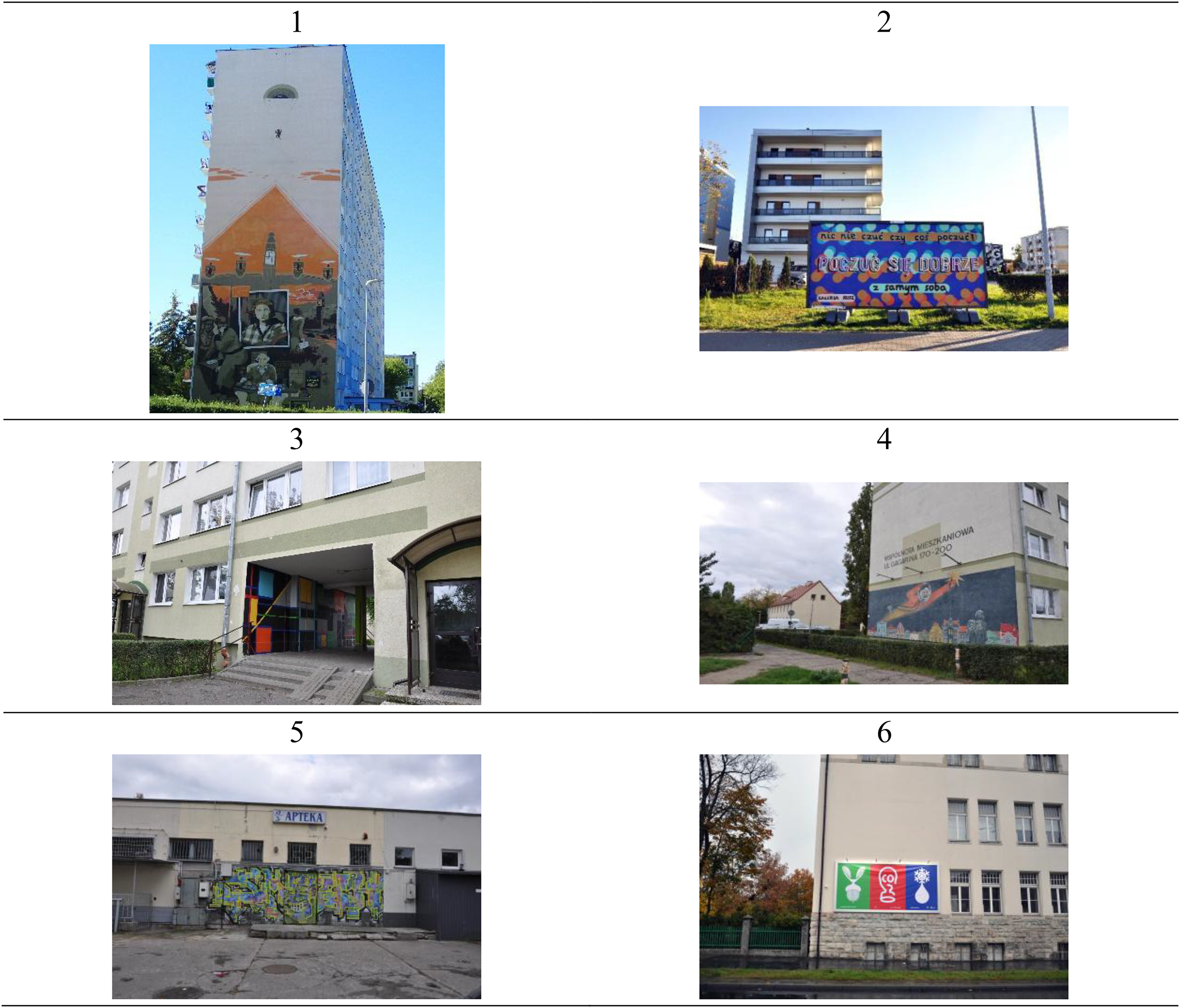
Selected street artworks.
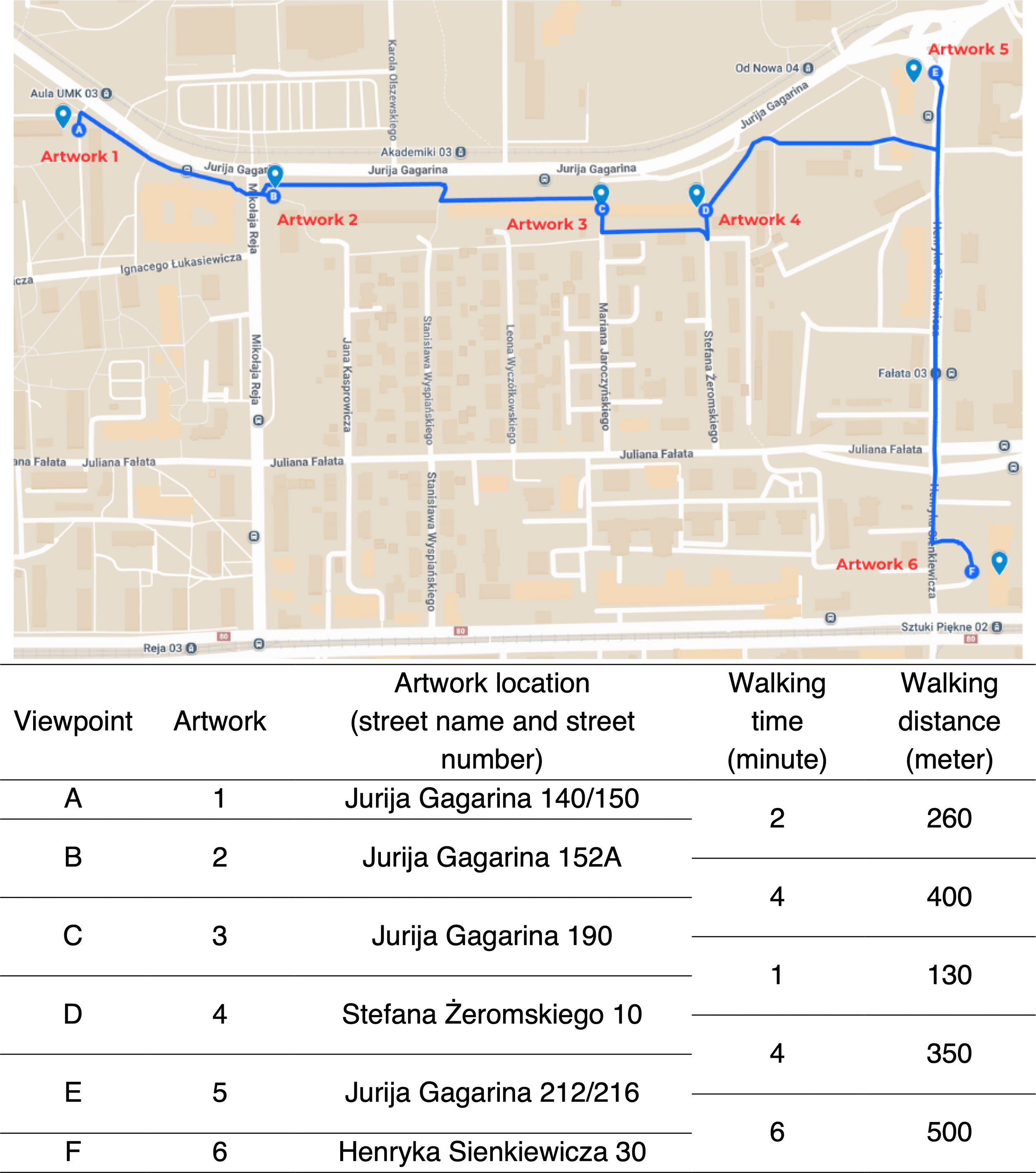
Walking route map with street artwork locations.
Design
The study used a 2 × 2 mixed factorial design with viewing context (street or laboratory) and viewing order (Order 1 or Order 2) as between-subjects factors. The six street artworks were a within-subjects factor, as all participants viewed and evaluated each artwork. Participants’ art interest was included as a covariate. Participants’ place familiarity with each artwork's location and their aesthetic evaluation of each artwork were treated as dependent variables.
Procedure
Participants proceeded either on the street or in the laboratory, following one of two viewing orders. All participants proceeded in groups of up to five. Street participants were guided along the walking route to view and assess each artwork on site. The walking route was located within a quiet residential district (see Figure 2). Laboratory participants viewed and assessed each artwork on an 85-inch television screen with a resolution of 1920 × 1080 pixels. The laboratory viewing took place in a quiet university room. After viewing each artwork, all participants rated their place familiarity (“How well do you know the place?”) and their aesthetic evaluation ((a) “To what extent do you think this billboard/mural is beautiful?”; (b) “Do you like this billboard/mural?”; (c) “Did this billboard/mural interest you?”; (d) “Do you consider this billboard/mural art?”). Participants also reported their art interest (“To what extent are you interested in art?”). All responses were made on a 7-point scale (from 1 = not at all to 7 = very much so) through an online survey. There were no time limits or breaks during the study. The entire procedure took approximately 40 min in the street condition and 25 min in the laboratory condition. (Since the procedure was conducted in groups, individual procedure time was not measured.) All procedures received ethical approval.
Results
Descriptive statistics of place familiarity, aesthetic evaluation, and art interest are reported in detail in Table 1. Descriptive statistics for the four aesthetic evaluation items are reported in detail in Table S1 in Supplementary Material. These four items were all significantly positively correlated across the six street artworks (rs = .37–.93, all ps < .001), as summarized in Table S2 in Supplementary Material. Therefore, we computed a composite aesthetic evaluation score by averaging these four items; the Cronbach's alphas ranged from .81 to .93, indicating good to excellent reliability (see Table 1). An independent-samples t test on art interest found no significant differences between the street and laboratory groups, t(78) = 0.67, p = .508.
Descriptive Statistics on Place Familiarity, Aesthetic Evaluation, and Art Interest.
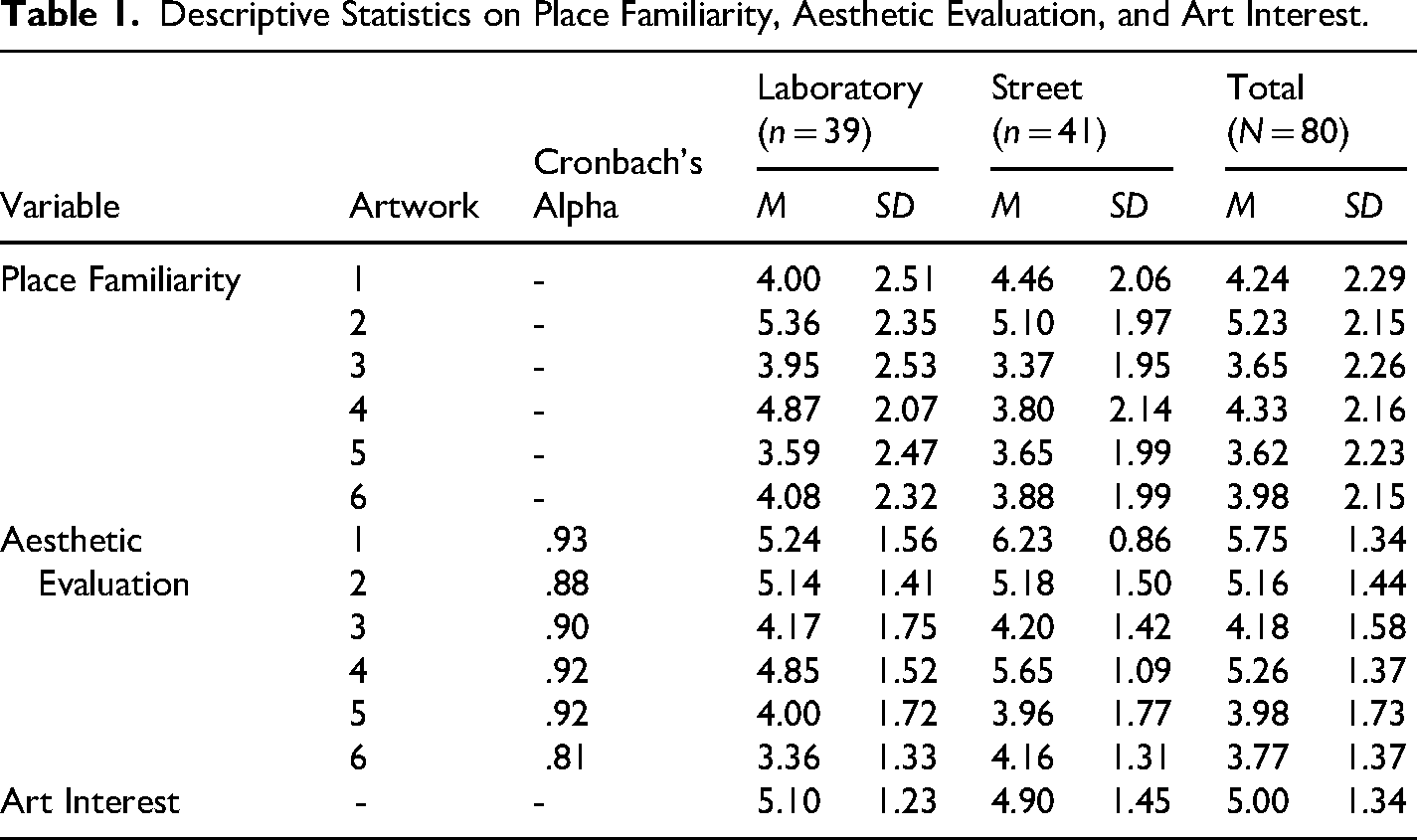
Two mixed-factor analyses of covariance (ANCOVAs) analyzed effects on place familiarity and aesthetic evaluation, with viewing context and viewing order as between-subjects factors, artwork as a within-subjects factor, and art interest as a covariate. Greenhouse–Geisser corrections were applied when the sphericity assumption was violated. Complete results are reported in Table 2.
ANCOVA Results on Place Familiarity and Aesthetic Evaluation.
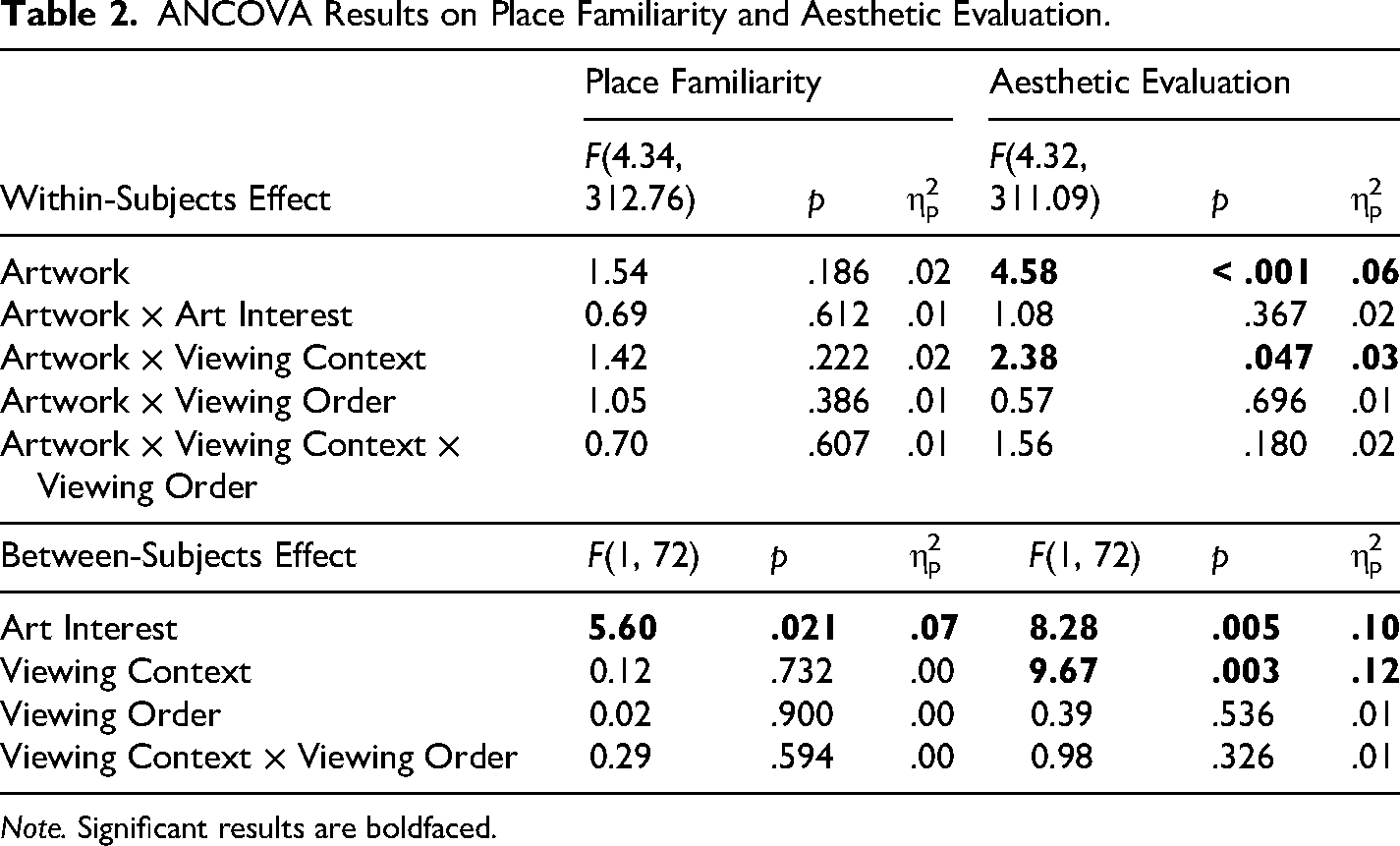
Note. Significant results are boldfaced.
Viewing order showed no significant main effect on place familiarity (p = .900), aesthetic evaluation (p = .536), or interaction effects (all ps > .05). Therefore, viewing order did not influence the results.
Viewing context had no significant main effect on place familiarity (p = .732) but significantly influenced aesthetic evaluation (p = .003). Thus, while the street and laboratory groups did not differ in place familiarity, they differed in aesthetic evaluation. Overall, street artworks received significantly higher aesthetic evaluation on the street (M = 5.00, SE = 0.13) than in the laboratory (M = 4.43, SE = 0.13), based on a post hoc pairwise comparison (p = .003).
Artwork had no significant main effect on place familiarity (p = .186) but significantly influenced aesthetic evaluation (p < .001). Thus, while the six street artworks did not differ in place familiarity, they differed in aesthetic evaluation. Post hoc pairwise comparisons among the six artworks on aesthetic evaluation are presented in detail in Table 3. Overall, each artwork differed significantly from three of the five other artworks. Each artwork also differed from at least one artwork of a different made (mural or billboard) and at least one artwork of differing figurativeness (figurative or nonfigurative). Approaching from the most and the least appreciated artworks, Artwork 1 (figurative mural) received significantly higher aesthetic evaluation than Artwork 6 (figurative billboard; p < .001). Artwork 1 also received significantly higher aesthetic evaluation than Artworks 3 (nonfigurative mural) and 5 (nonfigurative mural), respectively (both ps < .001). Artwork 6 also received significantly lower aesthetic evaluation than Artworks 2 (nonfigurative billboard) and 4 (figurative mural), respectively (both ps < .001).
Post Hoc Pairwise Comparisons Among Street Artworks on Aesthetic Evaluation.
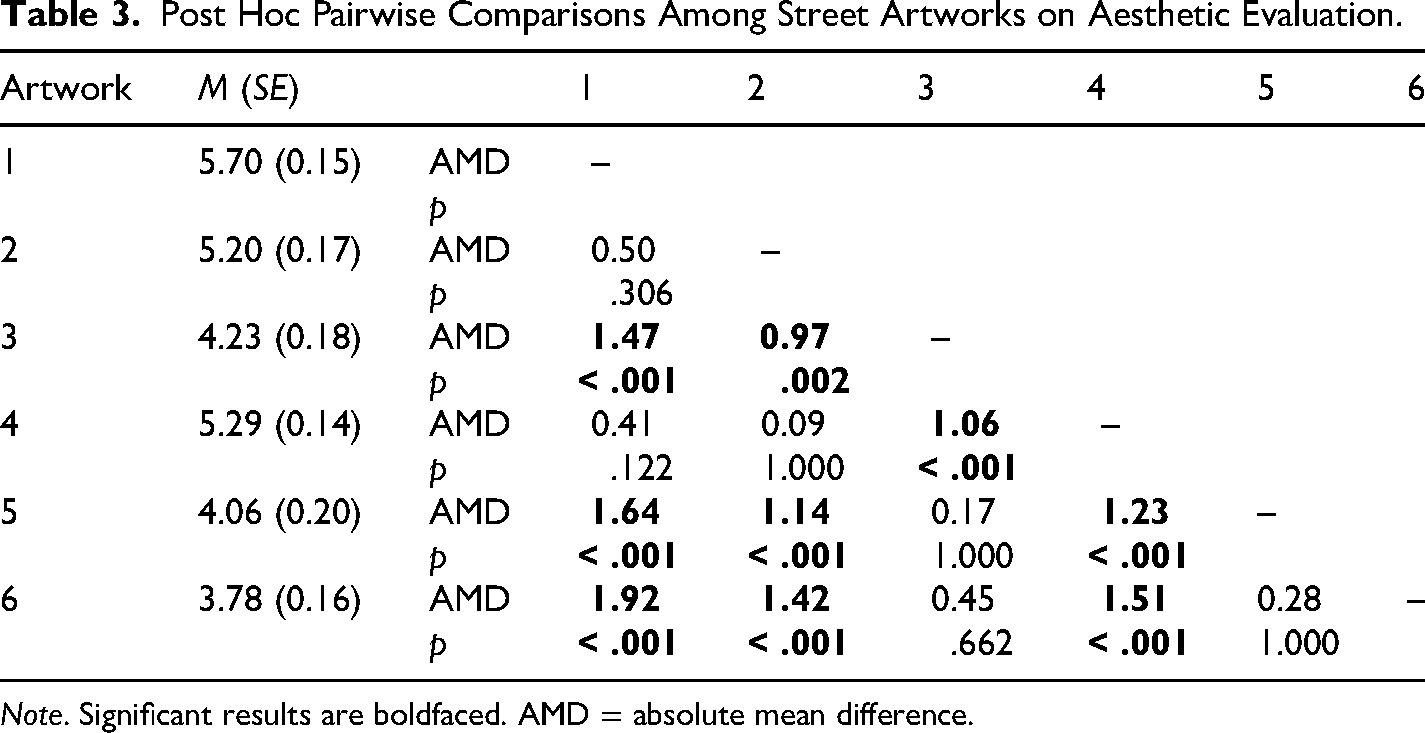
Note. Significant results are boldfaced. AMD = absolute mean difference.
The artwork × viewing context interaction had no significant effect on place familiarity (p = .222). However, this interaction significantly influenced aesthetic evaluation (p = .047). Results of post hoc comparisons are visualized in Figure 3 and reported in detail in Table 4. Notably, the artworks showing significant differences between the street (higher) and laboratory (lower) groups—Artworks 1 (p < .001), 4 (p < .001), and 6 (p = .005)—are all figurative. In contrast, the artworks with no significant differences—Artworks 2 (p = .432), 3 (p = .759), and 5 (p = .865)—are all nonfigurative.
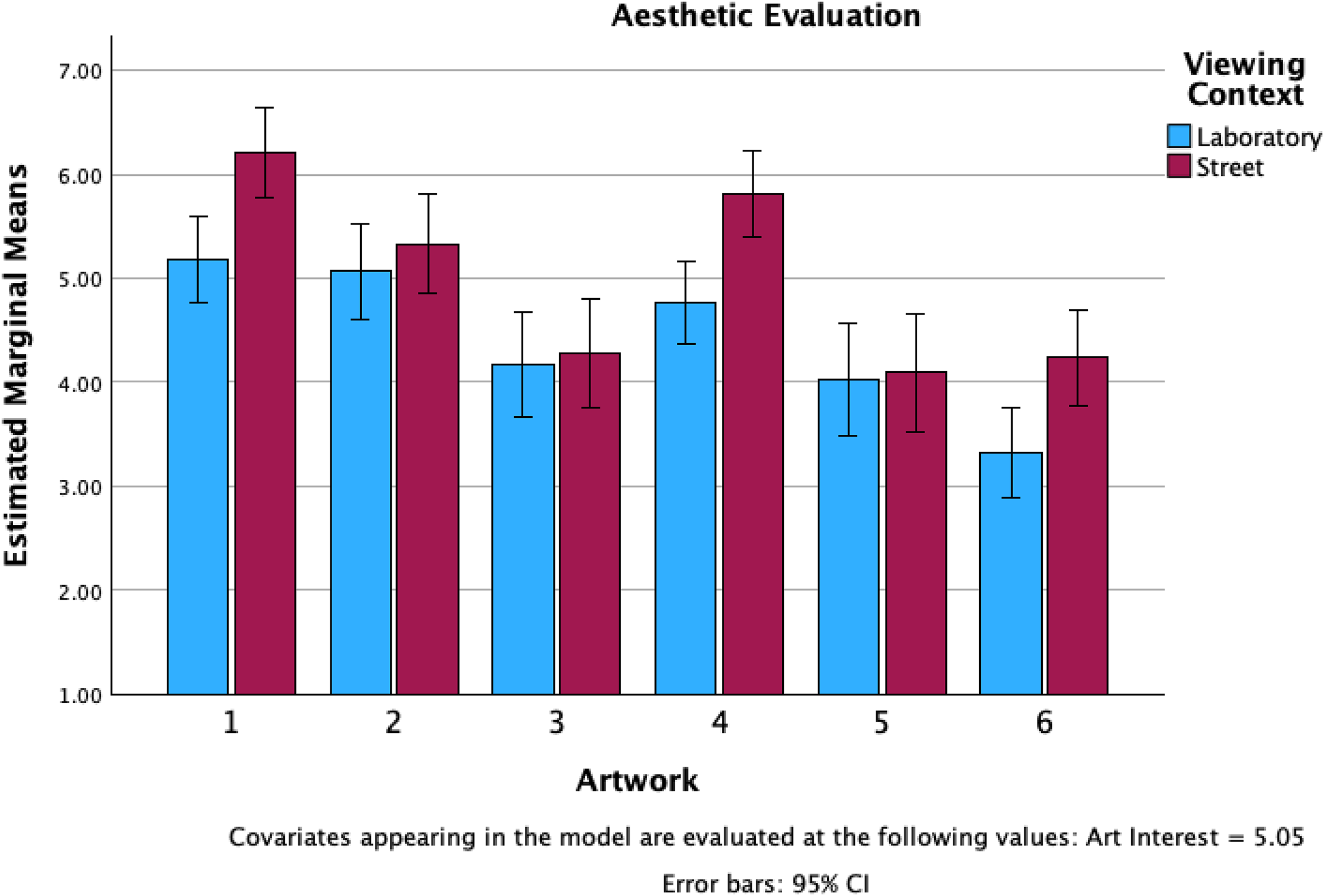
ANCOVA results on aesthetic evaluation.
ANCOVA Results on Aesthetic Evaluation: Post Hoc Comparisons.
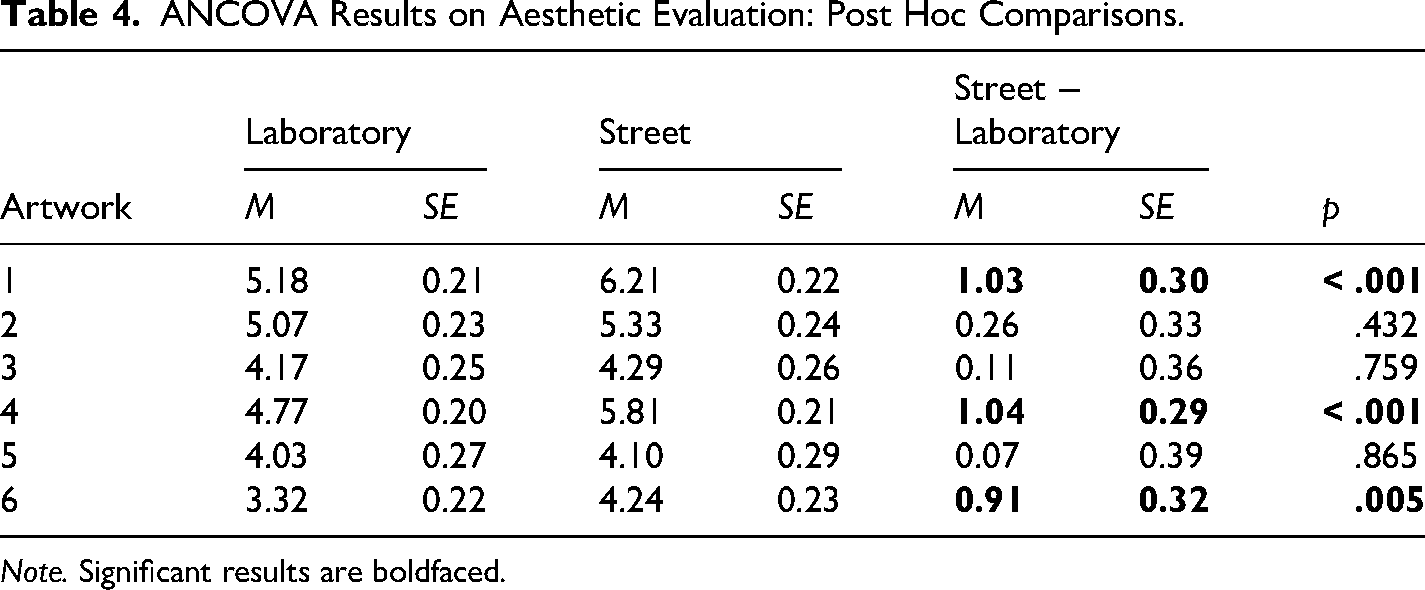
Note. Significant results are boldfaced.
Art interest had significant main effects on both place familiarity (p = .021) and aesthetic evaluation (p = .005). Thus, participants’ art interest was positively associated with their place familiarity and aesthetic evaluation, respectively. Art interest had no significant interaction effects (both ps > .05).
Discussion
The present study examined the gray cube effect, which hypothesizes that street artworks are appreciated more favorably when viewed in street context vs. laboratory context (Gartus et al., 2015; Gartus & Leder, 2014; Szubielska et al., 2024). The study also considered the potential influences of viewers’ art interest and place familiarity with artwork locations, as well as explored the role of street art figurativeness.
Summary of Key Findings
A significant main effect of viewing context on aesthetic evaluation was observed, consistent with prior research using a similar design (Szubielska et al., 2024). Street artworks were more appreciated in their natural viewing context, the street. This effect remained significant after controlling for viewers’ art interest. Regarding place familiarity, this variable was not influenced by the gray cube effect; although the street and laboratory groups differed in aesthetic evaluation, they reported similar levels of place familiarity. Thus, addressing the main research hypothesis, these results support the gray cube effect and clarify that it occurs regardless of viewers’ art interest and place familiarity.
The effect of viewing context interacted with the effect of artwork, suggesting that the gray cube effect applied only to particular artworks. This finding can be explained by the representational nature of these artworks (Artworks 1, 4, and 6; Figure 1), which featured figurative elements absent in others. These figurative elements likely helped viewers recognize the works as art, enabling richer aesthetic engagement (Ho & Szubielska, 2025; Leder et al., 2004; Pelowski, Gerger et al., 2017; see also Brieber, Leder et al., 2015, regarding the lack of the white cube effect). This interaction was significant after controlling for art interest, with place familiarity again showing no influence. In other words, the gray cube effect may depend on the representational or figurative qualities of street artworks, independent of art interest and place familiarity.
Additionally, greater art interest was linked to heightened familiarity with the artwork locations as well as enhanced aesthetic evaluation. This is unsurprising, as viewers with a keener eye for art likely attended more closely both to street artworks and their surrounding environments, fostering deeper aesthetic experience and increased place familiarity (Ho & Szubielska, 2025).
In sum, this study supports the gray cube effect, demonstrating that street art truly shines when experienced in its natural habitat, especially for representational or figurative artworks. Broadly, this study highlights how a harmonious blend of optimal viewing context and clear art classification fosters more intense aesthetic experiences.
Limitations and Future Directions
Several limitations should be acknowledged. First, although the study employed a naturalistic setting by having participants view street artworks on-site, the laboratory condition involved viewing digital reproductions on a screen, which may create an entanglement with the genuineness effect (Grüner et al., 2019). This difference, while central to testing the gray cube effect, could introduce confounding factors related to display method and participant engagement, potentially affecting the comparability of the two viewing contexts. It is important to acknowledge that it is unrealistic to move and present a genuine street artwork in a laboratory. However, future research could explore alternative laboratory setups, such as immersive virtual reality or augmented reality environments, which may present street art more realistically and better replicate on-site conditions, helping to disentangle effects of viewing context from display medium.
Second, the stimuli were limited to six street artworks located along a single walking route within one neighborhood, which may not capture the full diversity of street art styles or environments. However, this limitation is somewhat offset by the ecological character of the study—the artworks were embedded authentically in a real urban area manageable for a walk. Additionally, previous field studies of street art experience (e.g., Dehove, Mikuni, Podolin, Leder et al., 2024; Dehove, Mikuni, Podolin, Moser et al., 2024; Mikuni et al., 2024) have relied on a single stimulus, further supporting the validity of this naturalistic approach. To extend these findings, future research should incorporate a broader range of stimuli across multiple neighborhoods or cities to examine how stylistic, locational, and cultural variations influence the gray cube effect.
Third, the findings concerning the interaction between viewing context and artwork were based on post hoc, exploratory analyses, as no a priori hypotheses regarding this interaction were formulated. Consequently, these results should be treated as preliminary and interpreted with caution. They require replication in future research specifically designed to test this interaction to confirm the robustness of the effect. Preregistered experiments with planned comparisons focusing on the representational or figurative qualities of street artworks could clarify whether these characteristics systematically moderate the gray cube effect.
Fourth, this study did not control for lighting conditions, which could be considered an important aspect of street art experience. Variations occurred between sunny and cloudy skies during the walks in the street context, as well as across the images presented in the laboratory context. These variations were due to the generally unstable weather conditions in Toruń during the fall season when the study was conducted. Ho and Szubielska's (2025) recent theoretical model highlights how weather conditions might contribute to the environmental conduciveness of street art encounters and thus shape the overall street art experience. Future research should build on such frameworks to systematically include weather conditions (e.g., sunny vs. cloudy) when modeling the gray cube effect.
Finally, art interest was only assessed generally using a single item. Ho and Szubielska's (2025) model points out that, in addition to art interest, certain personality traits such as openness to experience (McCrae, 2007) and aesthetic needs (Świątek et al., 2024) may influence viewers’ art identification in a given street art encounter, thereby affecting the quality of the street art experience. These variables can complement the art interest measure, offering a more multi-faceted consideration of personal factors within viewers. Future studies interested in further exploring the role of stable personal factors in the gray cube effect or street art experience in general should consider including these constructs.
Conclusion
In conclusion, this study provides empirical support for the gray cube effect, showing that street art is better appreciated when experienced in its natural urban street setting. The role of viewing context proved important regardless of viewers’ art interest or familiarity with the artwork locations. Importantly, representational or figurative elements in street art may strengthen this effect by fostering deeper engagement, although this finding remains exploratory and warrants future verification. Overall, these findings underline the value of preserving authentic street art environments to enrich urban aesthetics and public experiences.
Supplemental Material
sj-docx-1-art-10.1177_02762374261422101 - Supplemental material for The Gray Cube Effect on Street Art Appreciation: Preliminary Findings on the Role of Art Figurativeness—A Brief Report
Supplemental material, sj-docx-1-art-10.1177_02762374261422101 for The Gray Cube Effect on Street Art Appreciation: Preliminary Findings on the Role of Art Figurativeness—A Brief Report by Robbie Ho, Joanna Dreszer and Magdalena Szubielska in Empirical Studies of the Arts
Supplemental Material
sj-docx-2-art-10.1177_02762374261422101 - Supplemental material for The Gray Cube Effect on Street Art Appreciation: Preliminary Findings on the Role of Art Figurativeness—A Brief Report
Supplemental material, sj-docx-2-art-10.1177_02762374261422101 for The Gray Cube Effect on Street Art Appreciation: Preliminary Findings on the Role of Art Figurativeness—A Brief Report by Robbie Ho, Joanna Dreszer and Magdalena Szubielska in Empirical Studies of the Arts
Footnotes
Acknowledgments
We thank Jadwiga Czapla, Szymon Lipiński, Jan Pieniążek, and Piotr Zech (listed alphabetically by surname) for their assistance with data collection.

Funding
The authors disclosed receipt of the following financial support for the research, authorship, and/or publication of this article: This work was supported by an internal grant from The John Paul II Catholic University of Lublin.
Declaration of Conflicting Interests
The authors declared no potential conflicts of interest with respect to the research, authorship, and/or publication of this article.
Supplemental Material
Supplemental material for this article is available online.
References
Supplementary Material
Please find the following supplemental material available below.
For Open Access articles published under a Creative Commons License, all supplemental material carries the same license as the article it is associated with.
For non-Open Access articles published, all supplemental material carries a non-exclusive license, and permission requests for re-use of supplemental material or any part of supplemental material shall be sent directly to the copyright owner as specified in the copyright notice associated with the article.
