




Abstract
Artistic paintings and photographs are often used as alternatives to direct experiences of nature, and some may have restorative health effects not yet fully understood. This study examined if/how anxiety, sensory mental imagery, and prior exposure to nature impacted aesthetic and affective responses (AAR) to environmental scenes. Participants (n = 368) evaluated nature and urban scenes via three sets of ratings: aesthetic (liking) and affective (perceived openness and anticipated relaxation). Results showed that the strength of visual mental imagery significantly predicted AAR. Prior exposure to nature modulated responses to some nature scenes but had no effect on urban scenes. Higher anxiety levels influenced some emotional responses but not aesthetic ones. Findings may have diagnostic implications for assessing elevated anxiety levels as well as for designing wellbeing-promoting spaces in areas where direct access to nature is limited, such as hospitals, detention centers, and underground workplaces.
Keywords
Introduction
Despite the unprecedent increase in urbanization in recent human history, we are still deeply connected to natural environments. The benefits of direct contact with nature are widely recognized, even if intuitively, to the extent that most public spaces incorporate green spaces (e.g., gardens, parks) and water bodies (e.g., lakes, ponds) (Berto, 2005; Bonthoux et al., 2019; Holland et al., 2021). As the effectiveness of interactions with nature can vary greatly from one individual to another (c.f., Balling & Falk, 1982), it is not surprising that little is known about how psychological characteristics and behaviors affect the aesthetic enjoyment of nature.
There is a long tradition of appreciation of nature through artistic depictions like paintings and photographs, which are often used in the design of spaces without direct access to it (Bonthoux et al., 2019; Dehove et al., 2024; Mikuni et al., 2024; Saito, 1998). Aesthetic appreciation or enjoyment often refers to the pleasure and emotional engagement elicited by sensory stimuli. The use of the terms “aesthetic” or “hedonic” responses is somewhat controversial in empirical aesthetics, since a few researchers believe they are synonyms; the enjoyment of artistic images is not different from other forms of visuo-sensory enjoyment (c.f., Skov & Nadal, 2021).
In this study, the term “aesthetic” evaluation refers to the degree to which individuals find artistic images appealing or likable, while the term “affective” evaluation pertains to how open or relaxing they perceive those images to be. Kant conjectured that the aesthetic enjoyment derived from nature might be rooted in imagination (as cited in Budd, 1998), which offers a foundation for exploring whether mental imagery plays a role in shaping aesthetic evaluations. Additionally, numerous studies have demonstrated significant connections between art, nature exposure and anxiety, which were explored with different experimental approaches (Barbieri et al., 2024; Nanda et al., 2011; Swami et al., 2024). These relationships are further examined in this study.
Nature Exposure
By seeking out opportunities to connect with natural ecosystems, individuals might experience a range of psychological benefits such as improved mood and self-esteem, boredom reduction, enhanced cognitive function, and higher levels of life satisfaction, wellbeing and vitality (Barton et al., 2012; Bratman et al., 2019; Capaldi et al., 2014; Carlson, 1984; Hartig et al., 2014; Kellert, 1993; Ryan et al., 2010; Van Den Berg, Hartig et al., 2007; Wheeler et al., 2012). Viewing or visiting natural ecosystems in the wake of a stressful situation were reported to boost physiological relaxation (Hartig & Kahn, 2016; Lawton et al., 2017), which were in line with findings obtained during the first months of the COVID-19 lockdown (Hicks et al., 2020; Mintz et al., 2021; Ozamiz-Etxebarria et al., 2020; Soga et al., 2021). Indeed, feelings of wellbeing and satisfaction with a neighborhood increased even when nature was viewed from windows. Furthermore, similar nature views were reported to increase feelings of wellbeing in workplaces and of faster recovery or reduced post-surgery care needs in hospitals (Kaplan, 1993, 2001; Ulrich, 1983). Even studies using indirect, surrogate forms of nature exposure showed significant benefits. For example, just looking at images of nature led to a higher level of sustained attention and a faster recovery from stress (Berto, 2005; Kjellgren & Buhrkall, 2010), and video displays (2D high-definition or 360°) of an underwater coral reef were also effective in reducing negative emotions (Yeo et al., 2020).
Some of those results were interpreted in the framework of Kaplan's Attention Restoration Theory (ART; Kaplan, 1995) and the Stress Reduction Theory (SRT, Ulrich, 2023). ART posits that nature exposure can replenish attentional resources and restore cognitive functioning, probably because natural environments offer a respite from the confines of everyday working life and provide a more effortless and engaging focus of attention (Chen et al., 2020). Similarly, the SRT posits that nature exposure can alleviate physiological and psychological stress, promoting relaxation and recovery (Bratman et al., 2015, 2019).
Despite the evidence about the beneficial effects of exposure to nature, caution is needed because some studies failed to find significant effects on mood or overall wellbeing (c.f., Hicks et al., 2020). The somewhat inconsistent findings are not unexpected considering the variations in experimental designs across studies such as differences in sample sizes, the types of stimuli used, the duration of image presentation, or direct exposure to nature, among other confounding factors. Notwithstanding these discrepancies, a growing body of evidence indicates that exposure to nature or its surrogates can elicit a range of positive outcomes, particularly in terms of affective and cognitive functioning. Notably, the World Health Organization (2022) includes nature exposure as a protective factor for mental health problems.
Mental Imagery
Mental imagery plays a crucial role in fostering a sense of connection with nature and enhancing wellbeing (Agren, 2023) as it enables individuals to visualize and immerse themselves in natural landscapes, even in the absence of direct physical contact with nature. This process is deeply linked to multiple sensory modalities—such as auditory, visual, proprioceptive, and olfactory experiences—as well as other embodied sensations, all of which collectively shape our perception of reality (Nadkarni et al., 2017; Phillips, 2014; Thomas, 2009). Cognitive styles of mental imagery have been shown to influence the refinement (fine-tuning) of aesthetic appreciation of natural and urban environments (Felisberti & Cropper, 2023), particularly in terms of how individuals perceive and then mentally adjust images to align with their personal sense of beauty or harmony.
In our framework, the strength of visual mental imagery may amplify the immersive quality of visual stimuli. By mentally placing themselves in serene environments—such as meadows, forests, or beaches—individuals may experience some of the restorative and relaxing effects typically associated with direct contact with nature, potentially mitigating the stresses of urban life (Coughlan et al., 2022). Specifically, viewers with stronger visual imagery may be better equipped to appreciate a scene, fill in missing details (e.g., obscured areas), imagine how the scene extends beyond the frame, and vividly envision themselves within the depicted environment. This heightened mental engagement could evoke a stronger emotional response, thereby enhancing a scene's aesthetic appeal. Furthermore, nature-based therapies or virtual nature experiences could help individuals with high anxiety to guide their mental imagery to more positive perceptions that could improve wellbeing over time (Koivisto & Grassini, 2022). However, the impact of visual mental imagery on aesthetic and affective evaluations remains unclear and requires further exploration.
Anxiety
A wide range of studies has shown significant links between art, nature exposure and anxiety, which were explored with different experimental approaches (Barbieri et al., 2024; Nanda et al., 2011; Swami et al., 2024). Many studies focused on the benefits of direct exposure to nature for mental health and anxiety reduction strategies (Bressane et al., 2022; Kotera et al., 2021). For example, anxiety levels in students during the Covid-19 lockdown declined after a few weeks of nature exposure once the restrictions to movement were eased (Dzhambov et al., 2021). The exposure to natural environments led to a reduction of particular symptoms of anxiety like anxious apprehension or worry (Bratman et al., 2012, 2015; Bressane et al., 2022; Browning et al., 2023). Interestingly, a few studies have reported similar mental health benefits associated with the presence of plants and flowers in workspaces and homes (Haviland-Jones et al., 2005; Pérez-Urrestarazu et al., 2021).
Research examining the psychological impacts of indirect engagement with nature, revealed that aesthetic experiences can play a mediating role in reducing anxiety. Specifically, the subjective pleasure and sense of meaningfulness derived from aesthetic stimuli contribute to enhanced wellbeing by lowering anxiety levels in non-clinical populations (Meidenbauer et al., 2020; Trupp et al., 2023). In studies examining direct exposure to nature, participants’ anxiety levels were typically measured both before and after their interaction with natural environments. In contrast, studies examining indirect exposure to nature—such as through digital images, videos, or immersive nature-based experiences—typically evaluated participants’ anxiety levels after they had been exposed to these visual representations of nature, or they employed a between-subjects experimental design. This raises an important question: Were participants’ aesthetic responses to nature imagery independent of their initial anxiety levels, or did anxiety levels influence (at least to a certain extent) how they perceived and evaluated those images? The question is pertinent because high anxiety has been linked to negative perceptions of the home environment, including aspects like perceived safety, noise disturbance, brightness, and quality of window view (Dzhambov & Lercher, 2019; Weber et al., 2024).
The relationship between aesthetic experiences and anxiety levels may be shaped by the visual characteristics of the environment, such as the sense of openness or enclosure, which can play a significant role in shaping aesthetic perception and evaluation. Visual scenes featuring elements like steep cliffs above the horizon or dense woodlands can diminish the sense of openness by creating a spatially enclosed environment. In contrast, expansive landscapes such as open fields, vast skies, and prairies typically enhance the perception of openness. Similarly, in urban settings, tall and densely packed buildings, narrow alleys, and cluttered structures can evoke a sense of enclosure by obstructing the observer's view. Conversely, wide avenues, lower buildings, and well-spaced architectural layouts tend to foster a greater sense of openness (Felisberti & Harrison, 2022). Individuals experiencing anxiety might be more prone to negative mental imagery and to an heightened sense of threat, which might shape how they perceive and interact with both natural and urban environments. When anxiety levels are elevated, an individual might find it challenging to fully appreciate the aesthetic qualities of nature or, conversely, might become more sensitive to urban settings that could exacerbate feelings of stress or discomfort.
Current Study
Artistic paintings and photos are among the most frequently used types of nature surrogates in enclosed spaces, but to our knowledge, there is no theoretical framework to support such choices. Notwithstanding, if exposure to nature proxies positively influences wellbeing (c.f., Harvey et al., 2020), it is reasonable to assume a dynamic interplay between AARs to photos and paintings of nature and urban scenes, chronic (trait) or situational (state) anxiety, prior nature exposure, and visual mental imagery, which was explored in this study. It posits that individuals with more vivid visual mental imagery will provide more favorable aesthetic evaluations of nature scenes, as their enhanced ability to mentally reconstruct and engage with visual content may deepen their appreciation. It was hypothesized that heightened visual mental imagery and a greater exposure to nature would be significantly associated with stronger AARs, whereas anxiety would be negatively associated with AARs.
The findings could inform therapeutic approaches, ranging from diagnostic evaluations to methods aimed at alleviating anxiety. Since heightened anxiety can distort perception, exploring the connection between anxiety and AARs could be vital for designing strategies that use indirect nature exposure as a tool to improve mental wellbeing. In settings such as hospitals, prisons, or underground workplaces—where individuals are frequently cut off from nature and natural light—designing psychologically restorative environments becomes essential.
Material and Methods
Participants
The 368 participants (167 females, 201 males) had an age range of 18–58 years (M = 26.40 years, SD = 8.30) and diverse ethnicities (self-described: 216 Caucasian, white, European white, British white; 9 Asian, Asian Philippine, Chinese; 7 black, black African, Ethiopian). Participants were recruited using the Qualtrics platform in return for financial compensation or course credits. They were all fluent English speakers (31 had English as a second language) and were living in the United Kingdom at the time of the study. Participants did not report any physical or mental health issues, and their vision was normal or corrected-to-normal.
This study received a favorable review from the Psychology Department ethics committee at Kingston University London and complied with the ethical standards of the British Psychological Society and the Declaration of Helsinki 2013 for the treatment of human participants.
Questionnaires
State Trait Anxiety Inventory (STAI)
The self-reported 20-items of the STAI (Spielberger et al., 1983) was used to evaluate the extent to which participants usually feel anxious or experience anxiety-related symptoms in various situations. (e.g., “I feel secure”; “I feel strained”). It uses a 4-point Likert scale (1 = almost never to 4 = almost always) and positive items are reverse-scored. The possible scores range from 20 to 80, with higher scores indicating greater anxiety. One outlier score was replaced by the mean score of the sample. A high level of internal consistency (α = .92) was observed in this cohort.
Nature Exposure Scale
The Nature Exposure scale (Francis, 2011) was used to evaluate the current extent of exposure to natural environments and the involvement in physical activities within such spaces. It consists of the following four items: “In your everyday home, travel and work environments and activities, please rate your level of exposure to natural environments”, “How much do you notice the natural environments in your everyday life?”, “Please rate the frequency of nature exposure-rich environments outside your everyday environment”, and “How much notice would you take of the nature in these environments?”. All items are rated on a 5-points scale (1 = never, 3 = sometimes, 5 = very often) and had an acceptable level of internal consistency (α = .63).
The Plymouth Sensory Imagery Questionnaire (Psi-Q)
This mental imagery questionnaire is used to evaluate the vividness of mental imagery across different sensory modalities: visual, auditory, smell, taste, touch, bodily sensations and emotions (Andrade et al., 2014). Participants were given five written cues to generate mental imagery for each of the distinct modalities (e.g., “Imaging the appearance of… a sunset”). The vividness of their mental imagery was rated from 0 (no image at all) to 10 (as vivid as real life). Average scores were calculated for each sensory modality separately, but only the scores for the visual imagery sub-scale were reported in this study (α = .74). The scores for the other sensory modalities aligned with those of the visual modality but were not reported here because they were not the focus of this study.
Stimuli
The digital 24 color photos and 24 paintings were part of previous study (Felisberti & Harrison, 2022). The choice of images had a balanced mixture of the nature and urban scenes with high, medium, and low preference ratings. The luminance and size of the images were adjusted with Adobe Photoshop and were either in portrait or landscape format. One photo and two paintings were excluded from the analysis due to a coding error. The sets consisted of images depicting built-up areas (e.g., buildings, streets) and landscapes (e.g., rivers, lakes, forests), which included some spaces in urbanized areas (e.g., parks, trees, gardens).
Aesthetic preferences were quantified using Liking ratings, and affective preferences were quantified using Openness and Relaxation ratings. Openness ratings assessed the extent of perceivable space in nature and urban scenes, which is often referred to as visual depth or openness (Ohly et al., 2016). Relaxation ratings assessed the level of arousal of participants who had to imagine themselves been transported into the depicted environmental scene, whereby a positive affective response could be typically associated with feeling calm and peaceful and free from psychological and physiological tension. Participants evaluated each image using a 7-point slider (0 = Not a lot; 6 = A lot), which was followed by three questions:
− [Liking ratings]: How much do you like this image? − [Openness ratings]: How open do you judge the space depicted in this image? − [Relaxation ratings]: How relaxed would you feel in this space?
Data Analysis of Manmade Content
Image properties of nature and urban scenes have been widely quantified in studies as diverse as urban planning and vision research (c.f., Cleve et al., 2008; Párraga et al., 2002). However, in previous studies, the categorization of photos and paintings into nature or urban scenes was often based on the core elements in the images and the artistic intention(s) of the photographer or painter. To our knowledge, the quantification of the manmade content in environmental scenes to categorize them into nature or urban has not been carried out before in empirical aesthetics. This is important because urban scenes often contain nature elements (e.g., sky, trees, ponds) that can significantly enhance people's enjoyment (Dehove et al., 2024; Knoll et al., 2024), and nature scenes often contain manmade elements (e.g., asphalted roads, houses, boats). Hence, the quantification of manmade content in nature and urban scenes could provide a better understanding of the AARs they receive.
The percentage of human made elements in each image used in the study was determined by manually selecting the object areas and using the MATLAB function “impoly”. This function allows to interactively place polygons over the selected parts of the images and to specify vertex locations. The images were then subdivided into “nature” or “urban” according to the percentage of manmade elements in each of the photos and paintings. A 25% cut-off percentage of manmade content was chosen based on statistical analysis showing two predominant groups. Images containing less than 25% of their area occupied by manmade elements were classified as nature scenes, while the remaining images were classified as urban scenes, even though nature elements could still be present. The rare humans and their clothes present in some images were categorized as nature elements. The analysis of image set resulted in the classification of paintings as 16 nature scenes and 7 urban scenes, and photos as12 nature scenes and 10 urban scenes. The AAR for the images in each of those categories was then averaged.
Figure 1a-d shows examples of quantified manmade elements in four images. A few manmade elements could not be weighted accurately due to their sizes (e.g., boat masts in Figure 1d), or were made of organic elements rather than tarmac or concrete (e.g., earthy surfaces in Figure 1c) were not included in such calculations.
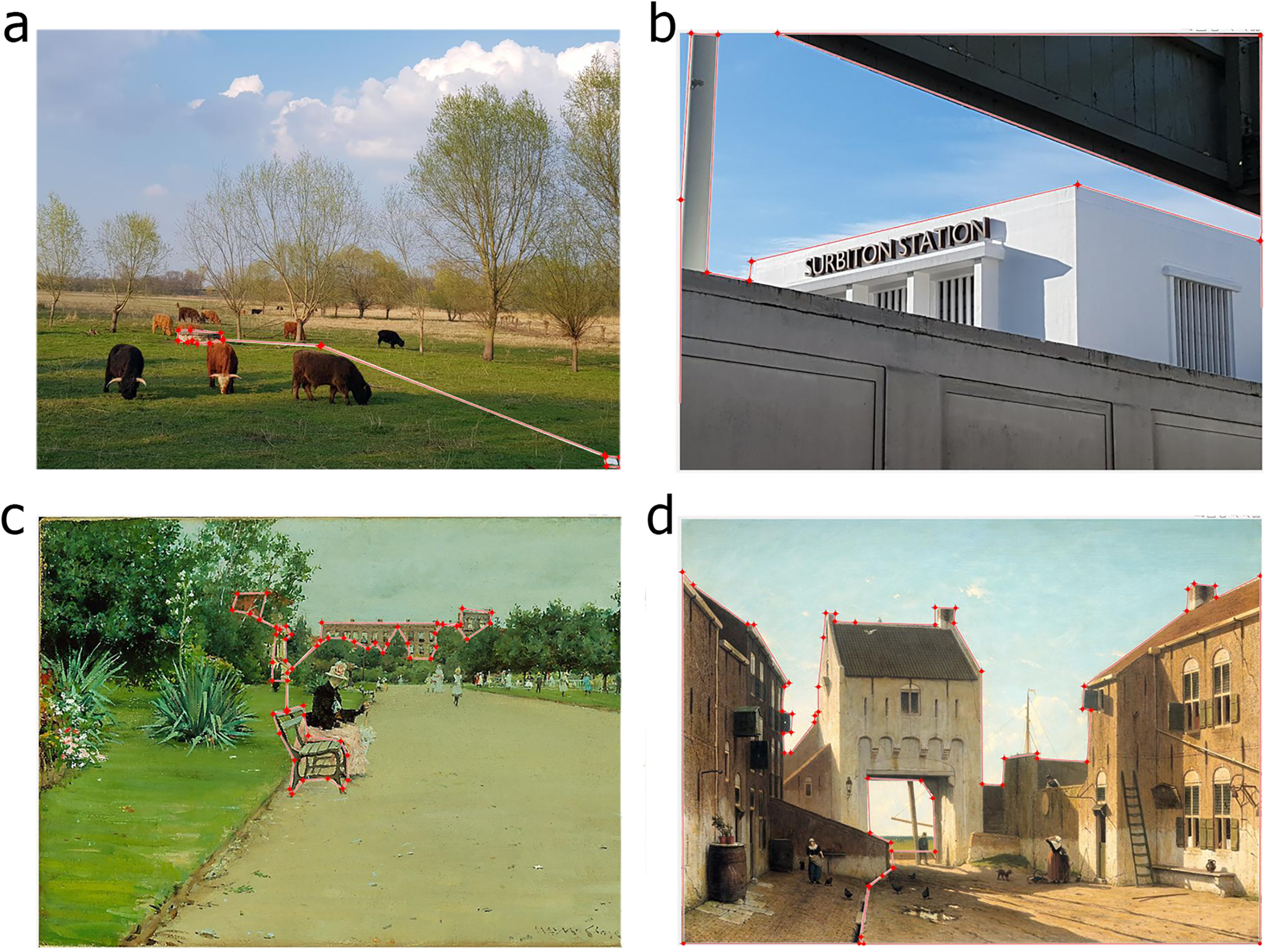
Examples of typical photographs (a-b) and paintings (c-d) used in this study. The red lines indicate the areas in the scenes containing manmade objects; percentages in brackets: (a, c) low manmade content (<25%), (b, d) high manmade content (>25%).
The statistical analysis of the dataset included:
2 × 2 repeated measures ANOVA to examine the relationships between aesthetic and affective evaluations: factors image Scene (nature vs urban) and image Type (paintings vs photos) with Greenhouse–Geisser and Bonferroni adjustments. Multiple regressions to examine the effects of state and trait anxiety, sensory mental imagery, and exposure to nature on AAR.
Based on previous studies (Felisberti & Cropper, 2023; Felisberti & Harrison, 2022), a sample size with at least 166 participants was needed in for a medium effect size with at least 80% power. The larger sample size used here allowed for a more granular examination of AARs in terms of their manmade content.
Procedure
Participants accessed the study in the Qualtrics platform. Once they had provided their consent and they answered some demographic questions. The participants were also asked to complete the self-reported questionnaires assessing their sensory mental imagery ability and their previous nature exposure. They were then asked to evaluate the nature and urban scenes in terms of their Liking, Openness and Relaxation. Finally, they answered the STAI anxiety questions. There was no time limit for the evaluation of the images or to answer the questions, and the study lasted for an average of 1560 s (SD = 777; 95% CI [1478, 1637]). The order of presentation of the images was randomized, as was the order of the questions inside each of the questionnaires.
Results
Aesthetic Evaluations
Liking ratings. A regression analysis with all ratings—before the images were categorized into nature or urban scenes—showed that the Liking ratings for photos decreased significantly as the manmade content increased, F(1,21) = 21.18, p < .001 (adjusted R2 = .490), which was not observed for paintings, F(1,22) = 3.98, p = .059 (adjusted R2 = .119; Figure 2a).
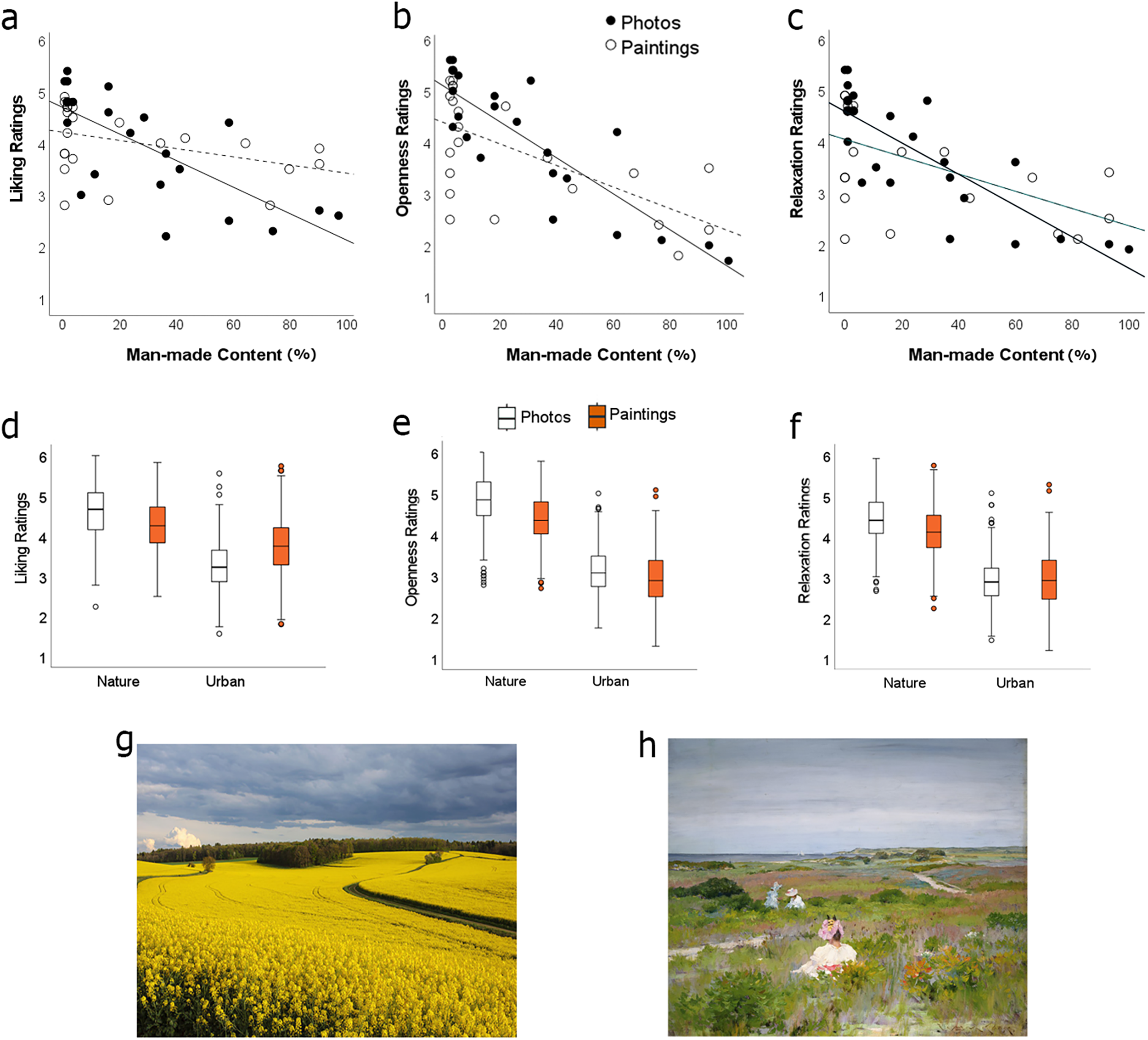
The aesthetic (Liking) and affective (Openness, Relaxation) ratings for photographs and paintings. (a-c) The relationship between mean ratings for each of images and the percentage of manmade content in the images with regression lines were fitted to the graphs. (d-f) Boxplots of ratings for Nature and Urban categories with 95% CI. Example of a photo (g) and a painting (h) with high aesthetic and affective ratings in this study.
After subdividing those images into nature vs urban scenes based on their manmade content, a 2 × 2 repeated measures ANOVA revealed a significant main effect of image Type (photos vs paintings; F(1,367) = 11.79, p < .001, ηp2 = .031), Scene (nature vs urban; F(1,367) = 1099.91, p < .001, ηp2 = .750), and a significant interaction between Scene and Type (F(1,367) = 374.15, p < .001, ηp2 = .505).
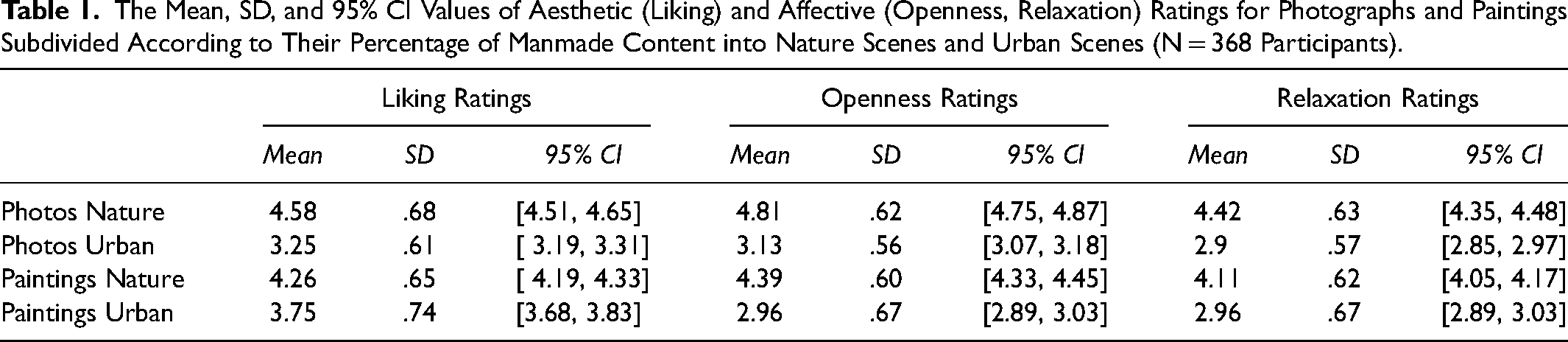
The overall Liking ratings for paintings (M = 4.01; SE = .03) were higher than for photos (M = 3.91; SE = .03; p < .001) and the overall Liking ratings for Nature scenes (M = 4.42; SE = .03) were higher than for Urban scenes (M = 3.50; SE = .03; p < .001). See further details in Table 1. Paired comparisons showed that Nature scenes were liked more in photos than in paintings, t(367) = 10.24, p < .001, whereas Urban scenes were preferred in paintings over photos, t(367) = -13.59, p < .001.
The Mean, SD, and 95% CI Values of Aesthetic (Liking) and Affective (Openness, Relaxation) Ratings for Photographs and Paintings Subdivided According to Their Percentage of Manmade Content into Nature Scenes and Urban Scenes (N = 368 Participants).
Affective Evaluations
Openness ratings. The ratings decreased significantly with the increase of the proportion of manmade content in the photos, F(1,21) = 53.51, p < .001 (adjusted R2 = .714), and the same significant decrease was observed with paintings, F(1,22) = 13.82, p = .001 (adjusted R2 = .368) (Table 1, Figure 2b).
The 2 × 2 repeated measures ANOVA showed a significant main effect of image Scene (F(1,367) = 2867.60, p < .001, ηp2 = .887), and Type (F(1,367) = 48.04, p < .001, ηp2 = .116), as well as a significant interaction between Scene and Type (F(1,367) = 41.64, p < .001, ηp2 = .102). Openness ratings for Nature scenes were higher (M = 4.60; SE = .03) than for Urban scenes (M = 3.04; SE = .03), and the Openness ratings for paintings (M = 3.68; SE = .03) were lower than for photos (M = 3.97; SE = .03) (Table 1, Figure 2e).
Relaxation ratings. The ratings decreased significantly with the increase of the proportion of manmade content in the photos, F(1,21) = 36.49, p < .001 (adjusted R2 = .628). The same significant relationship was observed with paintings, F(1,22) = 10.09, p = .005 (adjusted R2 = .292) (Figure 2c). A 2 × 2 repeated measures ANOVA showed a significant main effect of image Scene (F(1,367) = 2290.04, p < .001, ηp2 = .862) and Type (F(1,367) = 36.32, p < .001, ηp2 = .090) for the Relaxation ratings. The interaction between Scene and Type was also significant (F(1,367) = 72.43, p < .001, ηp2 = .165). Relaxation ratings for Nature scenes were higher (M = 4.26; SE = .03) than for Urban scenes (M = 2.94; SE = .03), and ratings for paintings (M = 3.54; SE = .03) were lower than for photos (M = 3.67; SE = .03) (Table 1, Figure 2f).
Individual Differences
The strength of Visual Mental Imagery was positively correlated with Nature Exposure (r = .14; p =.010), whereas Anxiety levels were negatively correlated with Visual Mental Imagery (r = - .10; p = .050) and Nature Exposure (r = - .19; p < .001). Regression models were used to explore the relationship between AAR for photos and paintings in terms of their manmade content and the participants’ Visual Mental Imagery strength, level of Nature Exposure, and level of Anxiety. The Liking, Openness, and Relaxation ratings were used (separately) as the continuous dependent variables for the regression analyses.
Anxiety showed no significant associations with aesthetic (Liking) ratings for photos and paintings. On the other hand, Anxiety was a modest but significant (negative) predictor of Openness ratings for paintings of Urban scenes (β = −.16; p = .002), and of Relaxation ratings for photos of Nature scenes (β = −.16; p = .001). In other words, participants with higher Anxiety scores perceived paintings of Urban scenes as less open and photos of Nature scenes as less relaxing than those with lower Anxiety scores (Table 2).
Regression Models with Aesthetic (Liking) and Affective (Openness, Relaxation) Ratings, Anxiety, Visual Mental Imagery, and Nature Exposure.
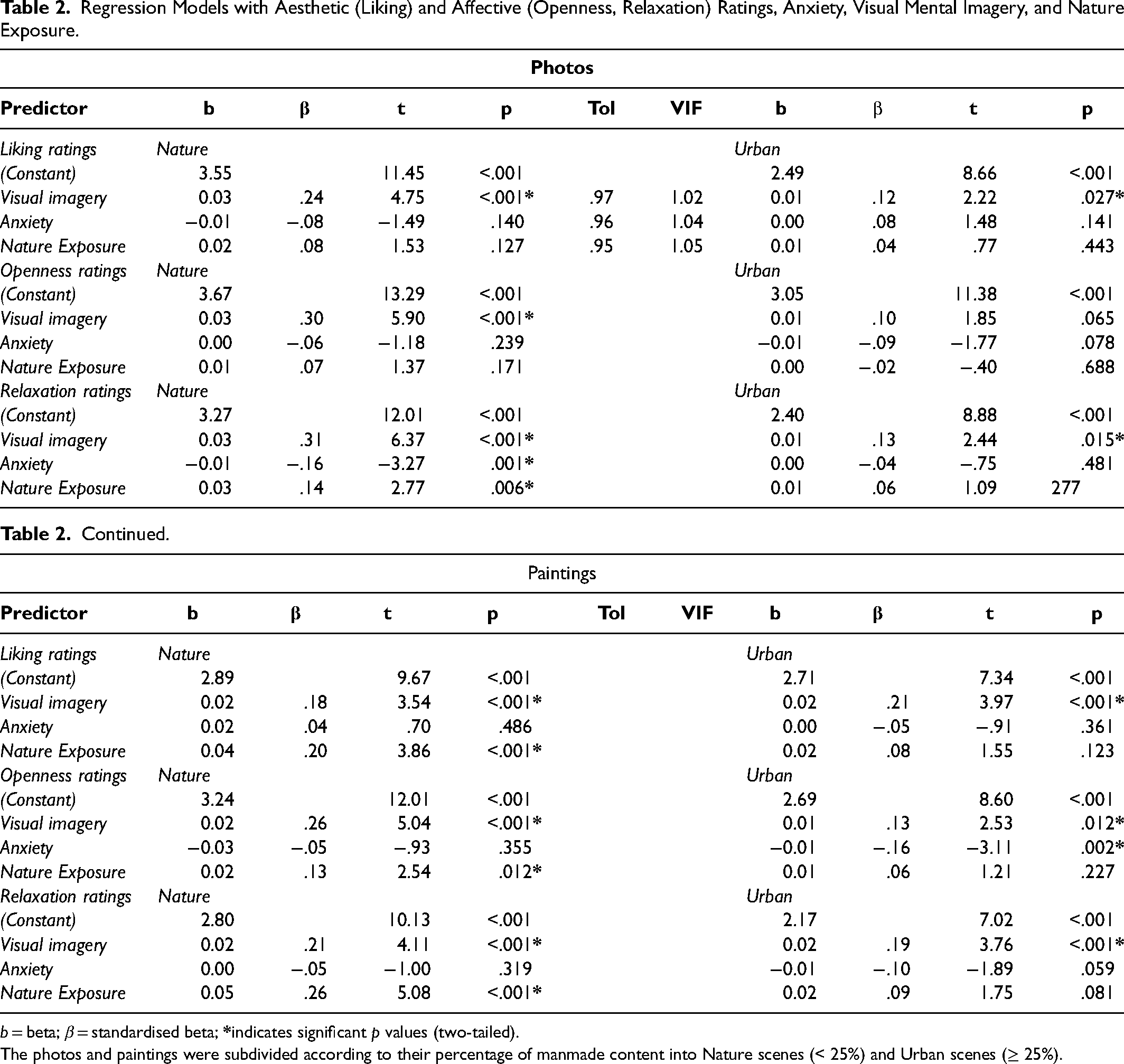
b = beta; β = standardised beta;
The photos and paintings were subdivided according to their percentage of manmade content into Nature scenes (< 25%) and Urban scenes (≥ 25%).
The level of Nature Exposure was a significant predictor of all AAR for paintings, (β = .13 to β = .26; p = .012 to p < .001), but only Relaxation ratings for photos of Nature scenes (β = .14, p = .006) (Table 2).
Visual Mental Imagery was a significant predictor of all ratings for Nature scenes (β = .17 to β = .31; ps < .001) and a strong predictor of all affective ratings of Urban scenes (β = .11 to β = 19; p = .033 to p < .001) except for Openness ratings for photos (Table 2).
Discussion
As urbanization continues to rise and direct contact with nature becomes less frequent, it is increasingly important to understand aesthetic and affective responses (AAR) to visual surrogates of nature. Indeed, there is mounting evidence of positive psychological effects of exposure to nature even through visual substitutes like photos, paintings, and augmented virtual reality (Ulrich, 1984; Vincent et al., 2010), to cite just a few. Such surrogates are often used in experimental settings to control for confounding variables that are difficult to manage in outdoor research settings. However, the complex interactions underlying AAR for nature and urban scenes remain poorly understood. Hence, this study examined the interplay between AAR, visual mental imagery, state and trait anxiety, and prior exposure to nature.
The findings revealed a general preference for photos over paintings, which is in line with a previous study (Felisberti & Harrison, 2022). As the percentage of manmade content in photos and paintings decreased (i.e., scenes with wide spaces and elements like grasslands, sky, water and plants), AAR increased, especially the ratings of openness and relaxation. These affective responses could contribute to the restorative benefits of natural spaces on wellbeing, as documented in earlier studies (Berto, 2014; Bratman et al., 2012; Carlson, 1984; Hartig et al., 2014; Kellert, 1993; Van den Berg, Roerdink et al., 2007; Van Den Berg et al., 2024).
As anticipated, the level of exposure to nature emerged as a strong predictor of affective ratings for photos and paintings with nature scenes, which is in lign with previous studies demonstrating that regular recreational engagement with nature was associated with positive health and wellbeing outcomes across all age groups (White et al., 2019). The findings suggest that frequent interaction with natural environments could not only enhance emotional responses to nature imagery but also contribute to broader psychological and physical benefits. The more time individuals spend in nature, the more familiar they become with its diverse features, so it is reasonable to assume that such familiarity can foster a deeper understanding and appreciation of nature's nuances and complexities, which in turn can foster a heightened sense of relaxation (Bressane et al., 2022; Corley et al., 2021; Zhang et al., 2021). Since it is known that the color properties of images of nature play a significant role in modulating aesthetic enjoyment (Felisberti, 2021; Hurlbert & Ling, 2017; Jonauskaite et al., 2020; Parraga et al., 2000), color may have played a significant role in the AAR reported in this study, which warrants investigation in future research.
The strength of one's visual mental imagery was a strong predictor of all AAR for photos and paintings, except for Openness ratings for photos of urban scenes. The robust link between visual imagery and AAR is likely to be deeply rooted in bio-cultural influences tied to a mythopoetic cognitive model that organizes internal templates shaping interactions with the external world (Asma, 2021; Felisberti & King, 2017). The templates (or archetypes) influence how people interpret and make sense of their surroundings and shape their emotional and aesthetic preferences. The significant correlation found between visual imagery and the degree of prior exposure to nature suggests that the ability to mentally visualize and immerse oneself in natural environments may enable individuals to form a more profound and meaningful connection with what they view, enhancing their emotional experiences (Pearson et al., 2013; Slotnick et al., 2012). Such experiences may play a key role in enhancing relaxation and help to alleviate anxiety, particularly in cases of social isolation, loneliness, low mood, and depression (Chakraborty & Maity, 2020; Fox et al., 2005; Ozamiz-Etxebarria et al., 2020; Pouso et al., 2021). They may also be valuable in health interventions aimed at fostering a deeper connection with nature (Coughlan et al., 2022). In other words, mental imagery can serve as a bridge to nature, offering therapeutic benefits even in the absence of direct physical exposure. Future studies could explore how individual differences in visual mental imagery influence the effectiveness of nature-based interventions, particularly for individuals with elevated anxiety levels.
State and trait anxiety emerged as significant negative predictor of some affective evaluations of paintings and photos, but it did not reliably influence their aesthetic evaluations. Participants with higher levels of anxiety tended to rate photos of nature scenes as less relaxing and paintings of urban scenes as less open compared to those with lower anxiety levels. This may reflect an attentional bias toward potential threats among highly anxious individuals (c.f., Mogg & Bradley, 1998), as the unpredictability evoked by certain scenes (e.g., dense forests, high mountains, narrow streets) could have been perceived as less relaxing or even claustrophobic.
The findings seem to indicate a bidirectional relationship between AAR and anxiety. On the one hand, exposure to nature may reduce anxiety, as reported in earlier studies (Barbieri et al., 2024; Kotera et al., 2021; Lawton et al., 2017; Martyn & Brymer, 2016; Meidenbauer et al., 2020). On the other hand, individuals with pre-existing elevated anxiety levels may provide lower evaluations of artistic images used as surrogates for nature. The negative relationship between anxiety and affective preferences suggests potential diagnostic applications as an indicator of anxiety levels.
Further research is needed to confirm the connection between relaxation ratings for nature scenes and anxiety levels, but there is evidence supporting the use of imagination, particularly nature-based guided imagery, as an effective tool for reducing anxiety (Nguyen & Brymer, 2018). This complex relationship seems to be supported by the negative correlations of anxiety levels with the strength of visual mental imagery and the degree of exposure to nature.
Limitations
The photos and paintings used in this study did not depict identical environmental scenes, and while some elements in the paintings were rooted in the past (e.g., architecture, clothing), the photos represented more contemporary settings. As a result, direct comparisons of AARs between the two types of visual images were not feasible. Additionally, it could be argued that two-dimensional visual representations of environments fail to engage the full range of sensory systems involved in actual physical interactions with nature (Yeo et al., 2020). For instance, images cannot replicate the benefits of direct sunlight, fresh air, or multisensory engagement, potentially leading to distinct types of aesthetic experiences. Indeed, a meta-analysis found that the effect sizes of studies using images of nature on wellbeing were smaller than those involving exposure to real natural environments (McMahan & Estes, 2015). Another potential limitation was the reliance on online data collection, which may have introduced confounding variables such as environmental distractions or variations in display quality, potentially affecting the consistency of responses. However, online data collection also offers significant advantages, including access to large and diverse samples, which often outweigh its limitations (c.f., Geldsetzer, 2020). Despite these challenges, this study provides valuable insights into the role of visual surrogates in shaping aesthetic AAR to nature and urban scenes.
Conclusions
The findings reported here examined the complex web underlying the moderating roles of visual mental imagery, anxiety, and previous exposure to nature on the appreciation of environmental scenes. Although the digital images were proxies for direct exposure to nature, the results highlight the heightened emotional and aesthetic enjoyment they can evoke, as well as their potential diagnostic utility (e.g., individuals with high anxiety tended to provide lower affective ratings). The findings support the use of artistic images of nature featuring open spaces and minimal manmade content to create aesthetically pleasing and relaxing environments. For instance, guided imagery exercises that incorporate such nature scenes could help individuals recalibrate their emotional responses (Coughlan et al., 2022), offering a therapeutic tool for reducing stress and enhancing well-being. Moreover, biophilic design principles, which integrate natural elements such as plant life, natural light, color, and natural patterns into buildings, could effectively mimic the calming and restorative effects of nature (De Vries et al., 2013; Eisenberger et al., 2010).
These approaches hold significant potential to reduce anxiety, elevate mood, and enhance feelings of relaxation, offering a practical means to integrate the psychological benefits of nature into built environments. The insights gained in this study underscore the importance of further research into how visual representations of nature can influence AAR, particularly in contexts where direct access to natural environments is limited. As urbanization continues expanding, the findings highlight the need to prioritize access to perceptually optimized spaces, particularly as more people live and/or work in environments where direct contact with nature is restricted or limited, such as prisons, hospitals, and underground workplaces.
Supplemental Material
sj-csv-1-art-10.1177_02762374251334989 - Supplemental material for Psychological Determinants of Aesthetic and Affective Preferences for Nature and Urban Scenes: Anxiety, Nature Exposure, and Mental Imagery
Supplemental material, sj-csv-1-art-10.1177_02762374251334989 for Psychological Determinants of Aesthetic and Affective Preferences for Nature and Urban Scenes: Anxiety, Nature Exposure, and Mental Imagery by Fatima Maria Felisberti, C. Alejandro Parraga and Neil Harrison in Empirical Studies of the Arts
Footnotes
Acknowledgements
We thank our participants and the valuable feedback from our reviewers.
Author’s note
Fatima M Felisberti is now affiliated with the School of Psychological Science, University of Bristol, BS8 1TH, UK.
Declaration of Conflicting Interests
The authors declared no potential conflicts of interest with respect to the research, authorship, and/or publication of this article.
Funding
The authors received no financial support for the research, authorship, and/or publication of this article.
Data
Data file submitted as Supplementary Materials (.csv format)

Supplemental Material
Supplemental material for this article is available online.
Author Biographies
References
Supplementary Material
Please find the following supplemental material available below.
For Open Access articles published under a Creative Commons License, all supplemental material carries the same license as the article it is associated with.
For non-Open Access articles published, all supplemental material carries a non-exclusive license, and permission requests for re-use of supplemental material or any part of supplemental material shall be sent directly to the copyright owner as specified in the copyright notice associated with the article.
