




Abstract
We critically reviewed the protocols, results, and potential implications from empirical studies (n = 44) on mirror-gazing (including the “psychomanteum”) and eye-to-eye gazing, both in healthy individuals and clinical patients, including studies of hypnotic mirrored self-misidentification, mirror-gazing in body dysmorphic disorder and schizophrenia. We found these methods to be effective for eliciting altered states or anomalous experiences under controlled conditions and in non-clinical samples. Mirror-gazing and eye-to-eye-gazing produced anomalous experiences almost exclusively in the visual, bodily, and self-identity modalities, whereas psychomanteum experiences tended also to involve voices, smells, and bodily touches. The complexity, diversity, and specificity in contents across these anomalous experiences suggest mechanisms beyond perceptual distortions or illusions. We argue that mirror- and eye-gazing anomalous perceptions implicate different mechanisms that induce (i) Derealization (anomalous perceptions of external reality); (ii) Depersonalization (anomalous perceptions of the body), and (iii) Dissociated identity (anomalous perceptions of another identity in place of the self in mirror-gazing or in place of the other in eye-to-eye gazing). These interpretations suggest directions for future researches.
One need not be a Chamber ―to be Haunted―
One need not be a House―
The Brain has Corridors―surpassing
Material Place―
Emily Dickinson, Poem no. 670 (c.1863), Complete Poems (Johnson, 1960, p. 333, first published 1891).
The mirror is a technological artifact with special standing in recent human history (Vollrath, 2018). Particularly, these objects have played an extraordinary role in the trans-generational development of human consciousness by helping to change the self-identity of humans, as well as to modify the mind-brain in relationship to the self. The mirror’s uniqueness is due to the double function of the eyes — both visual sensors and organs of the body. Thus, a subject sees itself in the act of seeing. The specificity of mirrors resides in producing the “consciousness of being” into the reflected object, i.e., the subject of reflection (Merleau-Ponty, 1968). The mirror therefore is the perfect imitator. No time lag exists between bodily face perception and motor facial action. The observer can see his or her own physical and mental clone in the mirror, who is gazing at him or her within an interpersonal setup that is akin to eye-to-eye gazing between two individuals in a dyad.
In these respects, mirrors are as much psychological devices as physical ones. They deliver a sense of space that extends to where nothing tangible exists. An “out-of-space” is thus created beyond the mirror, and the mirror surface acts as a boundary between reality and fantasy, between the subject and the other, between here and nowhere. These extraordinary abilities of mirrors have been exploited not only in everyday tools for personal care and beauty, but also for various purposes in the arts, architecture, movies, industry, literature, and science.
Historical documents of spirituality and divination in ancient Greek, together with poetic and artistic testimonies of Dionysian rituals, indicate that “mirroring” in a specular metal or glass surface successfully replaced ancient lecanomancy (i.e., gazing at water or oil surfaces), which was common in ancient Egypt and the Orient (Delatte, 1932). Mirrors were used in mysteria initiations during Orphic and Dionysian rituals, which were centered about sparagmos, tearing and fragmenting of sacrificial offerings (Kerenyi,1976/1996; Macchioro, 1930), analogous to the way the child Dionysus was torn to shreds by Titans while the god stared at himself into the mirror (Nonnus of Panopolis, Dionysiaca, chap. VI, verse 172–173). Sparagmos or tearing could be interpreted as a within-subject dissociation that is “projected” into and acted upon the object (the sacrificed living animal).
Mirrors were likely used to facilitate transpersonal experiences as one can admire in the frescoes of the Villa of Mysteries in roman Pompeii, or in the mosaic of the Battle of Issus in Naples. In the frescoes, a double identity is portrayed in the double adolescent who is gazing at himself who is reflected by a metal cup. In the Battle of Issus, a near-death apparition is reflected within the shield of the warrior who is dying. In the Italian Renaissance, the mirror was the symbol of the universal knowledge by the human mind. Leonardo da Vinci (Trattato della Pittura, 1540/1956) considered mirrors the quintessence of vision and equivalent to the eye, when the mirror is connected with dreams and apparitions, as in the Leonardo’s drawing that is usually entitled Allegory of the Mirror (Luperini, 2008). In the Elizabethan period, John Dee used a mirror made of obsidian stone to carry out occult studies into the world of spirits. Rembrandt portrayed an apparition from a magic mirror in his gravure Faust in his study, where Faust perceives an anomalous being outside the mirror, in its left side.
Literature on modern “magical” practice with mirrors (Abraxas,1928/2001) describes a room with a very low-level of illumination, whereby a circular mirror is placed on one side, far from the observer and near to the ceiling, not reflecting anything more than the darkness of empty ceiling. In this setup, after a while, the mirror starts to emit “ethereal” light and allows materialization of “spiritual” entities into perceptions. These anomalous experiences are likely to be explained by the effect of mirrors to open the physical room perceptually and spatially toward a realm that lies beyond the physical room and is undefined in its extension because of the darkness of the environment. The phenomenology may be described as if the “ethereal” light and the “spiritual” entities move out from the beyond-space of nowhere, which lays behind the mirror, for entering the here-and-now space and present time within the room.
It is not surprising, therefore, that over the last few decades clinical and experimental studies across the social, biomedical, and parapsychological sciences have investigated the role of mirrors in producing a range of unusual or anomalous sensory or perceptual phenomena. These can sometimes be regarded more broadly as variants of “encounter experiences” (Evans, 2001; Houran, 2000; Pekala et al., 1995), and specifically those that manifest under more controlled (or structured) versus spontaneous (or unstructured) conditions (see Houran, 2000; Houran et al., 2019).
In this qualitative and integrative review, we present these studies that feature various methods of mirror- and eye-gazing, evaluate the corpus of extant findings, explore potential neurophysiological processes and hypotheses, and suggest new research avenues, in part based on limitations in the extant literature. Our overarching goal is to illuminate how the study of mirror-related phenomena can contribute to: (a) our understanding of alterations in consciousness and anomalous experiences, and (b) our understanding of self and body representations and cognitive and perceptual processing, more generally.
Definitions
We review the use of mirrors in producing and studying alterations in consciousness, and notably the phenomenology of anomalous experiences (AEs; Cardeña et al., 2013, 2017; Lynn, 2017 ), focusing on two research protocols: the ‘psychomanteum’ versus ‘mirror-gazing’ setups. With the psychomanteum, the mirror is reclined toward the ceiling and does not reflect the observer or anything other than the black ceiling curtain (Moody, 1992; Moody & Perry, 1993). In contrast, mirror-gazing requires the observer to stare at his/her self-reflected mirror image and to maintain fixation on his/her eyes (or the nose) (Caputo, 2010a).
Some studies have used another setup that is similar to mirror-gazing but involves eye-to-eye gazing between two individuals of a pair or dyad where the other’s eyes similarly act as the subject’s self-reflected eyes in mirror-gazing (Caputo, 2013, 2019). We use the term AEs to refer to various phenomena that involve distortions of the external reality, the percipient’s sense of self during mirror-gazing, or distortions of the other’s appearance in relation to the subject’s self, for example during eye-to-eye gazing.
These various phenomena were denominated differently in diverse studies, as for example: perceptual illusions, hallucinations, apparitions, delusions, dissociative phenomena, and out-of-body experiences (OBEs). In OBEs, the self or center of awareness is experienced as located outside of the physical body (Alvarado, 2000; Cardeña & Alvarado, 2014). The term AEs, or anomalous self-experiences, was introduced in a psychopathological context (Asai et al., 2016; Nelson et al., 2014; Parnas & Handest, 2003; Raballo et al., 2011) and then extended to experimental psychology. However, AEs are common among the healthy population (Bell et al., 2006) and, while unusual, vary on a continuum from frequent and mundane (e.g., transient feelings of unreality/derealization) to rarer and at times disturbing manifestations of serious psychopathology (Cardeña & Alvarado, 2014). For example, during mirror-gazing under low illumination, some people with schizophrenia report that their reflected image appears strange among many strange-faces – an illusion that has never, to date, been observed in healthy subjects (Caputo et al., 2012).
Dissociation and dissociative phenomena are also relevant (APA, 2013; Cardeña, 1994; Holmes et al., 2005; Lynn et al., 2019) in the current context, as they typically involve (a) anomalous perception of reality (e.g., derealization: feeling unreality and/or detachment, with respect to one's thoughts, feelings, sensations, body or actions; APA, 2013, p. 302); (b) anomalous perception of body-self (e.g., depersonalization: experiences of unreality or detachment from surroundings, out-of-body experiences, “sensed presences”); and (c) anomalous experience of identity-self or anomalous experience of the other’s (i.e., mirror imaged) identity (e.g., dissociated identity: identity delusions, illusions of an altered identity) (see Caputo, 2019 classification).
Only tasks requiring prolonged gazing (greater than one minute, on the average) give rise to AEs in front of the mirror (Bortolon et al., 2017; Caputo, 2010b; Derome et al., 2018; Fonseca-Pedrero et al., 2015). The relatively long duration for induction of AEs is common among other anomalous self-perceptions ― e.g., the rubber-hand illusion (Botvinick & Cohen, 1998) and the out-of-body illusion that is generated through “virtual” reality (Blanke & Metzinger, 2009) ― because these processes all involve multi-sensory integration within a bodily-self representation (Park & Blanke, 2019).
Participants also experience AEs in research on sensory deprivation (Miskovic et al., 2019). In studies that investigated pathological and non-pathological, chronic and temporary deficits and disturbances of consciousness, AEs were considered to be the consequence of neuro-computational deformations of brain maps of the external reality (Revonsuo et al., 2009) or brain maps of the body (Park & Blanke, 2019). Deficits and disturbances of self-referential processes (Northoff et al., 2006) are likely to be involved in different AEs, thus allowing researchers to further characterize them.
Facets of AEs are also evident in some psychopathological and neurological diseases we will review. Compulsive behaviors and rituals in front of the mirror are shown in body dysmorphic disorder (BDD: DSM-5, APA, 2013). Mirrored-self misidentification, hallucinations of a stranger and delusions during mirror-gazing are shown in delusional misidentification syndromes (Roane et al., 2019), and hypnotic suggestion can produce delusions in mirror-gazing (Connors, 2015).
Method of Review
This paper represents the first integrative review on the use of mirrors in producing alterations in consciousness that occur spontaneously in pathological and nonpathological contexts and are suggested or occur in response to explicit and implicit experimental demands. We present studies in serial fashion with considerable detail, insofar as our review is the first to evaluate and critically analyze the body of research in this burgeoning and fruitful area. We do, however, summarize correlations between individual-difference traits and AEs across studies and methodologies in Table 1. In identifying studies, we adhere to strict inclusion and exclusion criteria, critically evaluate the existing research base, advance novel hypotheses, and provide directions for future research.
Correlations Between Individual-Difference Traits and Anomalous Experience States Across Different Techniques.
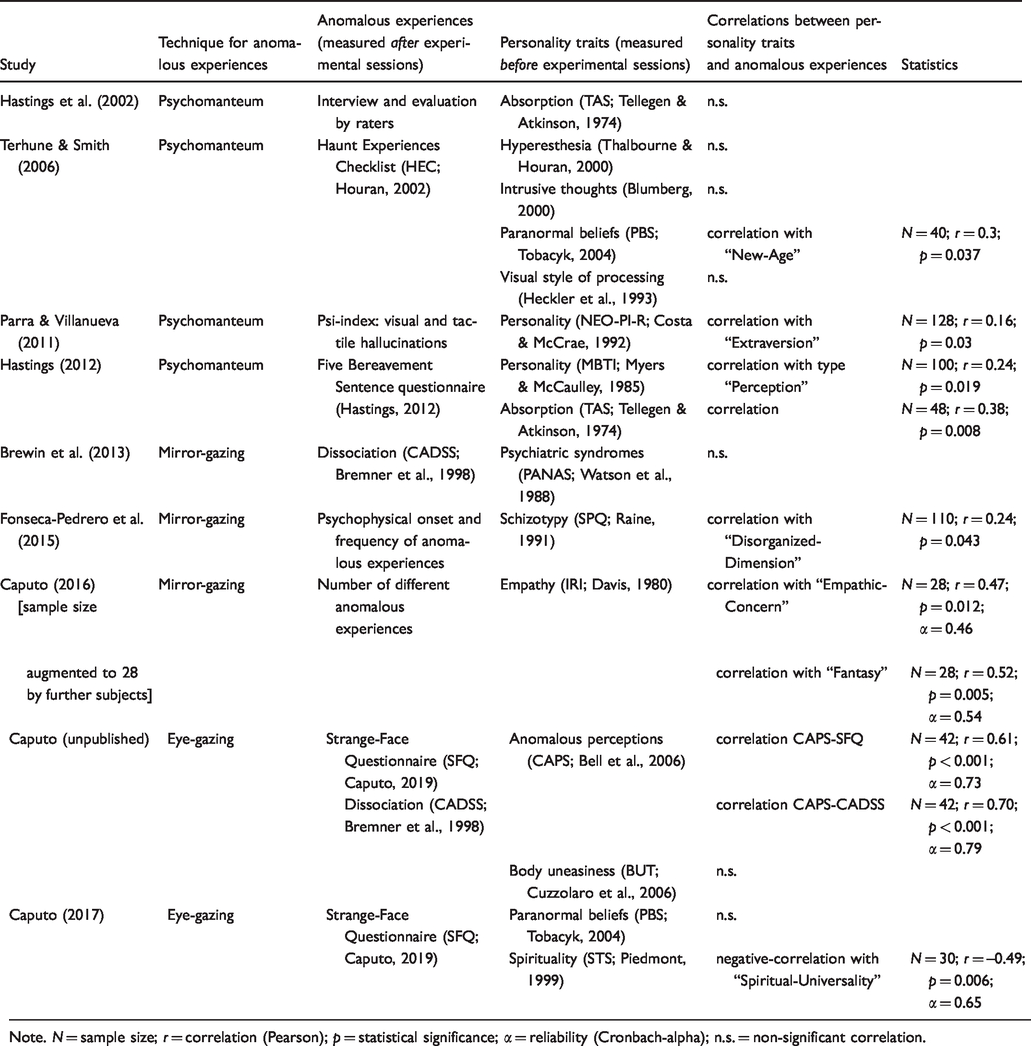
Note. N = sample size; r = correlation (Pearson); p = statistical significance; α = reliability (Cronbach-alpha); n.s. = non-significant correlation.
We specifically considered studies that investigated AEs via different techniques that used mirrors or tools related to mirror-gazing, such as eye-to-eye gazing. To conduct our review, we searched Google Scholar, PubMed and PsycINFO databases. A four-step search procedure across databases (PRISMA: Figure 1) was used. The first PRISMA identification stage was searching for kernel-keywords on publications from 1985 to April 2020, across titles, abstracts, keywords, and texts of records. The following kernel-keywords were disjunctively (OR) searched: mirror-gazing; psychomanteum; eye-to-eye gazing. This first identification stage found 1,720 publications.
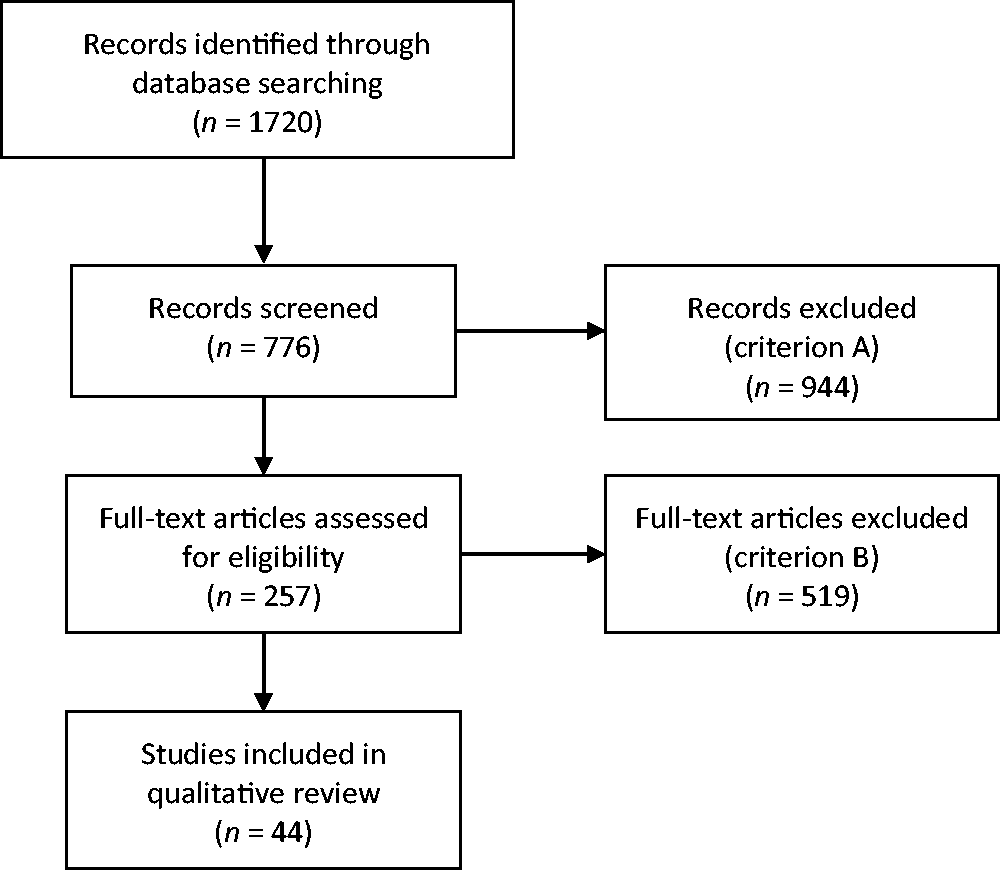
PRISMA Four-Stage Search Through Databases for Publications on Mirror-Gazing, Psychomanteum, and Eye-to-Eye Gazing.
The second PRISMA screening stage was run on the first-stage results and used keywords that were disjunctively (OR) searched across titles, abstracts, keywords, reference lists, and texts of publications. Keywords of the screening stage were the following (Criterion A): altered states; anomalous experiences; anomalous perceptions; apparitions; body dysmorphic disorder; derealization; depersonalization; dissociation; dissociative identity disorder; dissociative disorders; exceptional experiences; hallucinations; hypnosis; illusions; psychosis; schizophrenia; schizotypy. The screening selection found 776 records. The 944 records excluded (a) were not in English; (b) evaluated mirror self-recognition in animals or children; (c) had no connection to AEs nor to any keyword of Criterion A (e.g., Anderson & Gallup, 2015; Butler et al., 2012; Rochat, 2003; Suddendorf & Butler, 2013).
The third PRISMA eligibility stage was run on the second-stage results and used keywords that were disjunctively (OR) searched across titles, abstracts, keywords, and texts of the publications. Keywords of eligibility stage were the following (Criterion B): standardized measures; standardized questionnaires; standardized tests; psychophysics; psychophysical; reaction time; response time; event related responses; EEG; fMRI; PET; rTMS. The eligible selection found 257 records. The 519 records excluded (a) were not methodologically validated or were (b) mere summaries.
Finally, the fourth PRISMA inclusion stage was based on a close reading of all eligible results, yielding the final inclusion of 44 studies consisting of 43 publications and 1 unpublished article by one of the authors. The 213 excluded studies mentioned a kernel-keyword term (mirror-gazing, psychomanteum, eye-to-eye gazing) within titles, abstracts, keywords, or texts. Instead, close reading showed that these studies were not effectively carried out on the kernel-keyword itself, but on other unrelated fields of research [e.g., an article describing an experimental research on BDD patients that mention a kernel-keyword (mirror-gazing) only once in the discussion].
Results
Psychomanteum Sessions for AEs
The psychomanteum is a quiet chamber or booth with walls and a ceiling covered with a thick black velvet curtain (Moody, 1992). A comfortable padded reclining chair is placed at one end of the booth for the participant. At the opposite end, a large mirror is tilted upwards to reflect the dark draping of the booth’s ceiling, without reflecting the participant’s body and face. A small light is placed behind the chair where the participant sits and provides dim illumination.
In the modern psychomanteum (Moody, 1992), typical instructions are to gaze at the mirror and to think about feelings, memories, and dialogues with a person (usually deceased) with whom the participant wants to connect. Duration of the session is typically 45 minutes. In general, the psychomanteum is very effective for conjuring AEs both within and outside the mirror. AEs are often associated with feelings of reality, changes in term of perceptions, “feelings of a presence,” and aliveness. Durations of AEs can vary from seconds to minutes.
Moody (1992) studied people who suffered a recent or past loss of parents, relatives, sons or daughters. Each individual asked for a contact with the deceased loved one in order to attenuate their grief. Therefore, the selected participants had a strong expectancy about the content of their AEs. A preliminary long dialogue preceded entering the psychomanteum booth, in order to further boost these expectancies.
Moody (1992; Moody & Perry, 1993) reported that about 50% of participants reported contacts with their deceased, in the form of anomalous visual experiences, dialogues, body sensations, being touched, emotions, and spiritual connectedness. The feeling of reality of AEs was reportedly very intense; the sense of the “presence” of the deceased person was experienced as strong and physical. The sensation of being in front of a real person and the perception that the deceased was still alive were powerful and convincing. AEs could be perceived within the “empty” mirror or even outside the mirror, within the space of the booth. For some participants, reports of the “presence” of the new person was associated to AEs of voices and dialogues. However, these observations were not formally measured, and demand characteristics and potentially suggestive aspects of the procedures could, in this and other psychomanteum studies, have influenced the findings secured.
Hastings et al. (2002) selected participants with previous experience with psychological tasks and psychotherapy training. A rater evaluated AEs and “contacts with the deceased” based on seven questions. Forty-eight percent of the participants reported contact with the deceased, whereas 70% experienced AEs. During the 45-minute psychomanteum session, diverse visual hallucinations were seen in the “empty” mirror, including: black robed bodies, animal faces, flowers, landscapes, night skies, clouds, and human faces. Other anomalous perceptions included feelings of a “presence,” OBEs, sounds and voices, smells, proprioceptive sensations, and decrements in time perception. Trait absorption (TAS; Tellegen & Atkinson, 1974) did not correlate significantly with experiences in the psychomanteum.
Roll (2004) used 90-minute psychomanteum sessions with participants who sought reunion with murdered or dead children, parents, spouses, relatives, or deceased friends. Therefore, participants possessed strong expectations about what they wanted to perceive. Raters scored experiences within the psychomanteum ranging from zero incidence of AEs, to the feeling of being touched by someone, to the feeling of the “presence” of the deceased, and, finally, to seeing an apparition outside the mirror in the booth. Twenty-two percent of participants reported a strong contact with the deceased. Reports of ESP instances and survival experiences could be in part related to scores obtained within the psychomanteum, although the researchers did not perform correlational analyses to asses this possibility.
Terhune and Smith (2006) used a psychomanteum installation in order to evaluate the effect of suggestions. Healthy participants from the general population were assigned either to a control condition (i.e., neutral task instructions), or received suggestions (i.e., suggestion task instructions) for experiences produced by the psychomanteum including unusual body sensations, anomalous visual and auditory experiences (e.g., sounds, voices), a “presence” inside the booth, and OBEs. After the 45 minutes session, AEs of visual phenomena and unusual voices increased only in the suggestion task instruction condition (HEC, Houran, 2002), implying specificity of suggested effects. Moreover, a moderate association between dissociation (PCI; Pekala, 1991) and AEs was observed only when suggestions were provided.
Combined, these findings support the role of suggestions and demand characteristics as moderators or mediators of experiences within the psychomanteum. Analyzing the same data set, Terhune (2006) found that individuals who reported prior out-of-body experiences, compared with those who did not, reported significantly greater self-reported dissociative alterations in body-image (PCI: Pekala, 1991) during the psychomanteum task, pointing to the relevance of prior experiences in participant reports of AEs. Relatedly, Parra and Villanueva (2011) found a link between extraversion (NEO-PI-R; Costa & McCrae, 1992) and experiences in the psychomanteum, signifying the potential importance of personality traits as determinants of AEs and also reported that participants who scored higher on self-reports of visual and tactile hallucinations reported more AEs.
Some studies were motivated by the hypothesis that AEs in the psychomanteum are conductive to psi-phenomena. Radin and Rebman (1996) reported that power in different EEG frequency bands (i.e., beta, alpha, and theta) was correlated with changes in the magnetic field while participants were in the booth. In a controlled setup, Parra and Villanueva (2015) found evidence of psi-phenomena in the psychomanteum through purported telepathic communication indexed by mean scores, in relation to “hit pictures,” that exceeded the statistical probability of random responding. Nevertheless, results were inconclusive in enhancing ESP with respect to a comparison condition in which the mirror was covered with a blackboard.
Hastings (2012) studied 100 volunteers who grieved a deceased relative or friend. After a 45-minute session within the psychomanteum, 63% of participants interviewed reported contacts with the deceased person, and 34% of participants reported AEs of another person. Participants who reported no contact with the deceased, nonetheless, reported the same sensory phenomena as the contact participants, which included: anomalous visual experiences in the mirror (clouds, animals, stars, visual memories, unfamiliar faces and odd facial features, streams and spirals of lights, tunnels); bodily sensations of warmth and energy; being touched, smells, voices and dialogues; altered states of consciousness (e.g. going to another dimension or sense that the space of the psychomanteum booth seemed altered; altered or lost sense of time; absence of thought; see Merz, 2010).
Sixty percent of participants perceived the duration of the session as shorter than the actual 45-minutes duration. The reduction of bereavement (Five Bereavement Sentence questionnaire; Hastings, 2012) after psychomanteum sessions was highly correlated with absorption (TAS; Tellegen & Atkinson, 1974) and “perception” traits (attachment to incoming information, MBTI; Myers & McCaulley, 1985). Merz (2010) analyzed oral interviews after sessions of 12 participants who experienced the psychomanteum for the first time. Reported experiences encompassed changes in affect, cognition, sensory perception, and transpersonal changes; communication with the deceased; and altered states of consciousness (see Hastings, 2012 reported above).
In summary, the psychomanteum may reduce bereavement and grief while enhancing AEs, “presence” perceptions, and hallucinations of the deceased persons (Beischel, 2019), although longitudinal studies of the nature and course of bereavement are required to determine whether this is the case. Interpretations of findings are limited by (a) difficulties in administering measures during the session without interrupting or changing AEs; (b) the long duration of the session, which produces considerable fluctuations in psycho-physiological states; (c) and the lack of comparison of healthy individuals with participants with significant psychopathology.
Mirror-Gazing Technique for AEs
Over the past decade, researchers have developed mirror-gazing and eye-to-eye-gazing techniques to evoke and study AEs in experimentally controlled settings (Caputo, 2010a, 2019). In these studies, participants were selected among healthy naïve individuals with no prior experience participating in a psychological study. Suggestive communications were eschewed in instructions provided to participants, although the role of implicit demands cannot be ruled out.
The mirror-gazing technique is relatively simple. A regular room, measuring about 4 m x 4 m, with clear painted walls is used. A square mirror (about 0.4 m each side) is placed in the center of the room in a floor stand in order to eliminate asymmetry in reflections and light illumination of the face. A chair is placed in front of the mirror, which is positioned about 0.4 m from the observers’ eyes. The room is illuminated by a spotlight (about 10–20 W, halogen or tungsten lamp) placed on the floor an average distance of 1 m behind the observer. The spotlight points towards the floor to provide indirect illumination of the participant's face and to minimize shadows and other illumination artifacts. The level of illumination of the observer’s face (i.e., the light that is “incident” to the frontal plane where the face is located) is usually set around 0.6 – 1 lux. The participant's task is to pay attention to the face reflected in the mirror, while staring in the reflected eyes. Experimental sessions are 10 minutes in duration, which is much shorter compared with psychomanteum studies.
Caputo (2010a) employed 50 naïve observers and found that, after 10-minutes of mirror-gazing, they perceived: (a) face deformations that still represented one’s own face (66% of the 50 participants); (b) a parent’s face with altered traits (18%: 8% were reported as living and 10% as dead); (c) an unknown person with an independent identity (28%); (d) an archetypical face, such as an old woman, a child, or a portrait of an ancestor (28%); (e) an animal face, such as a cat, pig or lion (18%); and (f) fantastical and monstrous beings (48%).
These findings attest to the wide range of AEs: observers perceived, on average, 2.6 different types of AEs, which, interestingly, reappear more times during the session and across sessions when they are conducted on sequential days. Aura perception was very frequent, appearing as a shining corona surrounding the darkened whole face. Shining eyes were also observed. Faces embedded into the whole face or faces embedded within the eyes were also reported. In Figure 2, an artist’s portrait of an anomalous strange “other” with a dark shape and one eye is displayed, which she, the portrait artist, perceived during a mirror-gazing session. Behind the dark shape, a second “body of light” – as she stated – appeared, where no physical shadow was actually present, which can be likened to experiences of “shadows of the Self” (Jung, 1951/1969, Chapter 2).
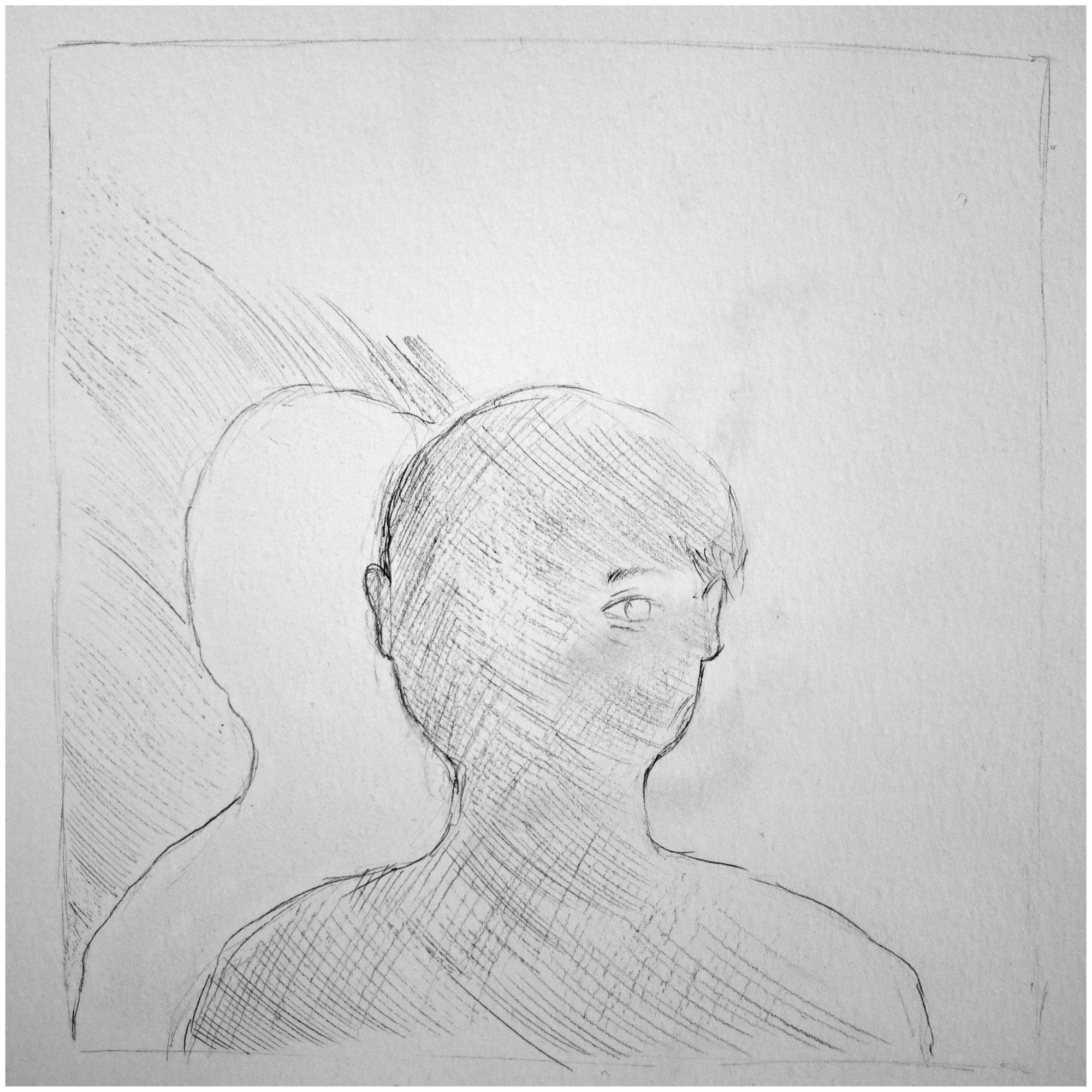
An artist's portrait of two AEs during mirror-gazing: she perceived a dark strange-face and, behind, a body of light. These AEs did not reflect her physical aspect nor actual shadows.
Caputo (2010b) recorded psychophysical measurements of AEs by asking 42 naïve observers to press a button when they perceived changes in their reflected image. Duration of an AE was 7 seconds on average, and frequency of AEs was 1.8 per minute. The time of first AE from mirror-gazing onset (button press), was about one minute. Frequency and onset of AEs depended on the illumination level, as expected. Observers described various AEs, and some reported they experienced no control of their manifestation, which implies that AEs in mirror gazing can be associated with a perception of loss of self-agency (i.e., sense of intention to perform an action, Haggard, 2008), the determinants of which can be explored in future research.
Time-series analysis (Caputo, 2010b) revealed a highly statistically significant negative-correlation between the duration of each AE and the nearest preceding AE, which implies an inhibitory mechanism that moderates increases across subsequent AEs and which, we speculate, dampens or regulates potentially maladaptive or distressing alterations in consciousness. We further hypothesize that this inhibitory mechanism is impaired in some schizophrenic patients. As evidence, several such patients (3 out of 22 hospitalized patients, Caputo et al., 2012) exhibited an “explosive” increase in AEs during mirror-gazing that made it necessary to interrupt the task after a few minutes. Researchers have used mirror-gazing tasks to advantage to study state and trait dissociation and schizotypy traits in healthy populations (Fonseca-Pedrero et al., 2015).
In laboratory studies with healthy college students, the mirror-gazing task produced acute state dissociation (CADSS; Bremner et al., 1998) when compared with a comparison group that required participants to observe a 10-minute video clip of neutral pictures (Brewin et al., 2013; Brewin & Mersaditabari, 2013). Dissociation (CADSS; Bremner et al., 1998) produced through mirror-gazing sessions was associated with impaired visual memory performance, time estimation, digit span, and story retention, but not with perceptual attention, spatial span, or immediate story recall (Brewin et al., 2013), again indicating specificity of effects. Positive and negative affect (PANAS; Watson et al., 1988) scores were non-correlated with dissociation (Brewin et al., 2013). Brewin and Mersaditabari (2013) further found that induced dissociation produced by mirror-gazing produced impaired visual memory performance compared with non-mirror gazing related performance.
These latter findings showed, for the first time via standardized measures, that mirror-gazing under low levels of illumination produces dissociation. Prior studies (Lickel et al., 2008; Miller et al., 1994), which were methodologically problematic, either discerned no difference across techniques (mirror staring, dot staring, spinning, lightbulb staring, stimulus deprivation; Lickel et al., 2008) on subjective evaluations of derealization and depersonalization, or, in healthy controls, found no difference across techniques (mirror staring, dot staring, name repetition task, phone book random reading, photo album staring; Miller et al., 1994) on non-standardized measures of derealization and depersonalization. Mirror gazing thus appears to be a viable method for inducing dissociative phenomena in the laboratory (Brewin et al., 2013).
Rugens and Terhune (2013) used mirror-gazing to investigate guilt in moderating the relation between trait (DES; Carlson & Putnam, 1993) and state (PDEQ: Marshall et al., 2002) dissociation. After trait assessment, and before mirror-gazing, undergraduate students completed a word arrangement task to prime attitudes and behavior (Bargh et al., 2001) using sentences to evoke guilt, negative attitudes and beliefs, or neutral sentences. Trait and state dissociation measures were correlated in the guilt condition but not in the other conditions, although state dissociation was not increased in the guilt compared with the other conditions. The authors concluded that “…an individual's propensity for dissociative tendencies more greatly determines the experience of dissociative states when experiencing guilt than negative affect per se” (p. 116).
Shin, Goldstein, and Pick (2019) corroborated the ability of mirror-gazing to instantiate state dissociation (CADSS; Bremner et al., 1998) and found that participants who engaged in mirror-gazing to induce dissociation rated both negative and neutral images as significantly less unpleasant compared with participants who did not engage in mirror-gazing. The researchers interpreted this finding as supporting the “short-term alleviation (i.e., emotional numbing) of negative affect during dissociative states… may serve as a coping mechanism for some individuals” (p. 1). An alternative explanation, which requires further evaluation, is that dampening processing of emotional stimuli occurred post-dissociation.
In a study of mirror gazing among healthy adolescents, which incorporated psycho-physical measures, Fonseca-Pedrero et al. (2015) found that disorganized-schizotypy (SPQ; Raine, 1991) correlated negatively with time of first reported AE and positively with frequency of AEs. Participants were classified into four groups (based on judgments by expert psychiatrists), which varied “in degree of depersonalization-like phenomena” (p. 478): (a) slight change of light/color, (b) own face deformation, (c) other-identity, and (d) non-human vision. The researchers found that positive-schizotypy was associated with AEs of other-identity, and disorganized-schizotypy was associated to AEs of other-identity and non-human vision, underscoring the selective nature of the link between schizotypy and certain AEs during mirror gazing.
Caputo (2016) measured empathic personality traits (Interpersonal Reactivity Index, IRI, Davis, 1980) among naïve healthy observers before mirror-gazing. The “empathic concern” factor (i.e. ability to empathize with feelings of another person) and “fantasy” factor (i.e., identification of self in a story, fiction, or narrative) were correlated with the number of AEs during mirror-gazing. Thus, AEs may be associated with permeability of the self/other boundary (“empathic concern”) and with the susceptibility to creating an imaginary narrative-self and a new identity-self (“fantasy”).
Caputo (2021) used a vertically split mirror to effectively split the image of the participants’ in two halves. Dissociative states were measured on a 9-item scale derived from DSM-5 definitions of derealization, depersonalization, and dissociative identity (APA, 2013). In healthy individuals, split-mirror-gazing produced the perception of strange-faces with double-identity (i.e. left-identity vs. right-identity), and non-significant changes in derealization and depersonalization with respect to single-mirror gazing.
The studies reviewed underscore the promise of mirror-gazing in examining AEs in the context of trait and state features of experiences and symptoms relevant to different psychological conditions and disorders. Mirror-gazing could be further exploited to explore the link between the frequency and content of AEs and a range of affective experiences, levels of arousal, self-perceptions, and symptoms of psychopathology.
Eye-to-Eye-Gazing Technique for AEs
The eye-to-eye technique uses the gaze of another person in place of the mirror. Two chairs are placed symmetrically around the center of the room, and two individuals gaze at each other in the eyes. Both eye-to-eye-gazing and mirror-gazing techniques produce similar AEs.
Caputo (2013) studied eye-to-eye-gazing in which the participant perceives AEs and “projects” them onto the other’s face and determined that AEs were similar in type to those reported in mirror-gazing. Synchronization of dyad responses was measured when the psychophysical responses of the participants totally or partly overlapped in time. Such synchronization supports the hypothesis that dyad-crossed synchronicity (Jung, 1954/1970) in the envisaged contents of AEs might also be found. Time series analysis on psychophysical event-related responses (Caputo, 2013) to AEs during eye-to-eye gazing indicated that the duration of each AE was negatively correlated with the duration of the immediately preceding AE, implying an inhibitory control mechanism in healthy individuals (see discussion above, Caputo, 2010b).
Self-report measures have revealed observers’ compelling feelings of strangeness and reality of AEs, and an intense feeling that AEs represent strange and unknown persons, compared with the actual persons in front of them (Caputo, 2013). We hypothesize that a temporary loss of self-other boundary occurs when the subject’s “projections” are experienced in the other’s face. In Figure 3, an example of an anomalous “stream or flow of perceptions” portrayed by an artist at the end of an eye-to-eye-gazing session is displayed. The artist tried to sketch his experience of a dynamic flow of AEs and his perception that facial features were shifting and moving back and forth.
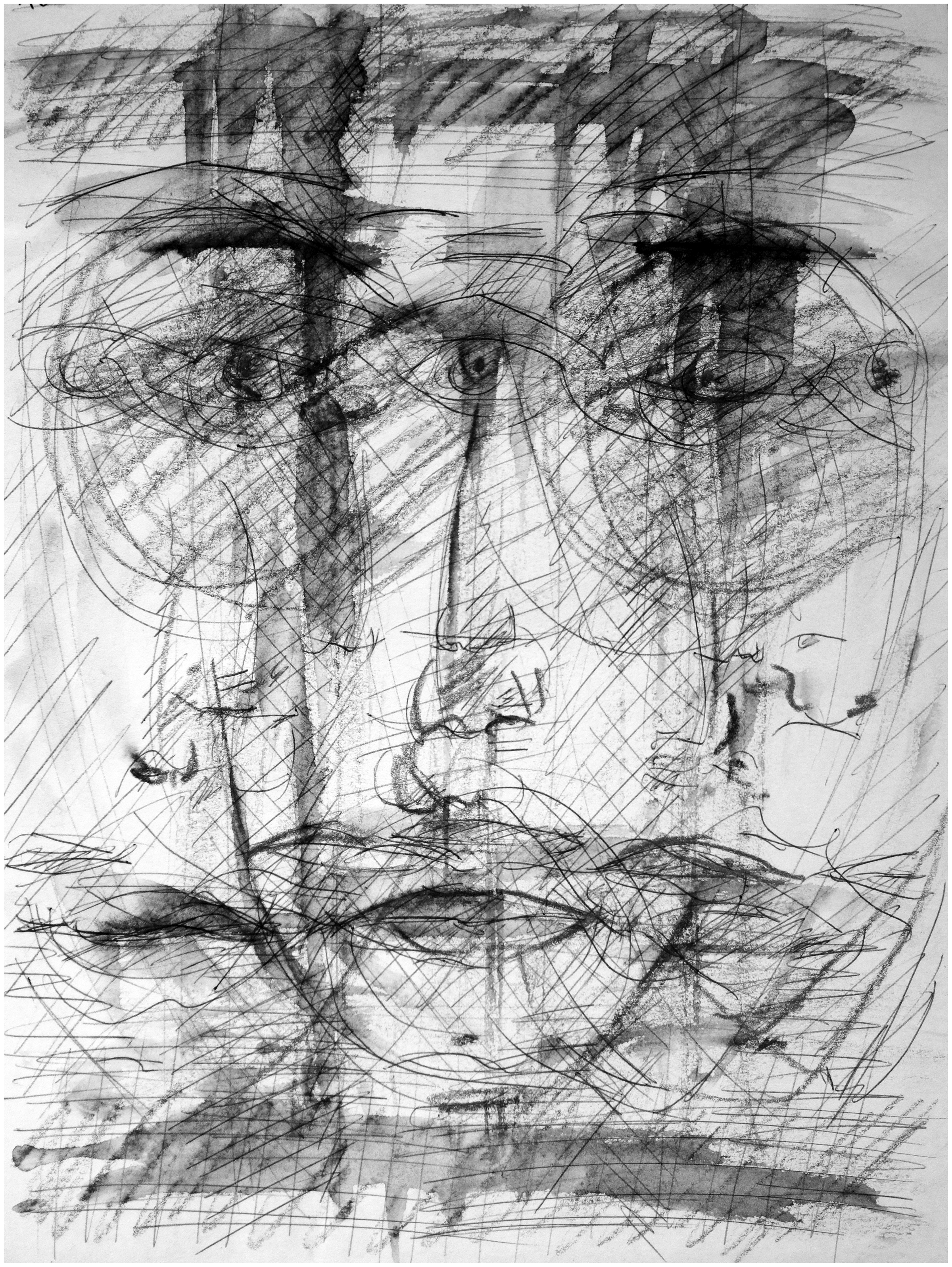
An artist's portrait of the flow of AEs that he perceived in place of the other's face during the eye-to-eye gazing test.
Contrasting the effects of eye-gazing with staring at a white sheet of paper, Caputo (2015) documented that eye-gazing robustly enhanced dissociation, hallucinations, and AEs. Caputo (unpublished, 2019) measured trait differences of AEs (Cardiff Anomalous Perception Scale, CAPS, Bell et al., 2006) before the eye-gazing task. After 10-minutes of eye-gazing, AEs were measured with the SFQ (Strange Face Questionnaire, SFQ, Caputo, 2019) and CADSS (Clinician Administered Dissociative States Scale, CADSS, Bremner et al., 1998). Correlations between SFQ and CAPS total scores and between CADSS and CAPS total scores were high and statistically significant. Thus, eye-gazing appears to be an efficient tool for inducing and measuring AEs in a controlled experimental setting. Nevertheless, repeated testing, in this and other studies, might convey subtle demands for increased reports of AEs that could be investigated in test-retest designs with eye-gazing present vs. absent.
Caputo (2017) studied personality traits of spirituality/parapsychology/religion (Spiritual Transcendence Scale, STS, Piedmont, 1999; Paranormal Belief Scale, PBS, Tobacyk, 2004), which were measured before eye-gazing sessions, and quantitative measures of AEs with the SFQ-scale measured after the session. Paranormal beliefs (Tobacyk, 2004) were non-significantly correlated with AEs during mirror-gazing. Instead, lower feelings of “spiritual-universality” (i.e., spiritual binding between humans; Piedmont, 1999) were correlated with higher frequency and strength of AEs, an unexpected finding that bears replication and that researchers could explore in future studies.
Caputo (2019) summarized previous findings on eye-gazing and mirror-gazing and hypothesized that different variables describe clusters of AEs that might correspond to different neural circuits. Thus, a questionnaire that evaluates the strength and frequency of different AEs could be valuable for factor analysis. Indeed, a factor analysis confirmed the hypothesis that AEs can be clustered in terms of three factors linked to distinguishable classes or types of anomalous dissociative experiences, although the terminology we adopt does not map precisely onto conventional diagnostic usage of the term (DSM-5, APA, 2013):
Anomalous perceptions of reality (termed here derealization): deformations of facial features, such as transformations of faces into animals or elderly persons. Anomalous perceptions of an old person by young observers often are represented as major deformations in the skin, facial features, and Gestalt of the entire face. Anomalous experiences of body-self (termed here depersonalization): AEs of immaterial faces, sensed “presence” of someone not physically present, immobile and dead faces. In addition, depersonalization is correlated with reports of alterations in time perception, which shrinks as experiences shift very quickly or as if a lifetime is experienced in a moment. In contrast, time dilation was non-correlated with dissociation. Anomalous representations or experiences of doubles of identity-self (termed here dissociated identity): anomalous experiences of either “positive/shining” or “negative/dark” identity; enlightened and idealized faces; child and adolescent faces (likely, child/adolescent represents idealized-self); faces of a different human race; “projections” of self-face into the other’s face during eye-gazing; spiritual faces. These “double personalities” seem to be represented by “opposite” identities as light/dark or good/evil. We use the qualifier “dissociative-type” process here to distinguish plainly between reports of seeing a distorted face or a face that does not resemble the experient’s actual reflection in the mirror, and a “dissociated identity” that would involve imbuing the image with personality characteristics distinct from one's self-identification. This important nuance must be explored and confirmed. Accordingly, generally equating these particular AEs to expressions of pathological dissociative identity disorder, for example, is tenuous.
Factor analysis (Caputo, 2019) indicated that two factors derealization and depersonalization are partially independent. Although AEs of detachment from reality and from the body are correlated, they can be distinguished statistically (through partial correlations) and based on content. In contrast, a third factor related to dissociated identity was statistically independent of the other two factors, perhaps implying anomalous identity-self compartmentalization in accordance with clinical findings of independence between detachment (derealization/depersonalization) and compartmentalization (dissociative identity processes, Holmes et al., 2005; DSM-5, APA, 2013). Nevertheless, such findings, derived from factor should not be taken to mean that mirror-gazing experiences reflect pathological dissociation.
Based on factor analysis, AEs during eye-to-eye-gazing and mirror-gazing can conceivably involve at least three different types of mental representations: First, changes in sensory maps of visual processing; hence, deformations in perceptions. Second, changes of multisensory integration of body-self; hence, sensed “presence,” feelings of immateriality of the physical body, illusory bouncing of eyes, and apparent movements of mouth. Third, changes of identity-self; hence, AEs of different personalities and new identities in place of the real other individual or in place of the participant’s regular self-identity reflected in the mirror.
The balance among these three processing levels appears to vary among observers. However, the experience of another being ― “real” and with its own agency ― may correspond more specifically to the surfacing of a perceived dissociated identity, which the participant “projects” beyond the reflective mirror onto the face of the strange other.
The first and second types appear to be more related to perceptual processing of bottom-up information (e.g., based on stimuli either external to the subject or internal to the subject’s body; exteroception and interoception, respectively). The third type involves top-down (e.g., expectancy or knowledge based; hypothesis driven) processing of the self in relation to an alter dissociated identity that can appear beyond the mirror. Therefore, at this last processing stage, intersubjective and empathic processing, both cognitive and affective, between the self- and the alter-identity, can occur. Disturbances of these representations can selectively produce the three kinds of AEs indicated above. In some experiences, the subject may maintain his or her identity, while observing anomalous perceptions (as in perceptual distortions following psychedelic substance use) or while feeling anomalous body detachment (as in classical OBEs).
These distinctions require further research and psychometric validation using more advanced statistical approaches grounded in Modern Test Theory that can account for potential response or test biases that can lead to spurious factor structures of constructs, significant distortions in scores, and consequently erroneous reliability and validity findings. For an overview of the advantages of Modern Test Theory, and specifically Rasch scaling, as applied to consciousness studies we refer readers to the work of Rense Lange (Lange, 2017; Lange et al., 2019a; Lange et al., 2019b).
Comparisons of Mirror Techniques for AEs
The different techniques we discussed (psychomanteum, mirror-gazing, and eye-to-eye-gazing) vary in terms of settings, sessions, and types of AEs evoked. First, the visual stimuli perceived by the observer differ. In mirror-gazing and eye-to-eye-gazing, the observer perceives a face over a dimly lit background (the reflection of the wall behind the subject). In contrast, in the psychomanteum the observer perceives an empty dark mirror among black curtains and reflecting black curtains.
Sensory deprivation differs among these techniques. The psychomanteum uses black curtains that adsorb most of the light emitted by a small lamp. In contrast, in mirror-gazing and eye-to-eye-gazing, the level of illumination allows detailed perception of facial features, while colors are attenuated. Duration of the sessions also differs, with the psychomanteum requiring a very long session (45 to 90 minutes) compared to mirror-gazing (10 minutes). This difference can potentially increase the effect of sensory deprivation in the psychomanteum, raising questions about the role of such deprivation in producing AEs independent of the mirror.
Another key difference concerns the use of “explicit suggestions” in the psychomanteum set-up, whereas they are eschewed in mirror-gazing and eye-to-eye-gazing methodologies. Still, more implicit (as well as explicit) experimental demands may be present for alterations in experiences in the latter modalities, and differential demands might account for differences in AEs across experimental paradigms. Accordingly, comparing AEs and implicit and explicit suggestions and demand characteristics across the three set-ups could provide useful information regarding antecedents of AEs.
Given these differences in both stimuli and sessions, it is not surprising that the phenomenology of AEs differs. Experiences through mirror-gazing and eye-to-eye-gazing are typically more stable, perceptually defined, and focused attentionally, with respect to the psychomanteum. Hence, AEs are more easily measurable through quantitative methods in the former techniques than in the psychomanteum. Consciousness of AEs is enhanced in mirror-gazing and eye-to-eye-gazing, because a high level of focused attention is required by the task of eye staring.
However, mirror-gazing and eye-to-eye-gazing produce AEs almost exclusively in the visual modality, whereas, voices, smells, and bodily touches are more typically perceived within the psychomanteum, in addition to anomalous visual experiences. It is possible that the psychomanteum, which produces high levels of sensory deprivation, is more efficient in generating hallucinations of voices and smells. Alternatively, in mirror-gazing and eye-to-eye-gazing, AEs of lip movements are frequent. For most observers, the lips start to move, as if they want to say something (e.g. a message coming from the anomalous being beyond the mirror). Thus, lip movements appear to be preliminary or preparatory to hearing voices, which might emanate from lip movements, if sensory deprivation could be pushed further or sessions of mirror-gazing longer than the 10-minute standard duration.
An interesting, albeit rare, phenomenon in the psychomanteum occurs when the “apparition” is perceived outside the mirror, yet still within the psychomanteum booth, whereas in mirror-gazing, AEs are usually perceived beyond the mirror. Furthermore, in mirror-gazing some observers perceive a double apparition, which stands to one side of their reflected image (Figure 2). This proliferation of AEs beyond the mirror is frequent in schizophrenia (Caputo et al., 2012). As a result, AEs can either stand out from the mirror in the psychomanteum room or, in mirror-gazing, can fill the wide space beyond the mirror, doubling the visual space of the laboratory room. In both cases, self-mislocalization in space may be involved. In summary, all the techniques that exploit the mirror seem effective in producing a variety of AEs.
Hypothesized Neuroscientific Aspects of AEs in Mirror- and Eye-Gazing
Face Processing
For heuristic purposes, we hypothesize a number of possible neurophysiological bases of AEs in the present context. Face processing is a complex mechanism, given the evolutionary relevance of face perception in social cognition and interconnection between humans. Current models of face processing distinguish between core face network and extended face network (Elbich et al., 2019; Haxby et al., 2000; Zhao et al., 2018). Core face network involves occipital and temporal brain areas that analyze facial parts (occipital face area), transform facial parts into configurations (fusiform face area), and integrate static and dynamic information (posterior superior temporal sulcus). Extended face network further processes visual faces in connection with other systems: visual-auditory integration for speech, such as lip movement and language (anterior superior temporal sulcus); retrieval of personal information (anterior temporal lobe); and affective empathy, intersubjectivity, and self-identity (orbital frontal cortex).
Anomalous deformations of faces and facial features likely occur in the core face network through changes in spatially organized neural maps that characterize these areas. AEs of movements of lips and mouth, which are very frequent during mirror-gazing, are likely produced within the core face network. It is possible that hearing voices can be a consequence of activation of visual-auditory area in the extended face network, which in turn is triggered by anomalous movements of lips in the core face network. Furthermore, the extended face network is likely involved in identity changes that characterize strange individuals appearing in mirrors. Anterior areas of the temporal lobe and orbital frontal cortex are likely involved in the mental construction of narratives and personalities of anomalous identities.
Identity-Self
Medial and orbital frontal areas are also parts of the default mode network (DMN) (Raichle, 2015). This circuit involves posterior parietal, medial prefrontal, insular, and cingulate areas. The DMN is involved in mind wandering, autobiographical memory wandering, and, in general, to mind activity at rest. Involvement of the DMN can be expected in the psychomanteum, where participants are explicitly asked to reminisce about memories of the deceased.
In mirror-gazing, Derome et al. (2018) reported evidence for the involvement of DMN, and via fMRI analysis found that lower connectivity of specific visual areas within the primary visual network, and higher connectivity of regions within the DMN characterize anomalous self-experience among schizotypal adolescents. It can be hypothesized that DMN is involved in creating anomalous new identities and narrative-selves in AEs during mirror-gazing, in particular the dissociated identity AEs described above. Empathic interconnection and fantasy involvement with fictional narratives and characters correlate with AEs in mirror-gazing (Caputo, 2016), as previously described.
Moreover, medial and orbital prefrontal cortices are core areas for processing a representation of the identity of the self (Feinberg, 2011; Northoff et al., 2006). The identity-self is a dynamic process that involves empathic interconnection with other possible identities (i.e., associated with or contextually influenced/triggered narratives comprised of networks of cognitive-behavioral-affective response sets and associations) depending on the social context and affective interrelationships with other-possible selves. Consciousness is like a “theatre of the mind” where different characters of the self are on the stage (Baars, 1997). One identity-self among other selves can temporarily play the main role on stage, but other selves are always at the disposal of the self.
Out-of-Body Experiences
OBEs have been studied extensively in recent years (Alvarado, 2000; Brugger, 2002; Brugger & Lenggenhager, 2014; Cardeña & Alvarado, 2014). At the basis of OBEs is activity in the temporal-parietal areas, which are responsible for multisensory integration. The integration core of different sensory modalities within a unitary representation resides in a unitary body-self representation. The latter is required to bind incoming information across different sensory inputs. The unitary bodily-self representation corresponds to the feeling of “mine-ness” (Northoff et al., 2006).
Nonetheless, the mirror-image is already out of the subject’s body, at a distance from the subject, and in front of him or her. Hence, it should be noted that the human subject’s self “moves” toward its mirror-image – i.e. the human subject’s self is “projected” into the object (Caputo, 2016; Jung, 1921/1971). Therefore, it is useful to discuss mirror-gazing and eye-gazing in relation to modern results of OBEs that are generated through “virtual” reality. OBEs can be produced when tactile strokes to the subject’s body are bound to visual information coming from an avatar that is perceived by the subject through virtual reality as receiving synchronously delivered tactile strokes (Blanke & Metzinger, 2009; Petkova & Ehrsson, 2008). Visual-tactile integration is also involved in the enfacement illusion (Tsakiris, 2008) in which tactile strokes are delivered to the subject’s cheek while the subject gazes at a movie displayed on a computer screen, showing a morphed face being touched in synchrony. In a different version of the enfacement illusion, the subject gazes at another person and both receive synchronous tactile strokes on their cheeks (Sforza et al., 2010). After two minutes of visual-tactile stimulation, a minor effect (less than 5%) on threshold of self/other face discrimination is shown.
Further studies (summarized in Park & Blanke, 2019) have documented the relevance of bodily self-consciousness for both self-localization and self-identification. Bodily self-consciousness is based on integrating multisensory bodily signals (interoception: e.g. kinesthetic, visceral, heartbeat signals) and external stimulation (exteroception: e.g. tactile, visual-spatial, auditory stimulations). Core areas for interoception are the insula and posterior cingulated cortex, while parietal areas can process multisensory integration. Erroneous binding between exteroception information and interoception information can engender mis-localization of the self in space. In relation to mirror-gazing, we hypothesize that kinesthetic information is temporarily connected to the face perceived in the mirror, which is perceived beyond the mirror.
This kinesthetic-visual binding is certainly triggered by the perfect imitation produced by the mirror without any time lag between perception, action, motor mimicry, and corresponding kinesthetic sensations. In this way, OBEs can easily follow, and AEs can correspond to the feeling of a “presence.” This very “presence” would appear to be living because it receives the subject’s kinesthetic sensations. In other words, the subject’s body-self, along with kinesthetic sensations, is bound to the participant’s reflected image into an apparitional being, which is optically and spatially located on the other side of the mirror.
Furthermore, experimentally induced OBEs produce the perception of the participant’s rear image (Ehrsonn, 2007) or the avatar’s rear image (Lenggenhager et al., 2007); the front-side image can never be seen. Hence, these experiences should be properly described as pseudo-OBEs, because in true hallucinations the out-of-body is perceived frontally with respect to the self (Brugger, 2002). Consistent with this conclusion, mirror-gazing provides the means to directly perceive AEs in the face. Thus, mirror-gazing phenomena are very similar to OBE hallucinations. In addition, the identification of apparitional faces is remarkably successful in triggering empathy and dissociated identity in the subject.
Self-Agency
Self-agency refers to a person’s consciousness when stating “I am the subject who causes and controls a movement or action.” Self-agency plays an important role in self-consciousness. Current studies indicate that self-agency depends on the degree of discrepancy resulting from the comparison between predicted and actual sensory feedback (David et al., 2008; Haggard, 2008; Sato & Yasuda, 2005). Congruence or discrepancy in time between the predicted and actual sensory consequence of actions can produce either illusory self-agency or failure of self-agency, respectively.
Studies that used fMRI have identified two discrete networks (Nahab et al., 2011). These leading and lagging networks likely represent a spatial and temporal flow of information, with the leading network serving the role of mismatch detection and the lagging network receiving this information and mediating its elevation to conscious awareness, giving rise to self-agency. In mirror-gazing, self-agency is transferred to the apparitional-type “being” that can seem to act independently of the subject, who experiences a loss of control of AEs (Caputo, 2010b). Measures through standardized items (e.g., the question “Did things happen that you later could not account for?”) showed that self-agency loss increased more during eye-to-eye gazing than during the control condition of staring at a sheet of paper (Caputo, 2015). We hypothesize that shrinking of perception of time, which is specifically correlated with depersonalization (Caputo, 2019), engenders time mismatches and failure of self-agency as soon as AEs are perceived in mirror-gazing and eye-to-eye-gazing. Therefore, the feeling of agency can be illusorily matched to the apparitional other rather than with the self.
Sense of Reality and Reality Filtering
Books about the psychomanteum protocol report that participants experienced a compelling sense of reality associated with AEs (Moody, 1992; Moody & Perry, 1993). Moreover, healthy observers describe some perceptions during mirror-gazing and eye-to-eye-gazing as being so real as if another individual is “now” living in front of them independently of their will. Nevertheless, healthy observers, while frightened by these experiences, can still distinguish them from actual reality. In contrast, schizophrenic patients often declare that the AE of another individual is the “true reality,” while their regular face is a conventional mask (Caputo et al., 2012).
Deficits in the sense of reality characterize schizophrenia spectrum disorders (Sass & Parnas, 2003; Thézé et al., 2019). The sense of reality was hypothesized to be based on a reality-filtering mechanism (Schnider, 2008), which operates similarly to extinction or to the ability to abandon anticipations that are no longer valid or appropriate to the situation (Nahum et al., 2009). When upcoming memories (which are continuously activated by sensory inputs) do not relate to ongoing reality, they are automatically inhibited.
In contrast, when an upcoming memory pertains to ongoing reality, it is passed through the reality-filtering mechanism (Schnider, 2013). This mechanism is the basis for the “now” phenomenology of the present instant in perception of time (Schnider, 2013). Research has identified the posterior medial orbitofrontal cortex as the neurophysiological area that is responsible of reality-filtering (Schnider, 2008). Damages to this area produce deficits of confabulation and disorientation in neuropsychological (Nahum et al., 2009) and psychiatric (Thézé et al., 2019) patients.
Mirror-gazing phenomena can sometimes appear associated with or connected to unknown beings, entirely other individuals, or an undefined immaterial or spiritual-type “presence.” “Unknown” memories can likewise be produced by deep meditation, near-death experiences, or psychoactive substance intake (Timmermann et al., 2018; Winkelman, 2018). Similar phenomenology or interpretations are described in psychomanteum sessions as “revenant” or “after-death” encounters (Moody, 1992; Moody & Perry, 1993). The character of “unknown” beings is likely to be enhanced by the skeleton structure of anomalous faces that emerges at high level of consciousness dissociation (Caputo, 2019), like unveiling the ontological archetype of new abstract realities (Jung, 1954/1970).
Hypnosis and Mirrored-Self Misidentification
Hypnosis researchers have directly induced mirrored self-misidentification among highly hypnotizable individuals under normal illumination levels (Barnier et al., 2011; Connors, 2015; Connors et al., 2012). These studies used explicit suggestions (e.g., “The person you see in the mirror will not be you, it will be a stranger”), which were found to be most effective in producing mirrored-self misidentification (Barnier et al., 2008).
Hypnotized subjects responded to suggestions that they would see a stranger in the mirror with facial features that differed from their own or that a stranger entered in another room that is visible through a window (Barnier et al., 2011). Overall, 70% of participants in the hypnosis condition perceived a stranger in the mirror, compared with 22% of participants in the non-hypnotic condition (Connors et al., 2012).
Illusions of misidentified faces were similar across hypnotized and participants simulating hypnosis: reals and simulators gave similar responses when asked if they had seen the person in the mirror before and when asked to describe the person. However, no reals provided an explanation for what they reported, whereas most simulators provided an explanation (Connors et al., 2013). According to the authors, these findings cannot simply be attributed to social cues or role-playing in that reals attributed their experience to external reality and reported they actually believed there was a stranger.
In hypnotic contexts, self-misidentification arises in response to direct suggestions with a focus on self-recognition. In contrast, in the psychomanteum gazing typically elicits a wide range of AEs. Future studies could evaluate AEs in hypnotic and nonhypnotic contexts to determine if AEs arise in hypnotic contexts beyond explicitly suggested beliefs and delusions and as a linear function of hypnotic suggestibility.
Neuropsychology and Psychopathology
In this section we briefly survey studies related to neuropsychology and psychopathology beyond studies reviewed previously on state and trait dissociation and schizotypy in healthy populations. Researchers have documented delusions of mirrored-self misidentification (MSM, which is grouped under the umbrella of delusional misidentification syndromes, DMS; Roane et al., 2019) in neuropsychological studies of patients affected with dementia or Alzheimer’s disease (Ajuriaguerra et al., 1963; Breen et al., 2001; Mulcare et al., 2012). Patients with MSM, when looking into a mirror, believe that the persons they see in the mirror are strangers they can interact with, explaining that the stranger is an impostor or a duplicate of known persons (Mulcare et al., 2012). Some patients retain a capacity to self-recognize in photos (Villarejo et al., 2011) and to recognize their own body, if the mirror does not reflect their face (Van den Stock et al., 2012).
Feinberg and Roane (2005; cf. Feinberg, 2010; Roane et al., 2019) proposed to group various syndromes that present alterations in the patient’s personal identity or personal relationships between the self and the world within the category of neuropathologies of the self, which follow from damage to the right medial-frontal and orbitofrontal cortex. Deficits in these systems produce dysregulation of the self, either in terms of under-relatedness to personally significant aspects of the self (as own-face for MSM patients), or of over-relatedness to selected aspects of the self (as other-faces for Frégoli syndrome) that were inappropriately over-incorporated into the self (Feinberg, 2010). Yet, neuropsychological studies were focused on self/other misidentification and false beliefs, whereas they do not provide a systematic knowledge of AEs in MSM patients.
Studies of patients with schizophrenia (Bortolon et al., 2017; Caputo et al., 2012) and schizotypal adolescents (Derome et al., 2018; Fonseca-Pedrero et al., 2015; Poletti & Raballo, 2019) document reports of person and body depersonalization expressed in realistic hallucinations of self-identities perceived during mirror-gazing. These sorts of hallucinations possibly relate to “mystical delirium,” in which patients perceive apparitions of angelic – and more often, demonic – entities that are reflected behind them in the mirror (4 out of 22 hospitalized schizophrenics in Caputo et al., 2012).
Interestingly, there seems to be some similarity with the portrait of Figure 2 where a shining “body of light” was perceived behind the dissociated identity by a healthy observer during mirror-gazing. Researchers have investigated the connection between schizophrenia and mysticism both from the perspectives of psychopathology and religious views (Bronkhorst, 2017; Cook, 2015). In schizophrenia spectrum disorders, phenomenologically informed empirical studies document trait-like, non-psychotic, anomalous self-experiences (viz. self-disorders) and perceptions (Parnas, 2007; Parnas & Henriksen, 2016) in which patients experience a radical failure of self-recognition, as well as body detachment, isolation from others, and illusions of an alien-identity that is reflected in the mirror (Henriksen & Nordgaard, 2016).
Absolute Otherness of unio mystica, where the ego achieves emptiness and communion (as part of mystical rituals, for example) can be contrasted with psychotic ego fragmentation and loss in more pathological conditions. Thus, phenomena associated with mirror-gazing could potentially distinguish healthy spiritual individuals from those on the schizophrenia spectrum. In psychological treatment, mirror-gazing might be a candidate tool for self-integration therapy during prodromal periods of psychopathology.
Body dysmorphic disorder (BDD) is associated with fascination with mirrors (Phillips et al., 1993). In fact, mirror-gazing occurs in about 80% of BDD patients, whereas the remainder tends to avoid mirrors (Phillips et al., 1993; Veale et al., 1996). Patients with BDD can spend many hours a day mirror-gazing in order to achieve “mental cosmetic surgery” to modify body image (Phillips, 1991). Researchers have theorized (Veale et al., 1996; Windheim et al., 2011) that mirrors trigger symptoms among individuals with BDD by increasing self-focused attention and associated distress.
Nevertheless, compulsive mirror-gazing in BDD patients is characterized by prioritizing internally referenced goals over external evaluation of their face and cosmetic make-up (Baldock et al., 2012). Mirror-gazing in BDD consists of a series of complex safety opinions, desires and behaviors (Silver & Farrants, 2016; Veale & Riley, 2001). In BDD patients, self-evaluation of appearance consequent to mirror-gazing is often associated with anxiety and behavioral avoidance (Clerkin & Teachman, 2009; Parsons et al., 2017). Moreover, mirror-gazing increases distress and self-focused attention, whereas, unexpectedly, healthy participants, unlike BDD patients, experience more distress when looking in the mirror for a long period of time as opposed to a short period of time (Windheim et al., 2011).
In healthy women, who were divided into high and low satisfaction about appearance, highly satisfied women’s evaluations of their own face attractiveness increased after mirror-gazing, whereas low-satisfied women’s evaluations decreased (Mulkens & Jansen, 2009). Barnier and Collison (2019) found that, even among healthy individuals who mirror gazed from a short distance to a body part, self-focused attention decreased satisfaction with appearance, perceived attractiveness, and self-esteem, and increased distress about appearance, distress about disliked parts, urges to change appearance, and body-focused shame. To the contrary, another study found that, in healthy women, mirror-gazing increased dissociation, whereas self-rated attractiveness was unchanged (Möllmann et al., 2020).
Forthcoming studies will document the usefulness of mirror-gazing technique for understanding body-related psychopathologies. In particular, in mirror-gazing setup, the reports of patients suffering anorexia nervosa (AN) reflect strong dissociated self-identity (Demartini et al., 2020), whereas the reports of patients with functional movement disorder (FMD) and psychogenic non-epileptic seizure (PNES) reflect detachment and dissociated self-identity (Nisticò et al., 2020), respectively. In these psychopathologies, as well as in schizophrenia and body dysmorphic disorder, the mirror-gazing setup seems to be a useful tool for identifying state dissociation and AEs, beyond clinician tests of traits.
Role of Psychometric Variables
Explorations of AEs during mirror- and eye-gazing relative to the psychological profiles of participants have not to date produced univocal results. Table 1 summarizes studies we reviewed that examined correlations of mirror-gazing phenomena that were measured after the session of mirror-gazing with measures of individual-difference traits that were measured before the mirror-gazing session. It should be noted that only some of the studies reviewed measured personality traits. This aspect of the literature is arguably in its infancy, and additional work is needed to clarify the sensory, attentional, perceptual, or attitudinal mechanisms that mediate these AEs.
Recent research in consciousness studies (Evans et al., 2019; Lange, Houran, et al., 2019) and particularly on apparitional-type experiences (Laythe, Houran, & Ventola, 2018; Parra, 2018; Ventola et al., 2019) might suggest, however, that the psychometric traits showing statistically significant and positive correlations with the onset and details of mirror- or eye-gazing phenomena likely correspond to permeable mental boundaries, and specifically the umbrella construct of transliminality, i.e., the hypothesized tendency for psychological material to cross (trans) thresholds (limines) into or out of consciousness (Thalbourne & Houran, 2000, p. 853).
This is a rich area for future research, since the available evidence in Table 1 might be underestimated or otherwise distorted by measurement constraints and issues of test biases (see e.g., Evans et al., 2019; Lange, 2017; Lange et al., 2019b). Additionally, studies of transliminality and these AEs should help to refine current thinking of this construct in terms of state or trait neuroplasticity, i.e., an enhanced interconnectedness between brain hemispheres, as well as among frontal cortical loops, temporal-limbic structures and primary or secondary sensory areas or sensory association cortices (cf. Thalbourne et al., 2003; Thalbourne et al., 2001).
This model of transliminality is rooted in Herbart’s (1824/1961) activation theory of consciousness juxtaposed with Werner’s (1934/1978, 1948, 1957/1978) work on syncretic cognition. The latter phenomenon entails a dedifferentiation (or fusion) of perceptual qualities in subjective experience, e.g., eidetic imagery (fusion of imagery and perception, i.e., structural eidetic imagery); physiognomic perception (fusion of perception and feeling); and synesthesia (fusion of sensory modalities). Indeed, scores on the Revised Transliminality Scale (Lange et al., 2000) consistently show positive correlations with syncretic cognition (for reviews see Evans et al., 2019; Lange et al., 2019a).
Of course, this conceptualization might be refined if Modern Test Theory methods validate Caputo’s (2019) three-factor formulation of mirror- and eye-gazing phenomena and establish their strong relation to transliminality. Particularly, the results of new studies might justifiably expand the neuroplasticity hypothesis to include the speed or ease with which an individual can “toggle” among the three neural processes (or circuitry) discussed earlier.
Discussion and Future Directions
This review establishes that psychomanteum, mirror-gazing, and eye-to-eye-gazing are effective protocols to facilitate AEs, yet important questions and issues remain to be addressed and elaborated. First, in what respects can mirror- or eye-gazing be exploited advantageously to conjure and study a fuller range of AEs ― and notably those that seem to be fundamentally rooted in transliminality? Second, to what extent do alterations in consciousness in these protocols reflect archetypal or more universal imagery and experiences versus highly individualized content that reflects the particular psychodynamics or sociocultural influences of experients (cf. Evans, 2001; Houran, 2000)? Third, to what extent and under what circumstances are the symbolic or personal sequelae of elicited AEs so potent and compelling that they instigate short or long-term life changes of either a positive or negative nature (Evans et al., 2019; Moody, 1992; Moody & Perry, 1993)? These questions further point to the potentially special or unique aspects of AEs in the present contexts relative to illusions evident in neuropsychological patients following brain damage, atrophy, dementia, or Alzheimer’s disease (Roane et al., 2019), albeit this contention must be studied.
Questions can also be raised regarding the possible link between mirror- and eye-staring related phenomena and (i) the perceptual sequelae of exposure to homogeneous sensory stimuli, such as those elicited in Ganzfeld settings, which, like mirror-gazing, involve responding to a homogenous perceptual field, with little or no variability, alongside (ii) sensory deprivation, with particular relevance to AEs reported in the psychomanteum (see e.g., Miskovic et al., 2019). In both experimental contexts, participants have reported a wide range of hallucinatory percepts ranging from seeing geometric shapes, animals, body parts, eyes, faces, dream-like images and fantasies, and objects. Studies that vary the duration of exposure to the mirror, for example, and interpose less homogenous stimuli would be important to ascertaining the role of responses to homogeneous visual stimuli in mirror-related effects.
From the standpoint of “symptom perception” and self-reports in general, a number of confounds probably affect the specific content of AEs in the present context. Many aspects of the protocols reviewed here are likely rife with demand characteristics or expectancy effects for reports of altered states and AEs. (cf. French, Haque, Bunton-Stasyshyn, Davis, 2009; Houran, 2000; Lange & Houran, 1997; Wiseman, Greening, & Smith, 2003). As discussed above, Terhune and Smith (2006) found that suggestions are associated with subjective experiences in the psychomanteum, implying that research along these lines is a priority, including studies that compare affective responses to suggested vs. non-suggested phenomena that arise in the course of mirror-gazing. Importantly, future studies are needed to evaluate the role of demand characteristics, explicit and implicit suggestions, expectancies, and experimenter bias and blindness to hypotheses in assaying experiences across the modalities reviewed.
Moreover, researchers have not, as yet, conducted systematic comparisons of psychomanteum, mirror-gazing, and eye-to-eye-gazing experiences in the context of a single study, with the disparate methodologies presented in counterbalanced or randomized order. Nor have variables such as levels of illumination, distance from the mirror or person, time-course of emergent phenomena, methods of eliciting reports, explicit vs. implicit suggestions, hypnotic suggestibility, and psychophysiological variables been studied systematically to identify parametric relations among these and other variables. These types of situational or environmental variables are critical nuances that help shape the phenomenology of these AEs. For instance, statistical analyses of percipient reports strongly suggest that the contents of various types of “(entity) encounter experiences” systematically shift in accordance with the situational context (Houran, 2000; Houran et al., 2019).
In addition to the perceptual-personality measures reviewed, indices of psychopathology could be used to evaluate the links among different psychological traits (e.g., mood disorders, depersonalization/derealization disorder, body dysmorphic disorder, and disorders of the self), general psychopathology (e.g., neuroticism), and the valence and content of AEs. Controlled studies in which individuals’ reports are obtained in identical rooms or set-ups in which a mirror is not present vs. present would also be worthwhile to investigate the role or function of the mirror in producing or facilitating unusual or esoteric perceptual phenomena. These and other approaches should help to support, refine, or refute our hypotheses about the neurophysiological correlates of the phenomena reviewed. Future researchers should also consider performing Bayesian statistical analyses, as non-significant p-values are ambiguous: they may be consistent with the null hypothesis, the alternative hypothesis or neither; and, as such, should be interpreted very cautiously. Based on our current review and interpretation, we suggest that AEs in mirrors are neither a reduction nor deficit in brain processing ― on the contrary, they are seemingly an empowered process of the mind-brain interaction.
Footnotes
Declaration of Conflicting Interests
The authors declared no potential conflicts of interest with respect to the research, authorship, and/or publication of this article.
Funding
The authors received no financial support for the research, authorship, and/or publication of this article.
