



Abstract
The modern marketplace requires simultaneous growth in sustainable production and consumption, and degrowth in the use of finite resources and waste produced. Circular economy business models present important strategies to minimise raw materials and environmental impacts while allowing economic development. Fashion is a pertinent context to examine as the world's worst polluter. This conceptual paper examines fashion rental business models that shift the focus of traditional consumption from linear to circular and access-based. Through a two-phase methodology, a comparative analysis of four UK fashion rental startups and four modes of theorising futures, four theorised futures are produced to illustrate circular startup growth. The theoretical and managerial implications of each imagined economy are discussed, as well as how such businesses scale in each scenario and the impact on their circular principles. Finally, we discuss the implications for the macromarketing discipline's transformative role in imagining sustainable futures.
Introduction
The modern marketplace finds itself in a paradox requiring both growth in sustainable production and consumption and degrowth in the use of finite resources and waste produced (Sempels & Hoffmann, 2013). The current pressure on resources exerted by linear business models cannot be sustained (Bocken et al., 2018). Subsequently, a spotlight is drawn on circular business models, which seek to maintain themselves through the flow of resources over time (Bakker et al., 2014) and are used to comprehend production systems, consumption, and their feedback loops (Kemper et al., 2022). One of these circular business models is the rental model, which shifts the focus from product ownership to a product as a service, product-service-systems (PSS). The rental fashion model is defined as an ‘access-based consumption model’ that enables temporary use and ownership of a product for a fee (Schaefers et al., 2016), the context of this study. Renting clothes is not a new phenomenon for consumers to access clothing, particularly formal wear for weddings and events, rented at a fraction of the retail price (Cook & Hodges, 2015). However, fashion rental is still in its infancy which warrants exploration by academics and practitioners (Clube & Tennant, 2020; Jain et al., 2022). There is a current need for rental fashion to be designed with sustainability in mind to maximise sustainable benefits and adopted on a wider system scale (Hamari et al., 2016; Park & Armstrong, 2017). Considering consumers’ fashion consumption, arguably current rental fashion lacks sustainability as an anchor within their processes and contributes to exponential resource waste (Falcone & Fiorentino, 2025).
Along with the need to normalise fashion rental amongst consumers by meeting their needs (Mukendi & Henninger, 2020), and encourage fashion companies to move away from the existing dominant linear system and adopt rental to slow consumption norms (Catulli et al., 2017; Clube & Tennant, 2020). Ultimately, ameliorate the fashion industry's environmental footprint (Ackerman & Hu, 2017). Rental fashion is further regarded as an understudied and novel field (Mukendi & Henninger, 2020).
In Hyman and Kostyk's (2019) seminal paper, they advocate for marketing's role in identifying and manifesting a desirable future; by taking on a futuristic mentality, they can not only actively contribute to a sustainable and desirable future but equally avoid unwanted catastrophic possibilities. In the context of sustainability, futurology enables a focus on all aspects of sustainability, environmental, social and economic. In turn, acknowledging Wilkie and Moore's (2006) perspective that macromarketing scholars need to comprehend, explain and predict the effects that the marketing system has on our world. Considering our focus on UK rental circular business models, change is at the forefront of this sector as circular models continue to evolve. This echoes Le Rochefoucauld's (Thweatt, 1980) statement that the only constant in life is change, which rings true for rental companies. It is business strategies that need to ensure that these changes retain sustainable principles, and we as Macromarketers retain our principle to ‘save the world’ (Fisk, 2001, p. 121). This pertains to envisioning a sustainable and ethical world (Kemper et al., 2022).
We draw upon ‘Imagined economy’ (Beckert, 2016) and ‘prospective theorising’ (Gümüsay & Reinecke, 2024) as a lens to conceptualise four theorised futures for fashion rental startups. We develop this theorised futures framework through an examination of four distinct existing UK fashion rental startups and ‘prepare for diverse futures’, in response to the Journal of Macromarketing's special issue call for desirable futures to inform humans’ sustainable preferences. This study contributes to the presently scant literature on circular startups (Henry et al., 2020; Van Opstal & Borms, 2023) by adopting a macromarketing perspective to conceptualise how circular startups can grow, utilising their business competencies to ‘invent a future, to learn the future faster, and to deliver the future earlier’ (Pattinson & Sood, 2010, p. 417).
The UK based fashion rental startup businesses (Hurr Collective, By Rotation, My Wardrobe HQ, and Hirestreet) are examined via a comparative analysis of the first three years of operation, thereby aligning with Repo et al. (2023) definition of a startup. The analysis is undertaken utilising variables informed by the study's literature review.
This subsequent theorised futures framework, informed by the comparative analysis, contributes to the scarce extant literature in futurology and marketing aiding in a deeper understanding of future concepts (Risdwiyanto et al., 2024). A notable example of the use of futurology in marketing and branding literature is by Ian Ryder's (2000). Ryder explains, while futurology predicts likely future conditions based on assumptions formed from known facts and observations, there are frameworks which can be used to ensure that futurology is not open to interpretation. By utilising Gümüsay and Reinecke's (2024) work, this paper considers futures based on projection from fact and utilises imagination of economies based on value-neutral traditional business operations and value-led circular principles.
The following research objectives are proposed. Firstly, to explore if and to what extent UK rental companies remain circular throughout all when growing within the first three years of operation. Secondly, to undertake a comparative analysis of UK rental companies to identify best and worst practices when practising circularity when growing as a startup. Thirdly, to comprehend UK rental companies theorised futures using Gümüsay and Reinecke's (2024) four modes of theorising futures.
This paper is structured as follows. Firstly, the conceptual framing entails a review of literature on the circular economy (CE), rental business models in the context of fashion, circular startups, and PSS and circular startups growth. Followed by a review of the study's conceptual lens of the imagining economy and ‘prospective theorising’ (Gümüsay & Reinecke, 2024). Secondly, a comparative analysis of the four chosen fashion rental businesses, accompanied by an illustrative summary. Thirdly, future scenarios for fashion rental business growth. Finally, a conclusion is provided summarising the conceptual findings, along with concluding remarks recommending key actions toward generating a desirable and circular rental fashion business model. Managerial and theoretical implications are provided, with a call for future conceptual and empirical research that is required for continuing efforts in creating successful, sustainable and efficient circular business models for startups in rental fashion.
Conceptual Framing
This section provides a comprehension of the CE. A review of circular startups literature with a specific focus upon the PSS model is applied in section 2.2. Our focus upon green growth and startups is elaborated upon within section 2.3.
Circular Economy
The fashion industry is one of the world's worst polluters (Singh & Bansal, 2024), significantly using natural resources and contributing to a colossal waste problem. The sustainable fashion movement has suggested multiple solutions from the industry's raw materials procurement, manufacturing, design and production processes, logistics, and recycling (Hethorn & Ulasewicz, 2015; Muthu, 2017; Niinimäki, 2013; Rissanen & Mcquillan, 2015). Actions include developing the CE within the fashion industry by encouraging consumers responsible consumption, an under-examined area within the marketing discipline (Falcone & Fiorentino, 2025). The CE purpose is to minimise raw materials, products are designed to last, and when they are removed from use, they can be resold, or their materials can be reused (Ghisellini et al., 2016). In turn, closing the loop in the industrial ecosystem to develop a recurring use of resources and prolong the life of products (Nußholz, 2018). The CE drives the aim to investigate efficient resource use, waste generation, and environmental impacts (Ferasso et al., 2020), the solutions can increase the eco-friendliness of the fashion and textile industry (Vehmas et al., 2018).
Despite the development of CE business models, consumer adoption remains low, owing to low awareness, perceived inconvenience, and attachment to ownership (Hu et al., 2019). Consumer engagement is central to adopting CE practices, such as renting clothes, and requires a significant shift in mindset (Mukendi & Henninger, 2020).
Rental Business Model: Fashion
The shifting consumer mindset toward ending their ownership of products has advanced CE business models in fashion and has evolved the rental business model amongst consumers; the business models include rental, resale, repair, and remake (Ellen MacArthur Foundation, 2024a). Examples of categories that have benefited from the rental model are music streaming services, film, TV, and documentary streaming services along with car rental schemes (Mukendi & Henninger, 2020). This consumer behaviour evolution is driven by a need for ‘newness’ and ‘increased unattainability’ (McKinsey, 2019). Sharing transactions within the CE has seen a dramatic rise, this is due to consumers’ increasing awareness of the societal and environmental implications of their purchases on the natural environment (Hamari et al., 2016).
Rental clothing is defined as an ‘access-based consumption model’ that enables temporary use and ownership of a product for a fee (Schaefers et al., 2016). Rental fashion is further promoted as a sustainable alternative to traditional ownership-models (Trabandt et al., 2025), which contribute significantly to environmental waste (Falcone & Fiorentino, 2025). Past marketing studies that explore rental fashion demonstrate a breadth of exploration into American, Chinese, and Indian cultures; there is a warrant for marketing scholars to comprehend a UK perspective (Jain et al., 2022). Our study holds implications for the warranted examination into the access-based consumption model within a fashion context, with the aim of embedding sustainability to ensure that sustainable benefits are realised and adopted on a systemic scale (Hamari et al., 2016; Park & Armstrong, 2017).
Rental fashion boasts a variation of CE business models. Firstly, a company can mediate renting via a business-to-consumer model and holds inventory along with inventory for lenders and designers (Jain et al., 2022) as well as use third parties to clean and mend clothes. Secondly, renting can be a consumer-to-consumer business model (Jain et al., 2022) and the company or third party for cleaning services would not mediate or hold inventory, instead, the company receives commission for enabling the transaction. Considering presence, some companies and startups are only found online via a website, whereas some are based on the high street which may be promoted via social media platforms. Companies use business-to-business and consumer-to-consumer business models differently, for instance via promotions, commissions, subscriptions, penalties, collaborations, and how clothes are cleaned. Current studies reveal that issues related to scalability and lack of social acceptance impede rental models’ success (Henninger et al., 2019), there is a warrant for rental fashion business models to design rental CE business models with sustainability at the centre that enable wide-scale adoption (Park & Armstrong, 2017).
Notable macromarketing scholars (Corvellec et al., 2022; Dzhengiz et al., 2023) highlight simplistic theorisation of rental CE business models, the ‘myth of eternal return’. In line with this, fashion rental models have been shown to encourage overconsumption via the hedonistic drivers (Mukendi & Henninger, 2020) which can result in materialism and a major driver of overconsumption (Lang & Armstrong, 2018). Instead, this study acknowledges the myth and unsustainable practices of startup rental fashion businesses and delivers futuristic value-led circular models. Whilst taking into account Shultz and Wilkie's (2021) paper which emphasises the crux of macromarketing that requires scholars to overcome such challenges related to the consumers unsustainable consumption and provide solutions to change markets, consumption, and marketing positively. Alongside fulfilling a warranted growing body of literature that called for research focused on SMEs/startups and the CE (Mohapatra et al., 2024).
Circular Startups and Product-Service-Systems
Leggett et al. (2022) found, in a study on exemplary CE cases in Finland, that new micro-sized companies were thriving due to their management of resource flow and the retrieval and recycling of materials to put back into the system, particularly with regards to textiles, and small to medium-sized enterprises were establishing themselves in rent and reuse systems, especially within the clothing and apparel sector. In the context of fashion rentals, this highlights the robust market for micro and small businesses in the textile and clothing industry. While an organisation is not necessarily new or young in order to be a micro or small operation, startups are naturally inclined toward being smaller in size. While the dynamism of these new and small organisations is apparent, the extant literature tends to focus on established companies as opposed to the role startups have in the formation of circular marketplaces (Rok & Kulik, 2021). The current literature, however, does indicate the substantial role they play in circular ecosystems (Repo et al., 2023), where collaboration between organisations is vital for efficient operations (Konietzo et al., 2020).
Startups can be classified as circular startups if they are within the first three years of operations and if they rely on a circular business model, such as utilising PSS systems (Repo et al., 2023), and more specifically, platform and service based circular startups have been found to rely on a variety of R-strategies, utilising regenerate, reduce, reuse, recycle, and recover (Henry et al., 2020). In support of the findings of Leggett et al. (2022) outlined above, research into circular startups specifically illustrates the positioning of these organisations earlier in the waste management system than larger businesses in the circular ecosystem (Bauwens et al., 2020; Närvänen et al., 2021). The study by Repo et al. (2023), which explored startup initiatives listed under the fashion, manufacturing, and service sectors in the CE Club database, discovered eight distinctly networked circular startup clusters, creating distinct and connected configurations. In relation to the service industry cluster, the strategy related to product life extension, provides a link between the fashion, manufacturing, and service sectors.
PSS circular startups operate within the sharing economy, as individuals share the product over time rather than taking ownership of the product. The ownership of these assets which are rented by consumers can therefore reside with businesses or with other consumers in a peer-to-peer system, which expands the opportunities available to startups establishing their business model (Toivola, 2018). This multi-avenue characteristic allows for varying degrees of company engagement within the business system, with some businesses taking a central role in the ownership, facilitation, and movement of the goods, and some making full use of platform technologies and simply facilitating peer-to-peer exchanges. What they have in common is the facilitation of connections and emotional fulfilment, so the careful consideration of who is involved with the organisation is essential, particularly with regards to the values held (Toivola, 2018).
Whilst PSS models are not a new phenomenon, widely known as an integration to rent tools, bikes and cars for pay-per-use, short-term, and long-term lease (Gyde & McNeill, 2021). Nevertheless, there is a growing body of PSS application to the fashion sector which is sometimes interchangeably used with clothing PSS (Lang & Armstrong, 2018), that warrants further examination (Pedersen et al., 2018) particularly at a company level and green growth. As the large majority of research focuses upon consumers’ motivation and drivers (Armstrong et al., 2015), acceptance of a PSS model (Lang & Armstrong, 2018), and contributing insights into benefits of a PSS model for companies (Adrodegari et al., 2016; Barquet et al., 2016) with sustainability insights (Rauter et al., 2017).
PSS are emerging as a key component of circular and sustainable business models (Evans et al., 2017), and are seen as a promising avenue for fostering more sustainable lifestyles (Mont, 2002; Sousa-Zomer & Miguel, 2016) and circular businesses (Tukker, 2015). The idea is that when a company owns a product, it is in their best interest to make the service as materials and cost-efficient as possible, thereby generating profit through service offerings rather than producing products (Annarelli et al., 2016; Barquet et al., 2016; Linder & Williander, 2017). In a PSS, the company does not just sell products, it provides a comprehensive solution for customers. Moreover, companies can create value for their customers by offering different product-service combinations including rental services and fostering collaboration between different companies (Annarelli et al., 2016; Green et al., 2017; Medini & Boucher, 2016). The ultimate goal is to build enduring relationships with their customers, offering attractive solutions that are both convenient and affordable (Antikainen et al., 2018; Lammi et al., 2023; Mylan, 2015). PSS has been more successful in business-to-business markets, while several aspects, including emotional attachment, which are hindering the acceptance of PSS solutions in consumer markets (Lammi et al., 2023).
Growth of Circular Startups
Small enterprises are recognised globally as an important contributor to both the national and international economies, the most significant qualities being small business’ ability to increase employment at a local level (Morrison et al., 2003). While these businesses may feel a strong motivation to grow, this growth is complex and possesses many facets in its scope and form (Scase & Goffee, 1987). One of the major factors is that of the owner-manager of this expanded part of the business, particularly, their positive intentions and motivations (Morrison et al., 2003). Considering marketing scholars’ debates on economic growth and the impact on the environment to date, particularly seminal papers (Leonidou et al., 2011; McDonagh & Prothero, 2014).
There has been a colossal environmental cost as a result of material wealth generated by economic growth (Campbell et al., 2013; Scott et al., 2014; Shapiro, 1978), arguably ecological damage that is set to worsen due to ‘on-going business as usual’ (Lloveras & Quinn, 2017). Yet, we aligned with Lloveras and Quinn (2017) judgement that economic growth cannot be abandoned due to existing institutional arrangements. Whilst this study examines how rental companies in the UK grow, we acknowledge the debate toward de-growth and the need for social change to denaturalise the need to totalise capitalism (Lloveras & Quinn, 2017). Well established debates on a-growth, as discussed by Mittelstaedt et al. (2014), recognise the need to disregard the mindless pursuit of gross domestic product growth and learn to manage without growth (Alexander, 2012). Instead, ‘green growth’ is our focus when understanding how companies can grow whilst being substantially less reliant on fossil fuels and less wasteful (Lloveras & Quinn, 2017).
With the requirement for circular startups to retain focus on the closing of product and material loops (Henry et al., 2020), a holistic macro perspective is needed. Within this scope, companies must naturally ensure that their partners across the supply chain are in line with circular principles. Green supply chain management is a related and complementary theory to that of the CE (Genovese et al., 2017; Liu et al., 2018). When viewed from the perspective of the product life-cycle process, which encompasses the internal and external environment, upstream and downstream (Zhu & Sarkis, 2004), it interacts with the CE, which encompasses acquisition, production, and manufacturing, while taking into account environmental impact and human well-being (Murray et al., 2017). Thus, in order for an organisation to run completely within the confines of the CE, it needs to ensure that it undertakes green supply chain management, whilst also seeking future market opportunities. Additionally, Genovese et al. (2017) found that cooperation within the supply chain can also improve CE operations.
Comparative Analysis and Findings
Methodologically, two phases are undertaken. Firstly, a comparative analysis of four UK fashion rental startups using publicly available secondary data. The UK based fashion rental startup businesses are examined via a comparative analysis of the first three years of operation, thereby aligning with Repo et al. (2023) definition of a startup. The insights inform the second phase to determine desired and possible futures via the use of Gümüsay and Reinecke's (2024) four modes of theorising.
Comparative analysis was used as an analytical tool that combines both quantitative and qualitative methodologies; the technique is predominantly used on small samples of data. Ragin's (1987; 2000) extended this theory-based research methodology to investigate complex social issues (Frösén et al., 2016), developed from Mill's (1843) canons. Firstly, comparative analysis can identify whether particular conditions are necessary or sufficient for a specific outcome using the principles of set theory, which enables the researcher to determine key factors that contribute to the outcome of interest (Liu et al., 2024). Secondly, compared to traditional regression analysis techniques, comparative analysis focuses on the whole picture and identifies various modes that lead to an outcome (Liu et al., 2024), in this case of this study, UK rental startups growth as case studies. Case studies are common when using comparative analysis (Roig-Tierno et al., 2017), as comparative analysis allows a rich comparison between cases and a detailed understanding of the complexity of each case (Ragin, 2009). Arguably, comparative analysis enables a more comprehensive understanding of different factors and interaction which lead to specific outcomes (Liu et al., 2024; Roig-Tierno et al., 2017). Below we detail our use of comparative analysis on four case studies, these four UK rental startups.
To date, there is growing evidence of UK startups in rental fashion that demonstrate circularity in their business model and growth. The following businesses are discussed below, Hurr Collective, By Rotation, My Wardrobe HQ, and HireStreet. These particular cases have been chosen as key examples of UK circular startups which have since substantially grown their operations. This growth can be explored and analysed, which leads us to the building of the conceptualisation of this paper on how circular startups can grow without compromising on their macro-level CE principles (Thomas, 2016). All businesses are startups based in the UK that provide services for consumers to rent fashion clothing and accessories in a PSS system. All four businesses provide a range of clothing from everyday to luxury and event wear, whilst holding sustainable and environmental visions to provide a rental service that minimises consumers’ environmental footprint. How each business has established itself is explained in detail below and offers insights into the actions of circular startups that adopted a rental CE business model with ambitions of growth.
Figure 1 below illustrates a comparative analysis of nine key variables across the four businesses (Hurr Collective, By Rotation, My Wardrobe HQ, and HireStreet). The four businesses were examined for their actions and activities within their first three years of startup operations (Repo et al., 2023). The nine variables include: startup date of business creation, creators of the startup, certifications and/or awards and/or associations, current marketing offering, circular aspects of the startups business model, non-circular aspects of the startup business model, circular collaborators and/or investors, non-circular collaborators and/or investors, and societal/community impact. These variables are informed by the conceptualisation of the study derived from the unpinning of the CE, a rental business model, an imaging economy, and the growth of startup businesses which consist of a circular model. The comparative analysis was informed by the following resources (B corporation, 2024; By Rotation, 2020, 2021, 2023, p. 2024; Cherry, 2024; Closed Loop Partners, 2024; Common Objective, 2024; Dealroom, 2024; Delirus Capital, 2024; Diary Directive, 2022; Drapers, 2023, 2023, 2024; Ellen MacArthur Foundation, 2021; EU startups, 2022; Forbes, 2015, 2019; Hirestreet, 2024a, 2024b; Hurr Collective, 2024a, 2024b; Hurr Collective, 2024c; HypeBae, 2022; Mcarthur Glen, 2024; My Wardrobe HQ, 2020a, 2020b, 2024a, 2024b, 2024c; Octopus Ventures, 2024; Pitch book, 2024; Praetura Ventures, 2023a, 2023b; Redrice Ventures, 2024; Retail Gazette, 2021, 2022; Stylist, 2020; True, 2024b; Vogue Business, 2021a, 2021b).
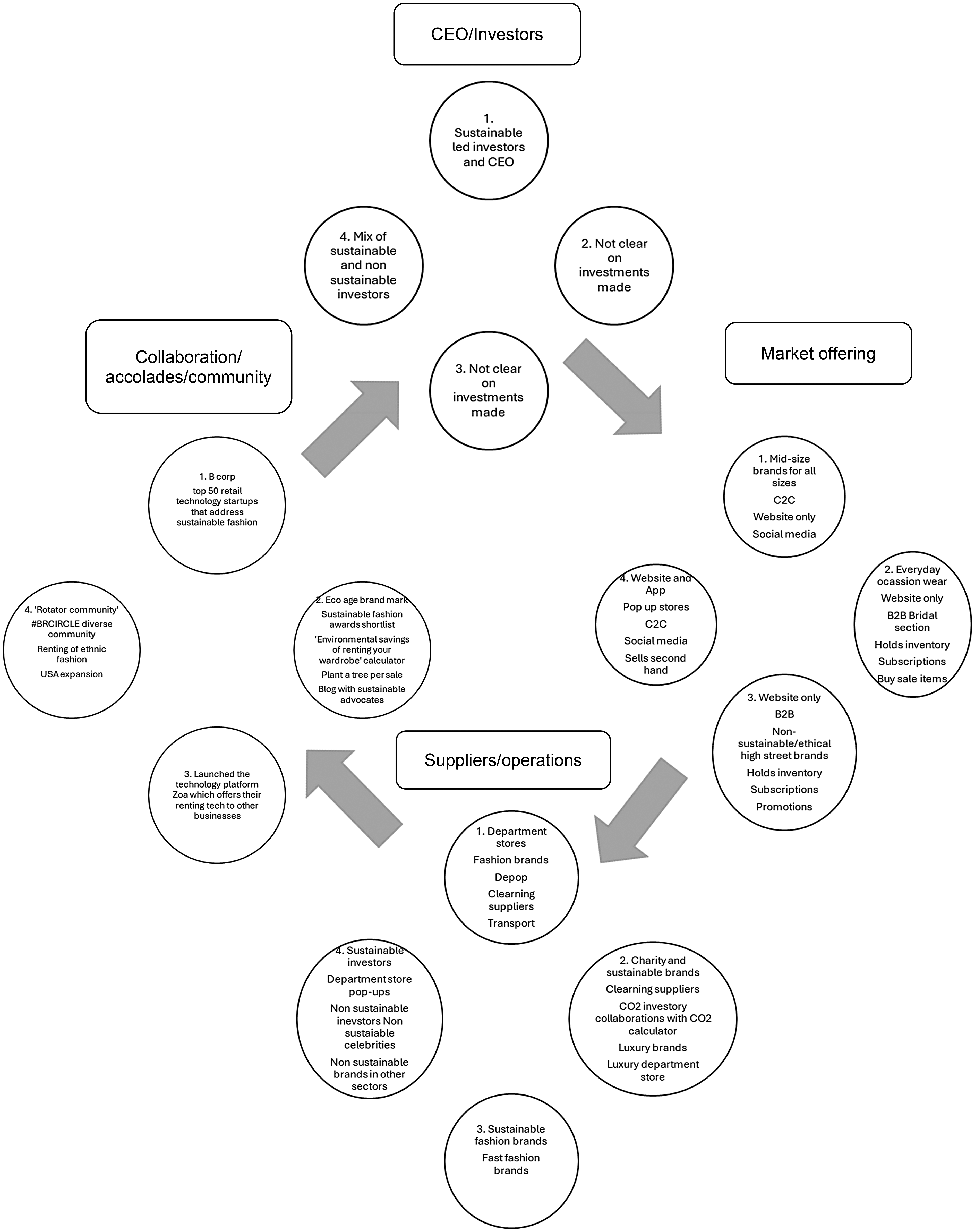
A Comparative Analysis of the First Three Years of Four Rental Circular Businesses.
Figure 1 demonstrates Hurr Collective as number 1, By Rotation as number 2, My Wardrobe HQ as number 3, and lastly, HireStreet as number 4.
Hurr Collective is the first fashion rental platform to achieve a b-corporation certificate, a differentiator to the other three businesses (B Corporation, 2024; Drapers, 2023). Hurr Collective evidences investment from renewable, ESG and sustainable-led investors, Praetura Ventures and Octopus Ventures (Octopus Ventures, 2024; Praetura Ventures, 2023a; Praetura Ventures, 2023b), and collaborated with Blanc (an award-winning eco-friendly dry-cleaning services) and Pedals (green bicycle courier service to deliver rented packages across London) since operating (Forbes, 2019). Since operation, in 2020, they collaborated with Oxwash (sustainable laundry services) (Drapers, 2023). The latter demonstrates the foundations of business's operation to be circular and therefore in connection with their principles. After two years of operating the business (The Independent, 2020), Hurr Collective collaborated with Selfridges, a UK department store that aims to be sustainable and ethical in its practices (Selfridges Group, 2023). During the year of collaboration between the companies, Hurr Collectives collaborated with associated luxury brands. Burberry and Attico (Harper's Bazar, 2020). Burberry demonstrates non-curricular activities in past years, including in 2018 when the brand was found to be burning unsold clothes, accessories, and perfume (BBC, 2018). Attico has been found to not be transparent in its environmental and labour policies (Good on you, 2024a). Both luxury brand collaborations with Hurr Collective, demonstrate that whilst collaborating with a department store with a sustainable and ethical policy, brands within ought to be assessed in terms of their circularity. Therefore, the growth via collaboration with a mainstream department store can result in conflicting mission and aims. In the third year of operation the business collaborated with John Lewis, a UK department store that has questionable ethical and sustainability measures (Ethical Consumer, 2024b; Good on you, 2024c), thus demonstrating growth via un-circular means. However, in its third year Hurr Collective collaborated with De Pop to offer a global offering (Forbes, 2021). Nevertheless, the lack of transparency for the end-of-life of garments is evidenced, therefore not demonstrating how the company is fully circular.
By Rotation demonstrates investment (Redrice Ventures, True Global, and Closed Loop Partners) that supports CE and businesses that aim to make a positive change and impact. Additional investment from June Angelides MBE, Bill Holroyd CBE, and Dinika Mahtani, aim to support women, possess philanthropic support for sustainable businesses, and invest in climate technology businesses (Cherry, 2024; Closed Loop Partners, 2024; Delirus Capital, 2024; Redrice Ventures, 2024; True, 2024a). However, it is unclear to deem all investors as aligning with circular values as they do not present sustainable motives in their online presence. Since creation in 2019, the business was awarded the Eco-Age brandmark and initiated collaboration with Blanc (an award-winning eco-friendly dry-cleaning service) and collaborated with Peyk (bike courier operating in London) (True, 2024b). In the 3rd year of operation, By Rotation provided pop-up shops with second-hand clothes, slow-fashion, cruelty-free, and ethically made brands which include Molby the Label, Jakke, and Silvia Astore (By Rotation, 2021). Demonstrates the business continuing to be circular in its activities when growing. However, during the first three years of operation, By Rotation collaborated with celebrities that do not hold a sustainable or circular brand image, for example, Lady Amelia Windsor, Camille Charriere, Nicola Coughlan, Dina Asher-Smith, and Katie Piper (EU startups, 2022) which evidences growth through non-circular means. The end-of-life process for garments is not transparent on their website, raising questions toward closing the loop.
My Wardrobe HQ lacks investment transparency, however, demonstrates circularity when starting via collaborations with Blanc Living (Dry cleaners that use non-toxic, biodegradable detergents and pure water as part of their dry-cleaning technology) and Green Courier that delivers parcel to renters (a leading environmentally friendly courier company) (My Wardrobe HQ, 2024a). However, My Wardrobe HQ provides subscriptions which may lead to overconsumption via consumers needing to regularly renew appearance (Niinimäki, 2010) and be driven by impulse consumption (Niinimäki, 2017), which can arguably lead to more clothing to be available and more production, which can lead to waste. impulse renting. Some studies alternatively allude to subscriptions offering a constantly rotating wardrobe with a reduced environmental impact (Clube & Tennant, 2020). Conversely the ‘constantly rotating’ suggests the need for more clothes to be in the rental model circulating which is in paradox to Piontek and Müller (2023) statement that rental should reduce clothing production. The company provides unlimited swaps in the first months (Subscriptions taken in August 2024), along with holding inventory with a lack of transparency regarding disposing of waste inventory. My Wardrobe HQ hosts a ‘sale’ of second-hand garments for renters interested in purchasing clothes labelled as ‘pre-loved collection’ which is referred to by Ellen MacArthur Foundation (2021) as a responsible way to dispose of waste garments, but this ‘sale’ option of discount-priced clothes may lead to overconsumption (Dzhengiz et al., 2023). Both business model activities that may lead to overconsumption do not align with the foundations of the CE (Ellen MacArthur Foundation, 2024b). After its first year of operating, in 2020 My Wardrobe HQ collaborated with CO2 Inventory and launched the ‘environmental savings of renting your wardrobe’, a calculator for renters to calculate their environmental savings when renting from My Wardrobe HQ (My Wardrobe HQ, 2020b). In its third year of operating My Wardrobe HQ was been shortlisted for Draper's sustainability fashion awards, demonstrating a sustainable acknowledgement. A collaboration with Zoa, a technology platform, demonstrates sustainable growth as the integration allows the community of consumers to rent in a more integrated and sustainable manner (Vogue Business, 2021b). Nevertheless, a collaboration with Harrods (a luxury department) in its third year (The Guardian, 2021), which portrays poor sustainability rating and unethical actions for instance wage pay (Good on you, 2024a). Therefore, demonstrating growth of business with a lack of circularity at its core and contrasting with the premise of My Wardrobe HQ.
Hirestreet's initial investors were Adjuvo and Founders Factors, both support startup businesses without a specific circular focus (Pitch Book, 2024). The startup demonstrates a circular rental business model that provides accessible rental clothing as an alternative to buying new clothes to their target market of 18–35-year-olds, and since their operation has collaborated with ACS, a sustainably oriented fulfilment centre (Ellen MacArthur Foundation, 2021). However, Hirestreet's business model and growth is built upon providing renters with high street brands which are mostly fast fashion brands e.g., Boohoo and Zara, these brands are not regarded as being circular or sustainable (Ethical Consumer, 2024a; Good on your, 2024b). Other fast fashion marketing tools are used such as subscriptions and offers, Hirestreet provides the subscription of 5 items per month for £75 (noted in August 2024) and offers such as 50% off your second item in your bag with a code (noted in August 2024). Both marketing examples can encourage overconsumption (Dzhengiz et al., 2023).
Circular Activities Whilst Growing as a Business
The comparative analysis reveals both circular and non-curricular activities by the four businesses. This section focuses upon the circular activities that the four businesses demonstrate during the first three years of operation and growth. Sustainable values are considered when analysing circularity which aligns with the European Commission (2022) and current scholar's exploration into circular business models (Bonsu, 2020; Koilo, 2025).
Firstly, the CEO and investors hold a background in circularity and a desire to invest in startups that: strive for circularity and innovation, and for startups that possess sustainable values. Secondly, a startup that facilitates a consumer-to-consumer renting service demonstrates circularity, by not holding inventory which can lead to waste and encourages renters to only rent out clothes they are not wearing rather than buying to rent. Alternatively, a startup providing a business-to-consumer service to ensure circularity should collaborate with sustainable fulfilment centres along with laundry and courier services (Common Objective, 2024; Drapers, 2023; My Wardrobe HQ, 2024c). Both models reveal circularity when selling second-hand clothing, provide clothes for all sizes to ensure inclusivity, and provide clothing across all occasions e.g., every day, luxury. Thirdly, collaboration with echo laundry and courier services that hold sustainable values, along with sustainable and/or charitable fashion brands. Fourthly, circularity is demonstrated via the startup's community of renters, for instance a blog platform that encourages sharing of circular renting practices. For instance, By Rotation's diverse groups in the community e.g., #BRCIRCLE (By Rotation, 2024b). Importantly, to collaborate with businesses such as CO2 inventory to provide an environmental calculator when renting, and consumers can participate in other sustainable behaviours such as planting a tree (My Wardrobe HQ, 2024b, 2024c). Lastly, to demonstrate sustainable growth outside of the UK that aligns with the startup's initial circular values, for instance By Rotation proudly shares that they are the ‘world's first fashion rental app’ (By Rotation, 2024a).
Imagining Economy, Prospective Theorising and Scenario Planning
In this section, the study's second phase of methodology, the paper determines and discusses desired and possible futures for the UK fashion rental sector aiming for green growth. Gümüsay and Reinecke's (2024) four modes of theorising is used, and sections 4.1–4.4 are informed by the latter four modes and previous comparative analysis, to create four theorised modes of the UK fashion rental startup sector. An overarching comprehension of the use of the prospective theorising with the planned output of scenario planning for the UK rental startup section is subsequently discussed.
Following Jens Beckert's work about the power of imagination in the economy and making the future in society and organisation (Beckert, 2016; Beckert, 2021), this study claims that understanding the scenery of CE discussion is significant in green transitions. The proper functioning of markets needs trust and predictable behaviour from actors (Beckert, 2009; Sztompka, 1999; Zucker, 1986). This is only possible when there is a common understanding of what CE is and could be. Furthermore, communicating with stakeholders is essential in building solid brands (Gregory, 2007). Good communication between stakeholders has also been recognised in innovation theories (Etzkowitz & Leydesdorff, 2000) that claim that innovations happen when different actors communicate and share an understanding of a given phenomenon. That includes not only businesses but also consumers and citizens.
Beckert (2021) points out that organisations make their decisions about their operations in uncertainty. Most management tools provide tools for imagining the future and making decisions in terms of this assumed, imagined as Beckert calls it, future. In their recent article, Gümüsay and Reinecke (2024) argue that organisation theories should be more future-oriented to support imagining and creating desirable futures. They point out that ‘the conundrum of the future is that it requires conceptualizing and theorising what is not (yet) observable and does not (yet) exist’ (Gümüsay & Reinecke, 2024, p. 1). Cultural shifts in how companies and consumers understand, imagine and behave in markets are a precondition to a functioning CE and sustainable future. The study uses cases to build understanding of what already exists and creates a framework imagining how circular startups can obtain longevity and, importantly, growth without compromising their embedded CE principles, and how they can build support networks to scale up sustainable business.
Scenario planning can be used to envision a desirable future for fashion rental circular business models. This method is particularly useful for marketers as a tool to imagine and/or invent the future, to learn about what the future may bring, and how to deliver the future earlier (Pattinson & Sood, 2010). Scenario planning, a subset of ‘scenario development’ (Cordova-Pozo & Rouwette, 2023) and interchangeably referred to as ‘proactive anticipation’ (Hyman et al., 2021), has been used in prior studies to develop view(s) of the future to develop organisations strategies plans (Porter, 1985), and to assess future threats, problems and perceived risks (Van Buren et al., 1999).
We build upon Gümüsay and Reinecke's (2024) four modes of theorising futures, and apply the comparative analysis to illustrate how the analysis fits within the four modes to theorise the future for UK rental companies. Figure 2 illustrates an overview of adaptation of the four future scenario modes (Gümüsay & Reinecke, 2024).
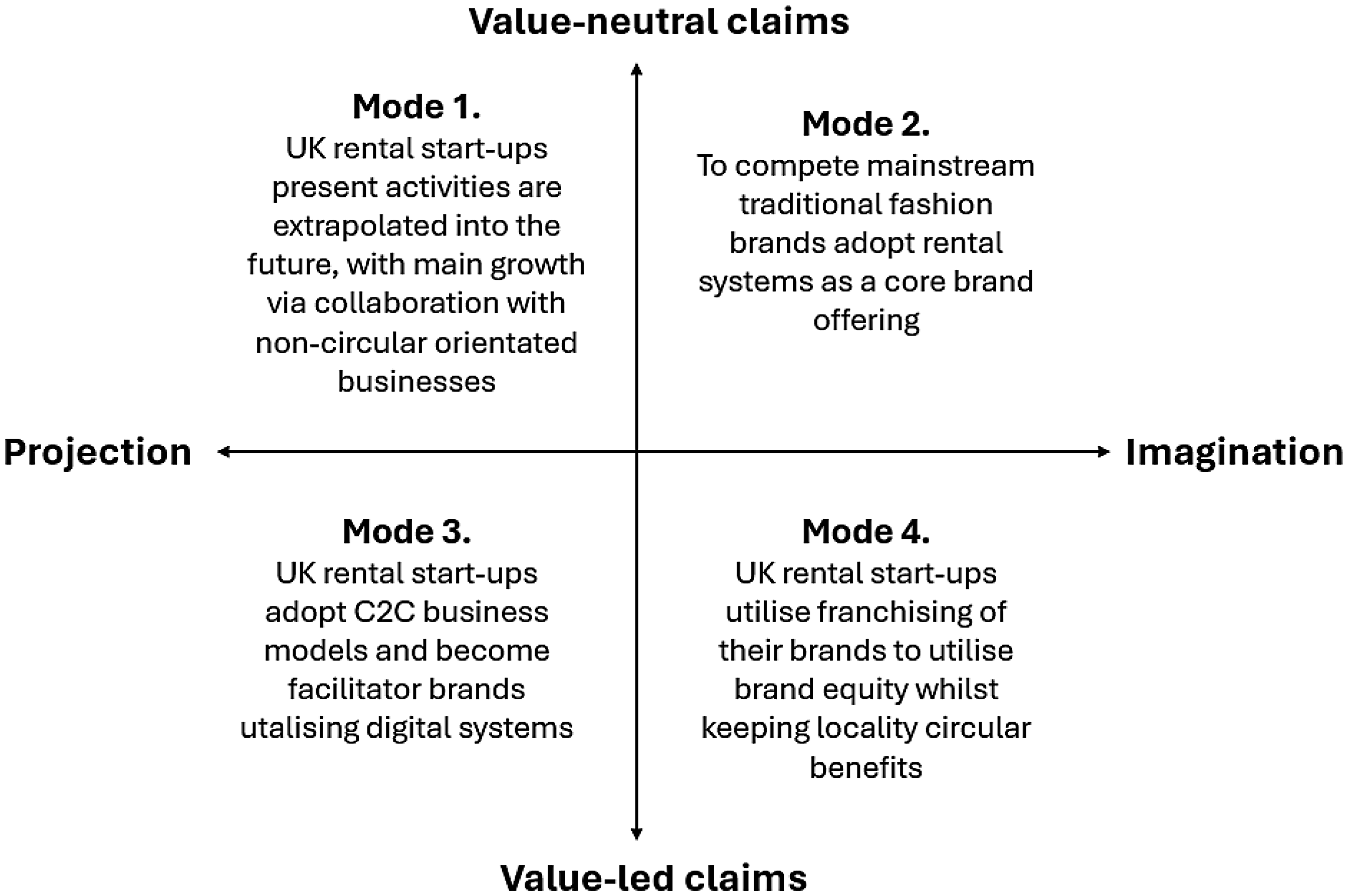
Theorising Futures of UK Rental Companies (Adapted from: Gümüsay & Reinecke, 2024).
Mode 1 Projected Factual Futures
Mode 1 entails theorising projected factual futures and extrapolating the present facts of UK clothing rental startups into the future (Gümüsay & Reinecke, 2024). The paper projects one inferred future state for each UK rental startup which holds a possible evolution of the startups’ expansion working with different stakeholders and the implications for circularity.
Based on patterns which emerged from the comparative analysis of the four businesses, it is evident that while they strive to adhere to circular principles these can easily diminish as the businesses seek to grow. These scenarios, based on projections from these facts and theorised futures from case companies, fall under mode one as the growth is becoming value-neutral and losing some of the circular principles they began with. Firstly, the majority of circular startups show that they initiate the business with circularity in mind via investors that support circular or sustainable businesses and collaborate with suppliers with circular supply chains. Secondly, some businesses lack transparency on the foundations of investment and the investors’ background which can raise suspicions e.g., My Wardrobe HQ. Thirdly, often circular business models providing a rental service, evidence an adoption of fast fashion techniques e.g., sales, subscriptions, and collaborating with celebrities and fast fashion brands, to grow however these activities show the rental startup losing sight of the purpose of their business. Fourthly, within its second or third year, businesses expand and collaborate with department stores that may hold ethical or sustainable mission and aims; however, the department store cannot ensure that brands residing within meet circular demands. On the other hand, businesses demonstrate growth by collaborating with a non-circular or sustainable department store e.g., Harrods, demonstrating the business losing focus of their values. Figure 3 illustrates a summary of mode 2.
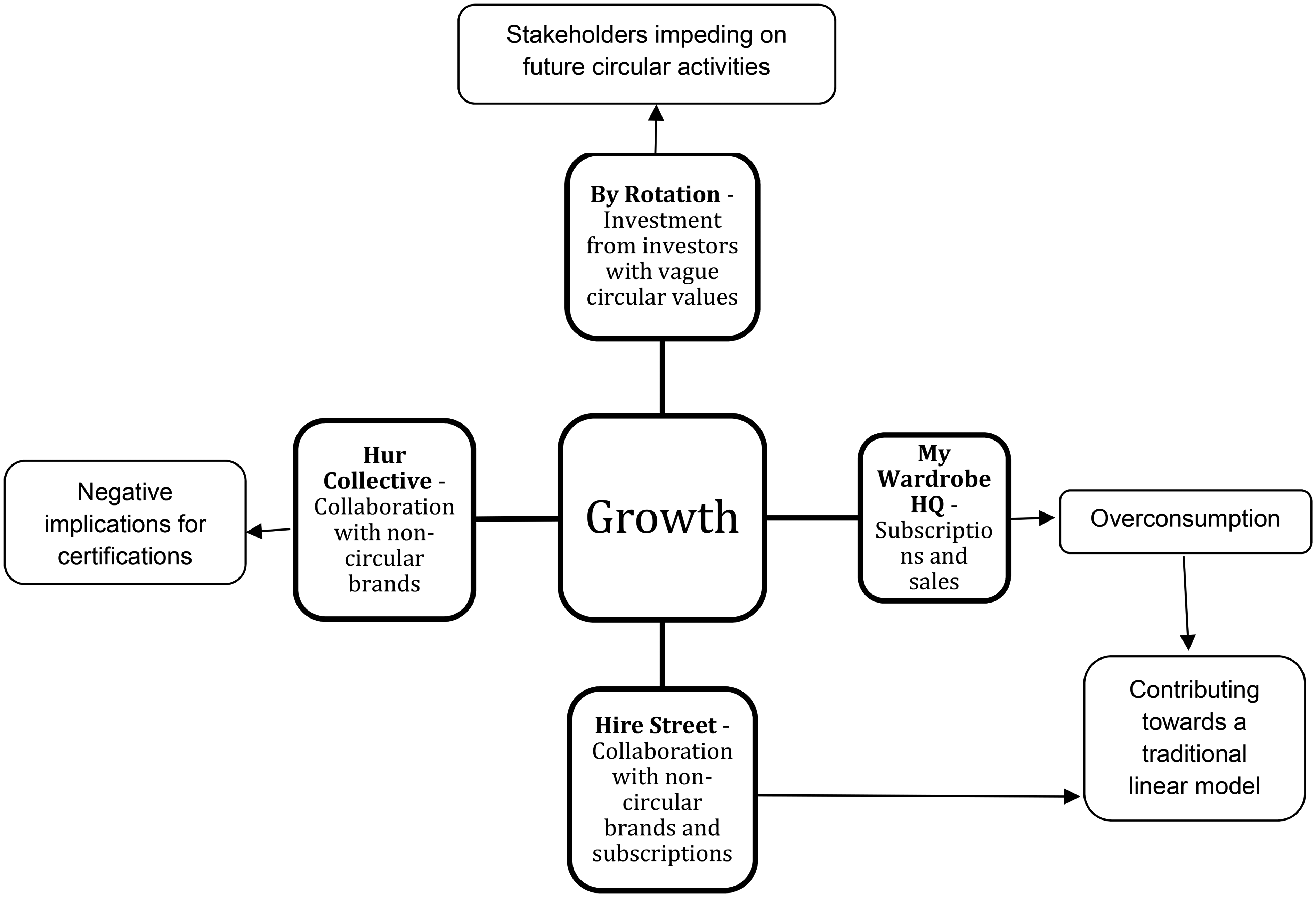
Projected Factual Futures.
Mode 2 Imagined (Counter-)Factual Futures
Competition in the market will likely lead to established companies adapting their business models, incorporating new ones into old ones like offering rental services and other product-service based offerings. Typically, larger companies acquire startup operations and expand into new markets, such as CE markets. On the other hand, established companies may incorporate new business models, such as renting, into their own operations utilising its size to compete for consumers. This can also happen in many different ways. For example, the new way of operating can become a central part of the business or a small, partially independent part of the operations of a large company. This model only works when it makes economic sense for the incumbent to do so.
For startups, this model can mean different options depending on their goals. First, a startup can aim to build a successful business model and then sell its operations. Second, a startup can aim to remain an independent operator and grow. Third, a startup can aim to remain an independent operator but to remain a small or medium-sized operator. Figure 4 illustrates the strategies of both established companies and startups.
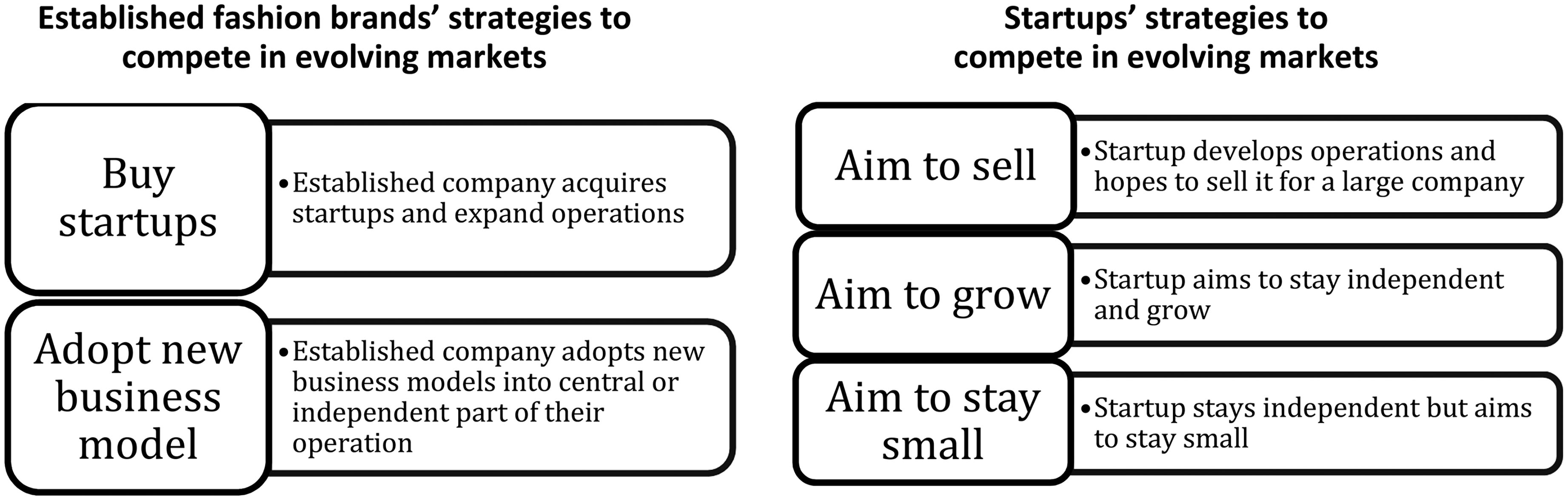
Imagined (Counter-)Factual Futures.
Mode 3 Projected Desirable Futures
Mode 3 encompasses the projected desirable futures, in consideration of our study, it means extending the desirable states of the UK rental startups circular business models (Gümüsay & Reinecke, 2024). We theorise based on the current understanding of UK rental startups, and ask ‘what if’ questions toward the startups existing circular models and provide a utopian circular business model for all startups as a desirable future.
Firstly, UK rental startups only attract circular led investment and are created by CEOs who inhibit circular values and beliefs. Secondly, on the one hand, a startup would facilitate a consumer-to-consumer (C2C) renting service to encourage circularity, as renters would rent out clothes, they are not wearing rather than buying to rent. On the other hand, a startup providing a business-to-consumer (B2C) service should ensure circularity by collaborating with sustainable fulfilment centres along with laundry and courier services (Common Objective, 2024; Drapers, 2023; My Wardrobe HQ, 2024c). Within C2C and B2C models, a desirable future would entail the startups minimising waste and ensuring circularity by selling end of life garments as second-hand clothing, providing clothes for all sizes to ensure inclusivity, and providing clothing for every day, rather than just one offs and luxury. Thirdly, UK rental startups would use laundry and courier services that hold sustainable and ethical values. Lastly, to encourage circular consumption and educate consumers, all startups will provide a blog platform to encourage sharing of circular renting practices, a practice only demonstrated so far by By Rotation e.g., #BRCIRCLE (By Rotation, 2024c). Startups should also provide a transparent environmental calculator to encourage learning about renting and being circular amongst their consumer community and opportunities for consumers to participate in other sustainable behaviours such as planting a tree, existing best practices by My Wardrobe HQ (My Wardrobe HQ, 2024b, 2024c). Figure 5 illustrates a projected desirable future, and focuses upon the following four desirable factors.
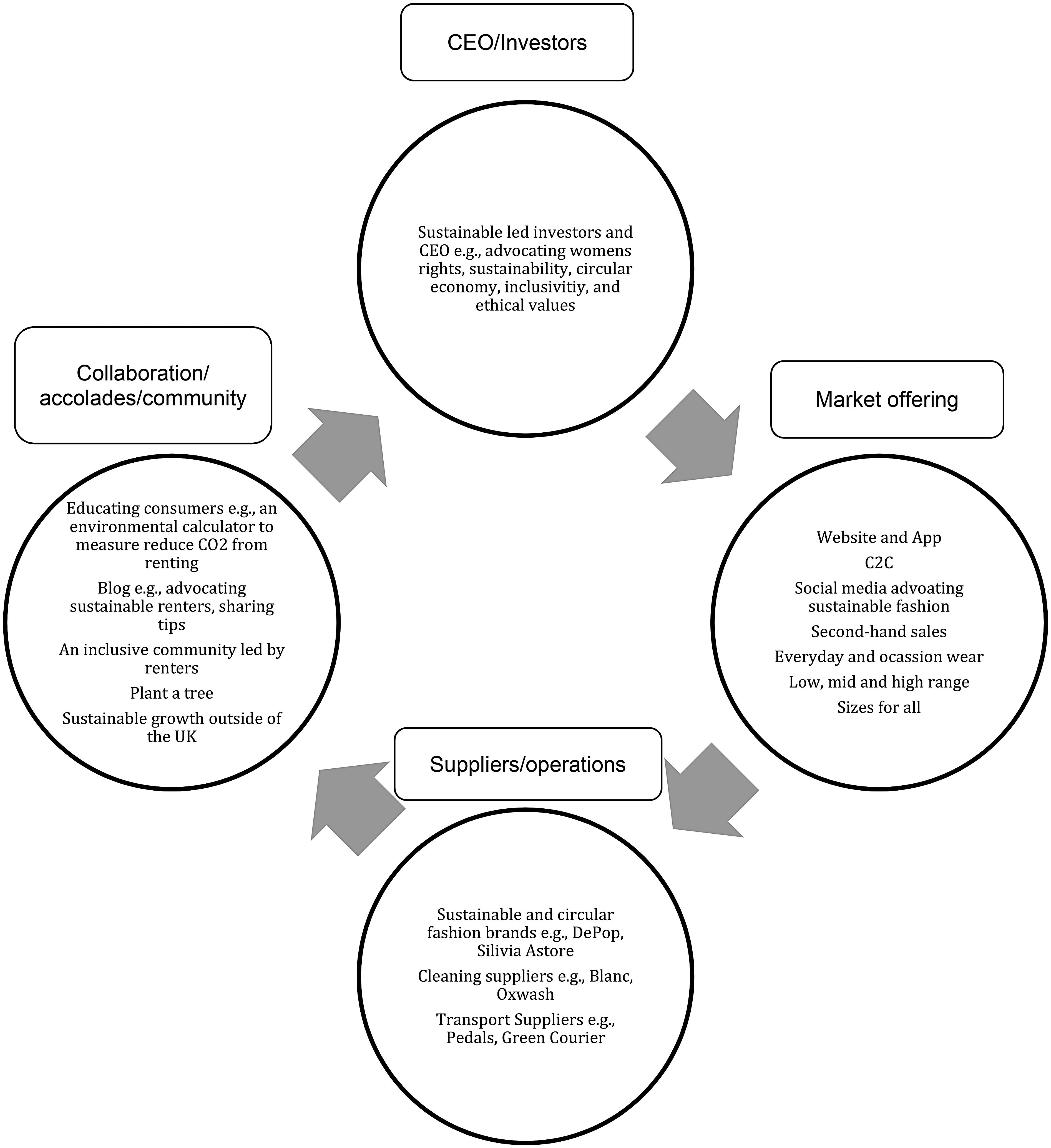
Projected Desirable Futures of UK Rental Startups Growth.
Mode Imagined Desirable Futures
Mode 4 allows for an imagined future whereby organisations fully retain and optimise their circular principles in the long-term maintenance and green growth of their brand. As outlined earlier in the literature review regarding how circular startups grow, one of the major factors of success is that of the owner-manager and their positive intentions and motivations (Morrison et al., 2003). For circular startups, this provides an opportunity for close relationships with owner-managers in the form of a franchise system, as many franchisors and franchisees are small businesses (Stanworth et al., 2004). Specifically, the franchises if required to adopt the same principles as the circular start-ups brand this ensures their growth to new areas whilst retaining circular values. In the long-term this can allow for a form of glocal, e.g., a localised global strategy, which maintains the circular identity of the business whilst also tailoring to different markets, for example partnerships with local delivery companies and local suppliers. Importantly, this model is not limited by the franchise concept, for circular start-ups seeking to maintain full control over this expansion, this can be considered more as clusters, whereby the company would be careful to run their locations as independent units which share the strength of the brand. Figure 6 illustrates the suggested structure of this theorised future.
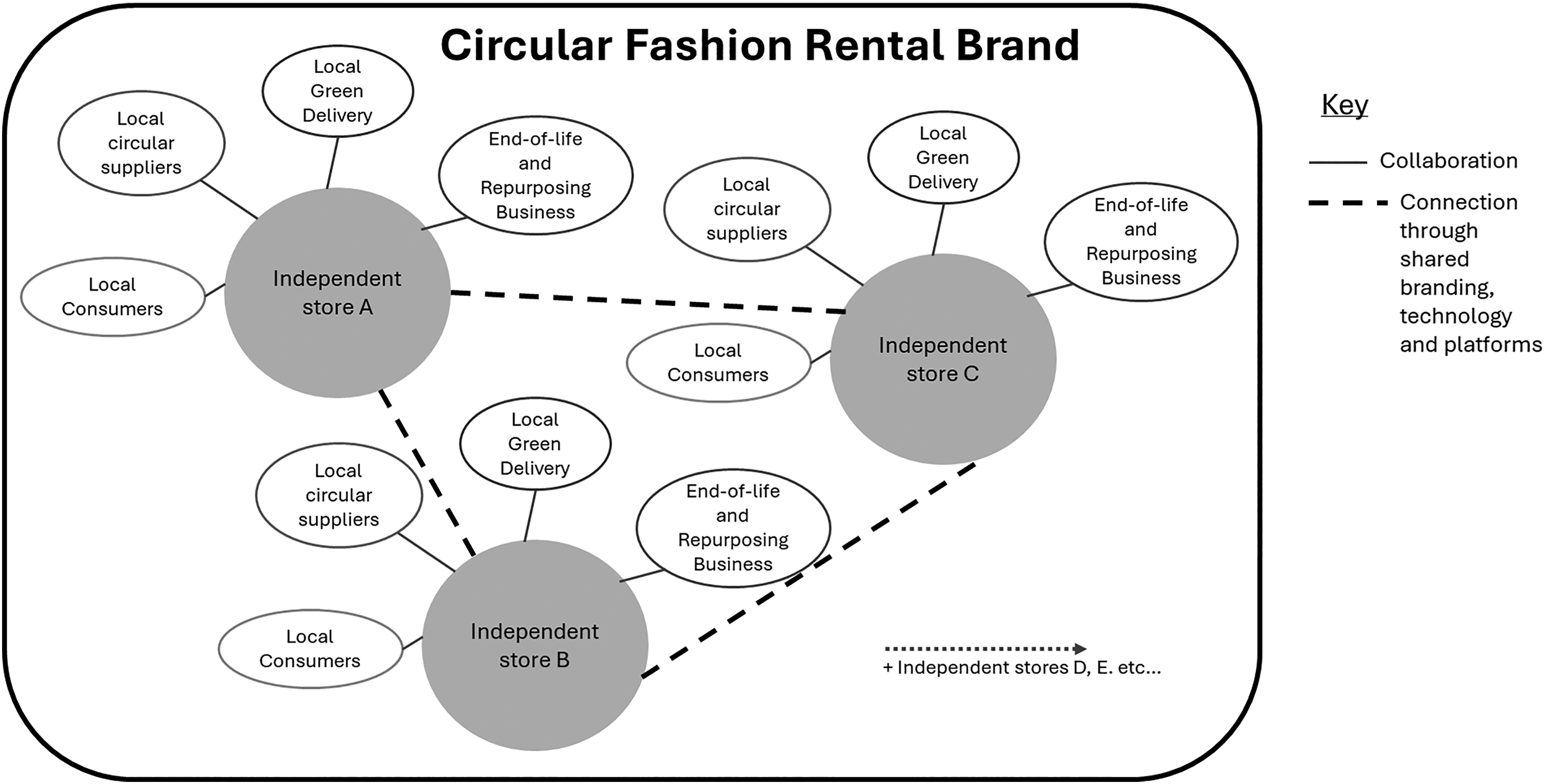
Projected Desirable Future of UK Rental Startups Growth via Modularised Growth.
In a franchise system, the franchisor develops a brand and business by contracting independently owned establishments, the franchisees, and providing them the rights to operate under the franchisor's trademark (Lawrence et al., 2024). These self-funded franchises make the franchisees undertake duality as financial stakeholders and customers of the brand, bringing financial, managerial, and information capital (Stanworth et al., 2004). With regards to circular startups, the franchisee agrees to operate under the general business practices outlined by the franchisor and use the same organisational systems laid out in the franchise agreement contract (Combs et al., 2004). We argue that the franchise form is ideal for CE businesses as they usually have few tangible assets and are more inclined toward intangibles (Stanworth et al., 2004). This makes them ideal for circular startups operating under a PSS system and where the product stock is variable, such as depending on reverse logistic stock from consumers.
For fashion rental businesses seeking to retain no inventory, a franchise model would be key for these businesses to grow within a CE scope. As the use of franchising is a widespread globally used strategy for business growth (Dada et al., 2024), it provides an opportunity for circular startups to grow their operations as a strongly recognised brand whilst maintaining the circular advantages that come from dynamic local co-operative operations, whilst making it easier to maintain green supply chains. With this strategy the brand would effectively be utilising their built consumer-based brand equity (Keller, 2001), to expand their operations with partners wishing to work with them under the brand's reputation and subsequently establish trust.
This theorised future and the use of technology evidenced in the dotted line in Figure 6 (e.g., social media, websites and apps) allows for the circular fashion rental brand to benefit from simpler sustainability management of a small business. Whilst allowing them to expand without geographic withstand, enabling ease of new market entry without compromise on circular practices. Local collaborations become the focus of this model, a key characteristic of the established franchise model (Morrison et al., 2003). However, this conceptualisation is not limited to businesses which seek to licence their brand to franchises, as businesses seeking to expand into bricks and mortar can also adopt the model, keeping their stores as independent clusters. These individual operations under the brand name can utilise the brand associations and build consumer-based brand equity, whilst also adding to this themselves via consumer experiences (Keller, 2001). The contained locality of each cluster also provides greater opportunity to engage with other local circular and sustainable businesses in collaboration.
Discussion
The four UK fashion rental startups have sought growth via investment and partnerships. Collaborations with large department stores were a key route for growth, likely driven by the large consumer base that these organisations have. Whilst this has enabled the circular startups growth, the partnerships with large established designers and brands operating linear business models, does not ensure circular growth. The investment from a few prominent companies and individuals does not come without its own risk with respect to associations with these second parties’ actions and where their wealth is coming from. This study and its four modes of theorised futures considers how circular startups may obtain growth whilst keeping varying levels of control over the circularity of their upstream and downstream chain and associated partners. Mode 4 allows for the conceptualisation of how these businesses may achieve green growth which does not compromise on their circular principles both internally and in their external networks. Thus, contributing to a growing body of literature (Adrodegari et al., 2016; Barquet et al., 2016; Pedersen et al., 2018; Rauter et al., 2017) warranting exploration into PSS at a company level and via green growth. Moreover, delivering further discussion to Lloveras and Quinn's (2017) macromarketing perspective on green growth.
The end-of-life and repurposing of clothing is missing from the current four rental business startup models. Thus, aligning with the principles of the CE, which calls for the repurposing of generation of new items or products at its utilisation (Shirvanimoghaddam et al., 2020). Our insights illustrated in Figure 1 contribute to the infancy of fashion rental research (Clube & Tennant, 2020) and a novel field for exploration for marketers (Mukendi & Henninger, 2020). For rental fashion businesses that aim for circularity, processes and procedures should be in place to close the loop via end-of-life and repurposing of bad-quality garments. One example is collaborating with companies that recycle old textile waste to regenerate new textiles for sectors such as fashion, upholstery, and the automotive industry for interiors. The examples of how startups in fashion rental could close the loop contribute to the study's idealised model of a futuristic CE model, (Figure 4), in line with the imagined sustainable economy.
Conclusion, Limitations and Future Research
Considering the imagined economy, we demonstrate four possible future models following Gümüsay and Reinecke's (2024) call for future-oriented work to create desirable futures (see Figures 3, 4, 5 and 6). The paper presents two value-neutral and two are value-led models. Future models will allow for the examination of different pillars of sustainability and balancing between the different requirements of the various aspects of sustainability. Our study contributes to Gümüsay and Reinecke's (2024) work, addressing the authors’ call to use prospective theorising to address issues related to the climate catastrophe and shed light on many unanswered questions. We depict how fashion rental organisations can grow from their initial position as circular startups, whilst importantly retaining their CE principles under both a macro and micro perspective (Beckert, 2021; Beckert, 2016). The proposed model (see Figure 6—Projected desirable future) demonstrates how different actors can optimally communicate and collaborate to ensure that curricular activities remain at the forefront of circular startup transition into larger organisations. The study's comparative analysis of four UK fashion rental circular startups (Figure 1 and 3), demonstrated that to successfully grow the trend was largely toward investment and affiliation with companies which operate largely linear production and consumption models, undermining the core nature of a circular business. We contribute to past macromarketing conversations (Hyman & Kostyk, 2019) regarding manifesting desirable futures, and the need for macromarketing scholars to comprehend, explain and predict the effects that the marketing system has on our world (Wilkie & Moore, 2006).
Taking inspiration from instances where the company had managed to grow by utilising collaboration and links with other circular-oriented businesses, other small local operations, end-of-life and repurposing businesses, and use of technology (e.g., social media, websites and apps). The study conceptualised in mode 4 (Figure 6) shows how this can be utilised in either a franchise or cluster model, depending to which extent the company wants to retain full ownership or level of control, to ensure circular growth. Fundamentally, this model allows the business to utilise their built consumer-based brand equity (Keller, 2001), to enter new markets, whilst still retaining the mechanisms and dynamics attached to small startup businesses. Adoption of fashion rentals using the study's idealised and futuristic circular model based on PSS further adds value to the business, as the rental aspect further ensures circularity when expanding (Pieroni et al., 2019). Furthermore, PSS can enhance a business's circularity at a large scale as the startups grow, due to PSS allowing the slow resource loops which in turn extend fashion rental products lifetime and use.
The scope of this study was limited by the use of a UK perspective, although adhering to Jain et al. (2022) call for this context from a UK perspective, considering the majority USA and Asian exploration. Given the theorised futures discussed in this paper, a fruitful area for further research would be in further examination into the collaborations and operations of these circular startups by undertaking primary data collection. In turn, furthering macromarketing conversation (Kemper et al., 2022) regarding how scholars can develop a sustainable, networked and ethical world, and ultimately ‘save the world’ (Fisk, 2001, p. 121). This research could be undertaken via a longitudinal study to examine UK fashion rental startups in the present day and as the market matures.
Further insights entail the call for scholars to investigate fashion rental startups’ growth post transition to being a small to medium sized organisation (SME) and determine if the business aligned with the CE principles when further expanding. A greater focus is needed to explore the end-of-life and repurposing of textile waste as a circular action to dispose of textiles that can no longer be rented or sold as second-hand garments. Within the conceptualisation, the study provides suggestions on end-of-life and repurposing collaborators to close the loop and by working together this ensures that textiles that are generated and repurposed into other sectors and products (e.g., upholstery, toys, sound proofing, to name a few). The study suggests one avenue when undertaking further research in analysing waste streams in rental fashion and via a PSS. The circular focus of the study's rental exploration, is to determine how knowledge can be shared between rental startups and SMEs for instance via knowledge exchange hubs, to further promote circularity and share information.
Footnotes
Associate Editor
Michael R. Hyman

Ethical considerations and Informed Consent Statements
As this was a conceptual paper, ethics was not required by Oxford Brookes University, UK. Anglia Ruskin University required ethics approved for a conceptual paper, this project was successfully awarded a green status and approval.
Funding
The authors received no financial support for the research, authorship, and/or publication of this article.
Declaration of Conflicting Interests
The authors declared no potential conflicts of interest with respect to the research, authorship, and/or publication of this article.