



Abstract
Rebounding off the denaturized concept of business ecosystem, we develop an initial conceptualization of the marketing ecoverse. The marketing ecoverse refers to the confluence of three equally important types of ecosystems: business, sociocultural, and [natural] biogeophysical. We argue that the marketing ecoverse is based on shared natural phenomena, ecosystem functions, and native/inter-ecosystem service and disservice flows. The marketing ecoverse's self-regulative processes include material-to-moral signaling, resilience moderation, source-sink constraints, and artifact dispersal. A case of the growth and partial collapse of fourth-generation bike-sharing systems and their impact on African rural communities is presented to further illustrate the marketing ecoverse processes.
Keywords
Introduction
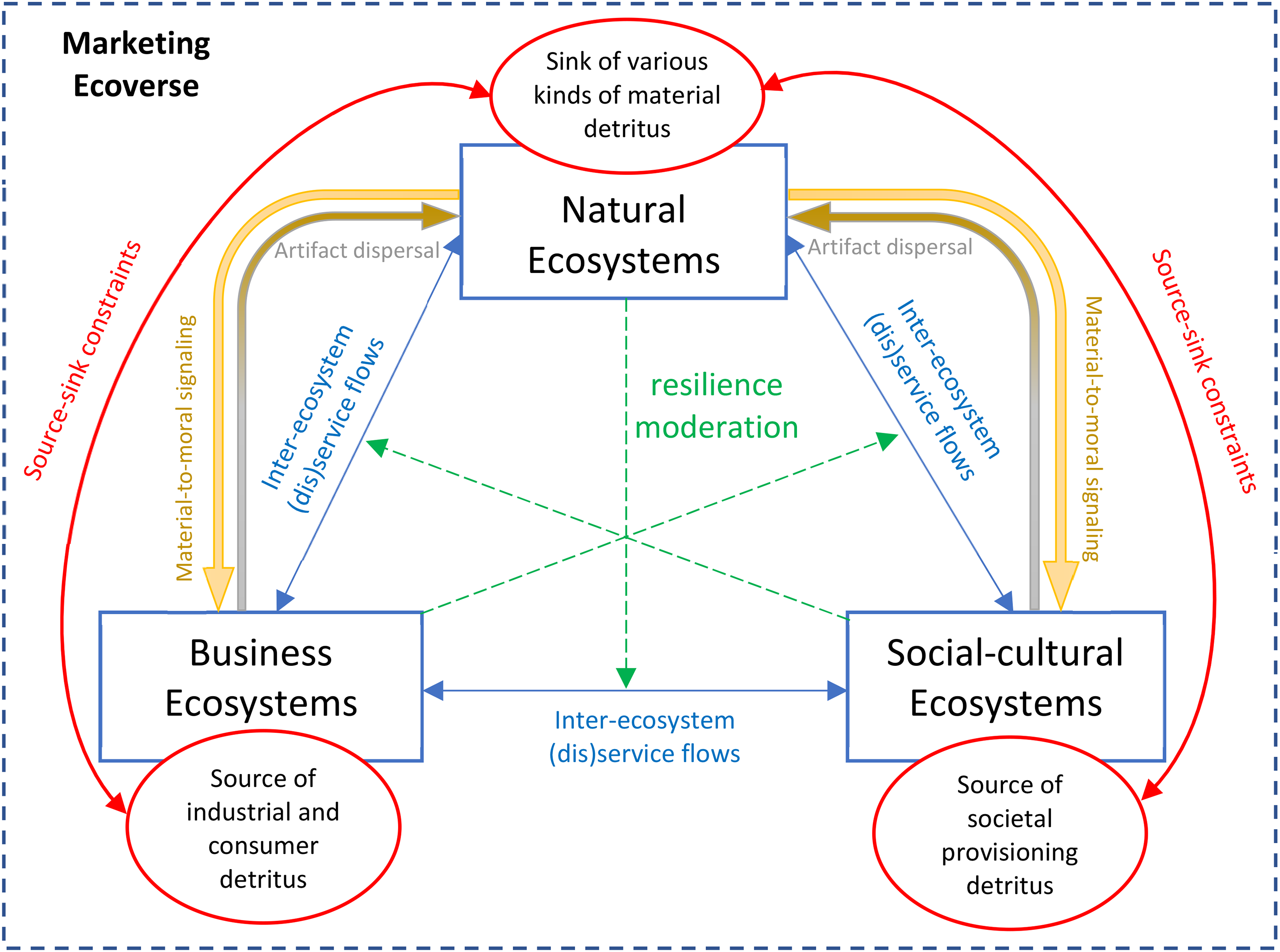
This study proposes a novel concept of the marketing ecoverse, which is viewed as a locus of confluence of three equally important types of ecosystems: business, socio-cultural, and natural (bio-geophysical) ecosystems. To develop a theoretical framework for this concept, we draw on theories of business ecosystems (Iansiti and Levien 2004; Moore 1993; 1996), marketing systems (Layton 2007; 2015), meta-ecosystems (Gounand et al. 2018; Palmié et al. 2022), and the biophysical foundations of business (Feger and Mermet 2022; Winn and Pogutz 2013). We define the marketing ecoverse as a homeostatic superstructure that integrates, stabilizes, and balances (dis)service flows among its constituent ecosystems through meta-ecosystem processes such as material-to-moral signaling, resilience moderation, source-sink constraints, and artifact dispersal.
Critically approaching the existing business ecosystems research (Aarikka-Stenroos and Ritala 2017; Cobben et al. 2022; Iansiti and Levien 2004; Jacobides, Cennamo, and Gawer 2018; Moore 1993, 2013), we provide an account of the intricate entanglement of business ecosystems with other equally crucial ecosystems such as bio-geophysical and sociocultural provisioning ecosystems. We critique the limited perspective of the micro-managerial interpretation of “ecosystem”, which denatures the concept by viewing it solely as an industrial network. We highlight the close entanglement, interconnectivity, and interdependence of natural, socio-cultural, and business ecosystems, emphasizing the need for a deeper understanding of the interrelationships between these ecosystems to provide a more comprehensive account of “ecosystem” than what is currently found in micro-managerial research. We argue that what management and marketing researchers identify as “ecosystem” (Cobben et al. 2022; Teece 2007) is merely one of the many inherent components of the marketing ecoverse. Business ecosystems cannot exist without complementary and co-constituting services and disservices provided by the other qualitatively different types of ecosystems within the common structure of the marketing ecoverse.
The marketing ecoverse framework represents an extension of the marketing systems research in macromarketing (Kahiya and Kadirov, 2020; Kadirov and Varey, 2011; Kadirov, 2018; Layton, Domegan, and Duffy 2022; Layton 2007, 2015, 2019), offering a broader perspective on the macro-view of marketing beyond the human species and its priorities (e.g., assortments, community quality of life, economic benefits) (Layton 2007, 2015). We contend that marketing should not merely be regarded as a society's provisioning technology (Fisk 1967), but also as the main function of an ecoverse, a meta-ecosystem, that encompasses and regulates interrelated processes of ecosystem functioning geared toward fulfilling the short and long-term needs of diverse ecosystem constituents including animals, plants, microorganisms, as well as human beings and their communities. By adopting an ecoverse approach, macromarketers and policy makers can better facilitate the creation of a sustainable future and avoid sustainability blunders. This perspective offers a unique way of examining marketing systems, potentially providing a new direction for future research in macromarketing.
The proposed marketing ecoverse perspective contributes to meta-ecosystems theory (Gounand et al. 2018; Guichard and Marleau 2021; Loreau, Mouquet, and Holt 2003; Marleau, Guichard, and Loreau 2014) by extending its purely ecological principles into the sphere of human-nature relationships. While current meta-ecosystems research focuses on spatial flows of energy, materials, and organisms between natural ecosystems (Gounand et al. 2018; Guichard and Marleau 2021), the marketing ecoverse perspective broadens the scope by unveiling coupling dynamics between both natural and anthropogenic (i.e., sociocultural and business) ecosystems. The latter perspective emphasizes not only the interrelationships between bio-geophysical ecosystems, but also those that occur between ecosystems of different modality.
The marketing ecoverse is distinct from a business meta-ecosystem (Palmié et al. 2022). The business meta-ecosystem is a collection of two or more business ecosystems (Palmié et al. 2022), whereas the marketing ecoverse is a meta-ecosystem that comprises qualitatively different types of ecosystems, their interrelationships, and the service flows between them. We show that in contrast to the former, the marketing ecoverse involves shared natural phenomena, ecosystem (dis)service flows, and meta-ecosystem processes such as material-to-moral signalling, resilience moderation, and source-sink constraints.
This article is organized into several sections. In the first section, we provide a critique of the business ecosystem perspective, arguing that the current perspectives tend to denature the concept. Then, we review the marketing systems research and highlight theoretical avenues for explicitly dealing with the problem of denaturization. Next, we introduce the meta-ecosystems approach as a theoretical frame for developing a more inclusive concept. The second section offers the initial conceptualization of the marketing ecoverse, focusing on its structure and processes. Then, we illustrate the marketing ecoverse effects in action by examining the delicate interconnections between the rise and partial collapse of the global fourth-generation bike sharing system (BSS) ecosystem and the rejuvenation of human-powered mobility in African countries. In the final section, we conclude the article by discussing the distinct aspects of the proposed perspective and the potential implications of this research for theory and practice.
Theoretical Background
Reversing Ecosystem Denaturization
In the field of systems and organisational research, denaturization refers to the assumption that posits nature as an infinite and passive pool of renewable, replaceable, and expandable resources and external commodities (Purser, Park, and Montuori 1995). Although some researchers have expressed criticism toward this view of the environment (Shrivastava and Hart 1992), it remains prevalent in organizational research. This tradition has in turn influenced the incorporation of the concept of ecosystem into business and management studies.
Representing a profoundly promising theoretical contribution from an epistemological perspective, the ecological approach pioneered by Moore (1993, 1996) has introduced the concepts of ecosystem and co-evolution as metaphors to conceptualize loosely coupled networks of business actors. Moore (1993) defined a business ecosystem as a collection of independent firms and market agents competing and cooperating across many industries. Borrowing the idea of co-evolution (of competing species) from Bateson (1979), he described how organizations and firms co-evolve toward a shared future.
Ironically, the ecological approach has made natural ecosystems “disappear” from the main narrative of ecosystems research. Moore's metaphorical “flick” was so seamless that the word “ecosystem” came to mean business networks for subsequent researchers. This was by no means an innocent omission. From its inception, the ecological approach treated natural ecosystems as no more than a metaphor or analogy, a necessary means for developing a better understanding of complex business networks (Iansiti and Levien 2004; Moore 1993). Despite its reliance on the terminology of Gregory Bateson, the ecological approach is at odds with Bateson's cybernetic philosophy of “patterns which connect” (Bateson 1991). According to Bateson, all living entities, humans included, are integral components of a superorganismic “mind,” a sacred unity of the biosphere that draws on patterns and meta-patterns, whereby living organisms are as adept as human beings in solving the problems of evolution. This notion is overlooked by the ecological approach, which fails to acknowledge that human organizations co-evolve alongside natural ecosystems, not exclusively with respect to one another. In this article, we argue that during this co-evolutionary process, the requirements of diverse ecosystems become entangled, and the presumption of the dominance, urgency, and superiority of human objectives, aspirations, and needs is untenable.
The latter point is related to the discussion of anthropocentrism versus ecocentrism (Borland and Lindgreen 2013; Kidner 2014; Purser, Park, and Montuori 1995). Anthropocentrism is defined as “the belief that there is a clear and morally relevant dividing line between humankind and the rest of nature, that humankind is the only principal source of value or meaning in the world” (Eckersley 1992, p. 51). Anthropocentrism leads to a narrow view of ecosystems, thus de-naturing the concept of the environment (Purser, Park, and Montuori 1995). The ecocentric approach (note that it is different from the ecological approach) allows the inclusion of bio-geophysical systems within a broader ecosystem (a meta-ecosystem in this research) while going beyond the restricted definition of business ecosystems (Borland et al. 2016). Gladwin, Kennelly, and Krause (1995) critique both anthropocentrism (they refer to it as technocentrism) and ecocentrism as the extreme ideological positions where the former prioritizes the capacity of human intellect over nature, whereas the latter affirms the dominance of nature over humans. Gladwin et al. propose a more pragmatic approach, sustaincentrism, which emphasizes the necessity of the balanced and equilibrated human-nature relationships. Sustaincentrism calls for the equal consideration of natural, industrial, community, and inter-generational needs.
Nevertheless, from its inception, business ecosystem has been conceptualized from an anthropocentric perspective (Purser, Park, and Montuori 1995). It is evident that the management and business literature followed the long-standing traditions of technocentrism (Gladwin, Kennelly, and Krause 1995) and industrocentrism (Kidner 2014; Kopnina et al. 2018), with the focus solely on industrial and managerial priorities. Moore (1996) has expanded upon his original view by arguing that the business ecosystem consists of two components: a core business consisting of value-creating networks, and a resource pool consisting of stakeholders who supply various resources. Though this view alludes to the crucial role of the natural environment, the focus remains on the institutional owners of resources. Keeping with the industrocentric tradition, Moore emphasizes the human claimants of the nature rather than natural ecosystems. Drawing from Moore's approach, Teece (2007) asserts that ecosystem represents “community of organizations, institutions, and individuals that impact the enterprise and the enterprise's customers and supplies” (p. 1325). He further notes that community comprises “complementors, suppliers, regulatory authorities, standard-setting bodies, the judiciary, and educational and research institutions” (p. 1325). Despite acknowledging the role of non-business stakeholders, Teece prioritizes the needs of a focal firm or an industry. Furthermore, since this juncture, a new trend has emerged where the term “ecosystem,” stripped of its conventional ecological connotations, has gradually replaced the more precise term of “business ecosystem” in business and management literature (Adner 2017).
Subsequent research on business ecosystems has continued in the same vein. Within business studies, an emerging consensus is that ecosystem denotes “a group of interacting firms that depend on each other's activities” (Jacobides, Cennamo, and Gawer 2018, p. 2256). In this sense, an ecosystem is seen as “a community of hierarchically independent, yet interdependent heterogeneous participants who collectively generate an ecosystem output and related value offering targeted at a defined audience” (Thomas and Autio 2020, p. 38). Jacobides, Cennamo, and Gawer (2018) offer a theory of an ecosystem that conceptualizes it as a set of organizations that are linked to each other through non-generic complementarities. Here, complementors are restricted to market actors who offer products that make the focal offer more valuable to customers. Consequently, by definition, biophysical ecosystems are precluded as non-complementors.
Yet, some researchers contend that business ecosystem research suffers from a lack of consensus (Cobben et al. 2022). Different types of ecosystems have been identified such as business, innovation, platform, entrepreneurial, knowledge, and service ecosystems (Aarikka-Stenroos and Ritala 2017; Cobben et al. 2022; Jacobides, Cennamo, and Gawer 2018). What adds to the confusion is that researchers argue that ecosystem boundaries are blurred, so different types of actors, institutions, and technologies could enter or exit an ecosystem (Aarikka-Stenroos and Ritala 2017). Researchers have characterized ecosystems through a sense of shared purpose (Adner 2017; Moore 2013), functional elements (Adner 2017), complementarities (Jacobides, Cennamo, and Gawer 2018), technological structures, and platforms (Gawer 2022; Gawer and Cusumano 2002). A systematic review of the literature indicates that the ecosystems research focuses on themes such as competition and evolution, emergence and disruption, stable business exchanges, and value co-creation (Aarikka-Stenroos and Ritala 2017). However, none of these approaches include linkages to bio-geophysical ecosystems.
A recent review of the ecosystem literature identified several criteria for ecosystem identification (Cobben et al. 2022) such as competitive advantage, geographical scope, temporal scope, orchestration, actors, structure, and value creation. Cobben et al. 2022 note that researchers have started to shift their focus from focal firm value to system-level values, such as the survival and growth of all actors. In addition, Cobben et al. show that most ecosystem research is inward-looking, that is, it focuses on the internal mechanisms of a focal ecosystem. Outward-looking research is scarce, and the existing research simply focuses on governments or stakeholders.
In conclusion, we note that the investigation of ecosystems in management and marketing faces numerous challenges. Firstly, it wrongly assumes that the Holocene epoch, which is characterized by stable climatic and biogeochemical equilibrium, would continue to envelope ecosystems as a passive external environment (Gillings and Hagan-Lawson 2014). However, human ecosystems are now functioning within the Anthropocene epoch, which necessitates an alternative set of ontological, epistemological, and institutional assumptions about the relationship between humans and nature (Hoffman and Jennings 2015; 2021). Secondly, current business ecosystems research is deeply anthropocentric. It is founded upon the assumptions of the dualistic separation of organizations from the natural environment, as well as linear thinking and the camera theory of knowledge (Purser, Park, and Montuori 1995). A shift toward a broader perspective, such as ecocentrism and sustaincentrism, is needed (Borland et al. 2016; Borland and Lindgreen 2013; Gladwin, Kennelly, and Krause 1995). Finally, current ecosystems research inadequately recognizes the sentient and active nature of natural ecosystems (Bateson 1979, 1991). Natural ecosystems communicate through a “difference that makes a difference”, and their capacity to solve evolutionary problems is comparable to that of the human mind (Bateson 1991). Given the potential of inter-ecosystem interactions, we argue that the primary problem that a business ecosystem should be able to solve is the inclusive, equitable, and harmonious co-development with natural ecosystems (Gladwin, Kennelly, and Krause 1995).
Marketing Systems Theory
Since the mid-twentieth century, long preceding the work of James Moore (1993), marketing systems scholars pondered the application of the principles of ecology and the concept of ecosystem (Alderson 1957; Thorelli 1957; Fisk 1974). Notably, Alderson (1957) was the first marketing thinker to apply ecological notions such as symbiosis, cooperation, and isomorphism as analogies to explain marketing systems. His functionalist approach focused on the internal mechanisms of organized behavioral systems, which operate through transvection, the totality of processes enabling the transformation of natural resources (which Alderson calls meaningless assortments) into meaningful assortments. Alderson assumed that exchanges occur between organized behavioral systems, which were seen as anthropogenic, while the environment, or natural systems, act as the source of input (i.e., meaningless assortments). Similarly, Hans Thorelli (1957) conceptualized a marketing system as a transacting ecosystem, referring to the connection of an organization (a community of interest groups) to its task environment (customer market) through interaction patterns.
Although the concept of an ecosystem was prominent in this research, taking the next conceptual step by accepting nature as a collection of equally important self-organizing ecosystems would have enabled these researchers to move beyond analogies and escape the “spell” of denaturization. Furthermore, a deeper analysis of transvection would have revealed that this process is not purely human and is not completely isolated from nature. Rather, transvection shares natural phenomena, i.e., natural processes of transformation (to be discussed in the subsequent sections), with geo-biophysical ecosystems.
Fisk (1974) alludes to the problem of denaturization in his critique of Alderson's use of ecological analogies as abstract explanations of marketing system processes. Adopting the “spaceship economy” perspective, which we concur represents the planetary-scale viewpoint on the marketing ecoverse, Fisk asserts that human societies and techno-industrial systems must not regard nature as “a bottomless sewer” that can sustain “endless abuse” (p.16). Fisk posits that ecosystem represents the monistic concept “bringing together environment, man, and the plant and the animal worlds within a single analytic framework”. Fisk maintains that “an operational definition of environment varies with the ecosystem under study” (p.11). Fisk (1974) notes that pollution imposes ecological sanctions/imperatives on both consumption and distribution, reducing habitability (for all organisms) and necessitating appropriate waste disposal practices.
Roger Layton (2007, 2011, 2019) defines a marketing system as “a network of individuals, groups and/or entities, embedded in a social matrix, linked directly or indirectly through sequential or shared participation in economic exchange, which jointly and/or collectively creates economic value with and for customers, through the offer of assortments of goods, services, experiences and ideas, that emerge in response to or anticipation of customer demand.” (Layton 2011, p. 259; Layton 2019, p. 216). It is notable that the definition of business ecosystem provided by Teece (2007) and Thomas and Autio 2020 appear to be very similar. However, the difference in perspectives is notable.
Although both perspectives are concerned with a system's internal processes and structure, Layton's emphasis is on the growth, formation, evolution, and functioning of marketing systems (Layton 2007, 2015, 2019). Thus, it is not overly technocentric. In reference to the concept of business ecosystem, Layton (2019) views the marketing system as a broader concept encompassing micro, meso, and macro systems with features of autarchy, emergence, structure, and purpose. Within this expansive field of systems variations, business ecosystems are positioned as a smaller structured meso-system (Layton 2019).
Moreover, the marketing systems concept is broader than that of business ecosystem because it combines the economic activity of techno-industrial networks with socio-cultural forces (Layton 2011). The societal focus is evident in a marketing system's function of assortment production that serves the quality of life of a community (Layton 2019). Layton's major programmatic focus was on the interaction of marketing and socio-cultural systems. For instance, Layton and Duffy (2018) analyse four types of complex social mechanisms such as strategic action fields, value exchange fields, technology evolution, and marketing delivery. The close integration of business and socio-cultural ecosystems is reflected in the recent macromarketing work on provisioning systems (Layton and Domegan 2021; Layton, Domegan, and Duffy 2022). Layton, Domegan, and Duffy 2022 accept Fanning, O'Neill, and Büchs 2020, p. 3) definition of a provisioning system as “a set of related elements that work together in the transformation of resources to satisfy a foreseen human need”. Crucial human needs include adequate nutrition, education, health, social support, mobility, and recreation. Provisioning systems involve physical infrastructure, technologies, government institutions, communities, and markets that interact to extract and transform natural materials into cultural artifacts of value (Layton and Domegan 2021; Layton, Domegan, and Duffy 2022; O’Neill et al. 2018). Provisioning systems involve both economic and social exchanges involving top-down and bottom-up collaborative arrangements (Layton, Domegan, and Duffy 2022).
The critical importance of the role of natural ecosystems is highlighted in the work by Duffy, Layton, and Dwyer (2017), who focus on the growth and dynamics of the whale shark marketing system at Ningaloo, Australia. Considering whale sharks as important stakeholders, the authors highlight the significance of understanding whale sharks’ perspectives. However, this research falls into the default of “denaturization” because it considers the whale shark natural ecosystem as a common pool resource that is seen to be outside the flows of value exchange happening within the marketing system.
To recapitulate, if the marketing systems perspective considers a marketing system as the higher-level locus of interactions between market (business) and non-market (societal provisioning) ecosystems, the marketing ecoverse perspective suggests shifting the focus toward a broader locus of interactions which will also include the “provisioning” processes of natural ecosystems.
Meta-Ecosystems Theory
Meta-ecosystems theory posits that the intricate processes that take place within a particular ecosystem are reliant on the spatial flows of organisms, materials, and energy that connect it to other ecosystems (Gounand et al. 2018; Guichard and Marleau 2021; Loreau, Mouquet, and Holt 2003; Marleau, Guichard, and Loreau 2014). A meta-ecosystem refers to “a set of ecosystems connected by spatial flows of energy, materials, and organisms across ecosystem boundaries” (Loreau, Mouquet, and Holt 2003, p. 674). The process by which living organisms (including humans) traverse boundaries is referred to as dispersal. It encompasses not only the act of movement but also the acts of settling, inhabiting, competing, and evolving within the ecosystem beyond the place of origin (Massol et al. 2017).
The phenomenon of dispersal gives rise to a metacommunity, which is essentially a spatial arena where numerous species interact, compete, and cooperate (Leibold et al. 2004). At the general level, a meta-ecosystem comprises not only meta-communities but also flows of materials, resources, and energy. The spatial couplings between different ecosystems, that underpin the meta-ecosystem, are based on organismal movements such as dispersal, life-cycle movement, seasonal movement, or foraging, as well as the flow of resources like nutrients, detritus, or decaying remains of organisms (Gounand et al. 2018). The literature distinguishes between two types of effects cause by organismal movements: consumer and resource effects (Gounand et al. 2018). The consumer effect refers to the gain of additional consuming organisms that enter the ecosystem and use its resources, whereas the resource effect involves the cross-border transport of materials used as resources. The movement of “consumers,” including both humans and non-humans, amplifies the interactive effects of the meta-ecosystem. In particular, foraging plays a crucial role in increasing the flow of resources between ecosystems.
The health and the habitat suitability of an ecosystem hinge upon the flows that govern resource consumption and biomass creation and recycling (Gounand et al. 2018). The dynamics of resource flows strongly impact species coexistence and biodiversity. These flows, which comprise both biotic and abiotic resources, drive the gradual accumulation and perpetuation of trophic cascades throughout ecosystems, in turn triggering feedback mechanisms (Guichard and Marleau 2021). Spatial cascades may be set off by local disturbances, thereby exerting a profound influence on the biotic as well as abiotic components of ecosystems. Given that the flourishing or failure of an ecosystem may be linked not only to its internal processes, but also to external factors such as localized changes in other ecosystems, it is crucial to identify the key pathways of spatial flows.
The meta-ecosystems framework, as expounded by Gounand et al. (2018), offers a comprehensive framework for understanding macro processes at a landscape-scale. For instance, it sheds light on how human activities, including those of business ecosystems, impact other ecosystems by fragmenting them into smaller habitat patches. In the Anthropocene epoch, natural ecosystems are intricately intertwined with the infrastructure erected by humans for their provisioning needs, such as roads, telecommunications, fencing, borders, and cityscapes. Likewise, natural ecosystems may encroach upon human habitats, creating patchy habitats, such as river ecosystems, mountainous terrain, and forested landscapes. From a meta-ecosystem perspective, spatial heterogeneity, characterized by patches and their complex interplay, is a crucial consideration (Wilson 1992). Moreover, this theory illuminates how biochemical fluxes, both naturally generated and artificially produced, impact ecosystem productivity, including carbon, nitrogen, and complex compounds, while also examining how recycling and spatial resource flows occur through acceleration or inhibition (Gounand et al. 2018; Guichard and Marleau 2021).
The theory of meta-ecosystems acknowledges the crucial role played by ecosystem boundaries, which act as barriers to dispersal. These boundaries are determined by physiological constraints, which tend to accumulate detritus. Detritus refers to disintegrated and eroded matter, waste, or debris, which can be both organic and inorganic, that is accumulated as a by-product of ecosystem functioning and deposited within either the original or other ecosystems. For instance, in regions where natural ecosystems meet human civilization, such as at the interface between terrestrial and aquatic ecosystems, industrial waste and anthropogenic pollution accumulates in the form of detritus (Gounand et al. 2018). Furthermore, cross-ecosystem flows must be considered. Activities or organisms moving between similar ecosystems may traverse other ecosystems where detritus is deposited. These deposits might accumulate to a significant level over time.
It is worth noting that the notion of meta-ecosystems is gradually gaining recognition in the field of business studies. Palmié et al. 2022, p.3) offer a definition of a meta-ecosystem as “a community of hierarchically independent, yet interdependent heterogeneous participants that stem from two or more distinct, mainly non-competing ecosystems and that collectively generate a value offering targeted at a defined audience.” This definition represents a linear extension of the business ecosystem concept, stating that a meta-ecosystem is a collection of two or more smaller business ecosystems (Palmié et al. 2022). Thus, it follows that our critique of the limited view of ecosystems is equally relevant to this interpretation.
Marketing Ecoverse Framework
the Marketing Ecoverse and Its Elements
Following the meta-ecosystem logic, we define the marketing ecoverse as a superstructure consisting of emergent structure and processes that integrate, stabilize, and balance relationships and flows among its constituent ecosystems. The marketing ecoverse is a meta-ecosystem phenomenon that forms and operates at a level that supersedes that of individual ecosystems. Its primary function is to enable the co-existence and co-evolution of natural, sociocultural, and business ecosystems, while preserving the integrity, stability, and homeostasis of the dynamic unity of ecosystems. The marketing ecoverse functions to promote harmony among non-living and living entities, including substances, bio-organisms, plants, animals, and humans. Within this system, it is expected that the needs and priorities of one ecosystem do not dominate those of other ecosystems, and the effective functioning of the marketing ecoverse depends on the realization of this normative expectation.
The marketing ecoverse is a naturally occurring phenomenon, which is not a direct consequence of human intervention. Although human actions within sociocultural and business ecosystems may influence the ecoverse, its existence cannot be attributed to anthropogenic sources alone. To appreciate its intricacies, scholars must adopt a humble approach and exhibit critical admiration, rather than a misplaced endeavor to command it with an overbearing attitude (Borland et al. 2016).
The marketing ecoverse consists of the interplay of business, sociocultural, and natural ecosystems. The previous section discussed the concept of the business ecosystem. We have also touched upon sociocultural ecosystems conceptualized as provisioning systems in macromarketing (Layton, Domegan, and Duffy 2022). For example, mobility provisioning ecosystems (e.g., highways, railways, and bike-sharing systems) involve different types, magnitudes, levels, and qualities of material use. Sociocultural ecosystems do not rely solely on market exchange for societal provisioning purposes. Alternative mechanisms may involve prescriptive exchanges, government supply, gifting, reciprocity, kinship support, sharing, householding, and many other forms of communal provisioning mechanisms (Benton Jr 2021). Sociocultural ecosystems rely on core institutions, namely households, markets, commons, and the state, to cater to social needs and generate desired social outcomes (Fanning, O'Neill, and Büchs 2020). While business ecosystems focus on customers, sociocultural ecosystems focus on different layers of the population, including those that are excluded from the market.
A natural ecosystem is “any entity or natural unit that includes living and nonliving parts interacting to produce a stable system in which exchange of materials between living and nonliving parts follows circular paths” (Odum 1953, p. 9). It is erroneous to assume that natural ecosystems are merely collections of resources. For instance, land should not be viewed as an inert “asset” or “passive capital”, but rather as a living organism (Leopold 1970). Natural ecosystems exist independently and possess intrinsic value beyond human appraisal (Purser, Park, and Montuori 1995). Since humans are also part of natural ecosystems, it is illogical to assign [anthropocentric] value to something that operates at a higher system level (Rolston 1994). Figure 1
The Marketing Ecoverse: Its Structure and Processes.
We submit that the marketing ecoverse comprises service linkages between business ecosystems, natural ecosystems, and sociocultural ecosystems. These ecosystems interact with each other in such a way that the flow of services and disservices are coordinated. The entire system behaves as a homeostatic, self-regulating mechanism that ensures the long-term resilience of all constitutive ecosystems. The mechanisms of self-regulation are discussed in the subsequent section.
Marketing Ecoverse Processes
Shared Natural Phenomena and Ecosystem Functions
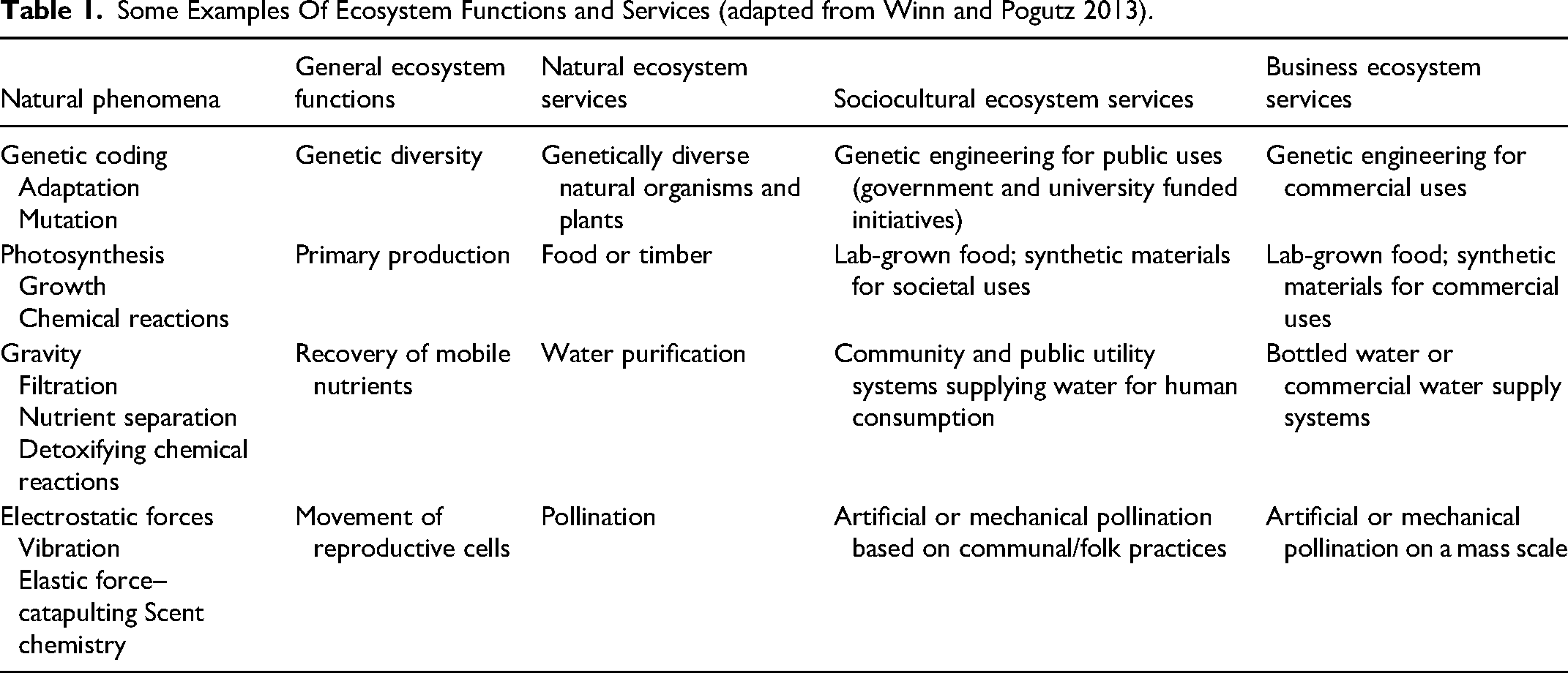
The marketing ecoverse is underpinned by natural forces that operate across various scales, ranging from the cosmic to the nano level. These processes provide the foundation for the functioning of natural ecosystems, as well as sociocultural and business systems (Good and Thorpe 2020; Hoffman and Jennings 2015). Both natural (abiotic and biotic) processes and human-made technologies leverage natural phenomena such as gravity, biochemical processes, thermodynamic laws, and nanoscale effects to generate value for ecosystem constituents (Arthur 2009). The principles of sustainability, as outlined by Gladwin, Kennelly, and Krause (1995), include assimilation, regeneration, diversification, restoration, conservation, dissipation, perpetuation, and circulation, all of which rely on natural phenomena. Natural phenomena exist as potential forces, irrespective of whether they are employed by ecosystems. Current literature does not make this distinction (Winn and Pogutz 2013). We contend that the water purification function of a natural ecosystem, for example, is underpinned by a complex interplay of natural phenomena, such as gravity, filtration, nutrient separation, and detoxifying chemical reactions (Table 1).
Some Examples Of Ecosystem Functions and Services (adapted from Winn and Pogutz 2013).
Natural phenomena are equally accessible to all ecosystems. The same geophysical, biochemical, and nano-scale effects can be utilized by both natural and human ecosystems for the purposes of adaptation, innovation, and provisioning. Since natural phenomena are shared among natural and human ecosystems, the extent to which value-creation processes for human beings affect those for other organisms needs to be considered. In the current Anthropocene era, human use of natural phenomena has grown to the extent that it has already exceeded three out of nine planetary boundaries (Hoffman and Jennings 2015). These nine boundaries – climate change, ocean acidification, ozone depletion, atmospheric aerosol loading, phosphorous and nitrogen cycles, global freshwater use, land system change, loss of biodiversity, and chemical pollution – represent tipping points in human over-exploitation of natural phenomena and indicate tight entanglement between human activity and natural processes (Gillings and Hagan-Lawson 2014; Hoffman and Jennings 2015).
Natural phenomena translate into general ecosystem functions at the ecosystem level (Table 1). Ecosystems employ these functions to provide services for their members. Various types of ecosystem services exist.
Native- vs Inter-Ecosystem (dis)Services
The marketing ecoverse encompasses various service flows among ecosystems. We distinguish between four types of ecosystem services: native ecosystem services, native ecosystem disservices, inter-ecosystem (IE) services, and inter-ecosystem (IE) disservices (Figure 2). Native ecosystem services are the benefits and values that an ecosystem creates for its inhabitants. Native ecosystem disservices refer to inward-directed harm, inhibition, and value destruction processes (Buhalis, Luisa, and Gnoth 2020; Sahaym et al. 2022). IE services are outward-directed benefits delivered by a focal ecosystem to other ecosystems and their constituents. IE disservices represent the harm and negative values imposed on other ecosystems.
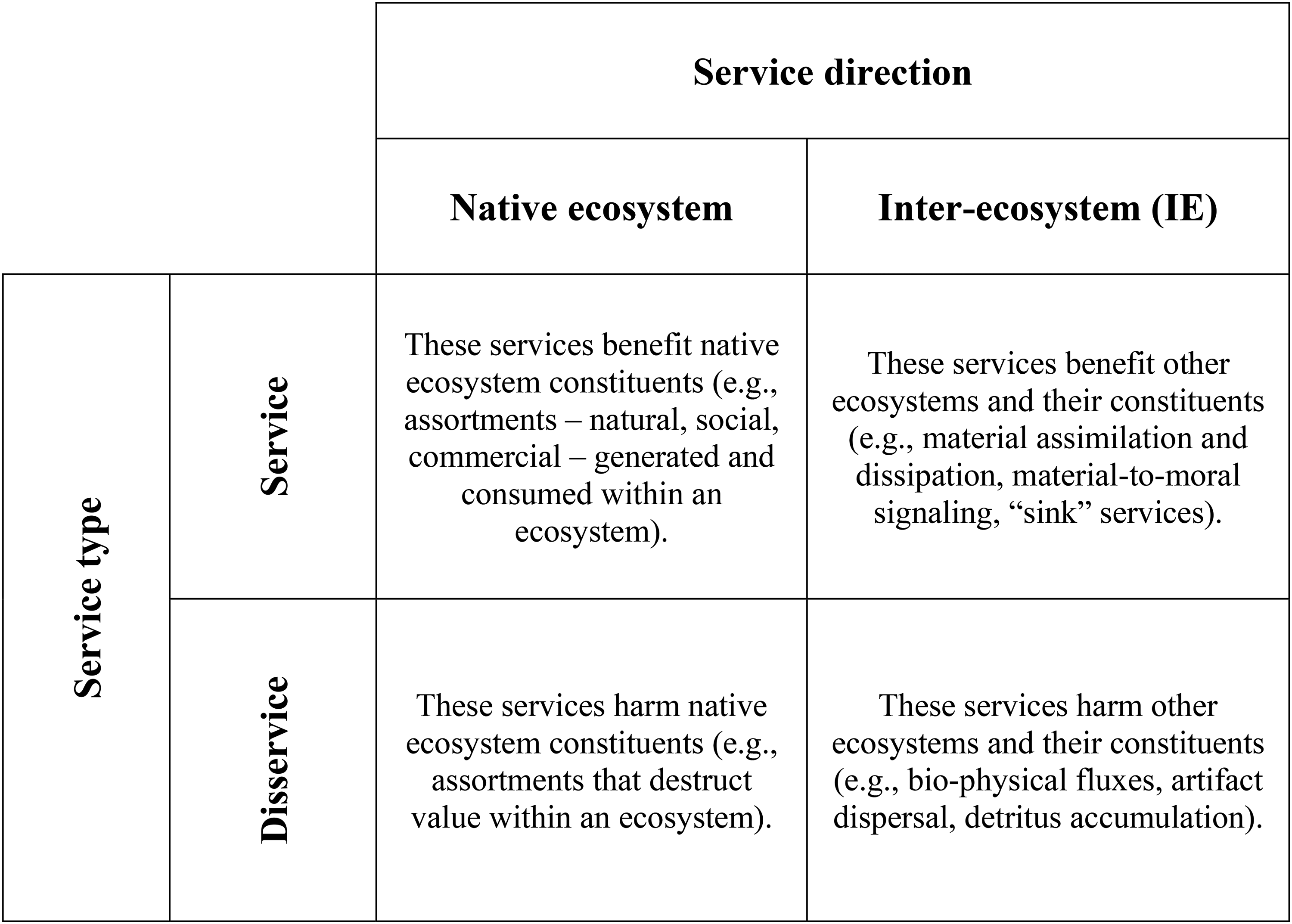
Ecosystem (dis)services.
The current literature focuses on the limited meaning of ecosystem services (Costanza et al. 2017), which predominantly refers to the benefits flowing from natural to business and sociocultural ecosystems. For example, the current definition of ecosystem services reads as “the ecological characteristics, functions, or processes that directly or indirectly contribute to human wellbeing: that is, the benefits that people derive from functioning ecosystems” (Costanza et al. 2017, p. 3). This corresponds to “nature → business IE services” or “nature → socio-cultural IE services” in Figure 2. Hence, the framework we propose in this article is more comprehensive than that recognized in the current literature.
In addition, researchers define ecosystem disservices via an anthropocentric interpretation: “the processes and functions that affect humans in ‘negative’ ways, causing damage and costs” (Costanza et al. 2017, p. 3). However, it should be noted that ecosystem disservices flow in all directions. Business ecosystems deliver disservices to both natural and sociocultural ecosystems, whereas sociocultural ecosystems perpetuate disservices that affect natural and business ecosystems. This attests to the marketing ecoverse's complex processes of reciprocal interconnections: the existence of business and sociocultural ecosystems profoundly depends on both natural phenomena and natural ecosystem services (Costanza et al. 2017). This relationship is reciprocal: the flows of (dis)services tightly integrate separate ecosystems.
Material-to-Moral Signaling
Within the marketing ecoverse, ecosystems communicate through “differences that create a difference” (Bateson 1991). For example, abnormal changes (e.g., biochemical fluxes) in natural ecosystems reverberate in other ecosystems. Changes occurring at the level of physical, chemical, and biological transformations translate into changes in the human body, and subsequently in human consciousness. Human sensitivity to non-normal biochemical fluxes increases, which affects human understanding and morality (Lenton and Latour 2018). As direct effects, abnormal perturbations in natural ecosystems can result in IE disservices. These disservices signal the status of a disequilibrium that has arisen because of unbalanced processes in business and sociocultural ecosystems. For example, the degradation of air quality due to carbon emissions directly affects humans and their bodies. These signals gradually materialize into a “call” to action at the level of business/sociocultural ecosystems. At the societal level, a moral duty to minimize emissions and air pollution forms, which in turn drives a shared sense in business ecosystems.
However, humans may not be able to truly penetrate the “morality” of natural ecosystems. Theories such as the Gaia hypothesis assume the agency of life forms and their self-regulating capacity at a global scale (Lenton and Latour 2018). In light of continuing excessive disservices flowing from business and sociocultural ecosystems to natural ecosystems, the “morality” of Gaia might necessitate self-regulation feedback loops that might hinder or even decimate the operations of business and sociocultural ecosystems. A case in point is the impact of Covid-19 on societal and business institutions, and dominant thought patterns regarding how human beings should approach natural systems (Berchin and de Andrade 2020).
Resilience Moderation
Socioecological resilience is the quality of the meta-ecosystem to maintain its stable structure and processes over the long run. Ecological resilience is defined as “the capacity of a system (e.g., an ecosystem) to cope with disturbances without shifting into a qualitatively different state” (Winn and Pogutz 2013, p. 218). For the marketing ecoverse, resilience means the capacity to continue integrating and stabilizing (dis)service flows with no major disturbance that might endanger the survival of its constituent ecosystems.
Resilience moderation refers to sharp disequilibrium adjustments in response to intensifying disservice flows among constituent ecosystems. The indirect impact of resilience moderation plays a role in the homeostatic process. For example, environmental problems not only directly impact business and social ecosystems but also moderate how business (sociocultural) ecosystems engage sociocultural (business) ecosystems. For example, significant natural disasters might bring business and sociocultural ecosystems together and create better coordination between them while minimizing mutual disservice flows (Layton, Domegan, and Duffy 2022). Moreover, environmental escalations and disasters might impact how people view current destabilizing arrangements within business ecosystems. For instance, some researchers have argued that there is a complex association between social inequalities and environmental disasters (Rodrigue and Romi 2022).
Source-Sink Constraints
An ecosystem may consist of different compartments that function as either “source” or “sink” within a meta-ecosystem (Loreau, Mouquet, and Holt 2003). The sink compartment receives, stores, assimilates, recycles, and dissipates substances, nutrients, and detritus generated in another ecosystem, whereas the source compartment is the one that dispatches substances across ecosystems. Within the marketing ecoverse, ecosystem compartments perform specific source/sink functions, which bind them into the common symbiotic structure. The capacity of a particular sink to deal with inflowing substances imposes constraints on source-sink flows.
Detritus such as chemical discharges, pollution, and waste, generated from a source compartment, may disperse across different sinks. Excessive waste does not simply disappear. Rather, it is directed to sink compartments in different neighbouring locations, in some cases overflowing and impairing their capacity to perform expected services. This is what Isbell et al. (2015) refer to as “ecosystem service debt”, that is, the failure of an ecosystem to deliver IE services to the extent required for a healthy equilibrium.
The source-sink constraints may deprive ecosystems of vitally crucial services if the transformation of physical substances does not take the limiting capacity of relevant sink compartments. Source-sink dynamics might trigger material-to-moral signals, and thus lead to significant transformation in other ecosystems.
Artifact Dispersal
The assortments generated by marketing and provisioning systems are human artifacts. While these artifacts hold temporary meaning within human institutions, they often become inconsequential from the perspective of natural ecosystems, unless they are assimilated into their operations. Artifact dispersal denotes the influx of human-made artifacts into natural ecosystems. This can lead to the problem of excessive clutter hindering or even harming crucial ecosystem processes.
Next, we apply the marketing ecoverse theory to an illustrative case, which exemplifies how ecoverse processes elucidate the intricate interdependencies between the emergence and eventual deterioration of the worldwide fourth-generation bike sharing system (BSS) ecosystem and the resurgence of human-powered mobility in African nations. This case serves as a pertinent demonstration of the myopic approach taken by certain sustainability initiatives driven by the logic of denaturization.
Illustrative Case: Bike Sharing Systems
the Fourth-Generation Dockless BSS Ecosystem: the Marketing Ecoverse Underpinnings
The legitimacy of dockless bike-sharing systems (BSSs) in China, a nation with a rich legacy of bicycle usage (Zhang et al. 2015), can be attributed to the fossil fuel-based mobility business system and its detrimental impact (IE disservice) on the urban air quality (a natural ecosystem) and the urban traffic infrastructure (a sociocultural ecosystem). The growing use of motorized vehicles powered by fossil fuels since the 1990s resulted in the generation of “detritus” in the form of emissions (such as carbon dioxide, nitrogen oxides, and particulate matter), which became embedded in the urban atmosphere ecosystem. The influx of millions of individualized vehicles (artifact dispersal) led to the emergence of intangible detritus as well, causing issues such as traffic congestion, parking problems, and mobility inefficiency that impacted the urban sociocultural ecosystems.
From the marketing ecoverse perspective, this scenario indicates a disequilibrium. A lopsided relation between the traditional fossil-fuel mobility business ecosystem and other ecosystems is evident, with the business ecosystem relying on clean air for combustion and other natural ecosystem services, as well as the public traffic infrastructure. Utilizing these IE services of the natural and sociocultural ecosystems, the business ecosystem discards the surplus detritus in the form of toxic emissions and traffic congestion, which represents IE disservices. Over the last decade, the accumulation of detritus has reached a point where the sink ecosystems are no longer able to provide the expected IE services, such as dissipating, recycling, and storing carbon emissions (Figure 3).
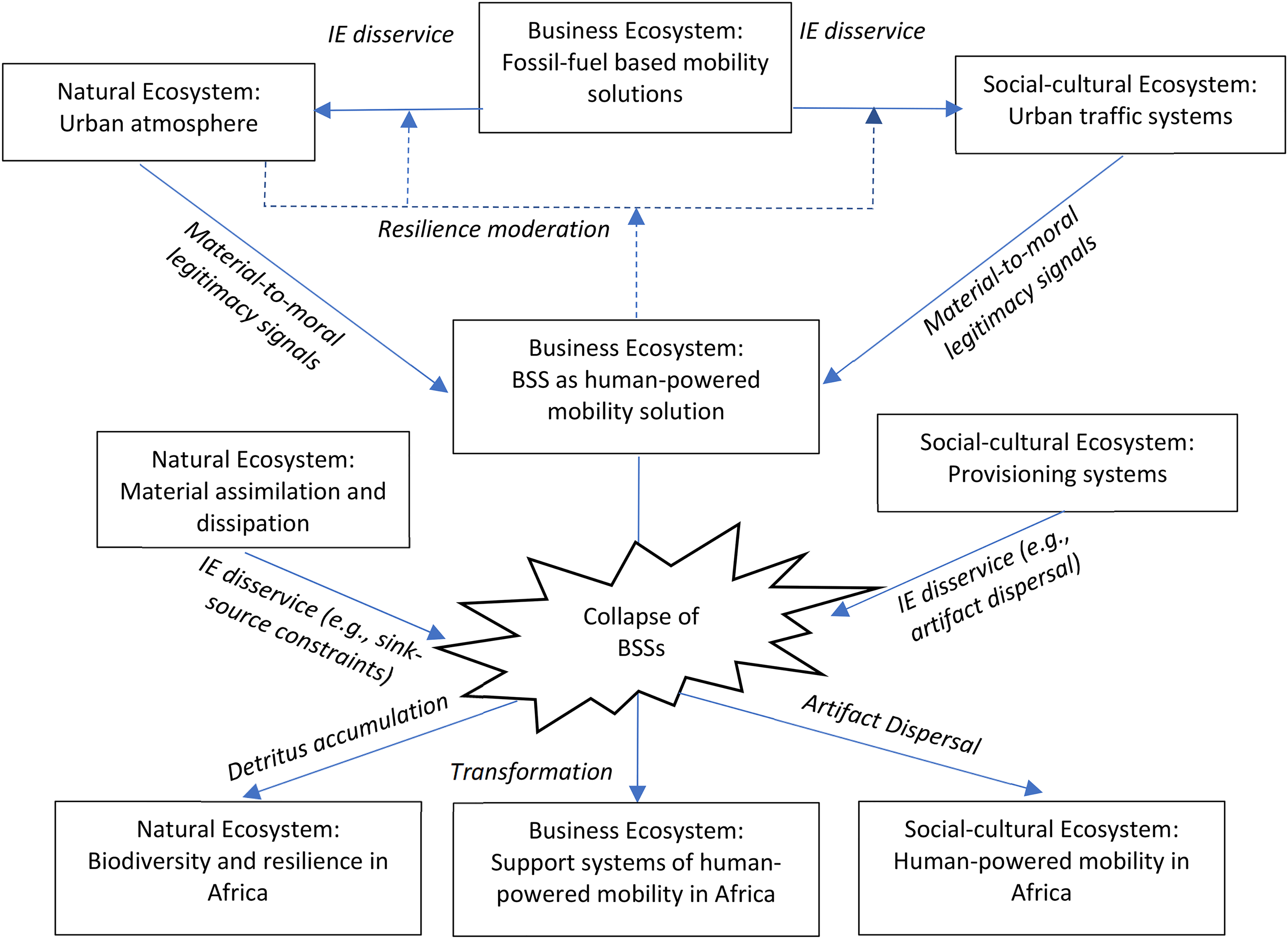
The marketing ecoverse and the 4th generation BSS ecosystem.
The sink-source constraints leading to air quality deterioration in urban areas triggered material-to-moral signals. As the unsettling impact of the harmful emission disservices looped back from natural ecosystems and negatively affected human health, the moral legitimacy of a new potential business ecosystem based on bicycle technology has gained prominence. This technology could provide an efficient and clean mobility solution (Wilson and Schmidt 2020), subject to the development of effective public-commercial systems for shared bike usage. As a result, the implementation of a system allowing for the reduction of internal combustion vehicle use through shared, human-powered bicycles was a matter of time.
In addition, resilience moderation forces, geared toward minimizing the disservices of fossil-fuel-based mobility ecosystems in the urban atmosphere came into action (Figure 3). For example, public groups and stakeholders have become increasingly involved in discussions regarding sustainable mobility choices. Governments and other institutions have not only welcomed but also incentivized and financed private initiatives that pledge to deliver sustainable mobility. Another type of resilience moderation is exemplified by dust storms in Beijing, which impact the relationship between business and sociocultural ecosystems. These storms have exacerbated the health effects of heavily polluted air and raised questions about current systems of mobility-related production and consumption.
The 4th generation (dockless, free-floating) BSS emerged as one of the solutions to the problem of artifact dispersal (i.e., the proliferation of bikes). The ecosystem has been successful in partially addressing the dispersal problem for several reasons. Firstly, this system does not require a dedicated station for bicycle pick-up and drop-off, eliminating the need for costly and space-consuming infrastructure. Moreover, since there are no stations, there is no need to search for parking spaces. This leads to lower setup costs and provides flexibility for integration into urban public transportation systems (Chen, van Lierop, and Ettema 2020). Additionally, the absence of dedicated infrastructure reduces investment costs, thus facilitating market entry (Griffith 2018). The fourth-generation BSS relies on an app, GPS device, and Internet connection to locate and unlock bicycles (Chen, van Lierop, and Ettema 2020). Dockless bicycles are equipped with GPS, GPRS, Bluetooth, QR codes, and mobile payment technologies. These bikes are powered by batteries that are charged by dynamos attached to the wheel hub or mini solar panels.
The smart bicycle sharing system was first introduced in Beijing by Ofo, which was founded by the BSS inventor Dai Wei in 2014. Within three years, Ofo had expanded into a $2 billion enterprise operating in over 250 cities across 21 countries, with approximately 10 million Ofo-branded yellow bicycles being used 32 million times daily. In contrast, Mobike, which designed its own bikes, became the leading player in making Shanghai the world's largest dockless sharing city by December 2016. Mobike was valued at $3 billion by June 2017. In 2018, there were around 70 dockless BSS companies with 16 million bicycles (Zhao et al. 2018). Some sources, such as ECNS Wire (2018), reported that in China, the actual number of bicycles was 23 million. These were owned by 77 different companies. Mobike and Ofo, China's two largest bicycle-sharing companies, were competing in more than 170 cities throughout China (Tan and Dafei 2018).
The emergence of BSS in China and other countries was heralded by commentators as a triumph for sustainable mobility. Indeed, China was on track to become the “kingdom of smart bikes” (Zhao et al. 2018). Moreover, the dockless BSS revolution was touted as China's gift to the world, with Chinese President Xi Jinping frequently acknowledging its potential benefits (Campbell 2018; Chen, van Lierop, and Ettema 2020). The Chinese state news agency Xinhua proclaimed BSS as a new addition to China's Four Great Inventions (Shead 2017).
Partial Collapse of BSS
As of 2018, many dockless BSS companies had filed for bankruptcy in the Chinese market and other international markets, with more than 20 companies reported to have ceased operations that year (ECNS Wire 2018). In July 2018, Mobike officially ceased operations, having already withdrawn from Manchester, Washington DC, and Dallas (Pidd 2018; Lindsay 2018; Kollewe and McIntyre 2019). Similarly, Ofo announced significant losses in 2018 and completely exited the fourth-generation BSS business in 2020, having gradually withdrawn from several cities, including Norwich, Sheffield, Oxford, Cambridge, and London (Kollewe and McIntyre 2019; Ffrench 2019). Gobee, Obike. and Coup, a subsidiary of Bosch, discontinued their dockless BSS operations in major urban hubs such as Berlin, Paris, and Madrid (The Conversation 2019).
In China, Bluegogo and Coolqi faced financial difficulties, while 3Vbike had to shut down operations due to a loss of public trust. This was partly due to many users demanding their deposits back (Yu and Shang 2017). In 2018, Bluegogo, China's third-largest bicycle-sharing startup with 20 million users and 700,000 bicycles, owed millions of dollars to customers and suppliers (Campbell 2018). Following the bankruptcy of these three major BSS companies, industry analysts compared the situation to a bubble that was about to burst (Re 2018).
BSS Collapse: Sociocultural Ecosystem Disservice Effects
Experts have cited vandalism as the primary factor behind the decline of BSS. For instance, in 2017, Mobike reported nearly 10% of its fleet being stolen or destroyed every month in major urban areas like Manchester. However, the underlying causes are more complex. We propose that the failure to account for the disservices emanating from the surrounding provisioning ecosystems may be a contributing factor. We identify two urban provisioning ecosystems at play.
The first ecosystem is the household appropriation ecosystem, which refers to households’ use of publicly available resources for various petty household consumption purposes (Kadirov 2018). This ecosystem treats BSS bikes as an urban resource available for “devouring”. BSS bikes with missing seats, pedals, or wheels are a common sight worldwide. In 2018, approximately 10% of Mobikes in Guangzhou were being sabotaged monthly, and around 600 Ofo bikes per day were being tampered with, needing repairs (Yu and Shang 2017). Many bikes were appropriated by replacing the original electronic lock with a personal one, while others were parked in private properties, making them inaccessible to others (Campbell 2018; Re 2018).
The second ecosystem is related to destructive urban hedonism, where bikes have become a type of “urban plaything,” a means of fun and expressive consumption. When Mobike entered the market in Manchester, they claimed that their bicycles were vandal-resistant. Urban dwellers perceived this claim as a challenge (Bardakcı and Madak 2021). A few weeks later, a video of a group of children grinding their Mobike bikes went viral. News of Mobikes being thrown into water channels also surfaced (Pidd 2018), indicating another negative trend about BSS bikes, with thousands of bikes ending up in water bodies such as rivers, lakes, and canals. In 2018, a single clean-up initiative in China recovered 3000 bikes from a river (Southern China Morning Post 2018).
BSS Collapse: Natural Ecosystems Disservice Effects
The trend of bikes ending up in the aquatic biome highlights a distinct disservice of BSS to natural ecosystems. Ecosystem boundaries, such as the terrestrial-aquatic boundaries, have become hotspots for detritus accumulation, with discarded bikes largely contributing to the problem. The phenomenon of “bikes in water” appears to be common worldwide. Major urban centers like New York, Rome, and Amsterdam face similar problems. For example, Amsterdam employs “bike fishermen” who retrieve approximately 15,000 bikes from the city's canals each year.
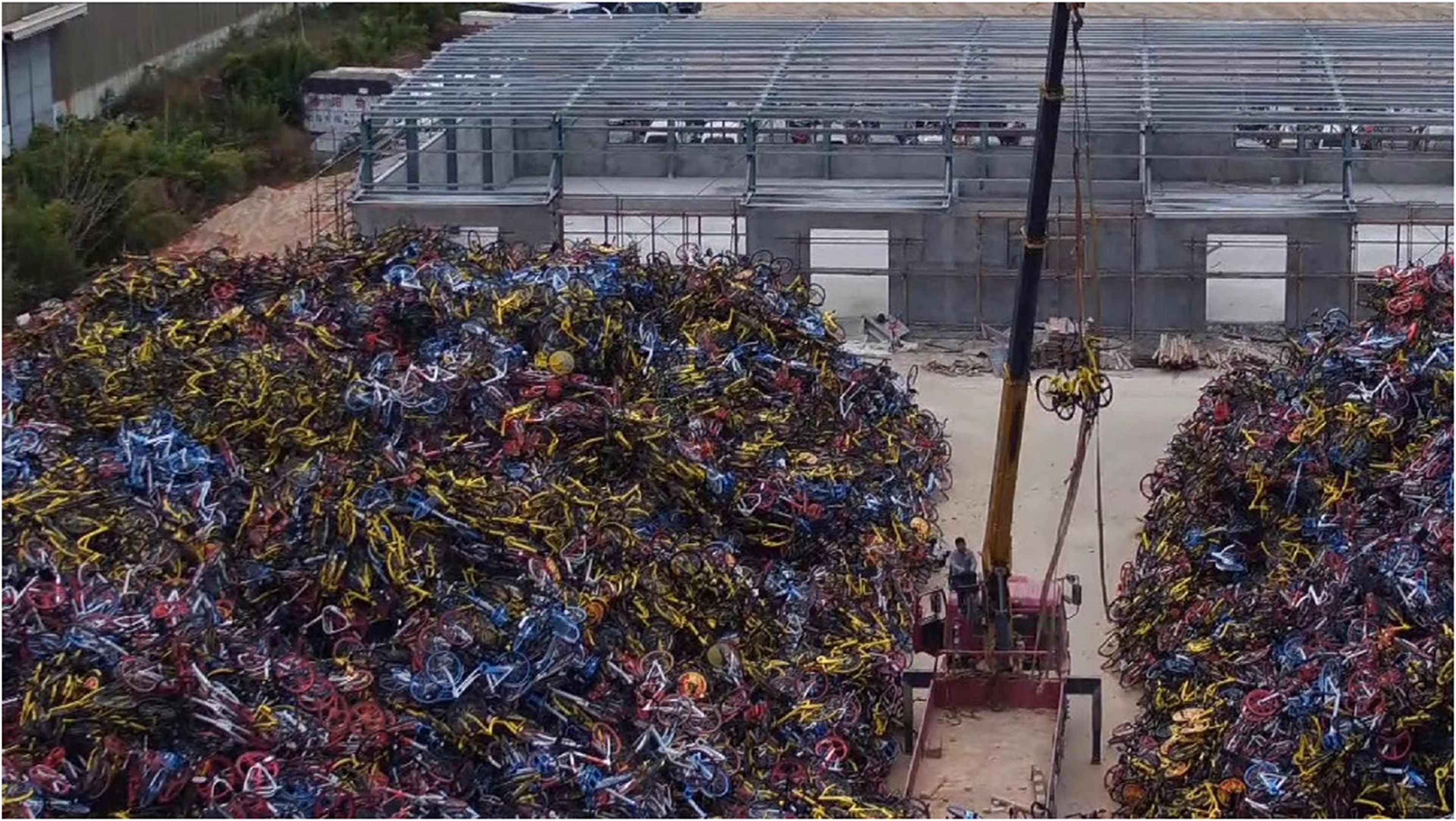
The BSS bike is a technologically advanced and sophisticated product that presents a significant challenge for recycling due to its intricate electronic components, rubber wheels, and toxic paint. As a result, the recycling process for BSS bikes is complex and expensive, and many recyclers are hesitant to accept them. Another problem arising from the BSS phenomenon is the issue of urban spatial constraints. Artifact dispersal, the sudden and massive influx of millions of bikes into urban spaces, which were not designed for this, has created serious problems, including encroachment on sidewalks, blocking pedestrian paths, and obstructing entrances to subway stations (Yu and Shang 2017; Chang et al. 2018; Shi, Shi et al. 2018). Shocking images of bicycle graveyards and piles of broken bikes have been reported in urban areas by The Atlantic and Reuters (Figure 4). The proliferation of dockless bicycles has particularly affected Chinese cities, which have become cluttered with abandoned bicycles (Salmon 2018). These discarded bikes in enormous piles have caused significant problems by blocking roads, cycle lanes, and entrances to public spaces and parks (Figure 5).

Bicycle Graveyard in China (Used with Permission from REUTERS/Aly Song, Shanghai, China July 8, 2018).
Sorting illegally parked bicycles in Xiamen, China (used with permission from https://news.sky.com/story/in-china-rental-bikes-have-become-a-social-menace-11191053).
In Europe, this problem of BSS bike abandonment remains the same. In 2018, eight BSS companies left more than 18,000 bicycles in the streets of Berlin. Owing to irregular parking on the sidewalks of Berlin, which could not support these many bicycles, the area that could be used by pedestrians gradually decreased. Meanwhile, most of the Singapore-based oBike bicycles in Munich were damaged as they were parked in piles, leading to the retirement of approximately 6,000 of its 6,800 bicycles (Dobush 2018).
Rejuvenation of Human-Powered Mobility Sociocultural Ecosystems in Africa
The story of the BSS ecosystems does not end here. While China and Europe are still facing the task of recycling millions of BSS bikes and their natural ecosystems are dealing with bike “detritus,” a new social provisioning ecosystem has formed around collecting and transporting the bikes to the African continent. Social enterprises such as Re-Cycle UK, World Bicycle Relief (USA), CooP Africa (Netherlands), and VelAfrica (Switzerland) collect, sort, refurbish, and transport used and abandoned bikes to African countries (Bardakcı and Savaş 2021; VelAfrica 2021a, 2021b)
Re-Cycle UK partners with local non-governmental organizations in Gambia, Ghana, Zambia, and South Africa. For instance, it collaborates with the Village Bicycle Project in Ghana. Re-Cycle's operations are primarily funded and supported by volunteers. Meanwhile, CooPAfrica (Cycling out of Poverty), based in the Netherlands, works to establish cycling projects with local NGOs in Uganda, Ghana, and Burkina Faso. In 2018, its subsidiary foundations have since opened in other countries such as Belgium. Another institution, World Bicycle Relief (WBR), an international NGO headquartered in Chicago, specializes in large-scale bicycle distribution programs to help reduce poverty in developing countries. In addition to its US office, WBR also has branches in the UK, Switzerland, Canada, and Australia. The organization partners with local NGOs to distribute bicycles in Colombia, Malawi, Ghana, Zambia, Kenya, and Zimbabwe (World Bicycle Relief 2020; World Bicycle Relief 2021).
VelAfrica, with the motto “Bicycle Changes Lives,” collects old and unused bicycles in Switzerland and refurbishes them before sending them to Africa. The organization has an extensive network of approximately 400 collection points in Switzerland, and its 20 workshops repair and refurbish the bicycles to make them suitable for African roads. The quality standards of the bicycles are rigorously maintained, ensuring that only bikes meeting the stated criteria are shipped to Africa. In 2019 alone, VelAfrica shipped 47 containers carrying over 20,000 bicycles to Africa. The containers are shipped from Basel to the port of Antwerp, loaded onto the ship, and sent to various ports in Africa. Once they arrive, the containers are transported by trucks to the project partners in the interior of Ghana, Gambia, South Africa, Burkina Faso, Tanzania, Madagascar, and the Ivory Coast (VelAfrica 2014, 2021c).
Social Provisioning Effects in Africa
Refurbished bikes not only provide mobility but also contribute to the education and health-provisioning systems in Africa. According to Re-Cycle (2021c), 15% of children who start school in Africa leave school before second grade, while 42% drop out before graduating. Bicycles can help reduce the average travel time by up to 75% and increase the safety of students on their way to school (Figure 6). The World Bicycle Relief (2021d) BEEP program focuses on providing free bicycles to female students. VelAfrika's “Bike to School” initiative offers discounted or free bicycles to children and youth from poor families who face long and dangerous journeys to school (VelAfrica 2021b). Recent studies show that bicycles in Tanzania not only provide time savings but also lead to better learning, increased school performance, improved safety, and cost savings for families (VelAfrica 2021c).

A Student in Uganda Riding Coop-Africa's Bike4School (Used with Permission from https://www.coop-africa.org/en/causes/bike4school/).
In many rural African communities, young women are burdened with tasks such as water collection and firewood gathering. To address this issue, the organizations are now redesigning bicycles to carry heavy loads, allowing users to transport water and other goods more effectively. Additionally, diseases such as malaria, tuberculosis, and HIV continue to threaten rural communities, making access to healthcare a vital need. Volunteer healthcare workers can use bicycles to reach more patients quickly, saving time and helping to eradicate preventable diseases (Figure 7). Bicycle ambulances have also been introduced to transport patients and pregnant women to health centers more effectively and at a lower cost (Bamulanzeki 2019).
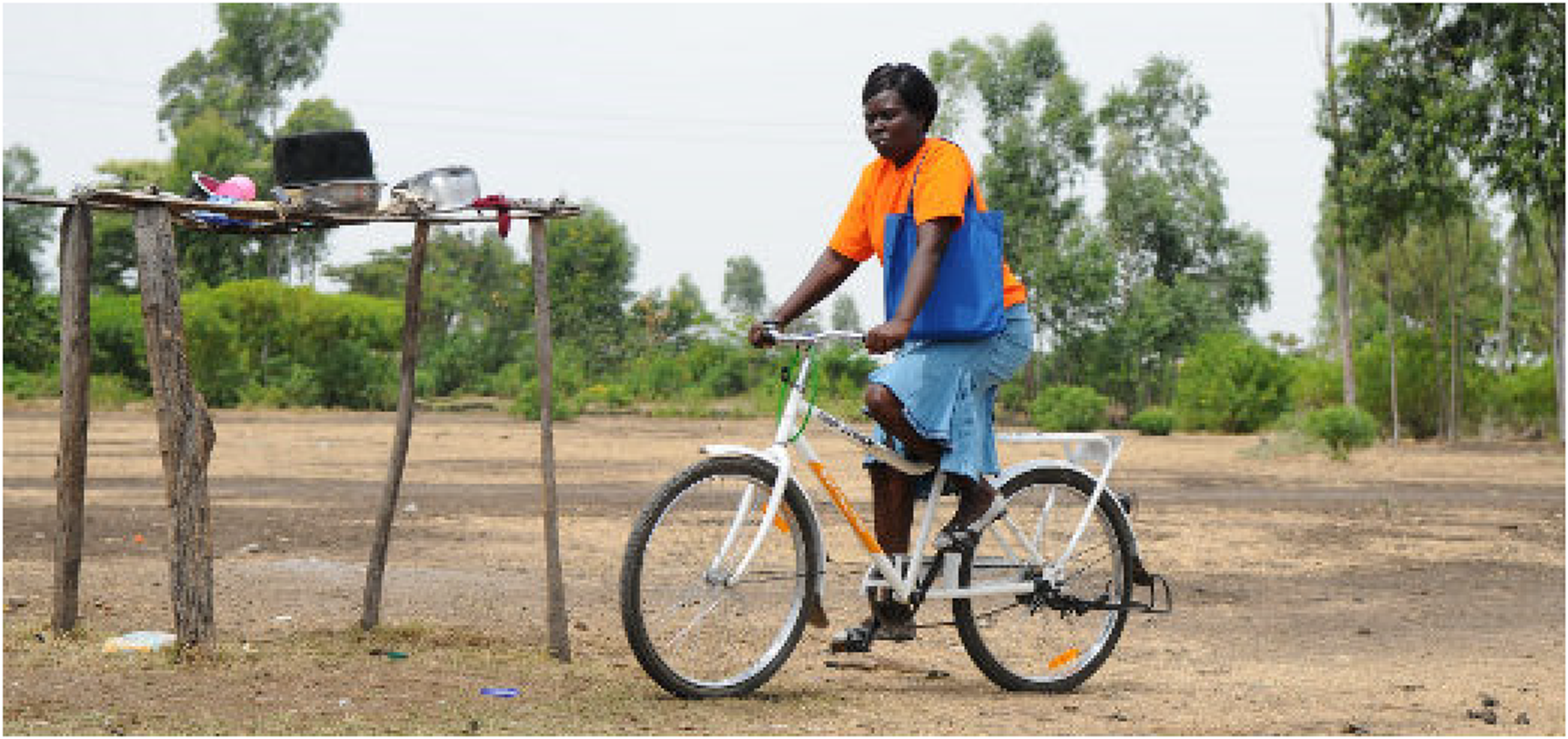
A Health Worker in Kenya Using Coop-Africa's Bike4Care (Used with Permission from https://www.coop-africa.org/en/causes/bike4care/).
Business Ecosystem Effects in Africa
Simple and affordable transportation saves time and effort, and offers new income opportunities (Re-Cycle 2021a). In rural Africa, where 75% of the population is engaged in agriculture and trade, most agricultural activities occur within a 2–4 km radius from the settlement. Beyond this distance, agricultural activity decreases dramatically, and for female farmers, the long distances from the plantation mean that they have little time and energy to continue with household chores, childcare, and other economic activities (Re-Cycle 2021b). For instance, Re-Cycle has helped Mpatisha (20 years old, living in rural Zambia, the eldest of six children) who has a one-year-old child. Mpatisha used to leave the house at 5.30 am with her baby to walk to the nearest water source, which took 2.5 h. As soon as she got home, she had to make another trip to fetch more water, and sometimes an additional trip in the afternoon. The availability of a bicycle has significantly impacted her life, reducing the time and effort needed to access water.
NGOs dedicated to promoting bicycle use in Africa also support local entrepreneurship projects, with the distribution of bicycles playing a key role in empowering African street vendors, traders, farmers, and municipal workers. Bicycle taxis, or “boda bodas,” and bike haulers with trailers are common modes of transportation used in these projects, and many young people operate bicycle maintenance and repair shops. Personal anecdotes highlight the transformative impact of these projects. For example, Fred began his journey as a boda boda rider by renting a bicycle through one of these projects but was able to eventually purchase his own bike through hard work. With continued effort, he bought a second bike and eventually succeeded in purchasing a motorcycle, which he now operates as a taxi business with two additional riders. Similarly, Dickson, who acquired a bike through one of these projects, was able to expand his chicken farming business and butcher shop in the rural area of Palabana, Zambia. Before getting a bike, he could only raise 200 chickens at a time due to the difficulty of carrying them by hand to his shop. With the help of his bike and additional bikes he acquired over time, he now raises 1500 chickens at once and employs riders to transport them to his shop in the local marketplace. In addition to expanding his farm and shop, he now has 500 chickens available for sale (Coop Africa 2021; World Bicycle Relief 2021).
Natural Ecosystem Effects
The partial collapse of BSSs on a global scale resulted in widespread dispersal of discarded artifacts, specifically 4th generation BSS bikes, into new ecosystems. These artifacts are the detritus of the so-called “sustainable” business ecosystems, swiftly patched, refurbished, and adapted to be useful for social provisioning purposes in remote ecosystems, such as rural African communities. From the marketing ecoverse perspective, the impact of such transfers must be considered not only on social provisioning systems but also on the various natural ecosystems supporting them. It is an erroneous assumption that direct dispersal of industrial detritus would make a significant difference in these communities. It needs to be realised that the erroneous logic is being imposed from the ecosystem in disequilibrium into those that might be relatively balanced.
Moreover, the sink capacity of natural ecosystems interwoven into the fabric of rural African communities must be considered. Although the immediate impact of materials from decomposing bikes may not be a pressing issue for these natural ecosystems, it is essential to carefully map both the biological and technical cycles of these materials (Borland et al. 2016). The potential influx of millions of bikes, especially the chemical content of this influx, might negatively impact the health of critical subsistence ecosystems, leading to disequilibria at multiple levels and potentially leaving rural African communities worse off in the long term (Venugopal and Chakrabarti 2022). Therefore, any industrial detritus transferred to a bio-chemically balanced ecosystem must be accompanied by thoroughly planned mechanisms, including an entire infrastructure, to ensure proper disposal, recycling, and biochemical reintegration into natural ecosystems.
Summary
The case offers profound insights. Firstly, the interdependence between ecosystems of different kinds is so tightly intertwined that the collapse of an ecosystem on one side of the globe can affect the rejuvenation of another on the opposite side. Secondly, the case demonstrates that natural ecosystems actively participate in human projects by virtue of ecoverse processes such as shared natural phenomena, ecosystem (dis)services, material-to-moral signaling, resilience moderation, source-sink constraints, and artifact dispersal. Lastly, the case illustrates that sustainability initiatives will be restricted if they do not consider the structure and processes of the marketing ecoverse. Neglecting the interdependence and (dis)service flows between different ecosystems could lead to myopic decisions that result in unsustainable conditions in the long term.
Toward A More Inclusive Framework
the Marketing Ecoverse Perspective
To elucidate the conceptual differences, we draw a comparison between the marketing ecoverse perspective and those of business ecosystems and marketing systems (see Table 2). While the latter two perspectives center around the anthropogenic structures such as industrial networks and provisioning networks, the former structurally encompasses both industrial and provisioning ecosystems along with equally important natural ecosystems that cater to equally important customers (e.g., animals, plants, and microorganisms). Further investigation into the mechanism and processes of the marketing ecoverse is needed, which should include the holistic examination of natural phenomena shared by all ecosystems under focus to provision the needs of their respective constituents.
The Marketing Ecoverse Perspective and Future Research Avenues.
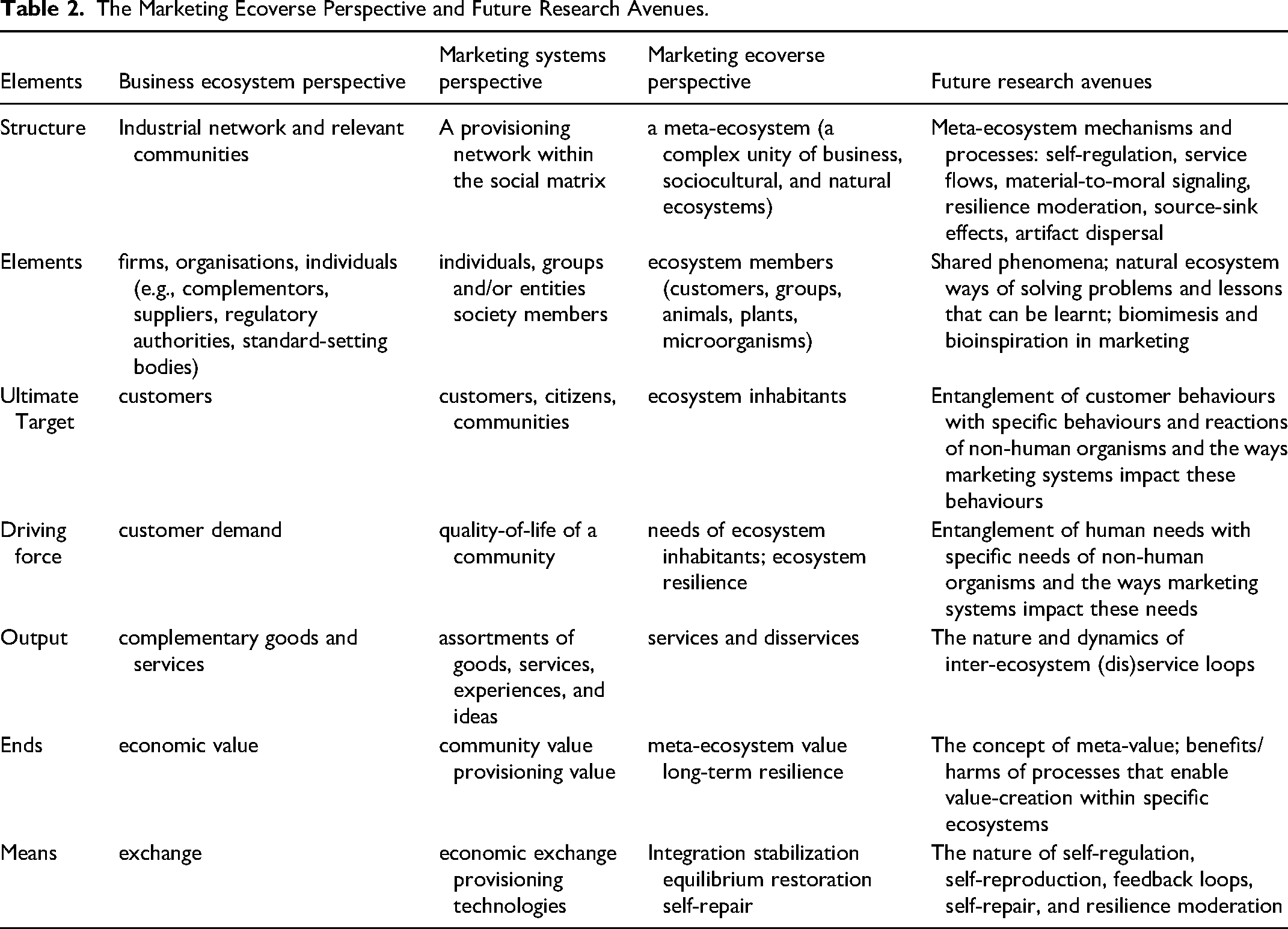
The marketing ecoverse perspective shifts the system's target from customers and communities to all living organisms including humans, where ecosystem resilience is viewed as the driving force of ecosystem operations. Here, we view ecosystem resilience as the long-term capacity of an ecosystem to satisfy the needs of its inhabitants without compromising the ability of other ecosystem inhabitants to pursue their needs. This places the marketing ecoverse perspective right at the heart of the debate on the meanings of sustainability, where concurrent cross-ecosystem spillover effects between human and non-human organisms takes centre stage (in contrast to temporal effects on the survival of future generations). In relation to this, the close entanglement of human needs and behaviours with non-human needs and behaviours needs to be further explored.
The marketing ecoverse perspective emphasizes a meta-ecosystem value by supporting and enabling ecosystems to sustain their targeted value creation and provisioning processes. In the event of any disservices released by a constituent ecosystem, other ecosystems make adequate adjustments, which may substantially constrain the “misbehaving” ecosystem in the long term. Meta-ecosystem value refers to the higher-level governing mechanisms that enable or constrict focused value creation within a specific ecosystem. The optimal level of meta-ecosystem value is achieved when value creation within a given constituent ecosystem does not compromise value creation in other co-constitutive ecosystems.
Discussion and Conclusion
This research conceptualizes the marketing ecoverse as a distinct meta-ecosystem that is emergent, ecological, homeostatic, and of non-human origin. This concept draws on several relevant theoretical foundations including theories of meta-ecosystem, marketing systems, business ecosystems, and biophysical foundations of organization to characterize the inherently natural foundations of marketing activities. The notion of a confluence of different ecosystems has been alluded to in previous macromarketing research. Focusing on consumption adequacy in subsistence settings, Venugopal and Chakrabarti (2022) theorize the subsistence community as a system with three interlinked subsystems: the market, environmental, and social systems. Venugopal and Chakrabarti show that subsistence communities respond to environmental ecosystem fluxes by investing in feedback loops such as mitigation and adaptation. In contrast, the marketing ecoverse perspective calls to study not only subsistence communities but also different types of industrially advanced communities. Moreover, not only feedback loops within subsistence communities but also the spatial-temporal feedback interrelations between industrial and subsistence communities should be considered. This article illustrates such interrelations in the example of declining BSSs and slow-growing bike usage in rural African communities.
The mitigation and adaptation loops described by Venugopal and Chakrabarti (2022) in subsistence settings can be viewed as specific cases of resilience moderation. The authors define mitigation/adaptation loops as strategies followed by communities when climate fluxes endanger sociocultural and business ecosystems. Three anthropocentric dimensions of these strategies, namely, exposure reduction, sensitivity reduction, and resilience increase, used to deal with the consumption inadequacy of fishing communities, are indicated. By doing this, Venugopal and Chakrabarti (2022) present a type of resilience moderation: – one that occurs when natural ecosystems disservice social provisioning systems. Following the same logic, the current study presents the possibility of six variations of resilience moderation: sociocultural provisioning systems’ reaction to natural-to-business and business-to-natural ecosystem disservices; business ecosystems’ reaction to natural-to-sociocultural and sociocultural-to-natural ecosystem disservices; and natural ecosystems’ reaction to business-to-sociocultural and sociocultural-to-business ecosystems disservices. These are the focal ecosystem's mitigating response to the disservice-driven disequilibria in the relationship between the other two ecosystems. In a nutshell, resilience moderation occurs when an ecosystem adapts and reacts to ongoing disservices between other ecosystems.
We contend that the marketing ecoverse perspective is an initial step toward expanding the scope of marketing beyond the priorities of a human species. Shultz and Wilkie (2021, p.9) write that, “In a world where markets and marketing affect, either directly or indirectly, perhaps all aspects of humans, and indeed all living things on planet Earth; where the survival of Homo Sapiens will depend on better understanding of those systems – the extent to which they are just, inclusive and function sustainably – is paramount”. Through the emphasis on the needs of all living organisms and the symbiosis with natural ecosystems, the marketing ecoverse framework has an inherent sustainability focus.
The marketing ecoverse perspective highlights the importance of (species) inclusiveness for sustainability. The case of BSS shows that a business ecosystem does not operate in a vacuum: its resilience and survival is closely entangled with the processes occurring within relevant provisioning and natural ecosystems. Business ventures such as the 4th generation BSS, while aiming to build sustainable ecosystems, might inadvertently end up harming not only own business networks but also society at large, as well as nature, if the misleading assumptions of denaturalization are pursued. The “sustainable/green” effect obtained within the business ecosystem (e.g., flexible human-powered mobility) shares the limited bandwidth of natural phenomena with natural ecosystems and it is subject to source-sink constraints. Making the detritus from such “sustainability” projects disappear – whether it is thrown into water or transferred to another remote ecosystem – is not a solution. Even if 100% of this detritus is recycled and reused, which is the main assumption of current bio-circular business models, how would these recycled materials impact the delicate balance within affected natural ecosystems, and thus the whole ecoverse? The marketing ecoverse perspective sets a more stringent test for sustainable, bio-circular economy: industrial and consumption waste should be not only ecologically benign, but also symbiotic to relevant local natural ecosystems, avoiding the creation of “sustainable detritus” that clogs up the assimilative and regenerative capacities of sink ecosystems. This seems to be a more pertinent problem that needs to be addressed from the marketing ecoverse perspective.
Following the sustaincentric logic (Gladwin, Kennelly, and Krause 1995), we call on macromarketing scholars to shed the denaturization shackles and deeply explore symbiotic relationships, interdependence, and causal loops between provisioning mechanisms forming within various ecosystems. Macromarketers must ask difficult sustainability questions (Prothero and McDonagh 2021). We must realize that the marketing ecoverse behaves as a mini version of global Gaia (Berchin and Osório de Andrade 2020; Lenton and Latour 2018; Rodrigue and Romi 2022). The illustrative case shows that disequilibrium corrections might lead to the collapse of dysfunctional business ecosystems and the rebirth of transformed sociocultural provisioning ecosystems elsewhere. This happens because of the increasing extent of tight integration between the business, sociocultural, and ecological worlds. As Lenton and Latour (2018, p.1066) put it “…before the Anthropocene, Western societies saw themselves as the only conscious agents in a passive material environment. Today, they must cope with the brutal reactions of living organisms that are continually reshaping their surroundings, creating in part their own conditions for survival”. The resilience of natural ecosystems, specifically, their capacity and agency to adapt and solve survival problems warrants a humble scholarly approach focused on learning from natural ecosystems (Benyus 2002). By discarding natural ecosystems, humans can only inflict pain on themselves, as research shows that natural ecosystems are likely to endure without humans, even after significant bio-chemical resets (Webster et al. 2016).
Associate Editor
Ben Wooliscroft
Footnotes
Declaration of Conflicting Interests
The author(s) declared no potential conflicts of interest with respect to the research, authorship, and/or publication of this article.
Funding
The author(s) received no financial support for the research, authorship, and/or publication of this article.
