




Abstract
Climate change and a pandemic demonstrate that for most individuals, organisations and governments, it is the tensions that emerge between authoritarian regulatory control and small group independent self-organization, and between simple and complex choices in collective decision making, that present the most difficulties for a shared future. The hoped for outcomes do not always follow the choices made, highlighting the unpredictability of such complex crises. Consequently, drawing on macromarketing, marketing systems and human social evolution, we consider how to avoid failure or collapse, enhance quality of life for all, foster insights into community flexibility and resilience, whilst continually shaping over time and space our social, economic, political and environmental systems.
Keywords
Introduction
Why do some governments, organisations and community leaders seem to get it wrong in confronting a crisis? Why do others succeed? Is there something to be learned from how the different responses came to be so? Pandemics and climate change are contemporary examples of macro level crises. However, both share some common attributes. They are systemic, complex, adaptive, multi-level and non-linear and their socio-economic impacts grow disproportionately once thresholds are breached. They share a need for action and behaviour change at the micro, meso, macro level and present both individual and collective choices at each of these levels.
Thinking first about climate change, we are seeing a variety of responses at the macro, meso and micro level, often shaped by, or acting in response to, choices made in the past (Layton and Duffy 2018). At the macro level, some countries have embraced climate change as a truth and consequently, have formulated and executed plans to adapt to the crisis. Denmark recognised the need to safeguard long-term action and have enacted a law that will make it legally binding for future governments to meet climate change targets (Timperley 2020). However, other countries, perhaps in part due to the creeping nature of climate change or their own self-interest in maintaining the status quo have chosen not to adapt, or as is the case in Brazil, are actively unwinding environmental protections (Tisler, Teixeira, and Nóbrega 2022). Alternatively, in the case of Australia there is a failure to commit to reduce carbon emissions at the Federal Government level (Yu, et al. 2020). However, at the local and state government levels, commitments have been made to reduce carbon emissions (Hannam 2021).
At the meso level of organisations, we have seen a similar variety of responses. ExxonMobil has poured millions of dollars into funding climate change denial as it lies counter to their own profit motives (Westervelt 2022). However, UK fast food chain “Nando's” are working with the international Science Based Targets initiative to reduce their carbon footprint and rely 100% on renewable energy by 2022 (Grylls 2021). At the individual or micro level, we see similar gulfs between responses, Bjorn Lomborg, although he does not identify as a climate change denier, seeks to communicate the benefits of climate change and undermine those calling for adaptive responses (Lomborg 2021). Activist Greta Thunberg works to promote the seriousness of the climate change crisis and demands action (Boffey 2022).
Turning now to consider the pandemic and the variety of responses at the micro, meso and macro level. New Zealand acted swiftly, elevating public health to primary importance by enforcing a serious lockdown regardless of the economic consequences (Robert 2020). While others, such as the UK, have flip flopped in their approach, first suggesting the best response was to tough it out and do nothing and then moving to a serious lockdown and then declaring “freedom day” in spite of significant daily case numbers and hospitalisations (Bryce et al. 2020). What works in some countries does not seem conceivable in others. At an organisational level, Apple responded quickly based on direct information from their operations in China, closing their retail stores globally to protect their customers, staff and brand (Bursztynsky 2021). In Australia, there was confusion amongst sporting codes, management was determined to proceed with the football season as planned until the government took action and stopped the competition from proceeding (O’Shea, Maxwell, and Duffy 2021). At the micro level, individuals have been stockpiling toilet paper (Leung et al. 2021) in a classic example of panic buying while others refuse to wear facemasks (Bhasin et al. 2020), question the truth of the pandemic (Jaspal and Nerlich 2022) and sacrifice their livelihood to defy vaccine mandates (Gandjour 2022). It is critical to perceive that climate change, like the pandemic, is a process not an event (Wolf 2011).
This paper explores these key challenges through three aims and three research questions from a macromarketing perspective through the lens of a critical social system – paying close attention to the provisioning systems that self-organize within and between communities as participants, individuals and entities, look for ways to meet their changing needs and wants for goods, services, experiences and ideas. The paper's first aim is to diagnose the evolutionary causal dynamics at work in a community provisioning system. The first research question asks (a) what are the ongoing evolutionary causal dynamics and (b) how does the external and internal crisis affect the evolutionary dynamics that generate provisioning systems in every community at any level? The paper's second aim is to design positive responses to a crisis while avoiding harmful social consequences, inequalities and potential collapse for communities. The second research question asks how might the causal dynamics be shaped to minimize the emerging tensions between state and self-organization? The third aim of the paper seeks to understand the appropriate trade-offs between the demands for simplicity and complexity to encourage choices and decision making that will contribute to the preservation and enhancement of everyday life in the community of study. The third research question considers what the appropriate trade-offs are between the demands of simplicity and complexity in the ongoing individual and collective choices and decision making in the face of barriers and constraints that need careful consideration in everyday community life together with new mental models to continually enhance over time and space our social, economic, political and environmental systems?
We begin with an exploration of macromarketing from a marketing systems perspective (Layton 2015). This brings us to a discussion of community provisioning systems, which are complex yet distinctive social networks. They are comprised of an assemblage of top down, state prescriptive systems that can be restricted in choice and diversity, together with marketing systems that can have an abundance of choice and diversity in response to customer-driven bottom up forces, complemented by bottom up informal and collaborative exchange systems. These top-down and bottom up provisioning systems blend together to meet the needs and wants for goods, services, experiences, and ideas within a community and are much more than the sum of their parts, being non-linear, self-organised, embedded and emergent. While the sub-systems co-exist together, they differ in the ways they function and within them, evolutional dynamics emerge as provisioning sub-systems respond to, often simultaneous, many times unpredictable, crises such as climate change, pandemics, economic collapse, war and technology revolutions. The impact of each of these crises in a community is influenced by the history, location and cultures of the community (Duffy, Layton, and Dwyer 2017). It is felt immediately in the daily life of individuals, families, small and large groups, and in the many entities that form as a community takes shape and grows. Social systems are impacted, sometimes dramatically.
In particular, we have observed community provisioning systems changed by the pandemic (Layton and Domegan 2021). Buying patterns are influenced as homes are lost, businesses close and re-open, or not, and incomes fall for some but increase for others (Kim and Kim 2021). Sectors such as hospitality struggle to find workers because of generous government benefits paid during lockdowns and the great resignation trend. Social distancing is increased along with feelings of isolation for many. International travel is limited by closed borders and within Australia interstate travel is also halted (the state of Western Australia closed to the world and the rest of Australia for 697 days. Shopping centres are in trouble. Teaching and work is on line and at home as frazzled parents try to home-school and work simultaneously. Demonstration marches are staged around the world and riots give voice to disapproval and potential revolt. Many of these issues such as lock downs and social distancing are particular to the current pandemic and do not arise in all wicked problems or crises. What does occur in all crises is disruption to the community provisioning systems and the patterns of daily live. Critically, the disruption is significant to the continuing and discontinuing interactions of groups of individuals and entities in the complex social mechanisms set out below.
Provisioning systems change as elements and parts disappear, or morph to new forms. Prescriptive systems may initially be a common response, sharing and other cooperative systems may form, markets may change shape as businesses innovate the offers they make, informality and corruption might also eventuate. As provisioning systems seek to respond, small groups form, as people seek to cooperate in search of effective action towards their desired outcomes. Coalitions of stakeholders appear as opportunities, threats emerge, shifting delivery systems in the forms of supply chains and distribution channels, and B2B alliances take shape. Small and large technological change is increasingly possible, norms and values move as community segments respond to what is happening, in ways that will likely set communities on a new course. To make sense of these system changes for social impact, we suggest a framework of theory that draws on recent work in human social evolution (West 2017; Cohen 2018; Wilson 2020) in the study of interaction within complex adaptive systems (Hedström 2005; Thornton, Ocasi, and Lounsbury 2012; Fligstein and McAdam 2012) where “agents constantly change their actions and strategies in response to the outcomes they mutually create” (Arthur, Beinhocker, and Stranger 2020, p. 13) and the shaping of collective choices (Ostrom 2010; Kahneman 2011; Acemoglu and Robinson 2019; Allen 2020) and recent work on provisioning systems (Fanning, O'Neill, and Büchs 2020). We close with implications and future research directions for macromarketing and systems science in a community provisioning system framework.
How did Macromarketing Evolve from Marketing Systems to Provisioning Systems?
Adopting a macromarketing point of view, the centrality of systems to everyday life has been emphasised in the recent work of Wooliscroft (2020). This paper emphatically makes the case that macromarketing is at its core a study of systems, most often systems that generate wicked problems, that are complex and unwieldy and comprised of conflicting values resulting from the interaction of many human decisions. Macromarketing research is difficult because it is based on these assumptions. However, the author urges the reader not to be deterred by the complexity and inherent difficulty one faces by accepting the moving nature of the phenomenon macromarketers chose to study. Wooliscroft (2020) encourages greater adoption of systems based methods and advises one not to surrender to the conceptual convenience of assuming away the complexity of the subject matter macromarketers study. Provisioning systems (Layton and Domegan 2021) are in line with Wooliscroft (2020) by placing systems at the heart of the analysis and focus of its work.
The work of Layton and Duffy (2018) directs macromarketing scholars’ attention to the past, in order to understand how and why a marketing system operates in a particular way today, one needs to appreciate how it formed and how it evolved over time. This work highlights the importance of starting ones analysis from exchange and not necessarily material exchanges, but with an exchange of value, hinting at future work about provisioning systems to come (Layton and Domegan 2021). Finally, this article contributes by guiding scholars to analyse history by first articulating the narrative, then using a partial analysis to identify specific event and action sequences in the narrative followed by a detailed causal analysis, drawing out ‘what-if’ appraisals; and then a strong approach that works through the causal social mechanisms that have generated the event and action sequences of interest. Through this process, the scholar can feel confident they are likely to have considered the primary and secondary casual mechanisms and their consequences and have conducted an analysis that might identify where they may intervene and nudge the system to produce better quality of life outcomes for its participants.
A recently proposed a doctrine of socially responsible marketing (SRM) sets a normative standard for both professional and academic marketers to follow (Laczniak and Shultz 2021). SRM articulates and justifies why socially responsible marketing must be comprised of corporate citizenship, stakeholder orientation and social and ecological sustainability. This paper, is essentially a call to arms for marketers, and is underpinned by the recognition that to adopt these normative goals, one must have a macro orientation consistent with the orientation of provisioning systems (Layton and Domegan 2021). This is so because if one operates from a micro perspective only, you cannot embrace social responsibility in the true sense of the term; a micro perspective is too individualistic and fails to see the forest for the trees. The authors instead encourage a systems standpoint to be able to truly evaluate one's wider responsibilities and obligations. The work of Laczniak and Shultz (2021) is necessary to understand and analyse the responsibilities, effects and response of situations, such as a pandemic or climate change, as the actions required and obligations and consequences are experienced by the collective.
Macro-social marketing utilises systems theory and systems thinking to work towards the resolution of wicked problems, which due to their complex nature cannot be solved without a systems approach (Duffy 2016; Kennedy 2017). Macro-social marketing is an important subset of the macromarketing field, particularly so because its scholars and practitioners have been operationalising systems theory in an exchange context that involves the exchange of ideas, behaviours and actions, not just the material. Importantly, macro-social marketing focuses on potentially changing the direction of the system's institutional logic for improved quality of life for all. This conceptual framework has usefully informed work concerned with: encouraging parental leave uptake (Duffy, Van Esch, and Yousef 2020), the creation of a listen learn and leverage framework for collective behaviour change (Domegan et al. 2020) and family planning in Zambia (Nyundo, Eagle, and Whittaker 2021). This work could not be needed more as communities, countries and provisioning systems attempt to rebuild and respond to the challenges brought on by a pandemic and climate change.
Layton and Domegan (2021) demonstrate that a system is no longer just a marketing system but a provisioning system. A provisioning system involves a network and assemblage of economic and social exchanges that blends self-organized market exchange systems. This may also involve prescriptive top-down exchange systems with bottom up informal and collaborative self-organized systems. There are possibilities of restricted or wide choices, assortments, innovation, conflict, compromise, and cooperation. Provisioning systems ‘understand’ the ‘evolutionary complexity’ of an accelerating interdependent and interconnected world. The interest is in a macro level analysis in which the current provisioning system is embedded within, with its prescriptive, marketing, collaborative and informal exchange subsystems. The work of Layton and Domegan (2021) is consistent with the work of Fanning, O'Neill, and Büchs (2020) who succinctly define a provisioning system as “a set of related elements that work together in the transformation of resources to satisfy a foreseen human need” p. 1. These definitions are evident in the example, of Covid 19 vaccination systems, which tend to be embedded in prescriptive exchange system where technology and governmental controls are central and paramount. As vaccinations roll out from the prescriptive exchange system, hints emerge of a shift in delivery systems that open up provisioning to a wider set of providers, such as chemists in the adjacent marketing exchange system (Traynor 2021) or pop up tents in community centres or outside schools and banks, and supermarkets (Causey et al. 2021). Issues of communication, trust, leadership and power at the macro level where new entrants might be involved become central to broadening the assortment and diversity of choice.
Applying a provisioning systems lens quickly shifts the attention to the causal dynamic impacts of the provisioning systems that every community self-organizes to meet their needs and wants. The performance of the complex social mechanisms involved in the workings of a provisioning system comes into question. The consequences may be that delivery systems collapse, stakeholders disintegrate into disagreement and sometimes conflict, technology evolution is challenged to fill emerging gaps, and the community blend of self-interest, mutuality and morality values are often threatened and subject to rethinking. It is these evolutionary dynamics in communities, small and large, traditional or developed, remote or central, which provides the settings for provisioning systems. The evolutionary dynamics of provisioning systems are critical challenges for macromarketing scholars, for policy makers and managers and for external influencers, at a time when effective intervention in response to crisis is a high priority in most communities.
Response to a crisis is not an event nor a simple process, it takes time and understanding if sustainable outcomes are to be achieved. Looking beyond the immediate environment in an increasingly complex world, recognizing and managing these challenges holds open the possibility of realizing sustainable, ethical, and responsible societies in a not too distant future world. Figure 1 provides a first mapping of the issues involved, which are explored through the narrative detailed in the next section.
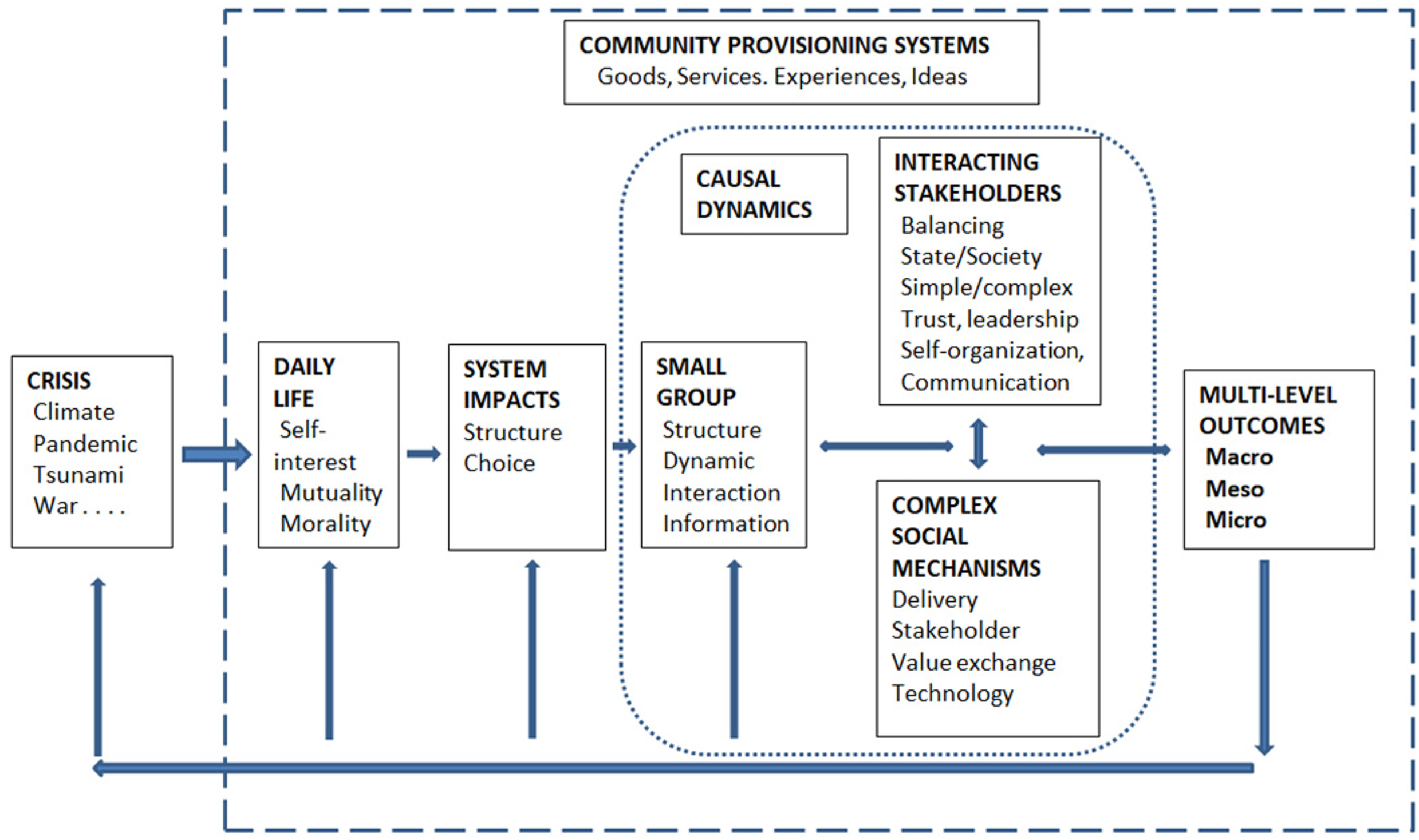
Changing everyday life, transforming provisioning systems, re-building a community.
What Happens When a Community Responds to a Climate, Pandemic or Similar Crisis?
The impacts of a crisis, such as a pandemic, are often felt first in the everyday life of people and entities in a community. And for many communities, they were already facing challenges before the Covid 19 pandemic hit. Climate change was a significant factor in the drought, bushfires and flooding rains that changed South-eastern Australia in late 2019 and 2020, directly impacting and in some cases destroying the collective provisioning systems that each affected community had self-organized as part of everyday life over many years. The causes were many, often local, but in every situation, it was, in part, a consequence of global warming and there was more to come on the horizon. The impacts on the daily life of each community were extensive and never quite the same for communities are all different in different ways – in history, economy, demography, locations, values and more.
As an example of what can happen, in the closing hours of 2019, on New Year's Eve, the small coastal town of Cobargo in South-Eastern Australia was overwhelmed by bush fire. Within hours, much of the main street had been destroyed, including historic buildings, shops, and galleries, but not the local hotel; many homes in the town had been lost or severely damaged, families often losing everything, including deeply personal belongings and pets; dairy farms were wiped out, cattle killed; two men lost their lives defending their farm. In a town of 800 and a local community of 3,500 people, everyone knew someone who had suffered significant continuing loss and hurt.
In the days and weeks that followed local services began to be restored, volunteers cleared roads, repaired fences, buried dead animals and began to clear debris and rebuild damaged homes and sheds. People helped each other to cope with the disaster. The Cobargo Relief Centre formed spontaneously in the local Showground, staffed by volunteers – an open space and safe haven for evacuees, with a free food store, power, internet, fresh water and showers. As the manager put it, “This is Cobargo pulling together. There's no official titles or bureaucracy. It's just a community looking after its own”. Donations of food, clothing and other necessities flooded in, to a point where the Centre asked that donations should be monetary – and so they were. Local, state and national governments contributed significant relief monies. However, the relief offered was not endless; a triage process was underway to distribute the money and goods, not always to the satisfaction of everyone involved.
Some weeks later problems appeared. The resolution of insurance claims seemed to take increasing lengths of time for those who had insurance, many from the community did not. By the middle of April, McGowan (2020) points out “that 66% of applications for concessional loans are still being processed or have been rejected” p. 1. McGowan (2020) notes that “reliance on government and charities mean in some cases the divisions that emerged after the fires have hardened into jealousy and suspicion.” And that there is also deep frustration with the way recovery has been managed . . . it sometimes appears . . that companies, government agencies and charities . . . don’t talk to each other” p. 1.
Almost two years after the black summer bushfires, less than one in ten of the homes lost in the fires have been rebuilt (Pender 2021). Many from those communities now live in caravans or sheds due to labour and material shortages, underinsurance, planning delays and a lack of support from the government. Unlike other parts of Australia affected by bushfires, the New South Wales state government did not make changes to planning and development laws to speed up the rebuilding process. One resident of Cobargo described the approval process for the rebuild of a one-bedroom granny flat as “bureaucracy-induced trauma” (Pender 2021). This has occurred in spite of research and evidence from other fire affected areas in Australia that has highlighted the need to remove red tape and provide ongoing and sustained support for these communities devastated and traumatised by bushfire.
Then came the Covid 19 pandemic, removing the often-critical support offered through social contact from a community already pushed passed its limit by the bushfires and ongoing rebuilding efforts. The threat of infection in communities such as Cobargo, impacted by climate change led to decisions by individuals, groups and entities, public and private, which had devastating consequences for the ability of communities of all sizes to meet their continuing needs for goods, services, experiences, ideas, social networks and supporting beliefs.
Moving from the meso to the macro level we expand our view from Cobargo to the experience of the pandemic in Australia more widely. Social distancing and face masks became mandatory. Many businesses such as hotels, gyms, restaurants, and bars were shut down, schools were closed, sporting events cancelled, work from home became acceptable and common, tourism disappeared and borders were closed. Panic buying occurred as people watched each other, saw empty shelves in their usually abundant supermarkets resulting in a coupled and collective modal setting. Supply chains were disrupted and disconnected, retailers and shopping centres faced closure, certainty was sought as to when all this would end – but no-one really knew or knows yet. The burdens were borne unequally by millennials and the aged, by women and children, by the disabled and remote (Eke et al. 2021). Australia was not alone. Similar sequences were playing out in New Zealand, South Africa, and the Unites States, the UK, Brazil, India, China, Europe and many other parts of the world with varying degrees of severity.
Whenever and wherever the crisis took hold, the daily life of the community changed, rarely for the better. Uncertainty reigned, as people experienced the loss of loved ones, a home, or a business. There was a breakdown in social and economic networks and meeting places; often a growing inability to find the goods, services, experiences and ideas that had filled daily life in the past. In each community, the social systems and structures that made life acceptable had to be re-assembled, re-formed, re-built – not from the top-down but from the bottom-up as people joined with each other in small groups, helping, sharing, cooperating, working together to re-construct new ways of life (Marston, Renedo, and Miles 2020). However, without an effort to learn from similar situations in the past or deliberate planning, action and understanding of the provisioning system that needs to be rebuilt, the obstacles can be significant. The top-down needs to enable the bottom-up reconstruction.
How Provisioning Systems Helps to Understand Social Reconstruction
An essential part of the social reconstruction of a community is the re-emergence of the provisioning systems. That is the social systems and structures that make possible the sourcing, supply and consumption of the ever-changing set of goods, services, experiences and ideas that people in a community need and want. This re-emergence is a social process, reflecting both top-down initiatives and bottom-up, self-organized, experimental collaborations; combining helping hands with innovation, and opportunistic market exchanges as individuals, groups and entities work together to fill an almost endless series of gaps and possibilities. It takes time, often more than expected, to do what is needed. It takes place in a multi-level setting, for communities within communities within communities. It sometimes stalls, goes backwards, occasionally collapses; often however the social processes involved pass thresholds and cascading change occurs. It is at times like these where multi-level interactions can be positive or negative, where power – social, economic and political – is firmly in play, that governments can go wrong. The underlying problem is that it is times like these that call for a radical shift from the self-interested individual to the small cooperative group (Ostrom 2010). It is in these settings where meaningful initiative and power often resides, where action is possible, where evolutionary fitness is established, and where the emergence of fresh social, economic and political structures can take place.
It is through the instinctive leadership, state action or self-organized formation of small cooperative groups that humans in a community achieve common benefit through communication and sharing, enabling learning, innovation, and growth. It is the same instinct that enables multi-level cultural evolution in human communities, generating ever more complex systems and structures. This is the causal dynamics underlying the growth of community provisioning systems. The systems and structures that evolve in this way, prescriptive state systems, collaborative cooperative systems, market systems and informal systems are sometimes successful and sometimes failures, lacking key design elements. Ostrom (1990, 2010), a Nobel Prize winner, has identified a number of core design principles that characterize successful group functioning. These provide a useful checklist to anyone interested in studying, forming or improving on group functioning and dynamics. They are set out in Figure 2 below.
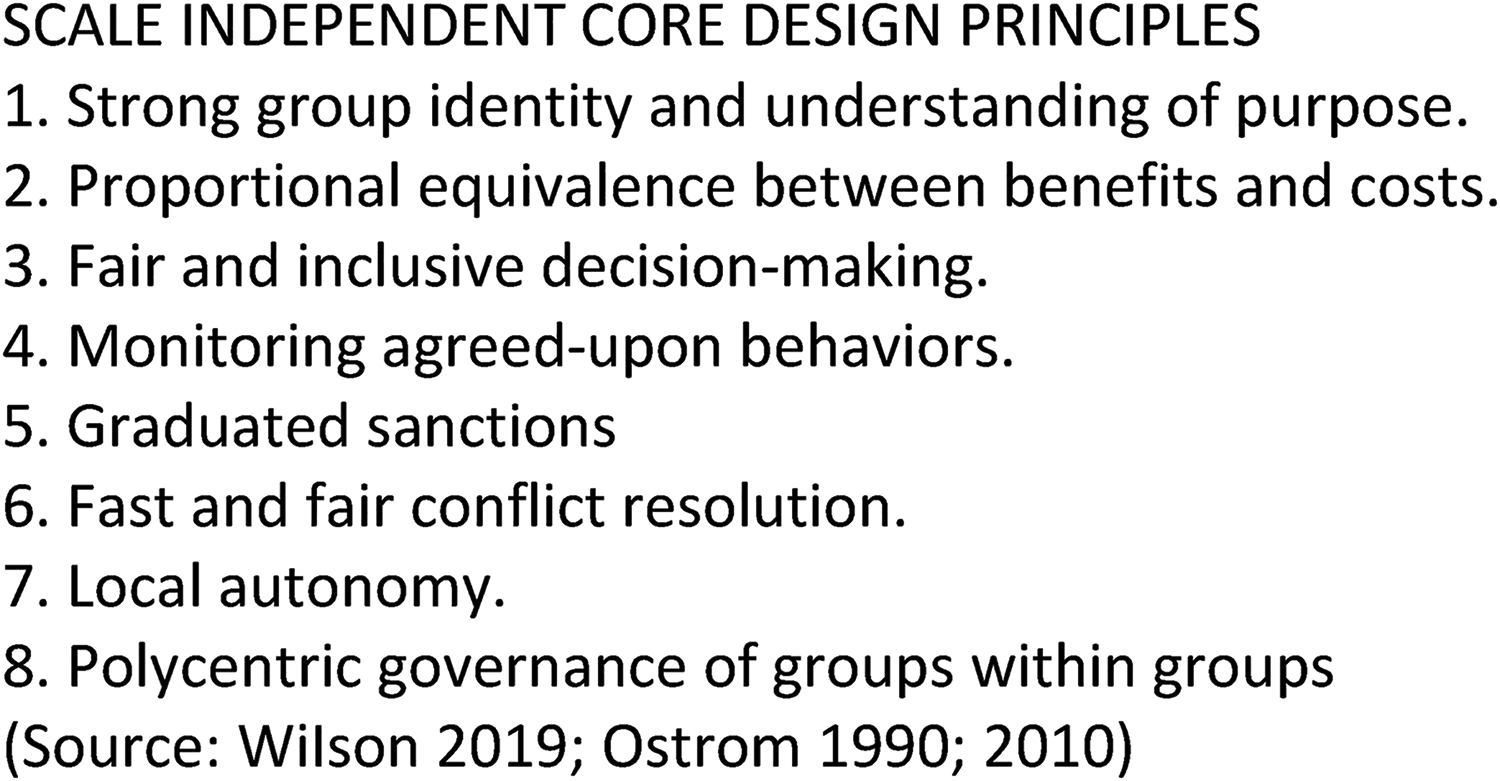
Core design principles for effective group functioning.
These principles are not always easy or obvious to implement especially in crisis situations where strong political and social governance is seen as essential, or external governance is imposed without consent on the communities in crisis. The immediate responses needed for bushfire control and relief is an example; so too are the far-reaching controls initiated by National and State governments; and so too are the responses to floods of migrants where NFP's and local governance strive for effective control. In each case, top-down controls and governance meet with bottom-up self-organized small group structures. In each case, interacting multi-level webs of stakeholders emerge with often widely differing needs and wants, resources and cultures, power and networks.
Any resolution of these interacting tangled webs will rest on an understanding of the complex social mechanisms that are at work (Layton and Duffy 2018). These are identified in Figure 3, below. This figure is useful because it considers not only the structure of the systems, but how information is moving within the system. This could illuminate the need for improved flows providing a basis for recommendations.
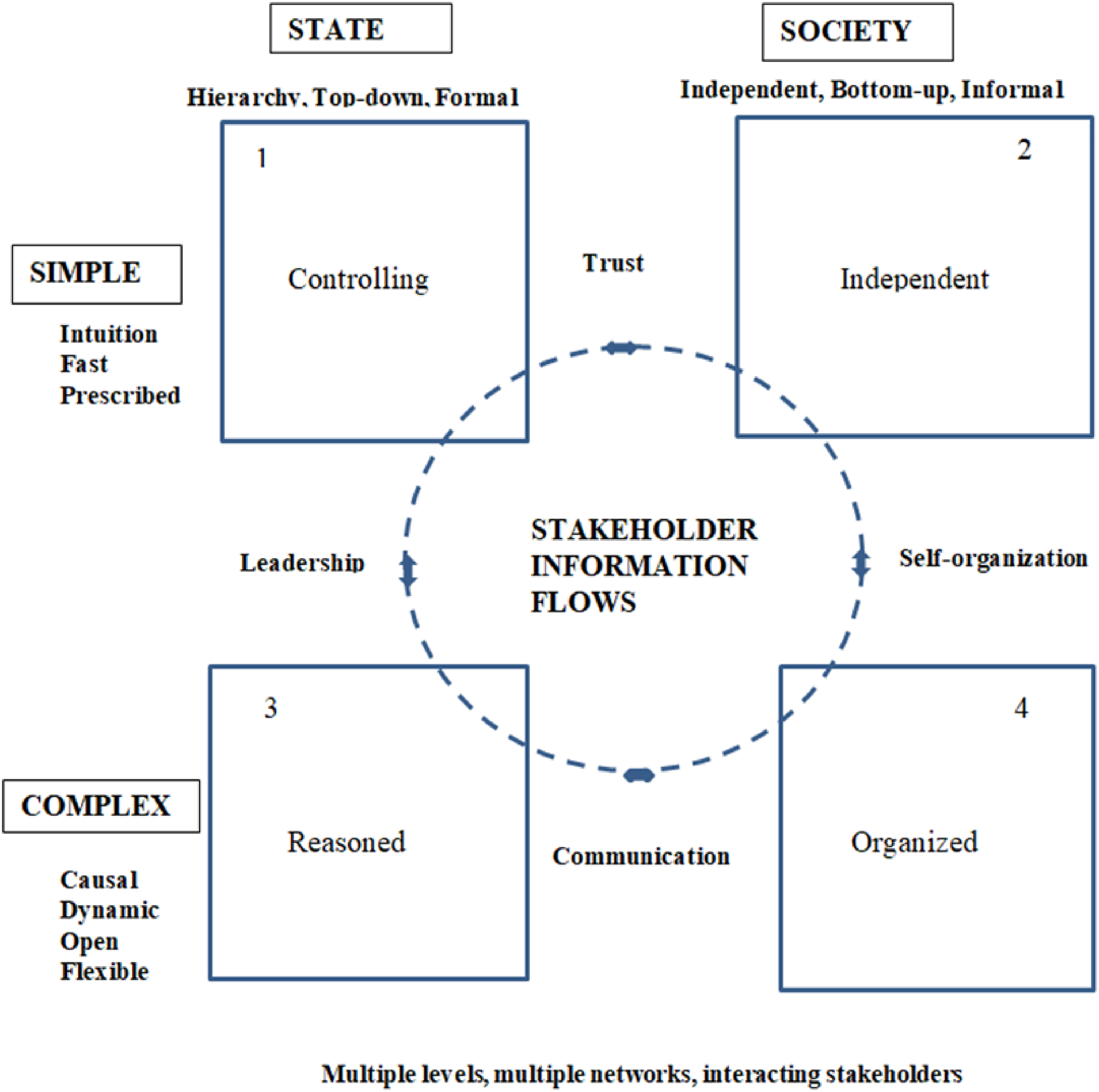
Stakeholder information flows.
The information flows that are the culmination of Figure 3 are central to the negotiations within and between stakeholder alliances and groupings, often in a multi-level setting, and are the product of interacting complex social mechanisms – delivery systems, stakeholder action fields, technology evolution systems and value exchange fields (shown in Figure 4).
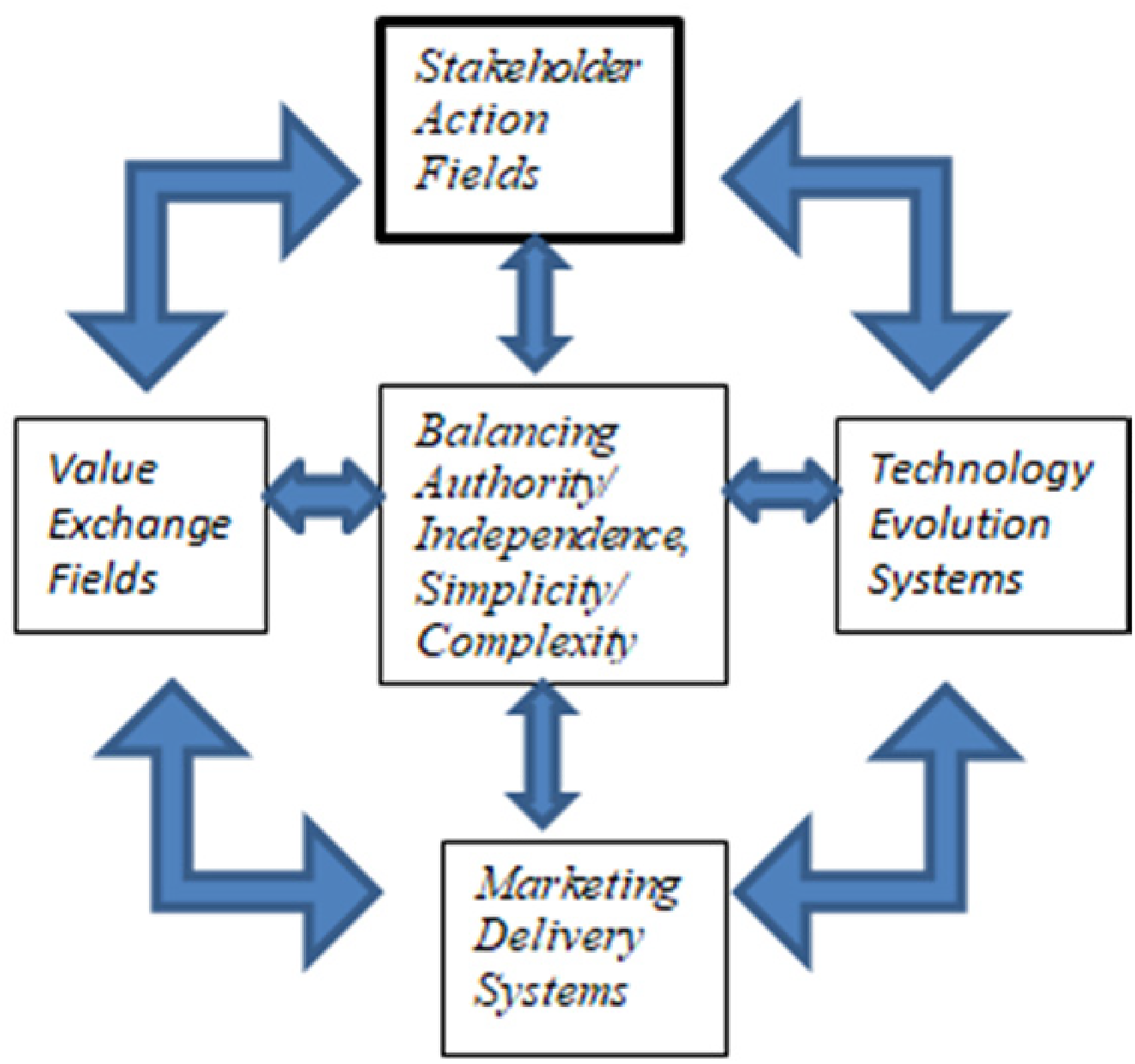
Complex social mechanisms.
Finding an even temporary balance between state and independence and between the attractions of simple choice, unidimensional or single focus driven decision making which greatly limits openness to the ideas and concerns of others, and the acceptance of complexity, bureaucratic autonomy for collective choices is far from easy, especially when seeking to meet, in part at least, the demands of the four intersecting complex social mechanisms depicted in Figure 4 in an assemblage of provisioning systems with differing cultures and values.
Finding Balance in Interacting Stakeholders
It is far from easy to walk the narrow corridor in a community, at each level, in a multi-level social provisioning system – balancing state and society, simple and complex decision choices– engaging in a collective, continuing search for answers to complex, environmental challenges. Each of the four complex social mechanisms (Layton and Domegan 2021) are involved – delivery systems, stakeholder action fields, value exchange fields and technology evolution systems – as is history in the sense of path dependence, location and culture. While each of the four mechanisms are important factors, it is the stakeholder action field that shapes the causal dynamics of a response to a community crisis. Stakeholders can, but not always, include all individuals, small and larger groups, entities and enterprises, impacted by or engaged in the creation, delivery and receipt of the goods, services, experiences and ideas that a community needs and wants. In particular, those stakeholders who have authority, both formal and informal or secular and religious, are important. Equally, stakeholders who are driving or resisting economic, social, political and technology change, may be critical. The stakeholders who seek simplicity or individual outcomes in decision-making need to be identified, understood and included as well as those who are comfortable with complexity, or are focused on collective options. Those stakeholders looking for change, innovation, leadership and excitement, along with those seeking stability in everyday life, need to be empowered.
With these possibilities in mind, four different stakeholder sectors may form within a community. These are identified in Figure 5. Membership is not constant over time, nor is it exclusive, nor is it always the case that all sectors are active. In a community-facing crisis, participants in each active sector will want to have something to say. It is here that discussion, debate, negotiation, compromise and sometimes conflict will develop, shaping community responses to a crisis situation. Trust, leadership, communication, and self-interest will play essential roles in the relationships amongst and within active stakeholder sectors. This response will change and change again, depending on the politics and power underpinning relationships amongst the active sectors.
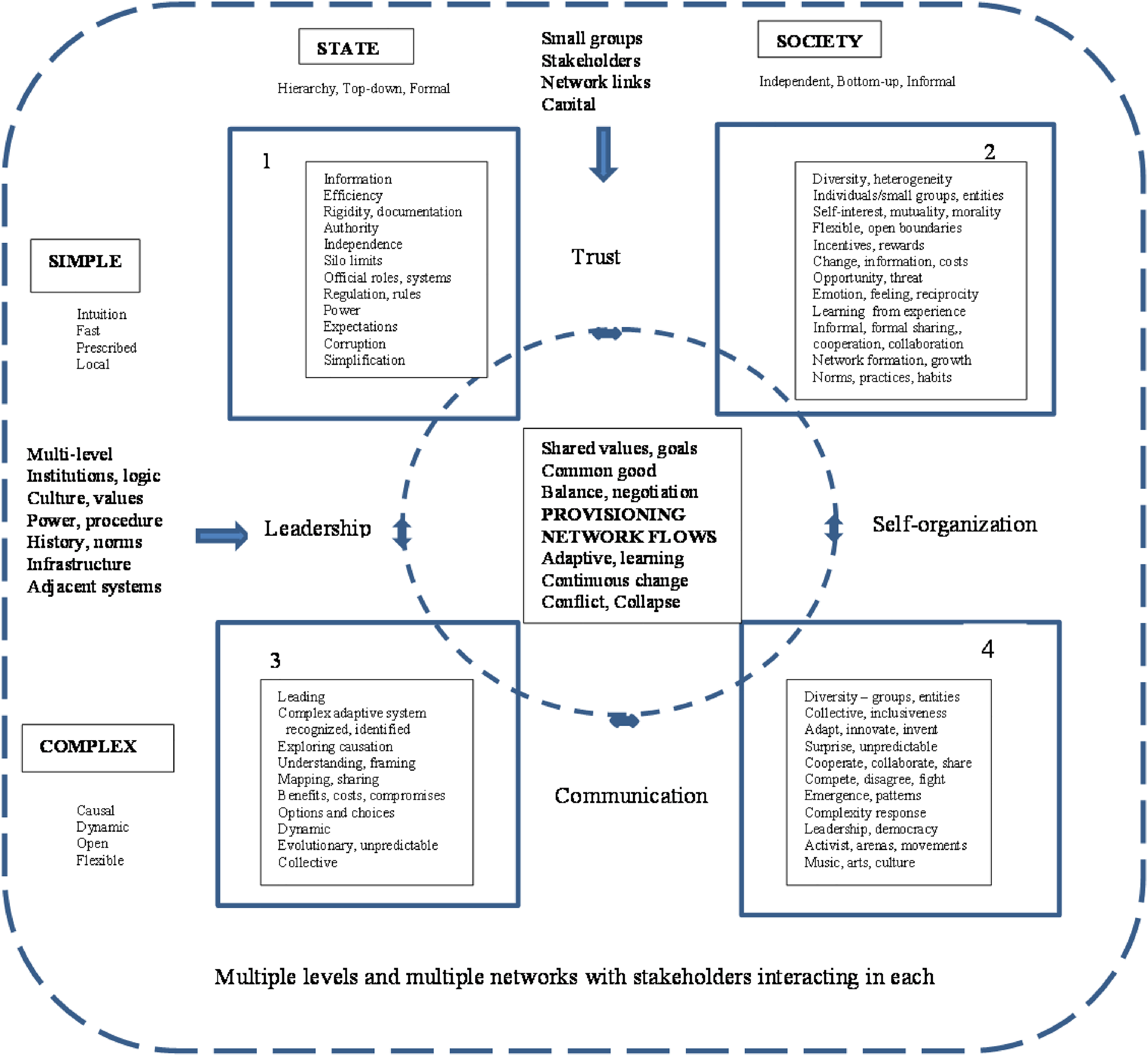
The causal dynamics of interacting stakeholders in a provisioning system.
A community facing an existential challenge needs participant involvement, understanding and action in all four sectors (Figure 5). The lack of progress on the rebuild of homes in Cobargo demonstrates the devastating consequences of inadequate rules and regulations (box 1). The absence of understanding and framing of the issues faced by the community at a leadership level (box 3) precluded the necessary adaptation (box 4) to ensure that self-organisation could occur and individuals and small-groups could rebuild and flourish in the wake of the tragedy (box 2). The pandemic began in Australia with a top-down response reflected in box 1, then it moved to box 2 and box 4 but low understanding and interest in box 3 led to consequent problems such a panic buying of toilet paper, people refusing to face masks in mandated locations and rejection of the mandated conditions of lockdown. There was a tension spawned from low levels of trust in the government and suspicion about information shared by global institutions such as the World Health Organisation. This problem accelerated as misinformation rapidly spread through social media systems that reward extreme views.
Recognition of climate change began and largely remains driven by box 4 with activists raising awareness of the threats faced. Bushfires, drought, and extreme weather events have inspired people at the individual level beginning in box 2. There has been limited action from most governments in box 1, however over local governments have declared a climate emergency. A whale shark tourism industry began in box 2, with local fishermen taking out tourists informally. As they saw the demand grow, they created a “steering committee” and developed their own set of rules to protect the whale sharks in recognition of their vulnerability and set the terms of co-operation (box 4) between boats on the water simultaneously clear. Box 1 became active when the state government realised the industries revenue potential and they took over the governance and administration of the budding industry. A commons crisis issue begins with social problems in 2, moves to 1 and 4 as problems increase, then with Ostrom's design principles moves to 3 but all stakeholders must be involved, not in a token gesture, but truly active in decisions made about the future of their shared common resource.
Community action happens in all sectors and all must be engaged. Choices are often locally informed and emotional as well as rational, made by participants in each sector. Learning is adaptive as new information comes to be known and sector balance shifts occur as state regulation bumps into self-organized constructs and as complex thinking faces the imperatives of simple choice. Processes, not events, matters, and there may be no end in sight. Engagement, understanding, and compromise is essential as a community seeks a continuing stable balance amongst the four sectors, involving flows of trust, leadership, self-organization and communication. The world goes on!
Implications and Future Research
The first implication and area for further research for community action relates to the initial research question about the community provisioning systems and causal dynamics at work (as illustrated in Figure 1). At the broadest level, community action and transformation of systems in the face of a crisis begins with adopting a different perspective, a provisioning systems view that recognises the ebb and flow of the top down and bottom up diversity, interactions and the collective relationships between the diverse, sometimes conflicted parts (Jagers et al. 2020). Community provisioning systems are an assemblage of state prescriptive top down exchanges, marketing systems bottom up exchanges and collaborative and informal exchange systems, all operating within an embedded context and within differing cultures and with its own social norms and practices co-creating blends of self-interest, mutuality and morality values.
Begin with the idea of a provisioning system in a single, isolated community. Examples might include ancient communities such as the monastic monks living on Skellig Micheal off the Wild Atlantic Way, Ireland in the 6th century, or the ancient pyramid builders in Egypt or contemporary large cities such as London, Paris, New York or Sydney, or Elon Musk on Mars! How does the community make provision for the goods, services, experiences and ideas needed and wanted. What do we mean by community? Choose a community and explore their likely sets of needs and wants.This begins with diagnosing the provisioning system assemblage; scoping out the patterns and trends driving the system and sub-systems; identifying the policies and practices at work and the mental models shaping the economic, political, cultural and social infrastructures. The purpose of the provisioning system can be articulated. Acknowledging and working within such community provisioning system boundaries and local context allows the different perspectives and lived experiences to bubble up and trickle down to identify and inform the potential more successful options for a way forward for all the small groups involved.
This can be followed by an extensive multi-level and systemic stakeholder critical analysis answering whom the macro, meso and micro stakeholders are and whether they are incumbents, challengers or regulators and why. A power/influence analysis and map will deliver stakeholder group dynamic insights, while mapping what stakeholders from the provisioning system assemblage interact and do not interaction with each other provides further dynamics learnings and how the various stakeholder groups from the differing levels affect each other, or not at any one point in time. The role of stakeholders with their perceptions, creativity, and groups where trust, shared values, collaborations and communication occurs, can be made visible and transparent.
It is about understanding the individual and small group initiatives. Ask how each might respond to an opportunity in their worlds and explore differences in values, norms, personality, capability, skills especially in leadership, capital - economic, social, political – and inherited hierarchy and backgrounds? From this perspective, it is necessary to map and determine the stakeholder exchanges and power as small group dynamics, not as individuals. Consider the evolution of small groups including communication, cooperation, exchange, specialization, self-organization and emergence together with the environmental factors influencing the small groups. This highlights the importance of small group evolution underpinning cultural and social evolution. Small groups give rise to enterprises that form, including partnerships, coops, collaborative, corporations, and blends of all together with top-down leadership and hierarchical initiatives. Small groups highlight the diversity or not, within a community provisioning system. This analysis holds the key to confronting reality and getting responses to a crisis right, all the while respecifying the context, boundaries and networks or system, as multilevel stakeholders come and go. The conventional models of firm-centric stakeholder analysis and rational choice do not work in an enlarged setting where communities are challenged by external factors and need to respond collectively over time and in complex multi-level environments.
Whatever analysis tools are used, diagnosing the underlying evolutionary adaptive dynamics within the community and broader provisioning system is a key requirement if communities are to successfully respond to a crisis, with each participant responding to perceived opportunities and threats, exploring new ideas, reshaping relationships, reaching out in cooperation, learning from each other, often self-organizing and sometimes forming new levels of structure and decision-making. As these adaptive dynamics are often bottom-up rather than top-down and often critical in making possible both structural efficiency and organizational diversity, the outcome worth understanding (Figure 1) is that most social systems are multi-level, adaptive and are an assemblage of complex systems. Questions arise as to how we move away from a comparative static, single level focus of managerial marketing thought to a perspective that begins with multi-level dynamic systemic structures and behaviors of diverse groups? How do we inform our understanding of the role of marketing in provisioning systems in developing economies, in specific villages, towns and cities, in remote communities? How do we open the door to a deeper understanding of much of social marketing with its emphasis on changing ideas, beliefs and importantly individual, institutional and collective behaviours? Can we have some input into the erosion of trust and managerial misbehaviour on the part of the major financial institutions and into the challenges of democracy in an increasingly divided society? What are the community adaptive dynamics within the provisioning system dynamics?
Shaping State and Self-Organisation Complexity
The second implication and scholarly area of enquiry, research question 2, for community action stems from seeing the system complexity in its full array of colours, warts and moles and all (Figures 2–4). Communities and stakeholder groups within a provisioning system assemblage may awaken to different ways of decision-making for systems to change, transition and transform. Communities can rebuild the system by changing how they make decisions and by shifting away from an individual focus to a collective effort and moving from simplistic tamed problems to complex wicked problems mindsets.
Kish (2019) illustrates how to shape state and self-organisation complexity responses using the example of pineapples. She explains that most environmentalists see the pineapple provisioning system as an abstract ‘supply chain’ model and hence propose simplified low/no/de-growth solutions to reduce their negative impacts. However, the supply chains and the delivery mechanisms that allow communities to consume pineapples not grown in those very communities has evolved from, and continues to evolve from, the stakeholder and structural dynamics rooted in a neoliberal individual economic focus with its critical separation of land and kin. Gerber points out that global north cultures, social mechanisms and provisioning structures have evolved from an economic growth motivation and not one founded in social progress and sustainability as found in First Nations. Thinking through ways to evolve both together offers a substantive and fertile research platform in the face of climate change and other crises. Understanding and framing simplified and complex community decision making, individual and collective outcomes, especially when systems with differing cultures, goals and structures interact with each other, is critical to precipitating conflict or forcing awkward compromises in shaping appropriate responses to complex evolving multi-level complex systems. It is here that we need to understand how to shift from the self-interested individual to the collective and cooperative small groups (Ostrom 2010) and further delineate the concepts of emergent diversity and complex social mechanisms delivery system, stakeholder action fields, technology innovation systems, value exchange fields and path dependences. The core are the value based exchanges – use Figures 3 and 4 to collect ideas and explore the creation of a provisioning system, the building of relationships, the politics, linkages, connections that matter. Explore the dynamics of negotiation, innovation, values and the growth of provisioning systems.
How to Move the Collective Forward Without Leaving People Behind?
Research question three about trade-offs relates to a rational collective response from crises where unpredictability, non-linearity, discontinuity and change are endemic i.e. Figure 5. This requires a rethinking of Lindblom’s (1959) muddling through informed by contemporary writings such as Cox (2019), Allen (2020) and Gilligan and Vandenbergh (2020). Faced with large-scale complex and unpredictable crises and ensuing disruption to daily life, such as bushfires, a pandemic and climate change, collective learning, coordination and cooperation within the broader temporal and spatial space is in effect a ‘muddling through’ process. The state and top down stakeholders entrenched in bureaucratic procedures would do well to learn from the experiences and expertise of society. More specifically, multidisciplinary research from the bottom up and community stakeholders can stimulate bureaucratic autonomy so that the hitherto invisible preferences, trade-offs, barriers, constraints and enablers become visible, transparent and fair in the local-to-global social, economic, political and environmental systems. Incremental feedback as to what and how the causal dynamics are working, or not, sets the community provisioning system on a trajectory for greater success and less failure or collapse (Figure 5).
Such multidisciplinary research takes provisioning systems and macromarketing out of business schools and out of micro management to the social sciences that embrace far-reaching concepts such as enhancing community stakeholder trust, leadership, self-organization, social movements, agency and communication, elevating the critical role of information. In this provisioning system embedded world we now live in, muddling through requires a rich feedback process of constant listening, learning and leveraging (Domegan et al. 2020). The assemblage of provisioning system with its prescriptive, marketing, collaborative and informal boundaries can be re-drawn and adjusted for improved quality of for all. Incremental feedback (Figures 3, 4 and 5) allows for nimble responses and evaluations. Ryan (2020) captured this nimble sentiment early in the pandemic with his ‘be fast, have no regrets, the greatest error is not to move and speed trumps perfection’ tweet. Ryan was advocating for successive incremental adjustments, movement and complex collective decision-making based on the adaptive dynamics and community feedback to the complex social mechanisms in the provisioning systems. When each member of a community sees the possibility of seizing opportunity and acts then the dynamics take over (Figure 5). Survival, efficiency, innovative value creation, and sustainability issues surface as diversity increases. In the face of complex crises, communities either win by advancing slowly when outcomes are as desired or fail and collapse as a result of not stopping to rapidly reassess, respond and quickly alter course.
The research challenge is to understand how individuals, organisations and governments, living and coping with unpredictability and challenges to bureaucracy, established structures and institutions can become more agile and nimble while muddling through disruptive change (Pennington 2021). This is the world we are entering and many of these changes, especially as clashes occur over climate change and resource limitations, these clashes will directly and indirectly limit the potential economic and social growth. This, over time, will force individuals, entities and communities, private and public, to find acceptable alternatives to unexpected growth shortfalls, requiring independent institutions and entities to negotiate directly with each other, resolving quite different institutional logics and cultures in a search for effective collaboration and compromise while hoping to avoid confrontation and conflict. Understanding how we navigate confrontation, conflict, power and negotiations among clashing communities, cultures and countries that are at different points and places in the provisioning system transformation process is important.
How Provisioning Systems Cope with Trade-Offs, Culture Clash, Barriers or Constraints
A final implication of research question three concerns stakeholder groups and their underlying mental models in times of global crises as highlighted by Figure 5. Developing new community models and ways of understanding provisioning systems will become increasingly important in the years ahead. This could be models that draw together state and public sector entities, corporate entities, large and small, charities, cooperatives and, especially, communities, in carefully defined flexible, multi-level frameworks with specific sustainable and quality of life benefits accruing to all parties. Communities in their local and embedded context will an essential element. Communities must have a direct role to own, to lead and to be actively engaged in economic, social and environmental regeneration that affects the patterns of their daily lives if failures and collapses are to be avoided. That role will need to be empowered by bureaucratic autonomy (Wellstead and Biesbroek 2022). Community groups will need to remain independent but co-design collective responses in partnerships with private, voluntary and public stakeholders. Such a collaborative models create research questions around the new, complex, multi-level social systems where traditional management practices are challenged by unexpected discontinuities and inherent unpredictability that attempt to anchor economic redesign in a natural and social systems framework for stakeholder groups regardless of the micro, meso or macro level or sub-system they operate in.
Equilibrium is occasional and incidental; multi-level self-organization is inevitable; trust is essential; structural dynamics and evolutionary dynamics provide complementary insights. While cultural clashes and crisis in a provisioning system is challenging and often troubling, it is a consequence of the evolutionary processes and the key stakeholder groups that enable complex, multi-level networks of provisioning systems to form and re-form, to innovate and grow, or sometimes collapse, in environments that are always changing and often extreme. Clash, crisis and unpredictability are essential parts of the everyday life of every provisioning system in every human community. If macromarketing is about quality of life then it must reach out, understand and be part of these complex evolutionary sequences.
Furthermore, understanding how stakeholders link in multi-dimensional flows of information, money, risk, power, ownership and possession is needed. Stakeholders, driven by a blend of self-interest, mutuality and morality, with their own distinctive, origins, histories and contemporary habits, norms, logics and practices require detailed analysis. Grappling with this complexity will become critical to manifesting positive social impacts and achieving renewed quality of life for a community following a crisis. While self-interest matters, it is the blend of mutuality and morality that enables collaborative community models to form a viable social system that would benefit from rigorous investigation. This will take time, and as circumstances change, so will the entities involved. Inevitably, models of provisioning systems and communities within the system will need often to be rethought, perhaps re-negotiated and constantly researched. Significant new knowledge awaits the brave macromarketer on these conceptual and practical frontiers.
A Way Forward
We summarise these research issues in the following community-provisioning system framework.
Research Directions, Community Provisioning Systems.
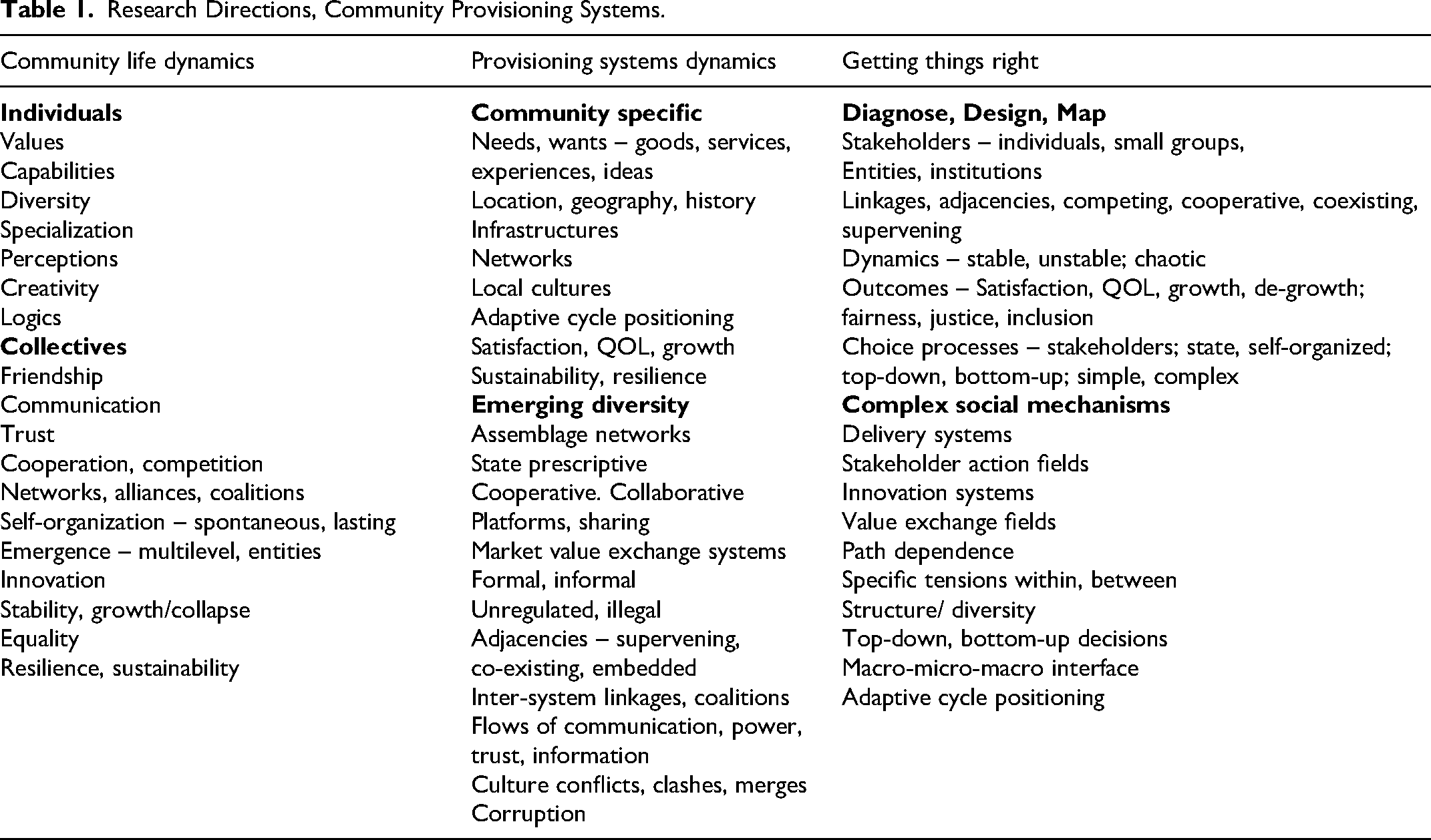
A continuing search for effective responses in crises, whether it is a bushfire, drought, pandemic, vaccine hesitancy, climate change or other, starts by looking at a community provisioning system from a multi-level point of view as essential. Clearly, the complex social mechanisms at work in every level of a multilevel compound provisioning system matter with the issues of diagnosis and design in community provisioning system at the macro level, mapping the system descriptors and the stakeholder action fields, value exchange fields, delivery systems and technology evolution systems. At the meso level, diagnosing the behavioral-ecological dynamics that are community specific with emergent diversity is critical while the starting points at the micro level is understanding the balance between individuals, each different, always changing and the collective choices that generate cultures of trust, cooperation, coordination, conflict or clashes to muddle through. Such changes will occur over time, not instantaneously, and asks the question: what community provisioning system dynamics will generate better, rather than worse than responses?
When responses are getting it wrong, (Williams et al. 2020) one needs to identify, examine, and monitor the core dynamics blocking the desired outcomes. Often times blockages will cascade from one level to another and reinforce inefficient complex social mechanisms. One also needs to identify, examine, and monitor the secondary dynamics fuelling the negative and harmful core dynamics at work. When responses are getting it right, identify, examine, and monitor the core dynamics enabling and driving the desired outcomes. Identify, examine, and monitor the secondary dynamics fuelling the positive core dynamics at work. Inevitably, there will be more blockages in provisioning systems with long path dependencies but there will also be the seeds of enablers as bright levers for transformative change. This highlights the need to understand the social reconstruction of collective decision-making, ahead of the next crisis, building on the state and society choice of Acemoglu and Robinson (2019), the fast and slow thinking of Kahneman (2011) and a Hayekian ‘muddling through’ perspective (Pennington 2021) in the evolution of community provisioning systems to avoid systemic failure or collapse.
Conclusion
Climate change, a pandemic and crises that hit communities reinforce the importance of complex systems for creating social impact and building resilient communities that can be agile in response to disruption. Community provisioning systems are particularly important to meet the needs of daily life and bridge gaps that exist when systems with differing cultures interact with each other - medical and managerial being an example. Pandemics, social change and many other factors require both immediate and long-term responses to complex evolving problems that engage with multi-level complex systems. There is a need to rethink contemporary optimization, rework the logics we apply, effect complexity insights, not only at a meso level but also at searching for an understanding the evolutionary dynamics that are driving change at all levels. Ultimately it is the individuals, small groups, entities, organisations and institutions all making choices in response to their individual and group perceptions that drive the evolution of a community provisioning system. Creating positive social impact and societal evolution is easier said than done. Nevertheless, that is the very work, the change, the radical, urgent transformation demanded of macromarketing and indeed marketing, by climate change, a pandemic and the numerous local-to-global crises communities are confronted with in their everyday lives around the world. Macromarketers should be at the centre of this transformation but this will take a rethinking of what marketing, marketing systems and provisioning systems are about.
Footnotes
Associate Editor
Ben Wooliscroft.
Declaration of Conflicting Interests
The author(s) declared no potential conflicts of interest with respect to the research, authorship, and/or publication of this article.
Funding
The author(s) received no financial support for the research, authorship, and/or publication of this article.
