




Abstract
Humans have long interacted with animals. Recently, market-based responses to societal challenges, including loneliness and mental well-being include the use of animals. Considerable research concerning consumer–animal relationships has also examined the benefits (micro, meso, and macro) of human-animal interaction and companionship. However, much of this research is fragmented and lacks a broader organizing framework. It also suffers from an anthropomorphic bias, whereby the interests of animals are excluded. To address this, we provide a macromarketing perspective on consumer–animal relations and explore the interdependencies of consumer–animal relationships on consumer, animal, and community well-being. We introduce and apply the Interactive Well-Being framework to four contexts –ranging from private to public consumption spaces– that highlight the interdependencies and systems involved in consumer–animal relationships: (1) co-habitation with animals, (2) emotional support animals, (3) working with animals, and (4) animals in commercial service contexts. We discuss the implications of our framework for the resilience of marketing systems and how the framework aligns with alternative economy development.
When Hurricane Katrina hit the coast of Louisiana in 2005, 44% of residents refused to evacuate because they did not want to abandon their animal companions (Brulliard 2017; Leonard and Scammon 2007). Being rescued or evacuated without their animal companions was a traumatic experience for many victims (Hunt, Al-Awadi, and Johnson 2008) which affected the whole community. In recognition of these human animal bonds, governments in countries including the US, India, and New Zealand are implementing changes to include animal companions in disaster and emergency management programs (Glassey 2019). Comparable policies are yet to be recognized with respect to consumers’ accommodation needs; for example, those homeless in society who cannot access shelters that accept animals (Irvine 2013) or those students experiencing mental health issues and are unable to bring their support animals on campus. More recently the 2020 COVID-19 outbreak has identified the fragility of marketing systems and societies to animal-borne viruses (which, along with other animal-borne pathogens arising from a lack of concern for animal welfare, human encroachment on their living areas, and exploitation of them by humans).
These examples illustrate not only how animal, consumer, and community well-being are intricately interrelated, but potentially how system resilience is a function of these connections (cf. Layton and Duffy 2018). Close interactions with animals are considered beneficial for consumers in that they may reduce stress and improve psychological health by providing emotional support and dispelling feelings of depression, anxiety, and loneliness (e.g., Allen, Blascovich, and Mendes 2002; Powell et al. 2018). Businesses that “commercialize” these benefits by promoting cat (as well as owl and otter) cafés have sprung up in response to these human mental health needs (LaBine 2017; Plourde 2014). Transportation services like “Uber Pet” are also emerging and airlines policies for animals vary (https://blog.gopetfriendly.com/airline-pet-policies). However, while these enterprises may benefit firms and consumers, they often fail to protect animals from cruelty and assure their well-being (Bradshaw 2013; Walker and Tumilty 2019).
Drawing inspiration from Dunlap and Catton’s (1979) new ecological paradigm (NEP), we seek to build a macromarketing perspective of animal-human well-being that takes into account the needs of humans and animals alike. To the best of our knowledge, macromarketers have largely excluded animals from considerations of individual, communal, and societal well-being (Beverland 2014; Wooliscroft and Ganglmair-Wooliscroft 2018), despite the enduring role they have played in human culture (Juniper 2013; Kennedy 2017). To address this gap, this article offers a transdisciplinary portrayal of animal, consumer, and community well-being, drawing from a wide range of disciplines, such as ethics, sociology, veterinary sciences, and anthropology. Second, we introduce the Interactive Well-Being framework to illustrate how the interactions between these interrelated entities affect each other, as well as impact the whole system, using four examples involving human-animal interaction: (1) co-habitation with animals, (2) emotional support animals, (3) working with animals, and (4) animals in commercial service contexts. These interaction contexts vary from private to public environments, as well as from mature to emerging and needed areas for future research.
Well-Being: Animal, Consumer, and Community
In this section we ground our subsequent framework in three considerations of well-being: animal, consumer, and community. We do not seek an exhaustive review of each rich domain; rather we seek to identify some key frameworks that help support our case for considerations of animals and their interests in a macromarketing approach to animal-human interactions and well-being. In each, we identify key issues. In examining animal well-being, we draw not only on ethical frameworks but also on increased consumer sensitivity to concern for the rights of animals. In a review of consumer well-being, we look at the consumer benefits arising from interactions between humans and living animals. In our discussion of community well-being, we focus on debates concerning the relationship of nature to society, identifying the importance of considering the role and interests of animals. Overall, the aim is to demonstrate that attention to all domains of well-being is of theoretical value for macromarketers.
Animal Well-being
Research in veterinary medicine, ethology, animal psychology, as well as philosophical literature on animal ethics refer to animal welfare as synonymous with animal well-being, describing the physical and mental state of an animal in relation to the conditions in which it lives and dies (World Organisation for Animal Health 2018). The guiding principles regarding current animal welfare stem from public discussion that concerns intensively farmed animals beginning from the 1960s. The British Brambell Committee (1965) recommended the following so-called Five Freedoms: (1) freedom from hunger and thirst by constant access to fresh water and a diet to maintain full health and vigor; (2) freedom from discomfort by the provision of an appropriate environment with shelter and a comfortable resting area; (3) freedom from pain, injury, or disease by the prevention or rapid diagnosis and treatment of ailments, (4) freedom to express normal behavior by the provision of sufficient space, proper facilities, and company of the animal’s own kind; and (5) freedom from fear and distress by the provision of conditions and treatment that prevent mental suffering (Farm Animal Welfare Council 2009).
Although these freedoms focus on the absence of disturbances, modern animal welfare interpretations also include the physical and mental states an animal should be able to realize. According to the American Veterinary Medical Association (2019), an animal experiences sufficient welfare if it is identified as healthy, comfortable, well nourished, safe, not suffering from unpleasant states of pain, fear, or distress, and able to express behaviors that are important for its physical and mental states. The widespread consensus is that animal welfare is a human responsibility that involves disease prevention and veterinary treatment, appropriate shelter, management, nutrition, and humane handling. We observe an ongoing ethical debate across societies regarding the morality of the human use and harm of animals (Sandøe and Christiansen 2008; World Organization for Animal Health 2018).
Consumers affect animal welfare in many ways (e.g. keeping as companion, farm, laboratory and captive wild animals), or by causing deliberate harm to animals (e.g. through slaughter, pest control, hunting and toxicology testing), or by causing direct but unintended harm to animals (e.g. through crop production, transportation or night-time lighting) and by harming animals indirectly through disturbing ecological systems (e.g. destroying habitats, introducing foreign species, and causing pollution and climate change) (Fraser and MacRae 2011). Individual consumers’ ethical judgments regarding the desired levels of animal well-being are often made by trade-offs between animal and human well-being (Bernstein 2015). Philosophers have developed ethical theories to describe different approaches to understanding and weighing up conflicting values (Lund et al. 2016; Sandøe, Corr, and Palmer 2016).
While consumers’ use of animals has affected animal welfare over the last century, their moral sensibilities have expanded beyond the boundaries of their own species (Crimston et al. 2016; Singer 2011). Many feel a moral responsibility to safeguard the rights of animals. Consumers’ moral values vary, for example, regarding their consumption of animal products, the confinement of companion animals and the treatment of the environment. As consumers have become more interested in understanding how their food is produced, scrutiny and criticism have increased regarding intensified food animal production methods (McKendree et al. 2014).
The cruelty-free treatment of animals in private and commercial contexts has emerged as a major social issue and is documented in the rise of animal protection laws across the globe (Fraser 2012). For example, many countries around the world have banned wild animals being used for entertainment (e.g. in traveling circuses) with significant public support (Mortimer 2018). Also, an ethical debate has arisen around balancing conservational and educational values and keeping animals in captivity within zoos and aquaria (Minteer and Collins 2013). Consumers are willing to pay higher prices for food products from animal-welfare friendly practices as the demand for vegan and vegetarian food increases (Díaz 2016). Also, consumers morally reflect on the spaces in which they keep animal companions and the animals’ needs (Bok 2011). Conflicting values arise, for example, between those that allow cats to roam outside to express their natural behavior versus those who favor an indoor-only lifestyle to protect cats from outdoor threats such as cars or predators (Sandøe, Corr, and Palmer 2016). Furthermore, this needs to be balanced with those non-owner neighbors who believe domestic pet cats have a negative impact on the indigenous bird, reptile/amphibian, and small mammal populations. On a macro level, consumers possess ethical concerns of disturbing ecological systems (Fraser 2012); they feel a moral obligation to ‘rid’ the environment of plastic because of the burdening it poses on marine species and wildlife; and under the banner of re-wilding, call for large tracts of land to be set aside for animals so they can continue to live and flourish in their natural state. These debates illustrate the embeddedness and control structure that higher-level systems wield on lower systems (Kennedy 2017) and that animals are also vulnerable to human actions.
Consumer Well-Being
From a macromarketing perspective, consumer well-being supports life satisfaction through satisfying possession and consumption experiences (Lee et al. 2002). Animals can benefit people in a myriad of ways ( Time 2016), with experiences from such interactions improving one’s overall quality of life mentally, physically, and materially. Other life domains also contribute or thwart life satisfaction, as posited by the bottom-up spillover theory (Campbell, Converse, and Rodgers 1976). Consumers’ experiences with animal companions may address many domains, including leisure (e.g., playtime), social (e.g., friends), love (e.g., deep affection), health (e.g., exercise from walking the dog), family (e.g. fur kids), and work (e.g., animal sitter, animal breeder) (Mosteller 2008).
Mental perspectives that align with animal-related experiences of well-being are hedonic and psychological (Deci and Ryan 2008) in nature. Hedonic well-being focuses on events or circumstances that generate positive emotions and life satisfaction (Diener, Lucas, and Scollon 2006); for instance, playing with a puppy may elicit a positive emotion in the leisure domain (Holbrook et al. 2001; Jyrinki 2012). Psychological well-being is a combination of cognitive judgments and affective reactions from the assessment of events in relation to one’s underlying needs and motives (Diener 1984). Self-determination theory posits that psychological well-being contains three nutriments: autonomy, competence, and relatedness (Deci and Ryan 2002). These are considered essential and universal for well-being to emerge within environments that either support or thwart need fulfillment (Ryan and Deci 2016). The fulfillment of these ‘nutriments’ are influenced by the environment in which one is embedded – social as well as structural. A dog trainer may experience well-being from seeing dogs’ behavior change over time (i.e. competence), while also gaining the respect and admiration of his or her community (i.e. relatedness) (Syrjälä 2016). When consumers psychological need fulfillment, behavioral engagement, and positive affect commingle within a community, it can positively impact the marketplace socially and financially (Mathwick and Mosteller 2017). Environments that support consumers’ well-being in one domain may spill over into community domains. For example, the competent dog trainer may act as a consumer-innovator and develop novel products and services (e.g. training toys, dog health-care services) for the community of dog enthusiasts as well as larger markets (Syrjälä 2016).
By synthesizing research over the last few decades, Seligman (2011) has suggested that, in addition to positive emotions, engagement with meaningful learning-related and purposeful experiences, arising from individuals interacting with environment – whether it be social, natural, cultural, or animal related, contributes to a “flourishing” life—that is the pinnacle of well-being. Self-esteem, optimism, resilience, vitality, positive relationships, and self-determination are identified as key aspects of well-being. Taken together, well-being is influenced and shaped from interactions within the community; animals included.
Community Well-Being
By drawing from a range of academic domains, this study proposes that the benefits of animal companionship transcend individual consumers, enhance societal welfare, and address macromarketing concerns, in terms of attaining an optimal quality of life “for all beings” (Crockett et al. 2013; Davis and Pechmann 2013; Figueiredo et al. 2015; Mick et al. 2012). The resilience of many communities often relies on the services provided by animals (including pollination, soil health, and food; Juniper 2013), while increasing evidence suggests animal companionship directly and indirectly enhances collective welfare in terms of physical and health benefits, community cohesion, and potential budgetary savings for all levels of government.
The role of animal companions in enhancing community well-being is grounded in the seminal work of Dunlap and Catton (1979) and their new ecological paradigm (NEP). The NEP positions humans within a natural environment upon which they are dependent and calls attention to the potential harm we may encounter from our impact (Dunlap 2002). Thus, the impact of ecological factors is fundamental for understanding societal challenges. However, as York and Longo (2017) identify, this emphasis on the environment omits animals and thereby animals were rendered invisible in NEP-studies on the interplay between the environment and human societies via two critical observations: (1) animals are materially important to all human societies, and (2) animals are complex beings that affect the world (although not all are amenable to domestication) (York and Mancus 2013).
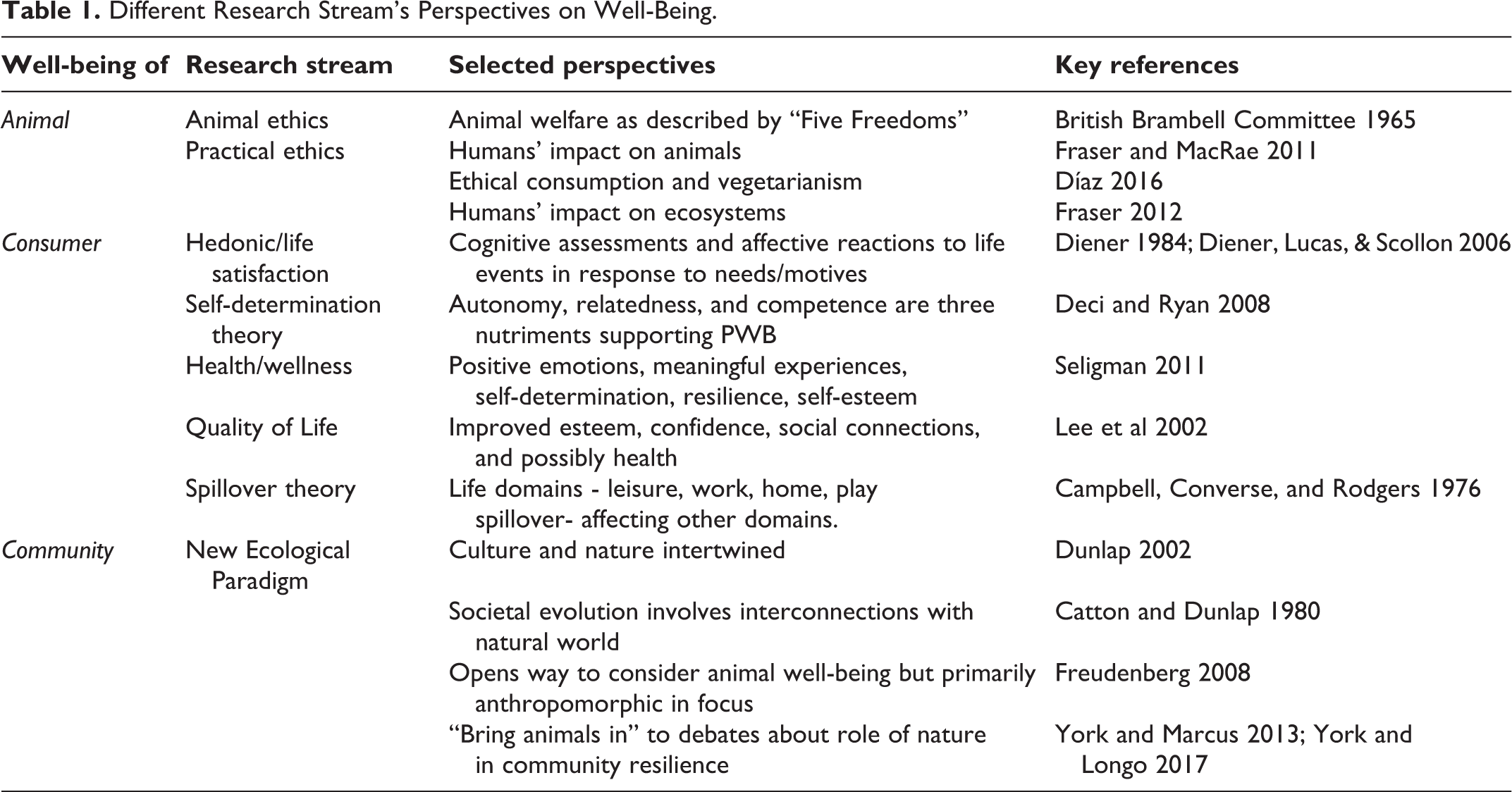
Recent studies have begun shedding more light on the positive benefits individuals and groups reap from interacting with animals and the potential of this positive interaction for the enhancement of societal well-being (Hosey and Melfi 2014). In a wide-ranging examination of human-animal interactions, Bradshaw (2017) concludes that the societal well-being benefits of animals (which he argues are often different from those offered by human companionship) deserve further examination. For example, Bradshaw (2017) identifies that animal companions (primarily dogs among urban dwellers) create a shared basis for interpersonal interaction, enhance social networks, and may provide one of the few connections to the natural world, thereby making people more sensitive to sustainability concerns. A summary of key highlights across all three domains are presented in Table 1.
Different Research Stream’s Perspectives on Well-Being.
The Interactive Well-Being Framework
The relationships among animals and consumers and the communities in which they form provide the framework that guides our interdisciplinary research and future research considerations. Figure 1, the ‘Interactive Well-Being’ framework’, illustrates the interrelationships across animal, consumer, and community well-being. The foundational premise is that the interactions between and among these entities may influence well-being outcomes for each in different ways. These interactions may positively influence the well-being of one, while negatively impacting the other. The interdependencies among all three domains are illustrated through the overlapping intersections of consumer and animal well-being, consumer and community well-being, and animal and community well-being. It is interactive because the actions of one can influence the well-being of another. These interactions are dynamic and take place over time. When the interactions yield positive outcomes among all three domains, a synergistic well-being emerges that supports a positive quality of life. This yields a ‘one well-being’. This framework aligns with the conceptualization of alternative economies that are built on shared commitments across stakeholders to improve subjects’ well-being (Watson and Ekici 2017). For example, improvements in animal well-being have the potential to increase consumer and community well-being (Pinillos 2018). Animals are often considered a barometer to human health and welfare that signals links between animal and wider family issues such as domestic abuse (Ascione and Shapiro 2009). Teaching responsible caretaking of animals can serve as a means for street youth to change ill-being habits (e.g., the consumption of drugs and alcohol) and offer them opportunities to turn away from criminal acts (Jordan and Lem 2014). The ‘sweet spot’ is where a ‘one’ system well-being emerges. In alternative economies, we posit that this may be conducive for one well-being to develop because each entity shares commitments to collective action, shared values and goals, and concern for the well-being of others; with interactions being virtual or real and embedded within social, structural, natural or cultural settings (Watson and Ekici 2017).
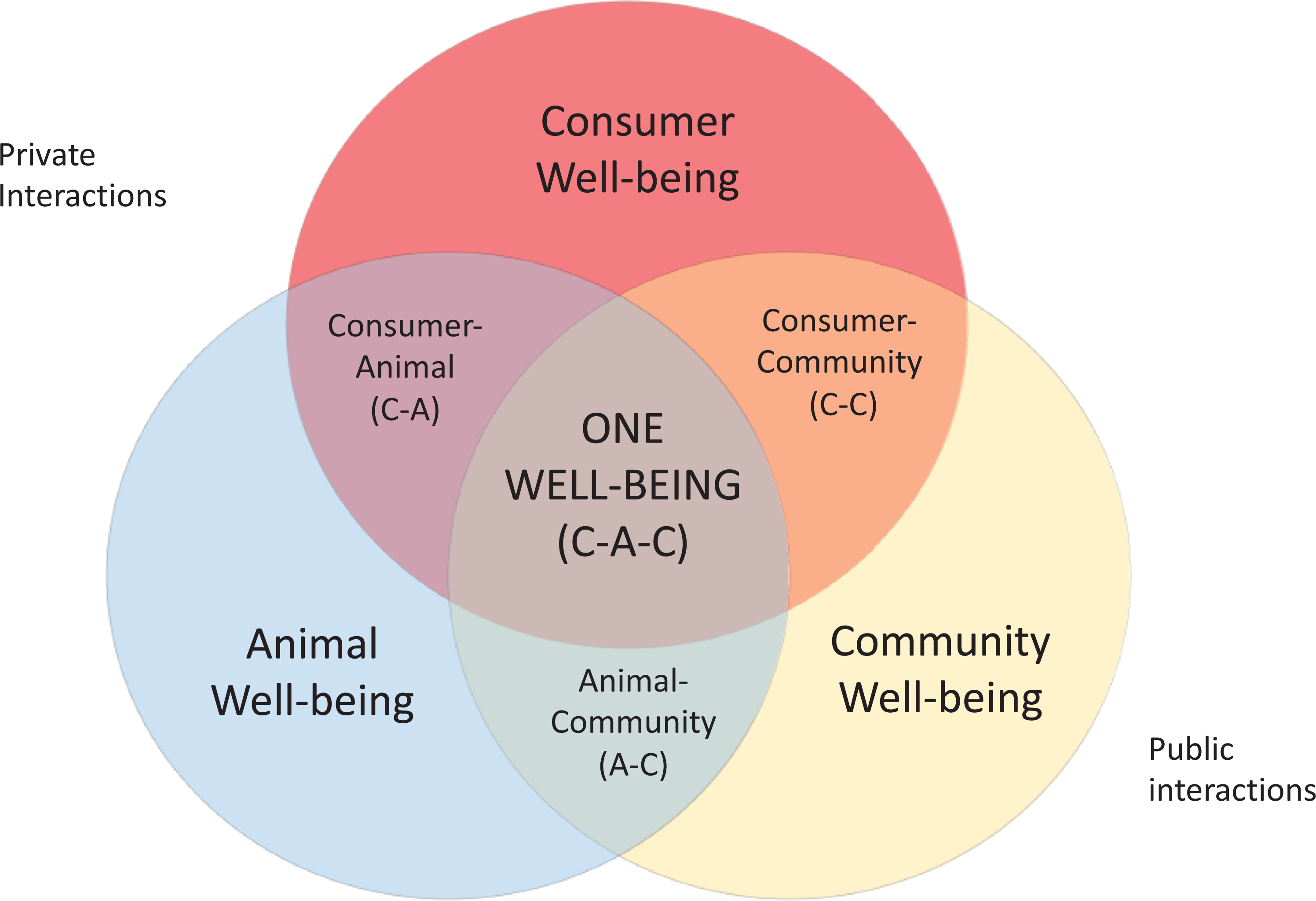
The interactive well-being framework.
To date, the pursuance of inclusive/interdisciplinary research to achieve a unified well-being across people, animals, and the community, emanate from the veterinary profession, such as the One Health and One Welfare Initiatives (American Veterinary Medical Association 2016; Pinillos et al. 2016). While the One Health concept tends to focus on more clinical- and disease-oriented perspectives of animal health, the One Welfare concept embraces a more holistic view of animal welfare. This interdisciplinary shift has been deemed essential for addressing the interdependencies among animals, humans, and the environment (Pinillos et al. 2016). We posit that by introducing the Interactive Well-Being framework, we extend the One Welfare concept to the community domain, acknowledging the interests of businesses, institutions, and governments that may shape these interactions and well-being outcomes in a systematic way. The environment or place where these interactions occur should also be noted. From private interactions in homes to public interactions in parks or commercial establishments, the needs of each stakeholder may vary by context. In the following sections, we discuss and relate the extant research on animal, human, and community well-being to this framework.
Contexts of Consumer–Animal Interactions/Relationships
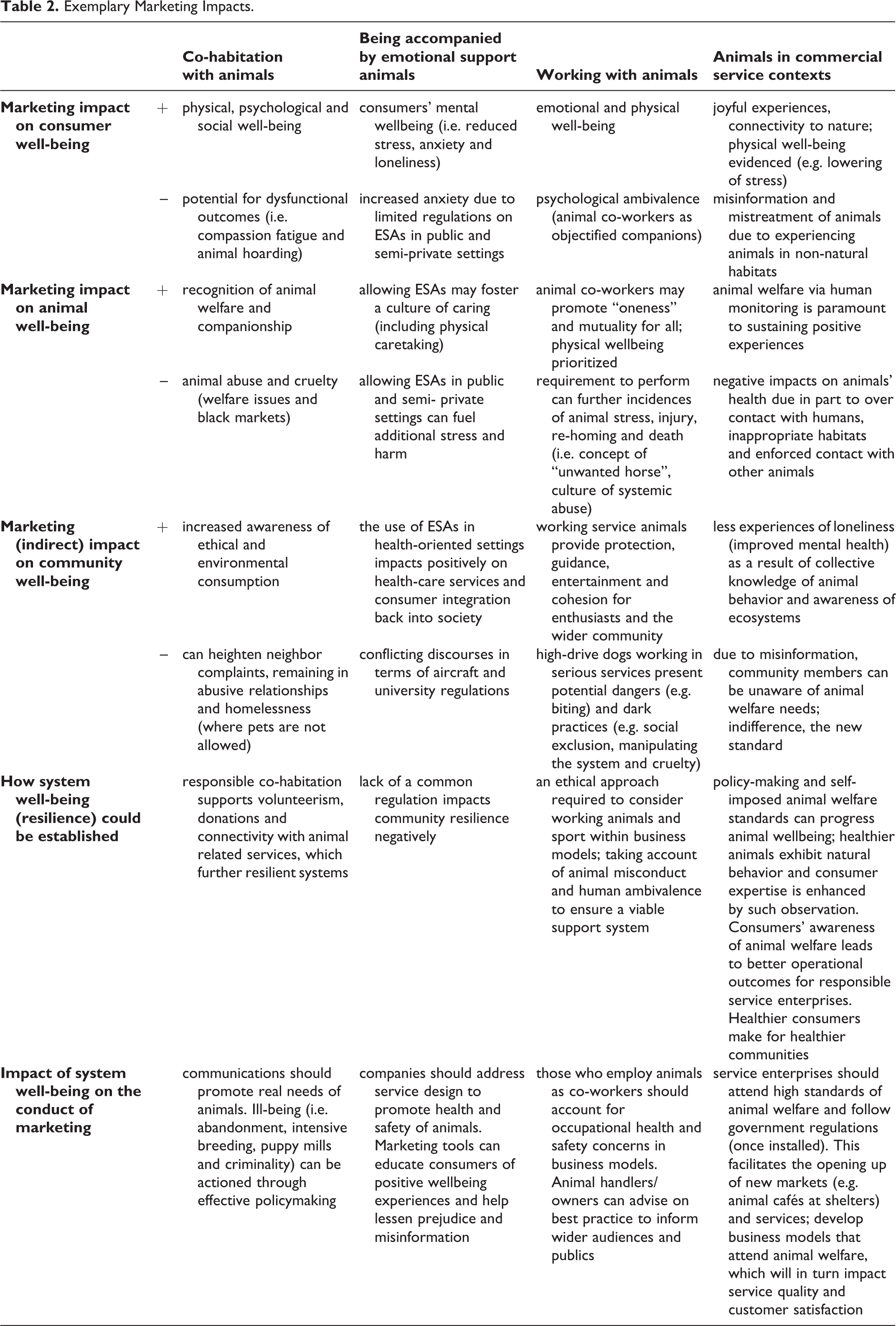
We apply the Interactive Well-Being framework to reflect upon the impact of consumer–animal-community relationships in four illustrative examples: (1) co-habitation, (2) emotional support, (3) working with animals, and (4) commercial service contexts. For each example we discuss how the institutions and firms involved as promoters or facilitators of consumer-animal relations affect consumer and animal well-being through their actions and marketing. We then offer a reflection upon the indirect impact of marketing on community well-being through the impact on consumer and animal well-being. Striving for a balanced view, we present examples that illustrate marketing’s positive impact on well-being, but also illustrate how marketing leads to individual, structural, and marketplace deficiencies causing the ill-being of the involved entities. Table 2 illustrates the marketing impacts on well- and ill-being. The selected four illustrative cases provide exemplars for understanding the C-A, A-C and C-C interactions from the Interactive Well-being perspective, that has implications for the one well-being achieved through C-A-C (see Figure 1). Table 2 shows for each case how resilience can be achieved and how the conduct of marketing is affected through public policy that focuses on ‘one’ system well-being.
Exemplary Marketing Impacts.
Co-Habitation with Animals
The rate of households in which consumers and animal companions co-habit ranges from 15% in Turkey to 40% in the UK, whereas the rates are 63% and 68% in Australia and the US, respectively (American Pet Products Association 2017; Scanes and Toukhsati 2017). Media, institutions and private companies alike often promote co-habitation between consumers and animals as beneficial for consumers. However, understanding the social and cultural factors that influence the tradeoffs of animal co-habitation may inform systemic sources of Interactive Well-Being imbalances.
Reflections through an interactive well-being perspective
Consumers often benefit from interactions with animal companions regarding their physical health, psychological health, and social well-being (Wells 2009). Co-habiting with animals affords consumers several opportunities to realize their well-being, for instance, “taking” their human guardians for walks (i.e., personal trainers) and calming them down in stressful situations (i.e., psychotherapists, nurses) (Kylkilahti et al. 2016). Health benefits associated with living with animal companions include higher self-esteem, greater life satisfaction, reduced depression, faster recovery, and stronger coping mechanisms when facing illnesses and diseases (Johnson and Meadows 2010; Tsai, Friedmann, and Thomas 2010). Caretakers of animal companions are less likely to visit their general medical practitioners and have improved general health compared to humans not co-habiting with animals (Walsh 2009a). Additionally, animal companionship may aid in elevating a human’s self-esteem, generating a sense of accomplishment or competence, and contributing to feelings of safety (Holbrook et al. 2001; Jyrinki 2012). Close emotional bonds with animal companions are also considered central to family life (Downey and Ellis 2008), as they often inspire consumers, offer opportunities to learn, to be playful, and to be “parents” of sorts (Holbrook et al. 2001).
However, living with animals may have considerable physical, monetary, and time commitments caregivers must afford (Mosteller 2008), potentially undermining their well-being in other life domains. Further, caring for and living with animals can lead to transformational as well as dysfunctional outcomes for consumer well-being, such as compassion fatigue (e.g., caregivers) (Holcombe et al. 2016). Moreover, animal hoarding, which indicates an individual who lives with more animals than they can support, is a pathological form of over-attachment to animals that can result in negative psychological and physical health consequences for humans and animals alike as well as affecting public health (Patronek 1999).
Interactions that benefit animals may include consumers actively caring for sick animals, providing medical treatment, fostering animal orphans, engaging in volunteer work for animal shelters (Herzog 2007), and/or donating to animal charities (Neumann 2010). Research on animal welfare has discovered that (Ladewig 2005) grooming is primarily positive for dogs, as evidenced by their reduced heart rate (McGreevy, Righetti, and Thomson 2005) and increased oxytocin (Odendaal and Meintjes 2003). Consumers voice their ethical concerns regarding animal suffering (Fraser 2012), such as the breeding of dogs with congenital defects (e.g., impaired breathing) (Crook et al. 2010). When consumers’ caring for animal companions translates into actions related to animal treatment, these actions can result in activist behavior that promotes protectionism (i.e., the 1996 ‘March for the Animals’).
However, co-habiting with animals may also involve situations in which the animal companion’s well-being can be endangered. For example, confining animals in human apartments has implications for animal welfare, especially if the animal is accustomed to living in its natural habitat (Bok 2011). From an animal ethics perspective, even keeping domesticated animals such as cats in an indoor environment limits their natural exploratory play and predatory behavior (Sandøe, Corr, and Palmer 2016). The situation is even more striking in the case of acquiring exotic animals, which poses threats not only to animal well-being (and may lead to species extinction in the wild), but also human community (e.g., poaching) and ecosystem (Brown 2006). Consequently, animals might exhibit behaviors that overload their human companions, resulting in their release into public spaces (Fraser and McRae 2011), which may in turn pose a deleterious effect upon the local human and natural environment. Furthermore, research indicates that animal cruelty—which involves inappropriate keeping, abuse, or neglect (Taylor 2017)—is still disturbingly common (Kavanagh, Signal, and Taylor 2013). Such behaviors are often expressed in private or secluded contexts such that the actor may avoid the disdain or judgment of others in addition to possible legal or financial ramifications (Bradshaw 2017).
The health benefits, potentially achievable from close consumer–animal interactions and relationships, translate to community well-being through social support and lubrication. Studies identify that animal companions—particularly canines (but also birds and rabbits)—have the potential to increase owner–owner, owner–non-owner, and intergenerational interactions within neighborhoods (Aydin et al. 2012; Wells 2009). As such, consumer–animal relationships demonstrate potential for improved communal relations and increased reciprocity among neighbors as well as an eased transition for individuals moving into new neighborhoods (McConnell et al. 2011; Wood et al. 2015). Interactions with animals support also the organizations in the community that provide animal related services. Moreover, consumers are increasingly extending these positive interactions to ethical consumption (Beardsworth et al. 2002) and environmental domains (Shaw and Newholm 2002).
There are, however, some social downsides to animal companionship. Herzog (2011) identifies that animal-related complaints are second only to late-night noise among conflicting neighbors. In addition, women often remain in abusive relationships due to concern for their animal companions (Walsh 2009b). Similarly, in disaster or emergency situations, people remain in danger zones rather than evacuate to safer areas (Leonard and Scammon 2007). Co-habitation with animal companions may also exclude people from acquiring housing, including those homeless who fail to secure their admission to shelters due to policies that exclude animals (Irvine 2013; Kidd and Kidd 1994) as well as renters’ acceptance of less-than-desirable housing conditions due to scarce animal-friendly options (Graham et al. 2018).
Being Accompanied by Emotional Support Animals
In contrast with service animals, which go through advanced levels of training and enjoy broad access to public locations under the US Disabilities Act, emotional support animals (ESA) do not require training (Hoy-Gerlach, Vincent, and Hector 2019). ESAs are “owned” animals (of any species) who currently are not regulated by certification or registration standards, which has raised concerns in terms of their access to public locations. Institutions and private firms have to decide on whether or not they allow consumers to be accompanied by an animal. Under antidiscrimination laws, US consumers are permitted to bring ESAs to servicescapes and homes. However, some landlord and service providers such as airlines have installed a “no-pet” policy, which creates potential systemic imbalances from the Interactive Well-Being Perspective.
Reflections through an interactive well-being perspective
First and foremost, ESAs are a means to realize consumer well-being. Walsh’s (2009a, 2009b) extensive reviews identify that animal companionship can facilitate a supportive social environment for and provide post-trauma victims with the confidence necessary to reconnect with the social world. The presence of animals—either companion or temporary support animals—can help these individuals overcome a sense of loneliness and reduce stress during uncertain times (Walsh 2009a). The research conducted within institutionalized settings, including schools, hospitals, elderly care centers, and prisons, demonstrates that animals can help individuals overcome learning difficulties, psychiatric disorders, and trauma as well as provide the basis for personal responsibility under the guise of animal-assisted intervention programs (e.g., Nimer and Lundahl 2007). Branson et al. (2016) report that support animals enable improved executive functions, keep patients mentally active, and thereby ameliorate the impacts of depression and reduce the high costs associated with intensive elderly care. Further, animal-assisted interventions can help prisoners overcome a sense of isolation and loneliness, thereby enhancing their chances for successful rehabilitation (e.g., Jasperson 2010).
Despite the various positive effects on human well-being, the presence of ESAs is not without conflict. Bauman et al. (2013) note that an increasing number of people seeking emotional support via animals, which in turn complicates federal laws that attend to accommodation needs (e.g., Section 504 of the Rehabilitation Act of 1973 and the Fair Housing Act of 1968). To illustrate these complications, Von Bergen (2015) draws attention to issues that emerge among university students’ on-campus needs with respect to wider disability services. As it stands, most universities exclusively attend to the needs of physically disabled students, in which case service animals are accommodated. Students who experience mental health issues are now seeking equivalence and advocating bringing ESAs on campus.
The studies discussed for the most part take the stance of what service animals can contribute to consumers’ lives through a series of timely interventions. However, the effects on animal well-being are largely overlooked, calling for further examinations. To illustrate, the effects of confinement in a non-natural habitat on the ESA’s well-being must be considered—and even more so the effects of high altitude and long-haul air travel on species that are not adapted to these environments.
The complicated relationships with animal, consumer and community well-being is highlighted in the context of ESAs in airline travel. The US Air Carrier Access Act allows ESAs on planes, and airline websites offer detailed policies for carrying animal companions alongside varying levels of fees for this service. Conflicts and disputes have the potential to erupt when a consumer classifies their animal companion as an ESA, with airlines grading these animals able to fly, free of charge. Airlines currently possess the freedom to determine their own practices, including the waiving of restrictions in terms of size, species, and caging determined by each airline. While consumers must prove the legitimacy of their disability (e.g., a letter from a mental health professional), there are currently no set policies in place, creating considerable confusion and ambiguity of such ESA requests, putting consumers and animals at risk of harm.
Working with Animals
Working animals refer to those operating in serious sports (Daspher 2014) and in “serious” animal services such as with police or military (Lefebvre et al. 2007; Sanders 2006). 1 Most of extant studies focus on dogs (e.g., Gillespie, Leffler, and Lerner 1996; Syrjälä 2016) or horses (e.g., Keaveney 2008). This under-researched area focusing on collaborative human and animal teams can provide unique challenges and threats to human, animal and community well-being.
Reflections through an interactive well-being perspective
The serious working with animals may have benefits and challenges for human consumer well-being. On the one hand, several positive outcomes are found in relation to handlers and riders, such as joy stemming from a shared interest with the animal and improved physical health yielded by training with the animals (Jyrinki 2012) and the sense of achievements enhancing “self-competence” as self-determination theory would suggest (Deci and Ryan 2002). Also, according to as self-determination theory, the sense of “relatedness”, may be fostered by forming social interrelationships with peers through joint interest, thus benefiting human and community well-being (Gillespie, Leffler, and Lerner 1996). On the other hand, working with animal companions is not devoid of emotional conflict as the flip side of these social interactions. To illustrate, Sanders (2006) discusses the “psychological ambivalence” of the K-9 officer regarding the patrol dog both as an object (tool, weapon) and as a subject (a sentient being as a part of a family), and also the “sociological ambivalence” deriving from contradictory societal and cultural demands for public role and behaviors assigned for the dog.
Similarly, in relation to animal well-being, having animals “as an avocation” is not simply equated with objectifying them (Hirschman 1994) as the ultimate goal in these sports is for the competing human and animal to develop a relationship that may be described as achieving “oneness,” or “mutual respect” (Keaveney 2008). “Oneness” refers to the sense that the animal is not an object of the human’s actions, but rather both are subjects interacting almost as one being, achieving intersubjectivity (Smith 2016), illustrated with examples of serious enthusiasts’ capacity to be able to “read their minds” (e.g., sense when an animal is unwell). Koski and Bäcklund (2015, p. 34) delineate that this sort of interaction generates the most efficient care-taking practices and commercial offerings for the animal’s physical well-being (e.g., massage, back-on-track coats, nutritional supplements). This interaction may spill over to the larger community as non-competitive animal owners eventually adopt these commercial offerings (Syrjälä, 2016), thereby benefiting the well-being of non-competitive animals as well. In these cases, animals may become the experiencers or consumers of the services provided (Kylkilahti et al. 2016).
However, inevitable contradictions are encountered in relation to animal well-being. In particular, competitive sports are underpinned by a commodification model based on sustained animal performance (Daspher 2014). This raises questions about the moral status of animals participating in sports and even services as they are unable to provide informed consent to participate (McEachern and Cheetham 2013). The commodification of animals is specifically emphasized in cases where the animal is injured or does not meet the expected performance. For instance, the Royal Society for the Prevention of Cruelty to Animals reports that injuries and under performance in greyhound racing are common causes of euthanization (RSPCA 2019). Similarly, in equestrian sports, underperforming horses could be euthanized or sold (Daspher 2014). Although some degree of these horses may find new, more suitable accommodation, they are also often adopted by unscrupulous horse traders or even criminal organizations to be on-sold for slaughter (Lenz 2009).
Working with animals yields multiple benefits as well as challenges for the well-being of communities. Service animals can provide security, find lost people, track for drugs and do all sorts of community services to large population; however, handlers may also feel conflict over the potential danger of the animal to the public when they are required to perform duties in public (Sanders 2006). Grounding a respectful relationship with both patrol and military dogs is discovered to diminish such misfortunate events (Lefebvre et al. 2007). Furthermore, although competitive sports provide a chance for community well-being via entertainment, employment, and social interaction, the downside of such activities includes the individual and social costs of gambling and crime (Numerato and Bagliano 2012).
Animals in Commercial Service Contexts
Commercial service contexts centered on consumer-animal interaction include a wide range of different service enterprises, for example zoos and aquaria that feature a high number of species kept mainly for observational purposes. However, in some contexts, consumers are not only encouraged to observe, but also to physically interact with animals. For example, many zoos have a petting or children’s zoo. Recently, new types of service enterprise have emerged that place physical proximity with animals at the core of their offer. An animal café is a business place wherein food and drink services are offered to consumers while they interact with animals who are housed on the café’s premises. The most prominent type, cat cafés, popularized in Japan, now exceed more than 400 establishments in Asia alone (LaBine 2017). The popularity of these cafés sparked a number of spin-off restaurants around the globe featuring various types of animals, such as mammals, reptiles, and birds (Giannitrapani 2018).
Reflections through an interactive well-being perspective
From the consumer well-being perspective, animal cafés offer visitors a sense of joy, healing, and relaxation, and have sprung up in response to feelings of loneliness and anxiety (LaBine 2017; Plourde 2014). Animal cafés offer visitors opportunities they do not receive at home due to rent restrictions (Gelinas 2016) or family allergies. Even short-term interactions, such as petting an animal, have been demonstrated to temporarily decrease blood pressure and heart rate (Friedmann and Son 2009). In this way, cat cafés offer the potential for reconnecting city people with nature.
However, these cafés also reinforce the commodification of that animals. Animal cafes vary in the level of engagement with the animals (i.e., free to wander vs. in cages), space considerations for animals to roam and retreat into private areas are often disregarded. Animal cafés also raise concerns for animal well-being such as claims of cat cafés being exploitative and in conflict with a cat’s natural behavior (Cats Protection 2015). Cat cafés may not provide sufficiently-sized enclosures, predictable and stable environments, or structural and social enrichment in the form of voluntary interactions with conspecifics or humans (Lieberman-Boyd 2018). Impacts may include increased stress, especially among timid and shy cats in addition to the presence of numbers of other cats on a primarily solitary species (Arhant, Wogritsch, and Troxler 2015). This growing concern extends to the case of exotic and wild animals purportedly housed in cafés, such as owls and otters.
Regarding community well-being, cat cafés have increased the public’s awareness of the demand for engaging with animals outside private living spaces, expressing values associated with animals and nature. This trend supports the notion that urban dwellers desire to connect with nature, which contrasts with their private living conditions. If animal cafés address consumer needs for connectedness to nature and these animal interactions positively impact the consumers well-being, the community benefits from healthier community members. From a systems perspective, cat cafés may collaborate with animal protection agencies, collaborate with shelters to facilitate cat placement, socialization and adoptions, promote animal welfare issues, as well as solicit and donate proceeds to these nonprofit organizations. These actions can help promote and strengthen the community’s awareness of these interconnected ecosystems.
However, if animal cafés do not support the needs of these animals, this may undermine the firm’s operations if animals act out or hide, thus diminishing the benefits from interactions consumers may seek. To date, public discussion around the treatment of animals in animal cafés is limited. With a few exceptions (e.g., Kelly 2019), media narratives regarding cat cafés is positive, being associated with the “healing boom” that features the positive impacts of interaction with animals on consumer well-being (Plourde 2014). However, this contrasts with increasing reports of animal mistreatment in animal cafés, compounded by limited or no regulations, minimum standards, or qualification requirements in most countries for those who wish to open an animal café. These examples highlight that animals can be consumers of human-related service contexts, as well as providers to human consumers. The needs of both may vary by context and the role each plays within the interaction. Figure 2 highlights these placements.
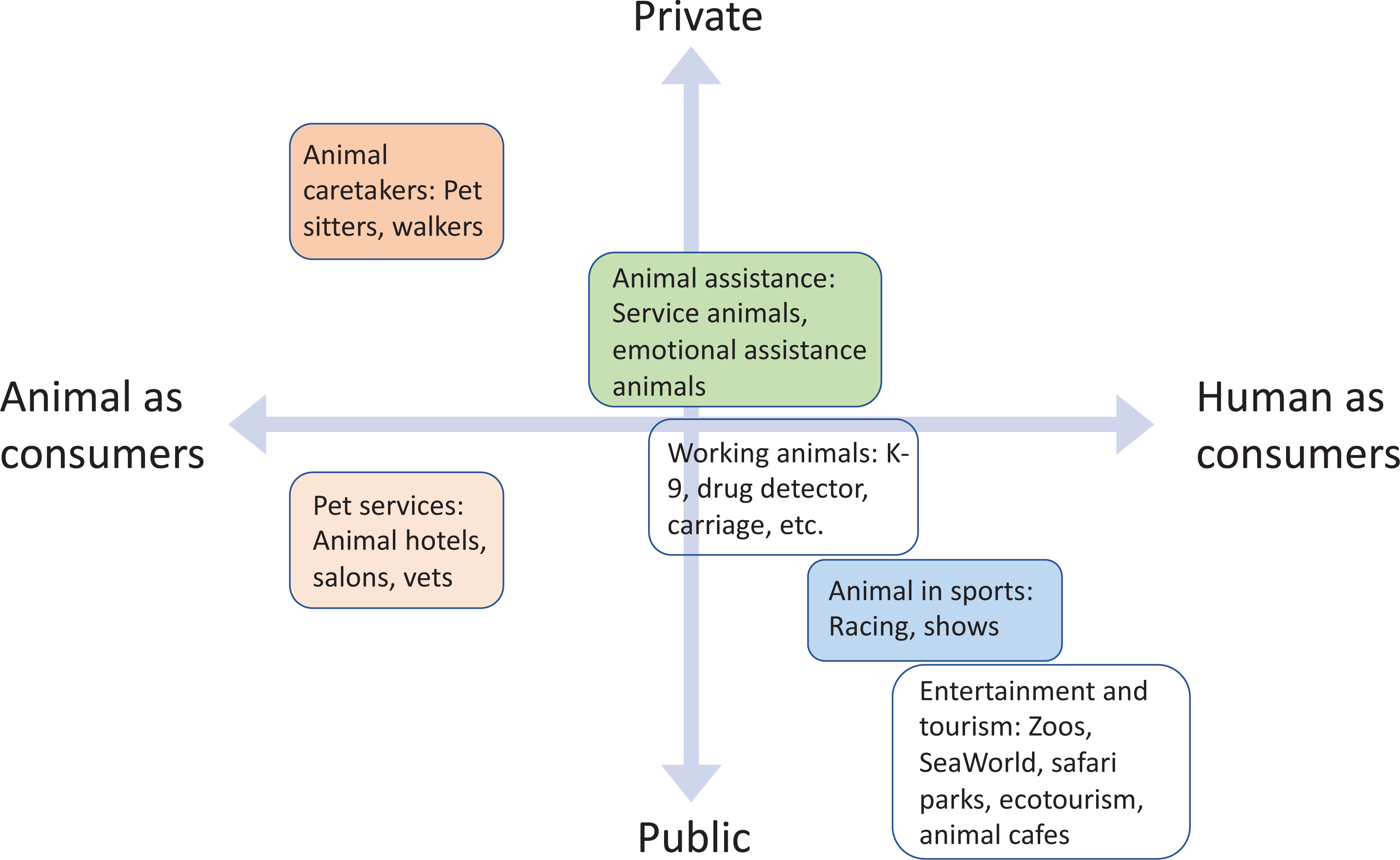
Role and context of interactions.
Marketing Implications from a System Well-Being Perspective
Across the four contexts, this paper describes how system well-being can be achieved through positive impacts of institutions and firms that promote or facilitate human-animal interaction. It also provides evidence that animal well-being is often endangered, in part due to lack of awareness, regulations and public policies that support animal welfare. To address these gaps and provide a path forward toward a system well-being perspective, specific marketing related areas are addressed. Specifically, we discuss how public policy or firm guidelines that focus on system well-being impact the conduct of marketing of the involved institutions and firms. Table 2 provides a rationale for achieving system well-being and system resilience for each of the four illustrative contexts. It also highlights the impact on the conduct of marketing for each of the four cases. We categorize our suggestions into three themes: (1) achieving system resilience and system well-being through regulations and firm-specific animal welfare standards (2) animal welfare-conscious marketing, and (3) impact of a system well-being focus on business models and marketing.
The first implication relates to firms and institutions to take on a holistic approach to system well-being as they should be aware of the interdependent nature of system well-being. As our four contexts show, many benefits may arise based on human-animal interaction. Nevertheless, when viewed from the Interactive Well-Being Perspective, they are not devoid of downsides to the animals involved (Lieberman-Boyd 2018), to other consumers, and, if unaddressed, potentially businesses and communities. Often, a lack of regulation leads to the endangerment of animal welfare and thus hampers the creation of system well-being. For example, animal rights activists have already raised concerns over the exploitation of the cats in cat cafés (Peta2 2019). Outright bans, especially those concerning wild animals confined in animal cafés, may save the sector from societal backlash and loss of legitimacy. For those species that are more accustomed to human interaction (e.g., cats), a new set of standards within the sector must be established to safeguard their well-being. For example, in June 2012 Japan’s Animal Welfare Law was updated with a new regulation, which imposes a ban on the public display of animals after 8 pm (Plourde 2014). Similar policies should be observed in terms of ESAs, as the effects of high altitude and long-haul travel on species that are not adapted to these environments may result in restrictions on these activities and consumer self-regulation. Such regulations might be channeled into a publicly registered quality-rating system for such services.
Despite animal content being widely shared across various forms of marketing communications, the content may yield unintended consequences. For instance, a consumer depicted in a commercial who buys a puppy for their child as a surprise gift may implicitly convey impulse animal purchases are good. Firms and institutions should be conscious of the impact of the communication they propagate and aim for an animal-conscious marketing approach. Utilizing animal experts to inform or review content to provide examples of best practices depicted in marketing communications is one approach. Companies that promote co-habitation with animals should include animal’s real needs, not just anthropomorphic ones. Moreover, if wild animals are depicted as “pets,” consumers may acquire wild animals as companions, thus resulting in potential harm to both animal and consumer well-being. Netflix’s 2020 hit Tiger King series illustrates this. Through collaborative efforts among NGOs, animal experts, and universities, firms can be encouraged to develop campaigns that highlight the needs of specific species, developing campaigns for positive change based on context, consumer, animal, and community types of interactions. Such campaigns may extend influence by pressuring public animal tourist providers to eliminate inappropriate interactions with species such as dolphins, many of whom experience stress through being held hostage by consumers seeking “selfies” (Lewis 2017). Furthermore, pushing stereotypical assumptions through continuous advertising and anthropomorphic characterization of particular species, for example framing of certain species as “more wild” can lead owners to leave them free to roam during the day without taking precautions to protect them from potential dangers, including accidents, predators, cruelty, diseases, fights, and poisonous substances. The media framing of reptilians as less anthropomorphic alongside the misunderstanding of what “cold blooded” truly means have led to their release into the wild when they grow too large, which incurs damaging effects on native populations (e.g., Burmese pythons in Florida).
Raising awareness for the possible societal benefits of empathetic consumer-animal interactions is also suggested. The ESA discussion illustrates consumers’ claims for animal assistance. Colleges and universities with “no pet” policies should be prepared to address this complex situation. Public confusion and negativity, due to a general lack of understanding of the beneficial roles of support animals for human caretakers, can affect the integration of support animals in society. Therefore, wider dissemination of information about ESA’s among macro-marketers, policy makers, and the public can result in the much-discussed “joined-up thinking” that refers to overcoming the ways in which jurisdictions and missions can impede effective policy innovation. Here, marketing tools could be used effectively to educate and inform vested stakeholders of the role of ESAs to elicit positive consumer well-being experiences. Furthermore, commercial actors could include ESAs (similar to other service animals) in developing their marketing strategy to provide clear rules as to their existence to eliminate misunderstandings and prejudice. Furthermore, equipping non-profit organizations (NGOs) with up-to-date research on Integrated Well-Being benefits may also help to generate greater consumer support for animal-friendly policies, especially at the community level.
Macromarketers should be aware of the impact of a system well-being focus on business models and marketing. Companies and persons who employ animals as co-workers and government agencies should take account of occupational health and safety concerns. The impact on business models could also include the possibilities for new markets, for example, as including animal cafés in shelters, to attract more consumers who can observe and learn from volunteer work and get educated in terms of responsible animal keeping. For animals not suitable for commercial or urban spaces, exploring business models that are less dependent of the physical presence of animals, might consider using virtual or digital representations of animals. Trends suggest that as consumers moral responsibility towards animals rises, businesses will have to acknowledge animal welfare as a community value and align practices accordingly.
Research Agenda
A considerable amount of existing research focuses on the micro effects of how animals benefit consumers, depicted as the C-A interaction in the Interactive Well-Being framework.
However, less research examines the macro-benefits/costs of human animal interaction, which is connecting the third link of community to this interaction stressing the medium of C-A-C. For example, while research should examine the dynamics of ESAs within particular servicescapes to help inform policy initiatives, the potential of such marketized initiatives to address problems arising from urbanization, isolation, and disconnect from nature is also worthy of research. To this end, Walker and Tumilty (2019, p. 179) have urged researchers “to investigate ethical considerations within social service practice further, given the growing use of animal-assisted activities, interventions and therapies in the social services field”. This thought aligns with thinking of animals as consumers of our constructed servicescapes (Figure 2). Given the potential for backlash against such initiatives from activists, businesses, and policy makers, how might these interests be reconciled in a way that avoids the loss of consumer, animal and community well-being?
The Interactive Well-Being framework can guide research efforts that inform public policy, particularly in light of the post COVID-19 pandemic which demonstrated the fragility of societies, economies, and particular sectors such as meat production in which front-line workers suffered disproportionate exposure to the deadly virus (Polansek, April 23rd 2020). Layton and Duffy (2018) have written extensively on marketing systems, identifying how weaknesses in one part of the system can lead to system-wide collapse. The new ecological paradigm highlights the interplay between human and ecological systems (Dunlap 2002), identifying the potential harm to the former arising from sustained damage to the latter, reflected in the Interactive Well-Being framework as the C-C interaction. These debates highlight the importance of resilience, or the ability of systems (human and ecological) to adapt to external change, absorb permutations, or recover quickly from disturbance (Adger 2000), by reconsidering the agricultural and livestock raising practices to reach a more balanced C-A-C well-being. We propose that the perspective presented within this paper, through the use of Interactive Well-Being framework, can enhance the resilience of systems, and therefore encourage macromarketers to also include animal-interactions in relevant studies of market systems.
The framework presented here can enhance connections between levels within marketing systems (Layton and Duffy 2018), with the micro-level benefits of animal companionship scaling up into greater system health at the meso and macro levels. Likewise, micro-level benefits can also create meso-level spillovers, including greater community cohesion, regional economic benefits and identity, in-bound tourism and jobs, and the reduction of social isolation. Concern over the decline of pollinating species have already led to programs to encourage people in cities to plant wildflowers and calls by garden centers and the National Trust in the United Kingdom for individuals and councils to avoid lawn mowing in order to allow insects to feed in critical times. Further research could investigate the impact of these micro-macro programs and their impact on human, animal well-being, and societal well-being.
At a macro, societal level, attention to the needs of animals can alert us to the dangers of pandemics, widespread lifestyle-related health issues (see Beverland 2014), and have the potential to strengthen communities, reduce recidivism, reduce health care costs, enhance concern for the natural environment, and increase happiness. At the meso-system level, greater sensitivity to the needs of animals may aid market-driven efforts such as sustainable tourism. One more positive aspect of resilience is enhanced system health (Layton 2009). Layton and Duffy (2018) highlight the role of path dependencies in the sustenance of whale-shark watching in Western Australia. They identify that remaining sensitive to the needs and interests of locals, and the desire to maintain as much as possible the Ningaloo Reef, ensured the emergence of a sustainable, world class nature tourism sector, focusing on the C-C interaction. What was left out of this account was consideration of the whale-sharks themselves (and related species enjoyed by tourists such as manta rays, sea turtles, and dugongs). The third author of this paper has experienced diving with whale-sharks and noted the regulations on numbers of divers in the water with whale-sharks at one time. This understanding of the animal’s needs, led to greater coordination between tour operators, greater appreciation by tourists, and the avoidance of animal stress seen in many other over-touristed areas, striking a balanced interaction of all three forms of well-being, C-A-C, achieving One Well-being. Future research should therefore make visible the interests of animals and their potential for positive macromarketing outcomes.
Attention can be paid to communities with animal-based resource dependencies (Adger 2000). Sustainable tourism suffered substantially during the Covid-19 lockdown. In communities close to major visitor destinations such as the gorilla trekking in the Virunga mountain range (bordering Uganda, Rwanda and Congo), the resulting economic stress triggered concerns that poaching and hunting would occur as desperate communities sought to survive (Greenfield and Muiruri, May 5th 2020). In contrast, the elephants used around Thailand’s cities and tourist areas, have mostly been integrated into rural families and returned to a more natural rural habitat, and looked after by a designated mahout (usually a son). With sustainable tourism often presented as a market-led panacea to conflicts arising from the needs of animals and humans, the question of how to build greater buffers into such systems to enhance the sustainability of such sectors for human and alike is deserving of future research. Such research could also extend to include shelters, wildlife parks, and zoos, as these too suffered incomes declines during the Covid-19 pandemic. Research could also examine the potential for such resources to enhance quality of life during periods of lockdown, particularly in vulnerable populations suffering the effects of isolation.
Finally, the One Well-Being framework offered here provides the opportunity for fruitful cross-disciplinary research between macro-marketers, micro-marketers, and those working with animals in a range of domains.
Conclusion
The 2020 COVID-19 outbreak also demonstrated the complex relationships between human, animal, and community well-being. Declines in tourism put food pressure on communities of Macaque monkeys who had grown accustomed to being fed by tourists. Humans, locked out of work, increased demand for animal companions, triggering concern among a number of animal bodies such as the Finnish Kennel Club and the RSPCA (UK) that these animals would suffer once lockdown ended (on the flip side, fears over COVID-19 saw many animal charities plea to owners not to dump animals over misplaced fears they were carriers of the disease). The impact on many wildlife charities, reliant on visitors, also saw stress placed on their cash flow. Human lock down, saw many animals venture into cities, sometimes in search for food, but it would also appear, out of curiosity. Lock down also brought humans into contact with a heretofore invisible / silenced world, with many noting the joy of hearing bird song (many species no longer had to exert extra effort to be heard), seeing wild animals in cities, and due to improved air and water quality, seeing species return to waterways. These changes began a discourse about whether returning to ‘normal’ was desirable, both in terms of the impact on the environment, but also on human well-being (the jury remains out on whether this will trigger sustained change, in light of the widespread counter discourse focused on returning to normalcy). The ability of humans and animals alike to adapt to environmental change is critical for our survival and well-being. This article presents a framework, to guide how we – humans and animals – can survive and thrive amidst change and uncertainty by supporting the well-being of animals, consumers, and community; because our resilience, in part, resides in supporting animal well-being.
Footnotes
Authors Contribution
All authors contributed equally.
Declaration of Conflicting Interests
The author(s) declared no potential conflicts of interest with respect to the research, authorship, and/or publication of this article.
Funding
The author(s) received no financial support for the research, authorship, and/or publication of this article.
