



Abstract
This study aims to examine how to integrate generative AI (GenAI) into marketing education. We used the transformation mechanism within boundary crossing theory to explore how marketing professional insights can be utilized to prepare students for industry demands in the GenAI era. We analyze industry content and GenAI courses alongside 26 interviews with industry practitioners to identify essential knowledge, skillsets, and optimal strategies for implementing GenAI in marketing curricula. Findings underscore the necessity of equipping students with GenAI skills for marketing research, strategy development, content creation, creativity, and ideation across use cases. Practitioners emphasized that marketing theory and ethics should be centralized in any GenAI-related subject matter. For educators, the study highlights the importance of involving industry partners, integrating external materials, and offering master classes to ensure students develop practical skills alongside theoretical knowledge. This research contributes to the discourse on GenAI in marketing education by providing use-cases and actionable insights into subject design, ensuring alignment with industry expectations and equipping students with necessary competencies for a GenAI-driven marketing environment. We extend the application of Boundary Crossing theory into marketing education literature by theorizing how transformation deepens and operates bidirectionally in the context of disruptive technologies, such as GenAI.
Adapting curriculum to address changing industry practice is not new for marketing academics. The redesign that followed the introduction of social media marketing (Brocato et al., 2015; Crittenden & Crittenden, 2015; Muñoz & Wood, 2015), changes in retail marketing (Grewal et al., 2018; Langan et al., 2019), the rapid teaching and learning response to digital marketing (Cowley et al., 2021; Crittenden & Peterson, 2019), and more recently the inclusion of data analytics (Kurtzke & Setkute, 2021; Vriens et al., 2019) into marketing curriculum suggests that marketing academics are responsive to key industry trends when designing subjects. These progressions also suggest that, as practical marketing methodologies continue to evolve, there is a pressing need for marketing education to keep pace and adapt (Flight, 2021; Rohm et al., 2021; Ye et al., 2023).
The advent of generative AI (GenAI) has fundamentally transformed most aspects of business, including marketing and its specializations such as public relations, digital marketing, and social media marketing. The rapid progression in GenAI technology is reshaping the entire marketing practice with extraordinary capabilities that include idea generation, content creation, and automation (Guha et al., 2023; Kshetri et al., 2023). While many focus on ChatGPT as the market leader, the range of options continues to evolve. OpenAI has unveiled SORA, a ground-breaking text-to-movie tool, Claude has launched Claude 3.0, and Google has introduced GEMMA and Gemini Pro 1.5 to challenge OpenAI’s already acclaimed ChatGPT 4.0. As we pen this paper, there are more than 5,000 new GenAI tools available for marketers.
Since the emergence of GenAI in 2022, the author team completed 34 GenAI-specific training courses from various providers, including Google, HubSpot, and LinkedIn Learning, as well as university offerings. In addition, the team has self-trained in more than 120 GenAI packages and noticed the ever-developing capabilities of these tools beyond ChatGPT, Gemini, and Claude. Our experience indicates that the capacity for text-to-images with AI image processing (Dall-E, Midjourney, Leonardo), text-to-video (Invideo, Sora), and text-to-audio (speechify.ai), to name a few, have significant implications for marketing education and practice.
Furthermore, there have been accounts that GenAI has disrupted the recruitment practices of agencies and in-house marketing teams (Ostwal, 2023). This indicates that on the whole, marketing education, primarily designed for the pre-GenAI era, must now adapt to adequately prepare students for the industry’s fast-paced, AI-centric future (Flight, 2021; Ye et al., 2023; Zhang & Shribner, 2024). Scholars have long highlighted the need to reduce the gap between academic curriculum and the practical necessities of the profession (Borah et al., 2021; Finch et al., 2013; Harrigan & Hulbert, 2011; Zhuang & Shi, 2024). Marketing scholars have also pointed to the significant benefit of further integration of practical, professionally relevant skills (Ye et al., 2023; Zhang & Shribner, 2024). We believe that an innovative marketing education should incorporate GenAI, and to achieve this, it is essential to integrate employer insights into the subject design process.
This study aims to inform marketing subject design by incorporating empirical insights gathered from industry practitioners on the topic of GenAI. We employ boundary crossing theory which facilitates the generation of new learning and development of practices across different settings (Engeström et al., 1995). Specifically, to identify and operationalize this new knowledge and assist in updating marketing subjects, we draw on the boundary crossing learning mechanism of transformation (Akkerman & Bakker, 2011). Transformation is utilized to develop a shared understanding between industry and academic domains and develop new practice in the form of marketing curriculum that is more responsive to the technological and educational challenges presented by GenAI.
By adopting boundary crossing, we make several theoretical contributions to the marketing education literature. First, while Akkerman and Bakker (2011) identified transformation as a key mechanism in boundary crossing, its application in rapidly evolving contexts like GenAI remains underexamined. We address this gap by demonstrating that GenAI-driven marketing education requires the continual transformation of boundaries to bridge theory and practice effectively. Second, by utilizing boundary crossing, we demonstrate that GenAI functions as a disruptive boundary object, unsettling the status quo and reshaping marketing practices and roles. We explain that due to the changes brought by this new form of boundary object, industry and academia are confronted with a shared problem that necessitates collaboration among practitioners and educators. Third, we demonstrate a nuanced understanding of transformation as a recursive process in a GenAI context. We show that a recursive transformation process facilitates the ability to capture the dynamic shifts and uncertainties brought by GenAI into marketing curriculum design, enabling the co-creation and alignment of pedagogical and professional demands. Grounded in this framework, we address the following research question: How can academics develop industry-informed marketing curriculum in the GenAI era?
Our exploration is subsequently operationalized by situated learning which provides students with the opportunity to build skill and expertise in an applied context (Lave & Wenger, 1991). This educational pedagogy is relevant in the context of GenAI-based marketing education, as it provides students with the opportunity to practice relevant workforce skills requirements (Ardley & Cox, 2006; Wang et al., 2022).
The value of this research lies in the utilization of the boundary crossing learning mechanism of transformation to integrate insights from industry and academia into the process of reshaping marketing education and establish a process for ongoing dialogue that facilitates knowledge creation. A further contribution is made through our demonstration of how this recursive transformation can inform the redesign of marketing subjects, exemplified by the development of a new subject focusing on GenAI knowledge and skill development. The growing acceptance of university-business co-operation (Galan-Muros & Davey, 2019) that benefits student learning (Killian et al., 2024), industry innovation and performance (Puffal et al., 2020), the economy, and society (Redgrave et al., 2023) sets the broader context for this research. Our paper will extend the literature by usefully exploring practitioners’ views about the implementation of GenAI for marketing education and practice.
The Evolution of GenAI: A Review of Marketing Education Literature
Considering the rapid developments of GenAI, many marketing educators are yet to fully conceptualize how best to prepare students with the GenAI requirements expected for their future careers (Crittenden, 2024). Guha et al., (2023) advocate for the integration of ChatGPT in marketing education, which highlights its potential to enhance learning outcomes and prepare students for the industry’s evolving demands. Their findings regarding the current awareness and perceptions of ChatGPT among students and educators are critical to our investigation, as they underline the urgent need for subject development that relates to contemporary professional marketing practices.
Peres et al. (2023) also emphasize the need for tertiary educators to address prompt engineering and adapt higher education to the disruptive nature of GenAI technology. They encourage marketing educators to reflect on the best approaches to incorporate GenAI into their teaching to “train students to effectively use the tools in solving real-world marketing problems” (p. 272). Their call for marketing educators to respond to the emergence of GenAI encapsulates the core objectives of our research. The examination by Gulati et al., (2024) of students’ adoption behavior of ChatGPT is also influential in designing a dynamic and technology-enhanced marketing degree. While research indicates the need for marketing educators to prepare students with GenAI competencies, understandably marketing literature does not currently show instances in which educators have sought insights from practitioners regarding GenAI (Crittenden, 2024). While the lack of engagement with practitioners may be attributed to the recent rapid development of GenAI, this nonetheless highlights a significant gap and an opportunity for exploration. As explained by Elhajjar et al. (2021), it is crucial for marketing educators to consider the views of practitioners when designing a forward-facing curriculum. Accordingly, our paper advances this under-researched aspect of marketing education by bringing to the fore the views practitioners hold about GenAI. We believe that exploring industry perceptions and expectations of GenAI and collaboration with practitioners can foster the transformation of marketing education that better equips students with the GenAI competencies required for future marketing roles.
Theory
Boundary crossing refers to the process of navigating, interacting with, and reconciling differences across distinct social or organizational domains, often involving varied professional or disciplinary practices, cultures, or knowledge bases (Akkerman, 2011; Akkerman & Bakker, 2011). This process is essential in collaborative contexts such as interdisciplinary education, workplace learning, and research-practice partnerships, where diverse expertise must integrate to address complex challenges (Akkerman & Bruining, 2016). Akkerman and Bruining (2016) suggest that boundaries, while potentially obstructive, can also be rich sites for learning and transformation. As individuals or groups cross these boundaries, they encounter contrasting norms, values, and practices, which can foster the development of “boundary objects” and “boundary brokers” (Star & Griesemer, 1989; Wenger, 1999). Importantly, boundary crossing emphasizes overcoming discontinuities in actions or interactions that can emerge from sociocultural differences rather than overcoming or avoiding the difference itself (Akkerman & Bakker, 2011).
From a boundary crossing perspective, boundary objects are seen as shared artifacts—such as models, documents, or tools—that help bridge gaps between different knowledge domains, enabling collaboration across boundaries (Star & Griesemer, 1989). Boundary objects are adaptable enough to meet the specific needs of each group involved in collaboration while maintaining a stable core that unifies diverse perspectives. These objects play a critical role in boundary crossing by allowing groups with distinct practices, such as educators and industry experts, to align around a shared reference point (Akkerman & Bakker, 2011; Leung, 2020; Stoffels et al., 2022). As individuals engage with boundary objects, they can identify common challenges, coordinate actions, and develop shared understandings, leading to transformative learning and innovation (Edwards & Mutton, 2007).
Boundary brokers are individuals who facilitate understanding and collaboration across different domains or organizational boundaries, playing a crucial role in boundary-crossing processes by translating and aligning diverse perspectives (Levina & Vaast, 2005; Neal et al., 2022). These individuals bridge gaps by connecting groups with distinct expertise, values, and practices, using their skills to liaise, support connections, and improve efficiency and connection. Boundary brokers help different groups, such as educators and industry professionals, navigate complex interdisciplinary tasks by ensuring that shared goals are articulated, differences are negotiated, and joint solutions are developed (Wenger, 1999; Williams, 2002).
In integrating GenAI into a marketing curriculum, the boundary brokers are research team members with both extensive academic expertise and GenAI knowledge. These brokers partner with industry professionals, who all had experience in a higher education system, to develop shared understandings of GenAI as a form of a boundary object. The interactive dialogue around this boundary object will lead to identifying common challenges and the formation of shared understanding, ultimately transforming marketing curriculum. Such transformation ensures that boundary-crossing efforts are coherent and sustainable, while maintaining the integrity of core practices and responsiveness to new technological developments.
Boundary crossing, according to Akkerman and Bakker (2011), consists of four main learning mechanisms: (a) Identification—understanding the distinct characteristics of each domain; (b) Coordination—establishing procedures and practices that align or integrate activities; (c) Reflection—developing new insights by contrasting perspectives; and (d) Transformation—generating new practices or hybrid solutions that integrate elements from different domains. As this study focuses on the effects of interventions and transforming the marketing curriculum, we will focus on the final mechanism in more detail.
In essence, transformation within a boundary-crossing framework describes a profound shift achieved by integrating distinct domains, each with its own practices, values, and expertise (Engeström et al., 1995). Importantly, it has the potential to be recursive (Wang et al., 2022), highlighting the cyclical and iterative process of meaning making and adoption across different boundaries. This transformative process begins with confrontation, where limitations within current practices are exposed, highlighting gaps or areas requiring development. Such confrontations reveal a need for change and serve as a catalyst for collaborative innovation, bringing to light underlying tensions that can drive learning and adaptation (Akkerman & Bakker, 2011). Following confrontation is recognizing a shared problem space, in which stakeholders identify common goals and interdependencies. This step establishes a foundation for mutual engagement and alignment, as collaborators see the potential for integrated solutions and recognize the value of each party’s unique contributions (Star & Griesemer, 1989). Together, these steps create the conditions for meaningful, sustained transformation across boundaries.
With a shared foundation, hybridization combines core elements from each domain to create new practices or artifacts, blending diverse contributions into a cohesive whole (Engeström et al., 1995). This synthesis leads to a curriculum or system that preserves essential knowledge while opening pathways for new applications and skill development. Following hybridization, crystallization serves to ensure continuity and reinforce the practical integration of hybrid innovations (Akkerman & Bakker, 2011). This process solidifies the newly created practices, enabling them to endure beyond initial implementation and encouraging further development over time.
An essential aspect of boundary-crossing transformation is maintaining the uniqueness of intersecting practices, allowing each domain to retain its distinct identity and expertise within the collaborative framework (Akkerman & Bruining, 2016). This balance preserves the richness of each field, ensuring that integration enhances rather than dilutes core competencies. Finally, continuous joint work at the boundary is vital for sustained transformation, as ongoing collaboration fosters adaptation and refinement, allowing innovations to evolve and remain relevant in dynamic environments (Engeström et al., 1995). Together, these components establish a structured pathway for boundary-crossing transformation, balancing integration with respect for each domain’s unique contributions, creating a robust foundation for shared learning and innovation (Akkerman & Bakker, 2011).
Importantly, transformation can be triggered by a disruption, which represents external or systemic forces—such as the introduction of novel technologies—that destabilize existing practices, roles, and epistemic norms (Christensen, 1997). Unlike the collaborative processes within a shared problem space, disruption is reactive in nature, compelling stakeholders to recognize discontinuities and prompting them to engage in boundary crossing (Christensen, 1997). GenAI technologies function as disruptive boundary objects (Guridi et al., 2024; Prentice et al., 2023), simultaneously exposing gaps in knowledge and mediating the negotiation of solutions. We argue that in marketing education, GenAI destabilized existing paradigms and served as focal points for co-creation, triggering iterative cycles of learning and adaptation.
The boundary-crossing framework for transformation is particularly well-suited to the integration of GenAI in the marketing curriculum due to the fundamental shifts that GenAI is prompting in relation to skills, tools, and ethical considerations. Marketing, traditionally based in consumer behavior, creative strategy, and communication, is rapidly evolving with GenAI-driven insights, content generation, and data analytics. These changes necessitate a curriculum that is flexible and capable of integrating GenAI capabilities without compromising core marketing principles. Each component of the transformation framework supports this complex integration.
Research Approach
We draw on a qualitative research approach as it ensures that findings are grounded in the real-world settings of the practitioners (Eriksson & Kovalainen, 2015). Furthermore, given that the integration of GenAI in marketing education is a relatively new area of inquiry, a qualitative approach is appropriate due to its exploratory nature (Myers, 2019), as it allows for the investigation of uncharted or under-researched areas, paving the way for hypothesis generation and future quantitative studies (Creswell, 1999). This exploratory aspect is essential for uncovering novel insights and perspectives that may not have been previously considered. This design is inherently informant-centered, focusing on the subjective experiences and opinions of marketing practitioners in the form of reports, blogs, reflections, as well as via primary data sources of interviews (Eriksson & Kovalainen, 2015).
By prioritizing the voices of experts and practitioners, the research ensures that informant views are authentically represented and form the foundation of the study’s conclusions. Importantly, this recursive approach corresponds with boundary crossing which uses dialogic interaction to maximize the impact on the object of research (Lam, 2018). It also corresponds with previous qualitative studies that used boundary crossing (see Andersson & Andersson, 2008; Rajala et al., 2020; Wang et al., 2022). Employing semi-structured interviews further enables the study to capture the rich, contextual details of the practitioners’ environment and experiences (Myers, 2019).
To ensure compliance with the notions of context and discourse, we adopt an interpretive phenomenology approach. This method, deeply rooted in the principles of phenomenology, focuses on understanding the lived experiences and subjective interpretations of individuals (Creswell & Poth, 2016). It is particularly relevant in capturing the unique perspectives of practitioners, whose views on GenAI are shaped by their professional experiences and personal interactions with technology. The intent is to delve deeper than surface-level observations to uncover the hidden meanings and essences that practitioners attribute to GenAI and extract educational implications. This is vital for transforming curriculum to align with the real needs and expectations of the field and assist in developing career-ready graduates.
Data Collection
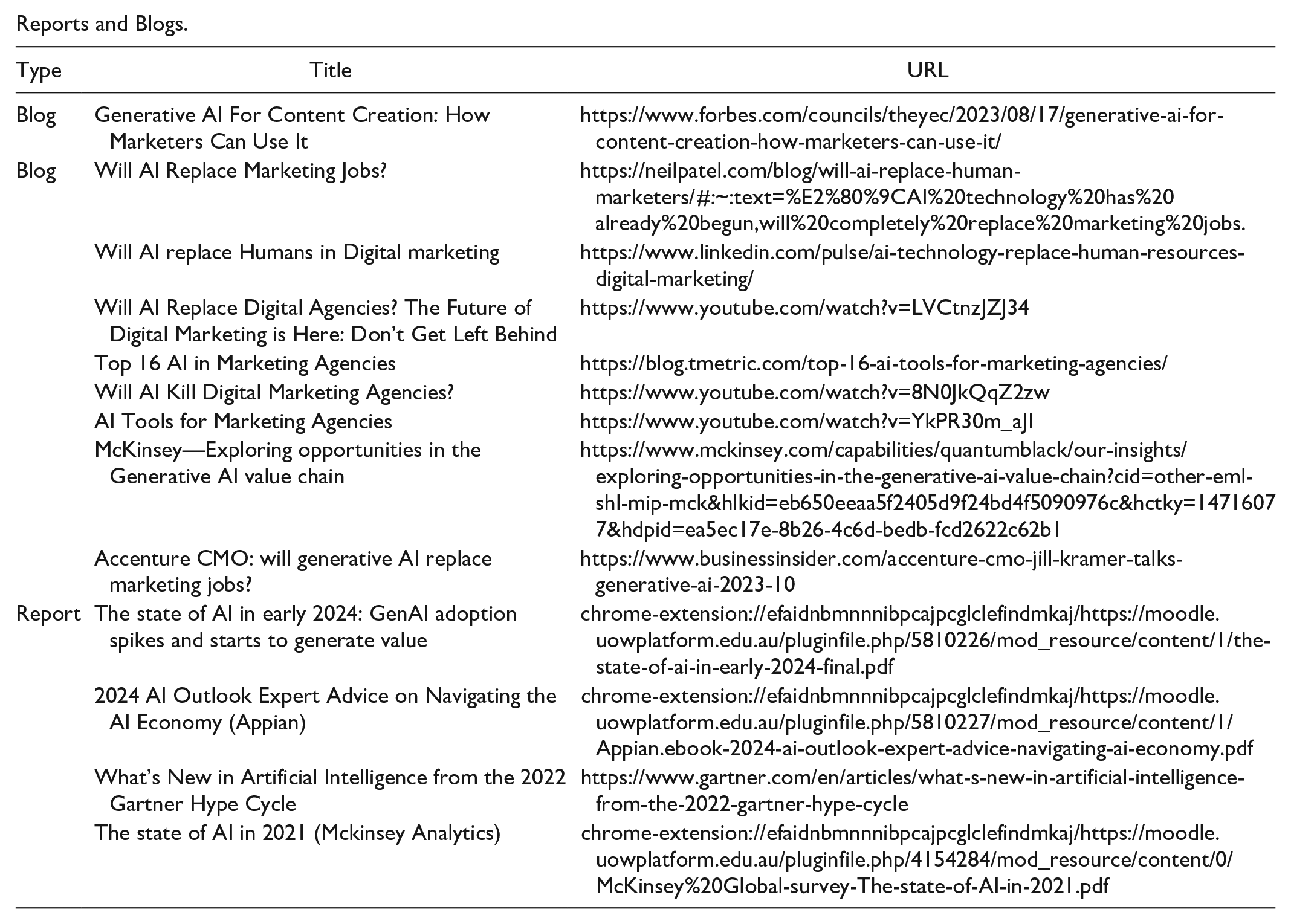
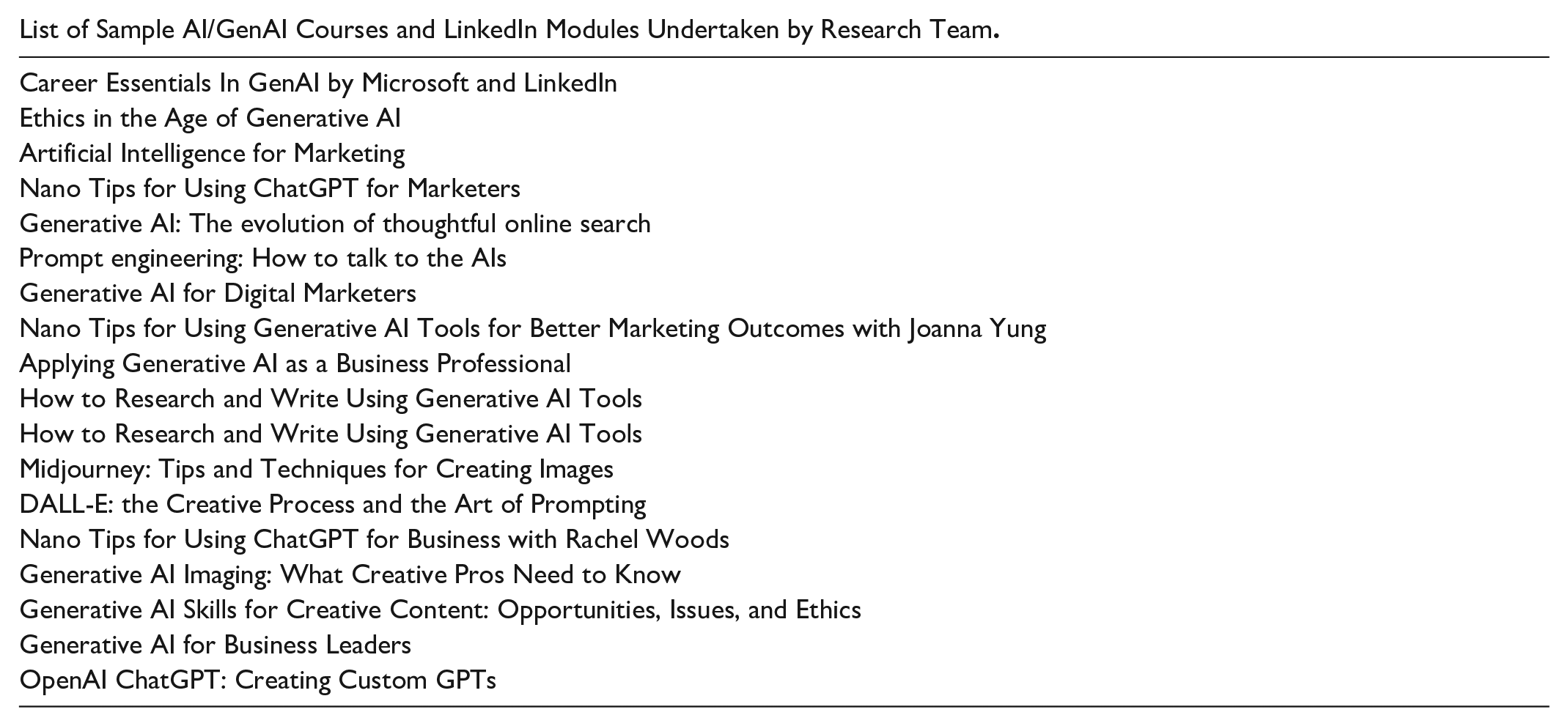
This study utilized primary and secondary data to facilitate transformation by confronting existing gaps and identifying shared problem spaces. To address confrontation and disruption within the curriculum, we explored secondary data in the form of industry reports, marketing blogs (see Appendix A), and content from online GenAI courses (see Appendix B). These sources exposed key areas in need of change, highlighting the limitations of current marketing education in preparing students for GenAI-driven contexts. To further recognize a shared problem space, we gathered primary data through phenomenologically oriented interviews (n=26), following protocols outlined by Creswell and Poth (2016). These interviews created a nuanced dialogue around marketing practitioners’ lived experiences with GenAI in Australia, offering insight into the practical challenges and needs within the industry. This approach allowed us to explore the complex intersections of GenAI and marketing, deepening our understanding of the field’s educational needs. Ultimately, these insights aim to guide curriculum transformation, equipping graduates to be both GenAI literate and skilled in marketing fundamentals.
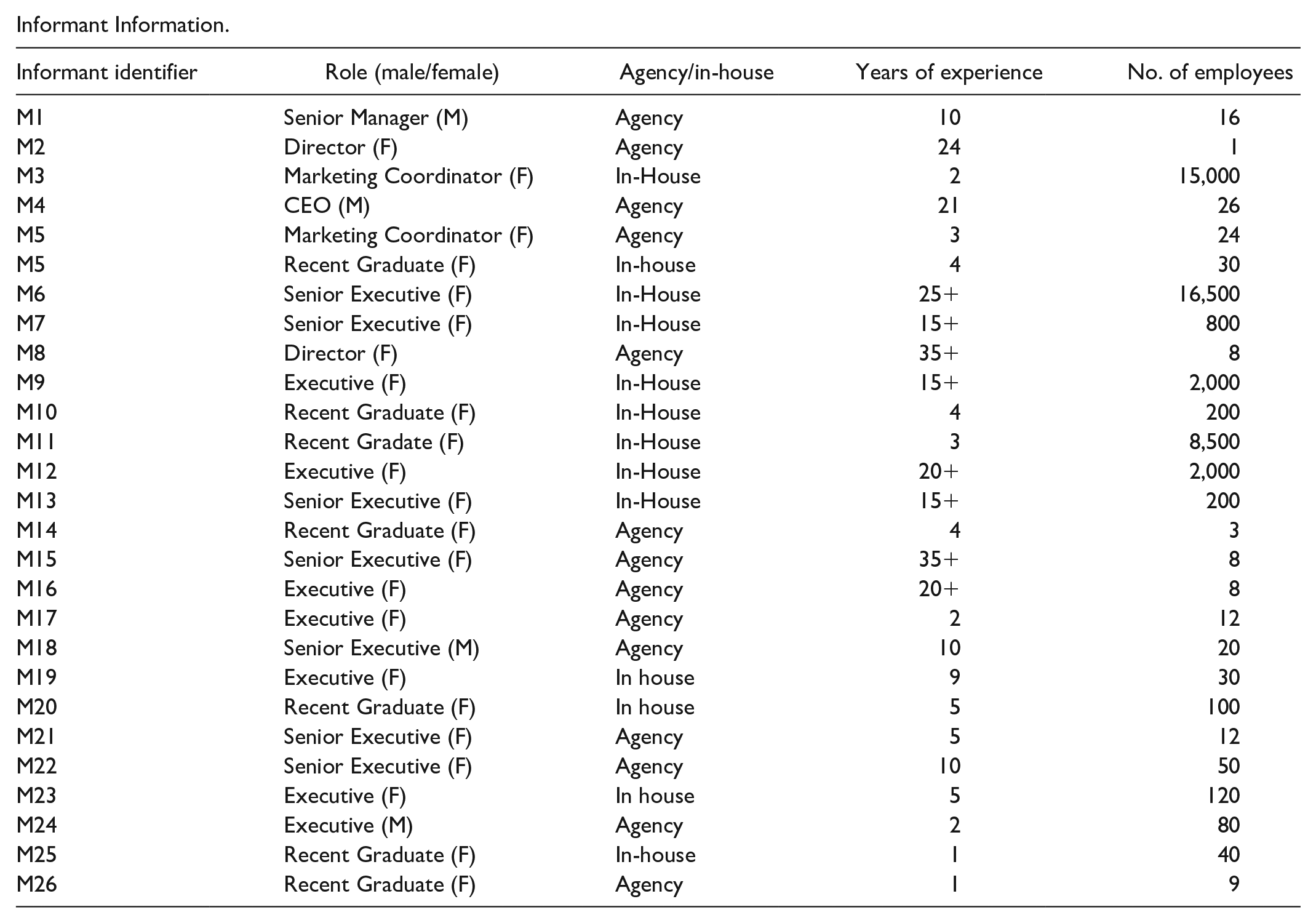
Purposive and convenience sampling approaches were used to identify informants, aligning with boundary-crossing theory by facilitating engagement across diverse professional contexts. Purposive sampling specifically targeted Australian marketing professionals to align with the anticipated student demographic for subject redesign. This method ensured representation across a range of ages, genders, levels of experience, and organizational types, including both agency and in-house teams from small to multinational organizations. Each informant successfully graduated from a tertiary education provider in Australia. This diversity fostered an environment in which multiple perspectives could be explored, supporting boundary-crossing principles by encouraging the exchange of insights across different professional backgrounds and levels of expertise (Walker & Nocon, 2007). Convenience sampling complemented this approach by accessing informants through professional networks such as LinkedIn, as well as personal contacts, which facilitated open discussions based on pre-existing familiarity. This sampling design supported boundary-crossing objectives by selecting informants with varying levels of experience, from recent graduates to senior executives, representing both specialized agencies and in-house roles responsible for marketing and public relations. Together, these sampling methods ensured a comprehensive view of industry perspectives on GenAI, fostering collaborative exploration of shared challenges. Detailed informant information is provided in Appendix C.
This research team comprised an early career researcher marketing academic with extensive media and communications expertise, a mid-career marketing academic specializing in digital marketing and GenAI consulting, and a long-term marketing educator with more than 30 years of tertiary education experience. The team was purposefully selected to ensure all aspects of marketing education, subject development, and employment were considered. We conducted 26 semi-structured, in-depth interviews, concluding data collection at the point of saturation (Creswell & Poth, 2016). Interviews of between 30–60 minutes duration were recorded via Zoom or voice recording and subsequently transcribed by the research team.
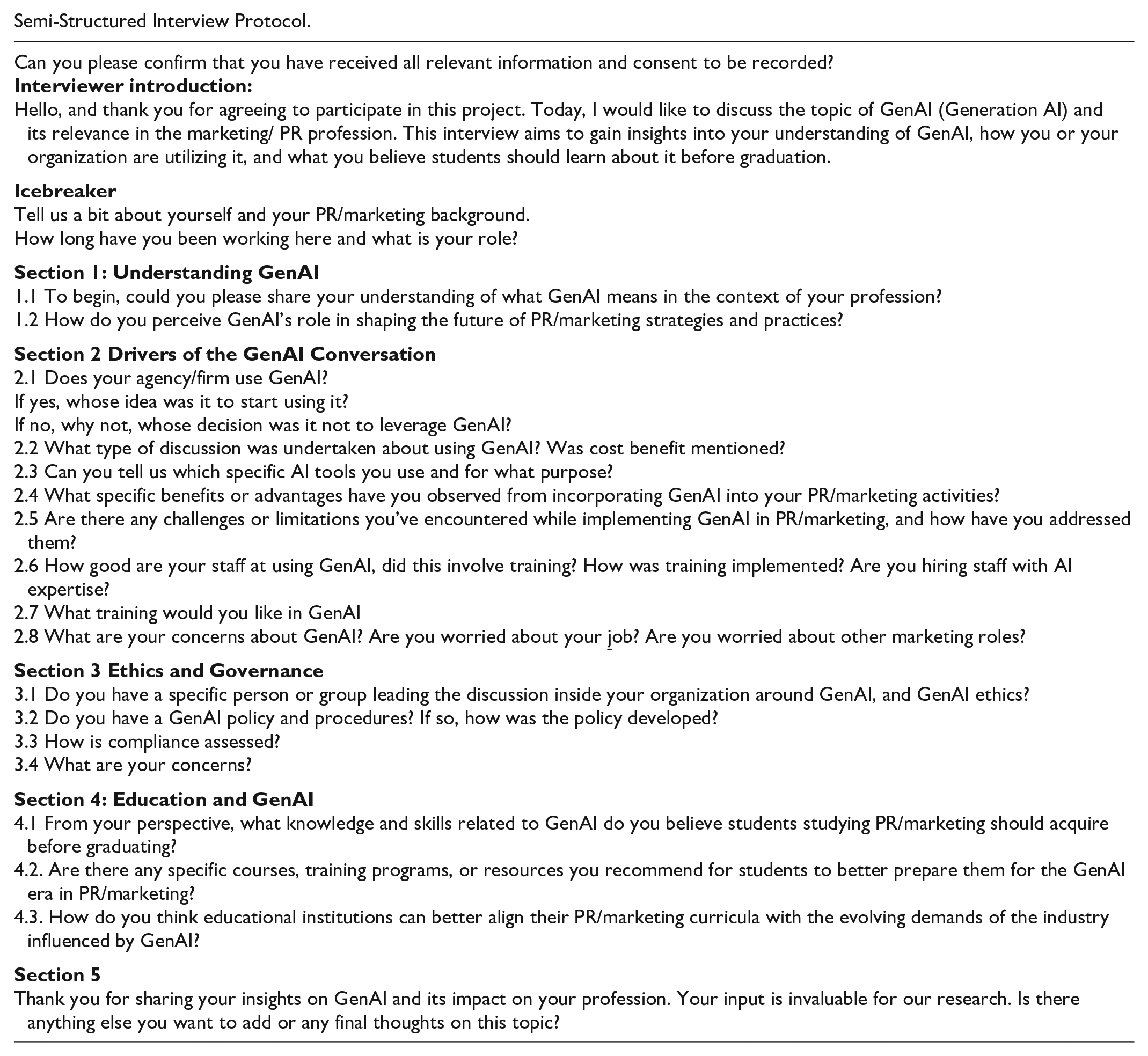
Interviews were conducted between December 2023 and February 2024. Each interview followed a five-stage discussion protocol (see Appendix D) designed to delve into the complexities of GenAI use in marketing. Stage 1 assessed informants’ understanding of GenAI; Stage 2 explored drivers for its adoption in the workplace; Stage 3 covered ethics and governance; and Stage 4 focused on education and GenAI integration. After completing the structured sections, Stage 5 engaged informants in an open-ended discussion, aligned with the confrontation and recognizing stages in boundary-crossing theory (Lam, 2018). This fostered interactivity across boundaries by allowing informants to pose questions to the research team regarding GenAI-focused training, updates on industry literature, and emerging technologies, tools, and certifications. These discussions were essential for exploring employability components and identifying areas of informant interest that structured prompts may have overlooked. This iterative, dialogic format promoted dynamic, boundary-crossing interactions, essential for the reciprocal learning that underpins boundary-crossing processes.
Data Coding and Analysis
Coding was conducted in multiple stages to facilitate a structured, iterative approach to data analysis. Initial coding focused on the secondary data, systematically identifying and categorizing recurring themes, patterns, and key insights related to boundary brokers, boundary objects, and the various stages of transformation. This early stage of coding enabled us to organize content into meaningful codes, synthesizing essential insights that directly informed the interview protocol. By doing so, we ensured a targeted exploration of relevant themes during the interviews, aligning with boundary-crossing principles by creating a cohesive framework that integrated multiple perspectives and domains, setting the stage for a deeper, context-sensitive engagement with the interview data.
After interviews were recorded and transcribed, all authors reviewed transcriptions, as per the team coding approach advocated by Saldana (2014). We then developed codes and themes with the team-based approach applied to the coding and analysis framework. The data collected from the semi-structured interviews were reviewed using thematic analysis, which adhered to Clarke and Braun’s (2013) six-step data analysis process. Initially, we engaged in a deep familiarization with the data, during which time the research team repeatedly listened to interview recordings and thoroughly read transcripts. This comprehensive engagement was critical for attaining an intimate understanding of the content. Concurrently, we embarked on note-taking, documenting initial ideas, patterns, and points of interest, which facilitated a preliminary understanding of the dataset. This step also involved consistent discussions among the interviewers.
Subsequently, we proceeded to generate codes through a synthesis coding process which involved segmenting the text into concise, meaningful units, employing a manual coding process (Noblit, 1988). This aligned with the ethics approval granted by the researchers’ university Ethics Committee, which prohibited the use of AI in qualitative data analysis. This process was inclusive, ensuring that all data relevant to the research questions were meticulously and comprehensively coded. In addition, it is crucial to highlight that in the initial stage of coding, we utilized an emic approach (Creswell & Poth, 2016). This involves directly using informants’ language and words to label codes within the data, thus ensuring greater authenticity and validity. By incorporating the informants’ own words, we enhanced cultural sensitivity and deepened the analysis by capturing nuanced meanings and perspectives, while also reducing the risk of overinterpretation or researcher bias (Kerrane et al., 2021).
The next step entailed consolidating synthesized themes wherein related codes were collated with themes that had been identified in the secondary data. This necessitated a collaborative effort by the three marketing academics in the research team to ensure thoroughness and consistency (Saldaña, 2014). We then integrated themes into a cohesive narrative that explains how GenAI is understood and applied in higher education. The assessment of the validity of each theme within the entire dataset was undertaken as a team effort and supported by field notes. The final step involved defining, naming, and determining the significance of themes. At this point, themes were clearly defined and refined to accurately capture the essence of the codes. They were then assigned concise and descriptive names to reflect their overall content and essence. Significance determination was crucial, with the team reviewing each theme to ensure its relevance to the research question.
Findings
The findings are organized around key phases of boundary-crossing transformation. We begin by a discussion about GenAI as a disruptive boundary object. We then explore Confrontation, where initial gaps in current marketing practices and education were identified. This is followed by Recognizing a Shared Problem Space, which captures mutual goals and challenges among stakeholders. We then progress into Hybridization, where new approaches blending GenAI and marketing concepts were developed. We then examine Crystallization, where these hybrid elements are embedded into structured practices. This section concludes with Maintaining Uniqueness of Intersecting Practices and Continuous Joint Work at the Boundary, which highlight the balance of preserving core disciplinary identities and fostering ongoing collaboration.
GenAI as a Disruptive Boundary Object
The findings indicate that the introduction of GenAI technologies acted as a disruptive force, exposing critical gaps between academic and industry practices. For instance, industry professionals labeled it “a game changer . . . [however]marketing teams face many challenges in adopting GenAI” (Ho, 2023, nd). Practitioners highlighted the inadequacy of traditional marketing work practices in incorporating AI-driven capabilities. To support these perspectives, Guridi et al. (2024) and Prentice et al. (2023) argue that GenAI is a disruptive boundary object, transforming community and business practices. Ho (2023) and Prentice et al. (2023) argue that upskilling workers is a matter of priority, in particular, due to the interactive (Guridi et al., 2024) and collaborative (Prentice et al., 2023) nature of this boundary object. The introduction of GenAI tools like ChatGPT and MidJourney in marketing revealed gaps between academic curricula and industry needs. In turn, the disruptions brought by GenAI compelled academic stakeholders (see, Guha et al., 2023; Kshetri et al., 2023) to propose a rapid and urgent reassessment of teaching and learning approaches, identifying the boundaries that needed bridging. The introduction of GenAI tools have destabilized conventional notions of marketing activities and created a shared problem space, where academics and industry professionals collaboratively defined the gaps and potential solutions.
Confrontation and Recognizing a Shared Problem Space
Confrontation is essential as GenAI exposes limitations within traditional marketing education, revealing a gap between current curricula and the GenAI-driven skills required by the industry. By facing these gaps, educators and industry stakeholders are prompted to redefine the competencies that marketers need in the GenAI-enhanced landscape. Following this, recognizing a shared problem space between academic and industry partners allows for a collaborative approach, where the shared objective is to create marketing graduates who are both GenAI literate and equipped with foundational marketing expertise.
Analysis of how GenAI is being applied in marketing revealed key confrontational gaps. Based on insights from secondary data sources resources, five areas were identified: strategic planning, content creation, research, skills development, and ethical considerations. Interestingly, negative components were only highlighted in the reports and blogs, with many thought leaders highlighting the technology as it stands is only useful in certain contexts, like text-based content creation, ideation, summarization, and administrative activities like emails. The themes derived from analysis of these secondary data sources are summarized below in Table 1.
Primary, Secondary and Tertiary Confrontational Gaps Derived from Secondary Data Collection.
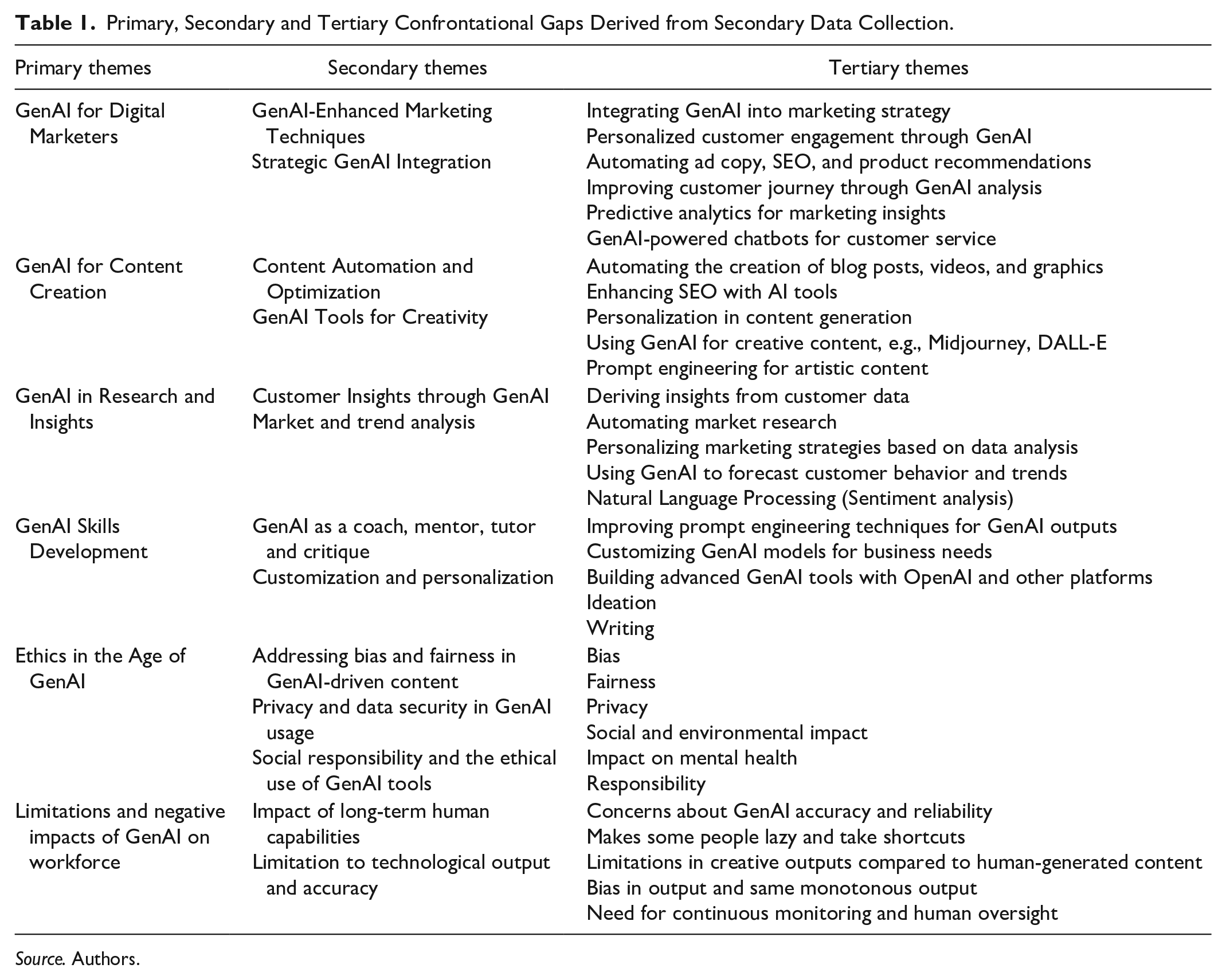
Source. Authors.
The analysis identified notable boundary objects that would allow combining traditional marketing principles with new GenAI-driven skills in a way that resonates with academic and industry needs. These objects include tools for text-to-text, such as ChatGPT, Gemini, Claude, and Copy.AI; image-to-text tools, such as Dall-E, Midjourney, and Leonardo.AI; and image-to-video tools, such as Suno. The GenAI courses themselves are boundary objects, having the potential to transition from an external educating tool to be embedded within the newly designed curriculum. Analyzing secondary data also revealed new boundary brokers, including thought leaders, such as Ethan Mollick, LinkedIn Learning course developers, and bloggers. While these brokers would impact understanding of GenAI, they are not accessible in the sense that they would assist with the boundary crossing process within our specific context. More accessible boundary crossers were provided by the research informants themselves.
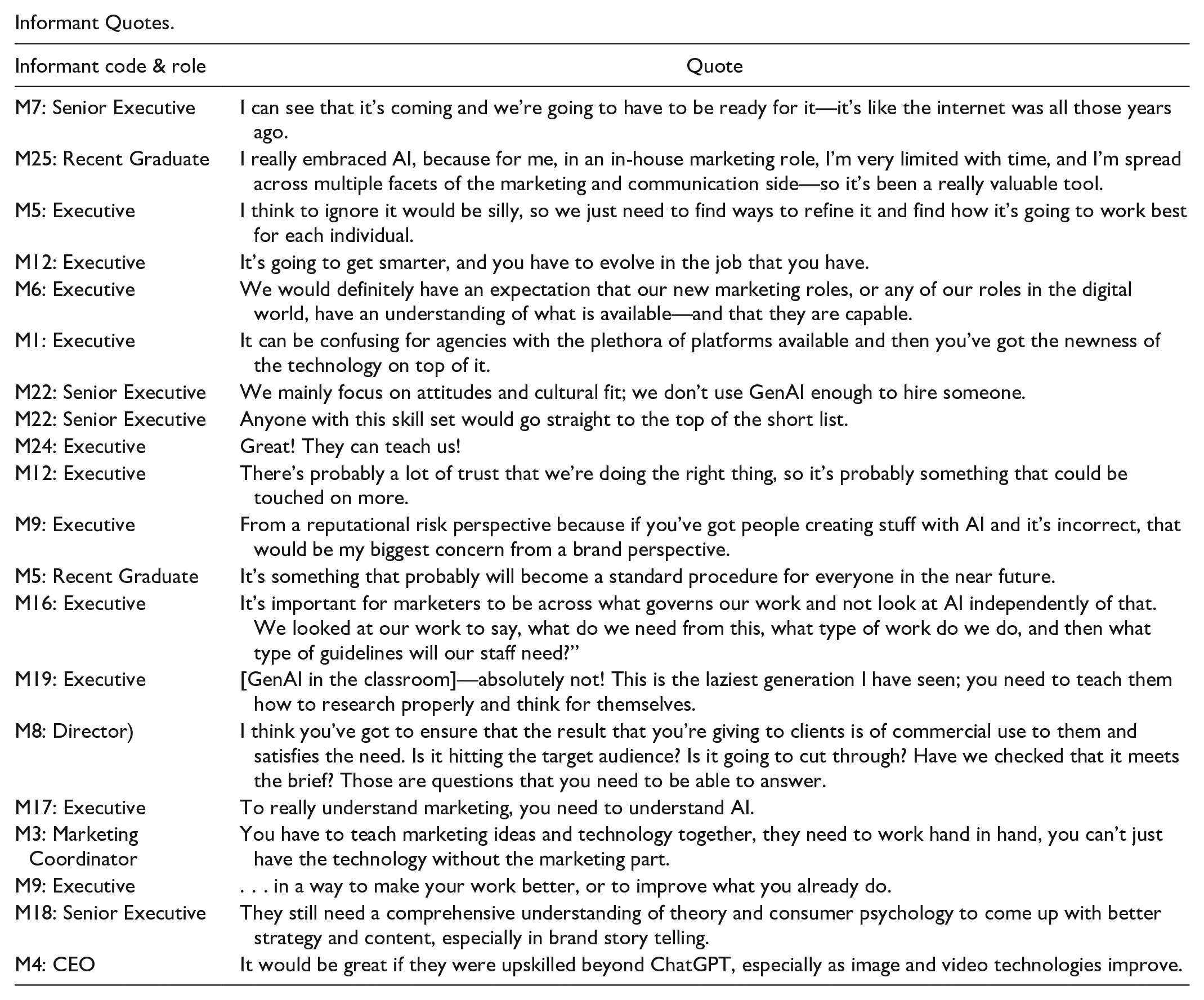
Confrontation and shared problem were also identified in primary data. Analysis of the data gathered during interviews revealed five key themes. A comprehensive summary of the themes, as well as second- and third-order codes identified from the analysis, is shown in Table 2. Each theme will be discussed subsequently, and a collation of the quotes used throughout this section will be provided as Appendix E.
Primary, Secondary, and Tertiary Themes Derived From Primary Data Collection.
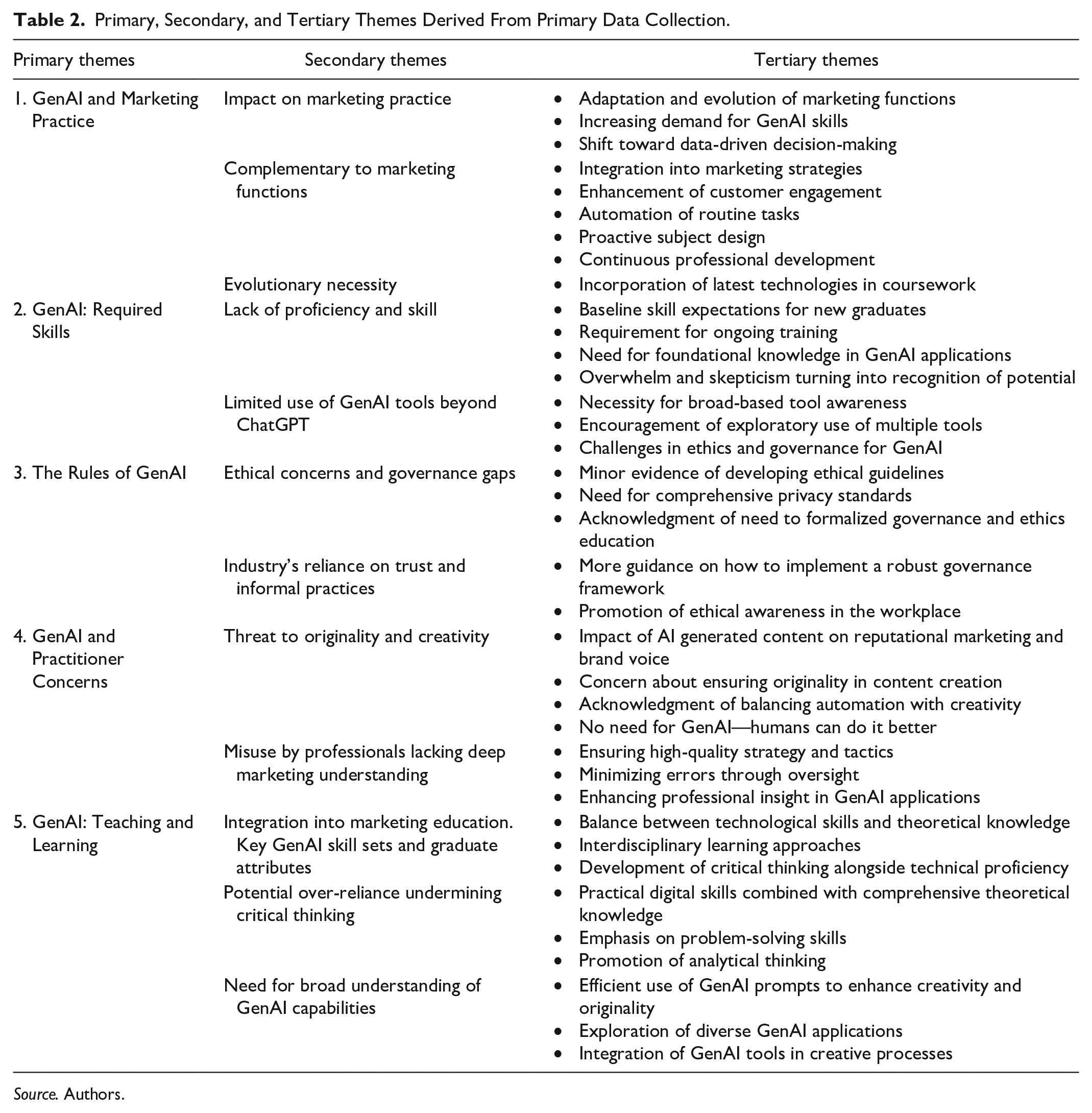
Source. Authors.
GenAI and Marketing Practice
Utilizing a boundary crossing approach assisted in developing a “fine-grained understanding” (Akkerman & Bruining, 2016, p. 242) of new relationships and perceptions, necessary to identify the effect of the significant changes to the marketing profession springing from the growth of GenAI. Marketing professionals recognized a profound shift in their industry and viewed GenAI as the latest major technological innovation that is impacting their practice, which aligns with previous research about the impact of earlier industry shakeups following technological development (Crittenden & Peterson, 2019; Prasad et al., 2001): “I can see that it’s coming and we’re going to have to be ready for it—it’s like the internet was all those years ago” (M7: Senior Executive). “I really embraced AI, because for me, in an in—house marketing role, I’m very limited with time, and I’m spread across multiple facets of the marketing and communication side—so it’s been a really valuable tool” (M25: Recent Graduate).
Interview informants also acknowledged the significant impact of GenAI on the industry and its capability to complement—rather than threaten—most marketing functions: “I think to ignore it would be silly, so we just need to find ways to refine it and find how it’s going to work best for each individual” (M5: Executive). They also recognized that continued advancement necessitated adaptive practices and flexibility in marketing roles: “it’s going to get smarter, and you have to evolve in the job that you have” (M12: Executive). This indicates that a similarly adaptive practice is required of tertiary educators who are developing subjects to prepare future-ready graduates.
GenAI: Required Skills
In this research instance, boundary crossing between academic and professional domains enabled the development of a deep and constructive understanding of professionals’ contemporary practice in utilizing GenAI. Many professionals recognized that they had a low level of skill. Use of GenAI was often initiated and developed by a “champion” with interest in, or aptitude for, early adoption. There was, however, a desire for training and upskilling to maximize the possibilities that GenAI offers and an expectation that recent graduates joining an agency or organization would, at the very least, have baseline skills: “We would definitely have an expectation that our new marketing roles, or any of our roles in the digital world, have an understanding of what is available—and that they are capable” (M6: Executive). This highlights the challenge for educators who are required to consistently monitor and adapt to the GenAI landscape when designing marketing subjects.
In addition, while marketing professionals described their frequent use of generative technology for ideation, content creation, and enhancing marketing strategy, they typically accessed ChatGPT. Many recognized they were unaware of the scope of available boundary objects, in the form of GenAI tools, particularly those beyond text-only modalities, and they commonly felt overwhelmed by rapid and continued GenAI innovation: “It can be confusing for agencies with the plethora of platforms available and then you’ve got the newness of the technology on top of it” (M16: Executive). There was also some skepticism about the value of recruiting graduates with GenAI skills: “We mainly focus on attitudes and cultural fit; we don’t use GenAI enough to hire someone” (M22: Senior Executive). However, once various boundary objects and their capabilities were discussed further, as part of the exploration and exchange of information during interviews, practitioners concluded that graduates with these skill sets would be prioritized: “Anyone with this skill set would go straight to the top of the short list” (M22: Senior Executive). Further, several informants indicated that a new hire with these capabilities could upskill current staff: “Great! They can teach us!” (M24: Executive)” which highlights that graduates possessing these GenAI skills were seen as prime job candidates,
The Rules of GenAI
There was a discernible gap between practitioners’ recognition of the accelerating speed of technological developments and their own competencies in terms of GenAI ethics and governance. This underscores a significant challenge: the rapid advancement of GenAI has outpaced the creation and adoption of comprehensive ethical guidelines, privacy standards, and governance frameworks. The uncertainty of this space, at the boundary between practitioner and academic knowledge, represents an opportunity to develop new learning (Leung, 2020).
More than half of the informants expressed that they had not fully considered ethics and governance related to GenAI in their professional setting. They reported that the complexity was overwhelming, so the issue was not thoroughly addressed with the development of effective governance. There was also a common assumption that professional practices had integrity: “There’s probably a lot of trust that we’re doing the right thing, so it’s probably something that could be touched on more” (M12: Executive). There was, however, recognition of the risks associated with the use of GenAI: “from a reputational risk perspective because if you’ve got people creating stuff with AI and it’s incorrect, that would be my biggest concern from a brand perspective” (M9: Executive). This indicates potential dangers, including inadvertent privacy breaches and ethical oversights, and highlights a crucial area that needs to be addressed: “it’s something that probably will become a standard procedure for everyone in the near future” (M5: Recent Graduate). Only a handful of informants reported that their organizations had loose guidelines in place, and surprisingly, only two respondents had developed and applied formalized governance guidelines and policies.
“It’s important for marketers to be across what governs our work and not look at AI independently of that. We looked at our work to say, what do we need from this, what type of work do we do, and then what type of guidelines will our staff need?” (M16: Executive).
GenAI and Practitioner Concerns
A concern raised by informants was the effect of GenAI on staff numbers with one mentioning that a team of three copy editors had been reduced to one while another said they had been encouraged to leverage GenAI rather than hire additional staff. This may impact hiring practices and, therefore, opportunities for graduates. The remainder said that graduates were in demand, due to high staff turnover, and that GenAI-trained graduates were seen to be highly employable.
It became evident that there was significant unease about the threat to originality and creativity, as well as worry about “laziness” of thinking: “[GenAI in the classroom]—absolutely not! This is the laziest generation I have seen; you need to teach them how to research properly and think for themselves” (M19: Executive). This was seen as a particular issue in reputational marketing, message personalization, and when crafting brand voice. In these activities, originality and the “human touch” were seen as integral to crafting distinctive and effective collateral: “I think you’ve got to ensure that the result that you’re giving to clients is of commercial use to them and satisfies the need. Is it hitting the target audience? Is it going to cut through? Have we checked that it meets the brief? Those are questions that you need to be able to answer” (M8: Director).
There was also concern in relation to the use of GenAI by professionals who lacked a deep conceptual understanding of marketing—including those who have not completed higher education degrees in the field. This factor was seen to increase the likelihood for the potential misuse or, at the least, a superficial application of GenAI technologies that resulted in poorer-quality strategy and tactics for clients. Concerns were also expressed about error levels, with an emphasis on the need for professional insight and oversight of both process and output.
Hybridization
Hybridization allows for a blend of marketing fundamentals with GenAI tools and applications (Akkerman & Bakker, 2011). Informants highlighted that GenAI: Teaching and Learning should initiate collaborative learning among individuals and groups, creating opportunities for learning where these groups need to work together across boundaries (Gustavson & Säfsten, 2017). The fifth key theme that emerged is related to the need to ensure GenAI is integrated into marketing education. A small number of informants referred to key GenAI skill sets and graduate attributes that would be in demand and emphasized knowledge that could be utilized in marketing specializations. GenAI was viewed as a skill for a future-forward marketing professional, with one informant observing that “to really understand marketing, you need to understand AI” (M17: Executive). Informants expressed misgivings about the possibility that, where GenAI capabilities are built into marketing education, students may overly rely on the tool, which could potentially undermine their critical thinking skills and compromise the depth of their learning: “You have to teach marketing ideas and technology together, they need to work hand in hand, you can’t just have the technology without the marketing part” (M3: Marketing Coordinator). Ideally, GenAI was seen as a tool that was integrated into practice to enhance, instead of replacing, humans’ marketing skills. It was described as something that was relied on not to do work but instead was utilized “in a way to make your work better, or to improve what you already do” (M9: Executive).
Informants also referred to the need for students to have sound theoretical knowledge as well as a practical level of digital skills: “They still need a comprehensive understanding of theory and consumer psychology to come up with better strategy and content, especially in brand storytelling” (M18: Senior Executive). They also highlighted the need for a broad understanding of the capabilities of GenAI. This encompassed content generation, customer support, a fundamental understanding of emerging GenAI tools and software, and an awareness of the diversity of applications: “It would be great if they were upskilled beyond ChatGPT, especially as image and video technologies improve” (M4: CEO). The ability to efficiently articulate GenAI prompts to create useful output was also a key point, as well as the ability to use AI to generate and improve marketing materials and to enhance creativity and originality. The skills that practitioners referred was, in sum, a diverse range of competencies that they expected marketing graduates to possess when effectively integrating and leveraging GenAI in their professional roles.
Crystallization
Through crystallization, these hybrid elements are stabilized as permanent fixtures in the curriculum, ensuring that GenAI-related skills are continually practiced and reinforced. This stabilization makes GenAI an integral part of the learning experience, rather than simply a supplemental skill set. The crystallization stage provided an iterative experience of consolidating perspectives (Akkerman & Bruining, 2016) to solidify essential elements of the redesigned subject. This involved collaborative discussions with co-authors, industry practitioners, marketing colleagues, and university representatives, including Discipline Leaders, Executive Deans of Education, and the Dean of Business. Through these discussions, the design of the new GenAI-focused subject and related marketing courses was systematically evaluated and refined. Key criteria for embedding Gen AI emerged: (a) ethics must be integrated across the marketing curriculum, not limited to a standalone module; (b) career-readiness should be supported by skill-building components, such as prompt engineering, to complement theoretical learning with workplace relevance; (c) assessments should evaluate both process and output; (d) practitioner expertise was to be incorporated, with reflection team members coordinating connections with industry leaders like Google and Liverperson; and (e) GenAI applications should be woven into core marketing areas, including research, strategy, branding, and content creation. These elements aligned closely with industry feedback obtained through interviews. To further ensure the relevance and rigor of the new GenAI subject and its integration into existing courses, the objectives were aligned with current industry trends and academic learning outcomes. This provided a structured, comprehensive approach that crystallized key insights into durable curriculum components.
Maintaining the Uniqueness of Intersecting Practices
Ultimately, maintaining the uniqueness of intersecting practices ensured that traditional marketing skills remain central while GenAI competencies are layered. This dual focus preserved the depth of marketing knowledge while preparing students to apply GenAI innovatively and ethically. Informed by industry positions, thought leader perspectives and faculty expectations, we transformed second- and third-year marketing subjects. Here, we actualized subject and course design by using Situated Learning Theory (Lave & Wenger, 1991). This allowed us to integrate GenAI components into the curriculum and create a more immersive and context-driven learning environment for marketing students that would prepare them for professional practice. Situated learning emphasizes learning through participation in real-world, authentic settings, which is central to our design of projects and activities that mirror actual industry scenarios. Importantly, and in alignment with situated learning, we ensured industry practitioners and subject coordinators acted as experts and students as novices (Cope et al., 2000). However, we also noted the uniqueness of this setting: due to the novelty and evolving nature of GenAI, students brought their own strengths and expertise to their learning experience and, as such, were also brokers of new knowledge in the classroom.
Subject pedagogy focused on capabilities such as content creation, research and insights, and strategy to ensure students gained both theoretical knowledge and practical skills in real-world settings. For example, we incorporated Zapier for automating article and ad copy dissemination in content creation. This tool was used for a banking client, encouraging students to create and critique content while considering ethical implications. In a second-year marketing research subject, we engaged students with tasks like extracting customer insights from datasets and conducting automated market research using cloud tools. This practical immersion helped them develop competencies in data analysis, market research methods, and personalization techniques while also honing their ability to apply these insights in creating targeted marketing strategies. In a third-year digital marketing strategy subject, we focused on capabilities such as implementing GenAI-powered chatbots, predictive analytics, and optimizing the customer journey. Students gained real-world problem-solving skills by providing hands-on experiences like creating chatbots and using predictive analytics for decision-making. They learned how to manage digital and social media more effectively, assess engagement metrics, and optimize the customer journey using GenAI tools.
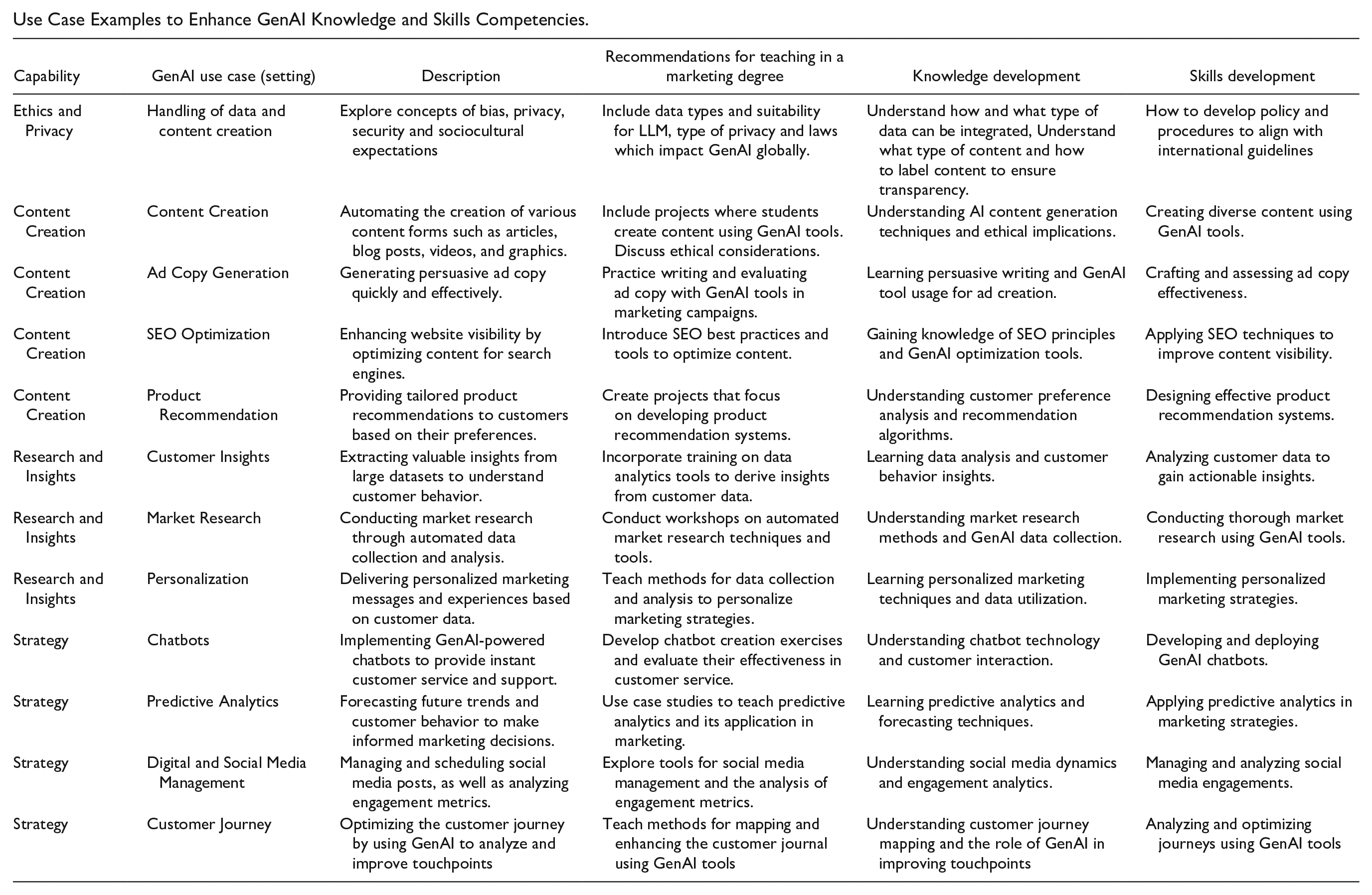
Throughout this transformative process, we ensured that each capability developed critical GenAI-related knowledge and allowed students to participate in activities that were directly reflective of the evolving marketing landscape. This integration of situated learning with GenAI use cases ensured that students could apply what they learned in real marketing contexts, preparing them for the demands of the industry. Examples of these use cases can be found in Appendix F. Interestingly, through this process of development and deployment, educators experienced a recursive shift in their roles, becoming co-learners alongside students as they navigated new GenAI technologies. This blurred the traditional boundaries, fostering a more collaborative learning environment.
Continuous Joint Work at the Boundary
In designing university marketing curriculum, educators must continually consider the development of student knowledge to enhance their professional potential (Iqbal, 2023). Rohm et al. (2019) advocate for a digitally focused curriculum that is aligned with industry practice and helps students develop “future-proof and real-world ready” skills (p.47). Educators are tasked with embedding knowledge and skills into marketing subjects and, as the digital environment evolves, must continually seek new insights. This is facilitated by boundary crossing where boundaries represent a “powerful place to learn” (Oonk et al., 2022, p.24), rather than an obstacle (Leung, 2020). To ensure continuous joint work, we have secured agreement from multiple master class providers, tech companies and thought leaders to ensure that currency and recency of content, assessments and delivery are maintained, as well as us, as academics and students feeding back key user insights and use cases. These collaborations exhibited a recursive interplay (Wang et al., 2022) where advancements in academic teaching methods influenced industry training programs, and vice versa. This mutual adaptation underscores the dynamic nature of transformation in the GenAI context. For instance, during the development of an AI-driven marketing module, a recursive transformation was evident. Students applied industry-provided AI tools in novel ways, leading industry partners to reconsider their application strategies, which then informed further curriculum enhancements.
Discussion
The aim of this study was to explore how industry insights can be embedded into marketing curriculum, and in doing so, we offer several theoretical and educational implications.
Implications for Theory
Our empirical analysis demonstrated the applicability of the transformation mechanism of boundary crossing in marketing education literature. We show that marketing scholars can draw on the transformation to demonstrate the innovative and knowledge-creating potential of industry and academia boundaries in the age of GenAI. In addition, our findings reveal GenAI as a disruptive boundary object for marketing practitioners and educators, demanding both to confront a shared problem. Importantly, this study advances Akkerman and Bakker’s (2011) framework to account for continuous adaptation in technology-driven environments.
Our study shows that GenAI, as a unique form of boundary object, presents a dynamic environment where the roles and responsibilities of both boundaries are in a constant state of change. This suggests that, due to the continuous and swift development of GenAI, the process of transformation may blur existing boundaries rather than merely crossing them. In this way, we demonstrate that in dynamic contexts, where GenAI’s rapid evolution accelerates boundary destabilization, educators must engage in an iterative and interactive transformation process. It also necessitates an ongoing engagement across both boundaries. In doing so, our findings further extend the application of boundary crossing in higher education (Arts & Bronkhorst, 2020; Cooper et al., 2021; Veltman et al., 2019; Vuojärvi et al., 2022) by showcasing how bidirectional learning occurs through boundary-crossing events. The iterative co-creation process we observed, exemplifies transformation as a mechanism that reshapes academic norms and industry expectations simultaneously. Our findings building on Wang et al. (2022), highlight a recursive interplay, where both domains mutually influence and adapt to each other in GenAI contexts. As shown in our study, dialogic exchanges foster hybrid educational practices that address technological integration and adoption simultaneously in industry and higher education contexts.
The study also highlights the evolving role of boundary brokers in marketing education. GenAI tools, like ChatGPT and Midjourney, serve as a distinctive type of boundary objects, which allow mutually beneficial relationships between academia and industry to be built (due to shared disruption). The reconceptualizing of GenAI as a boundary object fostered shared understandings and collaborative curriculum design. This meant that boundary brokers went beyond the research team and industry professionals, to also include students. Each of these brokers played a key role in transforming marketing curriculum with specific use-cases, skill building, and experimentation that responded to disruptions brought by GenAI. Through this, the study demonstrated how recursive transformation reshapes norms, roles, and practices, offering a framework for understanding the interplay between academic and professional domains in hybrid learning environments. This enriches both theory and practice, showcasing that boundary brokers can transform through the transformation process.
A further implication of this study is the application of situated learning theory (Lave & Wenger, 1991) when integrating GenAI into authentic, practice-based educational settings. As shown in this study, situated learning theory can work well with boundary crossing theory, particularly in terms of recursive transformation, to develop and disseminate learning materials during technology-induced educational disruption. Similar to (Cowley et al., 2021; Crittenden & Peterson, 2019), who advocated situated learning in digital marketing, we illustrate how embedding GenAI-driven tasks into real-world scenarios, and newly designed curriculum, promoted experiential learning that aligned with contemporary marketing challenges. We believe marketing educators can draw on this approach to accommodate disruptive technologies, ensuring that students develop both technical and critical thinking skills that enhance their employability.
Implication for Practice and Curriculum Design
The evolution of GenAI in marketing positions marketing educators as key facilitators of boundary crossing, enabling collaboration and knowledge creation to prepare students for career readiness. By maintaining “coherence across intersecting social worlds” (Star & Griesemer, 1989, p. 393), educators can bridge the gap between academic theory and practical application. Collaboration between academics and practitioners addresses the “expanding gap between theory and practice” (Shanahan et al., 2021), creating shared spaces that combine existing knowledge with innovative approaches. This process generates mutual benefits, such as meaningful applications that enhance professional skills and support the development of GenAI-oriented marketing curricula.
This research underscores the necessity of curriculum redesign to balance traditional marketing theories with contemporary GenAI technologies. Informants advocated for retaining foundational content while introducing stand-alone subjects focused on GenAI skills such as prompt engineering, creativity, and critical thinking. Embedding GenAI into existing subjects was also highlighted as a way to facilitate broader skill development linked to subject-specific knowledge. Immediate priorities for integration include digital strategy, content creation, and ideation, while foundational subjects such as consumer behavior and marketing fundamentals remain secondary in focus.
Practitioners also recommended incorporating reputable online certifications, such as those offered by Google, LinkedIn, and HubSpot, to align with industry standards and enhance employability. These certifications complement academic content by fostering practical skill development and align with best practices in digital marketing education (Cowley et al., 2021; Spiller & Tuten, 2019). In addition, immersive learning environments, supported by boundary crossers, provide students with opportunities to develop practical skills in work-related settings. Experiential learning methods effectively link theory to practice, improve employability (Jackson et al., 2023), and prepare career-ready graduates (Spanjaard et al., 2018).
Noteworthy, the rapid replication of intellectual property, privacy risks, and data breaches associated with GenAI present significant ethical and governance challenges (Gupta et al., 2024; Sands et al., 2024; Yoo & Piscarac, 2023). Academics must design curricula that equip students to ethically leverage GenAI’s capabilities, including creating persuasive, targeted content. Integrating GenAI ethics into marketing education can prepare students to apply principles of beneficence and non-maleficence (Hermann, 2022) in practice. This includes addressing bias, manipulation risks, deep-fakes in branding, data use, privacy, copyright, and the management of privileged client information. Such training ensures graduates can balance stakeholder interests—including customers, businesses, and regulatory bodies—while adhering to ethical standards.
GenAI represents a “new frontier” for marketing education (Ferrell & Ferrell, 2020, p. 6), with implications for all marketing subjects. This necessitates an interdisciplinary approach for academics to develop their own skills, supported by industry resources and training courses. A critical challenge lies in ensuring adequate access to emerging technologies. Universities must allocate infrastructure funding to provide essential tools, such as Padlet, Canva, and Adobe Photoshop, enabling educators and students to effectively integrate GenAI into teaching and learning.
Conclusion
These research findings advance existing literature by showing how educators can incorporate GenAI into tertiary marketing curriculum and practice, utilizing boundary crossing to facilitate transformation (Akkerman & Bakker, 2011; Corsaro, 2018; Oonk et al., 2022; Qi et al., 2024). In this research context, the boundary between academics and practitioners was the catalyst for the creation of new knowledge. Boundary crossing also facilitated engagement, collaboration, and knowledge transfer between educators and industry to better design marketing subjects. As lasting impact is a primary goal of the transformation of this research, we show the potential of continuous joint work at the boundary to ensure that marketing curriculum remains relevant, adapting to the rapid evolution of GenAI. Through partnerships with industry, ongoing feedback, and curriculum updates, marketing education can be responsive to developments in GenAI, ensuring that students graduate with essential, high-impact skills. Thus, the boundary-crossing framework provides a robust model for a marketing curriculum that is both forward-thinking and founded in strong disciplinary knowledge to fully prepare students for the GenAI-driven future of marketing.
No study is without limitations. While this investigation is bounded within an Australian context, which could constrain the generalizability of findings, the research question could be explored further in an international setting. In addition, alternative methodologies such as quantitative, mixed methods, or participatory action research could be utilized to deepen understanding, particularly in different cultural and institutional settings. Further opportunities for study exist in terms of a longitudinal, qualitative study of recruitment practices to explore whether graduates with GenAI capabilities are employed based on this skill set. A key research finding related to the need for effective integration of ethics and governance in industry settings. While the international business environment may differ, with the European Union’s AI Intelligence Act setting global standards to regulate the use of AI, this may warrant further exploration, in an Australian setting at least. As this research integrated reflections from only a small number of marketing educators (three), there is also potential for a more extensive study of educators’ insights as well as those from students, which would be advantageous as GenAI becomes more deeply embedded in professional practice and marketing education.
Footnotes
Appendix A
Reports and Blogs.
Appendix B
List of Sample AI/GenAI Courses and LinkedIn Modules Undertaken by Research Team.
| Career Essentials In GenAI by Microsoft and LinkedIn |
| Ethics in the Age of Generative AI |
| Artificial Intelligence for Marketing |
| Nano Tips for Using ChatGPT for Marketers |
| Generative AI: The evolution of thoughtful online search |
| Prompt engineering: How to talk to the AIs |
| Generative AI for Digital Marketers |
| Nano Tips for Using Generative AI Tools for Better Marketing Outcomes with Joanna Yung |
| Applying Generative AI as a Business Professional |
| How to Research and Write Using Generative AI Tools |
| How to Research and Write Using Generative AI Tools |
| Midjourney: Tips and Techniques for Creating Images |
| DALL-E: the Creative Process and the Art of Prompting |
| Nano Tips for Using ChatGPT for Business with Rachel Woods |
| Generative AI Imaging: What Creative Pros Need to Know |
| Generative AI Skills for Creative Content: Opportunities, Issues, and Ethics |
| Generative AI for Business Leaders |
| OpenAI ChatGPT: Creating Custom GPTs |
Appendix C
Informant Information.
| Informant identifier | Role (male/female) | Agency/in-house | Years of experience | No. of employees |
|---|---|---|---|---|
| M1 | Senior Manager (M) | Agency | 10 | 16 |
| M2 | Director (F) | Agency | 24 | 1 |
| M3 | Marketing Coordinator (F) | In-House | 2 | 15,000 |
| M4 | CEO (M) | Agency | 21 | 26 |
| M5 | Marketing Coordinator (F) | Agency | 3 | 24 |
| M5 | Recent Graduate (F) | In-house | 4 | 30 |
| M6 | Senior Executive (F) | In-House | 25+ | 16,500 |
| M7 | Senior Executive (F) | In-House | 15+ | 800 |
| M8 | Director (F) | Agency | 35+ | 8 |
| M9 | Executive (F) | In-House | 15+ | 2,000 |
| M10 | Recent Graduate (F) | In-House | 4 | 200 |
| M11 | Recent Gradate (F) | In-House | 3 | 8,500 |
| M12 | Executive (F) | In-House | 20+ | 2,000 |
| M13 | Senior Executive (F) | In-House | 15+ | 200 |
| M14 | Recent Graduate (F) | Agency | 4 | 3 |
| M15 | Senior Executive (F) | Agency | 35+ | 8 |
| M16 | Executive (F) | Agency | 20+ | 8 |
| M17 | Executive (F) | Agency | 2 | 12 |
| M18 | Senior Executive (M) | Agency | 10 | 20 |
| M19 | Executive (F) | In house | 9 | 30 |
| M20 | Recent Graduate (F) | In house | 5 | 100 |
| M21 | Senior Executive (F) | Agency | 5 | 12 |
| M22 | Senior Executive (F) | Agency | 10 | 50 |
| M23 | Executive (F) | In house | 5 | 120 |
| M24 | Executive (M) | Agency | 2 | 80 |
| M25 | Recent Graduate (F) | In-house | 1 | 40 |
| M26 | Recent Graduate (F) | Agency | 1 | 9 |
Appendix D
Semi-Structured Interview Protocol.
| Can you please confirm that you have received all relevant information and consent to be recorded? Hello, and thank you for agreeing to participate in this project. Today, I would like to discuss the topic of GenAI (Generation AI) and its relevance in the marketing/ PR profession. This interview aims to gain insights into your understanding of GenAI, how you or your organization are utilizing it, and what you believe students should learn about it before graduation. |
Tell us a bit about yourself and your PR/marketing background. How long have you been working here and what is your role? |
1.1 To begin, could you please share your understanding of what GenAI means in the context of your profession? 1.2 How do you perceive GenAI’s role in shaping the future of PR/marketing strategies and practices? |
2.1 Does your agency/firm use GenAI? If yes, whose idea was it to start using it? If no, why not, whose decision was it not to leverage GenAI? 2.2 What type of discussion was undertaken about using GenAI? Was cost benefit mentioned? 2.3 Can you tell us which specific AI tools you use and for what purpose? 2.4 What specific benefits or advantages have you observed from incorporating GenAI into your PR/marketing activities? 2.5 Are there any challenges or limitations you’ve encountered while implementing GenAI in PR/marketing, and how have you addressed them? 2.6 How good are your staff at using GenAI, did this involve training? How was training implemented? Are you hiring staff with AI expertise? 2.7 What training would you like in GenAI 2.8 What are your concerns about GenAI? Are you worried about your |
3.1 Do you have a specific person or group leading the discussion inside your organization around GenAI, and GenAI ethics? 3.2 Do you have a GenAI policy and procedures? If so, how was the policy developed? 3.3 How is compliance assessed? 3.4 What are your concerns? |
4.1 From your perspective, what knowledge and skills related to GenAI do you believe students studying PR/marketing should acquire before graduating? 4.2. Are there any specific courses, training programs, or resources you recommend for students to better prepare them for the GenAI era in PR/marketing? 4.3. How do you think educational institutions can better align their PR/marketing curricula with the evolving demands of the industry influenced by GenAI? |
Thank you for sharing your insights on GenAI and its impact on your profession. Your input is invaluable for our research. Is there anything else you want to add or any final thoughts on this topic? |
Appendix E
Informant Quotes.
| Informant code & role | Quote |
|---|---|
| M7: Senior Executive | I can see that it’s coming and we’re going to have to be ready for it—it’s like the internet was all those years ago. |
| M25: Recent Graduate | I really embraced AI, because for me, in an in-house marketing role, I’m very limited with time, and I’m spread across multiple facets of the marketing and communication side—so it’s been a really valuable tool. |
| M5: Executive | I think to ignore it would be silly, so we just need to find ways to refine it and find how it’s going to work best for each individual. |
| M12: Executive | It’s going to get smarter, and you have to evolve in the job that you have. |
| M6: Executive | We would definitely have an expectation that our new marketing roles, or any of our roles in the digital world, have an understanding of what is available—and that they are capable. |
| M1: Executive | It can be confusing for agencies with the plethora of platforms available and then you’ve got the newness of the technology on top of it. |
| M22: Senior Executive | We mainly focus on attitudes and cultural fit; we don’t use GenAI enough to hire someone. |
| M22: Senior Executive | Anyone with this skill set would go straight to the top of the short list. |
| M24: Executive | Great! They can teach us! |
| M12: Executive | There’s probably a lot of trust that we’re doing the right thing, so it’s probably something that could be touched on more. |
| M9: Executive | From a reputational risk perspective because if you’ve got people creating stuff with AI and it’s incorrect, that would be my biggest concern from a brand perspective. |
| M5: Recent Graduate | It’s something that probably will become a standard procedure for everyone in the near future. |
| M16: Executive | It’s important for marketers to be across what governs our work and not look at AI independently of that. We looked at our work to say, what do we need from this, what type of work do we do, and then what type of guidelines will our staff need?” |
| M19: Executive | [GenAI in the classroom]—absolutely not! This is the laziest generation I have seen; you need to teach them how to research properly and think for themselves. |
| M8: Director) | I think you’ve got to ensure that the result that you’re giving to clients is of commercial use to them and satisfies the need. Is it hitting the target audience? Is it going to cut through? Have we checked that it meets the brief? Those are questions that you need to be able to answer. |
| M17: Executive | To really understand marketing, you need to understand AI. |
| M3: Marketing Coordinator | You have to teach marketing ideas and technology together, they need to work hand in hand, you can’t just have the technology without the marketing part. |
| M9: Executive | . . . in a way to make your work better, or to improve what you already do. |
| M18: Senior Executive | They still need a comprehensive understanding of theory and consumer psychology to come up with better strategy and content, especially in brand story telling. |
| M4: CEO | It would be great if they were upskilled beyond ChatGPT, especially as image and video technologies improve. |
Appendix F
Use Case Examples to Enhance GenAI Knowledge and Skills Competencies.
| Capability | GenAI use case (setting) | Description | Recommendations for teaching in a marketing degree | Knowledge development | Skills development |
|---|---|---|---|---|---|
| Ethics and Privacy | Handling of data and content creation | Explore concepts of bias, privacy, security and sociocultural expectations | Include data types and suitability for LLM, type of privacy and laws which impact GenAI globally. | Understand how and what type of data can be integrated, Understand what type of content and how to label content to ensure transparency. | How to develop policy and procedures to align with international guidelines |
| Content Creation | Content Creation | Automating the creation of various content forms such as articles, blog posts, videos, and graphics. | Include projects where students create content using GenAI tools. Discuss ethical considerations. | Understanding AI content generation techniques and ethical implications. | Creating diverse content using GenAI tools. |
| Content Creation | Ad Copy Generation | Generating persuasive ad copy quickly and effectively. | Practice writing and evaluating ad copy with GenAI tools in marketing campaigns. | Learning persuasive writing and GenAI tool usage for ad creation. | Crafting and assessing ad copy effectiveness. |
| Content Creation | SEO Optimization | Enhancing website visibility by optimizing content for search engines. | Introduce SEO best practices and tools to optimize content. | Gaining knowledge of SEO principles and GenAI optimization tools. | Applying SEO techniques to improve content visibility. |
| Content Creation | Product Recommendation | Providing tailored product recommendations to customers based on their preferences. | Create projects that focus on developing product recommendation systems. | Understanding customer preference analysis and recommendation algorithms. | Designing effective product recommendation systems. |
| Research and Insights | Customer Insights | Extracting valuable insights from large datasets to understand customer behavior. | Incorporate training on data analytics tools to derive insights from customer data. | Learning data analysis and customer behavior insights. | Analyzing customer data to gain actionable insights. |
| Research and Insights | Market Research | Conducting market research through automated data collection and analysis. | Conduct workshops on automated market research techniques and tools. | Understanding market research methods and GenAI data collection. | Conducting thorough market research using GenAI tools. |
| Research and Insights | Personalization | Delivering personalized marketing messages and experiences based on customer data. | Teach methods for data collection and analysis to personalize marketing strategies. | Learning personalized marketing techniques and data utilization. | Implementing personalized marketing strategies. |
| Strategy | Chatbots | Implementing GenAI-powered chatbots to provide instant customer service and support. | Develop chatbot creation exercises and evaluate their effectiveness in customer service. | Understanding chatbot technology and customer interaction. | Developing and deploying GenAI chatbots. |
| Strategy | Predictive Analytics | Forecasting future trends and customer behavior to make informed marketing decisions. | Use case studies to teach predictive analytics and its application in marketing. | Learning predictive analytics and forecasting techniques. | Applying predictive analytics in marketing strategies. |
| Strategy | Digital and Social Media Management | Managing and scheduling social media posts, as well as analyzing engagement metrics. | Explore tools for social media management and the analysis of engagement metrics. | Understanding social media dynamics and engagement analytics. | Managing and analyzing social media engagements. |
| Strategy | Customer Journey | Optimizing the customer journey by using GenAI to analyze and improve touchpoints | Teach methods for mapping and enhancing the customer journal using GenAI tools | Understanding customer journey mapping and the role of GenAI in improving touchpoints | Analyzing and optimizing journeys using GenAI tools |
Declaration of Conflicting Interests
The author(s) declared no potential conflicts of interest with respect to the research, authorship, and/or publication of this article.
Funding
The author(s) received no financial support for the research, authorship, and/or publication of this article.
