



Abstract
Despite recognition of Entrepreneurial Marketing’s (EM) growing global importance, Entrepreneurial Marketing Education (EME) is relatively under-researched. Applying the concept of autonomous motivation, this article proposes that EME might offer a more valuable learning experience for students and their future employers as compared with either Entrepreneurship Education (EE) or Marketing Education (ME). Through two studies involving undergraduate students, the research found that when set alongside EE and ME, EME is not more attractive to students overall, but was more likely to be participated in by business students as compared with non-business students. However, when little or no prior knowledge of EM was possessed, likelihood to participate by any student was very low. Evidence emerged that EME is not only or mainly associated with starting a business but instead is seen as relevant to students expecting to work in a smaller organization. The research confirms that intrinsic motivation is not sufficient to encourage participation but rather extrinsic motivation, in the form of an appreciation of the benefits that it might generate, is also required. Recommendations are made as to how EME can be presented to business and non-business students such that motivation to participate is enhanced.
Keywords
It has been accepted for some time that students are under pressure to be ready for the workplace (Hopkins et al., 2011) and alongside this, sits the observation that people are increasingly pursuing an enterprising way of life (Gibb, 2002). For both non-business and business students, Entrepreneurship Education (EE) is often presented as one way through which workplace-relevant skills and an entrepreneurial mind-set can be harnessed. However, EE tends to be non-compulsory and is generally not regarded as being particularly relevant by sizable proportions of students and hence suffers from a lack of participation (Shekhar & Huang-Saad, 2021). Marketing Education (ME) too has been criticized for failing to address the gap between theory and practice (McArthur et al., 2017). Entrepreneurial Marketing (EM), which draws on both entrepreneurship and marketing, is a relatively emergent field of study (Gliga & Evers, 2023) that is regarded as growing in importance in today’s hyper-competitive marketplace (Hansen et al., 2020). EM is commonly considered the dominant conceptual framework to examine marketing activities in resource-constrained, entrepreneur-led firms (Bocconcelli et al., 2018). While mainly associated with smaller firms, it is not the case, however, that EM is practiced by all small firms (O’Donnell, 2011) and at the same time, EM has been shown to be applicable to and practiced in larger organizations (Cheng et al., 2016; Morrish et al., 2010; Whalen et al., 2016). EM involves addressing many issues simultaneously (Kubberød et al., 2019) and is regarded as offering greater potential than traditional marketing to demonstrate return on investment and improved performance during turbulent periods (Alqahtani et al., 2022). Despite its obvious potential value and despite a growing interest (Gilmore et al., 2020), there is relatively scant research into Entrepreneurial Marketing Education (EME) (Amjad et al., 2020) and it is of value to gain greater understanding of the extent to which students, both business and non-business, are motivated to participate in EME and reasons thereof.
The article’s contributions lie in two main areas. First, by applying the concept of autonomous motivation, this article proposes that EME not only offers a more valuable learning experience for students, but will enthuse and motivate students more than EE or ME. Second, by drawing on Bloom’s Taxonomy (1956), it explores how EME can be presented to business and non-business students such that likelihood to participate is enhanced and from that, key recommendations to educators are offered.
The article, which reports the results of two studies, is organized as follows. A literature review is presented that first examines the fields of EE and ME before proceeding to distill the distinctiveness of EME. The literature review moves to the concept of student motivation and factors that affect motivation. The central proposition of the research is presented with its three attendant objectives. The first study is described and its results are presented, followed by the description and results of the second study. A discussion follows in which the objectives are explicitly addressed. Conclusions are drawn and implications for educators are presented followed by limitations and directions for future research.
Literature Review
EME and Its Relationship With EE and ME
The relative dearth of research into EME is in contrast to a rich vein of research into both EE and ME.
EE has been enjoying an increase in focus with particular attention directed toward delivery of EE for non-business students (Schuhmacher & Thieu, 2022). This is due, in part, to the recognition of the economic impact of entrepreneurship (Rideout & Gray, 2013; Shekhar & Huang-Saad, 2021) and in tandem with this, the acknowledgment that universities have an important role in contributing to economic prosperity (Cheng et al., 2016; Preedy & Jones, 2017). While there are many factors thought to affect entrepreneurial intention, it is generally accepted that learning about entrepreneurship is one such factor (Nabi et al., 2017). Of the plentiful research into EE, most is “forward facing” in that it examines the impact of EE on skill development (Shekhar & Huang-Saad, 2021). EE has been shown to lead to positive outcomes including enhanced employability and an engenderment of an entrepreneurial leadership orientation. However, among non-business students, EE is often offered as supplementary and is often dismissed as peripheral (Cummins, 2016; Shekhar & Huang-Saad, 2021). It is suggested that a core reason for a lack of enthusiasm is its implied association with starting a business (Bridge et al., 2010) which renders its perceived applicability limited. University students have been found to deem it unlikely that they will create their own business (Fayolle & Gailly, 2015), and in the United Kingdom, for example, it is reported that only 5% of graduates actually go on to start their own business (Phillips, 2019). EE is, however, growing in being perceived as relevant to recipients other than just those who intend to create their own venture (Fretschner & Weber, 2013; Macht & Ball, 2016).
Research into ME often refers to the competencies that graduates entering marketing jobs are expected to possess: macro—broad-based skills, common to most “business jobs”—and micro—specific to marketing positions (Honea et al., 2017). There is overlap with entrepreneurial competencies but there are skills, particularly micro skills, that are specific to marketing positions such as brand management and marketing communications (Honea et al., 2017). What is accepted is that there is increasing importance placed on analytical skills (Hopkins et al., 2011; Kurtzke & Setkute, 2021; Schlee & Karns, 2017) and it is suggested that improvements to marketing curricula could be afforded through greater application of key skills demanded in the work environment (Hartley et al., 2019; Hopkins et al., 2011) which includes both the “hard” factual side of marketing alongside “softer” skills (Lemken & Siguaw, 2021). The need for marketing curricula to evolve and remain relevant to students and employers is frequently emphasized (Atkin et al., 2022). Indeed, ME, in both a business and non-business student context, suffers from a perceived gap between what is taught and what is practiced (McArthur et al., 2017), and many researchers have lamented its lack of impact on other disciplines (Harrigan & Hulbert, 2011). It is noted that while there has been some research into ME for non-business students, it is relatively limited (Crick & Crick, 2021).
The Distinctiveness and Potential Contribution of EM and EME
EM, while reflective of the respective fields of entrepreneurship and marketing, is not simply the two disciplines combined; it is something distinct (Alqahtani et al., 2022). One definition sees EM as “a combination of innovative, proactive and risk-taking activities that create, communicate and deliver value to and by customers, entrepreneurs, marketers, their partners and society at large” (Whalen et al., 2016, p. 7). While enjoying many alternative definitions, the facets of EM are considered to include change/growth, entrepreneurial opportunities, entrepreneurial orientation (risk-taking, innovativeness, proactiveness), innovation/new product development, marketing orientation, resources (internal and external), uncertain turbulent dynamic markets, and value creation.
Research into EM is long established and well recognized (Hills & Hultman, 2013), and interest continues to be high for a number of reasons. First, it is associated with new ventures and/or small businesses, and it is recognized that these are enormously important to any economy in terms of employment generation, innovation and economic growth (Organization for Economic Co-Operation and Development [OECD], 2019). Second, it is accepted that marketing is important for small firms’ survival and growth (Kubberød et al., 2019; O’Donnell, 2011; Sarwoko & Nurfarida, 2021); indeed marketing is thought to be even more critical for small firms than large firms as acquiring or losing a single customer can have particularly dramatic effects for a small firm (Franco et al., 2014). Third, while marketing is important to small firms, traditional, “text-book” models of marketing are derived from the large firm experience and do not fully apply in a small firm context (Carson et al., 2020; Reijonen & Laukkanen, 2010). With that being said, fourth, EM is not just applicable to small firms (including new ventures), and aspects of EM can be found in the observed practice of large firms, not for profits and publicly owned organizations (Cheng et al., 2016; Gilmore et al., 2020; Morrish et al., 2010; Whalen et al., 2016). In short, EM is “vital for economies” (Gilmore et al., 2020, p. 190) and is “emerging as a powerful alternative” (Whalen et al., 2016, p. 6) to traditional marketing, although the actual process of EM is still considered to be largely uncharted (Sá et al., 2022).
This demonstrable increasing interest in EM by academic researchers sits alongside the criticisms of ME and the limitations of EE, noted earlier. It can be proposed, therefore, that students and the organizations they go on to work within might be better served by EME than ME or EE. Many graduates will go on to work in marketing roles in smaller firms and EM is more likely to be reflective of the marketing practice they encounter and accordingly, EME is more appropriate than ME (Cheng et al., 2016). Furthermore, as noted, EM may be in evidence in larger firms as EM continues to be recognized as more reflective, as compared with traditional marketing, of the competitive and uncertain contexts within which firms commonly reside (Gilmore et al., 2020; Whalen et al., 2016). EME also captures the soft skills and enterprising attributes that traditional marketing curricula struggle to capture (Cheng et al., 2016). While EE undoubtedly offers value to those students who may go on to start their own business or work in a start-up, as noted above, EE suffers from the consequences of its relatively narrow connotations (Bridge et al., 2010). EME, it is posited, can make an important contribution in this domain but will also contribute beyond aspiring start-ups. With that all said, EME is not as mainstream as ME or EE within university education (Gilmore et al., 2020), and universities are regarded as failing to provide ME that is relevant to the needs of smaller organizations (Cheng et al., 2016). Added to this, there remains diversity of opinion as to the context in which it should be delivered (Gilmore et al., 2020). Furthermore, research into how people become educated in EM is scant (Amjad et al., 2020) and there is a particular dearth of research into the motivation of students to undertake EME, particularly non-business students. It is to the concept of motivation to engage in learning that the discussion now turns.
Student Motivation
The field of student learning has long applied insights from motivation research. While particular interest is directed to what might motivate students toward greater engagement in their course of study (Yuksel et al., 2021), the concept of student motivation has also been used to understand the factors that affect course selection; an area of particular relevance to the central question of this research. The most important factors, in that regard, are concluded to be course reputation, location, and content, with course content emerging as the single biggest predictor of course choice (Mourey et al., 2022).
Within an educational context, several theories have been proposed as a means to understand students’ motivation. Among these, self-determination theory (SDT) is particularly drawn on (Ryan & Deci, 2000), and its core tenet, in explaining human behavior and motivation, is that individuals hold three basic needs: autonomy, competence, and relatedness (Deci & Ryan, 2000; Ryan & Deci, 2000, 2017). Central to SDT is the concept of autonomous motivation and with that, the argument that the more autonomous a student’s motivation is, the greater the quality of learning and overall experience (Niemiec & Ryan, 2009). It has been noted that understanding how autonomous motivation can be facilitated is a critical educational imperative within the SDT field (Niemiec & Ryan, 2009). Autonomous motivation consists of two subcomponents: intrinsic motivation and well-internalized extrinsic motivation (Vansteenkiste et al., 2009). Intrinsic motivation reflects students’ engagement in an activity for its own sake, such as for enjoyment and/or out of personal interest (Deci & Ryan, 1985; van Gelderen, 2010; Vansteenkiste et al., 2009). Intrinsic motivation is considered to be the most beneficial type of motivation with respect to student learning (Lilly & Tippins, 2002). Extrinsic motivation reflects activities which are regarded as compulsory and may not be inherently satisfying (Lilly & Tippins, 2002). This research seeks to establish students’ motivation to engage in EME as compared with ME and EE. To allow for a meaningful and robust comparison, each “package” of learning must be presented equivalently, and freedom of choice must inhere in the comparison. This speaks to the concept of intrinsic motivation. Alongside this is an acknowledgment that students are likely to be motivated to participate in EE, ME, and EME due to the benefits that might be achieved over and above enjoyment of learning about these things for their own sake. That is, for these such “packages,” an element of well-internalized extrinsic motivation needs also to be in place. Hence, autonomous motivation is very appropriate.
Key to understanding what affects autonomous motivation is the concept of personal relevance. Personal relevance has been described as “the extent to which the course components are meaningful, build on previously learned information, facilitate the attainment of goals, and provide the learner with intrinsic value” (Yuksel et al., 2021, p. 356). As a concept, personal relevance plays an important role in understanding student motivation (Boekaerts, 2009).
Complementing and extending the insight that course content is a key factor in course selection and that the level of personal relevance of course components directly affects motivation are pedagogical principles that are understood to affect student learning experiences. Bloom’s Taxonomy (1956), while long-established and subject to revisions, remains a popular lens through which to understand the factors that affect delivery of and reception toward ME (e.g., Berezan et al., 2023; Crick & Crick, 2021; Spiller et al., 2019) and to some extent, EE (e.g., Pepin et al., 2021). Of particular relevance are three central factors that have been found to be pertinent in teaching (in this case, marketing) to non-subject specialists (Crick & Crick, 2021). These factors are integrating theory with practice, including discussion-oriented interactions and relating the topic to the student’s degree subject.
In regard to the first factor, approaches to learning that engender an ability to apply theory to practice are considered to enhance students’ critical thinking skills, which in turn enhances their contribution to the workplace (Klebba & Hamilton, 2007). Indeed, students increasingly have an expectation that they will be exposed to theory being applied to practice (Chavan & Carter, 2018), and engagement is thought to be impeded if theory is excessively focused on at the expense of providing illustrations of its application in practice (Smart et al., 1999). The second factor of discussion-oriented interactions stems from the long-standing observation that peer and fellow learners are a particularly important learning resource (Brookfield, 1985). Indeed, learning is thought to be enabled at a higher level through student discussions as compared with during lectures (McKeachie, 1984), and in-class discussions allow for the consolidation of how theory can be put into practice (Crick & Crick, 2021). Relating the topic to the student’s degree subject is a third pertinent factor stemming from the principle that engagement is enhanced when students can appreciate how concepts apply in certain contexts (Bloom, 1956). When students are exposed to concepts that are removed from what they are knowledgeable about and have experience in, then this ability to be able to draw a relationship between a concept and their own field of interest is particularly important (Crick & Crick, 2021).
The Research Proposition and Objectives
Given EM’s close reflection of business reality, it has been argued here that students and the organizations they go on to work within might be better served by EME than ME or EE. The success of any educational package is reliant on what it actually delivers and the change it effects, but it also depends, more fundamentally, on how it is initially perceived by prospective participants, particularly if it is not mandatory. So, while EME is argued to be particularly valuable, it remains unclear whether students’ autonomous motivation toward engaging in EME is greater as compared with EE or ME and further, it is of value to probe the factors pertaining to the course content and proposed delivery that affect such perceptions and influence motivation to participate. Accordingly, with an acknowledged lack of research that takes a “pathway to entry” perspective (Shekhar & Huang-Saad, 2021), the objectives of the study are as follows:
To address these objectives, two studies were carried out. The participants of both studies were full-time, undergraduate students at a regional University in the United Kingdom. A number of business and non-business courses were selected and different courses (and students) were selected for each study.
Study 1
Study 1 sought to address the first two objectives. It ascertained the relative attractiveness of the facets of a program of EME, ME, and EE. To be able to compare the three, it was decided to present them as optional, co-curricular courses. It is not the case that an optional short course is the only or best delivery mode, but doing so allowed for comparability across the three areas. It is noted that course description more than course title is of significant influence (Mourey et al., 2022). Applying the concept of autonomous motivation and its constituent subcomponents of intrinsic motivation and well-internalized extrinsic motivation, it was anticipated that students will be influenced by the connotations of the labels of “Entrepreneurship,” “Marketing,” and “Entrepreneurial Marketing” which would then affect perceived levels of personal relevance, which would further affect likelihood to participate. Accordingly, the three courses were not given their respective labels but instead were only referred to as Courses 1, 2, and 3.
The courses were presented in the form of a list of learning outcomes deemed to encapsulate the essence of EE, ME, and EME, respectively. The content and corresponding learning outcomes were based upon a review of two main sources: first, current and popular textbooks in the respective areas and second, academic research in the respective areas. With regard to the former, textbooks in the area of EE included inter alia Baron and Hmieleski (2018), Burns (2018), and Hisrich (2020); textbooks in the area of ME included inter alia Tuten (2020), Kotler and Armstrong (2021), and Masterson et al. (2021); and textbooks in the area of EME included inter alia Nijssen (2017), Hisrich (2018), and Goldstein (2021). The courses were comparable in how they were packaged; they each had 10 learning outcomes and these learning outcomes were similarly weighted in theoretical/conceptual orientation versus skill-based orientation.
The study involved full-time undergraduate students from business and non-business degrees of the researchers’ University. “Business students” were deemed to be students who are undertaking Business-related degrees which have an element of marketing; “Non-Business students” were undertaking non-business-related degrees which do not cover marketing but might be expected to benefit from entrepreneurship and/or marketing educational principles. A chance to win a gift voucher acted as an incentive to participate. The questionnaire was piloted with a group of full-time master’s students, and small changes to question wording were made.
Participants were told that the questionnaire related to the relationship between their time at University and graduate employment and/or self-employment. They were told, Imagine that the University is offering students the chance to undertake a “course” while you are undertaking your degree. The University is offering this course as it believes that it could enhance your skills and experiences and enhance your contribution in the workplace—be that as an employee, as self-employed or indeed both concurrently. The course is voluntary and you don’t have to undertake it. The course is free of charge and has a “reasonable” time commitment. The course is being offered to you at a “good time,” that is, at a time when you are likely to have the capacity to undertake it. There is no formal assessment involved but there are some checks in place to ensure that you are absorbing the course content and getting the most out of the course. You are going to be presented with three courses. And then you are going to be asked the likelihood that you would enrol on these courses.
The courses were then presented in random order to the participants to prevent priming and eliminate order-bias. Details of the courses can be found in Appendix A. The participation likelihood questions were followed by an open-ended question that asked the participants to explain the answers they gave. The questionnaire was administered via online survey tool Qualtrics. The course directors of selected courses were asked to share the invitation email and request participation.
Variables
The likelihood to participate in each of the courses was captured by three 5-point Likert-type scales spanning extremely unlikely to extremely likely. A further variable captured the extent to which the student feels that they are already in possession of the knowledge that the course is offering. This was captured in a 4-point scale spanning I have practically no knowledge about these things to I have a significant level of knowledge about these things. The extent to which marketing featured in their degree courses was captured using a 4-point scale from The subject of “Marketing” is a significant component of my degree (i.e., most of my modules related directly or indirectly to Marketing) to To the best of my knowledge, I have not studied “Marketing” in my degree. A variable capturing placement was included. In the researchers’ University and elsewhere in the United Kingdom, many courses incorporate a year-long placement during which the student does not attend University classes but instead works in an organization in a role related to their degree. For some courses, placement is mandatory while for others, even within the same University, it is optional, and for some courses, placement is not an option. If undertaken, it generally occurs in the pre-final year. In the questionnaire, participants were asked to choose from a range of options capturing their intention to undertake or their completion of placement. Participants were also asked about their graduation intentions. Specifically, they were asked, via a 5-point Likert-type scale, how likely it is that they would go on to work in a large organization (employing more than 250 employees), that they would go on to work in a small-to-medium organization (employing fewer than 250 employees), that they would become self-employed in a freelance/consultant/“one person band” way, and that they would start their own business at some point in the future. Other variables captured were gender, the course they are enrolled on (which would allow for the categorization of “business” and “non-business”), and their year of study.
Results of Study 1
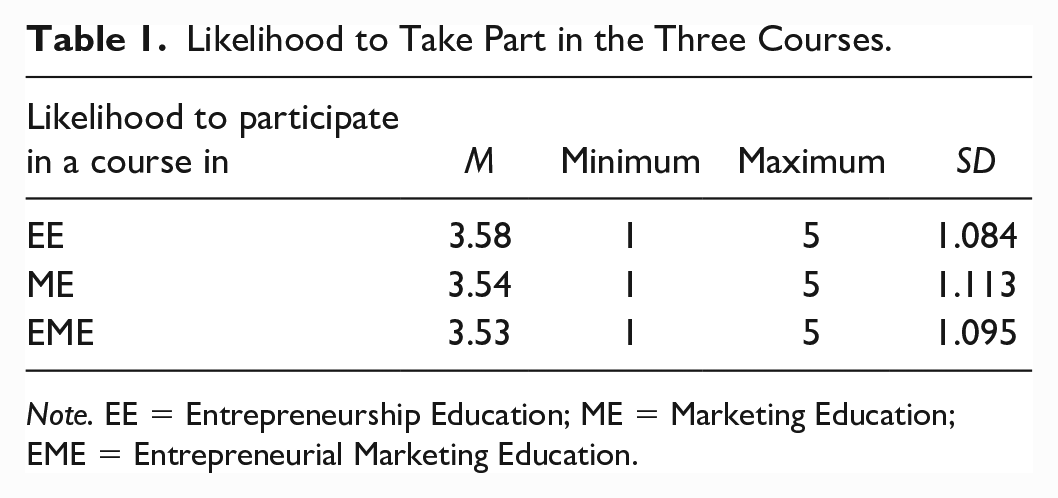
In this phase, there were 192 usable responses and 39.1% respondents were designated as belonging to business courses and 60.9% to non-business courses; 40.4% were male, 58.9% were female, and 0.7% indicated a preference to not say to which gender group they belonged. The mean likelihood to take part in each of the courses were calculated as shown in Table 1.
Likelihood to Take Part in the Three Courses.
Note. EE = Entrepreneurship Education; ME = Marketing Education; EME = Entrepreneurial Marketing Education.
While EME emerged as the course with the lowest mean likelihood, three paired-sample t tests were conducted to assess if differences were statistically significant and no significant differences were found.
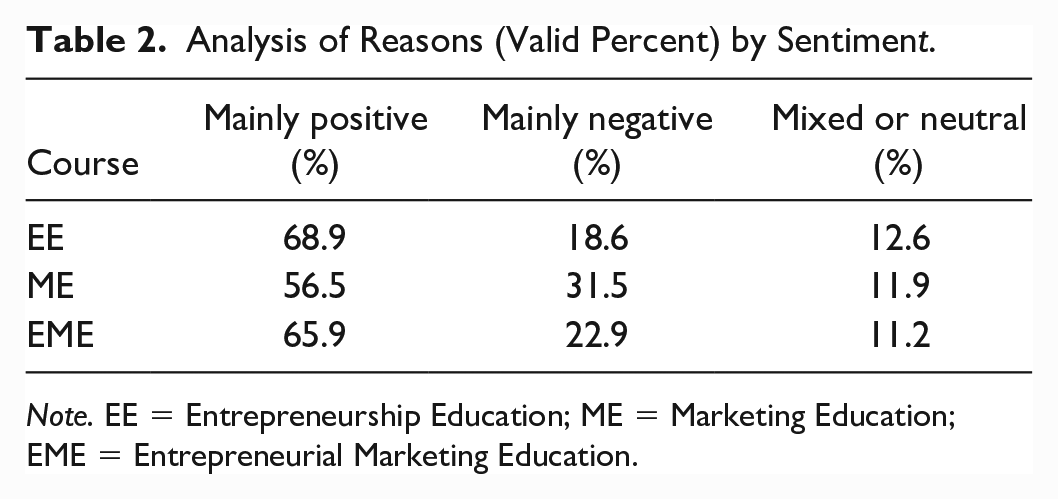
Participants were asked to give a short statement encapsulating their reasons for their stated likelihoods, and the qualitative comments were analyzed in two main stages. First, the comments were coded according to whether they were mainly “positive” in sentiment, mainly “negative” in sentiment, or were “neutral or mixed.” The results of this analysis are presented in Table 2.
Analysis of Reasons (Valid Percent) by Sentiment.
Note. EE = Entrepreneurship Education; ME = Marketing Education; EME = Entrepreneurial Marketing Education.
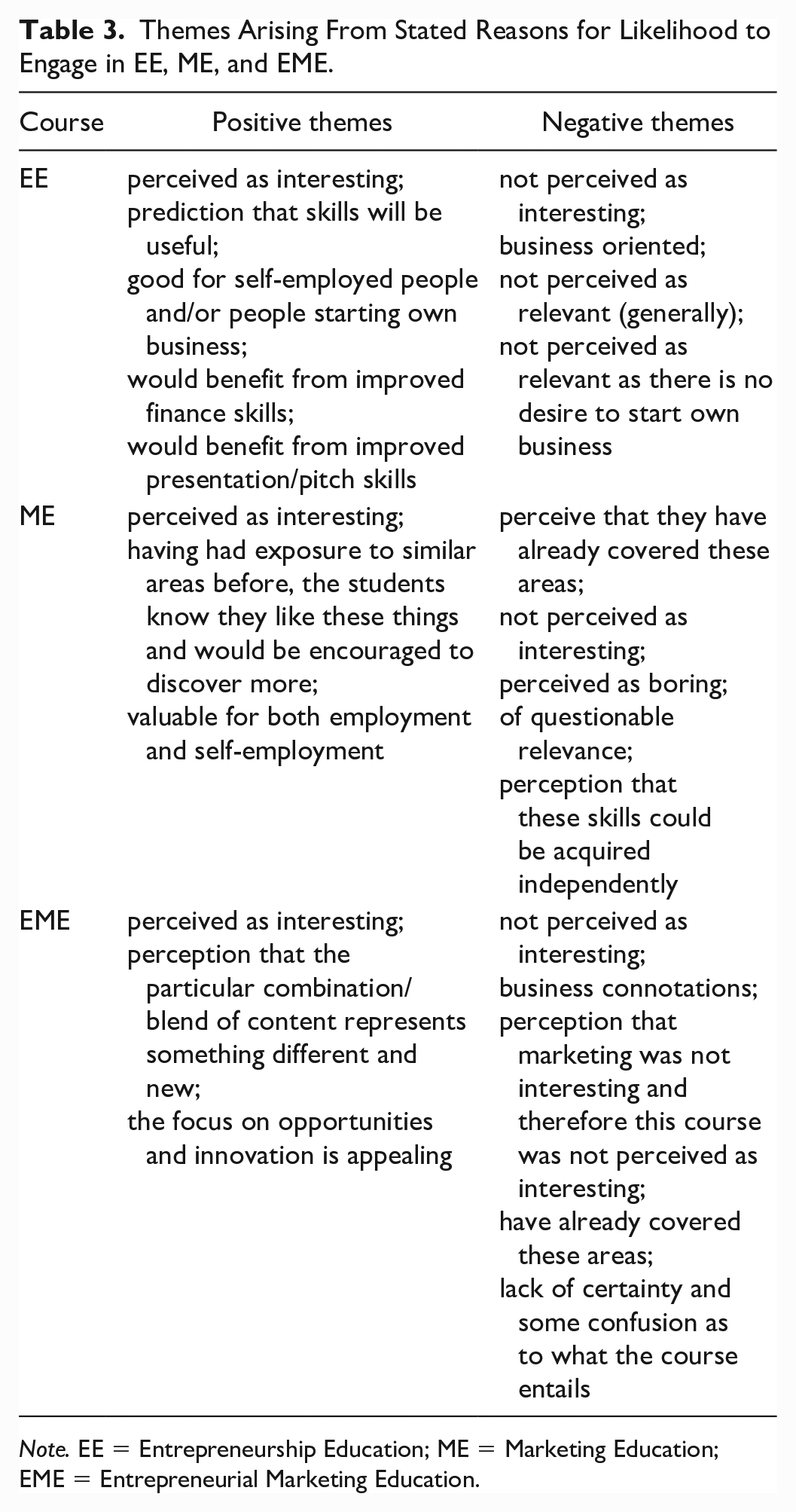
Table 2 shows similarity in terms of the proportion of mixed or neutral comments but ME attracted more negative comments. The comments were then subjected to a thematic analysis by course. The main themes to emerge were then categorized into “positive” or “negative,” and these are presented in Table 3.
Themes Arising From Stated Reasons for Likelihood to Engage in EE, ME, and EME.
Note. EE = Entrepreneurship Education; ME = Marketing Education; EME = Entrepreneurial Marketing Education.
Table 3 shows considerable similarity across the positive and negative comments attached to each course. The dominant positive themes centered on being interesting, valuable, and relevant. The dominant negative themes centered on being not interesting, not relevant, and the perception that they were already in possession of these learning outcomes. The latter theme was less prevalent in EME comments. Much more prevalent within comments regarding EE were connotations about starting one’s own business, and this was presented in both positive and negative frames. Guidance related to finance and guidance related to pitch/presentation skills were singled out, and almost exclusively in positive terms, in the EE course. Marketing—as featured in both ME and to a lesser extent in EME—often acted as a trigger, both positively and negatively. EME attracted comments in relation to it being different and new, and while this was more often presented as a positive, this was also viewed by some more negatively in that it represented something that was not quite fully understood and required further clarification.
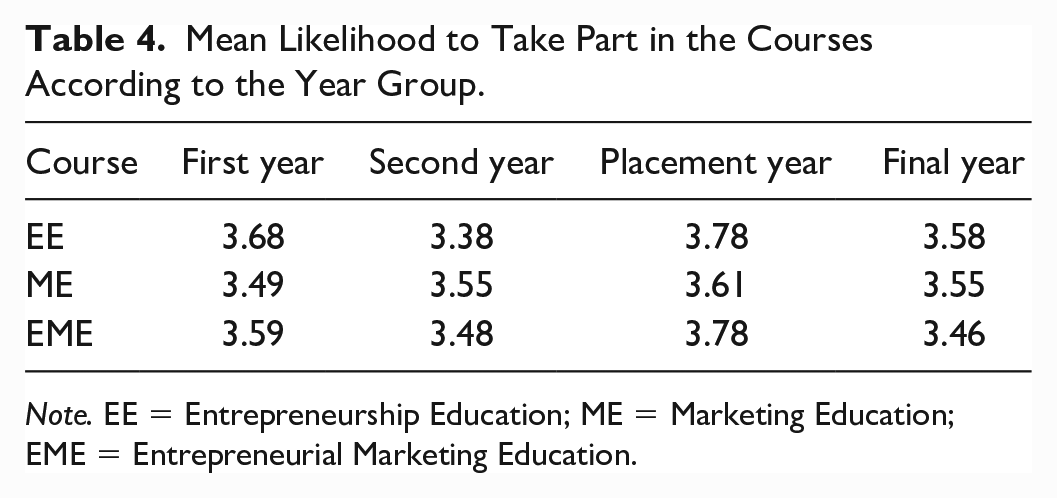
Table 4 shows differences in participation likelihoods according to year group, and it shows that placement year students expressed the highest likelihood to participate in all three courses; placement takes place after second year. For EE, the least likely were second years; for ME, first years; and for EME, final years.
Mean Likelihood to Take Part in the Courses According to the Year Group.
Note. EE = Entrepreneurship Education; ME = Marketing Education; EME = Entrepreneurial Marketing Education.
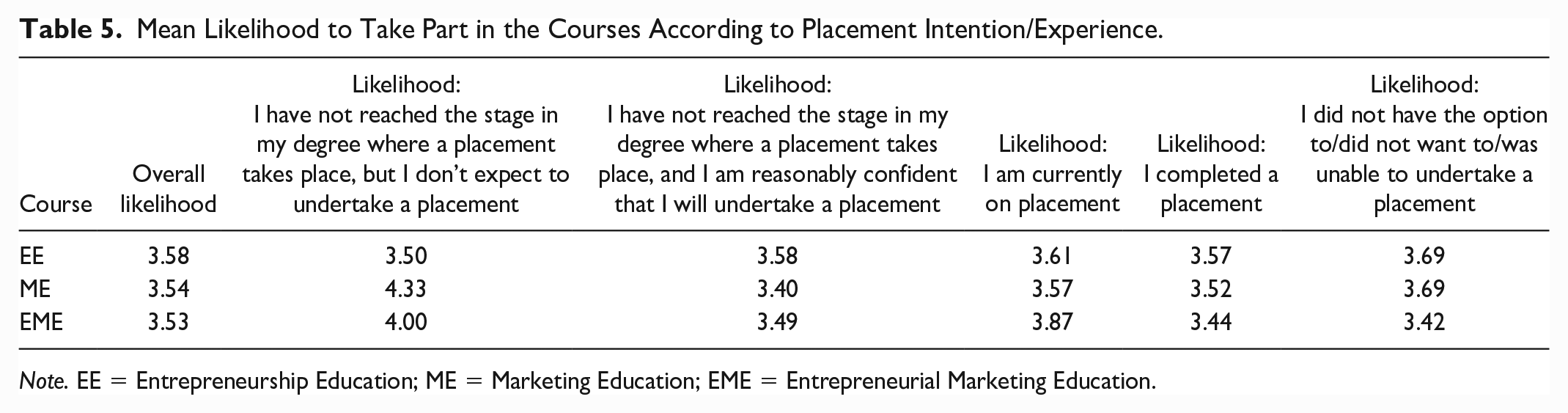
The relationship between placement and likelihood to enroll on the courses was captured, and as per Table 5, it was found that across all three courses, students who had undertaken placement were less likely to undertake all the courses. Currently being on placement raised the likelihood to undertake all courses above the average, while having completed a placement lowered the likelihood.
Mean Likelihood to Take Part in the Courses According to Placement Intention/Experience.
Note. EE = Entrepreneurship Education; ME = Marketing Education; EME = Entrepreneurial Marketing Education.
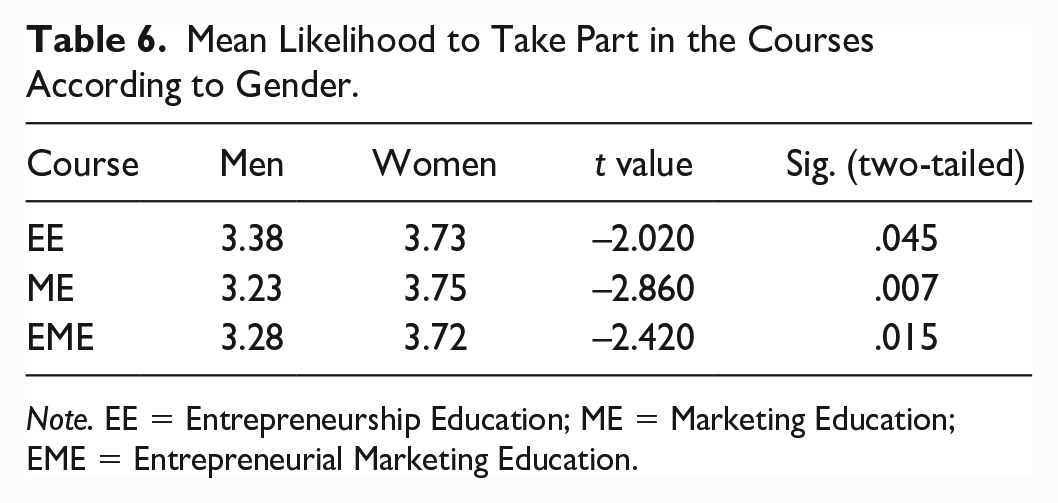
Likelihood to take part was analyzed according to gender, and independent-sample t tests were conducted. Table 6 highlights a significant difference between likelihood to take part in all courses between men and women.
Mean Likelihood to Take Part in the Courses According to Gender.
Note. EE = Entrepreneurship Education; ME = Marketing Education; EME = Entrepreneurial Marketing Education.
The course most favored by female students was the ME course, and for men, the EE course. With that said, female students were significantly more likely to participate in all three courses than men.
The participants were asked to what extent they felt were already knowledgeable about the things covered in this course. This variable will be referred to hereafter as “prior knowledge.” Independent t tests showed that women indicate greater prior knowledge of all three course areas but the difference is not significant in respect of EE (p = .317), whereas it is in respect of ME (p < .001) and EME (p = .007). Pearson correlation tests were carried out between likelihood to participate and prior knowledge across the three courses, and the results were as follows: EE (r = .235, p < .05); ME (r = .172, p < .05); and EME (r = .229, p < .05). While it might be predicted that prior knowledge would reduce the likelihood of participating, the opposite relationship, for all three courses, is in evidence: Having knowledge about the area increases the likelihood to participate.
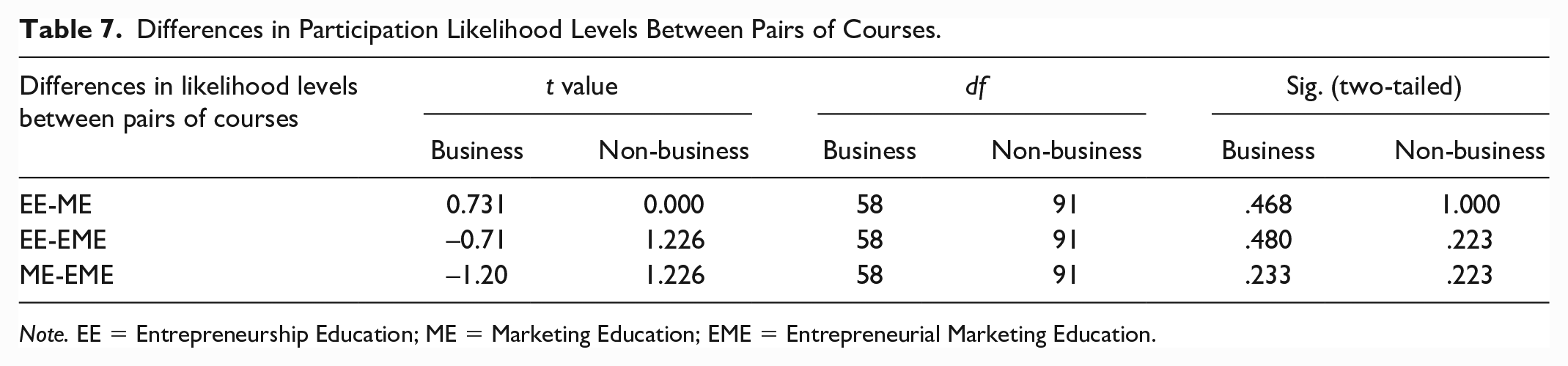
The focus now turns to differences between business and non-business students. While it was found that there were no significant differences between likelihood to take part in the courses when the students were treated as an homogeneous group, it was of interest to establish if this similarity in likelihood to undertake the three courses was in evidence when business students were examined separately and non-business students were examined separately. Table 7 shows the results of three paired-sample t tests when the participants were treated as separate cohorts and shows that there were no significant differences with respect to the likelihood of undertaking each course among business students, and there were no significant differences among non-business students.
Differences in Participation Likelihood Levels Between Pairs of Courses.
Note. EE = Entrepreneurship Education; ME = Marketing Education; EME = Entrepreneurial Marketing Education.
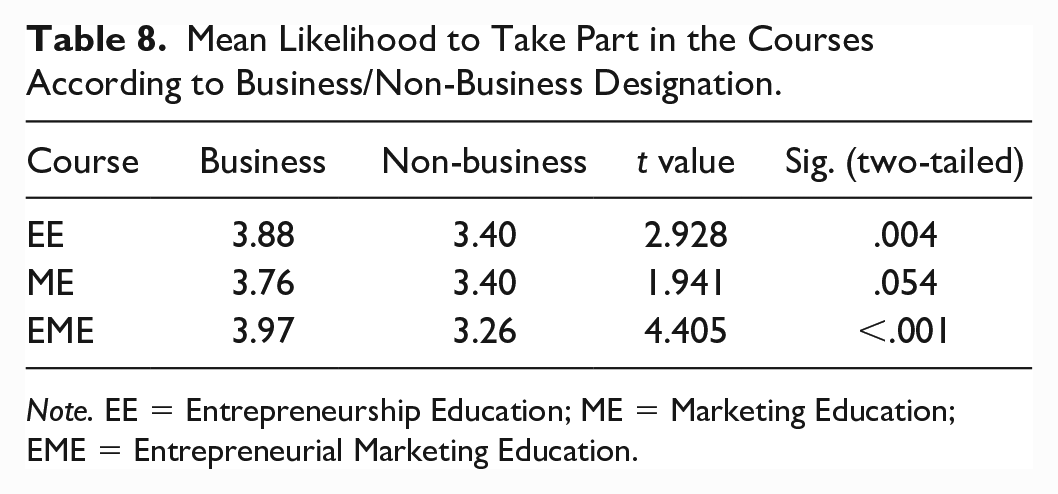
Moving to an examination of differences between the two groups in respect of likelihood to undertake the courses, Table 8 presents the results of independent-sample t tests and shows that business students were more likely, as compared with non-business students, to participate in all three courses and significantly so in the case of EE and EME, with ME marginally outside the significance range. The course most favored by business students was EME, but this was the least favored by non-business students.
Mean Likelihood to Take Part in the Courses According to Business/Non-Business Designation.
Note. EE = Entrepreneurship Education; ME = Marketing Education; EME = Entrepreneurial Marketing Education.
The relationship between the extent to which marketing features in their degree and likelihood to undertake the courses was assessed with Pearson correlations. The correlations were as follows: EE (r = –.195, p = .015); ME (r = –.220, p = .006); and EME (r = –.309, p =< .0001). With the scale running from having a significant marketing component to little or no marketing component, these results show that the more marketing in the students’ degrees, the more likely they are to enroll on all three courses.
Given the role of prior knowledge in affecting likelihood to undertake the courses, analyses were carried out to establish if business versus non-business designation affects the likelihood to take part in the courses when prior knowledge is controlled for. Prior knowledge was added as a covariate to independent t tests, and it was established that there was still a significant difference between business and non-business students when prior knowledge is controlled for with respect to likelihood to participate in the EE course (F = 5.563, p = .039) and the EME course (F = 5.125, p = .025) but not in the case of ME (F = 0.932, p = .336).
As noted, it was established that having knowledge about the area increases the likelihood to participate in the associated course, and it was also found that the EME course was most favored by business students and least favored by non-business students. Based on these findings, it was useful to know if and to what extent each course’s relative participation likelihood scores differed according to level of prior knowledge of the respective area. From Table 9, it can be seen that when business students have practically no knowledge of the area or when they have significant levels of knowledge of the area, the EME course is no longer the most favored course. It is the case that for business students who have a little or quite a lot of knowledge of the area, EME is the course most likely to be enrolled on. Despite being least preferred by non-business students as a whole, EME was most preferred for students possessing a little knowledge of the area.
Mean Likelihood to Take Part in the Courses According to Level of Prior Knowledge.
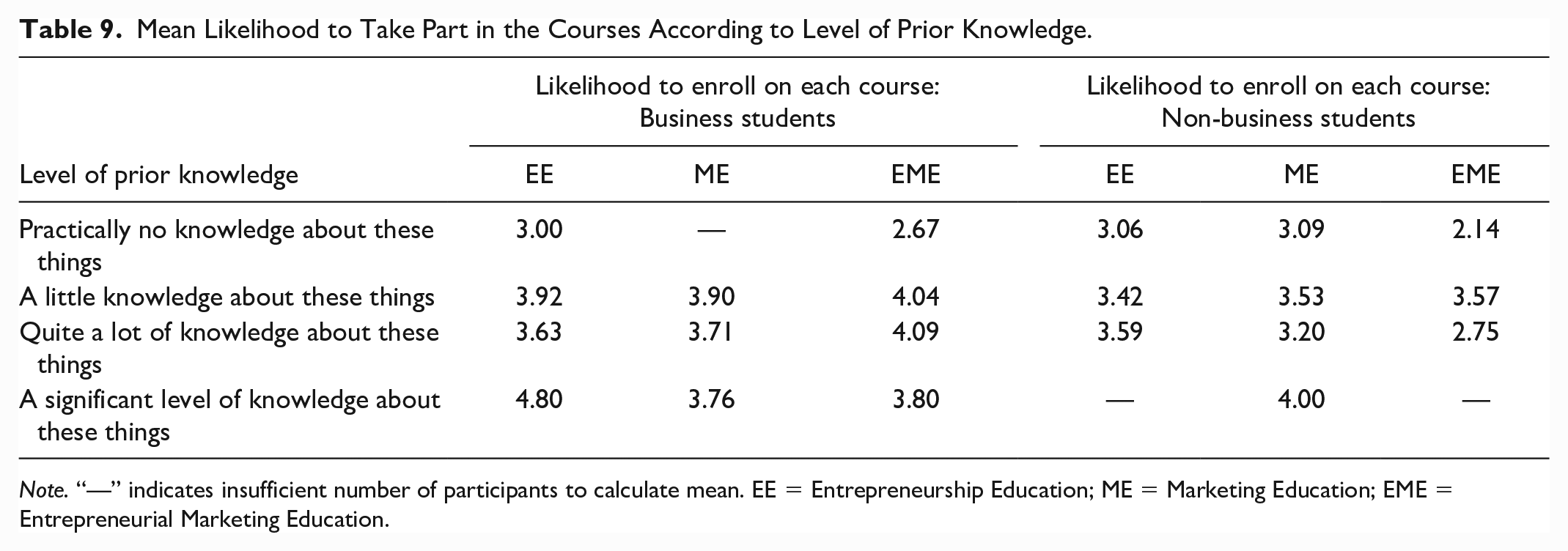
Note. “—” indicates insufficient number of participants to calculate mean. EE = Entrepreneurship Education; ME = Marketing Education; EME = Entrepreneurial Marketing Education.
Participants had been asked to express the likelihood that they would enter four graduate scenarios, and the means were as follows: likelihood to become employed in a large organization (employing more than 250 people): M = 3.56, SD = 0.931; likelihood to become employed in a small-to-medium organization (employing fewer than 250 people): M = 3.77, SD = 0.782; likelihood to become self-employed in a freelance/consultant/“one person band” way: M = 2.72, SD = 1.233; likelihood to start your own business at some point in the future: M = 3.10, SD = 1.168. Hence, small-to-medium organizations were the most likely graduate destination. Graduate intentions were correlated with the likelihood to take each of the courses, and these correlations were repeated to control for prior knowledge. The results of the Pearson correlation analyses are presented in Table 10.
Correlations Between Course Participation Likelihood and Graduate Intentions: With and Without Controlling for Previous Knowledge.
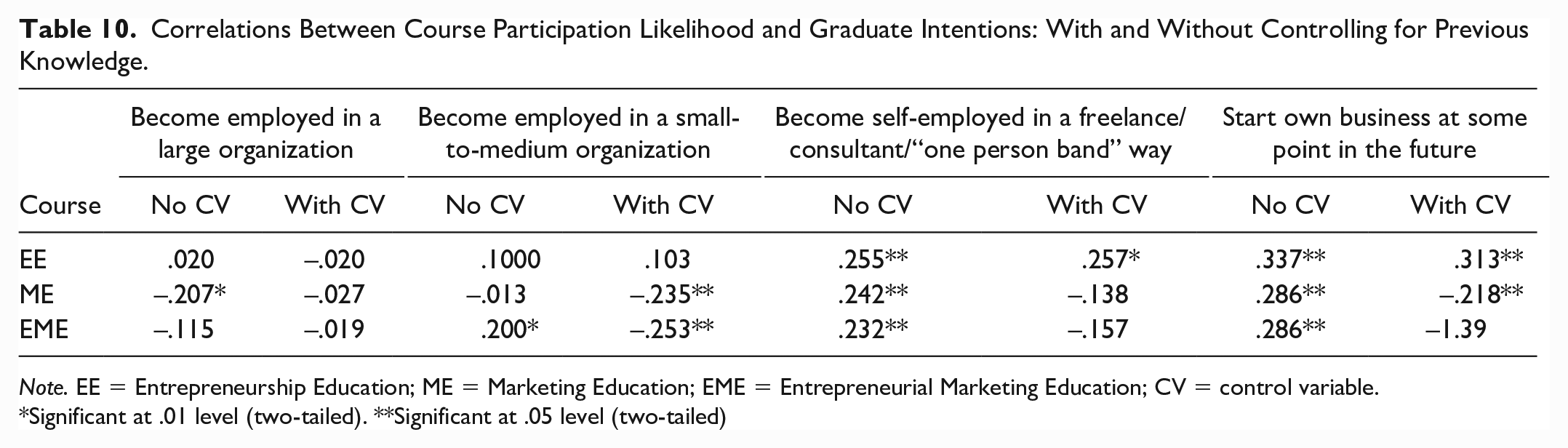
Note. EE = Entrepreneurship Education; ME = Marketing Education; EME = Entrepreneurial Marketing Education; CV = control variable.
Significant at .01 level (two-tailed). **Significant at .05 level (two-tailed)
It can be seen from Table 10 that without controlling for prior knowledge, there is a significant positive correlation between likelihood to take all of the courses and becoming self-employed in a freelance type way and starting one’s own business. The only significant positive correlation with intention to become employed was with likelihood to undertake the EME course and working in a small-to-medium organization. When controlling for prior knowledge, EE and ME remained correlated with likelihood to start a business, but EME did not. Only EE remained correlated with becoming self-employed in a freelance type way. The only positive correlation between likelihood to take the course and to become employed was between EME and becoming employed in a small-to-medium organization.
Study 2
Study 2 sought to address the third research objective which centered on surfacing critical features of a program of EME that would enhance motivation to participate. To this end, the student participants were asked, as per Study 1, to indicate the likelihood of undertaking the EME course (still not labeled as such) and then they were presented with a number of “features” of the course and asked to consider if and how the presence of these features might influence their likelihood to undertake the course. The additional features came from established pedagogical principles and insights afforded by the first phase of the research.
As noted earlier, arising from previous research and grounded in Bloom’s Taxonomy (1956) are three factors that are considered to enhance student motivation: integrating theory with practice, incorporating discussion-oriented interactions with peers, and relating the topic to the students’ main discipline (Crick, 2018; Crick & Crick, 2021). Additional areas of interest arose from Study 1. This phase of the research indicated that the relationship between graduate intentions and likelihood to take the EME course merited further probing. Via the EE qualitative responses, finance and presentation/pitching aspects were singled out as encouragers by some, and an assessment of the impact of their inclusion in EME was deemed of value. Similarly, the perception that EME was different was raised, mainly positively but sometimes negatively, and therefore merited further assessment. Finally, surfacing in the qualitative comments was a sense that comparable learning could be obtained for free online, and this factor was also included.
Study 2 involved a different set of full-time undergraduate students from business and non-business degrees. The survey was again administered via Qualtrics with a chance to win a gift voucher acting as an incentive.
Variables
After an introduction, the EME course was presented with participants asked to indicate likelihood of participation. They were then asked to indicate, on a scale of 1 to 5, the extent to which a series of additional features would affect their likelihood to participate. The 5-point Likert-type scale ran from knowing this would make me considerably less likely to take part in the course to knowing this would make me considerably more likely to take part in the course. The features, as discussed above, are presented in Appendix B. The same demographic and educational variables were captured as before.
Results of Study 2
In this study, there were 162 usable responses; 54.9% were designated as belonging to business courses and 45.2% were non-business; 50% were male, 48.1% were female, and 1.8% indicated non-binary or a preference to not say.
The mean likelihood to take part in the EME course was 3.81 (SD = 0.962). For business students, the mean likelihood was 3.92, and for non-business, it was 3.67. An independent-samples t test concluded that the difference was not significant (p = .052).
The relative effect of the promotion of each of the features on likelihood to take the EME course is presented in Table 11. Independent t tests were conducted to establish differences by designation and gender.
The Effect of Promoting Course Features on Likelihood to Participate in EME.
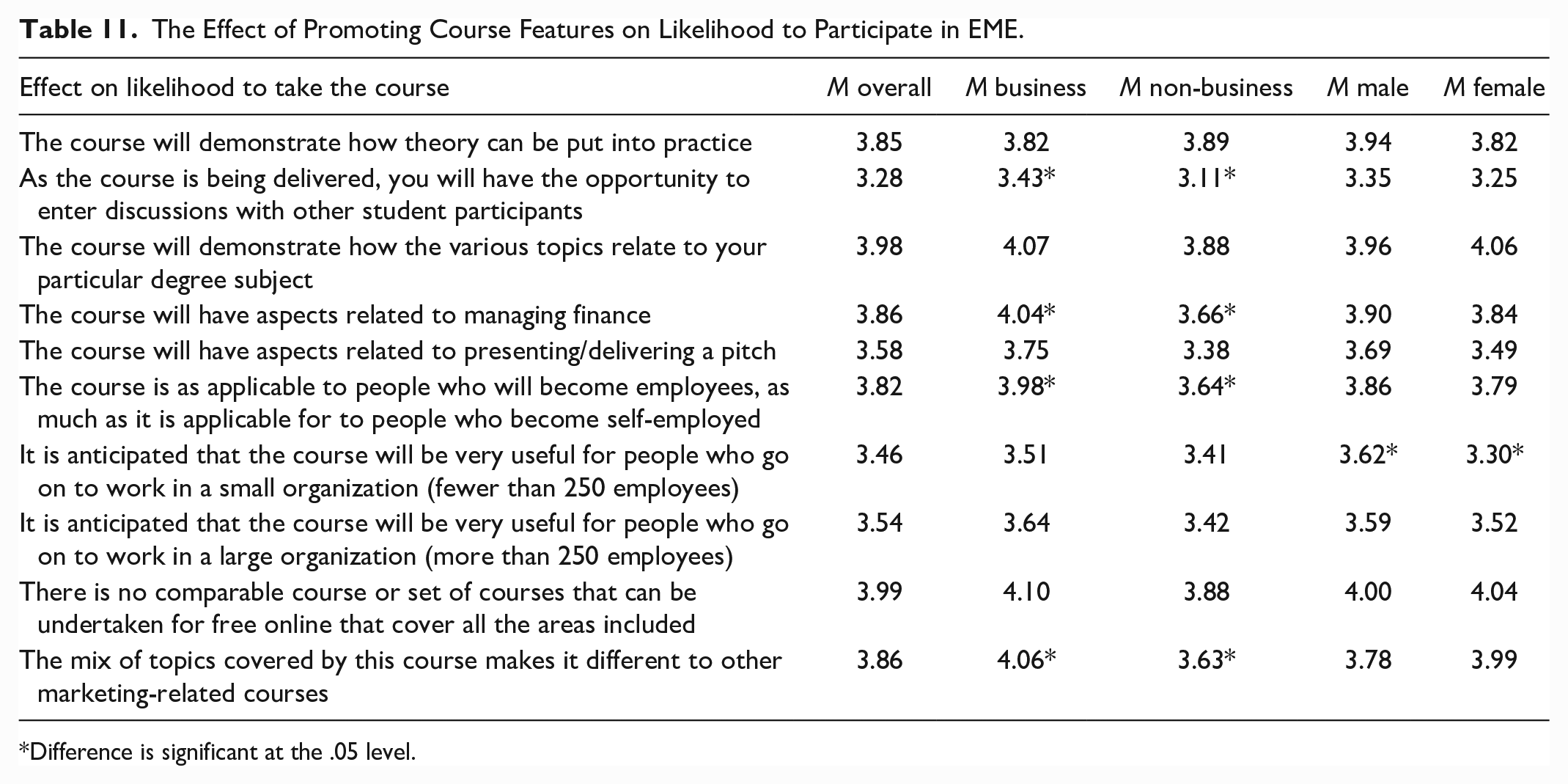
Difference is significant at the .05 level.
All the mean scores for the student sample as a whole were above the mid-point of the scale indicating that on average, all the features are effective at increasing the likelihood to undertake the course. Non-business students indicated that demonstration of how theory can be put into practice was most encouraging and for business students, highlighting that there is no comparable course available for free online had the greatest effect. Except for the theory into practice feature, all features encouraged business students more than non-business, although only four differences were significant. These were the factors relating to peer discussions, managing finance, the applicability to employed people as much as self-employed people, and the unique mix of topics. Further analyses were applied to establish if these differences between business and non-business students persisted when prior knowledge was accounted for. Prior knowledge was added as a covariate, and it was established that three differences remained significant. As such, even when prior knowledge was controlled for, business students were more affected by the promise of finance-related content (F = 4.418, p = .037), emphasis of the applicability of the course to employees as much as self-employed (F = 4.444, p = .037), and the factor of the course being different to other marketing-related courses (F = 8.398, p = .004). The promise of peer discussions being included (F = 3.361, p = .069) was no longer significantly different in its effect between business and non-business students when prior knowledge was controlled for. There was only one significant difference according to gender with men being more affected by the promise of the course’s applicability to people who go onto work in a smaller organization, and this still remained significant when prior knowledge was controlled for (F = 4.461, p = .036).
There were relatively few students who indicated that they were neutral or unlikely to undertake the course, but it was deemed useful to examine this group; they could be considered to represent “reluctant” students. A greater proportion of non-business students were deemed reluctant as compared with business. A comparison was made as to the effect of each feature on these reluctant business students (n = 19) and non-business students (n = 26) as shown in Table 12.
The Effect of Promoting Course Features to “Reluctant” Business Students and Non-Business Students.
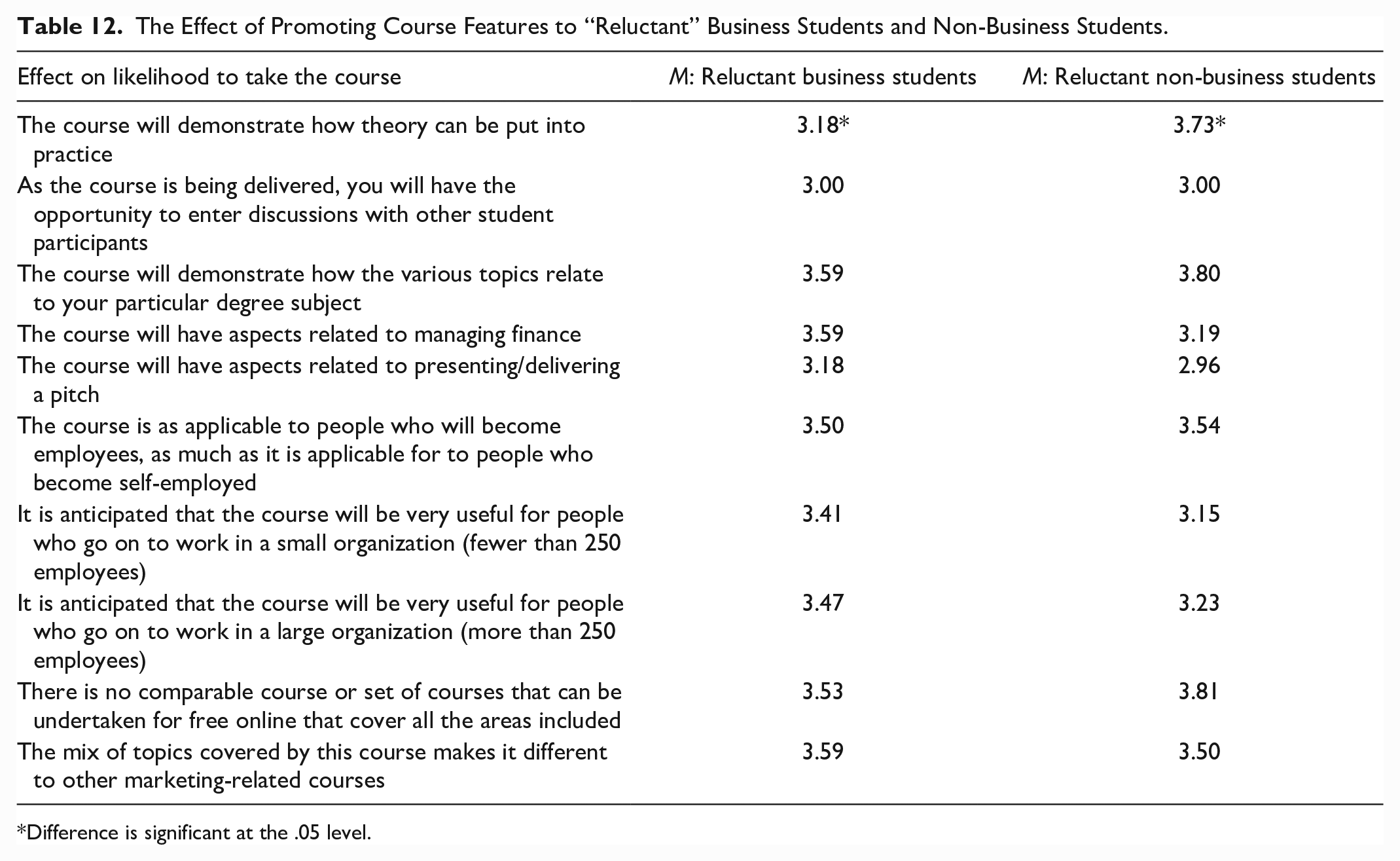
Difference is significant at the .05 level.
Three factors emerged as the most affecting for reluctant business students: demonstrating how various topics relate to the student’s degree, highlighting the financial management aspect and promoting the difference between this course, and other marketing-related courses. For non-business students, the promise of there being no comparable course that can be undertaken for free elsewhere was most affecting. These non-business students were significantly more positively affected by the feature of theory being put into practice. Similar to their more receptive counterparts, reluctant business and non-business students were relatively unlikely to be encouraged by highlighting the opportunity to enter into discussions with fellow students. This was equally lacking in persuasiveness to both sets of students but actually represented the least persuasive feature for business students. There was only one significant difference in that reluctant non-business students were significantly more positively affected by the promise that theory would be put into practice. Further analysis was conducted to establish if this difference still held when prior knowledge was controlled for, and it was concluded that the difference was still significant (F = 4.548, p = .039). It can be further seen that reluctant non-business students were overall negatively affected by the reference to pitching/presenting skills being developed. Of least persuasiveness to the reluctant business students was the opportunity to enter discussions with other student participants.
Discussion
The first objective of the research was to compare the likelihoods to undertake a non-compulsory course in EE, ME, and EME, none of which carried their respective labels. Despite anticipation that EME would, as per the concept of autonomous motivation, enthuse students more than EE or ME, the research found that there was no significant difference when students were treated as an homogeneous group and nor were there significant differences when business students were examined separately and non-business students examined separately. Study 1 showed, as might be expected, that business students exhibited greater likelihood to participate in all the courses as compared with non-business students, and this was the case even when prior knowledge was controlled for. Indeed, while it might be assumed that being in possession of prior knowledge of the course content would mitigate against motivation to participate, the results show that, overall, the greater the student’s prior knowledge of the area, the greater their motivation to participate.
A key finding of the first study is that EME was the course that business students, generally, were most likely to participate in. However, it was noteworthy that the second study showed that while business students did indicate higher likelihood to participate in EME as compared with non-business, the difference was not significant. This suggests that the appetite for EME is not as pronouncedly different as expected across these two categories of students. It is also noteworthy that while EME was the course that business students, generally, were most likely to participate in, when prior knowledge of the area was accounted for, EME was favored over the other courses only when the business students possessed little to quite a lot of prior knowledge of the respective area. Having practically no knowledge or having significant levels of knowledge reduced the likelihood to participate in the EME course on the part of business students. For non-business students, having a little knowledge of the area served to make it the favored course over the others.
Establishing the factors that affect motivation to participate in EME was the second objective. The qualitative responses in Study 1 indicated that perceptions of whether the courses were interesting, relevant, and valuable affected the student’s likelihood to participate. This supports the well-established relationship between personal relevance and student motivation (Yuksel et al., 2021). It further supports the applicability of the concept of autonomous motivation to the exploration of education in the areas of marketing, entrepreneurship, and EM; being of interest and being relevant speaks to intrinsic motivation while relevance also relates to the concept of internalized extrinsic motivation together with the perception of the course generating value.
A relationship with starting one’s own business was raised in the context of both EE and EME, and this had either a positive or negative effect depending upon a student’s intentions in that regard. It was found that students who focused on the marketing element within the ME and EME courses were affected both positively and negatively depending on their respective views of marketing, which was greatly affected by previous experience thereof. The analysis showed that the more marketing featured in the students’ degrees, the more likely they were to undertake all the courses. There was also a significant gender dimension within the results of Study 1, with female students being shown to be significantly more likely to participate in all courses, including EME, than men.
As noted, prior knowledge of the respective course areas was examined, and it was found that women indicated significantly greater prior knowledge of the content of the ME and EME courses than men.
The qualitative comments suggested that being in possession of knowledge of the respective courses acted to reduce the likelihood to participate, but the quantitative analysis showed that prior knowledge emerged as a motivator, generally. Further probing revealed that while an increase in students’ prior knowledge of the area generally led to an increase in their motivation to participate, it was the case that going beyond “quite a lot of knowledge” on the part of business students and going beyond “a little knowledge” on the part of non-business students served to reduce likelihood to participate in the EME course. This again speaks to the relationship between personal relevance and motivation and specifically the effect of the course content being perceived as familiar (Keller, 1987). A complete lack of familiarity was detrimental to the chances of participation in an EME course on the part of all students, and for business students, having significant levels of knowledge did not by any means decimate their chances of participation but did lower the likelihood by a degree.
Both studies provided compelling evidence that the point in time when EME is mooted is a significant factor. It is noteworthy that Study 2, which was undertaken at a different point in the academic calendar, revealed a higher overall likelihood to undertake EME than was shown in Study 1. In the first study, it was shown that students who were undertaking their placement year (and not attending University classes) were most likely to indicate that they would undertake EME (and indeed the other courses), with students having already undertaken placement being least likely. Students who were not anticipating completing placement were most likely to undertake the EME course. This suggests that the learning outcomes associated with placement are perceived as acting as a substitute for the learning outcomes that might be achieved through pursuing an extra course. This is in contrast to prior knowledge which, as just noted, did not emerge roundly as a substitute but was found—to a point—to have the effect of whetting the appetite and encouraging acquisition of further knowledge.
This highlights that being in possession of knowledge through practical experience has a different effect on motivation as compared with knowledge acquired through academic study. While experiential learning is considered to enhance EME (Gilmore et al., 2020), it cannot be assumed that students undertaking placement will necessarily engage in and acquire experience of EM. Therefore, students with work experience may miss out on acquiring knowledge of EME on the basis that they feel that their experience renders such acquisition unnecessary.
Becoming employed in a small-to-medium organization was accorded the most likely graduate scenario. Furthermore, and in accordance with the qualitative comments, likelihood to take part in all three courses was positively associated with becoming self-employed and starting one’s own business. However, when previous knowledge was controlled for, EME was not associated with starting one’s own business. Instead, likelihood to undertake EME was positively correlated with likelihood to become employed in a small-to-medium organization. This suggests that EME has broader connotations than EE and is not associated only or mainly with starting a business. As noted, the most likely graduate destination was becoming employed in a small-to-medium organization, and this relationship between EME and employment in a small-to-medium organization would appear to further support the relevance of autonomous motivation in understanding participation in EME. That is to say that while a student might be genuinely interested in EME and have a desire to study it “for the sake of it” (intrinsic motivation), a level of extrinsic motivation is also needed; in this case, the anticipation that this will be of value to them in their predicted graduate destination. This relates to previous research that found that extrinsically embedded relevance can have a stronger effect on students than intrinsic relevance (Means et al., 1997).
The third objective of the study was to propose features of EME that would enhance motivation to participate. The results indicated that every feature assessed acted, on average, as an encourager but with variation. As might be expected for non-business students whose own degrees could sit far from EME content, the factor that had the greatest effect was, as per Bloom (1956), demonstration of how theory can be put into practice and this was the only feature to be more encouraging for non-business as compared with business students. Drawing on Bloom’s Taxonomy (1956), in a context where students are stepping outside of their specific degree disciplines, the importance of relating the topic to their degrees is considered valuable (Crick, 2018; Crick & Crick, 2021). This factor did emerge as one of the most affecting by all students. The value of peer discussions which has been underlined for some time (Bloom, 1956) was found to be significantly more affecting for business students than non-business students but this difference no longer held when prior knowledge was controlled for. Of more importance, however, is that this factor was the least persuasive factor for both sets of students. Indeed, it had an average of “no effect” on reluctant business and non-business students. As such, it can be concluded that these three aspects, while having been shown to be important in the delivery of an educational package, are not necessarily what motivates students to participate in such education.
It was also found that highlighting presentation/pitching skill development was not particularly motivating for students overall and actually had a negative effect on non-business students. While this had emerged as a potential encouraging factor (in the context of EE) through the qualitative comments in Study 1, and while more common than some other free responses, it was not raised by a great deal of participants. So, only in association with self-employment aspirations, might this be an encouraging feature.
Conclusion and Implications for Educators
Research into EME, while growing (Gilmore et al., 2020) is still relatively scarce and particularly so in the case of research that takes a pathway-to-entry perspective. It has therefore been difficult to draw best practice guidance for educators who could be convinced of the merits of EME.
It is noted that a challenge for marketing educators is to create motivation for learning both at University and beyond (Bacon, 2017). The concept of autonomous motivation with its constituent elements of intrinsic motivation and well-internalized extrinsic motivation was found to be an appropriate lens through which to explore student motivation toward EME. This research found that there was not as great a difference in motivation toward EME between business and non-business students as might have been expected. The research also found that EME was not significantly more likely to be participated in than EE or ME. With that said, of the three courses, EME was the course that business students, overall, were most motivated to participate in. For researchers and educators who appreciate EM’s potential as a “powerful alternative” to traditional marketing (Whalen et al., 2016), this is a useful and welcome finding, but it is the case that business students, and indeed non-business students, with practically no prior knowledge of the area are still relatively unlikely to participate.
It was found that EME has broader connotations and is not only associated with self-employment but with employment, specifically in a smaller organization. The finding that EME was least favored by non-business students is also of value and points to a need to consider how EME can be presented such that these students might become more receptive. It suggests, as per others’ recommendations (Souitaris et al., 2007), that EME ought to be presented differently depending upon whether students are undertaking business or non-business-related degrees.
The research also underlined that some, but not all, elements associated with improved engagement during delivery (as per Bloom, 1956) actually motivate students to undertake an optional course. While conveying that theory will be put into practice and that the course will be shown to relate to the student’s primary area of study is encouraging, the promise of peer discussion serves to discourage. While teamwork is accepted to have drawbacks and to be resisted by students because of, among other factors, the threat of free-riding (Lemken & Siguaw, 2021), it is interesting that even the anticipation of peer discussions, without this attendant threat, is not considered encouraging. The research also provides insights into the relationship between prior knowledge and practical experience in the form of work placement. The studies show that prior engagement with the subject matter, up to a point, in an academic context motivates students to pursue further study in EM, but that many students perceive that their placement experience renders EME unnecessary.
Implications for Educators
While the research explored EME as an optional extra for undergraduate students, it is not the case that this is the best or only way for EME to be delivered. The implications presented here apply to EME in this context, but it seems reasonable that they could also apply to EME delivered in other ways. These implications center on motivating students toward EME and where recommendations are made in relation to what aspects ought to be promoted, it is of course the case that this is only recommended on the basis that such aspects feature in the package of EME.
The research underlined that having very little prior knowledge of EM dramatically hindered the likelihood that both business and non-business students would participate in a course on EME. Hence, an overarching recommendation is that exposure to principles of EM, perhaps through being embedded into their degree course, can be expected to heighten subsequent receptiveness to an invitation to a voluntary course in EME.
This research strongly implies that for non-business students, it should be clearly conveyed that delivery of EME, in whatever form, will meaningfully demonstrate how theory is applied to practice. This advice is applicable to all non-business students but particularly those who can be described as reluctant and who expect to work in a larger organization. Particularly for non-business students but arguably useful for all students, is highlighting that the EME package is unique, and they will not be able to avail of something like this for free elsewhere. It is advised to not highlight that presentation/pitching skills or financial management guidance will be a focus. It is recommended that the marketing aspect of EME is conveyed carefully and in a context-specific way to non-business students. The inclusion of marketing can be expected to cause some non-business students to automatically reject an invitation to participate. While it has been recommended that exposure to EM can be hoped to heighten likelihood to participate on the part of all students, with respect to non-business students, it is particularly important that prior exposure to marketing, specifically, is also afforded. This is in line with Gilmore et al.’s (2020) recommendation that for students who have not been exposed to the principles of marketing, the fundamentals of business and marketing ought to be incorporated at an early stage in an EM course.
For students who have opted to study marketing, the marketing aspect to EME can be highlighted, but there also needs to be emphasis on EME’s uniqueness. Within this communication, reference to financial management instruction can be made but always while still conveying that EME represents a different orientation and skill-set to marketing more generally.
If it is possible, consideration might be given to tailoring communication to students identified as having aspirations to become self-employed. For these students, very clear links with EME and starting one’s own business could and should be conveyed but if such segmentation is not possible, connotations of starting a business should be minimized. For students who are known to aspire to owning their own business, financial management and pitching/presentation skills could be highlighted as part of an EME offering.
For all students, it is recommended to not promote that peer discussion will take place. This is not to say that it should not actually go onto feature in delivery of EME but rather it is suggested that this aspect is not highlighted in any pre-delivery communication.
This research found that women were more likely to take part in all of the optional courses as compared with men. Previous research suggested that EE content and pedagogy ideally should be tailored according to gender (Packham et al., 2010). This research would suggest that men require more encouragement to undertake co-curricular education generally and especially when marketing is implied. This would indicate, as per above, that male students in particular could benefit from prior exposure to marketing within their degree. This would increase the chance that they might participate in further exploration of EM.
The link between working in a small-to-medium organization and EME was highlighted. It is noted that graduates do not regard smaller organizations as favorably as large organizations and indeed owner-managers of smaller firms regard graduates with some skepticism (Cheng et al., 2016). This research found that students who view employment in a small-to-medium organization as likely are also more likely to undertake EME. Students ought to have it reinforced that smaller firms are dominant in almost all global economies, and it would be useful to convey the likelihood that they would become employed in an small-to-medium organization (based upon previous students’ graduate destinations).
If offering EME as an optional extra is planned by educators, then consideration ought to be given to when this is conveyed to potential students as well as its actual delivery. The research found that students are most likely to indicate that they would undertake any course while on placement. Participants in the second study (conducted just at the start of the new academic year) were overall more receptive to the EME course, and it can be suggested that offering such additional education at a time when students are not already stretched with other educational demands could increase receptivity.
Finally, the research indicated that having completed placement lowered the motivation to undertake EME. In promoting EME to students, it should be conveyed that placement is unlikely to have equipped them with skills in every pertinent area, and they ought to consider EME as a complement to their placement experience as opposed to seeing placement as a substitute for EME.
Based on these implications and presented in Appendix C is guidance for educators who wish to promote EME to business and non-business students.
Limitations and Directions for Future Research
A limitation of the research is that the student participants were drawn from one University in one region of the United Kingdom. Also limiting was the reliance on stated intentions, both in terms of likelihood to undertake the courses and with respect to graduate expectations. An aspect of the analysis was an investigation as to how best to convert those who had low intentions to participate, and this subset of reluctant students was small, and therefore the conclusions in this regard are drawn from a relatively small sample. This research did not examine the effect EME had on students and its impact on employment and self-employment expectations. Future research could investigate the outcomes associated with participation in EME and specifically, a particularly valuable endeavor would be to compare the effects of having EME integrated into curricular material with having it presented as something extra and voluntary. Also of considerable value is a longitudinal study that would chart graduate destinations thereby mitigating against the problems associated with relying on stated intentions to capture graduate activity. This research underlined how prior knowledge and intention to undertake placement and the actual experience of placement affected the likelihood to undertake the extra courses. Future research could delve further into the relationship between prior knowledge and prior work experience, including placement, and motivation to participate in EME.
Footnotes
Appendix A
Appendix B
Appendix C
Declaration of Conflicting Interests
The author(s) declared no potential conflicts of interest with respect to the research, authorship, and/or publication of this article.
Funding
The author(s) received no financial support for the research, authorship, and/or publication of this article.
