




Abstract
Data-driven marketing analytics courses are integral to modern business management degrees in universities, yet many graduates focus solely on single, separated data analysis techniques during their learning process, hindering effective integration and practical performance. This study proposes that employing the Fishbowl method, which divides students into “fish” or “observers” to facilitate active problem-solving and analytical reflection, can effectively empower students to augment their learning and performance in marketing analysis by strengthening their metacognition. This research also explores the moderating effects of task complexity and students’ divergent thinking. Two field experiments (41 Cohort 22/23 students in Study 1; 39 Cohort 23/24 students in Study 2) were implemented. The results revealed that the Fishbowl method significantly enhances students’ metacognition, which affects their task-solving performance. Furthermore, students with higher (lower) divergent thinking perform better and are better suited to the observer (fish) roles. This moderating effect was strengthened when the task complexity was high. This study bridges the use of the Fishbowl method with the enhancement of metacognition in the context of marketing analytics courses. Appropriate utilization of the Fishbowl method during marketing analytics courses, along with grouping students based on their thinking traits, can significantly enhance learning effectiveness and performance.
Background Study
The popularity of data mining and data-driven marketing has surged, with graduates and employers recognizing data analytical skills as one of the essential skills to enhance graduates’ employability in the marketing industry globally (Kurtzke & Setkute, 2021; Schlee & Harich, 2010; Ye et al., 2024). To this end, business and management schools in the United States and the United Kingdom have been working to integrate data analytical skills into their degree curriculum to better equip students with workplace requirements (LeClair, 2018). This has also shaped the curriculum in Taiwanese business and management schools, particularly in the marketing field, to align with relevant marketing degrees in other developed countries. In doing so, universities in Taiwan can align with the government’s Bilingual 2030 National Policy, announced in 2017, which advocates for the provision of English-taught and globally oriented marketing-degree programs. This initiative aims to attract international students to study in Taiwan.
Although the design of marketing education in Taiwan is generally in line with other world-leading universities, as observed in the increasing number of business and management schools being internationally accredited, such as AACSB, one of the main differences lies in the longer duration of Taiwan’s general semester and study hours, with an average of 3 h of class per module per week (usually a 1-h lecture and a 2-h hands-on seminar or PC lab sessions) for 18 teaching weeks per semester (with 1 week each for mid-term and final exams), which requires a relatively high demand of in-class learning (Ministry of Education Republic of China (Taiwan), 2024).
In terms of student performance, students in business and management schools in Taiwan generally actively participate in class, and their mathematical and quantitative abilities consistently meet established standards, given that proficiency in mathematics is a fundamental criterion for admission to all business and management schools. Like students in other Asian regions, Taiwanese university undergraduates often exhibit a strong orientation toward exams and grades. They prioritize achieving high scores as a means of showcasing their capabilities, while lecturers typically place less emphasis on encouraging students to share their thoughts and answers with their classmates (Hou & Cheng, 2022).
Challenges in Teaching and Learning Marketing Analytics
While university students in Taiwan generally possess good mathematical abilities, marketing analytics courses encounter significant challenges in both teaching and student learning. First, students tend to focus excessively on the use of single, separated data analysis techniques, neglecting the ability to solve integrated, data-driven marketing problems. Each week, lecturers usually deliver a crucial marketing analytics topic and guide students in this practical statistical analysis using software programs. However, students often memorize specific techniques without developing a systematic and flexible problem-solving ability. This results in suboptimal performance when facing marketing analytics problems of varying difficulty and complexity in real-world business operations (Keiper et al., 2023). Second, during the teaching and learning process of marketing analytics content, students tend to prioritize individual grades, focusing on personal learning and approaching problem-solving with a limited inclination to share insights with and learn from peers. Lecturers also typically emphasize individual performance, resulting in a lower level of collective thinking (Chiu, 2022). Third, students come from diverse demographic backgrounds, leading to differences in thinking styles. In addition, the majority of the existing marketing analytics course measurements lack adaptive learning and self-reflective approaches and utilize a uniform method for different students, compromising the effectiveness of learning (Chiu, 2022).
To tackle these challenges effectively, this study proposes implementing the Fishbowl method into marketing analytics classes. The Fishbowl method involves dividing students into two groups: active participants (fish), who initially tackle the problem and propose solutions, and observers (observers), who actively observe the problem-solving process of the fish. Subsequently, both observers and fish engage in peer-to-peer discussions within the class (e.g., Sutherland et al., 2012). In doing so, students are expected to gain valuable insights into their problem-solving blind spots by learning and observing the approaches of their peers, which subsequently enhances students’ problem-solving performance.
Although the Fishbowl method has demonstrated effectiveness in various fields, such as language and medical studies, its application in marketing studies remains understudied. Previous research in marketing data analytics has predominantly focused on the curriculum and course development (LeClair, 2018; Liu & Burns, 2018), the required knowledge, skills, and abilities of both teachers and students (e.g., Kurtzke & Setkute, 2021), and embedding data analytics in customized marketing education (Kaur, 2019). Research on innovative teaching techniques in marketing data analytics courses is limited, highlighting a need for studies that focus on implementing effective teaching methods in this domain. This area has been recognized as a focal theme in the Journal of Marketing Education, highlighting the significance of exploring innovative teaching techniques, enhancing self-regulated learning, and implementing strategies to improve teaching effectiveness in relevant marketing courses (Donthu et al., 2021). Building upon this foundation, Ramos (2024) underscores the pivotal role of teachers in nurturing learners by introducing innovative methodologies that empower them to take ownership of their learning journey and tackle the obstacles they encounter along the way. Integrating the Fishbowl method into marketing data analytics courses not only aligns with Prediction 6, as elucidated in Crittenden’s editorial paper (2024), which anticipates a paradigm shift in the educator’s role toward fostering discourse and reflection among students, departing from traditional lecture-centric methods, but also echoes the insights presented by Mofield and Phelps (2023). Their work emphasizes that teaching extends beyond mere lecturing, advocating instead for an exchange of ideas among co-learners. This points toward an evolving pedagogical landscape, characterized by collaborative and participatory approaches to learning and knowledge construction.
To further explain the effects of the Fishbowl method in marketing analytics teaching, the current research adopts the metacognition theory to explain the psychological mechanism of the Fishbowl method and its impact on students’ problem-solving performance. This is because the process of the Fishbowl method may stimulate how students acquire, process, integrate, and regulate knowledge (Flavell, 1979; Swartz & Perkins, 1990). Particularly, the Fishbowl method enables students to learn in a more interactive and enjoyable way, with stimulation of critical thinking and self-reflection of knowledge through peer-to-peer discussions. Metacognition also encourages a shift away from rote memorization and toward practical application (Tricio et al., 2019), facilitating deeper and more logical learning.
In addition, acknowledging the student (individual) differences and complexities of marketing analytics problems, this study considers the potential effects of students’ divergent thinking and task complexity. These factors play a crucial role in shaping learners’ metacognitive processes when learning with the Fishbowl method (Flavell, 1981; Gonzalez et al., 2017). First, individuals’ divergent thinking tendencies affect their openness to creative solutions. Learners with higher divergent thinking tendencies are inclined to broaden their perspectives and avoid conventional norms in learning, while those with lower tendencies seek correct answers through directed and convergent approaches (Nusbaum & Silvia, 2011). The impact of these differences on the Fishbowl method and metacognition arises from individual thought processes. Thus, when divergent thinking is low, learners in the fish role may benefit from self-reflective learning and improved outcomes, whereas those with higher divergent thinking may gain from the observer role, incorporating varied perspectives for enhanced learning outcomes. Second, as metacognition plays a vital role in students’ learning processes and in resolving complex marketing tasks, higher task complexity is presumed to yield greater benefits from metacognition through the Fishbowl method.
This research aims to investigate the impact of the Fishbowl method on enhancing metacognition and its crucial role in improving students’ comprehension and performance in the context of marketing analytics.
The current research is the first to apply the Fishbowl method to marketing data analytics courses. This provides useful guidance on how teachers can more effectively enhance students’ data analytics task-solving performance through the enhancement of metacognition. Moreover, practicing the Fishbowl method by dividing students into either fish or observer facilitates interactive and self-regulated learning through problem-solving practice (fish) or proactive observation (observer), reflection, and discussion in the class (fish and observer).
Theoretical, Conceptual Framework, Research Model, and Literature Support
Frame of Reference
Previous studies on marketing analytics or data-driven business courses have predominantly focused on curriculum planning. For instance, researchers have suggested that marketing analytics courses in higher education should encompass topics such as big data analysis, social media analytics, data mining, and predictive analytics to align students with industry practices (Haywood & Mishra, 2019; Liu & Burns, 2018; Lu, 2020; Ye et al., 2024). In addition, some studies recommend that lecturers adopt supplementary tools, such as HubSpot’s CRM software, to provide students with more opportunities for self-practice, thereby enhancing the effectiveness of marketing data analysis teaching (Lim & Heinrichs, 2021). Some research has proposed teaching sequence frameworks for marketing analytics curriculums, starting from foundational topics, such as data visualization, and progressing to more complex subjects, such as machine learning algorithms (Lu, 2020). Others have advocated for project-based methods to help students learn data analysis techniques coherently (Jaggia et al., 2020).
While these existing studies provide valuable suggestions and empirical experiences for marketing analytics course design, there is a lack of research proposing innovative teaching methods to enhance students’ understanding of the knowledge that is delivered in the marketing analytics class. In other words, although previous studies have proposed significant improvements in course content, the methods of delivery remain conventional, such as typical classroom lectures and PC workshops guiding students on statistical software program usage. This study differs from other works in suggesting that while good course content is important, it is also crucial to help students consolidate and integrate knowledge through specific learning processes. Therefore, we propose to apply the role-playing-based Fishbowl method to help students enhance their metacognition and further improve their ability to integrate analytical tasks into practical operations. Consequently, the results of this study provide a teaching and learning method that can boost student learning effectiveness, enabling students to strengthen their marketing analysis knowledge and skills through observing, being observed, and the discussion process. This not only meets the demand for integrating marketing analytics knowledge and problem-solving skills into marketing data analysis but also allows students to experience marketing analysis work that requires peer observation and collaboration during interactions.
The results of this study are suitable for university lecturers who are currently or will be teaching courses on marketing analytics or data analysis. It is recommended that the application of the phased Fishbowl method be integrated into their existing curriculum. It can also serve as a staged task for practical exercises and assessment. The literature on the Fishbowl method and metacognition is reviewed in the next section.
Theory and Adopted Theoretical Framework
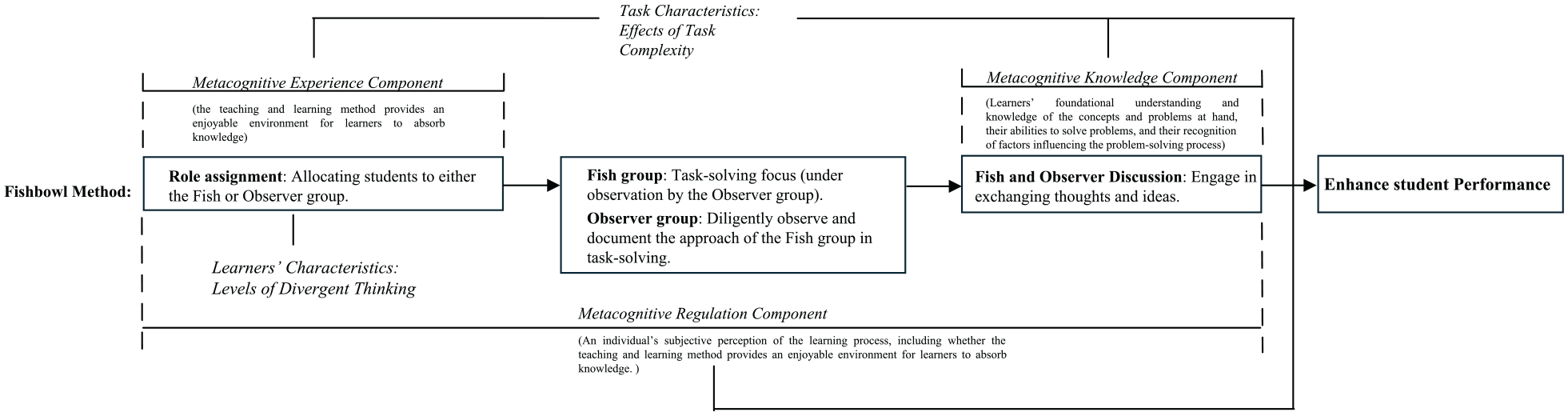
The theoretical framework of this study is presented in Figure 1.
Theoretical Framework.
Fishbowl Method
The Fishbowl method is a cooperative teaching and learning technique that aims to foster active participation and engagement in class, shifting the learning focus from teacher to student (Anand et al., 2021; Tricio et al., 2019). It involves two core stages. Initially, the teacher creates space and divides students into fish (inner) and observer (outer) groups. The fish group is involved with performing the task independently, while the observer group observes the performance. At this point, peer learning can be facilitated by the observer group engaging in active observation of the fish group as they navigate the task solution, employing critical thinking skills in the process.
After a period, the observer group will be invited to share their reflection by partaking in a discussion with participants (students) in the fish group. While the fish group predominantly focuses on problem-solving and performing the solution, they will learn from the observer group in the discussion to critically evaluate and respond to the problem-solving approaches. Such a discussion between fish and observer groups can help students overcome learning blind spots during the conversation (Andika, 2019; Edmunds & Brown, 2010; McCrorie, 2010). The discussion can also stimulate peer learning by involving the critical thinking of both groups, questioning from the observer group, and thoughtful responses from the fish group to the observer group.
The Fishbowl method has been applied across various educational contexts, including medical science (e.g., Anand et al., 2021; Hertling et al., 2022), dentistry (e.g., Tricio et al., 2019), mathematics (e.g., Siagian & Surya, 2017), law (e.g., Douglas & Johnson, 2010), and language studies (e.g., Han & Hamilton, 2022). Compared with traditional teaching and learning methods, such as lectures and seminars, the adoption of the Fishbowl method has consistently yielded positive learning outcomes. In reading comprehension and mathematics, students using the Fishbowl method tend to achieve superior results compared with those using conventional methods (e.g., Siagian & Surya, 2017). The Fishbowl method also enhances class participation and fosters student engagement through peer-to-peer learning and the collaborative construction of knowledge among students (e.g., Han & Hamilton, 2022; Hertling et al., 2022). Enhanced engagement enables students to grasp the practical relevance of the teaching content (Hertling et al., 2022). Cerqueira et al. (2022) suggest that this engagement is linked to the playful learning environment created by the Fishbowl setting, where students are actively involved in the role-playing process.
Furthermore, some studies have focused on developing critical thinking skills among students through the Fishbowl method. Anand et al. (2021) found that the method allows medical students to express their views actively during discussions, fostering critical reasoning and enhancing knowledge retention. In English language debates, Yung (2020) found that the Fishbowl method enables students to think and express counterarguments and rebuttals confidently and comprehensively. Table 1 summarizes the findings of prevalent research on the Fishbowl method’s impact on student learning outcomes.
Prevalent Research on the Fishbowl Method’s Impact on Student Learning Outcomes.
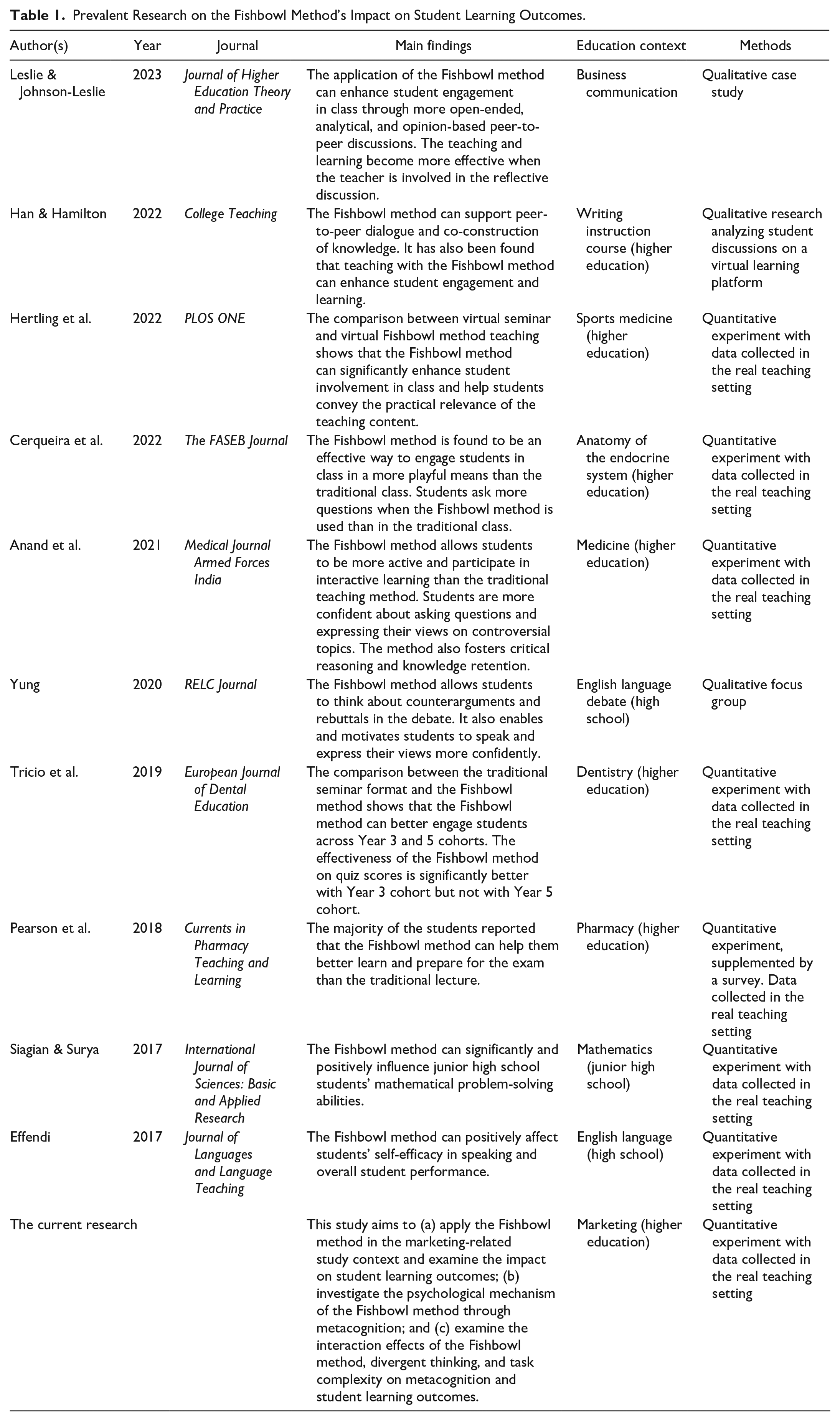
While the Fishbowl method has been extensively applied in various educational settings and shown to positively impact student performance, there is limited understanding regarding (a) its application and effectiveness in marketing analytics-related courses and (b) the underlying psychological mechanisms driving its impact on student learning. The current research proposes that the Fishbowl method can affect student performance in marketing data analytics courses through its impact on students’ metacognition.
Fishbowl Method Enhances Problem-Solving Through Metacognition
The metacognition theory has been embraced in developmental and educational psychology due to its relevance to learning, conceptual understanding, problem-solving, and critical reasoning across diverse educational contexts (Azevedo, 2020). Robust metacognition empowers learners to comprehend their learning processes and pinpoint cognitive deficiencies during problem-solving tasks (Hudson, 2018; Ramocki, 2007). Therefore, metacognition has been recognized as crucial in predicting learning outcomes (Dachner et al., 2017; Fleming & Lau, 2014). The notion of metacognition was originally defined by John Flavell (1979) as the “knowledge and cognition about cognitive phenomena” (p. 906). Flavell (1979) proposed two key components: metacognitive knowledge and metacognitive experience. As the theory progressed, some researchers (e.g., Nelson & Narens, 1990) highlighted the reflection, monitoring, and self-regulation aspects of metacognition, introducing a new dimension of metacognitive regulation.
In this study, we propose that the two-stage process of the Fishbowl method used to teach marketing data analytics courses may influence the components of metacognition. First, metacognitive knowledge pertains to learners’ foundational understanding and knowledge of the concepts and problems at hand, their abilities to solve problems, and their recognition of the factors influencing the problem-solving process (Flavell, 1979; Norman et al., 2019). This aspect can be facilitated by the discussion stage of the Fishbowl method, during which both the fish and observer groups discuss their problem-solving strategies. Previous research on the Fishbowl method has demonstrated that this can stimulate critical thinking, thereby positively impacting students’ comprehension of concepts and their performance (Anand et al., 2021; Han & Hamilton, 2022).
Metacognitive experience encompasses any conscious cognitive and affective experiences that could influence the problem-solving process (Rhodes, 2019). This component reflects an individual’s subjective perception of the learning process (Rummer et al., 2016), including whether the teaching and learning method provides an enjoyable environment for learners to absorb knowledge. Research on the Fishbowl method suggests that assigning students to different roles in the learning process can motivate them to engage in learning in a playful and enjoyable manner (Cerqueira et al., 2022). Other studies also indicate that the Fishbowl method can enhance students’ self-confidence and self-efficacy in expressing their views during the discussion stage (Effendi, 2017; Yung, 2020).
The third component of metacognition is metacognitive regulation, which emphasizes the importance of assessing and reflecting on the problem-solving process (Baker & Brown, 1984; Nelson & Narens, 1990). To induce students’ metacognition, it is also essential for the teaching and learning method to motivate them to reflect on the entire learning process. The Fishbowl method has been found to impact knowledge retention by fostering students’ critical reasoning and confidence in expressing their opinions during student-led discussions (Anand et al., 2021). The reflection process begins from the first stage of the Fishbowl method when students are assigned to fish or observer roles. The fish actively and independently consider how to solve the problem, while observers critically evaluate and reflect on the problem-solving strategies employed by the fish. Reflection among students in different groups continues during the knowledge acquisition stage. Subsequently, during the discussion stage, the student-led discussion, facilitated by the teacher, enables both fish and observer groups to recall their memories and exchange ideas about their perspectives on problem-solving strategies. This addresses the metacognitive regulation on the learners’ self-reflection of what they know and what they do not know (Zhao & Ye, 2020).
Learners’ Characteristics: Levels of Divergent Thinking
Furthermore, Azevedo (2020) underscores the significance of the interactions between metacognition and individual learner differences across various contexts. As metacognition hinges on learners’ motivation to cultivate their metacognitive knowledge, reflect on the learning process, and participate in Fishbowl activities, it is essential to examine how learners’ cognitive characteristics influence metacognition (Flavell, 1981). This study proposes that learners’ level of divergent thinking may interact with the roles (fish/observer) in the Fishbowl method, impacting their metacognition. Understanding learners’ characteristics is crucial, as emphasized earlier, given that each student possesses distinct traits and cognitive styles. Therefore, teachers should customize students’ roles and tasks accordingly. Similarly, roles such as fish and observer in the Fishbowl method should be assigned based on these individual differences.
Divergent thinking is a cognitive process that starts from a goal or topic and explores multiple answers through various pathways. In educational psychology, divergent thinking is an important indicator of individual thinking flexibility and creativity (DeYoung et al., 2008; Kenett et al., 2014). Individuals with lower levels of divergent thinking tend to focus on finding a singular optimal solution, enhancing their self-efficacy through step-by-step processes (Nusbaum & Silvia, 2011). Here, the learner adopts the conventional way of problem-solving, such as following the steps taught by the teacher. In contrast, those with higher levels of divergent thinking explore various solutions without pre-set frameworks, prioritizing the discovery of possibilities (Colzato & Öztürk, 2012; Hommel, 2012). Learners with a high level of divergent thinking involve a high level of cognition, as they need to go through the process of acquiring new knowledge, transforming the knowledge into new ideas, and generating creative and original ideas in the thinking process (Jia et al., 2019).
Personality shaping influences divergent thinking during growth, with no inherent superiority or inferiority associated with different levels (An & Runco, 2016). However, divergent thinking levels impact the development of domain knowledge, with higher levels being more suitable for creative tasks and lower levels for straightforward tasks, such as value management (Chermahini & Hommel, 2010; Mourey, 2019). Divergent thinking is commonly measured through creative tasks, particularly the Torrance Test of Creative Thinking (TTCT), assessing originality, fluency, flexibility, elaboration, novelty, and appropriateness (e.g., Zeng et al., 2011).
Task Characteristics: Task Complexity
In various problem-solving situations, the complexity of tasks moderates the direct effects of variables, as different problems exhibit varying levels of complexity. This is especially the case because the three components of metacognition could be affected by the characteristics of the task. For metacognitive knowledge, learners are required to obtain a good wealth of knowledge when dealing with a more complex task. Kim (2009) discovered that higher task complexity leads to increased engagement among task performers, encouraging using more cognitive clues, such as past personal experiences and logical thinking, to accomplish tasks. In tasks with lower complexity, task performers tend to invest fewer cognitive cues for task completion. In other words, complex tasks require the utilization of more cognitive cues and, consequently, a greater reliance on metacognition. For metacognitive experience, previous research highlights that as task complexity increases, the psychological stress experienced by task performers becomes more significant compared with tasks with lower complexity (Norris, 2022; Skehan & Foster, 2001). For metacognitive regulation, learners are required to have more feedback or direction from peers or teachers to develop their self-reflection when handling more complex tasks (Rhodes, 2019). Dunning et al. (2003) and Griffin et al. (2009) suggest that when learners have insufficient knowledge to deal with a more difficult task, they are less likely to be able to self-assess the task performance.
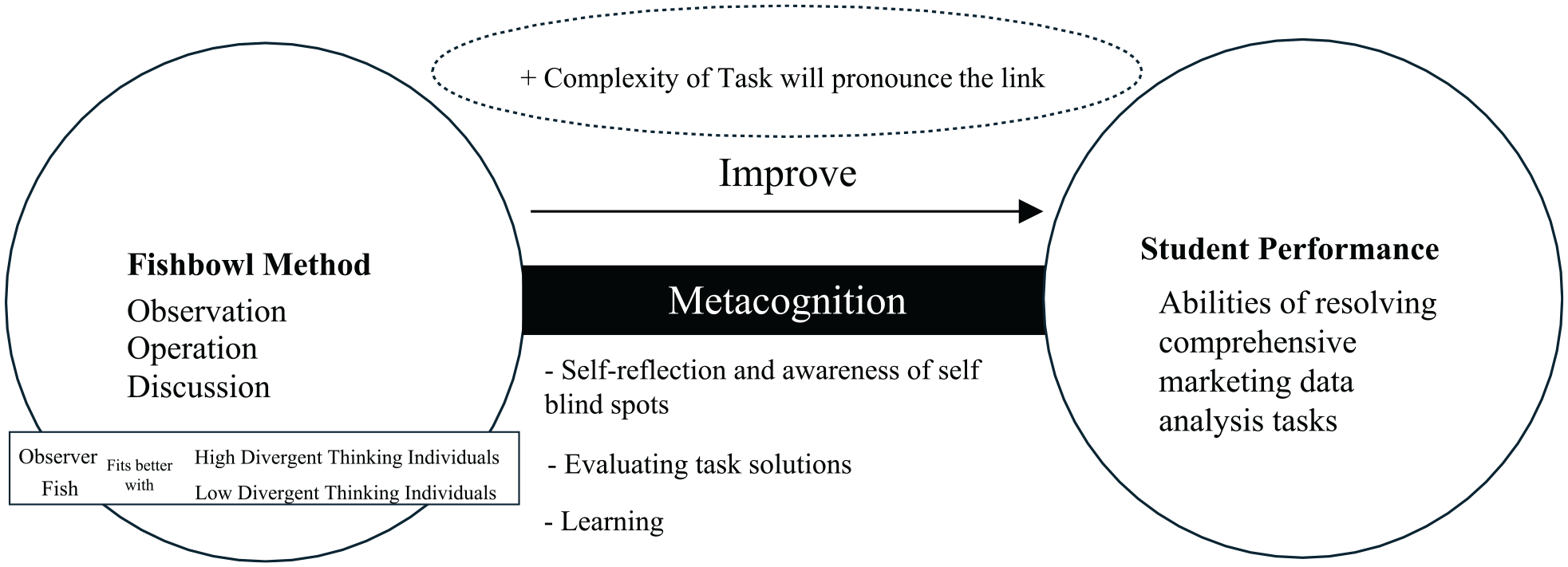
In summary, this study posits that the Fishbowl method can effectively improve students’ performance in marketing analysis tasks by enhancing their metacognitive abilities. The effectiveness of implementing the Fishbowl method to enhance metacognition is expected to be more noticeable with increasing task complexity. Moreover, aligning participants’ divergent thinking levels is crucial, as individual differences among learners’ impact how they learn and enhance metacognition through their roles and tasks as fish or observers.
Figure 2 illustrates the conceptual framework of this study.
Conceptual Framework.
Research Model and Research Hypotheses
Based on the theoretical review and conceptual development presented earlier, this section introduces the hypotheses of this research. Figure 3 shows the research model of this study.
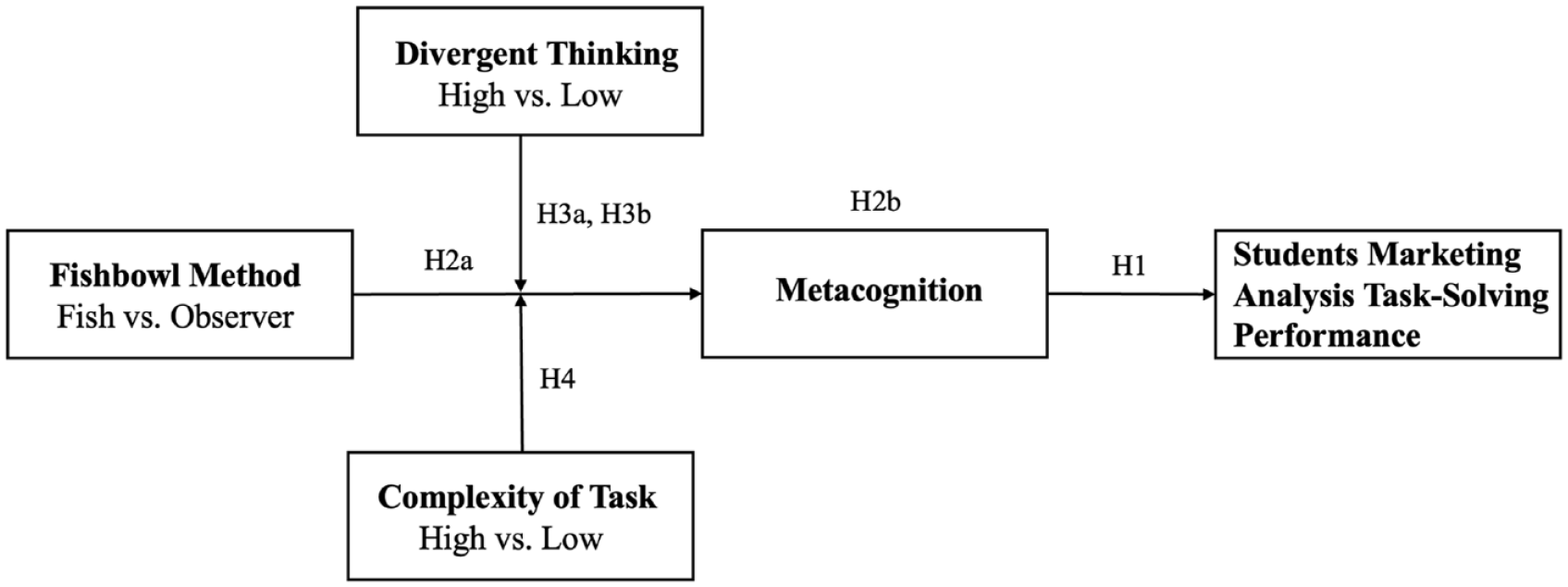
Research and Operating Model.
This study aims to address the primary instructional issue of students’ inability to organize logic among isolated pieces of knowledge and integrate the learned knowledge for application in solving complex, comprehensive problems when learning data analysis techniques. From both theoretical and practical perspectives, students’ metacognitive abilities should have a positive relationship with their ability to solve comprehensive (marketing data analysis-based) problems. In other words, to enhance students’ ability to solve comprehensive marketing data analysis problems, it is essential to strengthen and convey specialized knowledge and improve their metacognition simultaneously (Muijs et al., 2014). Perry et al. (2018) assert that metacognition is effective in mathematics-related courses, which are similar in nature to quantitative marketing data analytics courses in terms of attributes. Broader studies suggest that university students who excel academically often do so by identifying and addressing gaps in their subject knowledge, thereby enhancing their learning effectiveness (Azevedo, 2020; McCormick et al., 2013). In addition, research indicates that stronger metacognition can bolster learners’ self-esteem and confidence, subsequently fostering a more positive learning experience and improved academic performance (Maclellan, 2014; Stankov & Kleitman, 2014). Therefore, we hypothesize the following:
In addition, the Fishbowl method is interrelated with the three components of metacognition: metacognitive knowledge, experience, and regulation. In the first stage of the Fishbowl method, the fish group solves the problem independently, which allows them to build metacognitive knowledge by thinking and finding the solution. In the same stage, when the observer group is actively observing the fish group’s problem-solving strategies, they also develop their own metacognitive knowledge by synthesizing problem-solving strategies. In the discussion stage, when both fish and observer groups get together and discuss the learning process, the student-led discussion may induce further critical thinking and allow all students to reflect on their problem-solving strategies (e.g., Anand et al., 2021), which enables them to develop their metacognitive regulation. Compared with traditional teaching, using the Fishbowl method by assigning students to different roles and tasks can foster students to be more engaged in learning in a more interactive and playful way (Cerqueira et al., 2022; Han & Hamilton, 2022), which affects students’ metacognitive experience. Hence, employing the Fishbowl method in marketing analytics courses may aid students in cultivating their metacognitive abilities and moving away from rote memorization of tasks.
The level of students’ divergent thinking is expected to moderate the impact of the Fishbowl method on enhancing metacognition, particularly when students take on the roles of fish or observer. When students possess lower levels of divergent thinking, the problem-solving and implementation tasks assigned to them as fish encourage convergent thinking to identify what they perceive as the optimal solution during the response process (e.g., Kenett et al., 2014). Students with lower levels of divergent thinking are anticipated to have greater levels of self-learning reflection and metacognitive enhancement by initially acting as fish and subsequently discussing blind spots in their data analysis with observers. Through learning and discussing the creative and original solutions provided by the observers, they are more likely to develop their metacognitive knowledge and regulation. Consequently, these students are more likely to find the learning process enjoyable.
Conversely, when students exhibit higher levels of divergent thinking, characterized by their ability to transcend cognitive frameworks and their inclination toward multiple potential solutions (e.g., DeYoung et al., 2008), the role of observers enables them to explore various solution paths by analyzing the data and proposals put forth by the fish. This allows them to reflect on the strengths and weaknesses of their problem-solving approach, which reinforces effective strategies or enhances task-solving methods gleaned from observing the fish role, thereby proposing more comprehensive solutions. Consequently, it is expected that students with higher levels of divergent thinking will undergo more significant metacognitive enhancement when taking on the role of observers compared with when they assume the role of fish.
The complexity of tasks is expected to influence students’ application and enhancement of metacognition. When tasks have lower complexity levels, requiring fewer cognitive cues, the necessity of metacognition for students to complete tasks is less apparent overall (e.g., Kim, 2009). In addition, the inspirational impact of metacognition on students assuming different roles in the Fishbowl method will be less pronounced, depending on their levels of divergent thinking. Conversely, when facing tasks with higher complexity, the importance of metacognition increases due to the need for more solid fundamental knowledge, stronger self-reflection, and a more positive attitude toward learning (Norris, 2022). This is because when handling more complex tasks, students require higher motivation to sustain their learning. Therefore, a more interactive learning approach using the Fishbowl method and involving peer-to-peer discussion and feedback can foster stronger metacognition (Rhodes, 2019). Given this, when employing the Fishbowl method, the appropriate combination of roles—such as assigning fish roles to students with lower levels of divergent thinking and observer roles to those with higher levels—becomes crucial for students to enjoy their learning and enhance its effectiveness through metacognition. Therefore, task complexity is expected to moderate the interaction effect of the Fishbowl method and divergent thinking on metacognition.
In other words, the effects of H3a and H3b will be more pronounced when the task complexity is high.
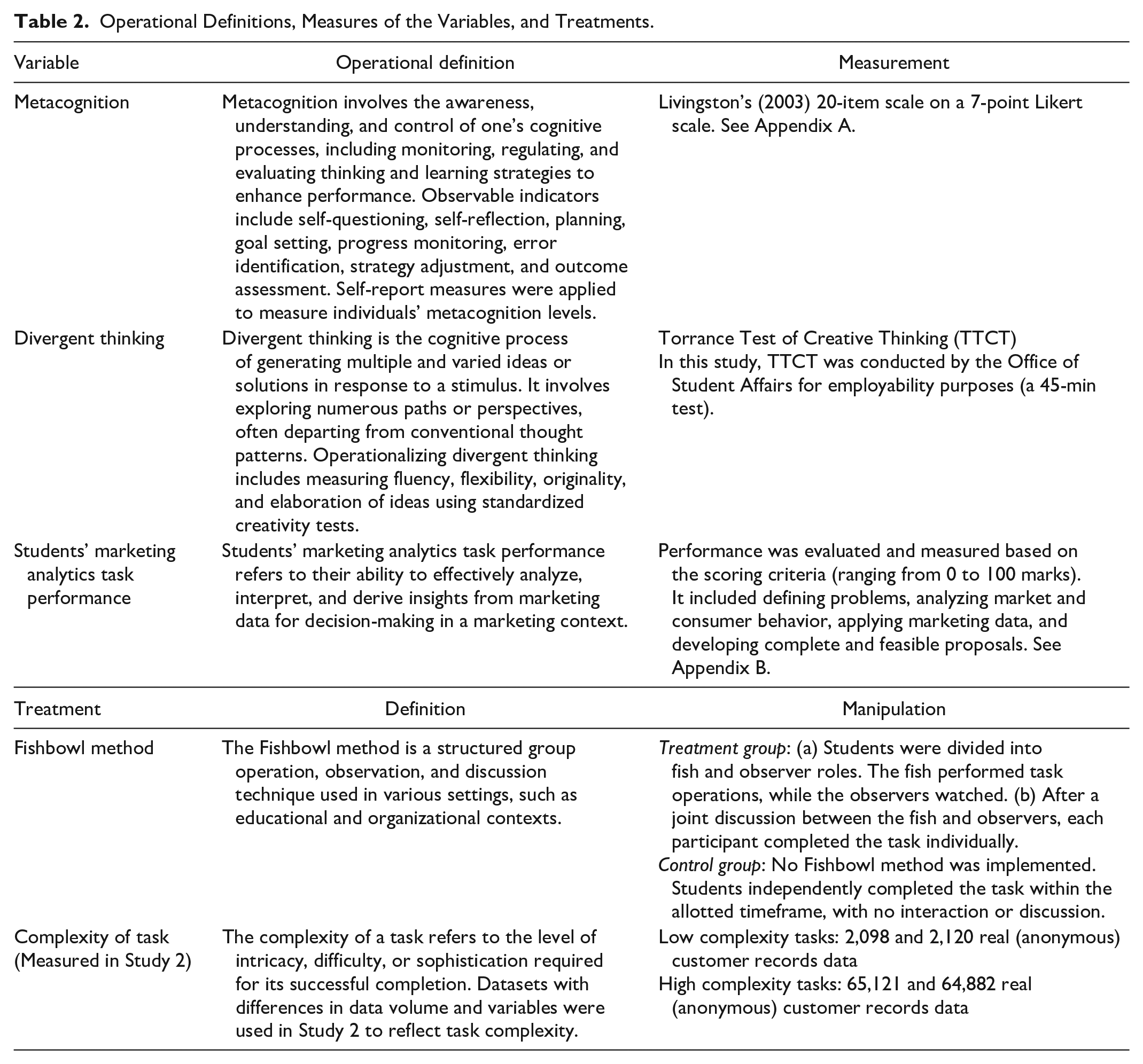
To evaluate participants’ divergent thinking, students took TTCT before the course started. The Office of Student Affairs of the author’s affiliate university conducted the TTCT for employability purposes. Metacognition was measured using Livingston’s (2003) 20-item scale on a 7-point Likert-type scale (Appendix A). Performance was evaluated based on the scoring criteria in Appendix B (ranging from 0 to 100 marks), which were collaboratively developed and agreed upon by the three industry practitioners and the two marketing professors. Further details are outlined in the “Method” section. Operational definitions, measures of the variables, and treatments are outlined in Table 2.
Operational Definitions, Measures of the Variables, and Treatments.
Method
Two field experiments were conducted. Study 1 aimed to assess the effects of the Fishbowl method on metacognition compared with a control group and examine the boundary condition of students’ metacognition concerning divergent thinking. Building on Study 1, Study 2 aimed to replicate results, enhance external validity using different samples, and investigate the boundary condition of task complexity through a within-subject comparison of examinations with varying levels of complexity.
A marketing analytics course taught in English and provided by an internationally recognized university in Taiwan was the primary context for the practical application and research of the Fishbowl method. This research was funded by the Taiwan Ministry of Education (MOE) Teaching Practice Research Subsidies Program, and the teaching measures received ethical approval from the authors’ affiliated university. The implementation process was transparently communicated to the participants (students), and their participation was obtained through signed consent forms, ensuring autonomy and confidentiality. In addition, the classrooms where this research was conducted were centrally managed by the university and adhered to safety standards to ensure that students were not exposed to potential harm. In addition, before implementing the method, the lecturer announced and ensured the safe use of desks and chairs during classroom mobility to prevent any injuries. Due to the course being offered in the autumn semester of each academic year, the research spanned two cohorts (2022/2023 cohort for Study 1 and 2023/2024 cohort for Study 2). Each semester comprises 18 teaching weeks, with the final week allocated by the university for examinations (no teaching). The course objectives focus on cultivating students’ understanding of marketing data mining and analysis techniques, along with proficiency in using analytical skills for supporting marketing decision-making. The course utilizes “SAS Viya” as the quantitative analysis tool, offering features such as data visualization, natural language processing, advanced analysis, and prediction capabilities.
Study 1
Sample
The course was taken by 41 master’s students (23 females and 18 males, ages 23–29), all of whom were full-time and had completed prerequisite courses in marketing management and basic statistics. A minimal IELTS score of 6.5 for English proficiency was confirmed. A senior lecturer with over 6 years of expertise in instructing English as a second language at a U.K. university oversaw the course.
Pre-Test
To assess students’ ability to solve real-world, complex marketing analysis problems, a data-driven marketing assessment task (data analysis skills for these assessments were covered in the first 6 weeks of the teaching sessions) was collaboratively developed by three industry practitioners, all working in the marketing department of an IT company in Taiwan, and two full-time professors with marketing backgrounds. The task complied with a dataset that included 2,098 real (anonymous) customer records. In order to measure comprehensive analytical and decision-making abilities, the assessment task comprised solving real-world company marketing challenges using data mining. Applying management knowledge and data analysis skills to provide solutions, which were reviewed by businesses. After completing the assessment task development, 10 students (4 males and 6 females) who passed the module in Year 2021 were invited for a pre-study to check the task appropriateness, such as task manageability and wording clarity.
Procedures
First, students were randomly divided into two groups based on the median score (Mdn = 102.58) of their TTCT results—those with higher and those with lower divergent thinking. Subsequently, students were randomly categorized into three groups, with a mixture of high and low levels of divergent thinking in each group. The three groups consisted of the fish group, an observer group (together forming the treatment group for the Fishbowl method), and the control group (where the Fishbowl method was not implemented).
Second, to reduce the confounding factor of task preparations, no prior notification was given about the impending task. The task assessment was conducted during the class in Week 8. Students in the control group were guided to a PC lab and commenced the on-machine (PC) data analysis assessment task. They were not allowed to communicate with one another throughout the entire process. One hundred and seventy minutes were given for the task. Upon completion, the students were required to upload their files onto the course’s online platform within the given timeframe. After submission, the students were instructed to complete the metacognition scale and provide their basic demographic information, including age and gender.
Students allocated to participate in the Fishbowl method (fish group and observer group) were guided to another PC lab. Applied to the targeted curriculum in this study, the role of the fish was to perform the first phase of on-machine (PC) data analysis for 40 min. Simultaneously, the observers walked around, watched, and assessed the fish’s performance and engaged in self-reflection. After 40 min, the fish and observers discussed the assessment tasks for 30 min, and rotations (where observers needed to find another fish for discussion) occurred every 5 min. After the discussion, the fish and observers ceased their discussion and returned to their seats. They began individually completing the assessment tasks, which spanned 100 min. Within the timeframe, students uploaded their respective files onto the course’s online platform and filled out the metacognition scale and their basic demographic information.
The assessments submitted by the students were anonymously evaluated and marked by the three industry professionals who developed the task, two marketing professors, and the course leader/lecturer (comprising three university faculty members and three industry practitioners). The average grade of each student assigned by this panel served as the indicator for assessment performance. Grades, along with the comments for the assessment task, were returned in Week 11.
Findings of Study 1
Testing Hypothesis 1
The metacognition items were averaged to form a unidimensional variable (Cronbach’s alpha = .85). Supporting H1, a regression analysis unveiled a significant positive impact of metacognition on the performance of assessment tasks (β = 4.51, t = 6.70, p < .001, R2 = .73). This indicates that elevated metacognitive abilities are associated with enhanced proficiency in resolving intricate problems related to data analysis in marketing.
Testing Hypothesis 2
An independent-sample t-test was conducted to compare the differences in metacognition between the control group and the Fishbowl method group (comprising fish and observers). The results revealed a significant difference, t(39) = 2.99, p < .01, SE = 0.24, CI [1.34, 0.40], in metacognitive levels in the Fishbowl method group (M = 4.86, SD = 0.92) compared with the control group (M = 4.11, SD = 0.60), indicating that the Fishbowl method is effective in significantly enhancing students’ metacognition. Therefore, H2a was supported.
Using Baron and Kenny’s (1986) method for mediation testing, applying or not applying the Fishbowl method was employed as a dummy variable (with the control group as the baseline) in a regression analysis with assessment task grades as the dependent variable. The results demonstrated a significant positive relationship between the Fishbowl method and assessment task grades (standardized β = .69, t = 5.98, p < .01). Subsequently, regression analysis also indicated a significant positive effect of the Fishbowl method on metacognition (standardized β = .43, t = 2.99, p < .01). In addition, metacognition showed a positive impact on assessment task grades in another regression analysis (standardized β = .73, t = 6.70, p < .01). Finally, a regression analysis incorporating both the Fishbowl method and metacognition as independent variables for assessment task grades revealed that both variables had significant effects, but the standardized beta for metacognition (standardized β = .53, t = 5.48, p < .01) was higher than that for the Fishbowl method (standardized β = .46, t = 4.75, p < .01), suggesting that metacognition partially mediates the relationship between the Fishbowl method and assessment task grades. Thus, H2b was supported.
Testing Hypothesis 3
A two-way ANOVA revealed a significant interaction between divergent thinking and the roles within the Fishbowl method, F(2, 35) = 6.23, p < .01, Table 3, Figure 4. When students exhibited lower levels of divergent thinking, the fish role in the Fishbowl method effectively enhanced metacognition (M Low divergent thinking-Fish = 5.13, SD = 0.84 vs. M Low divergent thinking-Observer = 4.13, SD = 0.64, p < .01). Conversely, when students demonstrated higher levels of divergent thinking, the observer role in the Fishbowl method achieved a more pronounced improvement in metacognition (M High divergent thinking-Fish = 4.67, SD = 0.52 vs. M High divergent thinking-Observer = 5.57, SD = 0.97, p < .01). Therefore, both H3a and H3b were supported. Noticeably, no significant metacognition level difference (p = .062) was found between high divergent thinking (M = 4.17, SD = 0.41) and low divergent thinking (M = 3.83, SD = 0.75) in the control group, suggesting that divergent thinking does not have a direct effect on an individual’s metacognition.
Interaction Between Divergent Thinking and the Fishbowl Method.
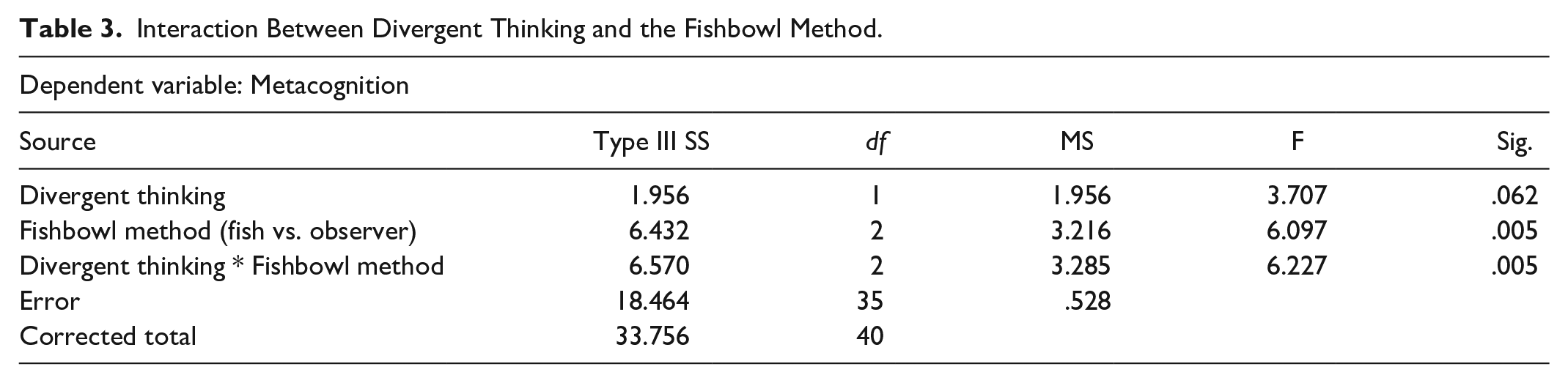
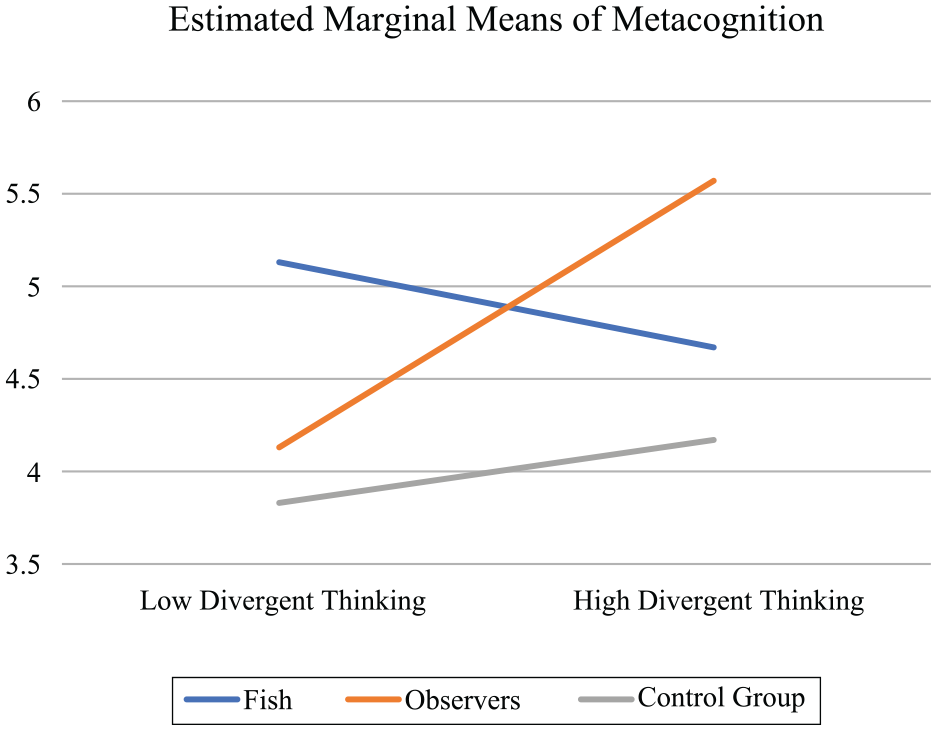
Interaction Between Divergent Thinking and the Fishbowl Method.
Discussion
The A/B testing in Study 1 evidenced that the Fishbowl method effectively enhanced students’ metacognition and further improved their ability to excel in comprehensive marketing data analysis tasks. In addition, the roles of learners’ characteristics and level of divergent thinking are noteworthy, as they play a crucial role in the Fishbowl method. Students with lower levels of divergent thinking were better suited to focus on the task when taking the fish role and correct their blind spots through discussions. Contrastingly, students with higher levels of divergent thinking reflected on their solution blind spots through observation.
Despite Study 1 providing reasonable evidence of the effectiveness of the Fishbowl method in practical course operation, several considerations may arise. First, A/B testing is generally not used (or at least should not be frequently used) in a class, as no student should be designated as a control group for the whole teaching semester, potentially missing out on the opportunity for enhanced learning. Second, university courses typically span beyond 6 weeks, prompting inquiries into the sustained effectiveness of the Fishbowl method when employed more than once within a course. Third, as the course progresses, the content and complexity of data analysis techniques become more advanced and complex, necessitating further investigation into whether the mediation of metacognition is still crucial.
To address these concerns, we conducted Study 2, employing a within-subjects design (students alternated roles as fish or observers in two Fishbowl method tasks) and incorporating the entire semester’s course content to manipulate task complexity. This design aimed to confirm the Fishbowl method’s effectiveness further and examine metacognition’s role in handling the increasing complexity of tasks as the course unfolds.
Study 2
Sample
A total of 39 master’s students (21 females, 18 males, aged 23–29 years), all full-time, completed prerequisite undergraduate marketing management and fundamental statistics modules with documented evidence. All students met the minimum language proficiency requirement of an IELTS score of 6.5. The course was led by the same lecturer as in Study 1.
Measurements and Pre-Test
For the data-driven marketing assessment tasks design, two assessments involved relatively low complexity tasks, one utilizing a dataset of 2,098 customer records (the same as the task developed and used in Study 1) and the other with a dataset of 2,120 customer records. All customer data utilized in this study were actual data and were anonymized for confidentiality. The necessary data analysis skills for these assessments were covered in the first 6 weeks of the teaching sessions (consistent with Study 1). The other two assessments presented more challenging and complex tasks, one with a dataset of 65,121 customer records and the other with 64,882 customer records. The required data analysis skills for these assessments included the initial 6 weeks of the teaching sessions and the content from Week 8, Week 9, and Weeks 12–17. These assessments were collaboratively developed by the three industry practitioners and the two full-time professors of marketing (the panel members were identical to those in Study 1). After developing the assessment tasks, 17 students (8 males and 9 females) who passed the module in 2021 were invited to rate the difficulty levels (ranging from 0 [low complexity] to 100 [high complexity]) of the 4 assessments. The results indicated a successful complexity design, M lower complexity assessment 1 = 53.77, SD = 5.71 vs. M lower complexity assessment 2 = 56.21, SD = 6.42, t(32) = 1.34, p = .66; M higher complexity assessment 1 = 83.24, SD = 7.32 vs. M higher complexity assessment 2 = 79.92, SD = 5.50, t(32) = 2.12, p = .81. A comparison of the four groups with ANCOVA (the final marks of these students from the previous year were utilized as a covariate, p = .24, n.s.) revealed a significant difference, F(3, 63) = 7.64, p < .01, with the two higher complexity assessments having significantly higher mean values compared with the two lower complexity assessments. The 17 students also helped check the task appropriateness.
Again, supported by the Office of Student Affairs, students’ divergent thinking levels were evaluated by the TTCT. Notably, for implementing a paired-sample study design, the students’ initial metacognitive levels were evaluated and completed using the metacognition scale (Livingston, 2003) upon the course registration (at the end of the spring semester in the 2023 academic year).
Procedures
In the first week, students were identified as having relatively high or low divergent thinking based on the students’ TTCT median scores (Mdn = 106.37). Students were randomly divided into two groups; each group had a mixture of high and low divergent thinking individuals. The students were not informed about the purpose of the group allocation; they were only told that the grouping would be utilized for in-class activities.
The first assessment task (no Fishbowl method implementation): The first assessment task (using Lower Complexity Assessment Task 1; 2,098 customer records) was conducted in the class of Week 7. Without prior notification of an impending task, each student individually solved the task in a PC lab, with a 170-min time limit for answering and subsequent uploading of responses. No answers or comments were provided to the students at this stage after they had completed the task. This assessment task was utilized as the control group to be compared with the results of the assessment task in Week 10.
The second assessment task (the first implementation of the Fishbowl method): The second assessment task was implemented in a PC lab in Week 10 (no prior notification, using Lower Complexity Assessment Task 2; 2,120 customer records). For this second task, the Fishbowl method was applied. The group allocation in Week 1 was used; one group was assigned as fish, and another was assigned as observers. Consistent with the procedures in Study 1, the fish performed the first phase of on-machine data analysis (40 min); meanwhile, the observers walked around and observed the fish. After 40 min, the fish and observers discussed the assessment tasks. The discussion rotations occurred every 5 min. After 30 min of discussion, both the fish and observers returned to their seats to complete the assessment task (100 min). After submitting their assessment files on the course’s online platform, the students were instructed to complete the metacognition scale, along with providing basic demographic information. Grades and comments for both tasks were released in Week 13 (the panel members evaluated and graded the assessments, and the resulting grades were averaged).
The third assessment task (no Fishbowl method implementation) and the fourth assessment task (the second implementation of the Fishbowl method): The above processes were repeated in Weeks 14 and 18, with an increase in task complexity for each (Higher Complexity Assessment 1: 65,121 customer records and Higher Complexity Assessment 2: 64,882 customer records, respectively). The group assignment was reversed; the group initially designated as fish/observers were reassigned as observers/fish.
Findings of Study 2
Verifying Hypothesis 1
The metacognition items were averaged to form a unidimensional variable (Cronbach’s alpha = .82). A regression analysis was conducted by combining metacognition participant responses from Low Complexity Assessment 2 and Higher Complexity Assessment 2. The analysis (with metacognition after the Fishbowl method as the independent variable and post-Fishbowl method performance as the dependent variable) revealed a significant positive relationship between the level of metacognition and the ability to solve comprehensive (data analysis) problems (β = 2.34, t = 4.53, p < .001, R2 = .54). H1 was again supported.
Verifying Hypothesis 2
A paired-sample t-test was conducted to examine whether the Fishbowl method could significantly enhance learners’ (a) metacognitive levels and (b) ability to solve comprehensive problems. The first set of paired-sample t-test results revealed a significant overall improvement in learners’ initial metacognitive levels after implementing the Fishbowl method, M initial metacognitive levels = 4.12, SD = 1.38 vs. M after implementing the Fishbowl method = 4.76, SD = 1.28, t(77) = −5.63, p < .001, CI (−0.87, −0.41).
The second paired-sample t-test indicated a significant result, t(77) = −14.24, p < .001, CI (−9.22, −6.96), with an average score of 73.15 (SD = 6.77) before the implementation of the Fishbowl method and an increased average score of 81.24 (SD = 7.01) after implementation. Therefore, H2a was supported.
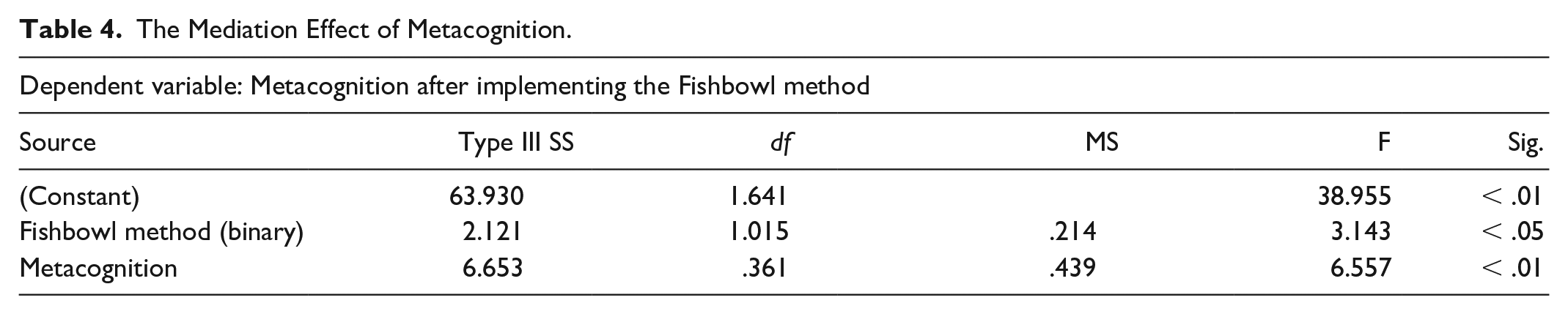
A regression analysis indicated that (Table 4) with the inclusion of the metacognitive variable, the impact of the Fishbowl method on post-Fishbowl method scores diminished (Standardized beta = 2.121, t = 3.14, p < .05). Although its influence was lower than the effect of metacognition on post-Fishbowl method scores (Standardized beta = 6.653, t = 6.56, p < .01), it remained statistically significant. Therefore, it was observed that metacognition partially mediated the positive impact of the Fishbowl method on learners’ ability to solve comprehensive problems. Thus, H2b was supported.
The Mediation Effect of Metacognition.
Verifying Hypothesis 3
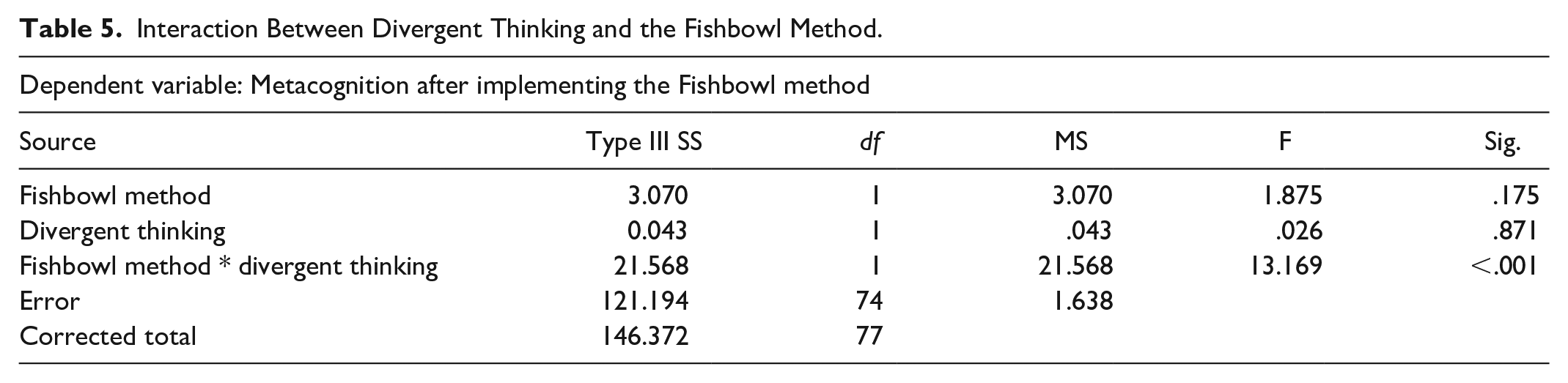
A two-way ANOVA revealed a significant interaction effect between the Fishbowl method and divergent thinking on post-Fishbowl method metacognition, F(1, 74) = 13.169, p < .001, Table 5. For students with a lower level of divergent thinking, their improvement in metacognition through the Fishbowl teaching method was greater when taking on the role of a fish compared with the role of an observer (M Fish = 5.10, SD = 2.72 vs. M Observer = 4.44, SD = 3.59, p < .01). Conversely, when learners exhibited a higher level of divergent thinking, the enhancement in metacognition through the Fishbowl teaching method was greater when playing the role of an observer compared with the role of a fish (M Observer = 5.45, SD = 3.58 vs. M Fish = 4.01, SD = 3.20, p < .01). Thus, supports of H3a and H3b were verified.
Interaction Between Divergent Thinking and the Fishbowl Method.
Testing Hypothesis 4
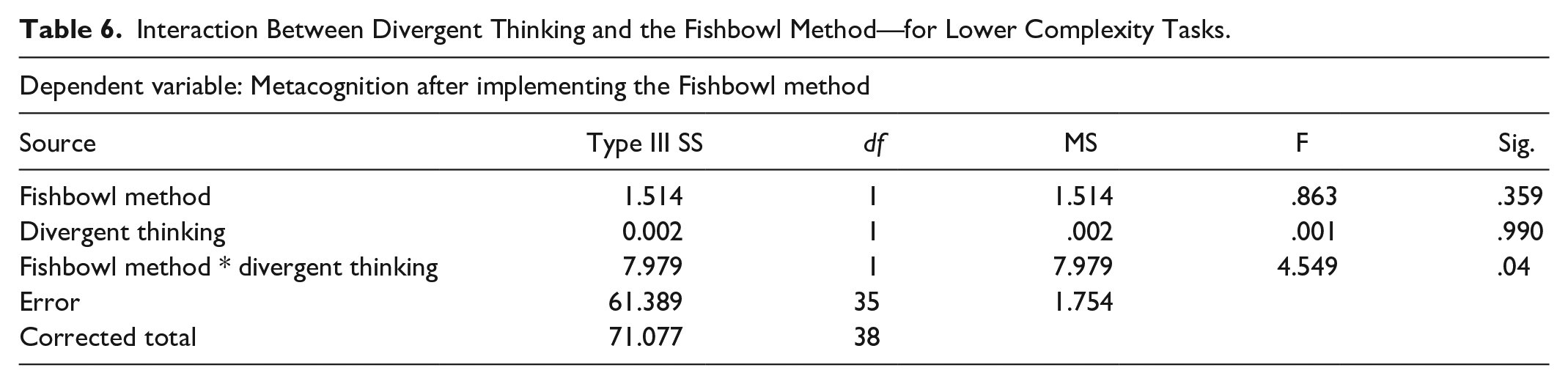
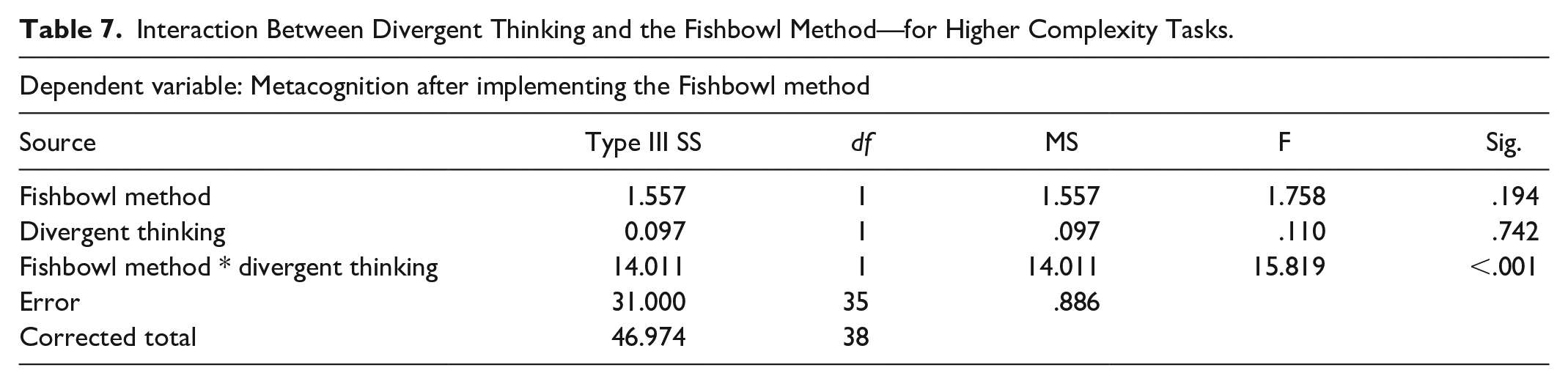
The results of two sets of two-way ANOVA indicated that the impact of the Fishbowl method on the level of metacognitive differences among students playing the roles of fish or observers varies under different task complexities. Specifically, concerning less complex assessment tasks, when the students used the Fishbowl method in the easier task scenarios, the degree of improvement in metacognition was lower, F(1, 35) = 4.55, p < .05, Table 6. In contrast, for the more challenging (higher complexity) task scenarios, the impact of the Fishbowl method on the level of metacognitive differences among students playing the roles of fish or observers was significantly greater, F(1,74) = 13.17, p < .001, Table 7.
Interaction Between Divergent Thinking and the Fishbowl Method—for Lower Complexity Tasks.
Interaction Between Divergent Thinking and the Fishbowl Method—for Higher Complexity Tasks.
To be more specific, comparing the high complex task, low divergent thinking and “fish” role scenario (M = 5.80, SD = 0.92) with the high complex task, low divergent thinking and “observer” role scenario (M = 5.03, SD = 1.12), the Cohen’s d (=0.751) was more robust than the Cohen’s d (=0.374) of comparing the low complex task, low divergent thinking, and “fish” role scenario (M = 4.40, SD = 1.27) with the low complex task, low divergent thinking, and “observer” role scenario (M = 3.89, SD = 1.45). Similarly, comparing the high complex task, high divergent thinking, and “fish” role scenario (M = 4.50, SD = 0.97) with the high complex task, high divergent thinking, and “observer” role scenario (M = 6.12, SD = 0.74), the Cohen’s d (=1.65) was stronger than the Cohen’s d (=1.008) of comparing the low complex task, high divergent thinking and “fish” role scenario (M = 3.50, SD = 1.18) with the low complex task, high divergent thinking, and “observer” scenario (M = 4.80, SD = 1.39). In other words, the effects of H3a and H3b are pronounced (Figure 5). The findings supported H4.
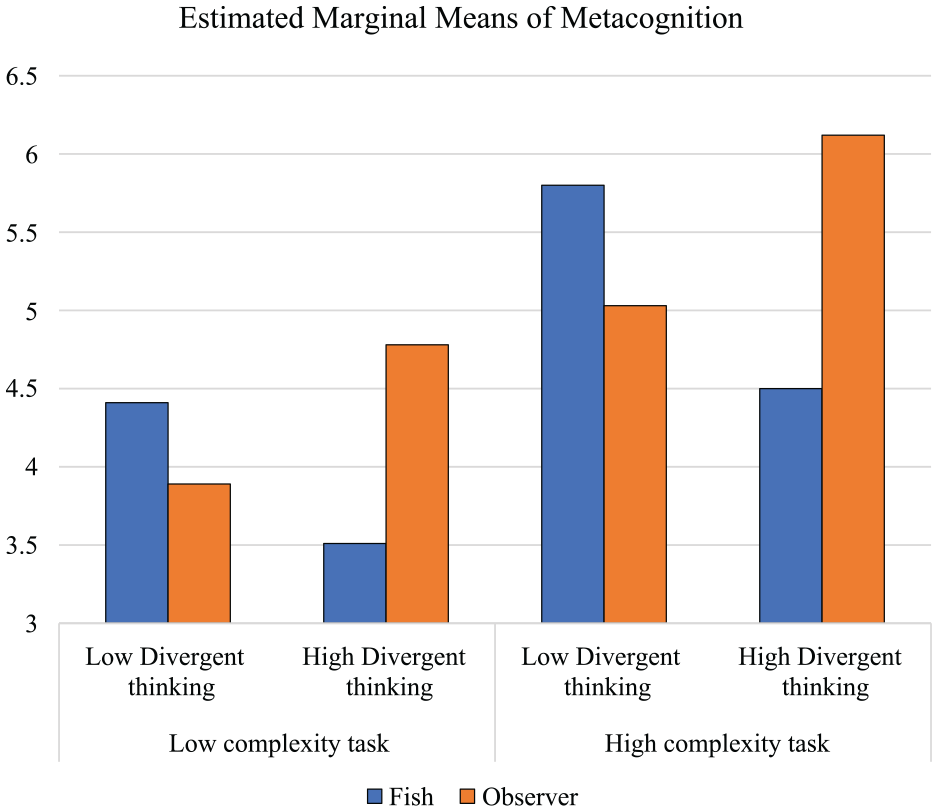
The Pronounced Effect of the Complexity of the Task.
General Discussion, Implications and Future Research
As indicated by Donthu et al. (2021) in their review and forward-looking research, more educational studies are encouraged to propose innovative or renovative teaching methods and focus on being theoretically grounded. With the growing importance of marketing data analysis and the increasing number of universities offering courses related to marketing analytics, this research extends the advantages of incorporating the Fishbowl method into marketing analytics courses with the psychological mechanism of metacognition.
The present research contributes to the existing literature in three ways. First, while previous research found that the Fishbowl method can influence student learning outcomes in various subjects (e.g., Han & Hamilton, 2022; Hertling et al., 2022), this research is the first to adopt the Fishbowl approach in a marketing-related course. The higher impact of using the Fishbowl method, compared with the traditional class (i.e., control group), on student learning outcomes also suggests that the role of the teacher is changing in marketing data analytics courses toward a more student-driven learning environment, which provides another empirical confirmation, as suggested by Crittenden (2024). Second, this is also pioneering research to uncover the underlying psychological mechanism of metacognition driving the impact of the Fishbowl method on student learning outcomes. We highlight that the role-playing aspect of the Fishbowl method enhances students’ learning experience, the discussion between fish and observers strengthens their knowledge, and the overall process invisibly reinforces their regulation. This provides an explanation of the effects of the Fishbowl methods through the metacognition theory, which addresses previous calls for research to investigate theoretically driven teaching techniques (Donthu et al., 2021). Third, our research sheds light on the boundary conditions of adopting the Fishbowl method on metacognition in terms of its interplay with divergent thinking and task complexity. Students with low divergent thinking were more suitable for the role of fish, focusing initially on their own problem-solving thoughts, while those with high divergent thinking performed better as observers. Through observation and reflection, they internalized different problem-solving methods into their knowledge, further enhancing metacognition and problem-solving abilities. This finding adds to the Fishbowl method literature on considering the individual differences with different roles of the Fishbowl method (Azevedo, 2020). Task complexity can also strengthen the impact of the interaction between different roles of Fishbowl and diverse levels of divergent thinking of the learner on metacognition.
These research findings hold significant implications for marketing analytics teaching practice. It is encouraged that marketing educators integrate the Fishbowl method into marketing education curricula, as it not only enhances our comprehension of teaching theories but also offers practical applications. With the highlight of metacognition in our research, we suggest that when learning and applying data analytical techniques, marketers must understand the potential joint application of different techniques to solve more complex data-driven problems in the real world comprehensively. This can derive optimal solutions to bolster marketing decisions. In addition, in marketing analytics, beyond independent operational skills, marketers must also consider the rationale behind their colleagues’ data analysis approaches. They need to evaluate and reflect on their own data analysis processes to excel in this field. The application of the Fishbowl method in marketing data analytics courses aligns with these real-world scenarios; not only does it enable students to enhance their own metacognition, but it also facilitates knowledge sharing through the collaboration between fish and observers. Furthermore, the findings indicate that educators should adeptly assign learning roles to students, considering their divergent thinking approaches. Universities and colleges can collect students’ divergent thinking tendencies through student registration and use the data to inform teachers about role allocation when implementing the Fishbowl method. This tailored approach can effectively boost students’ metacognitive abilities and address the challenges posed by diverse task complexities.
While the research outcomes of this study are substantiated across two studies with distinct samples, future research is encouraged to scrutinize whether the findings can be replicated in other non-data-driven marketing courses, such as role-playing in services and retail marketing. Furthermore, our findings are delimited by a relatively modest sample size from the two studies due to the small-group teaching nature of the Fishbowl method (e.g., Sutherland et al., 2012). The sample size also reflected that of actual master’s class sizes in Taiwanese universities, ensuring the validity of the study’s measurements; consistency between the outcomes of the two studies was also found, further supporting the study’s reliability. Future research endeavors are encouraged to explore the application of the Fishbowl method across classrooms of varying sizes, such as large undergraduate classes or small workshop-based cohorts, to ascertain whether its effectiveness is influenced by class size.
In addition, while the present findings indicate that learners’ characteristics and task complexity serve as two boundary conditions influencing the relationship between the Fishbowl method and metacognition, the examination is limited to divergent thinking and the complexity level of the task. Future research could broaden these parameters by considering additional boundary conditions along the same lines, such as the complexity of the teaching content or other personal characteristics, such as the personality traits of the learners.
Mindful of the potential challenges associated with significant alterations to the course format, the research centers its investigation on a graduate-level course. This deliberate decision seeks to minimize unforeseen disruptions to the sample while providing nuanced insights into applying the Fishbowl method in this specific educational context. Future studies are encouraged to broaden the inquiry scope by exploring the Fishbowl method’s application in diverse educational settings. This could encompass undergraduate students with limited practical experience—which would offer a unique perspective on the method’s effectiveness—or executive MBA students endowed with substantial industry experience. It would be valuable to understand how the Fishbowl method applies and impacts different educational contexts.
Finally, although Taiwanese universities are increasingly aligning their course designs with top-tier global institutions and have obtained international business and management school accreditations, cultural differences may persist. For instance, while Taiwanese students typically demonstrate strong mathematical abilities, they may exhibit a tendency to be more reserved in sharing their opinions. Future studies could investigate the application of the Fishbowl method in diverse countries and cultural contexts to better understand its efficacy and adaptability.
Conclusions
To reiterate, three issues are identified in the marketing analytics classroom: (a) students tend to focus too much on individual data analysis methods and lack the ability to integrate and apply them to solve complex problems; (b) students concentrate on their own problem-solving abilities and grades, neglecting opportunities to identify their blind spots from others’ problem-solving logic; and (c) teachers usually do not adjust their teaching approach based on the difference in students’ divergent thinking. This study demonstrates that appropriately applying the Fishbowl method could be a solution. First, the use of the Fishbowl method was found to enhance students’ metacognition and strengthen their ability to apply acquired knowledge to solve integrated marketing data analysis tasks. Second, through role-playing as fish and observers, followed by subsequent interactions, students can reflect on the issues they may have overlooked or failed to consider in their own task-solving logic by observing others’ perspectives. Third, the results of this study suggest that lecturers should allocate roles of fish and observers based on students’ levels of divergent thinking to achieve more effective outcomes.
While teaching hard skills in marketing data analysis courses holds significance, instilling in students a genuine absorption of relevant data analysis techniques and the ability to apply them to solve real business marketing issues necessitates innovation and practicality in teaching methods. It is hoped that this research will inspire more researchers to delve into innovative teaching methodologies to enhance students’ metacognition and improve learning outcomes for students in marketing data analysis courses.
Footnotes
Appendix
Grading Criteria for Task Assessment.
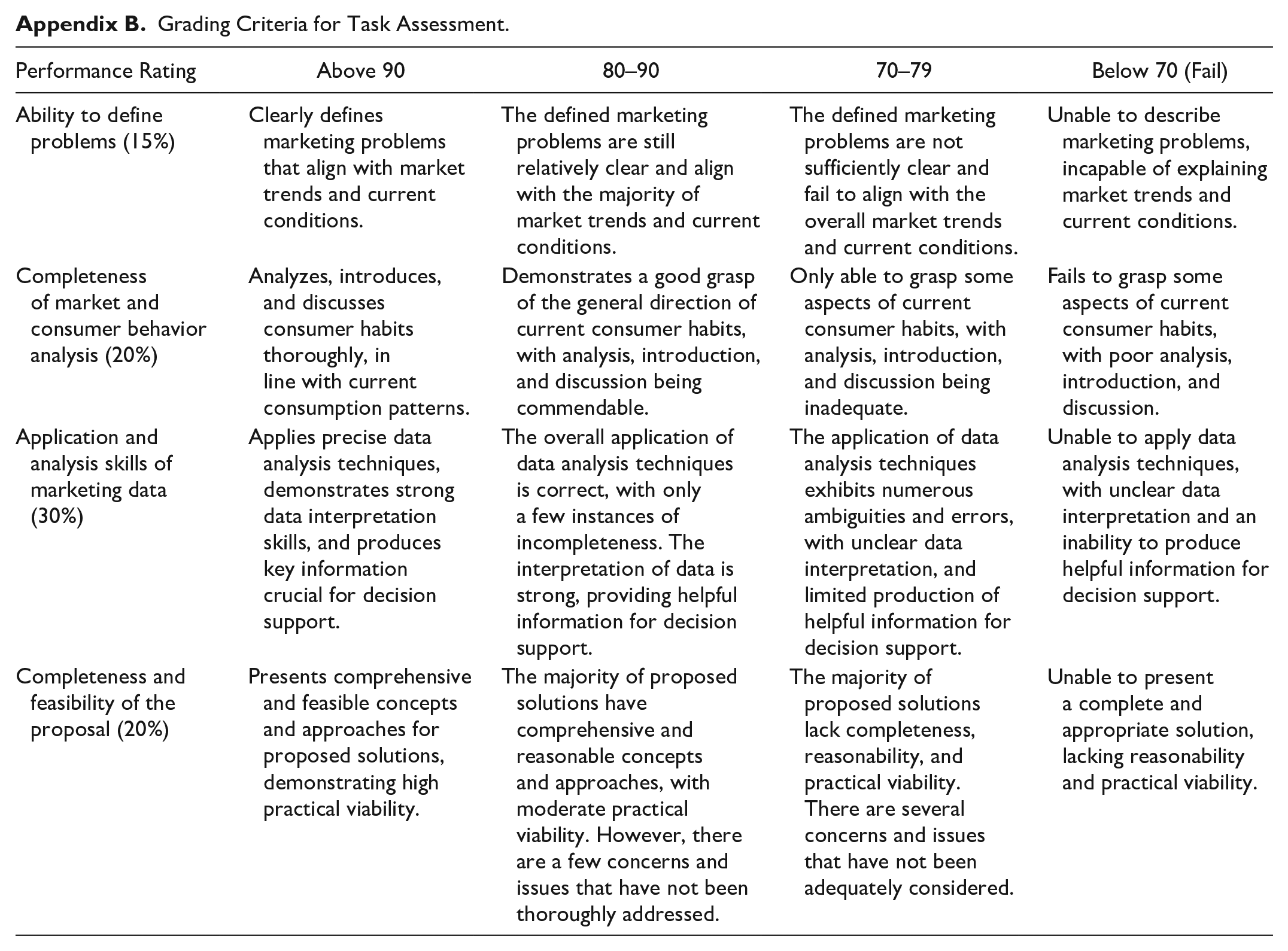
| Performance Rating | Above 90 | 80–90 | 70–79 | Below 70 (Fail) |
|---|---|---|---|---|
| Ability to define problems (15%) | Clearly defines marketing problems that align with market trends and current conditions. | The defined marketing problems are still relatively clear and align with the majority of market trends and current conditions. | The defined marketing problems are not sufficiently clear and fail to align with the overall market trends and current conditions. | Unable to describe marketing problems, incapable of explaining market trends and current conditions. |
| Completeness of market and consumer behavior analysis (20%) | Analyzes, introduces, and discusses consumer habits thoroughly, in line with current consumption patterns. | Demonstrates a good grasp of the general direction of current consumer habits, with analysis, introduction, and discussion being commendable. | Only able to grasp some aspects of current consumer habits, with analysis, introduction, and discussion being inadequate. | Fails to grasp some aspects of current consumer habits, with poor analysis, introduction, and discussion. |
| Application and analysis skills of marketing data (30%) | Applies precise data analysis techniques, demonstrates strong data interpretation skills, and produces key information crucial for decision support. | The overall application of data analysis techniques is correct, with only a few instances of incompleteness. The interpretation of data is strong, providing helpful information for decision support. | The application of data analysis techniques exhibits numerous ambiguities and errors, with unclear data interpretation, and limited production of helpful information for decision support. | Unable to apply data analysis techniques, with unclear data interpretation and an inability to produce helpful information for decision support. |
| Completeness and feasibility of the proposal (20%) | Presents comprehensive and feasible concepts and approaches for proposed solutions, demonstrating high practical viability. | The majority of proposed solutions have comprehensive and reasonable concepts and approaches, with moderate practical viability. However, there are a few concerns and issues that have not been thoroughly addressed. | The majority of proposed solutions lack completeness, reasonability, and practical viability. There are several concerns and issues that have not been adequately considered. | Unable to present a complete and appropriate solution, lacking reasonability and practical viability. |
Declaration of Conflicting Interests
The author(s) declared no potential conflicts of interest with respect to the research, authorship, and/or publication of this article.
Funding
The author(s) disclosed receipt of the following financial support for the research, authorship, and/or publication of this article: The authors have received research funding from The Taiwan MOE Teaching Practice Research Program (PBM1110054).
