



Abstract
This qualitative study aims to explore how a university-level School of Marketing integrates the Sustainable Development Goals (SDGs) into curriculum, using Bloom’s Taxonomy, and to develop a reflective process that could be applied within tertiary education, more broadly. The research investigates the depth of SDG integration, with marketing subject coordinators mapping the Goals within their teachings across Bloom’s dimensions, then identifying and reflecting on how they are embedded. The reflective process has revealed that some subjects are directly mapped to SDGs, for example where students are required to work on an assessment task which relates to a specific Global Goal [1]. The results also show that other subjects are indirectly mapped, such as where subject coordinators discuss topics linked to Goals or Targets but do not explicitly state this content is SDG-related. To effectively implement SDGs within teaching and learning practice, marketing subjects require an evaluation method to identify gaps and opportunities. Therefore, this reflective process enabled subject coordinators to recognize gaps in their own SDG knowledge and teaching, a process through which future marketing subject curriculum modifications can be developed, with possible applications in other disciplines.
Keywords
Meeting the SDGs is an urgent priority, and in fact, Rosenbloom (2022, p. 113) considers a “commitment to sustainable development [as] the most pressing grand challenge currently before the world.” Higher education is critical in developing the awareness needed to address global sustainable development challenges. These challenges have been at the center of the UN’ 17 SDGs, representing a global consensus on the most serious issues facing society (UN, n.d.). Delivering on the SDGs requires a shared commitment from governments, private organizations, and universities; however, less than 50% of researchers, businesspeople, and the media understand the Goals (Frank & Cort, 2020). As such, the UN has placed responsibility on higher education institutions to create strategies to promote sustainable education by supporting the Principles of Responsible Management Education (PRME) (Annan-Diab & Molinari, 2017). Adopting the SDGs is a significant global challenge for higher education institutions (Calderon, 2021) and is attracting increased research attention (Bachnik et al., 2023; Blocker, 2023; Moufahim et al., 2023). Higher education plays a critical role in developing the awareness needed to address global sustainable development challenges (Cortese, 2003).
The current dominant social paradigm of valuing economic growth over ecological and social issues is incongruent for using marketing as a vehicle to help advance the SDGs (Anwar & El-Bassiouny, 2019). However, embedding the SDGs in higher education is critical to move toward a more just society and an environment in which we operate within our planet’s limitations (Lim et al., 2022). Hopefully, these actions, along with other social changes, will signal a shift in the dominant social paradigm from an anthropocentric one to that which is more oriented toward sustainability.
Universities have a crucial role to play as agents of change as shown, for example, within SDG 4 which focuses on providing quality education for all. Tertiary education institutions contribute to the achievement of all the SDGs by promoting the creation of knowledge, fostering innovation, conducting research, and building partnerships (Chankseliani & McCowan, 2021; Owens, 2017). The integration of SDGs in business education has been growing over the last decade (Brocato et al., 2022). Initially, subjects such as Business and Society were added, and there was an argument for embedding SDGs in disciplines where appropriate (Leal Filho et al., 2019). Fundamentally, including sustainability teachings within business degree programs is critical; this can take place through open stakeholder communication, feedback facilitation, and reflection (Weiss et al., 2021).
Marketing educators are integral to the implementation of the SDGs across curriculum as they provide opportunities to create change at both a consumer behavior level (e.g., responsible consumption, fair trade, and social and environmental marketing) and firm level (e.g., corporate social responsibility [CSR], decarbonization strategies, and brand reputation [Voola et al., 2022]). Marketing educators need to rise to this challenge. As noted by Chandy et al. (2021), there is a need to develop better marketing for a better world. The specific challenge for marketing academics is to ensure that students are leaving universities with a deeper knowledge of SDGs through a marketing lens. To achieve this aim, a critical first step is to map where and how the SDGs are integrated into marketing programs. Very little effective curriculum development around the SDGs can be undertaken without first benchmarking what is currently undertaken in subjects. Once this stage has been completed, areas of strength can be used as exemplars, and areas of weakness can be targeted for development. This reflective process can facilitate contemporary SDG teaching which will support students in leaving their marketing program with a comprehensive understanding of the Goals (Kioupi & Voulvoulis, 2020). This reflective process will also aid in identifying the presence of SDGs in teaching; the process of teaching, and subject learning outcomes, also need to be assessed.
The purpose of this research project is to present a process that universities can follow when seeking to embed the SDGs within a marketing program. This research aims to make a theoretical and practical contribution to marketing education as it shows how academics and university administrators can ascertain the degree of integration of SDGs into marketing programs and where opportunities exist for deeper—or expanded—integration. If successfully implemented across marketing programs, students will graduate with a more constructive engagement with the SDGs and their key place within marketing.
In addition, this article aims to identify a reflective process for educators to follow when implementing and teaching SDGs across marketing programs. Bloom’s Taxonomy is a teaching tool that allows educators to comprehensively assess the SDGs through several key stages of student learning, rather than as a dichotomous option, for example is SDG 13 present or not present (Aheisibwe et al., 2021; Pikhart & Klimova, 2019; Velázquez-Iturbide, 2021). To achieve this, emerging SDG issues within marketing education are identified and discussed. Bloom’s Taxonomy is then introduced as a framework that could be useful to mapping SDG teaching in this field. The next section discusses the methodology adopted for this study, leading to the findings and the steps taken in developing the reflective process. Finally, a discussion is presented around the usefulness of the reflective process, and implications for further research are highlighted.
Literature Review
Marketing has the ability to influence and change behavior; therefore, the incorporation of SDGs into marketing curriculum is a matter of urgency (Filho, 2020; Hübscher et al., 2022). As an indicator of corporate commitment, Song et al. (2022) found that more than 60% of Fortune 500 Corporations have adopted the SDG framework. The subject matter of marketing allows a cohesive approach to include SDGs within curriculum (Flight, 2021). Embedding the SDGs ensures that students are equipped with the knowledge and skills needed to foster a sense of global citizenship by developing a deeper understanding of sustainable development, along with the skills and knowledge needed to address possible challenges (Aleixo et al., 2020). In a recent report, education for the SDGs (ESDGs) was a top priority, with emphasis placed on making it integral to the curriculum (United Nations Sustainable Development Solutions Network [UNSDSN], 2020). Universities have an important role in facilitating this sustainability-related change.
While educators are more inclined to adopt new learnings in their curriculum if they can appreciate the value-add to students, they can sometimes be overwhelmed by the rapidly evolving environment and a lack of time and resources (Amhag et al., 2019; UNSDSN, 2020). To incorporate change, staff need to appreciate the importance of the issues at hand and have support from management (Rajabifard et al., 2021).
Tertiary institutions may not have sufficient resources, such as access to materials and subject matter experts, to effectively teach the SDGs. As the SDGs apply to multiple disciplines, institutions may lack coordinated interdisciplinary collaboration necessary to integrate the Goals into the curriculum (Rajabifard et al., 2021). Theory-heavy teaching, outdated curriculum which does not incorporate contemporary knowledge of sustainability, and misaligned assessment methods that may ineffectively measure students’ understanding and ability to apply the SDGs may not prepare students for the challenges and opportunities of the sustainable development agenda (Leicht et al., 2018). Addressing these challenges will require a concerted effort by higher education institutions to revise curriculum, allocate resources, and support cross-disciplinary collaboration to integrate the SDGs into the education experience in a meaningful and impactful way (Kestin et al., 2017).
Voola et al. (2022) state that there could be consequences for students if the SDGs are not considered when developing marketing curriculum, which could result in restricting their employment options. An example of this could be a student creating ineffective tactics that do not solve society’s sustainability concerns, without thoroughly understanding the SDGs and their implications. Modern curriculum representing the marketing sector’s rapid expansion and current sustainability knowledge, practice, and technologies are necessary to students who wish to practice in a modern and dynamic landscape (Leicht et al., 2018).
Integrating SDGs Into Marketing Education
The integration of SDGs into higher education curriculum can be done in several ways. The Goals can be embedded into course content using examples and case studies, promoting discussion and activity to explore options, and helping students to understand their practical implications (Filho, 2020). Furthermore, research and organizational collaboration opportunities enable students to apply knowledge to context-specific situations, contribute to sustainable development initiatives, and build the professional skills and attitudes that are essential to sustainable business (UNSDSN, 2020). Subject coordinators can also work within their department or institution to incorporate the Goals into curriculum, include cross-disciplinary courses that address issues and opportunities, foster a culture of sustainability by promoting awareness and understanding of the SDGs, and encourage students to take personal and collective action that support positive development. As the SDGs apply across multiple disciplines, incorporating interdisciplinary perspectives can help students and staff understand the complex and interconnected nature of sustainability.
The Role of Bloom’s Taxonomy on Marketing Education
Bloom’s “Taxonomy of Educational Objectives” (Bloom et al., 1956) is the best known of the learning taxonomies (Irvine, 2021; Velázquez-Iturbide, 2021). It provides a framework for planning and assessment of learning goals, instruction, and outcomes (Irvine, 2021; Velázquez-Iturbide, 2021) and proposes that education should progress through six different stages of learning: knowledge, comprehension, application, analysis, synthesis, and evaluation. This original taxonomy was designed to assist in categorizing educational goals. However, limitations such as overlapping or inadequate categories and the use of noun descriptors made the taxonomy somewhat vague and difficult to apply, subsequently resulting in the development of a revised version during the 1990s (Anderson & Krathwohl, 2021; Krathwohl, 2002; Masapanta-Carrión & Velázquez-Iturbide, 2018). The top two levels were reversed in this version, issued in 2001, which contained verbs rather than nouns. The revised taxonomy is remember, understand, apply, analyze, evaluate, and create. The levels of the taxonomy are accompanied by active terminology to utilize when developing learning materials. For example, at the “understand” level, teaching academics could apply terms such as “compare,” “describe,” or “discuss.”
Despite being originally developed as an assessment aid, Bloom’s Taxonomy is typically utilized in curriculum design and to establish learning goals (Anderson & Krathwohl, 2021; Hales & Phi, 2021; Hübscher et al., 2022; Lakhal & Sévigny, 2015; Nicholls et al., 2013; Rajabifard et al., 2021; Serafini et al., 2022). The taxonomy can be a valuable tool as student learning and understanding progresses from lower to higher level skills that require deep learning and more cognitive activity (Sobral, 2021) in a process that promotes knowledge transfer (Adams, 2015), and critical thinking. This activity is a way in which students can recognize issues and apply high-order skills for problem-solving (Chidiac & Ajaka, 2018; Supena et al., 2021). The 21st Century Skills framework has identified critical thinking as one of the top requirements of graduates entering the workforce (Rios et al., 2020). The Association to Advance Collegiate Schools of Business International (AACSB) considers critical thinking as having a strong foundation in Bloom’s Taxonomy (Blijlevens, 2023). For students to think critically about the SDGs, they would first be able to analyze, evaluate, and synthesize (the latter is incorporated within the new level of creation) (Taimur & Sattar, 2019).
Importantly, Bloom’s Taxonomy has become an accepted tool utilized within many university marketing programs (Blijlevens, 2023). There are several examples of this shown in research. Berezan et al. (2022, p. 6) presented a qualitative analysis, via Bloom’s lens, of “handwritten reflective journaling assignments” within a marketing course; Blijlevens (2023) developed a framework to teach marketing student design-thinking, based on the critical thinking approach of the Taxonomy; and Watson et al. (2022) used the Taxonomy to include sustainability in an introductory marketing course. This led the research team to develop the following research questions:
Research Question 1 (RQ1): How can marketing educators identify the gaps in the teaching of UN SDGs?
Research Question 2 (RQ2): What process should marketing educators utilize to map SDGs into marketing subjects?
Figure 1 illustrates the process undertaken within this research to identify the relationships between key concepts. The study was informed by the SDGs and Bloom’s Taxonomy, which led the researchers on a six-step process to investigate how to create a mapping process for academics. As discussed earlier, a literature review was conducted to ground the research in relevant theory and contemporary tertiary education practice. This identified the two research questions which later informed the methodology of subject coordinators’ self-reflective practice. The last two steps shown in the figure involve a group reflective discussion on SDG practices for embedment within marketing subjects, which could be applied in other disciplinary contexts.
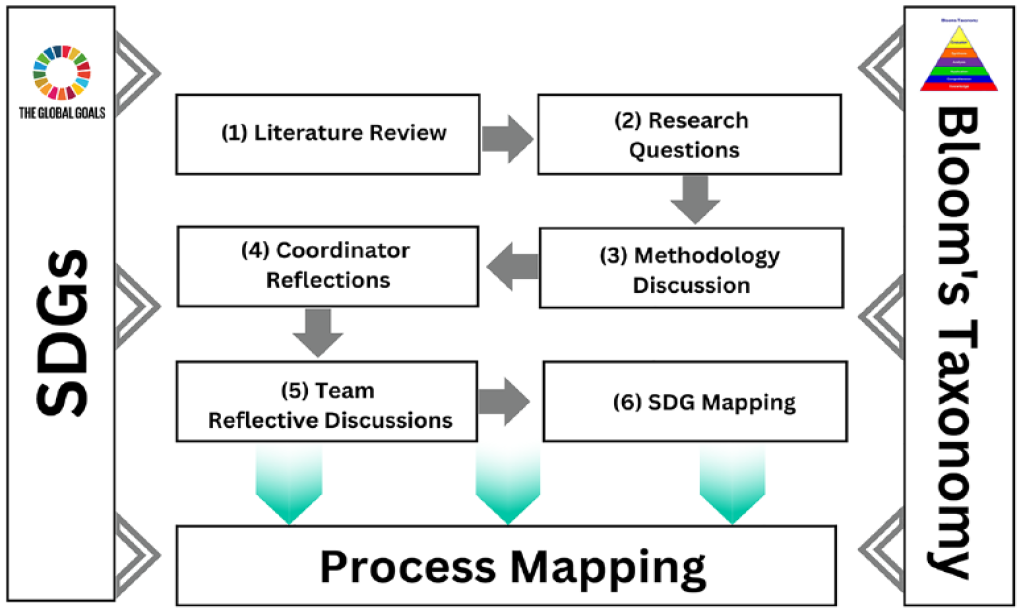
Refining Research Concepts and Hierarchical Relationships.
Method
Self-Ethnography and a Note on Reflexivity and Positionality
This research followed the principles of self-ethnography, which has been utilized previously in marketing education and in a business school setting (Tähtinen et al., 2012). Self-ethnography is a method defined as “a study and a text in which the researcher-author describes a cultural setting to which s/he has a ‘natural access’, [and] is an active participant” (Alvesson, 2003, p. 174). Unlike a conventional ethnographer relying on active participation for an instrumental purpose (e.g., an ethnographer observes how workers use equipment and tools to improve safety and productivity), self-ethnography utilizes a position one is in for other, secondary purposes (i.e., conducting research on the setting of which one is a part) (Alvesson, 2003).
The intention of self-ethnography is to draw attention to one’s own cultural, political, and social background and what goes on around oneself, in a reflexive process (Bryman, 2016), rather than putting one’s experiences in the center (Alvesson, 2003). In other words, this method necessitates an explicit self-awareness and self-evaluation on the researcher’s part regarding their viewpoints and positions and how these may or have influenced the planning, implementation, and interpretation of the study’s findings. This is because, undoubtedly, these factors and the researchers’ competence, morals, and positionality affect the entire research process. Accordingly, reflective practice, reflexivity, and first-person inquiry are needed, making the role and assumptions of the author/s more explicit and vital to the analysis. Particularly, the research team used insider knowledge of the cultural context (Coghlan, 2007) to connect aspects of teaching marketing with that of broader organizational agendas and practices (Boyle & Parry, 2007) such as the goal of integrating the SDGs into the marketing curriculum.
Data Collection and Analysis
The study was conducted at a medium-sized university based in a regional Australian city. In Australian universities, it is typical for students to enter their Major in the first year of study in their chosen degree. For example, students in the Marketing Major in the Bachelor of Business or Commerce will take common business-related subjects (Marketing, Management, Accounting, etc.) in their first year and then finalize their degree with the remaining 2 years of intensive Major study. This structure differs significantly from the U.S. system.
Six marketing academics, who hold PhD degrees and are pedagogically qualified, voluntarily participated in this study. Most of teaching team, except one, are early career academics and completed their PhDs within the last 10 years. Although the study is set in a regional Australian city, the teaching team is diverse, representing Australian, American, and Vietnamese cultural backgrounds. They delivered content across a range of nine subjects in the business school, contributing reflections and personal experiences to discuss how Bloom’s Taxonomy was used to integrate UN SDGs within their subjects. The marketing subjects were both undergraduate level (class sizes of up to 250 students) and postgraduate level (class sizes of up to 100 students).
Following Djajadikerta et al. (2021), participating academics were asked to provide their self-reflections concurrently to allow for the data to be cross-analyzed. The analysis was performed iteratively, including steps such as data condensation, data display, conclusion drawing, and verifications, as suggested by Miles et al. (2014). In the data condensation process, recurring themes were identified and cross-analyzed. As the reflections are the central to the study, two reflexive loops of data analysis (Alvesson, 2003; Tähtinen et al., 2012) were followed. The first round by academics themselves provided reflections on their personal experiences of the teaching of SDGs in their subjects; the second round by the same academics with additional discussions with two other nonmarketing researchers complemented their reflections in a research-focused sense. These loops were important to decrease the risk to validity and avoid self-evident interpretations (Tähtinen et al., 2012) as self-ethnography requires researchers to distance themselves from their own acts, words, assumptions, and positionality (Alvesson, 2003).
The reflective process builds upon the stages put forward by Kestin et al. (2017, p. 3): (1) mapping what we are already doing; (2) building internal capacity and ownership of the SDGs; (3) identifying priorities, opportunities, and gaps; (4) integrating, implementing, and embedding the SDGs within university strategies, policies, and plans; (5) monitoring, evaluating, and communicating their actions on the SDGs.
An investigation was undertaken to explore the degree to which a marketing discipline integrates the UN SDGs using Bloom’s Taxonomy into their undergraduate and postgraduate curriculum. Initially, an email was sent to all colleagues in the marketing discipline, seeking expressions of interest from subject coordinators to join a project to review the teaching of marketing subjects against the SDGs. It was noted that the final set of subjects to be examined was taught by academics with broad knowledge and professional experience and that these subjects were offered at both the undergraduate and postgraduate levels to increase the diversity of sample (see Table 1).
List of Subjects Reviewed.
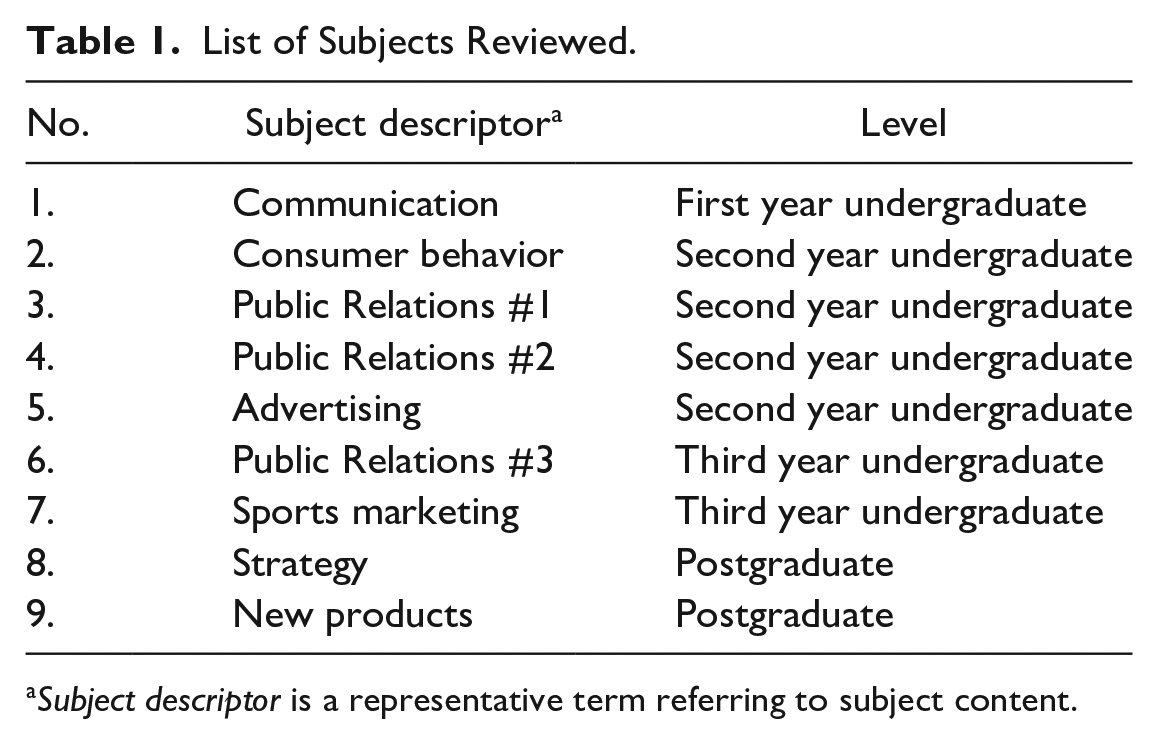
Subject descriptor is a representative term referring to subject content.
After selecting the subjects to be reviewed, a thematic analysis was conducted by searching for the keywords of 17 SDGs within the subject outlines. These keywords were drawn from the SDG Targets and Indicators (UN SDGs, 2023). An example of SDG 3 Good Health and Well-being is shown in Table 2.
Example of SDG Keywords.
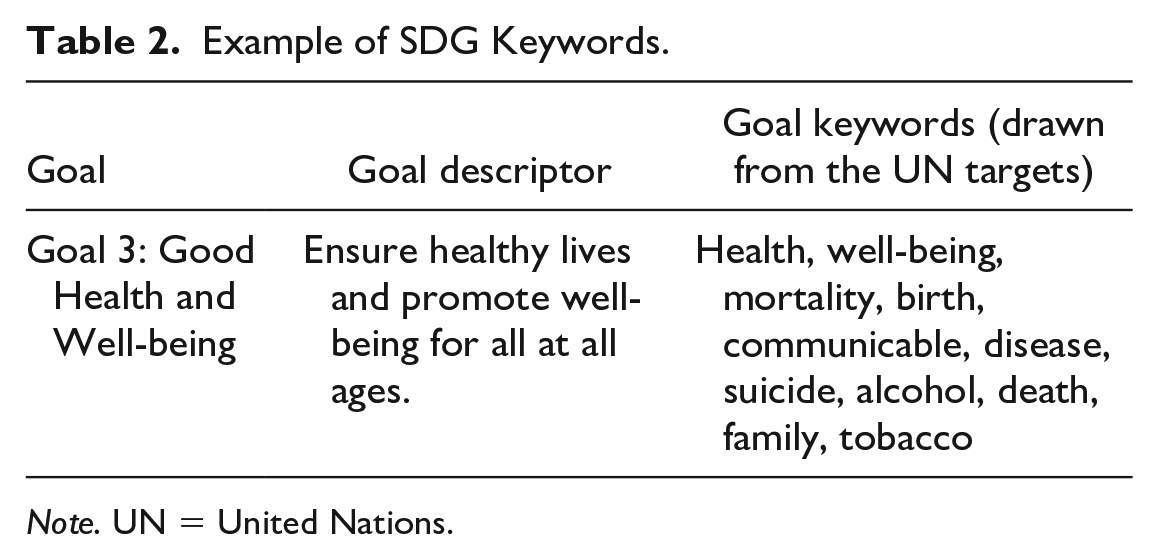
Note. UN = United Nations.
Following this phase, a set of exploratory reflection prompts (Table 3) was created and distributed to participating academics to help them further examine how they crafted the curriculum for their subject regarding Bloom’s Taxonomy and the SDGs. The subject coordinators considered the SDGs in their teaching to determine where the SDGs fit into Bloom’s Taxonomy. To avoid any potential disciplinary biases, a dialogue with two nonmarketing researchers aided each coordinator’s reflection. The same two nonmarketing researchers also conducted the thematic analysis that led to findings and lessons learned.
Sample of Reflection Prompts.
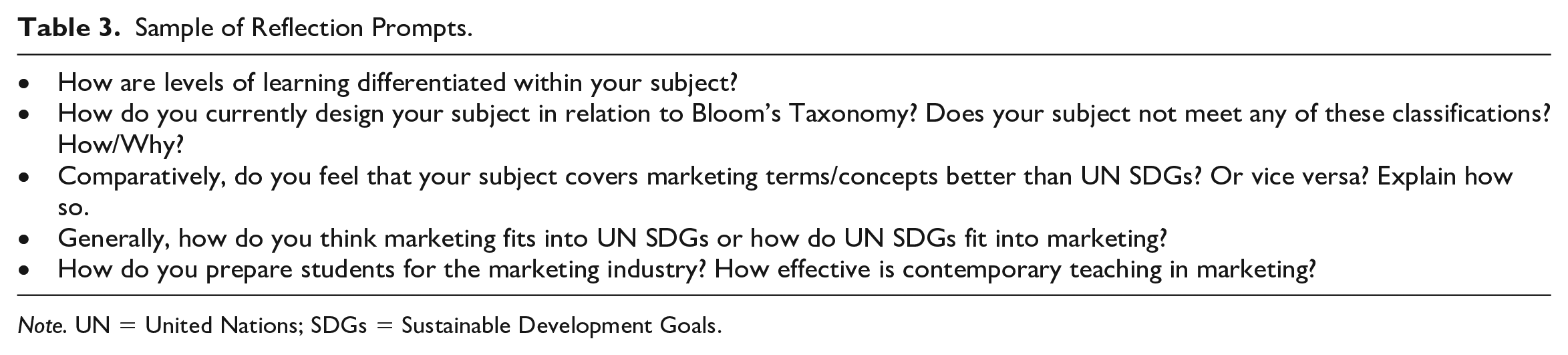
Note. UN = United Nations; SDGs = Sustainable Development Goals.
Emergent findings from the cross-analysis of the reflection notes resulted in further discussion within the research team. Afterward, a visual data display in the form of a heat map was developed to represent key observations and identify opportunities for further improvements of the teaching of SDGs. This established a reflective process which is further elaborated in the “Results” section. It is noteworthy to observe that while a heat map was initially selected to represent data in this particular study, the process that has been developed allows for the alternative use of any visual tool that identifies gaps and potential opportunities in SDG education.
Results
Reflective Process in Action
Building from Kestin et al. (2017), the team developed a five-phase reflective process to enable marketing subject coordinators to discover and reflect on how UN SDGs are currently embedded within their teaching and learning using Bloom’s Taxonomy. Figure 2 visually represents these phases. Moving through each one enabled the subject coordinators to identify gaps and opportunities for SDG engagement, along with the opportunities for future improvements to teaching practice.
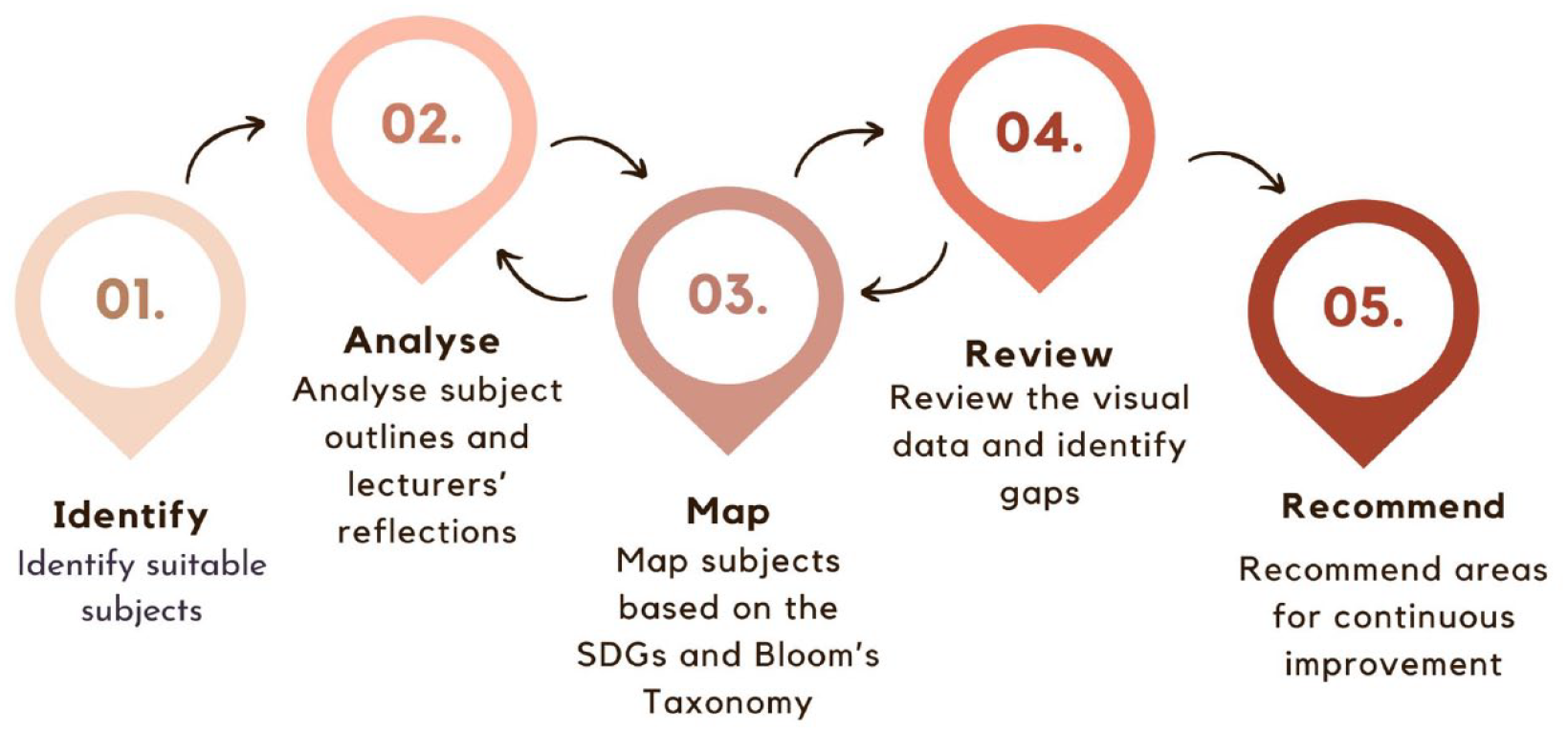
The Reflective Process.
During Phase 1, an initial desktop review of all marketing subjects was conducted to identify suitable subjects; in Phase 2, the subject outlines and lecturers’ reflections were analyzed for the nine subjects involved. Both phases revealed sparse use of the identified SDG keywords. This was in contrast to the passion for the SDGs which became evident in educators’ reflections revealed during Phase 2. Several of these reflections highlighted the importance and value of teaching contemporary global challenges within marketing education: “the world has a number of issues at the moment, and universities have the moral obligation to try and inform in a scientific and fair way these problems and solutions, and a good starting point for that is SDGs” (re: Subject 7). In particular, the way in which the SDG framework can be used to tackle today’s global challenges was viewed as significant: “the UN SDGs allow students to understand the global issues we are facing, such as sustainability and the environment, and students need to understand how they and businesses can help achieve these goals” (re: Subject 5).
The reflections also identified the important role of tertiary education in working toward positive change: We need to address SDGs in marketing education as part of a holistic approach to tertiary education. Graduates will be working in professional environments where the SDGs are either already prioritized or are increasingly prioritized; most are also part of a generation in which consciousness of SDGs and climate change underpin the social and communications agenda. Tertiary education has an opportunity to play a positive role in upskilling future professionals to be responsible, sustainable, professional operators (re: Subject 3).
More specifically, marketing educators were seen as playing a critical role in upskilling students for a future in which the sustainability agenda is paramount: We not only give students a framework to help guide their decisions, but an opportunity to be a part of something bigger. We also equip them with greater problem-solving skills, as students must look at complex issues facing contemporary marketers and allow them to be better prepared to enter the workforce (re: Subject 8).
While the reflections evidenced the level of commitment subject coordinators have to ensuring the integration of SDGs within teaching and learning activities, the actual count of specific SDG wording was minimal. Only two academics explicitly referred to Global Goals in their reflections: “in learning materials Moodle book/lecture, SDG 5 (achieve gender equality) SDG9 (build resilient infrastructure) and SDG 11 (made cities and settlements safe inclusive, resilient) are also supported” (re: Subject 1); “we are focusing on SDG 5 and 10 with a walking football event . . . [we] work with SDG 3 and 9 by creating health campaigns/advertisements” (re: Subject 3).
In contrast, the majority of reflections made indirect or more general mention of SDG topic areas related to sustainability, such as plastic recycling and environmentally safe packaging: “marketing can help support certain initiatives such as plastic recycling or environmentally safe packaging” (re: Subject 6). Another academic specifically observed the indirect nature of connections to SDGs in the subject content: “SDGs are not directly applied but are evident in subject learning outcomes such as developing skills for ethical and respectful communication, and in learning topics such as inclusive and respectful communication techniques” (re: Subject 1).
The reflective process in Phase 2 asked marketing educators to evaluate their SDG teaching and learning activities across Bloom’s Taxonomy and the effect this had on future teaching opportunities. In the written reflections, it was observed SDG teaching and learning activities crossed six dimensions of the Taxonomy: Bloom’s Taxonomy can assist students to effectively understand and utilize the SDGs in their subjects and beyond. Remember: we introduce the Goals in our Moodle books. Understand: they play an online game to see how many of the SDGs they can remember in a certain about of time. Apply: students can apply their knowledge in their creative tasks in the subject. Analyze: students can reflect on how their organizations chosen for their creative strategies can improve and what their competitors do better in these areas. Evaluate: students can look at the impacts of certain practices within their organizations. Create: students are allowed to develop strategies for their organizations to increase sales but do it in a sustainable way (re: Subject 4).
This comment exemplifies the integrations of SDGs and how Bloom’s Taxonomy can underpin teaching and learning.
In contrast, some coordinators did not specifically mention an SDG in relation to Bloom’s Taxonomy but instead focused on application of the Taxonomy in their marketing subject content: It has become second nature that I do not like to teach low level skills (for example, understand and remember) because I know that students will not engage in the subject. So, I always ensure that the main assessment and final exam assess higher level skills (for example, apply, analyze, evaluate, and create). I then think of an assessment that is appropriate to those skills and suitable to the subject content (re: Subject 6).
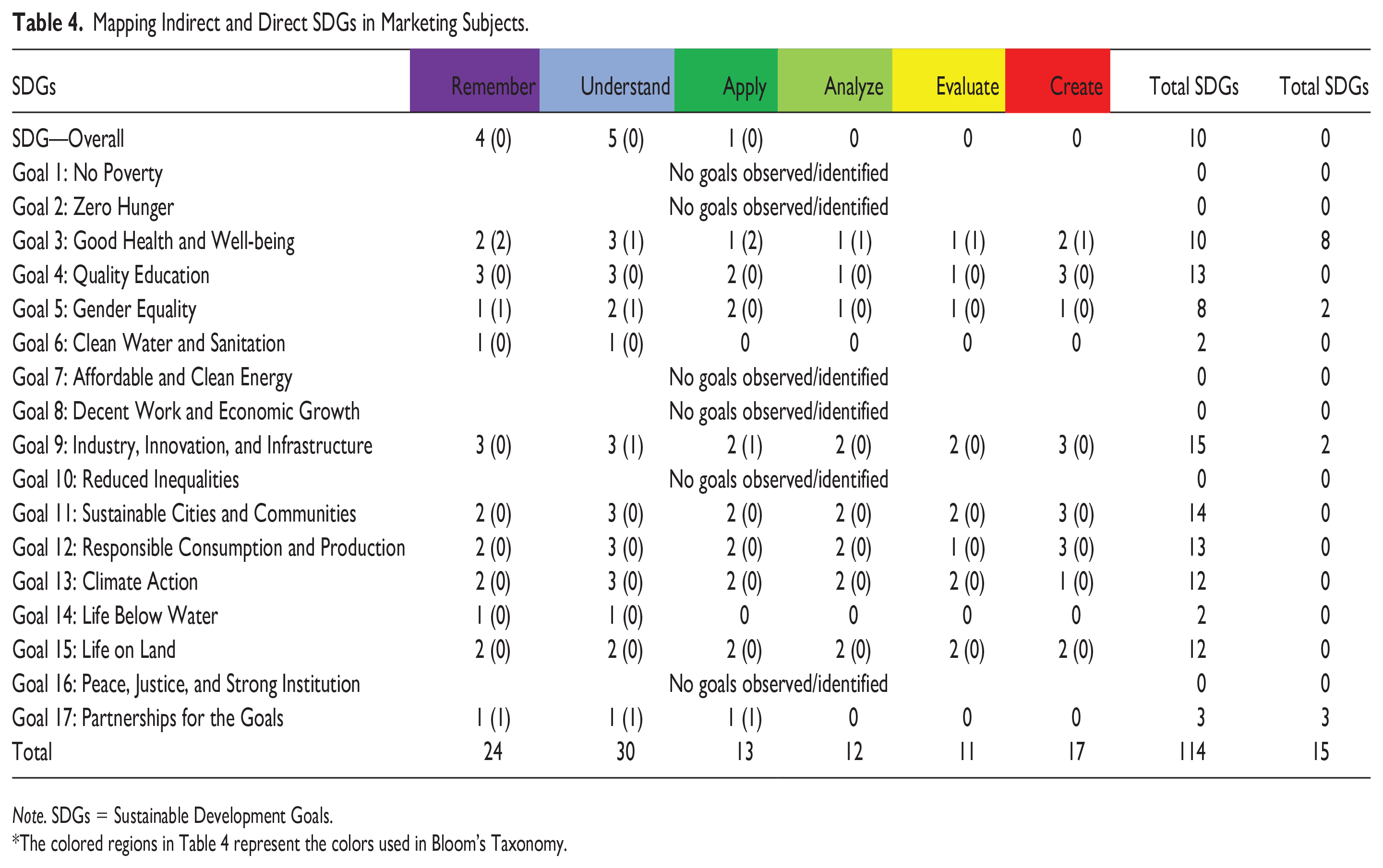
The initial reflections enabled academics to better understand how they integrated SDGs both indirectly and directly across their teaching and learning activities. By conducting these reflections on SDGs through Bloom’s dimensions, the research team was better prepared to conduct the Phase 3 mapping. This phase assisted in the development of the heat map shown in Table 4. The table identifies where the Goals are present in terms of the number of occurrences and nature of mentions in each subject. This research categorized the mentions as “indirect,” where subject coordinators generally discussed topics linked to Goals or Targets, and “direct,” where explicit reference to Goals or Targets was made.
Mapping Indirect and Direct SDGs in Marketing Subjects.
Note. SDGs = Sustainable Development Goals.
The colored regions in Table 4 represent the colors used in Bloom’s Taxonomy.
Phase 4 reviewed this heat map and showed where both indirect and direct SDG teaching and learning activities were indicated. These were counted across columns specific to Bloom’s Taxonomy and are shown in Table 4 as follows: Indirect (Direct), teaching and learning tasks included assessments, lecture materials, in-class activities, and readings (Anderson & Krathwohl, 2021; Hales & Phi, 2021).
Table 4 illustrates the reflective process undertaken by the researchers through creating a heat map of the data, using an outcome matrix. This visual data allowed for a snapshot of the results which also showed where SDGs and Blooms sat within the marketing subjects. For example, at the “Remember” level, there were four indirect instances of SDGs observed in assessment tasks or in-class activities and no instances of Direct.
Table 4 reveals the wide coverage of indirect and direct SDG integration across the subjects included in this study, presented through the lens of Bloom’s Taxonomy. There is more concentration around SDG 3 (Good Health and Well-being), SDG 9 (Industry, Innovation and Infrastructure), and SDG 11 (Sustainable Cities and Communities). Although SDG 3 has a relatively equal representation of indirect and direct teaching and learning activities, SDGs 9 and 11 are only found to be indirect.
It was interesting to note that the marketing subjects within this study did not have teaching and learning activities that integrate SDG 1 (No Poverty), SDG 2 (Zero Hunger), SDG 7 (Affordable and Clean Energy), SDG 8 (Decent Work and Economic Growth), SDG 10 (Reduced Inequalities), and SDG 16 (Peace, Justice, and Strong Institutions). This could be attributed to the fact that these areas are not commonly interrelated with marketing topics. By comparison, SDG 3 (Good Health and Well-being) and SDG 9 (Industry, Innovation and Infrastructure) were consistently found to be present in the broader marketing curriculum.
The mapping also revealed where the marketing subjects within this study integrated SDGs across Bloom’s Taxonomy. The dimensions of “remember” and “understand” were identified as the most utilized for teaching and learning activities, in comparison with “analyze” and “evaluate.” Across the SDGs and Bloom’s, it was observed that the “understand” dimension was where most of the SDG teaching and learning activity takes place. It is noteworthy that the “create” dimension was engaged more often than “analyze” and “evaluate”; this potentially highlights significant areas where coordinators could develop and include an assessment task around the dimension of “create” in conjunction with the SDGs.
In Phase 4, the raw data of the SDG learning outcome matrix were used to create a heat map (Table 4) for better visualization, facilitating further discussions among the research team that highlighted the presence and absence of SDG in teachings. As an example, this phase identified that marketing subjects included different SDGs in comparison with those incorporated across the business school. Goal 8 (Decent Work and Economic Growth) and Goal 16 (Peace, Justice, and Strong Institutions) were not integrated at the marketing subject level; however, they were consistently contained in other subjects within the Business School. Following the completion of the four phases, Phase 5 could enable educators to provide recommendations for continuous improvement for SDG integration into the subjects.
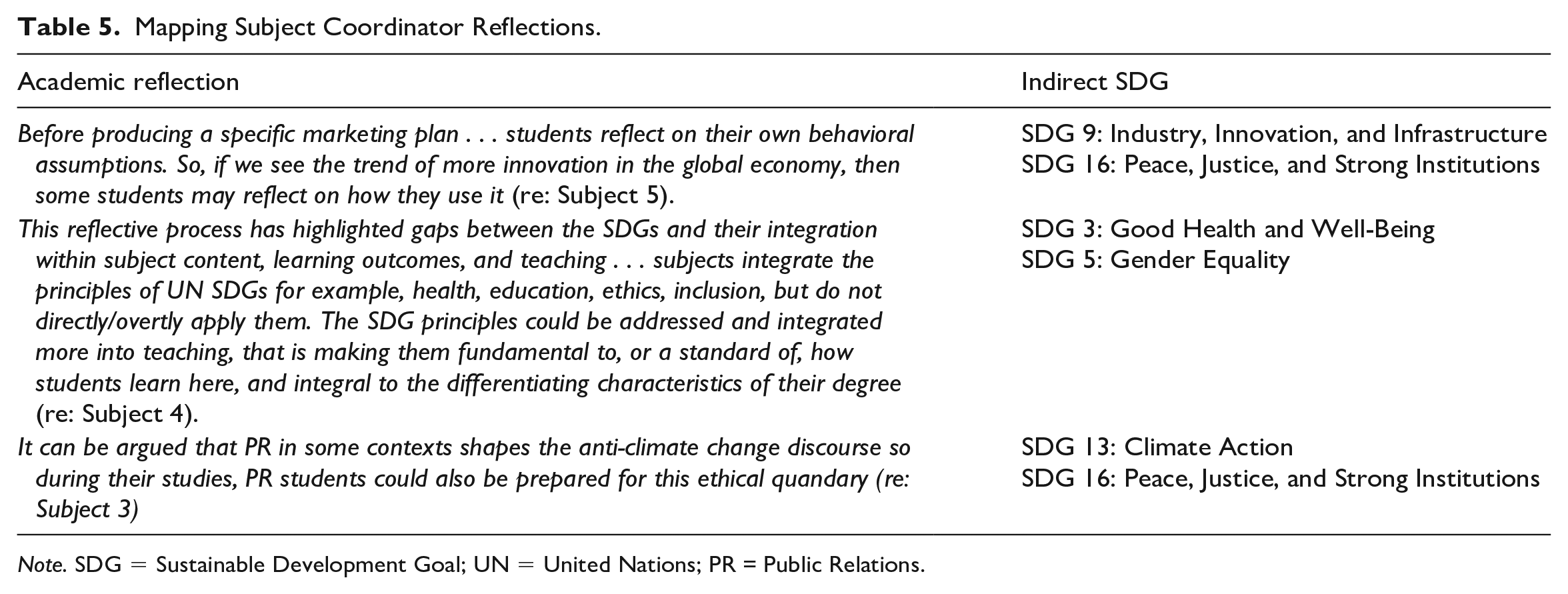
It appeared that coordinators may not have been able to directly integrate SDGs within their subject content. Rather, topics around the SDGs were indirectly embedded. Examples of this can be seen in Table 5.
Mapping Subject Coordinator Reflections.
Note. SDG = Sustainable Development Goal; UN = United Nations; PR = Public Relations.
Discussion
This article reveals that using a reflective process with Bloom’s Taxonomy can assist in mapping the SDG learnings and can provide opportunities to see where and how SDGs are integrated across the marketing curriculum. The first research question, to recognize the gaps in marketing education teaching, was supported by these findings. While it is recognized that not every SDG will be thoroughly covered in the marketing curriculum, it is interesting that the study found that many of the SDGs were directly and/or indirectly integrated. This study answers the research questions, allowing the identification of potential gaps in teaching SDGs within marketing curriculum utilizing Bloom’s Taxonomy.
The reflections and mapping of SDGs across Bloom’s dimensions provided coordinators with a broad view of their teaching and learning activities. It was noticeable upon reviewing the reflections that subject coordinators in this study support the inclusion of sustainable development in marketing curriculum: “creating sustainable marketing practices and processes is essential for us to support the UNs initiatives” (re: Subject 5). The reflective process itself revealed gaps in SDG teaching in marketing education with the initial review presenting minimal SDG content in subject matter, despite the level of personal commitment from subject coordinators. This spoke directly to RQ2 which was to identify a process which marketing educators could use to map SDGs in marketing subjects.
Also, it was observed that coordinators at times lacked confidence about where to place the SDGs and how they could be applied in subject content (Rosenboom, 2023). For example, topics around sustainable development may be more generally included in teaching but may not specifically employ the language of Global Goals. The value of the reflective process is highlighted in Table 4 by identifying relevant issues that exist in contemporary marketing contexts: In the classroom, by allowing students to work on important issues facing the world today, we prepare them for the industry as they develop the skills needed to effectively get their message to the right people at the right time and potentially create increased business opportunities in the market (re: Subject 4).
It was interesting that the reflective process was at times complex and challenging in terms of considering integration of the SDGs: “within a PR subject which provides a broad approach to the specializations of this area, I have some uncertainty about where and how SDGs can be incorporated within the subject” (re: Subject 3). This uncertainty revealed that there is a need for subject coordinators to have access to resources relating to the SDGs to experiment with and explore how to incorporate a variety of learning and teaching activities that could develop deep learnings in this space (Setiawan et al., 2023). Once subject coordinators understand SDGs, they can apply this knowledge within their teaching and learning activities. This in turn may be conveyed to students in the mid-level Bloom’s classifications of “apply, analyze, and evaluate,” and which is underpinned by the marketing subject matter applied to the lower levels of “remember” and “understand” (Anderson & Krathwohl, 2021; Hales & Phi, 2021). This form of teaching within marketing allows a cohesive inclusion of SDGs within curriculum, underpinning the “create” component within subjects.
An interesting observation was the value of the reflective process itself, as it revealed misconceptions regarding SDG teachings. For example, some subject coordinators did not consciously recognize that an SDG was embedded in their subject. In one instance, regarding SDG 10 (Reduced Inequalities), a subject had a specific focus on the impact of social inequalities evident in a case study assessment of a not-for-profit organization. However, in the reflections, this was not identified as aligning with any SDGs, which indicated that subject coordinators may sometimes be unaware that their teaching did, in fact, include a specific Goal. This would have not been discovered without the reflection and mapping process taking place. Conversely, while it was anticipated that Goal 12 (Responsible Consumption and Production) would have been frequently included in the subjects that were mapped it was found, surprisingly, that this was not the case. These points were not highlighted during data analysis but were notable on a review of the research findings.
In using Bloom’s classifications, the study showed that most SDG activity occurred in the “remember” and “understand” dimensions. This suggests that students in marketing subjects could recall information about SDGs, and their related targets, as well as the key themes associated with each goal (remember). Students have the capacity to explain the meaning of the SDGs and the interconnections between them (Everett et al., 2022; Protopapa & Plangger, 2023), as well as how they relate to the field of marketing (understand). They may possibly link information, concepts, and ideas related to SDGs—and marketing—to utilize a new level (create). This study suggests that through the implementation of Bloom’s, marketing educators can comprehensively develop their SDG teaching and learning activities.
The current research identified a process for examining what specific SDGs were included within subjects, and at what levels of Bloom’s Taxonomy they were addressed. Subject coordinators can subsequently identify any “gaps” in subject content that can be filled. These “gaps” could pertain to the omission or insufficient mention of various SDGs and/or failure to address these SDGs at appropriate levels of Bloom’s Taxonomy. The identified “gaps” can be subsequently addressed either within the specific subject, if appropriate, or in other subjects students may study. For example, “gaps” identified in a first year subject may be best filled by improving future delivery of the existing subject content, or perhaps be more suitably included in a subsequent second year subject. It is possible that addressing several SDGs within one subject, at the appropriate levels of Bloom’s Taxonomy, is not practical. A heat map, such as that shown in Table 4, could be developed for each subject in an entire degree. These individual maps could then be aggregated, and any identified “gaps” in SDGs and/or levels of Bloom’s Taxonomy could then be addressed by additional content in appropriate instances. This will require strong mutual communication between all subject coordinators but can ensure students receive appropriate exposure to all SDGs, and at all levels of Bloom’s Taxonomy, by the time they complete their course and graduate. Furthermore, when working through the process of identifying SDGs in Marketing programs, foundation subjects that are not within the discipline, but are in the students’ course and relate to the SDGs (i.e., Business Ethics, Sustainable Business, and Responsible Business), will need to be examined as well. As such, this would give a true indication of the type and level of student learning of the SDGs that can be ascertained.
Conclusion
This research presents a process for recognizing the level of integration of SDGs into marketing curriculum. The amalgamation with Bloom’s Taxonomy allows for a more nuanced understanding of how to achieve this objective. The Intergovernmental Panel on Climate Change (Kikstra et al., 2023) in their Synthesis Report: Climate Change 2023 presents a sobering reminder of why all sectors of our society need to move forward in implementing the SDGs, stating the current pace and scale of climate action are insufficient to tackle climate change. As educators, part of our professional obligation is to prepare the leaders of the future who will progress SDG change. Consequently, the research conducted in this study presents a way forward for marketing educators to drive this needed change.
Contributions and Practical Implications
The reflective process has identified that teaching SDGs may not be as direct (or present) as academics might have expected, despite individual and institutional commitment to, and understanding of, their importance (Rajabifard et al., 2021). While it is recognized that not every SDG will be covered in the marketing curriculum, it is interesting that this study found that many of the SDGs were directly and indirectly integrated. The research process has identified where gaps exist in teaching SDGs and the opportunities to improve the education process, for the benefit of student, and arguably global, outcomes. The educational setting may change but the process developed from these reflections indicates the potential for further application in other tertiary courses and institutions (e.g., engineering or sciences). Subject coordinators were seemingly comfortable with introducing sustainable development topics through the lower-level skill areas such as “remembering” and “understanding.” However, they appear to reduce rather than build higher level skills for deeper learning irrespective, of the sustainable development topic area. Thus, subject coordinators cannot assume that students can recognize global challenges and apply high-order skills to discover solutions as they move throughout their studies (Blijlevens, 2023).
Building those higher level skills is critical for students’ future careers in the marketing profession. Incorporating the SDGs into marketing education is important to ensure that students are equipped to address the sustainability challenges facing our society and to for them to make a positive impact in their profession as both advocates and agents for change. If staff facilitate student learning that supports graduates entering the workforce with an understanding of the SDGs, the strategies they develop may effectively appeal to environmentally and socially conscious consumers, resulting in increased customer appeal. In addition, organizations may find opportunities to create new products, services, and markets that address sustainability challenges, and promote sustainable development and marketing strategy that adequately aligns with stakeholder expectations. In contrast, marketing strategies that do not integrate the SDGs may not effectively allocate resources nor adequately address stakeholder expectations, resulting in financial and reputational risk.
This research has practical implications as it develops the process by which academics and university administrators can ascertain the degree of integration of SDGs into marketing programs and where opportunities exist for deeper—or expanded—integration. The process of identifying gaps within selected marketing subjects identifies opportunities to further integrate SDG teachings, using Bloom’s Taxonomy, within the subject curriculum.
It is critical for marketing programs to not only introduce SDGs but also integrate the finite detail of a specific goal for students to achieve a deeper level of understanding. While subject coordinators develop teaching and learning resources, including lecture content and assessments, they need to consider how student learning around SDGs is scaffolded to ensure this progresses in a way that supports the development of critical thinking skills. The reflective process in this study showed that there were various areas in which improvements could be made, using Bloom’s Taxonomy. An example of this was when a subject coordinator asked students to develop a marketing campaign for a health company incorporating SDG 3, Good Health and Well-being. The coordinator introduced SDGs broadly (remember) and then gave students the opportunity to develop a deeper understanding, but the levels of apply, analyze, or evaluate were not addressed. This is important, as the ability to analyze and evaluate the issues surrounding SDG 3 would contribute to a deeper understanding of the topic area and ensure that the focus of the activity was on the create aspect of the learning task. The reflective process enabled the research team to identify how SDGs were applied in teaching and learning, as in this example. Significantly, this research project presents a process that universities can follow when seeking to embed SDGs within their marketing curriculum.
Future Research and Limitations
There are some limitations to this research. First, the study was undertaken at a single institution; however, the process and results have the potential to be generalized across Australian and international marketing schools. A second limitation relates to the number of marketing subjects examined. While the key objective of this study was to develop a useful mapping process, which was achieved, not all subjects in the marketing program were explored. Consequently, there is a future research avenue available to undertake this process across an entire program, and possibly to make comparisons between undergraduate and postgraduate programs. Also, the inclusion of student feedback could help encapsulate how students understand SDGs, considering Bloom’s Taxonomy, and introduce evaluations at Target, as well as Goal, level. Finally, as this was a reflective research project, and the first of its type, several manual processes that were undertaken could be integrated into systems that utilize different technology solutions. Therefore, further research could be undertaken to determine what mechanization of this process could be established to create process and system efficiencies. Overall, there are opportunities for other tertiary institutions to use the process to map their own SDG teachings.
Footnotes
Declaration of Conflicting Interests
The author(s) declared no potential conflicts of interest with respect to the research, authorship, and/or publication of this article.
Funding
The author(s) received no financial support for the research, authorship, and/or publication of this article.
