




Abstract
This paper reports on a systematic review into inclusivity and diversity in the higher education marketing discipline. Thirty-one studies met the inclusion criteria and are analyzed to identify the inclusion and diversity identities that have been studied, synthesize strategies that have been identified as successful in supporting inclusion and diversity in the classroom and propose a future research agenda to further scholarly understanding within the marketing discipline. The findings suggest that most prior studies have focused on cultural diversity or diversity in general, and the strategies identified as effective were (a) utilizing technology to support inclusion and diversity, (b) developing curriculum that takes into consideration the diverse society we live in, (c) integrating projects into curriculum that are focused on diversity and inclusion, and (d) considering extra-curricular activities to deepen students’ inclusivity and diversity skills.
Higher education has an important role to play in the development of diversity and inclusion in wider society (Smith & Schonfeld, 2000). In fact, scholars suggest it is the integration of diversity into higher education that is the important first step to broader social inclusion (Tienda, 2013). When looking at these factors individually, inclusivity, defined in education as “a catalyst that requires schools and society to identify and overcome the barriers that inhibit a child’s (individual’s) choices and ability to achieve their full potential” (Hodkinson & Devarakonda, 2009), has been identified as an important strategic factor for higher education institutions with consideration given to its influence on learning and teaching, research, and culture (Claeys-Hulik et al., 2019). While diversity, defined as “consumers from diverse ethnic groups, religious groups, or nationalities; people living in particular geographic regions; or groups that share common physical/mental disabilities, sexual orientation, beliefs, values, attitudes, or way of life” (Demangeot et al., 2013, p. 157), has been suggested as a valuable way to enrich student learning (Sanger & Gleason, 2020). Previous research has identified that diversity and inclusion in higher education can also result in improved cognitive development and a deeper opportunity for students to interact with a more diverse community (Smith & Schonfeld, 2000).
The importance of diversity and inclusion has been acknowledged by many higher education bodies. For instance, the Association to Advance Collegiate Schools of Business (AACSB) is a global non-profit organization that provides accreditation to higher education providers who attain and retain innovation and quality standards (Association to Advance Collegiate Schools of Business [AACSB], 2022). The AACSB has identified diversity, equity, inclusion and belonging as some of their core values which all their accredited higher education institutions must embody (AACSB, 2022). European Quality Improvement System (EQUIS), another higher education accreditation body also identifies diversity and inclusion in their Standards and Criteria (European Quality Improvement System [EQUIS], 2022). The importance of diversity and inclusion to these higher education bodies evidences that not only is it imperative to include diversity and inclusion in higher education to benefit society as a whole but, it is also a requirement for higher education institutions that wish to attain and retain high-quality accreditations.
Previous research in diversity and inclusion in higher education has largely focused on the integration of these factors at an institutional level (Clauson & McKnight, 2018) or in disciplines such as health (Waling & Roffee, 2018; Yanchick et al., 2014). One area where investigation and scholarly interest is starting to increase is in the investigation of inclusion and diversity specifically in the higher education marketing discipline (Carter, 2009; Ringer et al., 2014). This is not surprising as marketers assist in shaping social interactions between businesses and consumers as well as within wider society (Demangeot et al., 2019), and there has been increasing focus on developing services to support consumers who are experiencing vulnerability defined as “unique and subjective experiences where characteristics such as states, conditions and/or external factors lead to a consumer experiencing a sense of powerlessness in consumption settings” (Riedel et al., 2022). As Demangeot and colleagues (2019, p. 40) identify, “through their actions, marketers can either further exacerbate multicultural tensions or support successful multicultural engagement.” A key example of how marketing can facilitate social inclusiveness for ethnically diverse consumers is proposed by Licsandru and Cui (2018). These authors suggest that inclusive marketing whereby multi-ethnicity is embedded in marketing communications can lead to feelings of social inclusion, acceptance, belongingness, empowerment, equality, and respect for ethnic consumers (Licsandru & Cui, 2018). Therefore, the integration of diversity and inclusion into marketing discipline curriculum is imperative as marketers have an important role to play in supporting and increasing diversity and inclusion in wider society.
Marketing scholars have begun examining strategies to increase and support diversity and inclusion in the classroom as well as develop their students’ knowledge of these important concepts (Rosenbaum et al., 2013; Williamson Sprague & Dahl, 2010). For example, Williamson Sprague and Dahl (2010) studied how the use of personal response system (PRS) clickers enhances inclusivity in the classroom particularly for disadvantaged students based on cultural background and learning style. Rosenbaum and colleagues (2013) identified the effectiveness of a multicultural service sensitivity exercise at increasing students’ ability to design inclusive service settings. These studies provide interesting initial insights as to how diversity and inclusion can be integrated into the higher education marketing discipline to ensure marketing graduates possess the necessary skills to contribute thoughtfully to society in relation to inclusion and diversity upon graduation.
Importantly, however, the current literature on diversity and inclusion strategies in marketing education is fragmented and as such, there is a lack of a holistic understanding as to the wide range of strategies that are effective in integrating diversity and inclusion into the marketing curriculum. In response to this lack of a holistic understanding, the current study will synthesize the literature on inclusion and diversity in the higher education marketing discipline with the aim of identifying (a) the elements relating to diversity and inclusion (for example age, gender, culture) that have previously been examined, (b) the strategies that have been identified as successful in addressing elements of diversity and inclusion, (c) whether research has studied these elements in regard to how to make classroom environments more inclusive and diverse, or how to increase student skills relating to diversity and inclusion and, (d) a research agenda for future investigations into inclusion and diversity in the higher education marketing discipline.
The remainder of the paper is structured as follows. First, the methodology of the systematic review is detailed. The results of the systematic review are then discussed. Following this, a discussion around the four aims of the study is presented. Finally, limitations are discussed to conclude the paper.
Theoretical Background
Diversity and Inclusion in Marketing and Marketing Education
Diversity and inclusion are important principles that are increasingly examined by marketing scholars. For example, researchers have examined how services can be designed to be more inclusive for consumers with a disability (Beatson et al., 2020), how online shopping experiences can be expanded to support individuals with a disability (Childers & Kaufman-Scarborough, 2009), as well as the use of LGBTQ (lesbian, gay, bisexual, transgender and queer) imagery in advertising (Northey et al., 2020), just to name a few. The investigation into such factors has largely grown from three areas of marketing research, (a) social marketing, which is the “adaptation of commercial marketing technologies to programs designed to influence the voluntary behavior of target audiences to improve their personal welfare and that of the society of which they are a part” (Andreasen, 1994, pp. 110), (b) transformative services marketing which “lies at the intersection of service research and transformative consumer research and focuses on well-being outcomes related to service and services” (Anderson et al., 2013, pp. 1203), and (c) consumers experiencing vulnerability (Riedel et al., 2022) which is defined in the introduction of this article.
Mirroring these investigations in the wider marketing literature, marketing education scholars have begun to examine how marketing education curriculum and experiences can be transformed to further integrate diversity and inclusion principles into the classroom and curriculum (Crittenden et al., 2020). This is particularly identifiable through the introduction of social marketing courses at universities internationally as well as marketing education research which specifically examines how factors such as diversity can be embraced in marketing education (Crittenden et al., 2020). For example, Delpechitre and Baker (2017) examined how sales role-play performance activities can be employed to increase cultural intelligence in sales students while Grier (2020) implemented and assessed a course project to enhance students’ awareness and understanding of diversity and inclusion. Foxman and Easterling (1999) examined how marketing textbooks acknowledge and reflect the diversity of the world. The current study brings this prior literature on diversity and inclusion in marketing education together to summarize and identify strategies that have been identified as successful.
Ecosystems Framework
Marketing scholars have conceptualized service ecosystems as consisting of three levels—the microsystem, mesosystem, and macrosystem (Frow et al., 2014). Actors in these levels interact to create value for the organization and key stakeholders (Akaka et al., 2013). Ecosystems have frequently been employed in systematic reviews as a guiding framework to comprehensively understand previous literature on a topic (Riedel et al., 2022). This is because, through the examination of each of the ecosystem levels, a comprehensive understanding of an environment can be achieved. This is particularly important in the current study where the integration of diversity and inclusivity into marketing education can be achieved through several different approaches implemented at each of the different levels of the ecosystem. When considering the microsystem, this involves strategies that include interactions at the individual level (Frow et al., 2014). As such, in the current study, this involves strategies implemented in the classroom to increase the inclusivity and diversity of the student population. The mesosystem involves strategies at the organizational level (Frow et al., 2014). In the current study, this relates to strategies implemented by the university to increase students’ inclusivity and diversity skills. Finally, the macrosystem level involves a focus on the wider market and environment (Frow et al., 2014). Macrosystem strategies in the current study include those integrated into the classroom curriculum to increase students’ inclusivity and diversity skills for use in wider society.
Method
Procedure
A systematic review was undertaken to address the four aims of the study following The Preferred Reporting Items for Systematic Reviews and Meta-Analyses (PRISMA). PRISMA is a guide for developing systematic reviews and meta-analyses (Moher et al., 2009) frequently used in both marketing (Riedel et al., 2022) and higher education (Subhash & Cudney, 2018). It proposes checklist items that should be followed including the reporting of search strategies and screening processes. The processes followed in the current study are detailed in Figure 1.
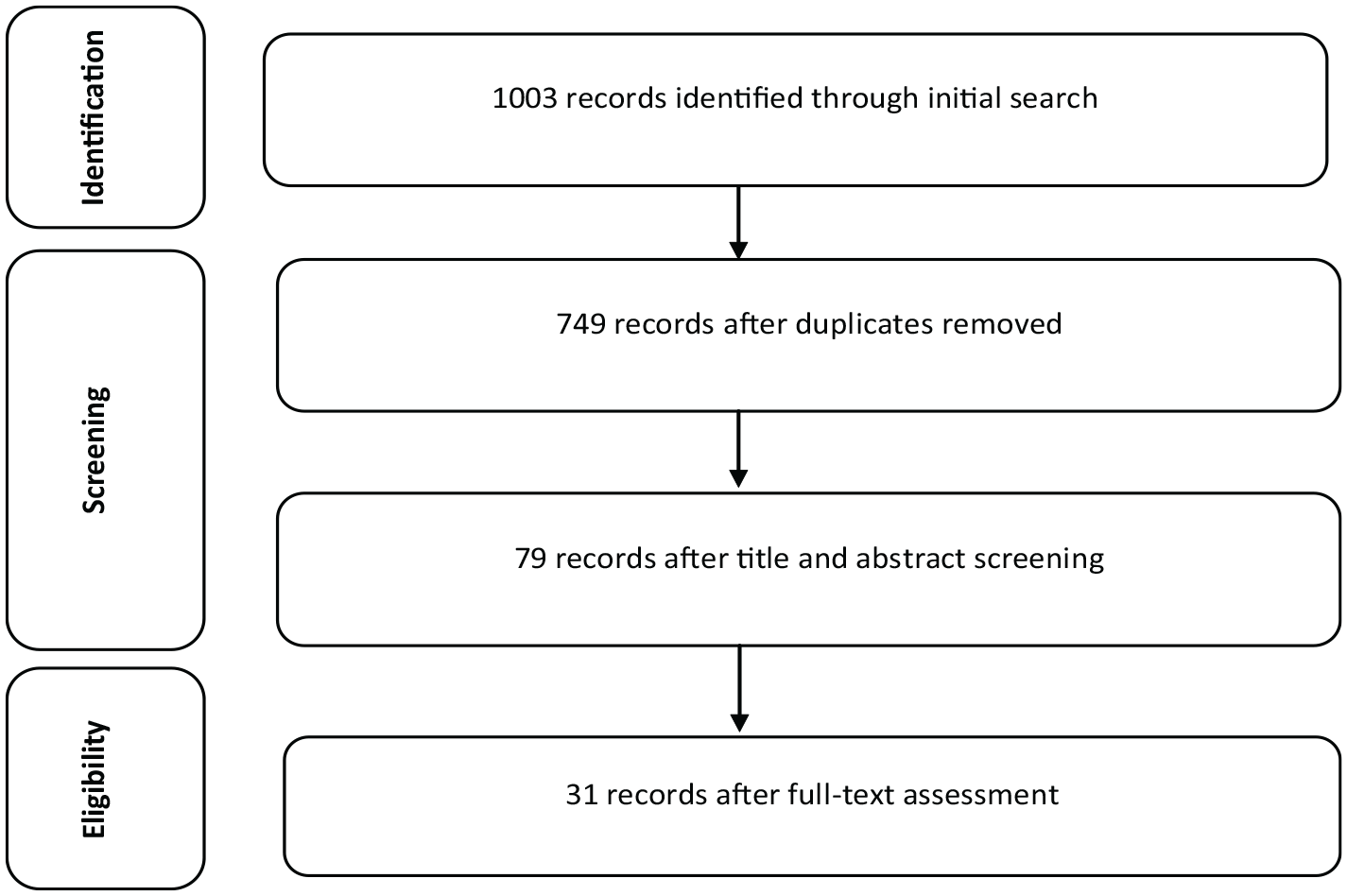
Screening Process.
Search Strategy and Study Selection
The search for the current study was conducted on August 30, 2022 and was limited to articles published in English. Scopus, EBSCO, ProQuest, Science Direct, and Web of Science electronic databases were searched. These databases were selected as they include publications on higher education as well as specific marketing studies. The number of articles identified in the initial search from Scopus, EBSCO, ProQuest, Science Direct and Web of Science was 1,003. Two searches were undertaken. One included broad terms such as inclusion, and diversity, as well as marketing education while the second was more specific and focused on types of vulnerability or diversity as identified by Riedel et al. (2022). The terms were required to be present in the title, keywords or abstract. An example of each search can be seen below:
(TITLE-ABS-KEY (diversity) OR TITLE-ABS-KEY (inclusion) OR TITLE-ABS-KEY (vulnerable) AND TITLE-ABS-KEY (“marketing education”)) AND (LIMIT-TO (LANGUAGE, “English”)) AND (LIMIT-TO (SRCTYPE, “j”))
(TITLE-ABS-KEY (“marketing education” OR “marketing curriculum”) AND TITLE-ABS-KEY (“sexual orientation”) OR TITLE-ABS-KEY (disabilit*) OR TITLE-ABS-KEY (disab*) OR TITLE-ABS-KEY (economic) OR TITLE-ABS-KEY (age) OR TITLE-ABS-KEY (socio-economic) OR TITLE-ABS-KEY (medical) OR TITLE-ABS-KEY (health) OR TITLE-ABS-KEY (illness) OR TITLE-ABS-KEY (mental AND health) OR TITLE-ABS-KEY (ethnic*) OR TITLE-ABS-KEY (immigra*)
After downloading the papers from each database, the papers were imported into Covidence, a systematic review management system. Following PRISMA guidelines, the data were screened across three stages using Covidence to manage the process. In the first stage, all duplicates were deleted by Covidence. This involved deleting 254 papers. In the second stage, title and abstract screening was undertaken. The 749 papers that remained after duplicates were deleted were screened by two researchers through Covidence to ensure adherence to the inclusion and exclusion criteria of the research. In this stage, papers were deleted if they did not focus on diversity or inclusivity or vulnerability in a marketing education context. This led to the deleting of 670 papers. The inclusion and exclusion criteria can be seen below-
Inclusion criteria—focusing on either a diversity, inclusivity, or vulnerability in marketing education, written in English.
Exclusion criteria—not focusing on either a diversity, inclusivity, or vulnerability, examining education context but outside of marketing in higher education, publications written in languages other than English.
Finally, a full-text screening process was undertaken on the remaining 79 papers by the same two researchers. The full text was assessed to ensure the manuscript fully adhered to the inclusion criteria discussed above. Again, each paper was screened by two researchers. In this stage, 38 papers were deleted as they did not focus on diversity, inclusion, or vulnerability, and 10 did not focus on marketing education. Following this, 31 papers remained in the study. Inter-rater reliability was calculated utilizing Cohen’s kappa and was 0.83 at the title and abstract screening stage. For any conflicts in the initial title and abstract screening, discussion between screeners occurred and an agreement was reached. For the full-text screening, 100% agreement in screening was attained. The screening process can be seen in Figure 1 below.
Data Collection Process and Items
Data were extracted from the 31 papers that were included in the systematic review after the screening process. The data extraction occurred in Covidence. The data items extracted included title, authors, country of study, guiding theory, aim of study, study design, population description, recruitment method, participant total number, specific inclusivity, diversity or vulnerability examined, variables, key findings, and proposed strategies to address diversity and inclusivity. Finally, the data were also classified relating to whether they examined a micro, meso, or macro-system strategy (Beirão et al., 2017).
Quality Assessment
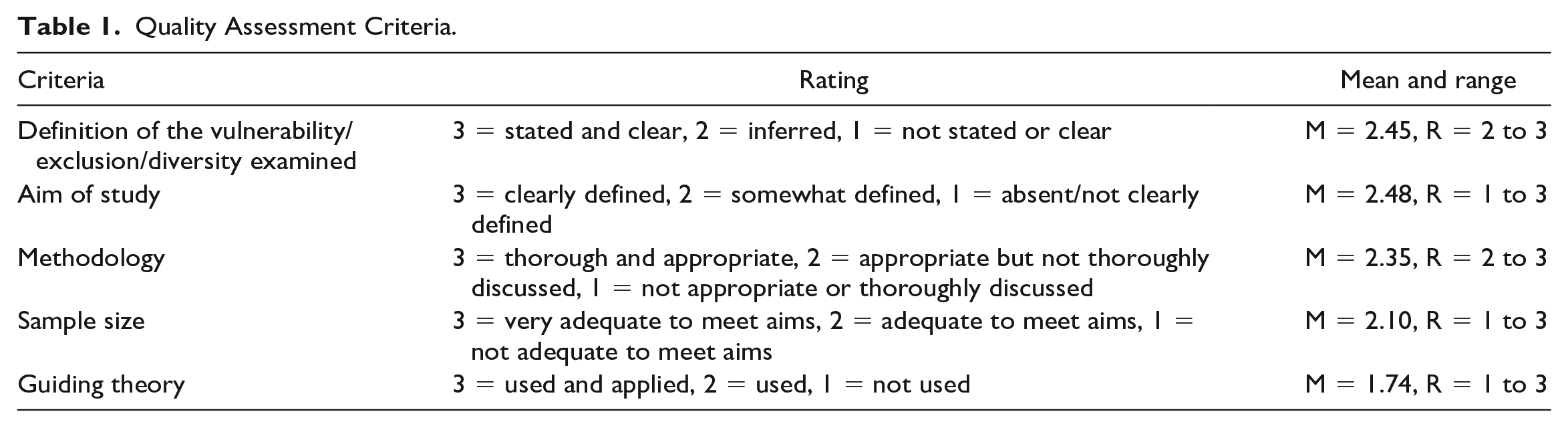
A quality assessment was undertaken through the Covidence software. Quality assessments are frequently undertaken in systematic reviews to identify the quality and in turn, the reliability and validity of the papers included in the review (Johnson et al., 2017; Riedel et al., 2022). All 31 papers were rated across five criteria and scored for quality. The criteria included (a) whether the inclusivity/diversity/vulnerability was clearly defined relative to the specific study, (b) whether the aim of the study was clearly defined, (c) whether the methodology was thorough and appropriate, (d) whether the sample size is adequate to achieve the objectives of the study, and (e) whether a guiding theory was utilized and applied. Each criterion was scored on a scale ranging from 1 to 3 and derived from the work of Riedel et al. (2022). Final scores ranged from 9 to 15 where a lower score represented the lowest quality and a score of 15 represented the highest quality. The mean score was 11.13. This process and the criteria utilized were guided by prior systematic reviews (Mason et al., 2020; Riedel et al., 2022). The criteria employed and score for each criterion can be seen in Table 1.
Quality Assessment Criteria.
Results
Overview of Studies
As can be seen in Figure 2, overall, there has been limited investigation into diversity and inclusion in the higher education marketing discipline. Since 2016, the investigation has slightly increased with three publications in 2016, two in 2017 and 2019, and five in 2020. This may reflect interest in the wider marketing discipline of research agendas focusing on transformative service research (Anderson et al., 2013), special issues and commentaries on consumer vulnerability (Dunnett et al., 2016; Rosenbaum et al., 2017), and special issues on marketplace diversity and inclusion (Henderson & Williams, 2013). In terms of the geographic location of the studies, most of the research has been conducted in the United States (N = 22) with two studies conducted in United Kingdom and one study in each of the countries of Switzerland, Indonesia, France, Korea, Canada, Australia, and Spain.
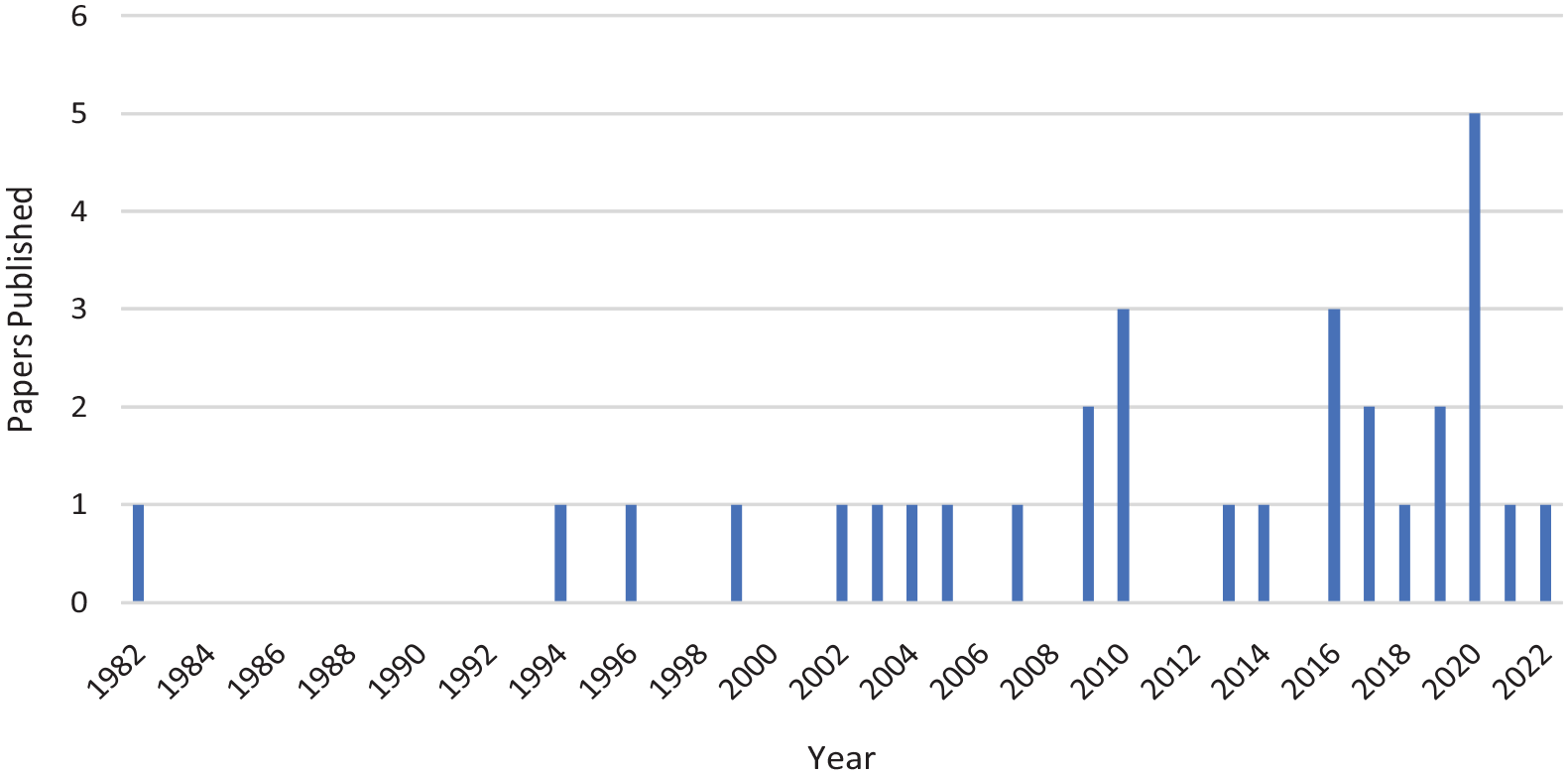
Publication Distribution.
Theories and Frameworks’ Underpinning Investigation
Very few studies utilized a theory or framework to underpin and guide their investigation into a strategy to increase the integration of diversity and inclusion in the marketing discipline of higher education. Only 15 out of the 31 studies employed a guiding theory or framework. Cultural theories and frameworks were utilized most frequently including Hofstede’s Cultural Values Framework (Carter, 2009; Ringer et al., 2014; Rodriguez & Boyer, 2018; Yoo & Donthu, 2002), the Theory of Acculturation (Demangeot et al., 2019), Global Mindedness and Intercultural Proficiencies (Clarke et al., 2009) and the Cultural Intelligence (CIQ) Framework (Baker & Delpechitre, 2016). Learning theories or frameworks, including Kolb’s Learning Preferences Inventory (Williamson Sprague & Dahl, 2010), Experiential Learning (Grier, 2020) and Social Learning Theory (Rivera et al., 2020), were utilized the next most frequently. Finally, Service Quality (Rosenbaum et al., 2013), Chaos Theory (Rippé et al., 2021), Critical Theory (Burton, 2005), Expectation–Confirmation Theory and the Unified Theory of Acceptance and Use of Technology (Caruana et al., 2016) were also examined.
Samples and Methods
The samples recruited for the studies which collected data (N= 20) ranged from 30 (Lin et al., 2017) to 479 participants (Lancellotti et al., 2016). There were 17 studies which collected data from university students (e.g., Grier, 2020; Williamson Sprague & Dahl, 2010), 1 study utilized an online panel (Chang, 2020) and one recruited business educators via mail (Mitchell et al., 2010). Eleven studies were conceptual and did not collect data.
In terms of the study design of the 20 studies which collected data, Chang (2020) and Rivera et al. (2020) utilized experiments to establish how film affects perceptions of diversity, and to examine the effectiveness of an innovative framework in training future marketers to understand people with disabilities, respectively. Lancellotti et al. (2016) employed a quasi-experimental design to compare students who had access to video modules compared with those who did not, while Luckyardi et al. (2022) used an experimental design to compare individuals with marketing education compared with those without. Castleberry (2007) utilized open-ended survey responses to assess how a prison visit impacted MBA and undergraduate marketing students’ ethical behavior while, Clarke et al., (2009) utilized a non-randomized experimental design to establish the intercultural proficiencies from a study abroad program.
Caruana et al. (2016), Delpechitre and Baker (2017), Ertimur and Lavoie (2019), Grier (2020), Mitchell et al. (2010), Rodriguez and Boyer (2018), Rosenbaum et al. (2013), Williamson Sprague and Dahl (2010), and Yoo and Donthu (2002) all used survey approaches to examine topics such as the effectiveness of PRS clickers in supporting inclusivity in the classroom (Williamson Sprague & Dahl, 2010) and the effectiveness of a multicultural service sensitivity exercise (Rosenbaum et al., 2013). Ringer and colleagues (2014) employed a qualitative approach to investigate how the cultural background of marketing students influenced individual learning and perceptions of assessments while Rippé (2020) employed qualitative analysis to gain understanding of the effectiveness of a marketing project which helped hurricane victims. Weekly reflections and surveys were employed to understand how instructors can support students’ well-being (Rippé et al., 2021). Baker and Delpechitre (2016) and Lin et al. (2017) both employed pre and post measures to establish the effectiveness of their diversity and inclusivity strategies. Finally, Pierce and Longo (2020) evaluated the success of their strategy through comparing course evaluations, student performance and student reflections. Importantly, no research studied the long-term success of an intervention or strategy utilizing a longitudinal approach where data was collected at multiple time points to evaluate the effectiveness of the intervention overtime.
Inclusivity or Diversity Element Analyzed
Cultural diversity and intelligence was the most investigated concept examined by 13 of the papers. For example, Carter (2009) developed a conceptualization that argued for depth as well as breadth of diversity profiles included in marketing higher education while Clarke and colleagues (2009) investigated the potential intercultural proficiencies that emerged from a study abroad program.
Disability was examined in three studies. For example, Chang (2020) examined how using films in class influenced perceptions of workers with an intellectual disability while Lin et al. (2017) developed a class project that increased students’ understanding of consumers with a disability. The remaining studies studied gender diversity in marketing and retailing education (Mikitka & Stampfl, 1994), gender and age/ethnicity (Caruana et al., 2016; Lancellotti et al., 2016), community goodwill (Haley, 2004), ethical behavior (Brennan et al., 2010; Castleberry, 2007; Yoo & Donthu, 2002), disadvantaged students (Luckyardi et al., 2022; Williamson Sprague & Dahl, 2010), individual differences (Ertimur & Lavoie, 2019), mental health (Rippé et al., 2021), social understanding (Rippé, 2020), and diversity in general (Foxman & Easterling, 1999; Grier, 2020; Mitchell et al., 2010; Rivera et al., 2020). General diversity included the study of diversity without the specific defining of a type of diversity.
Proposed Strategies to Enhance Diversity or Inclusion
The proposed strategies to address diversity and inclusion in the marketing discipline of higher education are summarized in Table 2. Strategies included (a) utilizing technology to support inclusion and diversity, (b) developing curriculum that takes into consideration the diverse society we live in, (c) integrating projects into curriculum that are focused on diversity and inclusion, and (d) considering extra-curricular activities to deepen students’ inclusivity and diversity skills.
Summary of Studies Included in the Systematic Review.
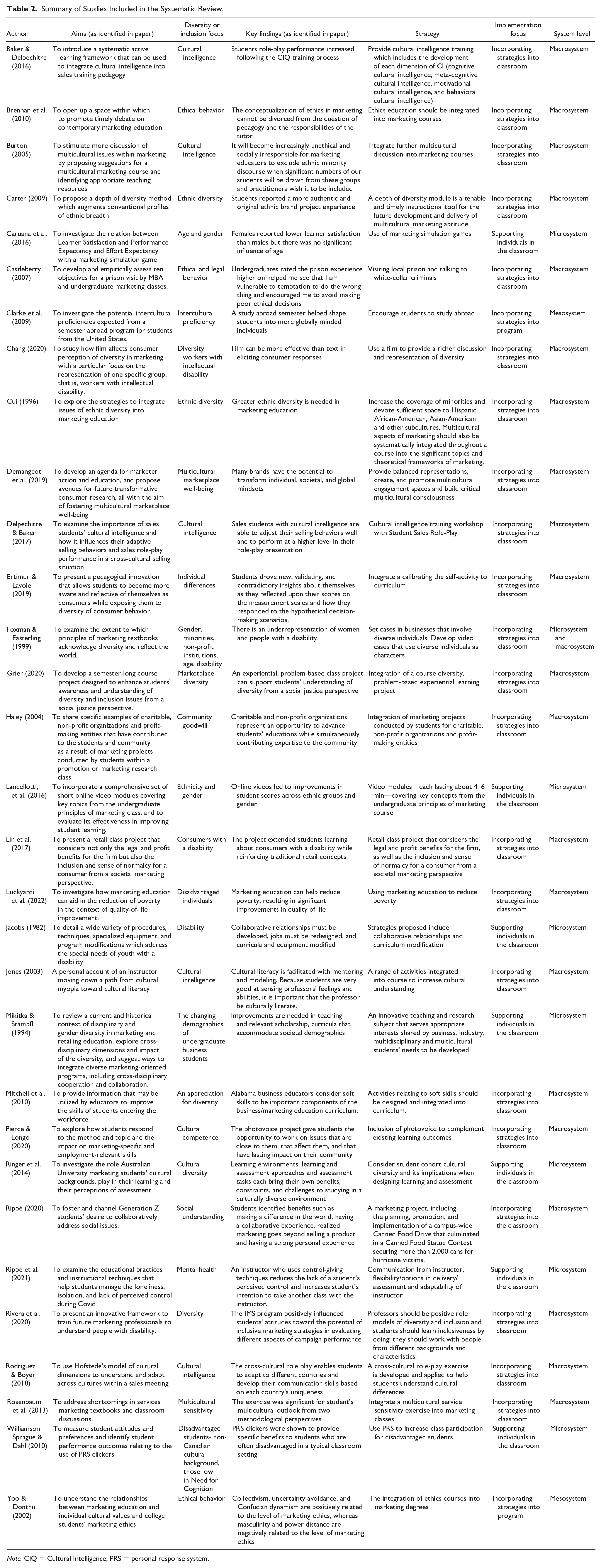
Note. CIQ = Cultural Intelligence; PRS = personal response system.
Utilizing Technology to Support Inclusion and Diversity
There were five studies that proposed the use of technology to address diversity and inclusion. The first examined how films could be utilized in the classroom to provide a richer discussion of diversity (Chang, 2020). The second, investigated how PRS clickers increased inclusivity in the classroom particularly for disadvantaged student segments (Williamson Sprague & Dahl, 2010). The third examined the impact of the use of photovoice. Photovoice involves the use of cameras to chronicle an event or individual’s lived experience (Pierce & Longo, 2020). The photos are then used to guide discussions and gain insights from the individual’s perspective. The study identified that photovoice could be utilized to gain a deeper understanding of diversity and inclusion and complement existing learning outcomes (Pierce & Longo, 2020).
The fourth study examined how marketing stimulation games enhanced learner satisfaction for different student groups (Caruana et al., 2016). It was identified that females reported lower learner satisfaction than males when marketing stimulation games were utilized. The final study examined how the use of short online video modules could be utilized to improve student learning of students of different ethnicities and genders (Lancellotti et al., 2016). These videos were identified as effective in supporting different ethnic groups and genders.
Developing Curriculum That Takes Into Consideration Diverse Society
It was suggested in 11 studies that marketing curriculum should take into consideration society’s diversity which is reflected in the student population (Mikitka & Stampfl, 1994). This included integrating both depth and breadth of diversity modules (Carter, 2009), providing balanced representations of diverse segments (Demangeot et al., 2019), increasing the coverage of minorities (Cui, 1996), considering the student cohort’s cultural diversity (Ringer et al., 2014), increasing discussion relating to ethical behaviors (Brennan et al., 2010; Yoo & Donthu, 2002) and multiculturalism (Burton, 2005), and integrating techniques to provide perceived control to students who are facing mental health challenges (Rippé et al., 2021). One study also identified that to increase diversity and inclusion, the curriculum should be delivered by professors who are positive examples of diversity and inclusion (Jones, 2003; Rivera et al., 2020). This means that the instructor develops skills and knowledge in areas of diversity or inclusion themselves (Jones, 2003).
Integrating Projects Into Curriculum That Are Focused on Diversity and Inclusion
Studies reported on how projects or training that was integrated into the curriculum could enhance inclusivity and diversity. For example, charitable and not for profit focused projects (Haley, 2004; Rippé, 2020), multicultural service sensitivity exercises (Rosenbaum et al., 2013), cross-cultural role-play exercises (Rodriguez & Boyer, 2018), cultural intelligence training sessions (Delpechitre & Baker, 2017), retail class projects which consider the inclusion and sense of normalcy for a consumer from a societal marketing perspective (Lin et al., 2017), calibrating the self-activities (Ertimur & Lavoie, 2019), diversity, problem-based experiential learning projects (Grier, 2020), business cases that involve diverse individuals (Foxman & Easterling, 1999) and activities related to soft skills (Mitchell et al., 2010). The development of soft skills assists marketers in their ability to communicate and engage with consumers from diverse backgrounds.
Considering Extra-Curricular Activities to Deepen Students’ Inclusivity and Diversity Skills
Two studies reported on extra-curricular excursions or programs that were designed to increase students’ understanding of diversity and inclusion. The first of these involved excursions to local prisons where students spoke with white-collar criminals to learn about ethical behavior (Castleberry, 2007). This project enhanced students’ understanding of the effects and consequences of ethical and unethical behavior while also, encouraging students to interact with diverse individuals. The second involved study abroad programs which were found to lead to increased cultural awareness and understanding (Clarke et al., 2009).
System Levels Examined
The studies included in the systematic review overwhelmingly focused on macrosystem strategies (N = 21). These were studies that looked at how to increase the diversity and inclusion skills of the student (Rippé, 2020; Rosenbaum et al., 2013) in society. Two studies were conducted at the mesosystem level and looked at how universities could improve the diversity and inclusion skills of students (Clarke et al., 2009; Yoo & Donthu, 2002). Seven studies employed a microsystem approach looking at how to support the diversity and inclusion of students in the classroom (e.g., Mikitka & Stampfl, 1994). Only one study examined two systems levels, microsystem and macrosystem levels (Foxman & Easterling, 1999).
Inclusivity/Diversity Factor Examined at Each Systems Level
When considering the elements relating to diversity and inclusion that have been examined in the literature at each systems level, it is evident that most studies have focused on cultural diversity (N = 10) and general diversity (N = 5) at the macrosystem level. There were also three studies that examined gender at a microsystems level, two studies that examined disability at a macrosystems level, two studies that examine cultural diversity at a microsystems level and two studies that examine ethical behavior at a macrolevel. This finding indicates that there has been a focus on how cultural and general diversity, and to a lesser degree disability and ethical behavior, have been integrated into the curriculum to increase students’ inclusivity and diversity skills for use in wider society. Beyond these studies, there has been very limited examination of other identities at the different ecosystem levels within the marketing discipline of higher education. Only two studies examined a mesosystem level strategy which involved the university embedding an overall model or strategy to increase students’ inclusivity and diversity skills. Nine studies, however, employed microsystem strategies that sought to increase inclusivity and diversity in the classroom itself. This can be seen in Table 3.
Inclusion/Diversity Factor Across System Levels.
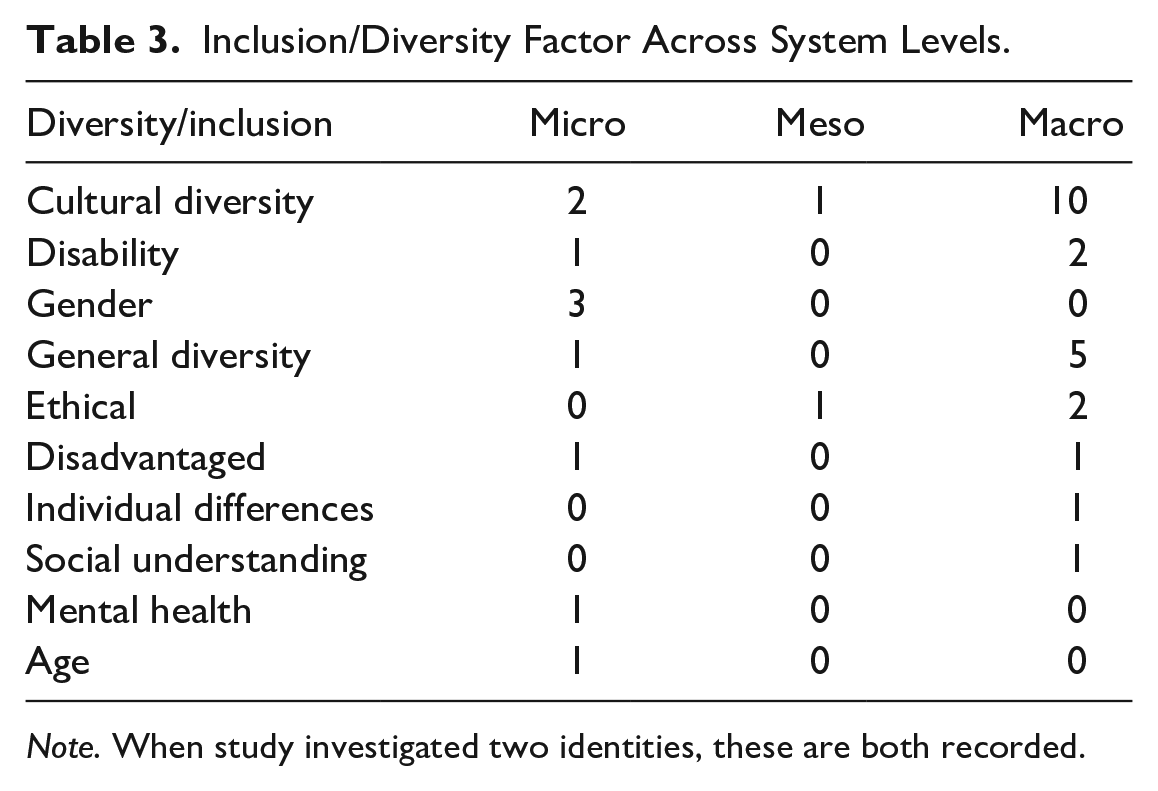
Note. When study investigated two identities, these are both recorded.
Discussion and Future Research Agenda
This systematic review aimed to identify (a) the elements relating to diversity and inclusion (e.g., age, gender, culture) that have previously been examined, (b) the strategies that have been identified as successful in addressing elements relating to diversity and inclusion, (c) whether research has studied these elements in regard to how to make classroom environments more inclusive and diverse, or how to increase student skills relating to diversity and inclusion and, (d) a research agenda for future investigations into inclusion and diversity in the higher education marketing discipline. From the results, it is evident that although investigation is increasing, the examination into this topic is limited. As such, further research is required to comprehensively understand how diversity and inclusion can be integrated into the curriculum of the higher education marketing discipline. This research is needed due to the important role that marketers play in shaping and influencing societal interactions (Demangeot et al., 2019) and therefore, future marketers need to be equipped with the skills to work in a diverse and inclusive environment and, design services and marketing materials that are diverse and inclusive in nature. The following discussion will address the individual aims of the current study.
Research Aim 1: To Identify Elements of Diversity and Inclusion That Have Previously Been Examined
From the systematic review, it is evident that only a limited number of elements relating to diversity and inclusion have been examined, with the key focus on cultural diversity (Ringer et al., 2014). This is surprising given that in a recent review of consumers’ experiencing vulnerability, there were a range of identities identified such as economic, age, medical conditions, mental health, and sexual orientation (Riedel et al., 2022) that lead a consumer to be considered as vulnerable in a service setting such as higher education. Few of these identities, however, have been considered from a diversity and inclusion perspective in the higher education marketing discipline. There has also been a lack of strategies reported which are designed to focus on the inclusion of students who may be experiencing these vulnerabilities or the development of students’ knowledge and skills to support consumers’ experiencing vulnerabilities in the “real world” through appropriate product and service design. For example, there are a lack of studies that examine how students with different medical or mental health conditions may be supported or included in the classroom or how marketing graduates can be equipped with skills to design service settings that are more considerate of individuals with such health conditions. This identifies a clear need for greater focus to be placed on strategies for a wider range of elements relating to diversity and inclusion in the higher education marketing discipline.
Research Aim 2: To Identify the Strategies That Have Been Identified as Successful in Addressing Elements of Diversity and Inclusion
The systematic review identified that there were four key strategies reported for addressing diversity and inclusion in the higher education marketing discipline. These were (a) utilizing technology to support inclusion and diversity (Chang, 2020), (b) developing curriculum that takes into consideration the diverse society we live in (Carter, 2009), (c) integrating projects into curriculum that are focused on diversity and inclusion (Lin et al., 2017), and (d) considering extra-curricular activities to deepen students’ inclusivity and diversity skills (Clarke et al., 2009). The strategies identified in the current systematic review for the marketing discipline were compared with strategies proposed in the literature for higher education literature in general. In doing so, a key consistency identified was the use of technology to support inclusion (Pino & Mortari, 2014). For instance, in a systematic review on the inclusion of students with dyslexia in higher education, Pino and Mortari (2014) identified assistive and communication technologies can be advantageous in increasing inclusion while, Fermín-González (2019) identified that e-learning education designs which considered diversity, were needed to increase inclusivity.
Notably, when comparing investigations within the marketing discipline to investigations outside of marketing including psychology (Fuentes et al., 2021) and esports (Amazan-Hall et al., 2018) as well as university-wide approaches (Waling & Roffee, 2018), it is evident that there has also been a lack of investigation into strategies that have been identified as successful in other disciplines. For example, beyond the marketing discipline, there have been studies engaging in reflexivity, highlighting diversity in the course description, decolonizing the syllabus (Fuentes et al., 2021), creating opportunities for student diversity in university clubs (Amazan-Hall et al., 2018), ensuring access to information regarding mental health, and visibility of diverse segments of the student population (Waling & Roffee, 2018). This suggests that further research is required to investigate the usefulness and success of strategies employed outside of the higher education marketing discipline and how they could be integrated into marketing curriculum.
Research Aim 3: To Identify Whether Research Has Studied These Elements Regarding How to Make Classroom Environments More Inclusive and Diverse or How to Increase Student Skills Relating to Diversity and Inclusion
To identify the focus of the studies in the systematic review, a system approach was utilized (Beirão et al., 2017). It was identified that overwhelmingly, prior research was at the macrosystem level and focused on how to increase the diversity and inclusion skills of the student cohort (Rosenbaum et al., 2013). This macrosystem approach was likely due to the aim of having more socially aware marketers upon graduation. There were very limited examinations, however, at the mesosystem and microsystem levels, suggesting that further research is required to identify how wider university policies can increase marketing students’ diversity and inclusion skills (mesosystem) and how individual marketing students’ own diversity can be more supported in the classroom (microsystem).
The systematic review also undertook a crosstab analysis to identify what inclusion and diversity identities had been examined at each system level. The focus had largely been on cultural diversity and general diversity at the macrosystem level (Carter, 2009). This finding suggests that there is a gap in the current literature relating to how other elements relating to diversity and inclusion may be supported at the three systems levels. For instance, how could individuals who experience financial hardships be supported in the classroom? Or what strategies can marketing academics employ to educate students further about how to create more inclusive servicescapes for individuals with mental health issues? As such, a clear need for further research has been identified into how a wider range of diversity and inclusivity identities can be supported at the various systems levels.
Research Aim 4: To Develop a Research Agenda for Future Investigations Into Inclusion and Diversity in the Higher Education Marketing Discipline
From the findings of the systematic review and above discussions, the following Research Agenda to support scholarship advancement relating to diversity and inclusion in the higher education marketing discipline is proposed:
Extending the integration of inclusion. One of the key challenges faced by businesses is not necessarily the understanding of diversity but rather the true adoption of inclusivity in the workplace (Mor Barak, 2015). Despite improvement in increasing representation from diverse groups in the workforce, full integration and contribution into the workplace is often still missing. It is this inclusiveness that requires additional work. The two-stage circular process of diversity and inclusion needs to begin with representation in the workforce, followed by diversity management and inclusion efforts, back to representation (Mor Barak & Travis, 2009). This challenge is echoed in the marketing education domain. For educators to be truly responsive to diversity and inclusion, it is not enough to just increase awareness, but it is also about offering solutions for equal opportunities and full participation both within the classroom and creating awareness about how this can occur in the organization and society. To ensure this broader focus the integration of diversity and inclusion should be wider than only the marketing curriculum. A common criticism of business education is that it exists in silos such as accountancy, marketing, and organizational behavior (Pfeffer, 2018). However, diversity and inclusion are identified as a whole organization challenge supported by the CEO (Ng & Sears, 2020), implemented by human resources, and enacted by all divisions of the organization, suggesting that this is not only something that should be experienced within a marketing education portfolio but rather should be embraced by a whole of business school approach. These silos to knowledge should be removed and a more interdisciplinary approach applied, ensuring the marketing and businessperson of the future demonstrates inclusion in the workplace.
Further investigation is required into a wider range of elements of diversity and inclusion. A broader investigation into diversity and inclusion and how they can be embedded into the higher education marketing discipline curriculum is needed. For example, vulnerability factors such as economic, age, medical conditions, mental health, and sexual orientation (Riedel et al., 2022) need to be considered both in terms of (a) how students with such diversities can be more widely included in the classroom and (b) how marketing graduates understanding and skills relating to positively designing service interactions between businesses and diverse consumer segments (Demangeot et al., 2019) can be increased.
Synthesizing marketing content with diversity and inclusion insights. With accrediting bodies, such as AACSB and EQUIS promoting diversity and inclusion through accreditation standards and recognizing that these elements are important to understand in addition to general discipline content, marketing education providers need to identify ways to synthesize marketing content with diversity and inclusion insights. Several opportunities are highlighted in other domains which could be applied to marketing education. Lived experiences are identified as ways of understanding diversity and inclusion in secondary school teaching (Kubal et al., 2003) and could be applied in marketing education through case studies, work-integrated learning, or guest speakers. Research processes such as co-creation or other types of active learning in market research classes offer affordances to apply marketing frameworks while also understanding diversity and inclusion (Ramaswamy, 2011). Co-creation has been successfully identified as an approach to engage students and to help them find value in their studies with application to their future needs (Dollinger et al., 2018) and provides relevance to marketing content, and diversity and inclusion knowledge. The final element is additional training of the trainers. The lack of knowledge of educational providers has been highlighted as a limitation in teaching diversity and inclusion (Merryfield, 2000). Through additional investment in professional development of marketing educators, knowledge can be passed to students.
Establishing communication ground rules. Communication has been identified as a way of increasing awareness of diversity and inclusion in organizations (Wolfgruber et al., 2021) and establishing ground rules for communication which can be integrated into marketing courses and helps support a good learning environment (Fuentes et al., 2021) is beneficial for all. Diversity and inclusion communication can be developed using co-creation processes to generate broader awareness understanding and disseminated as an expectation or guideline to students and staff.
Embedding of diversity principles. Although current research has identified the use of technology, curriculum that considers the diverse society we live in, projects that are focused on diversity and inclusion, and extra-curricular activities, a greater examination of a wider range of strategies is still required to increase the embedding of diversity and inclusivity principles into the higher education marketing discipline. Drawing on literature outside of the marketing discipline, it is evident that strategies such as engaging in reflexivity, highlighting diversity in the course description (Fuentes et al., 2021) and visibility of diverse segments of the student population (Waling & Roffee, 2018), still need to be assessed and applied within the marketing discipline.
Further research is also required to examine strategies for a wide range of elements relating to diversity and inclusion across systems levels. With current research focusing on cultural diversity and diversity in general largely in the macrosystem (teaching students inclusivity and diversity skills), greater understanding is required outside these inclusion and diversity identities in the microsystem (how to make the classroom more diverse and inclusive) and mesosystem (strategies employed at the university level to increase diversity and inclusion skills of students). This is with the aim to not only equip marketing graduates with the necessary skills at the macrosystem level to positively design service encounters and marketing communications which are inclusive when working in a professional capacity but also, it is proposed that through the integration of strategies at the microsystem and mesosystem level, marketing students will be exposed to and embedded in, a more inclusive and diverse educational environment. This will, therefore, further develop their knowledge and understanding of the importance of developing and supporting diversity and inclusion in wider society.
Identifying how diversity and inclusion is enacted in the classroom and the whole system approach across a university. While universities often publicize their diversity and inclusion policies (see e.g., University of Melbourne, Australia; University of London, UK; Harvard University, USA; and UWC South East Asia, Singapore) it appears this has not been investigated at all levels and divisions across the university. Through international programs such as the Athena Swan Charter toward supporting and transforming gender equity, originally in science, technology, engineering, math, and medicine (STEMM) and now within higher education and research more broadly, there is a focus on specific elements of diversity and inclusion. A systematic investigation can help synthesize policy and operational levels and extend the approach beyond specific diversity and discipline areas.
Limitations and Conclusion
The current systematic review has synthesized the literature on diversity and inclusion in the higher education marketing discipline, identifying a range of strategies recognized as effective in the literature, and proposing a future research agenda for the field. It is important to note, however, that there are some limitations in the research. For instance, the review is limited to the inclusion and exclusion criteria. This included only peer-reviewed papers that were written in English and focused on diversity, inclusion, and vulnerability within the marketing education discipline. As such, papers in the wider business literature were not included. This was in line with the aims of the paper to ensure that only the research in the marketing discipline specifically was analyzed. Furthermore, papers relating specifically to belonging or equity were not included. The systematic review was also limited to the databases and search terms utilized. For example, the title, abstract, or keywords had to include terms relating to inclusion, diversity, or vulnerability and marketing education. This resulted in 31 papers meeting the search criteria. Importantly, however, these papers did provide interesting insights into the range of strategies that are currently being employed in the marketing discipline to increase diversity and inclusion. It should be noted, however, that the small number of papers identified may not necessarily reflect what is actually being implemented by marketing educators, but it is rather what is published in the scholarly domain. Researchers are challenged by reduced funding support; therefore, they may choose not to publish all the activities they are involved with in their classes but rather focus more on theoretical challenges.
The current research contributes to the literature by being the first comprehensive, systematic review to synthesize the existing literature on inclusion and diversity in the higher education marketing discipline. In doing so, it also utilizes a key theoretical framework, Service Ecosystems (Beirão et al., 2017), to understand in what way (system level) the inclusion and diversity identities have been examined. As a result of this systematic review, a research agenda for future inclusivity and diversity research in the higher education marketing discipline is proposed.
Footnotes
Declaration of Conflicting Interests
The author(s) declared no potential conflicts of interest with respect to the research, authorship, and/or publication of this article.
Funding
The author(s) received no financial support for the research, authorship, and/or publication of this article.
