




Abstract
Background
Despite many women learning about endometriosis on social media, posts about the condition often fail to reflect current evidence. With the content and credibility of online health messages being found to influence behavioral intentions in other areas, this study aimed to explore how the format of endometriosis-related social media posts affects women’s intentions to get a laparoscopy for the diagnosis and treatment of endometriosis.
Design
In this 2 × 2 × (2) online randomized controlled trial, Australian women aged 18 to 45 y who had no prior endometriosis diagnosis were randomly assigned to view 1 of 4 mock Instagram posts. Post content (personal anecdote v. nonnarrative, factual information) and source (high-credibility “World Health Organization” (WHO) account v. low credibility layperson account) varied across conditions. A within-subjects component investigated change in intention when participants were informed of new treatment guidelines.
Results
A total of 1,473 women were included in the analysis. Instagram posts featuring an anecdote produced higher treatment-seeking intentions (mean difference [MD] = 0.22, 95% confidence interval [CI] = 0.04–0.39) and more favorable attitudes toward getting a laparoscopy compared with posts containing nonnarrative information (MD = 0.13, 95% CI = 0.01–0.25). While the WHO account was perceived as more credible (MD = 0.29, 95% CI = 0.17–0.41), there were no differences in intentions, perceived norms, or self-efficacy toward laparoscopy compared with the layperson account. Advising participants of new evidence regarding the limitations of laparoscopy reduced intentions to get the procedure (MD = 0.29, 95% CI = 0.21–0.37), irrespective of condition.
Conclusions
Findings demonstrate the power of anecdotes in shaping treatment preferences. Supplementing evidence-based information with personal anecdotes may ensure accurate yet engaging health information is used by online endometriosis communities to seek appropriate care.
Highlights
Framing health information on Instagram as a personal anecdote increased women’s intentions to get a laparoscopy for the diagnosis and treatment of endometriosis.
We found few differences between high- and low-credibility sources.
Informing participants of new evidence and clinical guidelines reduced intentions across all conditions, potentially reflecting more informed decision making.
In this study, we use the term “women” to reflect the population most affected by endometriosis. However, we acknowledge that individuals with diverse gender identities may also experience this condition. We use the terms “woman” and “women” throughout this article in the sexed sense of the words and not to exclude those who identify their gender differently. We aim to contribute to the understanding of the experiences of all those affected by endometriosis.
Endometriosis is a chronic inflammatory condition that affects 1 in 10 women globally 1 and occurs when tissue resembling the uterus lining grows outside of the womb.2,3 The growth of this excess scar tissue, known as lesions, can cause abdominal pain, heavy or irregular menstrual bleeding, constipation, diarrhea, and fatigue.2,3 However, the association between visible endometrial lesions and symptom severity is poorly understood, with some women experiencing no symptoms despite having severe lesions and others suffering from severe symptoms despite having only mild lesions. 4 This varied symptom profile combined with the social normalization of period pain5,6 contribute to women experiencing an average of 4 to 9 y between symptom onset and receiving a diagnosis.2,3,7
Although pelvic exams and ultrasounds can suggest the presence of endometriosis, laparoscopy has long been considered the “gold standard” diagnostic method. 2 This is a minimally invasive procedure in which endometrial lesions are identified and treated through surgical removal if found.2,8 However, laparoscopy is expensive,9,10 often requires long wait times, 11 involves surgical risks, 12 and symptom recurrence can be as high as 50% after 5 y. 8 New evidence has also questioned whether laparoscopic surgical removal is more effective than pain medication and hormonal treatments, such as the oral contraceptive pill, in addressing symptoms12–14 and suggests the required surgical diagnosis may delay access to treatment. 11
Recently published clinical guidelines in Australia 15 and Europe 10 have since advocated for a reevaluation of laparoscopy as the primary diagnosis and treatment approach, recommending it only in cases in which pain medication and hormonal treatments have failed to alleviate symptoms. Despite this new evidence, clinical practice and academic literature continue to prioritize surgical approaches, with laparoscopy often deemed the cornerstone of endometriosis management. 16 Similar trends are seen on social media, with many posts about endometriosis maintaining that laparoscopy is the only accurate diagnostic method. 2 Given that women with symptoms indicating possible endometriosis are increasingly turning to social media for immediate information, 3 understanding how these posts influence women’s treatment-seeking behaviors has become particularly important.
People are increasingly seeking accessible health information on social media, 7 which has coincided with the rise of the direct-to-consumer medical testing industry. Companies and social media influencers now use narratives of empowerment to promote medical screening tests as necessary, despite mixed evidence of their utility. 17 This is of particular concern as, unlike other sources of health messaging, social media requires audiences to make their own judgments about the quality of the information and the credibility of the source. 18 Within the context of endometriosis, a survey of 287 women found that more than 80% reported using social media to learn how to manage the condition. 3 Yet, social media posts about endometriosis feature varying degrees of evidence-based information,2,7 and people with endometriosis report differing opinions on which social media sources they consider to be reliable. 3
Prior literature suggests that when making health decisions, personal anecdotes are often more influential than nonnarrative information19–21 as they can shape beliefs about treatment efficacy, 19 stimulate story-consistent attitudinal changes toward public health messages, 20 and influence hypothetical treatment choices.22,23 In addition to message content, the perceived credibility of the source plays a critical role. Social media users perceive professional accounts as more credible than accounts of strangers or peers 24 and are more likely to act on health information they provide.25,26 However, it remains possible that providing evidence-based information may counteract these persuasive effects. For example, informing women about the risk of overdetection in mammography screening 27 and the unreliability of ultrasounds in diagnosing polycystic ovary syndrome (PCOS) 28 has been shown to prompt a reconsideration of screening intentions.
Despite the content19,20,29 and credibility 25 of health messages influencing behavioral intentions in other areas, the impact of different social media health message formats within the context of endometriosis remains unclear. This study aimed to test whether these effects also occur when communicating information about endometriosis by exploring how the content (personal anecdote v. nonnarrative) and source (high-credibility account v. low-credibility account) of endometriosis-related Instagram posts influence women’s intention to get a laparoscopy. We hypothesized that participants randomized to view the personal anecdote post would have higher intentions to get a laparoscopy and more favorable attitudes toward the procedure than those who viewed the nonnarrative, factual content. We also hypothesized that participants who viewed the post from a high-credibility source would report higher intentions to get a laparoscopy than those who viewed the same post from a low-credibility source. Consistent with the Integrative Model of Behavioural Prediction, 30 which posits that behavioral intentions are shaped by attitudes, perceived norms, and self-efficacy, secondary outcomes explored whether these cognitive factors influence women’s intentions.
Further, given the recent shift away from laparoscopy in international guidelines due to uncertain evidence of benefit,10,15 this study also aimed to investigate whether intentions change when informed of new guidelines recommending laparoscopy only when pain medication and hormonal treatments fail to provide symptom relief. We hypothesized that providing this information will reduce intentions to undergo the procedure across all groups.
Method
Study Design
A 2 × 2 × (2) factorial design was used in which participants were randomly assigned to 1 of 4 conditions in which Instagram post content (personal anecdote v. nonnarrative factual information) and source credibility (high v. low) varied. A within-subjects component investigated the change in intention after presenting all participants with the same information about new endometriosis treatment guidelines. Ethics approval was granted by the University of Sydney Human Research Ethics Committee (2024/HE000624), and the study was prospectively registered with the Australian and New Zealand Clinical Trial Registry (ACTRN12624000767505p).
Participants and Recruitment
Participants were recruited through the online social research company Dynata between June 27 and July 10, 2024. Dynata partners with multiple panels to recruit individuals who have preregistered to receive surveys. They randomly select participants based on target demographic criteria and use an incentivization system for participation in which rewards vary (e.g., cash, airline miles, gift cards). Women living in Australia who were 18 to 45 y of age and had not been diagnosed with endometriosis were eligible to take part in the study. Participation was voluntary and anonymous.
Randomization and Allocation Concealment
Participants were randomly allocated to 1 of 4 conditions through Qualtrics survey software (Qualtrics randomizer feature) using a balanced allocation ratio. Using Web-based software, allocation and sequence generation were conducted automatically with participants and researchers blinded to the randomized condition.
Intervention
Public Instagram posts about endometriosis were reviewed by the study authors for content and style. Stimuli were created to resemble Instagram posts using a mock-up template and free stock images, with their design being additionally informed by our extensive program of content analysis research examining online women’s health communication.17,31 For the post content study factor, participants were randomized to view a post that used either nonnarrative, factual information to describe endometriosis or a personal anecdote of the lived experience of having endometriosis. Both consisted of 5 image slides and a text caption outlining the prevalence, symptoms, and management of endometriosis. For the source credibility factor, participants were randomized to view a post from either a high- or low-credibility account. The high-credibility condition featured the World Health Organization (WHO) due to its position as a globally recognized public health authority. 32 The low-credibility condition featured a layperson with the username “anonymous_user123” chosen to minimize perceived expertise, credentials, and affiliations. All posts featured the same background image, font, and number of “likes,” but the blue verification badge was included for the high-source-credibility condition (see Appendix A).
Procedure
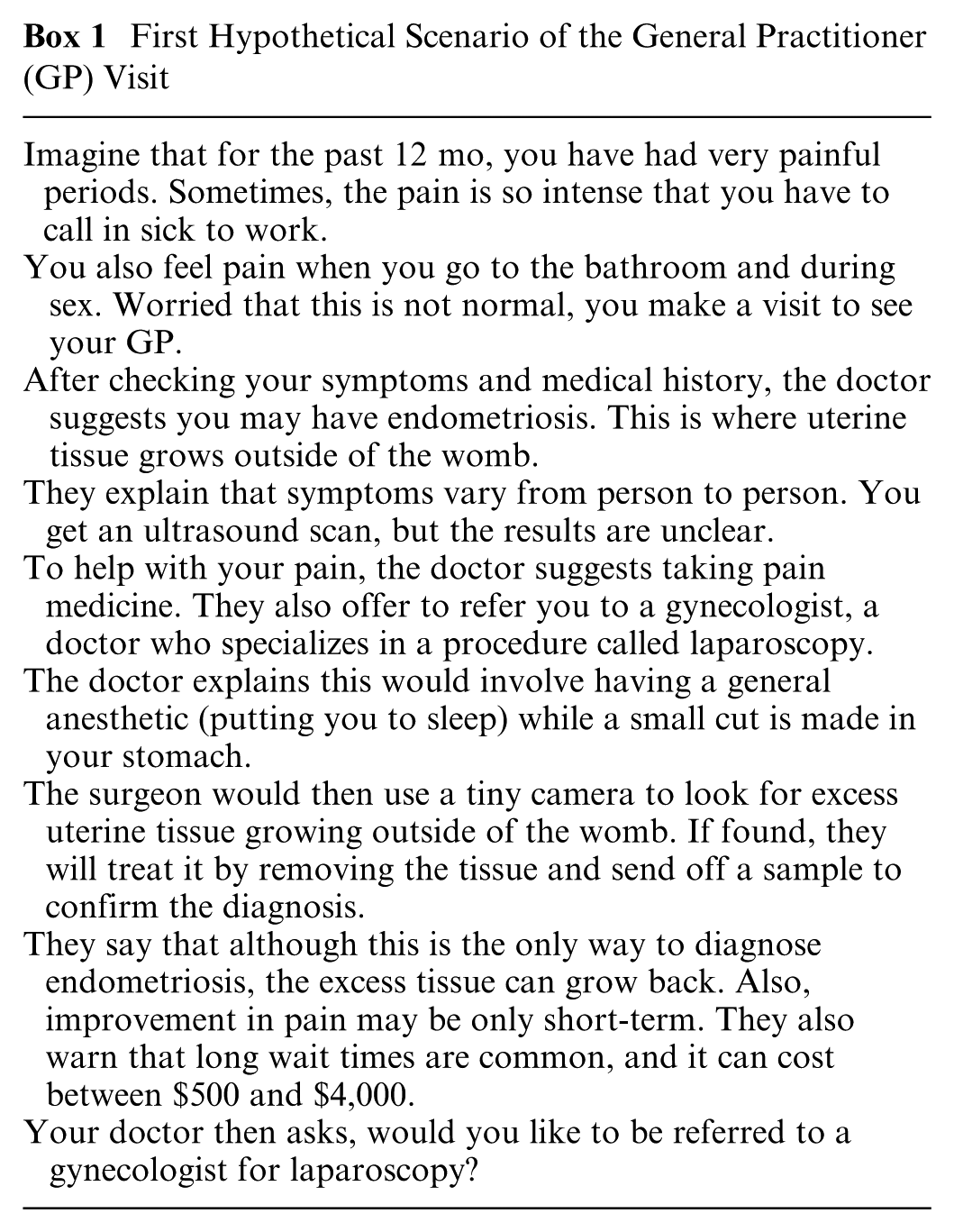
The online survey was created using Qualtrics. After indicating their informed consent, participants were asked about their use of social media for health-related purposes, their prior health care experiences, and demographic questions. They were then randomly allocated to view one of the Instagram posts. Following this, all participants were presented with the same hypothetical scenario (Box 1) asking them to imagine they had experienced common endometriosis symptoms for the past 12 mo and were consulting their general practitioner (GP) for diagnosis and treatment options. This reflects the typical care pathway for women with potential endometriosis symptoms in Australia, where they must first see a GP before being referred to specialist gynecologic care. 15 They then completed the outcome measures. After this, all participants were presented with a second scenario (Box 2) asking them to imagine that their GP informed them of new evidence regarding the limitations of laparoscopy. Following this, participants were asked about their intention to undergo a laparoscopy again to assess any change.
First Hypothetical Scenario of the General Practitioner (GP) Visit
Second Hypothetical Scenario Outlining New Treatment Guidelines
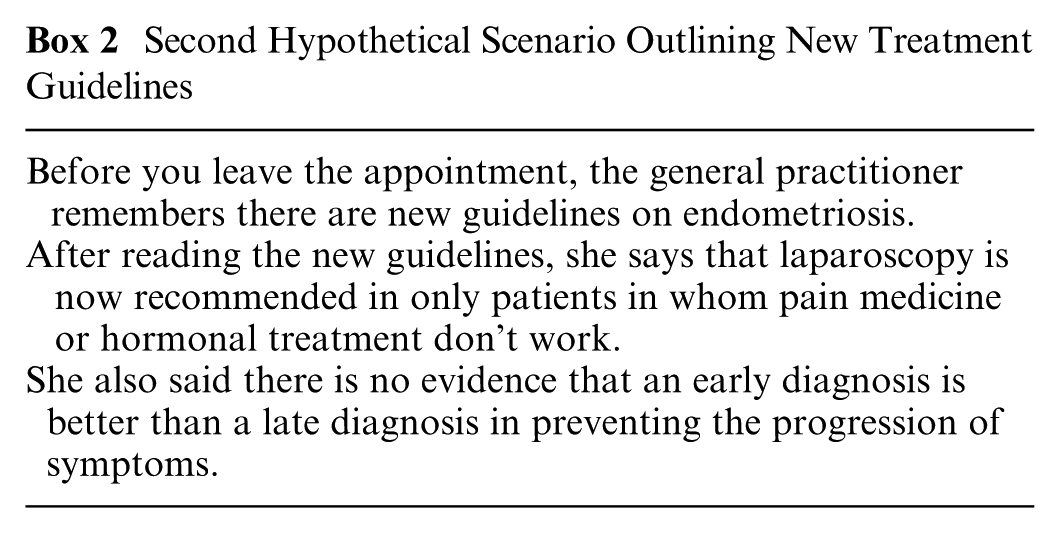
The evidence referred to in the nonnarrative post conditions and hypothetical scenarios was based on international clinical practice guidelines.10,33 The Instagram posts and hypothetical scenarios were developed and reviewed by a multidisciplinary team with expertise in psychology, public health, and women’s health, as well as a practicing GP with expertise in women’s health, to ensure accuracy and clinical relevance. To mirror real-world health decision making, in which individuals often first learn about a condition online before seeking diagnosis or treatment from a health care professional, laparoscopy was mentioned in only the hypothetical scenario and not in the Instagram posts. The questionnaire was first piloted with a convenience sample of 20 participants to ensure acceptability and comprehension. Instructions were revised to improve clarity, and the format of the hypothetical scenarios was edited to enhance readability. All other elements remained the same for the main study. No issues with the survey flow or randomization process were identified.
Outcome Measures
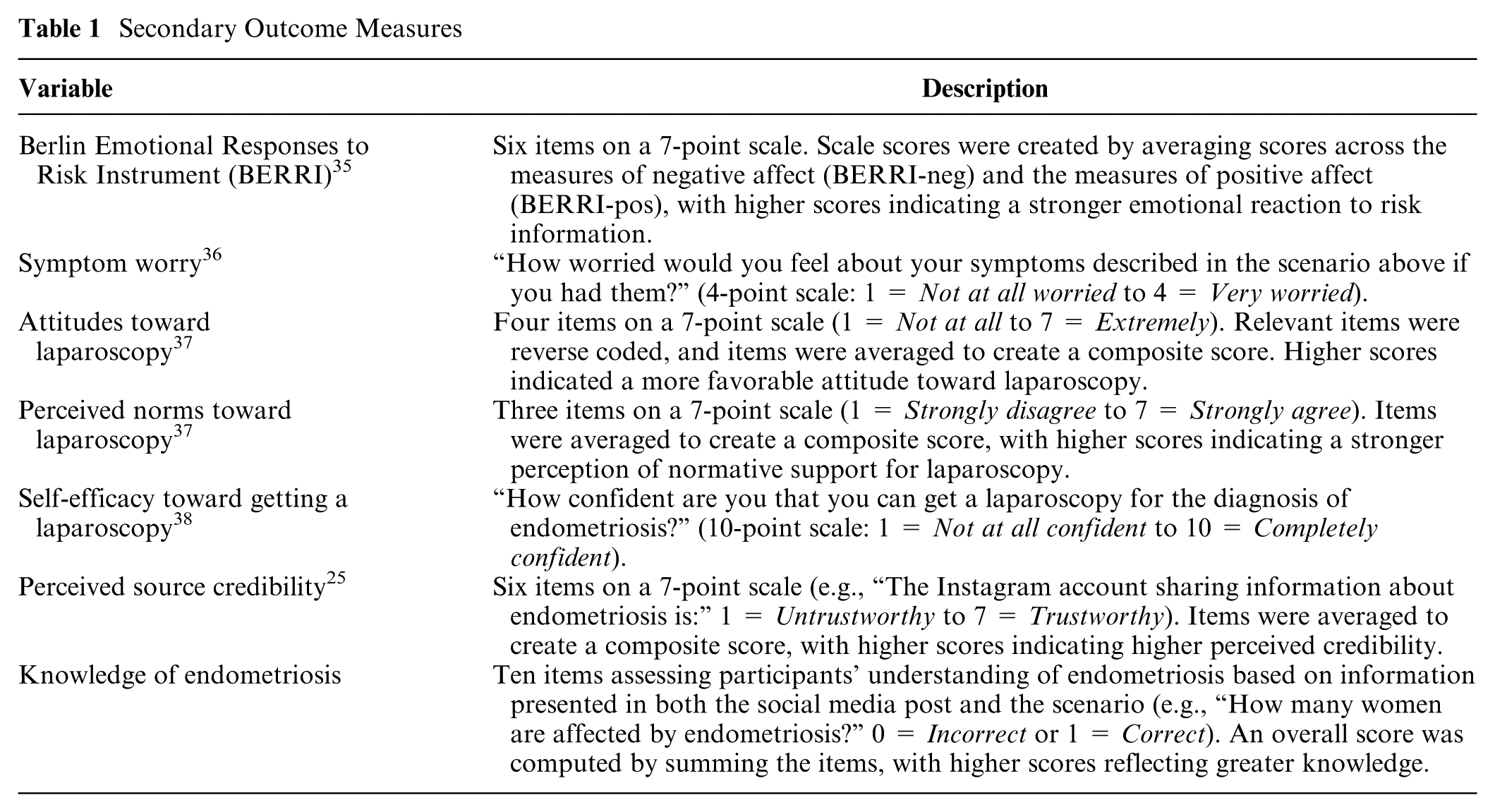
A single item assessed hypothetical intention to get a laparoscopy for the diagnosis and treatment of endometriosis on a 7-point scale 34 (“Which best describes your intentions to get a laparoscopy for the diagnosis and surgical treatment of endometriosis, answering as you would in the scenario above?,” 1 = Definitely will not to 7 = Definitely will; see Appendix B for full questionnaire) and was presented immediately after the first scenario (time 1) and after the second scenario (time 2). A free-text question followed asking participants to explain their choice. Secondary outcomes, including attitudes toward laparoscopy, perceived norms, self-efficacy, knowledge of endometriosis, psychosocial outcomes, and perceived source credibility, were assessed using various adapted, previously validated, and study-specific items designed to assess participants’ understanding of the information presented in the posts and scenario (Table 1).
Secondary Outcome Measures
Statistical Analysis
An a priori power analysis indicated a sample size of N = 800 (n = 200 per study arm) would be sufficient to detect main effects of content, source, and their interaction, with 90% power at an alpha of 0.05. The analysis assumed an expected effect size of Cohen’s d = 0.23. A soft launch of 214 participants was initially conducted to confirm sample size calculation assumptions. Soft launch results identified there would be sufficient power to detect the main effects of source credibility; however, due to greater variability than expected, a revised sample size of N = 1,448 (n = 362 per condition) would be needed to achieve 80% power to detect the main effects of post content.
Statistical Package for the Social Sciences (SPSS) version 29 was used with an alpha level of 0.05 set for all statistical tests. Prior to the analyses, the data were cleaned and checked for missing values, outliers, and nonserious responders. Relevant items were reverse scored, and composite scores were computed for scales with more than 1 item. Reliability analyses were conducted for the composite scales, with all showing high internal reliability in the current study. Descriptive statistics were used to characterize the sample. The differences between groups were analyzed using a 2 × 2 between-subjects analysis of variance (ANOVA) for primary and secondary outcomes. A repeated-measures mixed ANOVA was conducted to examine the change in intention. No adjustments were made for multiple comparisons.
Content Analysis
An inductive content analysis was used for the free-text question asking participants to explain their intention to get a laparoscopy, with common themes extracted to develop a coding framework. Two researchers independently reviewed the free-text responses, and each developed an initial list of emerging codes and themes. The lists were then combined to create a coding framework, before being reviewed by a third researcher. To ensure consistency, reliability, and rigor, the first 200 were then double coded. The level of agreement was tested using Cohen’s kappa 39 and indicated a moderate level of agreement (κ = 0.76). All remaining free-text responses were then coded into the framework, with descriptive statistical analysis being used to calculate the frequency of each code and exemplar quotes selected to illustrate findings. As participant responses often contained several distinct ideas, individual responses could receive multiple codes where relevant.
Public and Patient Involvement Statement
While we recognize the importance of patient and public involvement in research, the design, recruitment, reporting, and dissemination plans for this study were executed without formal consultation with patient or public representatives. We will consider their input in future studies to enhance the impact and relevance of our findings.
Results
Of the 1,542 eligible participants who were randomized, 69 were excluded from the analysis due to having incomplete responses (n = 55), taking the survey more than once (n = 7), and completing the questionnaire at a speed less than one-third of the median duration indicating an inattentive or nonserious response (n = 7). This resulted in a total of 1,473 participants for the final analysis (Figure 1).
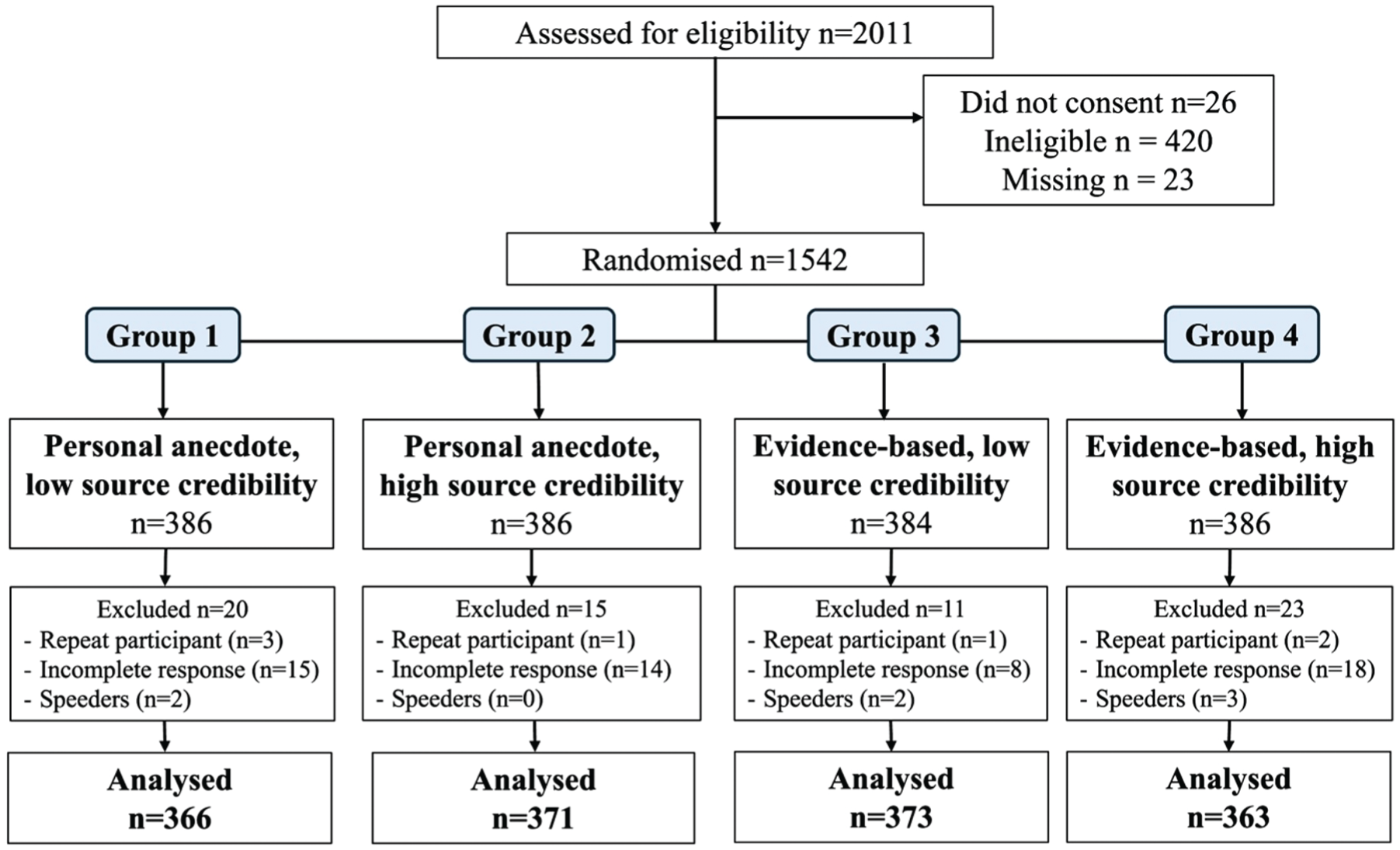
Participant flow diagram.
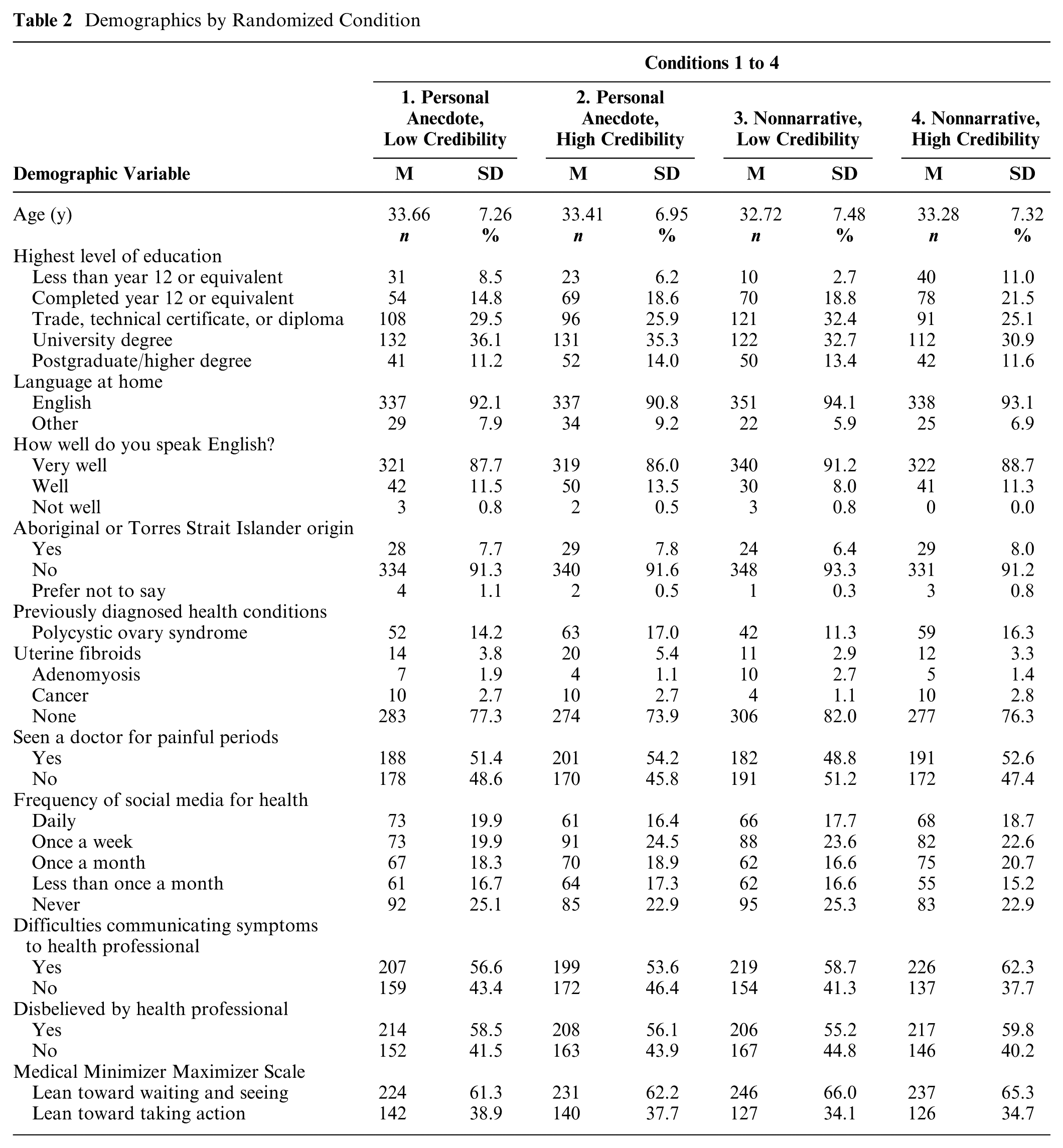
The demographic characteristics of the sample by condition are displayed in Table 2. The average age of the sample was 33.26 y (SD = 7.26, range = 18–45 y), and almost half of the sample had obtained a university degree or higher (46.3%, n = 682). Participants varied in the frequency of the use of social media for their health, and more than half (51.7%, n = 762) had seen a doctor for painful periods.
Demographics by Randomized Condition
Intention to get a Laparoscopy
Table 3 shows outcome means by condition. Controlling for source credibility, intention to get a laparoscopy for the diagnosis and treatment of endometriosis was significantly higher for those who viewed the Instagram post featuring a personal anecdote than those who viewed the post containing nonnarrative content: mean difference (MD) = 0.22, 95% confidence interval (CI) = 0.04 to 0.39, F(1, 1,469) = 5.99, P = 0.015,
Outcome Means by Condition
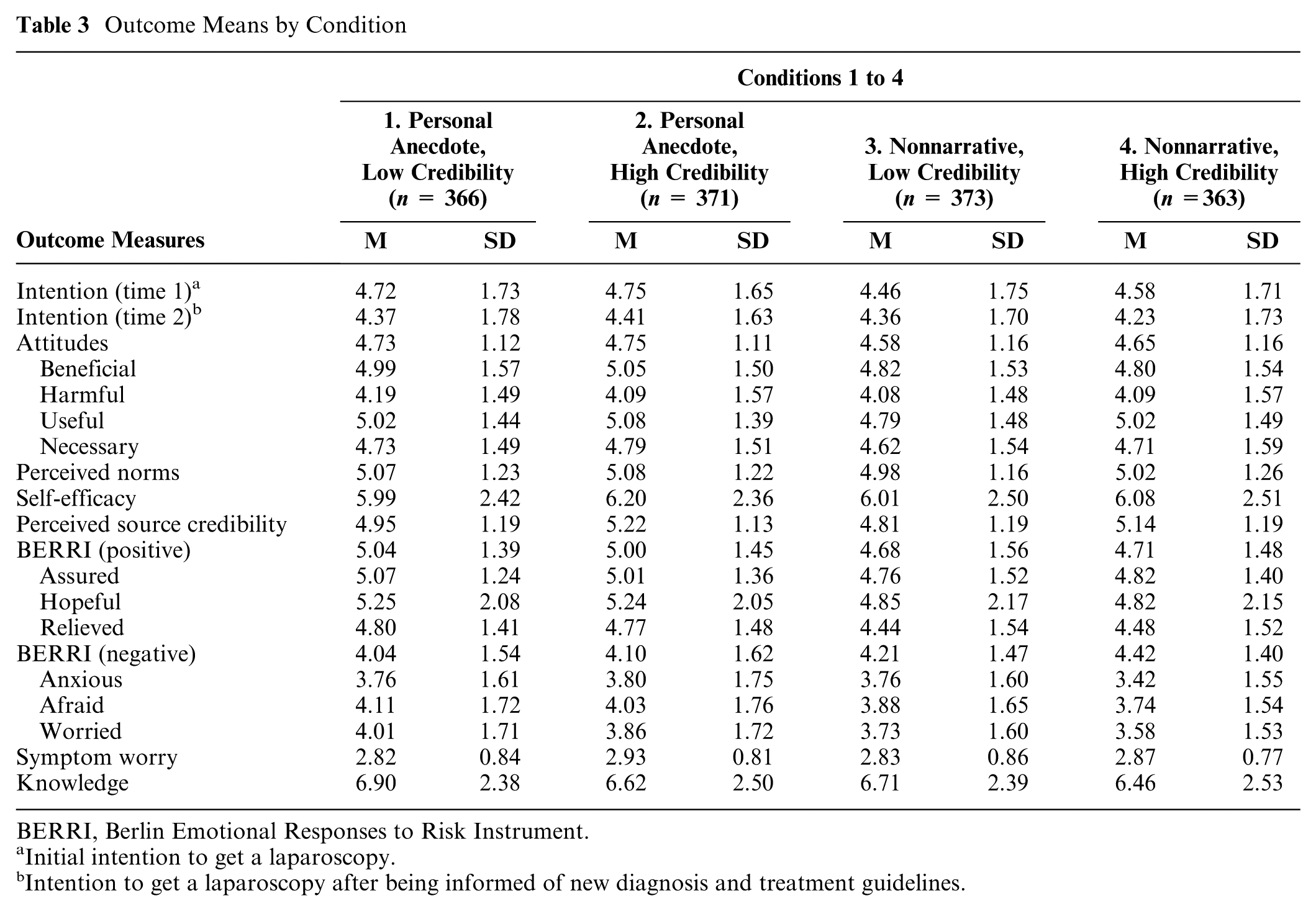
BERRI, Berlin Emotional Responses to Risk Instrument.
Initial intention to get a laparoscopy.
Intention to get a laparoscopy after being informed of new diagnosis and treatment guidelines.
When participants were asked to explain their intention (free-text answer), the top 3 codes from the content analysis were the same for those shown the personal anecdote and those shown the nonnarrative content: 1) it is too expensive (18.6%, n = 137 and 19.3%, n = 142, respectively), 2) to get a definitive diagnosis (18.2%, n = 134 and 16.6%, n = 122, respectively), or 3) to reduce pain and improve quality of life (13.6%, n = 100 and 11.4%, n = 84, respectively). See Table 4 for all codes and illustrative quotes.
Content Analysis Results for the Free-Text Question regarding Intention (Time 1), “Which Best Describes Your Intentions to Get a Laparoscopy for Diagnosis and Surgical Treatment of Endometriosis, Answering as You Would in the Scenario Above? Please Tell Us Why”
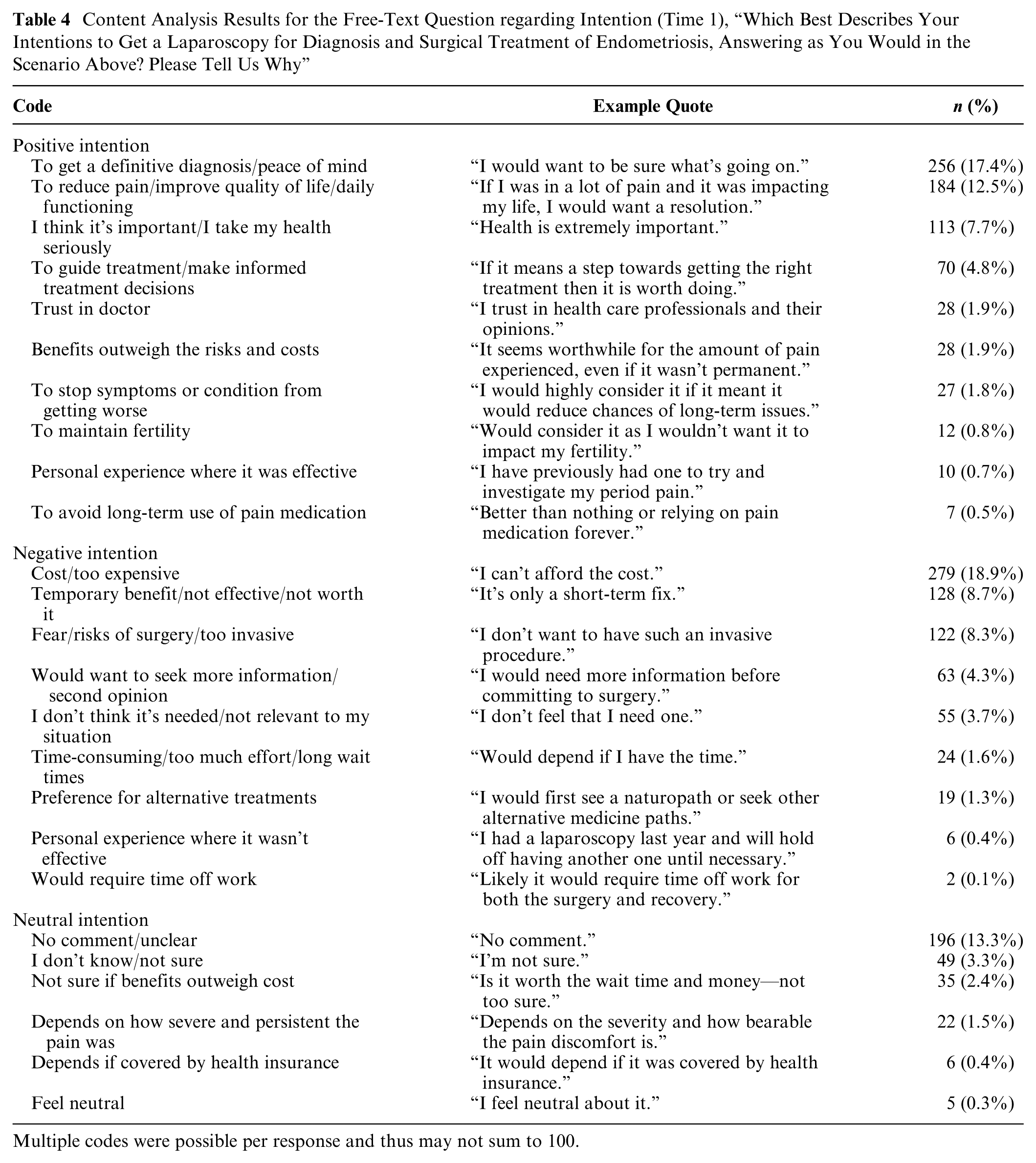
Multiple codes were possible per response and thus may not sum to 100.
Change in Intention
There was a significant main effect of time, with initial intention to get a laparoscopy (time 1) reduced after being informed of the new endometriosis diagnosis and treatment guidelines (time 2, MD = 0.29, 95% CI = 0.21–0.37, P < 0.001, d = 0.18; see Table 3). The 2-way interactions between time and post content, F(1, 1,469) = 2.23, P = 0.14, and between time and source credibility, F(1, 1,469) = 2.23, P = 0.14, were not significant. The 3-way interaction between time, post content, and source credibility was also not significant, F(1, 1,469) = 2.52, P = 0.11.
Attitudes
Controlling for source credibility, attitudes toward laparoscopy were significantly more favorable among those shown the personal anecdote than those shown the nonnarrative content: MD = 0.13, 95% CI = 0.01 to 0.25, F(1, 1,469) = 4.68, P = 0.03,
Perceived Norms
There were no main effects of content, MD = 0.08, 95% CI = −0.05 to 0.20, F(1, 1,469) = 1.49, P = 0.22,
Self-Efficacy
There were no main effects of content, MD = 0.05, 95% CI = −0.20 to 0.31, F(1, 1,469) = 0.18, P = 0.67,
Perceived Source Credibility
There was no main effect of content on perceived source credibility, MD = 0.11, 95% CI = −0.01 to 0.23, F(1, 1,469) = 3.26, P = 0.071,
Psychosocial Outcomes
Averaged over source, those who viewed the personal anecdote content experienced significantly more positive emotions toward the information in the Instagram post than those who viewed the nonnarrative content, MD = 0.33, 95% CI = 0.18 to 0.48, F(1, 1,469) = 18.18, P < 0.001,
Participants who viewed the nonnarrative content had significantly more negative emotional responses to the information in the Instagram posts compared with those who viewed the personal anecdote, MD = 0.24, 95% CI = 0.09 to 0.40, F(1, 1,469) = 9.45, P = 0.002,
With regard to symptom worry, the main effects of both content, MD = 0.02, 95% CI = −0.06 to 0.12, F(1, 1,469) = 0.28, P = 0.60,
Knowledge
Controlling for source credibility, post content had no significant effect on knowledge, MD = 0.17, 95% CI = −0.08 to 0.42, F(1, 1,469) = 1.83, P = 0.18,
Discussion
In this randomized controlled trial of different social media formats on women’s endometriosis treatment-seeking intentions, Instagram posts featuring an anecdote produced higher intentions and more favorable attitudes toward laparoscopy than posts containing nonnarrative content. Taken together with prior research, these results demonstrate the power of personal anecdotes in shaping behavioral intentions as they capture and sustain attention,29,40 stimulate an emotional response, 41 generate personal relevance,20,42 and convey the emotional and physical nuances of endometriosis more clearly than scientific information. 3
A previous study found anecdotes of women’s experiences with endometriosis prompted misinterpretations and misapplications of scientific evidence. 2 Our findings suggest that using anecdotal formats to share scientific evidence may assist women navigating this complex condition to make informed treatment decisions. In addition, anecdotal stories can stimulate story-consistent attitudinal changes toward public health messages 20 and beliefs about treatment efficacy. 19 While hopeful anecdotes have previously predicted positive affect toward pelvic exams and ultrasounds for the diagnosis of endometriosis, 41 our study found that personal anecdotes can increase positive affect toward the more invasive method of laparoscopy. As many participants mentioned fear of surgery as a barrier to pursuing the procedure in their free-text responses, this is an important finding.
After informing participants that laparoscopy is recommended only when pain medication and hormonal treatments fail to relieve symptoms, intentions decreased across all conditions. Existing literature has found that informing women of the risk of overdetection in mammography screening 27 and the unreliability of ultrasounds in diagnosing PCOS 28 led them to reconsider their screening intentions. Within the context of endometriosis, our findings demonstrate that sharing updated evidence and clinical guidelines on social media can promote informed medical decision making, regardless of the type of information that has been previously encountered, or its source. Communicating this to women may reduce the overuse of laparoscopy while also ensuring timely diagnosis.
While the account attributed to the WHO was perceived as more credible, there were no differences in intentions, perceived norms, or self-efficacy toward getting a laparoscopy compared with the layperson account. This contrasts to prior research with university students, in which participants were more likely to act on health information provided by professional Twitter accounts that had a doctor title in their username. 25 Interestingly, those who saw the post from the low-credibility layperson account had higher knowledge scores than those shown the same information from the high-credibility WHO account, although the overall difference was small. One explanation is that the layperson account may have been perceived as more personally relevant, subsequently increasing attention to the information and facilitating greater retention. 40 This finding highlights the ability for laypeople to contribute persuasively to endometriosis-related health discussions on social media.
Strengths and Limitations
To our knowledge, this study was the first in Australia and one of the few worldwide to use participants outside of a university sample to compare the effect of personal anecdotes and nonnarrative social media content on treatment-seeking behavior. Although personal anecdotes account for only approximately 17% of endometriosis-related posts on social media, they tend to yield the highest engagement, 43 highlighting the practical relevance of our findings.
The randomized design allowed for a robust comparison between groups, with the standardized hypothetical scenarios maximizing internal validity. However, the design was not reflective of the authentic Instagram experience as participants viewed static images of the posts. When engaging with the app directly, women may interact with health information in a more dynamic manner, with the ability to view comments from other users potentially shaping their attitudes toward treatment options. Nonetheless, the controlled nature of the design allowed the effects of the Instagram post manipulations to be directly compared and unbiased by previous experience of an endometriosis diagnosis. While the differences in post content were an intentional part of our experimental design, it remains possible that slight content differences, such as references to variability in symptom experiences and uncertainty regarding causes and treatment, could have influenced treatment-seeking intentions beyond the anecdotal versus nonnarrative format. Therefore, the observed effects may reflect a combination of communication format and informational content. This consideration should be kept in mind when interpreting our findings. It should also be noted that the nonadjustment for multiple comparisons may have resulted in increased type I errors. As this study has established effect sizes that could be anticipated, future studies can be designed that appropriately control the family-wise error rate.
The use of an online panel sample limits our ability to assess whether participants paid attention to the experimental stimuli; however, to mitigate this, we reviewed the free-text responses for coherence and excluded those who completed the survey in less than one-third of the median time. Recruiting participants through a market research company may also introduce selection bias, as these women had preregistered to participate in online surveys and may not be representative of the general population. However more than half of participants had seen a doctor for painful periods, reflecting the demographic often targeted by social media messaging about endometriosis.
The large sample size and quota sampling for high and low education levels offers nuanced insights into how different social media health information formats influence intentions to get a laparoscopy. While statistically significant, these differences between conditions were small. However, given the vast reach of social media and that endometriosis is estimated to affect approximately 190 million individuals globally, 44 even modest effects of post content and credibility could translate into meaningful, population-level effects on treatment-seeking intentions, warranting further investigation into their clinical relevance.
Implications
By identifying features of health messages on social media that shape women’s treatment-seeking intentions, attitudes, and knowledge, our research makes meaningful contributions to the development of targeted communication strategies that resonate with those affected by endometriosis. Collaboration among researchers, practitioners, influencers, and social media users is needed to ensure accurate yet engaging health information is shared to online endometriosis communities. Initiatives like the WHO Fides project are working to achieve this by supporting social media influencers in sharing evidence-based messages. 45 However, more targeted efforts addressing the specific context of endometriosis are essential.
In conclusion, our study showed that formatting health content as a personal anecdote produced higher intentions and more favorable attitudes toward laparoscopy. When advised of new treatment guidelines, intentions reduced, indicating more informed decision making. By providing insights into how women make decisions about their health amidst new evidence and persuasive personal anecdotes on social media, our results highlight the urgent need for effective online health communication strategies. Moving forward, multidisciplinary collaboration on social media is needed to ensure women navigating this complex condition can advocate for appropriate care. In doing so, steps can be made to reduce the diagnostic delay associated with endometriosis, reduce overuse of laparoscopy, and improve women’s health outcomes overall.
Supplemental Material
sj-docx-1-mdm-10.1177_0272989X261436847 – Supplemental material for Social Media Health Information Formats and Endometriosis Treatment-Seeking Intentions: A Randomized Controlled Trial
Supplemental material, sj-docx-1-mdm-10.1177_0272989X261436847 for Social Media Health Information Formats and Endometriosis Treatment-Seeking Intentions: A Randomized Controlled Trial by Alice Graham, Brooke Nickel, Kirsten McCaffery, Jenny Doust, Erin Cvejic and Tessa Copp in Medical Decision Making
Supplemental Material
sj-docx-2-mdm-10.1177_0272989X261436847 – Supplemental material for Social Media Health Information Formats and Endometriosis Treatment-Seeking Intentions: A Randomized Controlled Trial
Supplemental material, sj-docx-2-mdm-10.1177_0272989X261436847 for Social Media Health Information Formats and Endometriosis Treatment-Seeking Intentions: A Randomized Controlled Trial by Alice Graham, Brooke Nickel, Kirsten McCaffery, Jenny Doust, Erin Cvejic and Tessa Copp in Medical Decision Making
Footnotes
Acknowledgements
We would like to thank all study participants.
The authors declared no potential conflicts of interest with respect to the research, authorship, and/or publication of this article. The authors disclosed receipt of the following financial support for the research, authorship, and/or publication of this article: Financial support for this study was provided entirely by a grant from the National Health and Medical Research Council (NHMRC) Program. The funding agreement ensured the authors’ independence in designing the study, interpreting the data, writing, and publishing the report.
Author Contributions
AG, KM, and TC conceived the study. All authors were involved in designing the study and developing the methods. AG conducted the statistical analysis and drafted the manuscript. All authors critically reviewed and approved the manuscript.
Ethical Considerations
Ethics approval was granted by the University of Sydney Human Research Ethics Committee (2024/HE000624), and the study was prospectively registered to the Australian and New Zealand Clinical Trial Registry (ACTRN12624000767505p).
Consent to Participate
Written informed consent was obtained from all participants who were involved in this research.

Data Availability
The data for this study are available to other researchers on request. For data access, please contact the corresponding author.
References
Supplementary Material
Please find the following supplemental material available below.
For Open Access articles published under a Creative Commons License, all supplemental material carries the same license as the article it is associated with.
For non-Open Access articles published, all supplemental material carries a non-exclusive license, and permission requests for re-use of supplemental material or any part of supplemental material shall be sent directly to the copyright owner as specified in the copyright notice associated with the article.
