




Abstract
Background
Cancer diagnosis causes emotional distress, which can influence patients’ treatment choice. This study aimed to investigate the effect of increased emotionally supportive surgeon communication in a virtual setting on treatment preference for thyroid cancer.
Design
This randomized trial (NCT05132478), conducted from November 2021 to February 2023, enrolled adults with ≤4-cm thyroid nodules not requiring surgery. Participants were randomized 1:1 to watch a virtual clinic visit depicting a patient–surgeon treatment discussion for low-risk thyroid cancer. Control and intervention videos were identical except for added emotionally supportive communication in the intervention. The primary outcome was treatment preference for total thyroidectomy or lobectomy. Secondary outcomes were perceived physician empathy, physician trust, decisional confidence, and disease-specific knowledge. An intention-to-treat analysis was performed using conditional regression to account for stratification by sex. Qualitative content analysis evaluated participants’ open-ended responses about treatment choice and surgeon communication.
Results
Of 208 eligible patients, 118 (56.7%) participated. Participants were 85.6% female and 88.1% White. Overall, 89.0% (n = 105) of participants preferred lobectomy, which was similar between the intervention and control groups (90.0% v. 87.9%, respectively, P = 0.72). Compared with control, participants who viewed the consultation with enhanced communication perceived higher levels of physician empathy (34.5 ± 5.8 v. 25.9 ± 9.1, P < 0.001) and reported increased trust in the physician (12.0 ± 2.6 v. 10.4 ± 3.1, P < 0.001). The groups were similar in decisional confidence (7.6 ± 2.1 v. 7.7 ± 1.9, P = 0.74) and disease-specific knowledge. Prominent qualitative themes among participants choosing thyroid lobectomy included desire to avoid daily thyroid hormone (n = 53) and concerns about surgical complications (n = 25).
Conclusions
In this randomized controlled study, a significant proportion of participants preferred thyroid lobectomy if diagnosed with low-risk thyroid cancer. Participants perceived increased empathy when provided even in the virtual setting, which was associated with increased trust in the physician.
Highlights
In this single-site, randomized controlled trial, enhanced emotionally supportive surgeon communication had no effect on hypothetical treatment preference for low-risk thyroid cancer.
Participants who experienced enhanced emotionally supportive surgeon communication perceived higher physician empathy and reported greater trust in the physician.
The incorporation of empathetic communication during surgical consultation for low-risk thyroid cancer promotes patient trust and perception of empathy.
This is a visual representation of the abstract.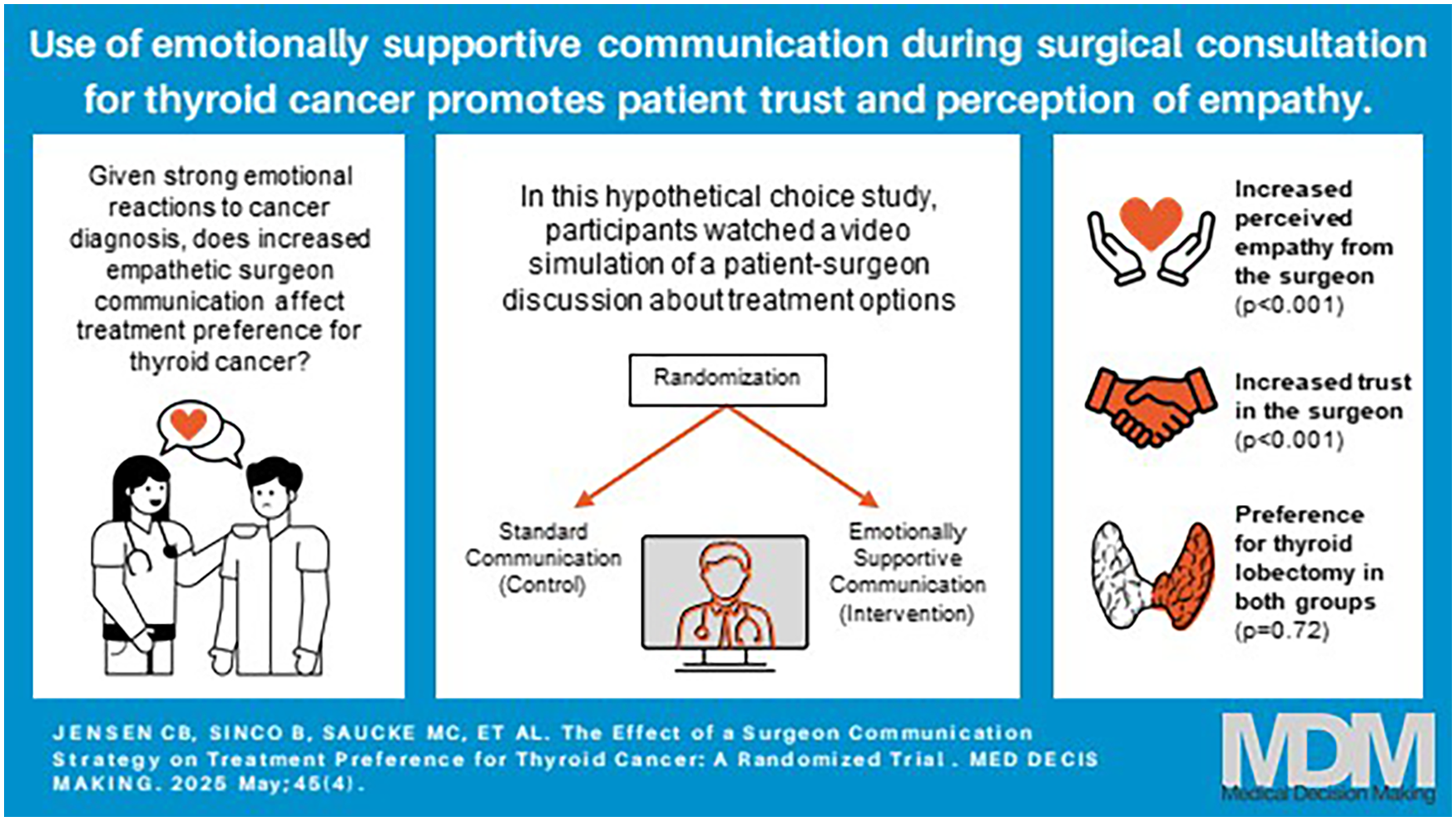
Get full access to this article
View all access options for this article.
References
Supplementary Material
Please find the following supplemental material available below.
For Open Access articles published under a Creative Commons License, all supplemental material carries the same license as the article it is associated with.
For non-Open Access articles published, all supplemental material carries a non-exclusive license, and permission requests for re-use of supplemental material or any part of supplemental material shall be sent directly to the copyright owner as specified in the copyright notice associated with the article.
