



Abstract
Background
Despite advances in biomedical HIV prevention modalities such as pre-exposure prophylaxis to prevent the transmission of HIV, racial/ethnic and sexual/gender minority populations are disproportionately impacted by HIV epidemic. Alarming rates of HIV have persisted among Black gay and bisexual men, particularly in Southern states.
Methods
Utilizing data from the ViiV ACCELERATE! initiative, we explored the impact of As Much As I Can, an immersive theatre production, on HIV-related stigma behaviors. A self-administered post-performance survey was conducted with a cohort (n = 322) of randomly selected audience members.
Results
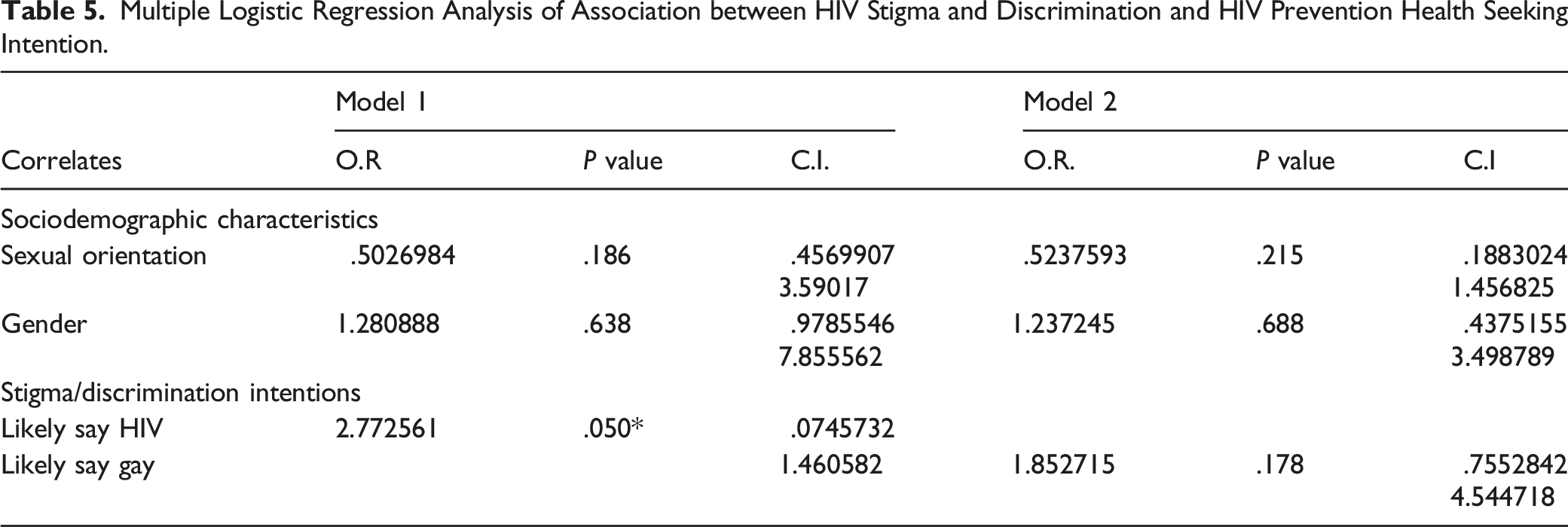
Overall, the results showed participants had a highly favorable experience, rating the performance with a mean score of 9.77/10. Respondents indicated they intended to change behaviors to promote HIV prevention education and to reduce stigma and discrimination including: (1) Say something if I hear stigmatizing language against people living with HIV (75.4%), (2) Say something if I hear anti-gay language (69.7%) and (3) Tell others about HIV prevention options (e.g., PrEP, PEP, condoms (64.1%). The findings show there is an association between HIV-related behavior intention and linkage to HIV care. Respondents who reported they were more likely to say something about HIV stigma were almost three times (O.R. 2.77; 95% C.I. 0.98–7.8) more likely to indicate they would follow up with a healthcare professional.
Conclusions
This study suggests that immersive theatre is an effective method for communicating HIV prevention education and reducing HIV-related structural stigma and discrimination that increases HIV vulnerability for Black sexual minority men.
Keywords
Introduction
Over the last 30 years, there has been enormous success in the development and implementation of biomedical strategies which have resulted in a significant reduction in HIV prevalence. 1 Globally, the number of new infections has declined by 23% from 2.1 million to 1.7 million and an estimated 690,000 AIDS-related deaths were averted. 2 Despite these achievements, not all communities have fared equally. 3 In the United States, notably in the Southern states, there are disproportionate rates of new infections among Black men who have sex with men (Black MSM). From 2015 to 2019, Black/African American MSM accounted for more than 36% of HIV diagnoses compared to 30% for their White counterparts. 1 While the South represents 38% of the U.S. population, this region accounted for more than half of new HIV diagnoses. 4 Moreover, Jackson, Mississippi the site of the present study, is ranked eighth in the nation for new HIV diagnoses. 5 These alarming disparities highlight the dire need for culturally-appropriate HIV prevention programs and interventions to address racial/ethnic and sexual/gender disparities in HIV, particularly among Black sexual minority men (Black SMM).
A substantial body of research documents the role of social determinants of health in contributing to health outcomes at both the individual and structural level8-10 Macrosocial factors such as poverty, racism, discrimination, stigma, and homophobia play a significant role in helping to drive and shape the HIV epidemic.11-15 Considering the potential influence of the role of structural factors impacting HIV, more attention is warranted in the development and implementation of structural-level interventions. Theatre-based interventions have been widely used as an HIV prevention strategy in low-income countries.16-19 However, there are only a few studies that have evaluated theatre-based interventions in high-income countries such as the U.S with the majority targeting adolescents and youth.16,20-22 The lack of such studies is notable given that Black SMM experience a high prevalence of HIV infection. 23 To our knowledge, this is the first evaluation of an immersive theatre-based intervention designed to reduce HIV-related stigma as it relates to uptake and retention in HIV services among Black sexual minority men in the United States. The purpose of this study is to assess the effect of As Much As I Can, an immersive theatre production, on participants on the following domains: (1) Catalyzing conversations that may increase awareness and knowledge of stigma-related barriers and challenges facing Black sexual minority men; (2) Modeling empathy to change intentions to reduce HIV-related stigma and discrimination, and (3) Inspiring action by improving engagement in HIV prevention, care and treatment programs such as PrEP. 24
Theatre and HIV Prevention
Recently, the entertainment landscape has been transformed with the emergence of new on-demand streaming services e.g., Netflix, Amazon Prime, and other social media platforms. The growing dominance of virtual entertainment has created a demand for novel experiences that take place in physical spaces in real-time. To fill this gap, immersive theatre has emerged as a major movement in the entertainment and performance space. Immersive or experiential theatre is a form of performance that is participatory emphasizing interactivity, space and design, and social engagement.25-27 The audience is invited to participate in the action onstage breaking the fourth wall that has traditionally separated the audience from the action on the stage.
Theatre is an effective health promotion strategy employing dramatic storytelling to convey important public health concerns. 28 Theatre has been used to engage communities for health promotion on a number of health outcomes including: obesity, substance abuse, mental health, and HIV.18,20,29,30 Several studies have used theatre to address a number of HIV-related outcomes including knowledge related to sexual risk behaviors, condom use and efficacy, HIV transmission, sexual health attitudes and beliefs, increased self-efficacy for condom use and communication with partners, improved understanding of sexual health options, responsibility and decision making, and stigma reduction toward people living with HIV/AIDS (PLWHA).31-42 Several approaches using theatre have been developed such as Theatre for Development (TDF), Theater of the Oppressed (TO), Process Drama, Popular Theater, Drama in Education, and Theater in Education.18,43,44 Additionally, theatre-based interventions have been employed to target a wide range of diverse populations, including adolescents, adults, farmworkers, immigrants, and justice-involved individuals.21,30,45-49 Theatre provides a unique opportunity to address public health issues utilizing an organic, informal and non-medical approach to capture the attention of audience members.
A Description of As Much As I Can
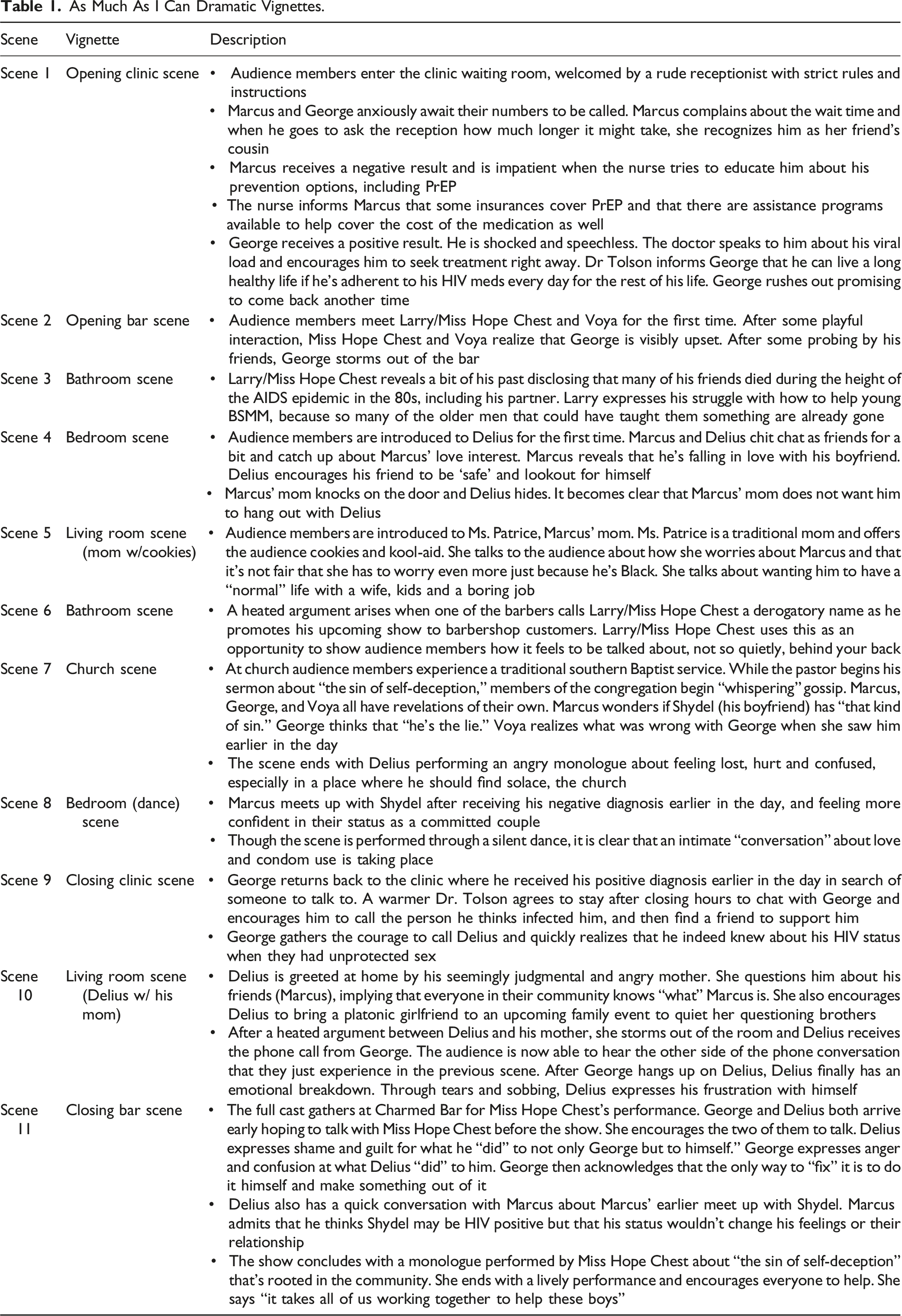
As Much As I Can Dramatic Vignettes.
Methods
This study utilized data drawn from a cross-sectional survey conducted after each performance of As Much As I Can (AMAIC). AMAIC was part of ViiV Healthcare’s “ACCELERATE! Initiative,” a two-city, multisite, community-based HIV prevention and engagement in care intervention tailored to increase awareness and utilization of HIV prevention, care, and treatment services among Black SMM in Jackson, Mississippi, and Baltimore, Maryland. 52 The data for this study utilizes data only from the Jackson site. The goal of ACCELERATE! is to support innovative and sustainable community-driven projects to improve health outcomes among Black SMM in the South. The program utilized three primary strategies to expand access to and retention in HIV prevention, care, and treatment: (1) engaging Black SMM directly in identifying their unique priorities and concerns, (2) activating and supporting community partnerships that foster innovation, and (3) translating key lessons learned towards the development of new and innovative approaches to reduce the numbers of new infections among Black sexual minority men. From a theoretical perspective, AMAIC and this research are grounded in a socio-ecological framework and the Theory of Planned Behavior. 53 A key component of the Theory of Planned Behavior (TPB) is behavioral intent where behavioral intentions are influenced by the attitudes and norms which predict behavior. The TPB has been applied to a wide range of health behaviors and diverse populations including: contraceptive use, 54 substance use55,56 attendance for health screening 57 diet58-60, exercise 61 road safety62-64 and social justice-related behaviors. 65 In a meta-analysis of 237 studies on health-related behaviors, the results show intention–behavior correlation to have a moderate effect size (0.43). 66 We also utilize a socioecological perspective that considers the complex interplay between individual, interpersonal, community and societal factors, particularly how external factors may influence behavior at the individual level. 67 Study protocols for A Mixed Methods Approach to Monitoring and Evaluation of ACCELERATE! were approved by the University of Mississippi Medical Center Institutional Review Board.
Recruitment
The play was advertised via social media (Facebook, Twitter), flyers, email and word of mouth (Figure 1). Participants were randomly selected from among theatre attendees who volunteered to complete a questionnaire about the performance. Eligibility was limited to those 18 years and above and who had the ability to read and speak English. All racial groups were eligible to participate. Participants were approached immediately following each performance to capture the audience members’ experience and impressions while it was still fresh in their minds. Participants did not receive any compensation for completing the survey. A tweet announcing the performance in Jackson, MS (Source: Twitter).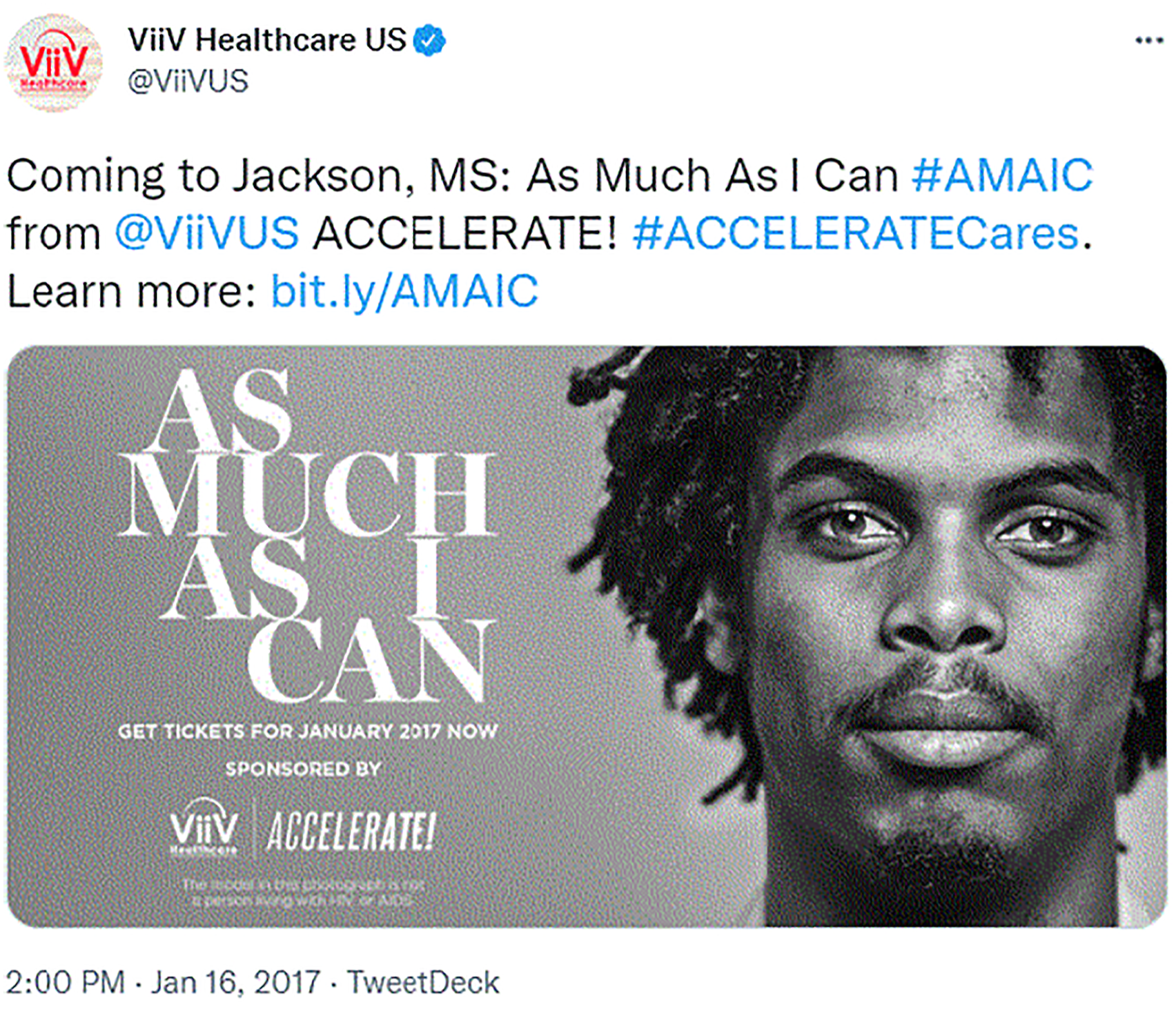
Measures
HIV prevention health-seeking intention, the dependent variable, was assessed using one item: “Will talk to my health provider about the show.” Participants indicated whether they would initiate contact with their healthcare provider about the show by responding (yes/no). Gay and HIV-related stigma and discrimination behavioral intention was operationalized using and adaptation of the Social Justice Scale. 68 A two-item scale includes: (1) “Say something if I hear stigmatizing language against people living with HIV” and (2) “Say something if I hear anti-gay language” (yes or no). The internal consistency of this scale for the sample was high (α = 0.88). To date, few scales have been developed to measure HIV-related structural stigma behaviors. While there have been a few scales to measure attitudes towards social justice and social activism, they are limited to social justice within mental health practice. 69 Acceptability was defined as self-report rating of the overall experience (e.g., “On a scale of 1–10, how would you rate the performance of As Much As I Can? (0-Really did not like it, 5-Neutral, 10-Really liked it”). Impact was assessed by self-report of the most impactful scene e.g. “What scene/moment had the biggest impact on you?”
Analysis
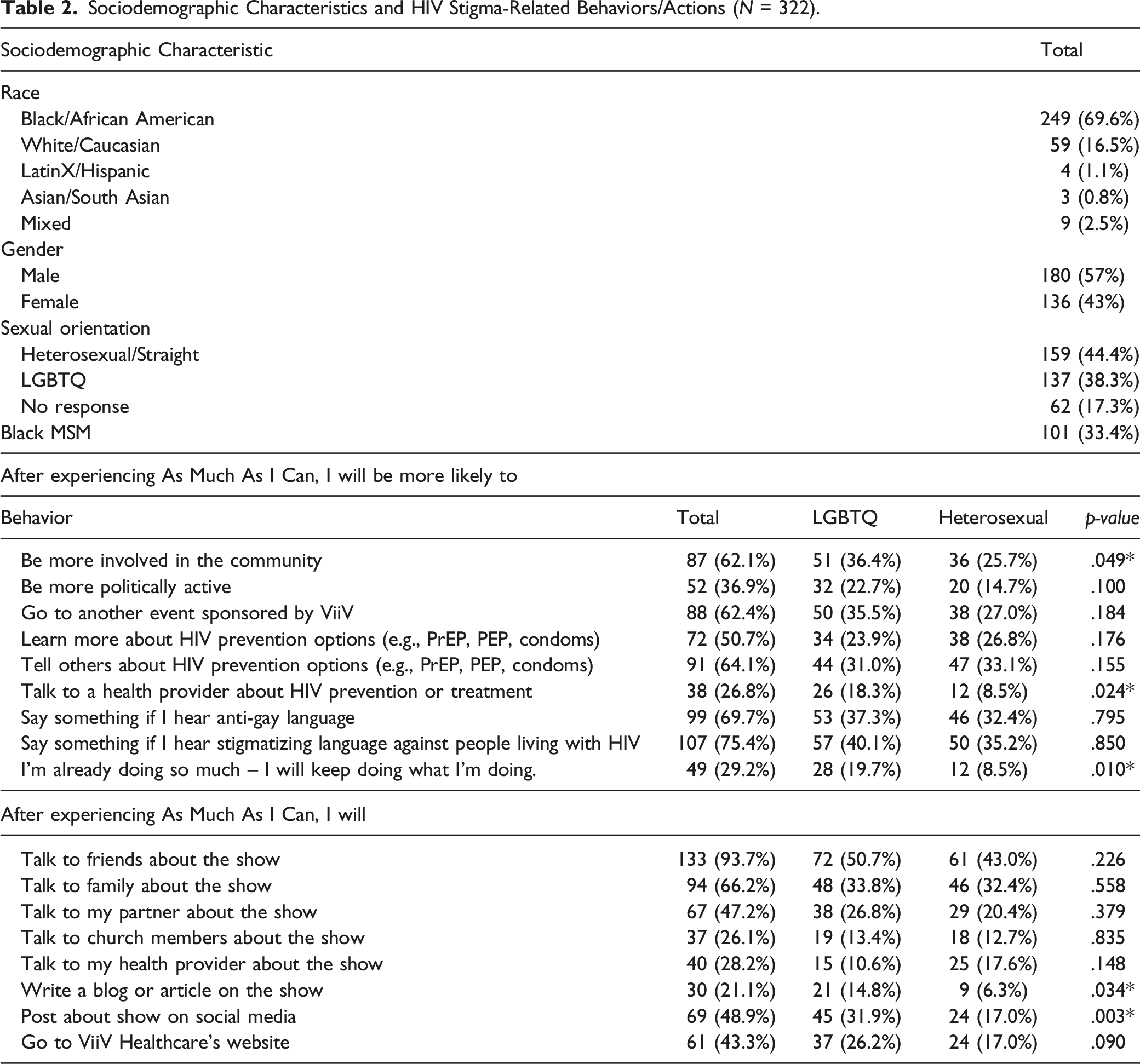
Sociodemographic Characteristics and HIV Stigma-Related Behaviors/Actions (N = 322).
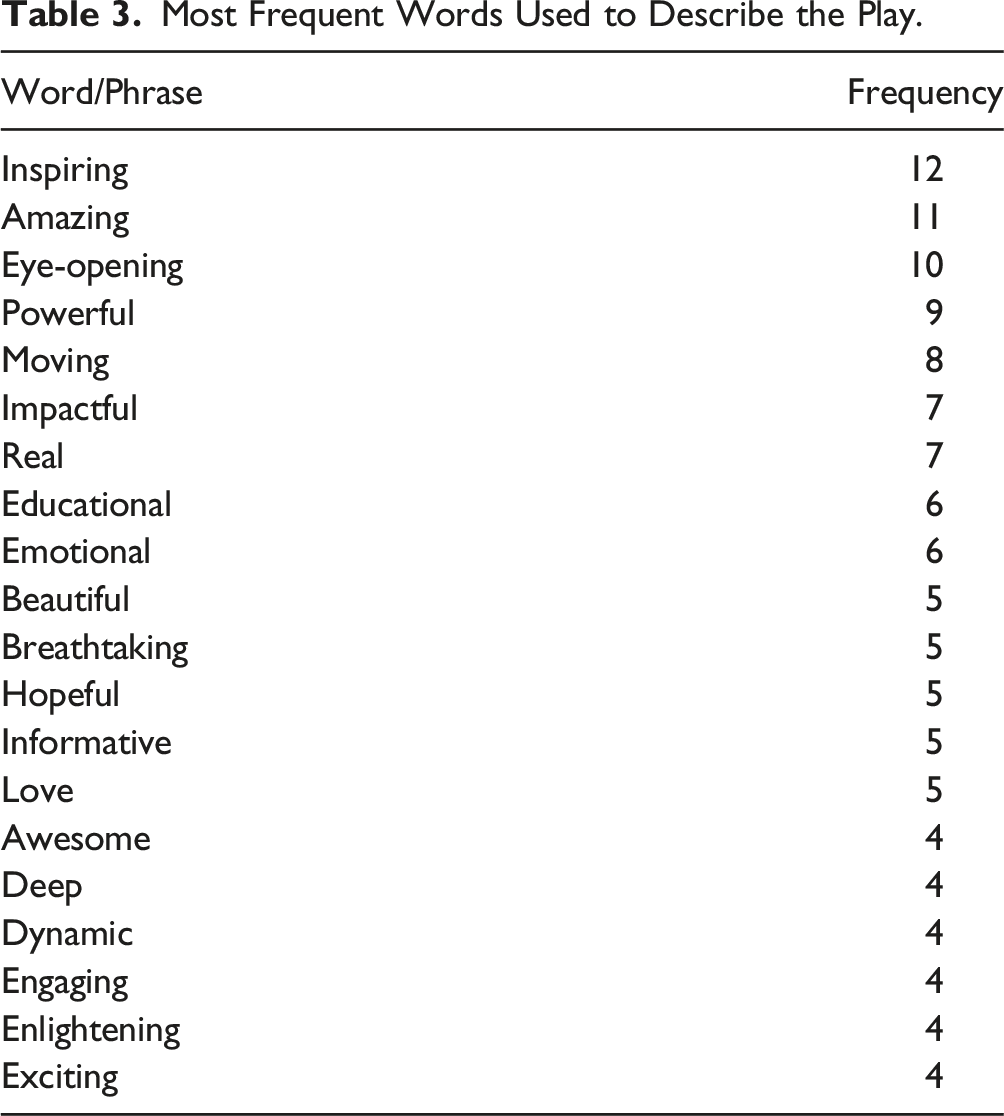
Most Frequent Words Used to Describe the Play.
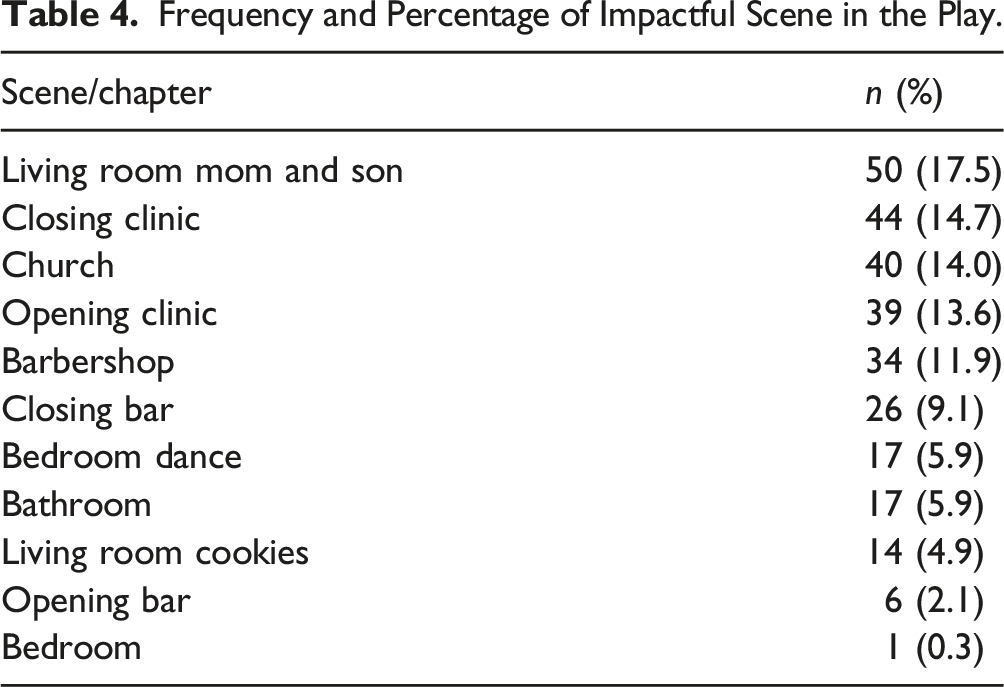
Frequency and Percentage of Impactful Scene in the Play.
Results
Of the 423 attendees, 322 (76.1%) completed a post-production questionnaire immediately following the performance. The majority of respondents (69.6%) identified as Black or African American, whereas the remainder identified as White (16.5%), Mixed (2.5%), LatinX (1.1%), and Asian (0.8%). About one-third of the respondents identified as Black MSM (33.4%), 57% were male, and 38% identified as LGBTQ.
Overall, the participants rated the performance/experience positively with a mean score of 9.77 out of 10. The most frequent words used to describe the play were: (1) inspiring, (2) amazing, (3) eye-opening, (4) powerful and (5) moving. The top three most impactful scenes were (1) Vignette 10 - Living room scene with mom and son (17.5%), (2) Vignette 9 - Closing Clinic Scene with George and Delius (14.7%) and (3) Vignette 7- The Black Church (14.0%) (See Table 1 for description of scenes).
The scene respondents identified as the most impactful was Vignette 10 - Living Room Scene. This scene highlights the critical role the family plays in shaping disclosure and sexual identity. Several participants indicated that this was the most impactful scene because it reminded them of the “difficult conversations” that “all queer folks of color have had…between the mom and son.” The depiction of the struggle of Black gay and bisexual men to receive acceptance and support from their family members also strongly resonated with many attendees, because as one attendee stated, it “discuses reality of the fear of homosexuality in the greater African American community.”
The second most impactful scene was Vignette 9 - Closing Clinic Scene. In this scene, George, a Black gay man is at the clinic and receives a phone call from his boyfriend who reveals he was HIV-positive, but had failed to disclose this to him. The statement below is representative of several participants who selected the closing clinic as the most impactful scene: One attendee reflected, “George’s phone call was the story of my experience when I was first diagnosed with HIV. Seeing that story helped me realize I was not the only one who experienced that situation.”
The third most impactful scent was Vignette 7 – The Black Church. In this scene, the audience members are part of a traditional southern Black Baptist Church service which explores the complicated relationship Black gay men have with the Black Church and its conservative stance on LGBTQ issues. One attendee shared, “I grew up in a church that was not very kind to LGBTQ people. It was a Pentecostal Church where I heard many horrible things about being gay.”
Respondents were asked to provide feedback on their intentions to change behaviors (e.g. After experiencing As Much As I Can, “I will be more likely to do (
Next, data were disaggregated by sexual orientation to assess the relationship between HIV stigma related behaviors and sexual orientation. Heterosexual attendees noted the following top behavior change intentions: (1) Say something if I hear stigmatizing language against people living with HIV (35.3%), (2) Tell others about HIV prevention options (e.g., PrEP, PEP, condoms) (33.1%), and (3) Say something if I hear anti-gay language (32.4%) respectively. According to LGBTQ respondents, the top three responses were as follows: (1) Say something if I hear stigmatizing language against people living with HIV (40.1%), (2) Say something if I hear anti-gay language (37.3), and (3) Be more involved in the community (36.4%). There was a statistically significant difference between heterosexual and LGBTQ attendee’s responses, LGBTQ attendees were more likely to become more involved in the community compared to their heterosexual counterparts (p = .05), more likely to talk to a healthcare provider about HIV prevention or treatment (p = .02) and those already engaged in the community will continue to be involved ( p = .01).
Next, we asked participants to tell us about what behavior/actions they intend to engage in after the performance. The top five responses were as follows: (1) Talk to friends about the show (93.7%), (2) Talk to family about the show (66.2%), (3) Post about show on social media (48.9%), (4) Talk to my partner about the show (47.2%) and (5) Follow community projects and events supported by ViiV Healthcare on Twitter (46.5%). Next, we examined differences between Heterosexual and LGBTQ attendees about what behavior/actions they intend to engage in after the performance. Heterosexual respondents identified the following top five behaviors/actions: (1) Talk to friends about the show (43.0%), (2) Talk to family about the show (32.4%), (3) Talk to my partner about the show (20.4%), (4) Follow community projects and events supported by ViiV Healthcare on Twitter (20.4%) and 5) Talk to my health provider about the show (17.6%). Conversely, LGBTQ individuals indicated the following: (1) Talk to friends about the show (50.7%), (2) Talk to family about the show (33.8%), (3) Post about play on social media (31.9%), (4) Talk to my partner about the show (26.8%) and (5) Go to ViiV Healthcare’s website (26.2%). We found there was a statistically significant difference between heterosexual and LGBTQ attendees' responses, where LGBTQ attendees indicated they were more likely to write a blog or article about the show (p = .034) and more likely to post about the show on social media (p = .003).
Multiple Logistic Regression Analysis of Association between HIV Stigma and Discrimination and HIV Prevention Health Seeking Intention.
Discussion
The main contribution of this study to the literature is that the utilization of immersive theatre has the potential to influence HIV-related structural stigma behavioral intentions on HIV prevention health seeking behaviors. Through their participation in AMAIC, the audience was able to better understand the role of social and structural factors on the health and well-being of Black gay and bisexual men and empathize with their struggles as sexual minorities. The immersive theatre format allowed attendees to fully experience critical experiences faced by Black gay and bisexual men, such as fear of disclosure, the stigma and homophobia derived from family and the church as well as discrimination and mistreatment from an uncaring health care system, which have been shown to create barriers to accessing HIV prevention, care and treatment.70,71 As a result of their participation in the immersive theatre experience, respondents reported they would more likely get involved or continue to be involved in educating others about HIV prevention strategies. Moreover, a majority of the respondents indicated an intention and willingness to intervene in situations where language was being used that was discriminatory or stigmatizing to LGBTQ populations.
Theater has been shown to be an effective strategy to engage audiences in debates and ideas which are designed to have an impact on knowledge, attitudes, and behavior including HIV stigma.72,73 We found our results aligned with prior findings. Participants reported being most impacted by those scenes that centered around HIV/AIDS-related stigma at multiple levels, including individual (e.g., internalized homophobia, denial and lack of disclosure), interpersonal (e.g., familial rejection), and structural (e.g. health systems and religion). Studies show discrimination and lack of awareness of HIV-related stress, particularly as it relates to Black sexual minority men, pose significant barriers to eliminating HIV/AIDS. 74 Our findings suggest after experiencing AMAIC respondents were moved to action toward participating in HIV prevention education by intervening in situations to reduce LGBTQ-related stigma and discrimination.
The data revealed that both LGBTQ and heterosexual respondents were motivated to get involved after viewing the performance. Both gay and heterosexual respondents indicated they were more likely to talk to friends and family about the play. In addition to talking with friends and family about HIV prevention issues, LGBTQ respondents indicated they would also use social media to engage their friends and family about the play. Whereas heterosexual respondents would be more likely to follow community projects and events supported by ViiV Healthcare on Twitter and talk to their health provider about the show. While there were slight differences in top responses between Heterosexual and LGBTQ respondents, LGBTQ respondents were statistically more likely to talk to a health care provider about HIV prevention and to be already be involved in community work related to HIV prevention. Although we saw substantial motivations towards actions among both LGBTQ and heterosexual individuals to get more involved after seeing the play, overall LGBTQ respondents were more likely to be willing to get involved. These findings are aligned with research suggesting targeted stigma reduction interventions are effective in improving health care seeking intentions and behaviors to reduce stigma and discrimination. 75
In addition, the results demonstrated an acceptability of AMAIC with a total attendance of 423 attendees across 14 performances in Jackson, MS. Since its launch, AMAIC has engaged over 1,500 individuals in Jackson, Baltimore, and New York to reduce stigma and discrimination by sensitizing the public about the unique challenges and realities faced by Black SMM. 76 In addition, the diverse background of the attendees suggests a universal appeal as well as an interest in better understanding the lives and struggles of Black SMM as it relates to HIV. Moreover, the findings reveal high levels of satisfaction with respondents using vigorous and dynamic language to describe the performance e.g., inspiring, amazing, eye-opening, powerful, and moving to suggest didactic and emotional effects as well as motivational impulses toward change as it relates to HIV-related issues facing Black sexual minority men.
Despite growing acceptance of LGBTQ rights, racial and sexual minorities, particularly Black sexual minority men, continue to experience stigma, discrimination, and violence increasing their HIV vulnerability. The findings revealed LGBTQ participants are more likely to already be involved in community activism. However, we found heterosexual participants were also willing to engage in HIV prevention educational activities and intervene when LGBTQ stigma and discrimination occurred. These findings demonstrate both heterosexual and LGBTQ participants when activated by HIV prevention and stigma reduction messages using immersive theatre showed a willingness to engage in behavior or take actions to improve HIV-related outcomes among Black sexual minority men. Given many health care providers lack cultural competency, particularly for Black SMM, As Much As I Can holds the potential for being an important strategy to sensitize health care professionals, increase cultural competency and their understanding about the unique social and cultural realities of Black sexual minority men. In an effort to expand the reach and impact of interventions such as As Much As I Can, we recommend partnering with Medical, Nursing, and Other Allied Medical Professions Schools to target the next generation of medical and clinical professionals to ensure they have the necessary cultural competency to increase uptake and retention in HIV prevention, care and treatment programs among Black sexual minority men. We hope this novel and innovative theatre-based approach to HIV prevention will be helpful to researchers, community-based organizations, AIDS Service Organizations, public health officials, and policymakers who may be interested in implementing similar HIV prevention interventions in their communities to reduce the number of new infections among Black sexual minority men. Efforts to develop and implement structural/community interventions that promote HIV prevention through acceptance of Black SMM and other racial/ethnic and sexual/gender minorities will be critical if we are to End the Epidemic. Without a more integrated and multilevel approach that recognizes the role of these larger structural and community forces play in shaping access to and uptake of HIV prevention, care, and treatment programs, particularly among Black sexual minority men, we are not likely to achieve our goal of reducing the number of new infections among this vulnerable population.
Limitations
This study has several limitations that warrant attention. First, this study utilizes a convenience sample of residents of Jackson, MS, therefore the results may not be generalizable to other settings or populations. Additionally, this is a cross-sectional study and is unable to confirm behavioral actions post-performance. As we know structural racism is a dynamic and interlocking cascade of racialized structural, social, political, and economic factors, both historical and contemporary, that manifest to impact HIV vulnerability. Due to the complex nature of intersectional stigma and discrimination, and logistical challenges in administering an evaluation post-performance, we utilized an adapted measure of the Social Justice Scale to measure HIV-related stigma and discrimination. Future studies should undertake assessments to examine the relationship between structural discrimination and theater-based interventions on uptake and adherence of HIV-prevention services (e.g., PrEP, PEP) among Black MSM using randomized, longitudinal study designs as well as the operationalization of a multilevel HIV-related intersectional structural stigma and discrimination scale. Moreover, we attempted to minimize research fatigue and recall bias by administering a brief post-performance evaluation, however, this limited our ability to utilize a longer, more robust structural discrimination scale. In order to gain a deeper understanding of these complex issues on behavior change and health-seeking behavior, future studies should conduct mixed methods approaches. Despite these limitations, this is one of only a few HIV prevention interventions utilizing immersive theatre to reduce intersectional structural stigma and improve access to HIV prevention, care, and treatment programs among Black SMM in the U.S.
Conclusions
Novel and innovative community level approaches such as As Much As I Can holds promise to shift perceptions about marginalized populations, catalyze conversations, model empathy, and inspire action towards reducing the number of new infections among Black sexual minority men. The findings from this study are encouraging and point the way forward toward the implementation of culturally-appropriate, theatre-based interventions that incorporate novel approaches to HIV prevention that creatively engage affected communities to increase understanding of the challenges faced by Black SMM to improve access to HIV prevention, care, and treatment programs. Moreover, these findings highlight the need for targeted and tailored interventions such as immersive theatre as a strategy to reduce stigma and discrimination that increase barriers to uptake and use of life-saving treatments such as PrEP.75,77,78 As Taboada and colleagues 22 have shown, theater-based interventions are a viable prevention strategy for changing sexual health behaviors related to HIV prevention. Therefore there is an urgent need for multi-level, evidence-based, structural/community-level interventions to complement individual-level biomedical modalities if we are to meet CDCs goals enshrined in End the HIV Epidemic: A Plan for America. 5 Additional research and investments are warranted that leverage community engagement, cultural competency, and collaborations between LGBTQ and heterosexual communities, health care providers, academic institutions, and industry to develop and implement tailored and culturally appropriate, evidence-based combination HIV prevention interventions that center the unique needs of Black sexual minority men.
Footnotes
Acknowledgments
We are indebted to the Black gay, bisexual and transgender participants in Jackson and Baltimore whose life experiences and knowledge made this play possible. This study was generously funded by ViiV Healthcare as part of their ACCELERATE! Initiative. We would especially like to thank Marc Meachem, Head of External Affairs North America at ViiV Healthcare; P.J. Moton-Poole, Senior Manager at ViiV Healthcare; Susan Wolfson, Director of Integrated Initiatives at TCC Group; Tiffany Smith, Associate Director of Integrated Initiatives at TCC Group; and Kali Lindsey, MSM and LGBT Portfolio Lead at Elton John AIDS Foundation. We also appreciate the contributions of Leandro Mena, Director of Division of STD Prevention at CDC; Michelle S. Williams, Assistant Professor at George Mason University and our collaborators at Johns Hopkins Bloomberg School of Public Health: Chris Beyrer, Andrea Wirtz, Mannat Malik and Jordan White. This research was also facilitated by infrastructure at the University of Mississippi Medical Center, John D. Bower School of Population Health and the Center for HIV/AIDS Research, Education and Policy. The content is solely that of the authors and does not necessarily represent the official views of ViiV Healthcare or other institutions named above.
Declaration of Conflicting Interests
The author(s) declared the following potential conflicts of interest with respect to the research, authorship, and/or publication of this article: PB, EK, MB, CSG, AO and TP have received grant funds from ViiV Healthcare.
Funding
The author(s) disclosed receipt of the following financial support for the research, authorship, and/or publication of this article: This was funded by ViiV Healthcare, Inc.
Data Availability
The datasets generated during and/or analyzed during the current study are not publicly available due to confidentiality concerns, but are available from the corresponding author on reasonable request.
Code Availability
Code for data analysis is available from the corresponding author upon reasonable request.
