



Abstract
Self-disclosure, sharing personal and often affective information with others, is foundational for relationship development and well-being. Internal state language (ISL), or references to thoughts, emotions and desires, is one mechanism that may support these processes by helping adolescents communicate their experiences and signal their understanding of others. We examined ISL references during a hypothetical picture task in which early adolescents (N = 79) described how they would respond to social situations involving siblings and friends, specifically whether narrative characters would disclose personal information to one another or not. ISL use was comparable across disclosed and nondisclosed narratives, valence, and relationship contexts. However, for adolescents who seldom included disclosure to best friends in their narratives, frequent references to cognitions were linked with fewer descriptions of emotional support. These findings suggest that, beyond disclosure, ISL may reflect adolescents’ emerging socioemotional understanding and contribute to the development of social competence in close relationships.
Keywords
Sharing information about the self is a vital feature of interpersonal relationships. Self-disclosure is the process of making the self known to others via a mutual and reciprocal exchange between the discloser and the recipient (Hargie, 2011). By early adolescence, many siblings engage in disclosing intimate information to one another and to close friends (Martinez & Howe, 2013). Youth may employ self-disclosure to build and maintain trusting relationships and to learn what is acceptable among their peers; by fostering self-knowledge and reflection, self-disclosure may indirectly support identity exploration during adolescence (Buhrmester & Prager, 1995; Korem, 2023). Through intimate disclosures with close social network members, youth communicate their thoughts, emotions, and goals using internal state language as a form of social support (Rubin et al., 2015). Given that self-disclosure helps individuals negotiate mutual understanding and construct meaning with others, such interactions provide a rich context for investigating how youth navigate their social relationships (Carpendale & Lewis, 2014; Rubin et al., 2015). Internal state language (ISL) is a useful linguistic index of socio-cognitive engagement in relationships during this period (Carpendale & Lewis, 2014). The present study investigated adolescents’ ISL in disclosure-related narratives based on various affective vignettes (e.g., conflict, helping) with siblings and friends.
The Role of Self-Disclosure in Children’s Relationships
Self-disclosure involves the intentional sharing of intimate, typically affective, information that is not readily available to a conversational partner (Howe et al., 1995; Tilton-Weaver et al., 2014); it is considered a key mechanism for increasing intimacy in close relationships (Tardy & Smithson, 2018). Hargie (2011) identified four disclosure components: (1) use of personal pronouns (e.g., “I”, “my”); (2) discussion of facts (name, age) or feelings (“I am having fun”); (3) object of disclosure as self (your experience) or others (reaction to others’ experience); and (4) referring to past, present, or future events. Thus, disclosures can be factual-descriptive (e.g., favorite color) or emotional (e.g., desires, problems) (Korem, 2023).
Social Penetration Theory addresses the significance of disclosing in personal relationships. This theory describes a progression from sharing basic, superficial information as a relationship begins to more intimate details as the relationship progresses as a means for establishing trust (Tardy & Smithson, 2018). During initiation, disclosures are often positive and help individuals determine if they want to develop a closer relationship; over time, individuals may disclose negatively valanced information to promote intimacy (Hargie, 2011; Tardy & Smithson, 2018). The notion of reciprocity suggests that revealing information is an indicator of liking and trust, thus encouraging the recipient to share information in return (Tardy & Smithson, 2018). Self-disclosure is ultimately viewed as a catalyst and method for intimate communication, supporting the formation and maintenance of relationships, a point we return to below.
Siblings and Friends as Recipients of Youth Self-Disclosures
Siblings and friends are prominent figures in the lives of youth and make unique and important contributions to their development. Thus, self-disclosure is an important skill for adolescents to develop and practice, especially considering the developmental competencies associated with effective disclosure (Korem, 2023). Apart from supporting relationship development and maintenance, self-disclosure gives adolescents an opportunity to seek and provide social and emotional support, to both siblings and friends, given the novel social expectations (e.g., increasing responsibility) and biological changes that occur during this period (Rubin et al., 2015). Disclosing also helps adolescents develop perspective-taking skills necessary to understand what is appropriate in their relationships with others (Korem, 2023). Self-disclosure is implicated in identity formation as peers provide adolescents with valuable feedback during a time of identity exploration (Rubin et al., 2015; Vijayakumar & Pfeifer, 2020).
Various factors facilitate or inhibit the incidence and degree of self-disclosure. For example, girls disclose more than boys (Buhrmester & Prager, 1995; Martinez & Howe, 2013); first-born children (or older siblings) disclose less than later-born children (or younger siblings), although disclosure increases with age (Hargie, 2011). Factors that may inhibit disclosure include shyness, introversion, low self-esteem, an external locus of control due to fear of embarrassment or rejection, or when youth draw attention only to themselves and not others (Hargie, 2011; Korem, 2023; Schwartz-Mette & Rose, 2009). Disclosures may be more easily reciprocated between equal-status individuals such as same-age friends (Korem, 2023). While some overlap exists in disclosure topics directed to siblings and friends, youth share information about interests, family, academic, and friendship issues; emotional self-disclosures, including support seeking; dating and romantic partners; and peers and peer conflict (Costello et al., 2025; Davis, 2012; Howe et al., 2001; Martinez & Howe, 2013; Vijayakumar & Pfeifer, 2020).
Self-Disclosure With Siblings
When sibling relationships are high in warmth this may promote intimacy and trust, thus encouraging the likelihood of disclosing (Hargie, 2011; Howe et al., 2001; Korem, 2023). In fact, sharing confidences with siblings is associated with higher sibling quality during early to mid-adolescence (Howe et al., 2001; Martinez & Howe, 2013). High quality sibling relationships (high warmth, low rivalry and conflict) are related to positive developmental outcomes (Furman & Buhrmester, 1985), including increased empathy and emotional understanding of others (Howe et al., 2020). Using a vignette paradigm, Karos et al. (2007) demonstrated that sibling disclosure predicted socio-emotional skills in 5th and 6th graders (e.g., sharing experiences, providing comfort). Campione-Barr et al. (2015) indicated that the more adolescent siblings (age 12 to post-high school) disclosed to their brother, the better the latter’s emotional adjustment. However, older brothers’ disclosures about personal, multifaceted issues to younger sisters were associated with greater emotional maladjustment among girls.
Self-Disclosure With Friends
Friends are also key disclosure recipients for adolescents, especially among same-sex friends, with female friendships showing higher rates than males (Buhrmester & Prager, 1995). However, a trade-off effect occurs when dyads—especially females in positive, high quality friendships—engage in co-rumination, the repetitive discussion of problems or negative emotions (Rose et al., 2007). Associations between self-disclosure and friendship quality are evident across adolescence. For example, self-disclosing is negatively associated with conflict among best friends in grade 6 (Martinez & Howe, 2013). In a prospective cohort of 7th and 8th graders, perceiving friends as safe and supportive predicted greater self-disclosure and increased friendship quality—indexed by companionship, caring, and conflict resolution—a year later; self-disclosure also predicted future friendship quality (Costello et al., 2025).
Self-disclosure with friends has utility during adolescence, playing a role in both intimacy development and social validation (Rubin et al., 2015). Friends provide social and emotional support, helping youth work through age-related issues and concerns via in-person or online disclosures (Camara et al., 2017; Davis, 2012). Social feedback from friends reassures adolescents that they are not alone in their thoughts, feelings, and experiences (Buhrmester & Prager, 1995). Disclosing may also help reinforce this voluntary relationship by minimizing conflict (Martinez & Howe, 2013).
In one of the few studies comparing youth’s disclosures to both siblings and friends, Martinez and Howe (2013) examined early adolescents’ (grades 4 and 6) self-disclosures to siblings and friends and associations with relationship quality. There were no differences for disclosing to siblings or friends, but participants disclosed shared interests, peer conflicts, romantic interests, and academic concerns to best friends and family issues to siblings. Guo and colleagues (2023) investigated disclosure patterns between first-year undergraduates and their best friends, siblings, and romantic partners; best friends and romantic partners continue to be important disclosure recipients. Additionally, mixed-gender sibling dyads reported disclosing personal, multifaceted issues to their best friend more than same-gender sibling dyads. Male compared to female siblings disclosed multifaceted topics more to their romantic partner, while siblings with brothers compared to sisters disclosed more about prudential topics (e.g., consuming alcohol and drugs) to their best friend.
In sum, self-disclosing is foundational for building and maintaining relationships and has important developmental implications for youth’s well-being. Communication is embedded in this process, specifically, the ways that language is employed when disclosing to siblings and friends. ISL is one framework for understanding adolescents’ disclosures, which may offer deeper insight into how they communicate their emotions and thoughts.
ISL in Communications With Siblings and Friends
Socio-constructivist theory posits that meaning making is a shared process, occurring in communication with others in close relationships (Carpendale & Lewis, 2014). The beliefs, intentions, and desires exchanged in these interactions reveal youths’ understanding of their social relationships and, in turn, guides their approach to those relationships. Complementing this perspective, social information processing models emphasize that adolescents’ interpretations of their social interactions shape their behavior in close relationships (Rubin et al., 2015). During self-disclosures adolescents may reference internal states to communicate their experiences and demonstrate their understanding of the other person’s experience (Hargie, 2011; Korem, 2023). In fact, self-disclosure is associated with more reflective and emotional conversations, which might suggest that linguistic markers like ISL may index the relational meaningfulness of disclosure (Brummelman et al., 2024). These processes illustrate how socio-cognitive understanding translates into socio-emotional skills (e.g., providing emotional support), which are instrumental for prosocial behavior and enhancing relationship quality (Costello et al., 2023; Van Meegen et al., 2024).
ISL, sometimes called mental state language, encompasses terms that describe the thoughts, beliefs, emotions, and desires of oneself or others in four categories: cognitions (e.g., think, know); emotions (e.g., excited, tired); goals (e.g., hope, try), and preferences (e.g., like, dislike) (Leach et al., 2017; Longobardi et al., 2016). ISL is a key component of socio-emotional learning, the development of emotion awareness and regulation, the capacity to build and sustain healthy social relationships, and is associated with mental well-being (Bell et al., 2024; Longobardi et al., 2016). ISL references in children’s speech during the early years serves as a foundation for their learning about emotion understanding and social reasoning, which in turn scaffold later social-cognitive development (Bell et al., 2024; Mcfayden & Bruce, 2024).
Internal state references increase with age, including the breadth of ISL categories used. In the preschool years, children begin employing ISL, especially emotion terms, when describing sad rather than happy events in their communications (Welliver et al., 2024). Leach et al. (2015) reported no differences in children’s (M age = 4 years) ISL use during play with siblings and same-aged friends. In contrast, Hughes et al. (2007) observed that 3- and 4-year-olds employed more ISL during play with their siblings than friends. By late childhood and early adolescence (7-12 years), youth use more cognitive and emotion terms when processing negative events than positive events (Baker-Ward et al., 2005; Bauer et al., 2005). However, cognitive and emotional language did not differ by valence in a 13- to 16-year-old sample (Bohanek & Fivush, 2010). Given that the narrative affective context influences the use of cognitive and emotional ISL (i.e., traumatic vs. nontraumatic events; losing or winning a game) in younger samples, we might expect that early adolescents would use more cognitive and emotional language when describing negative events relative to positive events. Finally, Howe et al. (1995) observed that children in early childhood (older sibling 3-4 years; younger sibling 14 months) from families that promoted discussions of internal states were more likely to disclose information with their siblings four years later. In sum, early conversations about internal states may promote reciprocal and intimate self-disclosure between siblings over time. However, ISL has yet to be established as a reliable index for these outcomes during the early adolescent years. Thus, the current study describes early adolescents’ ISL use when narrating affective vignettes and whether it is a reliable and valid marker of socio-cognitive understanding.
The Present Study
Based on the theoretical and empirical literature (e.g., Howe et al., 2000), we addressed the conceptually and developmentally important question of how early adolescents use ISL in their disclosures to siblings and friends. Specifically, we investigated early adolescents’ use of ISL during a hypothetical picture task designed to measure their responses to negative and positive social situations. Children constructed narratives about five pictures depicting a same-gender child in various social contexts (e.g., fighting, having fun). Vignettes allow researchers to examine socio-cognitive processes that are grounded in a particular affective context (e.g., Hendriks et al., 2022) and were used in the current study to measure early adolescents’ propensity to include ISL references in their narratives regarding disclosing to a hypothetical sibling or friend. The Hypothetical Relationships Picture Task (HRPT) was used previously to measure how early adolescents understand and navigate affective interpersonal situations (Karos et al., 2007). First, we examined adolescents’ use of ISL when they indicated that the hypothetical character would self-disclose; we expected greater ISL use when the adolescents suggested that characters would choose to self-disclose (Tilton-Weaver et al., 2014). Second, we investigated early adolescents’ use of ISL in relation to the valence of the stories they narrated during the hypothetical task and whether the strength of this association differed by disclosure recipient. In line with Baker-Ward et al. (2005), we expected early adolescents to use more cognitive and emotional language when narrating negative hypothetical stories compared to positive stories. We also expected that adolescents would employ more emotional ISL when they suggested disclosing to a sibling during the hypothetical task compared to a friend (Hughes et al., 2007). Third, the moderating effect of relationship context on the association between adolescents’ use of ISL and socio-emotional understanding was assessed. Given the longevity of sibling relationship (Howe et al., 2020) and prior literature (Bell et al., 2024), we expected the association on the hypothetical task between ISL and socio-emotional understanding (i.e., emotional support, reciprocity, instrumental solutions) to be stronger for siblings than friends. Fourth, we examined whether adolescents’ reports of hypothetical characters’ willingness to disclose was associated with reports of their actual sibling and friend relationship quality. In line with Martinez and Howe (2013), we predicted positive associations between disclosing to sibling and friend characters during the HRPT and actual sibling and friend relationship quality. Analyses assessing birth order and grade differences were exploratory given the absence of studies examining ISL in adolescent conversations with same- or similar-aged close others.
Method
Participants
Participants included 79 adolescents recruited from grade 4 (21 male, 19 female; M age = 9.45 years, SD = 0.60) and grade 6 (18 male, 21 female; M age = 11.20 years, SD = 0.54). Adolescents identified the sibling they felt closest to and their best friend: for siblings, grade 4 M age = 9.75 years (SD = 4.18) and grade 6 M age = 11.20 years (SD = 3.38); for best friends, grade 4 M age = 9.43 years (SD = 0.81), grade 6 M age = 11.50 years (SD = 0.60). Regarding sibling birth order, 40 focal adolescents reported feeling closer to an older sibling, 38 identified a younger sibling, and one indicated their twin. Most sibling dyads were same-gender (girl-girl = 23, boy-boy = 29) and 27 were mixed-gender. The gender composition of best friends was 40 girls and 38 boys; only one adolescent identified an opposite gender best friend. The sample consisted predominantly of White children living in a large bilingual (French-English) urban community. All participants spoke English and came from lower- or middle-class socioeconomic backgrounds. Students were given parental consent forms at school that were returned to the teacher and adolescents provided assent. The study received ethics approval from Concordia University’s research ethics board and by Toronto Metropolitan University for the current study.
Procedure
All 79 participants completed the relationship quality measures in their classrooms. A semi-structured interview (Howe et al., 2000) about the topics and frequency of disclosures to their sibling and best friend were conducted individually in a private location (e.g., library) by trained RAs. The RAs administered the Hypothetical Relationships Picture Task (HRPT); all participants generated a story for each of five vignettes to assess socio-emotional understanding. The interview and HRPT were audio-recorded, counterbalanced, and later transcribed.
Measures
Sibling Relationship Quality
Participants completed the 48-item Sibling Relationship Questionnaire (SRQ, Furman & Buhrmester, 1985) measuring relationship quality with the sibling to whom they felt closest. Four dimensions were assessed on a 5-point rating scale (1 = hardly at all to 5 = extremely much): (a) warmth/closeness (e.g., “How much do you show your brother how to do things he doesn’t know how to do?”), (b) relative power/status (e.g., “How much does your sister tell you what to do?”), (c) conflict (e.g., “How much do you and your brother argue with each other?”), and (d) rivalry (e.g., “How much do you and your sister compete with each other?”). Cronbach’s alphas measured the subscales’ internal consistency: warmth/closeness (.91), conflict (.90), rivalry (.75), and relative power/status (.74).
Friendship Relationship Quality
Adolescents completed the 45-item Friendship Activity Questionnaire (FAQ, Bukowski et al., 1994) measuring the quality of their best friendship. Participants used a 5-point Likert scale (1 = not true to 5 = really true) to assess five dimensions: (a) companionship (e.g., “My friend and I spend a lot of our free time together.”), (b) closeness (e.g., “I feel happy when I am with my friend.”), (c) help (e.g., “My friend and I help each other.”), (d) security (e.g., “I can trust my friend and rely upon my friend.”), and (e) conflict (e.g., “I can get into fights with my friend.”). Cronbach’s alphas measured the subscales’ internal consistency: help (.88), closeness (.84), conflict (.78), security (.71), and companionship (.68).
Semi-Structured Interview
The 15–20-min semi-structured, private interview consisted of 26 open-ended questions adapted from Howe et al. (2000) to include questions about friendship. Adolescents reported on whether they disclosed to their sibling and friend, the general topics of their disclosures (e.g., “What kinds of things do you tell your sibling/friend?”), frequency of disclosures (e.g., “How often do you share secrets?”), whether they disclosed problems (e.g., “Do you share special thoughts/problems with your sibling/friend?”), and the type of issues disclosed (e.g., “What kinds of problems do you tell your sibling/friend?”). Two coders, one blind to the study’s goals, conducted interrater reliability on a random subsample of interviews with Cohen’s kappa: topics disclosed to siblings (1.00) and friends (.97); problems disclosed to siblings and friends (both 1.00); and frequency of disclosure to siblings (1.00) and friends (.93). Discrepancies were resolved via discussion for all coding.
Hypothetical Relationships Picture Task
Participants completed the HRPT (Karos et al., 2007) during the private sessions with RAs. Of the original 8 pictures depicting affective relational vignettes, we utilized five depicting sibling or friend interaction. The vignettes illustrated the following: (1) two children arguing (arguing), (2) one child comforting another child (comforting), (3) a child having school problems (problems at school), (4) two children having fun (having fun), and (5) a child feeling mad (feeling mad; vignettes are available upon request). Images depicting same-gender character pairs were matched to the participant’s gender.
RAs introduced the situation depicted in each picture and asked adolescents to create a story about the characters (e.g., “In this picture, two children are fighting. Can you tell me a story about this picture?”). Participants were prompted to elaborate on the scenario, including the characters’ likely actions (e.g., “What would the people in the picture do?”), mental states (e.g., “What are the two children thinking?”), feelings (e.g., “What are the two children feeling?”), and possible solutions to resolve the situation (e.g., “What kind of solution can the two children come up with to solve the issue/problem?”). Last, participants were asked about the characters’ willingness to disclose (e.g., “Would they talk to anyone about the situation? Who?”).
HRPT Disclosures
Transcripts of the five narratives were coded for disclosure, namely whether the character(s) disclosed (yes/no) and the target of disclosure: sibling (1), friend (2), both (3), or neither (i.e., no disclosure or disclosure directed to adults only; Howe et al., 2002).
Internal State Language
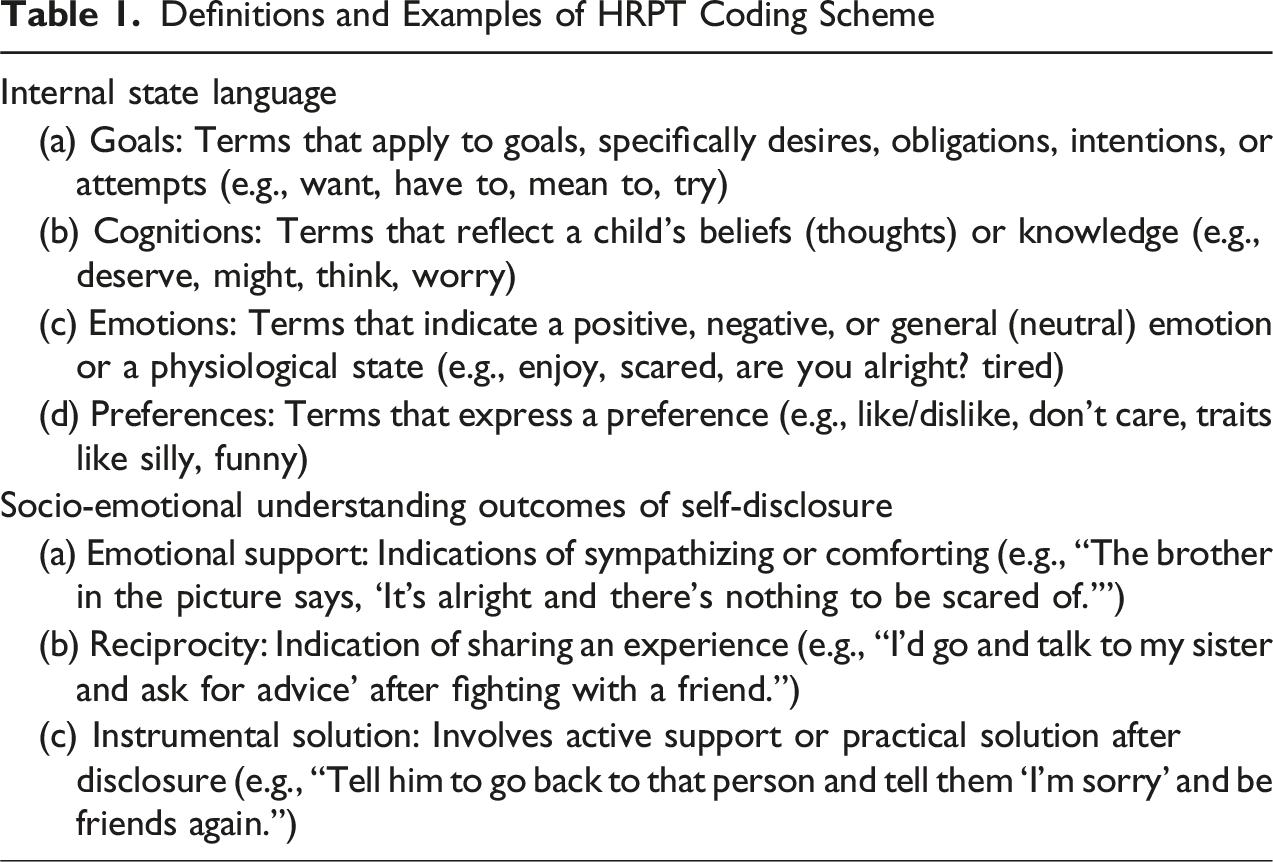
Definitions and Examples of HRPT Coding Scheme
Socio-Emotional Understanding
The variables on the HRPT were previously coded for (a) emotional support, (b) reciprocity, and (c) instrumental solution (Howe et al., 2001) (See Table 1 for definitions and examples). For each category, a score of one was assigned when a reference was made during the narrative. Two coders (one blind to the study goals) conducted interrater reliability on a random subsample of transcripts: Cohen’s kappa for all three outcomes (.92).
Plan of Analysis
The data were analyzed using Jamovi (version 2.4.12; The jamovi project, 2023). First, to investigate patterns of adolescents’ ISL use during the HRPT, a 2 (Disclosure: yes/no) x 4 (ISL Category: goals, cognitions, emotions, preferences) repeated measures ANOVA was used. ISL use proportion scores were first calculated for each vignette narrative for use of each ISL category using a weighted average to account for variations in narrative lengths (e.g., arguing vignette goals proportion = total number goals terms divided by total number of narrative words). These were subsequently aggregated by disclosure by averaging the category’s proportion scores across all narratives in which disclosure was indicated by the participant (e.g., sum of goal proportions divided by number of disclosure-indicated narratives). An additional model included grade and gender to examine for possible effects.
Second, to determine adolescents’ use of ISL categories in relation to the valence of HRPT vignettes and whether the strength of this association differed by disclosure recipient, 4 (disclosure recipient) x 4 (ISL category) repeated measures ANOVAs were conducted. Two separate models were conducted for positive valance and negative valance. The children having fun vignette was positively valanced and the other four (arguing, comforting, problems at school, feeling angry) were negatively valanced. To create ISL composites for negative valance, the ISL proportions were aggregated (i.e., sum of category proportions for vignettes arguing, comforting, school problems, and feeling angry divided by 4). To capture the target of disclosures in the negative-valance vignettes, vignette-level disclosure codes were aggregated to create a modal disclosure target variable. Participants were categorized according to the target they mentioned most frequently across negative vignettes: 1 = sibling (three or more sibling-targeted disclosures), 2 = friend (three or more friend-targeted disclosures), 3 = sibling and friend target equally (e.g., three or more “both” codes or an equal number of sibling and friend codes), and 4 = mixed/no preference (remaining patterns, including inconsistent or absent disclosures). Additional models including gender were conducted for each valence condition to examine possible effects. Significant main effects, interactions, and post hoc tests using the Bonferroni correction, where appropriate, are reported.
Third, hierarchical linear regressions tested the relation between ISL during the HRPT narratives and socio-emotional understanding, as well as moderating effects of relationship context. In the first step of each model, grand-mean centered scores for each ISL category across all vignettes and adolescents’ self-reported frequency of disclosure to their best friends and siblings were entered as predictors. The outcome variable in each model was the total socio-emotional understanding score (emotional support, reciprocity, instrumental support), calculated by summing scores across five vignettes (0 to 5). For each vignette, a score of 1 was assigned if the target behavior was present for a given variable, and 0 if it was absent (scores = 0-5 for each variable). In the second step, the interaction terms of each ISL category by disclosure frequency to best friends and siblings, respectively, were added to examine the moderating effect of relationship on the association between ISL and each socio-emotional understanding variable. Lastly, linear regressions examined associations between disclosure and participants’ sibling and friend relationship quality. Disclosure frequency was measured as a linear predictor, calculated as the sum of disclosures across the five hypothetical vignettes (scores 0 to 5).
Results
Self-Disclosure and Disclosure Target During the HRPT
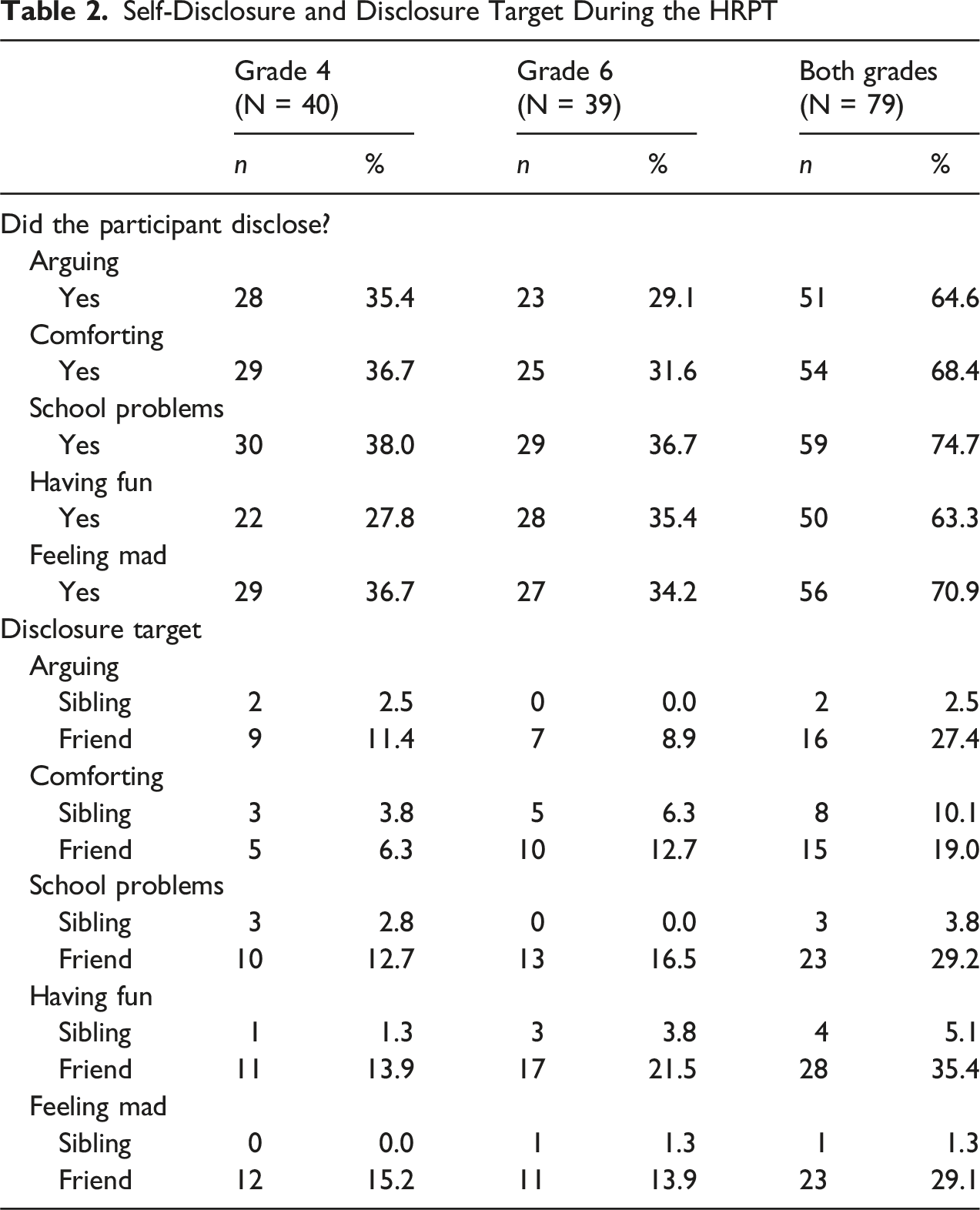
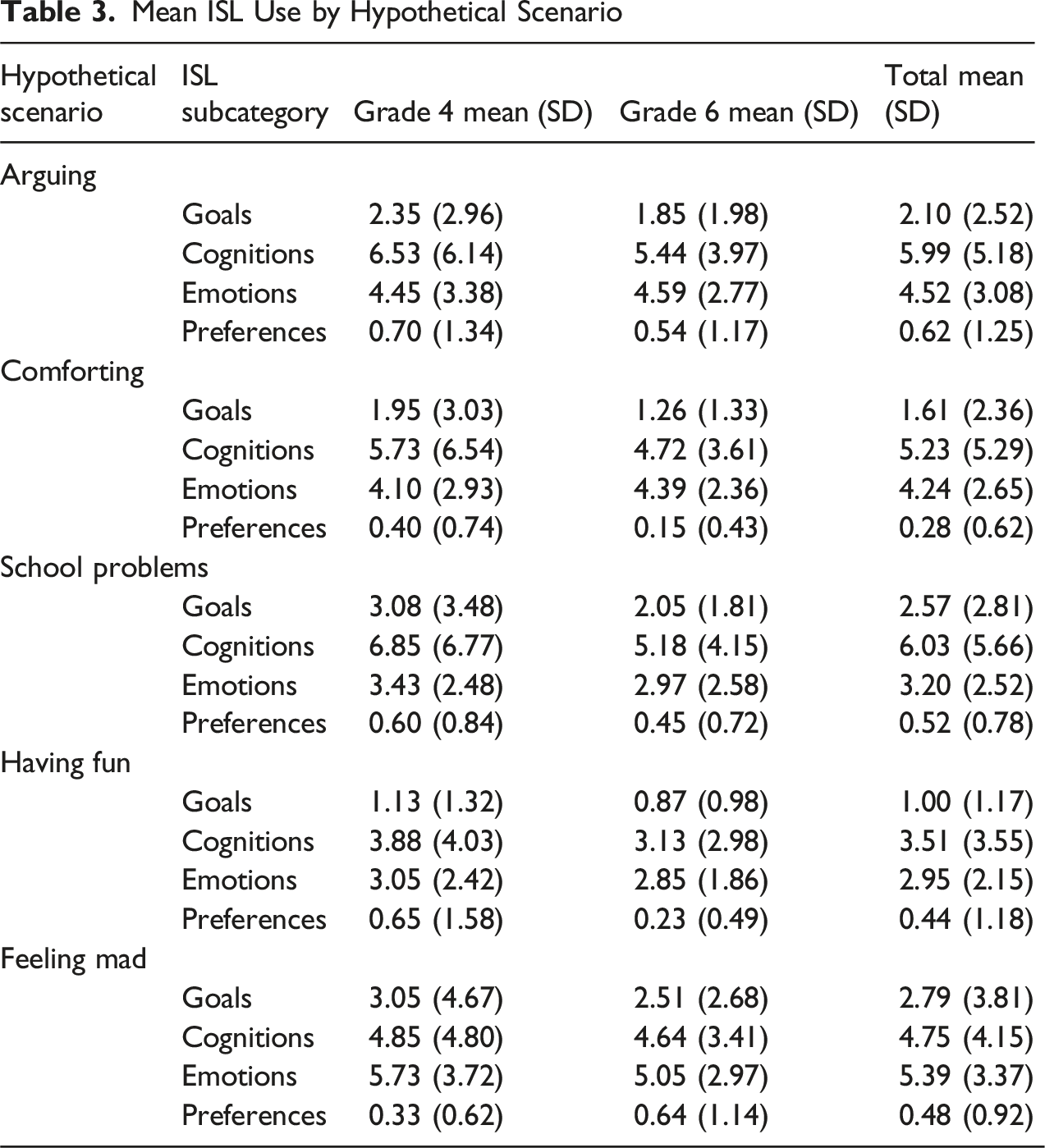
Mean ISL Use by Hypothetical Scenario
References to Internal States and HRPT Disclosures
To examine adolescents’ use of ISL when disclosure was indicated in the HRPT narratives, we conducted a repeated measures ANOVA. Mauchly’s test indicated that sphericity was violated for the ISL category factor and disclosure x ISL category interaction, thus Greenhouse-Geisser corrections were applied where necessary. There was no main effect of disclosure, F(1,55) = 0.053, p = .819, η2p = .001; adolescents did not differ in ISL use whether they disclosed or not. However, a significant main effect of ISL category emerged, F(1.96,136.89) = 91.95, p < .001, η2p = .630 (see Figure 1). Post-hoc comparisons revealed that emotion terms were referred to most frequently (M = 0.040, SE = 0.002), followed by cognitions (M = 0.038, SE = 0.003), goals (M = 0.015, SE = 0.001), and preferences (M = 0.004, SE = 0.001). Adding grade and gender to the model was not significant (p = .129 and p = .263, respectively). In sum, findings do not support our hypothesis that adolescents would reference ISL in their disclosures during the HRPT but suggest that early adolescents frequently reference cognitive and emotion terms in their narratives relative to other ISL categories. Internal State Language Use by Disclosure Group Across All Vignettes. Note. Plot displays mean ISL use proportions (± standard error) aggregated by disclosure for each adolescent during the task. Regardless of whether adolescents indicated disclosing during the task or not, participants referenced emotion and cognition terms the most, followed by goals and preferences. Bars that do not share a letter differ significantly at p < .05 (Bonferroni-corrected post-hoc tests).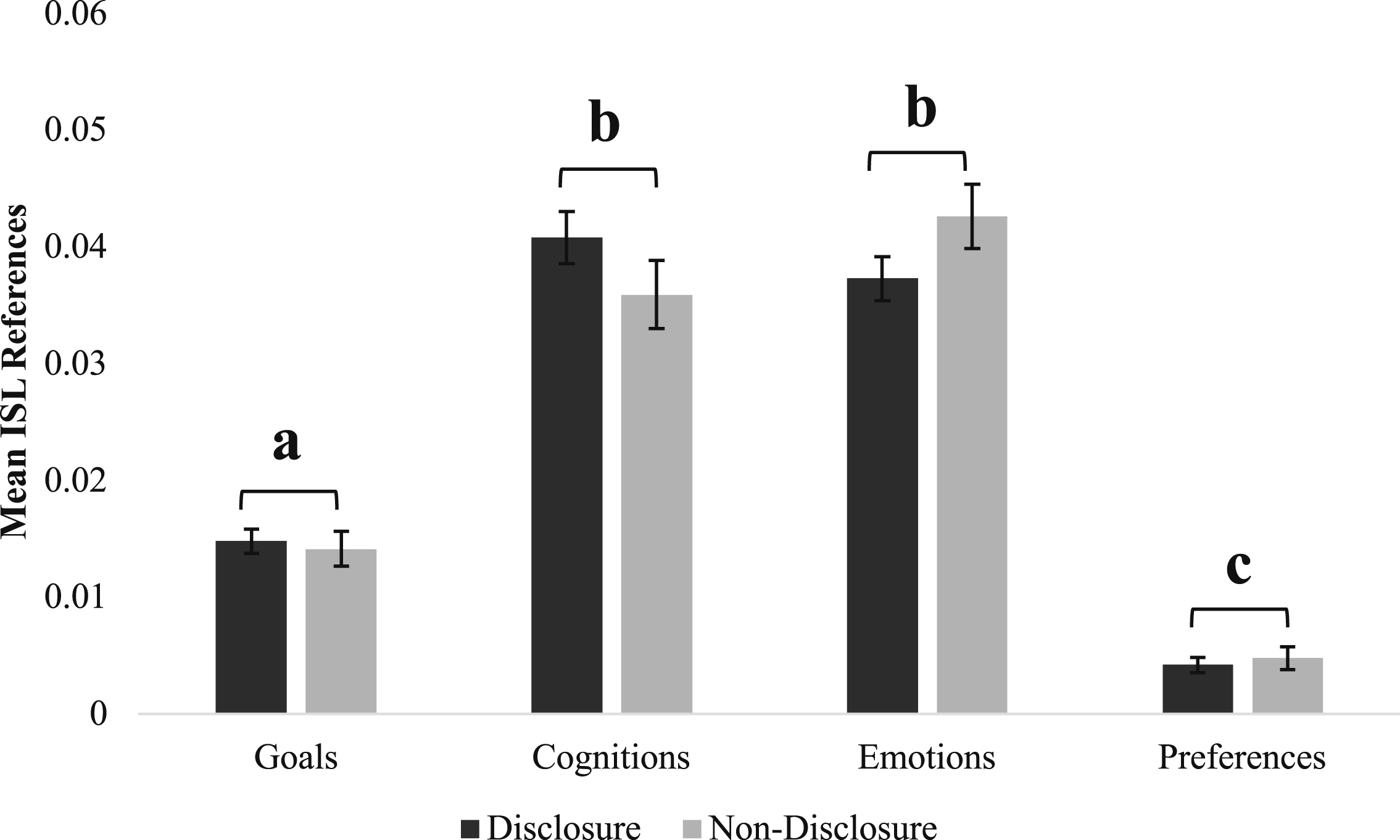
ISL, Narrative Valence, and Relationship Context
A series of repeated measures ANOVAs examined the association between HRPT story valence and the patterns of adolescents’ ISL use, and any moderating effects of relationship context. Mauchly’s test of sphericity was violated for both models, therefore, the Greenhouse-Geisser correction was applied. A significant main effect of ISL was evident for both negative, F(1.99,153.45) = 47.36, p < .001, η2p = .381, and positive, F(1.89,141.82 = 10.24, p < .001, η2p = .120) vignettes. Adolescents’ use of the four ISL types was nearly identical between the positive and negative valanced vignettes (see Supplementary Materials Table S2). The between-subjects effect of self-disclosure target was not significant for negatively (F1,77 = 0.06, p = .807, η2p = .001) or positively valanced vignettes, F(3,75) = 1.63, p = .190, η2p = .061. Gender was subsequently added to each model but was nonsignificant in both negative (F1,76 = .641, p = .426, η2p = .008) and positive (F1,74 = 0.0002, p = .988, η2p = .000) vignettes. Our hypotheses predicting greater use of cognitive and emotional ISL in negative than positive vignettes and greater emotional ISL in disclosures to siblings than friends were not supported.
ISL and Socio-Emotional Understanding Outcomes
A series of linear regressions investigated the association between ISL and the three socio-emotional understanding variables (reciprocity, emotional support, instrumental support) and if the frequency of best friend and sibling disclosures moderated this effect. The first model with emotional support as the outcome variable was nonsignificant (p = .129) in the first step. In the second step, adolescents’ references to cognitive terms negatively predicted instances of emotional support, B = −0.09, SE = 0.03, t(35) = −2.86, p = .01, 95% CI [−0.16, −0.03]. Interestingly, the frequency of adolescents’ disclosures to their best friend positively predicted their tendency to offer emotional support during the HRPT, B = 0.31, SE = 0.15, t(35) = 2.13, p = .04, 95% CI [0.02, 0.61], while disclosures to siblings had no effect, B = 0.09, p = .63. Further, disclosure frequencies to best friends moderated the relation between cognitions and emotional support, B = 0.02, SE = 0.01, t(35) = 2.67, p = .01, 95% CI [0.01, 0.04]. Simple slopes analysis revealed that the effect of cognitions on emotional support was significant for adolescents who rarely disclosed to their best friend, b = −0.07, t(35) = −2.44, p = 0.02, suggesting that for adolescents who seldom disclose to their best friend, references to cognition were linked with reduced emotional support (Figure 2), which did not support our hypothesis. Interaction Between Cognitions and Best Friend Disclosure Frequency on Emotional Support. Note. Simple slopes depicting the association between cognitive references and emotional support. The negative slope indicates that higher references to cognition were associated with lower perceived emotional support for adolescents who rarely disclose to their best friend.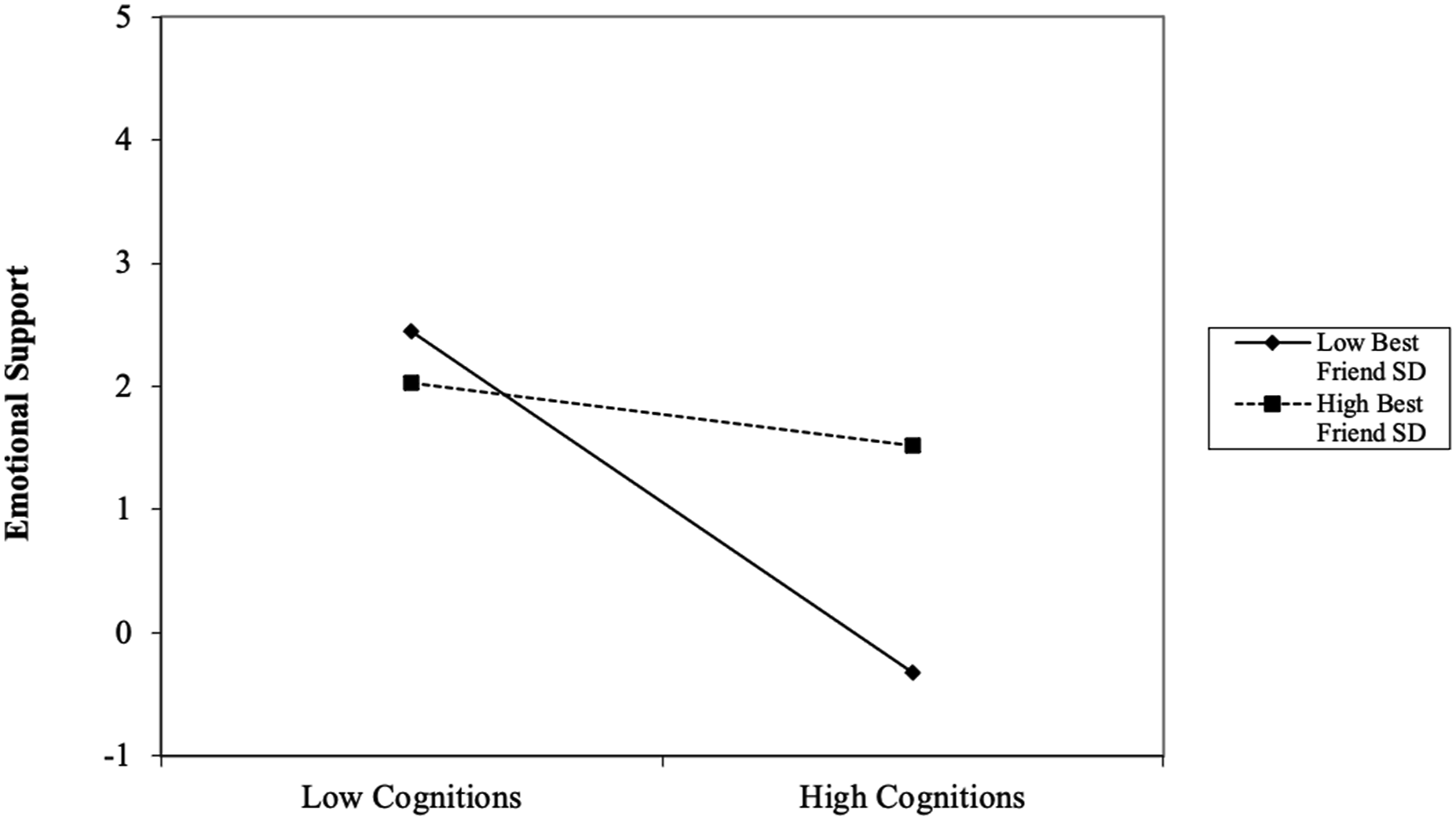
The second model with reciprocity as the outcome variable was nonsignificant (p = .42). In both the first and second step of the model, there were no significant effects of ISL on reciprocity or moderation effects of the frequency of disclosures to best friends and siblings. The final model with instrumental solution as the outcome variable was also nonsignificant (p = .79), indicating no significant differences between the two steps.
Sibling and Friend Disclosures and Relationship Quality
To assess the relation between disclosure during the HRPT vignettes and actual sibling and friend relationship quality, linear regressions were employed, with participant gender added as a covariate. Neither participant gender nor sibling self-disclosure was related to overall sibling relationship quality (all ps > .05). When the subscales of the SRQ were considered separately, the frequency of sibling disclosures during the HRPT and the relative power/status subscale was negatively associated, B = −0.38, SE = 0.16, t(1) = −2.36, p = .02, partially supporting our hypothesis. The model explained 7% of the variance and indicated that disclosures to hypothetical siblings were associated with fewer power differentials in adolescents’ own sibling relationships. Follow-up analyses to examine whether birth order moderated the association between disclosure frequency and the four sibling relationship quality subscales were not significant (all ps > .05). Finally, the frequency of friend disclosures during the HRPT and overall friend relationship quality was nonsignificant, B = −0.01, SE = 0.05, t(1) = −0.11, p = .91.
Discussion
The present study examined early adolescents’ self-disclosures to siblings and friends, which extends the literature on critical, intimate relationships. We employed ISL as a framework for understanding adolescent disclosure given its central role in communication with close others and strong associations with socio-emotional development. Vignettes provided early adolescents with specific affective contexts to narrate, capturing their perceptions and understanding of how to navigate various social situations with similar-aged others. Adolescents’ willingness to disclose, relationship quality with their sibling and best friend, and narrative-based socio-emotional skills were examined in relation to ISL references made during the hypothetical task. Overall, our findings suggest that ISL may provide a meaningful lens for understanding early adolescents’ approach to affective social interactions.
Early Adolescents’ Patterns of ISL Use
Early adolescents frequently referenced internal states during the hypothetical task and demonstrated preferences for specific ISL categories, namely emotion and cognitive terms more than goals and preferences. The inclusion of ISL in the narratives highlights early adolescents’ developing proficiency in perspective-taking, especially the characters’ thoughts and feelings. This pattern contributes to evidence suggesting that socio-cognitive development is reflected in adolescents’ social understanding (Vijayakumar & Pfeifer, 2020). Responding in an emotionally attuned way via ISL may function as a behavioral indicator of these developing skills. For example, in the school problem vignette, one adolescent reflected on the character’s support of the other, “Maybe he’s thinking that hey he’s having problems and maybe I should help him because I might know some stuff that he doesn’t know.” Socio-cognitive skills are critical for providing social support in close relationships, including creating opportunities for others to disclose, a major function of relationships (Rubin et al., 2015). Perspective-taking skills also help youth to respond to others appropriately so as not to violate social expectations (Korem, 2023).
However, ISL use was not more prevalent when disclosure was indicated during the narratives. Referencing internal states is characteristic of everyday conversational language, for example during play, and is not exclusive to communications involving intimate information (Jara-Ettinger & Rubio-Fernandez, 2021; Leach et al., 2017). Given that the HRPT employs both interpersonal and affective vignettes, narratives may reflect aspects of early adolescents’ social understanding that extend beyond intimate disclosure. Namely, participants across grades employed ISL in their narratives even when disclosure was not indicated (e.g., “He would want to help”, “[He’s] scared cause he knows he’s going to get scolded by his parents”). Thus, our findings suggest that internal state references may not necessarily be more prevalent in self-disclosure contexts but may meaningfully index socio-cognitive development.
Scenario Valence and Relationship Context
Contrary to our hypothesis, adolescents’ references to cognitive and emotional states did not differ between positively and negatively valanced vignettes. Prior literature is mixed; some researchers reported younger children used more cognitive and emotional language when describing negative than positive events (Baker-Ward et al., 2005; Bauer et al., 2005; Welliver et al., 2024), whereas Bohanek and Fivush (2010) did not observe valence effects in their 13–16-year-old sample. Davidson and Welliver (2021) argue that describing negative events requires more ISL, as processing unpleasant experiences involves more meaning construction than positive events. Nonetheless, we argue, following Bohanek and Fivush (2010) that positive events also warrant meaning-making given the emphasis on mutual understanding with close others that occurs during adolescence. Adolescents may bond over sharing positive events that foster feelings of closeness and acceptance. Griffith and Hankin (2021) reported an increase in adolescents’ positive affect when they shared positive daily events with caregivers, which also increased parents’ positive responses. Further, sharing good news with others increased positive feelings about the event and promoted feelings of validation for emerging adults, especially with a responsive, enthusiastic listener (Reis et al., 2010). Thus, we advocate for investigating how adolescents share positive events with siblings and friends, including their linguistic features, to complement the co-rumination literature (e.g., Rose et al., 2007) and clarify how communicating positive versus negative experiences supports relational outcomes.
Drawing on relationships theory (Carpendale & Lewis, 2014) and the enduring nature of the sibling relationship (Howe et al., 2020), we predicted that adolescents would make more emotion references when disclosures were directed to siblings than friends, but this was not supported. Nevertheless, participants’ perceptions of the sibling relationship as one of the earliest contexts for socialization was reflected in some narrative responses. For instance, in reference to twin sisters comforting each other, one participant noted, “they’re thinking well I’m glad I have a sister here to help me and to talk to”, suggesting a perception of mutual emotional support and trust. However, the similarity of adolescents’ total emotional references to siblings and friends in the narratives may suggest that a more detailed examination is warranted to determine if the target of disclosure and specific context influences use of emotion terms (Davis, 2012; Martinez & Howe, 2013). For example, adolescents may use emotion words when disclosing to friends about peer conflict, but also to siblings when processing family-related issues. This speculation warrants further study, underscoring the need to consider relationship context when examining socioemotional communication during early adolescence.
ISL and Socio-Emotional Understanding
When examining associations between ISL and socio-emotional understanding as coded in the narratives, an effect emerged for best friend relationships and emotional support, but not instrumental support and reciprocity. When adolescents reported infrequent disclosure to their actual best friends, more frequent cognitive language was linked to lower levels of emotional support in the narratives. As adolescents transition from childhood to early adolescence, their friendships increasingly center on mutual understanding and emotional attunement (Rubin et al., 2015). A grade 4 participant captured this connection when reflecting on the characters in the comforting vignette: “They’re kind of thinking the same thing because…when you’re helping a person with a problem and they’re having the problem, you kind of feel the same way.” Such reflections demonstrate early adolescents’ ability to empathize cognitively and emotionally, while also highlighting the role of language in supporting social competence skills (Eisenberg et al., 2005). During adolescence, youth begin to grasp the dynamics of self-disclosure, wherein the listener is expected to respond meaningfully to what is shared (Tardy & Smithson, 2018). If adolescents are not skilled in emotional exchanges with friends, they may not respond in supportive, emotionally attuned ways when a peer discloses private information. In such cases, an overreliance on cognitive language, rather than emotions or goals (e.g., try, hope), may serve only to mirror the discloser’s feelings without offering meaningful support. This underscores language as a medium for expressing emotional understanding and a tool to cultivate emotional reciprocity, which is essential for relationships (Carpendale & Lewis, 2014; Rubin et al., 2015). Further research into this link may enable practitioners to help youth refine their communicative strategies with friends. In sum, these findings position ISL as both a mechanism and marker of adolescents’ evolving capacity to be emotionally supportive during interpersonal exchanges.
Disclosures to Siblings and Friends and Relationship Quality
Overall sibling or friend relationship quality was not associated with narratives including disclosure on the hypothetical task. However, a deeper look at sibling dynamics revealed that when adolescents’ narratives included disclosures to sibling characters, they were less likely to report power differentials in their actual sibling relationships. This is characteristic of high-quality sibling relationships whereby features such as low dominance and low power imbalance are associated with egalitarian interactions (Buhrmester & Furman, 1990). Martinez and Howe (2013) also found that the more satisfied early adolescents were with their relationships, the more likely they were to report disclosing to others, particularly siblings. The authors further reported a significant positive association between sibling disclosure frequency and sibling warmth. Together these findings suggest that disclosure to siblings both actual and in the narratives is associated with specific facets of relationship quality rather than overall quality. In fact, as siblings approach adolescence, their relationship becomes more egalitarian (Howe et al., 2020). Our findings reflect a similar pattern in that self-disclosure, as a dynamic process between the discloser and target, is linked to decreased power differentials. Moreover, reciprocal interactions positively predict socioemotional problem solving in early adolescents (Karos et al., 2007). Indeed, the sibling relationship may constitute an early socialization context that shapes adolescents’ approaches to disclosure, which may be reflected in the quality and dynamics of later friendships and romantic relationships (Costello et al., 2024; Howe et al., 2020). Yet it is unclear why an association was not found for best friend relationship quality. It may be necessary to consider characteristics of the friendship (e.g., friendship stability, longevity) to better capture the relationship between disclosure and relationship quality (e.g., Schreuders et al., 2021). Together, these findings suggest that self-disclosure to siblings may serve as both a marker and mechanism of relational equality during early adolescence, warranting further consideration of how disclosure may function differently across relationship contexts.
Limitations and Conclusion
There are some limitations to the present study. First, the cross-sectional sample was predominantly White, highlighting the need for future longitudinal research to include more diverse cohorts. Also, a more robust sample might have revealed possible gender effects. Second, while vignettes were designed to elicit responses about how participants might navigate affective situations, they may not fully capture real-life interactions and responses. Third, only the focal adolescent’s perspective of actual self-disclosure and relationship quality was assessed, which does not capture the full complexity of dyadic sibling and friend dynamics. Nevertheless, nuanced insights into early adolescents’ perspectives regarding disclosure processes, ISL, and their social understanding were provided.
In sum, the current study demonstrated early adolescents’ proficiency in their use of ISL across affective contexts and disclosure targets, suggestive of their socio-cognitive development. We contribute to the literature on adolescent sibling and friend relationships by highlighting ISL as a meaningful lens for examining disclosures to important social partners. Disclosures provide an intimate context for early adolescents to receive support and sustain their relationships with social network members (Tardy & Smithson, 2018), while ISL bridges adolescents’ emotional understanding with the development of social competence in close relationships. Parents and teachers may support adolescents’ engagement in meaningful disclosures by teaching reciprocity and mirroring emotional language in addition to scaffolding disclosures of different valences and intensities (Korem, 2023). These steps will help youth develop a key skill that will serve them well in their relationships during adolescence and beyond.
Supplemental Material
Supplemental material - “When you’re Helping a Person With a Problem and they’re Having the Problem, You Kind of Feel the Same Way ”: Internal State Language in Adolescents’ Disclosures to Siblings and Friends
Supplemental material for “When you’re Helping a Person With a Problem and they’re Having the Problem, You Kind of Feel the Same Way”: Internal State Language in Adolescents’ Disclosures to Siblings and Friends by Patricia Forbes, Ryan J. Persram and Nina Howe in The Journal of Early Adolescence
Footnotes
Acknowledgements
This study was supported by an Undergraduate Student Research Award (USRA) from the Social Sciences and Humanities Research Council of Canada (SSHRC) granted to the first author. The original study was supported by a SSHRC grant to the third author. The authors thank all schools, families, and students for their participation and Marie-Hélène Brody, Lisa Fiorentino, Nadine Gariépy, Leigh Karavasilis, Alanna Lynch, Abby Ostien, Stephanie Peccia, Niyer Duncan, Safiyya Inhaam, and Ashley Maharaj for their research assistance.

Ethical Considerations
Studies involving human participants were reviewed and approved by the Research Ethics Board at Concordia University for the original data collection and at Toronto Metropolitan University (#2023-370) for the secondary analysis. Parental consent was obtained via a consent form and assent was obtained from early adolescents.
Author Contributions
P.F. Co-conceptualized the project, conducted the data analysis, and wrote the original draft of the manuscript. R.P. Conceptualized and supervised the project, contributed to the study design and data interpretation, as well as provided revisions and feedback on manuscript drafts. N.H. Collected the data and provided critical feedback on the content and structure of the manuscript. All authors reviewed and approved the final version of the manuscript.
Funding
The authors disclosed receipt of the following financial support for the research and publication of this article: This work was supported by the Social Sciences and Humanities Research Council.
Declaration of Conflicting Interests
The authors declared no potential conflicts of interest with respect to the research, authorship, and/or publication of this article.
Data Availability Statement
The data that support the findings of this study are available from the corresponding author upon reasonable request.
Supplemental Material
Supplemental material for this article is available online.