




Abstract
Prior literature has supported the distinct factor structure of aggressive and rule-breaking adolescent antisocial behavior and has linked these differences to the age of onset hypothesis. However, the age of onset hypothesis is not consistent, and few studies have examined the stability of aggressive and rule-breaking antisocial behavior over time and the predictive effects of exposure to family violence. Thus, the current study (52% female; Mage = 11.23; SDage = 0.46; n = 1,579) examined the longitudinal trajectories of aggressive and rule-breaking antisocial behavior using the random-intercept first-order autoregressive (RI-AR1) model and tested how exposure to family violence predicted the two constructs. Results indicated that aggression and rule-breaking adolescent antisocial behavior persisted across four waves. However, exposure to family violence longitudinally predicted rule-breaking antisocial behavior but not aggressive behavior. Exposure to family violence serves as a long-term risk factor for rule-breaking but not aggression. This study highlights preventive interventions for adolescent externalizing behavior.
Adolescent antisocial behavior, including aggression and rule-breaking conduct, refers to deliberate violations of societal norms, aggressive behavior, destruction of property, cheating, running away from home, theft, and bullying others/assault (Burke et al., 2002; Loeber, 1991). These behaviors typically peak around 16–18 years of age, and current estimations suggest their consequences on society are high, ranging from 4 to $5.8 million for victims and youthful persistent perpetrators in the United States (Cohen & Piquero, 2009). Risk factors of both constructs include personal (e.g., age, gender, personality, and race) and situational (e.g., exposure to family violence and substance use). With respect to demographic differences, prior literature has indicated higher rates of antisocial behaviors among older adolescents (Burt & Neiderhiser, 2009), and adolescent boys (Burnette et al., 2012); however, findings pertaining to the role of race have been less consistent. For instance, on the one hand, prior literature suggests that African American boys were more likely to engage in antisocial behavior (Evans et al., 2026; Park et al., 2010). On the other hand, Hair et al. (2009) reported that Caucasian boys were more likely to display antisocial behavior. These inconsistencies could reflect sociocultural differences (e.g., socioeconomic status) (Morrison et al., 2019) and racial discrimination, as African American boys are often more likely to be expelled from school in comparison to their Caucasian peers for the same antisocial behaviors (Eyllon et al., 2022), or limited generalizable sample (e.g., predominantly Caucasian sample vs African American sample). Furthermore, prior studies have indicated that high impulsivity (Lawrence, 2024; Maneiro et al., 2017), psychopathology (Meeus, 2016), chronic substance use (McAdams et al., 2012), and family adversities (i.e., exposure to family violence) (Ireland & Smith, 2009) often leads to adolescent antisocial behavior.
Traditionally, scholars have suggested that these behavioral patterns are unidimensional, noting that aggressive and rule-breaking behaviors often co-occur and are examined as an invariant unidimensional construct (Eley et al., 1999; Niv et al., 2013). One reason for lumping these two constructs together under a single construct is their frequent comorbidity, suggesting a moderate correlation between aggression and rule-breaking conduct. Another reason is that researchers broadly load both constructs onto one factor, labeling it “externalizing” for measurement specificity (Dugré & Potvin, 2025). However, factor analytic literature has contradicted this claim and suggested that adolescent antisocial behavior is a multidimensional construct comprising of two factors (Burt, 2009). Consistent with this approach, prior literature has shown that aggressive behavior can occur without the emergence of rule-breaking behavior, and rule-breaking behavior often commences later developmentally than aggressive behavior (Niv et al., 2013). Therefore, these two constructs highlight an overt aggressive factor with items reflective of intentional aggressive conduct such as punching, kicking, slapping, and bullying others, and a nonaggressive factor defined as a rule-breaking structure with behaviors such as destruction of property, theft, and running away from home (Burt, 2009; Tackett et al., 2005). Considering the divergence of aggression and rule-breaking behavior, this study further explores these developmental differences using the Moffitt’s Taxonomy approach.
Theoretical Framework
According to Moffit’s Taxonomy approach (1993), there are two subtypes of antisocial behavior, referring to childhood-onset (e.g., life course and severe type) that typically persist into adulthood and adolescent onset (limited and environmentally driven) type that peaks and declines over time. Furthermore, this model suggests that the childhood-onset subtype lacks the mental and emotional capacity to engage in emotion regulation, which leads to chronic antisocial behavior in contrast to their adolescent counterpart (Moffitt et al., 1996). In support of this theoretical approach, prior literature suggests that adolescents whose antisocial began prior to the age of 10 often present with chronic antisocial behavior compared to those who began later than 10 (Moffitt et al., 2002). Despite the theoretical utility and empirical support, developmentally, the persistence of aggressive and rule-breaking adolescent antisocial behavior varies with prior literature, indicating that aggressive behavior appears stable and often continues throughout adolescence (Bettencourt et al., 2013; Stanger et al., 1997). In contrast, rule-breaking behavior fluctuates in frequency and often subsides later in adolescence (Lahey et al., 1992; Piquero et al., 2012). More importantly, the Moffitt Taxonomy approach does not explain the developmental overlap between aggression and rule-breaking behavior and the co-occurrence and the age of onset between the two constructs is inconclusive. For instance, prior literature indicates that the age of onset for persistent aggressive adolescents varies from study to study, and the trajectory isolating age as a persistent and desistance factor of aggressive and rule-breaking antisocial behavior is not absolute (Monahan et al., 2009). Furthermore, prior literature indicates that Moffitt’s approach under pathologized persistent adolescent antisocial conduct such that the adolescent-onset category continued to engage in “lower level” offenses such as theft, lying, and vandalism (Burt et al., 2011), and this could suggest that the persistent and developmental patterns of antisocial behavior among adolescents have been understudied, which undermines empirical investigations that aid preventive, therapeutic efforts to disrupt these patterns. Therefore, beyond Moffitt’s approach, adolescent antisocial behavior developmental course, co-occurrences, and their shared risk factor, including family violence, warrant further investigation. Toward this end, metanalytic literature has suggested that family adversities are a robust predictor of adolescent antisocial behavior’s onset and developmental persistence (Piquero et al., 2016). Thus, there is a need to measure adolescent antisocial behavior (e.g., aggression and rule-breaking) as separate constructs while estimating the predictive effects of exposure to family violence.
Developmental Risk of Exposure to Family Violence on Adolescent Antisocial Behavior
In our study, we focus on the influence of exposure to family violence on the persistence of aggressive and rule-breaking behavior because family relations are essential in developing and maintaining interpersonal peer relationships and the formation of personality, which are critical in the ways in which children and adolescents navigate life (Slattery & Meyers, 2014). Therefore, dysfunctional family relations that manifest as violence exposure often shapes cognitive and social development that are essential in affective regulation (Wilson et al., 2009). Exposure to family violence refers to children and adolescents personally witnessing or hearing their parents/caregivers engage in violence acts against each other within the home (Holden, 2003) and prior literature reported that approximately 10% of children in the United States are exposed to some form of family violence within their home in their lifetime (Supol et al., 2021). The literature also indicated conceptual nuances of violence exposure among children and adolescents. More specifically, there are conceptual differences and subsequent consequences of witnessing violence and experiencing violence, such as instances of child abuse (e.g., beating, being kicked that inflicts bodily harm) and corporal punishment (e.g., excessing spanking) (Bottoms et al., 2026). Prior literature suggests that collectively, witnessing and experiencing violence within the home leads to adverse adolescent outcomes (Wanamaker et al., 2022). Because this study focuses on exposure to family violence (e.g., witness violence), we highlight specific consequences, including internalizing (i.e., anxiety, depression, emotion dysregulation, trauma symptoms) (Carter et al., 2022) and externalizing symptoms such as aggressive behavior (Ingram et al., 2020; Lawrence, 2022). The temporal relation between exposure to family violence, adolescent aggressive behavior and rule-breaking conduct are often explained by the intergenerational transmission of violence, which suggests that as children and adolescents are exposed to violence, they learn and imitate aggressive tendencies that are then reenacted when interacting with their peers (Kwong et al., 2003; Lawrence, 2022). Further, children and adolescents tend to maintain positive attitudes toward violence and perceive that aggression is as an acceptable strategy to achieve goals and are more likely to respond with aggression in ambiguous situations despite negative consequences (Bacchini et al., 2015; Bozzay et al., 2020).
With regard to rule-breaking, though it is not categorized as aggressive tendencies toward people, longitudinal studies have shown that following exposure to family violence, adolescents often engage in rule-breaking conduct, including property damage, stealing (i.e., taking something from the store without paying for it, and taking something from someone without their consent), and weapon carrying (Weaver et al., 2008; Yan & Augustine, 2023). Although meta-analysis results indicate that exposure to family violence is strongly associated with externalizing symptoms among children and adolescents (Vu et al., 2016), there is inconclusive evidence of these results. For instance, while some researchers found that exposure to family violence predicted aggressive behavior longitudinally (Ingram et al., 2020; Maughan et al., 2000), a contrasting study reported that exposure to family violence was positively associated with aggression at the between level and not within individuals (Valido et al., 2020). More specifically, while exposure to family violence positively predicted aggressive behavior among adolescents, this relationship dissipated when considering developmental persistence. There are two possible reasons for these inconsistencies. First, Valido et al. (2020) simultaneously measured sibling aggression and family violence, which could confound the precise measurement and isolation of the effects of exposure to family violence on subsequent aggression. Second, this study failed to account for various proximal and distal risk factors of aggression, including prior experiences with bullying perpetration, depressive symptoms., personality factors, and substance use, as recent metanalytic literature has identified as robust predictors of adolescent aggression (Fedina et al., 2024). In concert with these inconsistencies, few studies have investigated the longitudinal effects of exposure to family violence on aggressive and rule-breaking adolescent antisocial behavior simultaneously. Examining these developmental processes is important to provide additional findings to advance the literature and to inform preventive and intervention programs.
Summary of Research Aims and Hypotheses
Together, although early studies have utilized the Moffit’s approach to explain the persistence of aggressive and rule-breaking behavior among children and adolescents (Moffitt, 1993; Moffitt & Caspi, 2001), prior literature has contradicted this approach, suggesting that the age of onset is not a consistent predictor of aggressive and rule-breaking adolescent antisocial behavior (Monahan et al., 2009). Further, though existing longitudinal literature indicates that exposure to family violence is associated with adolescent aggressive behavior (Ingram et al., 2020), there are two fundamental limitations within the literature. First, the longitudinal effects of exposure to family violence and adolescent aggression are limited to between associations but not at the within level (Valido et al., 2020). Second, few studies have investigated how exposure to family violence predicted the developmental cascading effects, referring to the detrimental and cumulative consequences of exposure to family violence on aggressive and rule-breaking adolescent behavior while accounting for known risk factors of aggression and rule-breaking behavior, including bullying perpetration, depression, demographics (i.e., age, ethnicity, and gender), and impulsivity. Therefore, in the current study, we draw on the intergenerational transmission of violence to examine the links between exposure to family violence and aggressive and rule-breaking behavior across adolescence. More specifically, this study aims to address the theoretical limitations of Moffitt’s approach and methodological deficiencies by (1) estimating the developmental course of aggression and rule-breaking behavior and (2) modeling exposure to family violence as a risk factor for aggression and rule-breaking behavior. Given the prior literature in this area, we predicted that exposure to family violence would be positively associated with aggressive and rule-breaking behavior (H1). Furthermore, we hypothesize that the onset of aggression and rule-breaking behavior would persist across time measurement (H2).
Methods
Participants
The data used in the current study are derived from Waves 1 through 4 of the longitudinal study titled “Bullying, Sexual, and Dating Violence Trajectories from Early to Late Adolescence in the Midwestern United States, 2007–2013” (Espelage et al., 2016). This project aimed to explore the extent to which individual, familial, and peer factors are linked to the risk of teen dating violence and bullying experiences in early adolescence. Data collection occurred at six-month intervals across each wave. Specifically, recruitment began in the Spring of 2008 (Wave 1), Fall 2008 (Wave 2), Spring 2009 (Wave 3), Fall 2009 (Wave 4), Spring 2012 (Wave 5), Fall 2012 (Wave 6). This study utilized the first four waves because these measurement occasions holistically capture the variables of interest across four-time points. Subsequent measurement occasions inconsistently estimate the variables of interest using similar measurement instruments. The current sample consisted of 1,579 middle school students (52% females and 48% males). The racial composition included 26% White, 29% Black, 30% Hispanic, and 15% representing Asian and Biracial students.
Procedure
Upon approval by the University Institutional Review Board (IRB), a consent form detailing the risks and potential benefits of the study was sent to parents. Parents were encouraged to sign and return the form if they consented to the study. Afterward, student assent was obtained at each wave of data collection at six-month intervals. For survey completion, trained research assistants first separated students to ensure confidentiality and read each survey question aloud throughout waves 1–4. Data collection at each wave took approximately 30–40 minutes to complete. Due to the longitudinal nature of the study, retention rates varied throughout data collection. Toward this end, students who did not participate in Waves 1 and 2 were excluded from subsequent Waves and survey administration. Across Waves 2 and 3, the retention rates were 75% and 84%, respectively. The entire retention rate for the study was approximately 80%. For the current study, waves 1–4 were utilized because the focus of this study was to understand the longitudinal continuity of aggression and rule-breaking behavior while considering the effects of exposure to family violence.
Measures
Rule-breaking was assessed using eight items from the General Deviance Behavior Scale (GDBS) (Jessor & Jessor, 1977). This scale measures the degree to which adolescents engaged in rule-breaking conduct. Responses were recorded on a 5-point Likert-type scale, ranging from 0 (never) to 4 (10 or more times). Example items include, “Damaged school or other property that did not belong to you? “and “Taken something from a store without paying for it (shoplifted)?” Compared with the traditional Cronbach’s alpha, McDonald’s omega provides a more flexible, general, and theoretically robust measure of internal consistency reliability, particularly when items contribute unequally to the underlying construct (Goodboy & Martin, 2020; Hayes & Coutts, 2020). Thus, McDonald’s omega was employed to determine the scale’s reliability, which ranged from 0.77 to 0.86 across Waves 1 to 4. Higher scores indicate a higher frequency of rule-breaking behavior. This instrument has also been utilized with a representative sample consisting of early adolescents with similar cultural characteristics and language. For example, Merrin et al. (2019), who reported alpha levels ranging from 0.81 to 0.87, have used this instrument to assess trajectories of rule-breaking conduct among early adolescents.
Aggression was measured using four items from the University of Illinois Fighting Scale (Espelage & Holt, 2001). This scale evaluates the occurrence and frequency of adolescents’ involvement in fights, utilizing a 5-point Likert-type scale, from 0 (never) to 4 (7 or more time). Example items include, “I fought with students I could easily beat” and I got into a physical fight because I was angry” McDonald’s omega (ω) was reported for scale reliability, with a range from 0.77 to 0.79 for Waves 1 to 4. Higher scores reflect a higher frequency of aggression. Prior literature has utilized and validated this instrument, reporting alpha levels of 0.82 among early adolescents with similar cultural characteristics and language in estimating aggressive behavior (Walters & Espelage, 2020).
Exposure to family violence was assessed at the first wave using three items from the modified Family Conflict and Hostility Scale (Thornberry et al., 2003). This scale gauges the extent of individuals’ exposure to family violence. Example items include, “How often are there physical fights in your household, such as hitting, shoving, or throwing things?” and How often do family members lose their temper or blow up for no good reason?” Responses were measured on a 5-point Likert-type scale from 0 (never) to 4 (always), with a reported reliability (ω) of 0.78. Higher scores indicate a higher frequency of exposure to family violence. Prior studies have shown the robustness and utility of this instrument, reporting alpha levels of 0.73 and 0.79, respectively, among early adolescents with cultural characteristics and language (Ingram et al., 2020; Lawernce et al., 2023).
Covariates
Substance use was assessed using the Problem Behavior Frequency Scale (Farrell et al., 2000), which measures the frequency of alcohol and drug use. The scale consists of eight items, including examples such as “smoking marijuana” or “drinking liquor”, rated on a 5-point Likert scale from 1 (never) to 5 (10 or more times). The reliability (ω) for Wave 1 is 0.86. Higher scores indicate more substance use. This instrument has been utilized in assessing the longitudinal co-occurrence of substance use and other externalizing behaviors among adolescents with similar cultural characteristics and language, reporting alpha levels ranging from 0.85 to 0.90, respectively (Lawernce et al., 2025).
Bullying perpetration was measured with the nine items Illinois Bully Scale (Espelage & Holt, 2001). This measure assesses the occurrence and frequency of student bullying behavior, on a 5-point Likert-type scale from never (0) to 7 or more times (4). Example items include, “I excluded other students from my group of friends” and I upset other students for the fun of it.” The reliability (ω) for Wave 1 is 0.82. Higher scores indicate a higher frequency of bullying perpetration. Prior literature has noted the reliability and validity of this instrument, reporting alpha levels of 0.83 as it has been utilized among adolescents with similar cultural characteristics and language (Lawrence et al., 2024).
Depression was assessed with the Orpinas Modified Depression Scale (Orpinas, 1993), comprising nine items that evaluate depressive symptoms experienced in the past 30 days. Example items include, “Do you feel hopeless about your future?” and Did you feel hopeless about the future?” measured on a 5-point Likert scale from 0 (never) to 4 (almost always). The reliability (ω) for Wave 1 is 0.83. Higher scores suggest more severe depressive symptoms. Prior literature has highlighted this instrument’s reliability and validity, reporting alpha levels ranging from 0.82 to 0.85, respectively, as it was used among adolescents with similar cultural characteristics and language (Lawrence et al., 2025).
Impulsivity was measured using the Teen Conflict Survey’s 4-item scale (Bosworth & Espelage, 1995), which gauges the tendency of individuals to act without foresight or deliberate cognitive processing. Example items include, “I do things without thinking” and I start things but have a hard time finishing them”, rated on a 5-point Likert scale from 0 (never) to 4 (always). The reliability (ω) for Wave 1 is 0.72. Higher scores reflect more impulsive behavior. This measure has shown to be a valid instrument in assessing impulsive tendencies, reporting alpha levels ranging from 0.73 to 0.81, respectively, as it has been used among adolescents with similar characteristics and language (Lawrence et al., 2025).
Demographic variables included age (M = 11.23; SD = 0.46 for the first wave), gender (coded as female = 1, male = 0), and race (with three dummy variables created, using White as the reference category).
Data Analytic Strategies
Data preparation and descriptive analyses were conducted using Stata 18 (StataCorp, 2023). Latent variable modeling was performed in Mplus Version 8.10 (Muthén & Muthén, 1998–2017). Items were averaged to create a mean score for analysis. The missing rates for the four waves were approximately 1.5%, 12.5%, 28.5%, and 39.6%, respectively. Little’s MCAR test was significant, χ2 (150) = 320.11, p < .05, indicating that the data were not missing completely at random (MCAR; Enders, 2022). However, a logistic regression analysis showed that participants with complete data did not differ significantly from those with missing data on covariates including gender, exposure to family violence, substance use, depression and impulsivity. Therefore, the data were assumed to be missing at random (MAR) and Full information maximum likelihood (FIML) was employed to address missing data (Enders & Bandalos, 2001). Additionally, the “Type = Complex” feature in Mplus was used to control for potential data dependency among observations (students) within clusters (schools) by adjusting the standard errors of the estimated coefficients, and parameters were estimated using maximum likelihood estimation with robust standard errors (MLR).
We examined the variables that could predict the between-person differences and within-person development using the Random Intercept Autoregression of lag 1 (RI-AR1) model (Bollen & Brand, 2010), as depicted in Figure 1. Before fitting the RI-AR1 model, we first estimated the unconditional linear growth models for both aggression and rule-breaking behaviors. The results indicated that only rule-breaking exhibited a slight growth pattern, with a significant mean slope (β = 0.06, p < .001). In contrast, the mean slope for aggression was not statistically significant (β = −0.02, p = .219). Based on these findings, we selected the RI-AR1 model as our final model, as it captures both between-person and within-person variation. In longitudinal analysis, it is essential to distinguish between between-person and within-person levels of analysis, as they reflect fundamentally different sources of variability (Bollen & Brand, 2010; Jongerling et al., 2015). Between-person variation refers to stable differences across individuals, such as consistent patterns in students’ behavior that persist over time. In contrast, within-person variation captures the dynamic fluctuations that occur within individuals, reflecting how a single student’s behavior changes across different time points. Conflating these levels can lead to incorrect inferences, as relationships observed between individuals do not necessarily generalize to changes within individuals, and vice versa. The RI-AR1 model included several components. Firstly, it encompassed the repeated measurements of aggressive behavior and rule breaking conduct from Wave 1 to Wave 4. To capture the within-person (within-student) carryover effect, lagged dependent variables for autoregressive effects were included, considering that students’ prior behavior might relate to their current behavior. Secondly, the model included two latent random intercept factors for aggression and rule-breaking (represented by ovals in the middle of Figure 1), respectively. The corresponding four repeated measures were loaded on each factor with all factor loadings constrained to 1.0 so that the extracted variances from all repeated measures were stable over time. In other words, the random intercept factors of aggression and rule-breaking captured the trait-level information (stable over time) that also varied across adolescents. These intercepts were only predicted by between-person (between-student) level variables, including exposure to family violence, substance use, bullying, depression, impulsivity, and demographic variables like age, gender, and race. Even though covariates such as substance use, bullying, depression, and impulsivity were assessed across multiple waves, only their baseline (Wave 1) values were included in the model. This approach ensures temporal precedence—establishing that the covariates temporally precede the focal outcomes, rule-breaking and aggression—while reducing the risk of reverse causality and overcontrol that can occur with time-varying covariates. Using baseline measures also facilitates clearer interpretation by isolating their influence on the subsequent trajectories of rule-breaking and aggression. RI-AR1 Theoretical Model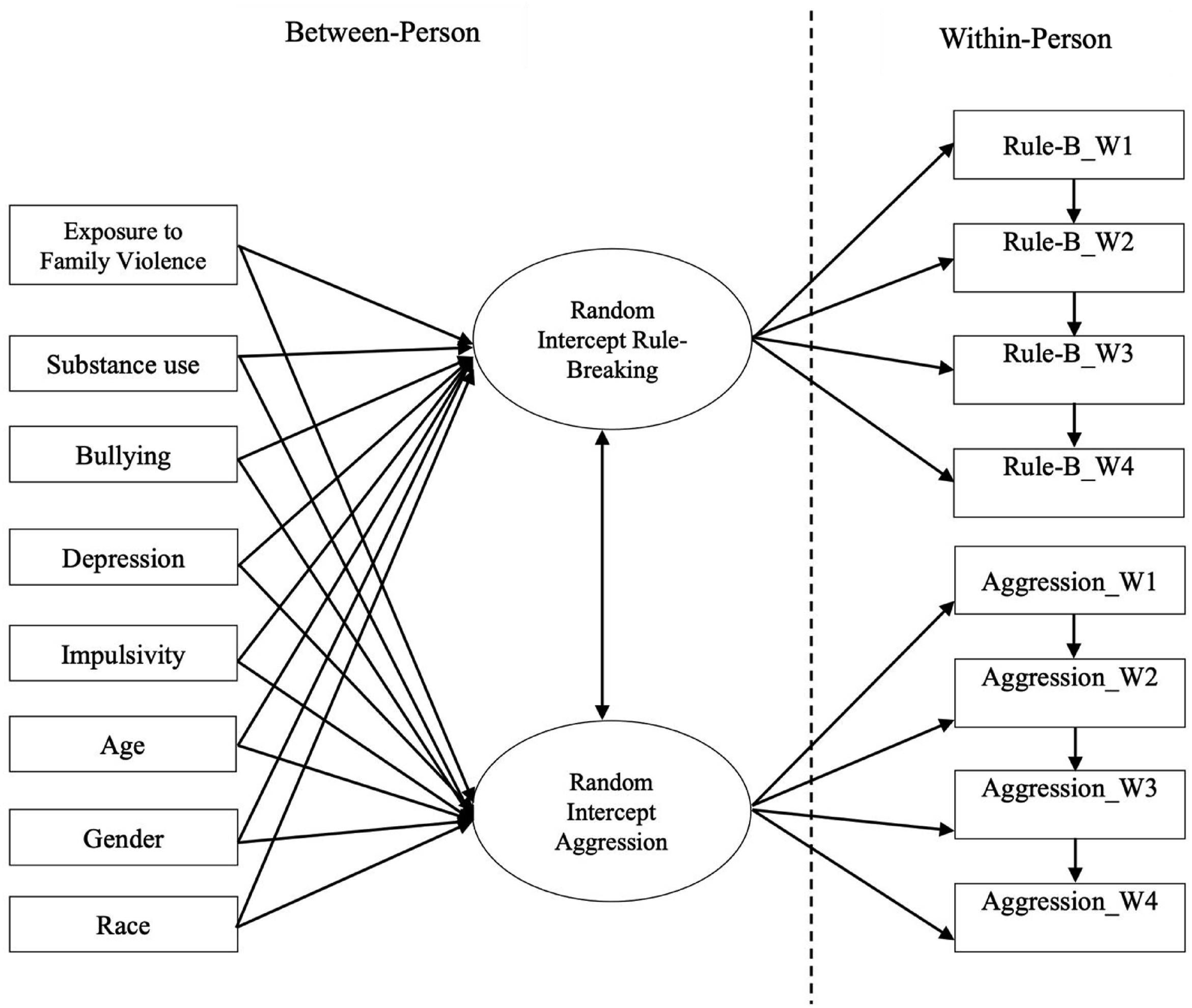
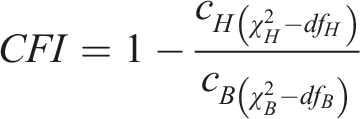
For model fit evaluation, the mean-adjusted overall model chi-square test, Root Mean Square Error of Approximation (RMSEA), Standardized Root Mean Square Residual (SRMR), and a modified Comparative Fit Index (CFI) were utilized. Regarding the modified CFI, the baseline model was based on the Widaman and Thompson’s (2003) approach for longitudinal model which only contained two parameters, namely, the mean of the intercept factor and a constant residual variance. The Comparative Fit Index (CFI) was then calculated as follows:
Results
Descriptive Statistics and Correlations
Zero-Order Correlations and Descriptive Statistics for All Variables in the Theoretical Model
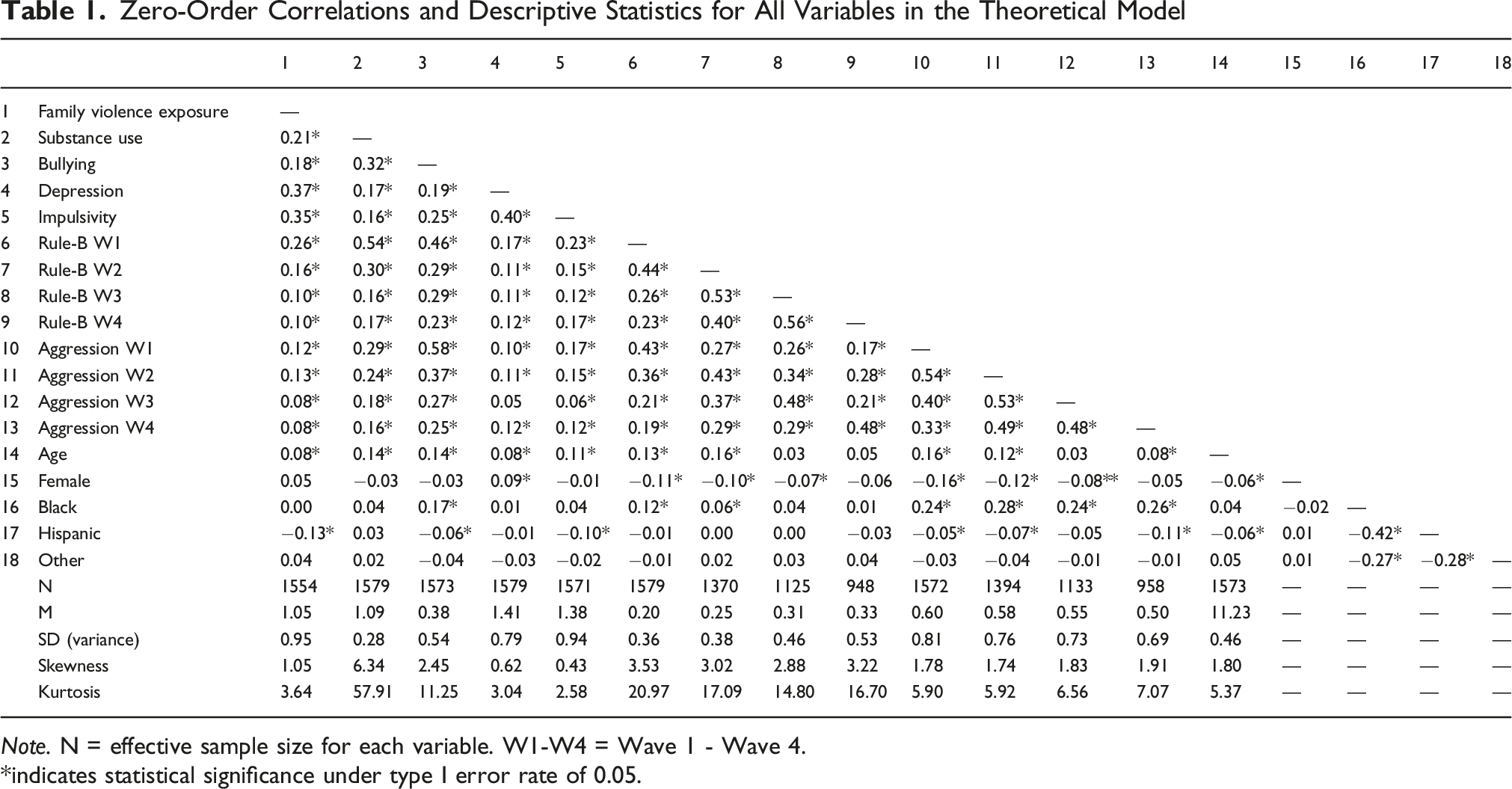
Note. N = effective sample size for each variable. W1-W4 = Wave 1 - Wave 4.
*indicates statistical significance under type I error rate of 0.05.
The RI-AR1 Model Results
Initially, we examined the hypothesized model as shown in Figure 1. However, the overall fit of this model did not completely meet the satisfaction criteria; that is, the overall model chi-square test was significant (χ2 (79) = 603.16, p < .001) which indicated that the model did not fit the data perfectly. Additionally, the three fit indices produced mixed findings; both RMSEA (0.07) and SRMR (0.07) were smaller than the recommended cutoff value (0.08) and showed an acceptable fit model whereas CFI (0.88) was smaller than the recommended cutoff value (0.90) which showed a mediocre fit. To improve the model fit, correlated residuals between rule-breaking and aggression at the corresponding wave were added. The pattern and significance of the coefficients remained largely consistent between the original and the modified models. The revised model, as illustrated in Figure 2, produced an acceptable fit to the data (χ 2 (75) = 379.35, p < .001; CFI = 0.93; RMSEA = 0.05; SRMR = 0.07). The standardized path coefficient estimates along with their standard errors (in parentheses) are presented in Figure 2. RI-AR1 Modified Model With Standardized Coefficient Estimates. Note. Standardized Path Estimates With Standard Error (in Parentheses) are Presented. Solid Lines Indicate Significant Paths (p < .05). Dashed Lines Indicate Non-Significant Paths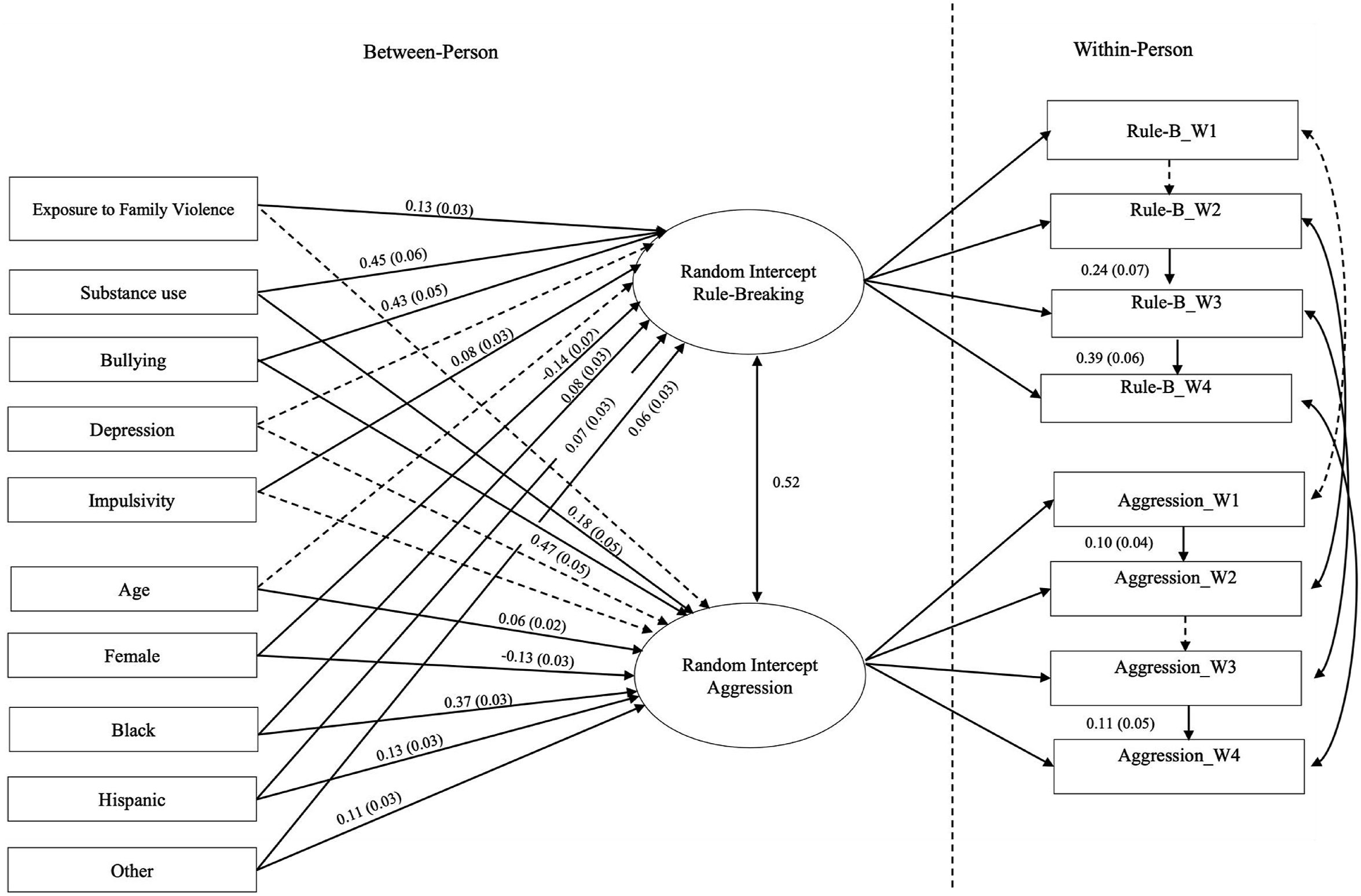
At the within-student level, the lag-1 autoregressive path coefficients reflect the extent to which deviations from a student’s own average level of behavior at one time point predict deviations at the next time point. For rule-breaking behavior, the autoregressive coefficients from Wave 1 to Wave 2, Wave 2 to Wave 3, and Wave 3 to Wave 4 were 0.03 (p = .512, n.s.), 0.24 (p = .001), and 0.39 (p < .001), respectively. This pattern suggests that, beginning at Wave 2, students who reported higher-than-usual rule-breaking relative to their own average tended to continue reporting elevated levels at the next wave.
For aggressive behavior, the within-person autoregressive path coefficients were 0.10 (p = .010), 0.08 (p = .064), and 0.11 (p = .017), respectively, from Wave 1 to Wave 4. These findings indicate a modest degree of temporal dependency in aggressive behavior, such that higher-than-usual aggression at a given wave was associated with slightly elevated aggression at the subsequent wave, particularly between Wave 1–2 and Wave 3–4. Overall, these results suggest evidence of intra-individual continuity over time: when adolescents deviated from their own typical levels of rule-breaking or aggression, those deviations were likely to persist—especially in the later waves of data collection.
At the between-student level, the random intercept factors for rule-breaking and aggressive behaviors were positively correlated (r = 0.52, p < .001), indicating a moderate positive association between the two between-student level (or trait-level) constructs that were stable over time. The analysis results revealed that various covariates exert differential effects on rule-breaking and aggression. Substance use emerged as a strong predictor for both rule-breaking (
Discussion
In the present study, we examined the progression of aggressive and rule-breaking adolescent antisocial behavior while assessing the predictive role of exposure to family violence guided by the intergenerational transmission of violence framework. From a developmental lens, this study provided important findings that advance the literature on the predictive role of exposure to family violence and the persistence of aggressive and rule-breaking behavior among adolescents. Specifically, our results indicated that adolescents who engaged in aggressive and rule-breaking behavior at wave one eventually reported consistent patterns of these behaviors at wave four, as indicated by the significant between-person variances of both rule-breaking and aggression, as well as the significant path coefficients between different wave measures at the within-person part of the model. These findings suggest that the onset of aggressive and rule-breaking behavior increased the likelihood for adolescents to further engage in the pattern of behaviors over time. There are several explanations for these results. First, these results are partially inconsistent with prior literature, which suggested that rule-breaking behavior often fluctuates and then subsidies over time (Lahey et al., 1992; Piquero et al., 2012). In contrast to this perspective, adolescents who engage in persistent antisocial behavior may often maintain chronic impulse control challenges and self-control difficulties, which leads to chronic antisocial behavior (Monahan et al., 2009). As such, it is possible that the persistence of antisocial behavior was associated with self-control challenges. Second, consistent with the life-course-persistent antisocial approach, the onset of problem behaviors (e.g., aggression and rule-breaking conduct) could be socially reinforcing in which externalizing conducts leads to social rewards (e.g., increased social status and more friends), thus prolonging the persistence of these behaviors (Sijtsema & Lindenberg, 2018). Third, although beyond the scope of the current study, in contrast to their desisting peers, adolescents who engage in antisocial behaviors often display stunted psychosocial maturity and endorse callous and unemotional traits that are influential in the long-term engagement and reemergence of antisocial behavior (Meeus, 2016; Simmons et al., 2020).
Exposure to Family Violence and Adolescent Aggressive Behavior
Based on the theoretical perspective of the intergenerational transmission of violence, we expected that exposure to family violence would be positively associated with aggressive and rule-breaking behavior over time. However, these predictions were partially supported. More specifically, we found that exposure to family violence positively predicted rule-breaking tendencies but not aggressive behavior while controlling for relevant variables. These findings advance the current literature in two central ways. First, our results contradict prior literature that suggested exposure to family violence is a risk factor for aggressive behavior longitudinally (Ingram, 2020; Valido et al., 2020). Methodologically and in contrast to Ingram (2020) and Valido et al. (2020), our study accounted for relevant proximal (e.g., age, demographic, depressive symptoms, and impulsivity) and distal (e.g., bullying perpetration and substance use) risk factors of adolescent aggression consistent with meta-analytic literature (Fedina et al., 2024). Therefore, it is possible that accounting for these variables, the effects of exposure to family violence on aggression dissipated. Second, based on the tenements of the catharsis theory, following provocation (i.e., exposure to family violence), individuals who initially engaged in an aggressive act often reported lower emotional tension, which reduced their likelihood of engaging in future aggression (Bresin & Gordon, 2013). While there is contrasting support for the catharsis approach, suggesting that cathartic exercise (e.g., venting) led to additional aggression (Bushman, 2002), more recent literature has suggested that while heightened provocation could lead to goal-directed aggression, the strength and functionality of aggression dissipates as the individual exhaust their energy into an irrelevant source (Denzler & Förster, 2012). Therefore, drawing from this model, it is possible that adolescents who were exposed to family violence initially engaged in aggressive conduct, which then lowered emotional arousal, which led to a reduction in futuristic aggressive conduct.
Exposure to Family Violence and Rule-Breaking Behavior
Our results indicated that exposure to family violence was positively associated with rule-breaking behavior over time. There are three possible explanations for these results. First, rule-breaking behavior, such as damaging property and stealing, is considered covert in nature, suggesting that these behaviors could be less risky than aggressing toward another person and are socially reinforcing, which tend to be stable and persistent over time (Allen et al., 2018). Therefore, it is possible that engaging in these types of behavior following exposure to family violence was socially reinforced by peers and thus persisted over time. Second, as prior literature has indicated that exposure to family violence undermines self-regulatory tactics (e.g., deep breathing, seeking support, and emotion reappraisal) (Zhang et al., 2025), these interpersonal difficulties could thwart behavioral inhibition and lead to rule-breaking tendencies. Third, although not accounted for in our study, family stress, such as financial difficulties, often serves as a precursor to family violence (Holmes et al., 2018); children and adolescents who were exposed to family violence often engage in rule-breaking behavior, such as stealing from others and shoplifting for financial gain (Hoeve et al., 2016). Therefore, is it possible that engaging in rule-breaking behavior served a survival and monitory purpose.
Limitations and Strengths
The current study has several limitations and strengths. First, although we are confident that our aggressive and rule-breaking behavior measures are reliable and valid, we relied on self-report instruments. This serves as a limitation because participants may overestimate or underestimate their behavior. Therefore, future studies can address this limitation by using multiple reporters (i.e., parents, teachers, and friends) to estimate aggressive and rule-breaking behavior among adolescents. Second, because prior literature has suggested that there are unique classes of aggressive and rule-breaking adolescents (i.e., low, moderate, chronic) (Givens & Reid, 2019), which were not considered in the current study, future studies can address this limitation. More specifically, examining whether unique aggressive and rule-breaking behavior classes persist in similar trajectories. Third, we did not consider if associating with antisocial peers may persistently predict aggressive and rule-breaking adolescent behavior. Therefore, future studies can address this by modeling associating with antisocial peers as a predictor of aggressive and rule-breaking behavior. Fourth, prior literature has indicated socioeconomic status as a risk factor for externalizing conduct (e.g., aggression and rule-breaking behavior). However, due to the nature of the secondary data used, we could not account for this variable in our analysis. Therefore, future studies can address this limitation by attempting to replicate our findings while accounting for socioeconomic status (e.g., adolescent, parental, and household income).
Beyond these limitations, strengths of the current study included the use of the Random Intercept First-Order Autoregressive (RI-AR1) to investigate the developmental course of aggressive and rule-breaking adolescent antisocial behavior. This model presents significant advantages over traditional panel models through its sophisticated approach to handling panel data complexities. This model stands out for its ability to separate out the between-person variance via the intercept factor so that the estimation of the lagged relationships can truly reflect the within-person dynamics (Bollen & Brand, 2010; Jongerling et al., 2015). In other words, it decomposes the total variance into components of long-term time-invariant stability (trait) and autoregressive stability (state), offering a nuanced view of the data that highlights both between-person trait-like consistency and within-person change over time (Bollen & Zimmer, 2010; Gelissen, 2022; Hamaker et al., 2015; Li & Wang, 2022; Lucas, 2023). The RI-AR1 model’s integration of these elements provides a more flexible and insightful framework for analyzing panel data and enabling a richer understanding of the potential trait and state dynamics over time.
Clinical Implications
Our findings provide important preventive practical implications. A preventive approach to exposure to family violence has focused on family stressors (i.e., low income, strained parent-child relationship), ineffective parenting practices, and home visits by social workers (Feinberg et al., 2016). Therefore, prior studies have shown that home visits that consist of educating parents on strategies of emotion regulation and mental health services seeking behavior in the community have been shown to prevent instances of family violence, better maternal adjustment, and child outcomes (Living et al., 2023; Low & Mulford, 2013). Second, because aggressive and rule-breaking behavior persists across adolescence and exposure to family violence is positively associated with rule-breaking behavior, family clinicians can disrupt these patterns using evidence-based interventions. Third, as prior literature has shown that lack of parental monitoring can lead to adolescent antisocial behavior (Merrin et al., 2019), clinicians can implement psychoeducation parenting classes that consist of strategies to improve parental monitoring, which could strengthen the parent-child relationship. Fourth, individual interventions such as Cognitive Behavioral Therapy (CBT) and Cognitive Processing Therapy (CPT) comprise assessing maladaptive thoughts and emotions that could lead to dysfunctional behavioral patterns, including aggressive and rule-breaking behavior (Barnes et al., 2014). Prior literature has shown that CBT is often effective in addressing dysfunctional thoughts and aiding in reducing persistent antisocial behavior (Smeets et al., 2015). Therefore, clinicians can use these interventions to address underlying antisocial cognitive processes that could lead to aggressive and rule-breaking behavior.
Conclusion
In conclusion, our findings provided compelling evidence and addressed two important considerations in adolescent aggression and rule-breaking behavior literature. First, we found that both aggression and rule-breaking behavior persisted over time. That is, adolescents who engaged in aggression and rule-breaking behavior at the initial stage (i.e., wave 1) were more likely to engage in the aggression and rule-breaking behavior six months later (i.e., wave 4). Second, we found that following exposure to family violence, the trajectories of aggression and rule-breaking behavior diverged such that exposure to family violence was more consistently associated with stable levels of rule-breaking behaviors in adolescence, but was not signficantly associated with aggression, after accounting for multiple individual and demographic factors. Considering these findings, we suggested preventive family interventions and individual therapies to address family violence and adverse adolescent outcomes.
Footnotes

Funding
The authors received no financial support for the research, authorship, and/or publication of this article.
Declaration of Conflicting Interests
The authors declared no potential conflicts of interest with respect to the research, authorship, and/or publication of this article.