




Abstract
Adolescents face many difficulties when transitioning to high school, particularly when it comes to their social circles and maintaining friendships. As these challenges can have long-term consequences, providing support to youth during this period is essential. The YWCA Youth Education Programs (YEP) in Vancouver, BC offer group-based, after-school mentoring programs for 7th grade students to help them navigate the transition to high school. Survey data from 668 students (233 treatment group and 435 control group) were used to examine the impacts of the YEP on friend support. Multilevel regression models show that the YEP is effective at improving perceptions of friend support in the long term. More research is needed to explore potential gender differences in the experience of supportive friendships after youth transition to high school, as well as the impact of group-based mentoring for youth transitioning to the high school environment.
Keywords
Introduction
Throughout adolescence, building genuine and trusting friendships is vital for personal growth and development (Cantin & Boivin, 2004; Wrzus et al., 2013). Supportive peer connections are crucial for adolescents as they offer a sense of belonging, acceptance, and reassurance (Benner et al., 2017; Morin et al., 2013). However, adolescents have a greater sensitivity to risks and rewards, especially those related to social and emotional experiences (e.g., Duell et al., 2018; van Duijvenvoorde et al., 2022). Youth also tend to participate in more frequent risky behaviors when they are with their peers in comparison to how adults behave (Chein et al., 2011; Gardner & Steinberg, 2005; Lundborg, 2006). As such, adolescents’ heightened sensitivity to social influence and peer approval can shape their behavior and decision-making processes (e.g., Blakemore & Mills, 2014; Foulkes & Blakemore, 2016). Ample recent studies have highlighted the vital role that friendships play in adolescent development (e.g., Benner et al., 2017; Felmlee et al., 2018; van Rens et al., 2019).
When transitioning to high school, teenagers experience considerable disruption in their social networks and may face difficulties maintaining friendships (Ng-Knight et al., 2019). This is partly because, unlike in elementary school, high school students may not have the same class schedule as their friends. Consequently, they have less interaction with their close friends during the day and spend most of their time with a constantly changing group of unfamiliar students (Akos & Galassi, 2004; Felmlee et al., 2018). As a result, adolescents’ friendship structures shift during the transition to high school, and their central network of peers becomes smaller (Felmlee et al., 2018; Ng-Knight et al., 2019). Studies have shown that many high school freshmen struggle to adapt socially (Pratt & George, 2005; van Rens et al., 2019). Experts in the field have repeatedly emphasized the need for effective interventions to help students transition to high school (e.g., Benner & Graham, 2009; Krammer et al., 2023; Rice et al., 2011). The YWCA Youth Education Programs (YEP) offer gender-specific after-school group mentoring programs for 7th grade students, which focus on helping adolescents navigate the upcoming transition to high school (which occurs in grade 8). The current study aims to explore the impact of participation in the YWCA YEP on students’ perceptions of friend support.
The Impact of School Transition on Adolescents’ Social Relationships
Studies have consistently found that the transition to high school can negatively impact adolescents’ social outcomes (Benner, 2011; Ng-Knight et al., 2019). After this transition, teenagers tend to feel more lonely, isolated, disconnected, and anxious in social situations (e.g., Benner et al., 2017; Felmlee et al., 2018). They also may experience a decrease in social acceptance, support from friends, and healthy peer relationships (Benner & Graham, 2009; Felmlee et al., 2018). On the other hand, studies suggest that having strong social connections throughout high school can have a beneficial effect on emotional and social well-being (Benner et al., 2017; Morin et al., 2013). In addition, having stable friendships and peer networks can lead to better academic outcomes, including increased engagement at school, success, and a reduced likelihood of dropping out (Benner et al., 2017; Carbonaro & Workman, 2013).
Gender Differences
While school transitions can have a negative impact on students regardless of their demographics (e.g., race, ethnicity, gender, socioeconomic status), the experience of transitioning to high school is not homogeneous. Some subgroups of students have a disproportionately higher risk of negative outcomes after the transition to high school, although results from empirical studies are mixed. For instance, some research suggests that females experience more disruptions to their socio-emotional well-being than their male classmates (Benner & Graham, 2009; Grills-Taquechel et al., 2010), while other findings suggest that males are not exempt from disruptions to socio-emotional well-being (Benner et al., 2017). The gender difference in social outcomes may arise due to females placing a higher value on meaningful emotional connections during adolescence (Anderson et al., 2000; Delgado et al., 2022; Rudolph & Dodson, 2022). As a result, they may face more difficulties adapting to changes in their social circles in high school. Although research has been conducted on gender differences in friendship patterns throughout adolescence (e.g., see Davis, 2019), there is a dearth of research examining the disparate social outcomes for males and females specifically after transitioning to high school.
Interventions that Support Adolescents’ Social Development
Research on positive youth development and educational transitions consistently supports providing youth with programs to help them navigate the challenges associated with the transition to high school (Bharara, 2020; Donaldson et al., 2023). In recent years, afterschool programs (ASPs) have evolved to supplement the school day by providing youth with prosocial opportunities to develop skills related to their social well-being (e.g., communication, relationships), and support youth in their social development (e.g., social and emotional learning, interpersonal skills; Durlak et al., 2010; 2011; Himmelrich, 2012; Pelcher & Rajan, 2016).
Group mentoring is a popular form of ASP; according to the 2016 Mentoring Program Survey, group-based mentoring models are more common than traditional one-to-one (1:1) mentoring programs (Garringer et al., 2017). Group mentoring models typically involve two to three mentors and five to 20 mentees (Kuperminc & Deutsh, 2021). While the programs often do not have a specific therapeutic focus, the general aim is to strengthen relationships, both interpersonal and intrapersonal (Cawood & Wood, 2014), and special attention is given to fostering supportive relationships between the mentors and mentees (Kuperminc, 2016). The group context is theorized to offer considerable benefits to youth, especially for social skills and relationships. First, because youth can engage with several mentors and mentees, they are not solely reliant on the relationship with one mentor to reap positive program benefits (Haddock et al., 2020). Through the act of interacting with other youth their age, the group context is anticipated to foster meaningful relationships, which in turn create a sense of belonging and connectedness (Skudrzyk et al., 2009). Second, scholars argue that the group context strengthens key social processes that are essential for positive youth development, such as positive interpersonal connections with peers and a sense of belonging to a group; both of which are important to overcoming common challenges that arise during adolescence (Ma & Huebner, 2008). In group mentoring, youth are often encouraged to talk about personal struggles and issues that are common during this stage of life, such as values, relationships, and boundaries. Participating in these activities promotes positive social interactions and the development of meaningful peer relationships (Kuperminc et al., 2020).
Effectiveness of Youth Mentoring Programs on Social Outcomes
A substantial body of summative research suggests that formal community-based youth mentoring programs are a promising intervention for the promotion of positive outcomes for youth (e.g., psychological, social, academic). Meta-analytic studies have examined the impact of youth mentoring programs on various outcomes and, with few exceptions, are consistent in their demonstration of conventionally small, positive, and statistically significant overall effects (i.e., Burton, 2020; Christensen et al., 2020; DuBois et al., 2011; Eby et al., 2008; Raposa et al., 2019; Tolan et al., 2014). Youth mentoring programs have demonstrated effectiveness across several social domains such as improved social competence, social skills, social support, and interpersonal relationships (Burton, 2020; Christensen et al., 2020; DuBois et al., 2011; Raposa et al., 2019).
Effects of Group-Based Mentoring
Kuperminc and Deutsh (2021) reviewed mentoring programs for youth in the U.S. and identified several positive short-term outcomes for group programs. In particular, the benefits of group mentoring were noted for social and relational outcomes such as group cohesion, a sense of belonging, and positive peer interactions, both within the youths’ mentoring group as well as in their general social networks. Two recent meta-analyses have considered the impact of program format (e.g., 1:1 mentoring versus group-based mentoring) on youth outcomes and suggest that group mentoring has a positive impact on various aspects of youth’s social development and functioning (Burton, 2020; Poon et al., 2021). However, Burton (2020) examined the combined impact of individual and group-based mentoring, while Poon and colleagues (2021) assessed the impact of group mentoring on youth in foster care. As such, the effectiveness of group-based mentoring as a standalone intervention on the general population of youth (i.e., not high-risk or vulnerable adolescents) is not well known. Additionally, it is unclear whether these positive impacts extend primarily to the youth’s mentoring group or apply to their general social context. Further, very little is known about any differential impact of group mentoring programs by gender (Liang et al., 2013).
Current Study
The purpose of the current study is to examine the impact of the YWCA YEP on youths’ perceptions of friend support. A two-group quasi-experimental design (treatment (TX) and control (CTL)) was used to assess change over three time points (pretest, short-term posttest, and long-term follow-up 1 ). Specifically, the study seeks to answer the following three research questions: (1) What are the short-term and long-term impacts of the YWCA YEP on students’ perceptions of friend support? (2) Do perceptions of friend support vary by gender? and (3) Is there an interaction effect of gender and YWCA YEP participation on students’ perceptions of friend support?
As one of the key objectives of the YWCA YEP is to promote the development of skills and knowledge required for developing healthy friendships, we hypothesized that the YWCA YEP would have a positive effect on participants’ perceptions of friend support. Additionally, we hypothesized that program outcomes would differ between males and females in the TX and CTL groups. As the research questions were exploratory in nature, the hypotheses were not directional. Group mentoring programs have shown positive effects for youth, but limited research exists on the long-term and gendered impacts of such interventions, particularly with respect to friendships. Additionally, although some research suggests there may be differences in the transition experiences of females and males, little research has explored the potential gender differences in social outcomes post-transition.
Method
Brief Description of the YWCA Youth Education Programs
The YEP (Welcome to My Life (WTML) and Boys 4 Real (B4R)) is a set of curriculum-based, gender-tailored, afterschool, group mentoring programs designed to support 7th grade students with their transition to high school. The programs are owned and operated by the YWCA, which is one of the largest non-profit organizations in Vancouver, BC. In their 18 years of operation and history of reaching several thousand youth at risk of negative school and behavioral outcomes, the YWCA YEPs have never been formally evaluated.
The program runs twice a year, once in the Fall and once in the Spring, and takes place in schools with limited activities for youth. The YWCA YEPs are available to all 7th grade students at the selected schools. The participating school districts are structured such that there is no middle or junior high school. Instead, elementary school includes kindergarten – grade 7, and high school includes grades 8 to 12. As such, students transfer to high school in 8th grade (typically at ages 12–13 years), and multiple elementary schools feed into one high school. Participation in the YEP is voluntary (space-permitting), but priority enrollment is given to students who might have limited resources or need extra support (e.g., those from low-income families, newcomers/immigrants, those who require extra support to integrate with peers). Students from multiple classes/feeder schools participate in the program together. Between Fall 2017 and Spring 2019, the YEP enrolled a total of 458 students across metro Vancouver in their programs (249 females and 209 males). On average, 12 students were enrolled in each program. However, participant enrolment ranged from 8 to 18 students.
The nine-week program operates once a week for 2.5 hours and is led by a team of three to five volunteer mentors of the same gender as the participants. Three types of volunteers make up the leadership team: (1) High School Ambassadors, (2) Facilitators, and (3) Wisdom Champions. The High School Ambassadors are current high school students whose role is to share positive and instructive stories about their own high school experiences. The ambassadors share first-hand experiences with participants regarding their high school and help to ease any concerns or fears students may have about the transition. Typically, a YEP has one to two High School Ambassadors. The Facilitators are typically university students and lead the delivery of the program curricula and activities; one to two Facilitators lead each YEP. Last, the Wisdom Champion is an experienced, knowledgeable adult (e.g., graduate student, working professional) who has already established their career and provides insight and mentorship to the participants. The Wisdom Champion’s role is to oversee the program, share wisdom, ensure participant physical and emotional safety, and purchase the weekly group snack.
The volunteer mentors are recruited through a variety of methods, including at university volunteer fairs; advertisements on volunteer-related websites; presentations to university and high school classes; promotion by university and high school partners; and word-of-mouth referrals. None of the program facilitators/volunteer mentors are employees of the YWCA. Volunteers must complete a 1-h online training module, as well as approximately 16 hours of mandatory in-person training. The training sessions aim to prepare volunteers for their roles in leading the programs, as well as develop rapport among mentors to encourage them to work effectively as a team. The in-person training sessions are led by YWCA staff and cover topics such as facilitation skills, behavior management, diversity training, child protection policies and procedures, team building, an overview of the program modules and Community Service Project, and specialized training pertaining to each volunteer position.
YWCA Youth Education Programs Curriculum Modules.
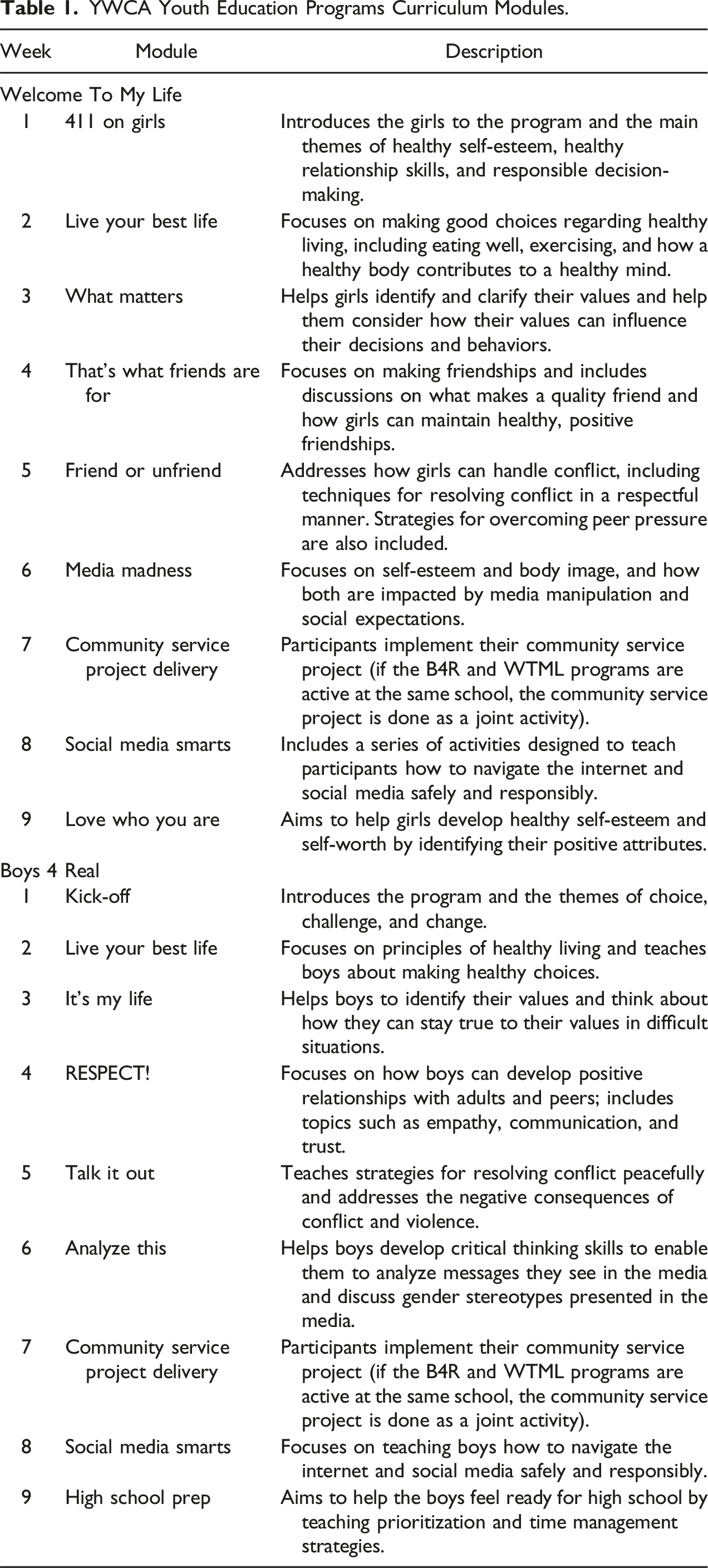
Altogether, the YEP aims to promote the development of participants’ skills and knowledge required for developing a stronger sense of self, healthier friendships and peer relationships, and better decision-making skills. YEP youth participate in group mentoring sessions that encourage them to talk about personal struggles and engage in activities that promote positive social interactions and meaningful peer relationships (Kuperminc et al., 2020). YEP also offers program lessons on how to develop better relationships with oneself and others. By participating in these sessions, it is intended that YEP youth form healthier relationships, including friendships. In particular, the program’s lessons on personal values (module 3), handling conflict with peers (module 5), and healthy/positive friendships (module 4) seek to equip YEP participants with the knowledge and skills needed to exercise boundaries with their peers, understand their personal values, and ultimately build better, healthier, and more supportive relationships with their peers.
Procedure
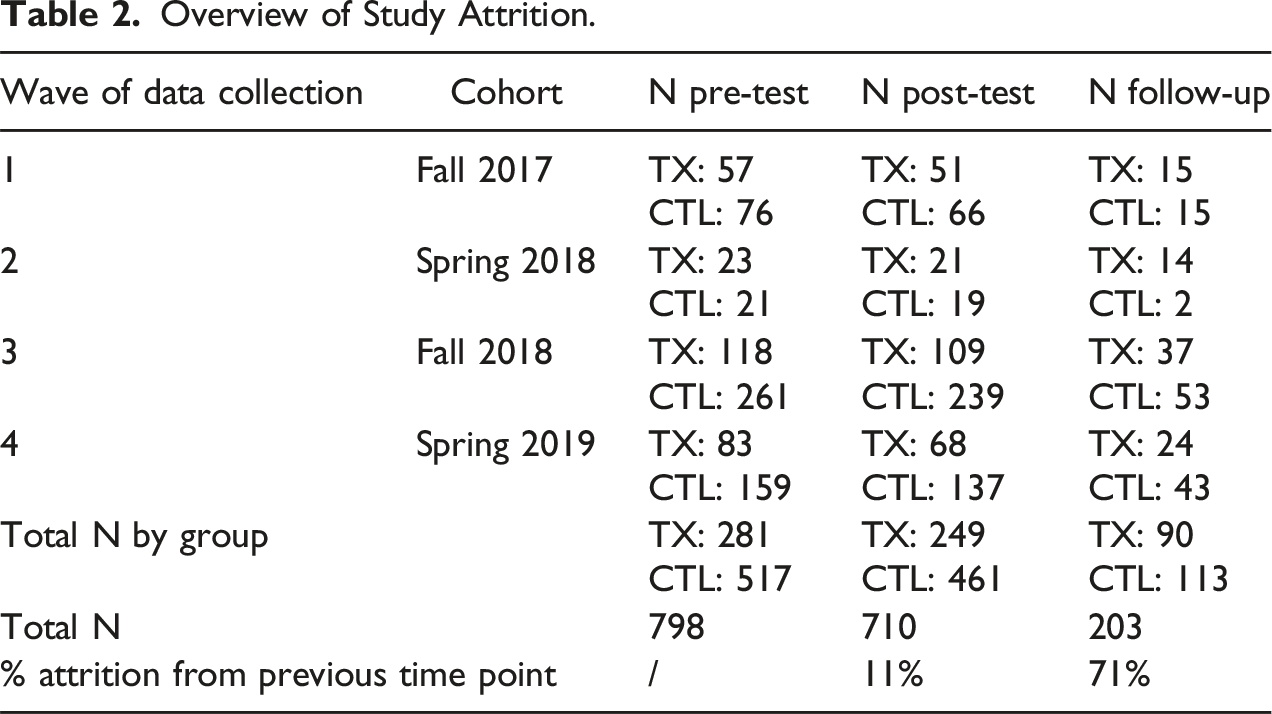
Overview of Study Attrition.
Study participants (TX and CTL) were grade 7 youth from the 31 schools that offered the YWCA YEP between Fall 2017 and Spring 2019. See Table A1 in the Appendix for the survey administration schedule. All students were sent home with an information package and parent consent form and were required to return a signed parental consent form to participate in the study. Teachers from participating classes were responsible for collecting signed parental consent forms, which were collected by the research team before administration of the pre-test survey.
As shown in Table 2, the study included three surveys. All three surveys included the same set of open- and closed-ended questions, except for the demographic/background information (Survey 1 only) and program satisfaction questions (Survey 2 only). The survey questions asked students about various aspects of their school experience, such as their friendships, self-esteem/self-concept, fears/concerns about high school, and school connectedness. Survey 1 (grade 7 pre-test) and Survey 2 (grade 7 post-test) were administered during class time. Each time, a trained research assistant read aloud a standardized explanation of the study and provided instructions on how to properly fill out the survey. The surveys required approximately 20–30 minutes each to complete; following both surveys, a random draw was held in each classroom in which participants had the chance to win one of two $20 Amazon gift cards. Survey 3 (grade 8 follow-up) was administered online, and participants were contacted by both mail and e-mail (if the latter was available) six months following their transition to high school. All participants who completed Survey 3 were given a $10 e-gift card.
Permission to conduct the study was obtained from the YWCA YEP, and permission to administer the survey was received from the Superintendents of the participating school districts. Ethics approval was received from the Simon Fraser University Office of Research Ethics.
Characteristics of the Analytic Sample
Sample Characteristics.
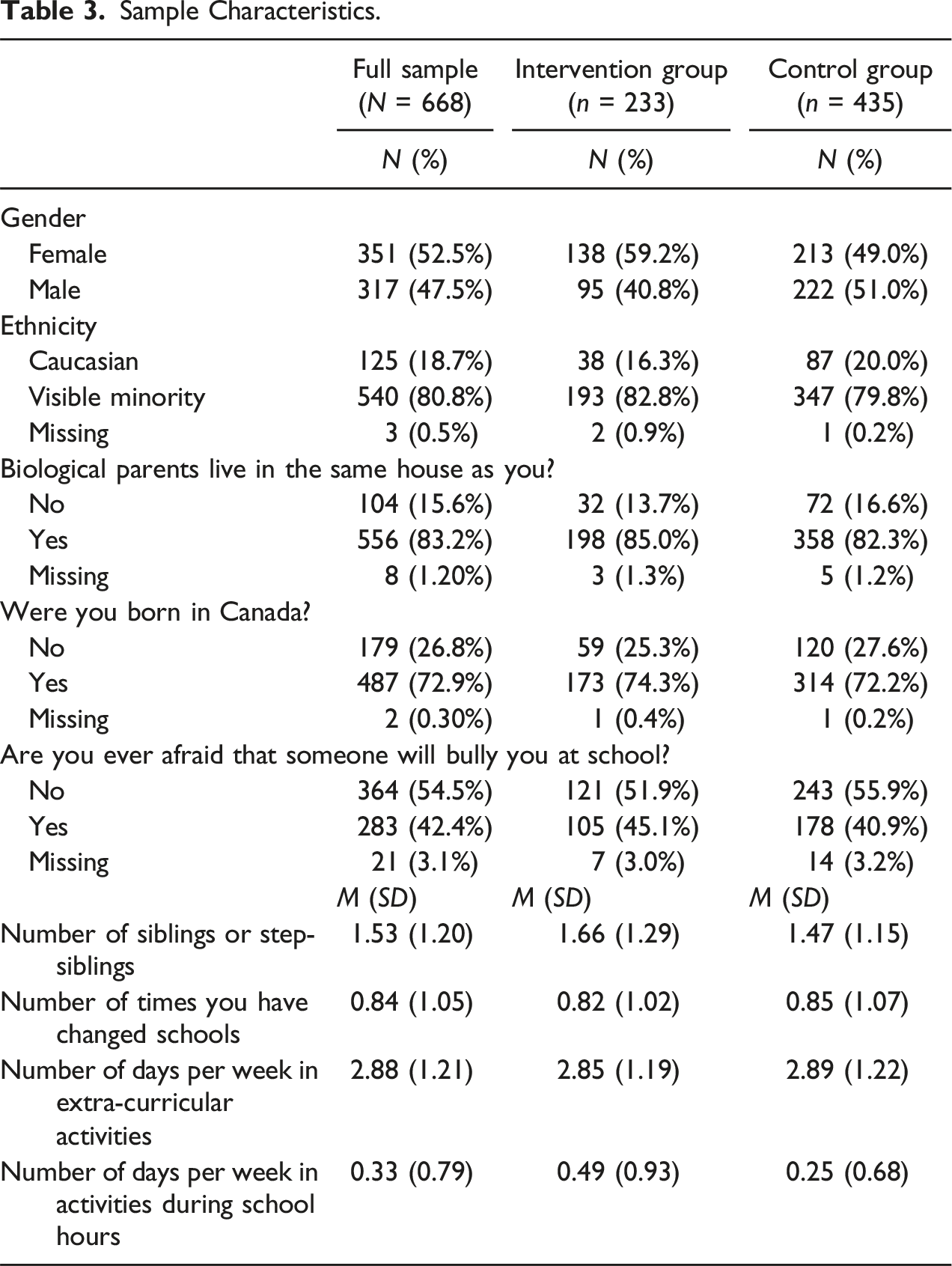
Of the 668 students in the analytic sample, 233 participated in the YWCA YEP (treatment (TX) group) and 435 students were in the control group (CTL). Most of the study sample was female (53%), identified as a visible ethnic minority (81%) and was born in Canada (73%). On average students had one or two siblings or step-siblings (M = 1.53, SD = 1.20) and reported that both of their biological parents lived in the same house (i.e., were married/common law; 83%). In terms of the school setting, the majority of students had changed schools one time (M = 0.84; SD = 1.05). Nearly one-half of the sample said they were afraid that someone at school would bully them (42%). With respect to organized activities, the sample seldom participated in school-based activities during school hours (M = 0.33; SD = 0.79) but participated in extra-curricular activities 2–3 times per week (M = 2.88; SD = 1.21). After weighting by propensity scores, all baseline differences between the TX and CTL groups were less than 0.10 standardized differences 6 , which suggests negligible imbalance on demographic variables between the TX and CTL group (Rubin, 2001; Stuart, 2010). 7
Measures
Dependent Variable
Perceptions of Friend Support
The School Success Profile (SSP; Bowen & Richman, 2007) is a validated questionnaire for middle and high school students that is used to assess student attitudes and beliefs about their social environment. The Friend Support scale of the SSP contains five items about the perception of friends as “trustworthy and supportive and as responsive to their needs and feelings” (Bowen & Richman, 2007, p. 10). The scale items include: (a) I can trust my friends, (b) I am able to tell my problems to my friends, (c) I feel close to my friends, (d) I can count on my friends for support, and (e) I can talk to my friends about things that bother me. Students are asked to describe the level of trust and closeness they feel toward their peers on a three-point Likert-type scale (i.e., 1 = not like me, 2 = a little like me, 3 = a lot like me). Scores are summed across the five items, with high scores indicating a greater perception of supportive friendships. In the current study, scale scores ranged from a minimum of 5 to a maximum of 15 and Cronbach’s alphas ranged between 0.80 and 0.86 across the pre-test, post-test and follow-up. 8 In the current study, the dependent variable is set as a time series/time varying variable (Allison, 2017). As a time series variable, the dependent variable’s association with past values (e.g., the pre-test score) is accounted for in the model without adjusting for it in the model (i.e., including it as a covariate).
Independent Variables
YEP Involvement
Those who took part in the YEP (the TX group) were assigned a code of 1, and youth who did not participate in the program (the CTL group) were coded as 0.
Participant Gender
Participants were coded according to their self-reported gender (female = 1; male = 2). As only one student in the analytic sample identified as a gender other than male or female, they were not included in the analyses.
Time
Short-term outcomes assessed change in adolescents’ perceptions of friend support from pre-test (Time 1) to post-test (Time 2). In the short-term analyses, time was specified as a discrete variable. For long-term outcomes, change in the outcome was examined over three time points (Time 1 = pre-test, Time 2 = post-test, Time 3 = follow-up), and time was specified as a continuous variable to account for the unevenly spaced time periods.
Control Variables
Program Session
The YEP was implemented in schools in both the Spring and the Fall, students who participated in the YEP in the Fall were coded as 1 and students who participated in the YEP in the Spring were coded as 2.
Freedom From Anxiety
A 14-item scale (from the Piers-Harris Self-Concept Scale for Children 2 (PH2; Piers & Herzberg, 2002)) asked students to reflect on variety of specific emotions, including worry, nervousness, shyness, sadness, fear, and a general feeling of being left out of things. The dichotomized responses to each item (0 = no, 1 = yes) were summed to create an index score ranging from zero to 14. Higher scores indicate more freedom from anxiety (low feelings of anxiousness). Prior studies report good reliability (Guerin & Tatlow-Golden, 2019; Piers & Herzberg, 2002). The Cronbach’s alpha in the present study was assessed as 0.822. Anxiety was controlled for as it has been associated with peer rejection (Verduin & Kendall, 2008), fewer friends, and decreased popularity, peer acceptance, and social competence (Kingery et al., 2010; Scharfstein et al., 2011).
Analytic Approach
Data entry and coding were completed in Microsoft Excel and exported into Stata. All analyses were conducted using Stata/SE 17.0.
Missing Data Analysis and Imputation
Missing values on the validated multi-item scales was a concern, as item-nonresponse led to undercounted scale scores. Various descriptive procedures were used to investigate the amount of missingness in the dataset. 9 Overall, the level of non-response in the multi-item scales was low; the amount of missing data on each of the scales ranged between 0% and 5%. While complete case analysis was considered (Harrell, 2001), we opted to impute missing values for the multi-item scales to preserve the sample size. Little’s test of missing completely at random (MCAR) was conducted on the full dataset and the missing data points were determined to be MCAR.
Imputing Missing Scale Items
Although rigorous imputation methods (e.g., multiple imputation) are typically recommended, Harrell (2001) suggests that single imputation is a viable option when the proportion of missing data is less than 5%. Prior to calculating total scores for the validated measures, items with missing values were imputed through random hotdeck procedures (Schonlau, 2006). 10 In hotdecking, observations with missing data (recipients) are matched to similar observations that have no missing values (donors). This is achieved by selecting categorical variables that are known for both recipient and donor (e.g., demographic characteristics) as class variables, and creating a ‘donor pool’ of exact matches on the selected class variables (Andridge & Little, 2010; Lavrakas, 2008). A donor is then randomly selected from the donor pool and imputation is carried out whereby the recipient’s missing values are replaced with the selected donor’s observed values (Lavrakas, 2008). 11 The imputation of missing values was approached cautiously, and we opted to impute for a respondent only in cases where an observation was missing ≤ 30% of a scale’s items. 12
Propensity Score Analysis
In the absence of random assignment, selection bias is a threat to the internal validity of observational studies because the comparison of TX and CTL group (and subsequent claims about causal inference) are complicated by selection effects (Craig, 2020). In the current study, youth voluntarily opt to participate in the YEP, leading to potential selection bias. Propensity score analysis (PSA) is a statistical analysis technique for non-experimental data that is used to estimate the effect of a treatment while reducing selection bias (Rosenbaum & Rubin, 1983). The goal of PSA is to balance the TX and CTL group on a set of observable variables that are thought to impact selection bias so that causal inference can be made with more certainty (Rosenbaum & Rubin, 1983). PSA entails the use of a propensity score, which is “the conditional probability of assignment to a particular treatment given a vector of observed covariates” (Rosenbaum & Rubin, 1983, p. 41). In other words, it is the predicted probability of group membership to either the TX or CTL group based on a respondent’s observed covariates such as demographic variables or other baseline characteristics (Baser, 2006). While a variety of techniques can be used to estimate propensity scores (see Austin, 2009; Stuart, 2010), the most commonly used approach is logistic regression (Austin, 2009). When logistic regression is used to estimate propensity scores, a binary outcome (e.g., intervention (TX = 1) or no intervention (CTL = 0)) is predicted from a set of covariates that are theorized to influence group membership (Craig, 2020). The resulting propensity score is the estimated probability that an individual will be exposed to the treatment. Propensity scores range between zero and 1; scores closer to 1 indicate a higher probability of being in the treatment group. 13
In the current study, propensity score weighting was used to rule out any systematic pre-treatment differences between the TX and CTL groups. By weighing each individual by the inverse of their probability of receiving treatment, systematic differences in observed baseline covariates were reduced between the groups (see Table 3). We calculated inverse probability weights (IPW) for each participant. For the TX group, IPWs were calculated as 1/e (where e is the estimated propensity score) and as 1/(1−e) for the CTL group (Lunceford & Davidian, 2004). IPWs were truncated at the 1st and 99th percentile in order to trim weights at the extreme ends of the distribution (Chesenaye et al., 2022). To assess the comparability of youth in the TX and CTL groups after weighting, we tested balance diagnostics by comparing the standardized mean differences of covariates before and after weighting (Austin, 2009; Stuart, 2010). A visual examination of box plots and kernel density plots was also conducted to compare the distributions of continuous variables before and after weighting (Austin & Stuart, 2015; Chesenaye et al., 2022). Variables were deemed well-balanced if they had an SMD ≤ 0.10, which is conventionally considered a ‘negligible’ amount of imbalance (Rubin, 2001; Stuart, 2010). Variables that had an SMD > 0.10 after weighting were included in the models as covariates (described below).
Multilevel Modelling
Multilevel data structures, in which units of analysis are clustered within one another, are common in longitudinal school-based research (e.g., data are collected from students within schools and/or over multiple points in time; Peugh, 2010). Statistically, the clustered structure of multilevel data is problematic because it violates the assumption of independent errors; an assumption that is crucial in common data analysis models such as ordinary least squares regression and analysis of variance (Steenbergen & Jones, 2002). Ignoring the correlation between errors can result in smaller standard errors and an increased probability of Type 1 errors; both of which may result in inaccurate conclusions about treatment effects (Hair & Favero, 2019; Steenbergen & Jones, 2002). Multilevel modelling (MLM) is a regression-based approach used to model the relationship between dependent and independent variables while accounting for the correlated nature of the data. In the current study, change in the outcome measure was evaluated through three-level multilevel regression models. Specifically, the models were used to account for correlated residuals across time points (Level 1). Additionally, because students completed multiple surveys (and students’ pre-test responses are likely to be correlated with their responses at subsequent time points), the clustering of repeated measures within each student was accounted for in Level 2. Finally, the clustering of students within schools was accounted for in Level 3. Accounting for clustering at the school level is important because, for example, due to school-level factors, such as teachers, school climate, similar classmates, etc., students’ responses in School A are likely to be more similar than students’ responses at School B and School C. If this clustering is not accounted for at various levels of the model, the correlation of data points will not be captured, and the model estimates will not be accurate. An unstructured correlation structure was used to model the short-term outcomes and a first-order autoregression correlation structure was used to model the long-term outcomes (which includes three time points (pre-test, post-test, and follow-up)).
Additionally, a ‘doubly robust’ approach was used to estimate treatment effects, where IPWs were included in the MLMs to reduce systematic baseline differences between the TX and CTL groups and additional covariate adjustment was used if residual imbalance remained following propensity score weighting (Bang & Robins, 2005; Hullsiek & Louis, 2002; Nguyen et al., 2017). Two variables (‘program session’ and ‘Freedom from Anxiety’) had an SMD > 0.10 and were included in the models as covariates. Before implementing the MLM regressions, all model assumptions were checked and satisfied.
Results
Descriptive Results
Friend Support Scale Descriptive Statistics.
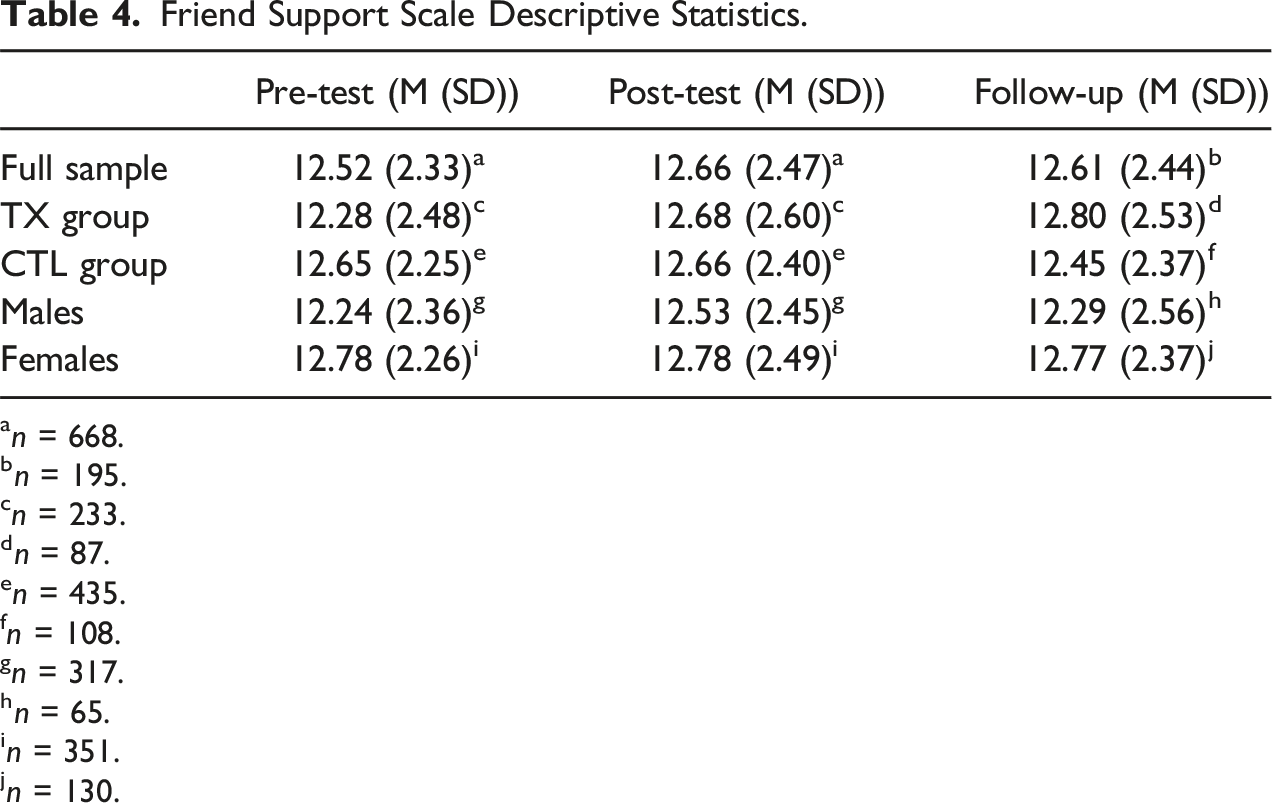
an = 668.
bn = 195.
cn = 233.
dn = 87.
en = 435.
fn = 108.
gn = 317.
hn = 65.
in = 351.
jn = 130.
Short-Term Impact
An MLM was used to examine students’ perceptions of friend support in elementary school, as well as the short-term impact of the YEP on students’ perceptions of friend support (i.e., pre-test to post-test). No significant main effects were found for YEP involvement (B = −0.316, z = −1.34, p = .18) or time (B = −0.190, z = −1.13, p = .26). These findings indicate that the TX group did not differ from the CTL group at baseline (pre-test) with respect to perceived friend support, and youths’ perceptions of friend support did not meaningfully differ from pre-test to post-test. Interestingly, male participants reported significantly lower levels of friend support compared to their female counterparts, indicating a gender difference in the perception of friend support (B = −0.570, z = −2.45, p < .05).
Multilevel Regression for Short-Term Outcomes (N = 668).
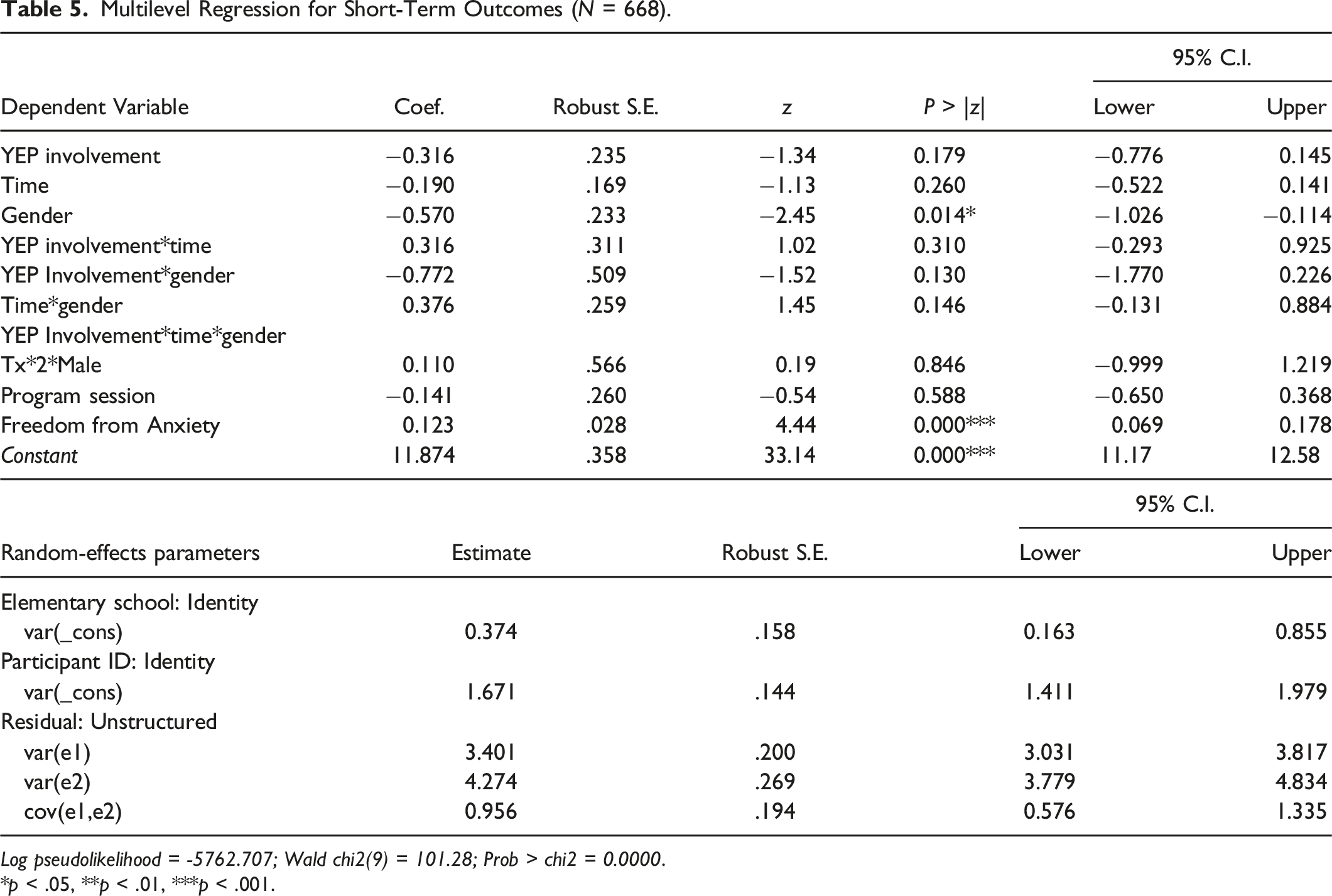
Log pseudolikelihood = -5762.707; Wald chi2(9) = 101.28; Prob > chi2 = 0.0000.
*p < .05, **p < .01, ***p < .001.
Long-Term Impact
Multilevel Regression for Long-Term Outcomes (N = 195).
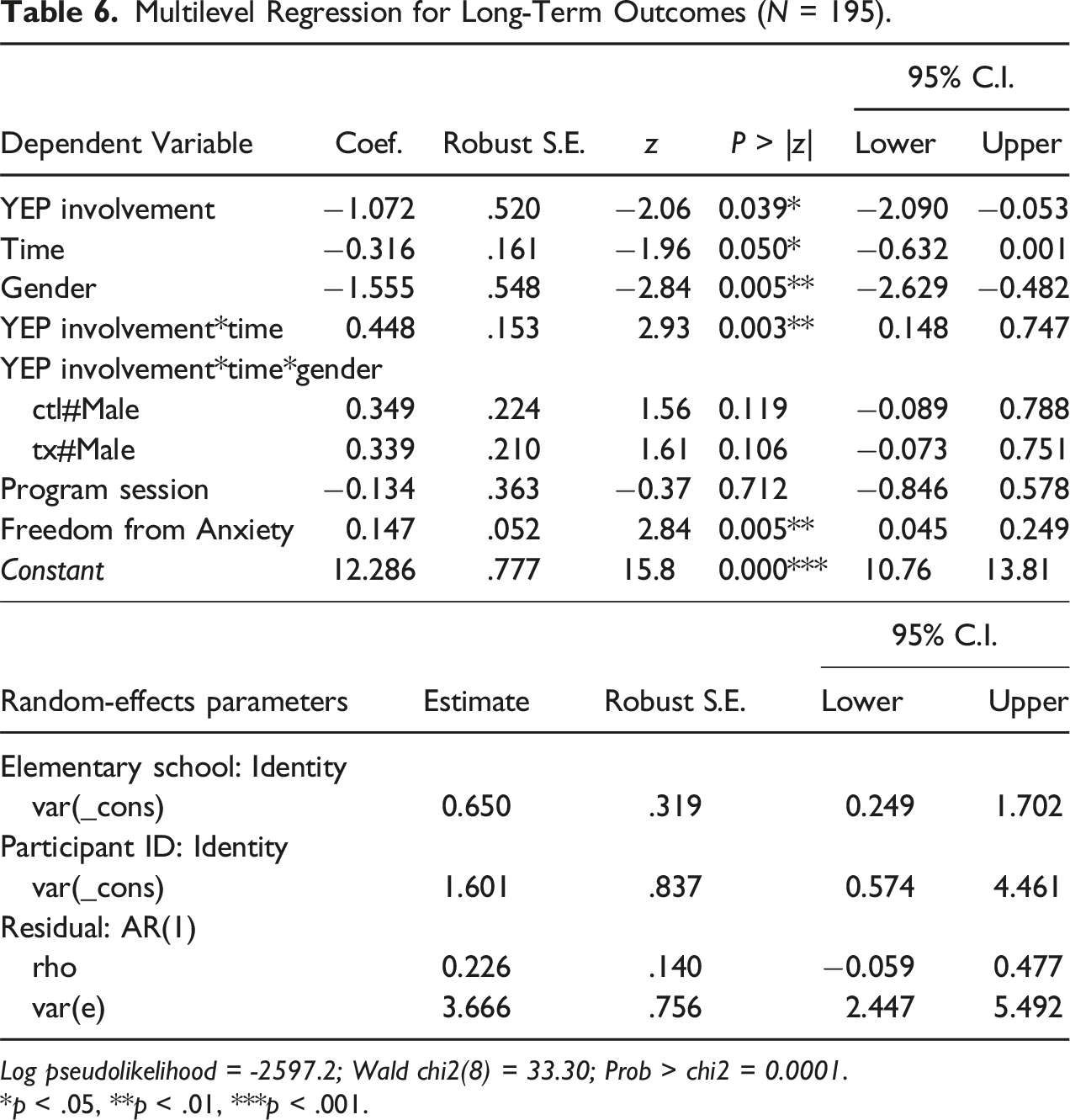
Log pseudolikelihood = -2597.2; Wald chi2(8) = 33.30; Prob > chi2 = 0.0001.
*p < .05, **p < .01, ***p < .001.
There was also a significant two-way interaction between YEP involvement and time (B = 0.448, z = 2.93, p < .01), indicating that YEP participants experienced a significant increase in the perception of friend support over time, compared to their counterparts in the CTL group. This finding is particularly noteworthy as it emphasizes the positive influence of YEP involvement on adolescents’ perceptions of friend support as they transition from 7th grade to high school. The analysis did not show any other significant interaction effects. The findings indicate that higher freedom of anxiety (low feelings of anxiousness) is associated with higher perception of friend support (p < .01). Similar to the short-term findings, the random-effects parameters suggest that there is no variation at the primary school level above and beyond what is already controlled for in the model.
Discussion
The current study aimed to assess the impact of the YEP afterschool group mentoring programs on adolescents’ perceptions of friend support. In addition, we assessed whether the impact of the YEP differs for males and females. The findings indicate that grade 7 students who participated in the YEP had significantly higher perceptions of friend support in the long term compared to those who did not participate (i.e., positive and statistically significant two-way interactions between YEP involvement and time). However, this effect was only observed in the long term (after transitioning to high school), not the short term (immediately after the program). Program effects did not vary by gender (i.e., in the TX group, there was no significant difference in perceptions of peer support between B4R and WTML participants), indicating that the YEP is equally effective at fostering perceptions of supportive friendships for both males and females. Altogether, the results of this study show beneficial effects on friendships/social skills for group mentoring programs delivered in an after-school setting.
The lack of program effects with respect to perceived friend support in the shorter term compared with the promising effects shown for friend support in the longer term were somewhat unexpected. Yet, given the YEP’s overarching goal to improve the high school transition process, these findings are encouraging. It may be that students are better able to apply the skills and knowledge learned with respect to healthy friendships in the new, unfamiliar high school setting than they are when confined to the environment of their existing grade 7 class. More specifically, as the group mentoring sessions specifically encourage the acquisition of skills to promote positive social interactions and enhance meaningful relationships with peers, students may find these skills easier to apply when meeting and interacting with new peers rather than when interacting with existing peers with whom they have relationships established prior to joining the YEP. For example, in examining the curriculum content, sessions 3, 4, and 5 focus on consideration of personal values, making and maintaining positive friendships, and learning how to handle and resolve conflict in a respectful/peaceful manner. During the adolescent years and the transition to high school, personal values become more important. Making new friends and forming friendships is a significant part of the high school experience. Students may be more likely to apply the YEP curriculum when it directly relates to their own experiences.
Although gender was not a significant predictor of the program’s impact, both regression models showed that gender had a main effect on students’ perception of friend support. Specifically, males in the full sample reported significantly lower perceptions of friend support compared to females, both at the end of grade 7 and six months after transitioning to high school. This finding is not altogether surprising, as some research has found that across the period of adolescence (but particularly in early adolescence) males perceive less support in their close friendships and report lower quality friendships than females (Davis, 2019; de Goede et al., 2009; Floody et al., 2019; Way, 2013; Way & Greene, 2006). Nevertheless, this finding is important because studies have indicated that developing and maintaining strong social connections during high school can have a significant positive impact on an individual’s overall emotional and social well-being (e.g., Benner et al., 2017; Morin et al., 2013). Furthermore, a stable network of friends is linked to better academic outcomes, including higher levels of engagement, achievement, and a lower probability of dropping out (e.g., Benner et al., 2017; Carbonaro & Workman, 2013). The possibility that males may experience more difficulties adapting to changes in their social circles around the transition to high school is worth considering. Challenges with adapting to social changes in high school could potentially result in more negative consequences, which can have a long-lasting impact on their high school experience (e.g., Benner et al., 2017; Felmlee et al., 2018). Together, these findings underscore the need for greater attention on the social well-being of high school students, particularly males, and the importance of developing strategies to help them adapt to changes in their social networks.
Overall, the results of this study enhance our understand of youth development by providing empirical evidence for gender differences and social outcomes such as perceptions of friend support. The findings indicate notable differences in how grade 7 males and females perceive friend support, emphasizing the importance of addressing the unique needs of these genders to promote supportive friendships and foster the development of knowledge and skills with respect to healthy relationships. The study supports previous research that highlights the crucial role of individual differences and contextual factors in effective mentoring practices (e.g., Liang et al., 2013). Specifically, it suggests that gender should be considered when developing strategies to promote friend support. Additionally, the study’s findings could help to inform school policies or programs that aim to improve friend support among students.
Altogether, the current study suggests that group mentoring programs in the afterschool setting, like WTML and B4R, have the potential to help youth strengthen their friendships in the longer term (see also Cawood & Wood, 2014; Kuperminc, 2016). These findings add to research on similar programs which suggest their effectiveness at supporting youth social development by promoting social and emotional learning and enhancing interpersonal skills (Durlak et al., 2010, 2011; Himmelrich, 2012; Pelcher & Rajan, 2016). This research contributes to the limited body of methodologically rigorous and longitudinal evaluations on group-based mentoring for adolescents and fills an important gap in the literature by examining group-level gender differences in youth outcomes throughout the transition to high school.
Overall, more empirical research is required to develop effective interventions that help youths transition successfully to high school (Bharara, 2020; Donaldson et al., 2023). Further, more research is needed with respect to the specific components of group mentoring programs that are linked to successful youth outcomes (e.g., program content, group format, quality or quantity of mentors). Future research should continue to examine how gender affects social outcomes during the transition to high school. Future research should also compare the effects of gender-tailored and non-gender tailored group mentoring programs to determine which approach has more beneficial outcomes for males and females. There is also a greater need for rigorous longitudinal research that follows youth for an extended period before and after the transition to high school.
Limitations
The results indicating the long-term positive impact of YEP should be interpreted with caution due to the disproportionate representation of girls in the sample. Additionally, it is noteworthy that at each time point, girls reported more friendship support than boys. This raises questions about whether the observed effects were truly due to the YEP or if they were influenced by the over-representation of girls in the long-term sample. Relatedly, another limitation of the study’s data is the high rate of non-response on the follow-up survey and the potential influence of attrition bias on the findings regarding the long-term program impact. Comparison analyses showed some significant differences in the characteristics of those who completed the follow-up survey and those who did not (i.e., gender, family structure, number of siblings, participation in extra-curricular activities, and participation in school-based activities). As participants in the follow-up assessment were more engaged in school-based and extracurricular activities, this may have influenced their reported levels of friendship support. Further bias may have occurred if participants who completed the follow-up survey were systematically different on unobserved characteristics than those who did not. For example, if youth who were struggling with adjusting to the transition to high school were less likely to complete the follow-up survey than those who were adjusting well, attrition may skew the representativeness of the sample and subsequently skew the validity of the long-term program impacts. Due to the attrition at follow-up, the findings concerning long-term program impacts should be considered preliminary and be interpreted with caution.
Second, although the YEPs are gender-based programs and WTML typically targets females while B4R typically targets males, it is important to note that youth can choose which program to enroll in based on their gender identity. As only one student in the analytic sample identified as a gender other than male or female, it was not possible to include an analysis of the group of students who did not identify as either male or female and the findings presented herein may not be generalizable to youth of all genders. Research has consistently found that non-binary and gender minority youths face higher risks of experiencing challenges with social adjustment, academic achievement, and mental well-being in school settings (e.g., Colvin et al., 2019; Durbeej et al., 2019; Kelley et al., 2022; Kosciw et al., 2018). As such, future research on the effectiveness of high school transition programs, it is important to include analyses of the experiences of sexual/gender minority youths, if possible. Relatedly, a limitation of the current design is that it did not consider the intersecting identities of its participants. Recent large scale examinations have affirmed intersectionality’s relevance in predicting youths’ general wellbeing, mental health, and vulnerability to global crises (Gottert et al., 2023; Kern et al., 2020; McIsaac et al., 2021). While there is limited evidence of its direct impact on peer relationships, there is some; for example, Exner‐Cortens and colleagues (2022) suggest that the gender and ethnic minority status of teenage males can intersect to amplify hegemonic masculinity, disproportionately negatively impacting their formation of close friendships in the transition to high school.
Next, MLMs were used to account for the clustered structure of the data. However, the school-level results of the model were not extensively examined or discussed in the paper (i.e., the research questions were not focused on how the dependent variable varied at the school-level). Since the YEP is offered across multiple schools, the success of the programs may be dependent on school-level factors, such as the amount of time teachers spend preparing their students for high school, talking about peer relationships, and so forth. Similarly, because each YEP is delivered by a different set of program facilitators, the success of the programs may be influenced by program-level factors such as the differential quality and experience of mentors. Additionally, it is possible that the program’s curriculum is implemented differently across schools (e.g., spending more time on one activity and running out of time to finish others). Low implementation fidelity, weak mentoring skills, and/or differences in the environment of each school might influence the effectiveness of the YEP on youth outcomes. The impact of these factors on program outcomes should be examined in future studies.
Finally, it is important to note that the study has an additional constraint as it remains unclear which specific friends the participants referred to while responding to the SSP Friend Support Scale (e.g., school friends, neighbourhood/non-school friends, YEP friends, friends in other extra-curricular activities). This could introduce some ambiguity into the findings, as different individuals may have different ideas of what constitutes a “friend” and what level of support they provide. To address this limitation, we recommend that future research include mechanisms that help with identifying the members of the respondents’ friendship network. For example, it may be useful to explore whether the YEP reinforces adolescent’s social circle among YEP participants and/or other friends in their social network. Gaining a deeper understanding of the specific friendships networks that the YEP helps to strengthen would be beneficial. Further understanding which friendship networks the YEP does not help to strengthen would provide an opportunity for the program to incorporate new content that could strengthen their outcomes with respect to friendships.
Conclusion
Research has shown that adolescents face many difficulties when transitioning to high school, especially in regard to their social lives and forming healthy relationships with friends. The negative effects of this experience can be long-lasting, highlighting the importance of providing support to adolescents during this time. The findings from this study indicate that group-based mentoring programs implemented in an afterschool setting show promise at improving adolescents’ perceptions of their friendships following the transition to high school. Significant gaps remain before evidence-informed lessons can be drawn about what works for group-based mentoring programs for youth and their friendships, particularly with respect to how program impacts differ for males and females. Future research should continue to explore the moderating impact of gender on social outcomes throughout adolescence (particularly during the transition to high school), as well as the effects of gender-tailored group mentoring programs.
Footnotes
Declaration of Conflicting Interests
The author(s) declared no potential conflicts of interest with respect to the research, authorship, and/or publication of this article.
Funding
The author(s) received no financial support for the research, authorship, and/or publication of this article.
