




Abstract
Adolescents’ peer interactions strongly influence their school behavior, raising the question of whether parents can still direct adolescents’ friendship choices or whether they are mostly on the sidelines. Chinese cultural values emphasize the importance of having “good” friends, raising questions about adolescents’ adherence to parental direction of friendships. This study examined friendship dynamics among seventh and eighth graders in central China (n = 1,454, 46.7% girls), focusing on achievement, aggression, and prosocial behavior. Social network analysis revealed that Chinese students tended to select friends who were more similar to them in achievement, aggression, and prosocial behavior. Interestingly, they avoided aggressive peers but were attracted to high-achieving and prosocial peers. Despite parental emphasis on friendship quality, the study found no parental direction in adolescent friendship selection. These findings underscore the central role of peer characteristics in friendship dynamics, while highlighting the limited impact of parental directing on Chinese adolescents’ friendship selection.
Adolescents’ future academic and job prospects are closely linked to school success: adolescents who have high academic achievement, are prosocial, and refrain from aggression may be more successful at school than those who have low achievement and show aggressive rather than prosocial behavior (Gest et al., 2006). While adults - like parents and teachers - may desire that adolescents display appropriate academic and social behaviors, adolescents are often preoccupied with something completely else: their peer relationships (Pellegrini & Long, 2002). With the onset of puberty, adolescents increasingly value peer affiliations and status within their peer group, often leading them to make behavioral decisions to conform to the actions of their peers (Rambaran et al., 2017; Shin, 2017).
Adolescent friendships are pivotal for everyday life and school adjustment. Research demonstrates that adolescents resemble their friends not only in positive attributes, such as achievement and prosocial behavior, but also in negative aspects, including aggression (Veenstra & Laninga-Wijnen, 2023). These similarities may result from both friendship selection and influence processes: adolescents tend to select friends with similar behaviors (selection processes), and over time, they become more similar to their friends through influence processes (Veenstra et al., 2013). Yet, there are two gaps in the previous studies. First, it is unclear whether parents - who may desire their children to hang out with those who are well-adjusted at school - play any role in adolescents’ friendship selection processes. A few previous studies have examined the role of parents’ directional practices (i.e., encouraging or discouraging certain friendships) in adolescents’ selection of delinquent or deviant friends (Tilton-Weaver et al., 2013). These studies suggest that parents can direct adolescent friendship selection, but that overly high levels of directing may be detrimental, turning forbidden friends into forbidden fruit. To date, it is unknown whether parental directing plays a role in friendship selection related to academic and social behaviors in school.
Second, research on friendship dynamics related to positive (e.g., achievement and prosocial behavior) and negative school behaviors (e.g., aggression) has predominantly focused on Western contexts, with limited exploration in the Asian context. Although Western countries also emphasize the promotion of achievement and prosocial behavior while discouraging aggression, this is particularly true in China, where a high level of education is essential to secure employment opportunities given the large population and fierce competition in the labor market (Qin et al., 2021). Promoting prosocial behavior and discouraging aggressive behavior are critical aspects of moral instruction in Chinese education, as emphasizing altruism and maintaining harmony are still highly valued in Chinese culture (Chen et al., 2000). Therefore, high achievement and prosocial behavior are praised and widely accepted, while low achievement is often labeled as “failure” and aggressive behavior is negatively evaluated and often strictly forbidden by parents and teachers (Chang, 2004). When it comes to adolescent friendships, Chinese parents prioritize making “good” friendships. These friendships are typically defined by good grades and good behavior, such as being prosocial and less aggressive (Zhao & Gao, 2014). Furthermore, while children’s obedience to parental authority is common in different sociocultural contexts, in the Chinese context, the importance of showing respect, compliance, and obedience to parents may be further reinforced by Confucian values (Wu & Tseng, 1985). Therefore, it is particularly interesting to examine friendship selection and influence in relation to school behavior in the Chinese context. Specifically, it is worth investigating whether Chinese adolescents follow their parents’ rules to select “good” friends.
Friendship Influence: Achievement, Aggression, and Prosocial Behavior
Friends are a powerful source of influence during adolescence. Social learning theory posits that behaviors are socialized through information exchange, modeling, and reinforcement (Bandura, 1977). Several social network studies in Western countries have found friendship influence on achievement (Fortuin et al., 2016; Gremmen et al., 2017), many types of aggression (Hsiao et al., 2019; Laninga-Wijnen et al., 2017; Sijtsema et al., 2010) and prosocial behavior (Laninga-Wijnen et al., 2020; Logis et al., 2013), with the exception for physical aggression and prosocial behavior among Chilean primary students (Dijkstra & Berger, 2018; Dijkstra et al., 2011). Yet, inconsistencies arise in studies concerning the direction and strength of friendship influence on achievement. For example, some studies found that high-achieving friends exerted greater influence to increase adolescents’ achievement (Gremmen et al., 2017; Rambaran et al., 2017), while others found that low-achieving friends had a stronger influence to decrease rather than increase one’s achievement (Stark et al., 2017). Moreover, only one study has examined the direction of friendship influence in aggression and prosocial behavior (Laninga-Wijnen et al., 2020), revealing varied influence from friends with high- or- low aggressive and prosocial behavior based on the importance of these behaviors for popularity in the classroom.
Most social network studies of friendship influence in achievement, aggression, and prosocial behavior were limited to Western countries. Only a few studies were published in Asia, with one on Korean adolescents (Shin, 2017) and one on Chinese adolescents in Taiwan (Hsiao et al., 2019) for aggression and prosocial behavior, and one on Mainland Chinese adolescents for aggression (Zhang et al., 2020) and another one for achievement (Shen & French, 2024). While most of these studies aligned with previous European and American findings, indicating a significant friendship influence on achievement, aggressive and prosocial behavior, Shin (2017) found no friendship influence on prosocial behavior. Furthermore, few of them examined the direction and strength of friendship influence. Only one study found that low-achieving friends had a slightly stronger influence to decrease one’s achievement among Chinese adolescents (Shen & French, 2024). These studies thus provide limited insight into the direction and strength of friendship influence in these contexts, which calls for more replication studies conducted in non-Western contexts on friendship influence related to aggression, prosocial behavior, and academic behavior. In the current study, based on social learning theory and based on most previous empirical studies, we expected adolescents to be influenced by their friends’ achievement, aggression, and prosocial behavior over time (Hypothesis H1: Peer influence). Due to limited evidence, no hypothesis was formulated relating to the direction of friendship influence in achievement, aggression, and prosocial behavior.
Friendship Selection: Achievement, Aggression, and Prosocial Behavior
Before any influence takes place, friendships should be formed. Adolescents engage in a process called selection when initially forming connections with others (Veenstra & Steglich, 2012). Social network research has identified two types of friendship selection: attractiveness-based and similarity-based. First, adolescents may select friends with highly valued traits, such as being highly prosocial, regardless of whether they possess these traits themselves. This process can be referred to as attractiveness-based friendship selection. Second, adolescents often seek friends who share similar characteristics because similarity fosters predictability, mutual understanding, and trust (Byrne, 1971). Both attractiveness-based and similarity-based friendship selections may occur simultaneously within peer networks. The overlap may be due to different tendencies among adolescents to select friends: some may prioritize attractive peers despite their own characteristics, while others may lean towards friends who share similar characteristics.
One important question is the extent to which attractiveness-based friendship selection occurs in the Chinese context. Studies from Asian countries have shown that high-achieving and prosocial adolescents are often chosen as friends (Hsiao et al., 2019; Shen & French, 2024; Shin, 2017; Shin & Ryan, 2014), while aggressive classmates are typically avoided (Logis et al., 2013; Shin, 2019; Zhang et al., 2020). However, research from Western samples revealed conflicting results: high-achieving adolescents receiving fewer friendship nominations (Gremmen et al., 2019) and highly aggressive individuals receiving more nominations (Rulison et al., 2013; Shin, 2017). These inconsistencies may be due to whether being high achieving or highly aggressive is universally attractive to adolescents. In Western cultures, adolescents may intentionally seek out friendships with those who do not conform to adult-imposed values, such as those who are low-achieving or highly aggressive. This tendency may be more prevalent among adolescents in Western cultures, where independence from and rebellion against authority can be seen as a way to close the “maturity gap” (Moffitt, 1993). For instance, high academic achievers might face social stigma as “nerds,” while aggression may be employed to gain popularity (Cillessen & Mayeux, 2004). Conversely, Chinese schools emphasize academic achievement and moral education, which values harmony and altruism by encouraging prosocial behavior and discouraging aggressive behaviors (Chen et al., 2000). As a result, high-achieving students may be assigned leadership roles and viewed more favorably by their peers (Li et al., 2012), making them more likely to be selected as friends (Shen & French, 2024). Furthermore, in China, prosocial and friendly behaviors are praised and widely accepted, whereas aggressive behavior is negatively evaluated and often strictly forbidden by parents and teachers (Chang, 2004). Therefore, Chinese adolescents might prioritize prosocial behavior over aggression and tend to select highly prosocial peers and avoid highly aggressive peers as friends (Cowell et al., 2017).
As for friendship selection based on similarity, previous studies show mixed results. Most previous studies show similarity-based selection in achievement (Shin & Ryan, 2014), aggression (Sijtsema et al., 2010; Zhang et al., 2020), and prosocial behavior (Hsiao et al., 2019; Laninga-Wijnen et al., 2020; Logis et al., 2013). However, others found no selection effect based on similarity in achievement (Fortuin et al., 2016), aggression (Dijkstra & Berger, 2018; Dijkstra et al., 2011; Hsiao et al., 2019; Logis et al., 2013), or prosocial behavior (Molano et al., 2013; Shin, 2017). Moreover, the findings pertaining to the direction and strength of friendship selection in achievement, aggression, and prosocial behavior are inconsistent. Some of social network analysis have found that low-achieving adolescents are more likely to select similarly low-achieving friends than high-achieving adolescents are to select similarly high-achieving peers (Gremmen et al., 2017; Rambaran et al., 2017), while others have found that high-achieving students are more likely to befriend similarly high-achieving peers (Shen & French, 2024; Stark et al., 2017). Furthermore, Laninga-Wijnen et al. (2019, 2020) found that the strength of friendship selection based on similarity in achievement, aggression, and prosocial behavior varied as a function of classroom norms for these behaviors.
Therefore, the second aim of our study is to examine friendship selection among Chinese adolescents, focusing on both similarity- and attractiveness-based selection, where attractiveness is determined by desirable attributes that the candidate friend exhibits. Given Asian Confucian values, we anticipated that Chinese students would be attracted to high-achieving, high-prosocial, and low-aggressive peers as friends (Hypothesis 2a: Attractiveness-based selection). Moreover, we expected that Chinese adolescents would select friends who are similar in their achievement, aggression, and prosocial behavior (Hypothesis 2b: Similarity-based selection). In the current study, similarity is defined as a correlational measure, representing that adolescents who are relatively high in a certain behavior will befriend peers who are also relatively higher in that certain behavior, or that adolescents who are relatively low in a certain behavior will befriend peers who are also relatively low in that certain behavior. Given the limited research in this area, we made no hypothesis relating to the direction of friendship selection in achievement, aggression, and prosocial behavior among Chinese adolescents.
Parental Directing of Adolescents’ Friendship Selection
Parental directing of friendships refers to parental efforts to manage young adolescents’ friendships by encouraging them to become friends with peers with more positive behaviors (e.g., high-achieving, prosocial) and discouraging them befriending peers with negative behaviors (e.g., deviant, aggressive peers; Mounts, 2008; Tu et al., 2014; 2017). Parental directing includes guidance, such as communication about the consequences of certain relationships, and prohibition, such as limitations placed on certain peer interactions (Mounts, 2002; Soenens et al., 2007).
Several previous studies have found parental directing of friendships to be associated with more positive peer affiliations and a decrease in friends’ deviant behavior over time (Tu et al., 2014, 2017). However, these studies did not consider the dynamic interplay between friendship selection and influence processes when examining the role of parental directing. One social network study using parental communication of disapproval of peers, - a concept closely related to parental directing - found that communicating disapproval increased the likelihood that middle adolescents selected delinquent peers as friends after controlling for peer influence (Tilton-Weaver et al., 2013). Another limitation is that most previous research has been conducted with Western samples, in which adolescents may perceive parental prohibitions and restrictions as intrusive and controlling. Instead, Chinese culture is influenced by Confucianism, in which children are expected to respect and obey adults or authority, especially their parents. This may mean that Chinese adolescents are more likely to be influenced by parental directing processes in selecting friends (Li, 2012). Furthermore, in the Chinese context, academic success is a primary avenue for upward mobility (Lan et al., 2019). Chinese parents may be particularly preoccupied with the social and academic school behaviors of their adolescents, and thus may be particularly concerned with directing friendships in this area. Chinese parents may also be particularly concerned about adolescents’ aggressive and prosocial behavior, given that maintaining social harmony is the primary concern in traditional and contemporary Chinese contexts. Chinese parents may thus employ various strategies to direct their adolescents’ friendships by encouraging adolescents to befriend high-achieving, prosocial peers and discouraging them from befriending aggressive peers. Finally, parents’ role in friendship selection related to academic and social behaviors at school may be particularly relevant given the sociostructural organization of schools in China. Chinese classrooms are very large, typically ranging from approximately 40 to 60 students. As a result, teachers may face challenges in providing adequate support and addressing their students’ personal or interpersonal concerns. Consequently, Chinese parents may step in and compensate by taking a more active interest in their children’s peer relationships and the potential positive or negative influence of peers. Based on this reasoning, we hypothesize that Chinese adolescents whose parents are high in directive practices would be more likely to select high-achieving and prosocial friends and less likely to befriend aggressive peers (Hypothesis 3: Parental directing of friendship selection).
The Current Study
Our study aims to examine the joint influence of parents and friends on the development of adolescent achievement, aggression, and prosocial behavior in the context of Chinese culture, using longitudinal social network analysis, which enables to capture of the co-evolution of networks and behaviors and enables researchers to disentangle the processes of selection and influence (Veenstra et al., 2013). For friendship influence, we expected that Chinese adolescents would be influenced by their friends’ achievement, aggression, and prosocial behavior (H1), and did not make specific hypotheses regarding the direction of friendship influence. For friendship selection, we expected that Chinese students with high achievement and prosocial behavior would be attractive as friends, whereas aggressive students would be unattractive as friends (H2a: Attractiveness-based selection). Furthermore, we expected that Chinese adolescents would select friends who were similar in achievement, aggression, and prosocial behavior (H2b: Similarity-based selection), and did not make specific hypotheses regarding the direction of friendship selection based on similarity. As for the moderating role of parental directing, we expected that Chinese adolescents with high parental directing would be more likely to select high-achieving and prosocial friends and less likely to befriend aggressive peers (H3).
In addition, we controlled for the effects of gender and subjective socioeconomic status (SES), as gender and SES may influence adolescents’ friendship selection and influence processes (McDermott et al., 2022). In additional analyses, we explored whether the effects differed between boarding schools and non-boarding students. Boarding schools are a policy to improve educational equity and provide an option for rural and urban Chinese students who experience a long commute to school (Tan & Bodovski, 2020). Many schools in China allow students to live at the school during the week and return home on weekends. Students in boarding schools may have different friendship patterns, and it may be more challenging for parents to manage their friendships than for students in non-boarding schools, given that boarding students spend a long time with peers and experience physical separation from parents on weekdays.
Method
Participants and Procedure
Participants were first-year students from 26 classrooms in four public middle schools in Mainland China. Three schools were located in rural areas, and one was in urban area. Some of the students at these schools stayed at school throughout the week, the so-called boarding students. Beginning in the seventh grade, all the students volunteered to participate in three waves of data collection, each taking place approximately six months after the previous one. Parents or legal caregivers provided informed consent, and students informed assent.
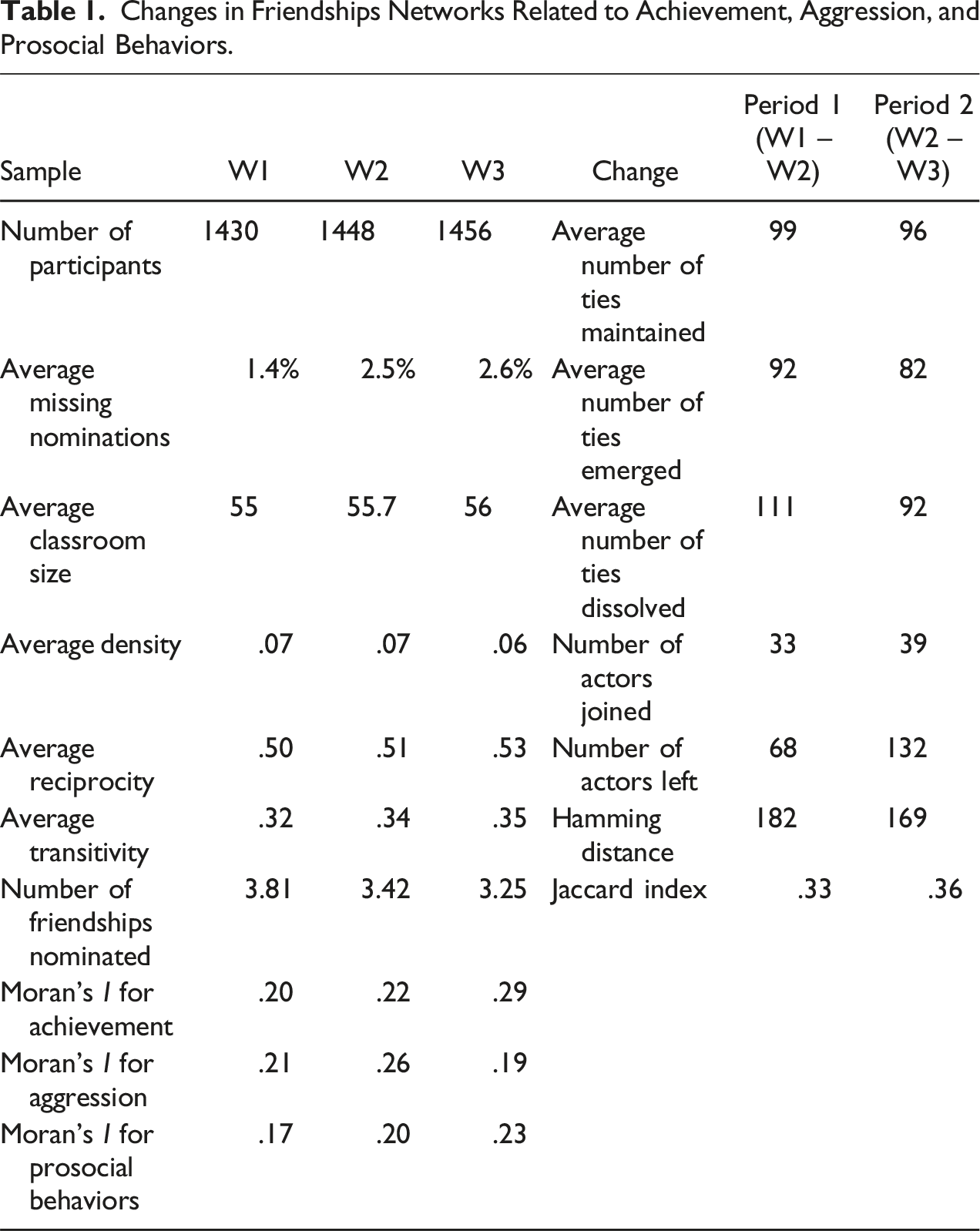
The study involved three waves of data collection: Wave 1 (W1) in the spring of seventh grade in 2015, Wave 2 (W2) in the fall of eighth grade, and Wave 3 (W3) in the spring of eighth grade. Initially, 1,416 students participated in W1. This number decreased to 1,396 students in W2 and further reduced to 1,338 students in W3. Approximately 20 students were missing in W1, 36 in W2, and 37 in W3, either due to incomplete responses or absence on the assessment day. Additionally, there were 68 students who left the study after W1 and 33 who joined at W2. At W3, 132 students left the study, and 39 students joined. In total, 1,454 students (47% girls, mean age at W1 = 13.45 years, SD = 0.68) participated in at least one of the three data collection points and were included in the data analysis.
Students filled in paper questionnaires during regular lessons in their classrooms under the supervision of trained undergraduate or postgraduate students. The classroom supervisor was also present and responsible for answering questions and ensuring students filled in the questionnaire peacefully without distracting each other.
Measures
Analytical Strategy
RSiena
Analyses were conducted using longitudinal social network analyses called stochastic actor-oriented models (SAOMs) implemented in RSiena (Simulation Investigation for Empirical Network Analysis software package in R, version 1.2–12 in R 3.5.1). The RSiena program enables us to estimate friendship selection and influence processes related to behavior simultaneously while controlling for structural network effects (e.g., transitivity; Ripley et al., 2023).
Model Specification for Friendship Influence Processes
We used the average alter effect to estimate friendship’s influence on achievement, aggression, and prosocial behavior (H1). To assess the direction of friendship influence on achievement, aggression, and prosocial behavior, we calculated ego-alter influence tables (Ripley et al., 2023), examining whether friends influenced adolescents to increase or decrease in achievement, aggression, and prosocial behavior over time.
Model Specification for Friendship Selection Processes
Three categories of parameters were estimated to capture friendship selection processes. First, ego (sender) effects capture the tendency for adolescents who score high on a behavior to nominate more friends. For example, achievement ego refers to whether high-achieving adolescents are more likely to give friendship nominations. Second, alter effects capture the tendency to choose friends who score high on a covariate (H2a; see Formula 74 on p. 150 of Ripley et al., 2023). For example, achievement alter refers to whether high-achieving adolescents are more likely to be selected as friends. Third, similarity effects captured the tendency of friendships to form between adolescents with similar characteristics on a covariate (H2b). We here call two students similar on a covariate when they differ in the same direction from the average student. This is operationalized by so-called ego × alter effects (see Formula 90 on p. 152 of Ripley et al., 2023). For example, the achievement ego × achievement alter effect assesses the degree to which adolescents with above (below) average achievement select friends who also achieve above (below) average. Next, to assess the direction of friendship selection, we calculated ego-alter selection tables (Ripley et al., 2023), examining whether similarity-based selection takes especially place among students with higher or lower achievement, aggression, and prosocial behavior.
As for the moderating effects, the ego× alter effects were also used to examine the interaction between parental directing and friendship selection (H3). For example, parental directing ego × achievement alter refers to whether adolescents who score above average on parental direction (i.e., with high-directing parents) are more likely to select high-achieving students as friends.
Rate of Change
For all four dependent variables (friendship, achievement, aggression and prosocial behavior), separate rate parameters were included to account for the frequency at which these variables changed over time. They express the expected number of occasions at which changes occur in a student’s friendship ties, achievement score, aggression, or prosocial behavior. The following effects express how these changes look like.
Control Effects
In the friendship part of the model, first, several structural dependencies between friendship ties were controlled: outdegree (density) as baseline tendency to have friends, reciprocity, transitive triplets, transitive reciprocated triplets, outdegree popularity, and outdegree activity, all based on findings of previous studies and goodness-of-fit considerations. Appendix 2 describes and explains all the parameters used in our models. For friendship selection, we included ego, alter, and ego × alter effects for parental directing, gender, and subjective SES. In the achievement, aggression, and prosocial behavior parts of the model, linear and quadratic shape parameters were included to express trend and feedback processes. For friendship influence, we controlled the effects of gender, subjective SES, and parental directing, as well as the effects of indegree (incoming friendship nominations) and outdegree (given friendship nominations) on the tendency to become, for example, more prosocial over time.
To examine the effects of boarding at school, we added the percentage of boarding students as a classroom variable in the model. Given that no significant effect of the percentage of boarding students on friendship selection in achievement, aggression, and prosocial behavior was found, we excluded it in our final model. The results on the effects of boarding students can be requested from the first author.
Meta-Analytic Procedure
The models described above were fitted independently to each classroom data set. The resulting parameter estimates were then aggregated using a meta-analytic procedure with the metafor package in R (Viechtbauer, 2010). Only networks for which parameter estimation converged were selected for the meta-analysis. The convergence criterion used for the analyses was an overall maximum convergence ratio of less than 0.25, and for all individual parameters, t-ratios for convergence of less than 0.1 in absolute value (Ripley et al., 2023). Networks that did not converge were excluded from the meta-analysis. There were 20 classes converged for achievement, 25 classes for aggression, and 22 classes for prosocial model.
Results
Descriptive Statistics
Changes in Friendships Networks Related to Achievement, Aggression, and Prosocial Behaviors.
Influence Effects on Achievement, Aggression, and Prosocial Behavior
Parental Directing on Adolescents’ Friendship Selection in Achievement, Aggression and Prosocial Behaviors.
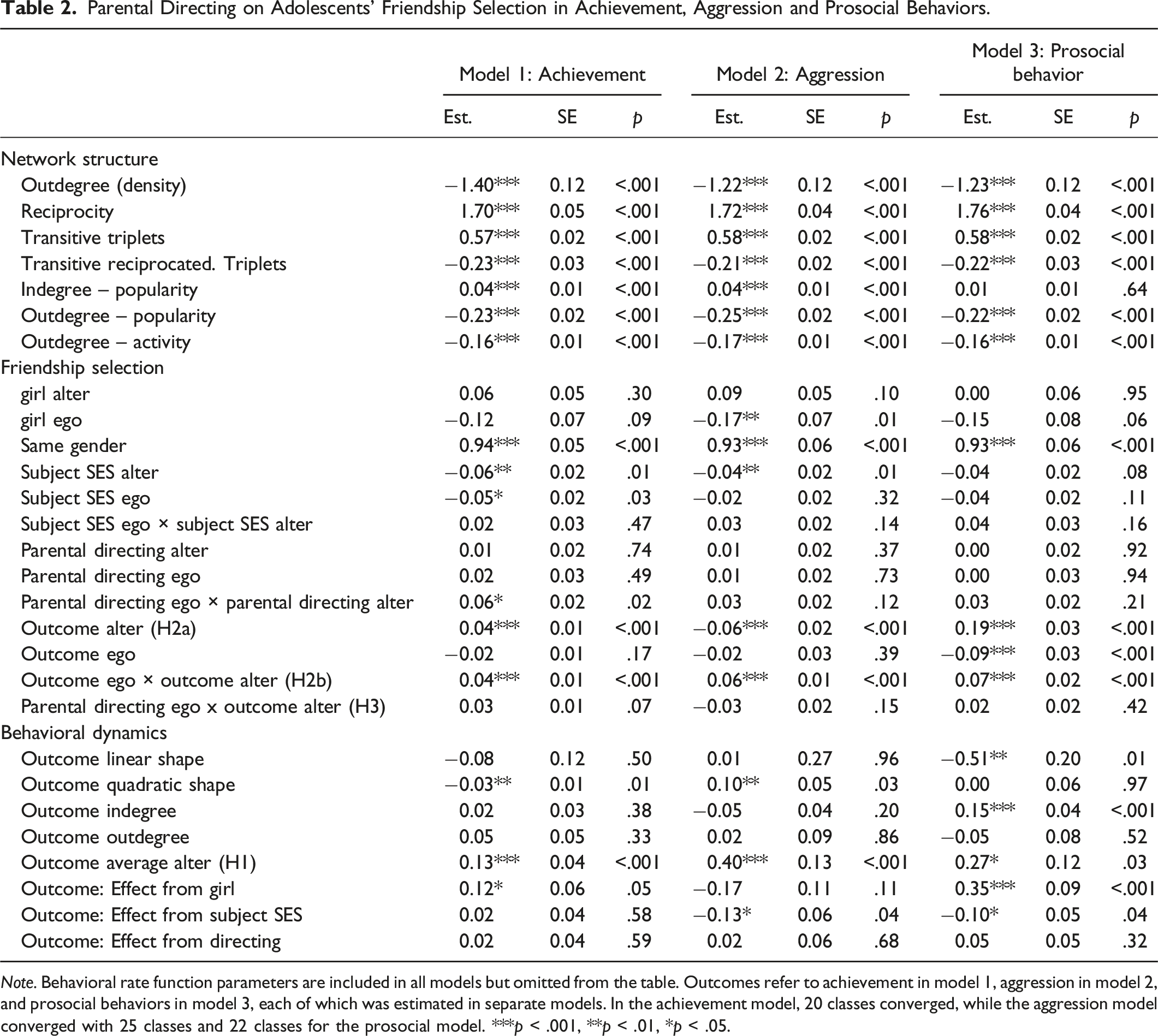
Note. Behavioral rate function parameters are included in all models but omitted from the table. Outcomes refer to achievement in model 1, aggression in model 2, and prosocial behaviors in model 3, each of which was estimated in separate models. In the achievement model, 20 classes converged, while the aggression model converged with 25 classes and 22 classes for the prosocial model. ***p < .001, **p < .01, *p < .05.
To better understand the direction of friendship influence in terms of achievement, aggression, and prosocial behavior, we present log odds that indicate the attractiveness of friends with certain outcomes depending on a hypothetical students’ outcomes in Figure 1. In Figure 1(a)–(c), the values in the upper left are consistently higher than those in the upper right. This indicates a consistent trend where a group of friends with lower scores on a certain attribute (i.e., achievement, aggression, and prosocial behavior) had a greater influence in adjusting one’s score to a similarly lower attribute than a group of friends with higher scores on the same attribute. Consequently, social influence was stronger among students with lower levels of achievement, aggression, and prosocial behavior in contrast to their counterparts with higher levels of achievement, aggression, and prosocial behavior. Ego-alter influence regarding Chinese students’ achievement (a), aggression (b), and prosocial (c). The log odds were used to measure how the scores of ego (a student) are influenced by alter score (a friend), based on the scores of both ego and alter in achievement, aggression, and prosocial behavior. Ego refers to an individual student (the nominator), while alter refers to his or her peers (the nominees). Calculations are based on Table 2, and for a more detailed explanation, see Ripley et al. (2023). Achievement scores ranged from 1 to 9, with scores of 6 or higher are considered a pass. Aggression and prosocial behavior scores ranged from 1 to 4, with 4 being considered as high aggression or prosocial behavior.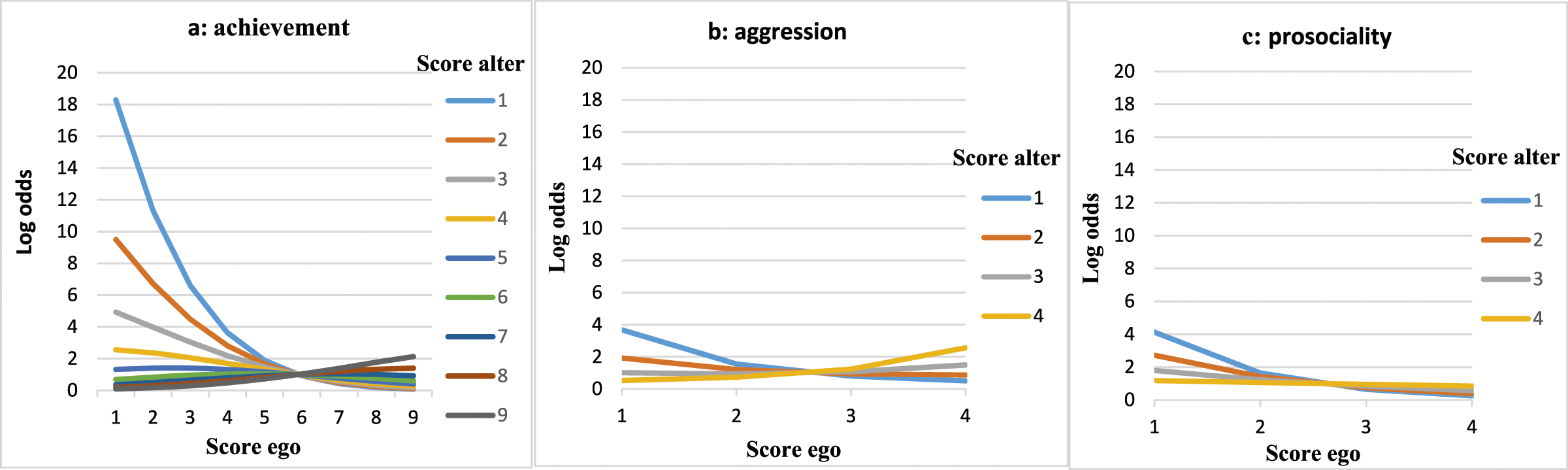
As for the control effects, the significant positive effect of gender on achievement indicates that girls had or reached higher levels of achievement (Est. = 0.12, p < .05) and prosocial behavior (Est. = 0.35, p < .001) than boys. The positive indegree effect indicates that students who received more friendship nominations were or became more prosocial than those who received fewer friendship nominations (Est. = 0.15, p < .001). Students with high subjective SES were or became less aggressive (Est. = −0.13, p < .05) and less prosocial (Est. = −0.10, p < .05) than students with low subjective SES. Students’ outdegree and perceived parental directing were not significantly associated with achievement, aggression, and prosocial behavior.
Selection Effects on Achievement, Aggression, and Prosocial Behavior
As for friendship selection, our findings support attractiveness-based hypothesis (H2a), we examined alter effects, which represent broader tendencies of certain student attributes to be associated with the number of friend nominations. Results showed Chinese students with higher levels of achievement (Est. = 0.04, p < .001) and prosocial behavior (Est. = 0.19, p < .001) received more friendship nominations, and thus were more attractive as friends, whereas Chinese students with higher levels of aggression (Est. = −0.06, p < .001) received fewer friendship nominations and were less attractive as friends. For the ego effects, students with a high level of prosocial behavior tend to send fewer friendship nominations (Est. = −0.09, p < .001). No significant effects for achievement ego (Est. = −0.02, p = .17) and aggression ego (Est. = −0.02, p = .39) were found, indicating that students’ achievement and aggression did not affect the amount of given friendship nominations.
We also found a significantly positive similarity effect (ego× alter effect) for achievement (Est. = 0.04, p < .001), as well as for aggressive (Est. = 0.06, p < .001) and prosocial behavior (Est. = 0.07, p < .001), which support the similarity hypothesis (H2b). These results indicated that Chinese adolescents tend to nominate friends with similar achievement, aggression, and prosocial behavior. As shown in Figure 2, our further analysis demonstrates the direction of friendship selection based on similarity in achievement, aggression, and prosocial behavior. Figure 2(a) showed that high-achieving students (score >= 6) tend to befriend those with even higher achievement and avoid selecting low-achieving students (score <6), while low-achieving students (score <6) tend to befriend those with even lower achievement and avoid selecting high-achieving students (score >= 6). Figure 2(b) indicated that students with lower aggression (score <= 2) tend to befriend students with lower aggression, whereas students with higher aggression (score = 4) show no preference for befriending peers based on aggression level. Figure 2(c) demonstrated that both low-prosocial students tend to prefer selecting high-prosocial peers as friends, whereas high-prosocial students have an even stronger preference for selecting high-prosocial friends. In general, friendship selection based on similarity was stronger among students with lower achievement, lower aggression, and higher prosocial behavior compared to those with higher achievement, higher aggression, and lower prosocial behavior. Ego-alter selection regarding Chinese students’ achievement (a), aggression (b), and prosocial (c). The log odds were calculated to quantify the probability of ego nominating alter as a friend, considering the scores of both ego and alter in achievement, aggression, and prosocial behavior. Calculations are based on Table 2, and for a more detailed explanation, see Ripley et al. (2023).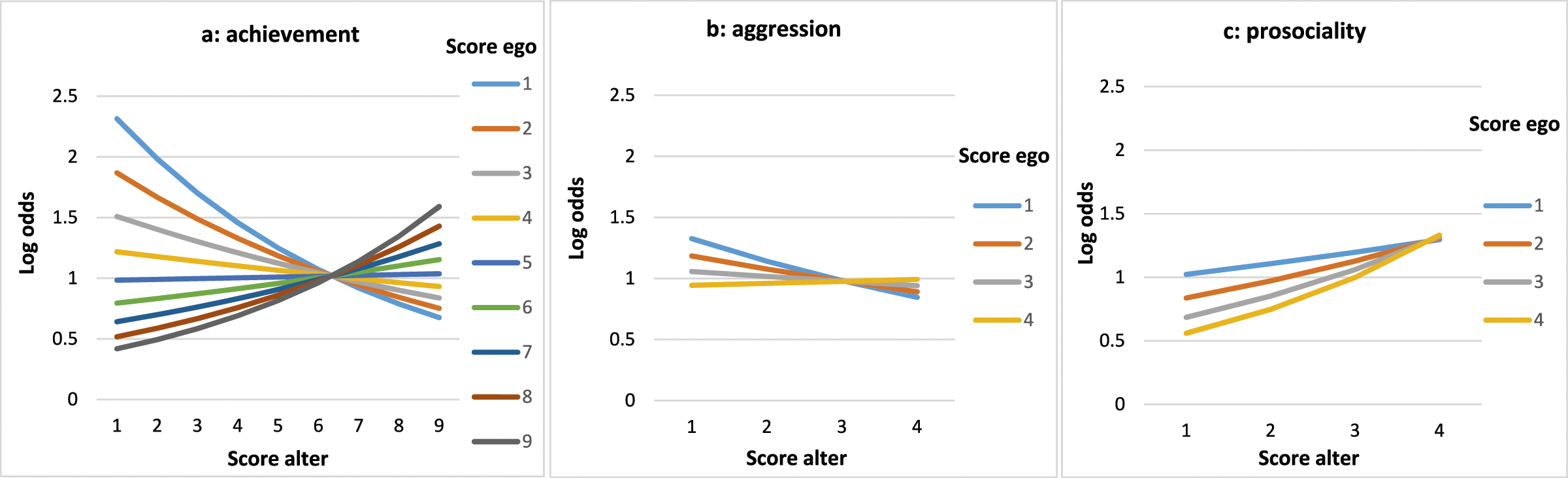
Parental Directing on Adolescents’ Friendship Selection
To examine whether parental directing moderates adolescents’ friendship selection (H3), we evaluated models with two-way interactions by adding parental directing ego × achievement alter effect, parental directing ego × aggression alter the effect, and parental directing ego × prosocial behavior alter. However, none of the interactions were significant. Although the parental directing ego × achievement alter (Est. = 0.03, p = .07) was in the expected direction and marginally significant. The parental directing ego × aggression alter (Est. = −0.03, p = .15) and the parental directing ego × prosocial alter (Est. = 0.02, p = .42) were in line with the expected direction but were not significant. Consequently, we did not find support for the hypothesis that Chinese adolescents with high parental directing would be more likely to select high-achieving and prosocial friends and less likely to befriend aggressive peers.
On an additional note, in the model that assesses the role of parental directing on friendship selection in achievement, we found a significant similarity effect (Est. = 0.06, p < .05), which showed that Chinese students with a higher level of parental directing tend to befriend classmates who perceived similar parental directing. However, this effect was not significant in the models with aggression and prosocial behavior. No significant effects of parental directing ego and parental directing alter were detected across the three models.
Discussion
Friends and parents are assumed to play critical roles in adolescents’ development of both positive (i.e., achievement and prosocial) and negative (i.e., aggression) behavior (Mounts, 2008; Tu et al., 2014, 2017). However, knowledge is lacking on friendship network dynamics for achievement, aggression, and prosocial behavior among Chinese adolescents, and it is unknown whether parents can alter adolescents’ friendship networks by promoting more positive friendships and mitigating negative friendships. Our results showed that friends influence Chinese adolescents’ achievement, aggression, and prosocial behavior, with a stronger friendship influence observed among friends with lower achievement, aggression, and prosocial behavior. Before these influence processes take place, friend selection is a crucial process. Our findings indicate that Chinese adolescents tend to select friends who are similar to them regarding achievement, aggression, and prosocial behavior, with this pattern more likely to occur among similarly low-achieving, low-aggressive, and high-prosocial students. Furthermore, Chinese students refrained from selecting highly aggressive peers as friends, whereas they were attracted to highly prosocial and achieving peers. No support was detected for the potential role of parental directing in friendship selection related to achievement, aggression, and prosocial behavior. The results suggest that friends’ characteristics are crucial in considering the function of friendship influence and selection, but the effects of parental directing on Chinese students’ friendship selection are limited.
Friendship Influence in Achievement, Aggression, and Prosocial Behavior
The first aim of this study was to understand the extent to which friends influenced each other in both positive (achievement and prosocial behavior) and negative (aggression) outcomes. Consistent with recent friendship network literature from both Asian and Western countries, our study also revealed that Chinese youth were influenced by their friends’ achievement, aggression, and prosocial behavior over time (Gremmen et al., 2017; Hsiao et al., 2019; Laninga-Wijnen et al., 2017; Shen & French, 2024; Shin, 2019; Sijtsema et al., 2010; Zhang et al., 2020). We found friendship influence to be stronger among low-achieving peers than among high-achievers among Chinese students. This finding is consistent with one previous Western study on German 5th to seventh-grade students (Stark et al., 2017) but in contrast to other Western studies indicating that high-achieving exerted greater influence to increase adolescents’ achievement (Gremmen et al., 2017; Rambaran et al., 2017). Furthermore, the finding that influence of low achievers was stronger than that of high achievers is consistent with one previous Chinese study (Shen & French, 2024). Our findings align with the idea that in Chinese culture, high emphasis is placed on achievement, resulting in high competition among high-achievers due to limited university access (Qin et al., 2021). Consequently, high-achieving friends may compete, rather than offer assistance to each other, resulting in less influence from high-achieving friends. Low-achieving students, in contrast, may distract their friends from schoolwork by encouraging risk behavior (Gremmen et al., 2019), and learn from their similarly low-achieving friends, potentially leading them to give up rather than putting in the effort to improve, because they may feel that they cannot keep up with the high academic pressure.
Regarding aggression, we observed that friendship influence was stronger among low aggressive students, aligning with Chinese cultural values that encourage abstaining from aggression (Chang, 2004; Chen et al., 2000). However, in contrast to the Chinese social norm that promotes harmony and prosocial behavior, friendship influence on prosocial behavior occurred primarily among adolescents who decreased their prosocial behavior when they had low prosocial friends (Chang, 2004; Chen et al., 2000). These varying directions of friendship influence on achievement, prosocial and aggression suggest that the direction of influence may depend on adolescents’ attributes, motivation, and social norms, and warrant further investigation.
Friendship Selection in Achievement, Aggression, and Prosocial Behavior
Consistent with attractiveness-based hypothesis, we found that high-achieving and highly prosocial peers were attractive friends, whereas aggressive peers were avoided as friends. Furthermore, we detected selection similarity effects for achievement, aggression, and prosocial behavior after controlling for influence and structural network effects. These findings were in line with similarity attraction theories and with the results of other recent social network studies in both Asian and Western cultures (Hsiao et al., 2019; Laninga-Wijnen et al., 2020; Shen & French, 2024; Shin & Ryan, 2014; Zhang et al., 2020).
As for the direction of friendship selection in achievement, our findings indicate that high-achievers tend to befriend those with even higher achievement and avoid low-achieving students. This aligns with Chinese norms emphasizing the importance of achievement and encouraging befriending high-achieving students for better education opportunities (Qin et al., 2021). Conversely, low-achievers tend to befriend those with even lower achievement and avoid high-achieving students, which is consistent with social comparison theory (Festinger, 1954), holding that students tend to move into groups whose abilities are near or lower than their own to satisfy their need for a positive self-evaluation. When it comes to the direction of friendship selection in aggression and prosocial behavior, we found that similarity-based selection is more pronounced among students with lower aggression and higher prosocial behavior. This aligns with a previous study suggesting that friendships were more likely to be maintained if friends were similarly low in aggression (Laninga-Wijnen et al., 2020). This selection pattern aligns with Chinese social norms that encourage harmony and prosocial behavior and discourage aggression (Chang, 2004; Chen et al., 2000).
Parental Directing and Friendship Selection in Achievement, Aggression, and Prosocial Behavior
Parents are assumed to be important in managing adolescents’ friendships by encouraging them to befriend positive peers (e.g., high-achieving and prosocial) and preventing them from befriending negative peers (e.g., aggressive; Mounts, 2008; Tu et al., 2014; 2017). However, contrary to our hypothesis, we found no moderating effects of parental directing on adolescents’ selection of high-achieving, aggressive, or prosocial friends. Even though the role of parental directing in high-achieving, aggressive, or prosocial friendship selection was in the expected direction, it was not significant.
There are four possible explanations for the lack of parental directing in adolescents’ friendship selection. First, one reason may be that the models in our study were quite complex, with several control variables, including network structure, influence processes, and selection processes in gender, subjective SES, and parental directing. Previous studies that found an association between parental directing and fewer friends’ deviant behavior usually only focused on adolescents’ reports of friends’ deviant behaviors without considering friendship network and influence processes (Mounts, 2002; Soenens et al., 2007; Tu et al., 2014, but see Tilton-Weaver et al., 2013 for an exception).
Second, it could be that Chinese students have internalized cultural norms so strongly that there is less room for parental directing. For example, Chinese students tend to seek interactions with high achievers even without the requirement from teachers and parents because these high achievers tend to be popular and admired (Zhang et al., 2019). It is also possible that parental direction has opposing effects for different types of students. Parental directing can be considered as supportive for some adolescents (leading to conforming) but overcontrolling or intrusive by others (leading to rebellion). In Chinese culture, parents may exert too much pressure on adolescents to achieve high grades or prevent them from befriending aggressive peers. Even though some adolescents may internalize these standards, it may lead other adolescents to rebel against their parents and consider the forbidden friends as forbidden fruit (Tu et al., 2014). These opposing effects may underlie the ‘null-effect’ in the current study. Future studies are encouraged to examine whether the effects of parental directing on adolescents’ friendship selection varies as a function of the extent to which adolescents consider friendships to be their domain of autonomy.
Lastly, the lack of effects of parental directing on prosocial friendship selection may be related to the fact that prosocial behavior is not as visible as achievement or aggression. Parents may not easily notice peers’ prosocial behavior because almost all peers might pretend to be “good” when meeting with friends’ parents. Thus, parents may not always have an accurate assessment of the nature of their adolescents’ friendships, particularly when it comes to evaluating the presence of prosocial behavior among their peers.
Strengths, Limitations, and Future Studies
This study has several strengths. First, we employed a longitudinal stochastic actor-based model with a large sample size, which allowed us to disentangle selection and influence processes, control for network structures, and the similarity effects of gender and SES, creating a potentially more powerful inference of the associations between achievement (or aggression and prosocial behavior) and friendship dynamics. We extend upon many previous studies by not only focusing on the strength but also the direction of friendship processes. Second, extending the sample diversity, we investigated friendship dynamics in achievement, aggression, and prosocial behavior among Chinese adolescents. Given that most studies in this area have been conducted in Western countries, it is necessary to examine friends’ contributions in non-Western children (Qin et al., 2023). Third, this study is the first to examine whether parental directing of friendship can moderate adolescents’ selecting high-achieving, prosocial, or aggressive friends.
Several limitations should be noted and possibly addressed in the future. First, we focused on friendship processes within classrooms and excluded cross-classroom network dynamics. Future research considering friends from various contexts (e.g., grade, school, out of school) is encouraged. Second, we limited the number of “best friend” nominations to five, which may fail to capture the full range of friendships in the classroom. It is suggested to use unlimited nominations to obtain adolescents’ friendship networks (Veenstra et al., 2013). Third, the moderating role of parental directing of friendships was only measured in the first wave as a stable variable. However, it could be time-variant and may be changed depending on adolescents’ behaviors. Another limitation is that the current study only considered parental directing when assessing the selection process. This makes sense because before any influence occurs, selection needs to take place; hence, we examined a primary process that may occur; however, future studies could examine the moderating role of parental practices (and other variables) in friendship influence on achievement, aggression, and prosocial behavior more deeply. In addition, although schools and classrooms are critical for students, this study did not analyze the role of teachers or classroom norms in adolescents’ friendship network dynamics, which is encouraged in future research. Last, cross-behavior selection and influence effects could be the avenue for future study; for example, it is interesting to examine whether high-achieving students would select highly aggressive students as friends and whether highly aggressive friends would influence adolescents’ achievement (Laninga-Wijnen et al., 2020).
Conclusions and Implications
Our study yields two significant conclusions. First, the current study provides insight in friendship processes related to achievement, prosocial behavior, and aggression in China, which is essential given that previous work mostly was limited to the Western context. Chinese students tend to select high-achieving and highly prosocial friends and avoid befriending aggressive friends. This finding differs from several Western studies in which high-achieving students were regarded as “nerds” and not considered as attractive friends, or in which highly aggressive students did receive more friendship nominations - perhaps because aggression can be a way to rebel against adults. Also, in contrast to Western studies, Chinese adolescents were mostly influenced by their friends towards lower rather than higher aggressive behavior. Thus, this study indicates the importance of examining friendship processes in different cultures.
Second, we demonstrated that parental directing has a limited role in Chinese adolescents’ friendship selection related to achievement, aggression, and prosocial behavior. Thus, parents seem to be mostly at the sideline in this regard. This implies that - in case intervening in friendship selection is necessary - it may not be fruitful to encourage parents to direct their children’s friendship selection. Future studies are encouraged to examine which factors may determine friendship selection processes, and which friendship selection processes promote Chinese adolescents’ wellbeing and academic success. For instance, other parental practices characterized by less intrusiveness or less control, such as parental knowledge, may direct adolescents to select fewer antisocial friends (Trudeau et al., 2012). Future studies are encouraged to examine whether proper guidance and rules for making friends rather than overwhelming pressure and control should be encouraged as practices for Chinese parents.
Supplemental Material
Supplemental Material - Parents on the Sidelines: The Role of Parental Directing in Chinese Adolescents’ Friendship Dynamics Related to Academic Achievement, Aggression, and Prosocial Behavior
Supplemental Material for Parents on the Sidelines: The Role of Parental Directing in Chinese Adolescents’ Friendship Dynamics Related to Academic Achievement, Aggression, and Prosocial Behavior by Xingna Qin, Lydia Laninga-Wijnen, Christian Steglich, Yunyun Zhang, Ping Ren, and René Veenstra in The Journal of Early Adolescence.
Footnotes
Acknowledgments
We would like to thank the schools, teachers, and adolescents who participated in this project.
Declaration of Conflicting Interests
The author(s) declared no potential conflicts of interest with respect to the research, authorship, and/or publication of this article.
Funding
The author(s) disclosed receipt of the following financial support for the research, authorship, and/or publication of this article: This study was financially supported by the National Social Science Foundation of China [Grant Number: 20BSH067] and the China Scholarship Council (CSC).

Supplemental Material
Supplemental material for this article is available online.
Author Biographies
References
Supplementary Material
Please find the following supplemental material available below.
For Open Access articles published under a Creative Commons License, all supplemental material carries the same license as the article it is associated with.
For non-Open Access articles published, all supplemental material carries a non-exclusive license, and permission requests for re-use of supplemental material or any part of supplemental material shall be sent directly to the copyright owner as specified in the copyright notice associated with the article.
