




Abstract
The goal of this study was to examine the unique associations of aggression with peer status in a non-Western context. The moderating effects of peer community and teacher closeness at the classroom level and gender and grade at the individual level were considered. Participants were 1954 third to sixth grade students (Mage = 9.60 years, SD = 0.97; 49% girls) in South Korea. As in Western studies, overt aggression negatively predicted preference, relational aggression positively predicted popularity, and these associations were stronger in early adolescence than in middle childhood. Whereas the association between relational aggression and peer status was stronger for boys than girls and peaked in sixth grade. Peer community moderated the association between relational aggression and popularity. Specifically, relational aggression predicted popularity in non-communal classrooms, but not in communal classrooms. Future research should address cultural differences in social relatedness and their implications for fostering peer community in classrooms.
Introduction
Aggressive behavior has negative social consequences in the classroom, such as poor peer relations, low school engagement, and victimization (Card et al., 2008; Garandeau et al., 2011). Specifically, a classroom in which aggressive behavior is normative creates a class climate that restricts positive peer interactions (Madill et al., 2014) and cooperative learning with other peers (McCormick et al., 2015). Moreover, a strong hierarchy is more likely to be established in classrooms with aggression norms, and this leads to more victimization based on power imbalance (Garandeau et al., 2014). Numerous studies have examined the influence of aggressive behavior on the classroom social context (Boor-Klip et al., 2017; Dijkstra et al., 2008; Stormshak et al., 1999) during late childhood and early adolescence. These works clearly indicate that aggressive behavior has a negative impact on classroom climate.
Although aggressive behavior generally has an adverse influence on school adjustment and classroom climate, the consequence of aggression to peer status (i.e. social standing among peer group) on individual youths can either be prominent or marginalized. To be more specific, aggressive behavior has a different association with two types of peer status: social preference and popularity (Cillessen & Mayeux, 2004). Social preference is defined as interpersonal liking in peer groups and implies intimacy and communion (Lease et al., 2002). Popularity (or perceived popularity) is characterized as dominance, power, and a central position in the peer group (Parkhurst & Hopmeyer, 1998). Aggressive behavior is negatively related to social preference, whereas its association with popularity ranged from negative to positive (LaFontana & Cillessen, 2002). This implies that aggressive behavior may help to achieve dominance in peer groups, but at the cost of peer acceptance.
However, the extent to which aggression is related to peer status may also vary depending on the characteristics of the classroom social context (Gest & Rodkin, 2011). The “social misfit” theory states that the impact of behaviors on peer status may depend on the context in which they take place (Boivin et al., 1995). Classroom social contexts consist of the social network, social norms, and social emotional climate (Weinstein, 1991). Social network, structural characteristics of peer dynamics, represents the frequency of peer interactions and hierarchy among peers. Social norms imply to what extent certain behavior is normative and accepted in the group. In a similar vein, aggressive behavior is considered normative in certain classroom social contexts. Moreover, aggressive behavior is preferred in classrooms where it is frequently observed and normative (Boor-Klip et al., 2017; Dijkstra et al., 2008; Thomas et al., 2006).
Social emotional climate refers to the degree to which students feel connected to their peers and teachers. Social emotional climate can be considered at two levels: how connected an individual feels personally and the overall level of social relatedness across an entire group. Self-determination theory (Deci & Ryan, 2008) highlights the importance of social emotional climate for human well-being and functioning at the individual level. Indeed, youths are more engaged in learning, cooperative, and autonomous when they feel connected and have close and secure relationships with peers and teachers (Battistich et al., 1997). Indeed, the correlation between aggression and peer status varies across classrooms (Ahn & Rodkin, 2014). An important question is which aspects of the classroom social context are responsible for this variation.
Previous works evidenced that social networks and norms are responsible for the variation between aggression and peer status. For instance, aggressive youths tend to be popular in classrooms with only a few central prominent peers (Ahn & Rodkin, 2014) or with a strong hierarchy among peers (Garandeau et al., 2011). In such classrooms with hierarchical classroom social networks, popular youths are inclined to use aggressive behavior as an efficient strategy to achieve and maintain status. Youths see aggression as the norm in classrooms in which it is common. Such perceptions impact the evaluation of aggressive peers. In one study aggressive early adolescents were less disliked by peers in classrooms where aggressive behavior was common (Boor-Klip et al., 2017). However, less attention is given to how social-emotional climate impact the peer status of aggressive youths, although the collective perception of social connection with peers and teachers functions as an important classroom social context.
The Importance of Social Emotional Climate
A positive social emotional climate at the classroom level is important. According to group cohesion theory (Thye et al., 2014), positive interpersonal relationships are associated with positive group membership and affective bonding toward the group. The affective exchange between individual students and the classroom group promotes attraction to the group and cohesion based on mutual liking and social bonding (Friedkin, 2004).
Peers and teachers are responsible for the social emotional climate of the classroom, as they are the socializing agents in the classroom (Gest & Rodkin, 2011). Both peers and teachers can play an important role in creating a positive social emotional climate. Peers can provide social support and model normative behavior (Hartup, 1996; Bukowski & Sippola, 2001). Teachers can facilitate positive peer interactions and prevent aggression with classroom management strategies (Audley-Piotrowski et al., 2015).
Moreover, the social-emotional climate created by peers and teachers can play a role in the association between aggression and peer status (Madill et al., 2014). That is, the level of social relatedness in the classroom created by peers and the teacher may reduce the peer status of aggressive youths. In classrooms with a lack of social relatedness among peers, aggressive behavior can be an adaptive strategy to acquire dominance (Garandeau & Cillessen, 2006; Sentse et al., 2007). In such a context, aggressive youths achieve and maintain status by excluding peers (Bukowski & Sippola, 2001). In contrast, high levels of social relatedness encourage caring for and helping others, promote prosocial behavior, and reduce aggressive youths’ peer status (Kim, 2017; Madill et al., 2014).
However, peers and teachers might play a unique role in the association between aggression and peer status. Popularity is based on a social consensus by peers, and there is little evidence that teachers can impact individual students’ popularity (Marks et al., 2012). On the other hand, teachers can exert broader influence via general teacher-student interaction (Farmer et al., 2011). Early adolescents with a peer reputation of positive teacher-student relationships are more preferred than other students. Positive teacher-student relationships fostered peer likings and prosocial norms at the class level (Hendrickx et al., 2016). Moreover, the social connection among peers can create a positive community that prevents normative influence of aggressive behavior among peers (Audley-Piotrowski et al., 2015). Thus, we considered peer community and teacher closeness as distinct forms of social relatedness (Farmer et al., 2011).
To extend our understanding of contextual effects on aggressive youths’ peer status and the role of social emotional climate by peers and teachers beyond the individual level, we examined the moderating effect of peer community and teacher closeness at the classroom level on the associations between aggression and peer status.
The Importance of Cultural Context
It is well-known that the form of aggression plays a role in its associations with peer status. Overt aggression is typically associated with low status (e.g., Ettekal & Ladd, 2015). The peer status of relationally aggressive youths varies across studies (e.g., Smith et al., 2010). Most commonly, relational aggression is positively associated with popularity but negatively with preference (see, for a review, Card et al., 2008). However, these findings are primarily based on Western samples and potentially limit the generalizability of the existing theoretical perspective on status and aggression to non-Western youths.
In a recent meta-analysis of the correlation between preference and popularity, van den Berg et al. (2020) reported an average effect estimate of .45 across samples and countries. However, only a small portion of the included studies was conducted in non-Western countries, and these studies stood out with a higher overall correlation between preference and popularity (average effect estimate of .57). This difference between Western and non-Western countries is noteworthy, suggesting that the organization and correlates of peer status can vary between cultural contexts. Of the few studies that have examined the associations between status and aggression in non-Western samples (Bowker et al., 2012), none of them were conducted in South Korea.
South Korea is a society in that collectivistic values and Confucian influences are emphasized in the group process (Bass et al., 2018; Park & Cho, 1995). Youths are expected to be sensitive to others, minimize conflict, and have an interdependent sense of self. To this end, following social rules and norms is emphasized in classrooms, and disruptions of social harmony are subject to peer censure. In a collectivistic culture, achieving status is not only contingent upon dominance but also on maintaining a positive reputation among group members. To this end, cooperative behavior is widely encouraged as a way of gaining status, and overt aggression is censored among the peer group. Classroom social context is clearly important as Korean elementary students are tied to classroom structures and spend the most time with classmates in school. Empirical findings support this cultural value in the association between status and aggression. For instance, overt aggression has been negatively associated with popularity in Asian samples (Kawabata et al., 2010).
Although the significance of achieving status might be equally important as in Western countries, but the underlying cultural value is different because peer relationships in a collectivistic culture are highly interdependent (French et al., 2011). Similar to the Western context, relational aggression would also be an efficient strategy to gain status by avoiding social costs and gaining a dominant position by manipulating interdependency among peers. Indeed, relational aggression was positively associated with popularity in studies in China (Lu et al., 2018). Thus, we considered the role of culture in the association between aggression and peer status.
Forms of Aggression and Student-level Moderators
In Western studies, the association between aggression and status has varied by gender and developmental stage (Cillessen & Mayeux, 2004). Girls typically score higher in relational aggression than boys, and relationally aggressive girls are more popular and less liked than relationally aggressive boys (Crick & Grotpeter, 1995). As youths put more emphasis on achieving peer status during adolescence, the association of relational aggression and peer status was also stronger at this age than at other ages. Especially the positive association of relational aggression and popularity became stronger from early adolescence to adolescence (Card et al., 2008; Cillessen & Mayeux, 2004).
We have an opportunity to make a developmental argument about whether these effects would be replicated in an Asian sample of youths from South Korea. The students in our sample ranged in age from 9 to 13, which represents the age range that includes late childhood and early adolescence (10-14). The students in our sample did not make a transition to a new school as in other countries, where they leave elementary school at age 11 or 12 to go to middle school (U.S.) or secondary education (Europe). Instead, in Korea, students stay within their primary education school until they are 13, after which they make the transition. In this study, we thus had early adolescents in the second half (last 4 years) of their primary education school.
We made two distinctions in our sample. First, we divided the four grades in two age groups: late childhood (grades 3-4) and early adolescence (grades 5-6). This is consistent with previous research on peer status and aggression, which has shown differences between these two age groups. For example, Caravita and Cillessen (2012) made the same distinction and found that the association between agentic goals and bullying was mediated by perceived popularity in early adolescence but not in late childhood. Other studies also show that the association between aggression and popularity changes from negative to positive at around this break (between grades 4 and 5). Previous research indicates a positive association between aggression and popularity starts in late childhood (LaFontana & Cillessen, 2002; Garandeau et al., 2011). Therefore, we differentiate 3rd and 4th graders (late childhood) from 5th and 6th graders (early adolescence). Although it is difficult to pinpoint an exact cut-off age, this choice is reasonable given previous empirical findings and given the previous theorizing about adolescent development. Splitting up the sample in this way allows us to contribute new knowledge to the study of early adolescents (in Korea) by being able to compare and contrast what happens in early adolescence and how this differs from a younger age.
The second distinction we made was to focus specifically on Grade 6. As indicated above, 6th grades do not yet go to middle school or secondary education in Korea. Yet, developmentally, they do form the challenging age group in which the challenges of adolescent development begin to intensify. This is clearly noted by Korean teachers, who are well aware of the challenges of teaching sixth grade in Korean schools (Kim & Shin, 2014; Son & Yang, 2014). Hence, it is highly ecologically valid to be able to zoom in on this grade specifically. In South Korea, 6th grade is considered an onset of adolescence, and more aggression and defiance toward teachers are reported. Therefore, we further differentiated the 6th graders from those in all earlier grades.
Current Study
The overarching goal of this study was to investigate the role of social emotional climate as a protective factor in early adolescents’ peer relations at school. We considered social, emotional climate with peers in the form of a peer community, and with teachers in the form of teacher closeness as classroom-level moderators. This study was important for two reasons. First, to replicate previous findings on the developmental changes in the association between aggression and peer status (see, Cillessen & Mayeux, 2004). It is important to validate these findings in other cultural contexts. So far, relatively little attention has been given to universal and culture specific developmental characteristics of aggression and peer status. Second, to better understand the potential role of the social-emotional climate of classrooms as a protective context to prevent aggression. Social-emotional climate is a vital classroom social context for learning and positive peer relationships. This study addresses the value of a positive social-emotional climate as an avenue for preventing aggressive behavior by increasing social inclusion in classrooms.
We had three specific research questions. First, we examined the associations between overt and relational aggression and preference and popularity in a non-Western cultural context, the classroom peer groups of (early) adolescents in South Korea. Second, we examined whether these associations were moderated by peer community and teacher closeness at the classroom level. Because social preference and popularity are different constructs, and peers and teachers play a different role in them, we expected different moderating effects for the associations of social preference and popularity with aggression. Third, we examined whether the links between peer status and aggression varied by early adolescents’ gender and grade in this South Korean sample.
We hypothesized universal and culture-specific associations between aggression and peer status. That is the positive association between relational aggression and popularity and the negative association between overt aggression and popularity to be replicated in South Korea, similar to findings from Western studies. However, the gender and developmental stage might play a different role due to different school systems and cultural values. On the other hand, in line with relational cohesion theory, we hypothesize that peer community might have an effect on the associations between aggression and popularity, whereas teacher closeness might have an effect on the associations between aggression and social preference.
Method
Participants and Procedure
Participants were 1954 third to sixth grade students (956 girls, 49%) from 71 classrooms from four elementary schools in Seoul, Gyeonggi, and Sejong in South Korea. The data was collected with an online survey administered in the computer lab at school during regular school hours under the supervision of classroom teachers during the second semester of the academic year. A research assistant trained the teachers to administer the survey. All participants were given consent by their parents and assented to their participation on the day of testing. Participants were informed that their answers remained confidential and that they could stop participating at any time during the survey. Most participants were South Korean; the proportion of multi-ethnic participants was 0.1%. The participation rate ranged from 96% to 100% across classrooms.
Measures
Student-Level Variables
Social Preference and Popularity
Unlimited nominations were used with classroom as the reference group. For popularity, students nominated the “most popular” students in their classroom. For social preference, students nominated who they “liked most” and “liked least” in their classroom (Garandeau et al., 2011). For each item, the number of nominations received was counted for each child and divided by the number of nominators in the classroom to create proportion scores. Social preference was computed as the difference between the “liked most” and “liked least” proportion scores. Proportion scores for popularity ranged from 0 to 1. Proportion scores of social preference ranged from −1 to 1.
Overt and Relational Aggression
Aggressive behavior was measured with six peer nomination items: three for overt aggression and three for relational aggression. For overt aggression, students nominate peers who ‘start a fight’, ‘pushes others’, and ‘make fun of a peer’. For relational aggression, students nominated peers who ‘spread rumors’, ‘say mean things’ and ‘exclude peers from classmates’. For each item, the number of nominations received was again counted for each student and divided by the number of nominators to create proportion scores. A composite score was computed for each form of aggression by averaging the three proportion scores for each item. Reliabilities (Cronbach’s α) were .92 for overt aggression and .91 for relational aggression.
Classroom-Level Variables
Peer Community
Peer community was conceptualized as the degree of students’ social bonding and intimacy with their classmates. Four items from the Sense of Community Scale (Battistich et al., 1997), modified for the classroom rather than the school context: “Kids in my classroom work together to solve problems,” “People care about each other in my classroom,” “Kids in my classroom do nice things for each other,” and “Kids in my classroom help each other”. Responses ranged from 1 (never) to 5 (always). The peer community scale has been used in several previous studies (e.g., Gest et al., 2005; 2014; Madill et al., 2014). It demonstrated good validity by showing consistent reliability across times. It also demonstrated good internal consistency. The internal consistency of the measure in our study was comparable, α = .93.” The average of the scores of all students in a classroom represented the classroom level of the peer community.
Teacher Closeness
Teacher closeness was operationalized as the degree to which students reported a warm and caring relationship with their teacher. Five items from the closeness subscale of the teacher-report Student-Teacher Relationship Scale (STRS; Pianta, 2001) were adapted for student report: “I trust my teacher,” “I like being around my teacher,” “My teacher is kind to me,” “I feel safe when my teacher is around,” and “My teacher respects me”. Responses ranged from 1 (never) to 5 (always). The teacher closeness scale has also been used in previous studies. It demonstrated excellent validity by showing consistency in reliability and intraclass correlation. It also showed good reliability in previous cross-sectional research (α = .84; Gest et al., 2005) and in previous longitudinal research (α = .89; Madill et al., 2014). In our study, internal consistency reliability was α = .92. The average of the scores of all students in a classroom represented the classroom level of teacher closeness. The intraclass correlation of Teacher closeness was 15.7%.
Data Analysis Strategy
To examine the associations between aggression and status, the moderating effects of peer community and teacher closeness at the classroom level, and the moderating effects of gender and developmental stage at the individual level, multilevel analysis was conducted in Mplus 7 (Muthén & Muthén, 1998–2012). Students were at Level 1 and classrooms at Level 2. The student-level variables were group centered, and the classroom-level variables were grand mean centered. Two identical models were run, one with popularity as the outcome variable and one with social preference as the outcome variable.
The individual level predictors in each model were overt aggression and relational aggression. Gender and developmental stage were individual-level moderators. Gender was dummy coded (boys = 0, girls = 1). Developmental stage was coded as middle childhood (0), taking third and fourth grade together, and early adolescence (1), taking fifth and sixth grade together. In South Korean schools, teachers see sixth grade as a particularly difficult year in terms of adolescent rebellion and behavior difficulties. Therefore, we created an additional dummy code representing being in sixth grade (1) versus the earlier grades (0).
Peer community and teacher closeness were moderators at the classroom level. Because our interest was mainly in the cross-level interactions, we did not expect the main effects of peer community and teacher closeness to predict peer status at the class level. To examine the moderator effects of peer community and teacher closeness, the cross-level interaction effects with overt and relational aggression predicting peer status were tested. We computed the classroom averages of students’ individual scores for peer community and teacher closeness and included these as classroom-level moderators in our statistical models.
Results
Descriptive Statistics
Means and Standard Deviations of Main Study Variables by Grade.
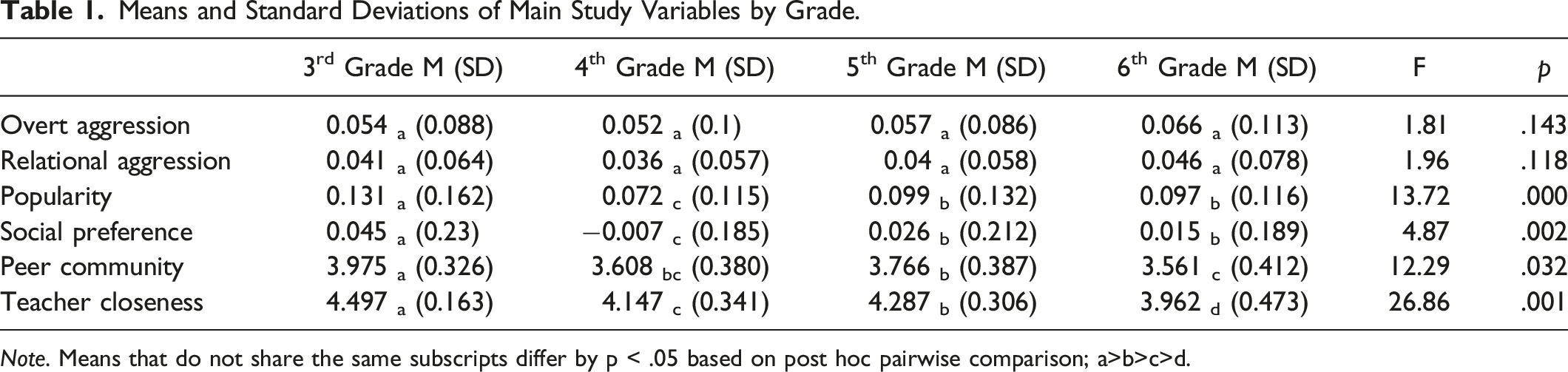
Note. Means that do not share the same subscripts differ by p < .05 based on post hoc pairwise comparison; a>b>c>d.
Means and Standard Deviations of Main Study Variables by Gender and Grade.
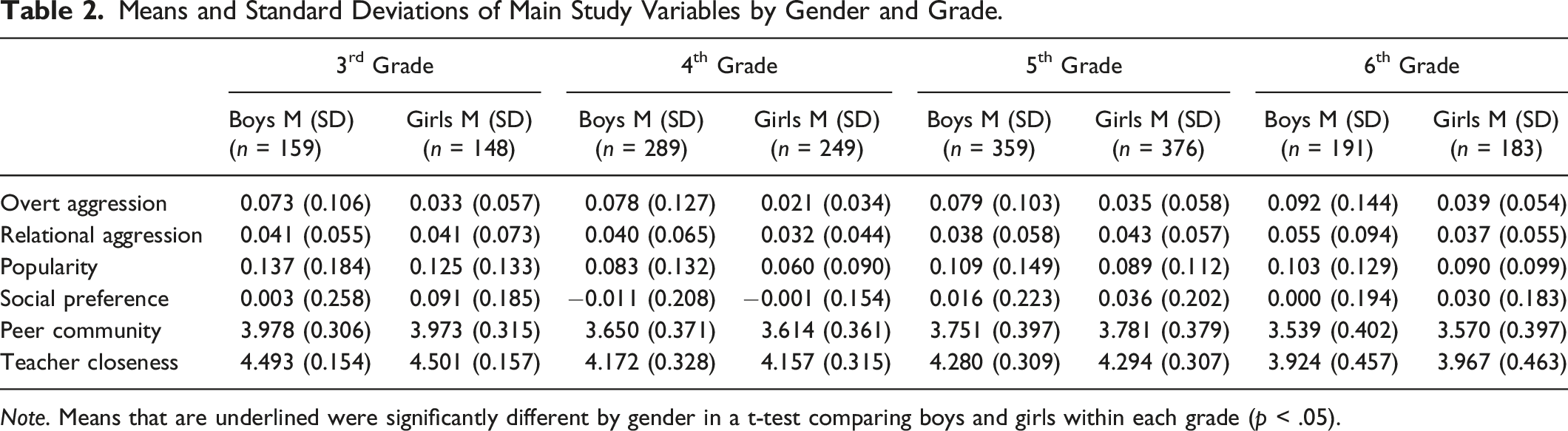
Note. Means that are underlined were significantly different by gender in a t-test comparing boys and girls within each grade (p < .05).
Correlations between Overt and Relational Aggression (Upper Panel) and between Social Preference and Popularity (Lower Panel) in the Total Sample and by Gender and Grade.
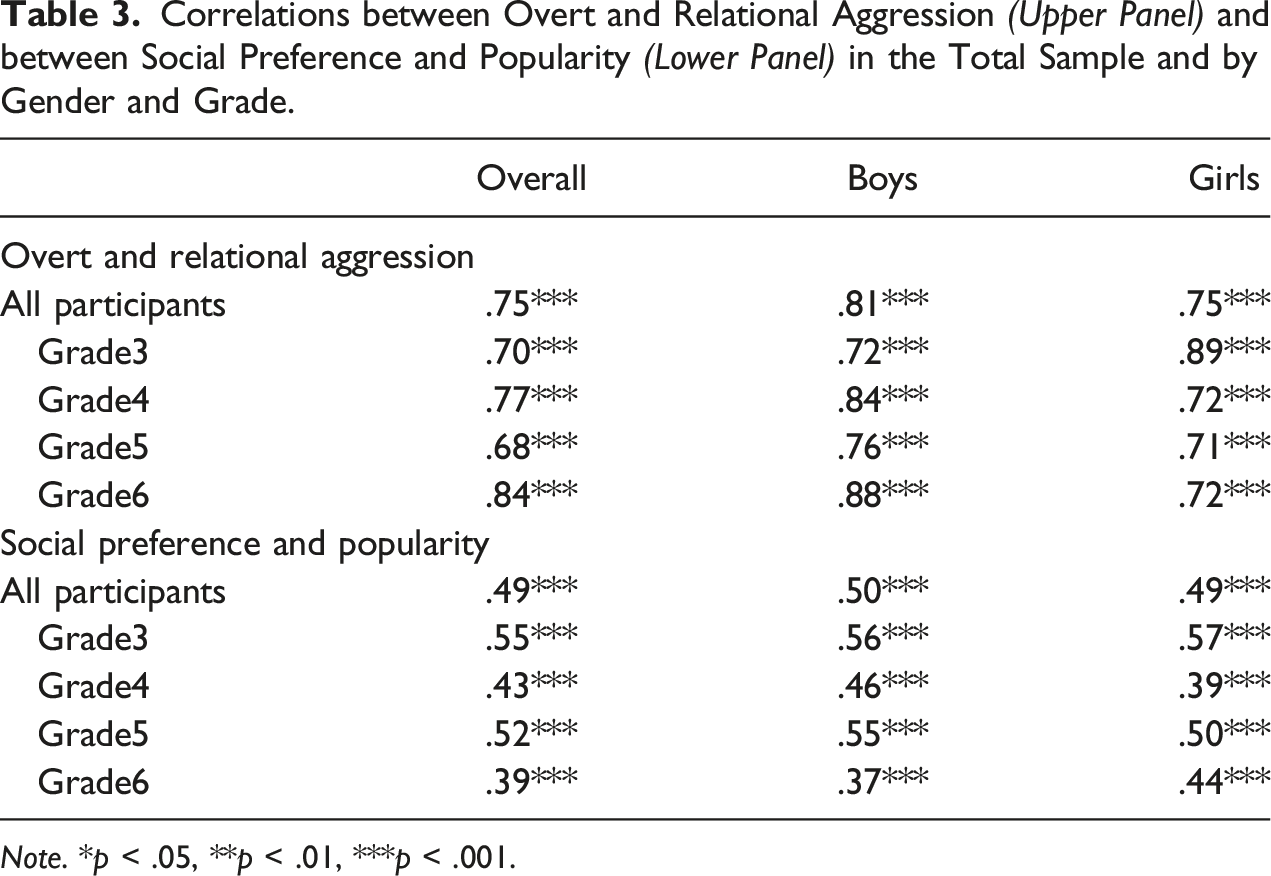
Note. *p < .05, **p < .01, ***p < .001.
Correlations between Forms of Aggression and Peer Status by Gender and Grade.
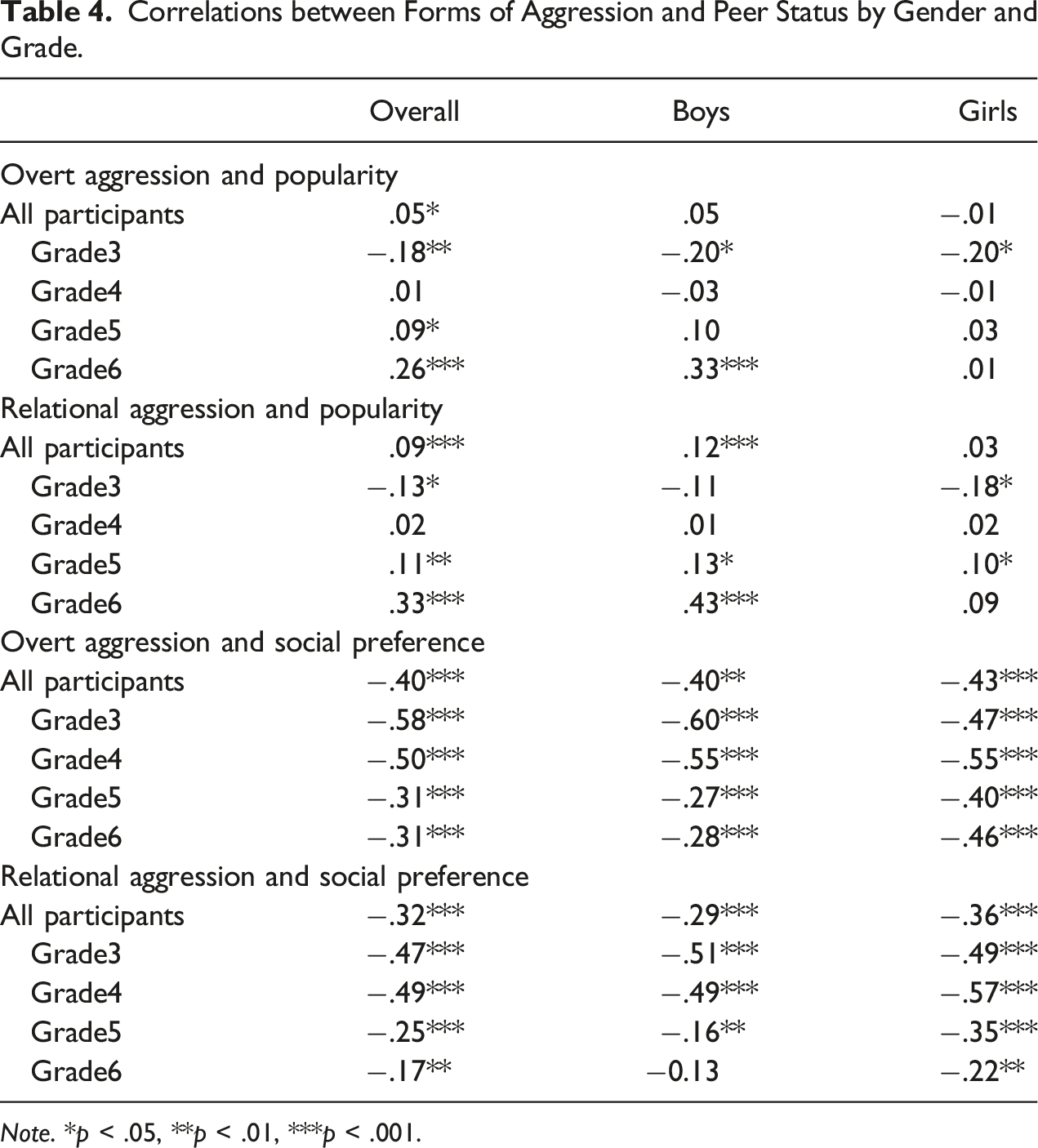
Note. *p < .05, **p < .01, ***p < .001.
Table 4 also presents the correlations of both forms of aggression with social preference by gender and grade. For boys, the negative association between overt aggression and social preference was lower in the fifth and sixth grades than in the third and fourth grades. There was a lower negative association of relational aggression and social preference for boys and girls in fifth and sixth grade. Especially for girls, overt aggression remained moderately negatively correlated to social preference across the grades, while associations between relational aggression and social preference became less negative.
Multilevel Analyses
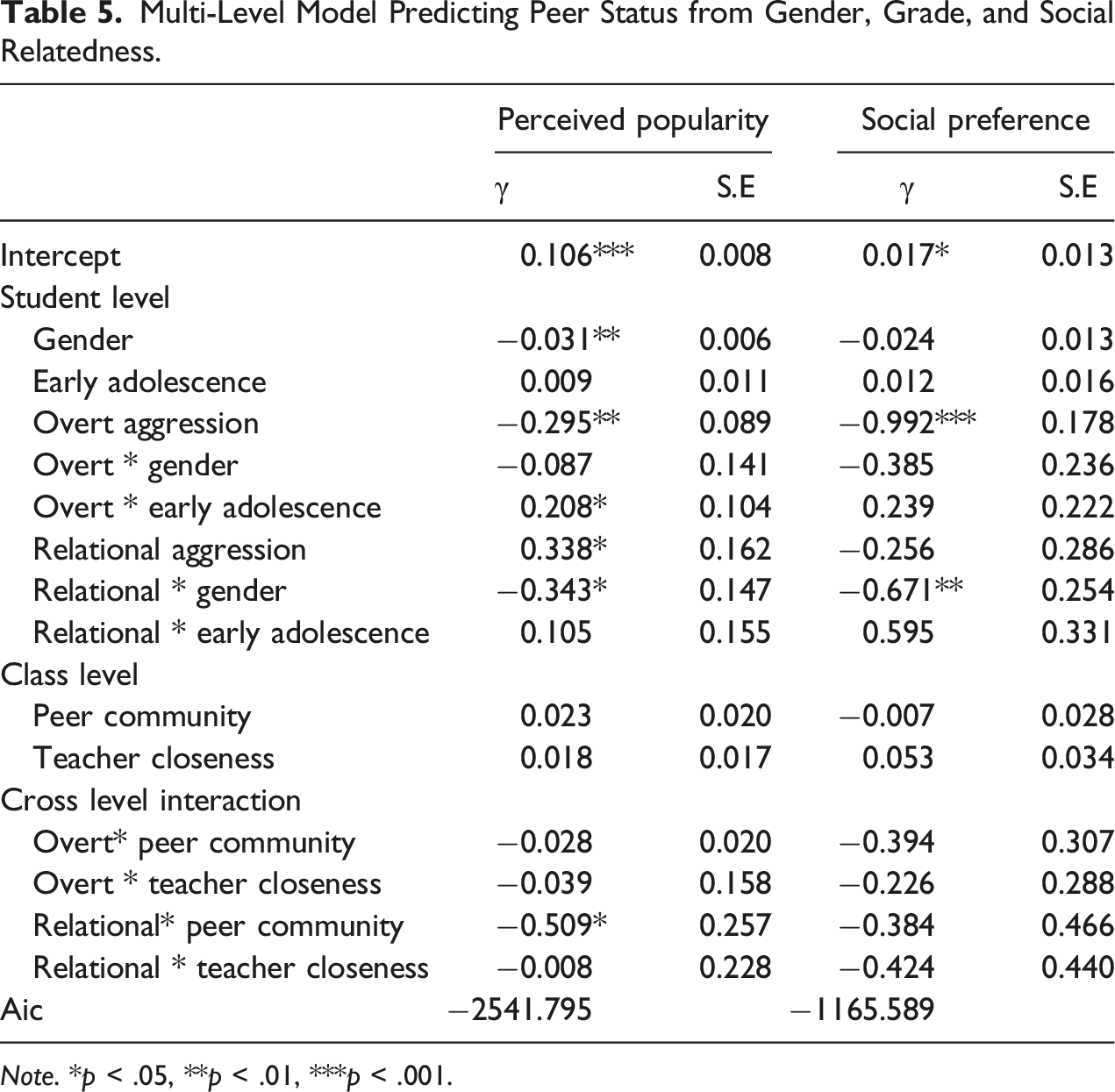
Multi-Level Model Predicting Peer Status from Gender, Grade, and Social Relatedness.
Note. *p < .05, **p < .01, ***p < .001.
Predicting Popularity
Overt aggression negatively predicted popularity (γ = −.30, p < .01); relational aggression positively predicted popularity (γ = .34, p < .05). Boys were seen as more popular than girls (γ = −.03, p < .01). There was significant interaction between gender and relational aggression (γ = −.34, p < .05). As indicated in Figure 1(a), relational aggression positively predicted popularity for boys, but had no effect on popularity for girls. Gender as a moderator of the associations of relational aggression with social preference and popularity.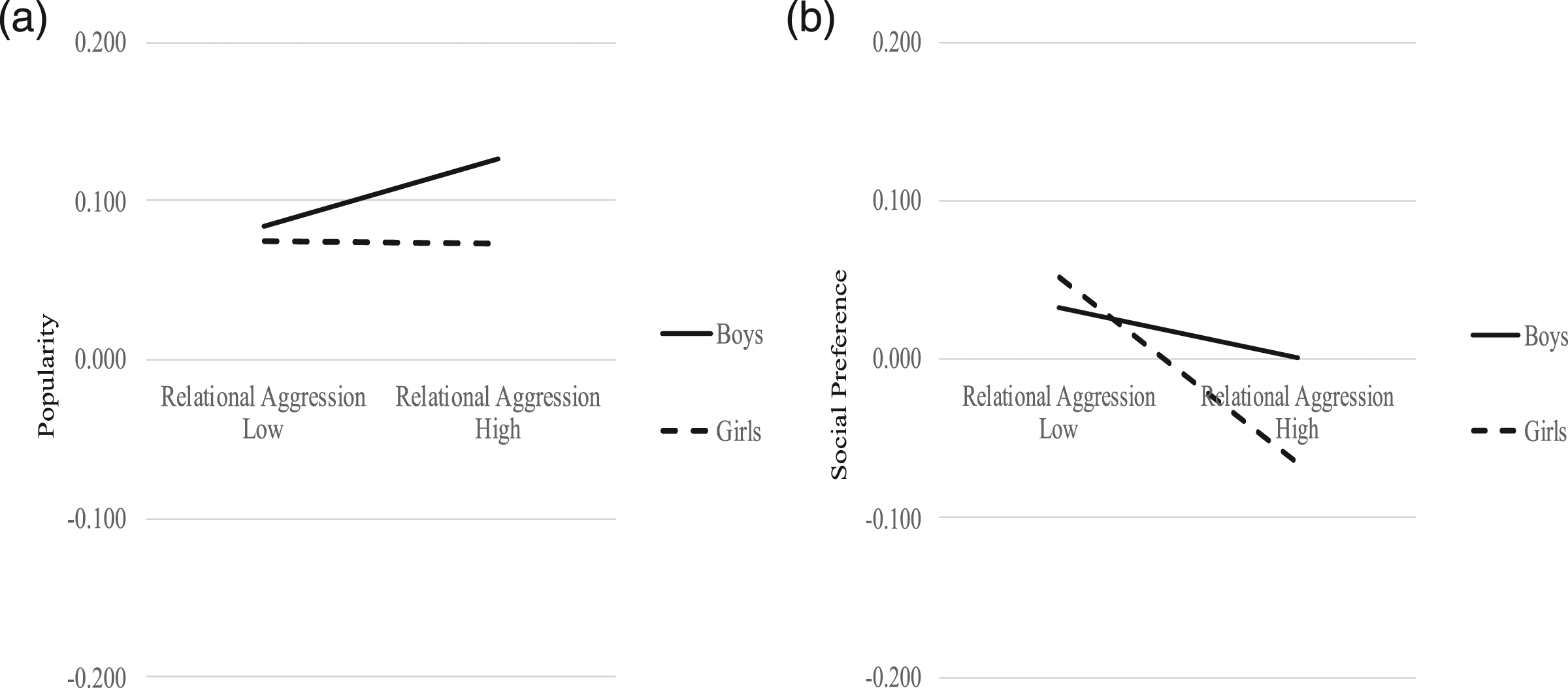
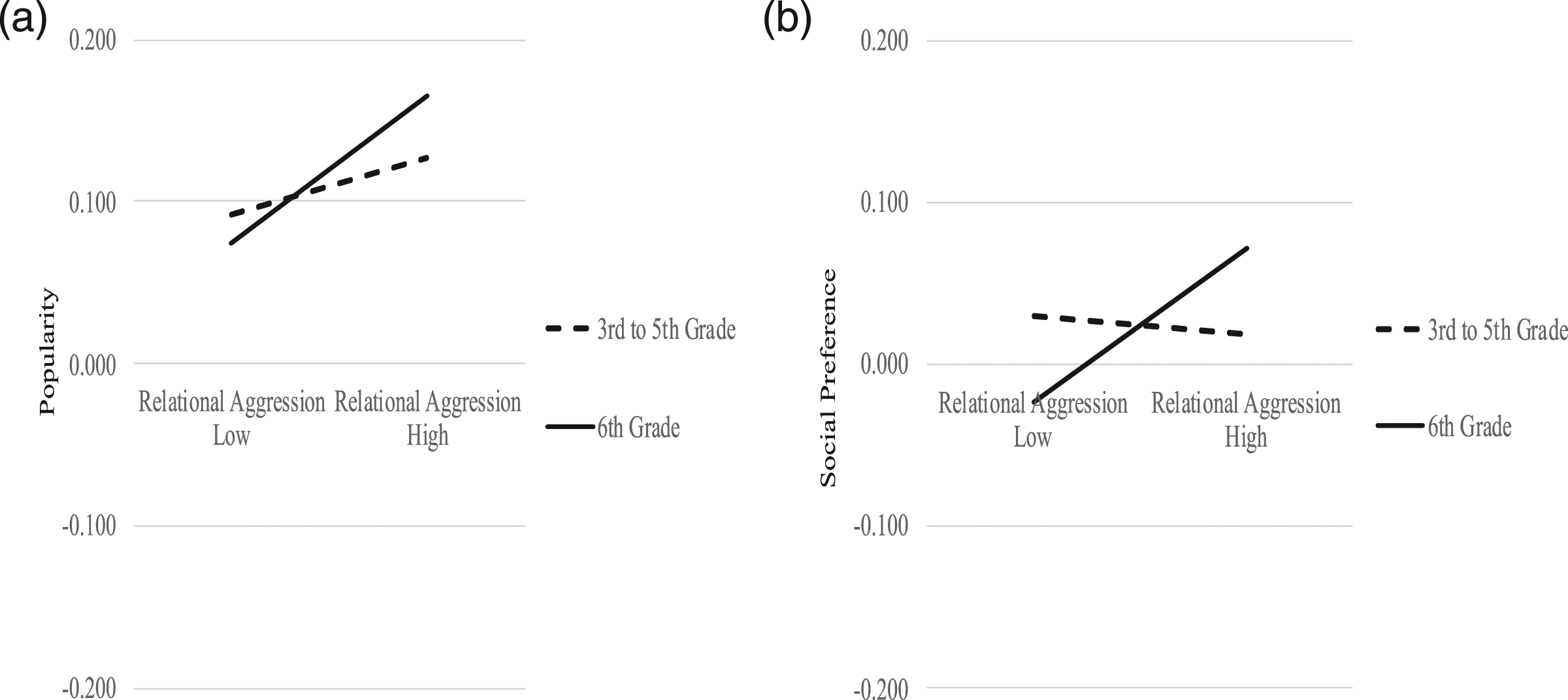
There was a significant interaction between developmental stage and overt aggression (γ = .21, p < .05). As shown in Figure 2, the negative association between overt aggression and popularity was stronger in middle childhood than in early adolescence. There was also a significant interaction between being in sixth grade and relational aggression (γ = .44, p < .01). As shown in Figure 3(a), the positive effect of relational aggression on popularity was stronger in sixth grade than in the younger grades. Developmental stage as a moderator of the association between overt aggression and popularity. The interaction effect of 6th grade dummy on the association of relational aggression and each peer status.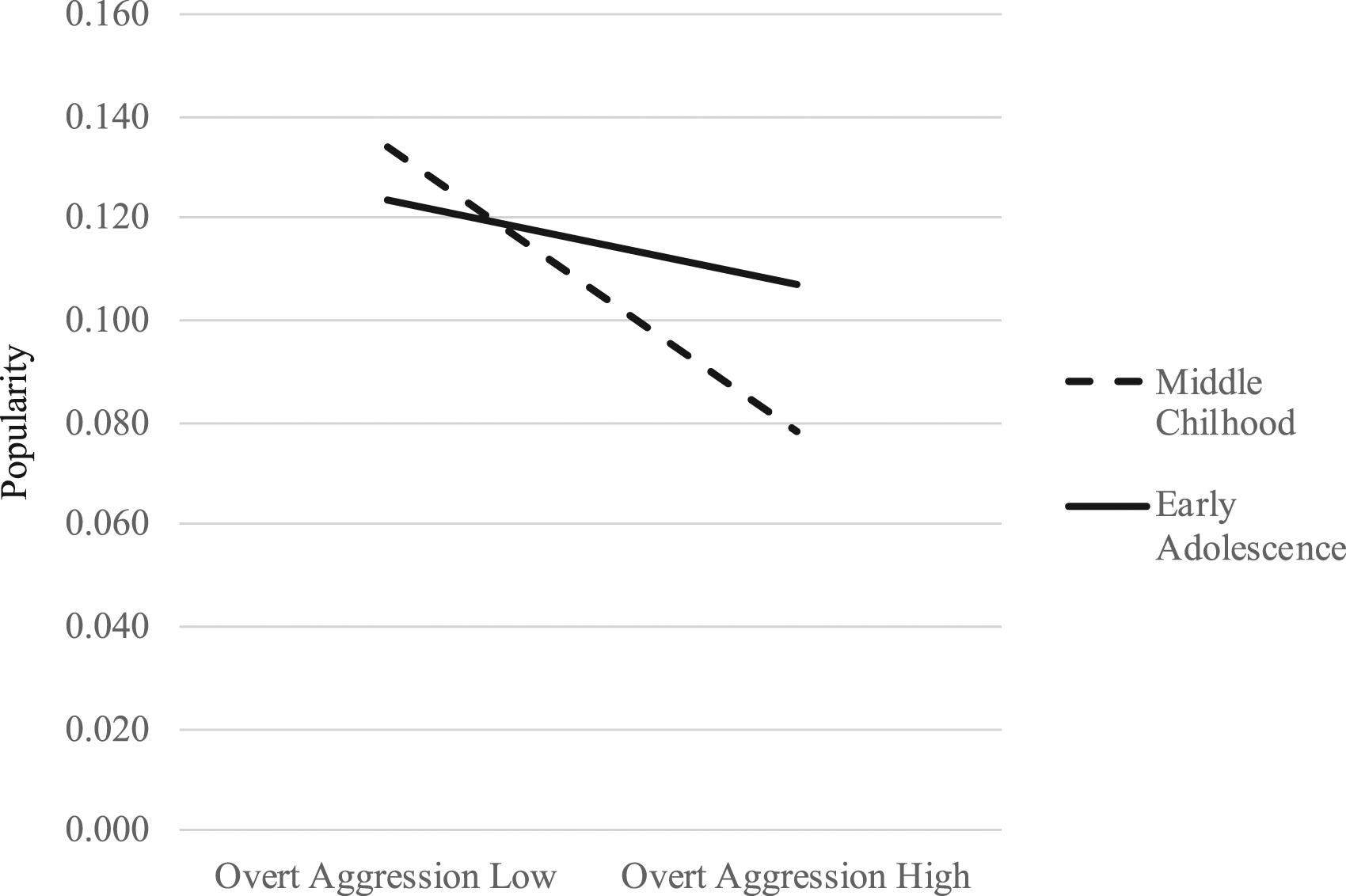
There was a significant cross-level interaction between peer community and relational aggression (γ = −.51, p < .05). As can be seen in Figure 4, in classrooms with low peer community, relational aggression had a positive effect on popularity (b = 0.84, SE = 0.32, t = 2.65, p < .05). In classrooms with high levels of peer community, relational aggression did not have a significant effect on popularity (b = −0.17, SE = 0.32, t = −0.52, p < .05). There were no significant effects for teacher closeness. Peer community as a moderator of the association between relational aggression and popularity.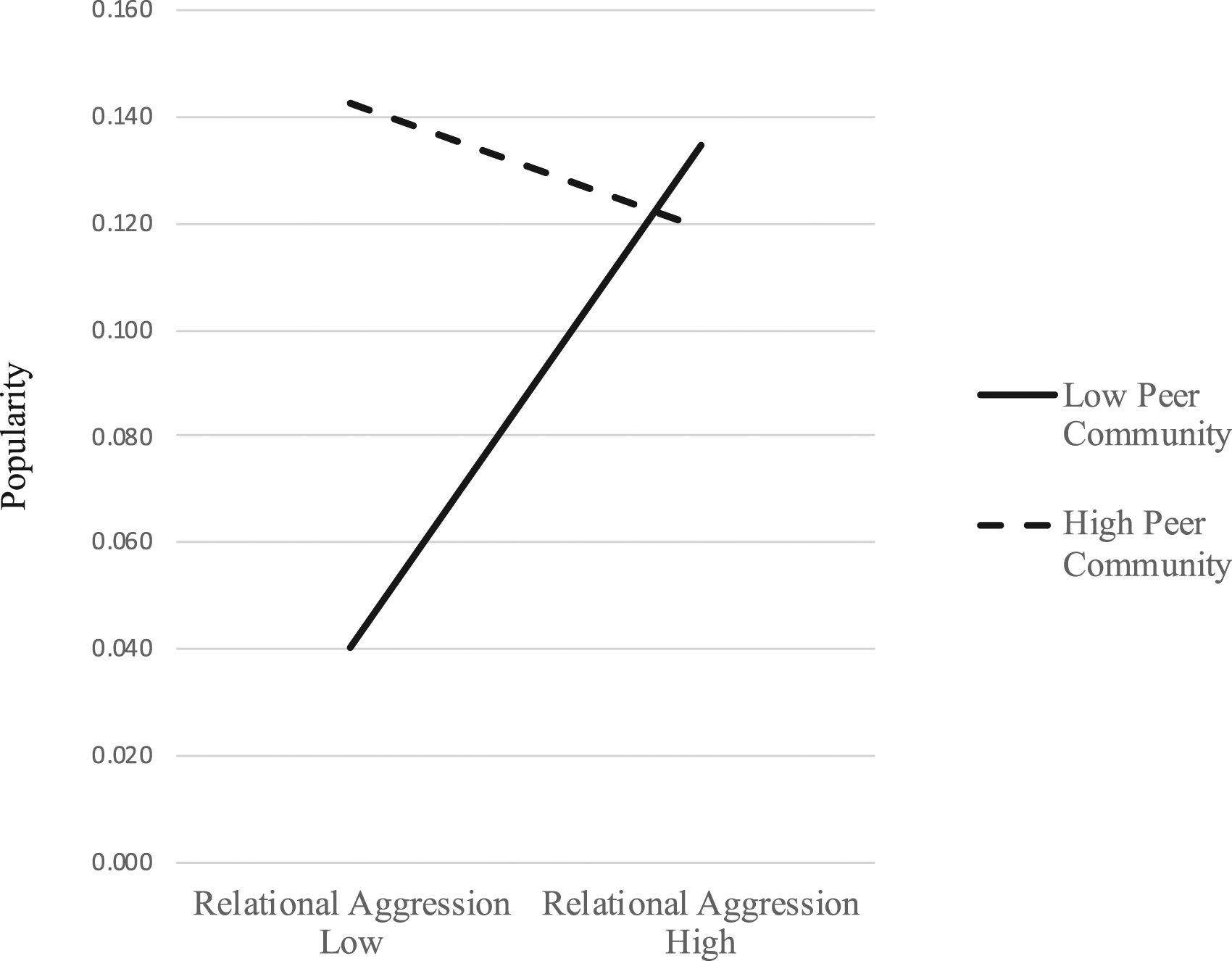
Predicting Social Preference
Overt aggression negatively predicted preference (γ = −.99, p < .001). Relational aggression did not predict social preference. There was a significant interaction between gender and relational aggression. As shown in Figure 1(b), relational aggression negatively predicted social preference for both genders, but the effect was stronger for girls. There was no interaction in the developmental stage with overt or relational aggression.
There was a significant interaction between being in sixth grade and relational aggression (γ = .85, p < .05). As shown in Figure 3(b), the association between relational aggression and social preference differed between sixth grade and third to fifth grade. Relational aggression was positively associated with social preference among sixth graders but negatively among third to fifth graders. The association between overt aggression and social preference did not depend on the level of a peer community. There were no significant moderating effects of teacher closeness.
Discussion
Inspired by the “classrooms as caring community” perspective (Battistich et al., 1997), the goal of this study was to investigate whether social emotional climate at the classroom level moderated the association between students’ individual level aggression and their peer status. Social relatedness was conceptualized as peer community and teacher closeness. We found that peer community, but not teacher closeness, moderated the association between relational aggression and popularity. We also replicated that gender, and developmental stage were individual level moderators of the aggression-peer status link. Overall, this study contributed to understanding how individual and classroom-level factors influence the peer status of aggressive youths.
Censure to Reinforcement of Aggression
We found that relationally aggressive youths were popular among peers. This is in line with previous research (e.g., Rose et al., 2004; Smith et al., 2010). While overt aggression was negatively associated to popularity, relational aggression was positively associated with popularity. This indicates that relational aggression is also used as a way of gaining status in a collectivistic culture. Although youths could engage in both forms of aggression, previous work in South Korea did not consider the contrast between overt and relational aggression. Rose et al. (2004) recommend that overt and relational aggression should be considered together to analyze the contrast between them. More empirical work should be conducted to consider the contrast between overt aggression and relational aggression in future studies with Asian samples.
In western studies, relationally aggressive girls are popular but disliked. At the same time, relational aggression was not associated with popularity for boys but less strongly with disliking among boys than girls (Card et al., 2008; Rose et al., 2004). However, relational aggression was positively associated with popularity only for boys and less strongly associated with preference for boys than girls in South Korea. Contrary to western studies, it seems that relational aggression may be an efficient strategy to gain popularity among boys in Korea and that relational aggression has a lower social cost for boys than for girls, similar to western studies.
Cross-cultural differences in peer relationships may explain for different functions of relational aggression for each gender. In a collectivistic culture, peer relations tend to be more interdependent than in a non-collectivistic culture. Furthermore, direct confrontation and explicit aggression are avoided in collectivistic cultures as they impede group harmony. Relational aggression might be a less visible and efficient way to achieve social standing by manipulating this interdependency among peers (Kawabata et al., 2010). Also, relational aggression is a good way to avoid the social cost of overt aggression. Given that relational aggression has a higher social cost for girls than for boys, girls might be more reluctant to use relational aggression to gain popularity. In contrast, relational aggression could be an alternative strategy for achieving peer status to avoid the social cost of overt aggression for boys.
Consistent with previous research (Cillessen & Mayeux, 2004; Garandeau et al., 2011), the associations between aggression and status became stronger during early adolescence in this study. The negative association between overt aggression and popularity was stronger in late childhood than in early adolescence. This is in line with previous findings (Garandeau et al., 2011; Rose et al., 2004; Smith et al., 2010) that aggressive behavior is more rewarded in adolescence than in childhood. Moreover, relationally aggressive sixth-grade students were more popular and liked than relationally aggressive students in other grades. This can also be explained by the unique characteristics of sixth grade in Korea. Sixth grade in Korean elementary school is typically considered a hallmark of the adolescence transition (Lee et al., 2013), and severe difficulties in managing the classroom and peer relationships are reported by teachers. During this time, sixth-grade students are allowed to spend more time with peers and have more autonomy in school life. Due to the age hierarchy culture in Korea, sixth graders, who are the oldest student in elementary school, also have ascribed power and status over the students from the younger grades. Prior studies report increases in aggressive behavior to establish status during the transition to the adolescent world (Pellegrini & Long, 2002). Achieving peer status may be prioritized during sixth grade as adolescents at this age value adult-like autonomy in the peer group. In a collectivistic culture, relational aggression (especially when covert and indirect) may be effective to strive for peer status without the negative social consequences of (overt, observable) physical aggression.
We found a moderate correlation between preference and popularity across the grades. This is in line with the recent meta-analysis by van den Berg et al. (2020). Our results contribute to the universality of preference and popularity as distinct constructs.
Role of Peer Community
In line with our expectation, peer community at the class level moderated the association between relational aggression and popularity. In communal classrooms, relational aggression was not associated with popularity, and non-relationally aggressive youths were popular among peers. In contrast, relationally aggressive youths were more popular than non-relationally aggressive youths in non-communal classrooms, and non-relationally aggressive youths were unpopular in these classrooms.
This is in line with the dysfunctional group account of bullying (Garandeau & Cillessen, 2006). According to this account, groups become dysfunctional in interpersonal relationships when there is no affective exchange and when the relational quality among members is poor. A group that lacks peer community would hold the characteristics of a dysfunctional group. Youths in non-communal classrooms may feel that their membership in the group is challenged because there is no relational connection based on mutual understanding and intimacy. In a group that lacks peer community, manipulating relationships, spreading rumors, and excluding peers may be the only way to achieve popularity.
Group cohesion and coherence are essential for a positive consensual view of popularity. Popularity is based on the collective perception of the group and consensus of social standing among peers (Marks et al., 2012). Popularity can only be ascribed by the group members who perceive themselves as group members. A dysfunctional group only has the appearance of cohesion; here, popularity is not based on a shared positive view but based on the manipulation of relationships and fear of isolation. In order words, aggressive youths in non-communal classrooms have only the appearance of popularity as there is a lack of consensus as a group. In this regard, peer community might serve as an affordance of popularity by enabling a collective perception as a group.
In line with this, relational aggression is used to achieve popularity in non-communal classrooms in which the members are disconnected. In non-communal classrooms, the benefits of relational aggression may be higher than the (social) costs. In contrast, in communal classrooms, relational aggression might be viewed as dysfunctional behavior that threatens group cohesion based on mutual understanding and closeness. Relational aggression might not have the reward value in communal classrooms where youths are well connected with each other with a positive sense of belonging. In such a positive context, relational aggression may not be reinforced and rewarded with popularity. Indeed, relational aggression was only associated with popularity when there was a lack of cohesion and emotional connection in the group. The importance of peer community as a moderator of the associations between aggression and popularity might be universal across cultures. Future studies should determine whether this effect can be replicated in other cultural contexts.
A protective effect of social context can shed new light on the prevention and intervention of aggression. Previous intervention efforts are mostly focused on the causes of aggressive behavior and minimize the negative social consequence of aggression at the individual level (Bierman et al., 2013). However, these intervention efforts have varied in effectiveness (Farrington & Ttofi, 2009). Fostering peer community can prevent aggressive behavior by creating a positive social climate. By creating a caring peer community in the classroom, teachers can create a social context in which aggression is not reinforced or rewarded with high peer status. As a result, youths would be less inclined to use aggressive strategies and more willing to adopt prosocial strategies that are rewarded with status and a sense of belonging. Peer community implies positive interpersonal ties at the class level. Intervention efforts should be aimed at changing the nature of the social context instead of only focusing on the problem behaviors of individual children or adolescents.
Role of Teachers
Contrary to our expectation, teacher closeness at the class level did not moderate the association between aggression and preference. This suggests that the socio-emotional climate shaped by peers plays a more crucial role than the relational connection with teachers in early adolescence (Audley-Piotrowski et al., 2015). As youths are predominantly seeking social support from peers at this age, the role of the teacher as a socializing agent becomes more important at this time.
Empirical findings regarding teacher-student relationships at the class level align with the developmental change in teacher-student relationships (Farmer et al., 2011). A study of the moderating effects of the teacher-student relationship on the associations between forms of aggression and social preference (Hendrickx et al., 2017) showed that positive teacher-student relationships at the class level did not moderate the associations between forms of aggression and preference. This supports the view that the emotional interaction between teachers and students is less influential during adolescence than younger ages.
Furthermore, the role of the teacher as a socializing agent is highlighted during adolescence (Hendrickx et al., 2017). In adolescence, youths tend to seek social-emotional support from their peers rather than their teachers as they have a proximal relationship in the classroom (Gest & Rodkin, 2011). Instead of social-emotional support, the teacher’s behavior is more likely to serve as a referent for social behavior and peer status.
Limitations and Directions for Further Research
This study had several strengths. First, this study contributes to research on the associations between peer status and aggression by examining it in a non-western context. Second, this study featured the importance of the social emotional climate of the classroom by testing the effects of peer community and teacher closeness. The focus on peer community as a protective factor constitutes an apparent strength of this study, considering that positive interpersonal climate is often emphasized but understudied in the association of aggression and peer status. Third, this study was conducted in a collectivistic culture where social relationships are highly interdependent among group members. Evidence from previous studies on the associations of peer status and aggression mainly comes from individualistic cultures such as the United States or Europe. The current findings contribute to our understanding of the unique and universal associations of aggression and peer status.
This study also had some limitations. First, causal inference is limited because this was a correlational study. Thus, the causal arrow of our associations may also be reversed, or there may be underlying third variables.
Second, our analyses were cross-sectional, not longitudinal. Because peer community moderated the link between relational aggression and popularity, it may also have longitudinal effects on the associations between forms of aggression and peer status. Longitudinal analysis should be conducted to examine the effect of peer community over time in future research. In addition, longitudinal analyses will help to further understand the causal direction of effects.
Third, we used the classroom average of individual perceptions of peer community as the measure of the collective perception of peer community at the class level. This aggregation of the individual members’ sense of peer community might not completely represent the collective perception. Alternative measures should also be considered. Other assessments may include calculating within-group inter-rater agreement (Rwg in R), using multiple informants (including teacher or peer reports), and conducting observations.
Fourth, the variable centered approach of the current study provides limited information on how peer community changes the social characteristics of individual youths. As peer community fosters prosocial and cooperative norms in the classroom, popular youths in communal classrooms might be prosocial and well-liked. In future research, a person-centered approach can be used to compare the social characteristics of popular youths between communal and non-communal classrooms.
Fifth, the role of peer community was tested in middle childhood and early adolescence, but can be expanded to classrooms at later stages in adolescence. To explore the developmental continuum in the role of a peer community, the current study can be expanded to other age groups.
Conclusion
This study contributes to our understanding of the associations between aggression and peer status and the moderating role of social relatedness among Asian youth. Consistent with studies in individualistic cultures, aggressive behavior was associated with peer status during early adolescence in a collectivistic setting. Aggressive youths were more popular and less disliked by peers across grades. Specifically, boys were more popular and less disliked, and relationally aggressive sixth graders were popular and liked in their peer group. These findings indicate that gender and developmental stage also moderated the associations of aggression and peer status in a collectivistic context.
Peer community at the classroom level moderated the association between relational aggression and popularity. In line with the perspective of the classroom as a caring community, in a positive interpersonal climate of the peer group, the status of aggressive youths was reduced. Relational aggression might lose its reward value to gain peer status in communal classrooms. The current findings highlight the importance of creating a positive peer community as an effective way to prevent aggression. The current findings highlight the importance of teaching practice to create a positive peer community in classrooms rather than
The current findings shed new light on teaching practices to create a positive peer community in classrooms. On the one hand, teachers may contribute to creating a positive social-emotional climate by implementing a social-emotional program (McCormick et al., 2015). A focus on perspective-taking and conflict resolution skills may also promote social connection among peers. On the other hand, manipulating physical proximity between students using seating arrangements may also foster peer community in classrooms. Previous research has shown that reducing the distance between classmates who dislike each other results in more positive peer relationships (van den Berg et al., 2012). This strategy may also generalize to promote a higher sense of peer community in the classroom at large. Future studies should examine how peer community is formed and how teachers can foster peer community using their ‘invisible hands’ as social managers of the classroom context.
Footnotes
Declaration of Conflicting Interests
The author(s) declared no potential conflicts of interest with respect to the research, authorship, and/or publication of this article.
Funding
The author(s) received no financial support for the research, authorship, and/or publication of this article.
