




Abstract
The transition to kindergarten (TTK) occurs at a stage in a child’s development when it can have a direct impact on later school success. For children with disabilities, TTK may be especially challenging, and U.S. federal policy provides limited guidance and mandates related to use of practices to support children with disabilities and their familes. The purpose of this study was to explore parents’ and kindergarten general education teachers’ perceptions and experiences related to the TTK from an inclusive preschool for children with disabilities. Semi-structured interviews were conducted with six parents and seven kindergarten teachers. Themes identified high-intensity transition practices as especially helpful during the transition process, and limited communication and collaboration, late teacher assignment, and ecological differences in preschool and kindergarten as challenging. Parents described the importance of sharing their prior experiences with new team members, and kindergarten teachers emphasized a desire to be included in the transition process.
In 2018, over 815,000 children ages 3 to 5 years old received early childhood special education services under Part B of the Individuals with Disabilities Education Improvement Act (IDEA, 2004; US Department of Education, 2021). Children who receive these services transition from preschool to kindergarten settings that may vary in school and classroom structure, expectations, and enrollment size (Gill et al., 2006). Researchers have found that these differences in environments may be stressful for children (Vitiello et al., 2022). Transition is a process in which collaborative relationships are established in ways to support consistency across programs (Rous, Meyers, et al., 2007). Families, administrators, and preschool and kindergarten teachers are key stakeholders in facilitating the transition of children to kindergarten (Rimm-Kaufman & Pianta, 2000; Rous, Hallam, et al., 2007). While the Every Student Succeeds Act prioritized the creation of a birth to third grade continuum to support the inter- and intra-agency alignment between preschool and kindergarten (US Department of Education, 2016), actual change to practices, curricula, and expectations has been slow. Additionally, there are no federal policies related to the transition between preschool and kindergarten for children with disabilities (CWD).
The transition to kindergarten (TTK) takes place during what has been called a “sensitive period” of child’s development (Rimm-Kaufman & Pianta, 2000), and this process can be especially difficult for CWD. Jiang et al. (2021) found that children identified as having a disability are more likely to experience transition difficulties when compared to children who do not have an identified disability. Researchers have noted that the capacity of CWD to adapt during this period of change may be limited due to social/emotional and/or academic delays (McIntyre et al., 2010). Additionally, the transition process may include changes in a placement, delivery method and frequency of services and instructional support, service providers, and in some cases, a child’s eligibility for special education (US Department of Education, 2009, 2016). Families of children with (vs. without) disabilities have expressed more concerns about the kindergarten transition process possibly because of the planning meeting decisions and eligibility determinations that may accompany it (Welchons & McIntyre, 2014).
To support CWD during TTK, researchers have encouraged teachers to use a variety of high-intensity, formal or informal transition practices to address the strengths, needs, and unique characteristics of children and families (Rous, Meyers, et al., 2007; Sands & Meadan, 2022). High-intensity transition practices are those individualized for specific children (e.g., making phone calls to parent(s), conducting home visits), while low-intensity transition practices are geared to all children in a class (e.g., distributing handouts, hosting group information meetings; Daley et al., 2011; Pianta et al., 1999). Formal transition practices are those conducted regularly and are often based on policies or norms (e.g., hosting open houses, hosting schoolwide parent-teacher conferences; Rimm-Kaufman & Pianta, 2000), while informal transition practices are those decided upon by the classroom teacher, and they may be offered unevenly across programs or classrooms (e.g., making phone calls to collaborating teacher, facilitating a conversation with a parent). Nonetheless, researchers have described the kindergarten transition practices, including those used to support CWD, as primarily low-intensity and lacking collaboration (Daley et al., 2011; Fowler et al., 1988; LaParo et al., 2000; Quintero & McIntyre, 2011; Rous, Meyers, et al., 2007; Welchons & McIntyre, 2014). This is the case even though high-intensity transition practices are especially important for CWD to ensure their unique needs are met. Parents and teachers also report specific barriers to supporting children’s successful transition (Jewett et al., 1998; Stoner et al., 2007). Teachers have reported interpersonal issues, participation of all necessary staff, organizational and administrative policies as barriers to transition (e.g., rigidity of schedules and structures that make collaboration challenging; Jewett et al., 1998). Parents have also reported lack of communication and lack of preparation of staff, including failure to receive or review information about specific students prior to the transition or lack of preparation of materials or use of strategies needed to support the child (Stoner et al., 2007).
Conceptual Framework
The Transition Process for Young Children with Disabilities conceptual framework (Rous, Hallam, et al., 2007) has been cited as a theoretical base for practices and research relevant to the transitions that occur between Part C (early intervention) and Part B preschool services and between preschool and kindergarten (Appl et al., 2015; Branson & Bingham, 2009; Gooden & Rous, 2018; Rous & Hallam, 2012; Rous, Myers, et al., 2007). The framework and its expanded version (Gooden & Rous, 2018) illustrates how ecological influences (e.g., child caregivers, and their community) and elements within the transition process itself can impact child and family preparation and adjustment. Researchers have also highlighted the influence of relations among contexts and how these form patterns that can affect all children as they transition to kindergarten (Rimm-Kaufman & Pianta, 2000). In addition to recognizing contextual influences, the framework by Rous, Hallam, et al. (2007) describes the influence of interagency collaboration in the successful transition of CWD and their families. The existing conceptual framework (referenced in Figure 1) portrays a successful transition resulting from a unidirectional process that includes the implementation of practices and strategies determined through interagency collaboration and based on relationships, alignment and continuity, and supportive infrastructure. Yet, it does not specifically address needs or influences that are specific to the transition to kindergarten and elementary school context for each critical variable. For example, under alignment and continuity these might include: curricula, academic/social environments, expectations, child-centered versus family-centered practices, service delivery, and/or use of inclusive practice.
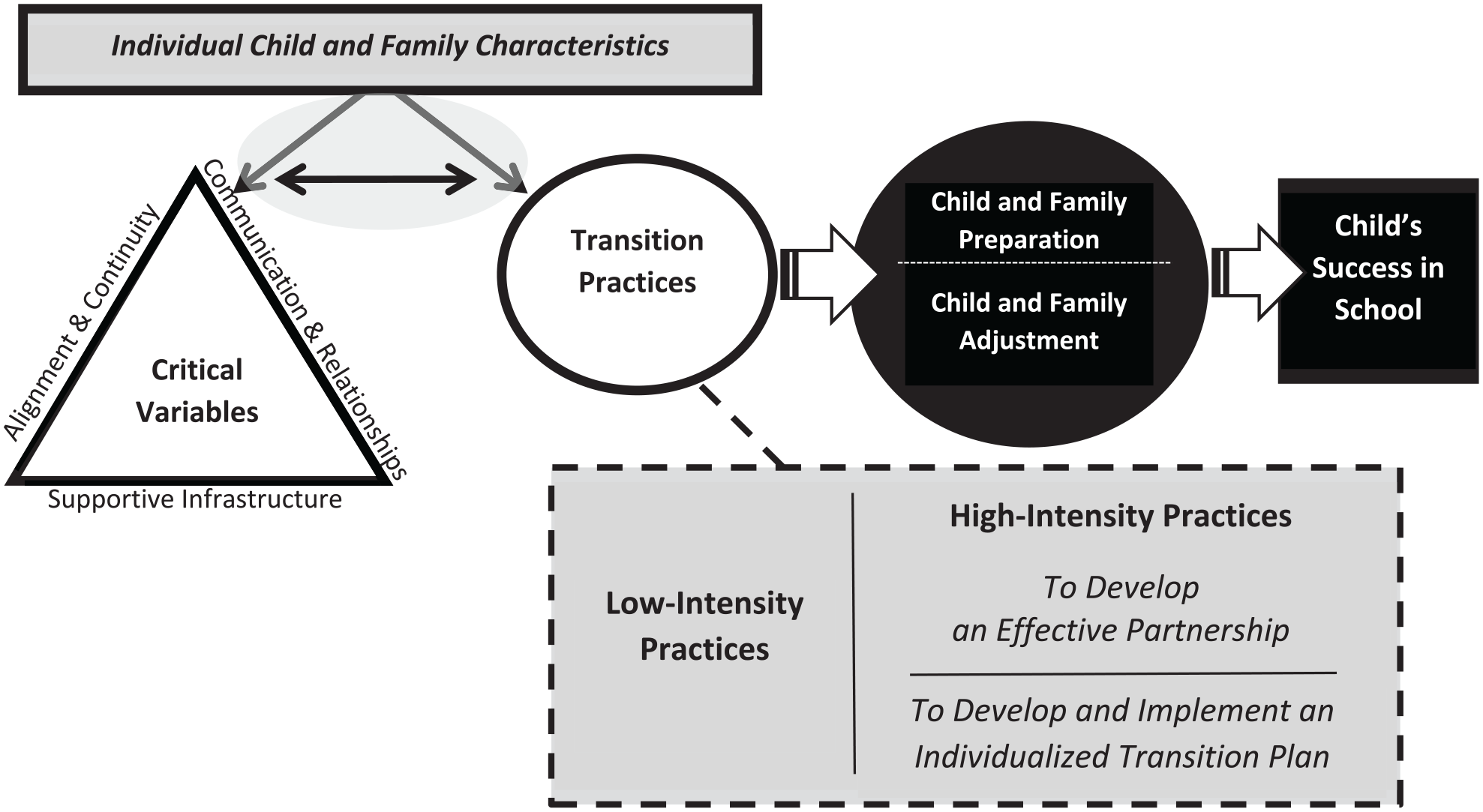
Suggested modification to the transition process for young children with disabilities conceptual framework (second level; Rous, Hallam, et al., 2007).
Purpose of the Study
While the Transition Process for Young Children with Disabilities conceptual framework has established that transition processes rely on relationships and collaboration to be successful (Rous, Hallam, et al., 2007), limited empirical research has been conducted specific to TTK. In fact, Wildenger and McIntyre (2011) noted that there exists more theoretical models and recommendations than there exists empirical research regarding transition. More recent studies have utilized quantitative methods to examine transition processes used to support a variety of learners (e.g., Cook & Coley, 2019; Garder et al., 2022; Kim, 2022; Welchons & McIntyre, 2014). Additional qualitative investigations into the kindergarten transition experiences of CWD, especially those of parents and kindergarten teachers would more clearly help the field understand the current processes and practices being used and to what extent these are considered successful. Furthermore, within the field of special education, investigations into intra-agency transitions (or those that occur within programs) are also limited (Rous & Hallam, 2012). Understanding the perceptions and experiences of those involved in such transitions can help us better understand what is helpful in supporting CWD not only during the TTK, but during a variety of transition processes. With this in mind, the purpose of this study was to explore parents’ and kindergarten teachers’ perceptions and experiences related to the TTK for CWD and it was guided by the following questions:
Method
This study was conducted using multiple methods, with a primary focus on the findings of the qualitative investigation. Research questions sought parents and teachers’ perceptions and recommendations relative to their experiences with kindergarten transition for CWD. Qualitative research has the intent of investigating how people make sense of their experiences (Savin-Baden & Major, 2013) and interviews have been described as a primary method to explore understandings, opinions, attitudes, and feelings people share (Arksey & Knight, 1999). Therefore, interviews were used as the primary source of data to address both research questions, with questionnaire data used to provide some clarification and verification of specific transition strategies used.
Setting and Participants
All data were collected prior to the COVID-19 pandemic, between May and August 2019, in a suburban metropolitan area of a Midwestern U.S. state and following Institutional Review Board approval. Participants included parents and teachers who were recruited through a variety of means (e.g., emails, flyers on social media). Email addresses for potential teacher participants were obtained through a review of the websites for public school districts located in three counties. For parent participants, inclusionary criteria required that the individual: (1) had a child with a current IEP who within the past 3 years transitioned to a public, general education kindergarten classroom, and (2) who attended a blended/inclusive early childhood program prior to their enrollment in kindergarten. For teacher participants, inclusionary criteria required that the individual was: (1) a kindergarten teacher in a public, general education classroom, (2) had at least one student with an IEP, and (3) had at least four years of experience as a kindergarten teacher. Multiple years of experience were desired to account for the fact that kindergarten teachers did not always have students with disabilities included in their classroom each year. Six parents and seven kindergarten general education teachers were interviewed for the study.
Participants
All six parents identified as women and had one child with a disability (Additional demographic information about parent participants and their child with a disability can be found in online Supplemental Tables 1 and 2). Of the seven teacher participants, six identified as women, and one identified as a man (Additional demographic information about teacher participants can be found in Supplemental Table 3). The seven teachers taught in six different large suburban/metro school districts.
Data Collection
Procedures
Interviews
While it was the authors initial intent to use group interviews for all participants, during recruitment it was difficult to find dates/times that could accommodate even small groups of participants beyond the first two teacher group interviews. Therefore, five teachers participated in small group, in-person interviews (two participants in one group and three participants in another), and two teachers were interviewed individually via phone following the completion of screening and informed consent procedures. All parent interviews were conducted individually via phone to ensure consistency. Prior to the scheduled interviews, all participants were asked to sign a consent form and complete the demographic questionnaire.
Two interview protocols were developed and as suggested by Glesne (2016), questions began with broad and simple questions (e.g., “What did kindergarten teachers do before the start of this year that was particularly helpful during the transition to kindergarten?”). Later in the interview, specific questions and probes were used (e.g., “Do you feel that contacting the parent before the start of the school year had an impact on the student? If so, how?”). Parent and teacher protocols were similar but used words specific to the participants. The interview protocols were piloted with two parents who have CWD, one general education teacher, and one special education teacher. Data gathered from the pilot study were used to make small changes to questions and probes. Final versions of the interview questions and transition practices questionnaire are included as supplementary files.
Interview protocols were used by the first author to guide the conversation, along with additional probing questions to clarify responses or obtain additional information. The researcher took written notes related to specific quotes, key points, and/or concepts throughout the interviews to help to provide any context needed during analysis. Each interview lasted between 45 and 90 min, with a mean of 54 min. Following the interview, participants were asked to complete a transition practices questionnaire. Interviews were recorded and transcribed by a transcription company and then verified using spot-checking and corrections were made, as needed. Additionally, prior to analysis, the interviewer sent each participant a one-page summary of their own interview via email to request feedback and verification of the researcher’s interpretation. Finally, participants received an incentive (gift card) for their participation.
Questionnaire
The transition practices questionnaire was developed based on commonly used practices taken from the Teachers’ Perceptions on Transition (Quintero & McIntyre, 2011) and the Family Experiences and Involvement in Transition measures (McIntyre et al., 2007). The transition practices included those that were formal and informal, as well as high-intensity and low-intensity. The teacher questionnaire prompted teachers to identify whether or not they had ever utilized any of the 14 transition practices listed (e.g., attended individual transition planning meeting, preschool students visited assigned kindergarten classroom) and who initiated the practice. It included two practices that were specific to their role (e.g., coordinating curricula, member of transition planning committee/team). Parents determined which, if any, of the 12 transition practices listed (e.g., attended child’s individual transition planning meeting, child visited assigned kindergarten classroom) were used during their child’s transition process and who initiated the practice. Participants were also provided with a space to provide notes or comments for each practice.
Data Analysis
To address the research questions the qualitative data from the interviews and any answers to open-ended questions or comments on the questionnaires were analyzed using a constant comparative analysis (CCA; Strauss & Corbin, 1998). A three-stage process, (a) open coding, (b) axial coding, (c) and selective coding, was used. The authors began the first stage of analysis for each transcript independently—reading and rereading transcripts and then using open coding to label each unit of data. As each transcript was coded, the authors met to discuss their initial codes and establish consensus on codes and potential categories. Based on this discussion, codes were compared and revised, and transcripts were reread and recoded. Once recording was complete, the authors met to discuss and categorize codes. After this second stage was complete, authors determined that data saturation was achieved. While the concept of saturation has been challenged (O’Reilly & Parker, 2013; Sebele-Mpofu & Serpa, 2020), the researchers attempted to address these controversies by establishing data saturation as the point where new data continue to include repetition of already established codes and new codes are no longer established. Initially the authors analyzed data for each group (e.g., parents) individually. Next, data analysis from both groups were compared (parents and teachers). Finally, authors finalized categories and themes. Quantitative data from the questionnaires were analyzed using descriptive statistics (percentage of individuals indicating practice use).
Researcher Positionality
To best understand the positionality of the authors within this study, it should be acknowledged that the first author has had experience as an early childhood special education teacher and an administrator within an elementary setting. However, they did not know any of the participants prior to the study. Additionally, both the first author and second author, a faculty member with years of experience in the field of early childhood special education, had multiple years of experience conducting semi-structured interviews.
Credibility and Trustworthiness
In an effort to maintain credibility and trustworthiness (Brantlinger et al., 2005), work was conducted collaboratively between the two researchers, and thick and detailed descriptions including quotes (using pseudonym identifiers) and field notes were used to support interpretations and conclusions. Member checks were used to determine accuracy of descriptions and summaries of interview data (Creswell, 2009). In the email, the researchers acknowledged that participants are the expert on their own experience and that this was an opportunity for them to provide the researchers with feedback or clarification on any details they felt were omitted or misrepresented. The member check response rate was 100%. All 13 participants responded via email that the summary had been accurate representation of their experiences. Three of the six parent participants and five of the seven teacher participants did not have additional notes or comments. However, two teachers and three parents did provide some additional clarifications or requested minor changes. One teacher and one parent participant requested a change in words they had used (e.g., use of “eye-opening” rather than “interesting” to describe her experiences regarding kindergarten transition, use “was put at ease” instead of “did feel good”). Also, one teacher and two parents provided some additional clarifying information. The teacher clarified that while it was accurately noted that she did not have communication with early childhood teacher, but the special education teacher does. Similarly, one parent wanted to add that she felt the kindergarten general education teacher was not present at the child’s transition meeting because her child hadn’t been assigned a classroom yet, not because she was invited and did not attend. In another case, the parent wanted to clarify dates related to when they received communication from the school. Results from the questionnaire were also used to triangulate or confirm some consistency of findings related to reported transition practice use.
Results
Themes relevant to each of the research questions were identified and are presented as they relate to each of the research questions (see Figure 2). Although one unique theme was identified for each of the parent and the teacher participant groups, four themes were identified as originating from both participant groups.
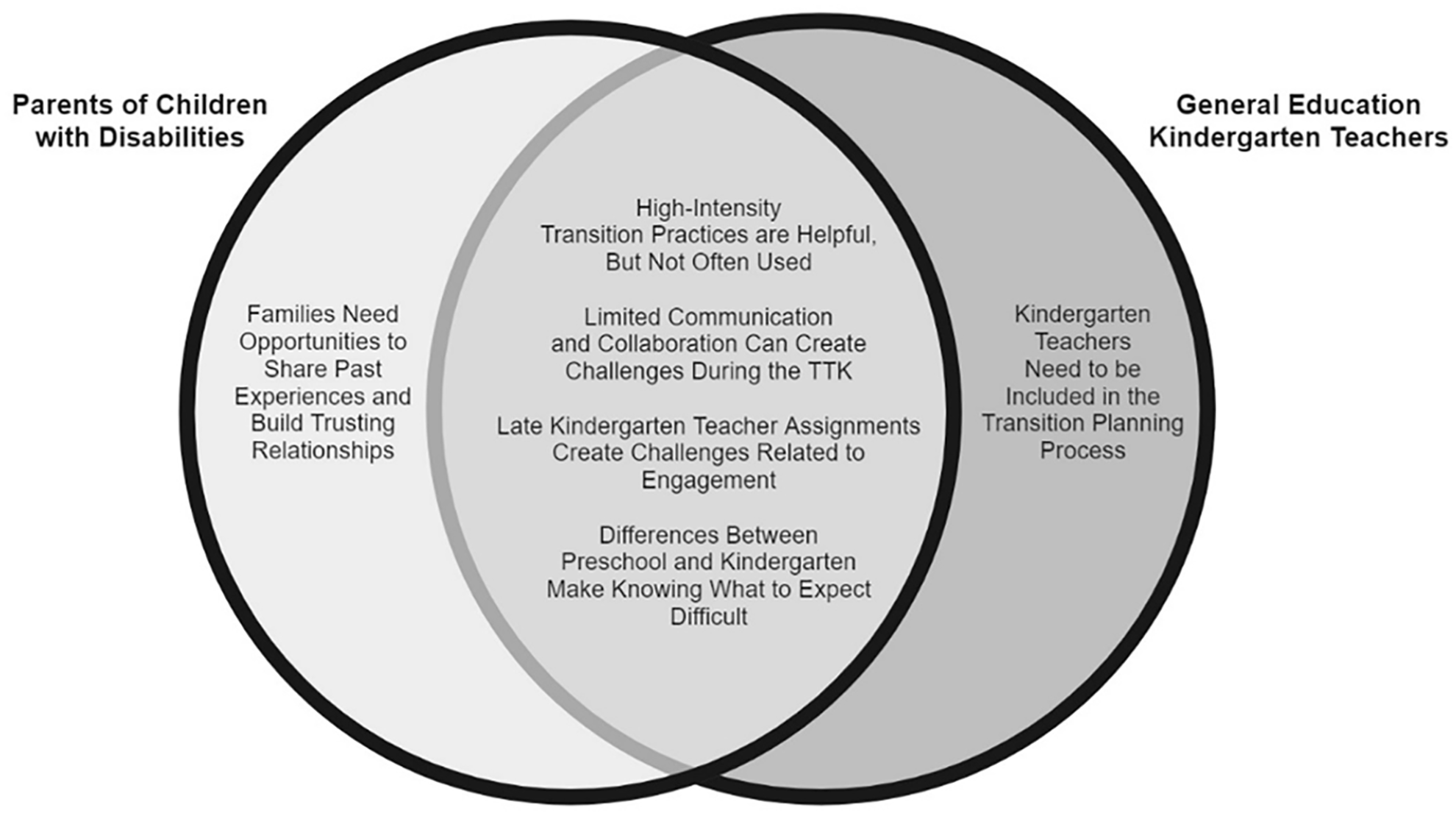
Relation of parent- and kindergarten teacher–specific themes.
What Do Parents and Kindergarten Teachers of CWD Perceive as Helpful and Challenging During TTK?
High-Intensity Transition Practices are Helpful, But Not Often Used
Responses from the transition practices questionnaire (see Supplemental Table 4) indicate that all 13 participants described a limited use of high-intensity practices beyond parent and some staff participation in individual transition planning meetings. Most parents indicated that kindergarten orientation activities (5; 83%), as well as a transition meeting with preschool and kindergarten team members (4; 67%) are used to support transition. Results were consistent with interview data findings.
During interviews, all six parents cited high intensity transition practices (e.g., individual transition planning, transition meetings, phone call with classroom teacher) as helpful. Yet, the use of high-intensity transition practices was limited to three of the seven kindergarten teacher participants. Early discussions facilitated by preschool teachers about the transition process, and information about program options were reported to be helpful for parents. Patti, the mother of Paul, a child who receives services and support for developmental delay and other health impairment, described having the opportunity to visit possible placement options for kindergarten.
(The preschool teacher) suggested that I go and observe the different schools. . .so I went and observed in each of the classrooms and just kind of got a feel for where I thought my son would fit best. She just wanted me to go first and see what my thoughts were after visiting and seeing the different supports.
All parents also described having a transition planning meeting specifically for their child as part of the transition process. Parents described this meeting as one hosted at the child’s preschool with elementary staff that often included a discussion of the child’s strengths, needs, goals, and kindergarten placement. When supports and plans were based on the strengths and needs of the child, they were described by parents as being beneficial. In some cases, parents stated that the transition meeting helped them better understand the expectations of kindergarten and what the child’s day would look like. Parents also described how team members established specific strategies (i.e., creation/implementation of social stories, individualized feeding schedules, use of visual schedules, priority seating on bus). Phoebe is mother to Peter, a child who receives services for developmental delay within a kindergarten general education setting for more than 80% of his day. She shared,
They made him a book. And they actually did it I think at the preschool too before we started. They would take pictures of his cubby. They took pictures of his teacher, the classroom aide. You know, different things. . . . so he can go through it before school started so he would have it.
Two teachers (Traci and Tom) who have both conducted student observations and participated in transition meetings at the preschool also find these experiences helpful. As a kindergarten “representative,” Traci described how in some cases administrators have provided her with a half a day to go and observe children and participate in their transition meetings. Tom, who has also been able to observe children in the preschool, stated he too has been able to “observe students with IEPs, take notes, and talk with the child’s current teacher.” He shared that the observations give him an idea of who is coming to kindergarten the following year.
Four parents reported that high-intensity transition practices (e.g., planning meetings, email or phone conversations, and school visits/tours) used before the start of the school year were helpful in supporting their child’s transition to kindergarten. Phoebe described helpful communication with her child’s kindergarten special education teacher,
She introduced herself and asked me some questions about my son to try to get to know him better as a person so she could help him as much as she could. . .She gave me all her contact information too that if I ever needed her, I could call her.
When communication occurs between the preschool and kindergarten team members, parents indicated that this is a beneficial transition practice, even if the communication is facilitated by a parent. Peyton has a child receiving special education support and services for developmental delays who was served in a kindergarten general education classroom more than 80% of the day. Peyton described connecting the kindergarten general education teacher with her child’s preschool teacher to learn some of the strategies that were successful with her child.
I was telling her (the kindergarten teacher) stuff they did in the preschool classroom and she’s like ‘Well, it’s not written in his IEP.’ And I’m like, ‘Well, can you please email or call the (preschool) teacher because I know she did these certain things that really made him successful’. . .she implemented that (the strategies) right away and she’s like ‘Well, it’s night and day difference’. . .she said it was very helpful for her talking to the preschool teacher.
Similarly, some teachers described the benefits of having individualized time together before the start of the school year. Tina and Traci shared how their schools organize opportunities for all children with IEPs to have a 30-min individual meet and greet with their teacher the day before school starts. Tina “[Meet and greet is] really just a time to talk and get to know the child and [to] put any [child and/or parent] worries at ease prior to the first day. Because [the first day] can be a lot.”
While all parents cited high-intensity transition practices as helpful, they also described benefits to participating in low-intensity activities (e.g., preview nights, large group meet and greet events, ice cream socials). These low-intensity transition practices are the majority of the transition practices experienced and described by kindergarten teachers. During the interviews, all kindergarten teachers described these low-intensity transition practices as helpful for CWD: reviewing children’s’ IEPs, kindergarten screening procedures, kindergarten large group meet and greet events, use of parent questionnaires, meeting with other kindergarten staff to plan for classroom activities, and using classroom-wide communication strategies. Kindergarten teachers also described activities including orientation as beneficial for all children and parents, including CWD. Trish states, “(It’s) pretty helpful because parents know what to expect from kindergarten and they know all of our routines and stuff for the upcoming year.” Some teachers reported that activities like school-wide or large group meet and greets have value and help all children, including CWD, acclimate to the new environment. Tina described hosting a “sneak peek” on the first day of kindergarten:
They only spend an hour in the classroom. So, they’re dropping off their supplies, they get to see just the layout of the classroom, where their cubby is, where the bathroom is. . .I’m there too so the parents can ask me any questions. . .they can meet me and put a face to the name, see the classroom, and hopefully relieve any anxieties they have.
Limited Communication and Collaboration Can Create Challenges During the TTK
All parent participants described limited communication between themselves and kindergarten team members as a challenge to the transition process. Peyton described how a lack of communication impacted her ability to prepare her child for the transition. She stated,
I didn’t know how to prepare him. . .I didn’t know, are we getting up in the morning, eating breakfast, going to school or are we going to school after lunch? Do we have our mornings free. . .There was no communication and there was no way to prepare him for what was to come.
Some parents described how lack of communication between teachers and parents prior to their child’s transition planning meeting led to limited preparation or understanding. Prue is mother to Patrick, a child who receives special education and support for speech language impairment and emotional disturbance within the general classroom setting for more than 80% of his day. Prue stated that she was unclear as to what would happen at the meeting. “I probably didn’t ask many questions. . .I walked out of there feeling like I don’t really understand what on earth happened and how this was of any help or benefit to him or for me.”
Parents described other lapses in communication between themselves and kindergarten teams during the transition process, especially during the summer before entering kindergarten. Paula is mother to Packer who receives special education services and support for autism and developmental delay within the general education classroom setting for more than 80% of his day. Paula described,
They (kindergarten team) told us . . . they would reach out to us over the summer . . . that they would get to know him and figure out what works, what doesn’t work for him, and get him comfortable with the idea of going to a new school. . . .(we) quite honestly didn’t hear anything until end of July or August when we finally got the date for the first day of school.
Other parents noted they had opportunities to meet with kindergarten staff before the start of kindergarten, but that these were sometimes short or announced last minute making it hard for parents to participate. For Paula, the opportunity to meet the teacher was difficult because her child struggled with transitions, there was limited time allocated for the event, and no individualized support was provided for him to participate. “I knew he was going to flop in the front door like that and refuse to go in. . .I think they only allocated half an hour for this. Quite honestly, 15 minutes of my half an hour was spent trying to get him in the front door.”
In other cases, lack of communication between preschool and kindergarten teachers was reported to be a challenge. Peyton described how information was not transferred correctly to the kindergarten. “They didn’t have his aide and the IEP said an aide and it didn’t transfer correctly. It took us until October. . . to get everything done.” Peyton and Prue each also shared how they feel kindergarten teachers either did not consider or refused to communicate with preschool teachers in an effort to problem solve when children struggled during transitions. Prue described her request for the kindergarten teacher to contact the preschool team.
‘Will you please bring the preschool teacher over to the school? She has techniques that [worked] with him . . .they absolutely refused. . . they really didn’t take into account anything that the preschool teacher had to say and did everything all on their own.
This lack of collaboration between preschool and kindergarten teachers was frustrating for Prue. “I feel they (kindergarten team) wanted nothing to do with the opinions from the previous schoolteacher and (they) were like, ‘No, we’re equipped. We don’t need them (the preschool team).’”
Late Kindergarten Teacher Assignments Create Challenges Related to Engagement
Almost all parents and teachers described the challenge of having kindergarten staff and classrooms assigned to the students only a week before, and sometimes the first day of school. This late assignment makes it a challenge to engage in proactive communication, collaboration, or planning, and to implement support for CWD. Many parents and teachers described how schools will send a “kindergarten representative” rather than the child’s actual kindergarten teacher to attend transition planning meetings. Prue shared,
What was weird is that they said, ‘Here’s so and so and she’s a kindergarten teacher at the school.’ I said, ‘Okay, you’re going to be my son’s kindergarten teacher.’ And her comment was, ‘No, I have no idea if I’m going to be his teacher.’
Many parents shared that it was hard for teachers to get to know their child because the class assignment came so close to the start of the school year. “It’s only rocky (the transition) because they don’t know (my child). They’re just getting this piece of paper” (Pearl, mother to Penny who receives special education and support for autism within the general education classroom for more than 80% of the day). All of the kindergarten teachers interviewed stated they do not know who will be in their class, including CWD, until the week prior to school starting. Many described how they are not part of the transition meeting for CWD, possibly because the class assignments are not final until much later in the summer. As Tom put it, “As the gen-ed half of a co-taught (classroom), I would say I play zero role before school starts.”
Differences Between Preschool and Kindergarten Make Knowing What to Expect Difficult
They also report trying to predict the unpredictable—how a child with a disability will react to a very different environment as a challenge. As Traci stated, “While I think it’s important to have some more collaboration time with parents and families, I also think the setting is different, so you can’t predict what’s going to happen.” In each interview, parents and kindergarten teachers mentioned differences between preschool and kindergarten and how these are considerations when planning for children’s transition. Unexpected differences in the frequency or quality of parent-teacher communication were also noted by parents.
“The difference between preschool and kindergarten is day and night,” stated Prue. Differences described by parents and teachers include kindergarten classrooms having a larger number of students, less adult support, a longer day, and a more structured routine or schedule. Many parents and kindergarten teachers described significant differences relating to academic or behavioral expectations. Prue stated, “Preschool I think was still sort of fun. . .It’s a lot less demanding than kindergarten is.” Other parents felt that increased expectations exist in kindergarten, and this made them more concerned about their children’s ability to succeed in the general education setting. Phoebe stated, “I want (my child) ready for kindergarten. It’s a big deal. . .There’s a higher expectation. There’s more things he’s going to have to do.” Patti described her perceptions of the expectations in kindergarten and how it could impact her child.
I just knew that classroom sizes in a gen ed classroom are like 25 to 30 kids and that would be way too much for him to be able to handle. . .He doesn’t really sit still. To be expected to sit at a desk or a chair, something like that for long periods of time, you need a lot of sensory breaks and the demand for what probably would be expected work-wise, he’s so far already delayed that it wouldn’t be fair.
Kindergarten teachers also described how academic expectations are very different than those in preschool. Traci described how “a lot of classrooms in our district don’t even have kitchen sets or sand tables and easels and things like that. They’ve gotten rid of it. I think because the curriculum has become just more [academic].” She also discussed the different expectations,
The preschool tends to be really loose, you can hang out, walk down the hall, touch things. The expectations in the regular K-5 classroom building are different. It’s a zero in the hallway, you walk a certain way, don’t touch your friends. Things like that I think are big adjustments for kids.
Four teachers described how this lack of alignment in environments and expectations creates challenges when implementing goals or supports that are written by preschool teams. Each teacher described a situation where they have encountered goals or supports that were difficult to implement. Tom described IEP goals that were originally written in the preschool setting:
Behavior goals, specifically where the one student you [have to] ask him every two minutes to do this, and you have to sit by him. Or an adult has to be near him. If I have 25 students in my class, I cannot focus on that one student for every two minutes while I’m trying to teach a whole group lesson.
A few of the parents mentioned that once in kindergarten they also noticed dramatic changes in the amount of ongoing communication they had with service providers and teachers. Phoebe acknowledged that in preschool she felt as if she was a member of her child’s team, but during the transition meeting with kindergarten team members she felt as if things were different. She described kindergarten team members as “gatekeepers” who determine what the child needs to be successful. She stated that even though she spoke up during meetings she felt “like I was being heard, but they weren’t listening.” The difference in communication was also distinguishable to other parents after their children started kindergarten. When Patti had not heard from her child’s therapists since the start of the year, she became concerned. “I had no idea what he was working on. . .It was just different. I wasn’t used to not knowing what he was doing with those therapists.” Phoebe described how the only communication she received was from the kindergarten special education teacher, even though her child spent the day in the general education setting. “We were not engaged. She did not communicate with me at all. . .if there was a concern, it came from the (special education) teacher. It did not come from the (general education) teacher herself.” Pearl cited how communication differed because more individuals were involved. “I have all these different people (to talk to). It’s not just the same person.”
What Practices Do Parents and Kindergarten Teachers Recommend for Successful Kindergarten Transitions for CWD?
Families Need Opportunities to Share Past Experiences and Build Trusting Relationships
During interviews, parents described how during TTK it is important for team members to understand their unique journey to kindergarten. This journey includes not only their child’s uniqueness and prior school experiences, but also the family’s experiences with the disability diagnosis of their child. All parent participants expressed how they felt their stories are essential to understanding their child’s unique strengths and needs and to supporting their child and family. Pearl spent a significant amount of time during the interview describing her initial concerns about her child’s development since birth, the process of obtaining services and support for her child in early intervention, her attempt to enroll her child in a community preschool, the school district eligibility process, and then her path to a medical diagnosis for her child. She explained, “my path is so different” and stated,
Maybe had they (kindergarten team members) spent a little bit more time (before transition) they would have gotten to know her (the child). . .I feel like she (the kindergarten teacher) could have gotten more information on (the child) before the start. But that wasn’t the case.
Kindergarten Teachers Need to be Included in the Transition Planning Process
Kindergarten teachers shared how they have limited opportunities to engage in the transition planning for CWD, yet many described their desire to be involved in this process. All teachers interviewed described a desire to observe CWD in their preschool classrooms and be involved in transition meetings with preschool team members and parents. Tina stated, “I’m not sure why I’ve never been a part of it (observations/meeting). That’s something every year I’m kind of like, ‘I want to go see these kids that I might have.’” Some teachers described how they would like to meet with preschool teachers, to better support children during transitions. Tonya stated, “At my school the special education elementary teachers meet with the early childhood teachers and gen-ed teachers are not a part of that meeting and I really wish that we were. I don’t see why we’re not.” All kindergarten teachers agree that it would be ideal if they could attend transition meetings for the children they would have in their classroom. One teacher stated, “I think it would be more beneficial to have everybody involved go (to the meeting)” (Tom).
Discussion
As we explored parents’ and kindergarten general education teachers’ perceptions and experiences related to the TTK for CWD, we were able to establish some recurring themes, including how high-intensity transition practices are perceived to be helpful but limited in use, and how barriers to successful TTK may include: limited communication and collaboration, late teacher assignment, and ecological differences in preschool and kindergarten. Additionally, parents described how sharing their prior experiences with new team members was important, and kindergarten teachers emphasized a desire to take a larger role in the transition process. The results of this study align with the existing Transition Process for Young Children with Disabilities conceptual framework’s depiction of critical variables’ (i.e., alignment and continuity, communication and relationships, and supportive infrastructure) influence on transition practice use. Additionally, existing literature has supported use of practices which relate to specific themes identified in this study, including, but not limited to, use of high-intensity transition practices (Rous, Meyers, et al., 2007; Sands & Meadan, 2022), and have also described lack of communication and collaboration between staff and families as a challenge when supporting CWD (Quintero & McIntyre, 2011). Results also include suggestions from each group of participants that provide novel insights into parent and teacher perceptions about TTK for CWD. These novel insights include parents’ desire to have communication not only about individual child needs, but past experiences and perceptions of transition. Additionally, kindergarten teachers expressed a desire to be more included in the TTK process for CWD.
Parents and teachers describe how communication is helpful during the TTK process but indicate there may be topics and/or types of communication that occur which are more helpful than others. Individualized or high-intensity transition practices related to communication and collaboration were identified as especially helpful to parents and teachers during the TTK process (e.g., conversations with the teacher or other staff, individualized transition planning meetings, etc.). While use of low-intensity transition practices was also identified as being helpful, high-intensity transition practices allowed for parents and teachers to communicate and collaborate about specific individual child and family needs, whereas low-intensity practices provided parents and teachers with information to assist them in planning for the TTK and guidance regarding the new environment. Researchers have previously suggested high-intensity practices can be used to support children, families, and staff before, during and after a young child’s transition and these can be used to address the specific strengths, needs, and characteristics of children and their families (Conn-Powers et al., 1990; Rous, Meyers, et al., 2007). Additionally, a few parent participants described how important it was to have opportunities to get to know teachers and staff, as well as share with them their child’s prior experiences or educational journey. Yet, parent and kindergarten teacher participants in the current study acknowledged that a majority of the transition strategies used during their experiences were low-intensity. This aligns with findings in previous studies investigating use of transition practice use to support children with and without disabilities (Daley et al., 2011; Quintero & McIntyre, 2011; Purtell et al., 2020; Welchons & McIntyre, 2014). In most cases, low-intensity transition practices were used by kindergarten teachers unless schools or districts mandated special opportunities for CWD to visit the kindergarten classrooms or to conduct individualized transition planning meetings. Reasons for limited use of high-intensity transition practice use by kindergarten teachers might be related to participants’ not receiving class lists until a day or so before the start of the school year, or lack of invitation to participate in transition planning meetings that might take place the spring prior. Other possible reasons cited in previous literature for the limited use of high-intensity transition practices by kindergarten general education teachers include: a limited understanding of high-intensity transition or family-centered practices (McWilliam et al., 1999), a perception that it is not part of their role or responsibility (Jordan et al., 2010), or a perception that the implementation of high-intensity practices is not feasible (e.g., lack of time or information provided; Forest et al., 2004). Yet, consistent with findings from Purtell et al. (2020), it should be mentioned that use of high-intensity practices, including having a formal meeting to plan for the TTK, does not always prevent confusion or challenges occurring throughout the process.
Because parents and kindergarten teachers cited communication as helpful, it is not surprising that a lack of communication throughout the transition was identified as a challenge. Previous research has also cited a lack of communication between preschool and kindergarten teachers as a barrier to successful transitions (Quintero & McIntyre, 2011). Other identified challenges include: a lack of preschool and kindergarten alignment and the last-minute provision of classroom rosters. Daley et al. (2011) also found that teachers’ receiving their class lists too late was a barrier to using high-intensity practices. Kindergarten teacher participants expressed a desire to be more included in the TTK process for CWD, including opportunities to participate in planning meetings with parents. More investigation into what opportunities are provided to kindergarten teachers to participate in such processes is needed. Limited research has described kindergarten teachers’ perceptions of or their desire to be involved in the TTK process for CWD.
Limitations
This study’s findings are bound by a few limitations. Participants in both groups were limited in number (parents n = 6; teachers n = 7) and from the same state and locality (suburbs). Therefore, while having similar groups and areas provide a more in-depth understanding of data transferable to similar midwestern areas, their experiences may not be representative of parents and teachers in other states or who are located in rural or urban settings. Another limitation was to what extent the questionnaire was able to accurately describe the transition practices that participants experienced without additional context. Additional detail beyond yes/no would have provided more context that could be used to clarify the category of transition practice that took place. Replication of the study on a larger scale would strengthen the study’s ability to generalize its results. Additionally, the study would have been stronger if parents and teachers were dyads who were interviewed to allow a comparison of experiences and perceptions. It should also be noted that a majority of the parent participants in this study reported being White and Non-Hispanic and having total household incomes above $75,000. Families who may have lower household incomes or who are from historically underrepresented communities may have different experiences than those who are White and/or from higher income households (Cooper et al., 2010). Furthermore, recruitment was conducted through email contact and flyers on social media, which may have limited the participation of low-income caregivers or encouraged participation of teachers and caregivers who feel strongly on a topic. Another limitation is participants’ retrospective perceptions that may not be as accurate as ones conducted when the transitions were currently taking place. Moreover, because some interviews occurred as a small group and some as individuals there may be some inconsistencies in the information collected due to the possible influence of others in the small group interviews. Finally, because only one interview was conducted with each participant there were limited opportunities to verify the findings.
Implications for Research, Policy, and Practice
While this study’s findings may not be generalizable to a wide group, it does extend the current literature as it relates to TTK for CWD but also may be valuable to researchers as it indicates a potential need to reevaluate the existing conceptual framework (Gooden & Rous, 2018; Rous, Hallam, et al., 2007). The existing conceptual framework illustrates how during the transition process the child and family’s adjustment to the new program heavily influences a child’s academic and social success. Yet, the framework does not clearly visualize how the child and family’s individual experiences, strengths or needs influence the transition process. This is specifically important for CWD. Implementation of transition practices is one element highlighted in the study’s findings and also found in the conceptual framework, however, other themes that were unique to each participant group also emerged (i.e., the child and family’s past experiences, and the inclusion of kindergarten teachers in the transition process). Parent participants described individual child and family characteristics and experiences that deserve consideration as they relate to the existing conceptual framework. Each of the parents shared their child’s and family’s unique journey to kindergarten and felt this was important for those working with their child to know; prior to making decisions, about their child’s services or support needs in kindergarten. For most parents, TTK is the latest in a list of multiple transition experiences that resulted in various outcomes. Yet, the existing and expanded versions of the conceptual framework for transition does not visually acknowledge the effect of prior transition experiences and the possible impacts on children, families, and the transition process. Nor do these versions recognize how transition practices may impact the variables that have been noted as critical to a successful transition.
While further research is needed to support this consideration, it might be that the current framework needs to be modified to better recognize the family as a system (Turnbull et al., 2014) and its role as a partner (Dunst et al., 1994; Keen, 2007) in the transition process. Figure 1 illustrates one possible way the conceptual framework might acknowledge individual child and family characteristics as its own entity in the transition process, one that is influenced by, and which influences critical interagency variables and one that influences transition practices and activities. Additionally, the framework may also need to better depict how transition practices and activities should first focus on the development of effective partnerships and then on the development and implementation of a transition plan created through shared decision making and goals and describe the need for a variety of high- and low-intensity practices.
Besides a potential reconsideration of the conceptual framework, there is a need for additional information regarding support CWD receive during the TTK, especially after the COVID-19 pandemic. An increasing number of CWD ages 6 to 21 are spending time in general education settings (McFarland et al., 2019) and parents of young CWD who transition from preschool programs may expect and find it helpful to have ongoing communication with all of their child’s teachers and IEP team members, because early childhood programs emphasize the use of family-centered practices (Dunst, 2002). More continuous use of family-centered practice by kindergarten team members would create closer alignment between programs. Meanwhile, the use of family-centered practices in elementary school has not yet been widely observed and this alone necessitates more investigation. Kindergarten general education teachers may desire, be able to and should be included in the implementation of high-intensity transition practices, including formal and informal opportunities for communication and collaboration. Because a majority of the teacher participants worked in kindergarten classrooms housed separately from preschool classrooms, additional investigation into potential differences in transition practice use occurring between kindergarten and preschool teachers that are on- and off-site is needed. Furthermore, because some teacher participants cited lack of administrator support as a barrier, further research is needed to address what possible administrative barriers may exist related to kindergarten teacher participation in the transition process for CWD (e.g., administrator knowledge and perceptions, limited availability of staff, late development of class rosters). Also, more research is needed to investigate how the development, implementation, and quality of individual transition plans affects the social-emotional and academic skill acquisition of CWD in kindergarten, as well as their ability to be fully included in general education settings. Lastly, it might be important that in future studies researchers explore the experiences of parents of CWD who had been served in self-contained preschool classrooms before transitioning to kindergarten to better understand how transition practice use might look different than those who had been served in blended or inclusive classrooms.
The transition to kindergarten has been described as an equity issue (Caspe et al., 2015), where those who experience a successful transition often experience positive school outcomes (Schulting et al., 2005). The US Department of Education has encouraged and supported the alignment and continuity of early learning programs from birth through third grade, including the development and implementation of state TTK plans (US Department of Education, 2016). Yet, successful transitions for CWD requires specialized knowledge, and individualized family-centered practice by sending and receiving programs, and collaboration with families (Gooden & Rous, 2018). To best support CWD during TTK, and to align early childhood and elementary programs, policies may be needed to extend the implementation of family-centered practice (rather than simply family engagement or involvement) throughout early elementary school (Child Welfare Information Gateway, 2017). Additionally, mandates similar to those related to the transition between Part C and Part B services in IDEA, including guidance on the use of high-intensity transition practices and roles for parents, preschool and kindergarten staff, may need to be considered.
Supplemental Material
sj-docx-1-tec-10.1177_02711214221146748 – Supplemental material for Transition to Kindergarten for Children with Disabilities: Parent and Kindergarten Teacher Perceptions and Experiences
Supplemental material, sj-docx-1-tec-10.1177_02711214221146748 for Transition to Kindergarten for Children with Disabilities: Parent and Kindergarten Teacher Perceptions and Experiences by Michelle M. Sands and Hedda Meadan in Topics in Early Childhood Special Education
Supplemental Material
sj-docx-2-tec-10.1177_02711214221146748 – Supplemental material for Transition to Kindergarten for Children with Disabilities: Parent and Kindergarten Teacher Perceptions and Experiences
Supplemental material, sj-docx-2-tec-10.1177_02711214221146748 for Transition to Kindergarten for Children with Disabilities: Parent and Kindergarten Teacher Perceptions and Experiences by Michelle M. Sands and Hedda Meadan in Topics in Early Childhood Special Education
Supplemental Material
sj-docx-3-tec-10.1177_02711214221146748 – Supplemental material for Transition to Kindergarten for Children with Disabilities: Parent and Kindergarten Teacher Perceptions and Experiences
Supplemental material, sj-docx-3-tec-10.1177_02711214221146748 for Transition to Kindergarten for Children with Disabilities: Parent and Kindergarten Teacher Perceptions and Experiences by Michelle M. Sands and Hedda Meadan in Topics in Early Childhood Special Education
Supplemental Material
sj-docx-4-tec-10.1177_02711214221146748 – Supplemental material for Transition to Kindergarten for Children with Disabilities: Parent and Kindergarten Teacher Perceptions and Experiences
Supplemental material, sj-docx-4-tec-10.1177_02711214221146748 for Transition to Kindergarten for Children with Disabilities: Parent and Kindergarten Teacher Perceptions and Experiences by Michelle M. Sands and Hedda Meadan in Topics in Early Childhood Special Education
Supplemental Material
sj-docx-5-tec-10.1177_02711214221146748 – Supplemental material for Transition to Kindergarten for Children with Disabilities: Parent and Kindergarten Teacher Perceptions and Experiences
Supplemental material, sj-docx-5-tec-10.1177_02711214221146748 for Transition to Kindergarten for Children with Disabilities: Parent and Kindergarten Teacher Perceptions and Experiences by Michelle M. Sands and Hedda Meadan in Topics in Early Childhood Special Education
Supplemental Material
sj-docx-6-tec-10.1177_02711214221146748 – Supplemental material for Transition to Kindergarten for Children with Disabilities: Parent and Kindergarten Teacher Perceptions and Experiences
Supplemental material, sj-docx-6-tec-10.1177_02711214221146748 for Transition to Kindergarten for Children with Disabilities: Parent and Kindergarten Teacher Perceptions and Experiences by Michelle M. Sands and Hedda Meadan in Topics in Early Childhood Special Education
Footnotes
Declaration of Conflicting Interests
The author(s) declared no potential conflicts of interest with respect to the research, authorship, and/or publication of this article.
Funding
This project was supported, in part, by funding from the Office of Special Education Programs, U.S. Department of Education: Project IMPACT (H325D150036).
Supplemental Material
Supplemental material for this article is available on the Topics in Early Childhood Special Education website with the online version of this article.

References
Supplementary Material
Please find the following supplemental material available below.
For Open Access articles published under a Creative Commons License, all supplemental material carries the same license as the article it is associated with.
For non-Open Access articles published, all supplemental material carries a non-exclusive license, and permission requests for re-use of supplemental material or any part of supplemental material shall be sent directly to the copyright owner as specified in the copyright notice associated with the article.
