




Abstract
Much current opinion suggests that humor as a communication tool in science communication is useful beyond the mere amusement value it provides. This study aimed to test if humor inserts in two popular science articles increased the retention of information and receptiveness to science among Portuguese undergraduate students. These articles and positive, non-aggressive humor inserts were created by the first author of the current article who has previous practical experience with science-related comedy. A sample of 226 students was randomly divided in two groups, with half reading humorous versions of the two articles and the other half reading control versions without humor. Retention of information and receptiveness were assessed through questionnaires, and comparisons were done using statistical tests. Results of the research showed that the increase in retention of information and interest with humor inserts in popular articles directed at science education was not statistically significant, thus suggesting little advantage in its use. The findings are discussed about the use of humor in popular science articles and the potential distracting qualities of humor in science communication and education.
Introduction
The inclusion of humor in science communication activities has been recommended by various authors (e.g., Baram-Tsabari & Lewenstein, 2013) as beneficial. In recent years studies have investigated how science is being communicated through humor looking at various formats such as social media (Simis-Wilkinson et al., 2018; Yeo et al., 2023), stand-up (Bankes, 2020; Pinto et al., 2015) or even protest signs (Hee et al., 2022; Riesch et al., 2021). However, rather less research has so far empirically investigated its effects. This paper will attempt to fill this gap, building on research previously published by the authors (Pinto & Riesch, 2017), by looking at one particular form of science communication – popular science magazine articles.
According to Martin and Ford (2018), four different cognitive mechanisms have been proposed on why humor might be effective in aiding memory: Rehearsal, Arousal, Contextual Surprise, and Incongruity (p.163). Departing from these expectations, within formal educational settings, the effects of humor in education have been more extensively studied in the last three decades (e.g., Banas et al., 2010; Flannery, 1993; Garner, 2006; Huss, 2008; Kaplan & Pascoe, 1977; Roth et al., 2011; Wanzer et al., 2006). The mixed results obtained in this research may be attributed to the type of humor and the way it is used (Banas et al., 2010). For instance, surveys with both teachers (Huss, 2008; Roth et al., 2011) and students (Brown & Tomlin, 1996; Wanzer et al., 2006) about the use of humor in the school classroom suggests that positive and non-aggressive humor is usually beneficial, whereas negative humor (ie. sarcasm, mocking of students, mean humor, etc.) is detrimental. However, even in the case in which positive humor is used, it was noted that its overuse by teachers could undermine their authority, and also that students may disregard contents with humor as unimportant (Huss, 2008). Moreover, Bolkan et al.'s (2018) study reported a negative effect on humor in a classroom setting, which they interpreted as either humor distracting students (Kaplan & Pascoe, 1977) or following Schwarz's (2012) feelings-as-information theory, that the positive feelings caused by the humor influenced the information processing.
In a literature review that aimed to clarify and sum up the effects of using humor in classes, Banas et al. (2010) point in the direction that positive humor has beneficial effects in classes, and that this does not happen with negative and aggressive humor. The issue of the credibility of instructors is also approached by these authors. In general, it was concluded that the appropriate use of humor improves their credibility and perception of competence, even though this added exposure in class also implies a certain degree of risk (Banas et al., 2010; Kher et al., 1999; Lei et al., 2010). Martin and Ford (2018) conclude their review of the research on humor and memory that while humor does appear to aid the recall of information, it is the humorous content itself that is recalled better than the non-humorous content (p.165).
Aside from classrooms, there were also studies about the presence of humor in educational media. Although it was not always assumed, such studies seem to focus mainly on positive humor (e.g., Fisher, 1997; Garner, 2006; Weitkamp & Burnet, 2007). For instance, Garner (2006) studied the effect of humor in videotaped classes at the undergraduate level and found that humor increased enjoyment and content retention among undergraduate students. On the other hand, Fisher (1997) studied the effects of humor on taped sessions at a planetarium show directed at adults and found that they did not improve the retention of information.
Similarly to what was found in formal education, the small amount of research that has been done on humor in science communication paints a fairly mixed picture (e.g., Marsh, 2013; Pinto et al. 2015; Pinto & Riesch, 2017; Yeo et al., 2023). Audience members in science stand-up comedy shows such as Bright Club in the United Kingdom and Cientistas de Pé in Portugal appreciate the performances (Bultitude, 2011; Pinto et al., 2015). The scientists themselves found the participation to be a positive experience (Pinto et al., 2015). Indeed, as Bankes (2020) notes in his study of science stand-up, humorous science communication might unintentionally serve the interests of communicators more than the public. Bore and Reid (2014), in their generally positive assessment of a satirical stage play on climate change, also argued that the use of humor on such a serious topic comes with risks and challenges, such as the humor not undermining the seriousness of the underlying issue. In their case, these also relate to the ability to reach already interested audiences and the fact that audience humor preferences are often varied and culturally contingent. While the humor was more often appreciated than not by the audience, it was not always universally or uncritically appreciated, and audience comments were made specifically that environmental issues could “fade into the background” (Bore & Reid, 2014, p. 469). Regarding the actual effects of humor in online popular science magazine articles, the authors (Pinto & Riesch, 2017) similarly found that there were positive, neutral, and negative reactions to the humor, with the percentage of readers appreciating it being very similar to the percentage found by Bore and Reid (65% and 63% respectively).
Outside of education/communication about science, previous research has also looked at the use of humor in other areas such as health education (Moyer-Gusé et al., 2011), advertising (e.g., Weinberger & Gulas, 1992) and politics (Tsakona & Popa, 2011). In these three areas, worries have been expressed once more that the humor may detract from the seriousness of the issue to be communicated. For example, some politicians interviewed by Coleman et al. (2009), while generally positive about it, also worried that participating in humorous TV programs runs the risk of compromising personal reputation or may even undermine the dignity of the public office more generally. Science, like politics (Reilly, 2015), is infused with seriousness as a subject matter that may not necessarily be seen as a natural place for humor.
In the related area of political communications, Higgie (2015) further cautions against the “co-option” of satire by politicians which results in a blur between advocacy and satire. This is relevant for science communication especially when the scientific topic concerns important societal issues like climate change, vaccination, or antibiotic resistance, and where the scientific and the political issues can fuse into each other. As Jamieson (2017) argues, epistemic claims are generally mobilized differently in science and political communication, and therefore we feel a separate look into science communication is warranted. However, the studies on humor in advertising, politics, and health education all pointed to the potential risk that it undermines the credibility of the source, a risk we would advise any science communicator to be aware of.
Considering the diversity of studies and results obtained in different fields, and especially some uncertainty of using humor in education, the main objective of this paper is to contribute to a better understanding of its influence in the field of science communication, particularly in the case of popular science articles. This research was done as a follow-up to a study with popular science articles directed at general audiences (Pinto & Riesch, 2017). In this case, an experimental design was adopted which looks specifically at the differences between humorous articles and the same articles without the jokes. The choice of the popular science magazine article as the format in which to embed the humor is based on previous research which suggests that popular articles can make science more accessible to both students (Parkinson & Adendorff, 2004) and to general audiences (Hyland, 2010), as well as to enable comparison with our previous study on humorous popular science articles. Also, this has become a genre of academic writing that addresses the need to communicate with audiences and has become a notable industry (see Bell & Riesch, 2013).
The two popular articles we used for this study were written by the first author of the current research, a scientist and science communicator with previous experience in science humor. Although Bell and Riesch note that there is no clear or universal definition of popular science within science communication studies, according to the Cambridge Dictionary, popular science can be defined as “science that is presented in a way that is interesting and understandable to people who are not experts”. 1 Since positive, non-aggressive humor is acknowledged in the literature as the most benign form of science education, only this type of humor was tested (e.g., Banas et al., 2010; Wanzer et al., 2006). Though it needs to be kept in mind that what is offensive and non-aggressive is often a somewhat subjective judgment, we have tried to keep the humor as non-offensive as we could. The research aimed to assess two frequently made claims concerning the value of humor in science communication: (1) whether humor in popular science articles influenced the retention of information through factual recall in university students; (2) whether humor influenced the receptiveness, enjoyment, and overall satisfaction of popular science articles with these students.
Methods
Popular Science Articles
Since the written format to be tested was the popular science article, two original articles with similar size and style were created specifically for this study. They were originally written in Portuguese and published on the website of the Portuguese magazine Visão. They were entitled “As alterações climáticas e a biodiversidade” (published online March 2015; “Climate change and biodiversity”, about the effects of climate change on fauna and flora species) and “A sobre-exploração de espécies” (published online April 2015; “The over-exploitation of species”, about the management of renewable natural resources, with specific information about fishing stocks) (see appendices 1 and 2 for details). The author of these articles is a scientist with previous experience in using humor in science communication activities. The fact that the tested articles were not written with the aid of a professional comedian had the purpose of approaching what a science communicator, science teacher, or scientist could do in terms of using humor in their activities.
For this study, each article had a humorous version and a control version (ie. a version without humor). The difference between them is that the humorous version had one to two humorous sentences inserted either at the beginning or at the end of each of the six paragraphs, thus integrating it with serious information (Fisher, 1997; see appendices 1 and 2 for details). This choice in the placing of humor was made to decrease the disruption in the flow of scientific information. These humor versions of the articles had a length of about 700 words, whereas the control versions had about 550 words (ie. the number of words was about 21% lower).
Disparaging, hostile, or tendentious humor was not used, which means that it was not insulting, aggressive, gross, or obscene (Banas et al., 2010; Fisher, 1997; Janes & Olson, 2000; Meyer, 2000). Although it is acknowledged that this type of humor can be a valuable social tool (Billig, 2005), it is also more difficult to be well-accepted by audiences than non-aggressive forms of humor (Cann et al., 2009). Also, the sentences with humor were related to the educational material but did not repeat it, so there was no advantage in the retention of information for the participants who read the humorous versions of the texts (Fisher, 1997; Martin & Ford, 2018). This combination of specific placement of humor inserts and no repetition of the serious information implied more difficulty in the writing of jokes, but it was still possible to do it. The types of humor used include anthropomorphizations, puns, and wordplay (as these are in Portuguese we added explanatory notes in italics in the appendices).
Pilot Study and Testing
Before data collection, three environmental scientists and one social scientist were asked to review the humorous version of the two popular articles and the closed questionnaires. The purpose of this preliminary study was to assess if the popular articles and questionnaires were simple, clear, and scientifically correct, and if inserts were considered appropriate and reasonably humorous. Both the articles and the questionnaires were reviewed considering the feedback of the consulted scientists.
Participants of this study were undergraduate students of ages 18 and older in the Lisbon region (Portugal), from university courses outside the scope of the natural and exact sciences. This option aimed to decrease the possibilities of greater familiarity with the scientific themes of the popular articles. After a brief explanation to the teachers about the objectives and methods to use by email or phone, and securing their agreement to participate, the visits to the classrooms were scheduled.
Since students could be influenced by knowing the main objective of the study, it was asked to the teachers not to disclose it. Instead, they informed students that the aim was to test the effectiveness of popular science articles in communicating science.
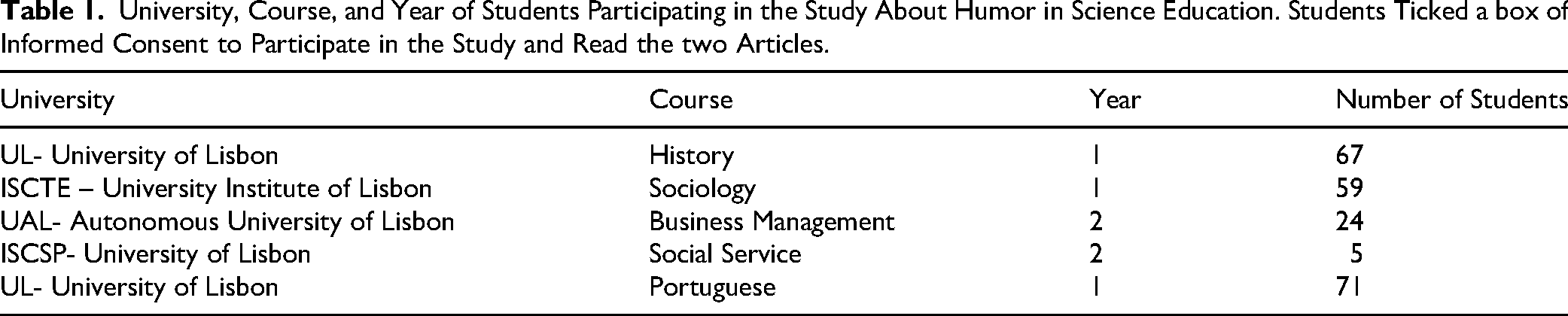
The study was done during or immediately after class, in a quiet environment. The first author of this article repeated this information of testing the effectiveness of popular science articles, explained the methods to be used, and that the choice to participate was voluntary. The students ticked a box of informed consent for their participation in this research. After counting the number of participants, half of the copies with humor and half of the copies with the control were shuffled in a single stack and randomly handed to participants. They read the two popular science articles and did two tests. 2 In total, 226 university students from 5 different courses participated in this study (see Table 1 for details).
University, Course, and Year of Students Participating in the Study About Humor in Science Education. Students Ticked a box of Informed Consent to Participate in the Study and Read the two Articles.
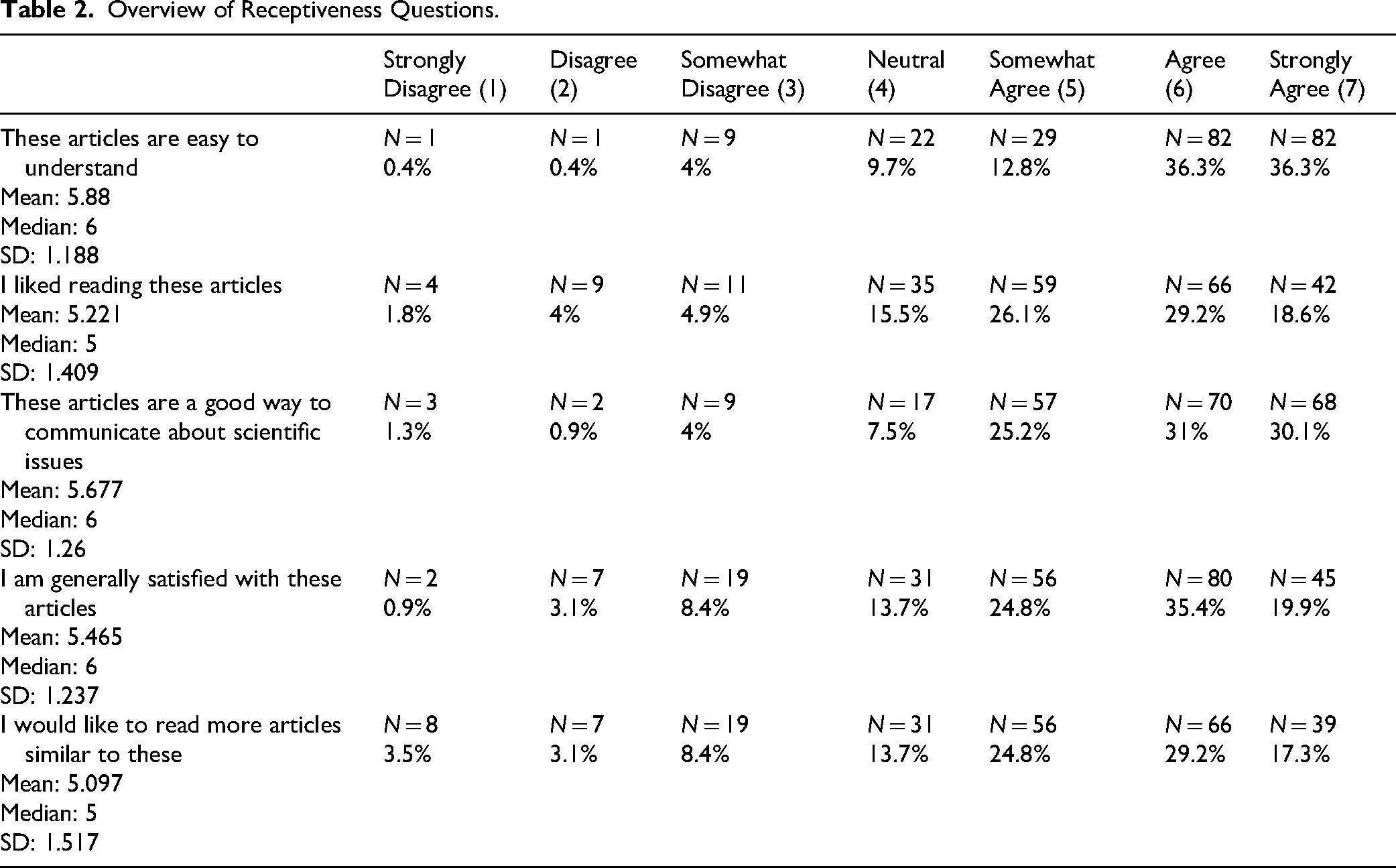
To assess the retention of information, the method chosen was the closed multiple-choice questionnaire. This was composed of 20 questions (10 questions for each theme/article), each of them with five different answers. In each question, the right answer could easily be found in the articles (see Appendix C for details). To assess the influence of humor on receptiveness, enjoyment, and overall satisfaction in popular science articles, students were asked to answer a closed questionnaire with 5 questions using a 7-point Likert scale from 1 (strongly disagree) to 7 (strongly agree). (Cronbach's alpha = 0.885, see Appendix D for details of the questions, and Table 2 for an overview).
Overview of Receptiveness Questions.
The same test for the retention of information was repeated two weeks later, to assess results in a longer time frame (a time frame used regularly to assess information retention, see for example Teng 2023; see Appendix E for details on the test procedure). This time interval was chosen to go well beyond the initial 24-h period, which is considered the optimum time to revisit the information to increase retention (Arya & Maul, 2012; Murre & Dros, 2015).
Statistical analysis was done using the software package SPSS, version 22.0. In the questionnaire to test the retention of information, each correct answer scored 10 points, and a wrong or no answer scored 0 points, on a maximum scale of 200 points. The comparison of the results of the humorous version vs. the control version was done using the Mann-Whitney U Test and ANOVA in both considered time frames (Sokal & Rohlf, 1995). To test if humor influenced the receptiveness, enjoyment, and overall satisfaction in popular articles using a 7-point Likert scale, the Mann-Whitney U test and ANOVA analysis were also done between the two versions. Afterward, correlation analysis between the five questions was performed, controlling for sex.
The choices we needed to make for this study point to the limitations that will be discussed further below, namely that we have only tested magazine-style articles, and looked only at (non-science) students in a Portuguese language and cultural setting.
Results
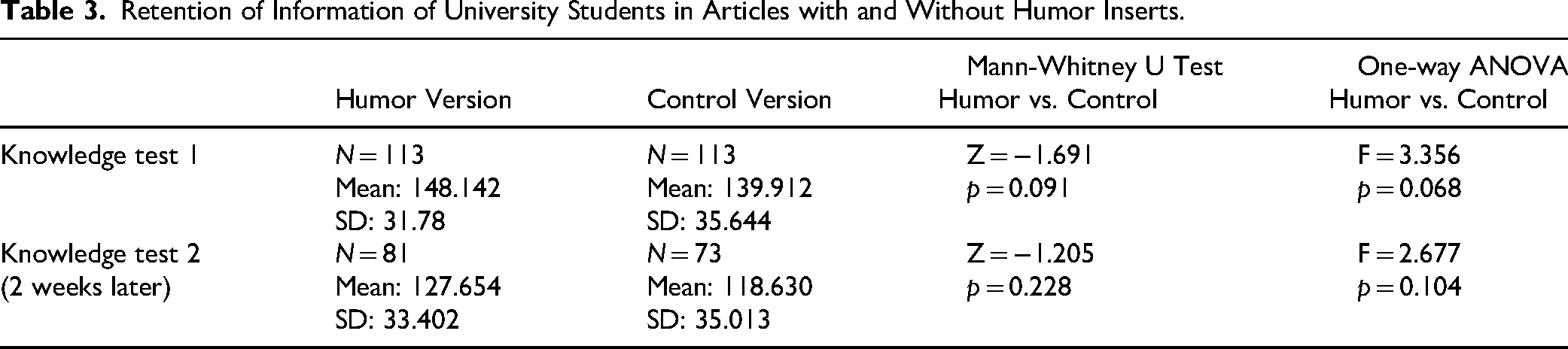
In this study, 57.96% (n = 131) of participants were women and 42.04% (n = 95) were men. The average age of participants was 22.81 years (SD = 8.303). Students that read the humorous version of the two popular science articles had a higher level of retention of information than those which read the control version, both immediately after the reading and two weeks later (see Table 3). However, these differences were not statistically significant in both time frames.
Retention of Information of University Students in Articles with and Without Humor Inserts.
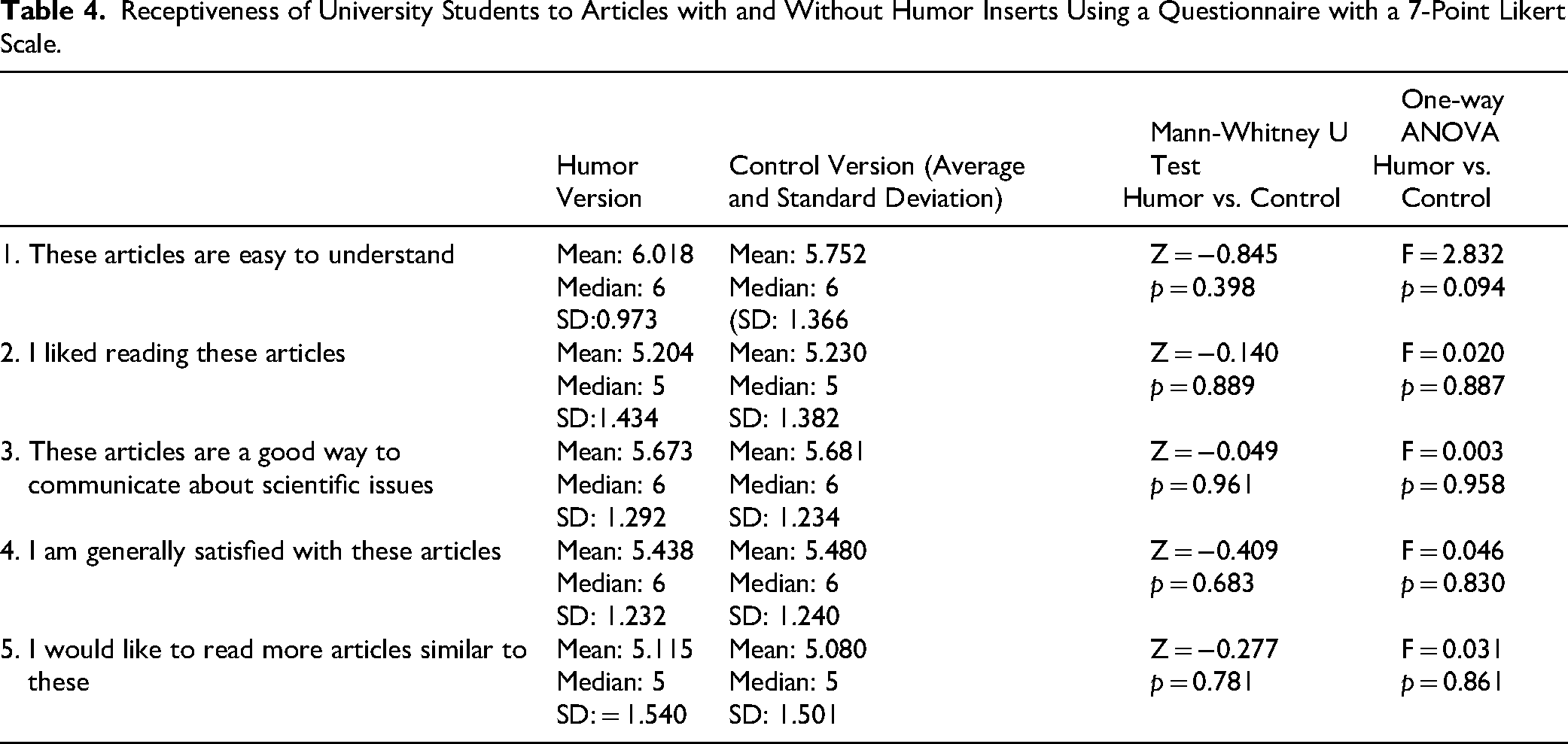
In what concerns the influence of humor in the receptiveness, enjoyment, and overall satisfaction of popular science articles, the values obtained with the two versions were similar and both statistical tests showed that the differences between them were not significant (see Table 4). Therefore, the humor inserts did not increase the receptiveness of popular science articles with university students.
Receptiveness of University Students to Articles with and Without Humor Inserts Using a Questionnaire with a 7-Point Likert Scale.
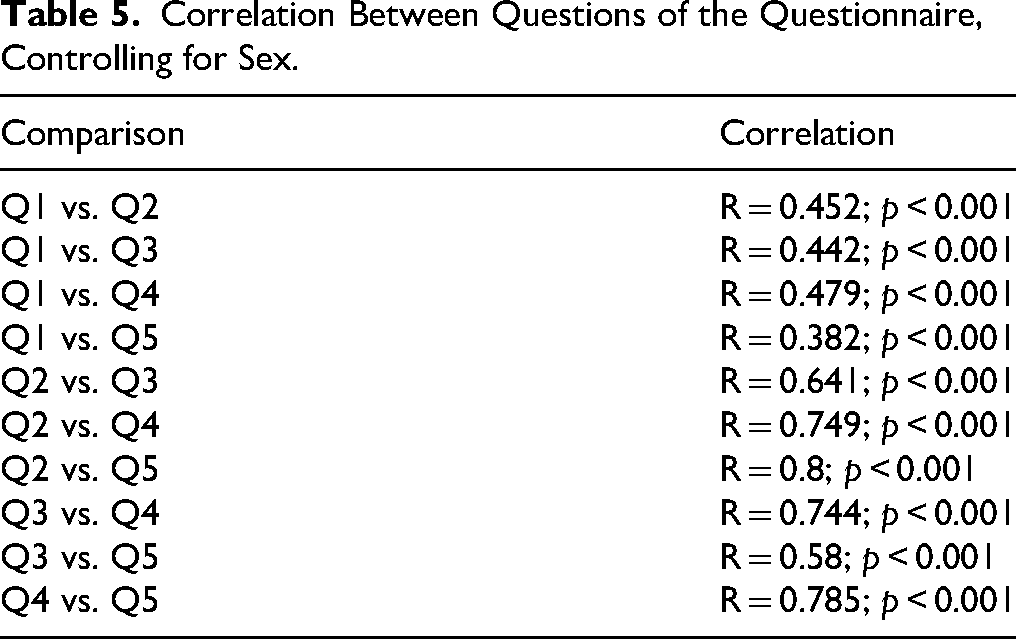
Correlation analysis within the five questions revealed high values (ie. above 0.7) between questions 2 and 4, questions 2 and 5, questions 3 and 4 and questions 4 and 5 (see Table 5). This shows a direct relationship between enjoyability, satisfaction and desire to read more similar articles. The easiness in understanding, which was assessed in question 1, seemed less important for students to engage with the articles.
Correlation Between Questions of the Questionnaire, Controlling for Sex.
Discussion
The current study aimed to assess if positive, non-aggressive humor inserts could improve science education using popular science articles. Results obtained suggest that the inclusion of this type of humor in these articles increased the level of retention of information in both considered time frames, but these differences in relation to the control versions of the articles without humor were not statistically significant. Moreover, the articles with and without humor were both well received by most of the university students, and the level of receptiveness, enjoyment, and overall satisfaction did not significantly improve with the use of humor. Along with the restrictions on the type of humor we employed, the study was also limited to written popular science with a target audience of (non-science) students in Portugal, all of which may have influenced results. Moreover, even if there was previous experience in writing humor, the current jokes inserted by an amateur of humor may simply not be good enough to significantly increase the enjoyment of reading the articles.
In a literature review cited above, Banas et al. (2010) concluded that there was evidence of the benefits of using positive humor by teachers during classes. In the case of the current study, the beneficial effect of humor was residual. Reflecting on the negative result of their study of humor in the classroom, Bolkan et al. (2018) suggest it may have distracted the students from the scientific concepts. Alternatively, citing Schwarz (2012), they suggest that “more positive affective states […] foster less effortful and more heuristic information processing” (p. 155).
Within the medium of the written popular science article, our study suggests that the usefulness of humor in terms of teaching science facts or increasing the enjoyability of the article is limited, and this does have implications at least for this particular genre, if not for the use of humor in science communication generally. The written article, for example in the form of a blog, can be one of the easiest ways through which academics and others can directly communicate with a wider audience outside of their profession (Mahrt & Puschmann, 2014). Therefore, we would think this study would be of particular interest to scientists or science communicators writing online or those considering taking it up. Other research with different media also suggests that positive humor does not always increase the retention of information or enjoyability (e.g., Fisher, 1997; Weinberger and Gulas, 1992). Nevertheless, if a university teacher does have a sense of humor and is comfortable in using positive and non-aggressive humor in a written format, the results presented here suggest that there is no harm in doing it. Other authors have stated that educators should be comfortable with the humor used, preferably related to course content and consistent with his or her teaching style (Banas et al., 2010; Wanzer et al., 2006). More concrete advice arising from our study to scientists and science communicators then could be that while there are potential benefits of humor in popular science articles in terms of the reader's enjoyment, they don’t appear to be significant enough for writers to force themselves to be humorous. Instead, we would advise them to use the writing style they are most comfortable with.
In a literature review about the use of humor in advertising, Weinberger and Gulas (1992) argued that audience factors such as gender affect responses. In this context, they recommend pre-testing the humor with the audience of a specific advertisement. To provide some qualitative context to how the humor in the articles was perceived, in Pinto & Riesch, 2017, qualitative comments indicated that the humor was generally appreciated, although some also thought the placement of the humorous remarks seemed a bit forced, while others commented that the humor detracted from the seriousness of the issue and that the value of the humor depends on personal taste. Also, it was found that the rate of approval of the humor by general audiences was 63% and that some readers liked, others disliked and a third group was indifferent to the humor used (Pinto & Riesch, 2017). This points to the rationale presented by previous authors that the use of humor implies risks and that pre-testing with target audiences can potentially reduce negative or indifferent reactions (e.g., Bore & Reid, 2014; Pinto et al., 2015).
The current research has limitations that should be acknowledged. First, the participants were all non-science students in higher education courses. Therefore, we only tested for this specific part of students who attend college or university. Moreover, the rationale for the choice for non-science students was to decrease the possibility of more familiarity with the scientific themes of the popular science articles. Nevertheless, the chosen students may have rated these popular science articles less positively than students in sciences. Also, the humorous inserts were added near the parts targeted for the information retention questions, which could have acted as a hint that was not present in the control group.
Moreover, humor takes many different shapes and forms and can be rated differently according to the perceptions of audiences. To decrease this subjectivity, we opted to use only positive and non-aggressive humor and to test each version of the two popular science articles with more than 100 participants. Humor is subjective and dependent on individual tastes. Cultural factors may also be important here, with the study having been performed on Portuguese students – future studies may be needed to widen this out to other cultural contexts. Additionally, in the two weeks between the first and second sessions of the study, participants may have been exposed to other types of content related to the topics of the tested popular science articles, which could have led to external factors influencing their answers to the follow-up test. However, this type of bias is inevitable in studies with this methodological design.
In conclusion, it is suggested that the effects of including humor such as puns and anthropomorphization in popular articles directed at science education seem to be residual, or at least the inoffensive and light type of humor we have attempted here. Nevertheless, social science research surrounding the use of humor in science communication activities that examines these assumptions is still in its infancy (Pinto & Riesch, 2017). In this context, it is necessary to perform more studies about the application of humor to written science education and communication materials to reach different scenarios: This would include for example different formats of science communication (such as lectures, recordings, performances, or museum exhibits), different target groups (e.g., widening out to non-students and students of other disciplinary backgrounds), and different cultural and linguistic settings (i.e., in countries beyond Portugal). Future studies could also include students in lower education levels and scientific courses, to assess if conclusions taken in the present study continue to apply.
Supplemental Material
sj-docx-1-bst-10.1177_02704676251353101 - Supplemental material for Does Humor in Popular Science Magazine Articles Increase Information Retention and Receptiveness in Science Education?
Supplemental material, sj-docx-1-bst-10.1177_02704676251353101 for Does Humor in Popular Science Magazine Articles Increase Information Retention and Receptiveness in Science Education? by Bruno Pinto and Hauke Riesch in Bulletin of Science, Technology & Society
Footnotes
Acknowledgements
The authors wish to thank all the participants in this study, as well as the university teachers Mariana Diniz, Joana Farrajota, Helena Marujo, Rosário Mauritti, Cristina Conceição, Aida Cardoso, Rita Gonçalves e Silvana Abalada. Acknowledgements are also due to Cheila Almeida, Sandra Mateus, Sofia Vaz, Cristina Luís and Paulo Marques for their collaboration in this research, and Sharon Lockyer, Simon Weaver, Gisela Oliveira, Filipe Lopes, Nibedita Mukherjee and Monica-Christina Hess for comments to earlier versions of this manuscript. The first author was funded by a postdoctoral fellowship from Fundação para a Ciência e Tecnologia (a public foundation which belongs to the Portuguese Ministry of Education and Science; Ref: SFRH/BPD/48272/2008).

Funding
The authors disclosed receipt of the following financial support for the research, authorship, and/or publication of this article: This work was supported by the Fundação para a Ciência e Tecnologia, (grant number SFRH/BPD/48272/2008).
Declaration of Conflicting Interests
The authors declared no potential conflicts of interest with respect to the research, authorship, and/or publication of this article.
Supplemental Material
Supplemental material for this article is available online.
Notes
Author Biographies
References
Supplementary Material
Please find the following supplemental material available below.
For Open Access articles published under a Creative Commons License, all supplemental material carries the same license as the article it is associated with.
For non-Open Access articles published, all supplemental material carries a non-exclusive license, and permission requests for re-use of supplemental material or any part of supplemental material shall be sent directly to the copyright owner as specified in the copyright notice associated with the article.
