



Abstract
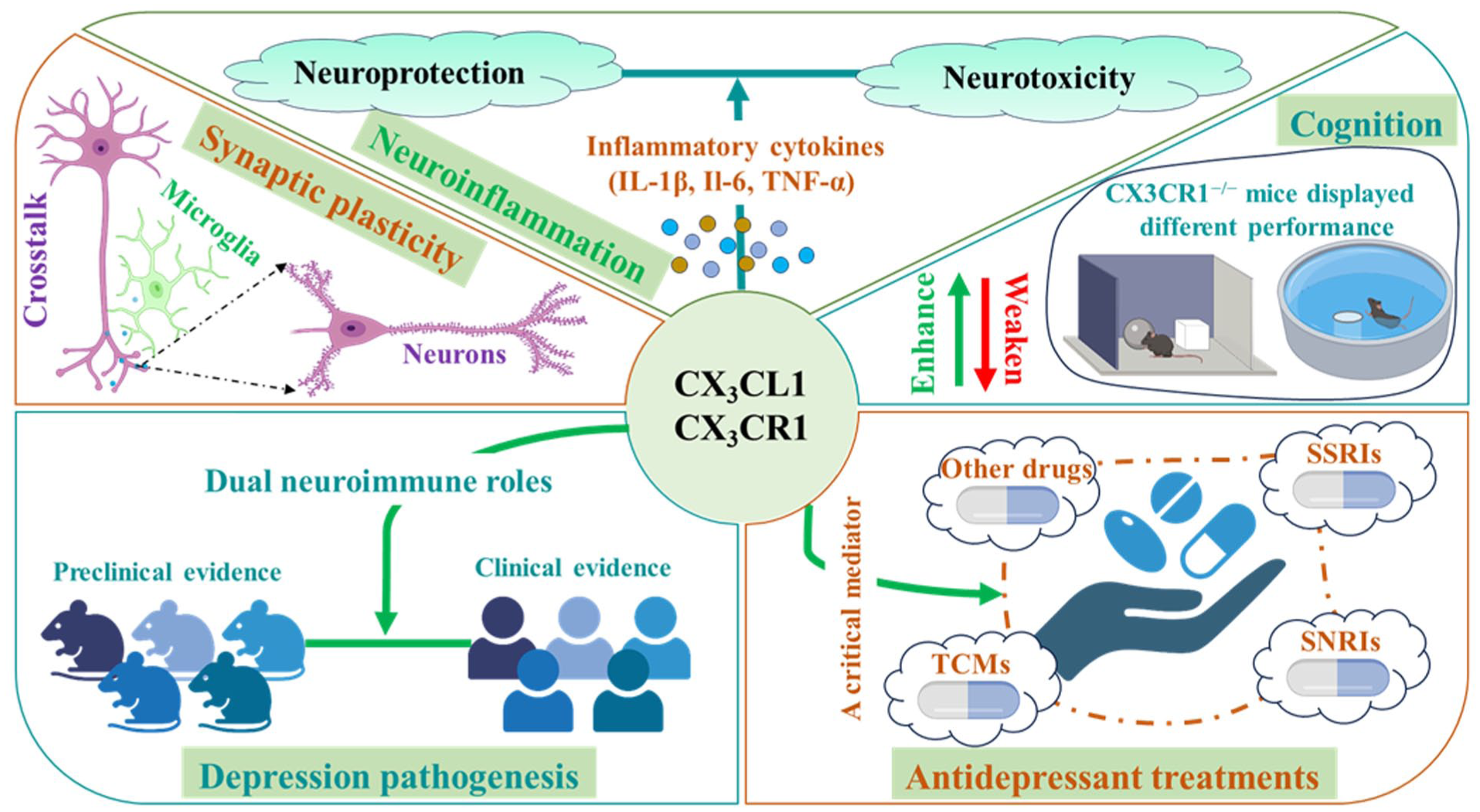
Depression is a prevalent and debilitating mental disorder, and the underlying mechanisms of depression remain unclear. Emerging evidence highlights the importance of chemokines, particularly CX3CL1/CX3CR1 signaling, in the pathophysiology of depression. CX3CL1 (Fractalkine, CX3C chemokine ligand 1) is an essential chemokine and exerts its biological effects by binding to its receptor, CX3CR1. This interaction plays a pivotal role in mediating communication between microglia and neurons within the central nervous system. Numerous studies have suggested that CX3CL1/CX3CR1 signaling is a critical regulator of neuroinflammation and synaptic plasticity. Therefore, this narrative review provides a comprehensive overview of the role of CX3CL1/CX3CR1 signaling in neuroinflammation, synaptic plasticity, and cognition. In addition, we discuss the critical role of this signaling pathway in the pathophysiology of depression and antidepressant treatments and highlight its significance in the field of neuropsychopharmacology.
Get full access to this article
View all access options for this article.