



Abstract
Extant empirical research indicates that teacher victimization is highly prevalent and has detrimental impacts for victimized teachers. Although existing empirical studies have provided valuable information and insights into the prevalence and negative consequences of teacher victimization, to the best of our knowledge, there is no empirical research investigating the impact of apologies from offending students and the perceived sincerity of those apologies by victimized teachers on the emotional and physical distress experienced by the victims. The current research, using a sample of middle and high school teachers among 50 of the largest US school districts, is the first attempt to address the limitation. Overall, the present research found that teachers subjected to various types of aggression from students often endure elevated levels of emotional and physical distress, indicating the urgent need for effective intervention and measures to alleviate the distress experienced by victimized teachers. The results imply that sincere apologies from offending students and holding them accountable through appropriate punishment can play pivotal roles in alleviating the distress endured by victimized teachers at school.
Introduction
Extant empirical research (Espelage et al., 2013; Longobardi et al., 2019; Moon and McCluskey, 2020; Moon et al., 2023; Yang et al., 2022) indicates that teacher victimization is highly prevalent worldwide and has detrimental impacts on victimized teachers. For example, a meta-analysis of 24 studies on teacher victimization found that the prevalence of any type of teacher victimization ranged from 20% to 75% within a 2-year period (Longobardi et al., 2019). Several studies (Moon and McCluskey, 2020; Moon et al., 2015; Wilson et al., 2011; Yang et al., 2022) have also explored the negative effects of teacher victimization on victimized teachers and found that victims are more likely to report higher levels of physical and emotional distress, burnout, and disconnectedness from schools/students, as well as intention to leave and actual instances of turnover.
Although existing empirical studies have provided valuable information and insights into the prevalence and negative consequences of teacher victimization, to the best of our knowledge, there is no empirical research investigating the impact of apologies from offending students and the perceived sincerity of those apologies for victimized teachers on the emotional and physical distress experienced by the victims. By analyzing data from a sample of 4,005 US middle and high school teachers (students’ ages typically ranging from 11 to 18), the present research contributes to the extant literature on teacher victimization in at least three areas. First, it is the first attempt to explore the effect of offending students’ apologies and their perceived sincerity on victimized teachers’ physical and emotional distress. Although the theoretical importance of sincerity of apology in assisting victims with their emotional and physical recovery has been recognized (Suzuki, 2022, 2023); little research has been conducted in this area, including among other victim populations, mainly due to the dearth of data. Second, the present research examines whether apologies and their perceived sincerity have varying effects on victims’ emotional and physical distress, depending on different types of victimization, including the more serious (e.g., physical assault and sexual harassment) and relatively less serious (e.g., verbal abuse and non-physical contact aggression). In situations where victimization is particularly severe, such as physical assault, it is plausible that offenders’ apologies and their sincerity may not exert as great an influence on alleviating victims’ emotional and physical distress, given the substantial extent of harm already inflicted upon victims. However, there is the possibility that apologies and sincerity can have a significant effect on reducing the degree of emotional and physical distress among victims of verbal abuse, because verbal abuse can be considered relatively less severe, and there is potential for reconciliation. Nevertheless, these hypotheses have never been explored and tested in prior studies. Third, this research could have significant policy implications, as extant literature on teacher victimization indicates that they experience heightened levels of emotional and physical distress. If the apology from offending students and its sincerity are found to mitigate the emotional and physical distress of victims, school administrators need to develop strategies to facilitate (sincere) apologies from offending students to victimized teachers.
Below, we first review the extant literature on the prevalence and negative consequences of violence directed against teachers, as well as the impact of offenders’ apologies and sincerity on alleviating emotional and physical distress among victims in the general population. Second, we provide an overview of the sample, the data collection procedures, and the main independent and dependent variables. Third, multivariate analyses examine the outcomes of four victimization types with regard to victims’ emotional and physical distress and how no apology, insincere apology, and a perceived sincere apology may reduce or exacerbate those consequences among victims. In our conclusion and discussion, we discuss the key findings and their policy implications within the broader context of extant literature on teacher victimization.
Prevalence of teacher victimization
In recent years, an increasing number of empirical studies (Gregory et al., 2012; McMahon et al., 2014; Moon et al., 2019; Tiesman et al., 2013; Wei et al., 2013) have found that violence and aggression directed at teachers by students is a serious issue affecting considerably education in schools. For example, Moon and McCluskey (2020) investigated the prevalence of five distinct forms of teacher victimization by students using a random sample of 1,628 middle and high school teachers in Texas. Their results show that 44% of participants reported experiencing verbal abuse, while 8% and 11% of them were victims of physical assault and sexual harassment, respectively, in the 12 months prior to the survey.
Recently, with a non-random sample of 14,966 participants (including 9,370 teachers), McMahon et al. (2022) conducted nationwide cross-sectional research to understand the scope of violence directed toward teachers and school personnel amid the COVID pandemic in the United States. The findings indicate that 33% of teachers in the sample were subjected to at least one instance of verbal and/or threatening violence, such as verbal threats, cyberbullying, and sexual harassment from students. Following the resumption of full in-person classes after the COVID pandemic across the United States in 2022, Moon et al. (2023) investigated the prevalence of seven different types of teacher victimization with a random sample of 4,005 middle and high school teachers among the 50 largest school districts in the nation. The findings are consistent with prior studies, indicating verbal abuse and non-physical contact aggression (such as throwing or destroying items in front of teachers) to be the most common forms of teacher victimization by students, while physical assault and sexual harassment were found to be relatively less frequent. Specifically, the results show that 47% of teachers in the sample reported experiencing verbal abuse, followed by non-contact physical aggression (28%), theft/vandalism (25%), sexual harassment (13%), and physical assault (10%) within the 12 months prior to the survey.
Negative consequences of teacher victimization
Several empirical studies investigating the impact of students’ aggression and violence on teachers indicate that when teachers are victimized by students at school, it can lead to serious and adverse consequences for victimized teachers, such as reduced job satisfaction (Kapa and Gimbert, 2018), increased levels of burnout/distress (Bass et al., 2016; Moon et al., 2015), and increased probability of exiting the teaching profession (Curran et al., 2019; McMahon et al., 2022; Moon and McCluskey, 2020). For example, Moon et al. (2015) found that middle and high school teachers who are victimized by students at schools reported heightened levels of both physical and emotional distress, strained relationships with students, and an increased inclination to leave their teaching careers. Among the 1,628 participants in Texas, 40% reported feelings of anxiety, while 44% indicated a loss of trust in their students. Similarly, Yang et al. (2022) found that Chinese teachers report higher levels of emotional distress such as exhaustion when subjected to victimization by students at school. Moon et al. (2023), analyzing a random sample of 4,005 teachers in the United States, suggest that 29% of those who experienced physical assault and 13% of those subjected to verbal abuse by students reported that their victimization incidents had a serious impact on their distress levels. In addition, the research indicates that 34% of physical assault victims and 29% of sexual harassment victims reported often or almost always feeling distrustful of students after their experience of victimization.
In relation to the impact of teacher victimization on teacher turnover, several studies (Curran et al., 2019; Moon and McCluskey, 2020; Zurawiecki, 2013) have found that there is a significant relationship between teacher victimization and teachers’ consideration of turnover and/or actual turnover. Research conducted by Zurawiecki (2013) and Curran et al. (2019) found that teachers who reported being threatened with injury or assaulted by a student were more likely to transfer to a different school. Notably, the findings show that teacher victimization exerted a more substantial impact on teacher turnover, compared to traditional important predictors such as teacher certification, or holding a master’s degree. Consistent with prior studies, Moon et al. (2023) found that a considerable portion of victimized teachers in the sample expressed thoughts of quitting their teaching careers following incidents of victimization. Specifically, 46% of physical assault victims indicated that they often or always contemplated quitting their teaching career, while 30% of sexual harassment victims reported often or always considering leaving their teaching career. Furthermore, among 274 former teachers surveyed (see Moon et al., 2023), the findings indicate that 26% reported their experience of victimization by students as a very important factor in their decision to leave their teaching career, while 14% cited financial reasons as very important.
Overall, these findings highlight the substantial impact of teacher victimization, as those teachers victimized by students are more likely to report higher levels of emotional and physical distress, which may lead to their exit from teaching careers. This emphasizes the importance of preventing violence directed against teachers by students and understanding mitigating factors to reduce the levels of emotional and physical distress experienced after such incidents.
Offender apology and victim’s emotional/physical distress
A growing body of research evidence highlights the benefits of victims receiving an apology from the offending party (see Allan et al., 2022; Choi et al., 2012; Lewis et al., 2015; MacDiarmid, 2025; Petrucci, 2002; Suzuki, 2022; Suzuki and Jenkins, 2023). However, knowledge of the positive benefits of receiving an apology from students who have victimized their teachers is absent in the literature. Despite this, research on these topics in other samples and populations can provide us with information on how apologies and their perceived sincerity are linked to better emotional and physical well-being in teachers who have been victimized by students. Broadly, receiving an apology is associated with positive outcomes for victims. Lewis et al. (2015) reviewed past research addressing the outcomes of real-world and hypothetical apologies between victims and offenders with a close relationship. Among seven studies identified, positive outcomes included higher levels of forgiveness, empathy, and perceived remorse.
Much research on the positive effects of apologies within the criminal justice system is studied within the context of restorative justice (Allan et al., 2022; Choi et al., 2012; MacDiarmid, 2025; Suzuki, 2022; Suzuki and Jenkins, 2023). Suzuki (2022; 6–7) highlights that important characteristics of a sincere apology include offenders acknowledging the harm they have “caused to victims” and “taking responsibility for the wrongdoing.” Apologies, in turn, have been hypothesized to be associated with positive mental and physical outcomes (Suzuki and Jenkins, 2023). In their proposed theoretical model of victim recovery through restorative justice interventions, Suzuki (2023) proposes the potential process in which apologies are linked to victim recovery. A component of this theoretical model hypothesizes that insincere apologies by offenders may inhibit victim recovery, broadly defined to include a variety of positive outcomes such as reduced anxiety, depression, trauma symptoms, and fear of crime (Suzuki, 2023). In turn, victims who receive an apology that they perceive as sincere may experience more positive outcomes partly due to its relationship to forgiveness (MacDiarmid, 2025; Suzuki and Jenkins, 2023).
Lavelock et al. (2015) reviewed the literature addressing the relationship between forgiveness and health outcomes and hypothesized that forgiveness is related to mediating variables that impact better psychological well-being. For instance, forgiveness is related to factors such as a lower incidence of unhealthy coping strategies (e.g., substance use), lower negative emotions, increased spiritual well-being, more positive relationships with others, and more positive experiences (e.g., empathy or compassion). These factors are hypothesized to be related to better overall physical health through better mental and physical well-being and fewer physiological risk factors (e.g., lower fatigue).
While past scholarship has studied the relationships between apologies, their perceived sincerity, and physical and mental well-being in victims, there is an absence of scholarship on these topics within samples of teachers who have been victimized by students. Considering the high prevalence of teacher victimization by students, such research is needed to assess whether these relationships hold in this context. Such research can assist in determining whether perceptions of sincere apologies are associated with better physical and mental well-being in teachers. In addition, it can also assist in the development of programs or interventions designed to counter the negative effects of victimization on teachers.
Methods
Sample
The present research analyzed data from the first two waves of a 4-year longitudinal project, funded by the National Institute of Justice, to investigate the prevalence and negative effects of teacher victimization, as well as to explore school administrators’ responses to teacher victimization. Data on teacher victimization were collected from middle and high school teachers across the United States’ 50 largest school districts, with approval from the Institutional Review Board at the University of Texas San Antonio. 1
To select a random sample of teachers, a multistage sample design was utilized. First, elementary school teachers were excluded from the present study, based on prior research findings (see Chen and Astor, 2009), which suggest a lower occurrence of victimization, compared to teachers at middle and high schools. Second, lists of all middle and high schools within the nation’s 50 largest school districts were gathered. These schools were then categorized into nine groups, based on the proportions of students eligible for free or reduced-price lunch and academic performance. Third, the names and email addresses of all teachers from the randomly selected schools were collected, sourced either from publicly accessible school websites or provided by school districts. In the spring of 2022, an electronic letter detailing the purpose of the research was emailed to all randomly selected teachers, inviting their voluntary participation in the web-based survey. As an incentive for their time and effort outside of their work hours, each participant received a $20 e-gift card from a private party upon completing the Wave 1 survey. The survey typically took around 20–30 minutes to complete and the data collection period lasted approximately 3 months, from April to June 2022.
Invitation e-letters containing a personalized link were sent to 38,498 middle and high school teachers within the 50 largest school districts. Overall, 4,005 teachers from 609 middle and high schools participated in Wave 1, with over 94% of them completing the entire survey. The overall response rate is 10.4%; however, it is important to note that this response rate might be likely to be a very conservative estimate for two main reasons. There is a chance that these mass emails sent via Qualtrics might have been diverted to junk folders due to school firewall settings or other email filtering mechanisms. Second, the researchers primarily obtained teachers’ names and email addresses from school websites. As a result, it is likely that some of these email addresses are invalid due to the relatively high turnover of teachers, particularly during the COVID pandemic, since the names and emails of retired or transferred teachers may not have been promptly removed from schools’ websites. Nevertheless, concerns about the validity of the survey’s findings may arise due to the low response rate and the potential non-response bias. However, prior research by Fosnacht et al. (2017), which examined data from the National Survey of Student Engagement, indicates that studies with response rates of 5–10%, but with a substantial sample size of at least 500 participants, can yield dependable and confident estimates (see also Wu et al., 2022). Approximately 1 year apart (March, 2023), 2,717 participants at Wave 1 continued to participate in the second wave of the survey, indicating that 68% of teachers were retained in the sample.
From these two waves, we examined four incident samples, 283 assaults, 207 incidents of harassment, 1,678 incidents involving verbal threats, and 718 incidents involving non-contact aggression. All of these incidents were reported to school authorities and teachers’ accounts of those incidents and their consequences comprise the primary independent and dependent variables in the analyses.
Dependent measures
In each wave, participants were asked if they had experienced various types of victimization perpetrated by students such as sexual harassment, verbal abuse, and non-physical contact within the 12 months prior to the survey. For each type to which they responded “yes,” follow-up questions (e.g., incident characteristics, school responses, emotional/physical distress, and student apology) were administered regarding the most recent incident of each victimization.
Emotional and physical distress—two dependent variables, presented in Table 1—were measured by asking participants whether they had experienced a series of indicators of emotional and physical distress after the most recent incident. Confirmatory factor analyses indicated that the 8-item emotional consequence and 7-item physical consequences indexes have a unitary and reliable underlying component. Factor analysis involving each of the eight outcomes yielded only one factor with eigenvalues ranging from 3.7 to 4.7 in the estimates; scree plots indicated a sharp drop to well below an eigenvalue of 1 for the second factor, and the percentage of variance explained by the single factor ranged from 55% to 67%. The factor loadings on individual items typically exceeded 0.6 for every victimization type and consequence. Exceptions to this included a loading of 0.39 for high blood pressure in the physical consequence index associated with sexual harassment and a 0.45 loading for thought about switching schools for the verbal threat and aggression emotional consequences. There was, however, no discernible pattern in the lower factor analysis loadings that suggested the dropping of an item from either index.
Descriptive statistics, four victimization types from Waves 1 and 2.
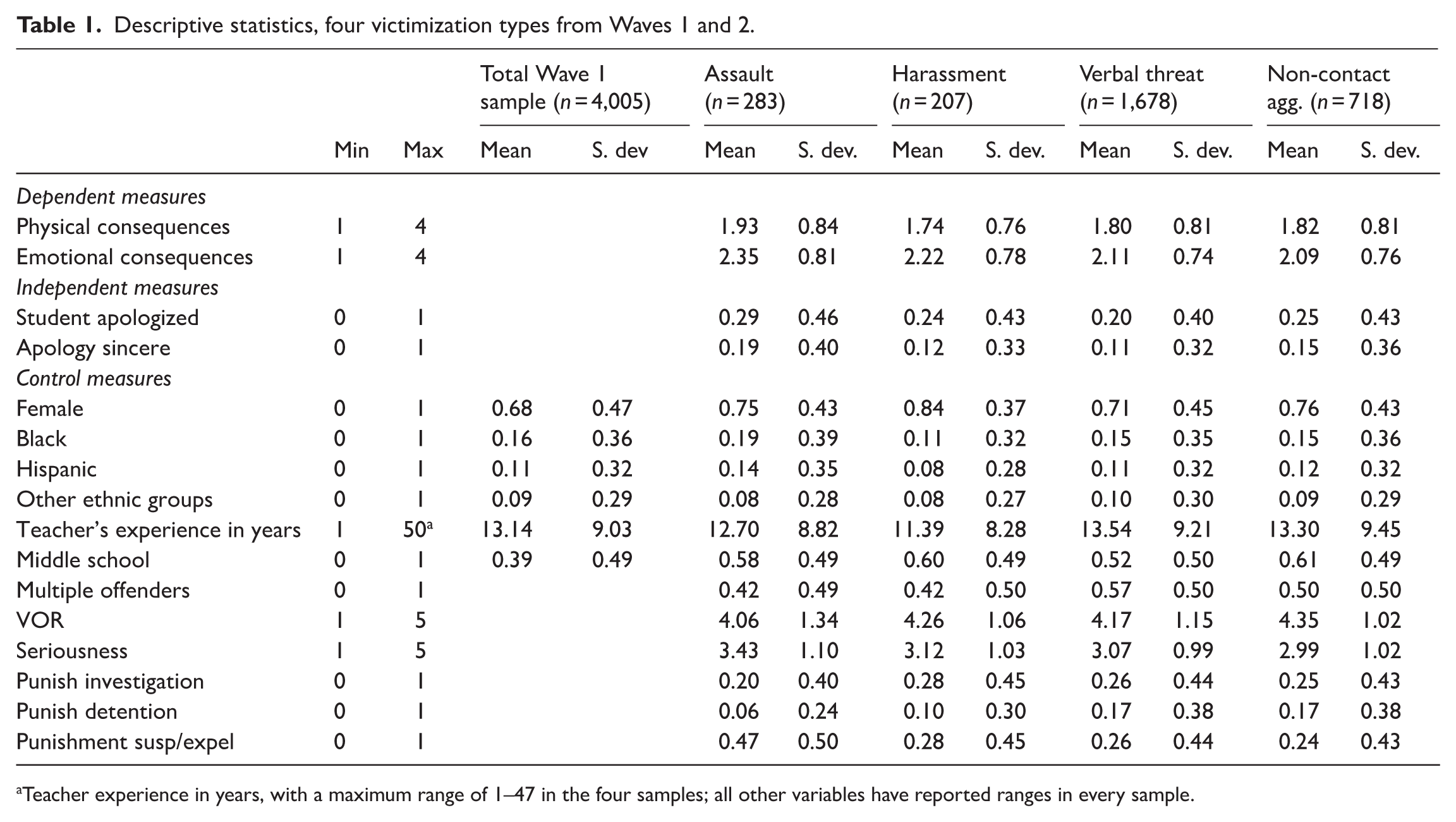
Teacher experience in years, with a maximum range of 1–47 in the four samples; all other variables have reported ranges in every sample.
Emotional distress is an index variable, constructed by combining eight items: feeling angry, anxious, depressed, feelings of violation, lack of trust in students, feeling unsafe, and thoughts of quitting or switching schools. The physical distress index is created by summing seven items such as experiencing headaches, trouble sleeping, changes in eating and/or drinking habits, upset stomach, fatigue, muscle tension and/or back pain, and high blood pressure. The response options for each item in both emotional and physical distress range from “not at all” (1) to “almost always” (4) and it is coded so that a higher number indicates a greater level of emotional and physical distress, with each index being divided by the number of items to maintain the range bounded by 1 and 4 in the two indices of the outcomes. Across the four victimization types, it is clear that assault yielded the highest level of physical and emotional consequences. However, it is abundantly clear that the other types of victimization elicited noticeable impacts in both domains, as reported by victims.
Independent measures
The present research measures two primary independent variables: whether an apology was offered and the perceived sincerity of the apology. A single item measured whether an offending student offered an apology to a victimized teacher, and another single item assessed whether a victimized teacher perceived the apology as sincere or not. For the current research analyses, apology and sincerity variables are combined, using the absence of apology as a reference, compared to apology without sincerity and apology with sincerity, to better understand the effect of apology and its sincerity on emotional and physical distress experienced by victimized teachers. The results show that among victims of physical assault, 71% did not receive an apology, while 10% received an apology but believed it was insincere, and another 19% received an apology and perceived it as sincere. Similarly, for sexual harassment victimization, 76% did not receive an apology, while 12% received an apology but believed it was insincere, and another 12% received an apology and perceived it as sincere. Similar patterns appear in cases of verbal abuse and non-physical contact aggression victimization. For verbal abuse victimization, 80% did not receive an apology, while 9% received an apology but believed it was insincere, and another 11% received an apology and perceived it as sincere. For non-physical contact aggression victimization, 75% did not receive an apology, while 10% received an apology but believed it was insincere, and another 15% received an apology and perceived it as sincere.
Control variables
A set of incident-related variables (multiple offenders involved, perceived severity of victimization, and victim–offender relationship) and offender punishment are included as control variables since prior research (see Kunst et al., 2015) found that characteristics of victimizations and/or offender punishment are significantly related to victims’ emotional and/or physical distress. The involvement of multiple offenders is measured by asking respondents whether the victimization event is known to have involved multiple offenders in a binary variable (1 = more than one offender, 0 = only one). The perceived severity of the victimization event is measured on a five-category ordinal scale from not serious (1) to very serious (5), as perceived by the victimized teachers. The victim–offender relationship is measured by asking respondents about the level of closeness with the offender, with options ranging from 1 (an unknown offender) to 5 (well known to the victim). The measure of offender punishment is measured by asking respondents about the school’s highest level of response to their victimization event and forming a series of dummy measures, with the school taking no action as the excluded category. The first level of action represents the school investigating the event, which characterized the highest level of action in 20% of assaults and 28% of harassment incidents. Punishing with detention occurred in 6% of assaults and was noted in 17% of both verbal threat and non-contact aggression incidents. Finally, suspension and expulsion were noted in 24% of non-contact aggression cases, but were the highest level of punishment in 47% of assaults.
In addition, four social-demographic factors (sex, teaching experience, race/ethnicity, and school level) of victimized teachers are used as control variables. Teacher’s sex is a binary variable, coding 1 as female and 0 as male. The findings show that 75% of physical assault events, 84% of harassment, 71% of verbal threats, and 76% of non-contact aggression incidents involved female teachers. Teaching experience was measured by the number of years in a teaching career, ranging from 0 to 47 years, with means of 11.4 in harassment incidents and 13.5 in verbal threats. Teacher race/ethnicity was measured and analyzed as a series of binary measures, with events involving white teachers as victims as the reference. Events with Latino teachers as victims account for 8% of harassment victimizations but 14% of assaults. Black teachers were involved in 11% of harassment incidents, but 19% of assault incidents. Other racial groups accounted for between 8% and 10% of each type of victimization. Finally, a binary school level (0 = high school and 1 = middle school) measures victimization events involving teachers at middle school, as contrasted with high school. The findings indicate that more than half of each incident type occurred in middle schools.
Analytic plan
The analysis plan presents each victimization incident type with the physical and emotional consequences as an outcome. Ordinary least squares (OLS) regression, clustered on individuals (since they could report the same type of victimization in both Waves 1 and 2), to generate robust standard errors. 2 The model choice of OLS, as compared to Poisson or negative binomial count modeling, might not typically be preferred, given the distribution of the dependent variable (e.g., Long, 1997). To assess this question of model fit, we estimated models using all three estimators, noting that the key variables of apology and sincere apology yielded essentially the same sign and significance for Poisson and negative binomial regression as OLS estimates. Given that OLS is a simpler model, offers direct interpretation, and the outcomes are distributed across the range of outcome values, we present those results below.
For each outcome, two sub-models were utilized to investigate the unique mitigating effects of apology and its perceived sincerity on emotional and physical distress. First, Model A represents the individual characteristics and event characteristics as predictors. Model B builds on this by adding student apologies/perceived sincerity as well as school punishment.
Results
The first model is the emotional consequences of physical assault among 258 unique teachers who reported 283 events (see Table 2). Model A indicates that characteristics of the event are powerful predictors of greater negative emotional consequences: seriousness greatly increases consequences, multiple offenders increase negative consequences, but closer victim-offender relationship slightly decreases, and all three are statistically significant predictors. Overall, the model fit is relatively robust with an R2 = 0.34. Among characteristics, other race is associated with greater emotional consequences compared to white counterparts. In Model 1B, we add in punishment and apology and note a substantial improvement in model fit, but no apology coefficient reaches statistical significance, and only punishment by expulsion/suspension yields a significant and negative impact on emotional consequences.
OLS regression predicting number of emotional and physical distress of physical assault and sexual harassment victimization.
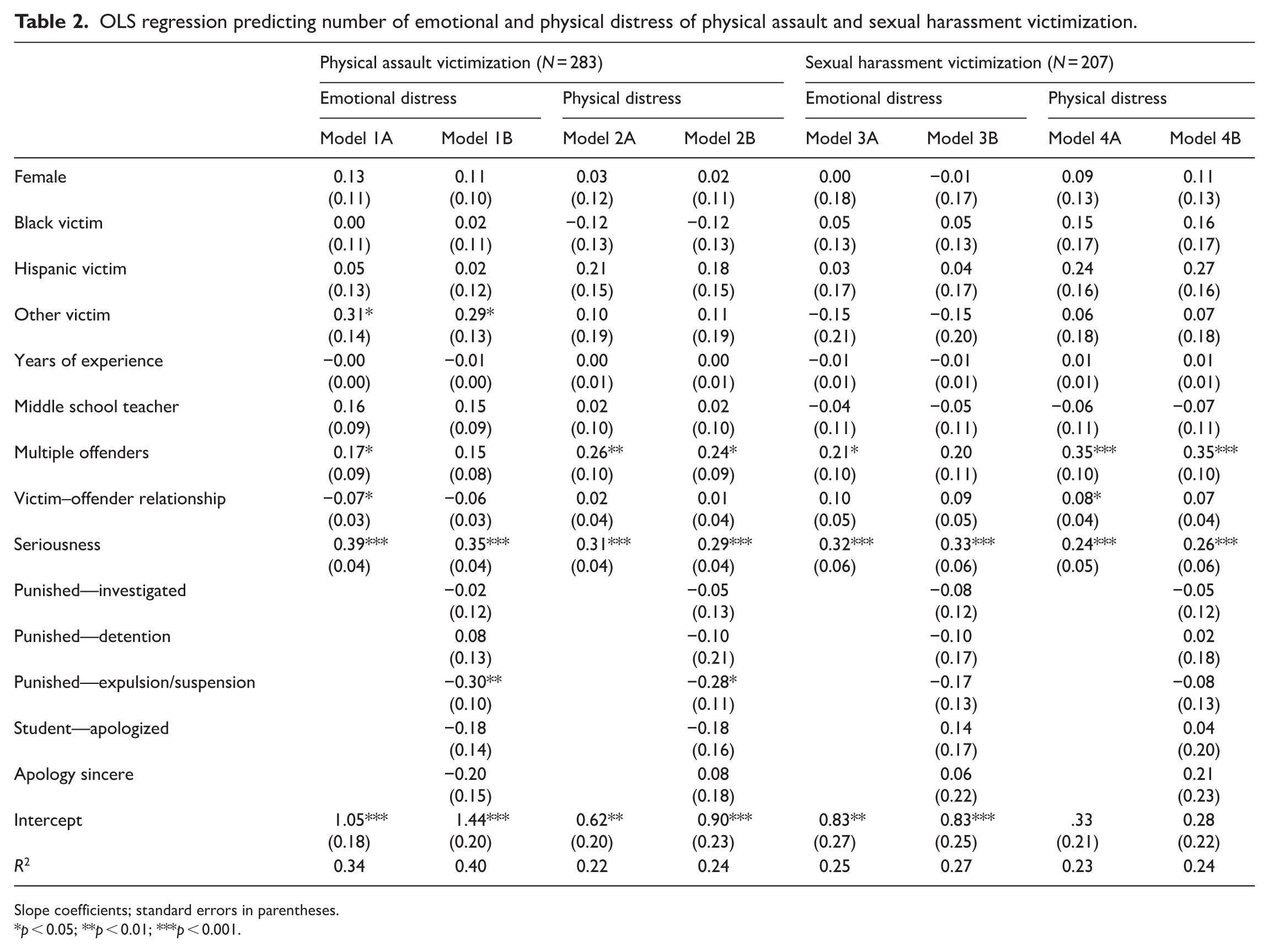
Slope coefficients; standard errors in parentheses.
p < 0.05; **p < 0.01; ***p < 0.001.
In Model 2A, we observe the prediction of physical consequences associated with physical assault victimization. The first regression model indicates that multiple offenders and seriousness are significant, and the model has an R2 = 0.22. Adding in punishment and apology, we see modest improvement, and again the only significant predictor among the added variables is expulsion/suspension, associated with a significant reduction, this time in physical consequences teachers reported subsequent to the incident.
Model 3 has the outcome of emotional consequences associated with sexual harassment incidents. The sample for this analysis involves 207 incidents reported by 191 individuals. In Model 3A, we see that characteristics of the event, VOR, multiple offenders, and seriousness are significant or quite close to statistical significance, but characteristics of the teachers, with the exception of female, are not statistically significant. In Model 3B, characteristics of the incident, mostly via seriousness, are the most powerful predictors, with no other variable exhibiting a statistically significant impact on the emotional consequences of harassment. Models 4A and B examine the physical consequences and we observe nearly an identical pattern with seriousness, VOR, and multiple offenders predicting physical consequences and teacher characteristics, school punishment, and apologies exhibiting no statistical impact distinguishable from zero.
One concern with the models that are estimated for harassment and assault outcomes is that the sample size is smaller, and the power to detect effects from the apology and sincere apology variables is limited. To address this concern, we estimated trimmed OLS models using independent measures of seriousness, the school actions, and the two apology variables (results not shown). In every instance, the sign and significance of the coefficients were similar to those presented in Table 2, affirming that there is little relationship between apologies and psychological or physical outcomes for these relatively more serious offenses.
Verbal assault is presented in Model 5, with the outcome being emotional consequences, capturing 1,678 incidents reported by 1,405 teachers (see Table 3). Model 5A indicates that who a teacher is does have an impact on emotional consequences, with female, Hispanic, and other minority teachers reporting greater consequences and those with more experience reporting less consequences, nevertheless the characteristics of the event, namely the involvement of multiple offenders and the seriousness, are the strongest predictors of that outcome. Model 5B indicates that those initial variables maintain their pattern of significance, but that all the added variables, with the exception of the student who apologized (but was not deemed sincere), are associated with significant reductions in emotional consequences for victimized teachers.
OLS regression predicting number of emotional and physical distress of verbal abuse and non-physical contact victimization.
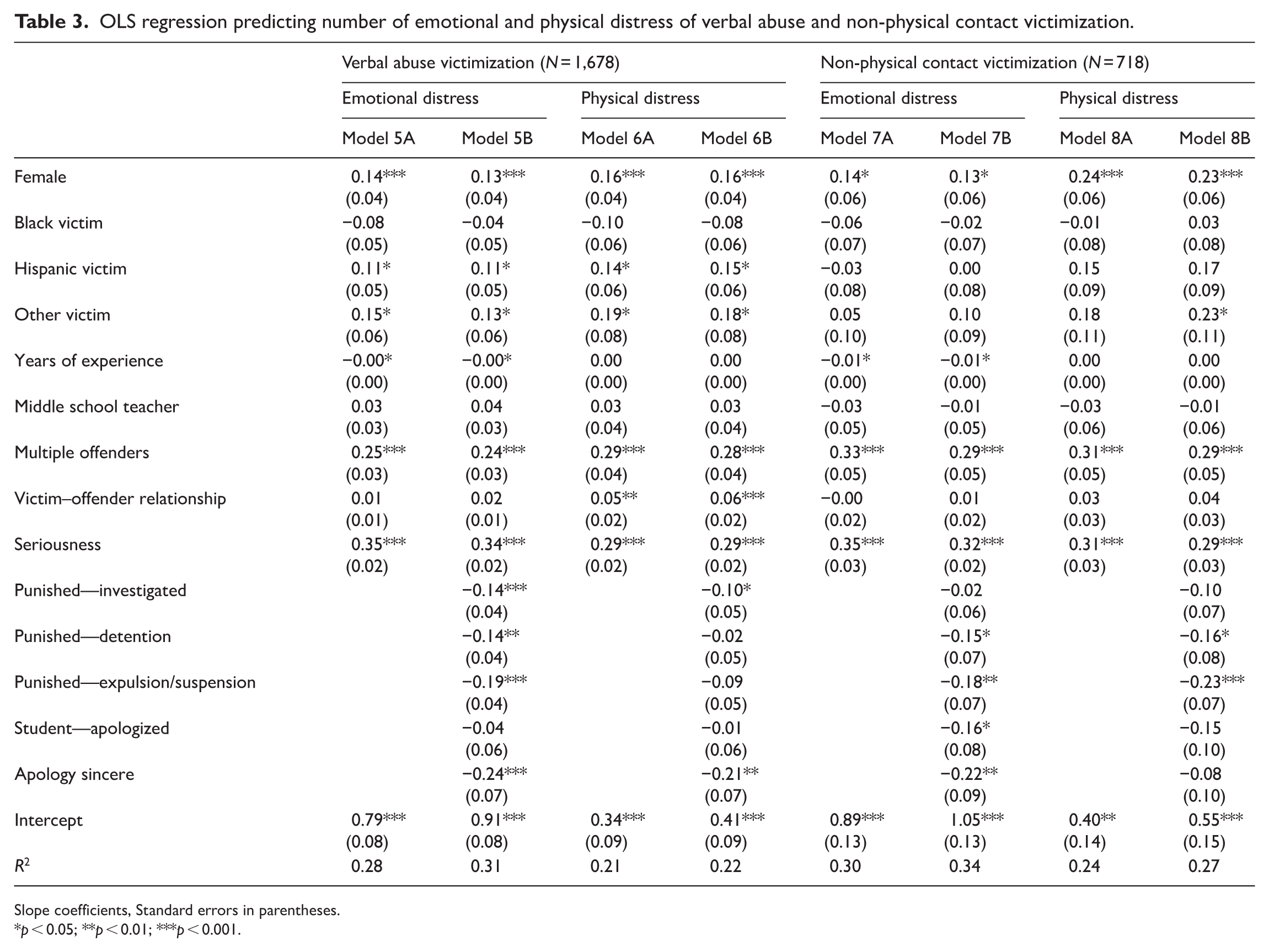
Slope coefficients, Standard errors in parentheses.
p < 0.05; **p < 0.01; ***p < 0.001.
Model 6 follows similar logic in verbal abuse incidents, examining the physical consequences of the incident. Model 6A again shows that a mix of teacher characteristics, including female, Hispanic, and other races, is associated with higher reports of physical consequences. Again, all three measures capturing characteristics of the event are significant predictors. Those effects persist in Model 6B; however, the pattern of punishment indicates investigation, suspension/expulsion (marginal, see coefficient), and sincere apology, all of which significantly reduce physical consequences reported by the victim in the incident.
Non-contact aggression is the final victimization incident examined. In Model 7, emotional consequences are examined. Female teachers report greater consequences, and teachers with more experience report less; again, seriousness and multiple offenders exhibit statistically significant outcomes in increasing emotional consequences in Model 7A. Adding in the punishment and apology, we see that, with the exception of punishment that is limited to investigation, all the added variables decrease the emotional consequences significantly, including an insincere apology. The examination of non-contact aggression cases and the association with physical consequences is explored in Model 8, involving a sample of 718 incidents reported by 652 teachers. Model 8A indicates female teachers report greater physical consequences, but again, multiple offenders and the seriousness of the event are the primary drivers as significant predictors of greater negative outcomes. Adding in punishment and apologies offers some improvement, but the pattern of significant findings is limited to detention and expulsion/suspension, significantly reducing the physical consequences. In addition, other race teachers experience significantly greater physical consequences in the interpretation of Model 8B.
Discussion and conclusion
In the teacher victimization literature, the current research is the first attempt to investigate the impacts of apologies from offending students and their perceived sincerity on victimized teachers’ emotional and physical distress. Furthermore, the study has measured four distinctive types of teacher victimization, ranging from relatively minor incidents such as verbal abuse to severe events like physical assault. This approach aims to examine how offending students’ apologies and perceived sincerity uniquely influence emotional and physical distress among victimized teachers, contingent upon the types of victimization experienced, an area that has been rarely examined in previous studies.
The findings suggest three key patterns. First, a perceived insincere apology from the offending student, when compared to receiving no apology, did not have a statistically significant impact on victims’ emotional and physical distress across the four different types of victimization (except emotional distress in response to non-physical contact aggression). In other words, the apology offered by offending students, perceived as insincere by victimized teachers, did not yield any beneficial effect on the victims, regardless of the severity of victimization. These findings provide empirical support for Suzuki’s argument that insincere apologies from offenders may have little impact on victims’ emotional and physical recovery processes (Suzuki, 2023), as victims may interpret insincere apologies as lacking genuine acknowledgment of their aggression, which is a crucial element for facilitating the emotional and physical healing of victims.
Second, the results indicate that regardless of perceived sincerity, an apology had no significant effect on victimized teachers’ emotional and physical distress in cases of physical assault and sexual harassment victimization, when compared to not receiving an apology. Though further research is warranted, it is plausible that this lack of significant influence could potentially be attributed to the lasting and profound harm already inflicted upon the victims of physical assault and sexual harassment. Given the severity and extent of harm, the impact of an apology, even if perceived as sincere, does little to mitigate the distress experienced by victims. This suggests that the effectiveness of (sincere) apologies in ameliorating victims’ distress may be limited in cases where the harm inflicted on victims is particularly severe, highlighting the need for careful approaches to support victims in such challenging victimization cases.
Third, when compared to no apology, a sincere apology significantly decreased the levels of physical and emotional distress suffered by victims of verbal abuse and non-physical contact aggression (except physical distress in response to non-physical contact aggression). This implies that the act of a perceived sincere apology can play a crucial role in mitigating the emotional/physical distress caused by such forms of relatively less severe aggression. Consistent with prior research (see Kirchhoff et al., 2012; Moon and McCluskey, 2023), this highlights the importance of offending students acknowledging their wrongdoing and expressing remorse to alleviate the negative impacts of aggression on the distress experienced by victimized teachers within the context of the teacher-student relationship in schools. It may suggest that offering a genuine apology could lead to forgiveness and healing, along with the restoration of a sense of authority and security at school. This, in turn, may contribute to lower levels of emotional and physical distress among victimized teachers.
Though disciplinary measures were used as control variables, the findings consistently indicate that the disciplinary measures taken by schools against offending students are significantly related to the levels of emotional and physical distress experienced by victimized teachers, regardless of the severity of victimization. It implies that formal disciplinary actions taken by schools do play a role in mitigating the negative effects on victims physically and emotionally. When these punishments are enforced by the school administration, it could help restore the sense of justice and fairness for victimized teachers, thereby potentially alleviating some of the emotional and physical distress resulting from the victimization event (McMahon et al., 2017).
Results indicated that for cases of physical assault, only expulsion or suspension of the student was associated with lower physical and emotional distress. This is potentially because teachers are not in proximity to the students who physically victimized them, which may increase feelings of safety and reduce fear. This indicates the importance of school administration supporting victimized teachers through the implementation of appropriate disciplinary actions in cases where students physically assault teachers (McMahon et al., 2017).
Results of this study also emphasize that incident and demographic factors of teachers matter in explaining emotional and physical distress following victimization by students. For instance, female teachers, relative to male teachers, reported greater physical and emotional consequences in cases of verbal abuse and non-contact aggression. In contrast, more years of teaching were related to lower levels of emotional distress in cases of verbal assault and non-contact aggression. When multiple offenders were involved in a victimization incident, there was evidence of higher levels of emotional and physical distress across all outcomes. In addition, the closeness of the victim–offender relationship was related to lower levels of emotional distress for physical assault and higher levels of physical distress for verbal assault.
The current research has several limitations that future research needs to address and further explore. First, although it analyzed data from a random sample of teachers from the 50 largest school districts across the United States, it is crucial to note a limitation in the generalizability of the findings beyond this sample. Variations in characteristics between schools in urban and rural areas, variances between elementary and middle/high schools, as well as distinctions between public and private schools could potentially impact both the prevalence and negative consequences of various teacher victimization. Thus, careful consideration is necessary when generalizing the findings of this study to broader educational settings. Second, the causal relationship between apology and physical/emotional distress cannot be clarified and established as a cross-sectional design, where victimization events, students’ apologies/sincerity, and emotional/physical distress are simultaneously measured. In addition, it is unclear when the victimized teachers experienced these negative distress—whether it was immediately following the victimization or represents a longer-term assessment of the consequences of the victimization incident, including after the apology from perpetrating students and/or the school’s response. Therefore, future research should consider collecting longitudinal data with shorter durations to better understand the mitigating effect of offending students’ apologies and their sincerity on victimized teachers’ emotional and physical distress. Third, our focus is on the impact of apologies on teachers’ reported distress. Our simplifying assumption is that opportunities to apologize were available to all identified offending students. However, there could be some selection bias that emanates from school policies that may solicit, encourage, or mandate such apologies, as we did not assess whether the apology was based on such an encouragement or requirement. In addition, offending students may feel pressured to offer apologies, and victimized teachers may, in turn, feel obligated to accept them. We believe that further research is necessary to explore school policies and the nature of these apologies—whether verbal or written, and from students or their parents—to better understand how school policies and practices influence the effectiveness of apologies in alleviating victimized teachers’ emotional and physical distress.
The US education system is highly decentralized, and little is known about whether schools have specific formal policies regarding intervention strategies for teacher victimization. However, the findings from the present research highlight several important policy implications for alleviating emotional and physical distress experienced by victimized teachers. First, when students offer apologies or are encouraged by school administrators/counselors to do so to victimized teachers at school, it is crucial that they understand the necessity and importance of sincerity. A mere apology from offending students, lacking sincerity, did not have a significant impact on mitigating the distress of victimized teachers, regardless of the severity of the victimization (except non-physical contact victimization). Second, while further research is warranted, schools might contemplate the selective application of offending students’ apologies, contingent upon the severity of victimization, as sincere apologies are found to play a pivotal role in reducing distress experienced by victims, particularly in the events of relatively less serious victimization. The results show that a substantial number of teachers in the sample reported being victims of verbal abuse and non-physical contact aggression from students. However, only 11% and 13% of victims of verbal abuse and non-physical contact aggression, respectively, received sincere apologies from offending students. It would be beneficial and advantageous for schools to explore various methods to encourage more offending students to offer sincere apologies to victimized teachers in these less severe yet more common events to help alleviate emotional/physical distress experienced by the victims. Third, it is crucial to emphasize the importance of schools adopting a holistic and comprehensive approach that incorporate apologies and appropriate punishment, as it is found that both actions are critical for reducing the distress experienced by victimized teachers.
Overall, the present research found that teachers subjected to various types of aggression from students often endure elevated levels of emotional and physical distress, indicating the urgent need for effective intervention and measures to alleviate the distress experienced by victimized teachers. The results imply that sincere apologies from offending students and holding them accountable through appropriate punishment can play pivotal roles in alleviating the distress endured by victimized teachers at school. Given that this research is the first attempt to explore the relationship between apologies/perceived sincerity and distress in teacher victimization, we advocate conducting further studies with diverse samples to better understand the unique effects of apologies/sincerity on distress across various types of teacher victimization. Also, research needs to be conducted to examine the effects of various moderating factors (e.g., school responses to victimization, support from peers, and/or supervisors) on victimized teachers’ psychological and physical distress.
Footnotes
Authors’ note
The opinions, findings, and conclusions or recommendations expressed in this publication/program/exhibition are those of the authors and do not necessarily reflect those of the Department of Justice.

Funding
The authors disclosed receipt of the following financial support for the research, authorship, and/or publication of this article: This project was supported by the National Institute of Justice, Office of Justice Programs, US Department of Justice (Award No. 2020-CK-BX-0004).
Declaration of conflicting interests
The authors declared no potential conflicts of interest with respect to the research, authorship, and/or publication of this article.