



Abstract
This meta-analysis examined the prevalence of student bullying against teachers, drawing from both teacher-reported victimization and student-reported perpetration. Following the Preferred Reporting Items for Systematic Reviews and Meta-Analyses (PRISMA) guidelines, this study systematically searched across seven databases (e.g., ERIC, Scopus, Academic Search Ultimate) and identified 59 studies spanning 26 countries. Included studies were peer-reviewed journal articles written in English. The analysis included data from a total of 203,535 teachers and 110,021 students. The pooled prevalence of student bullying against teachers was 51.1% (based on 14,022 teacher reports) and 17.3% (based on 78,001 student reports). Among teacher-reported cases, pooled prevalence rates were calculated, including verbal (ranged from 9.00% [belittling] to 37.70% [saying mean things]), physical (ranged from 1% [weapon pulled] to 39.5% [obscene gesture]), relational (ranged from 4.40% [isolation] to 44.40% [ignoring]), sexual (ranged from 2.90% [physical sexual bullying] to 14.20% [verbal sexual bullying]), cyberbullying (6.40%), and bullying based on personal characteristics (14.80%). In contrast, student-reported cases focused on verbal (ranged from 3.10% [verbal threat] to 10.30% [saying mean things]), physical (ranged from 2.60% [kicking and slapping] to 5.20% [damage property]), and cyberbullying (5.70%). Findings highlighted discrepancies in pooled prevalence rates between teacher and student reports of Teacher-Targeted Bullying. This study identified three moderators (based on teacher reports): country of origin, publication year, and recall period. These findings highlighted the need for targeted interventions and professional development programs to systematically address student bullying against teachers to increase awareness and improve knowledge for both teachers and students, and improve school climate.
Keywords
Introduction
Teacher-Targeted Bullying (TTB) describes students bullying against teachers (Burns et al., 2020). TTB can take various forms, including verbal, physical, relational (e.g., damaging professional reputation), cyber, sexual bullying, and bullying based on personal characteristics (e.g., appearance, gender identity; McKay et al., 2008; Qiao & Patterson, 2021). Three aspects of the existing literature motivated the current study, including a growing concern of TTB with a need for cross-cultural consideration, a lack of terminology and methodology consistency in TTB research (e.g., behaviors investigated, data from teacher reports and student reports), and a need to expand on the existing meta-analysis. The current study employed a meta-analysis approach, following the Preferred Reporting Items for Systematic Reviews and Meta-Analyses (PRISMA) method, to examine pooled prevalences of various TTB behaviors using both teacher reports and student reports in K-12 schools globally.
A Growing Concern of TTB
TTB is a growing issue in K-12 schools globally (e.g., Longobardi et al., 2019). As authority figures in the classroom, teachers are in charge of imparting knowledge and managing students’ behavior, TTB may be overlooked due to the professional status of teachers. Studies suggested that power may have various sources, such as appearance, expertise, ability to provide resources/rewards or impose punishments, individual charisma, skills to influence others (Berry, 2016; French & Raven, 1959; Hoel & Cooper, 2001; Rayner et al., 2002). In the context of TTB, students may perceive themselves as more powerful due to support from their parents and thus conduct TTB (e.g., parents support or ignore students bullying teachers, or parents themselves are bullying perpetrators against students’ teachers; Badenes-Ribera et al., 2022; Qiao & Patterson, 2021).
Bullying may lead to negative consequences, such as burnout, job turnover, and emotional exhaustion (e.g., Anderman et al., 2018; Lowe et al., 2020; Acquadro Maran & Begotti, 2020). School climate is relevant to bullying, as it may mitigate negative bullying impacts (Benbenishty et al., 2019). However, teachers report the lack of institution or administrative support after experiencing student bullying (McMahon et al., 2017). Therefore, it is important to understand the prevalence and nature of student bullying towards teachers in K-12 schools to raise awareness about the phenomenon.
Factors Impacting TTB Experiences
Cultural, personal, and methodological factors may impact TTB experience globally, including country of origin, gender, publication year, and recall period. First, TTB prevalence varied across countries, for instance, United States had higher prevalence rates compared to Turkey (McMahon et al., 2014; Uz & Bayraktar, 2019). A small number of studies uncovered cross-cultural differences of TTB experiences. For example, Qiao and Patterson (2021) found that compared to Chinese teachers, U.S. teachers experienced more physical bullying and less sexual bullying. Thus, cross-cultural considerations are necessary in TTB research as well as school practices, for example, when implementing internationally developed bullying intervention programs, culturally appropriate revisions may be needed. Second, gender may impact teachers’ experiences with student bullying as well as students’ perpetration of bullying. For example, more female teachers experienced sexual harassment and more male students insulted or teased teachers (James et al., 2018; Moon & McCluskey, 2020; Sorrentino & Farrington, 2019). Lastly, two methodological factors (i.e., publication year and recall period) may capture changes in prevalence rates of TTB. For example, some earlier studies showed high rates of TTB, whereas some recent studies showed lower rates (e.g., Dzuka & Dalbert, 2007; Feda et al., 2020). Examining TTB rates based on publication year may uncover changes in teachers’ awareness of bullying, such as through implementation/administration of bullying interventions (Jantzer et al., 2023). This, in turn, inform policy changes in schools, based on the chronological factor. Longer recall periods generally resulted in higher TTB rates (e.g., Bernotaite & Malinauskiene, 2017; McMahon et al., 2014). Analysis based on the recall period may highlight the severity of TTB globally and explain the urgency of global bullying intervention practices. Given the potential contextual and methodological impacts on TTB prevalence, the current study explored moderation effects of the above four factors.
Terminology and Methodological Inconsistencies in TTB Research
Researchers used numerous terms to describe the phenomenon of students harming teachers, such as victimization of teachers or teacher victimization (e.g., Yang et al., 2022), student aggression against teachers (e.g., Stevens et al., 2020), student violence against teachers (e.g., Maeng et al., 2020), TTD (e.g., Burns et al., 2020), educator-targeted bullying (TTB; e.g., De Wet & Jacobs, 2006), student bullying of teachers (e.g., Garrett, 2014), and learner-to-teacher bullying (e.g., Woudstra et al., 2018). Some researchers used the above terms interchangeably (e.g., Huang et al., 2020; Longobardi et al., 2019; McMahon et al., 2014; Moon et al., 2021; Olivier et al., 2021). Thus, terminology considerations impacted the search words used and the scope investigated in this study.
The current study used the term TTB, since it highlights the professional roles of both the bully (student) and the victim (teacher). TTB describes behaviors that are repetitive, harmful, and power-imbalanced (students have more power than teachers), adapted from Olweus’ (1993) bullying theory. Empirical studies commonly utilized a broad interpretation of the theory without capturing all three characteristics. First, some studies did not restrict the minimum frequency and duration of the behavior. For example, studies (e.g., Dolev-Cohen & Ben Israel, 2024; Woudstra et al., 2018) used yes/no options when examining teachers’ experiences with various student bullying behaviors. This practice acknowledged the context and potential consequences of the behavior, for example, a single harmful video may lead to long-term impacts on teachers (Baas et al., 2013). Second, research provided the definition of bullying in the survey and measured a set of behaviors, but did not specifically examine intentionality (e.g., Bernotaite & Malinauskiene, 2017; James et al., 2008). This may reflect the difficulty in determining perpetrator’s intention or motive (Qiao & Patterson, 2021). Third, power imbalance was often described as a common consequence of bullying, rather than a main behavioral characteristic (e.g., Qiao & Patterson, 2021).
When analyzed through the lens of three characteristics of Olweus’ bullying theory, the variety of terms (i.e., aggression, bullying, victimization, and violence) showed substantial overlapping constructs, with a shared emphasis on harmful experiences. Aggression is behavior intentionally conducted to harm the victim (Anderson & Bushman, 2002). Violence is a form of aggression with the intention of causing extreme harm (Anderson & Bushman, 2002). Victimization describes harmful behavior experienced by an individual, but it may not necessarily be perceived as intentional or lead to powerlessness (Hunter et al., 2010). Therefore, the current study employed TTB as a comprehensive umbrella term that captured essential elements of above related terms.
In addition to variation in terms used, the TTB behaviors investigated varied across studies. Many TTB studies focused on verbal, physical, and relational bullying (collectively referred to as traditional bullying; Li et al., 2024; Longobardi et al., 2019). The severity and intensity of behaviors investigated vary widely, also ranging from classroom disrespectful behaviors (e.g., Özkılıç, 2012) to physical attacks requiring medical attention (Lowe et al., 2020). A small number of studies also examined cyberbullying (e.g., Kauppi & Pörhölä, 2012), sexual harassment (e.g., Marsh et al., 2009), and bullying based on race, cultural background, or language (e.g., Qiao & Patterson, 2021). The lack of consensus in terminology and behaviors investigated created challenges for researchers to effectively communicate research scopes in the field and research results with K-12 school stakeholders to convey the severe consequences of TTB, as well as further guide school administrators in the policy-making process (e.g., identifying what specific behaviors need to be regulated among members). Thus, to develop a complete understanding of TTB, the current study employed a comprehensive global approach that included a wide variety of terms and types of student bullying behaviors.
While most studies relied solely on teacher reports as bullying victims, some incorporated student self-reports as bullying perpetrators (e.g., James et al., 2008; Sorrentino & Farrington, 2019). Teachers and students may have different interpretations about bullying, considering their role differences in the bullying scenario, professional standing in schools, and knowledge possessed about bullying. Since existing school wide bullying trainings commonly target bullying among students and are administered by teachers (e.g., Olweus Bullying Prevention Program, KiVa; Gaffney et al., 2019; Torgal et al., 2023), the analyses of cases reported by teachers and students separately are necessary to better guide the design and implementation of the bullying trainings.
Expansion on Prior Meta-Analytic Research
Longobardi et al. (2019) was one of the first meta-analyses on student bullying against teachers. The current study expanded Longobardi et al. (2019) in four aspects. First, in addition to including newly published data, the current study incorporated a broader range of TTB behaviors, including verbal, physical, relational, cyber, sexual bullying, and bullying based on personal characteristics. Second, this study refined search terms by incorporating “educator/teacher-targeted bullying” and including broader terminology for students (e.g., “learners,” “pupils”) and spelling variations. Third, this study updated the pooled prevalences of TTB based on student reports. Fourth, the current study examined four moderation effects on TTB.
The Current Study
To establish a global understanding of TTB, the present meta-analysis study examined the pooled prevalence rates in K-12 settings worldwide, incorporating evidence from both teacher and student reports. By examining international data, the current study aimed to illuminate a more culturally nuanced understanding of TTB. This study confronted prevalent methodological and terminological inconsistencies within the field and thus contributed to the comprehensive understanding of TTB. The current study addressed the following research questions:
Method
Study Inclusion Criteria and Search Strategy
This study followed PRISMA guidelines. Data collection was conducted between March and July 2022. A systematic literature search was performed across seven electronic databases: PsycINFO, ERIC, Google Scholar, Scopus, Web of Science, PubMed, and Academic Search Ultimate. Search keywords included variations of student-related terms (i.e., student, learner, pupil), bullying-related terms (i.e., bullying, aggression, violence, victimisation, victimization), and teacher-related terms (i.e., targeting teacher/educator, targeted teacher/educator, against teacher/educator, towards teacher/educator, victimized teacher/educator, experienced by teacher/educator, of teacher/educator, on teacher/educator, directed at teacher/educator, teacher/educator-directed).
Studies included in this study met the following criteria: (a) peer-reviewed published in journal articles (excluding websites, book chapters, dissertations, or theses), (b) written in English, (c) presented K-12 teachers’ personal experiences with student bullying (excluding pre-service teachers/student teachers in undergraduate program, and teachers’ witnessed experiences of other teachers being bullied by students), and/or students’ personal experiences with bullying teachers, (d) with sufficient quantitative data to calculate pooled prevalence, (e) available for full text review.
PRISMA Flowchart specified the article screening and selection process (Figure 1). After the research team reviewed full texts, certain articles were excluded due to various reasons, including failing to distinguish the specific perpetrators of bullying (e.g., students, administrators), missing sufficient data for pooled prevalence calculation (e.g., only providing mean, standard deviation, factor loading), having duplicated samples as other studies, failing to specify victim professional status (e.g., teachers, administrators) and grade level they work at. A total of 59 articles met the inclusion criteria. Thirty studies reported overall TTB prevalence, while 29 studies examined the prevalence of specific types of TTB. The final selection of articles spanned publication years 1998 to 2022 (Supplementary Document Supplemental Table 1).
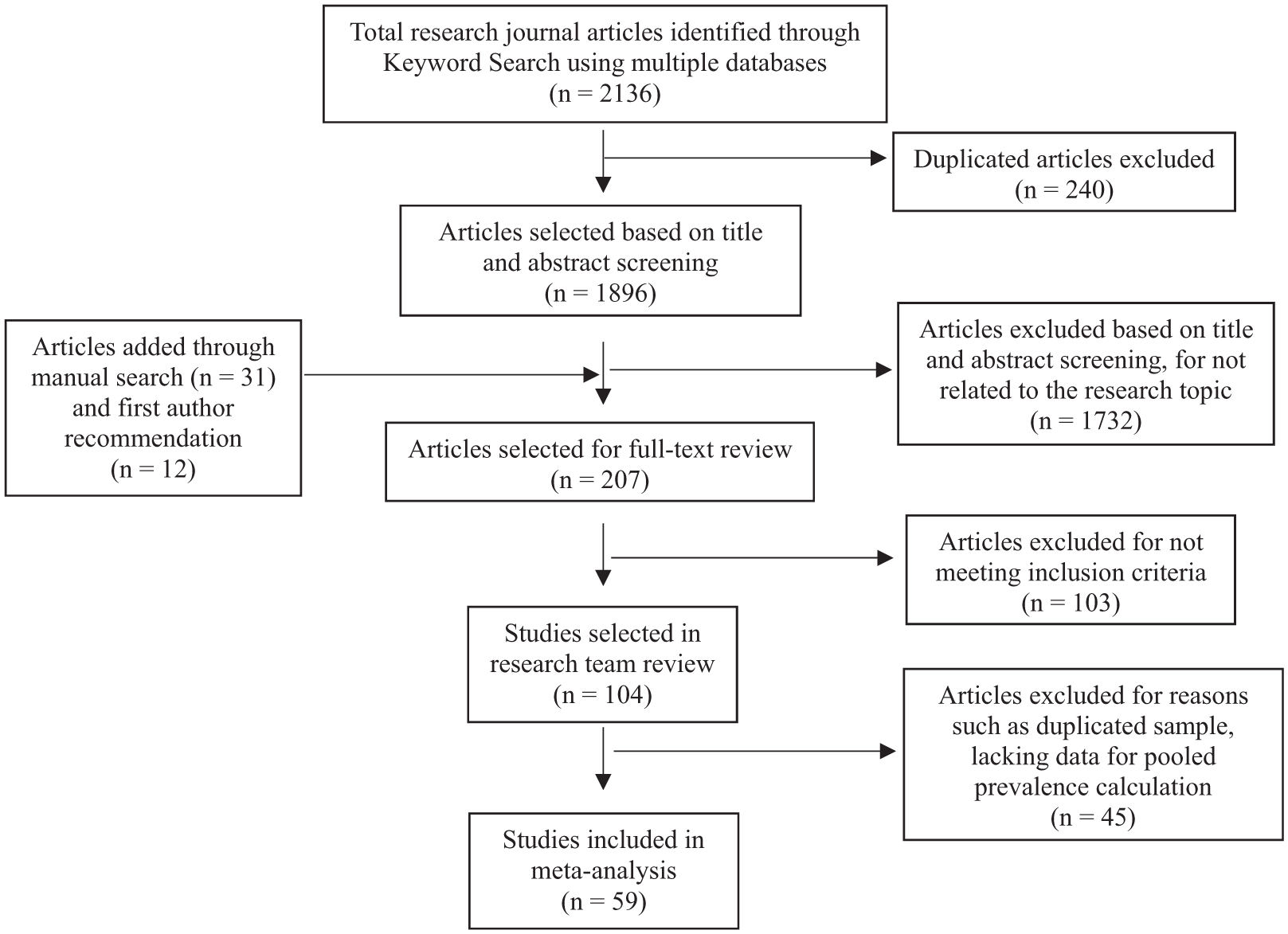
Study selection process PRISMA flowchart.
Data Analysis and Quality Assessment
Abstract review was conducted by the first and second authors individually to determine the list for full-text review. Full-text review was conducted by the first and second author individually, to determine the final list of articles for data extraction. The first author completed data extraction for all selected studies individually. The second, third, and fourth authors each completed data extraction of 33% of articles. Interrater reliabilities (i.e., percentage agreements) were high across team members (i.e., first author paired with second, third, and fourth author respectively: 0.92, 0.98, 0.99). Any disagreement in data extraction was resolved through discussion between members. The final dataset included a total of 1,657 coded entries.
Meta-analyses were conducted for behaviors that had more than three unique samples (Best et al., 2023) using OpenMetaAnalyst (Wallace et al., 2012). Effect sizes were calculated using the random-effect model to accommodate the large variation in cultural backgrounds, measurements, participation gender, publication years, and recall periods. Random-effect model allows unconditional inference from the included studies and makes generalizable findings beyond the observed samples (Hedges & Vevea, 1998). Heterogeneity was calculated based on Cochran’s Q, I2. The pooled prevalence and the 95% confidence interval were recorded. Sensitivity analyses were conducted using leave-one-out analyses to estimate the pooled prevalences while leaving out a specific study, to ensure the robustness of findings. For example, if there were n studies, leave-one-out analyses calculated overall pooled prevalences while excluding each of these studies (Wallace et al., 2009). Four moderators were tested, including country, percentage of female participants, publication year, and recall period. Moderator effects were examined with data from more than 10 unique samples (Chen et al., 2019); based on results, subgroup analyses based on country) were further conducted. Publication bias was analyzed for data from more than 10 unique samples (Sterne et al., 2011), using Comprehensive Meta-Analysis Software 3.0.
Quality assessment (Supplementary Document Supplemental Table 2) followed the Mixed Methods Appraisal Tool for quantitative descriptive studies (Hong et al., 2019), evaluating sampling strategy, representativeness of sample, appropriateness of measures, response rate, and appropriateness of data analysis. Each parameter was rated using Y (Yes), N (No), and NA (not sure/not applicable). Quality assessment resulted in a total of 590 observations. Cohen’s Kappa (k; McHugh, 2012) showed moderate to strong level of agreement among research team members (i.e., first author paired with second, third, and fourth author respectively: 0.78, 0.89, 0.83).
Results
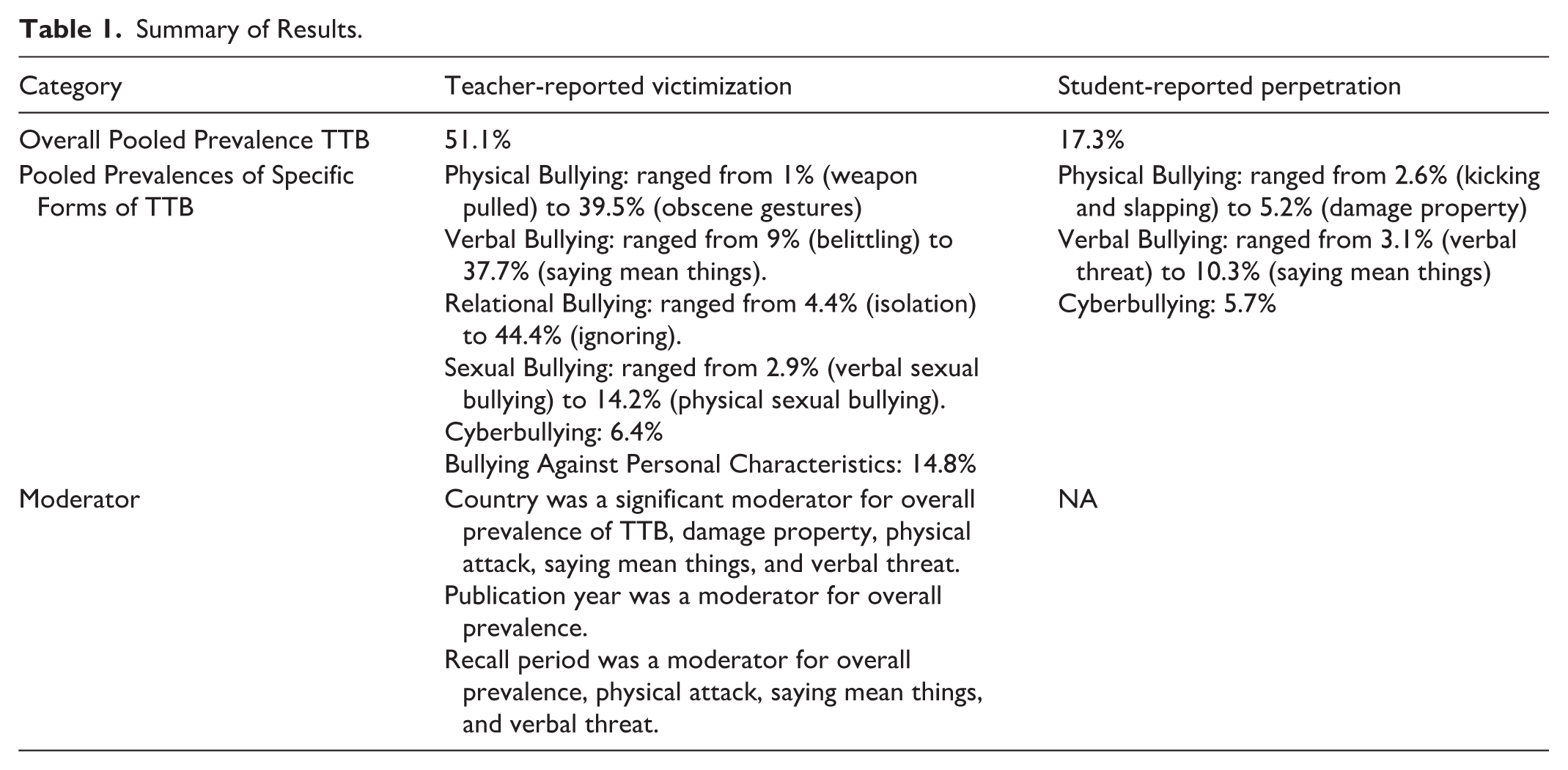
In this section, we present general information about the selected studies for meta-analysis, pooled prevalence for TTB in general, and pooled prevalences for specific forms of verbal, physical, relational, cyber-, sexual bullying, and bullying against personal characteristics (see summary of results in Table 1).
Summary of Results.
General Information on Selected Studies
The current study analyzed samples from a total of 26 countries, predominantly from the United States (Supplementary Document Supplemental Table 3). Five studies included participants from more than one country (Benbenishty et al., 2019; Dzuka & Dalbert, 2007; James et al., 2008; Kõiv, 2015; Qiao & Patterson, 2021). Among the 59 studies included in the meta-analysis, 47 of them involved teachers as samples and 12 of them involved students as samples, across K-12 school grade levels. Overall, 52 studies provided information on gender (mean percentage of female teachers = 71.39%; mean percentage of female students = 52.64%).
Teachers Report on TTB
Regarding RQ 1, the total number of teachers examined was 203,535, from a total of 20 countries (Supplementary Document Supplemental Table 3). A total of 14,022 teachers were examined for the overall prevalence of TTB. TTB prevalence ranged from 6% to 90.5%, with a pooled prevalence of 51.1% (Supplementary Document Supplemental Figure 1), 95% CI [41.4%, 60.7%]. Cohen’s Q = 3866.37, p < .001, I2 = 99.38, indicating high heterogeneity. The leave-one-out analyses indicated that no single study disproportionately influenced the pooled prevalence estimate (Supplementary Document Supplemental Figure 33). Egger’s test result showed no publication bias (Supplementary Document Supplemental Table 9).
Regarding RQ 2, selected studies investigated a wide range of bullying behaviors, however physical bullying was the most commonly investigated, followed by verbal, relational, sexual, cyberbullying, and those targeting personal characteristics. Pooled prevalence rates for various physical bullying behaviors (Supplementary Document Supplemental Figures 3–9, Supplemental Table 4) ranged from 1% (weapon pulled) to 39.5% (obscene gestures). Pooled prevalence rates for various verbal bullying (Supplementary Document Supplemental Figures 10–16) ranged from 9% (belittling) to 37.7% (saying mean things). Pooled prevalence rates for various relational bullying behavior (Supplementary Document Supplemental Figures 17–24) ranged from 4.4% (isolation) to 44.4% (ignoring). Pooled prevalence rates for sexual bullying (Supplementary Document Supplemental Figures 25 and 26) ranged from 2.9% (verbal sexual bullying) to 14.2% (physical sexual bullying). Pooled prevalence rate was 6.4% for cyberbullying and 14.8% for bullying against personal characteristics (Supplementary Document Supplemental Figures 27 and 28). For meta-analysis of isolation, the leave-one-out analysis found that Dzuka and Dalbert (2007)-1 disproportionally impacted the pooled prevalence, and thus, Dzuka and Dalbert (2007)-1 was removed from meta-analysis of isolation. The leave-one-out analyses indicated that among all meta-analyses (after removing Dzuka & Dalbert, 2007-1), no single study disproportionately influenced the pooled prevalence estimate (Supplementary Document Supplemental Figures 34–59).
Considering the current study included U.S. teacher samples predominately, pooled prevalences of overall prevalence, verbal threat, physical attack, cyberbullying were examined based on U.S. samples (Supplementary Document Supplemental Table 5).
Publication bias analyses were only performed for damage property, physical attack, saying mean things, and verbal threat, that had more than 10 unique samples (Supplementary Document Supplemental Table 9). Publication bias was identified as a moderate concern only for studies investigated damaging property.
Regarding RQ 3, moderator analyses and subgroup analyses were only performed for overall prevalence of TTB, damage property, physical attack, saying mean things, and verbal threat, which had more than 10 unique samples (Supplementary Document Supplemental Tables 6–8). Three factors were identified as moderators. First, country of origin was a significant moderator for above five areas, indicating prevalence rates varied based on country for the five areas. Subgroup analyses (Supplementary Document Supplemental Table 7) showed that England had the highest pooled prevalences for overall prevalence rate (73.7%) and damage property (71.40%). United States (70.50%) and Brazil (22.90%) had the highest pooled prevalences for saying mean things and physical attack respectively. France (6%), Israel (3.6%), Estonia (1.80%), and Chile (2.10%) had the lowest pooled prevalences for overall prevalence rate, damaging property, physical attack, and verbal threat respectively.
Second, publication year was identified as a significant moderator for overall prevalence (coefficient = −0.02, p = .01), indicating the overall prevalence tended to decrease in newer studies. Non-significant moderating effects were observed for other categories.
Third, recall period was identified as a moderator for overall prevalence, physical attack, saying mean things, and verbal threat. Subgroup analyses (Supplementary Document Supplemental Table 8) showed a general trend that longer recall period led to higher pooled prevalence rate. For example, overall prevalence among recall periods varied from 37.40% (6 months or less) to 74.10% (more than 12 months).
Percentage of female participants was a non-significant moderator across all above five categories (Supplementary Document Supplemental Table 6).
Students Report on TTB
Regarding RQ 1, the total number of students examined was 110,021, from a total of 9 countries (Supplementary Document Supplemental Table 10). A total of 78,001 students were examined for overall prevalence of TTB. Prevalence ranged from 7.8% to 30.1%, with a pooled prevalence of 17.3% (Supplementary Document Supplemental Figure 60), 95% CI [12.3%, 22.4%]. Cohen’s I² = 99.73%, Q = 3003.24, p < .001, indicating high heterogeneity. The leave-one-out analyses indicated that no single study disproportionately influenced the pooled prevalence estimate (Supplementary Document Supplemental Figure 69).
Regarding RQ 2, selected studies investigated a range of TTB behaviors, and physical bullying was the most commonly investigated, followed by verbal and cyberbullying. Pooled prevalence rates for various physical bullying (Supplementary Document Figures 61–65) ranged from 2.6% (kicking and slapping) to 5.2% (damage property). Pooled prevalence rates for various verbal bullying (Supplementary Document Supplemental Figures 66 and 67) ranged from 3.1% (verbal threat) to 10.3% (saying mean things). Pooled prevalence rate was 5.7% for cyberbullying (Supplementary Document Supplemental Figure 68). For meta-analysis of physical attack, the leave-one-out analysis found Jaureguizar et al. (2013) disproportionally impacted the pooled prevalence, and thus, Jaureguizar et al. (2013) was removed from meta-analysis of physical attack. The leave-one-out analyses indicated that all meta-analyses (after removing Jaureguizar et al., 2013), no single study disproportionately influenced the pooled prevalence estimate (Supplementary Document Supplemental Figures 70–77).
Regarding RQ 3, due to insufficient number of studies, moderator effect cannot be performed for overall prevalence rates and prevalence rates of specific types; publication bias analysis cannot be performed for overall prevalence rates of TTB based on student reports either.
Discussion
The current study resulted in three major findings: (a) uncovered discrepancy in pooled prevalence rates of TTB comparing teacher and student reports, (b) identified country of origin, publication year, and recall period as meaningful moderators that impacted prevalence rates globally, and (c) expanded on the existing meta-analytic review.
Discrepancy in Teachers and Students Reports
The present study revealed the discrepancy in TTB pooled prevalences, based on teacher and student reports. This discrepancy may be attributed to the following factors, including the overrepresentation of teacher data, survey scope in teacher-reported and student-reported studies, developmental age of participants, awareness and knowledge possessed related to bullying, and the role difference between teachers and students. First, teacher-reported data were overrepresented in the analysis (approximately a 5:1 ratio compared to student data), which may have contributed to the the lower prevalence rates observed in student reports. Although the confidence interval based on student data was relatively narrower (95% CI [12.3%, 22.4%]), compared to that based on teacher data ( [41.4%, 60.7%]), indicating greater precision in the student data estimate (Kelley & Rausch, 2006). Future studies should further examine student perpetration of TTB using larger student samples.
Second, the breadth of surveyed behaviors varied across studies. Teacher-reported studies examined six types of bullying (i.e., physical, verbal, relational, sexual, cyberbullying, and bullying targeting personal characteristics), whereas student-reported studies examined three types (i.e., physical, verbal, and cyberbullying), with fewer behavioral forms for each type. This discrepancy highlighted a measurement gap between teacher- and student-reported studies and may partly explain the lower prevalence rates reported by students.
Third, students’ developmental stage and their understanding of bullying and prosocial behaviors may contribute to under-reporting of bullying perpetration. Bullying is a complex social phenomenon that requires sophisticated social awareness and reasoning skills (Chang, 2021); younger students may struggle to recognize behaviors as bullying, resulting in underreporting data in self-assessment (Campbell & Xu, 2022; Cushman et al., 2013; Qiu et al., 2024). Future studies may investigate age, theory of mind, and prosocial behaviors, in relation to bullying.
Fourth, teachers may have greater awareness of bullying behaviors compared to students. Widely implemented programs (e.g., the Olweus Bullying Prevention Program; OBPP) often require teachers serving as facilitators (Herkama et al., 2022; Jantzer et al., 2023). As a part of their training, teachers learn to identify bullying, which may make them more aware of bullying and more capable of recognizing TTB. Future studies should examine how student awareness of bullying influences self-reports and explore ways to bridge perception gaps between teachers and students.
Fifth, teachers may be more willing to report victimization experiences, whereas students may be reluctant to admit bullying perpetration. Concerns about social desirability bias and fear of consequences may lead students to minimize or deny their involvement in bullying. Future research should explore bullying behavior through matched bully-victim dyads. Such studies may shed light on the mechanism behind the discrepancy in teachers and students reports.
Moderation Effects
The current study found three meaningful moderators.
Moderation Effects of Country of Origin
The current study highlighted variation of bullying prevalence across countries, suggesting cross-cultural consideration in global bullying research. Similar to other psychological fields that mostly observed U.S. populations, TTB research overrepresented U.S. samples; this hinders the generalizability of research results to all populations globally. International researchers may follow the TTB theories developed by United States, such as commonly investigating traditional bullying behaviors and severe forms of physical TTB behaviors (e.g., Anderman et al., 2018; Feda et al., 2020), and thus psychological theory development may continue maintaining narrow cultural-oriented considerations (Cheon et al., 2020). Cultural factors may shape the reporting and recognition of specific bullying behaviors. For example, in some cultural contexts, sexual bullying is considered a sensitive or taboo topic and may be underreported (Lai et al., 2024; Sohrabizadeh, 2016). Unfortunately, the current study did not have sufficient data to examine the moderator effect in sexual bullying.
Language considerations are also important when interpreting TTB findings. The term “bullying” originated from an English-speaking country (Olweus, 1993). Accurate translation of “bullying” can be challenging, potentially affecting cross-cultural consistency in reporting. For example, in Chinese, “Qi Fu” and “Qi Ling” are possible translations for “bullying,” yet each term emphasizes different characteristics. “Qi Fu” is a common term for bullying but does not convey repetition. “Qi Ling” captures hurtful actions, power dynamics, and professional reputation damage (Qiao, 2018). Similarly, in Turkish, “zorbalık,” “alay,” “korkutma,” and “sindirme” were commonly used in describing bullying (Ucanok et al., 2011). Researchers commonly described their measure translation process (e.g., translation and backward translation) without specifying how the term bullying was translated (e.g., Deniz et al., 2023; Son & Bae, 2022). Such translation complexities may limit comparability across studies in different languages.
Moderation Effects of Publication Year and Recall Period
The current study found a slight decline in TTB prevalence in recent studies worldwide. This trend was consistent with a cross-cultural analysis that concluded a general decline in student bullying across countries (Smith et al., 2023) and may be due to the widely implemented bullying prevention and intervention programs. However, this result should be interpreted with caution, due to a small effect size, indicating practical prevention/reduction of bullying was limited. TTB remained a concerning issue that seeks continued intervention.
The current study uncovered longer recall period was associated with increased TTB experiences, suggesting the persistence of TTB as well as an overall negative school climate. An authoritative school climate that emphasizes fair enforcement of school rules as well as positive student-teacher relationship would foster positive student-teacher interactions, and thus reduce bullying (Berg & Cornell, 2016).
Expansion on the Existing Meta-Analysis
Findings from the current study were broadly consistent with Longobardi et al. (2019), while offering several updates and refinements. First, the current study estimated a teacher-reported TTB prevalence, comparable to the result found in Longobardi et al. (2019), although with a wider range of victimization percentages. Second, this study estimated a student-reported TTB prevalence, which was notably higher than Longobardi et al. (2019) estimate. This may have stemmed from newly included studies and an expanded keyword search strategy. Third, while Longobardi et al. (2019) focused on verbal and physical bullying, the current study included six types of bullying. This expansion highlighted the diverse nature of TTB. Greater attention should be given to relational bullying, which may be harder to detect and prevent (American Educational Research Association, 2013), and cyberbullying, which is facilitated by digital anonymity (Qiao & Patterson, 2021; Sorrentino & Farrington, 2019). Lastly, the current study observed significant moderation effects of three factors, expending the existing meta-analysis.
Limitations and Implications
This study had some limitations. First, the meta-analysis included only studies published in English, research written in other languages was not analyzed. Thus, the results found in this study may not be fully generalizable to non-English-speaking countries. Future study may investigate translation variations across languages of the term bullying to better capture potential cultural differences in the construct of bullying. Second, the article selection process ended in July 2022, therefore newly published studies were not included. Additionally, the team was not able to examine whether historical time or event had impacts on TTB globally, such as COVID, future studies may consider investigating the impacts of historical events on TTB globally. Third, the current study only examined four moderators. Future studies may consider investigating effects of other potential moderators, such as age or grade level of students, while matching students’ grade level across countries. Fourth, due to overrepresentation of U.S. samples, the pooled prevalence rate found may not reflect on TTB phenomenon in countries that had few samples or were not examined in existing literature. Future cross-cultural studies would benefit our global understanding of TTB. Fifth, due to limited student samples, the pooled prevalence found may not be generalized to our global understanding of TTB. Future investigations using student reports will benefit our understanding TTB from a broader perspective.
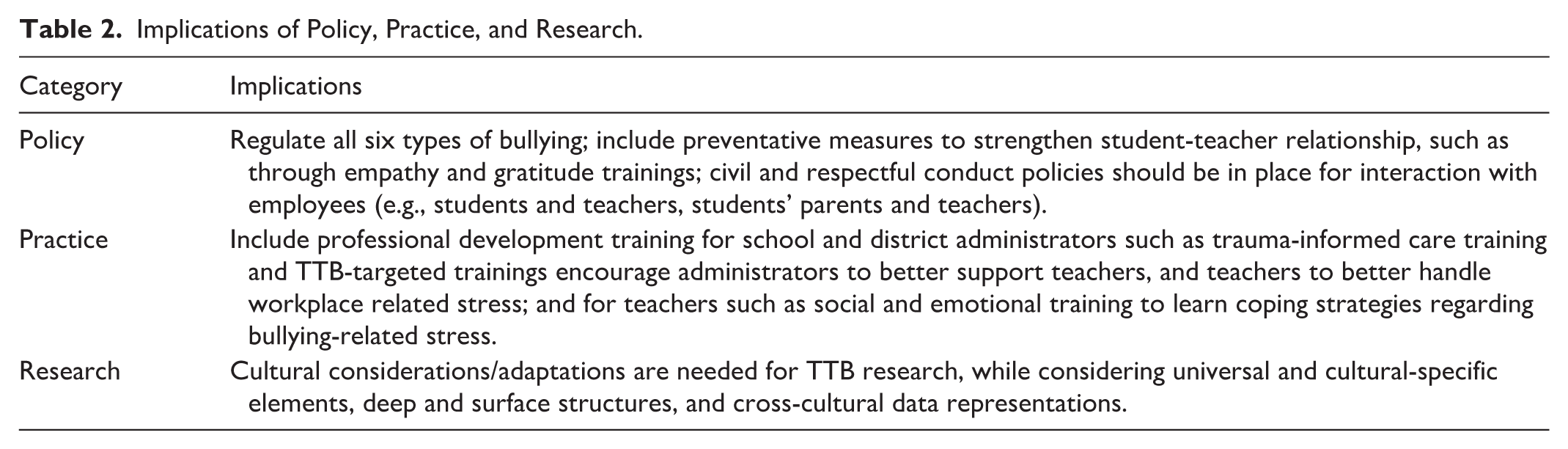
The current study has implications related to policy, practice, and research (see summary of implications in Table 2). The current study may provide important insight for school policies, particularly regarding the need to regulate all six types of bullying. Given the discrepancy in pooled prevalence rates between teacher reports and student reports, it is crucial to offer training that help students better understand the full spectrum of bullying. Efforts to strengthen student-teacher relationships may also serve as a preventative measure, with interventions such as empathy training and gratitude practices benefiting both students and teachers included in bullying policies (e.g., Emmons, 2019; McGrath & Van Bergen, 2019; Mehari et al., 2023). Additionally, anti-bullying or civility policies should specifically address student-to-teacher bullying. While existing policies aimed to create a safe environment for all members (including students, teachers, and staff), they mainly addressed peer bullying among students (e.g., Los Angeles Unified School District, 2025). Thus, policy should be developed or revised to specifically address civility and respectful conduct toward employees, including interactions between students (and their parents) and teachers.
Implications of Policy, Practice, and Research.
The current study underscored the need for TTB-targeted interventions, consistent with a recent scoping review (Stilwell et al., 2025) that found only one intervention incorporating TTB prevention to date. Stelko-Pereira and Williams (2016) developed a teacher-centered bullying prevention program (targeting teacher-to-student, student-to-student, student-to-teacher bullying), incorporated training objectives, such as enhancing teachers’ abilities to better listen to students’ voices, handle students’ bullying, and utilize positive reinforcements, while empowering teachers through confidence-building. These activities were effective in improving teachers’ mental health; however had a limited impact in TTB. Thus, future examinations are needed for bullying interventions targeting teachers’ TTB experiences.
Many established intervention programs (e.g., Olweus Bullying Prevention Program, KiVa; Herkama et al., 2022; Jantzer et al., 2023) commonly overlook teachers as potential victims of bullying. Teachers not only experience bullying themselves but are also responsible for teaching students about the negative consequences of bullying, managing student bullying among peers, and addressing bullying directed at themselves. Given the negative consequence of TTB, school and district administrators may consider trauma-informed care (TIC) training to support teachers, which emphasizes safety, trust, peer support, collaboration, empowerment, and cultural sensitivity (Substance Abuse and Mental Health Administration, 2014). The TIC training should engage school and district level administrators to enhance administrators’ ability to better support staff and as well as enhance teachers’ ability to better manage and cope with stress at work (Sharkey et al., 2024). TIC training should also be incorporated in university teacher education programs to better prepare future teachers for classroom challenges (Sharkey et al., 2024). When teachers feel supported, they tend to experience better mental health and higher job satisfaction (Zinsser et al., 2016). Providing social and emotional training for teachers as part of their professional development could also be beneficial in helping them cope with bullying-related stress. For example, Michalowski (2024) found that social-emotional training helped teachers depersonalize students’ problematic behaviors, fostering a more positive school culture at the district level.
Given that the country was identified as a moderator for bullying, it is critical to incorporate cultural adaptations and considerations in future research, while considering universal and cultural-specific elements, deep and surface structures, and cross-cultural data representations. Cultural adaptations should incorporate both universal and cultural-specific elements (Castro et al., 2010). Specifically, the universal element of TTB is applicable to the entire population including all subgroups, whereas cultural-specific adaptations should incorporate unique cultural values, beliefs, and traditions within the selected subgroup. For example, in a 1999 version of the Chinese translation of Olweus survey (Zhang & Wu, 1999), measures regarding students bullying teachers were removed, citing such phenomenon was culturally rare. However newer studies (e.g., Yang et al., 2019) uncovered high prevalence of TTB in Chinese contexts. Thus, this shift highlights that cultural adaptations should be an ongoing process that is consistently evaluated and revised as needed.
Both deep and surface theoretical structures should be examined through a cross-cultural lens (Valenzuela et al., 2022). Deep structure items may include theoretical framework of bullying (e.g., definitions, characteristics, categorizations). Surface structure items may include language, materials (e.g., examples, pictures, videos, flyers), and communication styles (Moran et al., 2019; Valenzuela et al., 2022). Cross-cultural teams may be used to develop a multi-language survey, with cross-cultural survey validation, including translation, backward translation, native-speaker expert reviews to ensure construct equivalency across languages. Future meta-analysis or systematic review should employ cross-cultural teams and survey studies written in multiple languages to better capture cultural differences in global community.
Finally, data from non-Western countries should be encouraged for publication in academic journals, despite language barriers that may pose challenges for international researchers. Conferences could serve as platforms for fostering cross-cultural collaboration, facilitating research that examines cultural influences on TTB. Teachers and administrators should recognize that TTB is a global behavioral issue and reflect on cultural norms that may impact TTB.
Supplemental Material
sj-docx-1-tva-10.1177_15248380251408406 – Supplemental material for Teacher-Targeted Bullying: A Meta-Analysis of Student Bullying of Teachers
Supplemental material, sj-docx-1-tva-10.1177_15248380251408406 for Teacher-Targeted Bullying: A Meta-Analysis of Student Bullying of Teachers by Bixi Qiao, Yurou Wang, Li Chen-Bouck and Lauren Zaeske in Trauma, Violence, & Abuse
Footnotes

Funding
The authors received no financial support for the research, authorship, and/or publication of this article.
Declaration of Conflicting Interests
The authors declared no potential conflicts of interest with respect to the research, authorship, and/or publication of this article.
Author Biographies
References
Supplementary Material
Please find the following supplemental material available below.
For Open Access articles published under a Creative Commons License, all supplemental material carries the same license as the article it is associated with.
For non-Open Access articles published, all supplemental material carries a non-exclusive license, and permission requests for re-use of supplemental material or any part of supplemental material shall be sent directly to the copyright owner as specified in the copyright notice associated with the article.
