




Abstract
Cyberbullying and cyberaggression are phenomena that have been analysed for more than two decades. However, there is an empirical gap in the literature to characterise the scale of the phenomenon in certain countries and professional groups (e.g. teachers). In order to fill this gap, 733 teachers from Poland responded to questions identifying the scale and mechanisms of Internet attacks resulting from their profession. Based on the data collected, it was noted that (1) each type of information and communications technology (ICT)-mediated attack on teachers is characterised by varying frequency of occurrence; (2) at least once in their careers, 17.5% of teachers have experienced a situation of dissemination of negative comments about them, 10.8% have received negative digital messages intended to trigger negative emotions, and 8.3% have faced hacking (taking over) of a private online account; (3) systematic attacks (at least once a month) on teachers comprise a group of no more than 1% of respondents; (4) there is an apparent correlation between both the lack of experience of cyberattacks by profession and the co-occurrence of different forms of cyber aggression and cyberbullying; (5) based on a cluster analysis using the k-means method, two groups of teachers were identified, where the first (91%) was characterised by a lack of experience of cyberbullying, while the second (9%) rarely or very rarely experienced an attack due to their profession; and (6) teachers teaching in a vocational school, working in a medium or large city, or being male results in a slightly higher exposure to cyberbullying attacks.
Introduction
There is a multiplicity of definitions of cyberbullying, though these can be summarised as constituting repeated, aggressive attacks made through the use of information and communication technologies (ICTs; Hollá, 2016; Kopecký and Szotkowski, 2017a; Scherb et al., 2023). There is a general consensus among cyberbullying researchers that there are specific features that characterise the phenomenon. The first is anonymity, that is, the ability to hide the identity of the sender and the number of actors involved in new media communication. This is also sometimes referred to as the shedding of ‘brakes’ when young people borrow each other’s phones, use each other’s profiles, or adopt the practice of sending messages collectively in the name of one of the users, so that there is no certainty of correspondence between the name displayed on the screen and the actual sender. An example would be a negative review that is observed and commented on by friends or even by ‘the whole world’.
The scale and mechanisms of aggression and violence facilitated by new technologies are becoming increasingly well-documented. However, most of this knowledge pertains to acts primarily targeting adolescents (Marín et al., 2023). This focus exists because, for children and teenagers, the Internet serves as a natural environment for socialisation, where both positive and risky behaviours occur (Hadlington, 2017; Rodríguez-Álvarez et al., 2018; Smahel et al., 2014). Research on digital violence and aggression has largely centred on adolescents, partly because this group often lacks the skills and knowledge needed to cope with prolonged attacks, which can lead to negative consequences such as diminished feelings of security (Macaulay et al., 2018). Consequently, the literature offers numerous studies explaining the scale and mechanisms of online attacks on young people – mainly in the context of peer violence and aggression – and discusses preventive measures schools can implement to mitigate such risky behaviour (Sarmiento et al., 2019; Zych et al., 2017).
Given this context, it is crucial to recognise that cyberbullying and cyberaggression are still insufficiently understood when considering the entire school ecosystem. A significant gap exists in the literature regarding research dedicated to attacks on teachers, in contrast to the wealth of studies focusing on cyberbullying and cyberaggression among children and adolescents. The available literature on this topic related to teachers often centres on their perceptions of being inadequately prepared to handle such issues (Castellanos et al., 2022). Data related to cyberbullying targeting teachers are limited, but studies indicate that over 20% of educators in Central and Eastern Europe (CEE) have experienced such phenomena due to their profession (Kopecký and Szotkowski, 2017a). In many countries, however, research on cyberbullying remains a taboo subject, leaving the true scale of attacks and the mechanisms behind the abuse of teachers largely unknown. Therefore, it is imperative to deepen our understanding of this issue, not only through one-off diagnostic studies but also by strengthening the protection of teachers through longitudinal research initiatives.
When analysing the phenomenon of attacks on teachers, it should be noted that this type of problematic situation has not yet been mapped in many countries. From the research gathered so far, it can be seen that teachers most often struggle with (1) verbal attacks in groups with limited access – these occur in private online groups where harmful messages are directed at teachers; (2) attacks on social networks – this involves defaming teachers on platforms like Facebook or Twitter; (3) use of instant messaging – students or parents use messaging apps to send offensive messages to teachers; (4) creation and dissemination of false opinions and untrue stories – spreading misinformation or rumours about teachers; (5) disruption of remote learning tools – deliberate interference with online teaching sessions; (6) creation of photos or videos without consent – unauthorised capturing of teachers and sharing the content online; (7) photomontages using the teacher’s image – manipulating teacher’s photos to create harmful content; (8) creating memes – using images of teachers in derogatory memes; (9) happy slapping – recording and sharing videos of physical attacks on teachers; (10) generating fake profiles – creating fake online identities of teachers to mislead others; (11) identity theft – stealing teachers’ identities for malicious purposes, and (12) triangulation of different forms of attacks – combining multiple forms of the above attacks to maximise harm (Tomczyk et al., 2024a, 2024b). However, it is important to be aware that the forms of attacks presented may vary in intensity and also be subject to change due to developments in e-services or the technical possibilities offered by ICTs.
Research shows that a number of interrelated forces produce the phenomenon of cyberbullying. Such forces are social and cultural, material and technological, and historical and affective (Kofoed and Søndergaard, 2009). As early as in 2011, Acquisti et al. demonstrated that it is possible to read personal and sensitive information by having a picture of someone’s face or individual interests at one’s disposal, and in 2014, Fire (2014) outlined the different threats and real-life scenarios in which such attacks threaten the privacy and security of social network users (e.g. clickjacking, likejacking, etc.). Cyberbullying therefore requires complex theoretical and methodological approaches. It is important to study the interface and relationship between online and offline phenomena in order to better understand the Internet as a ‘reconfiguration’ of people’s social experiences (Livingstone and Haddon, 2009). When discussing this topic, it is important to consider the consequences of online attacks on teachers. These consequences include psychological effects, such as increased stress levels and decreased self-esteem. In addition, the targeted teacher may lose trust within the school ecosystem, particularly due to false accusations. Other consequences include a decline in both professional and personal satisfaction, as well as the development of burnout symptoms. Furthermore, these attacks can lead to a reduced level of trust in the work environment, with efforts to restore one’s professional reputation often resulting in financial losses (Celuch et al., 2022; Kopecký and Szotkowski, 2017a).
Over the past few years, a significant increase in cyberattacks can be observed worldwide (Scherb et al., 2023). One of the most important ways to mitigate risk is to educate employees on cybersecurity best practices (Svabensky et al., 2020). This also applies to teachers. As a first step, however, it is useful to understand the scale of cyberattacks against teachers. So far, it has generally been found that teachers experience different forms of cyberbullying or are familiar with the phenomenon as educators working in schools due to the violence experienced by students (Siemieniecka and Majewska, 2022). Kyriacou and Zuin (2016) indicated a rapid increase in cyberbullying against teachers in schools by students. One aspect of this phenomenon was the posting of visual recordings of teachers and teacher–student interactions on YouTube. The researchers also highlighted the fact that although research on cyberbullying against students by other students has attracted much interest, research on cyberbullying against teachers by students is still niche and underdeveloped. An analysis of the research conducted by Kyriacou and Zuin (2016) indicates that a new conceptual framework needs to be developed to understand the phenomenon of the cyberbullying of teachers by students. A study by Umesh et al. (2018) showed that cyberbullying remains under-recognised due to the weak emphasis placed on the importance of understanding this crime, as observed in this study from the teachers’ perspective.
Research methodology
Aim, subject matter, and research problems
The aim of the research is to determine the scale of attacks carried out against teachers by virtue of their profession. The research is a response to Polish teachers’ increasing level of digital security, and fills an empirical gap. The subject of the research is the teachers’ answers collected by means of an online questionnaire. The aim of the research was operationalised involving the following research problems:
RQ1: What is the scale of Internet-mediated attacks on teachers?
RQ2: To what extent do the attacks co-occur?
RQ3: To what extent do sociodemographic variables of the recipients differentiate attacks?
Research tool
The research tool was constructed using a triangulation of current research findings and theories from the field of media pedagogy on cyberbullying and cyberaggression. The tool consists of 11 items, 4 of which relate to demeaning comments, making audiovisual material public, hacking private accounts, and setting up fake profiles, and were taken from a guide on cybersecurity for teachers (Borkowska, 2021). In turn, the inspiration for the identification of six further forms of cyberattacks originated in an opinion piece by Pyżalski (2012). Based on a tool aimed at young people (Pyżalski, 2012), the following forms of cyberattacks, which may also affect teachers, were identified and transposed: sending messages intended to evoke negative emotions, hacking into school systems, provoking strange behaviour which is then recorded and shared online, creating disparaging websites, disclosing private data online, and creating fake news about certain individuals or groups. The 11th form of cyberbullying relates to sending threats through digital communication channels (Willard, 2007). The diagnostic items developed were also checked for consistency with the results of qualitative analyses among teachers of victims of online violence and aggression attacks. Checking the congruence of the research items with the typology of Internet acts concerned studies from 2023 to 2024 covering Poland (Tomczyk et al., 2024a, 2024b). Responses for the 11 items were placed on a scale ranging from 0 – never happened in my life to 5 – once or several times a day. The respondents were asked to consider their experiences over the past 12 months for this study.
Due to the triangulation of the research items, an exploratory factor analysis (EFA) was conducted (Table 1). This activity was carried out to show the relationships between the items and to identify possible items that may allow the identification of factors representing common elements or structures (Sürücü et al., 2022). Based on the calculations in JASP and SPSS, it was noted that the tool was characterised by a two-factor structure of the data explaining 74.59% of the variance. For the two-factor structure, the Kaiser–Mayer–Olkin (KMO) and Bartlett test was calculated, in which the KMO measure of sampling adequacy was 0.931; df = 55; p < 0.001 (Table 2). The detailed parameters of the factor analysis are included below and the tool was also checked for internal consistency, which was 0.935 (Cronbach’s alpha).
Exploratory factor analysis.
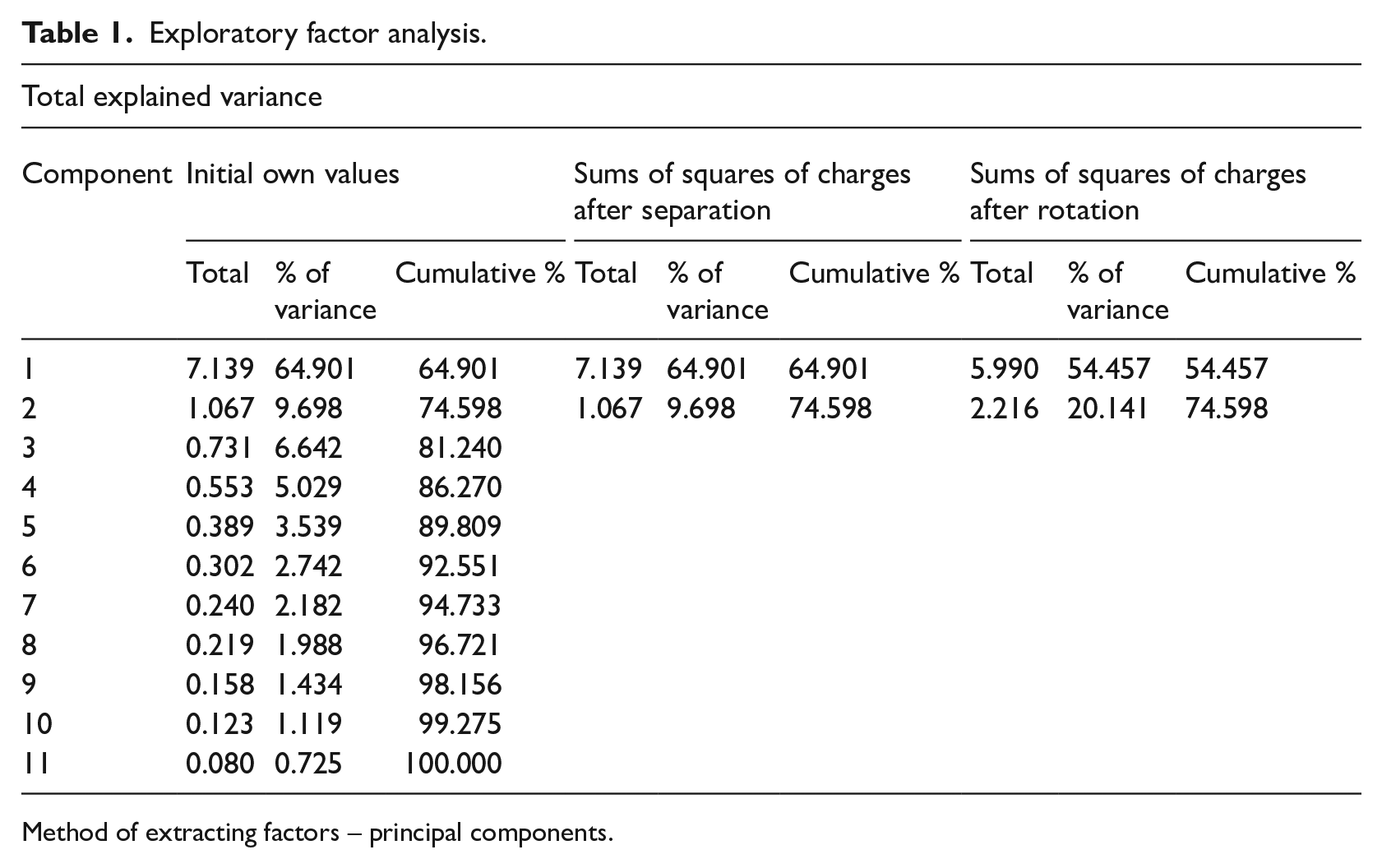
Method of extracting factors – principal components.
Matrix of rotated components.
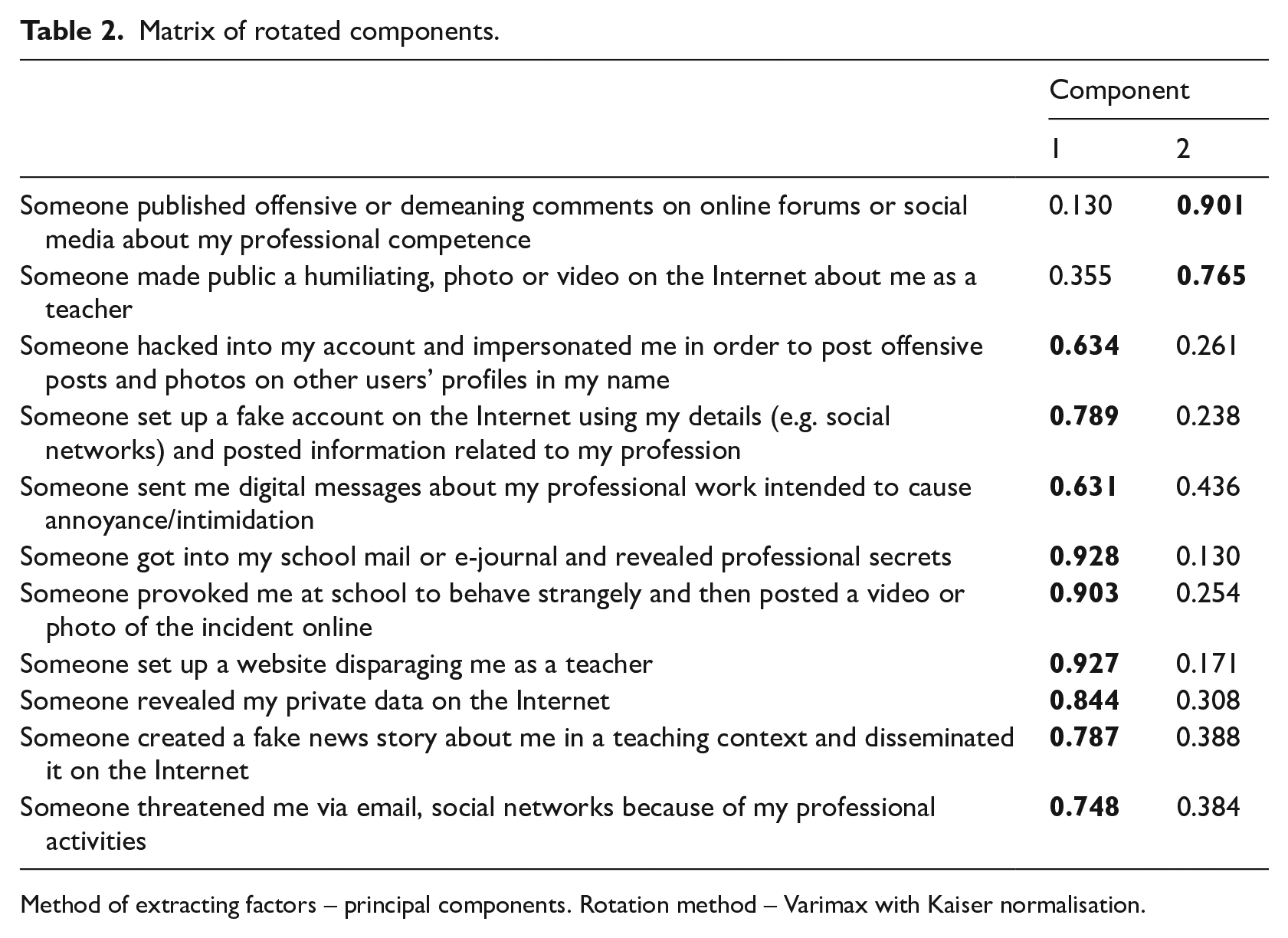
Method of extracting factors – principal components. Rotation method – Varimax with Kaiser normalisation.
Survey procedure and characteristics of the survey sample
The research was conducted in September–December 2023 on a sample of 733 teachers (the final number of questionnaires included in the analyses met the criterion of correctness of completion – the rejection rate of incorrectly completed questionnaires was 23%). Considering data from the Polish Ministry of National Education, there are currently 525,500 teachers in Poland – in terms of full-time equivalents (GUS, 2024). Taking into account the size of the population, it should therefore be concluded that the collected data allows generalisation at α = 0.99 with a fraction size of 0.5 and a maximum error of 5%.
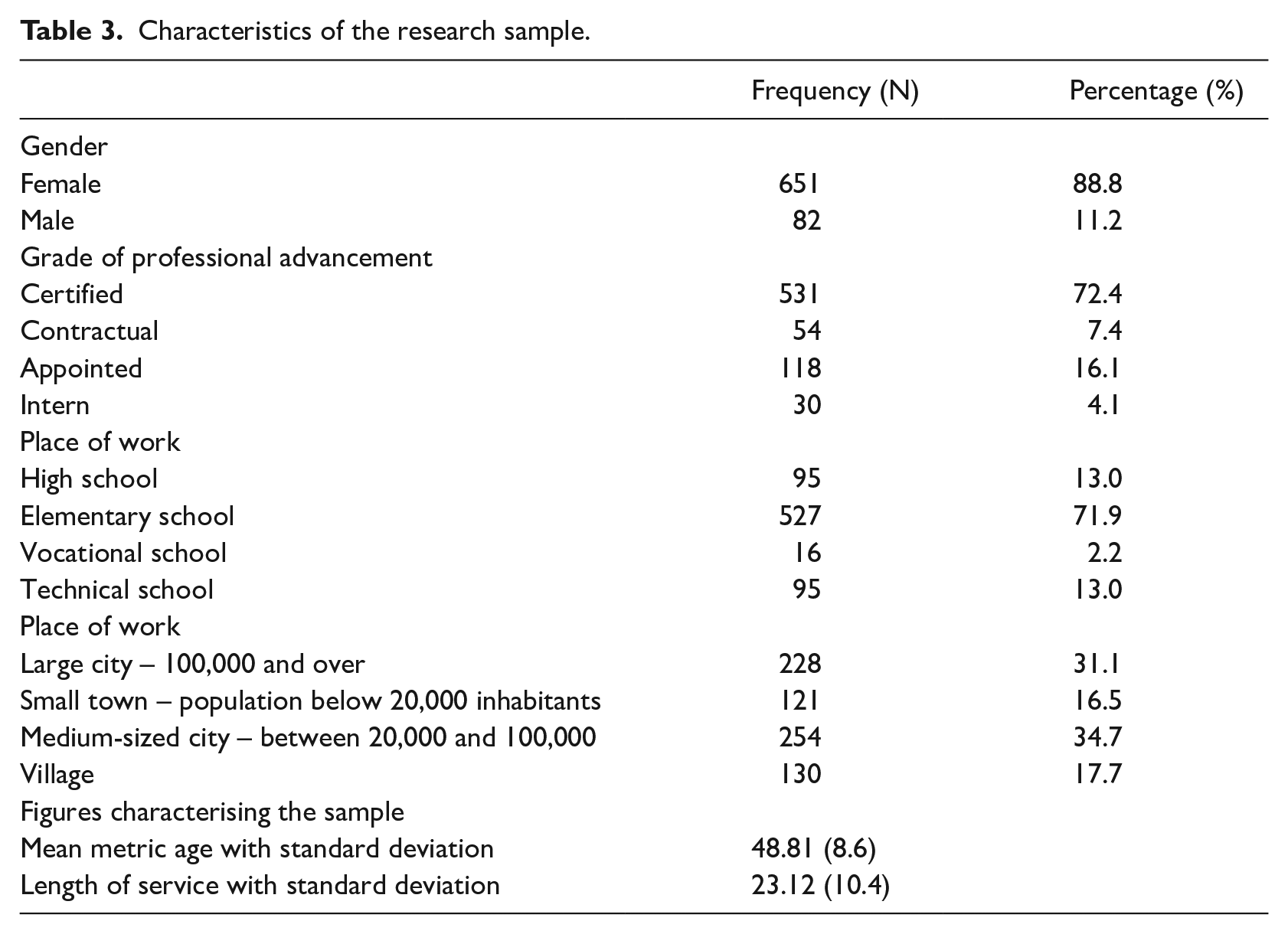
The survey covered active teachers from two bordering provinces in Poland, namely Silesia (Śląskie) and Lesser Poland (Małopolskie). Teachers indirectly cooperating with the research team, for example, teachers from practising schools or participating in previous research on the level of digital competence, took part in the study. Distribution of the questionnaires was carried out online via electronic diaries as well as mailing lists. The research used the criterion of availability of the research sample and the sample is not representative; nevertheless, it should be emphasised that characteristics such as gender or metric age and length of service are fully consistent with the characteristics of the full research sample. Therefore, the presented research results should be treated with caution, taking into account the criterion of generalisation to the entire population, that is, all voivodeships – regions. Table 3 presents the characteristics of the research sample.
Characteristics of the research sample.
Research ethics
The research was conducted in accordance with pedagogical research ethics. Given the subject of the research, that is, the experience of violence and aggression mediated by the Internet, the research was designed to ensure the protection of teachers’ personal data. The questionnaire did not contain questions allowing the identification of respondents. The questionnaire contained an introductory letter stating the purpose of the research, as well as information on how the data were to be processed. In addition, the teachers were provided with information about the institution funding the research, as well as the possibility of contacting the team responsible for the project. Informed consent was obtained from all subjects involved in the study. Data are available on request.
Findings
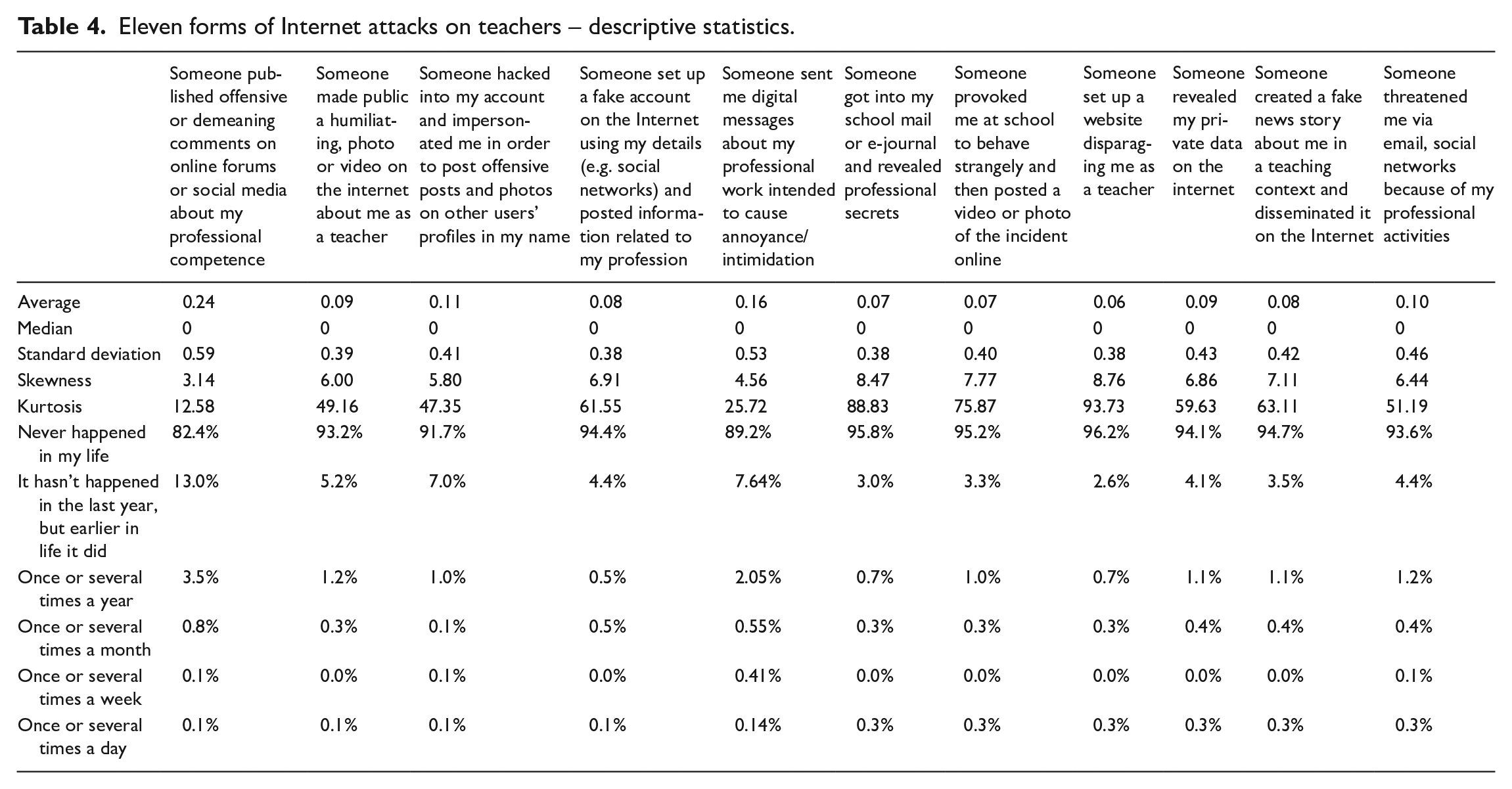
With regard to RQ1, it was noted that in most cases the teachers surveyed had no experience of any form of ICT-mediated attack due to their profession (Table 4). The rate of lack of experience in this regard varies between 82.4% and 95.8%. The research tool narrowed the frequency of exposure to online mediated violence and aggression to 12 months. This framing also yielded data showing that at least once in their lives, 17.5% of teachers had encountered a situation where someone had published insulting or demeaning comments about their professional competence, 10.8% had received digital messages intended to provoke negative emotions, 8.3% had experienced account hacking and impersonation of a teacher, 6.8% had suffered the unfavourable publication of their image without consent, 6.4% had received threats via electronic communication channels, 5.9% had their personal data disclosed, 5.5% had to deal with a situation where a fake account was set up with their private data, 5.3% were subjected to fake news about themselves, 4.9% were provoked to behave strangely and this material was then made available in cyberspace, 4.3% had to deal with their school mail or electronic diary being hacked, and 3.9% experienced a situation where a fake website was set up to discredit them because of their profession. At the same time, it should be emphasised that systematic attacks (occurring at least once a month) for the 11 types of attacks identified are rare and do not exceed 1%. Table 4 presents detailed data on the frequency of cyber aggression and cyberbullying targeting teachers.
Eleven forms of Internet attacks on teachers – descriptive statistics.
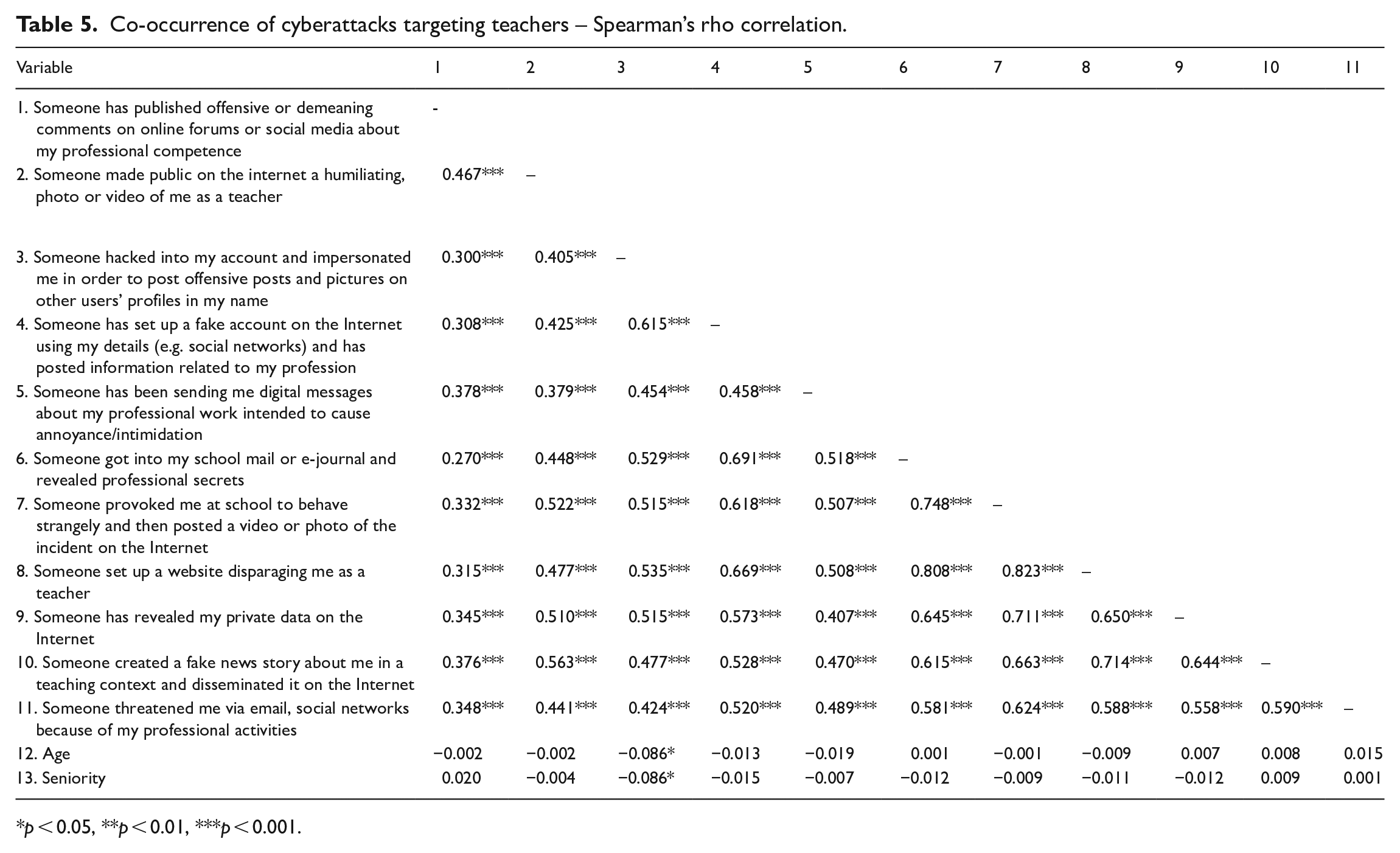
With regard to RQ2, it was noted that the correlations between indicators of forms of attacks targeting teachers are statistically significant and of average or high strength. Considering the results of Spearman’s correlation, it is worth bearing in mind that the lack of co-occurrence of different forms of cyberattacks is just as significant as the co-occurrence of selected forms of attacks. For example, setting up a page to disparage a teacher is in strong correlation with, for example, provoking a teacher to behave in an uncharacteristic way and then publishing recordings of what ensued online. Table 5 clearly suggests that in selected situations, it is noticeable that teachers may be exposed to simultaneous or staged forms of attacks. Analysing the data in Table 5, it should also be noted that the 11 forms of isolated attacks are, in the vast majority of cases, in a statistically insignificant correlation with metric age and seniority.
Co-occurrence of cyberattacks targeting teachers – Spearman’s rho correlation.
p < 0.05, **p < 0.01, ***p < 0.001.
In answering RQ3, a two-stage cluster analysis using the k-means method was used (Figure 1). This method allows homogeneous groups to be extracted from the sample based on a classification of the intensity of particular characteristics – in this case, the level of intensity of different forms of attacks against teachers. Taking into account the Silhouette value = 0.902, as well as the logic behind the extracted groups, two groups of teachers were distinguished. The intensity of the characteristics in both groups is presented in Figure 1.
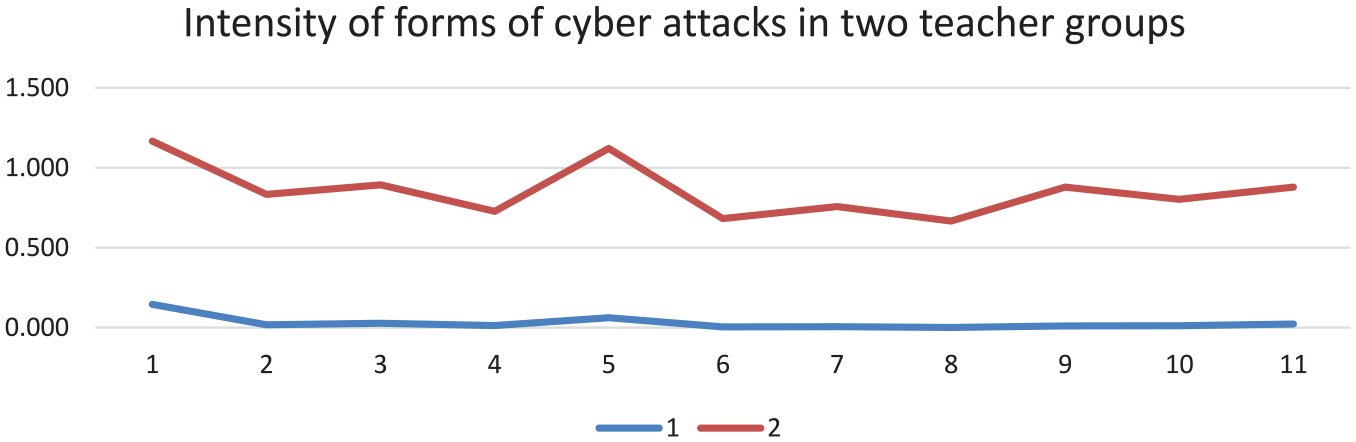
Cluster analysis by k-means: two groups of teachers.
Based on cluster analysis, two groups were identified. The first group (marked in blue) is the dominant cluster comprising 91% of the respondents (N = 667). Cluster 1 is made up of teachers who have not had any experience of cyberbullying in the past year. A few in this group have experienced encountering negative comments about themselves online in their careers, or received messages intended to cause distress. However, this is overwhelmingly a group with no experience of profession-related attacks.
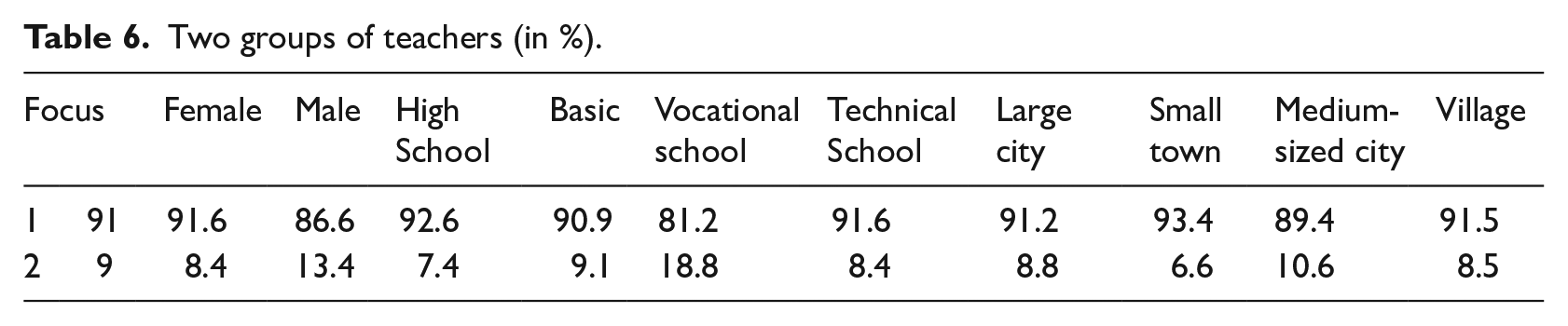
The second group (marked in red) were those who had experienced at least one form of online attack during their career. Most commonly, the teachers in this group had experience of negative comments about themselves being posted online, or receiving digital messages designed to provoke negative emotions. Sociodemographic variables that stand out for this group include being a teacher at a vocational school (18.8%), or working in a medium (10.6%) or large city (8.8%). Men were also slightly more likely to be attacked (13.4%) than women (8.4%). The detailed parameters of the cluster analysis are presented in Table 6.
Two groups of teachers (in %).
Discussion
To date, there has been no research in Poland that sought to determine the extent of cyberbullying and cyberaggression against teachers. Although the topic of cyberbullying is strongly present in the literature, for example, in terms of the characteristics of preventive measures, defining the scale of the phenomenon among adolescents, or opinions on the phenomenon from a pedagogical perspective (Hetmańczyk, 2017; Rumińska-Szalska, 2023; Znamierowska, 2020), there is a lack of longitudinal studies or studies defining the current typology of online attacks on teachers. However, the present results can be compared with those in the neighbouring country of the Czech Republic, where it has been determined that particular types of attacks on teachers are not a common phenomenon (Kopecký and Szotkowski, 2017b) and are at a much lower level than, for example, cyberbullying and peer electronic aggression among young people.
In analysing the data collected, it should be emphasised that the vast majority of teachers have not encountered online attacks that were made on the basis of their profession. Systematic cyberbullying and cyberaggression are also very rare. This does not at all mean that teachers are completely safe, as at least once in their lives almost one in five teachers has been confronted with a situation of an attack negating their professional competence. A total of 1 in 10 has been directly attacked via instant messaging or social networking sites. Also, almost 1 in 10 has had their online account taken over at least once in their career. A few percentage of teachers have encountered different forms of abuse of their own image. Such data are not alarming given the scale of the phenomenon, but at the same time lead to a postulate related to the need for educators to be prepared to deal with such crisis situations in the workplace.
At the current stage of development of Polish and foreign media pedagogy, quite a lot is already known about how schools can minimise many forms of e-risks, including cyberbullying and cyberaggression (Barlińska et al., 2019). The noticeable increase in research and projects focused on reducing negative ICT-mediated behaviour has an impact on teachers’ knowledge and skills regarding new media education, as well as the formation of students’ digital and media competence (Tomczyk, 2020). However, being prepared to protect children and young people from cyberbullying and cyberaggression is not the same as having adequate knowledge and skills to automatically protect teachers themselves. Furthermore, having the knowledge, for example, related to creating strong passwords, being able to monitor the Internet to identify offending content, archiving evidence of cyberbullying and cyberaggression, or reporting the removal of inappropriate content on social networks and search engines, does not suffice in the achievement of a high level of digital safety for teachers by virtue of their profession.
Although the scale of attacks on teachers is not widespread, it is important to be aware that the occurrence of this type of situation is an event that causes discomfort and, in the case of some forms of attack (e.g. account takeover, creation of a false profile, threats, blackmail), creates a level of real threat.
Currently, the issue of attacks on education sector employees is being reflected in the measures taken by institutions employing teachers. Increasingly, teachers are being protected institutionally through, among other things, various technical measures (e.g. dual authentication for access to school systems or official mail), as well as appropriately structured training to enhance digital security (Guillén-Gámez et al., 2024; Rizqullah et al., 2024). Nevertheless, when analysing the different forms of technical protection, a number of questions arise – what is the level of digital competence to ensure digital security due to one’s profession? Also of more than cognitive interest is the question of to what extent can teachers individually as well as systemically increase the level of knowledge and skills that have a real impact on their cybersecurity? There is therefore a need for further research to show to what extent Polish teachers are prepared for these types of threats and what potential support they can expect in their working environment.
Methodological limitations and research directions
The research covers teachers from only two provinces in Poland. The analyses are not of a nature to generalise across the whole country. It is therefore necessary to conduct research of this type with a random sample across Poland. Nevertheless, this is one of the first studies of this type and, therefore, despite not meeting the criterion of random selection, it fills a gap in the mapping of digital safety in the school environment (Tomczyk and Potyrała, 2019). Given the results collected, there is a need to include additional variables in the research model, for example, related to the real-life preparation of teachers to deal with cyberbullying and cyberaggression due to their profession. Environmental factors (support from school management) should also be included in the model, as well as the level of digital competence enabling anticipation of e-threats of this type, and the ability to resolve the situations analysed. An interesting research direction is also to conduct in-depth interviews with Polish teachers who have been victims of online attacks. A qualitative perspective will allow an updating of the typology and thus expand the items in the research tool used. Conducting research related to attacks on teachers also necessitates the inclusion of a much broader palette of variables and indicators in the new editions of the diagnoses than those characterising the saturation of various forms of attacks. Research that includes the perpetrators of the phenomenon along with their level of emotional development, legal awareness, or school climate is a valuable intention. Research involving teachers and pupils at the same time is a much more complex research procedure than diagnosing only one group (e.g. teachers). Nevertheless, it is a solution that will contribute to an understanding of the multidimensionality of the phenomenon and will therefore be a milestone in designing preventive actions that will enhance the safety of the entire school ecosystem.
Conclusion
Research on cyberbullying and cyberaggression is an important research area of media pedagogy assigned to the risk paradigm (Pyżalski, 2016). The present study fills an empirical gap due to the specific group – in-service teachers, and the lack of research in this area in the CEE region, as well as the increasing need to pay attention to teachers’ cybersecurity issues. The real level of digital security among teachers is currently a taboo topic and therefore still characterised by many unknowns, which can be put down not only to the perspective of the lack of current diagnostic results related to e-risks, but also to this being an area that paradoxically does not fit into the digital security priorities of schools despite its importance. The topic has not been given much space in the Polish literature to date. This may be due to the mistaken assumption that attacks on teachers occur very rarely, and that such attacks do not pose a serious security problem for this professional group (Dankiewicz, 2015). Another reason for this may be the a priori assumption that teachers are automatically prepared to protect themselves not only in analogue space, but also in cyberspace.
Given the findings of the research, there are several key demands for pedagogical practice. First, there is a need for research that shows changes in the scale of the phenomenon of attacks on teachers via new media. Second, it is important to update the typology of online attacks, as well as to modify research tools that are relevant to socio-technological changes. Third, it is important that research is followed by the reinforcement of teachers in terms of protection from e-threats that are generated by both students and their parents.
Based on the data collected, it is clear that cyberattacks targeting teachers are not a frequent phenomenon (9% of respondents had experienced any attack in their professional life). However, considering the issues related to the harmfulness of the most frequent phenomena, for example, concerning slander – defamation on the Internet, attempts to steal an account, or sending oppressive messages in digital form, these are situations that have a high potential for negative impact. The phenomena of cyberbullying and digitally mediated cyberaggression are also significantly different from offline aggression and violence due to the persistence of individual and social impact (Graf et al., 2022; Iyer et al., 2022). Therefore, further research showing the mechanisms and magnitude of teacher-directed cyberbullying and cyberaggression, which to date has not been fully investigated in contrast to aggression among adolescents, seems warranted. The presented research results therefore provide a reference point for future research in this area, as well as for the preparation of programmes to strengthen teachers’ digital competences in a dimension that relates to the realisation of teaching goals and that allows them to protect themselves in an increasingly digital world.
Footnotes
Acknowledgements
This project is funded by the National Agency for Academic Exchange (NAWA) under the Bekker programme (country component). The study was conducted in accordance with the Declaration of Helsinki, and approved by the NAWA (BPN/BKK/2022/1/00007/DEC/1). This is important data to enable the APC to be funded for OA purposes Article Processing Charges were funded by a grant from the Strategic Program Excellence Initiative at the Jagiellonian University.
