




Abstract
The Community Protection Notice (CPN) is a civil order designed to protect communities from anti-social behaviour (ASB) within England and Wales by addressing unreasonable and persistent conduct, which has ‘a detrimental effect on the quality of life of those in the locality’. Introduced under the ‘Putting Victims First’ agenda and the ASB, Crime and Policing Act (2014), the civil order can impose prohibitions alongside positive requirements upon any person aged 16 or over, business, or organisation. Before a CPN is issued, a Community Protection Warning (CPW) must be put in place by the police, local authority, social housing provider, or any other authorised persons with delegated power from the local authority. This paper reports the findings of a qualitative study that used semi-structured interviews to explore ASB victims’ experiences of CPWs/CPNs for the first time. Discussions focus upon the impact of the ASB, authorities’ responses, perceived effectiveness of CPWs/CPNs, and recommendations for change. Significant concerns emerge from the victims’ constructions of the CPN process regarding transparency, accountability, the correctability of requirements imposed, and victim involvement. The findings signify the need for an authentically restorative approach to ASB with three empirically grounded recommendations provided that account for ASB victims’ needs and vulnerabilities.
Introduction
The Community Protection Notice (CPN) was introduced in England and Wales under sections 43 to 58 of the Anti-Social Behaviour, Crime and Policing Act 2014. This power sought to speed up action to protect communities by enabling the local authority, police, social housing officers, and any other authorised persons to issue a CPN if agreed by the local authority. The specified purpose of the civil order is to ‘deal with particular ongoing problems or nuisance[s] which negatively affect the community’s quality of life by targeting those responsible’ via the imposition of prohibitions and positive requirements upon the perpetrator (Home Office, 2021). This power aimed to resolve behaviour that does not constitute a criminal offence but was previously difficult to resolve due to the broad powers available, such as the repealed Litter Cleaning Notice (Home Office, 2012). The introduction of this power was considered a welcome improvement by the Conservative-Liberal Democrat Coalition by allowing authorities to address more than one type of anti-social behaviour (ASB) at once, rather than having numerous behaviour-specific powers (May, 2010). Therefore, it was hoped to speed up the action taken by authorities to protect victims through providing tools with the flexibility to respond to different forms of ASB without the necessity or delay in requiring the application of several powers. A CPN can be issued to any individual aged 16 or over or to a business where the ASB must meet the legal tests of being unreasonable, having a detrimental effect on the quality of life of those in the locality, considered persistent, and continuing. A Community Protection Warning (CPW) must first be issued outlining the requirements to be adhered to, which would lead to the issuing of a CPN if the conduct continues (Heap et al., 2021). The issuing does not necessitate court oversight with breach of a CPN considered a criminal offence; this could result in a fixed penalty notice (up to £100) or a fine on conviction (up to £2,500 for individuals/£20,000 for businesses). Other sanctions include remedial action, forfeiture, or a seizure order; non-compliance of a court order constitutes contempt of court with a maximum 5-year custodial sentence. These hybrid civil/criminal orders are problematic as they create a personalised criminal law whereby non-criminal conduct is penalised despite being otherwise lawful if conducted by another individual (Ashworth and Zedner, 2014). The recipient of a CPW cannot formally appeal against it, whereas a recipient of a CPN can appeal within 21 days of issuing to the magistrates’ court; an example reason for appeal would include the requirements imposed being perceived as unreasonable or excessive by the recipient (Parpworth, 2019). Although previous research exists into the recipient’s perspective (Heap et al., 2021), there is a compelling deficit in knowledge concerning victims’ experiences and perceptions of these new powers, including whether the new legislation addresses the implications of previous approaches.
Implications of the legal definition of ASB for victims
The legal definition of ASB used in England and Wales as outlined by the ASB, Crime and Policing Act 2014, broadly defines such behaviour to be ‘acting in a manner that caused or was likely to cause harassment, alarm, or distress to one or more persons, not of the same household as the defendant’. This broad legal definition of ASB has led to concerns about the implications for victims since its proposal and enactment concerning counting incidents, as, by focusing upon defining the consequences rather than behaviours to address, it lacks specificity and measurability (Hodgkinson and Tilley, 2011). Furthermore, this breadth blurs the lines between criminal, sub-criminal, and nuisance behaviours, such as neighbour disputes, vandalism, fly-tipping, and intimidating behaviours, which cause victims further distress when not addressed in a prompt and effective manner (Home Office, 2012). The discretion instead rests on authorities to formulate a definition of ASB to temper the vagueness of the national definition provided and align with the political philosophy of localism. However, this interpretation is often to the detriment of victims when their experiences do not fit into the local classification or where it manifests into a struggle between competing nodes for sovereign control over populations and territories (Stenson, 2005). The justification is that although ASB is problematic to define, it is easy to recognise, not necessitating refinement to a precise definition of specified incivility (Bannister and Kearns, 2013). This broad national definition avoids practical difficulties upon application by acknowledging the underpinning subjective nature of ASB, which arguably backs an approach that supports the victim rather than focusing on the perpetrators’ behaviour.
However, the approach taken to ASB has previously failed to protect the most vulnerable victims, including Garry Newlove (O’Brien and Tyler, 2019). Garry and his family experienced ongoing ASB after their street became a hotspot for daily disorder ranging from noise nuisance, drinking, and vandalism. On 10 August 2007, Garry was attacked outside his home by the perpetrators of the ASB and died in hospital 2 days later from the head injuries sustained (Heap, 2016). The unstructured and isolated approach taken by the authorities in responding to ASB ultimately failed to link the string of incidents reported with regard to the breadth of ASB and harassment experienced (Millie, 2010). Hence, behind each headline lie many more present victims experiencing ASB on a daily occurrence (Donoghue, 2013). These are ever-present issues encountered by ASB victims, evidenced by the recent case of Stephen and Jennifer Chapple; in which the couple was fatally attacked in their home on 21 November 2021 after an alleged neighbourhood parking dispute (BBC, 2021). The couple had contacted the authorities on three previous occasions regarding the incidents. Due to this previous contact, the authorities have since referred themselves to the Independent Office for Police Conduct. These cases reinforce concerns about the consequences of the postcode lottery created by this definitional approach, which continues to be open to interpretation. In addition, there is continued uncertainty about what priority to give ASB, with enforcement measures prioritised over support; this fails to address the root causes and further oppresses socially disadvantaged and marginalised victims (Roulstone and Mason-Bish, 2013; Scraton, 2004).
This prioritisation of enforcement measures over support is most notably seen with the repealed Anti-Social Behaviour Order (ASBO), introduced under the Crime and Disorder Act 1998; the civil order aimed to facilitate communities in taking an active role in preventing ASB. The authorities would apply to a magistrates’ court and issue to anyone committing such conduct over the age of 10; the imposed civil order lasting for a minimum of 2 years to indefinitely (Crawford, 2009). However, the effectiveness of the ASBO was under constant scrutiny; the Home Office and Ministry of Justice found: 58% of ASBOs between 2000 and 2012 were breached at least once with an average breach rate of 4.9 times. These findings advance significant doubts about how the ASBO empowered communities and victims when it excluded them from any role in the process, while they continued to face the blight of the perpetrators’ conduct (Ministry of Justice, 2012). The CPN to date has not encountered the same scrutiny as the ASBO surrounding its implications for victims, with the rate of breach also remaining unknown. Thereby, the purpose of this research is subsequently to explore victims’ perceptions of the effectiveness of CPNs in addressing the ASB experienced and whether it does live up to the rhetoric of ‘putting victims first’ (McCarthy, 2014).
Conservative-Liberal Democrat Coalition and ASB, Crime and Policing Act (2014)
The Conservative-Liberal Democrat Coalition (2010–2015) aimed to deliver improved protection for victims and communities by providing authorities with tools that were quick, practical, easy to use, and a deterrent to perpetrators without being criminalising or coercive (May, 2010). The focus was on long-term solutions that are holistic, community-based, and tiered (e.g. the Community Remedy 1 ). This displaced power away from central government’s ‘bureaucratic accountability’ to empower local authorities and communities through ‘democratic accountability’ (Hopkins-Burke and Creaney, 2014). The Community Trigger 2 introduced to reinforce this ethos but with a differing threshold at a sub-national level upholds the postcode lottery regarding the number of complaints first required (Newlove et al., 2019). Victims and communities can choose to initiate a review of their case if there is perceived to be an insufficient response once their local threshold is met (Heap, 2016). The subsequent powers introduced in England and Wales alongside the Community Trigger included the Civil Injunction, Criminal Behaviour Order, Public Spaces Protection Order, Closure Notice/Order, Dispersal Power, 3 and the focus of this research, the CPN.
The 2021 revised statutory practice guidance specifies that practitioners should first speak to the victim and community about issuing a CPW/CPN and sanction to be enforced upon non-compliance (Home Office, 2012). This guidance sought to account for the needs of victims and communities by reinforcing a restorative ethos, defined by the Centre for Justice and Reconciliation (2021) as ‘a systematic response to wrongdoing that emphasises healing the wounds of victims, offenders, and communities, caused or revealed by the criminal behaviour’. Thereby the restorative approach identifies steps to repair the harm caused during the duration of the ASB, involving all stakeholders, and seeks to transform the relationship between communities and the state. The outcome should address victims’ needs, prevent re-offending, and promote reintegration, avoiding the escalation of legal justice, including associated costs and delays. However, since early after its enactment, the powers have been perceived as merely amounting to rebranding and not delivering on being restorative or rehabilitative (Heap, 2014). The following empirical literature highlights a compelling deficit in research to determine whether these new measures empower victims and communities.
Review of the literature
Victims’ experiences of ASB responses
The existing empirical literature highlights a significant knowledge gap regarding victims’ experiences of the perceived effectiveness of ASB responses. At present, no research exists from the victims’ perspective, following the ASB, Crime and Policing Act 2014 concerning CPNs. There are several limitations to our understanding, including
The focus upon investigating the 19 now repealed remedies.
The lack of specific investigation into the six new consolidated measures.
The most recent studies primarily implement a quantitative or mixed methods approach, focusing upon exploring numerical outcomes over the qualitative lived experiences of victims (Brown and Evans, 2014; Hopkins-Burke and Hodgson, 2015).
This preference is despite previous qualitative inquiry providing valuable insights into the firsthand experiences of victims in contact with the process. The qualitative findings established that victims experience a prolonged period before a positive resolution to their ASB case requiring victims to approach several authorities. Victims perceived this response as unsatisfactory due to a ‘merry-go-round’ of referrals (Heap, 2021a, 2021b; Hopkins-Burke and Hodgson, 2015; Hunter et al., 2004). Heap (2021b) found the impact of this long-term ASB to be negative upon mental and physical health (e.g. fear, anxiety, stress), behavioural routines, and quality of life expectations (e.g. avoidance behaviours). The activation of the Community Trigger is similarly fraught with challenges regarding activation, expectation, communication, and satisfaction (Heap, 2021a).
Quantitative findings from Brown and Evans (2014) showed that reporting to multiple authorities resulted in victims being twice as likely to feel authorities were unhelpful and less than half disclosed feeling well informed (Case et al., 2011). The mixed methods findings by Casey and Flint (2007) and Farrow and Prior (2006) suggested many cases occurred over several years without positive resolution. This prolonged duration resulted in a recurring desperation to be listened to and for authorities to understand the impact of the perpetrators’ conduct upon victims’ lives. The work of Hopkins-Burke and Hodgson (2015) proposed that the new powers within the ASB, Crime and Policing Act 2014 would enable authorities to intervene at an early stage to prevent the continuance of ASB; however, an investigation into victims’ experiences has yet to transpire concerning the CPN process. Thereby considering the limitations of previous studies, there is significant value to this research, which will address the current knowledge gap. This research is the first and only research applying the aligning theoretical framework of critical victimology to explore victims’ experiences of CPNs and their perceived effectiveness at addressing ASB.
Critical victimology and ASB
The critical victimology theoretical framework applied acknowledges the combined failures of both the positivist and radical victimology fields, questioning how the socio-political undertones of the law and role of the state are shaped by the most powerful in society, influencing broader understandings of victimisation (Clevenger et al., 2018). For instance, there were 1.5 million police-recorded incidents of ASB for the year ending March 2019 (Office for National Statistics, 2019). However, this is considered a significant under-representation as the annual Crime Survey for England and Wales indicated that 39.6% of respondents had experienced victimisation or witnessed ASB in their local area in the last 12 months (Office for National Statistics, 2020). Therefore, critical victimology provides a theoretical framework for analysing the relationship between the state and citizenry by highlighting the suffering experienced within political and structural contexts (Walklate, 1990).
For example, it is crucial to understand the occurrence of secondary victimisation caused by the behaviour or attitudes towards a victim by the institutions with delegated responsibility for ASB that amounts to victim-blaming (Duggan, 2018). As street-level bureaucrats working within a neoliberal environment use their discretion when demand for services outweighs the supply, performance is orientated towards goal achievement, which is impossible to measure, ambiguous, or conflicting (Lipsky, 1983). Hence, only those perceived to meet the policy-driven construct of the ‘ideal ASB victim’ heed the recognition, services, and label of victim, dependent upon government and media weighting as to who is considered the actual, designated, rejected, and non-victim (Fattah, 1986). Thereby, a renewed focus upon ‘truly compassionate institutions’ to understand the spectrum of ASB victimisation is required (Centre for Justice and Reconciliation, 2021). For instance, Moore (2004) suggests that mediation and reparation approaches are just another cog in the state’s responsibilisation strategy; a separate entity is needed to offer an alternative. An alternative to victim-offender mediation to emerge is conferencing, which provides a solution to interpersonal conflict for anybody affected by criminal behaviour. Conferencing is considered beneficial for addressing ASB as often there is no clearly identifiable party, thus recognising the often-far-reaching impact of the behaviour (Johnstone and Van Ness, 2013).
The fundamental basis of critical victimology subsequently acknowledges several processes, as proposed by Mawby and Walklate (1994); these processes are utilised within this paper to examine the social context of the policy response and service delivery to ASB victims in relation to CPNs. First, victims actively construct and reconstruct their daily lives reflecting ‘strategies of resistance and acceptance’ of their social reality. These strategies refer to the conscious and unconscious routine activities victims engage in, which sustain and sometimes change the conditions when they would act. Second, unobserved and unobservable ‘generative mechanisms’ occur in a victim’s everyday life (Walklate, 2018). These mechanisms refer to the underlying social processes regarding the structures, powers, and relations capable of generating events under contingent conditions, which produce both intended and unintended consequences (Bhaskar, 2008; Outhwaite, 1983). Third, these consequences function as a feedback loop into the knowledgeability and capabilities of victims to formulate other responses to a situation. The qualitative approach implemented captures the processes above and the distinct perspectives of ASB victims.
In summary, no research has been conducted from the victims’ perspective concerning CPNs since their introduction. The critical victimology theoretical framework highlights the need to understand the full victimisation interactivity experienced by victims with the CPN process, exploring the social context around the policy response and service delivery to ASB victims. The methodological decisions taken consider the limitations discussed and align with the theoretical framework applied, facilitating meeting the aim of examining victims’ experiences and perceptions of CPNs, following its introduction under the ASB, Crime and Policing Act 2014.
Methodology
This research uses a qualitative research strategy to explore victims’ experiences of the perceived effectiveness of CPNs in response to ASB, given the rich descriptions desired of the ‘lived experiences’ of the individuals involved (King et al., 2018). Each semi-structured telephone interview lasted for a maximum of 1 hour which empowered interviewees to speak at length about the issues raised, providing an understanding of the process, crucial factors in their ASB case, and how these were interconnected. In-person interviews were not an option due to the recruitment phase occurring during the COVID-19 pandemic (June–August 2020). Furthermore, following the imposed government guidance at the time of data collection, the university suspended all face-to-face research (Webber-Ritchey et al., 2021). However, this approach was advantageous due to participants’ preference for telephone interviews (e.g. individuals with pre-existing health conditions and shielding). It enabled a greater level of anonymity, which provided reassurance and acted as an impetus to participation. This approach also facilitated interviewees to overcome embarrassment and discomfort when responding, secured researcher safety, gave broader geographical access, and minimised financial costs due to dispersed participants (Lechuga, 2012). In addition, it still enabled the discernment of high-quality data. The interviewee’s voice helped distinguish emotions, which was crucial given the hidden population and concerns surrounding participation.
Ethical approval was obtained from the author’s institution, ensuring compliance with the British Society of Criminology Statement of Ethics (2015). Informed consent was gained from participants verbally at the beginning of each interview, being audibly recorded using a dictaphone and transcribed. Interviewees could withdraw at any stage during the interview process, decline to respond, or withdraw within 2 weeks after the interview had taken place. Any names and locations were removed from interview transcripts, with pseudonyms used to maintain participant anonymity. A minority of the participants had only become aware of the support available for victims of ASB from the research documentation provided; these individuals were signposted and provided information during the interview to the charities which offered guidance tailored to their situation (e.g. ASB Help) (Dickson-Swift et al., 2008). Participants raised this discussion about the available support presented within research documentation and the potential to drive resolutions to ASB as the key reasons for participation. The author acknowledges the conflicts of interest due to involvement in research projects addressing recipients’ and practitioners’ perspectives of CPNs (e.g. interviewing a victim associated with a recipient or practitioner previously interviewed); these risks were averted by ensuring adherence to confidentiality and anonymity procedures. Therefore, this had no impact on the findings produced.
A collaborative partnership was formed between the author and the national victims’ charity ASB Help to facilitate participant recruitment; this produced a sample size of five, which met the conceptual depth criteria (Nelson, 2017). Subsequently, there is a network of concepts and themes within the qualitative data set, which has similarities to the existing literature and withstands the test of transferability. In addition, the small sample size facilitated the author’s close association with participants, enhancing the in-depth qualitative inquiry (Crouch and McKenzie, 2006). Non-probability purposive and snowball sampling techniques were employed, which secured the selection of individuals who would provide valuable insights on the research topic. Participants were recruited based on the following criteria: the victim’s perpetrator of the ASB was issued a CPW or CPN and they were over the age of 18. Access was negotiated to participants who met this criterion by sending an invitation letter through victim support services, contacts from previous researcher roles (e.g. local authority, social housing providers, and police officers), and posted on Twitter (Ellard-Gray et al., 2015). The desired sample is considered a hidden population due to ASB victims often experiencing a significant amount of stigma, fear of retaliation if inadvertently identified within any research outputs, and often traumatic experiences. This sampling approach enabled the swift and efficient creation of an appropriate sample.
All participants interviewed were from England, one from the Yorkshire and the Humber region, three from the East Midlands, and one from the South East. Two individuals declined to supply age, ethnicity, and disability information upon request. Of the remaining three participants, one disclosed a disability, while two disclosed no disability; one participant identified as mixed ethnicity, while the other two identified as white. The sample mean age was 53.7 years with a range of 47 to 61 years, which comprised four females and one male. All participants had experiences with both the CPW and CPN. In addition, two participants had experiences of the court process upon repeated breaches of the CPN. The types of ASB experienced by victims included various environmental, personal, and nuisance behaviours (see Table 1 for a full breakdown of victims’ ASB cases).
Victims’ ASB cases.
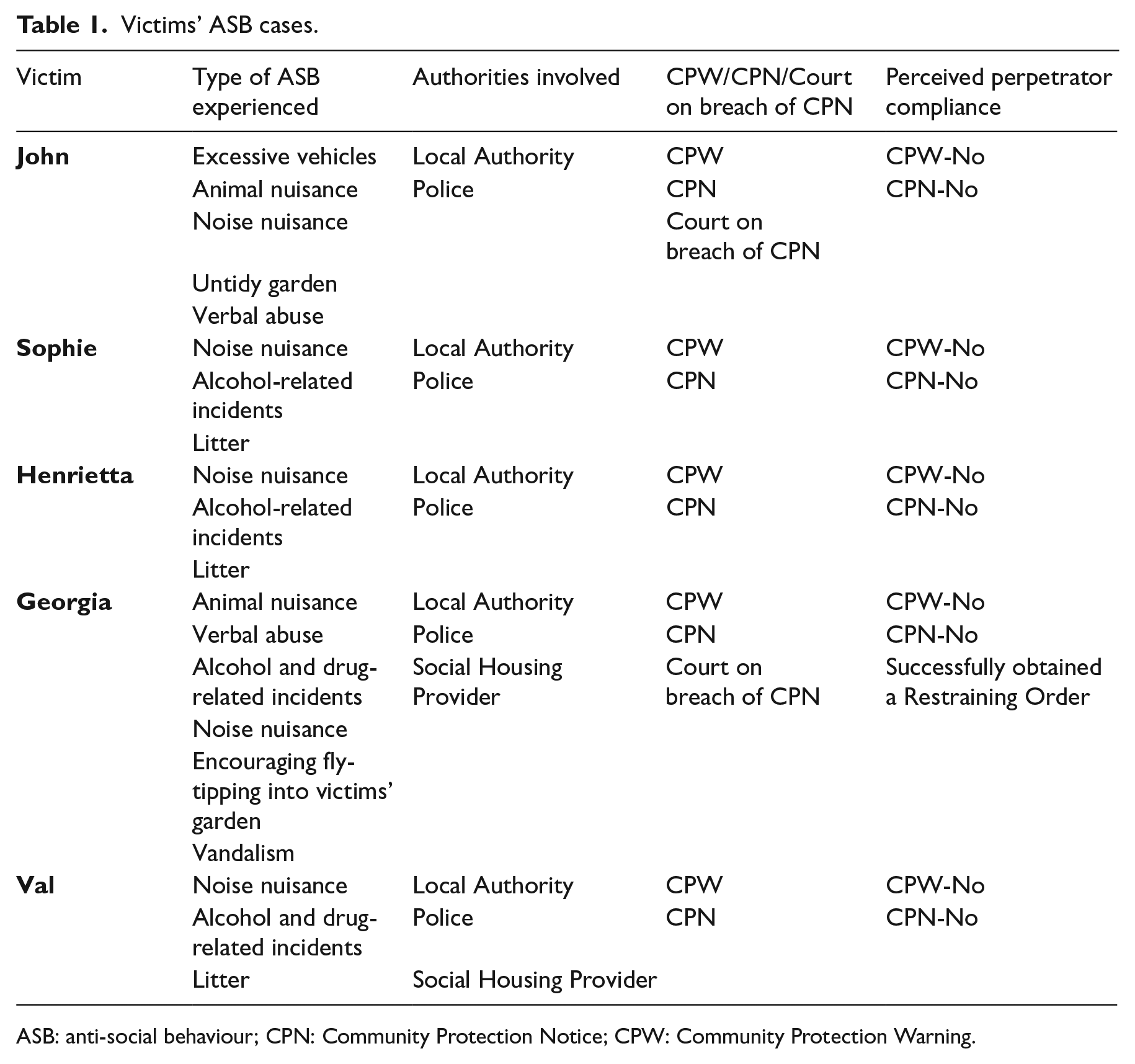
ASB: anti-social behaviour; CPN: Community Protection Notice; CPW: Community Protection Warning.
Thematic analysis (a variation on grounded theory) was used to produce the themes following the six-phase framework proposed by Braun and Clarke (2006). First, each telephone interview was confidentially transcribed, facilitating familiarisation with the data. Thereafter, interviewees were sent a copy of their interview transcript to ensure accurate transcription and interpretation (Nowell et al., 2017). The transcripts were then analysed, generating the themes, and establishing links to literature, similarities, differences, and missing data. These themes were then reviewed, defined, and named; links were then identified between concepts using sub-themes to illustrate interconnections and compelling extract examples discerned (see Figure 1). This paper presents three themes produced from the analysis: victims’ construction of the ASB experienced, the response by the authorities, and CPNs’ perceived effectiveness at addressing ASB. The findings from the interviews highlight concerns around transparency, accountability, correctability of requirements imposed, and victim involvement. Victims overall perceived the CPN process and authorities’ responses as ineffective, with increased victim involvement needed.
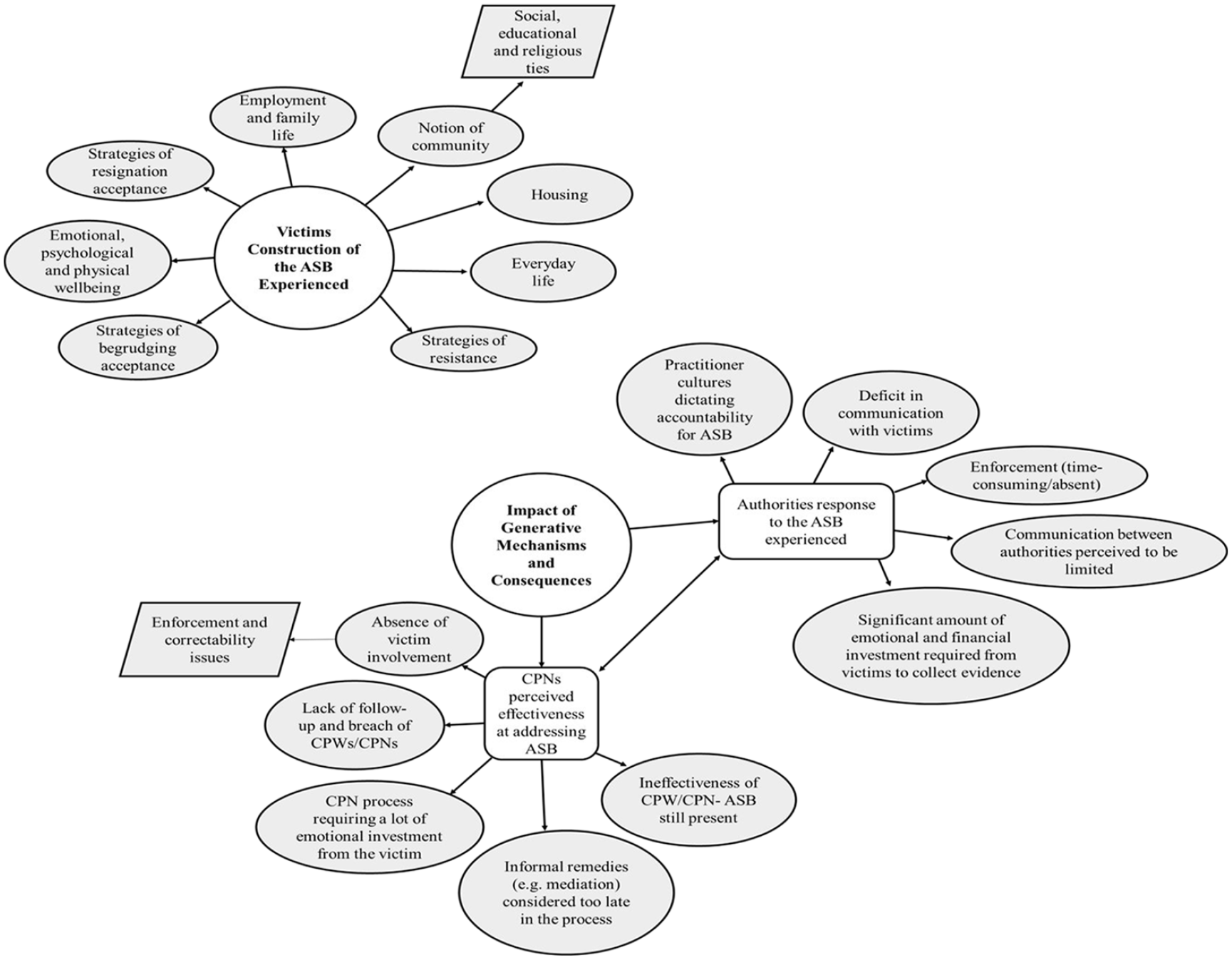
Thematic map.
Findings
The three main themes identified and presented by this study draw upon the processes proposed by the critical victimology theoretical framework. Initially, the first theme discussed is the construction of the ASB experienced by victims, which considers the impact of the ASB upon victims’ everyday lives and the strategies of acceptance and resistance implemented as a coping mechanism. Thereafter the discussion turns to the impact of the underpinning neoliberal generative mechanisms concerning ASB policy and the consequences, for example, the impact of the devolved decision-making and responsibilisation to a broader range of authorised persons. This discussion then presents the second theme concerning the impact upon the response by the authorities, followed by the third theme, which addresses the CPNs’ perceived effectiveness at addressing ASB.
Victims’ construction of the ASB experienced
The CPN failed to terminate the ASB experienced by all victims interviewed, and a lack of putting victims first emerged. Several strategies of resistance and acceptance materialised from the constructions of the ASB experienced by victims following the perceived ineffectiveness of the CPN process and response by the authorities (Mawby and Walklate, 1994). These strategies refer to the conscious and unconscious routine activities individuals engage in that sustain and sometimes change the conditions in which individuals act. They surfaced because of the profound impact the ASB continued to have upon victims’ lives. Victims experienced an internal turmoil with a conflicting sense they had become accustomed to the ASB to ‘live and let live’ (resignation acceptance), while resenting the perpetrator and becoming resilient to their conduct (begrudging acceptance). The duration of ASB incidents ranged from 5 to 20 years from the interviews carried out, which is contrary to suggestions that the 2014 legislation would enable authorities to intervene at an early stage to prevent the continuance of ASB (Hopkins-Burke and Creaney, 2014; Hopkins-Burke and Hodgson, 2015; May, 2010). Instead, the data reinforce concerns regarding the new legislation merely amounts to rebranding with the ASB developing into a range of environmental, personal, and nuisance behaviours (Heap, 2014; Home Office, 2012). This study found that victims had no other option other than to find ways of tolerating the conduct while continuing to be determined to find some form of resolution, as expressed by John: Yes, so my wife is in a wheelchair, and with the summer coming up now, we want an end to it – we have just about had enough. We have tolerated it now for three or four years. Since then, my wife has been diagnosed with dementia, and she is not very well – so all she wants is a quiet, peaceful life, and I will do anything for her to get that. (John)
This continuance of the ASB had a perceived significant negative impact on victims’ emotional, psychological, and physical well-being (Farrow and Prior, 2006; Heap, 2021b). The occurrences over several years created tremendous strain causing unwanted stress, anxiety, avoidance, and upset. This ongoing duration led victims to be extremely nervous, scared, and reclusive in the long term, particularly those with vulnerabilities, who would even meet the ‘ideal victim’ criteria (e.g. disabilities) (Donoghue, 2013; Fattah, 1986; Roulstone and Mason-Bish, 2013). Once again, there was failure to protect the most vulnerable victims by stopping the disorder quickly and effectively, as previously found with the ASBO (O’Brien and Tyler, 2019). Furthermore, there was still a continued lack of response by the authorities which reinforced victims’ sense of helplessness and caused further distress, as explained by Georgia concerning her sons’ learning disabilities: Basically, it has turned us just into a nervous wreck really … I have an elder son who is 24 with anxiety issues – he won’t leave the house … he can’t go out of the house as he is fearful of this bloke … then they just threw him off counselling. So, he has had no support now for about 3–4 years. He is now just in the house – in total, he has left the house probably three times this year, and that is it. Then my other son is 22; he has numerous things – learning difficulties, dyspraxia … He is autistic, and he just can’t see why there is a problem – why the police are not dealing with it because in his opinion it is like he’s done wrong [the perpetrator] so he should be punished for it. (Georgia)
There was also a perceived impact upon employment and family life. Interviewees expressed how they had to weigh up their social reality against their perceived ability to continue with everyday mundane tasks, such as leaving their residence and marital life, alongside their ability to persevere with employment and education when continually under extreme stress and tiredness. Victims often tried to find a balance by adapting their lifestyle around the perpetrators, as suggested by Sophie who found the ASB experienced impacted upon her family life, marriage, mental health, and eventually her employment due to extreme tiredness: Stress, anxiety, and at one point, my marriage nearly broke down as my husband moved out. My son has ADHD and Asperger’s; he has ended up missing no end of school because he cannot cope with the emotion of being so overtired and then having to face school. I was a teacher – a nursery teacher in school, and you know it got to the point where I couldn’t go into school when I had so little sleep the night before. You know, when you are responsible for 3–4-year-olds, you literally have to have eyes in the back of your head, and I couldn’t keep my eyes open. So, you know I didn’t feel comfortable sort of carrying on, so I had to literally quit my job. (Sophie)
Upon acceptance and realisation of their social reality, victims considered relocation; however, they were very resistant as interviewees could not justify this stating a range of uncontrollable and controllable factors for their reasoning. These justifications included the impact of ASB upon housing prices eliminating this option and feeling a moral obligation to inform any future homeowner. However, the principal factors were the connections with their existing area, including the notion of community, social, educational, and religious ties, alongside their property having a sentimental value and quality, which was often the only connection left to their ancestors, as Sophie explains regarding her childhood home previously owned by her now-deceased parents: Well, my dad bought this house in 1950, and I haven’t got either of my parents anymore. He was a doctor in the local area, and there are a lot of elderly residents around that remember him, and it is my only link to my childhood. (Sophie)
The victims were subsequently left feeling trapped by the situation and using strategies of resistance and acceptance as a coping mechanism concerning power, control, and normality in their lives (Walklate, 2018). The key findings from this theme raised significant implications for the perceived impact of the ASB upon the victims’ emotional and psychological well-being, physical health, employment, family life, the notion of community, housing, and general everyday life. A positive resolution to the ASB experienced was evasive for all victims interviewed, due to the perceived negative impact of the generative mechanisms underpinning ASB policy on the response by the authorities and CPN process.
Impact of generative mechanisms and consequences
The two main themes identified in relation to the impact of the generative mechanisms and consequences were response by the authorities and the CPN’s perceived effectiveness at addressing ASB. These two themes had interconnections that were dependent upon one another: the action taken by authorities impacting upon the CPN process and subsequently the perceived ineffectiveness of the CPN at addressing the ASB experienced by victims.
Response by the authorities
The perceived impact of the response by the authorities had several underpinning generative mechanisms concerning the CPN process. These mechanisms produced intended and unintended consequences which perpetuated secondary victimisation (Mawby and Walklate, 1994). Secondary victimisation refers to the behaviours and attitudes held by authorities towards a victim; this conduct amplifies the pre-existing harm caused through poor treatment and the use of inappropriate interventions (Duggan, 2018). We can understand generative mechanisms as the underlying social processes in relation to structures, powers, and relations (Bhaskar, 2008; Outhwaite, 1983). For instance, the neoliberal approach has resulted in practitioner cultures dictating accountability and governance for addressing ASB, including who meets the ‘ideal victim’ criteria (e.g. actual, designated, rejected, and non-victim) (Duggan, 2018). This outcome is due to devolved decision-making and responsibilisation to a broader range of authorised persons. For victims, authorities reinforce their ethos of ‘we are here to help’; however, a dismissive disposition can still exist, stating they do not deal with the victim’s form of ASB. This street-level bureaucracy occurs due to demand for ASB services outweighing the supply (Lipsky, 1983). The encounter often left victims feeling frustrated with the inability of authorities to take accountability, replicating the previous ‘merry-go-round’ experienced with the ASBO and appearing to facilitate the persistence of ASB (Heap, 2016, 2021b; Hunter et al., 2004). Victims therefore argue that the authorities have a distorted image of the rate of victimisation and effectiveness of responses, as raised by Sophie in her experiences and those of her community: Well, half of the time you ring the police, it is an absolute nightmare because I get told it is not a police matter – you need to ring the council. All the time; in fact, last night, this family down the road an Asian family – the guy is very, very shy – he doesn’t like any form of confrontation whatsoever; well for, the first time ever, it had gotten so bad next to him that he rung 101. The woman was so abrupt with him, she said I don’t know why you are ringing us; you need to ring the council about that; it is not a problem we can deal with; is it? So, you know, the chances of him ever ringing back to 101 are really slim, you know. When you do ring the police, the actual chances of anyone coming out is again very slim. (Sophie)
This discouragement around reporting was reinforced by the lack of communication victims received. The deficit in communication and information sharing between the partner authorities is believed to be because of data protection policies. This deficiency resulted in contradictory advice, multiple CPWs issued to the same perpetrator, and a lack of transparency concerning knowledge, reporting, action, and enforcement. As a result, victims resorted to ‘spraying’ reports across several authorities in the hope of a response (Brown and Evans, 2014; Case et al., 2011; Her Majesty’s Inspectorate of Constabulary (HMIC), 2010). The victims interviewed consequently felt as though they were constantly updating the authorities on what other partners were doing, as stated below by John: Yes, I find I am repeating myself over and over again to them, but nothing ever gets done. (John)
The financial and emotional onus on the victim to collect evidence intensified this secondary victimisation by making them feel they were doing the state’s role. This responsibility being placed on victims was argued to have taken away from their sense of living, for example, wearing body-worn cameras 24/7 to capture the evidence required for their ASB case. Despite evidence often being rejected due to the victim speaking to the perpetrator during recordings, considered antagonistic by the authorities involved, or not having high-quality CCTV, the quality of evidence could be deemed too poor quality to pursue a court case if needed. Authorities refined victims’ impact statements from several pages to a few sentences long; this was disheartening for victims when their case ended up in court without being invited to attend the hearing. In some areas, the ASB also had to be witnessed by a uniformed officer, which made victims resultingly feel their word was not enough nor believed, as expressed by Val: This is why they always want a uniformed officer to witness it then, which is a total slap in the face when you have been experiencing it for twenty years – this has been happening, and they just go, oh no, we need to see it ourselves. (Val)
These inadequacies led victims to either activate the Community Trigger or were in the process of the activation with their local authority. However, this has still to provide a positive resolution, as found by Newlove et al. (2019) and Heap (2021a), often never being allowed to attend a Community Trigger meeting, know who attended, when it was, and no feedback given. These experiences were frequent, as discussed by Georgia, who tried to follow up on feedback promised from the local authority: They suggested a Community Trigger but then weren’t told any more about it. They said to me it is going to be such and such a date. Then they said, but we are waiting till the officers, sergeant, and PC for our area to confirm that they will be attending. Then they promised to give me feedback, and then when I kept ringing for feedback, they kept saying – oh, we can’t tell you anything – we can’t tell you anything. They wouldn’t even tell me who was at the meeting. (Georgia)
The key findings from this theme highlight the substantial impact of the neoliberal generative mechanisms concerning the authorities’ response and CPN process; this approach to ASB had intended and unintended consequences due to the process perceived as being prioritised over the ASB victim (Walklate, 1990). This study subsequently highlights the ramifications, including a lack of transparency and accountability for ASB from practitioners with delegated responsibility. These consequences caused secondary victimisation and perceived ineffectiveness of the CPN process.
CPNs’ perceived effectiveness at addressing ASB
There were widespread concerns by victims about the perceived ineffectiveness of CPNs due to the mechanisms underpinning the process (Mawby and Walklate, 1994; Scraton, 2004). The interviewees expressed disenchantment with the devolved decision-making around ASB, which has manifested into a struggle between competing nodes for sovereign control over populations and territories (Stenson, 2005). The CPN process often never progressed beyond the CPW due to the difficulties experienced by the various authorities involved. For the interviewees, it took considerable time for the full CPN to be issued and to reach court upon breach. For example, one interviewee recorded approximately eight breach incidents of the CPN before their case reached court. The victims’ accounts subsequently provoke questions about whether the breach rate for the CPN, which is presently unknown, could be higher than that for the ASBO (Ministry of Justice, 2012). Even upon completion of the CPN process, victims felt that within a matter of months of the perpetrator paying the fine imposed; the civil order had a negligible effect having only a temporary duration of effectiveness as John explains: I do know he got fined last year for having all the cars outside; that was for the Community Protection Notice. To tidy up all the vehicles he had out on the front – which he did for five minutes. But the seven-hundred pound fine he got didn’t mean anything; it didn’t work; all the vehicles disappeared – well, most of the vehicles disappeared – they didn’t all go. Since then – since the fine has been and gone – like I say, he has got another nine vehicles out there. (John)
The continuance of the ASB conduct was perceived to be because of the CPN not addressing the entirety of the behaviour experienced. Victims suggested the lack of victim involvement in the process left the authorities unaware of the full extent of the victimisation experienced and the breadth of ASB to address; this made victims feel that the process and requirements imposed by the CPW/CPN represented the authorities involved. The lack of understanding facilitated secondary victimisation and evaded empowering victims through involvement, as previously found with the ASBO (Crawford, 2009; HMIC, 2010; McCarthy, 2014). Although informal remedies were considered, such as mediation, victims perceived this to be too late in the process. While admitting mediation has limits in what it can achieve, victims thought this could have addressed the ASB. The victims interviewed wanted to be allowed to first discuss in person the impact of the ASB with the perpetrator in an authentically restorative environment before pursuing remedies such as the CPN, which often led to further escalation. Conferencing would offer this neutral space desired by victims to educate perpetrators and the community about the level of respect expected, including the impact of the ASB upon the individual and wider locality. The absence of victim involvement subsequently led to enforcement issues when specific aspects of the ASB bypassed the requirements imposed by the CPW/CPN (Millie, 2010; Parpworth, 2019). Victims could not obtain a copy of the civil order, which prevented them from knowing what breaches they were supposed to be reporting. The justification given surrounding the lack of victim involvement and refinement of the requirements was to avert the infringement of the human rights of the perpetrator involved, as expressed by Georgia: No, because basically, we were never involved in the terms of it; when he said he was going to issue it, he said that he didn’t know what the enforcement would be or the punishment – or whatever at the end of it. When we were told, what it was, to this day, we have never, for some bizarre reason, been allowed to have a copy of it; there is always an excuse as to why we are not allowed to see it or have a copy. (Georgia)
For victims, the process allowed persistent ASB due to the ingrained faults in current policy and practice (Home Office, 2021). The authorities often never followed up on perpetrator compliance, appearing unwilling to investigate any breaches without the victim first having substantial evidence proving occurrence or witnessed by a uniformed officer. This lack of follow-up was frustrating for victims as they did not understand why the breach rate and enforcement were so lacklustre, with the ASB referred to as ‘a lifestyle choice of the perpetrator’ (Casey and Flint, 2007). This conception of ASB subverts the victim label alongside the continuing impact of the ASB experienced due to the broad, flexible conceptualisation, going against suggestions about avoiding practical pitfalls upon application (Bannister and Kearns, 2013; Hodgkinson and Tilley, 2011). For example, Val expressed how individuals within her community have called the authorities for many years concerning persistent ASB in their area with no resolution achieved from the CPNs issued: They say so far we have issued three hundred and something warnings – I think oh, that sounds like it is a lot; then when you realise that if you break that down into households – that it is actually not that many. Then the number that has breached that and gone to CPNs it was so small, and then the number that has breached that and gone further. Eventually – this has been going on for years having these reports, and somebody just said can you tell me why because from personal experience, this person had six houses near him which he knew had six visits but yet six times six. Less than that had been given CPNs, and they said, oh, it needs to be a uniformed officer that witnesses it, which was all news to all of us and didn’t go down actually very well with all of us. (Val)
The outcome for victims is not considered worth the substantial amount of emotional investment needed in the CPN process, replicating the findings from the recipients’ perspective (Heap et al., 2021). This outcome was due to the perpetrator frequently ignoring the CPW/CPN; Georgia recalled 30 further reports after the issuing of a CPN and other remedies considered in the pursuit of a long-term solution to the ASB (e.g. restraining order). Others suffered reprisals such as threats or an escalation in the ASB despite not always being the complainant. In addition, there was confusion about what CPWs/CPNs are supposed to achieve for victims, with four out of five interviewees unable to state any positive aspects about the process.
The key findings from this theme raise concerns about the consequences of the underpinning neoliberal generative mechanisms upon the CPN process. These consequences included the lack of victim involvement leading to enforcement and correctability issues surrounding the CPN process and requirements imposed by the civil order. Adding to this, victims discussed the need for an authentically restorative ethos underpinning the CPN process. The critique of the ASBO similarly raised issues concerning how the CPN process empowers victims and communities, due to being excluded from any role while continuing to be blighted with the perpetrators’ conduct (Clevenger et al., 2018; Ministry of Justice, 2012). Finally, victims drew on these experiences in the feedback loop process, which informed the following discussion and recommendations for policy, practice, and research (Walklate, 1990).
Discussion
This qualitative paper has initiated the exploration of victims’ experiences of CPNs and their perceived effectiveness in responding to ASB. The applied theoretical framework facilitated the analysis of the secondary victimisation experienced by ASB victims (Mawby and Walklate, 1994). This analysis showed negative influences emerging from the neoliberal response to ASB. The victims interviewed implemented strategies of resistance and acceptance due to the perceived ineffectiveness of the CPN process and responses by the authorities, which were perceived to affect the victims’ emotional and psychological well-being, physical health, employment, and family life. These strategies victims utilised as a coping mechanism in relation to power, control, and normality (Heap, 2021b). There were several intended and unintended consequences of the CPN process because of the underpinning generative mechanisms. These consequences included practitioner cultures dictating who met the ‘ideal victim’ criteria, alongside the absence of accountability and governance for addressing ASB, replicating the ‘merry-go-round’ victims experienced with the ASBO due to communication deficits. Informal remedies such as mediation were considered too late in the process, and a lack of victim involvement caused further stress and anxiety. Victims experienced difficulties reporting, with evidence gathering requiring substantial emotional and financial investment, a considerable period for the full CPN to be issued, and the ASB bypassing the requirements imposed. This lack of victim involvement allowed persistent ASB to continue without any redress due to the ingrained faults within current policy and practice (Home Office, 2021). The critique of the ASBO was replicated in relation to how the CPN process does not empower victims and communities when excluded from any role in the process. The role of the feedback loop allowed victims to utilise their construction of the CPN process to suggest the following recommendations.
Recommendations for policy, practice, and research
The findings indicate the need for further research into CPNs to develop a fair, positive, and effective process for all to address the underlying issues of ASB. In addition, further qualitative research is needed to establish the needs of all stakeholders to produce a model, as shown in Figure 2, which summarises the needs of victims.
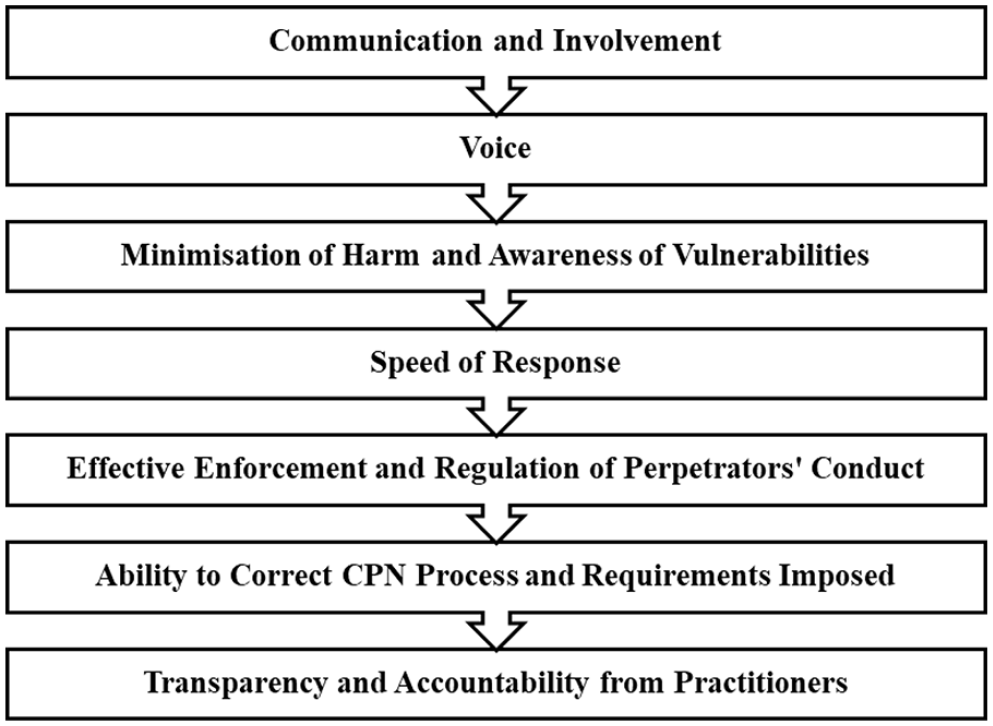
CPN victims’ needs model.
The three recommendations to emerge from this research include the following:
Increased victim involvement in the CPN process.
For the CPN process to truly meet the rhetoric of ‘putting victims first’, increased involvement is essential to provide victims a voice in the decisions taken, and to raise awareness of the vulnerabilities that make victims susceptible to repeat and secondary victimisation. In addition to speeding up and eliminating inappropriate interventions to ensure a timely and efficient response, for instance, where the ASB bypasses the requirements imposed by the CPW/CPN. The inclusion of the victim would facilitate the correction of practice early on, securing transparency and accountability from practitioners.
2. Joined-up partnership approach and communication strategy between officers with delegated responsibility.
Victims suggested improvements regarding communication with those affected by the ASB and between stakeholders with delegated responsibility. This contact initially needs to be face-to-face to understand the nature of the ASB and its duration, including the victims’ vulnerabilities. Regular case updates would also reassure and inform victims that their concerns are taken seriously by authorities; however, there was no preference given as to the form of communication (e.g. email, phone, or face-to-face). Alongside, there needs to be a more joined-up partnership approach between authorities with delegated responsibility. This approach should enable an understanding of the cases and stakeholder limitations, highlighting where each can step in to fill these gaps, facilitating an agreement to be reached and greater information sharing, and emphasising the involvement of ASB victims.
3. A restorative ethos underpinning the CPN process.
Victims wanted to discuss in person the impact of the ASB with the perpetrator in an authentically restorative environment before pursuing remedies such as the CPN, which often led to further escalation. However, victims perceived victim–offender mediation as limited in what it can achieve. Therefore, the alternative of conferencing would offer this neutral space desired by victims to educate perpetrators and the community about the expected level of respect, including the impact of the ASB upon the individual and locality.
Conclusion
This paper has put forward important questions about the ‘putting victims first’ approach underpinning the CPN process and ASB as per the Crime and Policing Act (2014), as it fails to deliver on this aim. A natural progression of this work would be to analyse the perceived effectiveness of the spectrum of powers introduced in England and Wales to address ASB accounting for various perspectives, including the victim, perpetrator, and practitioners. In addition, this research should aim to develop interventions that address the underlying issues surrounding ASB. The findings from this study have suggested several important empirically grounded implications for policy, practice, and research. These implications include the need for increased victim involvement in the CPN process, a joined-up partnership approach and communication strategy between those with delegated responsibility, and an underpinning restorative ethos to the CPN process. These changes should produce a supportive and inclusive environment for ASB victims, which would finally bring an end to the false promises and would deliver on offering victims proper redress to the ASB experienced.
Footnotes
Acknowledgements
I am very grateful for the support of Dr Vicky Heap, Dr Craig Paterson, and the proofreaders of early draft versions of this paper. I would also like to extend my sincere thanks to Rebecca Brown and Trustees of ASB Help, alongside the individuals who took part in this research project; I hope I have done your experiences justice.
