




Abstract
The role of small- and medium-sized enterprises (SMEs) in responding to climate change is gaining increased research and policy attention. However, given the diversity of the SME population, there is a need for studies which investigate the challenges and opportunities for decarbonisation in specific sectors. This study addresses this gap by analysing interview responses from 21 SMEs in the restaurant sector and conducting carbon footprint assessments for a sub-sample of eight restaurants. Interviews with governance actors were also conducted, generating insights into the challenges and opportunities for SME decarbonisation and the role of policy. Social practice theory is used as an analytical framework to provide insights about how lower carbon practices may be implemented via reorienting salient practices of food provision, ambience, and promoting restaurants’ local reputation. This study is the first to combine interviews with restaurateurs and sector stakeholders alongside quantitative carbon footprint assessments, generating new insights into SME decarbonisation in the hospitality industry and beyond.
Keywords
Introduction
In order to limit warming to 1.5°C, emission reductions are needed in every sector (RGS, 2020). In the United Kingdom (UK), businesses accounted for 19.1% of emissions in 2021 (DBEIS, 2022a), so it is crucial that businesses decarbonise for the UK to achieve Net Zero. However, small- and medium-sized enterprises (SMEs), who have fewer than 250 employees, are often excluded from decarbonisation regulation, which tends to focus on medium- and large-sized enterprises (MLEs), who have 250 employees or more (e.g. UK Government, 2019). In addition, tackling climate change is a procurement requirement for MLEs (Sugar et al., 2022), and MLEs are also more motivated to have voluntary Net Zero targets for corporate social responsibility reasons (Girella et al., 2019). Consequently, SMEs have been historically neglected in the governance of Net Zero, and resultantly, there have been a few studies on SME decarbonisation (Handley and Molloy, 2022).
However, SMEs represent 90% of all enterprises and more than 50% of global employment (World Bank, nd). At the start of 2022, there were 5.5 million SMEs in the UK, making up 99.9% of businesses, and accounting for 61% of employment and 51% of turnover in the business sector (DBEIS, 2022b). Their cumulative emissions are large (Moss et al., 2008); for instance, SMEs consume more than 13% of global energy (IEA, 2015) and account for more than 50% of energy use in certain sectors in the UK, such as the hospitality sector (DECC, 2015). Overall, SMEs are responsible for 43–53% of business emissions (British Business Bank, 2021), so there must be major reductions in their emissions to reach Net Zero, since their aggregate footprint is impossible to ignore (Blundel and Hampton, 2021). Additionally, through their role as ‘middle-out’ actors, SMEs can facilitate wider societal decarbonisation through improving the agency and capacity of other actors, such as suppliers, consumers, and employees (Parag and Janda, 2014; Weatherall et al., 2022). However, SMEs are not decarbonising at the speed required to meet decarbonisation targets (CCC, 2016).
This research focusses specifically on SMEs in the restaurant sector, which typically are energy-intensive, yet fall outside the scope of specific policies which support industrial or manufacturing SMEs (Özgen et al., 2021). For example, in England and Wales, the hospitality sector – which includes restaurants, hostels, hotels, holiday homes, and pubs – is the building use with the highest median gas and electricity intensity (DBEIS, 2021), resulting in significant Scope 1 and 2 (energy related) emissions. Additionally, restaurants have high Scope 3 emissions through selling food (Falciano et al., 2022), with food chains accounting for up to 37% of global emissions (Petersson et al., 2021) and supply chain emissions 11 times higher than operational emissions for SMEs in general (Jouven and Schmidt, 2022). As of 2022, there were approximately 102,000 food service activities businesses in the UK, with roughly one-third of them licensed restaurants (ONS, 2022), making this a large sector with a high decarbonisation potential. However, SME decarbonisation policy has been affected by a lack of research evidence on governance (Hampton et al., 2023). This study aims to make a distinct contribution to address this shortfall, as well as to understand the challenges and opportunities for the decarbonisation of SME restaurants. In this study, a normative view of governance is taken, considering all arrangements and actors shaping societal activity, including government institutions and informal support structures from local and sector actors (ibid). This research aims to understand how SME restaurants in the UK can decarbonise towards Net Zero. To answer this, it has two primary research questions (RQs):
This study begins with a literature review which explains social practice theory (SPT) and its benefits for analysing decarbonisation, before outlining key barriers and drivers of SME decarbonisation, and finally providing an overview of SME decarbonisation governance. The methods are then explained, before key findings from interviews and carbon footprint assessments are presented. RQ1 identifies nine challenges and eight opportunities for decarbonisation, and RQ2 explores the initiatives of place-based and sector-based governance. The final sections reflect on the challenges and opportunities that governance actors must consider to reorient practices in SME restaurants to accelerate decarbonisation.
Literature review
Social practice theory
This study employs a socio-technical approach to transitions, which focusses on the use of technology in a social context (Loorbach et al., 2017). Originating from Bourdieu (1976) and Giddens (1984), and substantially developed by Schatzki (1996, 2001, 2006), SPTs have become popular in social scientific studies of energy, as they help to uncover the complex determinants of consumption (Sovacool and Hess, 2017). SPTs adopt a relational ontology, so instead of starting with technology, or normative outcomes, researchers start with the practice and observe how technologies and materials are integrated into practice entities and performances (Gram-Hanssen, 2013). In this study, we adopt the commonly used ‘three-element model’ of SPT, developed by Shove and Pantzar (2005), deconstructing practices into materials, skills, competences, and meanings (Figure 1). Since a practice forms a nexus, connections between elements hold the practice together (Gram-Hanssen, 2010) and show how practices change over time (Sovacool and Hess, 2017). SPT (referred to in the singular hereafter) highlights how emissions arise from everyday activity, for example, energy (and emissions) is used as an ingredient to accomplish practices (Shove and Walker, 2014). Therefore, analysing practices is an effective way to identify decarbonisation opportunities through technological substitution or changing the meanings associated with behaviours (Hampton, 2018a). This can be more effective than changing values for driving widespread changes in social practices (Hargreaves, 2011). Additionally, through contributing new insights into how elements are connected, while viewing multiple practices together which may align, depend upon, or support one another (Sovacool and Hess, 2017), SPT promotes a holistic view of change (Gram-Hanssen, 2010). This is key to understanding how decarbonisation can be accelerated. Three different social practice theory elements and their links, adapted from Shove and Pantzar (2005).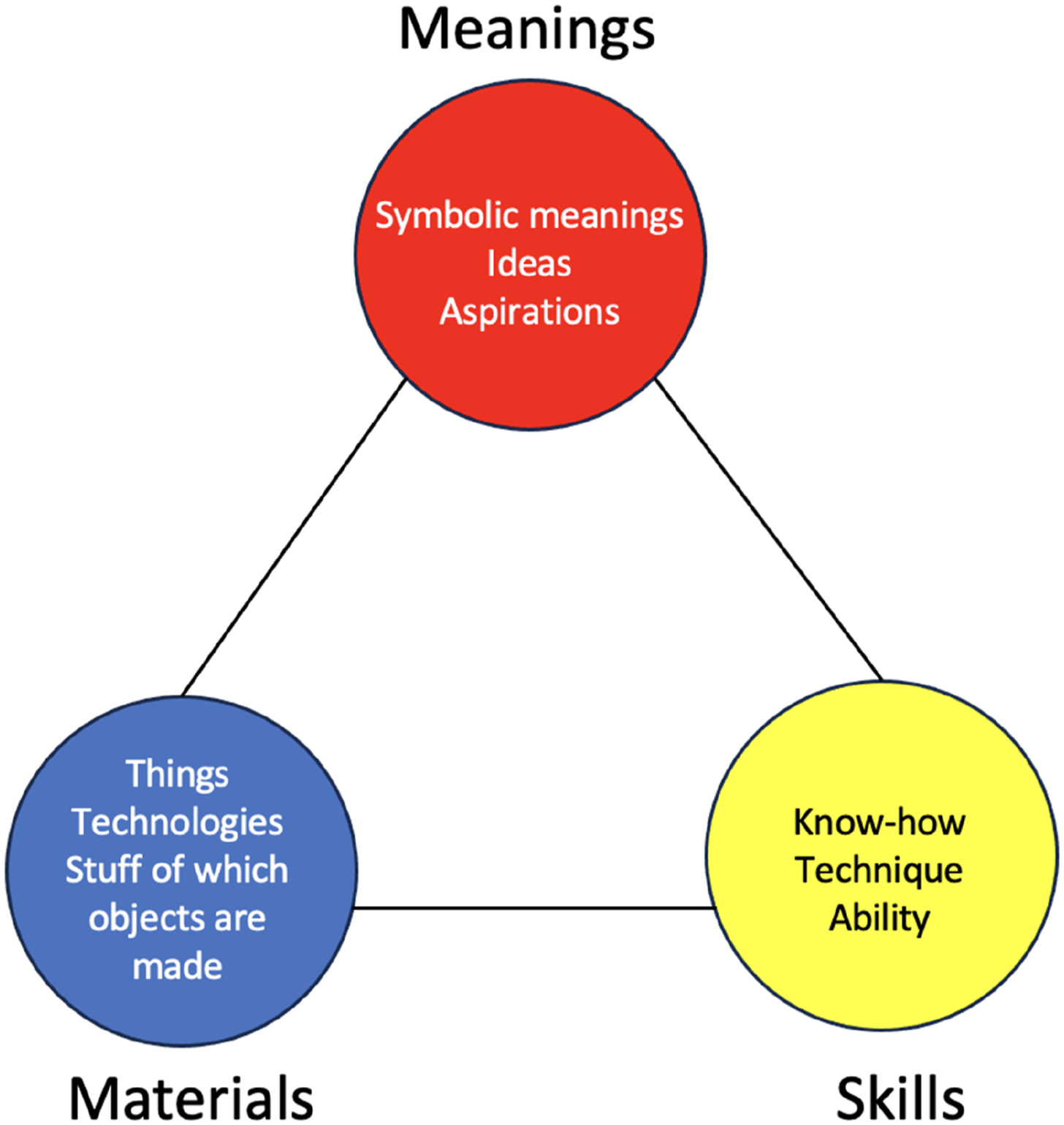
Most studies of SPT occur in the domestic setting, with few applications to organisations, despite the potential of SPT to contribute to understandings of knowledge production and the influence of external advice within organisations (Hampton, 2018a). While there have been some studies relating SPT to restaurants, for instance, using SPT to analyse food production and consumption practices (Shove, 2017; Spaargaren et al., 2012; Welch and Warde, 2015; Welch and Yates, 2018; Wertheim-Heck and Raneri, 2019); investigate dietary requirements (Oktadiana et al., 2020); or understand the culinary practices of ‘locavore’ chefs (Nelson et al., 2017), no studies have viewed the decarbonisation of SME restaurants through SPT. Additionally, most studies applying SPT to decarbonisation have focussed solely on energy, whereas this study will focus on the emissions from both energy and food. Finally, despite the inaccessibility of much of the SPT literature and a perception of its theoretical complexity, this study is inspired by the attractive simplicity of the three-element model and follows others in using this as a methodological heuristic, for prompting study participants to reflect on their own practices (Hampton, 2018b; Sahakian and Wilhite, 2014).
Barriers and drivers of SME decarbonisation
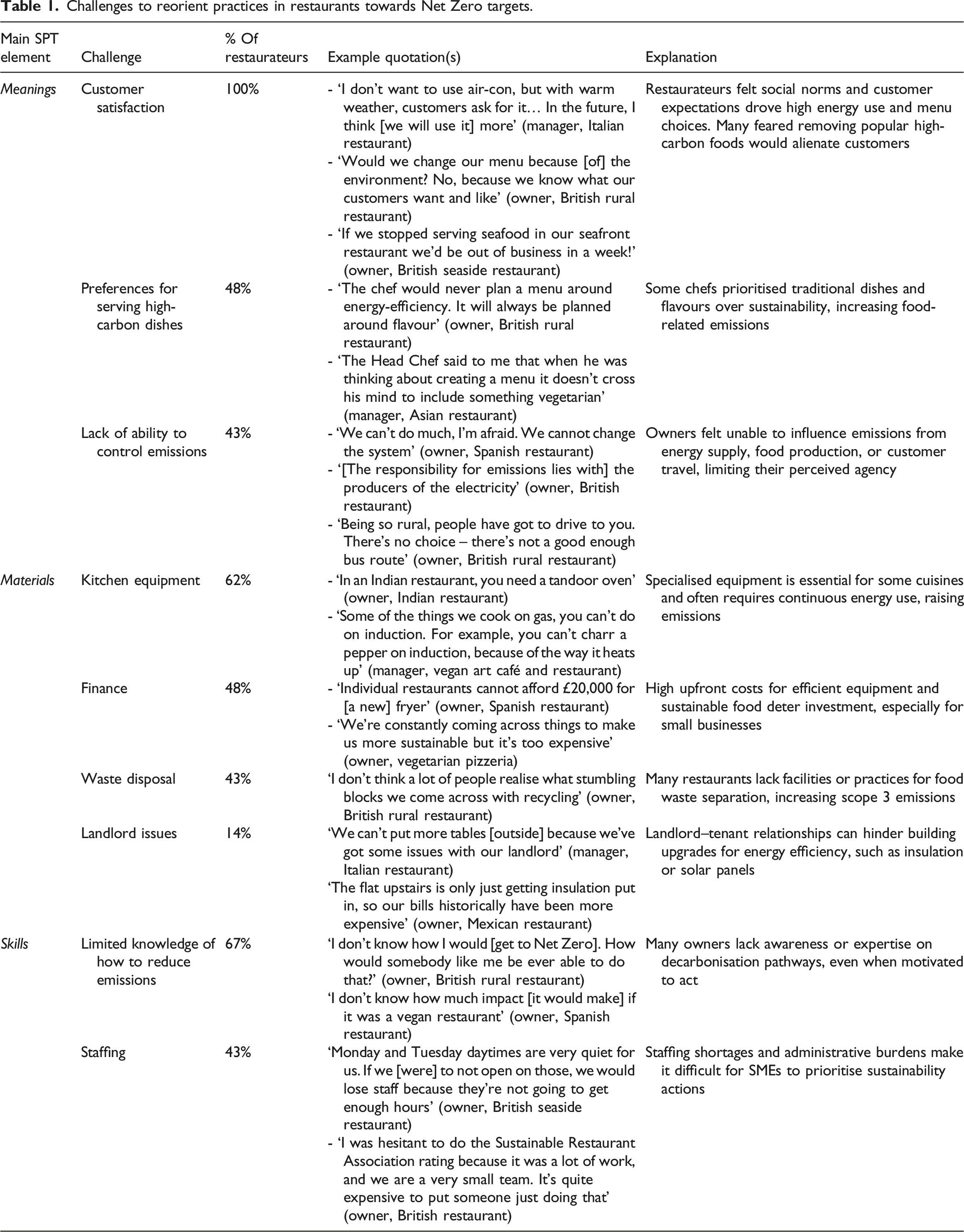
Challenges to reorient practices in restaurants towards Net Zero targets.
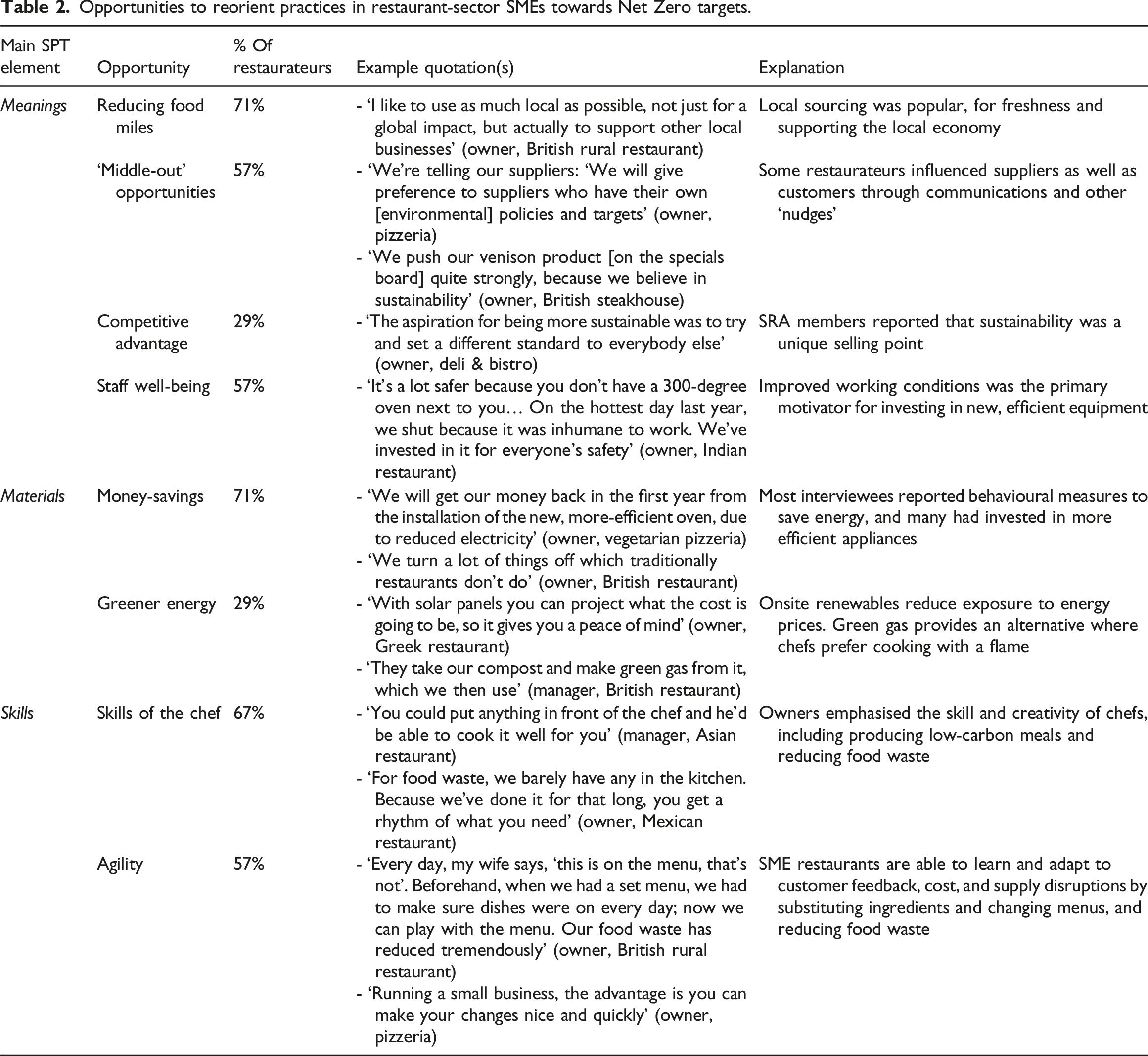
Opportunities to reorient practices in restaurant-sector SMEs towards Net Zero targets.
Despite many barriers, there are also several drivers. External drives include consumer pressure (some SME restaurants aim to capitalise on this through differentiating themselves by sourcing local, ‘organic’ produce (Weatherall et al., 2022), although this tends to be less attractive to restaurants whose customers are attracted by lower prices (Shin et al., 2019)); high overhead costs; grants or subsidies; legislation (although relatively few environmental policies affect SMEs (Jouven and Schmidt, 2022)); and making emissions reductions a condition for accessing finance.
Internally, cost-savings are a frequently highlighted driver, relating to reduced energy use and food waste in restaurants (Nelson et al., 2017). This has been more beneficial in recent years with high energy costs and food inflation (Weatherall et al., 2022). However, one recent survey of SMEs found that only 16% had responded to rising costs by pursuing efficiency; the most common response was to pass on costs to customers (FSB, 2023). Other internal drivers include pro-environmental values; simple organisational structure; and risk mitigation.
While the barriers and drivers framing dominates the literature on SME decarbonisation, it has been criticised on methodological and conceptual grounds. Empirical data underpinning barriers and drivers research has relied on surveys of SME owner-managers, who are more likely to highlight external barriers rather than internal factors as reasons for inaction (Hampton and Fawcett, 2017). This is emphasised by the fact that 37% of energy-efficiency measures need no capital investment, such as turning down thermostats, yet uptake of measures is low (DECC, 2014).
Additionally, research around barriers has been at the point of investment only, so does not fully acknowledge the complex dynamics of organisational decision-making and how these are influenced by material, social, cultural, and regulatory factors (Fawcett and Hampton, 2020). Indeed, there has been limited in-depth qualitative research on SME practices, which take these factors into account (Hampton, 2019). This research addresses this gap by using SPT to guide an empirical investigation of restaurant practices, to generate new insights into the challenges and opportunities to decarbonise SMEs in the restaurant sector.
Governance of SME decarbonisation
Governance of SME decarbonisation in the UK involves multiple actors with diffused power and responsibility (Gunningham, 2009). Historically, SMEs have been excluded from business-focused decarbonisation at government levels, due to their relatively fewer resources. Regulations pertaining to waste, producer responsibility, or carbon reporting all contain SME exemptions (Weatherall et al., 2022). While this saves costs and administrative burden, it also results in missed opportunities for decarbonisation through regulatory compliance (Zheng et al., 2021).
Incentive approaches are preferred by policymakers and business support organisations, and substantial public investment has been made in providing grants and free or subsidised energy audits for SMEs in the last two decades (Weatherall et al., 2022).
Nearly all government-funded business support is organised on a local and regional basis. In Scotland and Wales, there are national programmes, while in England, the matter is devolved to local and regional partnerships. English municipal councils collaborate with organisations like Growth Hubs and Net Zero Hubs to provide advice (Hampton et al., 2023). Unfortunately, Net Zero support programmes for SMEs are frequently limited in scope, disjointed, and inconsistent (Kuzemko and Britton, 2020). Furthermore, SMEs are not widely utilising available assistance. One study of 282 environmental initiatives found that participation rates were below 1% (ERC, 2023).
However, government-funded initiatives are not the only form of support available to SMEs. Over 90% of businesses use external advice, and the most popular sources include accountants, membership associations, and business peers (Mole et al., 2017; Sivaev, 2013). Increasingly, sector associations and membership bodies have developed toolkits to support SME decarbonisation.
The advantage of sector-based support over place-based is that membership associations offer advice tailored to the specific decarbonisation challenges faced by their membership. UKHospitality’s sustainability guide, for instance, summarises energy-efficiency opportunities for cooking equipment, lighting, and heating and identifies how to reduce food waste and develop staff skills. The Food Made Good framework by the Sustainable Restaurant Association (SRA) includes a 10-point system for members to improve sustainability through sourcing, menu design, and waste management. At the national level, the Hospitality Sector Council acts as a formal interface between government and the sector, with sustainability a core mission. Although its members largely represent MLE restaurants, a subsidiary Family Business and Independents Forum includes SME members.
Methodology
Interviews
Primary data from 27 semi-structured interviews were used to answer RQ1 and RQ2, with interviews separated into three phases. Phase one involved interviews with 17 diverse restaurants in terms of type and size, and four carbon footprint assessments. Phase two, involving an additional four interviews and footprints, targeted SRA-associated restaurants who had already started their sustainability journey. Franchises and venues providing accommodation without a dedicated restaurant were excluded. A total of 21 restaurants participated in this study, eight of which provided data for carbon footprint assessments. Restaurants were spread across geographies in the UK, with participants from coastal towns, rural towns, large cities, and university cities. These different locations and regions capture a range of socio-economic conditions, allowing the results to be generalised across the UK. The UK restaurant sector is one of the most diverse in the world, and our sample included cuisine types spanning British, Greek, Indian, Italian, Mexican, Sushi, vegetarian, and vegan.
Interviews questions were structured using the three-element model of SPT, following earlier examples (Hampton, 2019; Scheider, 2023). Figure 1 was used to prompt participants to consider the elements of practice. The diagram was explained through the example of car driving, based on Shove et al. (2012), and then used as a construct to uncover challenges and opportunities to reorient practices.
Phase three targeted governance actors, as part of a larger 2-year study examining the challenges of decarbonising SMEs, which focused on governance approaches across places and different sectors, as well as the perspectives of firms. Interviews lasting 30–60 minutes were conducted with six individuals involved in the governance of the restaurant sector including trade associations, civil servants, and those involved in the hospitality sector council.
Qualitative data analysis was conducted by first transcribing and coding interview data and then identifying challenges and opportunities for decarbonisation, as well as the constituent elements of everyday restaurant practices.
Carbon footprint assessments
Primary carbon footprinting for eight restaurants was used to complement the interviews to answer RQ1 and RQ2. The UK Government method for calculating carbon footprints across Scopes 1, 2, and 3 was used (DESNZ and DBEIS, 2023). Scope 1 emissions are direct, arising from on-site energy use. Scope 2 covers indirect emissions from purchased electricity. Data for these were collected from restaurant energy bills. Scope 3 includes all other indirect emissions, and in this study, food purchase data were collected from supplier invoices. Refrigerant leakage (Scope 1) and beverages (Scope 3) were deemed relatively immaterial compared with energy and food use, and they were excluded, as well as waste (Scope 3), as restaurants struggled to provide data for this (Cascini et al., 2016; Falciano et al., 2022).
Emission conversion factors from the UK Government were used for Scopes 1 and 2 (DESNZ and DBEIS, 2023). Conversion factors for Scope 3 food emissions were obtained from Petersson et al.’s (2021) dataset. Data was collected over a sample period (typically 3 months for Scopes 1 and 2 and 1 week for Scope 3). Overall emissions were then scaled up over a 1-year period and normalised using the number of customers (which was also provided by restaurants) to produce a carbon footprint per customer, providing restaurant-to-restaurant comparison.
Limitations
Recruiting participants to this study proved difficult, reflecting a common challenge in primary research on SMEs. Telephone (18% success) was a more effective method than email (4%) of recruiting restaurateurs. Several participants committed to interviews and footprint analyses but later pulled out due to time and staff shortages. While sufficient for analysis, a larger sample reflecting diverse restaurant sizes and cuisine types would have increased the generalisability of this study.
Carbon footprint assessments were offered to incentivise participation. However, for some restaurateurs these were considered burdensome due to the need to gather data. However, for restaurants more committed to decarbonisation, the benefit of this analysis outweighed the costs.
Receipts for Scope 3 food purchases also limited the accuracy of calculations. Many suppliers provide paper invoices for each delivery, with some restaurants receiving eight invoices per day. Colloquial language was common (e.g. ‘a punnet of strawberries’ or ‘a bunch of rocket’), making it difficult to calculate CO2e values. This poses a challenge for both SMEs and low-carbon advisors, adding to the time taken to provide accurate carbon footprints. Communication with owners and best-guess estimates helped address this.
Results
RQ1: Challenges and opportunities
Nine challenges and eight opportunities to reorient practices through changes in meanings, materials, and skills were identified.
Challenges: Meanings
Firstly, all restaurateurs felt the need to create perfect ambience for customers, due to social norms, which related to the primary priority of customer satisfaction for restaurateurs. This resulted in high energy demands for lighting and heating/cooling, and makes it difficult to reduce Scope 1 and 2 emissions from decreased energy usage, so decarbonisation must come from improved energy-efficiency in the materials. In addition, perceived social norms (which varied with place) meant that restaurateurs were reluctant to change menus to remove high-carbon dishes, and even vegetarian/vegan restaurants felt apprehensive around advertising heavily about being meat-free. This point is crucial, as carbon footprints showed that most restaurant emissions come from Scope 3 food purchases, and a large percentage come from high-carbon meats, such as beef (Figure 2). Indeed, meat-based diets have a considerably higher footprint than plant-based diets (Scarborough et al., 2023). Therefore, if owner-managers are reluctant to change dishes to remove high-carbon foods, based on the perceived meanings placed on dishes, then decarbonisation to Net Zero will be difficult. Carbon footprints for eight restaurants, showing (a) the source of emissions overall, (b) emissions from food purchased, and (c) emissions from meat. Scope 3 emissions from food purchases make up most of the emissions from the restaurants, with a high proportion coming from red meat.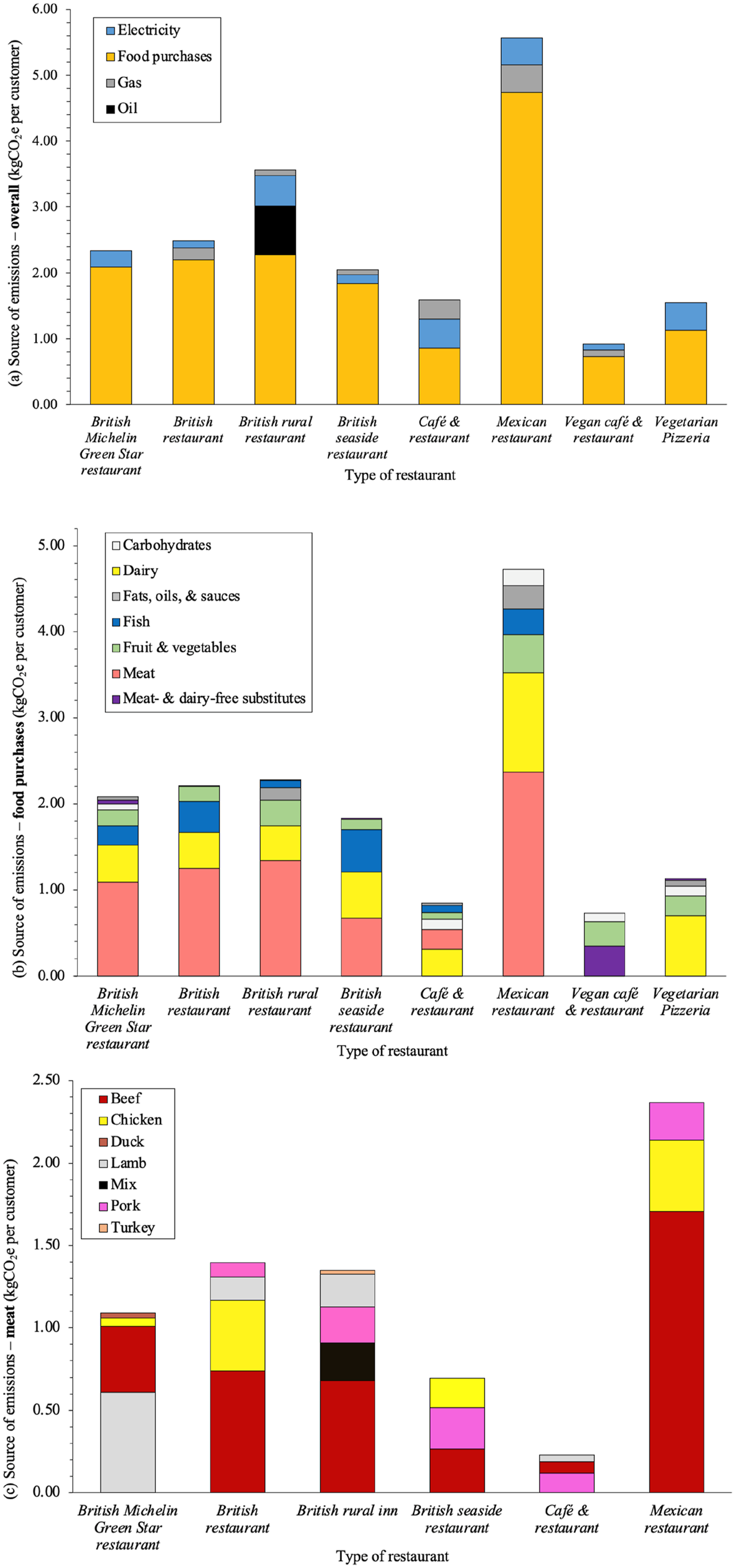
Furthermore, 48% of owners had preferences for serving high-carbon dishes. This often occurred where the owner was the chef, who wanted to serve certain foods (including portion sizes) or cook using particular practices, such as making a jus which takes three-to-four days, regardless of the emissions, resulting in further reluctance to change to low-carbon dishes.
Finally, 43% of owners felt unable to control their emissions. This related to control over appliances and the carbon-intensity of the electricity grid (Scopes 1 and 2). Many owner-managers also felt little control over their Scope 3 emissions, some arguing that producers carried the greatest responsibility for reducing emissions from supply chains.
Challenges: Materials
Interviews uncovered four material decarbonisation challenges. Firstly, 62% of owner-managers felt unable to reduce energy use from conventional kitchen equipment, such as being unable to turn appliances off during quiet periods as conventional kitchen equipment takes considerable time to heat up, and customers expect food to be served quickly, plus certain equipment for some cuisine types and dishes was needed.
Secondly, 48% of restaurateurs emphasised finance as a decarbonisation barrier, as they did not have upfront capital to install more energy-efficient appliances. Many restaurateurs also expressed that lower-emission food, such as meat-free substitutes, had lower profit margins than meat products.
Thirdly, waste disposal was highlighted as a challenge by 43% of restaurateurs to reducing Scope 3 emissions because many restaurants did not separate waste (including restaurants participating in carbon footprinting), as this would affect their practices.
Lastly, issues with landlords posed a Scope 1 and 2 decarbonisation challenge. While only 14% of restaurateurs highlighted this, it was not asked how many lease their property, so this sample may have consisted of more restaurateurs who own their buildings than the national average. Given that over 50% of commercial properties are leased in the UK (PIA, 2017), further research should identify whether leasing is a decarbonisation challenge for more SME restaurants than found in this study.
Challenges: Skills
Firstly, 67% of owner-managers possessed limited knowledge of how to reduce their emissions, including many who did not know about their own impact. The relevant contribution of different emissions sources was also poorly understood by many: three owner-managers first thought about waste, which only makes up a small percentage of restaurant emissions (Falciano et al., 2022), rather than the larger sources of food and energy. In addition, several other owner-managers possessed limited knowledge of the emissions from different types of food. This is important as carbon footprint analysis found that food is the largest emissions source from restaurants, so changing dishes is one key decarbonisation opportunity.
Finally, 43% of restaurants also highlighted that staff issues were a decarbonisation barrier, particularly in relation to owner-managers having limited time to research emissions reductions.
Opportunities: Meanings
Eight opportunities to reorient practices in restaurants towards Net Zero targets were found. Three opportunities related to the meanings. Firstly, 71% of restaurateurs (including those serving foreign cuisine) wanted to use local suppliers, reducing food miles. While this reduces food transport emissions, most owners did this to support local businesses (particularly in rural, farming communities) or source fresh food.
Secondly, 57% of owners highlighted ‘middle-out’ opportunities (Parag and Janda, 2014) to influence suppliers and consumers. Restaurateurs expressed giving preferences to (local) suppliers who work with the environment positively. Some restaurateurs who were already committed to climate action also tried to nudge consumers towards low-carbon dishes, through information on specials boards about (perceived) low-carbon (local) foods, or providing carbon footprint information on menus, in the case of two restaurants. However, those that did not prioritise climate action did not believe that information could influence customers.
Lastly, all four restaurants who were SRA members emphasised that sustainability was an opportunity to be different in a crowded market.
Opportunities: Materials
Two material opportunities were identified. Firstly, nearly 71% of restaurateurs highlighted money-saving as a decarbonisation opportunity, through switching off appliances to reduce consumption. Some restaurants also reduced food-serving hours, allowing kitchen appliances to be turned off mid-afternoon. Finally, restaurateurs can install new, more energy-efficient appliances, with the same practices but reduced costs.
Furthermore, for a small number of restaurateurs (29%), using greener energy was an option to reduce Scope 1 and 2 emissions. One restaurateur highlighted that solar panels created certainty around energy bills, reducing stress, and so creating more mental capacity to think about other opportunities, accelerating decarbonisation.
Opportunities: Skills
Three opportunities were related to skills. Firstly, 67% of owner-managers stressed that their chefs possess the know-how to cook low-carbon dishes. In fact, staff satisfaction and seasonal menus were suggested to be complementary, to keep chefs engaged. Furthermore, many restaurateurs pointed to the skills of their chefs as the cause of their self-reported low food waste, due to chefs gaining a ‘rhythm’ through experience.
Secondly, 57% of owner-managers said they installed more energy-efficient materials to improve staff well-being. For example, newer, digital equipment is easier to control and cooks more predictably, making it easier to produce good-quality food. Newer equipment can also improve working conditions in the (usually very hot) kitchen. For instance, electric induction-hobs only heat the appliance, not its surroundings. An Indian restaurant had recently purchased an electric-powered naan-maker for staff well-being, which is also a climate adaptation to hotter summer temperatures, changing practices to allow restaurants to stay open. This shows how the outcome of energy use (i.e. producing good-quality food) is the important thing in restaurants, rather than the amount of energy, showing how energy is emergent from, and defined by, practices (Shove and Walker, 2014).
Finally, the simple SME organisational structure was highlighted an enabler of decarbonisation by 57% of interviewees, particularly around food waste. This is through staff providing feedback between the front-of-house and the kitchen, micro-businesses giving leftover food to staff, and the use of daily menus.
In summary, a multitude of challenges and opportunities to reorient practices for decarbonisation were uncovered through interviews, which related to the meanings, materials, and skills. These are summarised in Figure 3, which shows the relationship between elements and the frequency with which challenges and opportunities were identified. How each challenge and opportunity links to each element of SPT, with challenges and opportunities scaled to the percentage of restaurateurs who highlighted them. Those numbers outside of the triangle do not impact all three elements. The closer a number is to an element, the more it is related to it.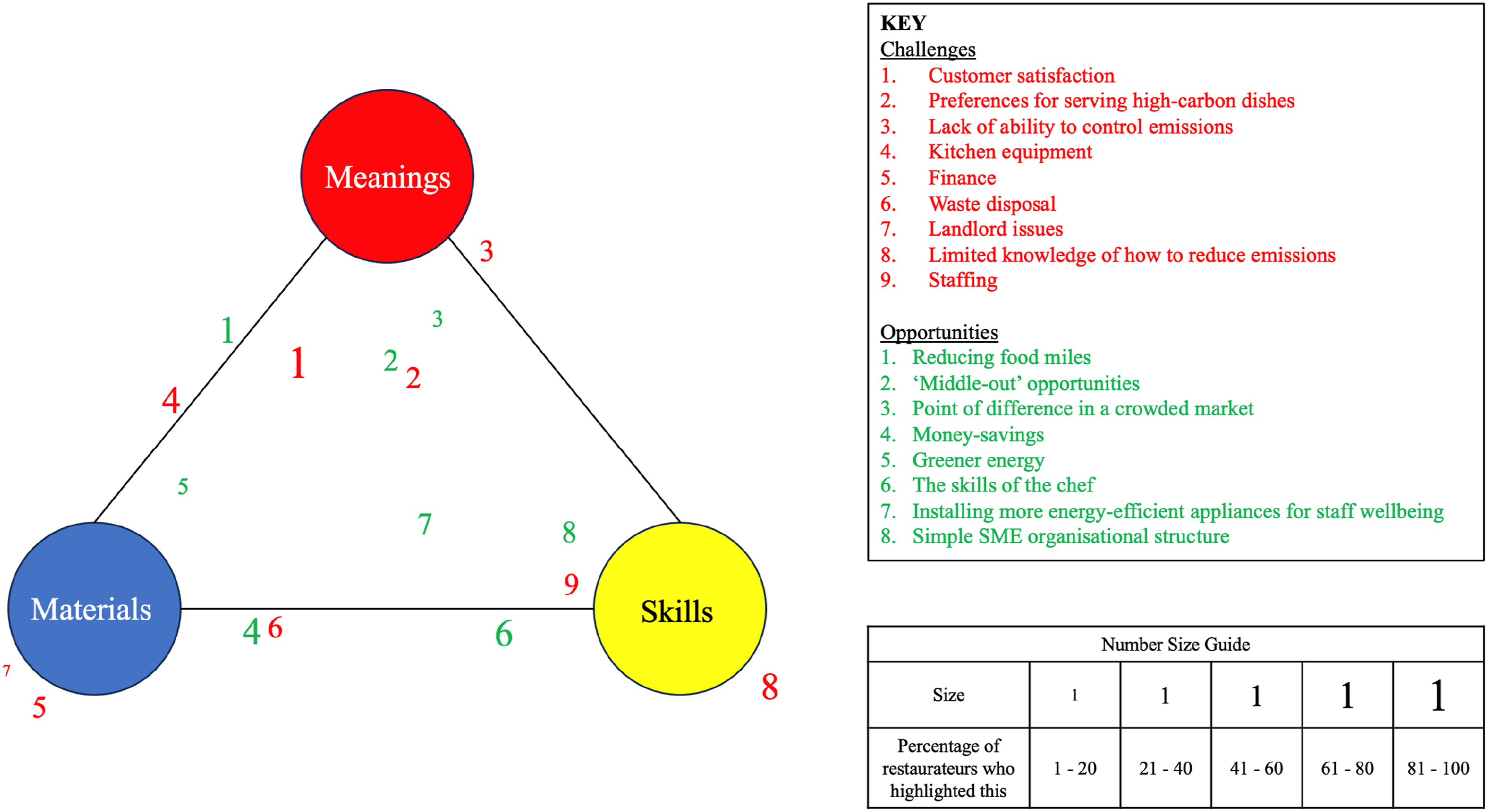
RQ2: Governance
This section presents how place-based and sector-based governance actors participate in SME restaurant decarbonisation (summarised in Figure 4). A summary of the responses by sector-based actors and SME restaurateurs when asked how governance actors promote decarbonisation.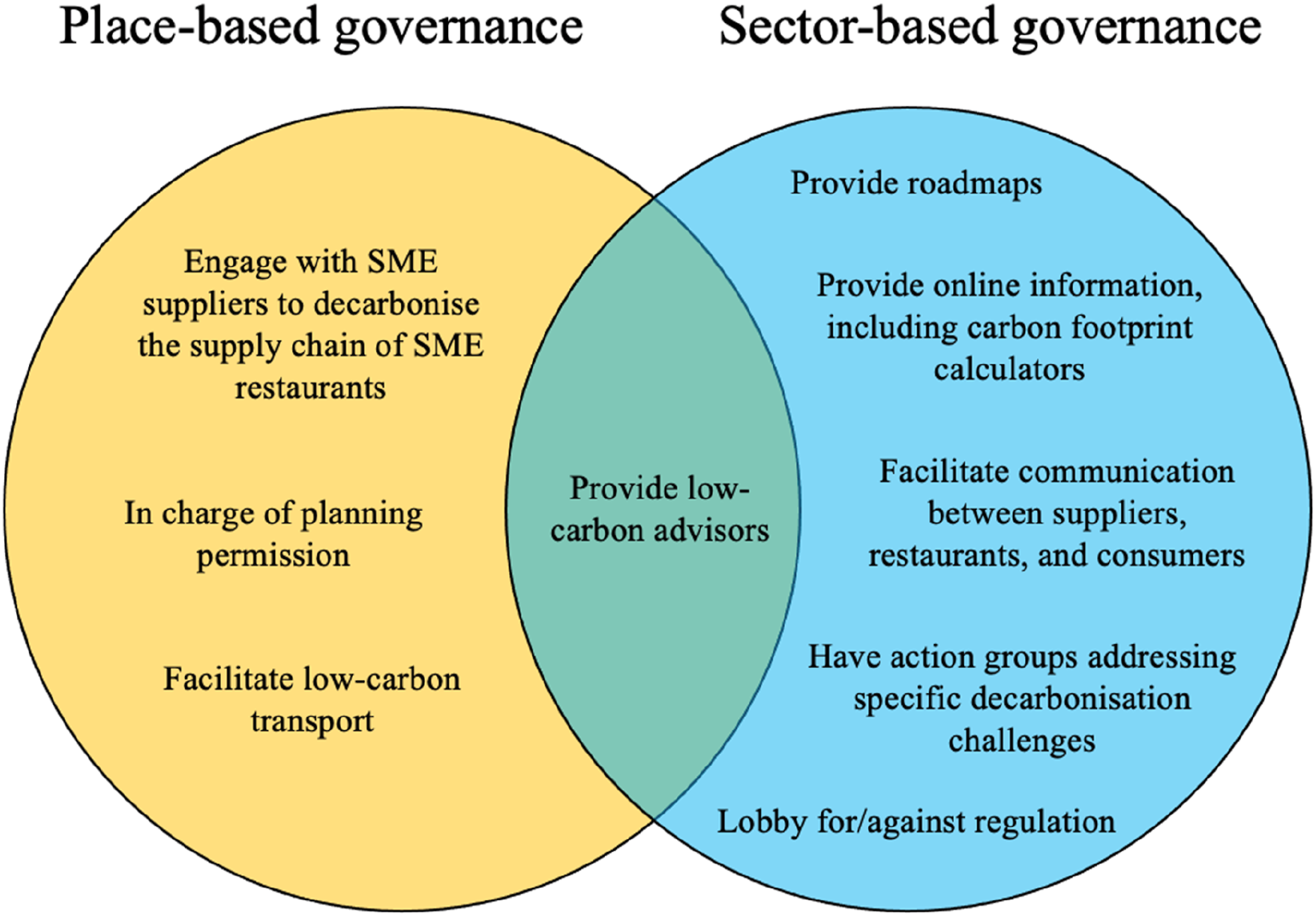
Place-based governance actors
Firstly, while most SMEs had no preference for where support came from, most expected it to come from local authorities or devolved governments, especially in rural restaurants: ‘Place-based initiatives have value because SMEs would identify stronger with being a small business in Cornwall, than they would with the Hospitality Sector Council’ (membership organisation 1).
Historically, this support has consisted of providing low-carbon advisors through the European Regional Development Fund, which is being phased out now the UK has left the European Union.
Secondly, place-based governance actors are likely to understand local needs and thus can enable Scope 3 decarbonisation from local suppliers through facilitating dialogue between suppliers and restaurants. This is important for SME restaurants: ‘[The suppliers] are very local. We’ve got a very close relationship with them, and they understand the problems’ (owner, British steakhouse).
In general, the local, short supply chains contribute positively to sustainability criteria: ‘SMEs tend to do better on the sourcing section of our rating than larger businesses, because they have shorter, more transparent supply chains’ (membership organisation 1).
Place-based governance actors can adapt supply chain decarbonisation to unique local challenges. For instance, place-based governance actors may hold specialist knowledge of how to decarbonise the supply of specific local food, such as seafood for seaside restaurants. Finally, Zero Carbon Forum (ZCF) highlighted that place-based actors can be especially important for promoting seasonal food.
However, place-based governance procedures, such as planning applications, can also delay or prevent Scope 1 and 2 decarbonisation. For example, one restaurant had accepted a solar panel quote but cannot yet install them as works must take place to determine if the local grid can support the additional energy. Additionally, two restaurateurs stated that local planning restrictions, such as in National Parks, or due to listed buildings, prevent the installation of visible renewable energy. Finally, place-based governance actors have an important role to play in reducing Scope 3 transport emissions by facilitating low-carbon transport options. However, while local transport policy (e.g. parking restrictions) can have significant impact on the restaurant trade, these policies are rarely integrated with SME decarbonisation initiatives.
Sector-based governance actors
Historically, the governance of climate action for SMEs has been dominated by place-based approaches. However, sector-based governance actors, including trade associations such as UKHospitality, are increasingly playing a role in promoting decarbonisation amongst SMEs, including in the restaurant sector.
Firstly, governance actors produce roadmaps and strategies (e.g. UKHospitality and ZCF created a Net Zero roadmap for the UK hospitality sector), sometimes in collaboration with governments. However, roadmaps mostly target MLEs, whom sector-based governance actors found easier to engage in decarbonisation. Sector-based actors therefore suggested that decarbonisation for SMEs could occur top-down, creating systemic change through engaging larger organisations and then trickling down to SMEs.
Secondly, sector-based governance actors provide decarbonisation information. Information on elements applying to all SMEs is shared online, which mostly relate to Scope 1 and 2 decarbonisation from kitchen equipment, which is universal across restaurant cuisines. Carbon footprint calculators are provided online by sector-based actors, such as the carbon calculator and toolkit from ZCF. Uptake of carbon footprint assessments is low, however, as restaurants find it difficult to provide the information, partly due to the mismatch of units from suppliers to the calculator – an issue unique to restaurants: ‘Restaurateurs say: “I have number of eggs. I don't have kilos of eggs.” The calculator allows restaurants to answer in the number of eggs, and then the calculator says the average egg is this heavy, and you get an approximation’ (membership organisation 1).
Where SMEs need specific information, sector-based governance actors provide low-carbon advisors, taking over from the (place-based) role of ERDF, and providing more-specific initiatives for SME restaurant decarbonisation than previously: ‘When we go into a restaurant, we know 25 initiatives they can do, whereas the generic energy auditor [has] five checklists that are relevant for a hairdresser or a pub’ (membership organisation 2).
However, sector-based governance actors are currently limited in their scope to provide this service: ‘We need more resources. We’ve got the model: it is just about scale. We know all the technologies to cut carbon. Some of those, like induction hubs, have a cost to them’ (membership organisation 2).
Therefore, while sector-based governance actors have organised themselves in preparation for the Net Zero transition, they are now asking for funding to accelerate decarbonisation.
Thirdly, sector-based governance actors facilitate communication between suppliers, restaurants, and consumers. For example: ‘We’re launching a supplier marketplace to connect suppliers of low-carbon technology tools’ (membership organisation 2).
Suppliers sharing best practices can accelerate supply chain decarbonisation. In addition, sector-based governance actors play a key role in communicating with the public on behalf of the sector. For example, ZCF encourages consumers to order plant-based options, making it more economical for restaurants to sell these low-carbon dishes.
Fourthly, sector-based governance actors convene action groups addressing sector-specific decarbonisation challenges that individual restaurants cannot solve, such as ZCF focussing on low-carbon technology, tenants and franchisees, dairy (e.g. how to decarbonise cheese), regenerative agriculture, and supplier engagement.
Finally, sector-based governance actors affect decarbonisation legislation for SMEs through lobbying and actors showed mixed views towards legislation. In order to accelerate SME decarbonisation, some sector-based actors suggested that SMEs must be included in legislation. However, for some issues, such as food waste reporting, sector-based organisations campaign for SME exemptions: ‘We’re slightly conflicted, because we want to be progressive on sustainability. But we also have a lot of businesses that want to be excluded from legislation. So generally, we support exemptions for SMEs’ (restaurant lobbying group).
This shows how sector-based actors do not always support SME inclusion in legislation. However, a legislative approach towards decarbonisation was received with indifference from most restaurateurs.
In conclusion, this section has demonstrated that place-based and sector-based governance actors undertake many SME decarbonisation initiatives, which are summarised in Figure 4.
Discussion
RQ1: Challenges and opportunities for restaurant decarbonisation
Focussing on the practices of running a restaurant business, we identified a series of challenges and opportunities to reorientate the meanings, materials, and skills which constitute everyday practices. An attention to practices also revealed three central themes: (1) the consistent provision of high-quality food, (2) ambience and staff well-being, and (3) promoting the business in the local community.
Food quality and consistency
Food quality and consistency is the first priority for restaurateurs. Whereas large corporate chain restaurants and franchises often struggle to adapt and innovate locally, SME restaurants are able to respond to customer demands, observe patterns of plate-waste, and adapt recipes at short notice. Owner-managers claimed that these capabilities are crucial factors for success. Interviews revealed a perception for strong customer demand for meat, and this is supported by a survey which found that only 12–25% of British people are willing to reduce meat consumption (Gillison et al., 2021).
Designing an appealing and profitable menu relies on the skills of the chef. Many restaurateurs highlighted the skill and agility of their chefs, including creating delicious vegetarian dishes, using leftovers creatively, and adapting menus to minimise waste. However, they also explained that chefs tended to prefer serving meat, reflecting their training, experience, and personal tastes (Ho et al., 2021). Restaurateurs expressed reluctance to reduce high-carbon meat dishes, despite their contribution to carbon footprints (e.g. Falciano et al., 2022).
Ambience and staff well-being
Energy represents a significant cost for restaurants, driven primarily by cooking, heating, and cooling practices (DBEIS, 2021). Owner-managers reported being motivated by cost savings, and carbon footprint analyses highlighted opportunities including installing efficient refrigerators and cooking equipment, and replacing gas-fired stoves with electric ovens and hobs (Aisyah et al., 2021). However, front of house investments (lighting, furnishings) often take priority over kitchen upgrades, as restaurateurs prioritised ambience over operational efficiency.
Interviewees drew links between staff welfare and kitchen upgrades. Given the importance of highly skilled chefs for overall business success, recruiting and retaining staff represents a priority for owner-managers. This has become an acute challenge since the COVID-19 pandemic in the UK and elsewhere and has risen up the agenda for SMEs (Kumar et al., 2024). Mitigating the risks of overheating and indoor air pollution in kitchen environments is likely to be a stronger motivator than decarbonisation or even energy savings.
Local reputation
Another salient practice for SME owner-managers is promoting their restaurant’s reputation in the local community. This involves not just attracting customers but also participating in community matters and supporting the local economy by using local suppliers and providing jobs. Although the emissions benefits of local sourcing are limited, there are many other advantages to supporting local producers, especially where organic, high-welfare standards are met (Jouzi et al., 2017). This theme supports research that emphasises SMEs as ‘middle-actors’ (Parag and Janda, 2014), influencing social networks and helping create and embed norms. The potential for restaurants to shape lower-carbon norms around food consumption remains largely untapped. Encouraging consumers to choose low-carbon dishes is an effective way to reduce Scope 3 emissions, as shown by the vegan and vegetarian restaurants in this study and by the literature on experiments to encourage these choices (Barker et al., 2021; Hansen et al., 2019). While owner-managers expressed reluctance to stop serving meat, there are opportunities to reduce menu emissions, for example, by substituting beef and lamb with venison. This requires improved carbon literacy among owner-managers, whose awareness of embodied food emissions remains low.
RQ2: Governance – place-based versus sector-based
For Scope 1 and 2 emissions, findings indicate sector-based actors have become more active in recent years, complementing traditional publicly funded business support from local authorities and economic development agencies. While decarbonisation has historically focused on energy – the largest emissions source for most SMEs (Fleitera et al., 2012) – our carbon footprints show Scope 3 food sources are the largest emissions source for restaurants, highlighting a need for governance actors to prioritise these.
Engagement with place-based versus sector-based actors for food emissions depended on the restaurant’s location. Place-based actors better understood the needs of rural restaurants, while in urban areas, sector-based actors more readily provided support to reduce food emissions. Nationally, sector-based actors set roadmaps targeting MLEs, who are typically more responsive and fewer in number (Aragón-Correa et al., 2008), and whose decarbonisation can reduce emissions for SME restaurants using those suppliers. Sector-based solutions for specific food types also drive Scope 3 decarbonisation. Since many restaurants are reluctant to change menus, solutions that maintain the meanings of restaurants are important.
The restaurant sector is becoming more organised for the Net Zero transition, and SMEs are well represented in industry networks. Where place-based support is available, such as from local authorities, restaurants benefit from building-related efficiency advice. However, for menu design and equipment, local advisors may need to refer SMEs to sector-based support. Greater coordination between place-based and sector-based organisations is needed, and public funds could be channelled through industry bodies for targeted support (Hampton et al., 2024). As climate impacts increase, governance support must adapt to changing needs.
In summary, SMEs require collaborative, cross-disciplinary efforts from MLEs, place-based, and sector-based actors (Jouven and Schmidt, 2022), along with greater coordination between networks, to deliver tailored solutions for the diverse restaurant sector.
Bringing RQ1 and RQ2 together: Reflections on challenges for the changing governance landscape – issues of data and the ‘tail’
Two further insights emerge from the discussion above: challenges around data availability and the heterogeneity of SMEs.
Insufficient access to data for calculating emissions is a significant challenge, encountered directly in this study. This not only limits SME awareness of their carbon footprints (Moss et al., 2008) but also hinders effective governance, as policymakers and industry stakeholders struggle to target interventions. The issue is especially acute for food emissions, as government conversion factors are crude and detailed data for specific food varieties is lacking. Several owner-managers noted that available information is too general, making it hard to distinguish between sustainably and conventionally produced foods.
This challenge is not unique to the UK; Falciano et al. (2022) similarly identified a lack of information for food emissions in Italy. Environmental impacts among producers of the same product can vary by a factor of 50 (Poore and Nemecek, 2018), so suppliers often lack usable information (Özgen et al., 2021). However, lack of data is not a reason to ignore significant food emissions (Moss et al., 2008), which contributed between 53 and 90% of emissions from restaurants in this study, and 95% in a study by Falciano et al. (2022). Carbon footprints must therefore include food emissions, even if data is imperfect.
Finally, the sheer number and diversity of SME restaurants makes decarbonising every venue extremely challenging. Sector-based actors suggest regulation as one of the most effective tools for reaching the ‘tail’, given its strong decarbonisation impact (Gunningham, 2009). While regulation adds burdens, SME restaurants have previously adapted to changes such as the single-use plastics ban. However, differing views among governance actors mean that agreement on the type and extent of decarbonisation regulation will remain difficult.
Conclusions
This study provides new insights into the challenges and opportunities for decarbonising SME restaurants by examining restaurant practices and the roles of place-based and sector-based governance actors. Unlike much of the existing literature, which relies on surveys or qualitative interviews alone, our approach combined interviews with 21 restaurateurs, carbon footprint analysis for eight restaurants, and interviews with UK governance stakeholders to better understand the policy landscape.
Empirical findings, informed by social practice theory, identified nine challenges and eight opportunities for reorienting practices towards Net Zero in SME restaurants. Decarbonisation is rarely a high priority for SMEs, with food quality, ambience, and local reputation emerging as the most salient practices for owners and managers. While energy use is a smaller proportion of emissions compared to food, it remains significant due to on-site cooking and the need to create a comfortable environment. Improving energy efficiency can enhance ambience and staff well-being, alongside cost savings.
Our findings support the need to focus on practices most relevant to SMEs, given their limited resources (Hampton, 2019; Sahakian and Wilhite, 2014). However, there is also a clear need to raise awareness and improve skills among restaurant owners, managers, and chefs. Improved carbon literacy could help chefs design lower-carbon menus and influence customer choices, further reducing emissions.
The question of how to create and coordinate effective governance arrangements for SME decarbonisation is an open question and priority for researchers and policymakers (Hampton et al., 2024). This study has shown that in local economies, place-based actors, such as local authorities, play a crucial role in supporting Scope 1 and 2 emissions reductions, for example, through subsidised energy audits. However, they are less equipped to address Scope 3 emissions, which require technical expertise and supply chain influence. Sector-based actors, including industry associations, have greater capacity to connect supply chains, develop roadmaps, and provide expert guidance, but their potential is underutilised. Our study also highlights the need for better data quality, harmonised reporting standards, and more accessible data sources, with sector-based actors and policymakers playing a vital role.
Coordination between place-based and sector-based actors is increasingly important. For instance, local energy advice services could refer SMEs to sector-based support for Scope 3 emissions reductions.
While our study is the first to combine interviews and carbon footprints of SME restaurants with governance stakeholder interviews, it has limitations, including a small, single-country sample. Future research should explore other cuisines – including new restaurants – to increase the sample size, include interviews with place-based actors, and examine the acceptability and impact of regulation to further accelerate SME restaurant decarbonisation towards Net Zero. In addition, food deliveries from restaurants form an important part of business models, so future research could examine food delivery carbon footprints. Finally, greater interrogation of supply chains could be explored in further research.
Footnotes

Consent to participate
This study was approved by the Oxford University Central University Research Ethics Committee (CUREC), and informed consent statements were obtained from all participants.
Author contributions
BHJ conducted all restaurant interviews and carbon footprint analyses, conducted literature review, and wrote the first draft of the article. SH and BHJ conducted stakeholder interviews together, and SH contributed to theoretical development and application, and writing advanced drafts.
Funding
The authors disclosed receipt of the following financial support for the research, authorship, and/or publication of this article: This research has been enabled by funding from the UK Energy Research Centre Phase 4 Programme (Grant Ref: EP/S029575/1) and the University of Oxford’s Environmental Change Institute.
Declaration of conflicting interests
The authors declared no potential conflicts of interest with respect to the research, authorship, and/or publication of this article.