



Abstract
“Waste-to-wages enterprises” play vital roles in inclusive circular economy implementation contributing environmental, economic, and social benefits. However, there is little understanding of the innovative service models behind this sector compared to more mainstream commercial enterprises. Our paper explores the ways waste-to-wages enterprises have innovated circular models to generate significant outcomes for their local economies. To do this, we conceptualize a new model of “reverse servitization,” whereby enterprises begin with providing the service of waste management, and then add new forms of work to deliver products and other services. We focus on a comparative case study of two Australian waste-to-wages enterprises. We find that through “reverse servitization,” these enterprises create green jobs, support circular skills development, introduce new product intervention points for innovation, and provide commodities that support local economies.
Introduction
Circular city discourse and policy largely focuses on the practices of commercial enterprises over social sector organizations and emphasizes economic growth over social equity and employment considerations (Katz-Gerro and López Sintas, 2019; Lane and Gumley, 2018; Moreau et al., 2017; Williams, 2019). This is reinforced by a growing focus on product design and service systems for innovation (Andrews, 2015) over critical manual and material forms of innovation associated with processes of reuse (Carr and Gibson, 2016; Lane and Gumley, 2018; Moreau et al., 2017). These product and service design conceptualizations of the circular transition are increasingly tied to the rise in “servitization,” or the processes businesses undertake to transition from being a product-dominant enterprise towards one which provides services (Baines and Lightfoot, 2014; Smith et al. 2014; Spring and Araujo, 2017; Stahel, 2010a).
At its core, this product and service design focus, over the social systems required for recirculating goods, represents a material efficiency bias, which is a focus on what is being recirculated, rather than on who is involved in their recirculation (Lane, 2014; Söderholm and Tilton, 2012). This reinforces the social blindness of circular policy, overlooking considerations such as skills diversification and career pathways, which are otherwise key strengths of more manual forms of servitization, as they rely on the diversification of an organization’s workforce (Baines and Lightfoot, 2014; Lekan et al., 2021; Moreau et al., 2017; Neely, 2008; Queiroz et al., 2020). Understanding activities linked with secondary uses becomes increasingly critical to engage communities in realizing and utilizing the value of discarded goods and materials as local resources (Bradley and Persson, 2022; Ortega Alvarado et al., 2021; Ortega Alvarado and Pettersen, 2023; Williams, 2019).
Emerging research identifies the characteristics of social sector organizations (namely charities and social enterprises) and indicates that they engage in activities that support a localized circular economy. These include the reuse of second-hand goods and other downstream circular activities including repairing, repurposing, and recycling (Lane and Gumley, 2018; Lekan et al., 2021; Pusz et al., 2024; Vickers and Lyon, 2014; Villalba-Eguiluz et al., 2023). Within the social sector, we focus on “waste-to-wages enterprises,” market-viable entities with the specific mission of supporting inclusive circular workforce development and local innovation in improved social outcomes (Lane et al., 2024; Lane and Gumley, 2018). They do this through (re)making products and commodities leveraged from the initial service of waste management, representing what we conceptualize as an innovative reverse flow model of manual servitization or reverse servitization.
To investigate the workings and impact of reverse servitization, we use an exploratory comparative case study of two Australian waste-to-wages enterprises: Green Collect (Melbourne) and Good Sammy (Perth). The cases represent two distinct forms of reverse servitization that we label developmental and transformative. Developmental organizations add new forms of work to drive local circular economic development. Transformative organizations rethink circular labor to develop skills and address systemic flaws. Our findings show how the organizations catalyze different forms of reverse servitization to create green jobs, support circular skills development, introduce new product intervention points for innovation and provide commodities to support local economies. Drawing on the findings, we argue that these processes could further validate the sector to public policy and better inform outcomes-based contract structures and industrial land supply to maximize their local circular economic development impact (Brennan and Ackers, 2004; Chalmers, 2013; Cooney et al., 2016; Pusz et al., 2024; Spadafora and Rapaccini, 2024; White et al., 2018).
Literature review
Servitization and the circular economy
Since its coining within the context of the manufacturing sector in 1988, discussion of the servitization concept and its applications continues to grow in industrial ecology and management scholarship (Baines et al., 2017; Baines and Lightfoot, 2014; Lay, 2014; Smith et al. 2014; Vandermerwe and Rada, 1988). Broadly, the concept underpins transitions within and across manufacturing firms towards providing services either in association with or additional to their products (Lay, 2014; Smith et al. 2014). Enterprises may provide various services to guarantee product performance (i.e. servicing and maintenance of manufactured products); provide diverse usership options (i.e. rental or leasing of products); or combine product delivery with additional service offerings (i.e. training programs) to enhance product performance and efficacy (Baines et al., 2017; Smith et al. 2014).
Servitization is closely aligned with principles of the circular economy as they share common conceptual ground in industrial ecology (understanding making and use as parts of a broader ecological system) (Fukumoto and De Vasconcelos, 2022; Han et al., 2020; Perey et al., 2018; Spring and Araujo, 2017). This is because servitization is fundamentally about optimizing product utilization, reducing the need for additional unit consumption and the associated need for additional resources and waste (Fukumoto and De Vasconcelos, 2022; Han et al., 2020; Perey et al., 2018; Spring and Araujo, 2017). As such some scholars (Fukumoto and De Vasconcelos, 2022; Williams, 2019) consider servitization to be circular economy best practice and their principles are represented closely in the ReSOLVE framework, an acclaimed model for city governments to guide commercial enterprises in adopting circular practices.
The more “manual” conceptualization of servitization can be drawn back to key industrial ecology notions from the early 1970s, where Walter Stahel proposed that “manpower” could substitute other energies as industrial economies became more “service-based” (Spring and Araujo, 2017; Stahel, 2010b). Around this time, Jane Jacobs introduced strongly aligned concepts of product and service diversification, exploring its impact on urban economies (1969). Jacobs conceptualized the process of “adding new work” to existing activities (1969). She used several examples, most notable being the history of company 3M, which originally mined sand and manufactured sandpaper, but invested in researching and developing better adhesives to improve the quality of their sandpaper (Jacobs, 1969). In so doing, they began manufacturing these adhesives as outright new products to meet a different market need, which Jacobs argued represented an innovation (advanced adhesive products) developed upon existing work (using mined sand to manufacture sandpaper) (Jacobs, 1969: 51–54). Further, she argued, that these processes are significant in driving local economic development through developing “import replacing” capacities and local self-sufficiency in job creation and access to goods and services (Jacobs, 1969: 145–179).
From this foundation, Jacobs outlined the concept of cities as mines, conceptualizing waste as a resource that catalyzes new economies as enterprises can create new commodities, products and services from otherwise discarded materials from the original service of “waste management” (Jacobs, 1969: 107–117). More recently, Lane (2014) argues that remanufacturing recycled commodities could take shape as the “…social benefits of promoting local industries around urban mining that divert current material flows to landfill towards new forms of manufacturing that provide local employment opportunities” (p. 427). This has been more recently revisited in Global South contexts as forms of inclusive urban mining, involving communities with varying backgrounds and skillsets in the activities of picking and sorting waste for further production (Schlezak and Styer, 2023). One example of this being catadores in Brazil, who have typically operated informally in co-operatives to collect and sell recyclable materials and are becoming increasingly integrated into municipal recycling systems, improving circularity rates and employment conditions (Silva De Souza Lima and Mancini, 2017). Scholars argue further that social inclusion can be further achieved through manufacturing with a focus on leveraging the manual work to create jobs for people of varying backgrounds and to build tacit material-based skills across sorting, (re)making, and repair (Lowe et al., 2021).
Circular social innovation and waste-to-wages enterprises (WTWEs)
Manual servitization is largely overlooked in mainstream circular economy discourse, as it instead emphasizes outcomes like resource efficiency, through alignment with existing economic paradigms (Atif et al., 2021; Ciliberto et al., 2021; Corona et al., 2019; Di Maio et al., 2017; Ghisellini et al., 2016). This is because manual servitization incurs high costs and risks associated with labor-intensiveness and material use compromising profit viability in market economy terms (Kühl et al., 2022; Llorente-González and Vence, 2020; Moreau et al., 2017; Neely, 2008).
However, it is under these dynamics that the social sector (comprised of charities, grassroots community-based organizations and social enterprises including waste-to-wages enterprises) is shaping a circular social approach aimed at maximizing social and ecological aims over profitability (Moreau et al., 2017; Villalba-Eguiluz et al., 2023). As such, there is growing recognition of their impact in leading circular local economic development through establishing partnerships across the social sector, private sector, and with local and higher levels of government (Brennan and Ackers, 2004; Lekan et al., 2021; Pusz et al., 2024).
By adding the work of (re)making products and commodities to the initial service of “waste management” (urban mining), we argue these waste-to-wages enterprises have innovated a reverse flow model of manual servitization. We use this reverse servitization concept to describe how these enterprises leverage the initial work of waste management services toward the (re)tail of quality affordable products and recovery of commodities for remanufacturing. In doing so, we argue that they develop local skills in material frugality and catalyze circular local economic development to transform capacities for communities’ overall resilience in the face of ecologically volatile futures (Carr and Gibson, 2016; Keck and Sakdapolrak, 2013).
Drawing from industrial ecology discourses and from Jacobs’ concepts, we identify two primary conceptual variations of reverse servitization: developmental and transformative.
Developmental reverse servitization
Developmental reverse servitization is fundamentally based on Jacobs’ concept of new (developmental) work (Ellerman, 2004; Jacobs, 1969). This begins with the service of waste collection, as the initial step in urban mining, drawing from existing used goods and materials to develop new products, commodities and services (Ellerman, 2004; Jacobs, 1969; Schlezak and Styer, 2023). Jacobs outlines this typically “inefficient” process of innovation being generative of new goods and services to the market, diversifying the economy and thus essential for development (Jacobs, 1969).
In his piece “Rethinking Repair,” Jackson (2014) argues that processes of repair and repurposing are themselves not often considered synonymous with “innovation,” as they are typically invisible, labor-intensive and considered “old” and enduring as practices (rather than “progressive”). He refers to this, as broken world thinking, acknowledging that things naturally decay and break apart and need repairing (Jackson, 2014).
In the case of developmental reverse servitization, we conceptualize this as the core process which improves local capacities for replacing imported goods and services akin to closed loop and import replacement processes. It involves the local sourcing of materials that would otherwise be wasted, rather than relying on global supply chains, which fosters self-sufficiency and resilience by driving infrastructure, governance, and skill development to support dynamic material flows (Carr and Gibson, 2016; Keck and Sakdapolrak, 2013; Pusz et al., 2024).
A defining factor of developmental reverse servitization is that the process integrates within the parameters of existing and conventional market dynamics and paradigms, advancing them towards more inclusive and sustainable forms of economic development (Bassens et al., 2020; Lane and Gumley, 2018; Ortega Alvarado et al., 2021; Williams, 2021; Williams et al., 2012). It relies predominantly on provision of waste collection services to public sector and private businesses, (re)sourcing of commodities to end markets, (re)production of goods to customers, and production of intellectual products for workers and businesses (Ellerman, 2004; Jacobs, 1969; Pusz et al., 2024; Spadafora and Rapaccini, 2024; Toya, 2024). This form of social innovation might in particular support inclusive forms of development, diversifying opportunities for sustainable livelihoods (Spadafora and Rapaccini, 2024; Toya, 2024). Lowe et al. (2021) demonstrate using a case study of socially inclusive innovation through extensions (new work) in manufacturing, which involves workers in a fluid design and making process.
Transformative reverse servitization
Transformative forms of reverse servitization involve a higher level of manualization of similar processes so as to focus on developing new social-material skills and practices to support disadvantaged workers and communities (Bradley and Persson, 2022; Lekan et al., 2021; Moreau et al., 2017; Villalba-Eguiluz et al., 2023). This is akin to Jacobs’ (1969) description of divisions of labor (breaking down old work into component roles), rather than by adding new forms of work with new roles.
In contrast to developmental enterprises, which largely operate within the limitations of conventional market paradigms, transformative enterprises are deliberately adjusting their models to engage with deep-seated and systemic socio-ecological disparities. This includes for instance, supporting workforces who face barriers to employability; promoting flows of quality and affordable but underused goods to disadvantaged households (Bradley and Persson, 2022; Lane et al., 2009; Lekan et al., 2021; Lyne and Madden, 2020).
Within the Handbook of Diverse Economies, scholars of repair-focused social enterprises Lyne and Madden (2020) refer to this as enterprising in a damaged (or broken) world. This concept extends Jackson’s broken world concept, whereby enterprises acknowledge that they operate knowingly in systems which fundamentally rely on repair—in immediate physical terms, but also socioeconomically and environmentally (Bradley and Persson, 2022). In so doing, Lyne and Madden (2020) argue that their practices enterprise new worlds into being, much like Graeber’s (2013) notion that value brings universes into being). This is not based on profit seeking, but are instead focused on repairing goods and by extension environments and communities as its own form of waste management (finding new uses for unwanted goods) (Bradley and Persson, 2022; Carr and Gibson, 2016; Keck and Sakdapolrak, 2013).
This framing could address the limited understanding of the benefits and conceptual place of circularity in cities as “spaces of socio-ecological transitions” as an alternative to “neoliberal (conventional market-based) urbanism” (Bassens et al., 2020). While developmental reverse servitization can be seen to steer the former towards greener and more equitable futures, transformative reverse servitization exposes longstanding systemic breakdowns in socio-economic equity and socio-ecological material relationships (production and consumption).
These transformative forms challenge conventional “take-make-dispose” market economies and foster diverse practices of reuse and degrowth, in ways which support wellbeing, lifestyles, and livelihoods (Lekan et al., 2021; Villalba-Eguiluz et al., 2023). In doing so, they represent new forms of alternative value (or circularity as alterity), such as building work value of workers facing challenges in terms of employability and in supporting households in disadvantaged areas with access to goods and services otherwise out of reach (Bradley and Persson, 2022; Lane et al., 2009; Lekan et al., 2021; Lyne and Madden, 2020).
Methodology
To explore and understand the roles of WTWEs in achieving reverse servitization, we ask the following research questions: (1) What are the key developmental and transformative processes undertaken in waste-to-wages enterprises and how are these explained by reverse servitization? (2) How do these processes vary in different waste-to-wages enterprises and how does this affect their social and local economic impacts? (3) What are the key implications of reverse servitization for circular local economic development?
To address these research questions, we use an exploratory comparative case study of two Australian waste-to-wages enterprises (Green Collect and Good Sammy) which share similar overarching social and circular objectives but vary substantially in terms of scale and operative scope. Green Collect, based in Melbourne, is a medium-sized enterprise with about 80 employees (at the time of writing), which provides waste management services for businesses (mainly from office cleanouts) as well as retail outlets for reused goods (largely office and stationery equipment). Fifty-five of these employees are supported workers that previously faced employment barriers including limited training qualifications, language and cultural barriers, lack of access to transport and discrimination on the basis of race, criminal history, disability, and/or sexual orientation.
Good Sammy, based in Perth, supports local councils with waste management services, collecting used household goods from a network of donation bins and through 27 stores, which also provide a point of resale, once goods are processed through their factory. Through this, they employ about 700 workers (at the time of writing), and over half are supported workers. Good Sammy predominantly recruits supported workers through Disability Employment Providers or through applications from people receiving Disability Support Payments through Australia’s federal National Disability Insurance Scheme (NDIS).
The methods employed for data collection were managerial and executive level interviews, analysis of organizational documents, and workforce outcomes surveys with supported workers. We conducted 15 semi-structured interviews with executives and managers of both circular and workforce development sites and programs (five from Green Collect and 10 from Good Sammy). Interviews took place online and at the participants’ workplaces between October 2023 and January 2024 and they generally lasted for 30–60 minutes. We asked participants about the organizations’ circular projects and processes; workforce and career development programs; and about location planning priorities, challenges, and enablers in terms of both site selection and development. To support our understanding of the processes discussed in these interviews, we conducted site observations at the central warehouse as well as one store from both organizations. This included photographs of the sites with the consent of executives and site managers.
The interviews were transcribed and analyzed using NVivo to code for relevant themes that capture key drivers, challenges, and enablers in terms of location planning to achieve circular and workforce development objectives. We drew from these interviews as well as key organization websites; organization documents and archives; and relevant state and local policies as they pertained to location challenges and enablers. These sources are provided in the Appendices. Given the voluntary nature of the participation, participation was somewhat uneven across each organization. We address this by ensuring that the research design comprised methods which could supplement the findings with a chain of multiple sources of evidence. This database (including organization and policy documents; anonymous author interview details; and anonymous author emails) is provided in the Appendices.
Our workforce outcomes survey of supported workers included questions focused on (1) job entry, training, and career development outcomes; (2) job satisfaction and sense of contribution; and (3) experiences with partner organizations particularly with regards to circular activities. The survey was designed to be short (10–15 minutes) and to minimize inconvenience to participants. We surveyed 37 workers anonymously, most of whom were supported workers across both organizations, with 14 from Green Collect (representing about 25% of the supported workforce) and 22 from Good Sammy (representing about 6% of the supported workforce) as well as one volunteer. Given the scale of employment and operations at Good Sammy, our study included visits to two of Good Sammy’s nearby retail stores and the newly opened Container Deposit facilities.
We surveyed workers from these sites as well as workers involved in the enterprise’s labor hire program, which partners with logistics and waste management companies like Centurion and Remondis. To ensure accessibility including amongst people living with disabilities, the survey design and delivery drew from findings of Wilson et al. (2013). Survey questions were designed to be accessible to people with a grade 8 level of English and for people living with cognitive and visual disabilities, particularly in terms of layout and format and additional support was provided accordingly (i.e., assistance with reading and writing). In cases where respondents had mild intellectual disabilities, we asked similar questions in a more conversational format, using individualized communication techniques (Cambridge and Forrester-Jones, 2003).
It is important to note, however, that the survey did use elements like a scale (strongly disagree to strongly agree), lacked images and did not explicitly utilize formats like “easy English” which are notable limitations relevant to engaging with people living with cognitive disabilities (Wilson et al., 2013).
Case studies: Reverse servitization in waste-to-wages enterprises
Both Green Collect and Good Sammy undertake reverse servitization processes—they leverage an initial service of waste management to generate new products and commodities. However, each differs in the ways in which it leverages “downstream” impacts of additional services, (re)production and commodity recovery. We identify Green Collect as representing a more developmental form, following conventions of producing new work from old divisions (such as the initial waste management service).
By contrast, Good Sammy represents a more transformative form of reverse servitization. Good Sammy leverages the initial work of waste management toward retail services of secondhand products in a slower, more deliberate system structured to create roles for workers to build their work value (employability). In this section we show that, through these varied forms of reverse servitization, both enterprises generate and support unique forms of local circular workforce development and economic development outcomes.
Developmental: Green Collect, Melbourne, Victoria
Green Collect is a medium-sized enterprise providing specialized waste management services to organizations across Victoria and operates reuse stores (interview 1; ACNC, 2024; Green Collect, 2024a). This work is directly leveraged to employ jobseekers facing “significant barriers to employment… people with a mental health diagnosis, experience of homelessness, people from refugee backgrounds, and asylum seekers, youth at risk, and people with various forms of disability” (Green Collect Interview 1). At the time of writing, the majority (65%) of Green Collect’s 85 employees had been directly recruited through employment services (ACNC, 2024).
Green Collect’s waste management services include an office clean-out service, where they deliver ‘cages' for client organizations to fill with discarded products and materials for collection; circular economy stations for local government (referred to from here on as “council”) clients to provide local points for e-waste disposal; and facilities to operate the Victorian government’s Container Deposit Scheme (interview 1; Green Collect, 2024a). Green Collect’s service delivery offering is aimed at “finding ethical outlets for things [which] clients struggle to find outlets for” (interview 4). Each of these services is sold to clients for a fee. The office clean-out service for instance is priced at a rate per cage delivered and collected (interviews 1 and 4). The cages are weighed, and the goods are sorted and identified for their reuse or recovery potential, informing an impact report to the client (interviews 1 and 4).
Similarly, Green Collect is paid a fee from councils to operate circular economy stations within council buildings (e.g., library, community center) where they collect unwanted goods (interview 1). The goods deposited range in type, but typically comprise office goods (electronics and e-wastes, stationery, office furniture, and fittings) and smaller household goods (electronics and e-wastes, CDs, DVDs, and cassettes). Green Collect also processes materials such as metals, plastic, paper, and cardboard collected from businesses (through cages) and households (through circular stations). It has a large geographic reach, compared to more traditional models of waste management (which are mostly municipal or within a metropolitan region), collecting cages from across Greater Melbourne and from cities and townships in the inner western and north-western regions of the state of Victoria (Manager Green Collect, email to author, 27 March, 2024b).
These goods and materials are transported to Green Collect’s central warehouse for processing, where workers identify the reuse or recovery value of each item (interviews 1 and 4). The throughput of this processing relies significantly on the reuse and recovery outlets Green Collect can identify (interviews 1 and 4). Having successfully identified these opportunities, the organization reports to have recirculated 55,000 kgs of goods and commodities back into the local economy and diverted them from landfill (Green Collect, 2024b). 47% of this material was reused and 45% was recycled through recycling partners (Green Collect, 2024b). This represents a commercialized (for-fee) form of waste management as a service, as well as the first parts of the urban mining process conceptualized by Jacobs (1969) and Schlezak and Styer (2023) and the first part of developmental reverse servitization.
Reuse: (re)production/commodification: new value in local economies
Green Collect’s primary outlet is through reuse. It operates three reuse stores, located in Melbourne’s western inner-city areas and in the central business district. The location strategy is based on perceived opportunity and existing local government partnerships are drawn on to find new sites close to the warehouse (interview 3). In addition to the wares processed at the warehouse, Green Collect also resells the high-quality clothing and household goods donated in bins collected by nearby reuse partners (second-hand charity stores). Sales revenue is then used to deliver programs to help people experiencing homelessness and disadvantage (interview 3, Manager Green Collect, email to author, 27 March, 2024b).
Some products are manufactured from repurposed and refurbished materials—one example being Green Collect’s notebooks which are made from scrapped paper and cardboard, largely from used folders (interviews 1, 3, and 4). Green Collect also processes items with material recovery value (i.e., not in good enough condition to be immediately reused) through partnerships with re-processors in nearby industrial precincts, or other middle ring and outer industrial areas to the north and southeast (Manager Green Collect, email to author, 27 March, 2024b). These processed products and commodities in turn are supplied to partners across metropolitan Melbourne. They include metals (such as steel from furniture), plastics, mobile phones, and other electronics (destined for resale or e-waste recovery), and batteries (containing steel, copper and mixed-metal-dust, destined for new batteries and agricultural fertilizer) (Manager Green Collect, email to author, 27 March, 2024b).
Recovery partnerships include a work program with the Department of Justice and Community Services to dismantle and VHS cassettes to recover component materials (Manager Green Collect, email to author, 27 March, 2024b). Lower-quality cotton items are sent to a partner who process them into rags for sale nationally and abroad (Manager Green Collect, email to author, 27 March, 2024b). Green Collect’s recovery processes support environmentally beneficial local economic development through remanufacturing that reduces the need for virgin materials (Manager Green Collect, email to author, 27 March, 2024b). Collectively, these recovery activities as well as Green Collect’s reuse sales generate 50% of the enterprise’s revenue, making it largely viable within existing conventional market dynamics in high-cost cities (interview 1, ACNC, 2024).
Having initially provided waste management as a for-fee service and leveraging this toward the commercial resale of reused & repurposed products and recovered commodities, Green Collect demonstrates a case of reverse servitization which largely operates within existing market dynamics. This represents the developmental form of adding new work (reproduction and recommodification) to initial work (waste management) in ways which not only make Green Collect market-viable but also add value to local economies through replacing imports (like virgin resources and new products from other cities and countries) (Ellerman, 2004; Jacobs, 1969; Pusz et al., 2024).
Personnel systems, recruitment, and local workforce development
Green Collect directly leverages these processes and systems to create employment and training opportunities for jobseekers facing disadvantages (interviews 1, 2, 4, and 5). They do so, firstly by deliberately locating their headquarters and central warehousing facilities (where most of the company’s jobs are) within Melbourne’s west, an area of relatively high unemployment and disadvantage, ensuring that they are close to public transport and residential areas: We were thinking about areas where there was perhaps less access to good employment and where there’s unemployment, particularly in Melbourne’s West… most of the staff working with us face some sort of social and skills disadvantage, and some of that is geographical… But also for us as an environmental organization, it's important that people have the opportunity to get to work, not using a car as well. So we deliberately chose this site that is 1km from a train station, and has a bus stop right at the front, and is visible from the street (Interview 2).
This directly addresses two key barriers many workers faced in seeking work, where 40% of respondents listed a lack of regular access to a vehicle or license as the first or second most important barrier to finding work previously (see Appendix D, Q15). About the same number also ranked difficulties commuting as the second, third, or fifth most important barrier to them. The site itself is also located within 1 km of a train station and along frequent bus routes, which serve the immediate surrounding suburbs, as well as other areas in Melbourne’s metropolitan west (interview 2).
Green Collect implement their practices through their model line design, underpinning their processing systems and operating procedures (interview 4). This was set up using Toyota Processing Systems (TPS), with support from the organization (where Toyota are themselves often used as an exemplar of servitization (Toya, 2024)) (interview 4). These systems and procedures emphasize the importance of standardized systems and of the workers themselves, in terms of firstly safety and wellbeing, quality of work and then efficiency: One of the main [developments] is the work we've been able to do with Toyota… They emphasize valuing people, their structure and their framework is around how you do what you do... Their highest priorities [are] safety and well being… then quality of that work… then efficiency… They were asking us to… standardize, make everything the same, be disciplined around what you do… But that creates a framework for the staff… doing the work to surface and solve the problems… on the floor and… empowers them to be a collaborative part of the solution… (Interview 4).
These systems are highly versatile, optimizing the throughput potential of the fit-for-purpose site, giving them confidence they can “say yes to every [job or project]” (interviews 1 and 4). This was particularly evident in the example shared by a Green Collect manager, who relayed that the organization sought innovation to their systems to enable them to work in previously small and more constrained sites, than their current facility (interview 4). An important aspect is, “visualizing the work in progress” by having unsorted goods and materials on the factory floor, to prompt collaboration and organized planning on how it should be addressed through labor (interview 4). Figure 1 shows some of these processes in action, showing racking of sorted and processed materials and goods, visualized “work-in-progress” furniture on the factory floor, “Tag and Testing” stations to safely test, process, and catalogue IT and electricals (work which provides employees with an accredited certification) and baskets of processed media, plastics, cardboard, and paper. Green Collect central warehouse, Braybrook (VIC).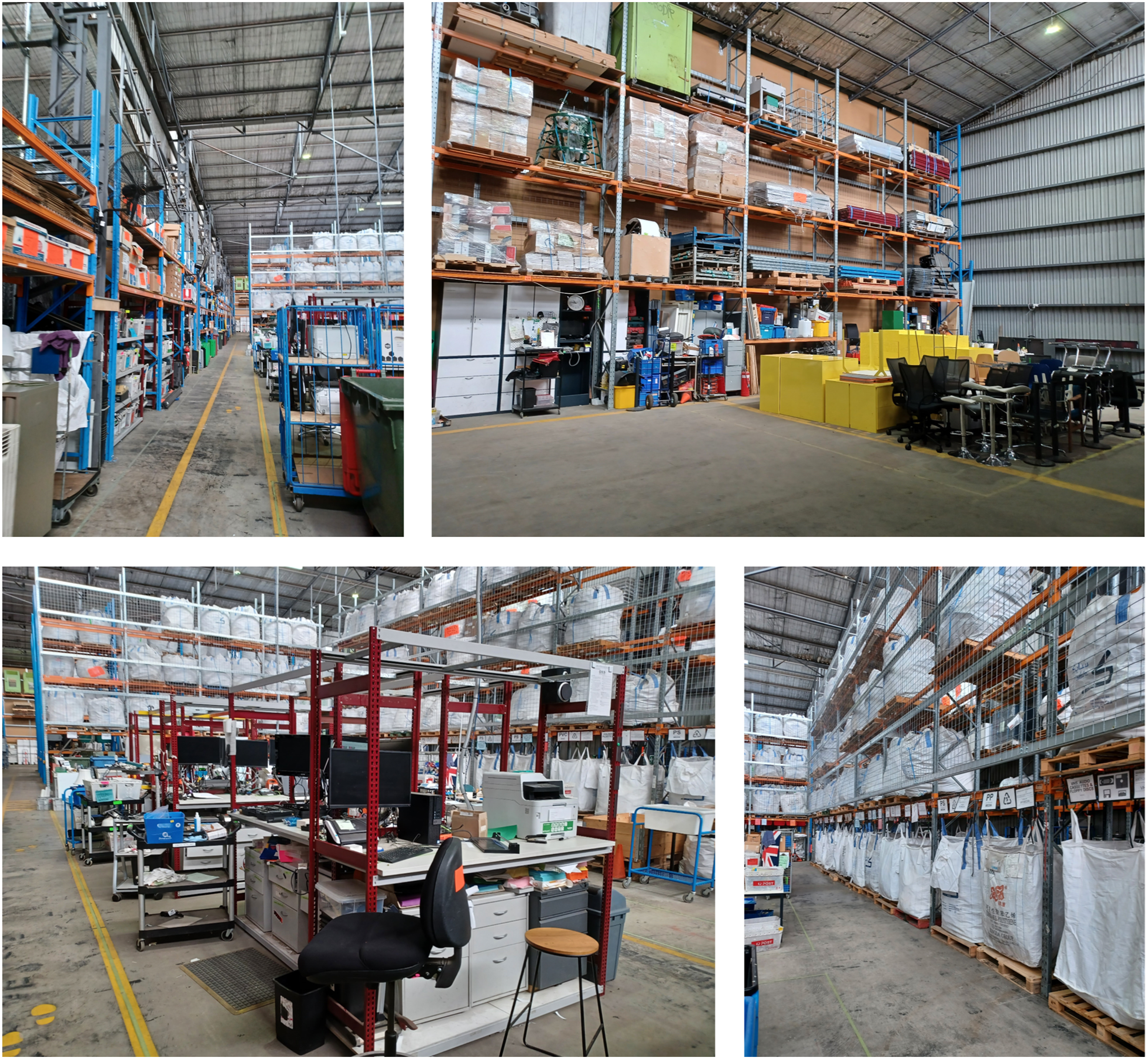
They are further enabled to achieve this production-line through fit-for-purpose site development on “mixed” industrial land, which has provisions for warehousing uses and noise. The site itself, though relatively small in floor area, has high ceilings which enable goods and materials to be sorted vertically to maximize space and throughput. Further, they are supported in their tenure by social impact investors Whitebox Enterprises, as they share a site and partnership with YMCA’s ReBuild social program to support at-risk youth (interviews 1, 2, and 5). The ways in which the site enables the production line is also shown by the fact that almost all survey respondents strongly agreed that buildings and layout sufficiently enabled them to carry out their work (see Appendix D, Q23).
Green Collect’s processing systems and standard operating procedures further embed programs for career development and pathways, particularly in circular activities (interviews 2, 4, and 5). This is done through a three-step model, which aligns closely with TPS: With any activity we have… you're learning it, you can do it independently, you can teach it. And so people move along and are able to become an activity coordinator and develop their leadership skills… there's a lot of focus a lot on internal progression. But increasingly, we're also looking at transition out and making sure people have got transferable skills and confidence (Interview 2).
Green Collect have since developed their training program into a State Government accredited VET course in “Circular Economy Practices,” available through the organization as a training provider, with a focus on providing people facing barriers to employment with valuable and recognized circular skills (Green Collect, 2024c; DJSIR, 2024). In this way, they facilitate the training as a service, further supporting improved sustainable livelihoods, through circular workforce development (Spadafora and Rapaccini, 2024; Toya, 2024), and export this training system as a product. This could also be understood in terms of growing a niche sustainability initiative into a larger scale transition, further underscoring the significance of the social innovation (Morrin et al., 2004; Pusz et al., 2024; Vickers and Lyon, 2014).
Given the organization’s holistic focus on worker wellbeing, it is unsurprising that most survey respondents reported a high level of job satisfaction and sense of contribution (Appendix D, Q23). This is further evidenced through Green Collect’s support programs, which involve supported goal setting, life skills development, job-readiness training, and mental health support (interview 5).
Through involvement in the Payment by Outcomes (PBO) trials (Department of Social Services, 2023; Whitebox Enterprises, 2023; Suchowerska et al., 2023), Green Collect were able to demonstrate over 6 months a high level of retention of jobseekers who had previously faced barriers to employment or were youth at-risk (in partnership with YMCA ReBuild): ...another recent employment program “Payment By Outcome” that we've participated with the government. Yeah, our retention has just been excellent… Just in recent months, I've had a lot of people close to 30, who haven't ever worked, and we've given them their first job… part of the program was that after six months of engagement, we've had income thresholds that we've had to meet… every fortnight for these people. Once we get to that 13th, qualifying fortnight, Green Collect then gets a payment… At that point, each participant had to, as part of the criteria… add another half day… to their load… (Interview 5)
This contract structure aims to support workforce-integrative social enterprises in directly employing disadvantaged jobseekers (as opposed to intermediaries which connect them to employment elsewhere) (Department of Social Services, 2023). It required Green Collect to first demonstrate their ability to employ and train workers through their activities, and further supported the organization to retain staff and employ additional members, which they were able to do (interview 5; Whitebox Enterprises, 2023).
The case of Green Collect demonstrates a developmental form of reverse servitization. The enterprise begins with bespoke waste management service work and adds sorting, repurposing, and recovery work to create renewed products: intellectual products (like training courses), systems (like circular economy practices for business development), and commodities (recovered materials for reprocessing and remanufacture). They do this using a production system and leverage worker-centered location strategies, as well as outcomes-based contracts from clients and the federal government (Payment by Outcomes). Through these processes, they facilitate circular workforce development amongst disadvantaged workers, and drive broader local economic development outcomes integrated largely within existing market dynamics in high cost cities (Pusz et al., 2024; Vickers and Lyon, 2014).
Transformative: Good Sammy, Perth, Western Australia
Good Sammy is a long-standing Australian disability enterprise (ADE) with roots in the Uniting Church. It formed as a social initiative aiming to promote higher levels of inclusion in communities, particularly through providing employment and training opportunities to people living with disabilities. At the time of writing, Good Sammy is much larger than Green Collect, with over 700 employees, about 360 of whom live with a disability and were recruited through disability employment services (DES) (interview 10, ACNC, 2023; Good Sammy, 2023).
Adding work value through reuse and breaking-down
Like Green Collect, Good Sammy’s initial work involves collection of otherwise unwanted household goods (clothing and other textiles, appliances, toys, games, CDs, DVDs, electronics, and e-wastes) (interviews 7 and 9). However, unlike Green Collect, Good Sammy undertake this free of charge as a service for the community, where community members are considered to “donate” goods, similar to the wider charitable reuse retail sector (interview 9).
Goods are collected using a network of 140 donation bins distributed across Greater Perth and 27 Good Sammy reuse stores (interview 9). Like Green Collect, these collections are transported to and processed in a central warehouse to identify reuse and recovery value (interviews 7 and 9). Reuse goods are categorized into type (i.e., shirts, pants, toys, and electronics) and transported stores to fill their stock gaps accordingly (based on what they order) (interviews 9, 12, and 13).
These operations generate employment and training opportunities for individuals living with a disability who receive an allowance through the National Disability Insurance Scheme (interviews 6, 7, and 10). A Good Sammy Manager summarizes the importance of these processes for generating employment outcomes specifically for people with a disability: …we can engage quite a few staff at different points of the process. Our material is collected from donation bins in the community…[and] donations are processed in the stores [which] are [also] our outlet for saleable material and they also employ people with a disability. I think in most of our roles that organizations aiming to get around about a 50% disability engagement. So for example, with our trucks that are doing those collections and running back and forth from bins or stores, they generally have one if not two… people with a disability. (Interview 7)
To generate jobs, training opportunities and pathways for their supported workers, Good Sammy carefully designs roles for employees by breaking down components of existing award wage positions (under the Supported Employment Services Award—Australian Government, 2024; Fair Work Ombudsman, 2024;). The aim is to upskill workers toward open employment opportunities, while building partnerships with larger organizations to facilitate the transition (interview 11).
One example is a partnership with the large supermarket chain, Woolworths. Good Sammy worked with Woolworths to first ascertain their labor needs, and subsequently designed pathway opportunities through both retail and logistics to build capacities and work value to meet the requirements of the award wage role (interviews 11 and 15). Divisions of labor are designed around key intervention points in product biographies (Spring and Araujo, 2017) that support a slow yet deliberate form of reverse servitization aimed at improving livelihoods and skills.
Divisions of labor are enabled through site designs and layouts, as well as systems and tools which make the tasks intuitive and clear, based on the requirements of the worker in both the warehouse and in retail outlets (interview 6, 11, 12, and 13; also see Appendix E, Q23). One example of this is the separation of sorting from baling processes mediated by logistics workers (using forklifts) (see Figure 2). Good Sammy central warehouse, Canning Vale (WA).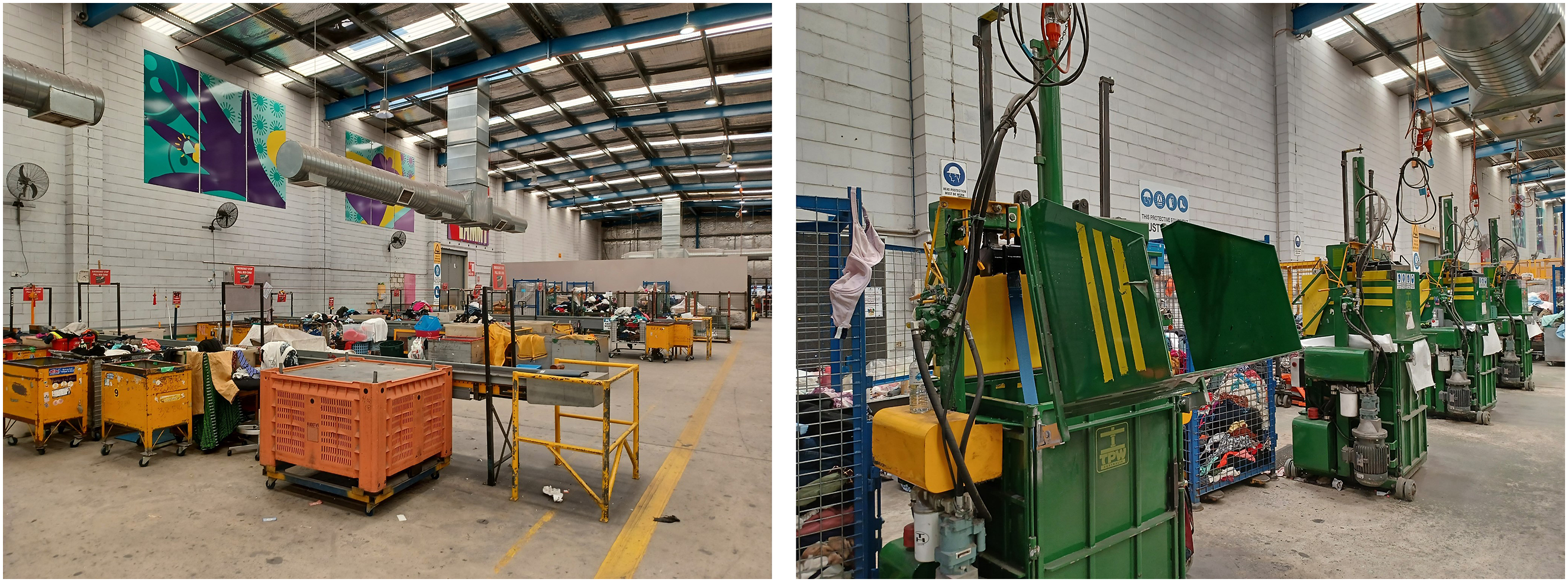
Each step involves tasks within a broader skillset of circular economy practices, with each step becoming progressively more challenging (interviews 7 and 9). For instance, sorting is made intuitive with the customization of a modulated conveyor belt, where each station involves a progressively higher level of decision-making in discerning the type of good and cataloguing it. This starts with differentiating the type of apparel by color and size, towards an appreciation of its potential value (high quality, poor quality). While labor intensive, this breakdown provides a structure for skills development that is monitored and supported (interviews 10, 11, and 15).
Because the transport collection costs charged by recovery partners cost more than the revenues that the recovered commodities could attract, materials recovery is less viable than sale for reuse, as one manager explains: Retail is in the 80 to 90% range of our revenue, so we are much less reliant on government funding then a lot of other charities. Our export is a much smaller percent, but it's still significant. Like it's the equivalent of… at least one or two more stores. But in terms of recycling, [it] is a net loss... It's cost prohibitive... so that's one of the issues we have. So cardboard, we get a rebate on the cardboard, but that only offsets the cost… for the truck coming in collecting the bin. [It’s] a breakeven - metal recycling, we'd probably get about $70 per bin in actual revenue. Electrical waste is a net loss… And then general waste is a cost. (Interview 9)
The cost constraints are minimized to a degree by the fact that Good Sammy owns their central facility outright, though they do pay rent for most of their stores (interview 10). Further, the warehouse is itself largely fit-for-purpose as it sits in an industrial area, which allows for noise emissions (interview 9). It also provides agglomeration benefits in the form of partnerships with nearby waste management firms (which Good Sammy work with to deliver the Container Deposit Scheme services) and enables labor hire service provision (see following subsection) (interviews 7, 9, and 14).
Good Sammy have more recently recognized the importance of these circular processes in further driving workforce development outcomes as well as partnerships in local regional networks (including universities, waste management enterprises, and with local and state governments) (interview 7). This is underpinned by a broader, more strategic appreciation of new policy developments with sustainable procurement frameworks and an internal drive to recognize growing investment into circular economy: [Circular economy] is a relatively new sort of area that Good Sammy has started to focus on recognizing our importance of what organizations like us do in terms of the environmental context… [we have been] really focusing on looking at our contracts and our suppliers and optimizing what we can recover. And just really tracking our material flows, understanding our processes, and looking at areas for improvement. Now that we've done that, and we've got our plan in place, it's about looking at where we can create more employment through value adding to different activities…. (Interview 7)
As a result, many surveyed workers reported that they were involved in a range of circular activities and through this had developed skills relating to the tasks they were given. Most respondents were involved in sorting activities, but some were also involved in collecting, dismantling, and reuse retail (Appendix E, questions 16 and 17). Through such tasks, and with support from Good Sammy’s Registered Training Providers (Manager, Good Sammy, 2024—Email to Author 30 January), many workers have attained technical skills in using machinery and tools, while some have attained licenses (forklift and truck driving) and certificates (for instance, in retail and logistics), enhancing their employability. So now we have 45 trainees, 35 school-based, 10 adults are working through a traineeship. We've got 10 people with just completed forklift certificate, 10 people working through car license, and we're yet to do 10 people with truck license (Interview 15)
Survey respondents also reported a high level of job satisfaction, wellbeing, and sense of contribution (see Appendix E, Q23). This is a core focus of the organization and highlights an emphasis on carefully breaking down socio-material relationships to address societal failures to include and develop the work value of workers living with a disability.
Selling circular labor as a service
One of the key innovations, which compliments Good Sammy’s broader objectives to support open employment for jobseekers living with disabilities is in the partnerships and networks that Good Sammy have formed, in providing labor hire as a service (interview 14). Good Sammy identify talent within the organization, performing at (or close to) award-wage work-value and provide placements within organizations like waste management companies (Remondis and Centurion) (interview 14).
They contribute a portion of the workers’ full award wages (with the rest paid by the partner organization), and provide additional training and support as needed, addressing perceived burdens or risks of the private sector enterprises (interview 14). A Good Sammy Manager identified opportunities for this to continue to integrate with and drive circular workforce development outcomes: Remondis would be a perfect example of that. So, their guys will go on working the processing line for the Containers for Change Scheme. So all of the product that comes through… the automated teller machines and the shopping centers, comes through them, it still has to be processed. So they work on a belt there… they've got a machine that separates out aluminum, but then they have to sort between plastics and papers, steel cans, so there's... Yeah, that's the direction that's going and then that's given us again, another foot in the door to approach other Containers for Change sites across WA (Interview 14)
This is akin to Stahel’s concept of selling performance (2010b), providing the market with the service of circular economy trained workers, simultaneously providing opportunities for transitioning people living with disabilities towards open employment.
Challenging the market paradigm through inclusive urban mining
Good Sammy’s reuse retail network comprises 27 stores across Greater Perth and nearby cities (Freemantle, Joondalup) (interviews 6, 7, and 10). These stores also meet local needs in areas of disadvantage, particularly of low-income households in providing affordable quality goods (interviews 7, 10, 12, and 13).
Good Sammy’s stores and Container Deposit Scheme sites finance most of the organizations’ revenues, which are used to pay staff, who work part-time (interviews 7, 8, and 10). Importantly, however, these renumeration structures also leverage existing forms of welfare available (interview 11; Australian Government, 2024; Fair Work Ombudsman, 2024; National Disability Insurance Scheme, 2024). In this way, they represent an institutional intervention through social and public sector partnership that addresses a deeper societal failure to support people living with disabilities in workforce development
Broadly, Good Sammy’s mission and operations are situated within fraught institutional and market dynamics which they are actively seeking to address. These include societally systemic issues currently being investigated and debated: There's a huge amount of reform happening in the disability employment space. And there is also a broader government awareness and support of concepts around social procurement, ESG ([Environment Social Governance]), circular economy... it becomes a perfect storm, in terms of the government environment. (Interview 11)
Through their transformative approach of reverse servitization, however, Good Sammy demonstrate key innovations that engender the restructuring and reconsideration of existing market processes. This includes existing labor markets which largely do not meet the needs of many people living with disabilities as well as broader production and consumption practices which produce wastes, while limiting access to quality affordable goods.
Good Sammy’s innovations in these ways demonstrate enterprising in a broken world, contributing a more institutional and alternate response to circularity (Lyne and Madden, 2020; Moreau et al., 2017; Villalba-Eguiluz et al., 2023). This acknowledges that societies (like all systems) are in need of constant repair (Jackson, 2014), especially in areas like job creation and development amongst people living with disabilities, as well as provision of affordable goods and services to disadvantaged communities. In addressing this, they build transformative capacities for social resilience and seek to enterprise new worlds (Keck and Sakdapolrak, 2013; Lyne and Madden, 2020; Villalba-Eguiluz et al., 2023). Their work, however, is partly reliant on government funding to cross-subsidize supported workforce development, and face some challenges in (re)production and (re)commodification more so than Green Collect, given the lack of fees for the initial waste management service.
Discussion and conclusion
This explorative comparative study of two Australian waste-to-wages enterprises demonstrates how they use the foundational work of waste management to develop new forms of work, through processing used goods for retail, through remaking goods or through refining used materials as renewed commodities comprising reverse servitization (leveraging service provision toward (re)production).
Both Green Collect and Good Sammy’s operations clearly elucidate our conceptualization of reverse servitization, building from inclusive forms of urban mining towards new work (renewed products and services) (Ellerman, 2004; Jacobs, 1969; Lowe et al., 2021; Schlezak and Styer, 2023; Spadafora and Rapaccini, 2024). In both cases, these processes are directly leveraged to create circular job entry opportunities which, for people surveyed, appears to result in high levels of job satisfaction, sense of wellbeing, and sense of contribution. In both cases, the processes are also shaped to develop pathways for people facing barriers to employment, in ways which seek to develop their employability, and increase opportunities for “open market” employment. Uniquely, these processes also develop workers’ potential to shape circular uptake in future workplaces with core circular skills, supporting local circular workforce development overall.
We identify two primary conceptual variations of reverse servitization: developmental and transformative. This largely serves to differentiate flows of developmental “new work” (innovations drawing from waste management) from transformative “divisions of labor” (breaking down and reorganization of waste management processes), which are inherently distinct (Jacobs, 1969). Developmental reverse servitization, as shown in Green Collect, represents forms of social and circular innovation that leverages this work to develop new products, services, and systems which integrate into existing market paradigms. In doing so, they play leading and lynchpin-type roles in driving both circular and socially inclusive forms of local economic development through carefully managed partnerships, aligning with findings from previous studies (Barraket et al., 2021; Pusz et al., 2024).
By contrast, transformative processes, described in the Good Same example, are less likely to generate market innovations, but rather challenge existing paradigms, opening new opportunities for labor participation and diverse economic systems (Moreau et al., 2017; Villalba-Eguiluz et al., 2023). They engender questions of existing paradigm structures, such as how best to support people with intellectual disabilities to find work in labor markets aligned with neoliberal paradigms; and how to meet a social need in responsibly and sustainably managing waste, when alternatives are low-cost or free to households, how to provide quality affordable goods to lower income households.
In these ways, they reveal and stimulate new concepts of economies by enterprising new worlds which are more equitable and sustainable (Jackson, 2014; Lyne and Madden, 2020). This aligns with discourses on circularity as alterity, as well as community economy perspectives on carefully valuing socio-ecological interrelationships (Bradley and Persson, 2022; Graeber, 2013; Lane, 2023; Lekan et al., 2021; Ortega Alvarado et al., 2021).
We argue that these forms of reverse servitization facilitated by the social sector re-frame circularity as more than “materials efficiency,” rather as systems aimed at holistically supporting social equity, economic development, and ecological sustainability outcomes (Lane, 2014, 2023; Spadafora and Rapaccini, 2024; Toya, 2024). Further research into waste-to-wages enterprises, their network of partners, and their impacts in local economies could reveal additional potential for driving equitable and transformative circular transitions and by extension improving capacities for social resilience in the face of ecologically volatile futures (Carr and Gibson, 2016; Keck and Sakdapolrak, 2013).
As a starting point for action-research, local governments could identify local WTWEs and pilot outcomes-based investment grants into their initial waste collection process. This would mean paying the enterprise directly to process the local community’s unused materials and goods by volume and type to offset costs of reprocessing materials, which (as shown) are often hard to recuperate when on-selling to new markets. This, along with industrial land supply, may make re-commodification more viable, driving local circularity rates, local economic development, and by extension, the leveraging of this work to upskill a local circular workforce.
Supplemental Material
Supplemental Material—Shoulders to the wheel: How waste-to-wages enterprises use “reverse servitization” to drive inclusive circular local economic development
Supplemental Material for Shoulders to the wheel: How waste-to-wages enterprises use “reverse servitization” to drive inclusive circular local economic development by Lachlan Burke, Carl Grodach and Ruth Lane in Local Economy.
Footnotes
Acknowledgements
Many thanks to members of the Measuring the Benefits of Reuse team for their research assistance, particularly Stephen Healy and Matthew Allen.
Declaration of conflicting interests
The author(s) declared no potential conflicts of interest with respect to the research, authorship, and/or publication of this article.
Funding
The author(s) disclosed receipt of the following financial support for the research, authorship, and/or publication of this article: This research was funded through the Australian Research Council (ARC) Linkage Project “Measuring the benefits of reuse in the circular economy” (LP1090101099), in partnership with Sustainability Victoria, Green Industries SA, the Department of Environment and Science QLD, and Charitable Reuse Australia, the peak body for reuse organizations in Australia.
Ethical approval
The Human Ethics Review Committee at Monash University approved our interviews, site observations and surveys (approved project: 36190) on October 31, 2023. Interview respondents provided oral consent for recording, including use of any quotations. Survey respondents provided written consent before starting and were given the option to opt-out for up to 4 weeks after completing the survey.

Data Availability Statement
The datasets generated during and/or analyzed during the current study are available as supplemental material, appended to this paper. Interviews and survey respondent data is anonymized to protect privacy. These form the appendices which are referenced throughout the paper.
Supplemental Material
Supplemental material for this article is available online.
References
Supplementary Material
Please find the following supplemental material available below.
For Open Access articles published under a Creative Commons License, all supplemental material carries the same license as the article it is associated with.
For non-Open Access articles published, all supplemental material carries a non-exclusive license, and permission requests for re-use of supplemental material or any part of supplemental material shall be sent directly to the copyright owner as specified in the copyright notice associated with the article.
