




Abstract
Throughout the last decades, more and more attention in academics and practice has been given to ‘social’ topics such as community involvement, active citizenship, commoning processes. Considering this trend, it is possible to notice an abuse of these terms, contributing to the ‘social washing’ and feeding the risk of instrumentalisation. Starting from the analysis of the state of the art and comparing two cases, the paper aims to evaluate the outcomes of neglected sites recycling with socially innovative initiatives. At the centre of the debate are social enterprises, non-profit entities whose ambition is to create social benefits and new economic solutions for a better use of local resources over time. Considering this purpose, the research investigated the European scenario of Southern Italy, characterised by demographic transition and youth migration. The research adopted qualitative, quantitative and comparative methods. The two cases analysed and compared are Periferica of Mazara del Vallo and ExFadda of San Vito dei Normanni. Both are the result of local resources reactivation and youth entrepreneurship policies. These creative centres are managed by social enterprises. Their actions and activities affect the places producing social, economic, cultural and spatial impacts. However, behind these initiatives lies the soft power, a power able to shape people perceptions through culture. The research illustrates the process outcomes and evaluates its positive and negative impacts to the site and its surroundings. In conclusion, the research is conceived as a contribution to the body of knowledge and the basis for future researches and practical models for the socially innovative recycling of disused resources in urban–rural context.
Keywords
Introduction
Contemporary society is increasingly branded by words and slogans linked to the themes of social inclusion and communities actively involved in place planning processes. Throughout the last decades, several academics and practitioners have focused their attention on the phenomena of social change, such as active citizenship, sharing administration, collaborative management models, commoning, public debate and participatory processes (see Clark and Wise, 2018). However, the quality of these processes needs to be evaluated, so that they are not subject to instrumentalisation or tokenistic actions (Arnstein, 1969). The concept of social innovation, therefore, invites reflection on the evaluation of social benefits (Caroli, 2015; Maiolini, 2015; Moulaert et al., 2005; Phills et al., 2008). The actions of the social enterprises bring positive impacts on places and local communities, thanks to the connection to the local site and its stakeholders (Birkhölzer, 2009; Borzaga and Tortia, 2009; Doherty et al., 2014).
The second problem that the research aims to emphasise is the presence of a wide range of neglected sites, such as brownfields, that need to be reactivated with innovative activities affecting the resource and its urban–rural context. Considering the interrelation between social innovation and recycling processes, active roles are played by local community, policy makers and the entity that manage the recycled site (Scaffidi, 2019). At the centre of the debate are social enterprises. Social enterprises are entities that act in order to create, in a structured and constant way over time, new solutions for a better use of local resources and the development of social benefits (Dorobantu and Matei, 2015; Matei and Matei, 2012; Tekin and Tekdogan, 2015). Behind these interventions lies a soft power able to shape people intentions and perceptions through culture (Nye, 1990, 2004 ). The findings obtained throughout this investigation illustrate the positive and negative effects of their actions.
This paper aims to understand the role of social enterprises and soft power and to analyse their outcomes in the territorial context. Adopting qualitative, comparative and quantitative methods (with exploratory surveys, qualitative unstructured and semi-structured interviews, quantitative analysis of demographic trends and migration rates, comparative matrices), this paper analyses and compares two cases of disused resource recycling in Southern Italy: Periferica of Mazara del Vallo in Sicily and ExFadda of San Vito dei Normanni in Puglia. Both cases are in a demographic context characterised by high aging index and dependency ratio and youth migration phenomena that do not contribute to the territorial renewal. The findings show that the policies of local resources, regeneration and youth entrepreneurship enabled the creation of creative centres recycling disused assets and fostering the socio-economic and cultural development of the place. Specifically, the involvement and relationship among local actors (inhabitants, associations, scholars, institutions, and administrations) produced a socio-economic development impact. Secondly, it illustrates the outcomes of local reactivation policies and how these examples act to improve the quality of life and change attitudes of citizens in socially responsible behaviour (especially youth, to contrast the emigration). The social enterprises have a relevant role in this process, recycling a neglected site, including elderly, disadvantaged and young people and creating social benefits through new services, cultural activities and social inclusion initiatives. The analysis of these practices illustrates the impacts that soft power has on the territorial context aiming to define new models, guidelines and protocols to adopt in weakened areas and that want to invest in reactivation and local development.
Current socially innovative approaches in recycling actions
Contemporary administrations, communities and professionals have to face a legacy of disused and neglected spaces enabled by economic change, progress and migration flows. Over the years, these spaces have undergone transformations that limited or annulled their functions, making them derelict sites distributed throughout the city and inner areas. This condition was aggravated by a worsening progression due to the architectural deterioration, reduced economic power, a presence of contaminants, and urban and environmental degradation. Throughout the last decades, several scholars, researchers, architects, planners and dwellers reacted to this decline and discussed the rethinking and redesigning of these local resources (Areces, 2005, 2007; Secchi, 2007), conceiving new ideas, projects and future functions. It is increasingly acknowledged that these weakened sites represent a relevant solution to redevelop the urban and rural surroundings of these areas (Carta, 2018; Neumeier, 2012; Scaffidi, 2018; Schröder, 2016, 2018). Nevertheless, quite often these interventions were limited to the upkeep, refurbishment and/or the reuse of these places which do not provide for the maintenance of new life cycles over time (Bocchi and Marini, 2015; Carta, 2014).
In this regard, the academic community, the broader context of practitioners and policy makers recognised the need to involve citizens and other stakeholders in the reactivation and urban renewal processes (Arena, 2006; Clark and Wise, 2018; De Carlo, 2013). Several academics and professionals have been committed to the development of strategies and frameworks to enable innovative strategies of participatory planning (Ciaffi and Mela, 2011). These theories and practices are aimed at producing successful recycling actions with increased stakeholder involvement throughout the process in order to understand peoples’ needs in relation to the place in which they live, work or study (Lo Piccolo and Pinzello, 2009; Lusiani and Zan, 2013). This makes a connection between what the professionals envision for that place and what the community desires. This, according to Loures (2008) and later Scaffidi (2015), has led to an increased sense of belonging to the place, especially in case of brownfields, and ultimately prevents its untimely dereliction. The wide literature and experiences about ‘commoning’ illustrate a change of mind-set and the development of a collaborative economy (Botsman and Rogers, 2010; Dedeurwaerdere et al., 2016; Gruszka, 2017). Nowadays, people become activists and practitioners, seeking to take care of abandoned sites to prevent further deterioration (De Carlo, 2013).
In this regard, the scientific community discusses innovative administration strategies, or ‘sharing administration’ (Arena, 1997; Arena and Iaione, 2015), that allow dwellers to manage the resources as commons (Arena and Iaione, 2012; Balducci, 2004; Mangialardo and Micelli, 2016; Micelli, 2014; Ostrom, 1990, 1995; Ostrom and Ostrom, 1977). The collaboration pacts and the commons regulations are the tools that connect local administration with the active citizens and enable this new form of citizenship (Arena, 2006; Balducci, 2000). The social involvement in planning and recycling processes creates the conditions for a constant redevelopment of the place and a new local economy (Andreottola, 2017; Moulaert et al., 2005; Scaffidi, 2018; Wise, 2017). This social phenomenon enables more and more community entrepreneurships to become cooperative and co-productive, leading to the development of the place over time (Billi and Tricarico, 2018; Caroli, 2015; Tricarico, 2014; Tricarico and Pacchi, 2018). In this regard, social innovation aims to improve the quality of life and create new solutions in response to a social need (Dorobantu and Matei, 2015; Phills et al., 2008). Starting from the problems of the society, social innovation generates new social value through greater community involvement (Askins and Pain, 2011; Tekin and Tekdogan, 2015) and the satisfaction of collective needs. The new experiences of entrepreneurial organisations applying the social innovation concept aim to create services and social benefits (Doherty et al., 2014; Maiolini, 2015; Matei and Matei, 2012; Venturi and Zandonai, 2012). These innovative enterprises are the social enterprises, that is, non-profit business entities whose mission is to improve the community quality of life and create a structured social impact on the site (Birkhölzer, 2009; Borzaga and Tortia, 2009; Caroli, 2015).
In this regard, according to the six characteristics of social innovation proposed by Matteo Caroli (2015), a social enterprise has to (1) reactivate local resources in response to a social need; (2) improve it by creating new activities; (3) innovate and use technology; (4) create networks able to potentiate the relations among stakeholders; (5) create the conditions to be economically self-sufficient and (6) create a long-term structural impact. According to these positions, the socially innovative recycling acts to solve social and territorial problems (Scaffidi, 2019). That said, the concept defines innovative interventions of reactivation of neglected sites and creates a structural impact over time thanks to the social involvement and the creation of new economic activities that strengthen the financial dimension (Scaffidi, 2018, 2019). These sites reactivated and managed by social enterprises are real centres of innovation and creativity fostering the socio-economic, cultural and spatial development of the place. However, what if behind these actions there was the intention to persuade people and shape their perceptions through art and culture? As affirmed by Sherry Arnstein (1969) in the degree of tokenism of her ladder of citizen participation. What if there was the soft power theorised by Joseph Nye (1990, 2004)? Which kind of outcomes can create at urban and rural level? In answering these questions and considering the theory developed in urban planning and their implications in practice, the research analysed and compared specific empirical references. This study aimed to understand the role of social enterprises and soft power in the recycling context, the redevelopment policies fostering neglected sites reactivation and youth entrepreneurship and how the socially innovative recycling can affect the place, especially territories undergoing demographic change and migration.
Data sources and research approach
The paper aims to analyse the effects on the place of recycling of neglected sites with socially innovative initiatives. Considering this purpose, the wide literature around social innovation and its practical implication in neglected sites recycling were analysed. Furthermore, the paper aims to contribute to contemporary literature and put the basis for future reflections and actions for the recycling of disused resources in urban–rural contexts. The previous literature presented in the above section focused on the analysis of the state of the art about social innovation and community involvement processes. It was dedicated to the analysis of the main theoretical positions and lines of thought. The literature presented helps us understand the current socially innovative approach in recycling actions and to observe the selected cases through these theoretical lenses.
The following sections presents the case studies that formed the focus of this paper to help us understand the role of social enterprises and the soft power that exist behind them in socially innovative recycling processes. This part was focused on the selection and description of the cases and their surroundings. The criteria of selection were focused on the evaluation of a specific typology of neglected sites, the brownfields – the presence of a recycling process in a context of demographic transition and migration and where a social enterprise contributes to the socio-economic, cultural and spatial development of the place. Moreover, 11 cases were explored during the research (Scaffidi, 2019); however, only 2 cases located in South of Italy are discussed in this paper. They were selected for their interesting redevelopment policies fostering neglected sites reactivation and youth entrepreneurship. The main sources of information were the surveys, qualitative interviews and bibliographic and website investigations. In the attempt to explore the cases through the data analysis, dialogues and the observation of the place, the research was thoroughly carried out using both qualitative and quantitative approaches. The qualitative method was adopted through exploratory surveys and unstructured and semi-structured interviews to some local actors. This qualitative analysis was chosen to observe in depth the sites and the socio-economic phenomena. The quantitative methods were adopted for the demographic analysis and the evaluation of migration rates, understanding the trend and the population structures (aging index, age dependency and labour force dependency ratios). For the sake of ensuring a valid collection of data, the National Institute of Statistics (ISTAT) was consulted. The demographic data were collected and analysed using the excel program and then represented as infographics. These analyses and methods were selected, on the one hand, to facilitate a general comprehension of the social contexts and their flows, on the other hand, for a specific analysis of the place and the socially innovative recycling outcomes.
Comparing the data then considers the information acquired throughout the investigation, this part of the paper was focused on the data comparison and the assessment of the recycling outcomes into the places. The comparative analysis was developed to compare the selected cases, the specific data and the local impacts, through tables and a specific matrix, the materiality matrix. The materiality analysis is a qualitative method that aims to evaluate the subjects’ perceptions of a specific area. The local assets and territories, the demographic trends and migration rates, the policies, funding and the stakeholders involved were observed. Furthermore, the negative and positive aspects were analysed before and after the process and their impacts were evaluated using specific topics (accessibility, transparency, attractiveness and competitiveness) and areas (social, cultural, economic and spatial).
Results: Case studies selection and analysis
This section is focused on the cases analysis of recycling of neglected resources in Europe (i.e. brownfields) in which the process of reactivation affect the places and local economy creating new urban spaces and socio-cultural and economic activities. These examples are characterised by the presence of social enterprises that manage and reactivate the resource through the involvement of local communities and other stakeholders. Their actions aim to enhance the sense of belonging to the place and shape citizens’ attitudes through culture. The paper also aims to identify the main criticalities and benefits of recycling, in regions undergoing population change and migration, in order to advance knowledge and practice. The brownfields typology, their dimensions and the process level have not influenced the cases selection. They are the following creative centres:
Ex Fadda of San Vito dei Normanni (Puglia) Periferica of Mazara del Vallo (Sicily)
Both of these cases are located in Southern Italy and are places characterised by a general depopulation, high aging index and migration. Periferica of Mazara del Vallo, especially, is characterised by a flow of immigrants – mainly coming from Africa and Eastern Europe and emigrants especially young people – who leave their own regions to go to Northern Italy or to other European countries in pursuit of high level education (masters, PhD) and improved working conditions (well-paid and prestigious working positions). In this scenario, national and regional policies were created to foster the young entrepreneurship, to support the permanence in these territories and the reactivation of neglected spaces. Social enterprises were created with the aim to promote local development by social involvement and urban regeneration initiatives, new cultural and economic activities. Behind these experiences, a soft power influences the community mind-set and people attitudes. The paper has the purpose to explore the objectives behind these socially innovative recycling and their effects on the place.
ExFadda of San Vito dei Normanni
ExFadda of San Vito dei Normanni is located in Puglia. It is characterised by a strong agricultural and cultural vocation, with many productive specialties (i.e. Ostuni Protected Designation of Origin (PDO) wine or the Collina di Brindisi PDO extra virgin olive oil) and cultural resources (i.e. the Castle ‘Dentice di Frasso’, churches and archaeological sites). The findings show a demographic trend (Figure 1) in decrease with a variation of 5% from 2002 to 2018 and a high aging index, as often happens in these marginal areas of Southern Italy. These findings include the data before and after the National population census of 2011, for instance the town of San Vito dei Normanni had 19,302 inhabitants in 2018 (ISTAT, 2019).
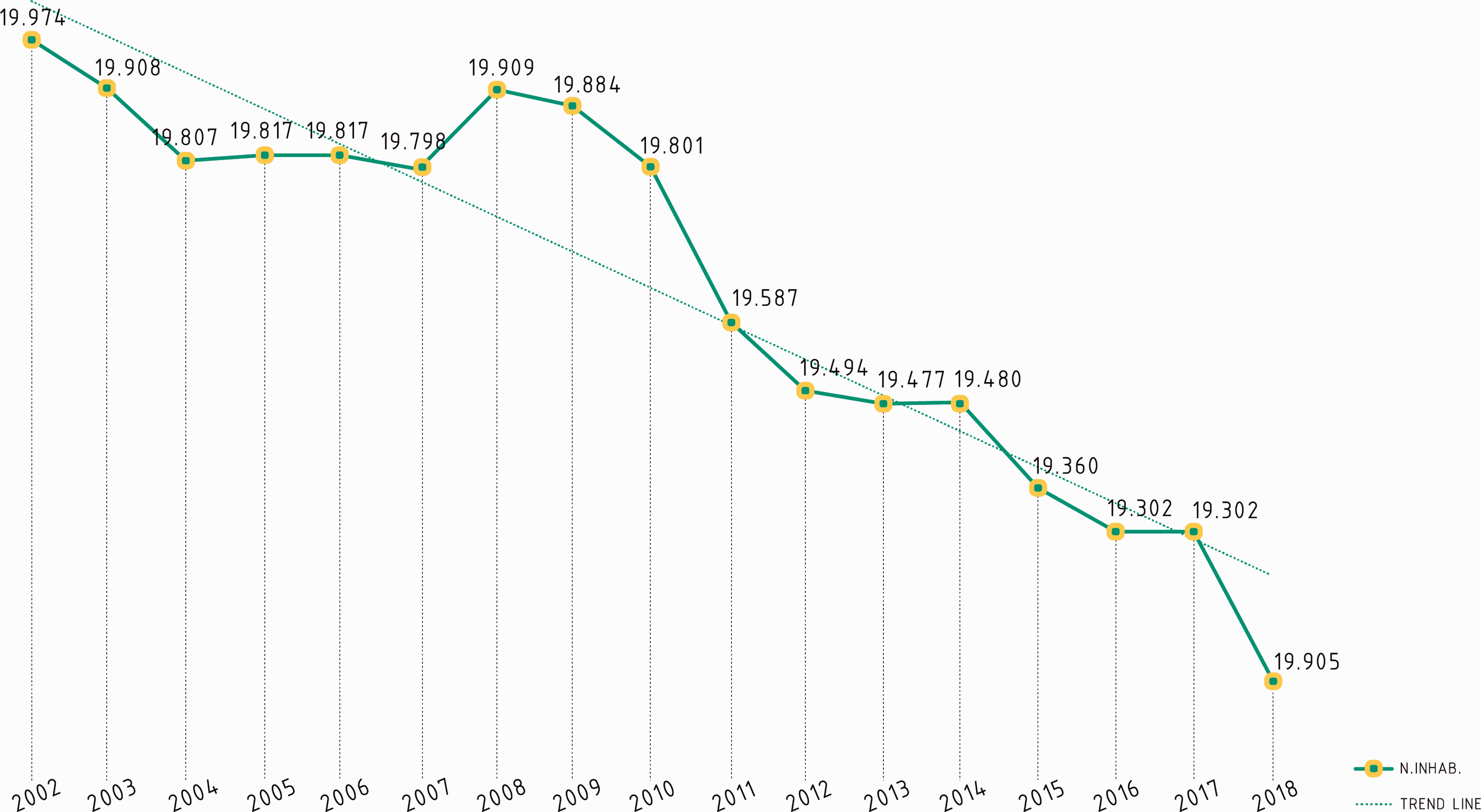
Demographic trend of San Vito dei Normanni (author’s elaboration).
The aging index of San Vito dei Normanni is 210 (it refers to the percentage ratio between the number of elderlies ≥65 years and youth ≤15 years), which is considerably higher than the regional one of 157 (see Figure 2). The analysis also shows a social and economic burden for the non-active population (referring to the age dependency ratio) on the labour force of 56, compared to the regional one of 54 and a labour force dependency ratio of 131 (which is the percentage ratio between the number of persons aged 40–64 and the number of persons aged 15–39), in contrast to the regional one of 122 (Scaffidi, 2019). Theoretically, in San Vito dei Normanni in 2018, there are 157 elderlies per 100 young people, 56 dependents for every 100 who work. The data also show an elderly working age population (Scaffidi, 2019). All of this is aggravated by negative results regarding the net migration rate (–95) and the migration rate (–4.9‰). Even though the immigration trend is growing, the number of emigrations is higher, especially of young people. The findings show a striking difference in number of population from 2012 to 2018 and high demographic indicators values. The results reveal a territory rich in resources but demographically weakened.

Demographic indicators of San Vito dei Normanni (author’s elaboration).
The ‘Bollenti Spiriti’ program of the Puglia Region, to contrast this demographic trend, promotes actions for the young generations and aims to enhance disused resources and the development of social renewal and creativity projects (as Roberto Covolo pointed out during the interview). ExFadda is the result of this program that turned the former wine factory Dentice di Frasso into a creative centre. The factory’s production began in the nineteenth century and then ceased definitively in 1950 (Covolo, 2015). The resource is characterised by a high architectural value; there are 2000 square meters with star vaults and wooden trusses (Covolo, 2015). This case of reactivation is linked to a network of good practices of local recycling. ExFadda was created thanks to the project Laboratori Urbani (Urban laboratories), an initiative carried out by Bollenti Spiriti. The main purpose was to enhance and reactivate regional neglected buildings and assign them to young people to develop cultural centres. From 2006 to 2010, 71 projects were funded with €60,000,000, 151 buildings and over 100,000 square meters were reactivated (Covolo, 2015). The purpose was to promote youthful creativity and to trace a new local development strategies based on local communities’ participation.
Behind this program, it is possible to highlight the characteristics of soft power since these initiatives have shaped the attitudes and perceptions of the community through culture. Although behind these interventions political and propaganda intentions can be concealed, their actions on the territory have had positive effects both in the reactivation of the disused resources, and in the social and economic level. The interviews show that spaces have been reactivated thanks to funding and the intervention of the local community, which since 2012 has actively participated in self-construction. Also, some initiatives have been financed by the Puglia Region (€80,000 ‘Management of Creative Spaces’, €180,000 ‘Projects for the social inclusion of disadvantaged people’), the Municipality, private investments and from fundraising. ExFadda has involved architects, designers, artisans and citizens. Today, thanks to the people involved, many spaces were refurbished and used as galleries, ateliers, studios, playgrounds and gyms. Roberto Covolo affirmed that people live the space temporarily or permanently, manage and maintain it and its activities.
In these interventions and collaborative experiences, it is possible to observe how the soft power can influence people perceptions and actions. Local inhabitants and the other stakeholders became part of a unique community that work for the recycling of this common asset. Behind this latent and soft power, there might be economic and political interests, but the findings show a positive involvement of local dwellers, the development of many initiatives and collaborations, making this rural–urban area more attractive. ExFadda proposes itself as a mediator and as a platform that connects micro-enterprises, associations and provides spaces, means and skills. The goal of ExFadda is to build an active community that improves the quality of life, responding to the social needs such as support for new businesses development, spaces for associations, non-formal education for young people, socialising moments for families and elderly. ExFadda collaborates with other cultural centres and associations, for example for the urban walk by bike organised by Aeneis2000 or surveys with citizens, organised with local associations. This network of stakeholders contributes to the strengthening of the system of relations (Caroli, 2015), improves the local site and makes connections among local actors. Furthermore, ExFadda was included in the project of urban regeneration ‘Santu Vitu Mia’ promoted by the local administration of San Vito dei Normanni and that involved inhabitants in the process of rethinking the urban sites. The municipality with ExFadda and the Metamor and Loparco architectural studios drawn up a programmatic document of urban regeneration (DPRU). The DPRU was approved by the Municipality of San Vito dei Normanni on 4 October 2017. This document was elaborated with the citizens during public meetings and ateliers, and it aims to create recycling process of disused spaces in San Vito dei Normanni and its rural surroundings in synergy with local community.
According to Covolo (2015), Iaione (2015) and Tricarico (2014), ExFadda has the organisational characteristics of the social enterprise. Thanks to the social enterprise, a new economy that guarantees self-sufficiency and the creation of new jobs has been created. The profits obtained from the activities, as Covolo affirmed, make it possible to cover the costs and they are reinvested within the place. The main incomes are derived from commercial activities (i.e. bars and restaurants), sale of services, rental of spaces, crowdfunding based on the contributions of the ExFadda community, public competitions and public and private sponsorships. As mentioned earlier in this section, ExFadda offers many services and socio-cultural activities. ExFadda hosts many centres and initiatives, such as the World Music Academy (a centre for training and production of ethnic music, which enhances the musical heritage of the territory), XfOTO (a collective group of photographers and video makers), Faddanza (a school of dance) and XFOOD (a social restaurant sensitive to the needs and involvement of disabled children). The activities of ExFadda aim to promote social inclusion, youth entrepreneurship and resources redevelopment. In spite of the demographic condition, ExFadda acts as an activator of new spatial, cultural, social and economic development through a socially innovative approach. From the interview and field analyses (exploratory survey) emerges that it promotes a better use of a resource, affecting positively the territory through community involvement, co-design processes, the inclusion of disadvantaged and the development of new entrepreneurial and cultural activities.
Periferica of Mazara del Vallo
Periferica is located in Mazara del Vallo (Sicily). The surrounding area is characterised by a high agricultural and tourist vocation, with many productive specialties such as the red shrimp, the extra virgin olive oil of the Belice valley PDO, the Delia Nivolelli Denominazione d'Origine Controllata (DOC) [Controlled Destination of Origin] wines and cultural resources, such as the town historical centre of Arabic origin (Casbah), the museum of the Dancing Satyr, the churches and the salt mines. The municipal demographic trend is characterised by a growth trend, with a positive variation of 2%. As can be seen in Figure 3, the population increased from 50,674 inhabitants in 2002 to 51,488 in 2018. The town of Mazara del Vallo had 51,604 inhabitants in 2018 (ISTAT, 2019).
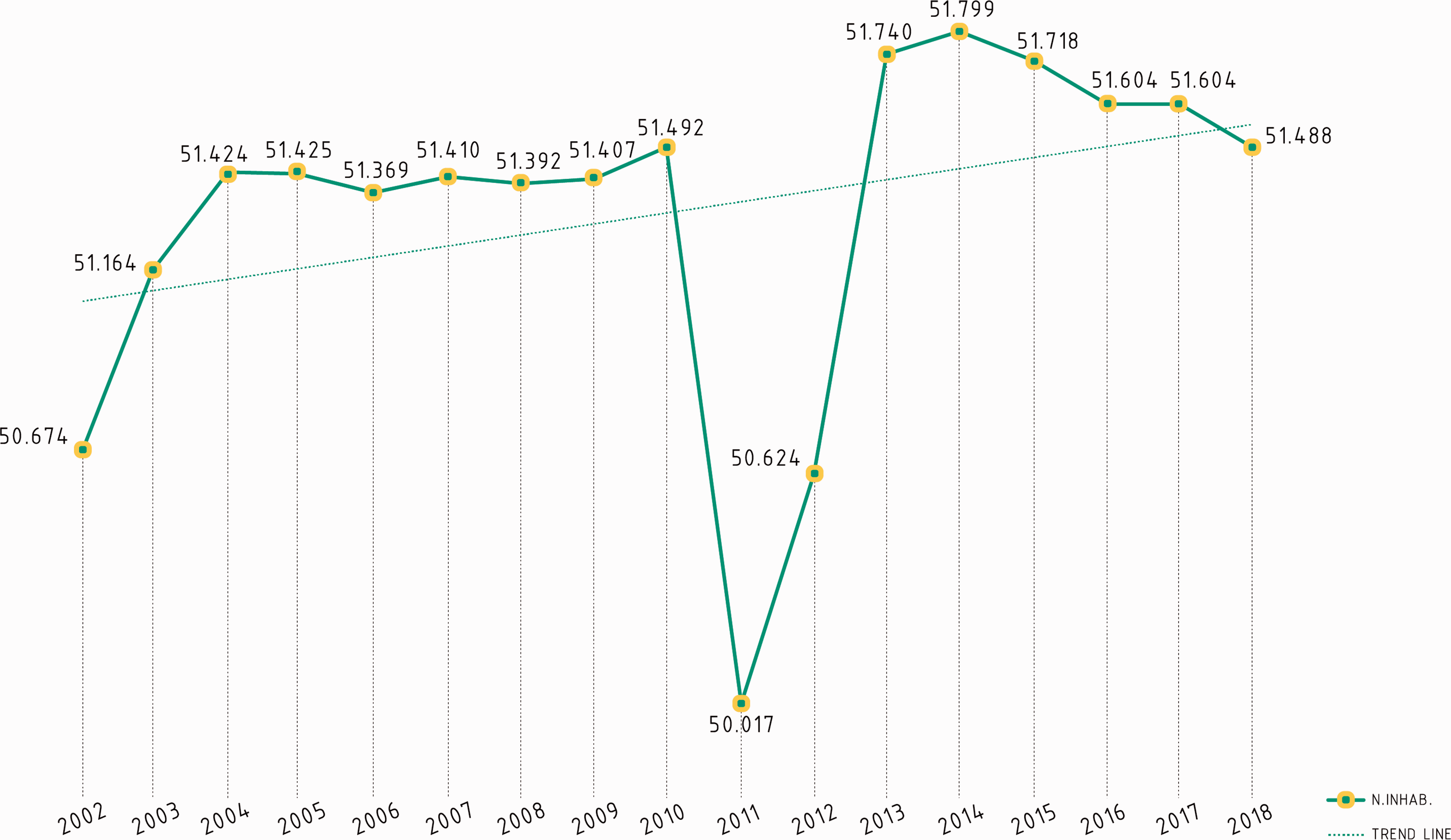
Demographic trend of Mazara del Vallo (author’s elaboration).
Analysing the demographic indicators (Figure 4) emerges an aging index of 317, significantly higher than the regional one which is 146. From the analyses of the indicators results an age dependency ratio of 70, greater than the regional average of 53. Therefore, the findings show 70 non-active people every 100 workers in 2018; on the other hand, the labour force dependency ratio is 149, compared to the regional value of 117 (Scaffidi, 2019). Although the number of population is growing, the findings illustrate a high aging index and an old working age population. Furthermore, the migratory data also show negative results, with a net migratory rate of –33 and a migration rate of –0.6‰. This case, as the one of Puglia, reveals an urban–rural site characterised by high-quality products and resources, a growth in population but negative values of the population structure (see demographic indicators below).

Demographic indicators of Mazara del Vallo (author’s elaboration).
In this socio-demographic context is located the reactivation of the former tuff quarry (2500 square meters) of Mazara del Vallo whose productive activity began in 1882 and ended in 1995. This is a case of recycling of a former neglected productive area in which culture and regeneration are becoming the driving forces of this place. This brownfield is revived, thanks to a social enterprise that since 2013 generated new life cycles for the resource and the urban context based on cultural activities that involve local and international artists, architects and universities (Scaffidi, 2019). The reactivation aimed to create a centre that promotes cultural and social activities, with a main orientation to urban regeneration and social innovation. As Paola Galuffo confirmed during the interview, the turning point took place in 2015 with the funding obtained from Polmoni Urbani – thanks to which events and workshops were organised to involve local communities, architects and artists – to regenerate the marginal and disused areas. The Boom-Polmoni Urbani project was a competition promoted by the political movement ‘Movimento 5 Stelle Sicilia’ in collaboration with Farm Cultural Park of Favara (Ag) with the aim of encouraging local development projects (buildings reuse, cultural activities, purchase of equipment, etc.) for young Sicilian citizens (the Farm Culture Park is a cultural centre that promotes the artistic renewal of the historical centre). The financial contribution was €120,000 for each project. The project was conceived as a social inclusive process that included citizens, local associations, entrepreneurs, universities and professionals to create a new polarity within the urban context of Mazara del Vallo. Behind this recycling process, it is possible to highlight the characteristics of soft power, which shape the attitudes of the local community through cultural actions. This latent power might hide political and economic interests that led to the development of a creative centre and its activities; on the other hand, this process creates social benefits through projects of urban regeneration. This initiative might be part of propaganda, since the project was promoted by a political movement and it may shape people’s opinions.
Despite this, the Boom-Polmoni Urbani initiative incited the recycling of a neglected site, the return of young people to Southern Italy and the involvement of other local stakeholders and resources. The effects of this process have given rise to a structural impact that developed many projects over the years. Many activities that attract national and international professionals have been developed and new design proposals for city suburbs and neglected areas have been defined. This intervention, in fact, is to promote new cultural tourism for Mazara del Vallo based on recycling, design and social innovation. Every year the place attracts several national and international professionals and scholars. During the 10 days of the festival, as affirmed by Paola Galuffo, many participants share their ideas and rethink the cultural site of Periferica with self-construction initiatives and making new temporary solutions. This workshop represents a demonstration of the wide network developed by Periferica. Periferica is an open space of sharing and creative production. It is economically self-sufficient thanks to these incomes and the funding obtained not only by the Boom-Polmoni Urbani and Culturability programs but also by the sale of services and the spaces rental. The Periferica spaces are used to organise events, themed dinners (social kitchen), exhibitions, yoga sessions. Periferica also promoted the project ‘Evocava’, financed by Culturability (a national initiative that supports socially innovative projects), to enhance the ancient quarries through a hypogeum path for tourist itineraries. The whole socially innovative recycling process has led to the identification of the cultural value of this productive site.
Because of the initiatives promoted by Periferica, the town of Mazara del Vallo has benefited from this socio-cultural atmosphere attracting also national and international street artists that made their artworks in many walls and buildings facades. This intervention led to an impact on the municipal and neighbourhood scale, as a result of the regeneration of a marginal urban area. In this regard, a critical issue emerged from the interview due to the tenuous collaboration between the municipal administration and the social enterprise, which prevents the creation of a more widespread impact on the local territory. Moreover, this process clashes with a context negatively affected by crime and mafia that in 2017 (as reported by the National Italian newscast TG1) acted with intimidations against the two young managers of Periferica and against some participants of the events. Despite these critical issues, Periferica continues to innovate and to give its contribution on the place. Nowadays, Periferica is strengthening its collaboration with the local administration proposing a manifesto for the urban regeneration of disused public and private areas, according to the objectives of the UN Sustainable Development Goals. The ‘Rigenerata’ manifesto aims to define new methodologies for the governance and the management of public areas in synergy with the local actors. The main directions proposed by this manifesto include the following actions and tools:
Creation of networks and local governance, entrusting the resources management to social enterprises (Urban centre and collaboration pacts); Rethinking of marginal areas and create new centralities through social inclusive and participatory actions (Public Mobility plan and cultural integration proposals); Recycling of and promotion local resources (Strategic Municipal plan and Environmental Education plan); Promoting educational and personal growth paths, to contrast the Not in Education, Employment, or Training (NEET) phenomena, youth unemployment and emigration (Educational Neighbourhood labs and University of the Third Age).
This manifesto bodes well for future and synergic interventions that aim to the redevelopment of the urban–rural area of Mazara del Vallo. From the analyses, interviews and exploratory surveys, it emerges that Periferica is enhancing the mining resources of the town and its surroundings area with new cultural and entrepreneurial initiatives, using innovative project financing approaches and creating greater involvement of the local community, artists, designers and other professionals that contribute to the development of the place.
Nevertheless, behind this initiative there might be political, economic and scientific interests that led to the development of these activities and to apply to public and private fundraising competitions to improve the town visibility, create new jobs in this Southern Italy context and implement new scientific recycling models based on this experience. On the other hand, the findings show mainly positive impacts that improve people perception, the quality of life of this urban space with socio-economic and cultural activities as well as a more international and national interest to this site. The recycling of the former quarry has led to a better use of a resource, responding to a social and territorial problem of neglected areas and creating new cultural vitality and youth entrepreneurial activities.
Discussion: Comparing the two case studies
This research analysed scenarios of brownfields reactivation experiences with local impacts, with the aim to analyse its impacts in a context characterised by a demographic transition and migration flows. The analysis was based on the effects of the reactivation of these neglected areas, the evaluation of the soft power behind these initiatives and the role of social enterprises as drivers of social involvement and new economic activities. Regarding this analysis (Table 1), the two brownfields are in regions of cultural interest and high-quality agricultural production. The former wine factory of Ex Fadda is in the urban–rural area of San Vito dei Normanni, while Mazara del Vallo, is a western Sicilian urban area. The two places are characterised by a high aging index and high migration rates. Even though the findings illustrate an increase of population for Mazara del Vallo (+2%) compared to the decrease of San Vito dei Normanni (–5%) and both cases promote policies for the youth entrepreneurship, the age dependency and labour force dependency ratios are generally high.
Comparative matrix. Author’s elaboration.
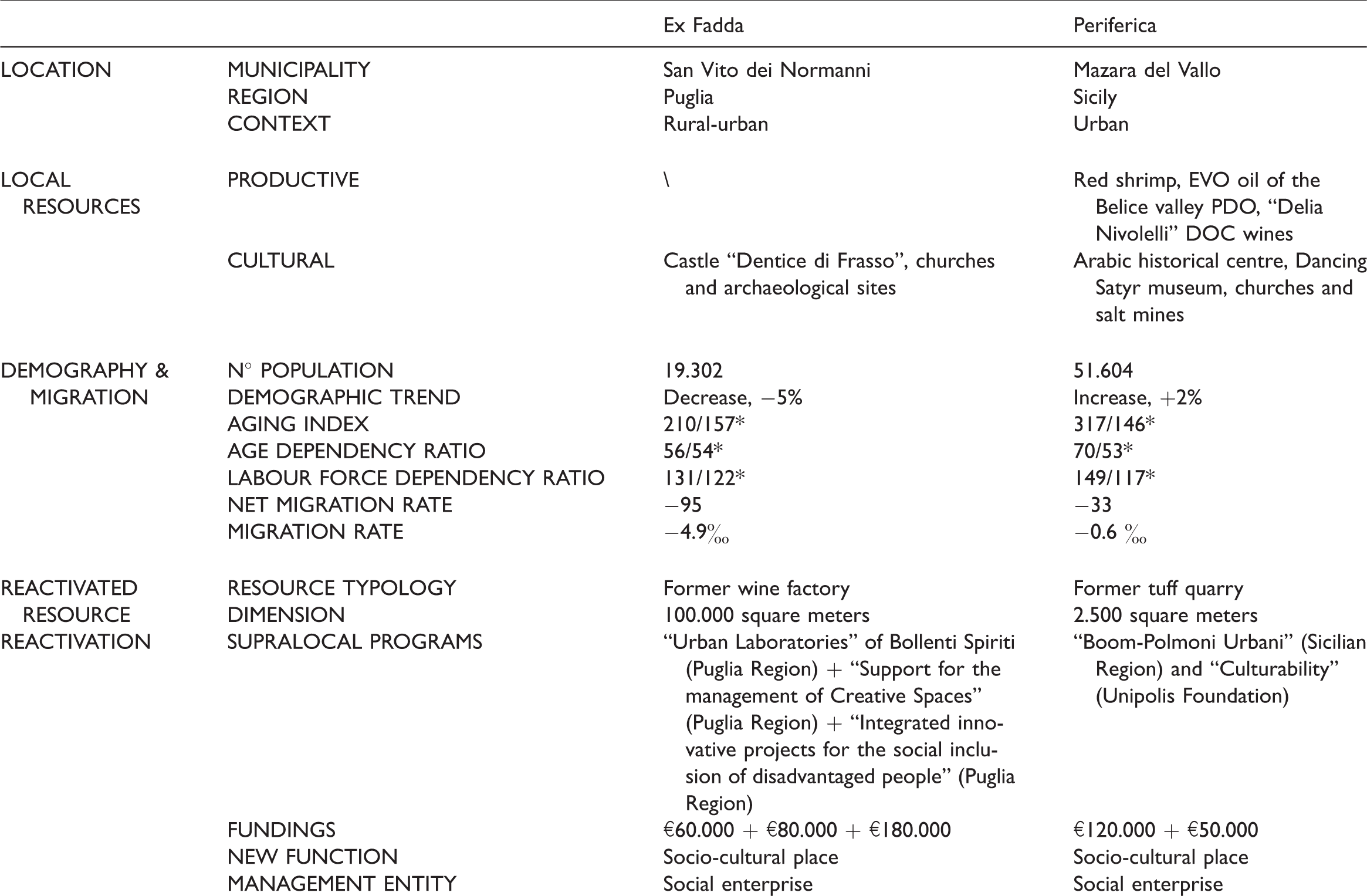
These analyses illustrate a general positive impact in which both cases received funding by specific programmes fostering the reactivation of local resources and youth involvement. These interventions aimed at the development of projects of social involvement, management of creative spaces and cultural and social innovation projects with positive effects for the community and local economy. Furthermore, the two cases are characterised by the development of huge networks with citizens and national and international stakeholders. These centres are community spaces, in which people live, and as such, benefit from socio-cultural activities and cooperate to achieve common goals. They are places driving the development of innovative ideas and new socio-economic activities that improve a context of demographic weakness and migratory flows. Nonetheless, behind these initiatives might be a latent soft power that could control and steer the development of these places. These community visions can have a deep influence on peoples’ perception that might lead to their manipulation.
Considering the local impacts of the interventions, the findings illustrate four main impacts, based on the cultural, social, spatial and economic activities implemented. Both cases are considered creative centres for promoting artistic events and cultural services (e.g. theatre, dance). They use contemporary technics of digital marketing to attract people and to demonstrate their activities on social networking sites with an appealing and colourful graphic. This in turn produces cultural impacts for the place itself and the tourist attraction. In relation to the social impacts, the paper highlights the many activities carried out by the two cases involve urban dwellers and other stakeholders (e.g. architects, artists, academics) for public ateliers, urban design proposals, self-construction and social moments (e.g. social kitchen, socialising moments for family and elderly). This reactivation has led to the generation of economic impacts, including, defining new economic activities, generating incomes for the self-sufficiency and creating new jobs for citizens in the associated hospitality structures. The physical/spatial impacts are mainly related to the development of projects for urban regeneration and public spaces management that contribute to the urban–rural development of the place and the involvement of local inhabitants. Throughout the study, it was possible to observe a set of positive and negative aspects, before and after the reactivation process, that include criticalities and challenges (Table 2).
Negative and positive aspects before and after the process. Author’s elaboration.
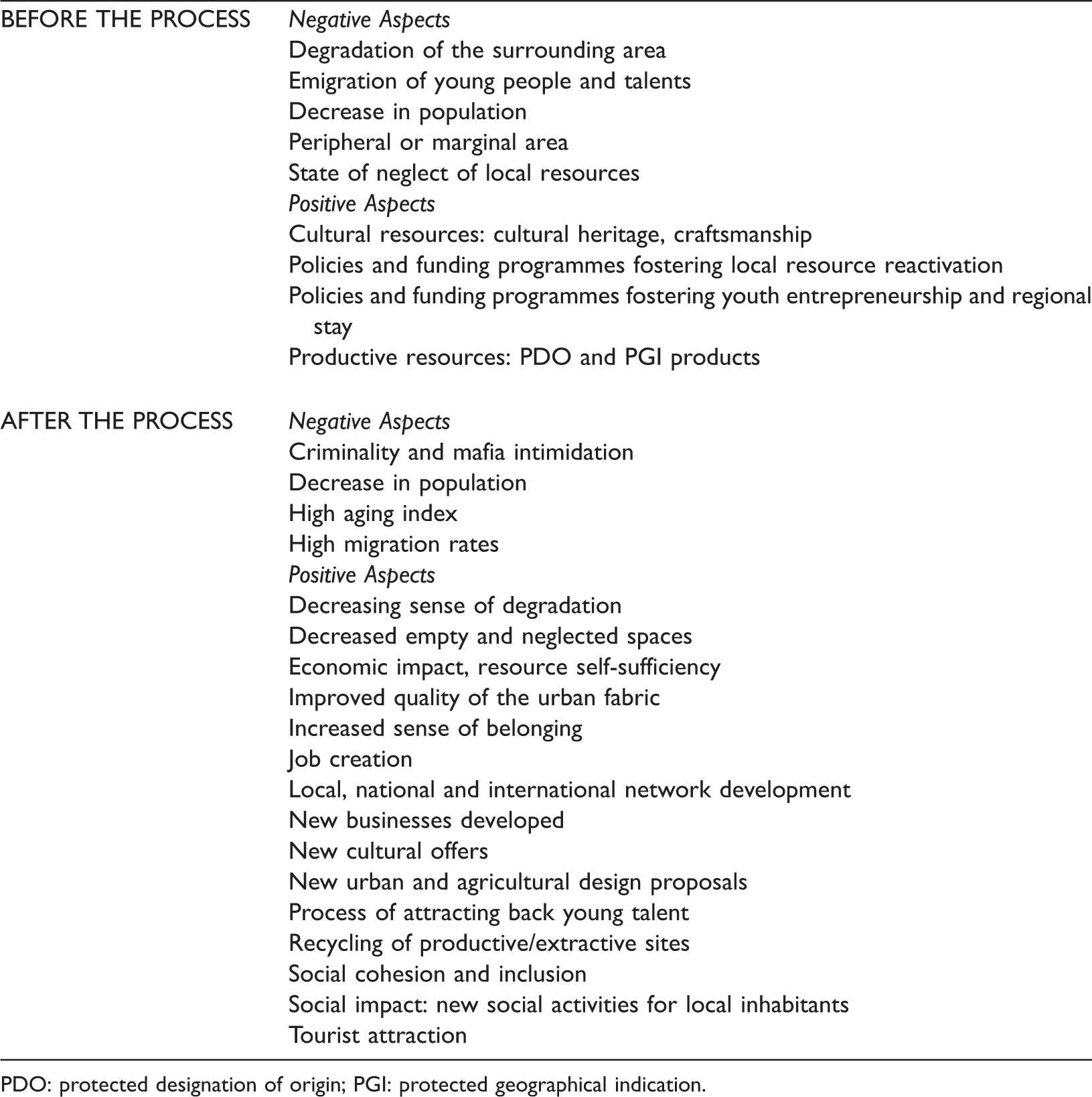
PDO: protected designation of origin; PGI: protected geographical indication.
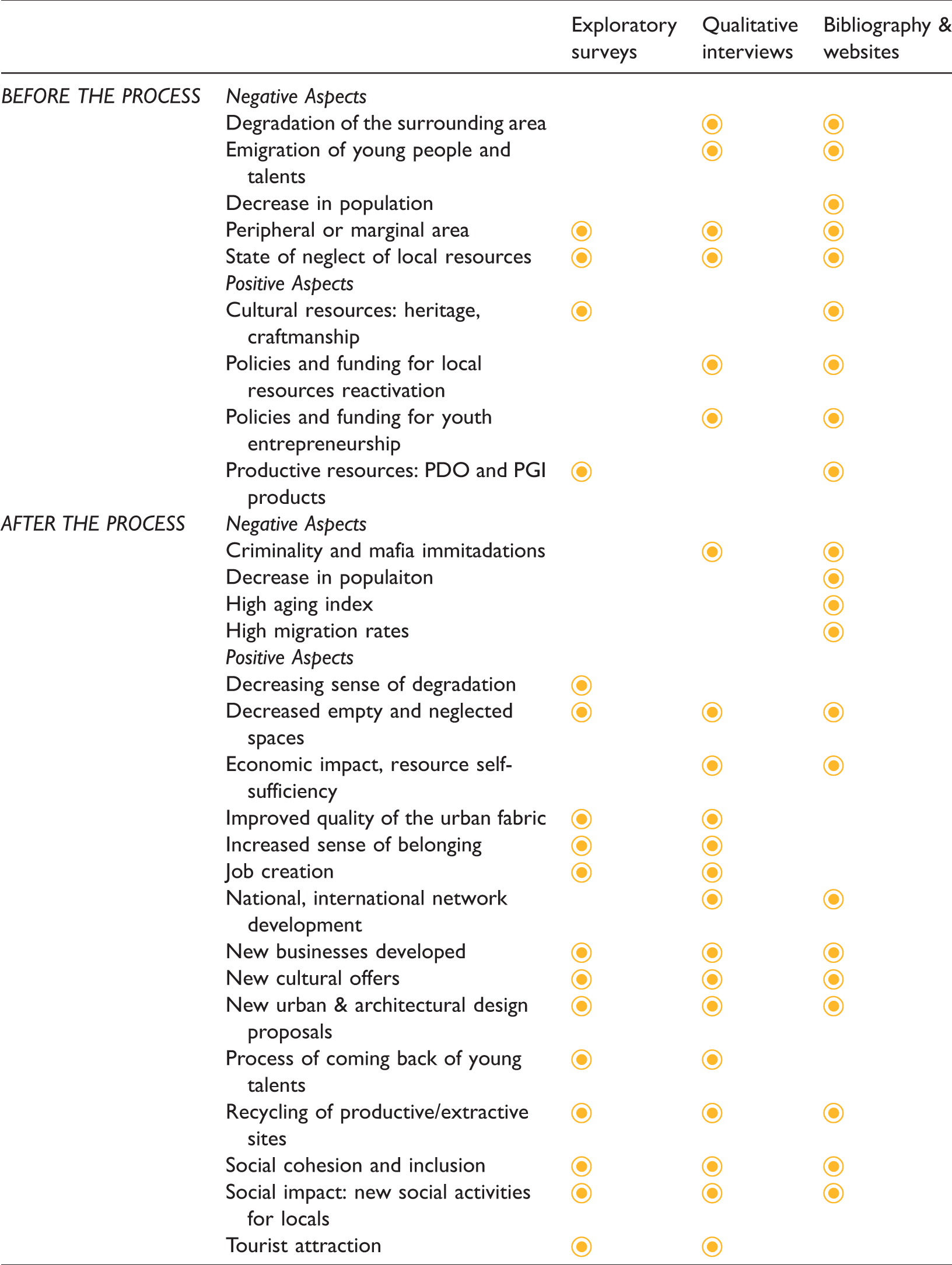
In this regard, Table 3 illustrates the connection between the negative and positive aspects identified and the source. Revisiting general results, before the socially innovative recycling process, the two contexts were undermined by neglect, high aging index and migration. On the other hand, they were characterised by the presence of relevant resources and funding programmes aimed at enhancing these marginal areas and local youth ideas. Starting from this identification, it is possible to observe how positive and negative aspects can affect the place. The analysis of impacts was developed through the observation of two main factors (outlined in Table 4), these include: Topics (four criteria of analysis: accessibility, transparency, attractiveness and competitiveness) and Areas (four areas of outcomes: social, economic, cultural, spatial). The first factor observes the following topics and represents the benefits that a local community can achieve through:
Accessibility (evaluates how the aspects can influence the space connections and welcoming) Transparency (assesses how the aspects influence the sharing of opinions) Attractiveness (measures the appeal of the place) Competitiveness (evaluates how the aspects can contribute to develop/decrease territorial competitiveness)
Negative and positive aspects and sources. Author’s elaboration.
Local impacts. Author’s elaboration.
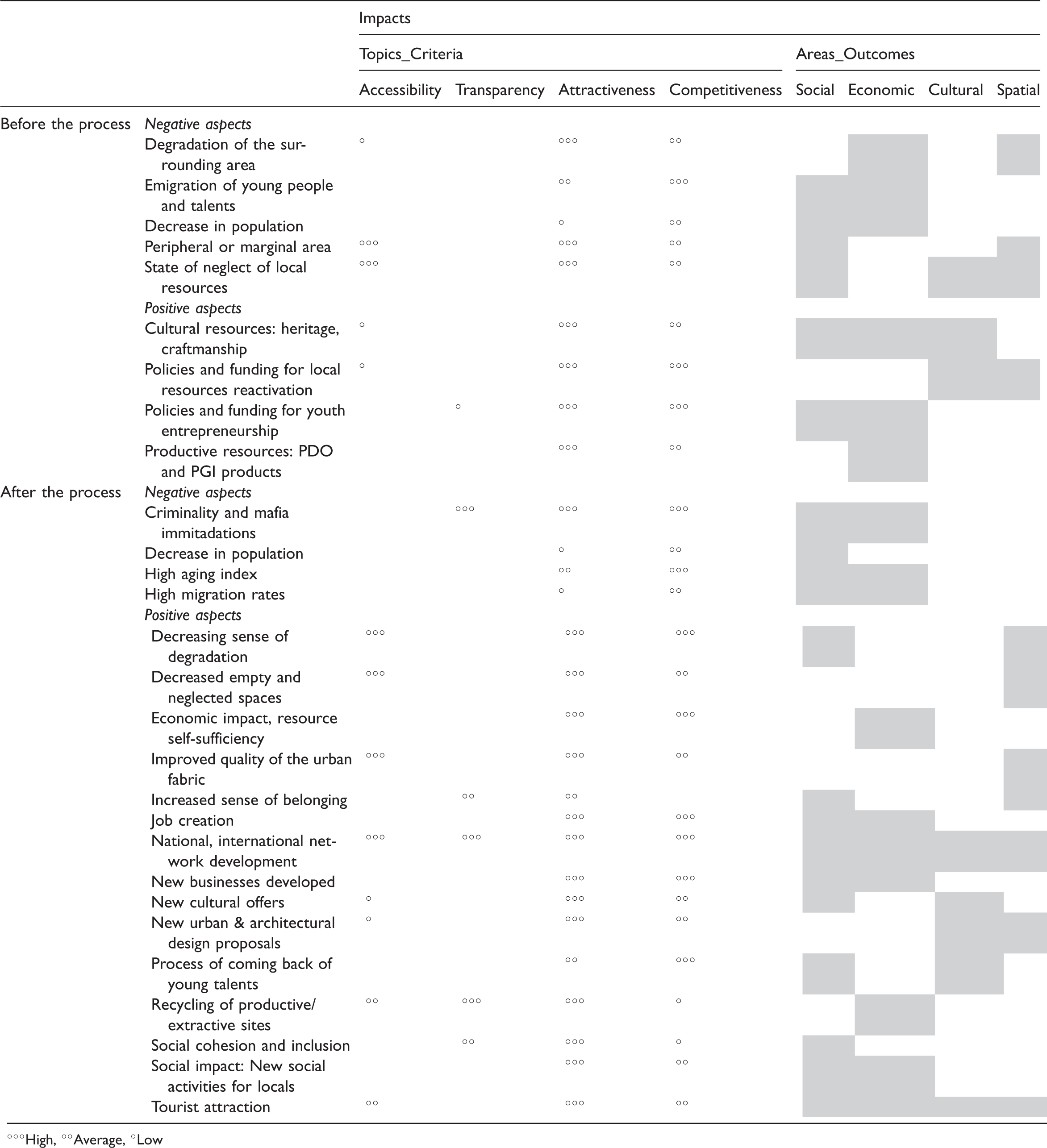
°°°High, °°Average, °Low
Each aspect was evaluated in this range: low, average, high. Furthermore, the impacts were also analysed as outcomes of four main areas: social (new forms of living & administrations), economic (new economies & services), cultural (arts & culture) and spatial (physical actions, scalarity).
Considering the selected aspects, Table 4 shows in general high negative impacts before the process in relation to accessibility and attractiveness. Furthermore, the emigration rates and the decrease in population also affected the competitiveness of the site. A relevant factor, instead, is represented by the presence of local resources and funding programmes that had a high impact in the territorial attractiveness and a medium-high impact in its competitiveness. These ‘aspects’ mainly affected the socio-economic and spatial areas. This is the case of the negative impact in local economy provoked by the emigration of young people (weakness in innovation and labour force) or the degradation of the surroundings that reduce its attractiveness, influencing also the social outcomes. The positive impacts affect the cultural and economic areas, represented by the presence of local high-quality productive and cultural resources. After the process, the selected aspects mostly affect the attractiveness and competitiveness, with high negative impacts – caused to the criminality intimidations to the socially innovative initiatives – that aimed to undermine the progress. Medium impacts were observed in the permanence of high demographic indicators that reduce the competitiveness of the place. These aspects influence the socio-economic areas, affecting the local economy and the social perception of the place. The findings show a wide range of positive impacts that improve the territorial competitiveness with new jobs and economic activities and the strengthening of international networks. The impacts in attractiveness demonstrate an improvement of cultural, tourist and social offerings, the reactivation of disused areas and new design proposals. This also influences the accessibility, improving the space connections and the welcoming. The increase of the sense of belonging, the socio-economic activities and social inclusion initiatives positively affect the social and economic areas. Furthermore, these aspects have positive outcomes in the cultural and spatial areas, thanks to the sites recycling, the development of new tourist flows and the implementation of co-designed proposals.
Considering the key results and according to Caroli (2015), Borzaga and Tortia (2009), Doherty et al. (2014) and Matei and Matei (2012), it is possible to affirm that the recycling processes and the social enterprises produced positive impacts. Considering both the cases and used validation analysis and procedures of discretisation put forward the social benefits identified:
Businesses incubation; Craftsmanship and Do It Yourself (DIY) activities; Cooperative projects of urban space management; Cultural activities; Networking; New tourist attraction; Non-formal education services; Recycling of neglected sites; Social inclusion of disadvantaged people; Social and sharing moments; Solidarity; Sports activities; Team-working; Urban fabric improvement; Urban walks and visits; Youth involvement and engagement.
Each social benefit can be associated to the one of more of the four topics/criteria used to observe the impacts. In order to appreciate the degree of relevance attributed to these themes, the materiality matrix (Figure 5) was adopted. It is a qualitative method that compares (in the range low, average, high) two points of view, those of the internal social actors, including the social enterprises, as result of qualitative interviews, and that of the external social actor, the research author, as consequence of local surveys and bibliographic analyses.
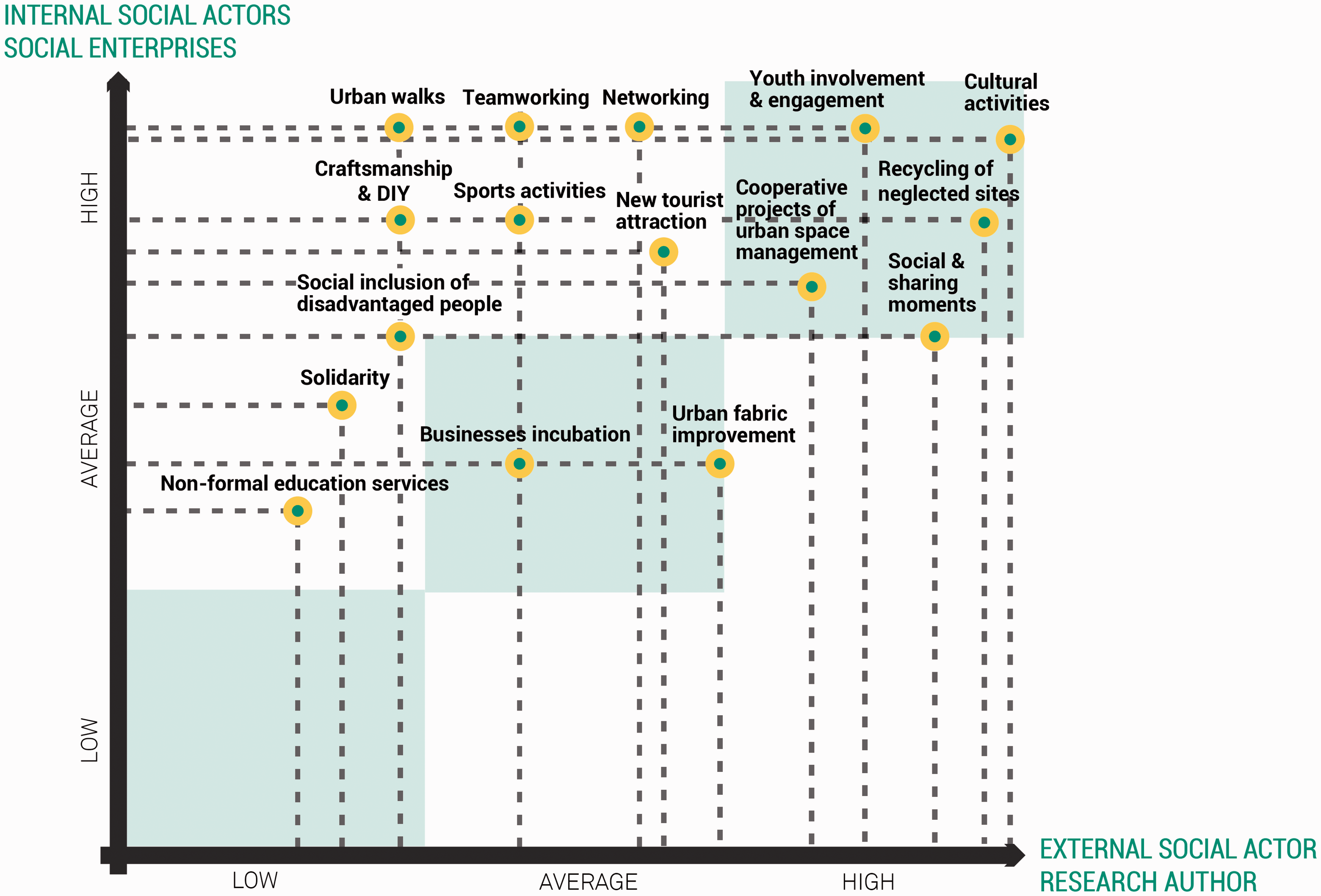
Materiality matrix (author’s elaboration).
The matrix shows a high social benefit recognised in the creation of social and sharing moments, cultural and cooperative projects of urban space management, in the recycling process and the youth engagement. The internal social actors, instead, attributed a high value (compared with the medium-high value of the external social actor) – for the new tourist attraction, craftsmanship, urban walks, craftsmanship, team-working, networking and sports activities. In the average, an absolute value was recognised as medium relevance for the urban fabric improvement (especially fostered by Periferica) as well as the business incubation service of ExFadda. The analyses also illustrate the presence of other relevant social benefits implemented for the local site such as solidarity, non-formal education services and inclusion of disadvantaged people (mainly promoted by ExFadda) to whom was attributed a low-average relevance. Considering the performed materiality matrix, there are five significant results in the high level – regarding the social and cultural dimensions – and two in the average – regarding the physical/spatial and the economic influence developed by the process. The findings show a general positive impact on the place that improve the local context, attract new people from different parts of the world, contrast the emigration of the young generation, increase the quality of life of elderly, create new networks and collaborations among stakeholders, innovate and produce creative projects and alternative paths for future development. Nonetheless, behind these initiatives might be institutional, political and economic interests that steer the development of these places. Both cases could have the risk to be involved in political propaganda as good experiences of local reactivation and transform their missions in political objectives. This can provoke negative effects on the place and artificial interventions that do not aim to create new social benefits.
Conclusion
Throughout the last decades, several academics and professionals have been committed with the analysis of local community involvement, their risks and benefits and the assessment of socio-economic and spatial impacts on place, developing new theoretical frameworks and methodologies. Nowadays, as discussed, the society is increasingly branded by slogans linked to the topics of commoning, social inclusion and communities’ involvement in planning processes. This led to the need to assess the quality of these processes and the elaboration of specific procedures of participatory planning (Ciaffi and Mela, 2011), collaboration pacts and common good regulations (Arena and Iaione, 2012, 2015) to avoid instrumentalisation or tokenistic actions (Arnstein, 1969). In this regard, the wide literature about social innovation invites reflection on the evaluation of social impacts and benefits generated on the place (Doherty et al., 2014; Moulaert et al., 2005). Furthermore, considering that the overall research project should yield new knowledge and influence policy and practice of urban design and planning, the analyses of the cases is considered to be helpful, given that, they can play an important role in developing new theories and practical models. In addition, the instruments and methods illustrated in the paper were adequate to identify the general cultural, spatial and socio-economic impacts created by social enterprises in recycling processes of neglected sites. Considering these analyses and the specific cases, it is possible to argue that behind these interventions there is the influence of soft power that fosters social and economic impacts on the places. Both cases are characterised by the presence of a social enterprise whose ambition is to affect the site and its surrounding area by creating new services, activities, economies and social moments. Considering these aspects, it is possible to affirm that social enterprises have a relevant role in the reactivation of a disused place, promoting cross-cutting paths, sharing moments, new collaborative economies.
In order to achieve positive outcomes, it is important to have a strong interrelation among social enterprises, local community, administration and a huge network of local and international stakeholders. Furthermore, the management entity ought to be well-structured and create new incomes to be economically self-sufficient and to plan a structural impact overtime (Caroli, 2015). The successful outcomes achieved and illustrated by the paper also invite a strong connection with the surroundings, not only focusing on the pre-existing cultural, environmental and productive resources and enhancing local craftsmanship and abilities, but also strengthening the sense of belonging and cooperation within the local community and creating new economic opportunities especially for young generations. Nonetheless, the analyses from both case studies highlight some discrepancies and critical points in light if a weakening system of relationships. In order to limit and mitigate the conflicts that arise, it is necessary to define collaborative trajectories according to the goals outlined by the administrations and through creating new opportunities in response to the social needs.
Beside the aforementioned argumentations, the present research aims to corroborate the lines of thought put forward by several authors, according to which:
behind socio-cultural initiatives, there may be a soft power that shape attitude and perceptions through culture (Nye, 1990, 2004); social enterprises can conceal institutional, political and economic interests, even though they are non-profit management entities whose mission is to develop new solutions to the place to satisfy social needs and create social benefits (Maiolini, 2015; Matei and Matei, 2012); the socially innovative recycling of the neglected sites contributes to a better use of local resources (Caroli, 2015; Scaffidi, 2018, 2019), improving the quality of life, enhancing the urban areas by reducing the problem of degradation caused by empty spaces, producing new socio-economic life cycles and affecting the urban and rural development (Bocchi, 2017; Bocchi and Marini, 2015; Carta, 2014; Neumeier, 2012; Schröder, 2016).
In conclusion, the paper revealed that the socially innovative recycling of neglected sites can be considered one of several interventions that influence the urban planning and the development of socio-economic impacts on places. Therefore, the findings illustrate that the reactivation of neglected sites can positively affect the urban and rural area creating cultural, social, economic and spatial impacts which can revitalise a place characterised by migration phenomena and demographic transition. In this regard, the paper may constitute a specific contribution on the identification of the roles of social enterprises in a recycling context, the soft power influences behind them and the identification of social benefits produced by socially innovative recycling. Moreover, it is thoroughly acknowledged that this contribution represents just one point of view among several others opinions in relation to this topic and that the definition of such theoretical and empirical frameworks would be improved through a multi-disciplinary and multi-scale approach. As such, the research presented here is not considered a final report, but it aims to provide a contribution to the existing body of knowledge and provide the basis for future action aimed at defining new models, guidelines and protocols to be adopted and utilised in weakened areas. Such mechanisms and processes can influence public attitudes, policy makers and administrations to invest in the socially innovative recycling of neglected sites going forward.
Footnotes
Acknowledgments
The author of this article acknowledges Roberto Covolo and Paola Galuffo for providing relevant information for the research. The author would also thank Nicholas Wise and Kelly Maguire as editors of this special issue, the peer-reviewers for their helpful feedback and Jörg Schröder for his constructive comments on the earlier version of this article.
Declaration of Conflicting Interests
The author(s) declared no potential conflicts of interest with respect to the research, authorship, and/or publication of this article.
Funding
The author(s) received no financial support for the research, authorship, and/or publication of this article.
