



Abstract
Many peripheral regions aim to upgrade their knowledge base by attracting universities to increase their competitiveness, but also to tackle emigration and demographic ageing. However, the successful implementation of a peripheral university campus is challenging. Usually, generous public financial support is necessary, putting pressure on locations that do not develop as intended. Hence, the setup of the regional place leadership and the different forms of agency are crucial. Drawing on in-depth interviews, this paper provides a case study based on the Technik Campus Lienz, a peripheral satellite campus in East Tyrol/Austria, which has failed to meet the expectations of regional and extra-regional policymakers. It identifies different phases of agency and develops a framework of agentic and structural misalignments, providing important insights for peripheral regions with similar ambitions.
Introduction
Many peripheries try to strengthen their innovative capacity and competitiveness by attracting tertiary education institutions (Brekke, 2021; Eder, 2019a). Additionally, there has been an increasing interest in universities as actors in peripheral innovation systems (Benneworth et al., 2017; Charles, 2016; Fonseca and Nieth, 2021). There are examples of regions where positive spillovers can be observed (Isaksen and Trippl, 2017), especially if the competences and functions of the university are well aligned with the needs of the region (Pinheiro, 2018). Nevertheless, peripheral campus locations often suffer from a limited number of students, few programmes offered and difficulties in financing (Charles, 2016).
Challenges during the implementation of higher education institutions (HEIs) in peripheral areas illustrate the crucial role of place leadership for advancing complex endeavours in regional development (Benneworth et al., 2017; Raagmaa and Keerberg, 2017). The concept of place leadership entails changing regions by mobilizing and coordinating various actors towards a common goal. In doing so, it sheds light on multi-scalar and networked processes between a multitude of actors transcending institutional and administrative borders (Normann et al., 2017). Hence, this analytical lens provides a promising approach to take a more balanced view on structural conditions and agentic processes, which are considered as crucial for understanding how peripheral regions might manage to bring about change (Beer, 2014; Sotarauta and Beer, 2017).
The literature on place leadership has been an important step towards a fine-grained analysis of agency, referring to ‘the ability of people to act intentionally’ (Gregory et al., 2009: 347) and to the consequences of such actions (Grillitsch and Sotarauta, 2020). However, more empirical evidence is needed to understand the various forms of place leadership and its implications, but especially its structural and agentic limits. Addressing this gap, the present paper aims to get a deeper theoretical and empirical understanding of the interrelation between social, economic and political structural preconditions and agency, focussing on the establishment of a peripheral university campus in East Tyrol/Austria as a case study example.
Drawing on 13 in-depth interviews, it sheds light on the motivations of the actors involved, on their achievements, but also on their failures during the campus’ first years. Consequently, it addresses the following research questions: What are the opportunities and limits of change agency? Which areas of potential mismatch can be observed in place leadership? The results show that although the peripheral university campus was a joint effort in the beginning, a fragmented leadership with sometimes competing interests and absent responsibilities prohibited the successful establishment and restructuring of the project. As such, this paper provides important insights into the potentials but also limits of agency in regional development. In addition, by focussing on a remote alpine periphery, it accepts the invitation by Phelps et al. (2018) and contributes an example of the ‘dark side of economic geography’ to the literature.
Universities and agency in regional development
Peripheries and higher education institutions
Upgrading the knowledge base is a frequent recommendation for peripheral regions. While the absence of HEIs is in fact one of the defining criteria of peripheries, there have been many efforts to establish universities in such locations to thicken a peripheral innovation system (Charles, 2006; Uyarra, 2010; Kosonen, 2012; Kempton, 2015). The focus lies on four contributions of universities (Boucher et al., 2003): (1) Salaries and demand for regional goods and services, (2) property rights, spin-offs and other forms of knowledge transfer, (3) attraction, education and retention of young talent and (4) participation as active actor in the regional community. In other words, there is the normative assumption that universities will contribute to regional upgrading (Benneworth and Pinheiro, 2017).
However, while the need for public investments towards knowledge-based regional development might be especially high in peripheral or lagging regions, there are difficulties in translating these inputs into innovative activities. One reason is a lack in qualifications and capacity by local businesses (Johnston and Prokop, 2021). Despite this danger of a mismatch between what a university can offer and what a peripheral region can absorb, policy makers often lobby for tertiary education to decentralize the education system, to strengthen the regional economy and to prevent young people from leaving the region (Charles, 2016). Concerning the latter, it is indeed one of the greatest challenges for peripheral universities to retain their graduates for their home region’s labour market (Boucher et al., 2003).
Charles (2016: 764) identifies three necessary conditions for a successful peripheral university campus. First, regional actors need to express a demand for a university, often driven by the wish to upgrade the local knowledge base through a more educated workforce and joint research activities with local firms. Another reason is the easy access to tertiary education by residents not willing to relocate (temporarily) to a city. Second, a university from outside the region has to respond to this effort by establishing a campus. In rare cases, the local demand is so strong that a new university is set up from scratch. Either way, these universities must exhibit a clear intention to engage actively with the regional community and to address the difficulties for tertiary education in peripheral areas. Otherwise, it would make more sense for them to remain in urban areas where access to staff, students and funding is easier. Third, long-term commitment from policy makers to support, finance and develop the campus is crucial, especially in the early stages of the new location.
In addition to these challenges, universities in peripheries frequently struggle to attract students, staff and third-party funding. Often, there is also a focus on teaching rather than on in-house research capacity (Pinheiro et al., 2018). They also face a conflict of interest, as research excellence is linked to lower regional engagement (Atta-Owusu et al., 2021). Consequently, firms see cooperation with universities as a possibility to strengthen their expertise. However, if the match between the regional university and the needs of the firms is not ideal, it makes more sense for them to engage in extra regional networks (Benneworth and Pinheiro, 2017).
Another crucial issue is to ensure that firms and actors from the region have the actual abilities to benefit from research, that is, by absorbing the knowledge to develop new products and services. Especially among small and medium-sized enterprises (SMEs) and in the public sector, absorptive capacity is often low and building this capacity is a challenge in institutionally and organizationally thin environments (Johnston and Prokop, 2021; Kempton, 2015; Pinto et al., 2015). Consequently, a careful alignment between university and periphery is necessary (Pinheiro, 2018), which can be based more around analytical or synthetic knowledge (Isaksen and Trippl, 2017). In general, peripheries with a HEI have an advantage over those lacking such institutions (Eder, 2019a). Consequently, peripheral universities can also contribute significantly to smart specialization policies in lagging regions (Kempton, 2015; Vallance et al., 2017).
However, smaller HEIs in peripheral regions are often labelled ‘satellite campuses’ (Rossi and Goglio, 2018), ‘branch campuses’ (Addie et al., 2015), ‘university filial centres’ (Kosonen, 2012) or ‘micro universities’ (Gaskell and Dunn, 2018), highlighting that these HEIs depend usually on the university headquarter in cities. While they can be successful, their capacities for regional collaborations are limited and sometimes, their mission does not go beyond teaching. This often results in limited autonomy of such locations and increases the risk of closing or downsizing (Charles, 2016; Rossi and Goglio, 2018).
A related question is whether polytechnics or universities of applied sciences, that is, such with a more vocational focus on teaching rather than on research, are better suited for the needs of the regional labour market, which might not be demanding many university graduates (Charles, 2016). Nevertheless, ‘single player universities in peripheral regions’ (Boucher et al., 2003: 891) can exhibit high levels of regional engagement. They have an outstanding position in the regional innovation system (RIS), as other research institutions are often lacking (Boucher et al., 2003). This relates to questions of place leadership, particularly by universities, as discussed in the next sections.
Agency and place leadership
Numerous scholars have discussed the importance of place leadership over the past decade (Beer and Clower, 2014; Grint, 2010; Sotarauta et al., 2017; Stimson et al., 2009). This is closely linked to the increasing interest in agency in economic geography, seeking for a deeper understanding of the human drivers of change (Jolly et al., 2020; Rekers and Stihl, 2021). In this context, agency is understood as a temporally embedded process of social engagement, requiring the actor’s ability to be informed of the present, but also to reflect on the past and the future (Emirbayer and Mische, 1998). Currently, the scientific discourse on place leadership and agency gains momentum, which is partly due to the popularity of the Trinity of Change Agency proposed by Grillitsch and Sotarauta (2020). This concept defines place leadership as one form of change agency that shapes regional development, in addition to innovative and institutional entrepreneurship. While most studies concerning agency highlight local and regional success stories ‘against all odds’, a critical perspective on the limitations of agency has been largely absent (for a recent exception see Weller and Beer, 2022).
This increasing interest in agency demonstrates the need to gain a better understanding of micro-processes in regional development. Hence, the role of agents that bring about regional change becomes a central issue, particularly in the context of rural or peripheral areas facing structural challenges (Döringer, 2020; Morisson and Mayer, 2021). In this regard, place leadership is seen as crucial process for building capacity and enabling place-based approaches in such regions (Horlings et al., 2018). In addition, there is a close interrelation between place leadership and governance (Ayres, 2014; Beer, 2014; Sotarauta, 2016). As such, place leadership is understood ‘as a new form of emergent governance, derived from both local agency and broader structures of power’ (Sotarauta et al., 2017: 4). Socio-economic, political and administrative developments are therefore seen as enabling or constraining structures for effective place leadership in towns and regions (Beer, 2014; Sotarauta and Beer, 2017).
Originally, the concept of leadership has been closely linked to formal political authority, emphasizing exceptional roles of ‘charismatic leaders’ and elected officials in government. More recent approaches focus on the dispersed nature of place leadership in knowledge-based regional development, as place leadership takes place in a multi-agentic, multi-sectoral and multi-territorial environment (Gibney et al., 2009). Additionally, it is a complex and constantly evolving process between leaders and a wider network, requiring the identification and communication of shared interests and the mobilization of various actors for these interests (Grillitsch et al., 2021). Hence, effective leadership relies on a high level of community commitment and coordination in order to pursue place-specific ambitions and to affect the ways in which a phenomenon is perceived (Sotarauta and Beer, 2017). Sotarauta (2016: 55) thus argues for an understanding of place leadership as ‘future seeking, but not future defining’. Envisioning the future and formulating convincing visions is an essential task for place leaders to reach consensus among the heterogeneous actors involved (Sotarauta, 2018).
However, despite its popularity, the concept has remained somewhat elusive and difficult to grasp, prompting researchers to label it as ‘black box’ (Normann et al., 2017; Sotarauta et al., 2017). Acknowledging these conceptual deficits, scholars have made different attempts to sharpen the idea of place leadership. For example, Stimson et al. (2009) propose five key components of effective regional leadership in economic development: collaboration, trust, shared power, flexibility and entrepreneurialism. Furthermore, Sotarauta et al. (2017) characterize place leadership as fragmented or shared actions, events and processes. They also include leaders without a formal mandate and apply a multi-level, dynamic and interactive governance arrangement, including a variety of stakeholders.
In sum, effective place leadership is considered as a collaborative, shared and dynamic process. However, the diversity of actors from public, semi-public and private spheres also raises the degree of complexity in leadership and endangers balances of power. As effective place leadership relies on collaboration and coordination, it challenges leaders to cope with different visions, interests and goals of cross-institutional and multi-level arrangements (Murphy et al., 2017). Due to this complex nature, tensions might arise, inhibiting regions to experience effective leadership and change agency. Surprisingly, a critical perspective on misalignments in place leadership has been widely neglected in the literature, in favour of places with successful leadership (Horlings et al., 2017; Broadhurst et al., 2021).
Synthesis and conceptual framework
In the last decades, universities as drivers of regional change have been extensively discussed (Sotarauta and Beer, 2017), referring to notions such as the ‘engaged university’ or ‘entrepreneurial university’ (Trippl et al., 2015). Recently, scholars also explored the roles of HEIs under the conceptual lens of place leadership. For instance, Benneworth et al. (2017) focus on how organizational dynamics of universities affect external institutional changes preceding place leadership in regions, while Raagmaa and Keerberg (2017) ascertain the impact of HEIs as mediators of regional innovation and buzz. Vallance et al. (2019) demonstrate how a university-hosted platform, which was located outside formal governance structures, mobilized limited institutional and resource power to create space for collaborative leadership. In addition, a recent study by Fonseca and Nieth (2021) also points out that the regional context determines how universities participate in regional development.
These studies share a common focus on the contribution of HEIs to place leadership, stressing the universities’ potentials for initiating institutional change. However, this paper departs from another angle, focussing on the multi-agentic setting of place leadership in establishing a peripheral university in the first place. As such, it sets out to explore how the regional actors’ expectations, needs, intentions and targets fit together or diverge, when they deliver place leadership. In doing so, it addresses a critical and so far underrepresented perspective on place leadership by scrutinizing potential tensions and limits (Benneworth et al., 2017).
Based on the literature review, the paper develops a conceptual framework based on four analytical dimensions that constitute place leadership. Analysing regional development processes along these dimensions gives insights into the reasons, why tensions might arise: ⁃ Vision: Place leadership is closely associated with multi-actor and multi-level governance processes (Beer 2014; Normann et al., 2017), creating future-oriented visions (Sotarauta, 2018). Hence, a variety of actors with heterogenous expectations, intentions and targets shapes leadership, complicating the process to create a shared vision for directing further actions. ⁃ Action: Effective leadership processes require coordinated and shared actions across thematic and organizational boundaries (Horlings et al., 2017) and clear responsibilities among the actors involved. If this is not achieved, fragmented or dualistic actions might occur and hamper agency. ⁃ Power: As leadership of places is constituted by formal and informal leaders, different forms of power come together, for instance, institutional, interpretative or network power (Sotarauta, 2009: 52). Power relations and distribution might be messy, increasing the challenge for place leaders to navigate through actor arrangements (Broadhurst et al., 2021). ⁃ Structure: Social, economic or political structures might favour but also limit or constrain local agency and the successful realization of ideas. As place leadership is directed towards creating a better future, persistence and flexibility are required by the actors to find an adequate strategy regarding the given structural conditions (Sotarauta 2016).
Research design
East Tyrol: An Alpine periphery
The case study region of East Tyrol is located in the South of Austria, bordering Italy and the Austrian Bundesländer of Salzburg (to the North) and Carinthia (to the East) (see Figure 1). It was selected for this study, because the district frequently ranks low in national comparisons concerning accessibility, population development and knowledge intensity (Eder, 2019b). Additionally, it depends politically and financially on the Tyrolean Regional Government located in Innsbruck/North Tyrol and has hardly any fiscal or strategic autonomy. Larger projects always require external funds and political backing (Kofler 2006). As such, it experiences many classical characteristics of marginalized regions described in the peripheralization discourse (Kühn, 2015). Location and accessibility of East Tyrol (Source: Own Elaboration).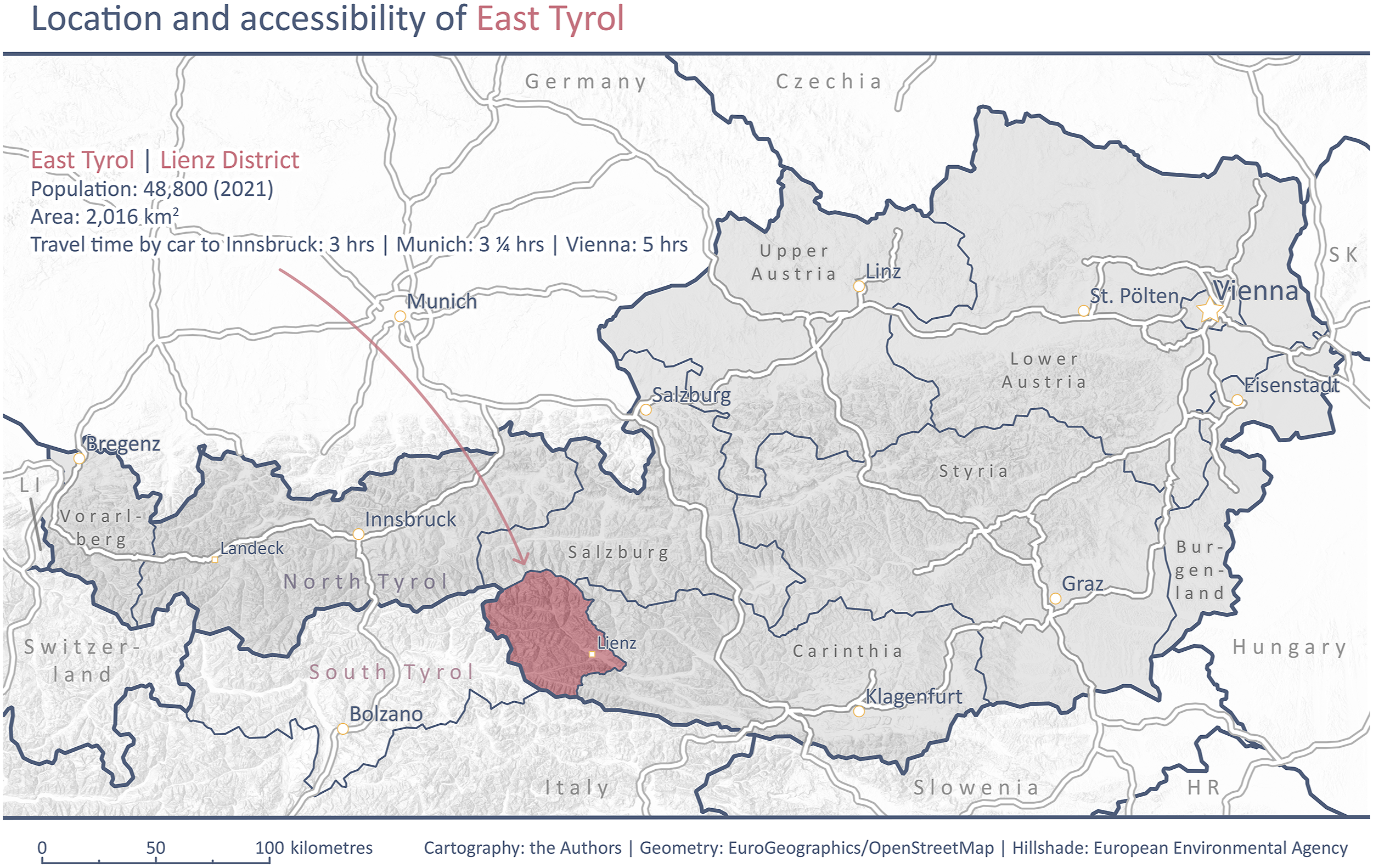
However, there have been extensive efforts to develop the region in the last 20 years. For example, the Tyrolean Regional Government aims for decentralization of higher education in its Research and Innovation Strategy (Land Tyrol, 2015), which led amongst other things to the establishment of the Technik Campus Lienz in 2016 – the case study of this paper. This tension between a high degree of peripheralization on the one hand and strong efforts towards regional development on the other makes for an interesting example.
In addition, the specific history of the region already indicates an especially challenging multi-actor and multi-scalar constellation. The defining moment of East Tyrol was the division of Tyrol in 1919 following Austria’s defeat in World War I. Italy successfully claimed South Tyrol, cutting off East Tyrol from North Tyrol and its capital Innsbruck. Remote already due to the mountainous surroundings and the low accessibility, this historic event created a third layer in the districts peripherality. In 1938, East Tyrol was actually incorporated in the federal state of Carinthia, a step strongly opposed by the population (Kofler, 2006).
In a joint effort, policy makers from both North and East Tyrol achieved the withdrawal of this decision in 1947. However, the relationship of North and East Tyrol remained ambivalent in the following decades. Reasons for this are that the legislative competence and budgetary decisions lie predominantly in North Tyrol, with limited possibilities for East Tyrol to intervene. In addition, due to the geographic location, the exchange of commuters is higher with the federal states of Carinthia and Salzburg. Therefore, the relations with these regions intensified and the discussion of a renewed incorporation of East Tyrol into Carinthia never fell silent completely (Kofler, 2006).
In 2021, East Tyrol had 48,800 inhabitants, which is about 1700 inhabitants lower than its peak with 50.500 inhabitants in 2007. The biggest town where most public infrastructure is concentrated, is Lienz with 11.900 inhabitants (Statistics Austria, 2021). A recent study projects a further decline for East Tyrol to 45,200 people in 2050, mainly due to demographic ageing and emigration (ÖROK, 2022). Like in many peripheries, demographic ageing, emigration and declining births are also observable in East Tyrol. However, there have been signs that population development has been less unfavourable in the most recent years than projected (see Figure 2). Development of the total population in East Tyrol 1951–2021 (Source: Statistics Austria).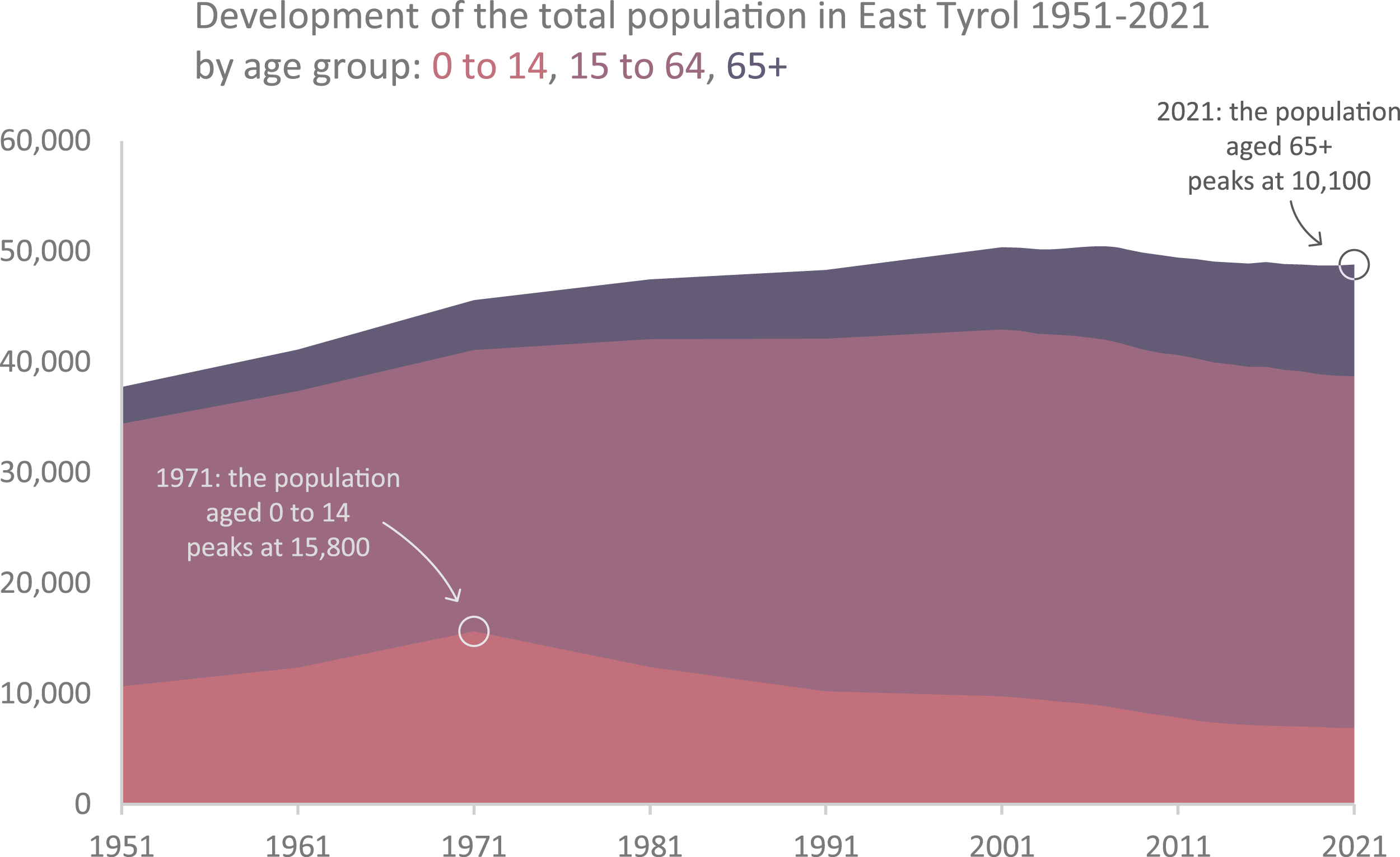
Data and methods: A case study
The empirical case is approached through a case study research design, which is suitable for the in-depth analysis of a particular place or context (Hardwick, 2017; Yin, 2018). Focussing on a single but complex case allows a thorough analysis of specific layers of place leadership and potentials for mismatch, providing novel insights into the structure of regional development processes. To ensure rigour, the paper uses triangulation across multiple data sources like census and register data, strategy documents, media articles and qualitative interviews. As such, the analysis is based both on quantitative and qualitative data. While the first are rather descriptive, the incorporation of in-depth interviews has a high explanatory potential.
Statistics on the population development and a document analysis were combined to assess the setting of the case study region East Tyrol. On the one hand, population statistics reveal the degree of ongoing peripheralization trends like demographic ageing and emigration. This is important to put East Tyrol into context and to enable comparability. On the other hand, the review of planning documents, regional development strategies and newspaper articles allows a deeper look on the efforts of different actors so far to strengthen the region. Consequently, these data provided the background for the qualitative analysis.
To zoom in on agency and place leadership, qualitative interviews with regional and extra-regional policy makers and university staff involved in the implementation of the Technik Campus Lienz and subsequently its operation were conducted. Interviewees were selected based on an analysis of the relevant organizations in the region and via forward snowballing. To ensure anonymity of all participants, no further indications can be made on their affiliations, roles or scales of operation.
The initial wave of 10 interviews took place in September and October 2020. Here, the focus lied on the role each actor played in the establishment of the peripheral university campus, their relationship to others, and the opportunities and challenges during the establishment phase of the campus. These interviews revealed an ongoing restructuring process, which is why a second wave of interviews with three selected crucial individuals was carried out in July 2021 to cover these most recent developments.
Due to the COVID-19 pandemic, the in total 13 interviews were conducted remotely via Zoom. Each interview was recorded, fully transcribed and coded according to the principles of qualitative content analysis (Mayring, 2015). The underlying codes are based on the paper’s conceptual framework. The interviews lasted 45 min on average, with a minimum of 27 and a maximum of 79 min.
Findings
Milestones in regional development in East Tyrol
The establishment of the Campus Technik Lienz in 2016, the nucleus of this paper, is not an isolated effort in the development of East Tyrol. It is rather one step in the trajectory of the region, which can roughly be divided in three overlapping phases (Heintel, 2004). While the emphasis of policies shifted, there was no clear-cut transition and elements of all phases are still present today. As such, there was a transition from exogenous, centrally planned regional development following World War II to endogenous regional development in the 1980s and 1990s. Around 2000, ideas like clusters, networks and competitiveness led to a more knowledge-based regional development (see Figure 3). Phases of regional development in East Tyrol 1950–2020 (Source: Own elaboration).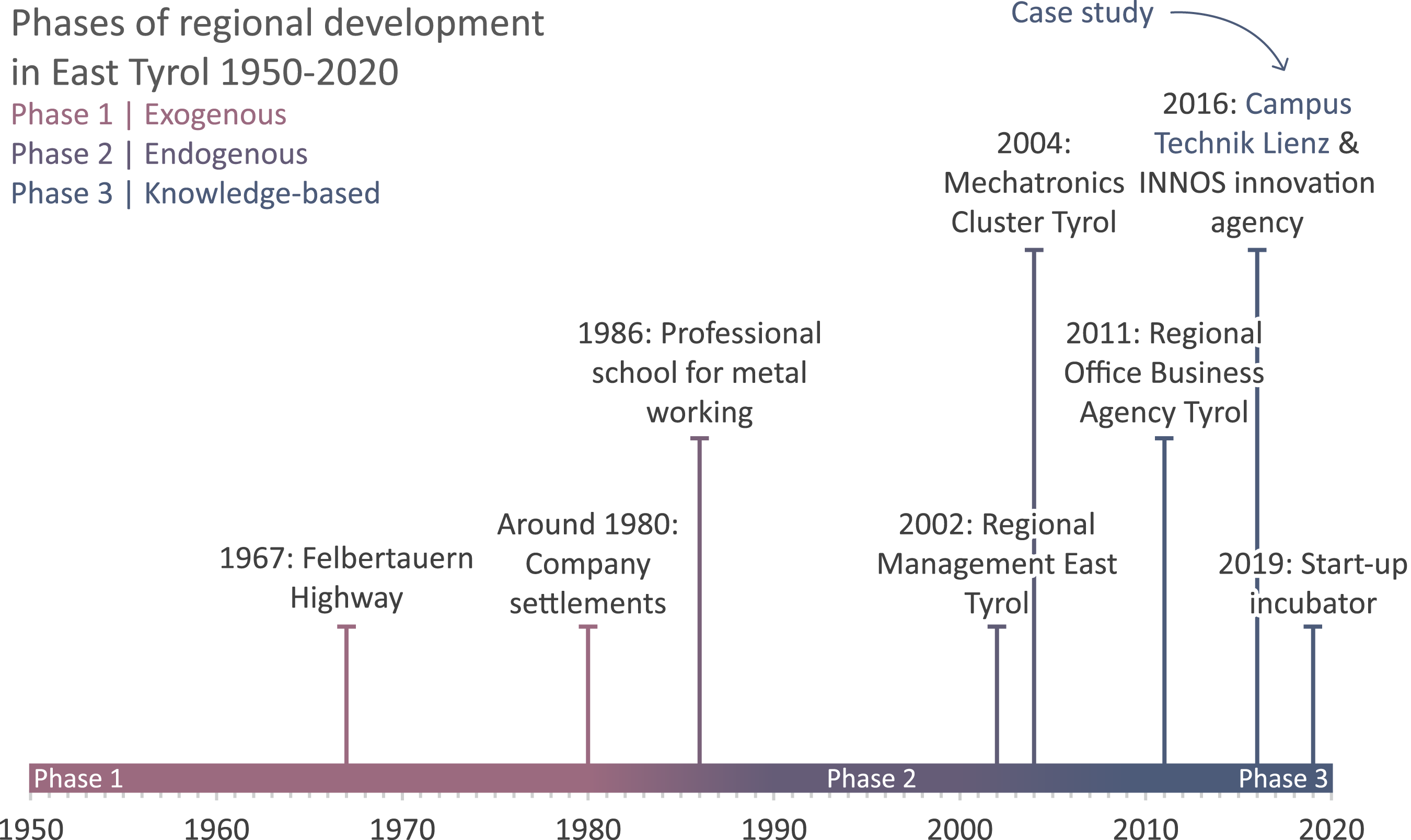
In the first phase, the emphasis lied on stabilizing the population development, improving the job availability, enhancing the physical infrastructure and protecting the natural environment (ÖIR, 1975). The opening of the Felbertauern Highway in 1967 was a crucial step and firms like Liebherr-Hausgeräte located in the district, with 1350 employees today the district’s largest employer (Kofler, 2006).
In the second phase, a school for metal working was opened in 1986 and consequently upgraded to a Secondary Technical School (HTL) to improve the regional knowledge base (HTL Lienz, 2021). In addition, the Regional Management East Tyrol (RegionsManagement Osttirol – RMO) bundled and professionalized several single initiatives.
In the last phase, the focus shifted towards innovation and competitiveness, leading amongst other things to the establishment of the INNOS innovation agency in 2016. In the same year, the Technik Campus Lienz started to offer a bachelor’s degree in mechatronics, providing the first tertiary education programme in East Tyrol.
Place leadership and the Technik Campus Lienz
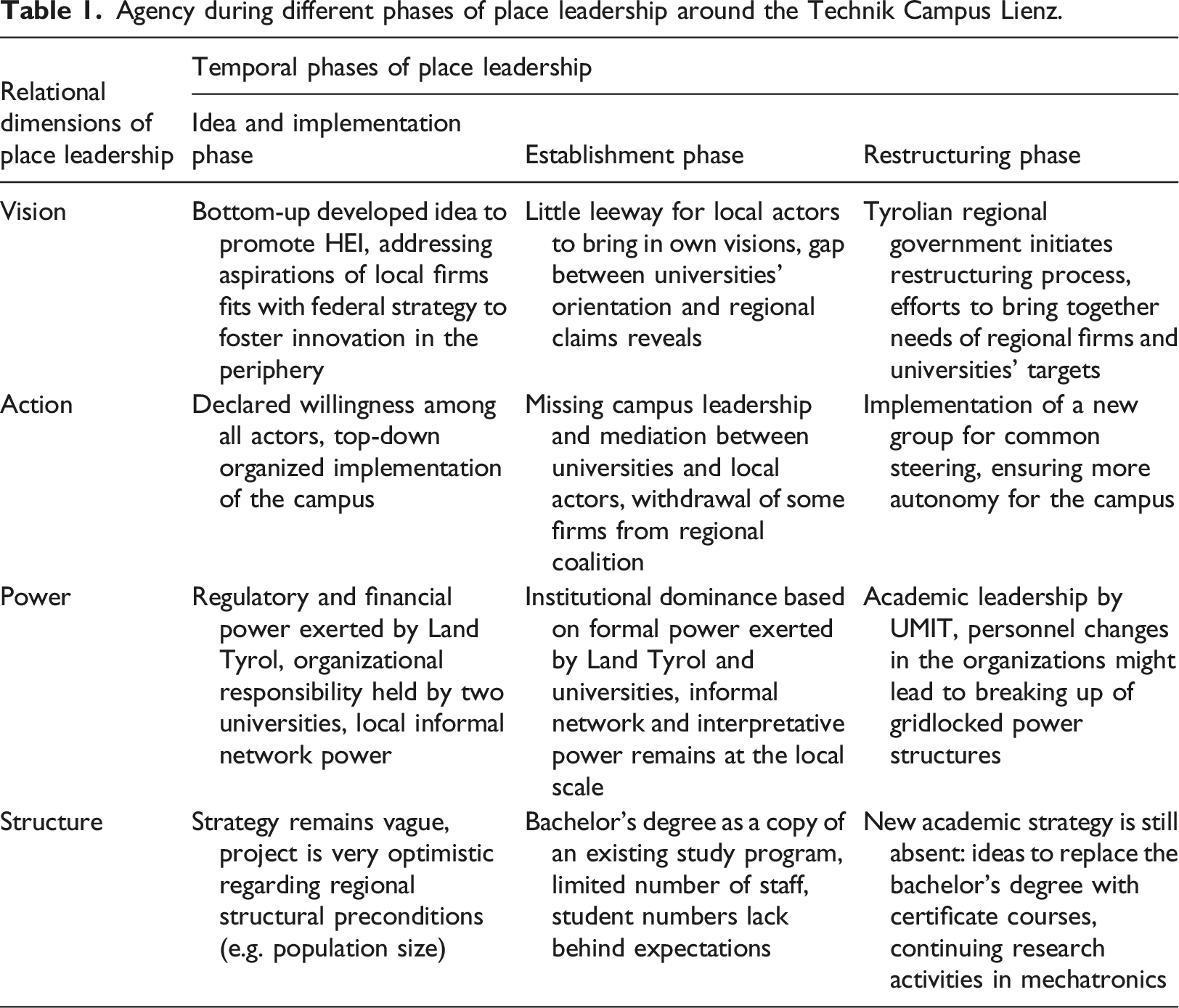
Agency during different phases of place leadership around the Technik Campus Lienz.
Idea and implementation phase
Since the early 2000s, the Regional Economic Chamber promoted the idea of a HEI in East Tyrol. This idea gained momentum in the course of the bottom-up process Thinking ahead for East Tyrol, coordinated by the RegionsManagement. This process started in 2013 to address the projected population decline (ARGE Vordenken für Osttirol, 2014; Steiner, 2021). Thereby, participants argued for a technical tertiary education in the district.
Following this process, local key individuals started lobbying for such an education institution. First attempts aimed at the establishment of a university of applied sciences (Fachhochschule) to foster local R&D activities and to train skilled employees for the regional firms. The local actors visited universities in North Tyrol, Upper Austria and Germany, which had high expertise in mechatronics, aiming to establish a partnership. However, despite mutual interest, a cooperation was not achieved due to federal barriers and the decision by the Tyrolean Regional Government that there would be no additional locations of universities of applied sciences in Tyrol.
However, in 2013, the Tyrolean Regional Government decided on a new research and innovation strategy, emphasizing decentralization and the upgrading of peripheral regions. The strategy’s first work programme laid out the plan for a bachelor’s degree in Business, Health and Sport Tourism in Landeck, a small town with 7700 inhabitants in the West of Tyrol (see Figure 1) (Land Tyrol, 2015). This programme was implemented in 2015 by a partnership of the Leopold Franzens University Innsbruck (LFU) and the Private University for Health Sciences, Medical Informatics and Technology (UMIT). This programme saw increasing enrolment from local and international students, leading to the establishment of a master’s degree in 2019, although it is partly taught in Innsbruck and Hall.
Witnessing these developments, regional stakeholders from East Tyrol renewed their lobbying efforts and this time, the Tyrolean Regional Government was supportive, including the establishment of a local university campus in the second work programme of its research and innovation strategy (Land Tyrol, 2019). At first, the Tyrolean Regional Government wanted to implement the same programme on Business, Health and Sport Tourism, which had been successful in Landeck, indicating a ‘one-size-fits-all’ approach (Tödtling and Trippl, 2005). However, the economic structure of Landeck is quite different, with a focus on intensive tourism. Thus, regional stakeholders resisted heavily and argued for mechatronics, as the economic structure in East Tyrol relies much more on industry: And we then argued that mechatronics would be the right direction. They wanted to transfer the concept from Landeck to East Tyrol (…). It is logical there, because (…) 50%, 60% of the gross value added comes from tourism, (….) that is not the case here at all (…). [Interview 05]
Surveys and demand analyses were conducted, assuming a potential of 20 mechatronics students per year. Finally, the Tyrolean Regional Government followed the wishes of the region and – like in Landeck – commissioned LFU and UMIT to implement their existing mechatronics curriculum from North Tyrol also in East Tyrol, committing itself to providing an annual budget of 1.3 million EUR. Additionally, the Tyrolean Regional Government contributed with 13.9 million EUR to the new campus building, the so-called Campus Technik Lienz, which was intended to host the staff and students of the upcoming bachelor programme and the already existing Secondary Technical School (HTL) for mechatronics (LRH Tyrol, 2019).
As such, the organizational structure of the campus ranges across geographical scales and involves various actors (Gibney et al., 2009). The Tyrolean Regional Government determines the regulatory and financial framework, while the administrative and organizational responsibility was delegated to both universities. However, the Regional Economic Chamber and later also the INNOS innovation agency exert over substantial informal network power within and beyond the region. On the one hand, they maintain direct contacts to higher levels of governance, on the other hand, they act as representatives of multiple regional actors. Despite this complex actor constellation, interviewees reported a collective commitment during this initial phase and a declared willingness across vertical and horizontal boundaries to realize this project together. Nobody was against this project at all, across all political parties. (…) It was simply a joint effort to ensure that the project was not jeopardized and that its implementation was not impeded. [Interview 03]
Establishment phase
The bachelor’s degree in mechatronics launched in 2016, immediately revealing some shortcomings. First, instead of developing a unique curriculum for Lienz, an existing programme was copied. Most lectures were held remotely from LFU and UMIT locations in North Tyrol. Second, the scientific staff in Lienz was limited to just one full-time professor on-site, one professor commuting in for 1 day per week and a few PhD students, which was less than originally agreed on by the universities. One reason given by the universities were the difficulties in attracting scientists to a peripheral location (Charles, 2016). Third, as the new university building was not yet completed, the program started in the premises of the Regional Economic Chamber. Fourth, after the announcement, little had been invested in marketing the new location.
Consequently, the project did not develop as intended. Especially the number of students lacked behind, with only a few students enrolling each year. In hindsight, some interviewees claim that the surveys were too optimistic. In addition, while the program was especially targeted at the qualifications needed by local firms, it somewhat ignored the fact that young people often prefer to move out from the region to study in larger cities. Some assess the idea of preventing out-migration through a tertiary education facility even as a misjudgement. That was probably underestimated that the youth, after school (…), they want to get out [of the region], or they start to work. [Interview 02]
The bachelor’s degree also fell short in attracting students from outside the region (Charles, 2016). Interviewees mention the peripheral location, the poor accessibility and the missing infrastructure (for example, student housing) of East Tyrol, but especially the fact that mechatronics can be studied in all major cities in Austria as prevailing reasons. However, the public discussion about the bachelor’s degree and student numbers overshadows the campus’ achievements. The campus provided five fully funded PhD positions, financed by LFU, the City of Lienz and regional firms. It also attracted around three million EUR in third party funding. Additionally, outreach activities like the children’s were implemented university to interact with the local population (Steiner, 2021).
Nevertheless, the fragmentation of actors and their responsibilities were problematic during the challenging establishment phase. For example, at the Technik Campus Lienz, both universities appointed a scientific director. As such, he was formally responsible for the scientific focus in research and education. However, in practice, the top-down structure provided little leeway to develop a place-specific strategy for the campus in Lienz, as the universities had already set up the curriculum.
In addition, there was a lack of leadership, as there was nobody in charge of developing the campus, who would mediate between universities and local actors, stimulate regional innovation coalitions or market the location pro-actively. Locally, I think, clearly the potential is missing, also the responsibility, the clear allocation, who communicates with the market, with the students, but also with (…) with the media. [Interview 04]
Therefore, the Regional Economic Chamber, the INNOS innovation agency or the scientific director filled this gap, sometimes with competing goals. This resulted not only in an unclear distribution of tasks between these actors, but also in conflicts with the universities, as local initiatives had to be approved with both rectorates and were often not taken up. Additionally, it appears that there were frictions between both universities, as responsibilities initially remained vague and no clear lead partner was determined.
Another area of conflict seems to be rooted in the differing goals of academia and regional policy makers as well as stakeholders (Atta-Owusu et al., 2021; Nieth and Benneworth, 2018). The interviews suggest that the universities were somewhat reluctant to the regionalization efforts put forward by the Tyrolean Regional Government in its research and innovation strategy. Their interest in active regional development seemed limited, as they compete internationally for scientific achievement and funding, which can be managed more easily at one central location. This resulted in the following situation: At times, the universities would review regional suggestions as unrealistic from their perspective, while regional actors felt unheard by uncommitted partners.
The discrepancies between the different levels involved in leadership might also be a reason why commitment waned among the regional stakeholders. Some actors and firms withdrew from the regional coalition, as the Technik Campus Lienz did not meet their needs and as the collaboration became increasingly arduous. For instance, two lead firms decided to develop a joint dual degree programme on smart building technologies with education partners located in North Tyrol, after their initiative to develop such a programme in Lienz was not taken up by LFU and UMIT. In sum, the establishment phase was characterized by a deepening fragmentation of interests among the actors, triggered by missing leadership and fragmented actions (Sotarauta, 2016). Consequently, the prevailing issue of low enrolment numbers could not be reversed.
Restructuring phase
In 2020, following increasing political pressure from opposition parties and negative media coverage, the Tyrolean Regional Government assigned the Regional Economic Chamber to initiate a restructuring process. Additionally, it decided to phase out the bachelor’s degree in mechatronics (Steiner, 2021). The Tyrolean Regional Government still expresses its commitment to support the Technik Campus Lienz both politically and financially, showing high interest to bring the Campus on a successful track. Hence, a new steering group was implemented including representatives of the federal state, the universities and the local level.
However, the difficult relationships between the universities and the local actors, rooted in the establishment phase, also hamper the restructuring phase. Strategic differences and diverging targets have been manifesting and interviewees from the local scale expressed concerns about the ongoing commitment of LFU and UMIT. However, one important step could be reached, as it was agreed upon that UMIT would take the academic lead for the time being. In addition, more autonomy was given to the Technik Campus Lienz. One first example is a transnational education network in the Southern Alps, including the University of Bolzano and the Carinthia University of Applied Sciences.
In addition, the restructuring phase coincided with major changes in the actor network. The two responsible members of the Tyrolean Regional Government for economics and science resigned and new rectors were appointed at UMIT and at the INNOS innovation agency. The remaining actors describe this change as positive, bringing in new ideas and potentially resolving gridlocked past relationships: Well, I see it as a great opportunity. Change is always the possibility that something new arises. So maybe it is a way that something that is stuck gets a new chance. I think it is going to be good. [Interview 13]
However, after 1 year of restructuring, a new academic strategy is still absent. There are ideas to replace the discontinued bachelor’s degree with broader certificate courses on various topics based on regional demand, while continuing the research activities in the field of mechatronics. Furthermore, the Tyrolean Regional Government renewed its financial commitment, emphasizing the importance of the campus for the future development of the region. However, it remains unclear if a sustainable future of the campus is within reach.
Table 1 classifies the empirical findings according to the conceptual framework. For the four dimensions of place leadership, it highlights the dominant discourses and developments of each temporal phase. As such, it is the basis for the following discussion of the evident misalignments in place leadership during the campus’ first years.
Discussion
A great number of studies highlights the importance of universities for bringing about innovation and prosperity (Brekke, 2021). However, the long-term integration of peripheral universities is a challenging task, prone to strategic and organizational pitfalls (Charles, 2016; Pinheiro et al., 2018). The case of East Tyrol confirms this perspective. By putting emphasis on the regional and extra-regional actors involved, it contributes important insights into how place leadership is conducted, what it can achieve, but also where its limits lie.
Observed forms of mismatch in change agency.
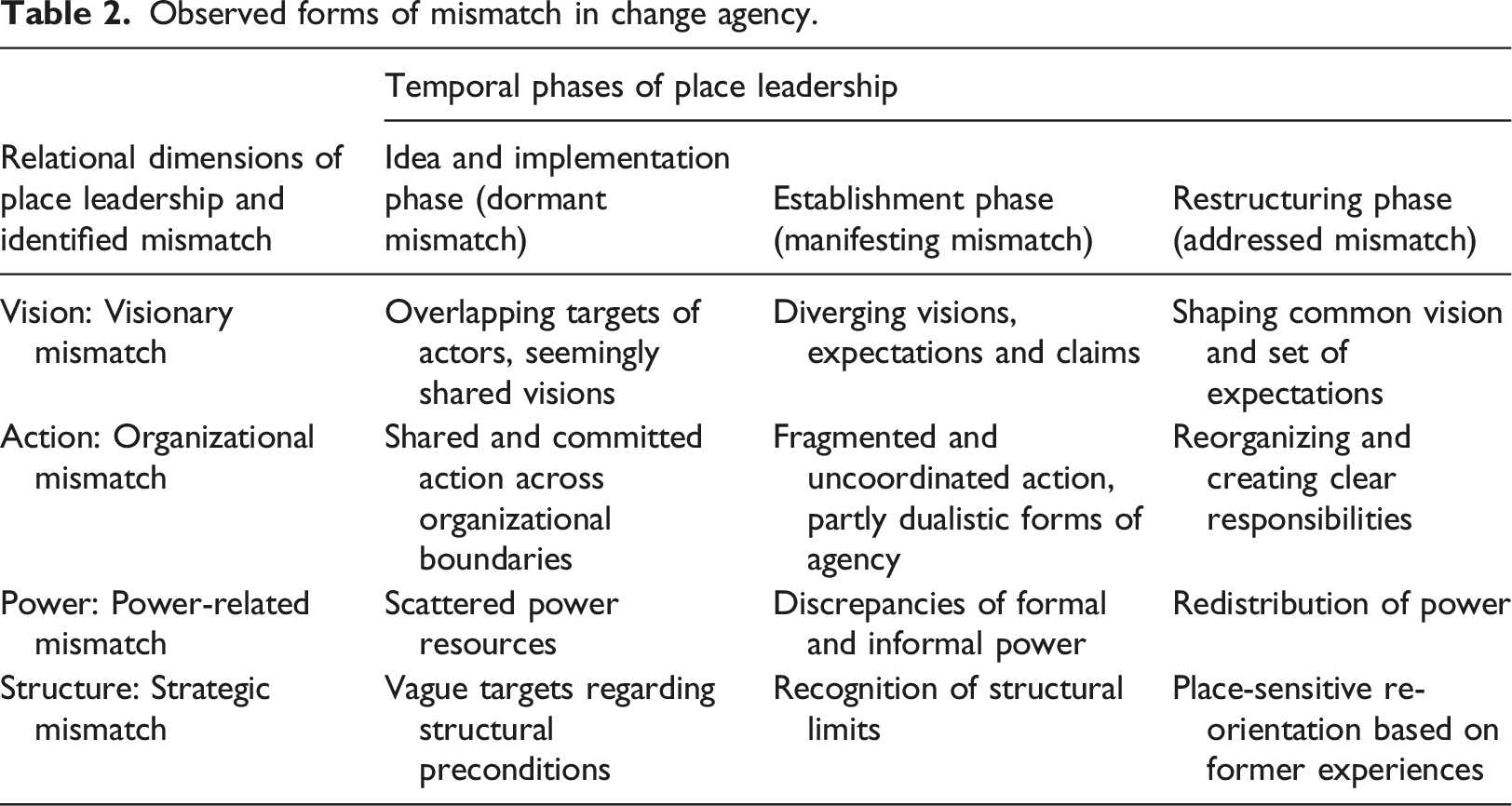
Visionary mismatch
During the identified phases, the leadership constellation transformed. The initiative to realize a HEI emerged out of regional engagement, advocating the needs of the regional firms. At the beginning of the implementation phase, visions and targets fit well together, as the Tyrolean Regional Government and East Tyrol both aimed for an economic upgrading of peripheries. In the establishment phase, it became increasingly apparent that actors’ expectations were more diverse than communicated in the beginning. The universities are under pressure to internationalize and to rationalize processes. Often, this is achieved by concentrating activities to a single site and by strengthening the most profitable or widely known activities (Nieth and Benneworth, 2018). However, this contradicts the needs of the local firms in peripheral regions, which rely on a place-specific and long-term engagement of a tertiary education institution (Charles, 2016).
Related to the visionary mismatch are also diverging expectations. While regional stakeholders expected more skilled workers and eventually prosperity for the region, universities saw potential for additional staff and financial resources. Finally, the Tyrolean Regional Government envisioned a favourable response from the local population following its financial investment and regional commitment. Those expectations were not unrealistic per se but varied among actors. In addition, some of these goals have a long-term orientation and would not have been achievable within a few years. This underlines again the need for a shared vision for successful place leadership (Sotarauta, 2018).
Organizational mismatch
In the idea phase, leadership by the Tyrolean Regional Government and regional stakeholders was characterized by a collective action and a high level of informal commitment (Beer and Clower, 2014; Stimson et al., 2009). The local actors successfully managed to express their demand for a regional campus, attracted external financing and universities as education partners. In doing so, two essential preconditions for a successful constitution of a branch campus in the periphery were met (Charles, 2016), but the complicated setup already indicated challenges (i.e. a dormant mismatch). However, in the establishment phase, when the issue of low enrolment numbers manifested, the leadership constellation was revealed as highly fragile.
A clear lead was absent and responsibilities remained unclear between both universities, but also between extra-regional and regional actors. Institutional and organizational gaps increasingly widened due to a dissent about strategic targets and campus organization. Therefore, actions became fragmented because of a lack of communication and increasing pressure. Acknowledging the growing dissatisfaction among the regional actors, the Tyrolean Regional Government initiated a restructuring phase. The aim is to find a common basis for action again, by implementing a multi-level steering group including all actors – so far with limited success.
Power-related mismatch
Power structures play a decisive role for effective place leadership (Sotarauta, 2016), shown also by the history of the Campus Technik Lienz. Initially, the Regional Economic Chamber was the centre of the informal network among regional the firms. Within the regulatory framework, the Tyrolean Regional Government assigned formal and strategic power to the universities. The local actors experienced this externalization of formal power as a limitation of local agency. Moreover, power structures became confusing, as different types of institutional, interpretative or network power were distributed across the multi-scalar setting (Sotarauta, 2009; Gibney et al., 2009). Interpretative and network power remained at the local scale, while the universities held institutional power. This imbalanced power structure manifested itself and became particularly noticeable in concrete decision-making processes. The local actors actually did not have a real opportunity to decide on further actions and the strategic orientation of the campus.
Strategic mismatch
Finally, the structural limits hampered the successful implementation of the campus and particularly the bachelor’s degree. In East Tyrol, local actors pursued the idea of a local university to strengthen the knowledge base and to prevent out-migration. However, by following this vision, structural conditions regarding demographic change and population decline were neglected in strategy formulation. The experiences in the establishment phase revealed that the district is not the preferred location for a tertiary education for the local youth and – like in other peripheries (Charles, 2016) – attracting bachelor students from outside the region is difficult or even impossible if the programme is not unique and outstanding. It appears that the Tyrolean Regional Government initially pursued a one-size-fit-all-strategy instead of tailor-made policies (Tödtling and Trippl, 2005), by suggesting to simply copy the programme from Landeck. Consequently, East Tyrol is still looking for a way to align the university along the regional preconditions and needs (Pinheiro, 2018), but also taking into account the motivations and goals of universities (Atta-Owusu et al., 2021).
Conclusions
This paper set out to investigate the implementation of a university campus in a peripheral region in Austria. Applying an in-depth analysis of the potentials and challenges over time, it contributes to the literature by providing deeper insights into the nature of place leadership, difficult actor constellations, and therefore on the limits of change agency. It argues that while the focus lies often on success stories, a critical perspective on leadership is also insightful and sometimes necessary. Applying the conceptual framework on the case of East Tyrol, the paper identified potential misalignments concerning visions, action, power and structure, hindering effective place leadership and change agency. As such, the framework offers a solid basis for the analysis of leadership constellations also in other cases. Furthermore, it highlights that leadership is a multifaceted process, including many avenues for alignment but also for mismatch.
In addition, the paper provides an interesting perspective of the ‘dark side of economic geography’ (Phelps et al., 2018). In contrast to most agglomerations, East Tyrol is challenged by out-migration, demographic ageing and physical distances. To tackle these developments, policy makers and stakeholders have tried to implement innovation concepts and actors familiar from central regions, like clusters or HEIs. Consequently, the paper provides insights into why it is so hard to apply these ideas to peripheral regions and why they can fail. As such, it underlines the importance of a specific innovation policy for regions outside the core. ‘Dark side’-contributions are therefore crucial to deliver inclusive place-based policies and to attenuate spatial inequalities all over Europe and beyond (Barca et al., 2012).
While the literature review already indicated that establishing and maintaining peripheral university campuses is challenging (Charles, 2016), the empirical analysis provides an illustrative example on why this is the case. The reasons are rooted in the limited structural preconditions of East Tyrol, but also in the complex setup of the actor network. Initially a joint effort, tensions arose when enrolment numbers remained below expectations. Financing, political responsibility, providing the bachelor’s degree, managing the campus and ambitions were divided amongst too many different actors, geographical scales, mindsets and visions. This hampered the successful establishment of the campus, but also hinders the restructuring process until today.
Peripheral university campuses can contribute significantly to the development of a region (Brekke, 2021). However, if a peripheral university campus falls behind expectations, an in-depth analysis is necessary to identify the underlying issues. As such, it suggests a few important guidelines for policy makers:
First, the structural preconditions need to be taken into account. Not all peripheries are adequate hosts for tertiary education institutions. As the analysis underlines, a specific concept might work in one peripheral region but can rarely be copied to another.
Second, the campus in Lienz was designed as a ‘micro university’ with just one bachelor’s degree course and one research group, not reaching the number of scientific staff initially intended. As such, the case highlights that a certain critical mass is necessary and should not be undercut. It also underlines that the expectations of the regional contributions of a ‘micro university’ should not be based on larger establishments.
Third, it should be clear what the campus is supposed to contribute to the region, but also to the whole university, as only a mutually beneficial relationship ensures long-term success. Establishing a HEI needs commitment and engagement from multiple actors from different scales with diverging interests. To bring universities on board, peripheral locations must offer them clear advantages.
Fourth, the leadership constellation should be set up complementary, not contradictory. Important positions like a regional location management should not be overlooked. Investing time in a sound division of competences, responsibilities and resources might prevent further conflicts. Consequently, effective leadership also requires a shared and explicate common vision that is communicated and affirmed by all actors during the entire process.
Fifth, long-term commitment and financing are necessary. Challenging regional development initiatives like establishing a HEI rarely deliver immediate results. In addition to a place-based design, financial and political support over multiple election periods is crucial. Should difficulties arise, a professional restructuring process might be necessary. External mediators might have a better chance to bring a gridlocked leadership setup back on track than already involved actors.
Future research could focus on two issues. First, it remains largely unclear which education institutions contribute best to which kind of peripheral regions, as it is difficult to define thresholds or minimum requirements. However, polytechnics or universities of applied sciences might be a better alternative to satellite campuses in cases with few inhabitants and little absorptive capacity. Second, the critical perspective on place leadership deserves more attention. As the literature so far has focused on cases experiencing favourable outcomes, there is still a need to better understand limits and misalignments of leadership constellations in regional development.
Footnotes
Acknowledgements
The authors would like to thank the interviewees for their willingness to participate in the study and for their openness in the conversations concerning the Technik Campus Lienz. Furthermore, the paper benefited greatly from the critical and helpful comments of two anonymous referees and Simon Baumgartinger-Seiringer and Camilla Chlebna on an earlier version of this article.
Declaration of Conflicting Interests
The author(s) declared no potential conflicts of interest with respect to the research, authorship, and/or publication of this article.
Funding
The author(s) received no financial support for the research, authorship, and/or publication of this article.
