




Abstract
To what extent were individuals willing to help others during the pandemic? This article examines pro-social attitudes among 7000 residents in England, Ireland, Germany, Serbia, and Sweden by showing a fictitious scenario of an older neighbour who needs his groceries to be picked up from a nearby supermarket. The online survey experiment follows a 3 × 2 × 2 factorial design varying the ethno-religious origin of neighbours signalled by the name (Alexander vs Mohammed), the length of their residence (<1 year, 10 years, entire life), and if groceries, or groceries and beer need to be collected. We find that those of minority origin and those who have spent less than a year in a country are disadvantaged. Overall, religiosity is associated with a lower willingness to help a neighbour.
Introduction
During the COVID-19 pandemic, Italians warbled the song ‘Azzuro’ from their balconies in solidarity with the healthcare workers devoted to saving patients from the COVID-19 virus (Horowitz, 2020). Other countries followed suit. Libal and Kashwan (2020) argue that the COVID-19 crisis has created opportunities for local support. In extraordinary times such as these, individuals might have a stronger belief in common welfare, as the pandemic has adverse effects on all. Repeatedly, it was emphasized that we are all in this together (Nolan, 2021). Solidarity is produced by a common culture that fosters a sense of belonging (Calhoun, 2003). While the coordinated action of singing indeed demonstrated a sign of unity, the crucial question is ‘would this solidarity also extend to neighbours in daily life, particularly if they are of a different ethno-religious origin?’.
This article aims to answer this question by drawing on a novel data set collected in five European countries: England, Ireland, Germany, Sweden, and Serbia. We conducted a survey experiment with 7000 respondents living in those countries during the pandemic. In the survey experiment, respondents were presented the case of a fictitious older male neighbour who needed help with the collection of groceries due to cocooning. Overall, three characteristics were varied: (1) the ethno-religious origin signalled by the Muslim name Mohammed and the native name Alexander, (2) the duration of stay in the country of residence, and (3) the groceries that needed to be picked up. Other survey experiments have mostly been conducted in single countries (e.g., Yemane et al., 2023) and did not focus on local helping behaviour (e.g. Haderup Larsen and Schaeffer, 2021; Schaeffer and Haderup Larsen, 2023), which we believe is a crucial aspect of solidarity. Existing research oftentimes excludes Eastern European and non-European Union (EU) member states in Europe. Our data including Serbia are therefore novel and will help us to assess to what extent we can generalize findings across countries.
While the context of the pandemic is new, the question about the emergence of solidarity in societies and pro-social behaviour are long-standing questions in the social sciences (Lindenberg et al., 2006). By pro-social attitudes we mean attitudes towards voluntary helping behaviour to improve someone else’s well-being (e.g. Dovidio et al., 2017: 22, 25). The article includes a range of explanations from socio-demography to empathy as correlates of informal help, but focuses on religion due to its paradoxical role in prejudice (Allport, 1979: 413). On the one hand, we can expect that pious people abide to the creeds of brotherhood and underwent religious socialization, fostering helping behaviour towards others (Dovidio et al., 2017: 11ff.). On the other hand, we know from various studies (e.g. Creighton and Jamal, 2015; Strabac and Listhaug, 2008) that hostility towards other religions, in particular, Islam is high. The salience of group boundaries across religion is a very timely topic. Currently, boundaries between Christians and Muslims are perceived as salient (e.g. Torrekens and Jacobs, 2016).
In our analyses, we find pro-sociality chauvinism, meaning respondents are less supportive of those who would need the support – recent immigrants. Moreover, we find cross-national differences with respondents in Germany clearly displaying a significantly lower willingness to help a Muslim- versus non-Muslim-named neighbour. In other countries such as Serbia and Sweden, a lower willingness to help a Muslim-named neighbour only occurs in combination with a shorter duration of stay and the type of groceries that have been ordered.
Theoretical framework
This article starts from the premise that the willingness to help comes at one’s expense to benefit the welfare of another (Dawkins, 1989: 4). Helping behaviour is a subcategory of pro-sociality and denotes behaviour that is valued by a society (Dovidio, 1984: 364). It fosters solidarity during the pandemic (Prainsack, 2020) and ensures social order more generally (Gellner, 1964). Based on Ibn Khaldun’s work, Malešević (2015) argues that in modernity, forms of micro-solidarity between individuals continue to exist but in a different shape – through emotional attachment. Durkheim, on the other hand, sees mechanical solidarity to be entirely transformed into organic solidarity in industrialized societies, where the high levels of specialization in economy create interdependence between people rather than shared values and lifestyles. Gellner (1989: 92ff.) expands on this idea by proposing that highly industrialized societies find specific forms of organic solidarity and develop new rituals such as the celebration of national identity. Chains of interaction rituals generate emotions and a sense of belonging building the fundament for solidarity. Yet, these interactions rituals have been disrupted by the COVID-19 pandemic and are therefore expected to affect solidarity (Collins, 2020).
Applied to the pandemic, we hypothesize that people who have been in a similar situation as the neighbour in our fictitious scenario – meaning having had to isolate and experiencing the severity of the virus oneself or in the personal network – will be more likely to empathize and help (e.g. Aithal et al., 2021). The ‘empathy-altruism model’ suggests that individuals who are able to feel empathy in form of compassion and sympathy are also more likely to help others (Batson et al., 1981). Empathy (e.g. Stocks et al., 2009) and the perception of others being less privileged predict helping those in need (e.g. Sabato and Kogut, 2018; Schlosser and Levy, 2016). Voicu et al. (2021) found indeed higher levels of solidarity among Spanish and Romanian respondents who knew an infected person in Spain and Romania, and Hungarian respondents who had to isolate. Therefore, individuals who had COVID-19 themselves or know of someone who had it might have more empathy and hence express a greater willingness to collect the groceries for their neighbour. This empathy should be reduced if the neighbour’s behaviour is perceived as morally wrong, that is, ordering alcohol, which goes beyond the basic necessities and its consumption is discouraged due to detrimental effects on one’s health (e.g. Holt et al., 2014). Moreover, a related study investigated the solidarity during the pandemic and found that people who did not follow a doctor’s recommendation (Gandenberger et al., 2023), exhibited unhealthy lifestyles, and did not comply with COVID-19-related measures (Reeskens et al., 2021; Schaeffer and Haderup Larsen, 2023) were seen as less deserving of help. To sum up, the willingness to help should be lower if alcohol is ordered, as altruistic behaviour aims at increasing someone else’s welfare. Therefore, we hypothesize that the likelihood that individuals are willing to collect their neighbour’s groceries decreases if a six pack of beer is ordered (H1).
This brings us to the next hypothesis that the costs of one’s action are weighed against the other person’s welfare. Pro-sociality and empathy should be higher if it does not directly affect oneself (e.g. Turkoglu et al., 2022). One might argue that individuals are less willing to help if it is in conflict with their personal interests and obligations with respect to time and ability, for instance, if one belongs to a risk group, has childcare responsibilities, or works full-time. According to the cost-reward model, the reward for helping an in-group compared to an out-group member is higher as it can strengthen feelings of closeness and be rewarded (Dovidio, 1984; Levine et al., 2005). During the pandemic, in-group and out-group boundaries were salient when it came to pro-social intentions (Aithal et al., 2021; Zagefka, 2021). A perceived national threat during the pandemic was associated with less pro-social intentions (Zagefka, 2021), and seeing a request for help signed with a Chinese or Turkish name resulted in a lower willingness compared to a German name (Aithal et al., 2021). While these studies focused on national belonging, it suggests that other group boundaries signalling a different origin – such as religion – might also matter for pro-social intentions during the pandemic.
The eligibility for help and being perceived as in-group member may furthermore vary depending on the duration of stay, official status, and social security payments one has made in the country of residence. Welfare chauvinism and deservingness theory describe the idea that only individuals who have contributed to the welfare state are also eligible to be supported in times of need to prevent free riding (Andersen and Bjørklund, 1990; Van Oorschot, 2000). We extend this idea to informal help and hypothesize that there will be pro-sociality chauvinism with individuals’ willingness to collect the groceries for their neighbour to be decreasing with a shorter length of residence in a country (H2). In case of a neighbour who has spent more time in the country of residence, residents might be more willing to engage in costly action to increase their neighbour’s well-being, as this neighbour is more likely to have contributed to host society in terms of taxes and be well integrated. (Neo-)Assimilation theory predicts that integration in terms of social networks, socio-economic status, values, and other dimensions is more likely to occur with a longer duration of stay, and should be highest for those who have spent their entire life in the country of residence, and belong to subsequent generations (Carol, 2016; Alba and Nee, 1997).
Recent research has revealed healthcare chauvinism during the pandemic with foreign citizens in Germany being seen as less deserving of intensive care (Gandenberger et al., 2023; Helbling et al., 2022) and individuals having resided in Denmark only shortly being seen as less eligible for hospitalization (Haderup Larsen and Schaeffer, 2021) and vaccination (Schaeffer and Haderup Larsen, 2023).
In addition to the length of residence, we know from previous research that there are ethno-religious hierarchies. While research on discrimination during the pandemic focused oftentimes on persons of Asian descent, it also extended to other groups (Lu et al., 2021). Overall, the prejudice towards Muslims is higher than for other immigrants (Strabac and Listhaug, 2008). Accordingly, the willingness to collect the groceries for a native-named neighbour is higher compared to a Muslim-named neighbour (H3), as they constitute the religious out-group for natives.
We argue that levels of religiosity might explain individuals’ willingness to help. Religion survived and adopted to societal transformations and remains a salient social identity in some regards (e.g. Gorski and Altınordu, 2008; Ysseldyk et al., 2010). Religions define moral behaviour and what is considered to be right and wrong (Broom, 2003: 1) and threaten their members with consequences in the afterlife when social norms are violated (Hirschi and Stark, 1969). Moral behaviour can concern helping behaviour, dietary requirements (e.g. alcohol, food), sexuality, fairness, and many more areas (Broom, 2003: 185; McKay and Whitehouse, 2015). Previous research has repeatedly pointed out that religions stress the creeds of brotherhood and encourage pro-social behaviour within their communities (see Norenzayan and Shariff, 2008 for a review). Saroglou et al. (2004) empirically observed a positive relationship between religiosity and benevolence across countries. Similarly, Henrich et al. (2010) showed that religious followers treat others with more fairness. This suggests that if individuals are more religious, they are generally more willing to collect the groceries for their neighbour and act in line with religious principles if they perceive this to be the morally right choice.
But is pro-sociality chauvinism universal to all groups or moderated by religion? Religion can operate as a cultural marker that reinforces group boundaries (Dahinden and Zittoun, 2013; Pals, 1996). In this context, the religious doctrine can be deployed to establish sharp social hierarchies between groups. The hardening of social boundaries across the religious lines is likely to foster different ethical prescriptions: in-group favouritism can trump pro-sociality.
Why do go religions distinguish between in-group and out-group members? Evolutionary approaches have pointed out that religious communities need to solve the free-riding problem and make religion sufficiently costly to avoid it (Stark, 1996; Wilson, 2002). The risk of free riding is arguably higher with outsiders who do not adhere to the norms of the religious community. Also the survey (-experimental) evidence on rising anti-immigrant attitudes (Ben-Nun Bloom et al., 2015) and Islamophobic attitudes suggests that individuals distinguish between members of their religious groups and others. Islamophobic sentiment is lowest in Sweden and higher in Germany, Ireland, and Great Britain (Ribberink et al., 2017). In addition, the dividing lines can run along religious versus non-religious identities. Previous research has identified non-religious as holding more resentments towards Muslims in more secular societies (Carol et al., 2015; Ribberink et al., 2017). This is oftentimes traced back to a perceived clash of liberal values (e.g. Helbling and Traunmüller, 2020). Combining these insights with social identity theory and the assumption that individuals’ action is influenced by their identification with their groups, we would expect that the willingness to collect groceries is moderated by religiosity, resulting in a more negative effect of religiosity on the willingness to help a Muslim compared to a non-Muslim neighbour (H4).
The five countries of study: England, Ireland, Germany, Serbia, and Sweden
We selected countries that vary in their stringency measures during COVID, welfare state arrangements, accommodation of minorities, religiosity but all host Muslim minorities. In most of the countries we studied, Muslims arrived as immigrants primarily during the last and this century. In Sweden, migration history of Muslim minorities has been shaped by labour migration from Turkey and the former Yugoslavia. In addition, Sweden has hosted a number of asylum seekers from Turkey, the Middle East, and the former Yugoslavia (Swedish Institute, 2021). While many Muslims in Germany also came through guest worker programmes from Turkey and North Africa, the population became more diverse around 2015 with refugees, for instance, from Syria and Afghanistan (Pfündel et al., 2021: 42f.). In Britain, a significant amount of Muslims stem from former colonies such as Bangladesh, India, and Pakistan (Lunn, 2007). Ireland only started to experience the vast amount of immigration during the ‘Celtic Tiger’ economy in the early 2000s (Fahey et al., 2019; McGinnity and Kingston, 2017). Muslims constitute a minority among minorities. Most Muslims in Ireland stem from South Asia and Africa, especially Nigeria (Fanning, 2011: 62f.). The inclusion of Serbia fills a research gap, as it has rarely been covered in previous studies. Muslims are of immigrant and native origin since the Ottoman conquest. Most of them are Bosniaks from the Sandžak region, or Albanians from the south of Serbia (Alibašić, 2009). Serbia is a country shaken by the historical legacies of war, where tensions between ethnic groups were often framed through religious differences (Malešević, 2006). Moreover, the country is torn between East and West, struggling to overcome semi-authoritarian practices (Bieber, 2020). However, Serbia experienced as the other European countries in our sample an influx of refugees more recently (Galijaš, 2019).
Sweden is the most secularized country, while Ireland and Serbia rank among the more religious countries in this sample with Germany and England being located in between (Gallup International Association, 2012; Halman and Draulans, 2006; Ribberink et al., 2017). Among the five countries, Sweden appears to be most supportive of multicultural policies, followed by Ireland, Germany, and England with Serbia showing the lowest support. 1 When it comes to Islam, the United Kingdom and Sweden are most accommodating followed by Germany (Michalowski and Burchardt, 2015).
When we look at the strength of the welfare states and social expenditures, Sweden spends the most 2 and Serbia the least (Pejin Stokić and Bajec, 2019). Even though there are subtle differences, Germany is oftentimes classified as conservative welfare state, England and Ireland as liberal, and Sweden as social-democratic (Bertin et al., 2021). While the willingness to help is generally higher in stronger welfare states, there is also the opposite hypothesis (Gelissen et al., 2012). Recent research has connected this to migration and showed that individuals are more reluctant to help new immigrants, as these new immigrants might have not contributed to the welfare state yet (e.g. Haderup Larsen and Schaeffer, 2021).
During the field time of our survey experiment May–June 2021, some restrictions were still in place, most of them restricting the number of guests at indoor venues (Britain, Serbia, Sweden) and/or travel (Britain, Ireland, Germany). Ireland was still completely closed off at this time with regard to venues and restaurants. Germany started to introduce privileges for the vaccinated (A3M Global Monitoring, 2022). The officially recorded cases (7-day rolling average) were highest in Sweden and lowest in the United Kingdom, with Germany, Serbia, and Ireland in between. The number of deaths was highest in Serbia and lowest in Ireland, with Germany, Sweden, and the United Kingdom being in between (Johns Hopkins University, 2022).
Data, operationalization, and method
Data
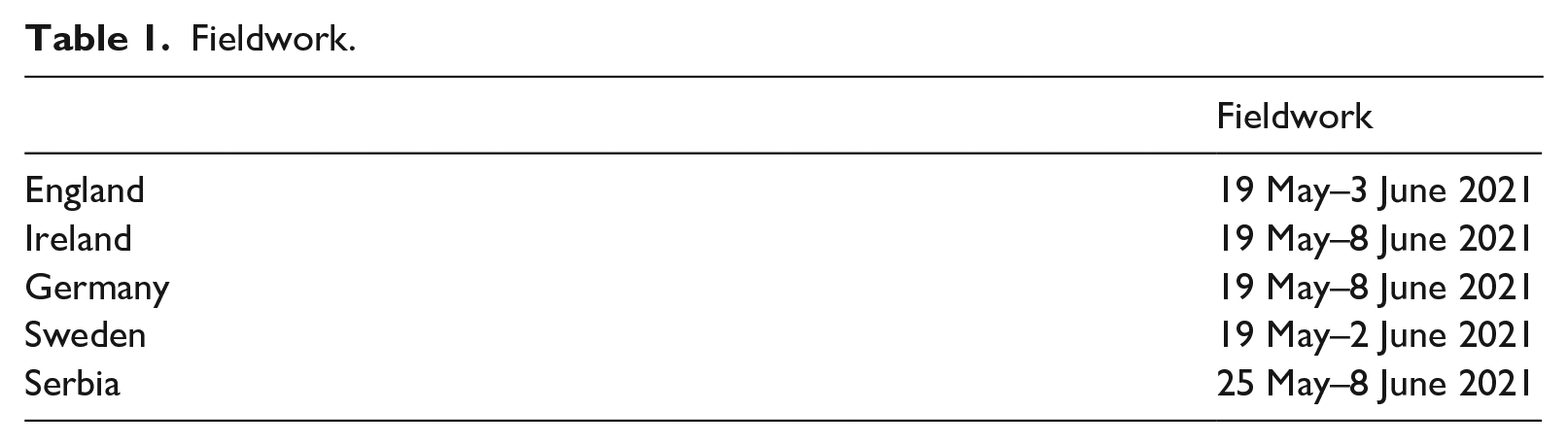
Respondents were recruited through Ipsos online access panels in England, Ireland, Germany, Serbia, and Sweden after receiving ethical clearance and translation of the questionnaire by the project team and Ipsos. As this was a quota sample, we aimed for a representative distribution of the general population in terms of age, gender, region, and education for the respective countries. The minimum age of participants was 18 years. A pretest was conducted. After the completion of the questionnaire, respondents received an incentive. Overall, 7000 valid cases are analysed (2000 each in Britain and Germany, 1000 each in Ireland, Serbia, and Sweden). 3 The field time took place between 19 May and 8 June 2021. Table 1 lists the specific dates for the fieldwork per country. The survey experiment was preregistered on OSF under the title ‘World problems, national solutions’.
Fieldwork.
Operationalization
We pursue a between-subject vignette survey experiment with a 3 × 2 × 2 factorial design. We randomly vary the name, the length of stay, and the groceries in the following scenario:
4
The outbreak of COVID-19 has placed an immense burden on societies and individuals who have become more isolated. In the following you are asked to take a stand on the case of the 60-year old neighbour [VARIABLE 1: Alexander (Germany, England, Sweden, Ireland), Aleksandar (Serbia)/Mohammed] who has lived in [country of residence] for [VARIABLE 2: less than a year/the past ten years/all his life]. Unfortunately, this neighbour lives alone, does not know many people nearby and has been told to cocoon due to the risks COVID-19 poses for his health. Your neighbour is struggling with getting his [VARIABLE 3: groceries / groceries and a six-pack of beer], as the supermarkets lack possibilities for deliveries. Based on the above scenario, to what degree would you be willing to collect the pre-ordered and pre-paid groceries for your neighbour from the nearby supermarket during a newly imposed two-week lockdown and leave them at his doorstep (0 ‘completely unwilling’–4 ‘completely willing’)?
The name of the neighbour (0 = ‘Alexander/Aleksandar’, 1 = ‘Mohammed’), 5 the duration of stay (0 = ‘less than a year’, 1 = ‘the past 10 years’, 2 = ‘all his life’), and groceries (0 = ‘groceries’, 1 = ‘groceries and a six-pack of beer’) constitute the treatment variables. Our main independent variable religiosity is measured on an 11-point scale ranging between 0 = ‘not religious’ and 10 = ‘very religious’.
Based on existing research, we include a range of control variables to account for alternative explanations. Empathy is approximated with the questions ‘Have you been tested positive for COVID-19?’ and ‘Do you personally know of anyone who died of COVID-19?’ (0 = ‘no’, 1 = ‘yes’). Having children (0 = ‘no’, 1 = ‘yes’), 6 employment status (0 = ‘unemployed (incl. inactive)’, 1 = ‘employed’), and ‘Do you count as an at-risk group for COVID-19-complications?’ (0 = ‘no’, 1 = ‘yes’) are used to estimate the costs of helping behaviour. For parents and employed individuals are expected to have less time to help, which makes it more costly for them. The remaining control variables are country, gender (0 = ‘female’, 1 = ‘male’), education (International Standard Classification of Education (ISCED) - 97 classification), age, place of residence (0 = ‘rural’, 1 = ‘urban’), and minority status (0 = ‘no’, 1 = ‘yes’).
Method
We estimate ordinary least squares regressions with robust standard errors and 20 multiple imputations using Markov Chain Monte Carlo to replace missing values. 7 To achieve greater representativeness, the data are weighted 8 by gender, age, region, and education based on the Random Iterative Method (RIM). RIM weighting puts selected non-interlocking and grouped interlocking variables (quota defined by more than one characteristic) through an iterative sequence. The sequence repeats itself as many times as it is required in order to obtain a convergence, in which the sum of the weighted rims matches the target population estimates or is as close as it is possible to achieve. The procedure was performed using a specially designed software by Ipsos for RIM weighting.
Results
Descriptive analysis
Figure 1 ranks the average willingness to help by profile from a model excluding control variables.
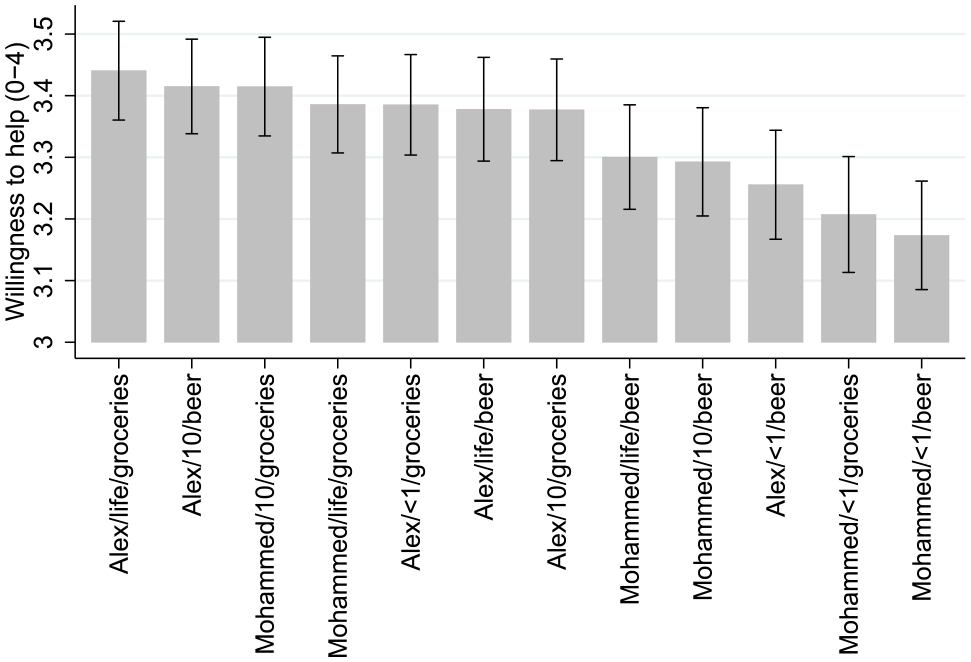
Pro-social attitudes by profile of neighbour.
Respondents who saw the profile of a neighbour named Alexander/Aleksandar (in the following abbreviated as Alex) who lived in the country of residence his entire life and ordered groceries indicated the highest level of willingness to collect groceries for this neighbour. The willingness to help this neighbour did not differ significantly from all other profiles containing the name Alex, except the one for Alex who lived in the country of residence less than a year and ordered beer on top of the groceries. A neighbour with this profile was, in turn, not treated significantly different from a neighbour called Mohammed who lived less than a year in the country of residence. This figure generates three interesting findings: First, not all variations of a neighbour called Alex are equally popular, and second, there is no clear clustering with all profiles containing the name Alex located at the one end, and all profiles containing the name Mohammed at the other end. Instead, profiles that included beer were rated lower when it came to the willingness to help, and those with groceries were rated higher. Yet, and third, respondents did not respond equally well to a Mohammed who has lived in the country for less than a year and ordered groceries as compared to his counterpart (Alex who has lived in the country for less than a year and ordered groceries), meaning there is ethno-religious discrimination in attitudes.
Treatment effects
Further analyses confirm in line with the first hypothesis that beer decreases respondents’ willingness to help (Figure 2).
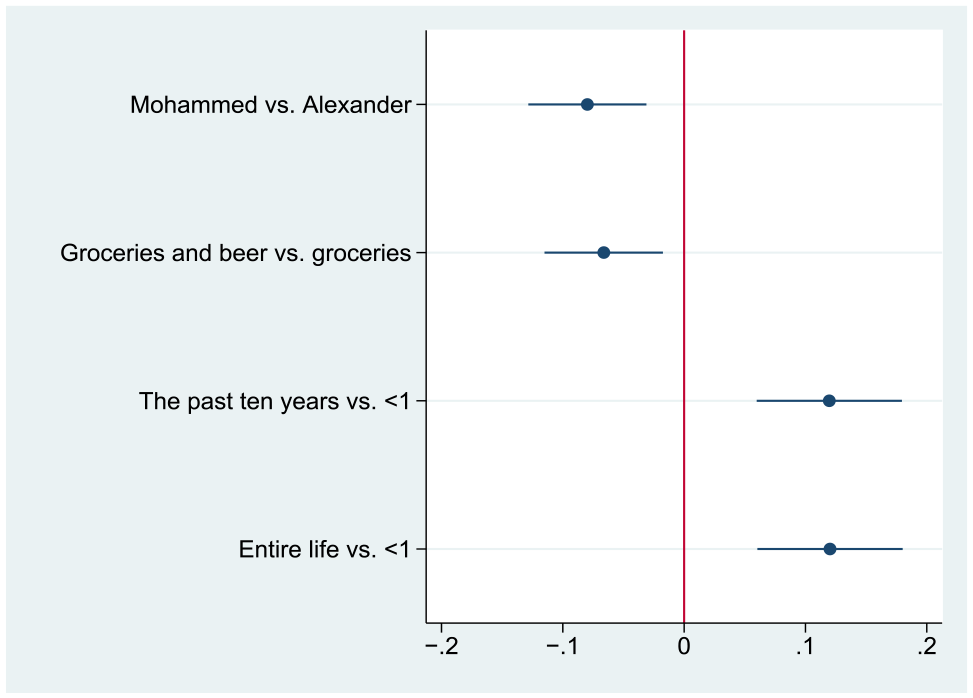
Treatment variables.
Figure 2 displays the estimates excluding control variables. Estimates to the left of the red line indicate a lower willingness to help and estimates to the right of the red line indicate a higher willingness to help. If confidence intervals (degree of uncertainty) overlap with the red line, findings are not significantly different from zero. If an immigrant has spent less than a year in a country, the respondents’ willingness to help decreases, which is partly in line with our second hypothesis. However, there is no benefit of having lived in the country the entire life compared to those who have spent 10 years in the country. Overall, the size of the coefficient for duration of stay is slightly but significantly higher than for the name. Having lived in a country the entire life increases respondents’ willingness to help by 13 percentage points (Table 2, Model 1). Finally, the figure clearly shows that in line with our third hypothesis, respondents indicated to be less willing to help a neighbour called Mohammed compared to a neighbour called Alex. These findings resonate with studies on actual discrimination of Muslim minorities (e.g. Carol et al., 2023; Di Stasio et al., 2019; Koopmans et al., 2019) and a recent survey experiment on the perceived eligibility of medical treatment for foreigners during the pandemic (Haderup Larsen and Schaeffer, 2021). To conclude, how willing people are to help depends on the ethno-religious origin of a neighbour, the duration of stay, and the type of groceries that are ordered (Figure 2).
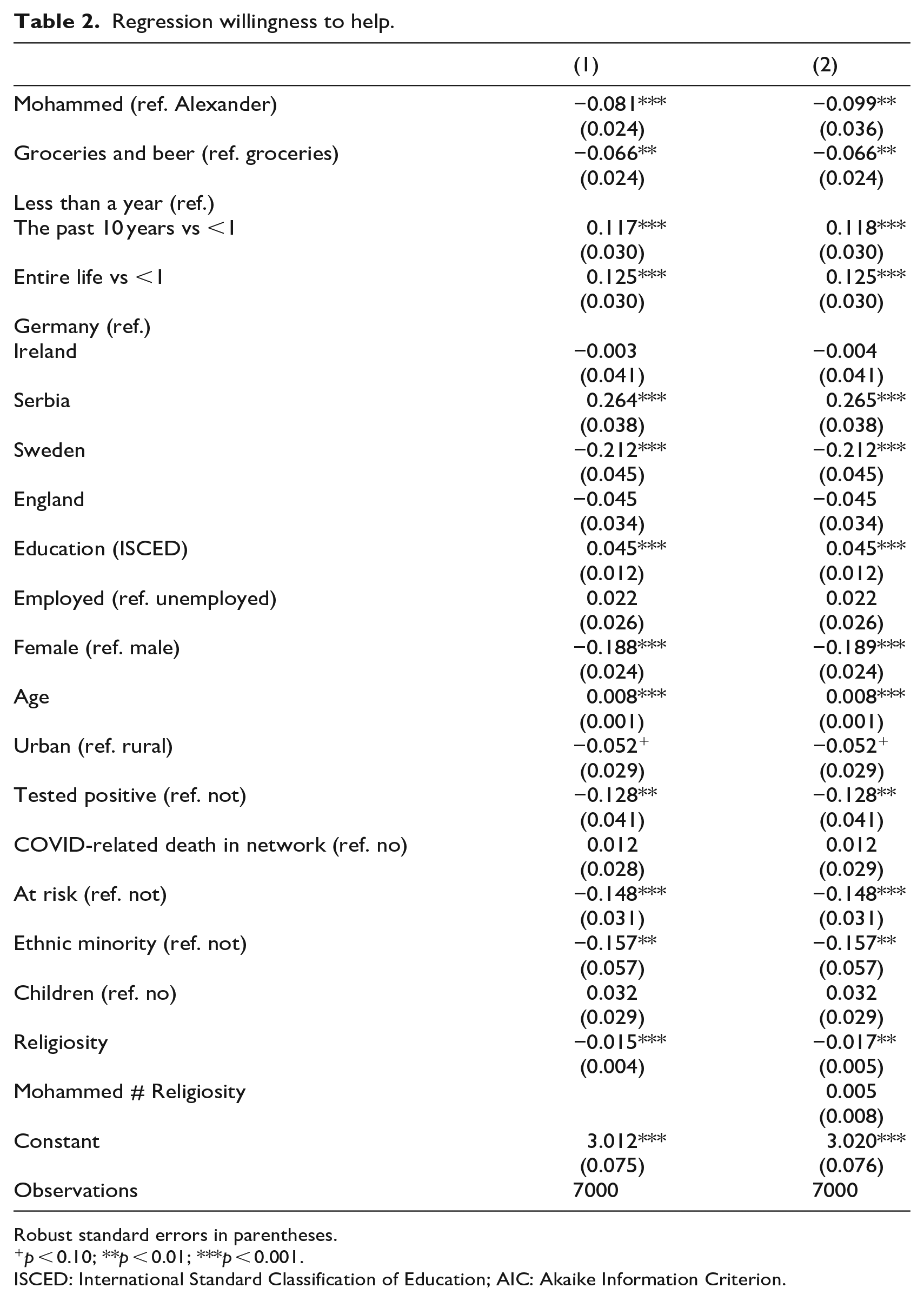
Regression willingness to help.
Robust standard errors in parentheses.
p < 0.10; **p < 0.01; ***p < 0.001.
ISCED: International Standard Classification of Education; AIC: Akaike Information Criterion.
Cross-national differences
Given the cross-national design of the data set, Figure 3 uncovers effect heterogeneity across countries and re-estimates Figure 2 by country.
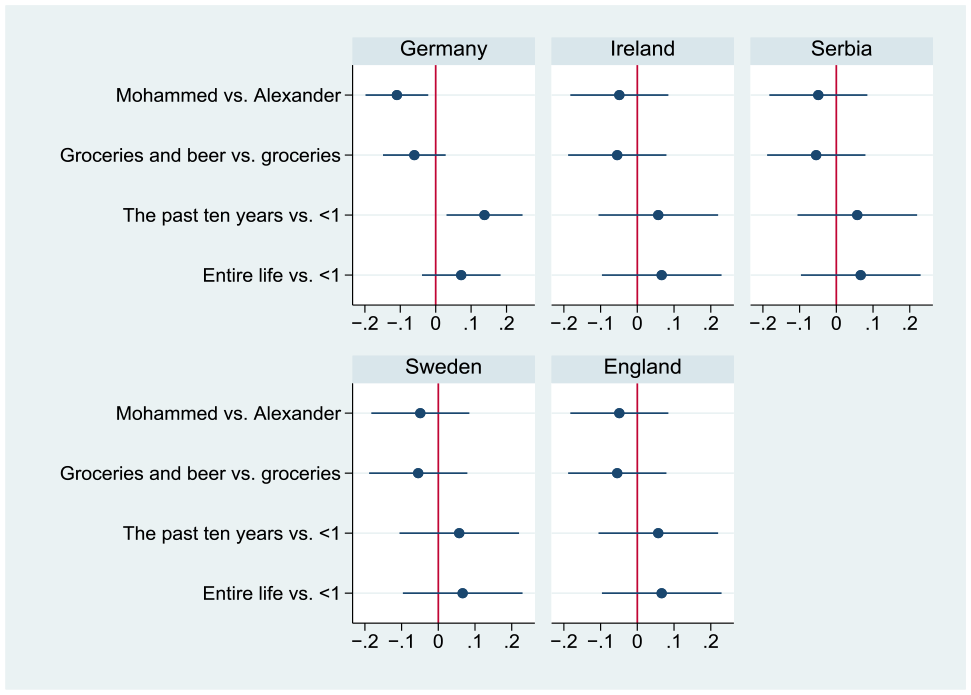
Cross-national differences in treatment variables.
We find that the results of the treatment variables are driven by the German sample where people are significantly less willing to help Mohammed. Moreover, there is a significantly higher willingness to help an immigrant who has resided in the country for 10 years. This suggests that an immigrant is less accepted in the short and long term. This resonates with Germany’s guest worker programme, which initially saw immigration as a temporary phenomenon and failed to integrate its immigrants in the beginning (Bade and Oltmer, 2011). For other countries, we do not see any significant differences across treatment variables.
However, this analysis does not inform us about differences between the different profiles that participants saw. We therefore conducted another analysis that compares the profile of Alex who has spent his entire life in the country and ordered groceries (no reference to beer) to all other profiles. The red line constitutes the reference category in Figure 4.
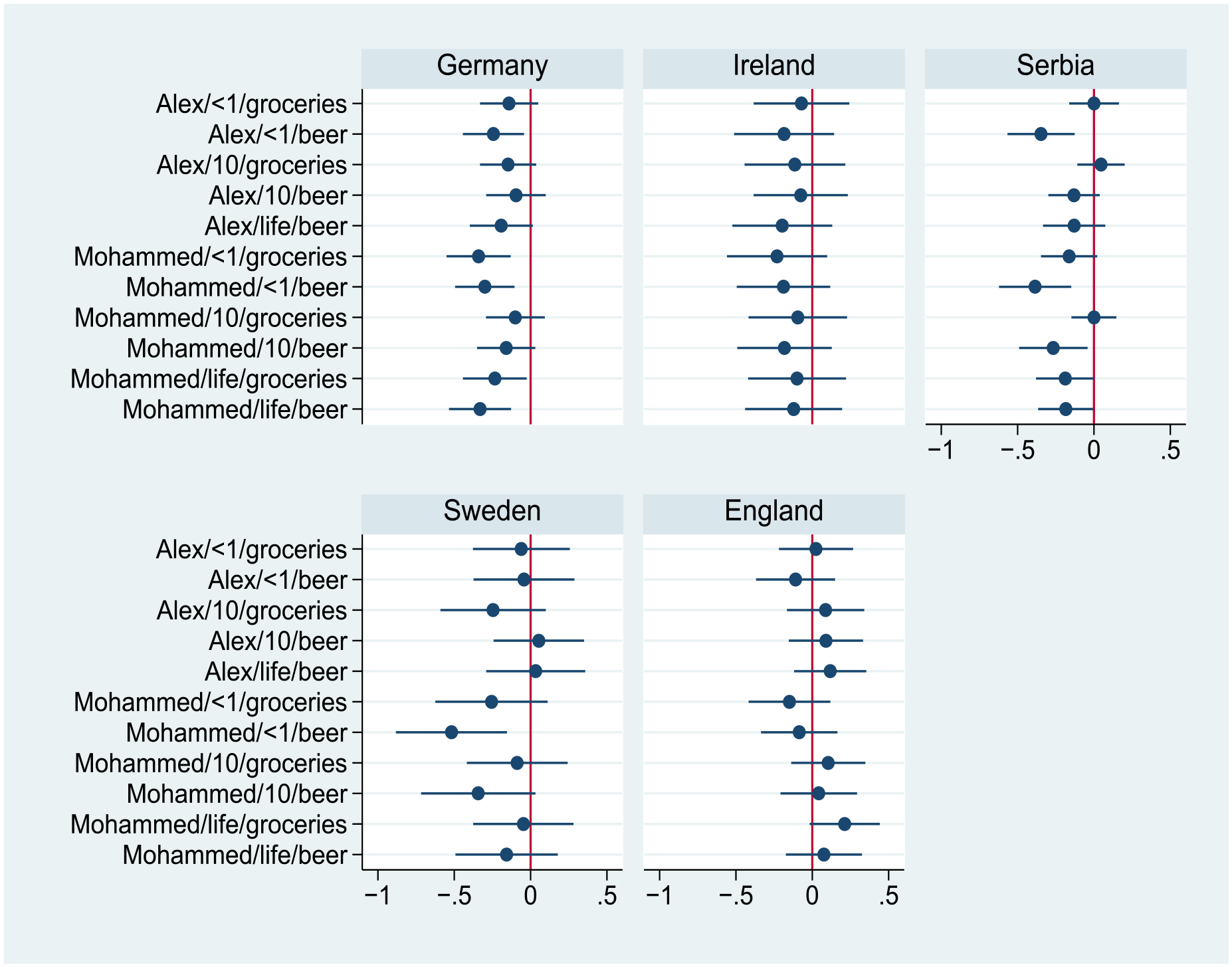
Cross-national differences across profiles.
As already indicated in Figure 3, there is an absence of substantial discriminatory attitudes in England and Ireland. The finding for Ireland is in line with our expectations. The absence of significant differences matches previous findings by Strabac and Listhaug (2008) revealing that no significant distinction is made between Muslims and other immigrants.
Again, in Germany, but this time unexpectedly also Serbia, ethno-religious differences are more prominent. In those two countries, respondents were significantly less willing to help Alex who lived less than a year and ordered beer compared to Alex who lived his entire life there and ordered groceries (reference category). They were equally unwilling to help a neighbour called Mohammed who has lived there less than year. In Germany, this was irrespective of whether beer was ordered or not. In Serbia, all of the profiles of a Mohammed received lower scores except for Mohammed who has lived there 10 years and ordered groceries. It is somewhat puzzling that the latter profile was not significantly different from Alex who lived his entire life there and ordered groceries in Germany and Serbia alike. Mohammed who lived in the country less than a year or his entire life were both significantly different, particularly in Germany.
Sweden is somewhere in between those more extreme cases. Compared to Figure 3, one significant difference to the most positively rated profile (Alex/life/groceries) concerns Mohammed who lived there less than a year and ordered beer. This was the profile where respondents indicated the lowest willingness to help. This did not apply to a neighbour called Alex with the same profile, meaning there is some discrimination by ethno-religious origin in Sweden as well.
Pro-social attitudes and religiosity
The following analyses delve deeper into the moderating role of religion. Table 2 contains two models: Model 1 includes religiosity on top of the socio-demographic control variables (including country-fixed effects) and Model 2 an interaction between religiosity and the name. We found two surprising findings (Table 2).
First, in contrast to the landmark of literature that associates more pro-social behaviour with more religious individuals, we found a significant negative but small relationship (.02) with a constant of 3.012 (Table 2, Model 1), meaning religious individuals actually showed a lower willingness to help their neighbour. Second, religiosity did not play a significantly different role when evaluating the profile of the neighbour Mohammed compared to Alex (Table 2, Model 3), which leads us to falsify the fourth hypothesis. However, there was cross-national variation in the role of religiosity.
In order to visualize effect heterogeneity across countries and profiles, Figure 5 plots the relationships between religiosity and willingness to help by group (Alexander and Mohammed) and country.
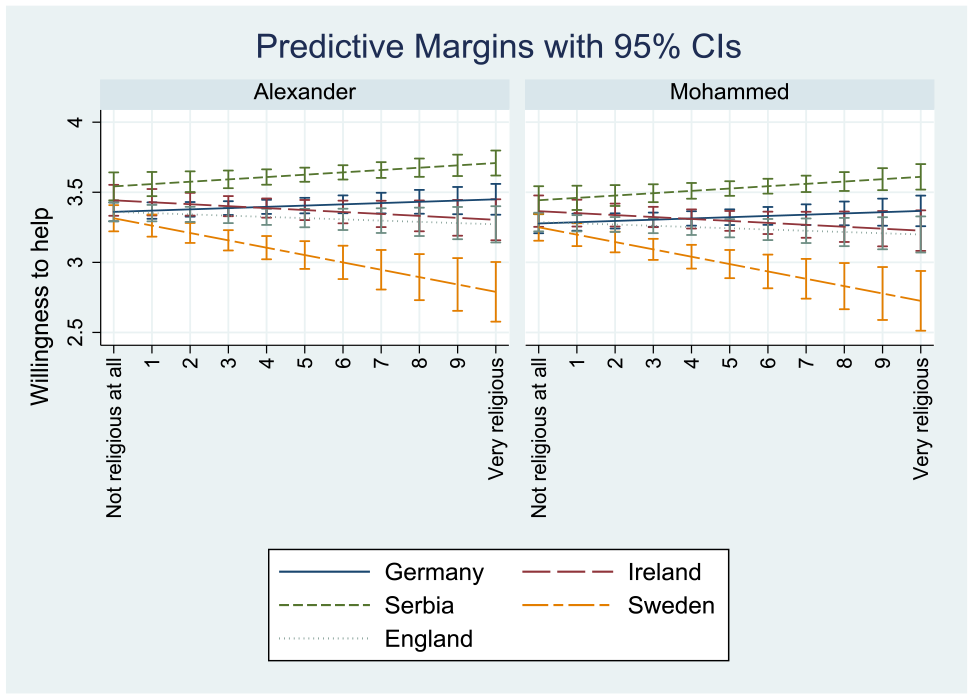
Relationship between religiosity and willingness to help (by country).
We find that the coefficient for religiosity varies by ethno-religious origin of the neighbour and national context. Running separate models for the two profiles revealed that religious individuals in Serbia are more likely to indicate higher levels of willingness to help a neighbour called Alex compared to religious individuals in Sweden (Figure 5) and marginally more compared to residents in Ireland and England. Religious individuals in Serbia are also marginally more supportive of a neighbour called Mohammed than religious individuals in Ireland. This means, in Serbia, the classic relationship between in-group favouritism and out-group rejection does not hold. Serbian respondents were, on average, more willing to help than elsewhere. Religious individuals in Sweden, on the contrary, had a significantly lower likelihood to be willing to help a neighbour named Mohammed compared to England, Germany, and Serbia. Similarly, religious individuals in Ireland were less willing to help compared to those in Germany. This speaks to cross-sectional analysis of the Irish European Social Survey by Fahey et al. (2019). Hence, contrary to our fourth hypothesis, we conclude that there is not a uniformly positive or negative coefficient of religiosity on pro-social attitudes. Instead, it depends on the ethno-religious out-group and the context individuals reside in. The main takeaway is that the negative relationship with religiosity does not extend to all countries. This is in line with previous research that found cross-national variation in the effects of religiosity on anti-immigrant sentiments (e.g. Bohman and Hjerm, 2013).
Robustness checks and control variables
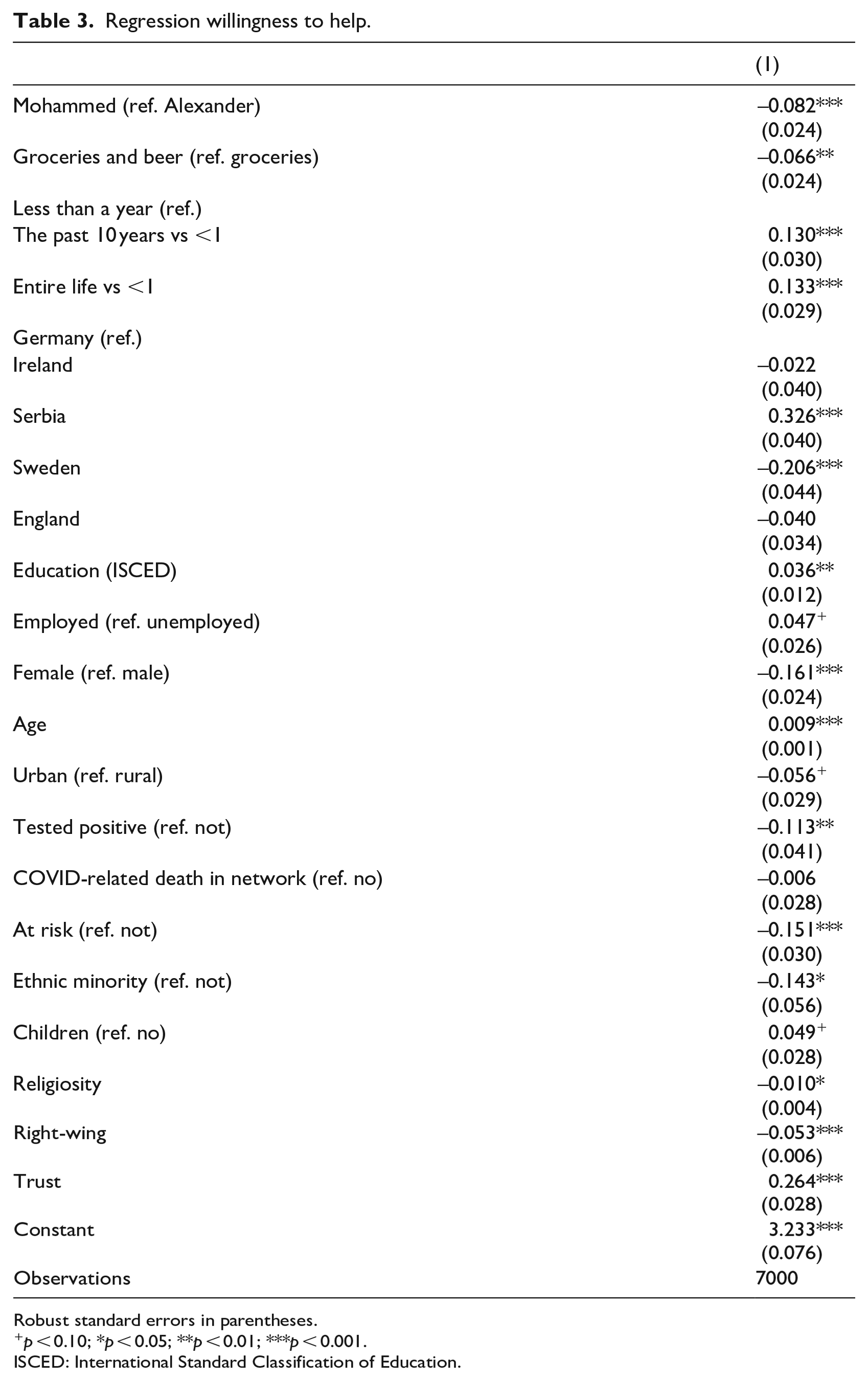
Our analyses were held constant for a range of control variables. In the beginning of the theoretical framework, we discussed the explanations of pro-social behaviour more generally. One explanation relates back to the empathy-altruism model, according to which one could expect that individuals who had COVID-19 themselves or know of someone who had it might develop more empathy and hence express a greater willingness to collect the groceries for their neighbour. Yet, the opposite is the case. In our study, we found a lower willingness to help if individuals are at risk or had previously tested positive. In the latter case, the associated costs would be lower of coming into contact with someone outside the household. COVID-related deaths within the network played no role. However, other costs might arise. If individuals have childcare responsibilities or work full-time, they should be less willing to collect the groceries for their neighbour. Yet, none of these variables mattered in a multi-variate model (Table 2, Models 1 and 2).
Solidarity more generally but also solidarity with out-group members can be closely related to trust and political orientation, as both can spur anti-immigrant sentiment (e.g. Ekici and Yucel, 2015; Kiehne and Ayon, 2016). Especially, a lack of trust towards science has been characteristic for the pandemic (e.g. Qian et al., 2022). Less trust and a right-wing orientation might result in less support of a neighbour with a name associated with an out-group. These two variables did indeed matter but did not alter the coefficients for other variables in the model substantially. 9 Individuals with higher levels of trust towards public institutions and scientists were generally more willing to support the neighbour, whereas those who indicated a political orientation towards the right spectrum showed a significantly lower willingness to help (holding the treatment variables constant) (Table 3 in Appendix 1).
Conclusion
This article studied pro-social attitudes towards ethno-religious in-group and out-group members in the midst of the pandemic employing a novel large-scale data set collected online in England, Ireland, Germany, Serbia, and Sweden. The data set is particularly suitable to the study of attitudes towards in-groups and out-groups, as online surveys are less prone to social desirability in answers compared to face-to-face interviews (e.g. Heerwegh, 2009). The survey experimental design allowed us to assess average causal effects. While this design has been exploited in a few studies addressing ethno-religious divides, these studies are rare, have been conducted in one country only, centred on North and Central Europe (e.g. Haderup Larsen and Schaeffer, 2021), or included a different set of countries and key variables (Helbling et al., 2022). Moreover, Serbia adds a novel and truly interesting case to the landscape, as it is characterized by comparably lower rates of vaccinations against COVID-19 (Our World in Data, 2022), relatively lower generalized trust compared to our other countries of study (World Values Survey, own calculation), and hosts a native religious minority – Muslims.
Acknowledging omitted variable bias (effects observed for religiosity actually being caused by variables not included in the model), the cross-national design enables us to understand the role of religiosity better and helps us to contribute to the current state of the art on the paradoxical role of religion for out-group attitudes more generally and pro-social attitudes more specifically. Our research underlines that we have to be careful in generalizing the role of religion in pro-social attitudes towards out-groups based on single-country analysis. We reveal that there is no uniform relationship across countries. While there is a small negative coefficient across all countries, suggesting that religiosity goes along with less pro-social attitudes towards out-group members, this varies by profile and country. Religious individuals in Serbia were significantly more willing to help a neighbour named Alexander than in other countries, while in Sweden religious individuals were significantly less likely to help a neighbour called Mohammed. Noticeably, the support of a neighbour with a native name does not go along with the rejection of help towards a neighbour who belongs to a different ethno-religious out-group, as religious individuals in Serbia would not be significantly less willing to help a neighbour called Mohammed compared to religious individuals in other countries. This blurs the oftentimes assumed linear relationship between in-group favouritism and out-group rejection.
We see pro-sociality chauvinism with only those seen as eligible for informal help who have spent several years in these five countries. While this has been documented for welfare policies, a cross-national study on pro-social attitudes during the pandemic has been lacking so far. This finding is truly problematic from a societal perspective and bears relevance for the current refugee stream bringing individuals from Ukraine with similar names to the countries of study. If a profile included a recent immigrant and beer was ordered, respondents were also less willing to help a neighbour named Alex. This suggests that we need to dedicate more attention to other characteristics than names in future studies on discrimination.
One example that could be studied with survey experiments in the future is the role of assimilation cues. Previous research on the discrimination of people with Arabic names revealed that they were not treated differently from people with native names if secularity was mentioned (Carol et al., 2023). Similarly, the consumption of beer could have been interpreted as signal of assimilation in those five countries, particularly for the neighbour with a Muslim name as the consumption of alcohol is less common among Muslim minorities (e.g. Tillie et al., 2013). Alternatively, individuals might have been reluctant due to costs that arise with carrying a six-pack, or beer signalling a less healthy lifestyle, which respondents might have perceived as wrong due to the possibility of detrimental effects on one’s health or its non-essential nature. In addition, addressing the heterogeneity and division of Muslim minorities within countries would help us to further understand animosity (e.g. between Bosniaks from the Sandzak region and Albanians from the south of Serbia, or two politicized Islamic community organizations in Serbia) (see also Galijaš and Kostić, 2021).
To sum up, we have learned that pro-sociality and out-group attitudes during the pandemic have to be interpreted within their national contexts. Societal differences in the role of religion constitute a relevant explanation that should not be neglected when investigating social cohesion in European societies. It would also be desirable to repeat this experiment in a post-COVID period for different gender, names, and also see whether the role of religiosity in pro-social attitudes has been more important during a crisis. It is possible that findings would have been different at the outset of the pandemic with different restrictions being in place. A longitudinal perspective would have allowed us to capture waves of solidarity. Emphasizing group boundaries during the pandemic can decrease empathy with out-groups as Van Bavel et al. (2020) argue, and empathy, in turn, has knock-on effects on pro-sociality (Politi et al., 2023). Recent research revealed that an emphasis on global solidarity resulted in pro-sociality towards in-group and out-group members (Zagefka, 2022), whereas the blame of a third party for the COVID-19 crises resulted in less helping behaviour towards out-group members (Zagefka, 2021). However, given that in some countries no pandemic effect was observed for xenophobia and discrimination (Auer et al., 2023; e.g. Drouhot et al., 2021; Helbling et al., 2022), we do not expect differences in the pro-sociality towards Mohammed and Alexander across time. Nevertheless, changes in religiosity are plausible. After all, ongoing research indicates an increase of religiosity/spirituality during the pandemic (Bentzen, 2021) in some countries more than in others (Sahgal and Connaughton, 2021). Religion is therefore likely to continue shaping European societies’ future.
Footnotes
Appendix 1
Regression willingness to help.
| (1) | |
|---|---|
| Mohammed (ref. Alexander) | –0.082***
(0.024) |
| Groceries and beer (ref. groceries) | –0.066**
(0.024) |
| Less than a year (ref.) | |
| The past 10 years vs <1 | 0.130***
(0.030) |
| Entire life vs <1 | 0.133***
(0.029) |
| Germany (ref.) | |
| Ireland | –0.022 (0.040) |
| Serbia | 0.326***
(0.040) |
| Sweden | –0.206***
(0.044) |
| England | –0.040 (0.034) |
| Education (ISCED) | 0.036**
(0.012) |
| Employed (ref. unemployed) | 0.047
+
(0.026) |
| Female (ref. male) | –0.161***
(0.024) |
| Age | 0.009***
(0.001) |
| Urban (ref. rural) | –0.056
+
(0.029) |
| Tested positive (ref. not) | –0.113**
(0.041) |
| COVID-related death in network (ref. no) | –0.006 (0.028) |
| At risk (ref. not) | –0.151***
(0.030) |
| Ethnic minority (ref. not) | –0.143*
(0.056) |
| Children (ref. no) | 0.049
+
(0.028) |
| Religiosity | –0.010*
(0.004) |
| Right-wing | –0.053***
(0.006) |
| Trust | 0.264***
(0.028) |
| Constant | 3.233***
(0.076) |
| Observations | 7000 |
Robust standard errors in parentheses.
p < 0.10; *p < 0.05; **p < 0.01; ***p < 0.001.
ISCED: International Standard Classification of Education.
Data availability statement
The data that support the findings of this study are available from the corresponding author upon reasonable request.
Declaration of conflicting interests
The authors declared no potential conflicts of interest with respect to the research, authorship, and/or publication of this article.
Ethical approval
The study received approval for exemption from full ethical review by the Human Research Ethics Committee at University College Dublin (HS-E-21-11-Malesevic).
Funding
The authors disclosed receipt of the following financial support for the research, authorship, and/or publication of this article: We acknowledge funding from the Health Research Board Ireland (grant number: COV19-2020-103) and are indebted to Merlin Schaeffer for his invaluable comments on the design of the survey experiment.
