




Abstract
The intimate relationships of the older population have seldom been analyzed from a sociological perspective. This study provides novel information on what is desired in a partner after the age of 50 in Spain. The academic debate on this topic has been limited. Therefore, the contribution of this article is mainly an exploration of the empirical data. The database used is the Spanish General Social Survey prepared by the Sociological Research Center. The results indicate that personality is the most valued factor, followed by values and physical appearance. The variables with the greatest explanatory power in the estimated multinomial logit model are age, sex, level of education and cohabitation status. Educational homogamy appears among those with higher levels of education, with men more interested in physical appearance and women more interested in values and education. These last two characteristics are also more highly valued among those who are older.
Introduction
According to a review of the literature, one of the areas of study that has received little attention in Spain from a sociological point of view is intimate relationships after the age of 50. The Spanish population is and will be increasingly long-lived (estimated life expectancy of 83.3 years in 2021). This situation influences the development of a new trend in the sentimental markets in recent years: the increase in the number of people potentially available in the marriage market or in couple relationships. The older population increasingly belongs to a generation in which divorce is normalized in Spain (approved by Law 30/1981). Social changes in advanced societies are driving the tendency among people above 50, with seemingly satisfying lives and long marriages, to begin to rethink their life paths and feel free to divorce if they are not happy, thus re-entering the sentimental markets. According to recent data from the Spanish National Statistics Institute (Instituto Nacional de Estadística (INE), 2021), the age of divorce is highest between the ages of 40 and 49, followed by 50 and 60. In recent years, however, there has been an increase in separation and divorce among couples in their 50s and 60s and older. Although this age group is not the most representative, it is the one that is experiencing the greatest increase (the average age of divorce in Spain continues to rise and now averages 49 years), which makes it a key population to study in the context analyzed. This is one of the groups that is expected to change the most in the coming years, so studying aspects related to their intimate relationships is very important in order to address the social phenomenon of finding a partner in our society.
In terms of scientific production, studies concerning processes of finding a partner are particularly lacking. Internationally, studies that focus on dating relationships, on the marriage market (who marries whom), or the components of the love experience (e.g. Blau, 1994; Blossfeld and Timm, 2003; Choo and Siow, 2006; Qian and Lichter, 2018) are primarily descriptive in nature. The most studied factors in this area have been education, religion, race or ethnicity, and occupation (Kalmijn, 1998). In Spain, it was mainly in the first decade of the twenty-first century that a number of scientific studies on the intimate life of individuals began to emerge (e.g. Becerril, 2004). With increasing age, love is not only little analyzed, but hardly mentioned (Sánchez Vera and Bote, 2011). For these reasons, it is of great sociological interest to deepen our knowledge of the private sphere or the process of life as a couple in the population above the age of 50.
According to Rice (1996), the choice of a partner is a complex process involving personal, psychological, social, and emotional factors. From a sociological perspective, the interaction of three social forces is important: the preferences of individuals, the influence of the social group to which they belong, and the limitations of the marriage market (Kalmijn, 1991). Based on these assumptions, this article focuses on the first dimension: What are people looking for in a relationship after the age of 50, and what are the factors that have the most influence on these preferences in today’s society? This will allow us to advance in the sociological analysis of the attitudes of people above 50, who have undoubtedly been experiencing changes in their love lives for some time.
Background and hypothesis
Internationally, work on the experience of love in later life began to develop considerably in the 1980s as a result of the increase in the number of divorces. From a sociological point of view, research in this field is scarce in both the Anglo-Saxon and North American spheres. Special emphasis has been placed on affective relationships based on social roles and gender relations (e.g. Askham, 1996; Rose and Bruce, 1996).
Widowhood and its surrounding social phenomena have received increased attention. Since the 1990s, studies have focused on dimensions such as affective behavior, attitudes toward partners, and remarriage or sexuality (e.g. Bograd and Spilka, 1996; Davidson, 2001; De Jong Gierveld, 2002; Lamme et al., 1996; Mahay and Lewin, 2007; Stevens, 2002; Talbott, 1998). The widowed population and the new processes of finding a partner have been the subject of further sociological production in Spain (Alberdi and Escario, 1986, 1990; Ayuso, 2012b; López Doblas et al., 2014; Meil, 2003; Sánchez Vera, 2009; Spijker, 2012), as has the issue of divorce and second unions in different age groups (Becerril, 2008; Sarrible, 1996). In recent years, there has been an increase in the number of separation and divorce cases among couples in their 50s and 60s and older. To offer some data in this regard, of the total number of divorces that occurred in Spain in 2013 (95,427), 19.2% (18,364) were in the population aged 50–59 years, 6.6% (6267) between 60 and 69 years and 1.6% (1551) from the age of 70 years. More recently, in 2021, these figures have increased considerably, rising to 26.9% (23,444) in the first group analyzed, 9.4% (8169) in the second and 2.7% (2315) in the third (INE, 2021). This surge in the number of divorces among the population above 50 facilitates their entry into the sentimental markets, but scientific research on this population group is scarce.
Beginning in the 1960s, cohabitation began to spread in the most advanced countries as an alternative to marriage among older people (e.g. Cavan, 1973; Chevan, 1996; Talbott, 1998). Particularly since the 1990s, cohabitation has been on the rise, with marriage losing importance, especially in the population aged 50 and above (Brown and Kawamura, 2010; Cooney and Dunne, 2001; Cross-Barnet et al., 2008; De Jong Gierveld, 2002; King and Scott, 2005; McWilliams and Barrett, 2012). Another modality in couple relationships that is more current and less studied than cohabitation is relationships without cohabitation or LAT (Living Apart Together). This may be more common than cohabitation in later life (Brown and Wright, 2017), in part because there are usually children involved. Particular attention has been paid to LAT relationships in the work of Connidis et al. (2017), Lewin (2016), and Funk and Kobayashi (2014). In Spain, the studies by Ayuso (2012a), Spijker (2007, 2012), and Sánchez Vera and Bote (2011) are particularly noteworthy.
More recently, in Spain, the monograph ‘La gestión de la intimidad en la sociedad digital. Parejas y rupturas en la España actual’ [Management of intimacy in the digital society. Couples and breakups in today’s Spain.] (Requena and Ayuso, 2022) addresses issues associated with couples and their breakups in the new information society in different age groups. Information and communication technologies are influencing the private management of Spanish couples. One example is the presence of social networks in the search for a partner, which has increased significantly in recent years, especially among men and younger people. Although the percentage of users decreases with age, some data show that in 2021, 10.8% of Spanish respondents between 55 and 64 years and 6.8% of those above 65 years used this means to meet new people and 4.9% and 2.5%, respectively, to have an intimate encounter (García Moreno, 2022: 427).
In short, sociological studies that focus on the intimate relationships of the adult-mature and older population, in general, and of courtship, in particular, are scarce. Although this is not the group in which most marriages and breakups occur, in recent years, as we have pointed out, there has been a significant increase in the number of people aged 50 and above who are available in the marriage market or at the time of initiating, the process of finding a new partner. The problem is that there is very little data on what these processes look like.
Authors such as Kohli (1988) have been warning since the end of the last century that sociology needs to address these issues, including courtship in couple relationships. For the American sociologist Talbott (1998), it is unknown, among other things, what kind of people and under what circumstances people of the opposite sex have different interests in romantic relationships. More than a decade ago, Blossfeld (2009) insisted that we need much more qualitative and quantitative time-related information on how people search for partners, where people meet, and how they make partner decisions. This can be achieved through studies that provide information not only on the target life course but also on individual preferences, partner choice and social relationships. (p. 525)
Based on these premises, this article poses two research questions. First, what is the most important trait or characteristic that a person looks for when starting a couple relationship after the age of 50? Second, what are the most influential variables in determining the likelihood of choosing one trait or another? Both questions will allow us to better understand these relationships and, more specifically, the preferences of this population.
The motives for entering into a relationship may vary depending on the life cycle. The process of individualization in modern societies (Bauman, 2005; De Singly, 2000; Giddens, 1995) brings with it new alternatives and decision spaces. In the family sphere, the free choice of a partner is the first sign of individualization (Beck and Beck-Gernsheim, 2003). In other words, in advanced societies, the choice of partner is no longer based on social criteria, but on individual preferences and tastes. In traditional societies, relationships are more subject to social expectations and judgments (Settersten, 2015). In any case, in this article, we assume that there are generational differences of a cultural and educational nature that could determine the criteria for choosing a partner.
H1. The youngest members of the study group (50–59 years old) will be more affected by the recent process of individualization than the older members, who will be more concerned with aspects such as values or education.
Analyzing some of the elements that could be related to the choice of partner, from sociology, Hakim (2010) points out that the most influential factors for success in the marriage market are money, education, good contacts, and erotic capital. Theoretical models based on evolutionary psychology (e.g. Buss, 1989) postulate that women seek cooperation, family devotion, stability, or status in a potential partner, while men place more importance on qualitative characteristics such as physical attractiveness or youth. To explain these findings, theories on gender role differences provide that women take on family responsibilities and caregiving (Kalmijn, 2007; Roit et al., 2015; Tobío, 2001; Valiente, 2002), especially for older generations, so they will be more inclined to seek support and emotional bonds (e.g. Roberto and Scott, 1986; Zunzunegui et al., 2003). Therefore, given the gender differences found, it is expected that what is sought in a partner will differ between men and women.
H2. We estimate that there are two variables that positively affect the preference for physical appearance: men (more than women) and younger people. In particular, physical appearance is most likely to be chosen by men in the younger age group.
Several empirical studies confirm that educational attainment is also an important factor in choice of partner (Shavit and Müller, 1998). According to Bourdieu’s (1984) theory of distinction, which emphasizes cultural capital, it is internalized at an early age and guides individuals to their appropriate social positions. Kalmijn (1991, 1998), in his research on marriages and social stratification, postulates that marriages between different educational groups have declined and that the social boundaries separating educational groups are very strong. For Blau (1994), the educational homogamy of couples, especially within the higher positions of the social structure, may be due to the simple fact that relationships are structurally determined by opportunities for contact (first at school and later at work). People tend to marry within their social group or similar status (Blossfeld and Timm, 2003; Choo and Siow, 2006) based on cultural resources that prioritize similarities in tastes, lifestyles, or expectations. Therefore, we predict that educational attainment will have a positive effect on expectations about the qualities sought when entering into a romantic relationship.
H3. Individuals with higher levels of education will be more likely to consider education when choosing a partner. Thus, education level is expected to have a cross-sectional effect by age.
Data and method
To answer the research questions posed (what do people aged 50 and above seek in their couple relationships and what are the factors that most influence these preferences), data from the Spanish General Social Survey (ESGE) prepared by the Centro de Investigaciones Sociológicas (CIS, 2018) are used. The survey has a sample of 9894 cases, of which 2597 are subjects aged 50 and above. It includes a module on couple relationships and provides interesting, previously unknown information about the romantic life of the subjects. In accordance with the objectives of our research, respondents are asked, Next, I am going to read you several factors that may influence the initiation of a relationship. I would like you to tell me which of the following qualities or characteristics of the other person would be the most important for you when starting a relationship? (p. 83)
The possible answers are as follows: ‘physical appearance’, ‘economic situation (job, income, property, etc.)’, ‘personality’, ‘life values’, ‘ability to satisfy sexually’, ‘age’, ‘desire to marry’, ‘desire to have children’, ‘fidelity’, ‘education’, ‘religious beliefs’, ‘other’, and ‘no answer’. Given the range of possible responses, the dependent variable was coded into the following categories: (1) personality, (2) life values, (3) physical appearance, (4) fidelity and (5) education. The other options (economic situation, ability to satisfy sexually, age, desire to marry, desire to have children, religious beliefs, other, and no answer) are coded as missing due to the low percentage of responses.
The independent variables introduced in the analysis were all those that are expected to influence the choices, either in one direction or the other. These variables are as follows: age (50–59 years, 60–69 years, 70–79 years, and 80 years and above), sex (male and female), cohabitation status (living with a partner and not living with a partner), subjective social class (upper, middle and lower), studies completed (high: university, medium: secondary or vocational training, low: primary or no studies), employment (working and not working), current health status (good health and not in good health), religious practice (practicing and not practicing), partner experience (I have only had my current partner and I have had more than one partner), having children (yes and no), and living environment (following the criteria of the Spanish National Statistics Institute (INE) rural: population <2000 inhabitants, intermediate: between 2000 and 10,000 inhabitants, and urban: +10,000 inhabitants).
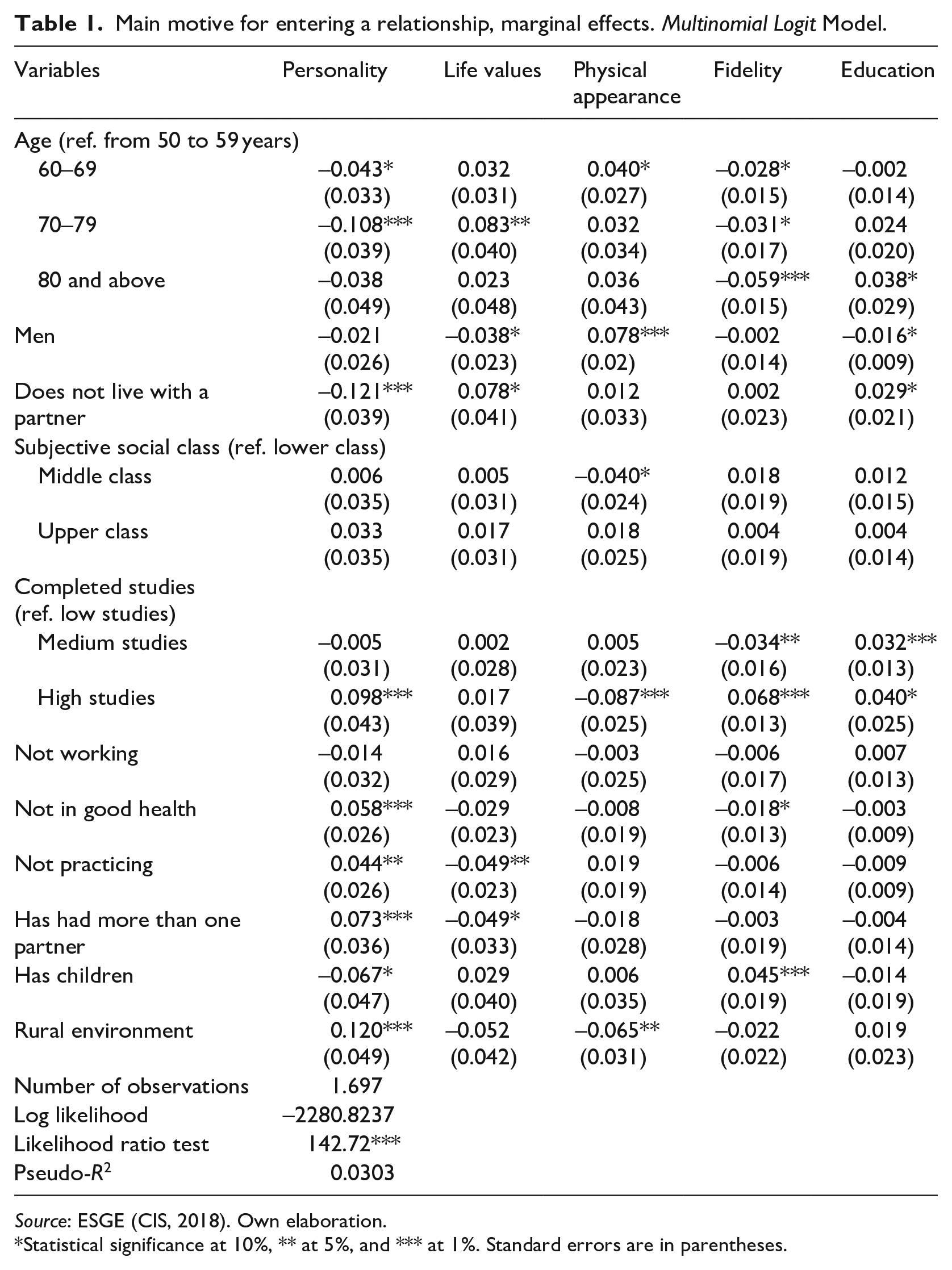
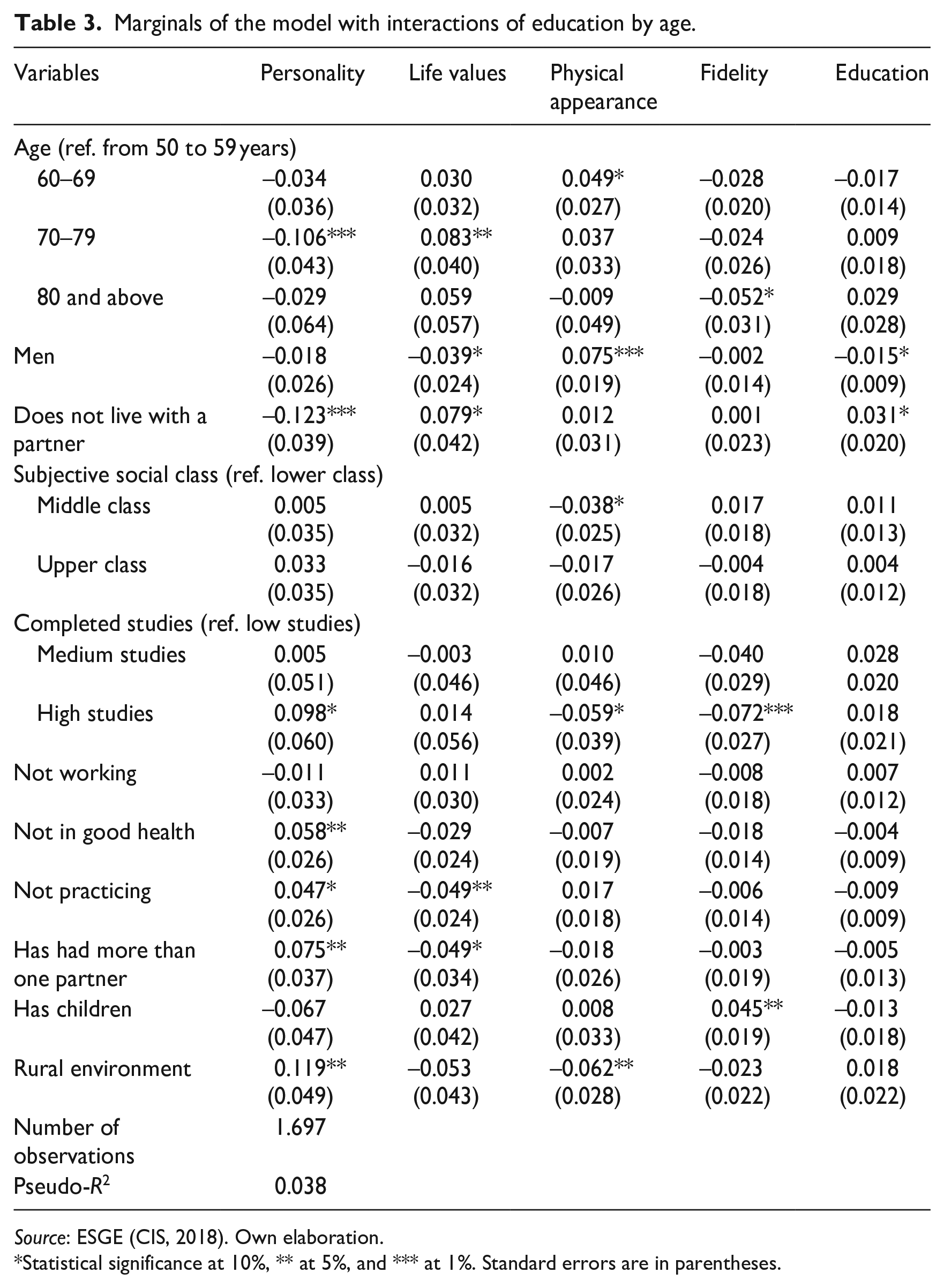
To answer the first research question, ‘What is the most important trait or characteristic that a person looks for when starting a couple relationship after the age of 50?’ a descriptive analysis is carried out, and for the second question, ‘What are the most influential factors in the probability of choosing one motive or another?’ given that respondents have to choose only one answer from more than two available unordered answers to the dependent variable, a multinomial logit model is estimated (Table 1), which allows us to test the effect of the different variables considered in the probability of choosing one motive or another. In addition, in order to deepen the comparisons by age group, an analysis of the interactions by sex and education was carried out (Figures 1 and 2 and Appendix 1 Tables 2 and 3), as these are the variables that test the hypotheses. 1
Main motive for entering a relationship, marginal effects. Multinomial Logit Model.
Source: ESGE (CIS, 2018). Own elaboration.
Statistical significance at 10%, ** at 5%, and *** at 1%. Standard errors are in parentheses.
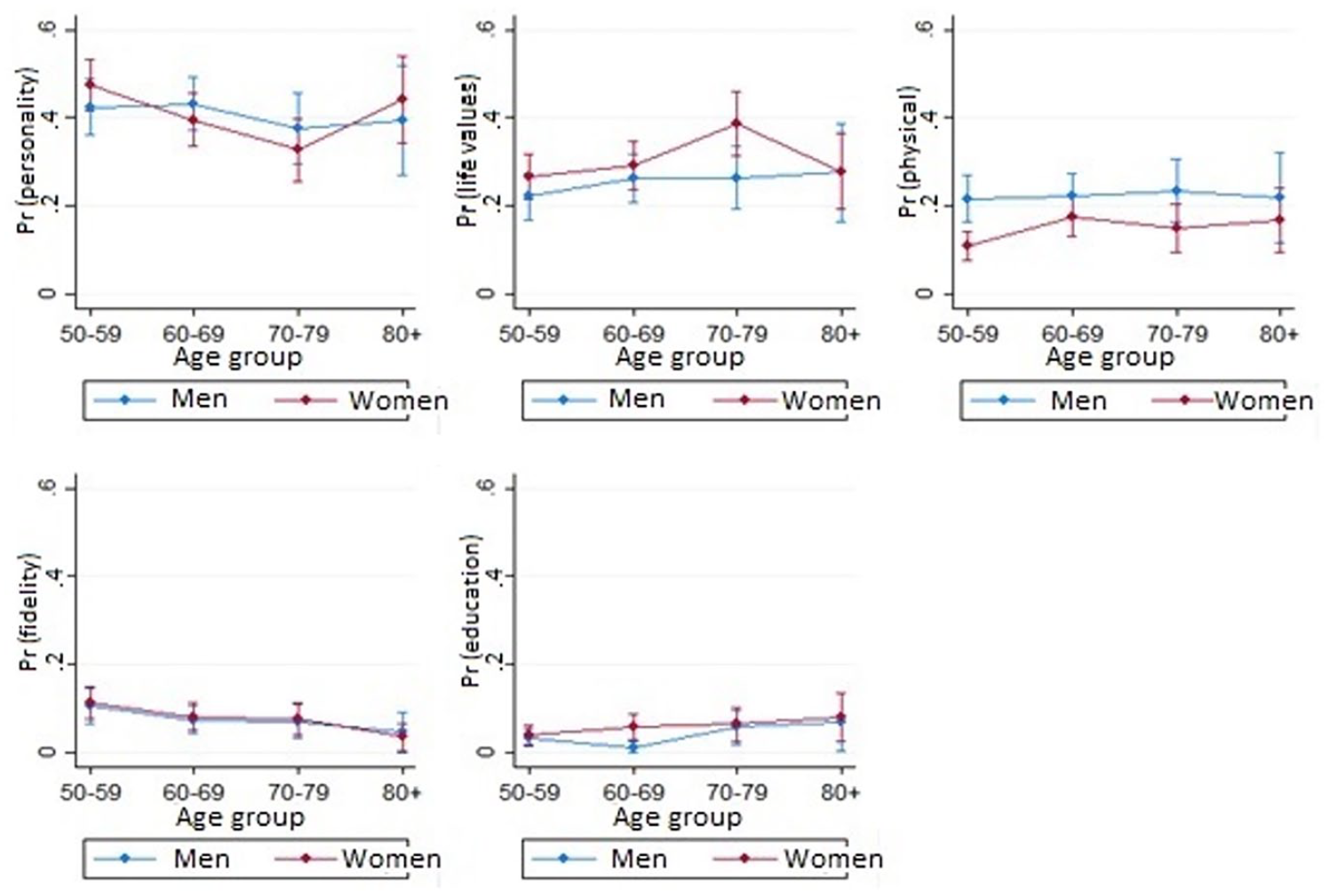
Interaction of sex by age.
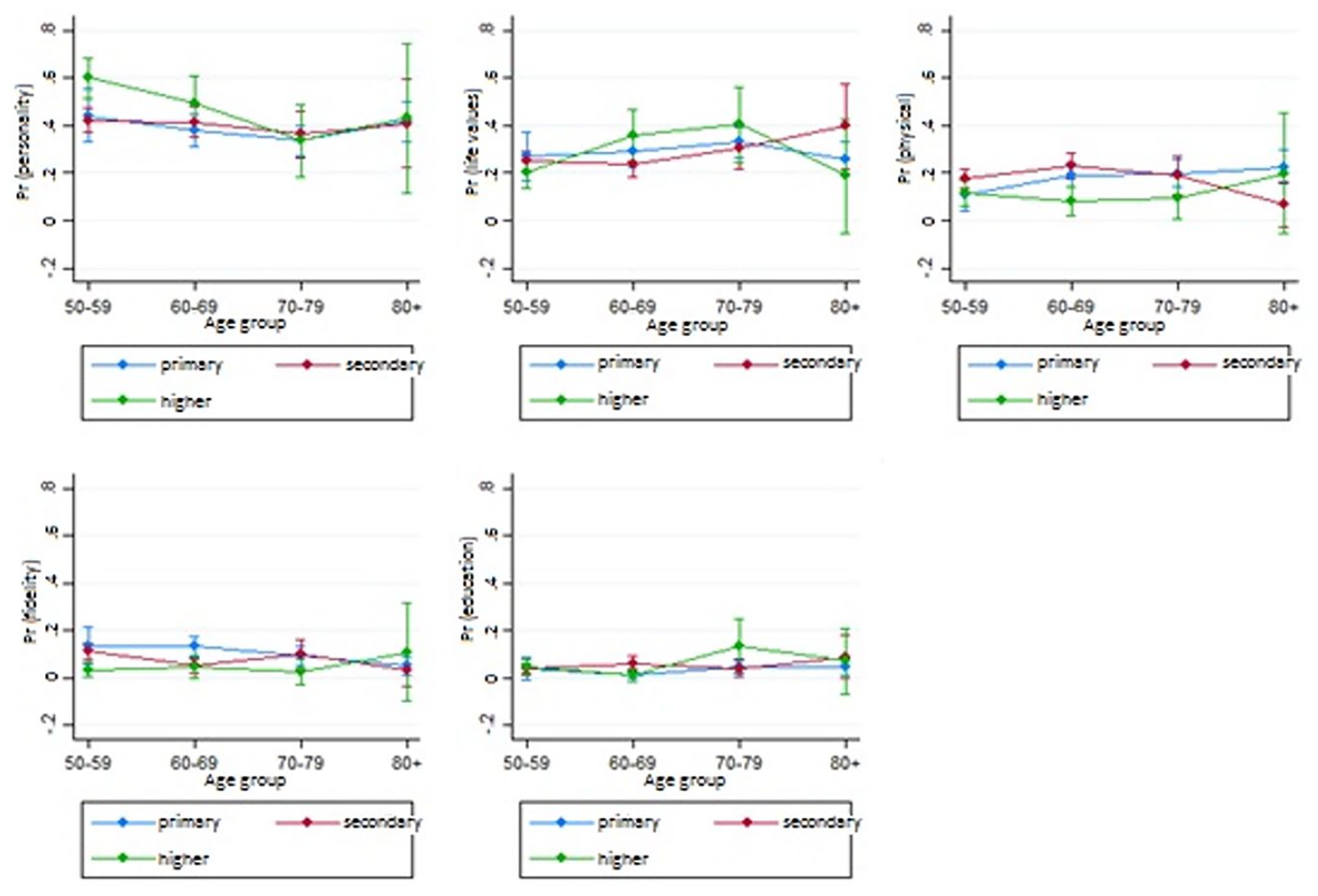
Interaction of education by age.
Results and discussion
In response to the first research question, the descriptive analysis of the data shows that the most valued aspect of initiating a relationship for more than one-third of the population aged 50 and above is personality (35.7%). The second most valued aspect would be life values (23.5%). This is followed by physical appearance (15.1%). The next most valued characteristic is fidelity (6.7%), followed by education (4%). The remaining options (economic situation, desire to marry or have children, age, religious beliefs, or ability to satisfy sexually) are of little interest to the population studied.
Almost 30 years ago, the Sociological Research Center (CIS) published the study Actitudes y conductas interpersonales de los españoles en el plano afectivo [Attitudes and interpersonal behaviors of Spaniards in the affective sphere] (CIS, 1995). 2 In this study, those who maintain a stable intimate relationship were asked about the extent to which they weighed various factors at the beginning of the relationship. The qualities of the partner mentioned coincide for the most part with the options we are analyzing and, although it is not possible to establish a precise comparison with the current data, for example, because at present, we ask about potential partners and in 1995, we asked about the current stable partner or because the education option did not appear (now analyzed), we can arrive at an approximate idea of what the population valued most (selecting the group aged 50 and above) and evaluate how they have evolved over time. Consistent with our results, individual preferences indicated that the character of the other person was a highly valued factor (37.9%). This was accompanied by the first significant difference with respect to the current data, namely fidelity (37.4%). Physical attractiveness (35.7%) and beliefs and values (32.8%) were also important. Finally, the ability to satisfy sexual desires was important to more than one-fifth of respondents. The results found now place qualities such as religious beliefs or the ability to satisfy sexual desires on a residual level. This shows some interesting traces of incipient social change in the intimate lives of Spain’s mature and older adult population in recent years.
Returning to the current situation, and considering the characteristics that would be most valued now (personality, values, physique, fidelity, and education), the second question to be explored is to determine the most influential factors in the probability of choosing one characteristic or another. The analysis of the multinomial logit model shows that the variables with the greatest explanatory power are age, sex, level of education, and cohabitation status. The second level is occupied by health status, religious practice, experience with a partner, having children, and living environment. The last is subjective social class. After controlling for the other variables, no significant effect of employment was found in the model.
The age variable is highly significant. Taking as a reference the youngest group analyzed (between 50 and 59 years of age), those who are older appreciate values (with a significance of 5% in the group between 70 and 79 years of age) and education (for those aged 80 and above) more when starting a relationship; by contrast, they are less likely to choose personality and fidelity as their main qualities. In line with H1, in the older generations, more traditional patterns are observed that guide the choice of partner, with sociocultural aspects taking precedence. In contrast, the preferences of the younger generations are more private (personality and fidelity), confirming that they are more affected by the individualization process of advanced societies, as we hypothesized. With regard to fidelity, although there are no studies in the population above 50 years of age that measure this variable, among those carried out in the general Spanish population (18 years and above; for example, Gil et al., 2002) or focused on youth (18 to 29 years; for example, Rodríguez-Brioso, 2004), consistent with the results found, this trait seems to be more important for younger individuals, especially women and the population below 50 years of age. In any case, the process of individualization in modern societies (Bauman, 2005; De Singly, 2000; Giddens, 1995) entails new possibilities of choice and decision spaces (Beck and Beck-Gernsheim, 2003). We find ourselves, especially among the youngest members of the group, before the predominance of more individual relationships, probably as a result of the valuation of personal autonomy and one’s own life project.
The sex variable reveals important differences. Most significantly, men are more likely than women to focus on physical appearance. More precisely, the analysis of the interaction of the sex variable by age (see Figure 1) shows that, all variables in the model being equal, in the different age groups considered, men will always value physical appearance more highly, although, in line with H2, this difference is statistically significant with respect to women at younger ages (50–59 years). In addition, there is a tendency for the estimated probability to increase with age for women in terms of education. The only group in which there are significant differences by sex is the second group: men aged 60–69 have a lower estimated probability than women of the same age of having selected this characteristic (education) as a preferred characteristic.
In general, these results are in line with previous theoretical models (Buss, 1989; Rodríguez-Brioso, 2004). From the results obtained, it can be concluded that men see themselves more in the sentimental market and, in addition, it may be easier for them to find a partner because of their better economic situation or because of the greater availability of women in the marriage market (gender decompensation at later ages or the increase in foreign immigrants in recent years, for example, to perform care work). This may lead them, as the results of the analysis show, to pay less attention to aspects such as education than women. From a sociological perspective, theories on gender role differences help to understand these results. Cultural norms for the new generations in Spain prescribe equality between men and women (Valiente, 2009); however, this contrasts with gender norms that prescribe that women should be in charge of family responsibilities, especially for the older generations. In a familialist context such as the Spanish one, family ties are mainly maintained by women, who are associated with higher levels of emotionality (Connidis, 2006; Daatland et al., 2011). Moreover, as the current data show, they attach greater importance to education in their couple relationships than men. This may be because they are more demanding in their relationships, in general (Whyte et al., 2021) or, in the case of older women in particular, to compensate for their low participation in the labor market and consequent lack of resources.
Education level also appears to be one of the most important factors. Moreover, the effect of education is linear (it increases as the level of education increases). As expected in H3, individuals with medium and high education are more likely to consider education when choosing a partner. In particular, those with a higher education also add personality. Consistent with research on partner choice and social stratification (e.g. Blossfeld and Timm, 2003; Choo and Siow, 2006; González López, 2003; Kalmijn, 1991, 1998; Qian and Lichter, 2018), in current couple relationships, educational homogamy (seeking a person within one’s own social group or with a similar status) is perpetuated among those with a higher education. Among less educated individuals, qualities such as physical appearance and fidelity are more likely to be valued, with a highly significant effect. According to exchange theory, physical attractiveness may be more important among individuals with less capital to offer in the marriage market, so this factor should be more important for individuals whose social background is working class or with low educational attainment (Martínez-Pastor, 2017). The results found support this. Aspects such as beliefs and values transmitted in the socialization process (Edwards, 1969), the type of education received or social origin should be taken into account. The influence of the sociocultural context, based on role theory, indicates that the lower classes are more focused on the gender division of labor: the man as the breadwinner and the woman as the caretaker of the home and dependents, especially among the older generations (Bazo, 2002). As shown here, this can lead to less educated individuals valuing aspects such as fidelity above other qualities, and less so personality or education.
In the analysis of the interaction of the education variable by age (see Figure 2), although the results lose significance when the interactions are introduced, they confirm these results and allow some nuances to be introduced. With regard to personality, in the first age group (50–59 years), significant differences are observed between those with a medium education and those with a high education, the latter having the highest estimated probability of having mentioned personality. This is maintained in the second group (60–69 years), although the difference can no longer be considered statistically significant. However, between the ages of 60 and 69, people with a medium level of education are more likely to mention education as a relevant aspect when looking for a partner than those with a primary level of education. Finally, in terms of fidelity, a distinction is made in the first age group between those with a high education and those with a medium education, with those with a high education aged 50–59 being the least likely to mention fidelity (compared to those with a medium education in the same group). In the second age group, those with a primary education have the highest probability, with a significant difference compared to those with a medium education.
These results not only provide us with new information, such as the greater importance of fidelity for subjects with less education, but also help us to clarify H3. That is, the higher the level of education, the greater the importance of education (Table 1), except in the youngest age groups, who prefer personality (Figure 2). Once again, as in the analysis of the age variable, the traces of the individualization process (new possibilities of choice, freedom to marry whom one wishes, fewer social restrictions, etc.) of modern societies can be seen, especially among the youngest age groups.
Regarding the influence of other variables, cohabitation status is highly significant for personality. Those who do not live with a partner pay less attention to personality and more, albeit with lower significance, to values and education (Qian and Lichter, 2018). This may be due to a greater emphasis on the life project or the way events are viewed in terms of values or beliefs, perhaps because of previous romantic experiences. The variables of health, religious practice, romantic experience, having children and living environment have moderate effects on the model. With regard to health, those who do not perceive it as good place more emphasis on personality and less on issues such as fidelity. For Sánchez Vera and Bote (2011), health can be restrictive, since it can have a particularly unfavorable influence on the degree of social activity of the older population. In the case of episodes of deteriorating health, feelings of loneliness and emptiness may be exacerbated. In addition to the emotional dimension (feelings of emptiness) of loneliness, the social dimension is equally important: people stop going out and relational distancing occurs, with men being particularly vulnerable to this (López Doblas and Díaz Conde, 2018). Understood in this way, it is logical that people who are not in good health place more value on the qualities that make up a person’s way of being and less on issues that may be less relevant to them at this time, such as fidelity.
When looking at more intimate or private aspects of people’s lives, such as religion, non-practicing respondents are more likely to look at personality and, as expected, less likely to look at values than those who attend religious services. More than 70 years ago, Hollingshead (1950) identified religion as the most important factor in segregating men and women into approved or disapproved categories with respect to marriage. In the late 1970s, studies of marriages in the United States showed that the majority of marriages were endogamous (more than 60% of Catholics and about 80% of Protestants and Jews; Glenn, 1982). This way of looking at life has evolved due to the social changes of the globalized world and the process of secularization that contemporary societies have undergone. Kalmijn (1991) in his research showed that over time, the social boundaries that separate educational groups appear to be stronger than the boundaries that separate, for example, Protestants and Catholics. In this study, we can say that after the age of 50, there are those who continue to attach importance to a lifestyle in accordance with their own beliefs, in this case, those who define themselves as religious. Choosing a partner with whom to share them makes it more likely that the relationship will be successful, according to the principle of similarity. This is basically because there would be greater complementarity and possible disagreements on moral or ethical issues (sexuality, raising children, divorce, etc.) would be reduced.
In the relationship variable, consistent with what was found for religious practice, those who had more than one relationship would be more likely to choose personality and less likely to choose values. Although we did not find theoretical arguments to support these results, we can affirm that individual characteristics (way of being, character) have greater weight among those who have had different romantic experiences throughout their lives. For example, the distrust factor that can be generated after a breakup could help explain these findings, which would lead to a greater emphasis on individual issues (affinity, communication, commitment, etc.).
Partner selection does not only depend on individual preferences, but sometimes there are ‘third parties’ associated with one of the partners who may interfere in decisions about the partner selection process. For respondents with children, it is highly significant that they value fidelity more than those without children when initiating a relationship. It seems logical that for respondents with children, that the couple’s commitment takes on special importance, especially from the perspective of the emotional well-being of the children themselves.
In terms of living environment, in rural areas or areas with a lower population concentration (less than 2000 inhabitants), a person’s way of being carries more weight, while physical appearance is less important than in areas with a larger population. With modernization, cultural and structural changes have been more rapid in cities (Giddens, 1995). In the area of the family, theorists affirm new attitudes toward the couple and marriage (Hirsch and Wardlow, 2006), including the free choice of partner as the first sign of individualization (Beck and Beck-Gernsheim, 2003). According to Bauman (2005), new patterns are becoming more important, among them appearance or the growing value and centrality of the body and well-being in mass consumer society. The body as an element of social interaction, linked to beauty and image, has acquired a fundamental status in our societies (Sánchez Vera, 2016). Bourdieu (1984) refers to ‘physical capital’, the external appearance or exaltation of the young body and resistance to aging. In rural areas, let us call them more traditional, the introduction of these processes is slower and more complex, which helps to understand the results of the analysis. The community bond, beyond the individual, continues to play an important role in family relationships.
Finally, the subjective social class variable has a weak effect on the likelihood of choosing a certain characteristic when initiating one relationship over another. However, in line with the analysis of the education variable (among those with lower levels of education), the model significantly shows that the lower classes are more likely to be interested in physical appearance than the middle classes.
Conclusion
This work contributes to the body of knowledge in an area of Spanish family sociology (that of the preferences of people above 50 years of age) on which there are few previous studies, most of them of a qualitative nature, based on small samples and without the ability to make scientific inferences. In the field of partner choice, few studies have taken the individual as the unit of analysis. The results found here show important differences in the individual preferences of this group, reflecting the changes in societies, the process of modernization and the emergence of new choices. Currently, the most valued characteristic is personality. This is followed by values and physical appearance, and finally by fidelity and education. Issues such as economic situation, desire to marry or have children, and religious beliefs are far behind as criteria for selecting potential partners among the mature and older adult population. With regard to the results that appeared 30 years ago in Spain (CIS, 1995), fidelity, beliefs and values, or the ability to satisfy sexual desires were much more highly valued than they are today.
The variables that have marked the greatest differences in expectations about the couple are age, sex, level of education, and cohabitation status. At a second level, health, religious practice, romantic experiences, having children, and living environment have a significant effect. Individual qualities (e.g. personality) are more highly valued among men and in urban areas (with considerable weight also given to physical appearance), among those in poor health, those who have had more than one partner, those who are younger and those who have children (in the last two categories, fidelity is also valued). However, sociocultural factors such as values or education have a greater weight among women, religious people, people with a higher level of education, and older people.
In view of some of these aspects, the analysis of the interactions shows that although the independent variables behave quite similarly by age group, they reflect some interesting nuances in the preferences of potential partners in the group analyzed. For example, as we hypothesized at the beginning of the article (H1), younger people (between 50 and 59 years of age) are generally more affected by the process of individualization in advanced societies, and their preferences are more inclined toward more individual aspects (such as personality), while with increasing age, characteristics such as values or education take precedence.
In line with previous studies (e.g. Blossfeld and Timm, 2003; González López, 2003; Kalmijn, 1991, 1998), the higher the level of education, the greater the interest in seeking partners with a similar social position (H3). This confirms the assumption of educational homogamy in the study population. However, this is not the case for younger people (significantly in the 50–59 age group) with a higher level of education, who tend to prefer personality. Once again, we see signs in today’s society of the process of individualization, which leads to greater degrees of freedom and fewer sociocultural restrictions in the choice of a partner as the age group decreases.
In terms of sex, men of all ages prefer physical appearance, although these differences are significant for the youngest (50–59 years; H2). As we indicated in the analysis, it is these men who are seen more in the marriage markets (among other reasons, because of their economic situation or because of the influence of the migratory context in Spain on the marriage markets). Women continue to focus on values and education. These last two aspects also appear to be the most valued among those who are older. These results still show the influence of the traditional economic model of subsistence in Spain: valuing education or the labor market situation of the partner as compensation for care work in the home. However, as Hakim (2010) argues, women are fully integrated into the labor market, they are economically independent, and this will have its consequences in the relationship market, which will also be reflected among the older generations as the years go by. Recent studies (e.g. Van Bavel et al., 2018) show that the gender gap in education has been reversed in recent decades in most Western countries, and although this reversal in educational levels seems to have little impact on the age groups studied, it will lead to a progressive reduction in gender differences in partner preferences, which will need to be studied in the coming years. In contrast to the functional and affective dependency of men, especially at older ages, women will tend to seek time alone and self-realization. In line with these considerations, data from the Spanish General Social Survey (ESGE) (CIS, 2018) show that, for example, among the consequences of a breakup, essentially women and those below 70 years of age note an improvement in aspects such as the freedom to do what one wants (62.7%) and, for more than half, personal well-being, satisfaction with life and amount of free time.
Among the limitations of the study, by taking the individual as the unit of analysis, the results obtained could also be influenced by other variables that we did not control for, such as the influence of the social group or the limitations of the marriage market (Kalmijn, 1991). In addition, other variables were missing that, although not yet available with sufficient statistics, could be relevant in the model of analysis of couple relationships, such as nationality (De Miguel-Luken, 2022; Sánchez Vera and Bote, 2005; Vespa, 2013). Finally, the sample is reduced in interactions, which may affect the lack of significance.
In Spain, the population above 50 is not yet at the forefront of family changes, but over the years, there has been an increasing degree of flexibility and freedom, with fewer and fewer social and cultural obstacles. Individual behavior is less predictable, or as Simmel (1986) would say, the more modern a society is, the freer the individuals are. Given the considerable increase in recent years, in the number of separation and divorce cases among couples in their 50s and 60s and above, the romantic biographies of this population group are and will be increasingly diverse, issues that merit future sociological analysis.
Footnotes
Appendix 1
Marginals of the model with interactions of education by age.
| Variables | Personality | Life values | Physical appearance | Fidelity | Education |
|---|---|---|---|---|---|
| Age (ref. from 50 to 59 years) | |||||
| 60–69 | –0.034 (0.036) |
0.030 (0.032) |
0.049*
(0.027) |
–0.028 (0.020) |
–0.017 (0.014) |
| 70–79 | –0.106***
(0.043) |
0.083**
(0.040) |
0.037 (0.033) |
–0.024 (0.026) |
0.009 (0.018) |
| 80 and above | –0.029 (0.064) |
0.059 (0.057) |
–0.009 (0.049) |
–0.052*
(0.031) |
0.029 (0.028) |
| Men | –0.018 (0.026) |
–0.039*
(0.024) |
0.075***
(0.019) |
–0.002 (0.014) |
–0.015*
(0.009) |
| Does not live with a partner | –0.123***
(0.039) |
0.079*
(0.042) |
0.012 (0.031) |
0.001 (0.023) |
0.031*
(0.020) |
| Subjective social class (ref. lower class) | |||||
| Middle class | 0.005 (0.035) |
0.005 (0.032) |
–0.038*
(0.025) |
0.017 (0.018) |
0.011 (0.013) |
| Upper class | 0.033 (0.035) |
–0.016 (0.032) |
–0.017 (0.026) |
–0.004 (0.018) |
0.004 (0.012) |
| Completed studies (ref. low studies) | |||||
| Medium studies | 0.005 (0.051) |
–0.003 (0.046) |
0.010 (0.046) |
–0.040 (0.029) |
0.028 0.020 |
| High studies | 0.098*
(0.060) |
0.014 (0.056) |
–0.059*
(0.039) |
–0.072***
(0.027) |
0.018 (0.021) |
| Not working | –0.011 (0.033) |
0.011 (0.030) |
0.002 (0.024) |
–0.008 (0.018) |
0.007 (0.012) |
| Not in good health | 0.058**
(0.026) |
–0.029 (0.024) |
–0.007 (0.019) |
–0.018 (0.014) |
–0.004 (0.009) |
| Not practicing | 0.047*
(0.026) |
–0.049**
(0.024) |
0.017 (0.018) |
–0.006 (0.014) |
–0.009 (0.009) |
| Has had more than one partner | 0.075**
(0.037) |
–0.049*
(0.034) |
–0.018 (0.026) |
–0.003 (0.019) |
–0.005 (0.013) |
| Has children | –0.067 (0.047) |
0.027 (0.042) |
0.008 (0.033) |
0.045**
(0.019) |
–0.013 (0.018) |
| Rural environment | 0.119**
(0.049) |
–0.053 (0.043) |
–0.062**
(0.028) |
–0.023 (0.022) |
0.018 (0.022) |
| Number of observations | 1.697 | ||||
| Pseudo-R2 | 0.038 | ||||
Source: ESGE (CIS, 2018). Own elaboration.
Statistical significance at 10%, ** at 5%, and *** at 1%. Standard errors are in parentheses.
Acknowledgements
The author gratefully acknowledges many helpful comments and suggestions that she has received from the anonymous reviewers. She thanks Professor De Miguel-Luken for her comments and for her help during the preparation of this article.
Declaration of conflicting interests
The author declared no potential conflicts of interest with respect to the research, authorship, and/or publication of this article.
Funding
The author disclosed receipt of the following financial support for the research, authorship, and/or publication of this article: This research is part of the R + D + i project PID2020-115673RB-I00, funded by MCIN/AEI/10.13039/501100011033/.
