




Abstract
Against the background of crisis and cuts, citizens can express solidarity with groups in various ways. Using novel survey data this article explores the attitudes and behaviours of citizens in their expressions of solidarity with disabled people and in doing so illuminates the differences and similarities across two European contexts: Italy and the UK. The findings reveal pools of solidarity with disabled people across both countries that have on the one hand similar foundations such as the social embeddedness and social trust of citizens, while on the other hand contain some differences, such as the more direct and active nature of solidarity in Italy compared to the UK and the role of religiosity as an important determinant, particularly in Italy. Across both countries the role of ‘deservingness’ was key to understanding solidarity, and the study’s conclusions raise questions about a solidarity embedded by a degree of paternalism and even religious piety.
Introduction
Across the European Union, the impact of the 2008 financial crisis and the subsequent austerity measures implemented by governments that have hollowed out public services in some countries have further exacerbated growing inequalities. One group for whom the intensification of inequalities has been most keenly felt is that of disabled people, a group who are often exposed to multiple forms of discrimination due to their intersectionality (Lawson, 2016; Söder, 2009). In this article we draw our definition of disabled people from the UN Convention on the Rights of Persons with Disabilities, which states: ‘persons with disabilities include those who have long-term physical, mental, intellectual or sensory impairments which in interaction with various barriers may hinder their full and effective participation in society on an equal basis with others’. 1
To appreciate the nature of the challenges for disabled people in times of crisis in different European contexts, it helps if we can conceptualise not only the absence of support for disabled people but also its presence. In this article we analyse support for disabled people through the frame of solidarity (Koster, 2007; Lahusen and Grasso, 2018; Montgomery and Baglioni, 2020). We understand solidarity through the definition offered by Stjerno (2012: 2): ‘the preparedness to share resources with others by personal contribution to those in struggle or in need and through taxation and redistribution organized by the state’. The focus of this study is to analyse solidarity with disabled people at a time when the pool of resources have been curtailed across a broad range of public services. The article (and the large collaborative project from which it is derived) 2 therefore builds on an understanding of solidarity as both a set of behaviours and a range of attitudes pointing to the willingness to help and support others that are in a status of (current or potential) social marginalisation. Our study will simultaneously address direct and indirect forms of solidarity: that is, we consider both those actions directly put in place by people to support disabled people, and their support for the allocation of public resources for the benefit of disabled people. The relevance of adopting this analytical approach across two distinct European contexts is further vindicated by the existing body of research which has debated the isomorphism between norms and attitudes among citizens and the shape of welfare regimes (Jaeger, 2006; Jaime-Castillo, 2013; Larsen, 2008; Mau, 2004; Mau and Burkhardt, 2009). In a Europe which is experiencing popular discontent with established institutions and political parties, understanding such attitudes is vital for our comprehension of the direction of travel in terms of support for marginalised groups.
Our article offers a unique contribution to those debates at the intersection of solidarity and the future of the welfare state by focusing on one specific marginalised group: disabled people. Moreover, this article offers not only unique data (drawn from a large comparative study of solidarity across Europe) but our survey responses are also situated in a context of crisis and austerity when welfare regimes across Europe are experiencing turbulence and transformation. Our analysis is guided by the following research questions: (1) What are the socio-demographic characteristics, the social traits, the social beliefs and cultural orientations of individuals engaged in solidarity activities in support of disabled people in Italy and the UK?; (2) Which factors tend to promote or inhibit solidarity in favour of disabled people at the individual level?; and (3) Is there variance when comparing the two countries?
The central focus of this article is thus to explore the attitudes and behaviours among citizens in support of disabled people as a way to understand the multi-faceted nature of solidarity and to illuminate the similarities and differences between two European contexts that have experienced political tumult. The structure of the article is as follows: (1) we outline the background of our study in terms of the Italian and UK contexts; (2) next, we present our theoretical background and hypotheses; (3) we elaborate our first set of findings stemming from our data on public attitudes and solidarity behaviours towards disabled people; (4) then, we turn to the explanatory factors of solidarity through the results of a multivariate logistic regression analysis; (5) finally we expand on our conclusions by highlighting some of the similarities and differences between Italy and the UK in terms of how solidarity with disabled people is expressed.
Solidarity with disabled people: The Italian and UK contexts
This article examines the variegated forms of support that disabled people have experienced in this context by comparing two countries, Italy and the United Kingdom, where both government and the general population have been confronting an epidemic that has had profound implications for those with long-term health conditions. Moreover, as with other countries, policymakers in both Italy and the UK engage in the process of economic recovery, this will inevitably have an impact on social policies affecting disabled people. Although traditionally situated within different welfare regimes (Arts and Gelissen, 2002; Esping-Andersen, 1990; Ferrera, 1996; Manow, 2015), governments in both countries addressed the 2008 financial crisis in a similar fashion: with austerity policies, ostensibly aimed at containing public spending deficits.
Of the 3 million Italian people with disabilities, i.e. approximately 5.6% of the entire population, only 32% of adults (15–44 years of age) have a job, just 9.4% have been to the cinema, theatre or have attended other shows in the previous year (18.7% of non-disabled have), 15.2% have participated in a sport activity (57.5% of non-disabled have), and 30% have access to internet (compared with 60% of non-disabled). 3
Against the background of constitutional and legal protections that have grown in recent decades for disabled people in Italy, the financial crisis depleted resources rather than formal rights and principles. Thus, the burning issue has not been the absence of legislative protection, but the effective implementation and financing of support measures. In fact, the impact of the crisis has been dramatic: on the one hand through the cuts to and/or restriction of measures specifically designed for disabled people, and indirectly on the other hand, a more instrumental approach to issues of welfare because of the reduction of services. The first, most evident and tangible outcome of the crisis was the cut to the ‘National Fund for the Non-Self-Sufficient’. Reduced by 75% due to budget cuts in 2011, the Fund was not financed at all in 2012. Moreover, the €100 million of 2011 has been allocated entirely to the support of people affected by amyotrophic lateral sclerosis. The reduction and cuts to the Fund were highly contested measures 4 and public opinion mobilised against these austerity measures. The impact of the cuts was amplified by the concomitant cut in the Fund for Social Policies (policies of social inclusion of people with disabilities, marginalised people, those suffering from addictions, elderly people and migrants are all financed through this fund). Created in 2008 with an initial budget of €929 million, it was reduced to €583 million in 2009, and the constant reductions led to the lowest financing in 2012: only €70 million. The cuts to these funds were partially compensated and mitigated by some regions that managed to use or divert to social policies other funds, but still the austerity measures aggravated regional inequalities with a perverse multiplier effect: those regions which were most severely hit by the crisis were also the most marginalised, and thus the most severely hit populations were the most excluded.
In the UK, according to the most recent data available from the Department for Work and Pensions Family Resources Survey, 5 there are 13.9 million people who reported a disability in 2016/2017 (22% of the population), an increase on figures from 2015/2016. In the UK 19% of working age adults report that they have a disability. The experience of disabled people in the UK in the years following the global financial crisis has been characterised by cuts to public services and a decreasing pool of funds for disability organisations who offer support and solidarity. Moreover, the welfare reforms introduced as part of the broader austerity measures introduced by the Conservative led government has had a disproportionate impact on the living conditions of disabled people and their access to support with many disabled people experiencing destitution as revealed by surveys of food bank users in the UK (Loopstra and Lalor, 2017). Welfare reforms have included the Work Capability Assessment, which was originally introduced by the then Labour government in 2008 (Bambra and Smith, 2010) but was then expanded by the Coalition government following their election in 2010 and involved a national reassessment programme of welfare support for disabled people (Baumberg et al., 2015) that has led to many being reclassified as ‘fit for work’ (Wright, 2012) and thus entitled to reduced levels of support. This division of disabled people into different groups lends weight to the conclusion that there has been some effort through the process of welfare reform to draw a distinction between the ‘deserving’ and the ‘undeserving’ (Garthwaite, 2011; Grover and Piggott, 2010). It is against this backdrop that a United Nations inquiry has condemned the UK government for its ‘systematic violations of the rights of persons with disabilities’ (United Nations, 2016: 20).
Theoretical background and hypotheses
At the beginning of this article we established our understanding of the definition of solidarity through that offered by Stjerno (2012) and set it within the context of extant literature on solidarity more broadly (Koster, 2007; Lahusen and Grasso, 2018) and solidarity with disabled people specifically (Montgomery and Baglioni, 2020). We recognise therefore that solidarity with disabled people – the specific focus of this analysis – occurs at different levels (macro, meso, micro) and across different actors in society. Moreover, solidarity also takes place between disabled people as they engage through organisation by mobilising for the enforcement of rights and against policies that contribute towards their exclusion (Soldatic and Grech, 2014). Although an extant literature exists on these forms of solidarity, the unique contribution of this work on solidarity with disabled people is our focus on the individual level of solidarity in the context of crisis.
Solidarity measured at the micro (individual) level provides us with an understanding measured across two dimensions concurrently: attitudinal (what people think about groups that are the potential addressees of solidarity, such as disabled people) and behavioural (what people are ready to do to support such groups) aspects. Building on extant research, we posit that solidarity attitudes and behaviours will be influenced by a set of factors, including: individuals’ social centrality, that is, the more an individual occupies a socially and economically embedded position, the more s/he will be willing to share resources with others. Hence we consider indicators such as people’s degree of social trust (building on the idea that the more people ‘believe’ in others, the more they will be willing to help them in case of need), as well as people’s degree of social embeddedness (the more one is part of a community, a set of ties, the more s/he will be happy to help those in need) and social class (with upper and middle classes more likely to support those in need than lower middle and working classes); but also the disposition of individuals towards arguments relating to ‘deservingness’ is relevant to predict people’s willingness to help others, and this is particularly true when considering solidarity for those groups whose marginalisation renders them more exposed to the withdrawal of welfare state support. Deservingness depends on a range of factors, among which is the perception that those who provide support have of the need of the beneficiaries (i.e. whether or not these needs are genuine and/or are needs that emerge through no fault or responsibility of the beneficiary), along with considerations of social and spatial proximity, the beneficiaries’ attitudes as well as their capacity to reciprocate (Van Oorschot, 2000).
Furthermore, cultural orientations and social beliefs can also play an important role as regards solidarity. Concerning cultural orientations, scholars have shown how religion can be a source of social cohesion (Durkheim, 1976 [1912]) and the importance of religious attitudes in order to fully understand solidarity (Abela, 2004; Stegmueller et al., 2012). In particular, Durkheim (1976 [1912]) argued that religion acted as a source of solidarity and identification for the individuals within a society, especially as a part of mechanical solidarity systems, and to a lesser, but still important extent in the context of organic solidarity. While in more recent literature, Stjerno (2012) argues that the notion of solidarity in Europe has historically developed in a way that is intimately intertwined with social Catholicism and Christian democratic political thought.
Similarly, Abela (2004) showed that the autonomy of politics and the polity from direct religious influence does not exclude the potential impact of religion in the promotion of solidarity and the maintenance of a social order according to the Durkheimian model. Indeed, through an analysis of EVS (European Values Survey) data, Abela (2004) showed how in the European Union, generally, social solidarity is directly related to institutional religion and all forms of solidarity are associated with individualised religion measured in terms of the importance people attach to God in their lives.
The connection between individual dispositions towards others and belief systems on the one hand and more formalised modes of solidarity on the other hand have not been ignored by researchers. Several studies have emphasised also the role of public opinion attitudes towards welfare states and social policies (e.g. Blekesaune and Quadagno, 2003; Brooks and Manza, 2007) and thus public support of solidarity-based policies as a proxy of solidarity attitudes towards disabled people (Apostoli, 2012). Support for such public policies provides a measure of the readiness of people to finance and endorse public programmes aiming at the full inclusion of disabled people into society and public life. Consequently, it can be argued that those people supporting public welfare programmes might be more likely to become involved in solidarity practices in favour of disabled people.
To investigate solidarity at the individual level vis-a-vis attitudes towards disabled people we relied upon data emanating from an individual-based survey conducted in November–December 2016 in both countries (2087 cases for Italy and 2083 for UK) by a professional polling institute. 6 The results from our individual level survey will enable us to assess whether or not public attitudes and behaviours in the two countries can be perceived as a constraint or a catalyst for solidarity in dynamic political contexts such as Italy and the UK. To be clear, our analysis in this article is focused on observing and understanding those individual level dynamics of solidarity in each of these countries. 7
Building on the extant research literature we hypothesise that despite the different contexts within which our empirical study takes place: (a) the more an individual is socially embedded and trustworthy of others (the more her/his social capital) the more s/he will support disabled people; (b) the more religious one is, the more one’s willingness to support disabled people according to a ‘charitable’ attitude; however, the connection between religiosity and the likelihood to express solidarity with disabled people may also imply some degree of paternalism, given that a religiously-based solidarity is not immune from a pietistic understanding of disabled people as those who are unable to cope with the consequences of their physical or mental condition, a perspective that can be contrasted with the conceptualisation elaborated through the social model of disability (Barnes, 1992; Oliver, 1990). The presence of such a paternalistic attitude towards disabled people may also be inferred by a comparative analysis of solidarity towards disabled people with solidarity towards other groups whose perceived ‘capabilities’ and ‘responsibility for their situation’ may be different, such as the unemployed, migrants and refugees. (c) Hence, as a consequence of our earlier point, the more a person perceives disabled people to be deserving of support (also in comparison with other groups) the more they will be disposed towards solidarity with them.
Findings I: Public attitudes and behaviours towards disabled people
Drawing on data generated from the individual survey conducted in late 2016, we now aim to enlarge and deepen existing knowledge on solidarity by presenting the findings and analysis from our novel dataset on solidarity practices and attitudes in regard to disabled people and explain these findings in reference to the social characteristics of the respondents and their beliefs.
What are the socio-demographic characteristics, the social traits, the social beliefs and cultural orientations of individuals engaged in solidarity activities towards disabled people in Italy and the UK? Understanding these dimensions will be crucial in determining whether or not our hypotheses hold true: that social embeddedness, trust in others, religiosity and perceiving groups as deserving are determinants in fostering solidarity with disabled people.
Firstly, we need to contextualise solidarity practices against the general picture of solidarity in Italy and the UK through the analysis of the reported solidarity practices towards disabled people. Our survey includes a battery of questions that allow us to compare both the varying levels of solidarity and the diversity of practices involved (e.g. donating time or money, passive and active membership, buying products, protest participation).
When we observe our findings outlined in Table 1, we see that circa half of respondents have been engaged in some forms of solidarity activity in support of disabled people in Italy, in contrast to a third of respondents (35.5%) in the UK. 8 Thus, our initial results reveal a far more ‘crowded’ field in terms of solidarity engagement in Italy compared to the UK case. Moreover, if we look at the different types of solidarity practices, political protest-oriented activities are carried out more frequently in Italy than in the UK (8.4% vs 3.2%), nevertheless we can conclude from these figures that the field of disability does not seem to be particularly contentious in either country.
Type of reported solidarity activities in favour of disabled people (in %).
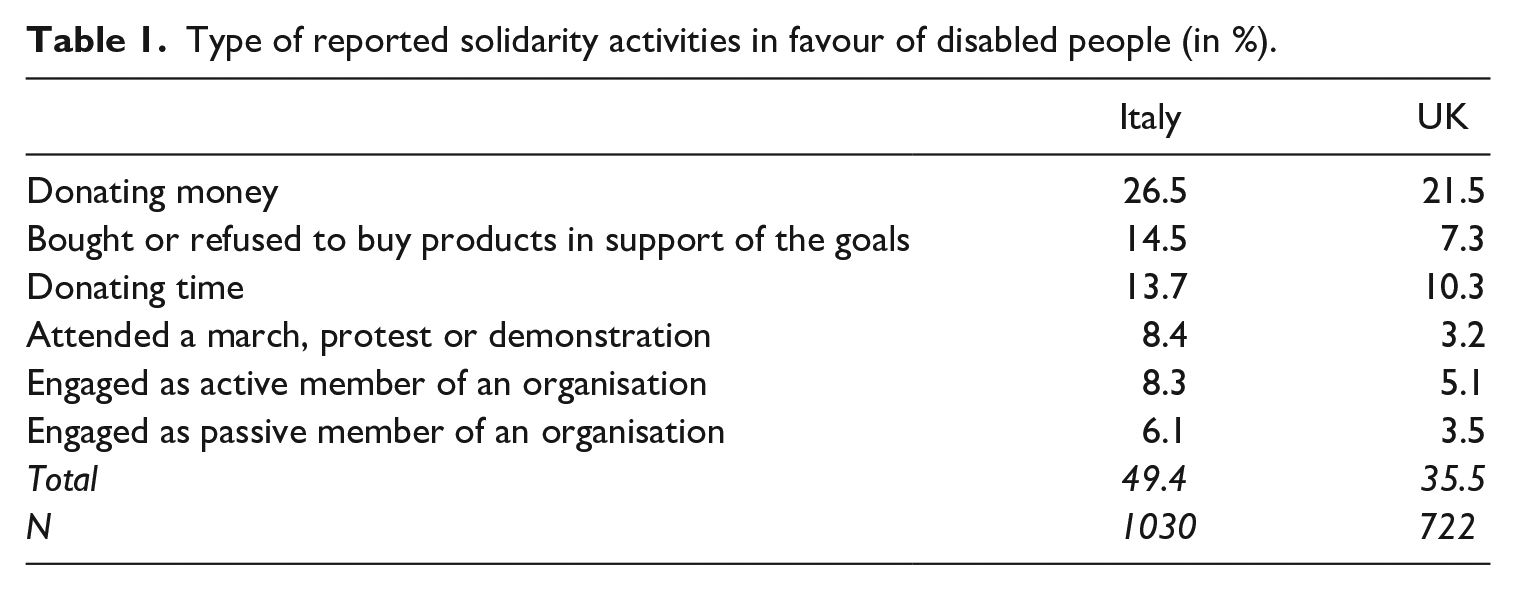
Conversely, charitable behaviour is a strong characteristic of solidarity activities towards disabled people, being the most frequent activity: 26.5% of those who are actively supporting disabled people donate money in Italy and 21.5% do the same in the UK. In addition, 13.7% of Italians are actively supporting disabled people and 10.3% of Britons donate time to support disabled people. Similar patterns can be detected with regard to active involvement in volunteering, with around 8% among Italians and 5% of Britons who declared having undertaken some form of solidarity with disabled people having participated in volunteering activities. Conversely, in the UK people who reported undertaking solidarity with disabled people and are passive members of volunteer organisations are almost half of those in Italy (3.5% vs 6.1%). Similar disparities can be observed when we asked respondents about active consumerist practices, i.e. buying (or refusing to buy) products in solidarity with disabled people: 14.5% of those Italians who report solidarity activities with disabled people are involved in such activities, whereas only 7.3% of Britons do the same.
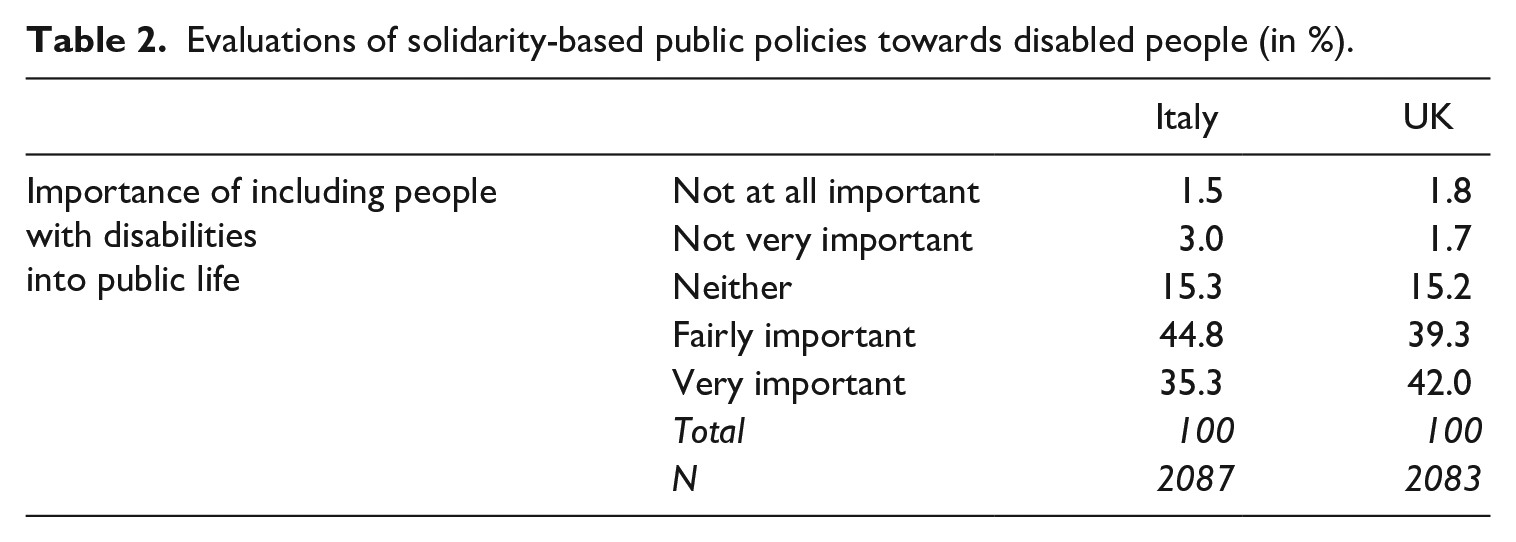
If we now consider attitudes related to indirect solidarity, that is the degree of support people show for social policies and welfare state spending, respondents in both countries appear to strongly support solidarity-based public action towards disabled people if we use as a proxy their responses concerning the importance that the inclusion of disabled people has in terms of policy objectives (see Table 2): with 80.1% of Italians and 81.3% of Britons who consider the inclusion of disabled people in public life as an important public policy objective. In other words, there is broad support expressed by our respondents across both countries for a policy architecture that does not exclude disabled people. As highlighted earlier in this article, several studies (e.g. Blekesaune and Quadagno, 2003; Brooks and Manza, 2007) have emphasised the important role of public opinion attitudes towards welfare states and social policies and thus public support of solidarity-based policies as a proxy of solidarity attitudes towards disabled people (Apostoli, 2012).
Evaluations of solidarity-based public policies towards disabled people (in %).
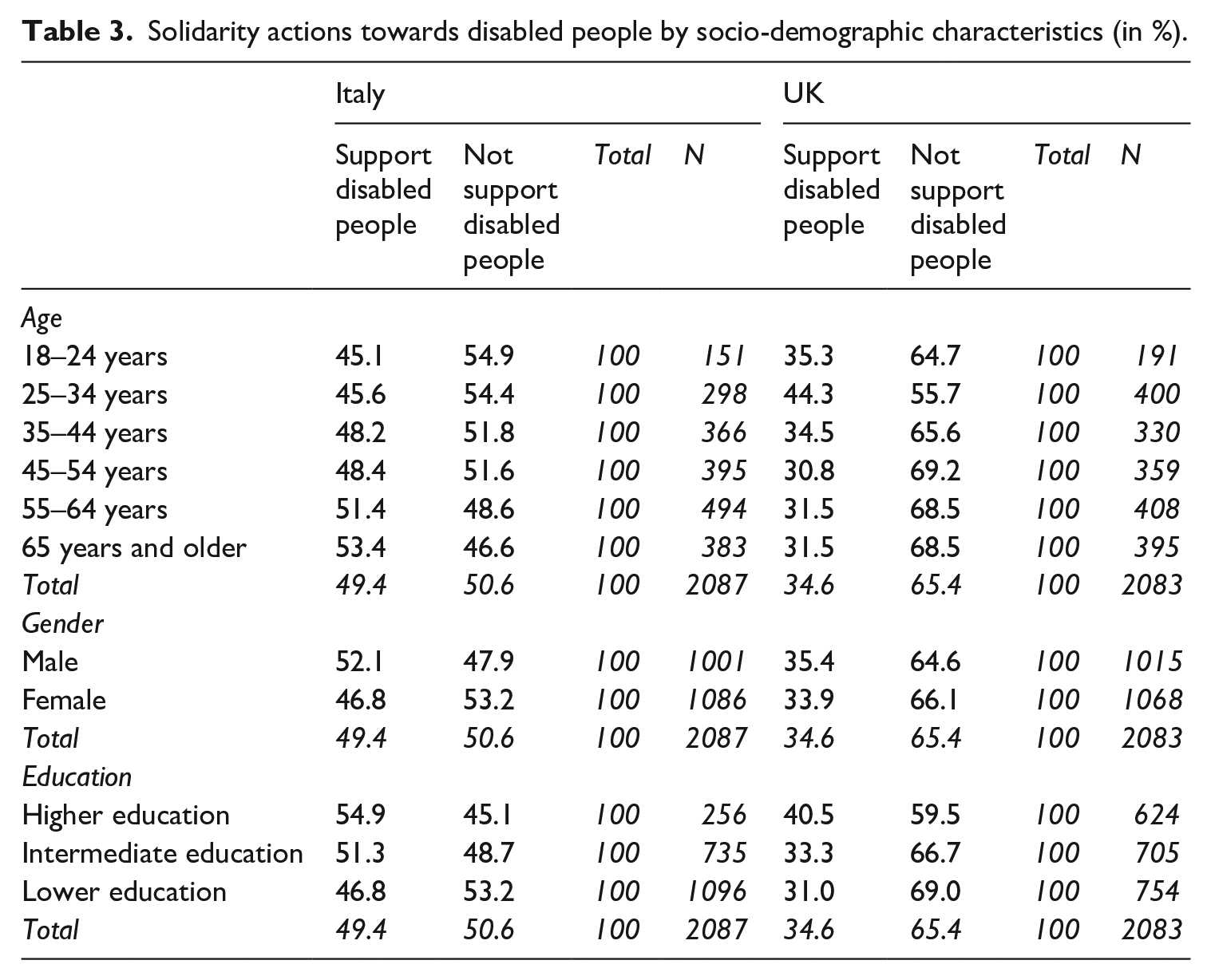
Regarding the socio-demographic characteristics of people engaging in solidarity activities in support of disabled people (see Table 3), there emerges a slight difference in terms of age regarding solidarity for disabled people in the UK (where at least one third of those aged 44 and under are supportive, but this support fades somewhat among older citizens with around 69% not engaged in solidarity actions). In Italy we found instead that solidarity with disabled people is more prevalent among older age categories (53.4% in support among those aged 65 and over).
Regarding gender, we can observe that among Italian males there is a small majority (52.1%) in support of disabled people whereas in the UK we see that almost two thirds of males (64.6%) are not in solidarity with this group. Among female respondents in Italy we found a small majority (53.2%) not in support of disabled people while in the UK there was a somewhat larger number of female respondents (two thirds) who did not support disabled people.
Turning to educational attainment, we can see that in both Italy and the UK there is a trend towards solidarity with disabled people among higher educated people. In Italy for example we observed a small majority among higher educated people in support of this group (54.9%) whereas among lower educated citizens in Italy the roles were somewhat reversed with a similar number (53.2%) not in support of disabled people. In the UK we found wider gaps within educational categories, with two fifths in support of disabled people among the higher educated group and less than a third in solidarity with disabled people among those who are lower educated.
Solidarity actions towards disabled people by socio-demographic characteristics (in %).
While considering these broader findings, let us now turn to an analysis of the relationships between solidarity actions and the hypotheses we outlined earlier in this article: that solidarity towards disabled people will be influenced by an individual’s religiosity and attitudes towards wider society such as their degree of social embeddedness as well as their disposition towards arguments surrounding the deservingness of support for marginalised groups.
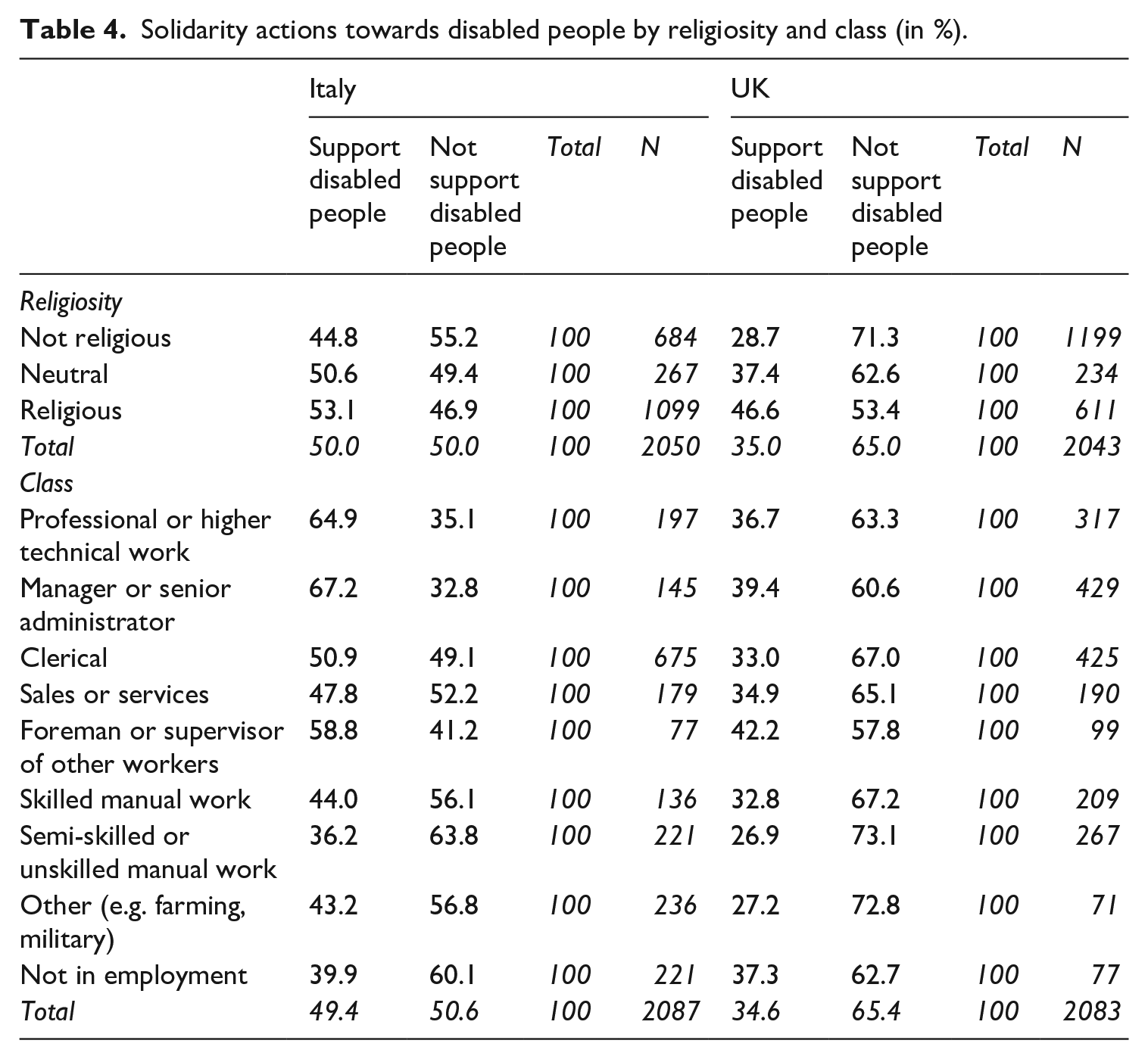
Table 4 reports solidarity actions towards disabled people by religiosity 9 and objective (occupational category) social class. 10 As we have hypothesised, the profile of solidarity actions towards disabled people can vary according to cultural orientations like religiosity. Our findings show that among citizens involved in solidarity activities in favour of disabled people, religiosity matters in both countries. For example, we can see that in Italy, support for disabled people among the non-religious is observed at 44.8% but among the religious we see that solidarity with disabled people is in the (small) majority 53.1%. In the UK the gap between these groups is even clearer with just over a quarter of non-religious respondents being in solidarity with disabled people (28.7%) but approaching half (46.6%) of religious respondents undertaking support. If we scrutinise ‘social centrality’ (Freeman, 1978) as measured by objective class belonging, we observed some similarities and differences among occupational categories. For example, among professional or higher technical workers in Italy almost two thirds (64.9%) in this group were supportive of disabled people whereas among the same category in the UK a similar proportion (63.3%) did not engage in solidarity with disabled people. Among those in semi-skilled or unskilled manual work in Italy almost two thirds were not in solidarity with disabled people and in the UK among the same category of workers we found an even higher proportion (73.1%) who did not support disabled people.
Solidarity actions towards disabled people by religiosity and class (in %).
However, our survey includes additional specific questions capturing social centrality via the social capital framework (Bourdieu, 1986; Putnam et al., 1994, 2003). We focus here on two aspects: social trust and personal relationships. The first question involves a measure based on the standard question: ‘Generally speaking, would you say that most people can be trusted or that you need to be very careful in dealing with people?’ Trust is measured on a scale of 0 (minimum trust) to 10 (maximum trust). In order to make cross-tabulations more readable, we have recoded this variable by considering values between 0 and 4 as an absence of trust in others, 5 as a neutral position, and, finally, those between 6 and 10 as having trust in others. Several studies have revealed that trust in others has positive effects in areas such as personal well-being (Helliwell and Wang, 2010), crime rates and even mortality rates (Lochner et al., 2003). Also, social trust can determine the extent to which people in a society are willing to cooperate with one another and is therefore a key component in fostering solidarity actions. Moreover, both these indicators illuminate the social position (central versus peripheral) of the respondent.
The second aspect of social capital, and hence of our measurement of social centrality, refers to the ‘structure and nature of people’s personal networks’ (Scrivens and Smith, 2013: 21), and is concerned with who people know and what they do to establish and sustain their personal relationships. Meeting socially with friends at least once a week is a well-established measure of this phenomenon (e.g. the European Social Survey). According to scholars, having a good frequency of social connections promotes higher levels of life satisfaction and happiness (Lelkes, 2010), but can also increase the eventuality for people to be helped in times of need, producing positive outcomes at a community level (Halpern, 2005). These dimensions of social capital relate back to the hypothesis that we set out earlier in this article, namely that the more an individual is socially embedded and trustworthy of others (that is, the more their social centrality), the more likely they are to be disposed towards being in solidarity with disabled people.
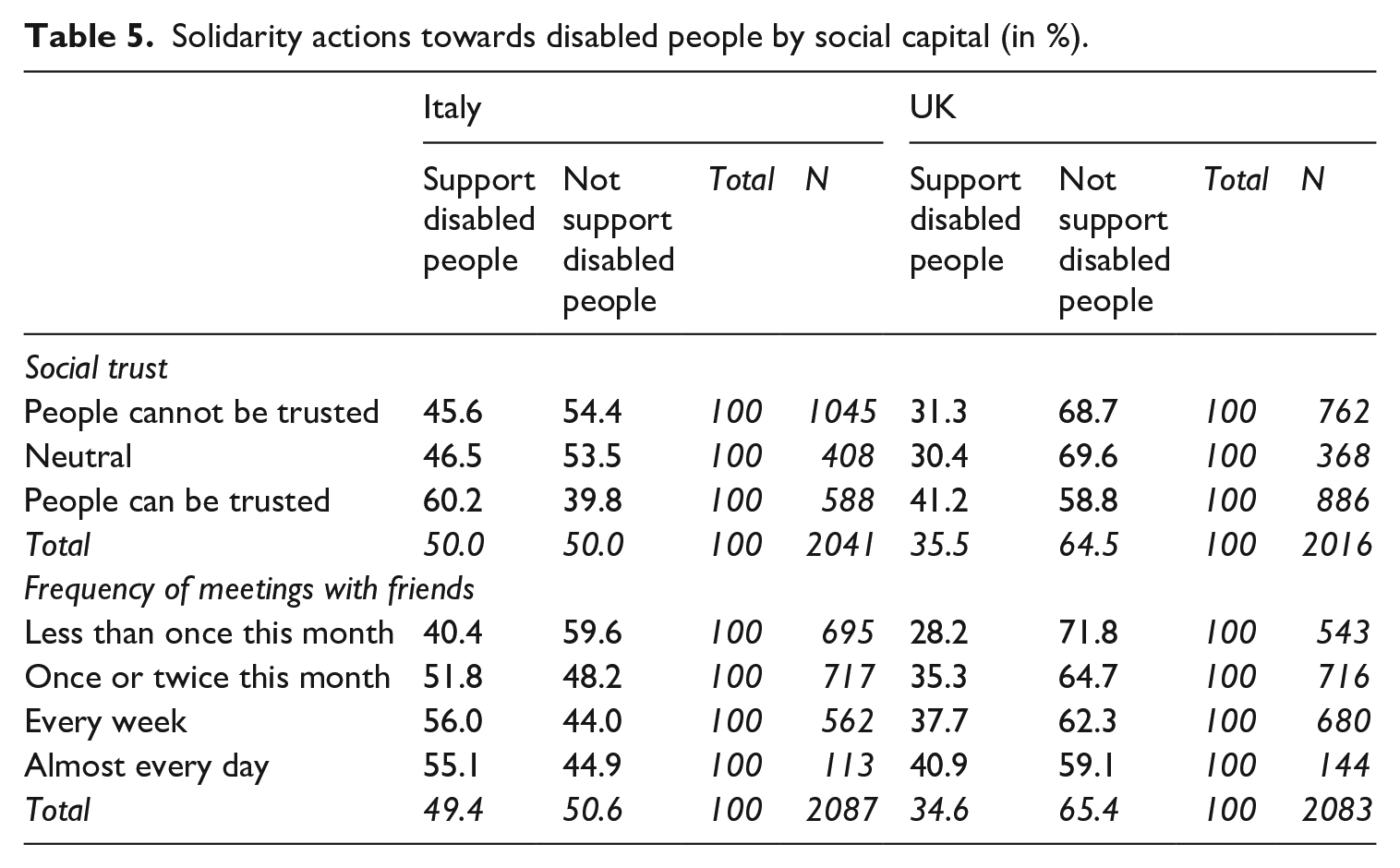
Our results confirm the relevance of social capital for solidarity activism in the field of disability (see Table 5). As for those solidarity practices in support of disabled people, in both countries we observe that this support is more evident among those who have greater trust in others than those who do not.
A similar pattern is depicted by the second measure of social capital related to the frequency of social connections. Among people meeting socially with friends at least every week, in both countries those engaging in solidarity activities in favour of disabled people are over-represented compared to the total population, whereas they are strongly under-represented among those who meet less than once a month.
Solidarity actions towards disabled people by social capital (in %).
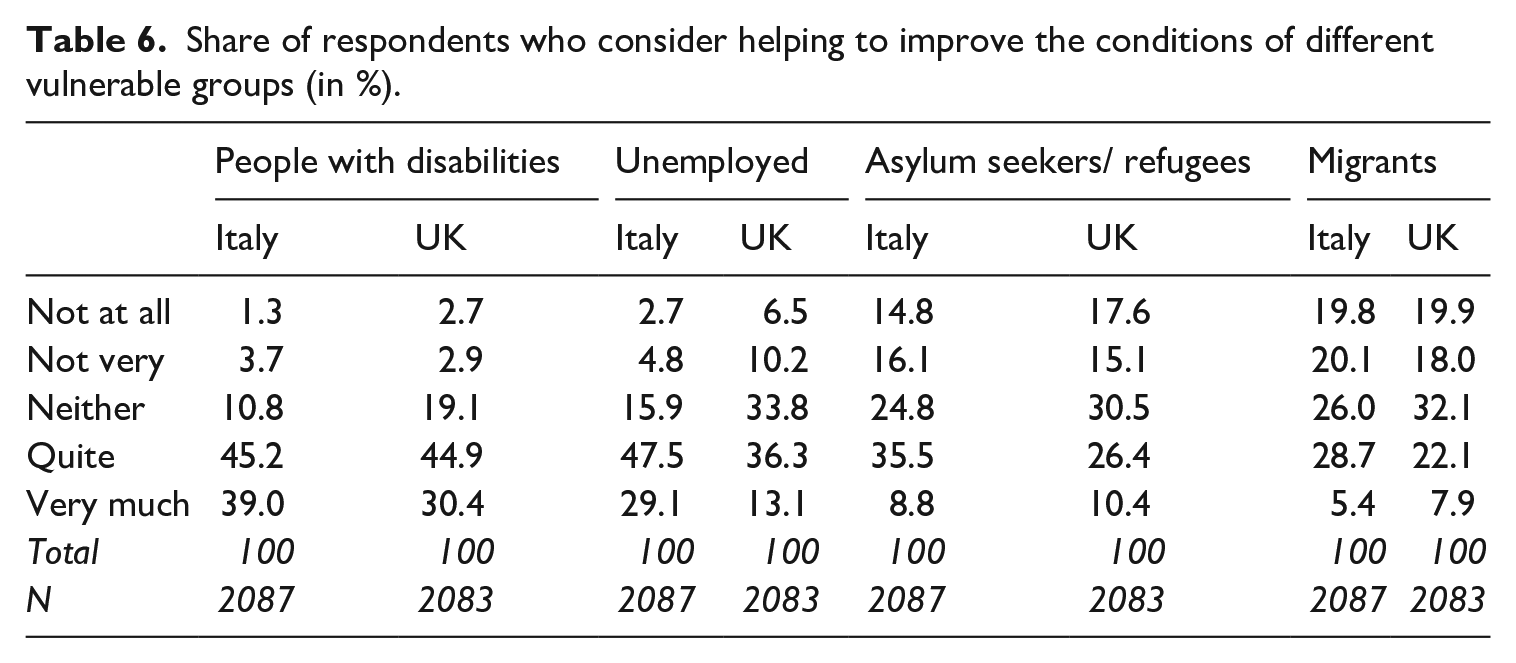
As mentioned earlier, deservingness can play an important role as regards solidarity among the public (Van Oorschot, 2000) and forms a key part of our hypotheses. In Tables 6 and 7 we explore our findings on deservingness through respondents’ willingness to help improve the conditions of four specific groups (migrants, refugees/asylum seekers, people with disabilities and the unemployed) in the wake of a previous study about solidarity towards refugees (Maggini and Fernández, 2019), which relied on the same proxy for deservingness to mirror the operationalisation adopted by Van Oorschot (2006). 11 The assumption is that respondents’ concerns about groups’ conditions reflect their perception of the deservingness toward the groups and the rank-order of their informal solidarity preferences. First of all, our findings clearly show that there is a groundswell of opinion in both countries that people with disabilities are by far deemed the most deserving group of help (see Table 6). Indeed, only 5% of Italians and 5.6% of Britons said that they would not be willing to help improve the conditions of people with disabilities, while 84.2% of Italians and 75.3% of Britons would be willing to do so. In particular, 39% of Italians and 30.4% of Britons answered that they would be willing to help ‘very much’. In this regard, the unemployed rank second, although a clear difference between the two countries is that in Italy the share of those who answered ‘very much’ is much higher than in the UK (29.1% vs 13.1%). Furthermore, in both countries, refugees/asylum seekers and especially migrants are certainly the groups considered to be least deserving: 30.9% of Italians and 32.7% of Britons do not consider helping to improve the conditions of refugees/asylum seekers and when it comes to migrants, these shares increase to 39.9% and 37.7%, respectively.
Share of respondents who consider helping to improve the conditions of different vulnerable groups (in %).
Solidarity actions towards disabled people by social beliefs: deservingness (in %).
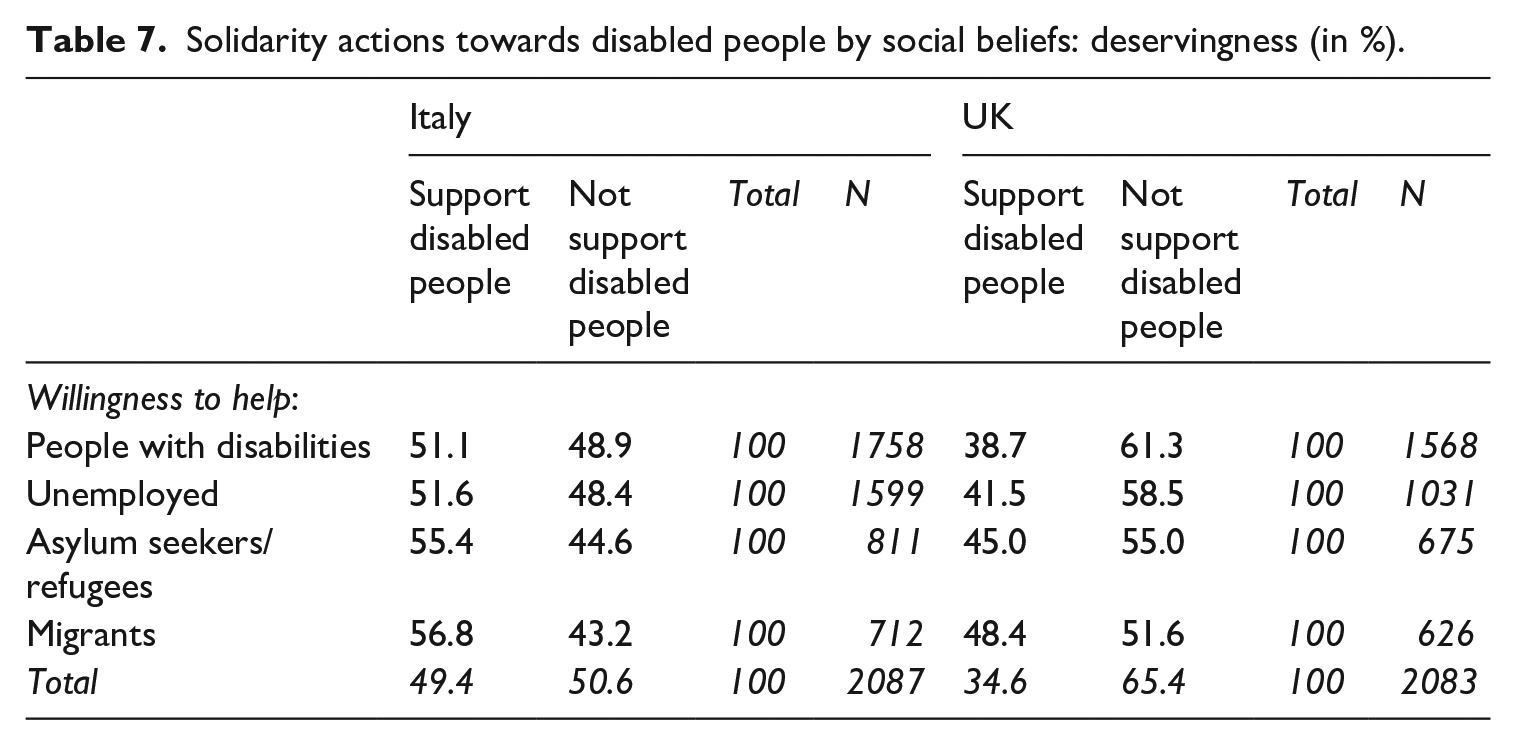
Finally, our findings reveal that a willingness to help groups does not necessarily translate into solidarity action (see Table 7). For example, in Italy we find that around half of those who indicate a willingness to help disabled people actually engage in solidarity action and in the UK two fifths (38.7%) of those who indicate a willingness to help actually support disabled people. When we look at willingness to help unemployed people we observed a similar proportion in Italy involved in solidarity action with disabled people (51.6%) and a small increase among those in the UK who are engaged in solidarity with disabled people (41.5%). When we turn to those respondents who indicated to us a willingness to help asylum seekers and refugees we observed a majority in Italy (55.4%) and over two fifths (45%) in the UK engaged in solidarity actions with disabled people. When we considered those expressing a willingness to help migrants we found close to three fifths (56.8%) in Italy and almost half of respondents (48.4%) in the UK involved in supporting disabled people. What our findings reveal here is that, firstly, a willingness to help does not necessarily translate into action and secondly, there is a complexity in the transversal dimensions of support for disabled people that must be appreciated. In particular, people perceiving migrants and refugees/asylum seekers as worthy of being helped are likely to also be involved in solidarity actions towards disabled people, suggesting the existence of an intersectional form of solidarity with a group that cuts across categories of race, ethnicity and gender (Hirschmann, 2012; Warner and Brown, 2011).
Findings II: Individual explanatory factors of solidarity actions
Which factors tend to promote or inhibit solidarity in favour of disabled people at the individual level? Is there variance when comparing the two countries? To answer these questions, we outline the results of a multivariate logistic regression analysis. Reported solidarity activities in favour of disabled people are the dichotomous dependent variable (for which 0 signifies ‘no action’, 1 ‘at least one action’). The goal is to investigate the determinants of solidarity activities towards disabled people by looking at differences and similarities between Italy and the UK. As we explained at the outset of this article, our research is grounded on the hypotheses that social capital, cultural orientations (as religiosity) and social beliefs as perceptions of deservingness may influence solidarity practices towards disabled people.
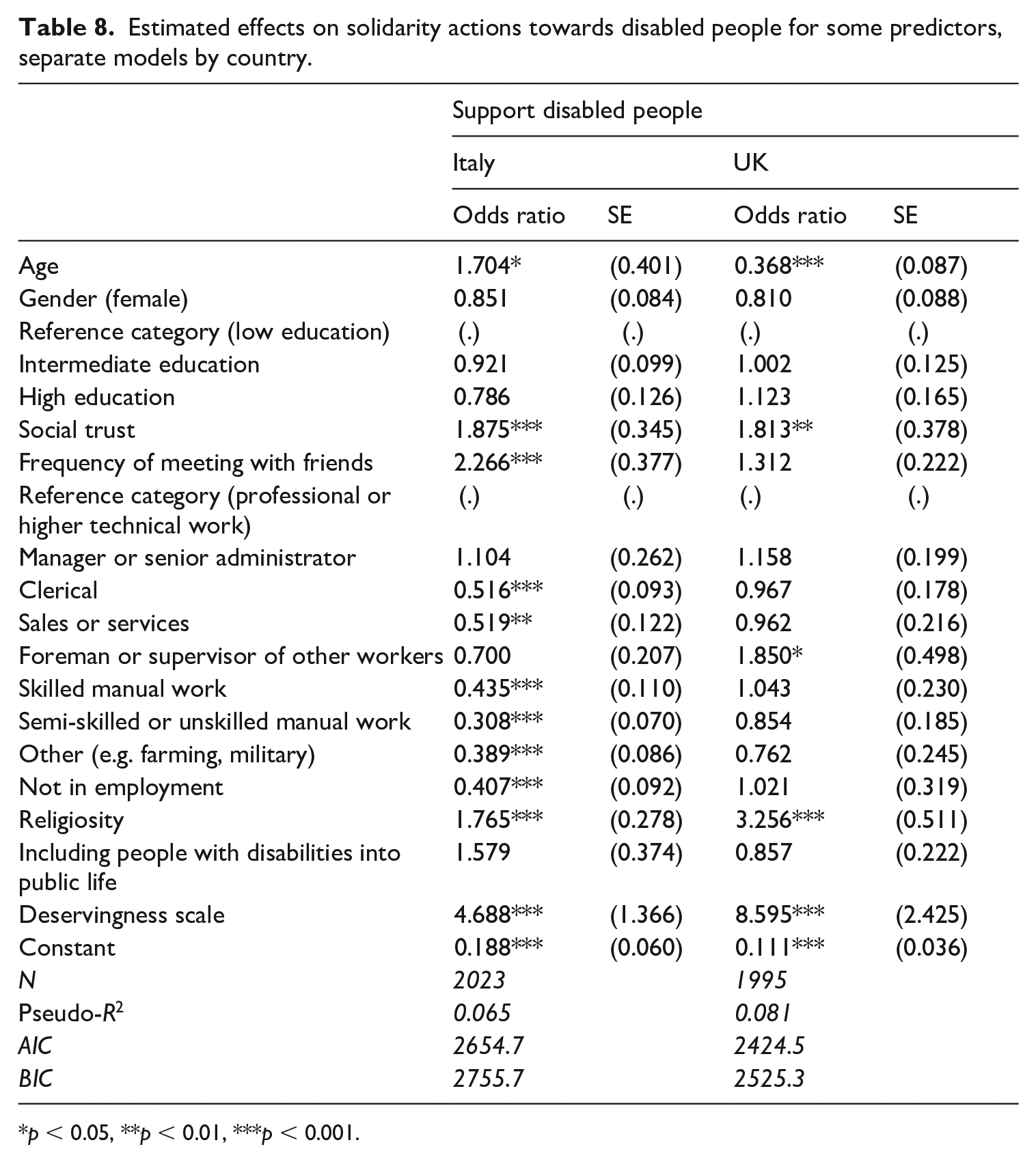
Table 8 presents the results of our estimations, including odds ratios (with standard errors) and goodness-of-fit statistics (pseudo-R-squared values of Nagelkerke, AIC and BIC coefficients). In logistic regression, the odds ratio represents the change in the odds of an outcome (offering solidarity) for an increase of one unit in the predictor. We have included as independent variables 12 the individual characteristics selected in the previous section: the socio-demographic variables (age, gender, education), social capital measures, social traits and cultural orientations (objective class position, religiosity), social beliefs (evaluations on ‘vertical’ solidarity and perceptions of deservingness).
Estimated effects on solidarity actions towards disabled people for some predictors, separate models by country.
p < 0.05, **p < 0.01, ***p < 0.001.
Looking at p values and odds ratios of predictors, we observed similarities and differences between the two countries for explanatory factors of solidarity practices.
Concerning similarities, our hypotheses are confirmed as regards social centrality; that is social capital (especially social trust), religiosity and deservingness. First of all, in terms of measures of social capital, social trust is significant in both countries. Significance is in fact very high with p at 0.1% in Italy and p at 1% in the UK. Furthermore, this variable shows high odds ratios: higher levels of social trust increase the odds of engaging in solidarity actions, regardless of the country. For example, one unit increase in trust in others increases 1.9 times the odds of supporting disabled people in Italy and (similarly) 1.8 times the odds of supporting disabled people in the UK. As regards the other measure of social capital (i.e. the frequency of social connections with friends), an obvious difference emerges between the two countries: frequency of social connections is not related to solidarity towards disabled people in the UK, whereas it is strongly related to solidarity towards disabled people in Italy (with p at 0.1%). Moreover, the odds ratio of this variable in Italy is higher than the odds ratio of social trust: one unit increase in the frequency of meeting with friends increases 2.3 times the odds of supporting disabled people in Italy.
As for cultural orientations, our hypothesis that religiosity is a very good predictor of involvement in solidarity actions is confirmed, regardless of the country. Indeed, it is very significant (with p at 0.1%) and the odds ratios are high (1.8 in Italy and 3.3 in the UK). Clearly, we can conclude that religious respondents in both Italy and the UK are more likely to be engaged in solidarity actions in favour of disabled people, despite the fact that the two countries show a different level of secularisation. This finding may also corroborate our appreciation that a religiously-driven solidarity may include strong doses of paternalism and pietism.
Regarding deservingness, as mentioned in the previous section, our survey includes a battery of items measuring respondents’ willingness to improve the conditions of different target groups on five-item scales (1 – Not at all, 2 – Not very, 3 – Neither, 4 – Quite, 5 – Very much). In particular, variables measuring the willingness to improve the conditions of three specific needy groups (refugees/asylum seekers, people with disability, unemployed) 13 were highly correlated (alpha test 0.66). Therefore, we created an additive scale following the operationalisation adopted by Maggini and Fernández (2019). Our results corroborate such an approach, in fact deservingness considerations strongly increase the odds of supporting people with disabilities in both countries (and especially in the UK). Significance is in fact very high with p at 0.1% and odds ratios are very high as well: one unit increase in the deservingness scale increases 4.7 times the odds of supporting disabled people in Italy and 8.6 times the odds of supporting disabled people in the UK. Thus, in line with our hypothesis, deservingness is definitely a relevant factor in fostering solidarity actions in favour of a specific group considered as worthy of receiving support.
Some noteworthy differences between the individual dynamics of solidarity actions in Italy and the UK emerge when we look at three variables: age, social class and opinions on solidarity-based policies.
First, age is very significant with p at 0.1% in the UK and significant with p at 5% in Italy, but the direction of the effect is the opposite: ageing increases the odds of supporting disabled people in Italy, whereas it decreases the odds in the UK.
Secondly, social class is not significant when observing occupational categories in the UK, aside from foreman or supervisor, which is significant with p at 5%. whereas some social class categories in Italy are related to solidarity actions in favour of disabled people. In fact, a number of occupational categories in Italy we found were significant (with p at 0.1%) with a negative effect on solidarity actions towards disabled people compared to the reference category (professional or higher technical work). This means that in the Italian case ‘social centrality’ (and the availability of economic resources) is connected to an individual’s engagement in solidarity actions towards disabled people, being also another indicator of social embeddedness.
Finally, opinions on solidarity-based policies in favour of disabled people are not significant in either Italy or the UK. In other words, there is no relationship in both countries between support towards social policies for disabled people and involvement in solidarity actions in favour of disabled people. Such a finding provokes further questions as to the driving force of solidarity towards disabled people. Although solidarity may be welcome in terms of immediate support especially in times of crisis, disabled people campaigning for their rights have often sounded caution regarding paternalistic and condescending views that can undermine their opportunities for independent living (Oliver, 1990).
Conclusions
In this article we have sought to uncover the variegated forms of solidarity with disabled people across two diverse European contexts, Italy and the UK. What we have observed is that despite the diversity of these contexts, both present quite similar challenges for disabled people, most notably a milieu where the consequences of the financial crisis and the austerity measures which followed have impacted upon those vital forms of welfare support which are the formalised expressions of solidarity with disabled people.
What our findings reveal is that there does indeed exist a pool of solidarity amongst citizens in both Italy and the UK towards disabled people. In one sense, the foundations of this solidarity are similar, for example when we look at how solidarity relates to social embeddedness and social trust, or, in other words, to people’s social centrality. However, solidarity with disabled people does differ across our two countries with evidence of a more direct and active form of solidarity in Italy compared to the UK. Moreover, the willingness to be more charitable and solidaristic due to religiosity supports the hypothesis we outlined earlier in this article, although its combination with deservingness and the comparison of solidarity towards disabled people and other groups in need might point to a solidarity embedded by a certain degree of paternalism and pietism.
Our findings from the individual level survey support our hypothesis that the more an individual is socially embedded in society and trustworthy of others the more likely they will support marginalised groups such as disabled people – a finding that was consistent across both Italy and the UK. Moreover, in both countries the importance of ‘deservingness’ emerged in our survey data, thus supporting another of our hypotheses that the more an individual perceives a marginalised group to be deserving the more disposed towards solidarity with that group they will be. Nevertheless, we must sound a note of caution about where such perceptions of deservingness come from in terms of perceptions of the independence of disabled people to determine their own lives and we must be conscious of the potential impact of policy discourses such as those we have witnessed in the UK that have sought to divide disabled people as a group between the deserving and the undeserving (Montgomery et al., 2018).
Overall, our findings speak to the concerns of three different groups. Firstly, for disabled people who have been at the forefront of the austerity agenda in both our countries, although it may seem little consolation, there is a pool of solidarity in society, therefore as economic decisions are taken which affect social policy in the period of post-pandemic recovery, disabled people do have an already existing constituency of support in both societies. Secondly, our findings should offer some inspiration to those civil society organisations operated by and for disabled people in both Italy and the UK that there is a constituency of public support which can be mobilised and with whom they can connect and build upon through their activities in ensuring disabled people are not once again exposed to the consequences of economic policies to rebalance public budgets. Thirdly, our findings sound a note of caution to those policymakers in both Italy and the UK who are committed to pursuing an austerity agenda aimed at disabled people in the future. The results of our analysis suggest that pursuing such an agenda is not fully in tune with the public perception of how far disabled people should be supported. In fact, although our findings sometimes reflected that our respondents were situated in different welfare regimes (Jaeger, 2006; Larsen, 2008; Mau, 2004), what they held in common was a sense of solidarity with disabled people.
Footnotes
Declaration of conflicting interests
The authors declared no potential conflicts of interest with respect to the research, authorship, and/or publication of this article.
Funding
The research contained in this article has been made possible through funding from the European Commission: European Horizon 2020 programme for the project ‘TransSOL’ under grant agreement No 649435.
Notes
Author biographies
 ).
).