



Abstract
Digital transformation is a phenomenon perceived across a multitude of contexts in the organisational societal and individual domains. Conceptualising this broad phenomenon requires an approach that provides structure and comparability across contexts and domains whilst containing sufficient contextual detail and specificity to avoid conceptual stretching. Utilising a multi-method approach, this paper draws from a set of empirical data to develop such a context-sensitive conceptualisation for digital transformation. Utilising a design perspective on digital transformation this paper (1) develops a conceptual meta-structure capable of representing instances of digital transformation independent of domain and context and (2) develops a taxonomy of context-specific categories for the identified meta-elements. The three elements Representation, Technology, and Effect (RTE) constitute the meta-structure, the taxonomy is comprised of seven representation, 10 technology and nine effect categories. We evaluated our results utilising a card sorting approach in a workshop setting. The proposed conceptualisation is capable to accommodate context-specific manifestations of digital transformation in all tested environments thereby indicating its applicability as a foundation for a context-sensitive conceptualization of digital transformation. The paper contributes to the evolving body of literature on digital transformation by providing a conceptual meta-structure capable of capturing manifestations of digital transformation in a uniform and structured manner across domains and contexts.
Introduction
Driven by the increasing speed and scope of technology adoption in the individual, organisational and societal domains, the phenomenon of digital transformation has developed into one of the most prominent research topics within the IS community. Literature from related fields further demonstrates its relevance across disciplines, including management (Hanelt et al., 2021; Verhoef et al., 2021), sociology (Dengler and Gundert, 2021; Hobbs et al., 2017) and psychology (Roblek et al., 2021; Trenerry et al., 2021). Despite this interdisciplinary research focus, the question of how digital transformation should be conceptualised remains a subject of scientific debate with often strongly diverging viewpoints. Approaches to conceptualising and defining digital transformation diverge regarding its distinguishing characteristics, which range from specific sets of technologies (Vial, 2019) or required levels of strategic planning (Hess et al., 2016) to degrees and areas of organisational change (Wessel et al., 2021). At the same time, authors question whether digital transformation can be considered a distinguishable concept and argue that ‘DT might be the latest in a succession of names, tied to the context of their time, signifying the increasing importance of information technology’ (Chen and King, 2022). In parallel to these academic discussions on the nature of digital transformation, its scope and speed result in enormous challenges for decision-makers across all domains and industries.
The growing influence of digital transformation on public funding schemes and educational guidelines (Jung and Lehrer, 2017), reinforces the need to provide conceptual clarity. A central reason for our insufficient understanding lies in the fuzziness of the concept and the breadth of the phenomenon. Gong and Ribiere (2021) identify the conflation of digital transformations’ definitory terms alongside its conceptual stretching (a common issue in concept formation initially formulated by Yg (1989)) as a central weakness in the existing literature. This weakness in the existing capability to conceptualise the phenomenon is widely a result of the variety of phenomena described as digital transformation. To demonstrate: Just within the organisational domain, the multitude of phenomena described by this term range from a planned restructuring of business models (Berman, 2012), the integration of new sources for innovation (Steiber and Alänge, 2020) and the application of standard software in governmental bodies (Mergel et al., 2019) to aspects of cultural change within organisations (Vey et al., 2017). Reflecting all these activities within a single concept results in concepts that are either too narrow to represent the phenomenon fully or so ‘conceptually stretched’ that digital transformation ‘becomes virtually a synonym for talk of any kind in both academic and practitioner communities, leading to theoretical vacuity and practical confusion’ (Gong and Ribiere, 2021). These limitations restrain the academic community’s ability to develop a deeper understanding of the mechanics and dynamics of digital transformation across varied domains and contexts. Furthermore, these limitations reduce our ability to benefit from sharing existing experience and knowledge across domains.
Digital transformation reflects a broad phenomenon that affects not just organisations but industries, markets and societies, yet we lack a conceptual bridge that allows us to transfer knowledge across these domains. If a conceptualisation of digital transformation remains narrow, it can fulfil established requirements for conceptual clarity while inevitably limiting it to specific contexts. If a conceptualisation remains broad, it inevitably will be limited in its ability to provide the required context-specific theoretical underpinning. The motivation of this paper is to provide a context sensitive conceptualisation of digital transformation that (1) provides structure and comparability across contexts and domains and (2) contains sufficient detail to avoid the problem of conceptual stretching. We argue that such a context-sensitive conceptualisation depends on two central components: first, a set of context-independent conceptual elements of digital transformation processes; and second, a set of context-specific manifestations of these elements. Such a conceptualisation provides a foundation that broadens and deepens our understanding of digital transformation, thereby enabling an extensive set of benefits for practitioners and academics.
Background and research goal
The first mentions of digital transformation can be traced to the early 2000s (Andal-Ancion et al., 2003; Bauer, 2002; Yamaguchi, 2002). To the best of our knowledge, there is no singular, unique introduction of the term. The term ‘digital transformation’ has been used generally to describe a variety of change processes focused on digital technology. As a result of increasing technology use and adoption in the individual, organisational and societal domains, such change processes became widely investigated research phenomena in a variety of fields, leading to an exponential growth in digital transformation-focussed research articles (Hanelt et al., 2021). Within the organisational domain, the concept of organisational transformation, defined as ‘fundamental changes in organizational logic which resulted in or was caused by a fundamental shift in behaviour’ (Muzyka et al., 1995), was discussed in the early 1990s. At that time, the increasing adoption of ERP systems and the advent of the internet reflected fundamental behavioural shifts within organisations. These shifts brought about the predecessors of the digital transformation concept, such as IT-enabled organisational transformation (ITOT) (Venkatraman, 1994). In the organisational domain, the pace of research on digital transformation began to accelerate in the 2000s and has seen exponential growth ever since. We differentiate between digital transformation in the organisational, individual and societal domains based on the central entity subject to change through the digital transformation process in question. Whilst research on and conceptualisation approaches to digital transformation have also been presented in the societal (Hilbert, 2022) and individual (Trenerry et al., 2021) domains, the majority of research on and conceptualisation approaches to digital transformation stem from the organisational domain. Due to the strong research interest and the plethora of empirical (Mergel et al., 2019), theoretical (Heilig et al., 2017) and review contributions (Vial, 2019) in the organisational domain, it can be considered the most promising starting point for the development of a context-sensitive conceptualisation of digital transformation.
Digital transformation concepts
In recent years, several valuable approaches to conceptualising and defining digital transformation have been presented by members of the IS research community and related fields. Vial (2019) presented one of the first and most exhaustive literature reviews. He defines digital transformation based on a review of 282 works as ‘a process that aims to improve an entity by triggering significant changes to its properties through combinations of information, computing, communication, and connectivity technologies’ (Vial, 2019). This procedural view of digital transformation is highlighted in a second publication focused on providing conceptual clarity (Gong and Ribiere, 2021). Based on a rigorous review of 134 definitions of digital transformation, the following unified definition was proposed: ‘A fundamental change process, enabled by the innovative use of digital technologies accompanied by the strategic leverage of key resources and capabilities, aiming to radically improve an entity… and redefine its value proposition for its stakeholders’ (Gong and Ribiere, 2021). A third contribution identifies the central aspects that separate digital transformation from the concept of ITOT, redefines value propositions and identifies the emergence of a new organisational identity as central distinguishing factors of digital transformation activities (Wessel et al., 2021).
Whilst all these conceptualisations are major contributions to conceptually clarifying digital transformation, they do not overcome the previously identified issue of being too broad or too specific. Distinguishing digital transformation by its broad nature as a significant organisational change process enabled by technology (Vial, 2019) lacks clear discriminating attributes and thereby allows for concept-stretching. On the other hand, the set of discriminating attributes (Gong and Ribiere, 2021) limits digital transformation processes to contexts with a narrow set of characteristics. Such processes, in particular, are required to be fundamental in nature, create outcomes reflecting radical improvements, utilise innovative technologies and strategically leverage organisational capabilities and resources. This conceptualisation reflects digital transformation in its most profound and established appearance within organisational practice. Yet it excludes, for example, transformations based on established technologies (Heilig et al., 2017) or transformations that emerge from within their surroundings rather than those that are strategically instigated (Steiber and Alänge, 2020). This ‘narrowness’ problem is also present in the demarcation approach by Wessel et al. (2021). By considering altered organisational identities as the distinguishing characteristic of digital transformation processes, organisations with a predefined organisational identity would have to be considered unable to perform digital transformation, an assumption contradicted by research on digital transformation in the public sector (Mergel et al., 2019). It is important to point out that this criticism is not questioning the validity and profundity of these previously mentioned conceptualisations. The rigorous approaches of these papers (Gong and Ribiere, 2021; Vial, 2019; Wessel et al., 2021) as well as their foundation in the literature and empirical data, distinguish these conceptualisations from others in the field. The critical reflection on these conceptualisations is solely intended to demonstrate that trying to conceptualise digital transformation as ‘a specific thing’ independent of its context inevitably leads to shortcomings regarding the representation of the plethora of technology-enabled change processes that constitute the digital transformation phenomenon.
A context-sensitive understanding of digital transformation
Understanding that the shape of digital transformation processes can vary greatly depending on the contexts in which they appear is immanent for developing a conceptualisation capable of representing all forms of digital transformation processes. In their systematic literature on digital transformation from a management perspective, Hanelt et al. (2021) identify contextual conditions within and outside the organisation as central triggers and shapers of digital transformation. In their multidisciplinary review of digital transformation, Verhoef et al. (2021) also highlight the necessity of a better understanding of contextual influences on digital transformation. Whilst most digital transformation conceptualisation approaches in the literature are focused and thereby limited to a specific context, some authors have also suggested understanding digital transformation as an instance of an organisational design (Muehlburger et al., 2020). Following Simon’s (1996) understanding of designing as ‘courses of action aimed at changing existing states into preferred ones’, digital transformation processes in all contexts can be viewed as IT-oriented instances of design. Design research offers a rich theoretical and methodological foundation for all designing activities and provides a conceptual framework for digital transformation that stems from its underlying procedural nature rather than its specific involved entities and their contexts. Following this understanding of digital transformation as an instance of organisational design, we argue that contextual factors not only shape digital transformation processes and influence their impact but also represent an inherent aspect of any digital transformation process.
The field of design research offers a variety of frameworks and ontologies which were analysed regarding their fit for our research project (Gero and Kannengiesser, 2014; Hatchuel and Weil, 2008; Sim and Duffy, 2003; Suh, 1990; Tomiyama, 1994). Following careful consideration and analysis, we identified the FBS framework (Gero and Kannengiesser, 2014) as the most-promising foundation for our context-sensitive conceptualisation. It presents a meta-cognitive view of designing that is distinguished by its high genericity and widespread adoption in various research fields (Gero and Kannengiesser, 2014). The FBS framework was developed based on empirical findings from design research and theories on situated cognition (Clancey, 1997). The framework considers design as a process in which a designing entity can interpret a design representation from the external world and develop an altered design representation that can be ‘mirrored’ back into the external world (Gero and Kannengiesser, 2004). Utilising this framework, we identified three central elements of digital transformation processes that are independent of their domain and context: first, a Representation (R) of the entity, which is designed in or changed by the digital transformation process; second, a certain Technology or technological construct (T) that reflects the central technological means through which the entity is changed; and third, the Effect (E) expected to result from the altered design representation. These three conceptual elements are integral aspects of any digital transformation process, providing a context-independent meta-structure for digital transformation processes. Whilst this context-independent meta-structure can form a basis for the context-sensitive conceptualisation of digital transformation, it does not yet allow for the digital transformation conceptualisation to include context-specific manifestations of its relevant elements. To enable context-specificity and the resulting context-sensitivity of the proposed conceptualisation presented in Figure 1, a structured set of context-specific manifestations of the conceptual elements is required. Our research goal, therefore, is to develop a context-specific set of digital transformation manifestations that can be structured along the context-independent meta-elements stemming from the design view on digital transformation. Context-independent meta-structure of digital transformation and context-specific manifestation.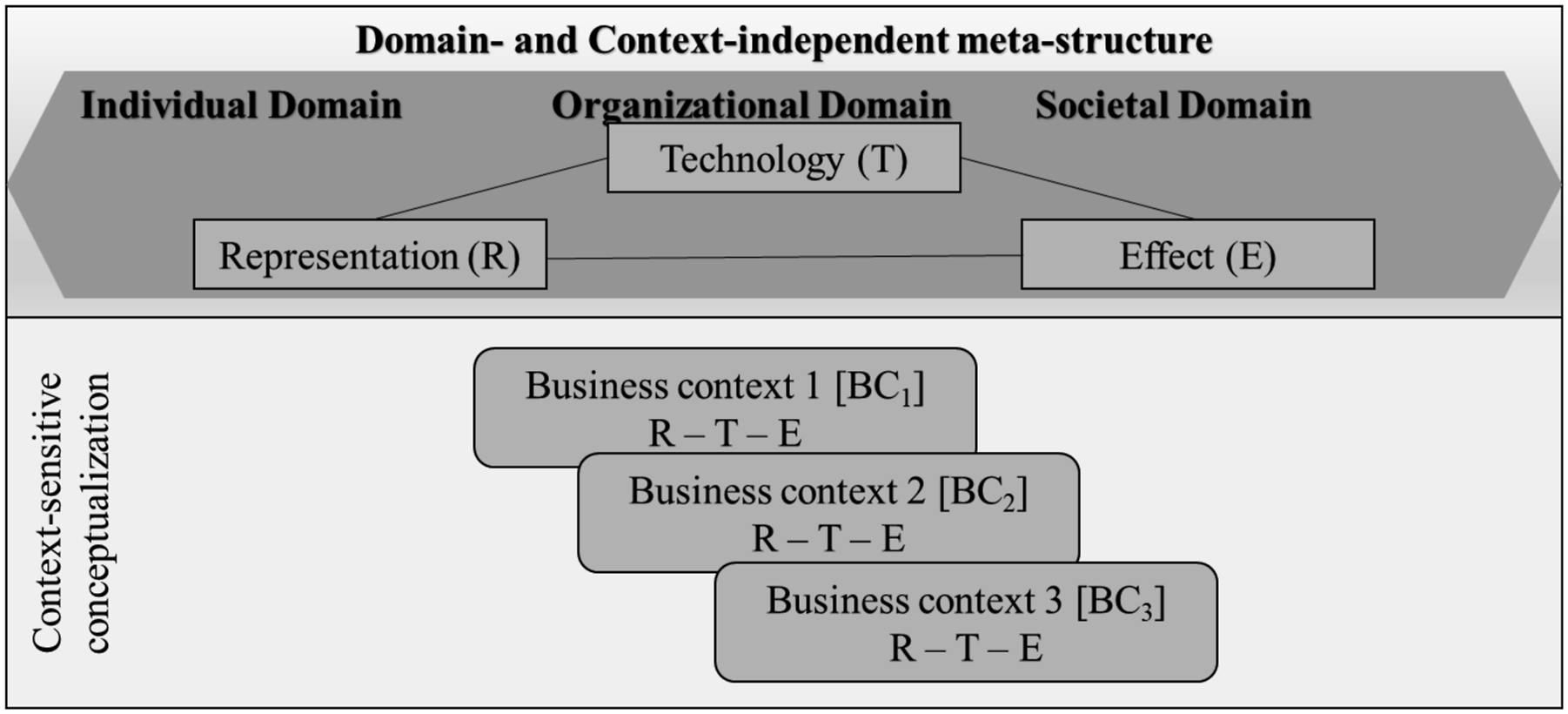
Methodological approach
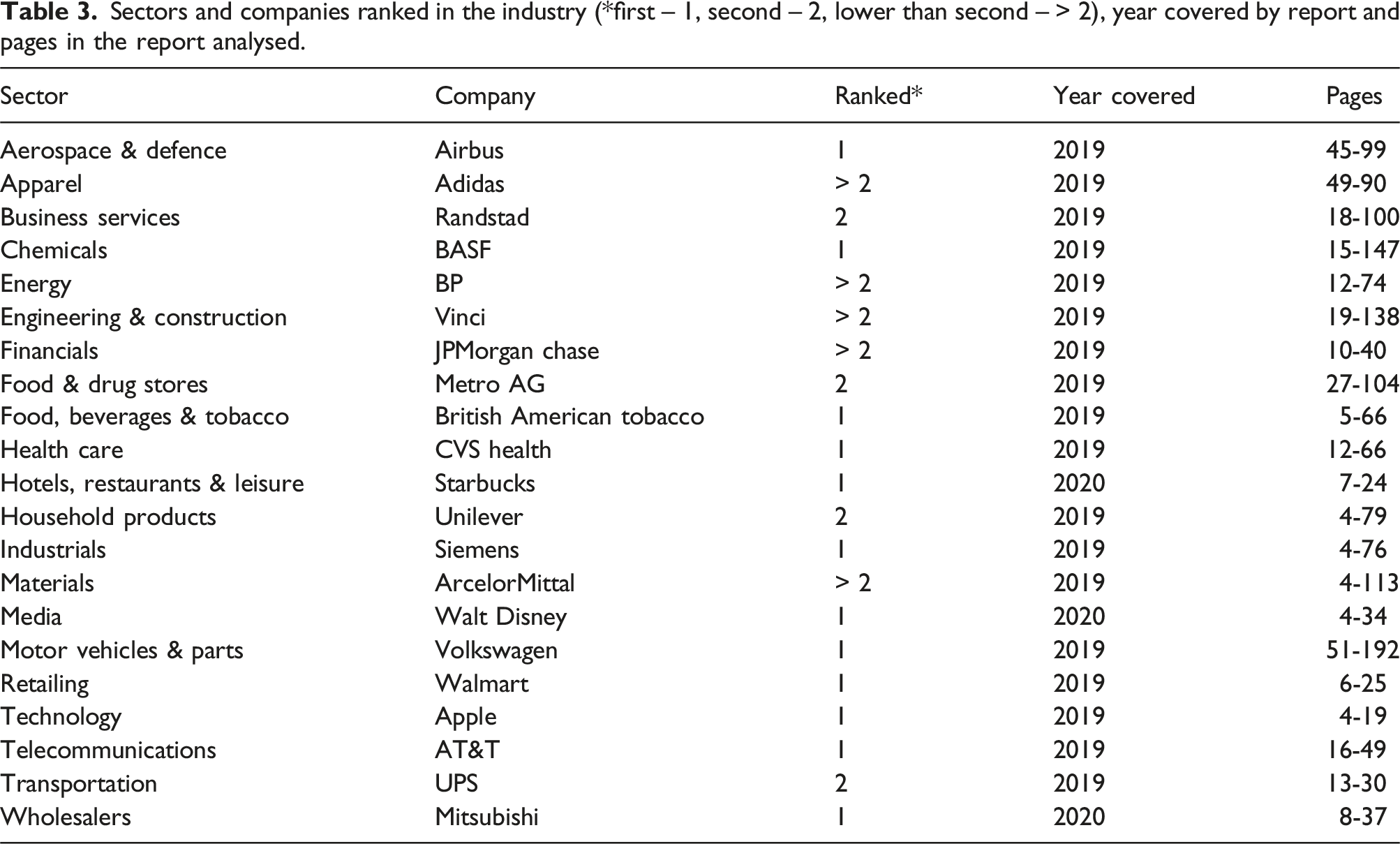
To establish, develop and evaluate the context-sensitive conceptualisation of digital transformation, a wide spectrum of data is required. To achieve this goal, we adopted methodological pluralism and applied a multi-methods approach (Niehaves, 2005). This allows to benefit from a variety of methods and allows to look into a phenomenon from different angles (Niehaves, 2005). In particular, this approach focuses on the possibility to integrate methods for testing and evaluating, that may have not been applied in IS research that often, assuming these methods to be modules to fit the needs of the research (Niehaves, 2005). In our study, we applied different methods in three distinctive phases (see Figure 2). We first developed a taxonomy from the academic literature in order to identify context-specific manifestations of digital transformation elements (Phase 1). In addition, we involved experts to refine and further develop the taxonomy. In Phase 2, we evaluated the taxonomy on a broader base regarding its ability to integrate different, context-specific manifestations of elements. Based on the taxonomy, we derived a codebook and applied it on reports of 21 different sectors (one company per sector) as represented in the Fortune 500. In the third phase, we evaluated whether the proposed conceptualisation in the taxonomy enables a context-sensitive understanding of digital transformation processes. We set up an according card sorting method, applied it in workshops, and focussed on its ability to form shared understanding about digital transformation manifestations stemming from different contexts. Methodological approach – phases, aims and applied approaches.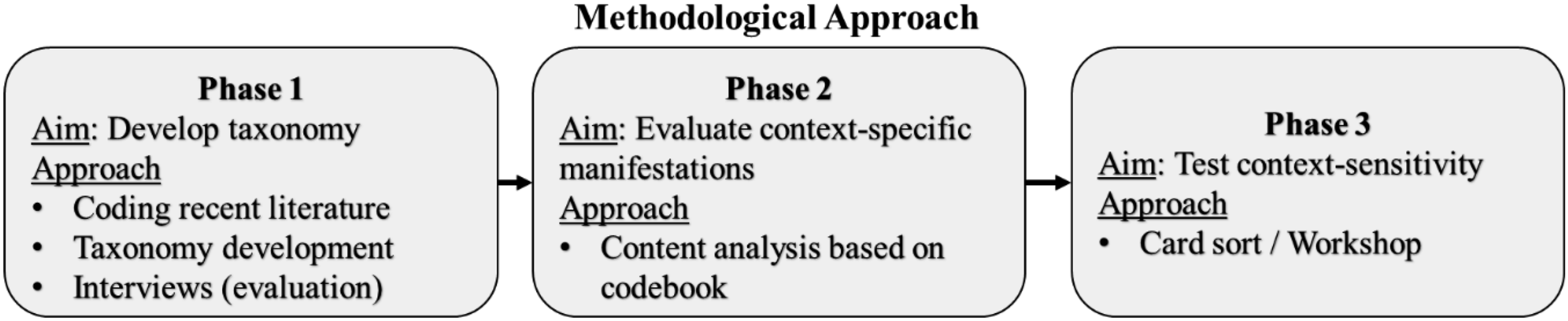
Coding process and results – example.

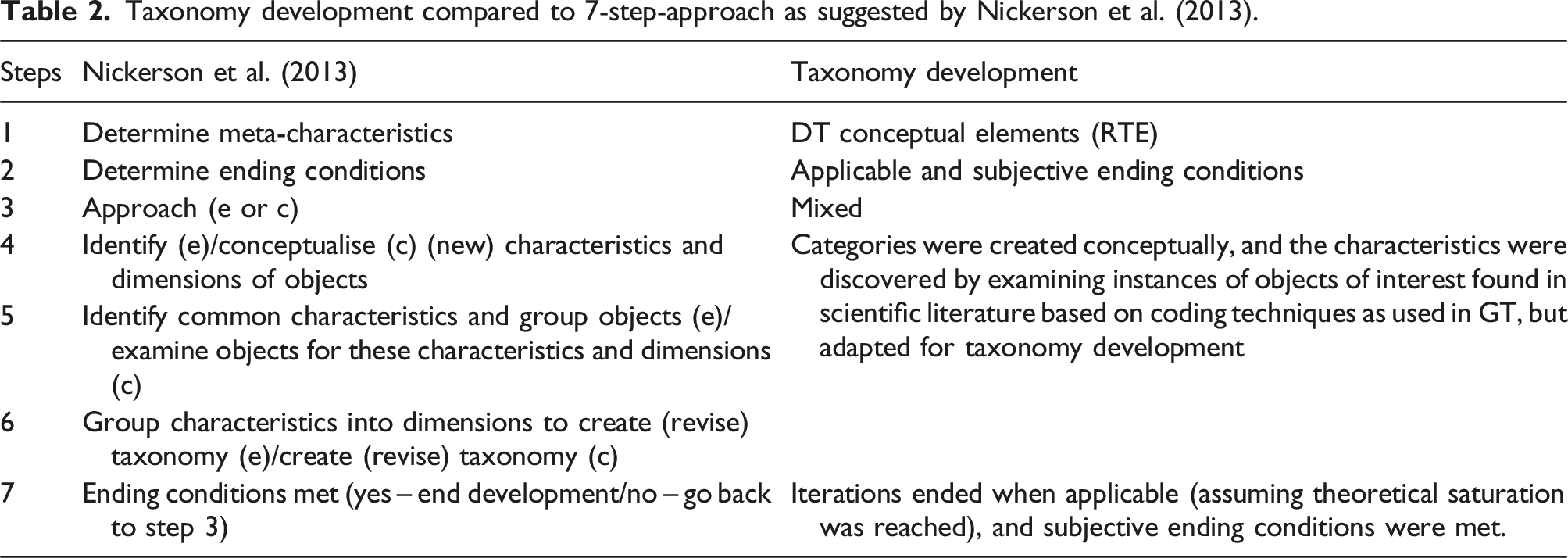
For the development of the taxonomy, we relied on a minimal information sampling approach (Van Rijnsoever, 2017) based on a starting point (Wohlin, 2014). As a starting point, we used the most extensive literature review on digital transformation (Vial, 2019), that reviewed 282 publications. We scanned the publications listed in this literature review for the above-mentioned RTE-triplets. Involving three independent coders, aiming at proving validity or codes, 58 publications were classified as information sources before having reached theoretical saturation (Strauss and Corbin, 1990; Van Rijnsoever, 2017). Theoretical saturation in relation to qualitative research and in particular to GT means that it is very unlikely that additional data is being found to add meaning to the categories (Glaser and Strauss, 1967). From these 58 information sources, we were able to identify 81 RTE-triplets. Using the coding techniques as described above, we further condensed the elements of the RTE-triplets to identify categories per element and build the taxonomy.
Taxonomy development compared to 7-step-approach as suggested by Nickerson et al. (2013).
Second, to evaluate and even enrich the taxonomy, we involved experts from the field (Nickerson et al., 2013). In particular, we exposed the taxonomy developed from the academic literature to six experts. We collected their views regarding completeness, applicability, usability and efficacy. The experts were selected based on their experience in implementing or leading digital transformation projects and/or strategies. All six have an academic background (Master level or PhD), but are now working in organisations in different industries (energy, financials, materials, technology, telecommunication, transportation) in various roles and. All six are directly involved in digitalisation and digital transformation projects, most of them in leading roles (i.e. strategic information management; chief technology officer, chief development officer, CEO) or at least as senior project managers for digitalisation projects.
Sectors and companies ranked in the industry (*first – 1, second – 2, lower than second – > 2), year covered by report and pages in the report analysed.
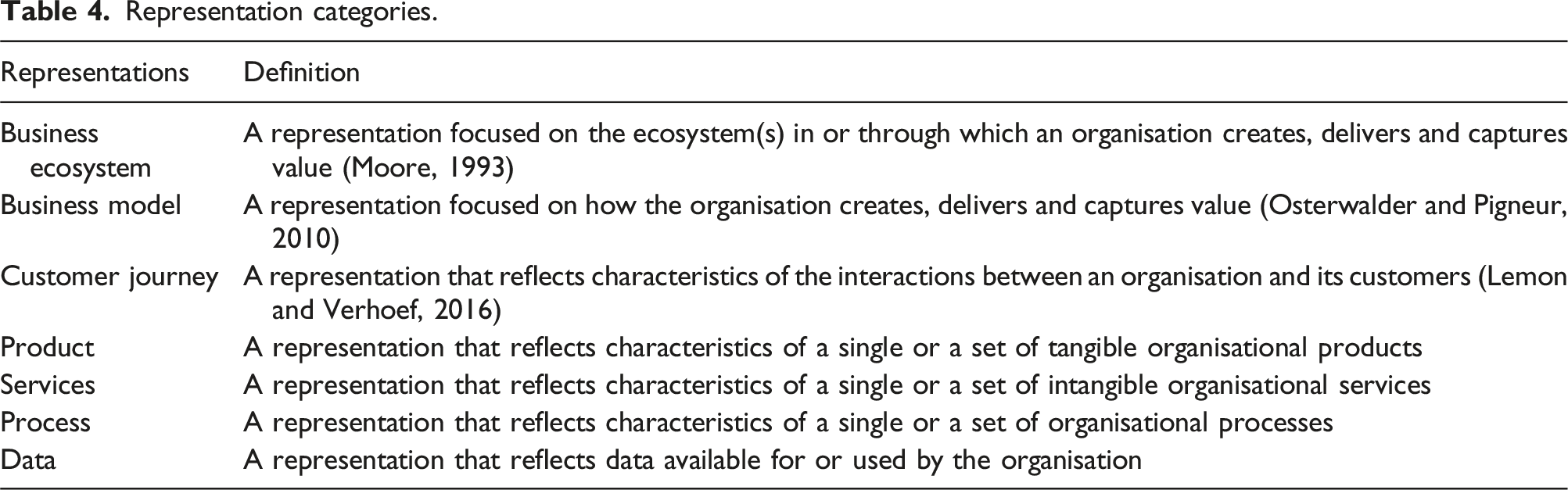
Representation categories.
In Phase 3, we applied a card sort methodology (McGeorge and Rugg, 1992; Spencer and Garrett, 2009) organised in workshops (i.e. card sorting-events) to achieve the aim of this phase. The aim was to test whether the proposed conceptualisation allows the integration of context-specific elements of digital transformation processes into the context-independent meta-structure thereby indicating context sensitivity. In general, card sort involves a group of participants that sort content (cards) based on their meaning into groups, either openly without any predefined labels or closed, that is, based on predefined categories (Fincher and Tenenberg, 2005). This method was chosen due to its simplicity of administration (Fincher and Tenenberg, 2005) and applicability to taxonomy testing (Soranzo and Cooksey, 2015), in particular, when the data is discontinuous. We applied a closed card-sorting approach, using a predefined set of categories (Spencer and Garrett, 2009). The set of cards was derived based on the manifestations of digital transformation processes identified in Phases 1 and 2, whilst the conceptual elements (RTE) reflected sorting categories (e.g. ‘Process’). To overcome issues evolving in card sort (i.e. dual group membership, miscellaneous group, individual differences, semantic clustering), we set up according rules (i.e. clearly separated groups) and monitored the process (Hinkle, 2008). KIs may be presented to the participants as stand-alone terms (e.g. ‘machine learning’) or as knowledge elements (KEs), e a short phrase holding one or more knowledge items (KI). For the workshops, we prepared these cards (holding KIs and KEs), a guideline for the tasks, and a fictional company to avoid a bias from the students’ preconceived opinion, for example, based on media reports. In addition, we prepared a video to inform the participants about the tasks in the card-sorting event. The video was meant to control the information provided regarding the proposed conceptual structure and reduce a priori bias. The fictional company was described as a producing company (producing parts used in different sectors) with 70 employees in a local headquarter but participating in an international supply chain. Their digital maturity at the current state has been described as rather low, but the management wants to develop a digitalisation campaign to benefit from digitalisation as much as possible. Three different types of cards were used: simple cards (holding only one KI), matrix cards (covering more than one KI in a KE – see example in Figures 3(a) and (b)) or unstructured cards were presented in which participants had to identify the KIs from the KEs autonomously and assign them to the conceptual elements in a text form (see example Figure 3(c)). In pre-tests (in three iterations, marked as Workshop 1), we were able to identify issues (e.g. ambiguity in the tasks, lack of explanation, how to assign cards to RTE-triplets), therefore we revised the card-sorting event set-up accordingly by adding explanations and providing a bi-lingual set up (English and the native language of the participants, based on a translate-retranslate approach) to avoid ambiguities from language issues. In addition, we eliminated and changed some KIs due to various reasons (repetitiveness, complexity), leaving 11 KIs on simple cards, 14 KIs on matrix cards and 12 KIs on unstructured cards. We kept the original ids to avoid any ambiguity. We invited students (studying information systems or business administration) to different card-sorting events (further referred to as workshops). The students were chosen to assure a baseline understanding regarding digital transformation, yet assume open-mindedness for the task. For the card-sorting events, we developed knowledge items (KIs), which reflect information to be assigned to the RTE. Example for simple (a), matrix cards (b) and (c) unstructured cards as represented in Google Forms.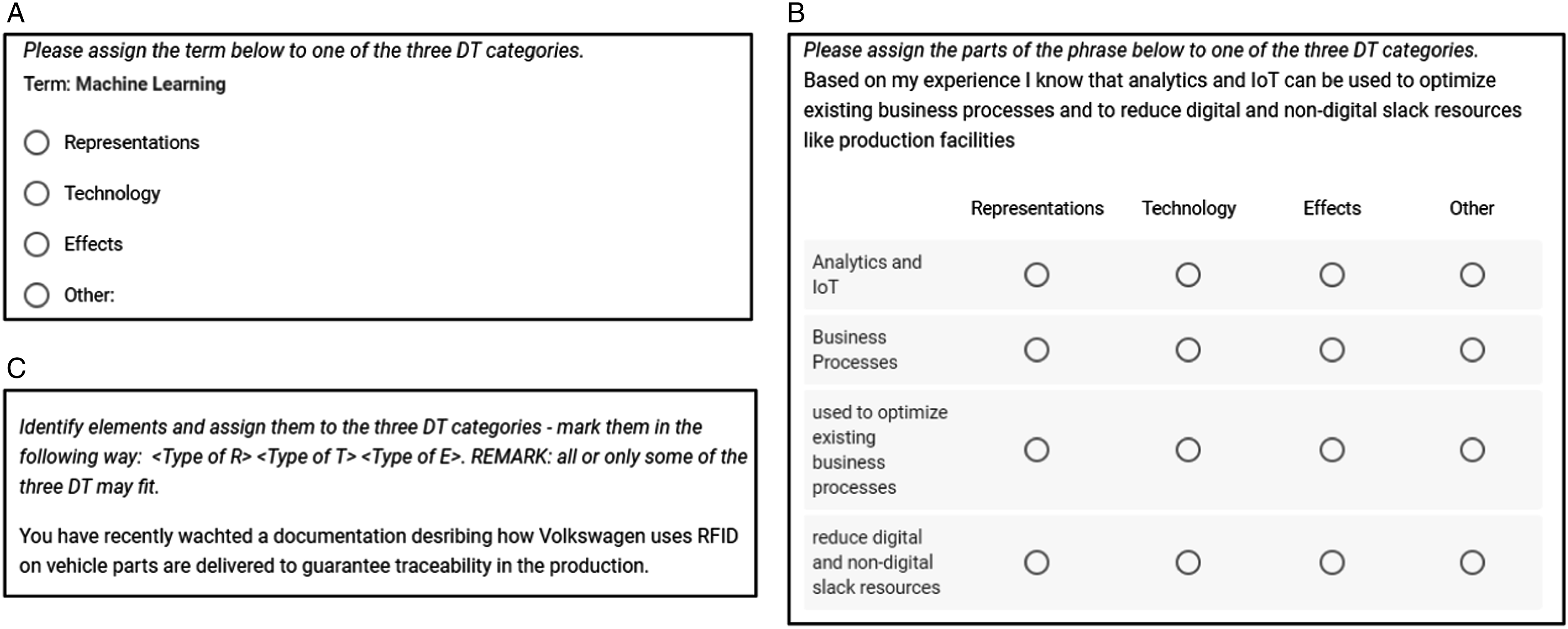
Workshops 2–6 were set up based on the results from workshop 1 and followed a straightforward structure consisting of five phases: input (10 min), discussion (30 min), sort 1 and sort 2 (25 min) and debriefing (15 min). In the input phase, the participants received all the necessary inputs via a video describing the task, the conceptual elements and categories, a set of KEs and a short description of the fictional company (to set the context). In the discussion phase, the participants in one workshop discussed cards to be sorted in sort 1 to familiarise themselves with the method and overcome the previously mentioned issues (Hinkle, 2008). There were detailed guidelines on how to approach them. In sort 1, the participants had to assign the previously discussed KEs and KIs on the cards to the categories to test whether the conceptualisation allowed the integration of new KIs (19 KIs on 10 cards: simple cards: 6 KIs; 2 matrix cards: 7 KIs; 2 unstructured cards: 6 KIs). In sort 2, the participants had to fulfil the same task, but with new, unknown KEs and KIs (18 KIs on 9 cards: simple cards: 5 KIs; 2 matrix cards: seven KIs; 2 unstructured cards: 6 KIs). In the debriefing phase, the participants discussed their general impressions of the methodology. The card-sort process and its results were documented accordingly. Five workshops of 4–5 participants (n = 24) were conducted between December 2021 and March 2022. The participants were mainly students from five different courses, studying information systems or business administration at a particular university in the first or second year of their bachelor studies. To avoid group biases, a maximum of two students from the same course participated per workshop. Due to COVID-19, the workshops were held via a video conferencing tool (Zoom) and the card sort was done using Google Forms. In addition, the workshops were recorded and transcribed for further analysis.
Results
In this section, the results of the phases (see Figure 1) are presented. These include the taxonomy (Phase 1) results from the application of the taxonomy (Phase 2) and the evaluation of its context sensitivity (Phase 3).
Taxonomy
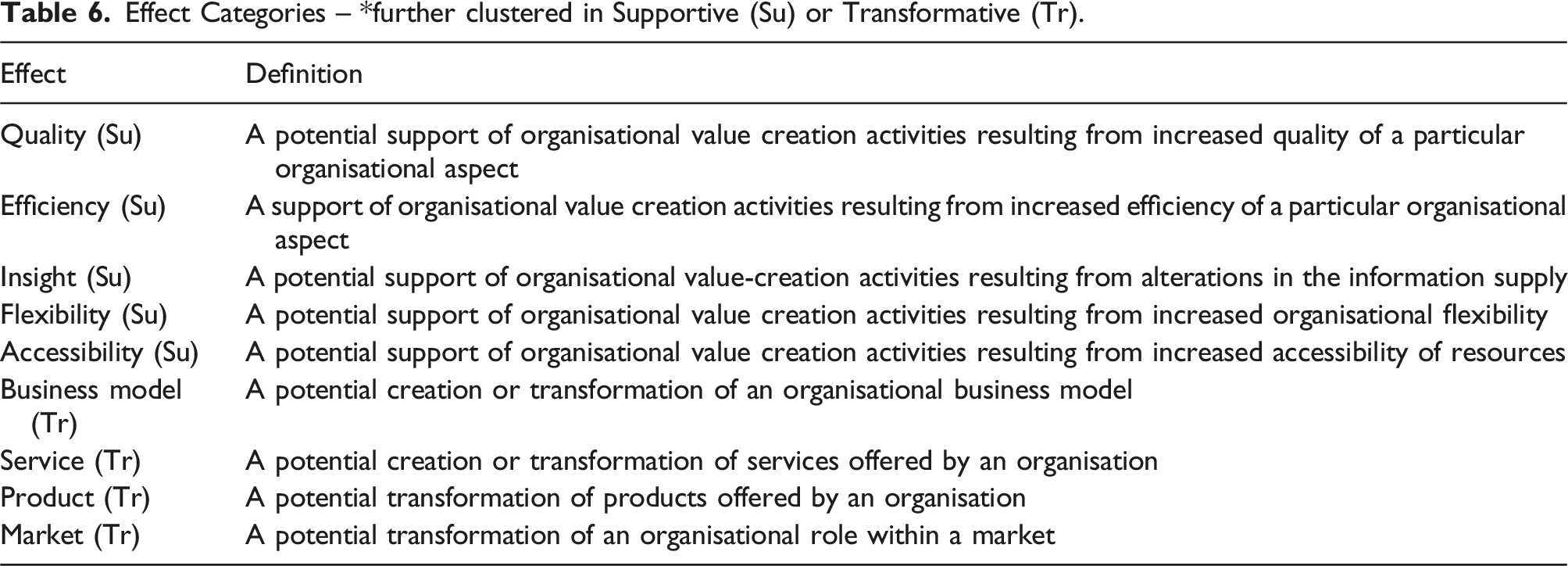
Based on the methodology applied in Phase 1, we developed a taxonomy that consisted of a set of categories in the three conceptual elements (RTE). In particular, Representation (R) comprised seven categories, Technology (T) comprised 10 categories and Effect (E) comprised nine categories. The central aim of this taxonomy is to provide a structure that accommodates the manifestations of digital transformation across various contexts and along the three context-independent elements of digital transformation processes introduced in Section 2.
The context-independent element representation is the entity designed in or changed by the digital transformation process. Based on the content analysis executed in Phase 1 of our research process, seven categories of such representations emerged from our data. The first category, ‘business ecosystem’, resulted from codes like ‘market’, ‘logistics networks’ or ‘platform economy’ and reflects digital transformation manifestations in which the effects of technology use alter business ecosystems. The second category, ‘business model’, emerged from codes like ‘business plan’ or ‘corporate concept’ and reflects manifestations of digital transformation in which the effects of technology use alter an organisational business model. The third category, ‘customer journey’, resulted from codes related to customer channels or customer touchpoints and reflects manifestations of digital transformation in which the effects of technology use alter the interaction between an organisation and its customers. The other four categories were ‘product’, ‘services’, ‘process’ and ‘data’. These four categories (tangible organisational product codes: ‘commodity’, ‘physical product’, ‘digital product’), services (intangible organisational services codes: ‘customer services’, ‘IT services’, ‘business services’) and processes (organisational processes codes: ‘process orchestration’, ‘production processes’, ‘sales processes’) appear straightforward. Interestingly, the category ‘data’ evolved in this element, reflecting alterations in the data available for, or utilised by, the organisation (codes: ‘core data’, ‘customer data’, ‘sales data’, ‘personnel data’, ‘production data’) that result from the effects of technology use. Table 3 presents the identified representation categories alongside their definitions.
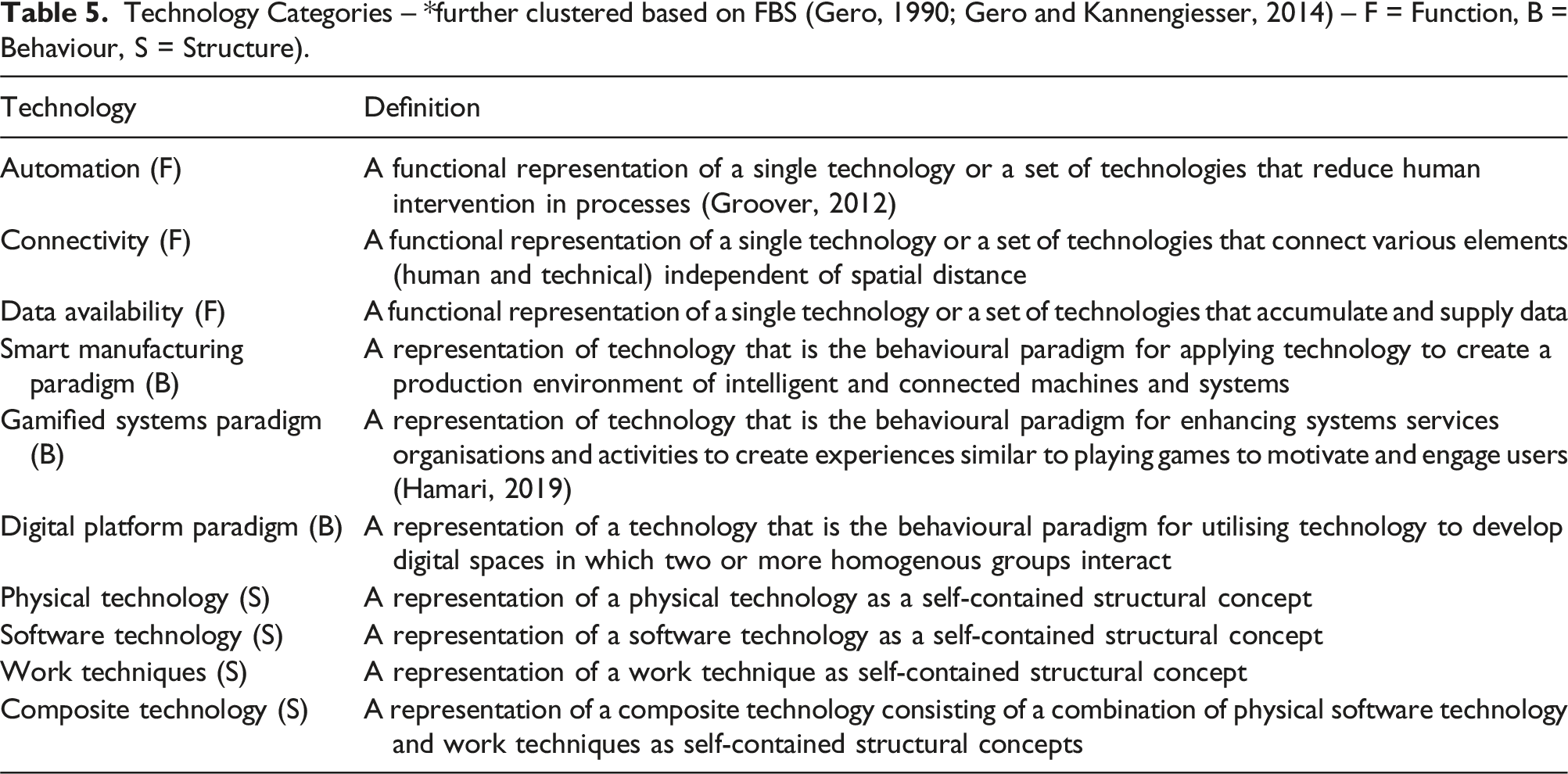
Technology Categories – *further clustered based on FBS (Gero, 1990; Gero and Kannengiesser, 2014) – F = Function, B = Behaviour, S = Structure).
Effect Categories – *further clustered in Supportive (Su) or Transformative (Tr).
As previously mentioned, we exposed the taxonomy to six experts (A – F) to identify practicability, added value, completeness and quality. Overall, the experts found the taxonomy applicable, saw its added value and confirmed its high quality. In terms of completeness, the experts expressed some concerns. Three experts (B, C, E) questioned how the taxonomy could cover all existing technologies. Two experts (A, B) asked how the risks and values of the Effects can be assessed and suggested ranking the categories. Expert D suggested providing a visualisation of the taxonomy as well as a simple example to guarantee appropriate application. Experts E and F found the taxonomy valuable in general but proposed abstraction levels for the Technology conceptual element so they are more suitable for certain domains and a more structured view of digital transformation within specific organisational contexts. The results from the expert interviews are reflected in the next phase.
Integration of context-specific manifestations
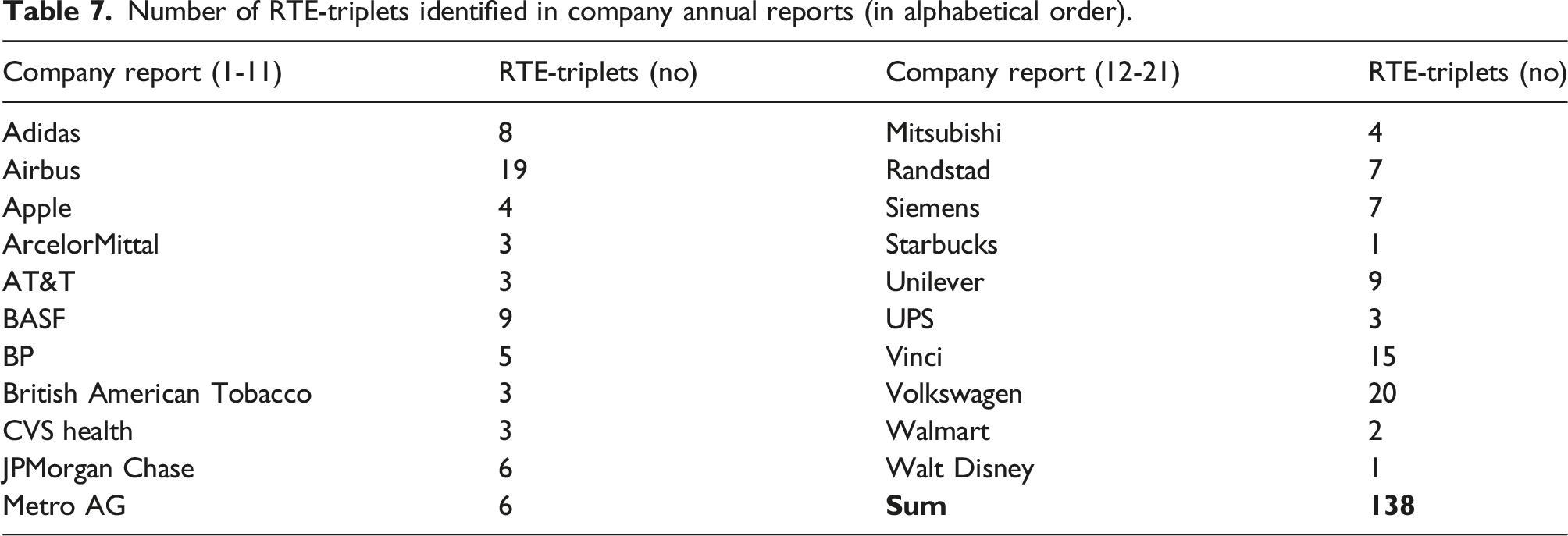
Number of RTE-triplets identified in company annual reports (in alphabetical order).
Original quote from report, paraphrasing and RTE-triplet.
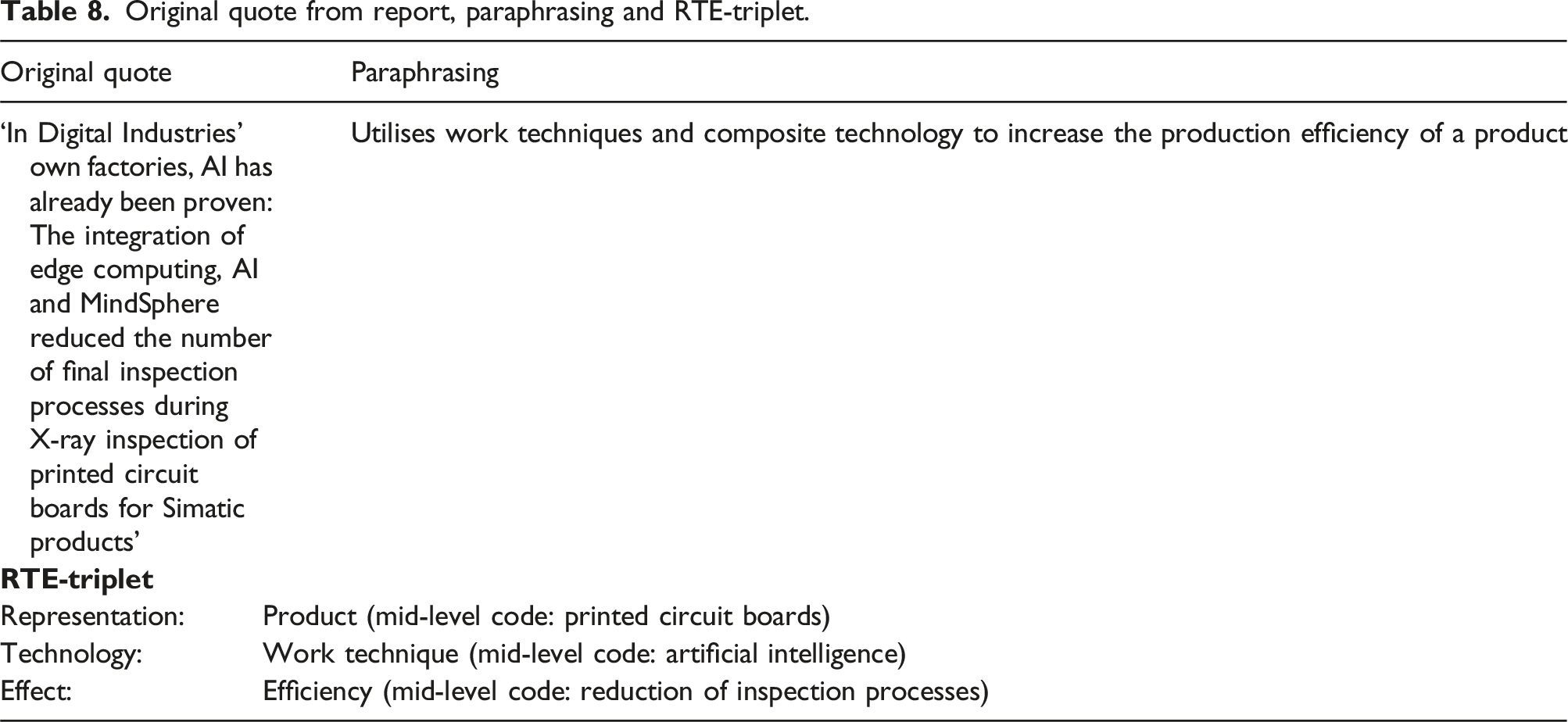
As we identified RTE-triplets in all reports, we assume that the taxonomy based on our conceptualisation of digital transformation processes can integrate context-specific-manifestations of digital transformation processes in different contexts.
Evaluation of context-sensitivity
In Phase 3, we evaluated whether the proposed conceptualisation allows the integration of context-specific elements of digital transformation processes into the context-independent meta-structure, thereby indicating context sensitivity. We approached this by developing a fictional-specific context (i.e. a fictional company) to evaluate its ability to integrate context-specific RTE-triplets that were new to the participants in the previously described workshops. We measured similarity and accuracy within and across the five workshops. The results of the card sort were quantified and analysed. In addition, we analysed the workshop transcripts. For simplicity, we started with the qualitative analysis, as it clarified some issues in the analysis of similarity and accuracy.
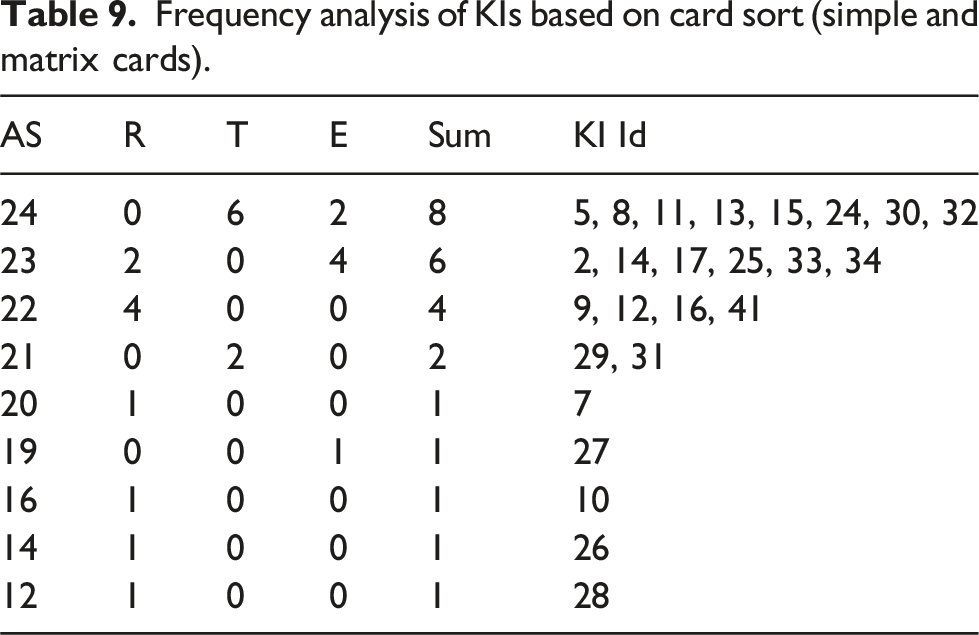
In the qualitative analysis, we observed and identified how well the participants understood the task and grasped the conceptual elements. In the discussion phase, the participants received all the cards used in sort 1 and were encouraged to read the guidelines and discuss any issues with the methodology. In general, they discussed topics like the time frames per phase, the assignment process and the conceptual elements as explained in the video. The participants saw simple and matrix cards as being understandable, whereas they had many questions about unstructured cards. Participants were unsure how to identify the KIs correctly. Whereas participants found the assignment for the conceptual element Technology easier to understand, they had many questions about how to distinguish Representation from Effect. Interestingly, the discussion phases of the workshops varied greatly. Whereas in workshop 2 the main discussion focussed on the application of the method, in the other workshops, the participants had difficulty understanding the conceptual elements and identifying the KEs or KIs. Participants in workshop 2 expressed that they clearly understood the conceptual elements and only wanted to ensure they assigned the KIs correctly. In contrast, our observations showed that the participants in workshop 5 discussed the content in-depth and had more questions regarding the conceptual elements and how to understand them. Participants in workshops 3 and 4 discussed how to clarify terms, and in workshop 6, the participants discussed the structure of the questions. Based on this analysis, we assume that the participants in workshop 2 were more knowledgeable regarding digital transformation and had a good understanding of the conceptual elements. The participants in workshops 3 and 4 seemed to have less knowledge in this area, and the participants in workshops 5 and 6 seemed to have varied levels of knowledge. However, we assumed that the taxonomy could allow participants with low or no knowledge to identify the digital transformation conceptual elements.
Frequency analysis of KIs based on card sort (simple and matrix cards).
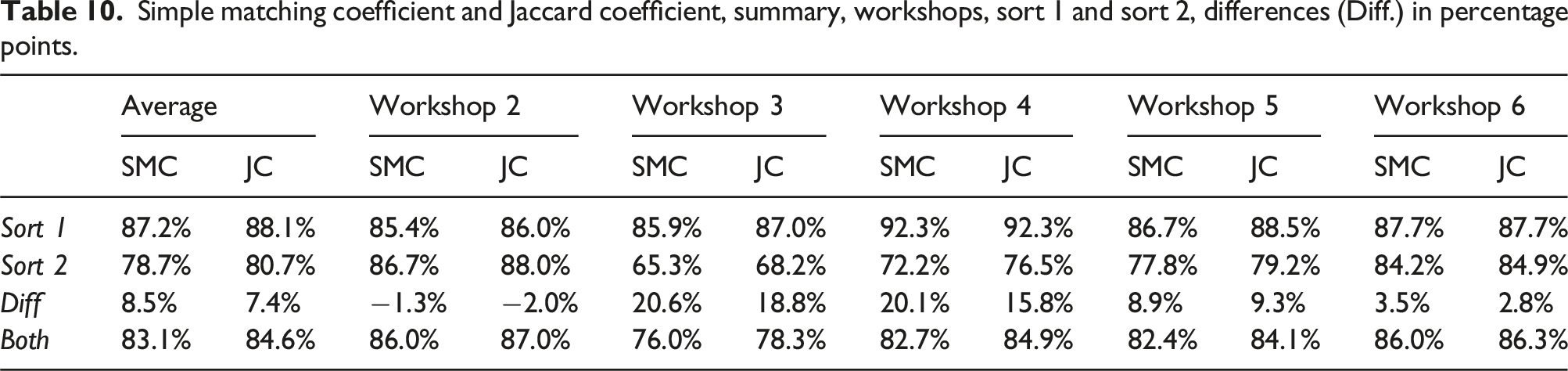
Simple matching coefficient and Jaccard coefficient, summary, workshops, sort 1 and sort 2, differences (Diff.) in percentage points.
Accuracy – summary, workshops, sort 1 & sort 2, difference in percentage points.

Discussion
The discussion on how to conceptualise and define digital transformation comprises many diverse views. Based on our assumption that digital transformation has process and design characteristics, we developed a context-independent meta-structure and further developed a context-sensitive conceptualisation of digital transformation. We applied different methods in three phases to broaden the understanding and theoretical grounding of digital transformation. Furthermore, we aimed to deepen the understanding and theoretical grounding of digital transformation in specific contexts. With this research, we contribute to the current discussion on how to conceptualise digital transformation and reflect the complex and wide-ranging nature of change processes in different contexts. The developed context-sensitive conceptualisation further extends the nexus of the research beyond the organisational domain. In addition, the results from the evaluation show that people with low or no prior digital transformation knowledge can identify RTE-triplets from knowledge elements (e.g. descriptions of a situation).
The developed taxonomy, particularly the context-independent meta-structure, was proven to be stable in all tested environments. Its development was informed by design research (Gero, 1990; Gero and Kannengiesser, 2014) and grounded in data from academic literature. The meta-structure, consisting of the three conceptual elements (RTE), has been enriched by categories, further building the taxonomy. The co-developed codebook was applied to code RTE-triplets from 21 company reports, resulting in 138 RTE-triplets. This demonstrates its applicability as a context-independent meta-structure for conceptualising digital transformation. In this case, the context was determined by the company reports, resting in the organisational domain. Although the domain is broad, each report was rooted in its own context determined by the sector, company size and other characteristics. The context-independence was partly demonstrated by the codability of manifestations of digital transformation processes in the reports (precisely in the parts investigated in the reports). Interestingly, the sector was not a good predictor for the number of manifestations identified, as companies from the technology sector did not report much compared to other rather technical sectors. However, it is important to note that with the taxonomy’s help, it was possible to conceptualise digital transformation and its context-specific manifestations. Based on the results, we believe it is possible to reduce complexity by reducing the technology nexus to three functional representations: Automation, Connectivity and Data Availability. We strongly believe that the categories for manifestations of digital transformation processes can also be applied to other domains and contexts, such as policymaking or sustainability. In policymaking, for example, the manifestations are unquestionably broad and complex. However, the context-independent meta-structure and selected categories might remain stable.
In the next phase, we specified the context by developing a fictional company representing the scope of the workshops. This was necessary to keep the workshop results stable and comparable. The workshop set-up was based on the taxonomy (i.e. the codebook and the meta-structure). The cards used represented the RTE-triplets in different forms. The results support our assumptions, as simple matching coefficients and the Jaccard coefficient were high in most workshops. Based on our qualitative analysis, we identified other mechanisms that may influence the applicability in a narrow context, such as knowledge of and interest in digital transformation topics. However, it has been shown that with clear guidelines and the possibility to discuss the tasks with other participants, they settled on a shared mental model of the manifestations which carried over to the cards (i.e., KEs and KIs) that were not previously discussed. We therefore assume that after establishing such shared knowledge or models, the mutual understanding remained and was applicable to prior unknown manifestations. This is important not only for further academic discussion but also for every context in which the taxonomy is used. When people are exposed to a tool that supports building a common understanding, this understanding contributes to the value contribution. This may have several positive impacts in the organisational domain and specifically in business. On the one hand, a digital transformation strategy may be adopted faster by employees, as they can identify Representations, Technology and Effects and – most important – may apply them to achieve the digital transformation strategy goals based on their own assessment. On the other hand, general technology management (e.g. identifying applicable technologies for the companies) does not rest on the shoulders of one representative but is spread among all employees. It has been shown that such employee competencies (e.g. identification of technologies and assessment of their effects) are preconditions for and contribute towards successful digital transformation (Blanka et al., 2022).
Conclusion
Motivated by recent discussions on the nature and definition of digital transformation, the present paper set out to investigate a procedural and design-based conceptualisation of digital transformation. Due to the broadness of the phenomenon and the complexity of its procedural manifestations, we argue for a context-sensitive conceptualisation of digital transformation. The necessary context-independent meta-structure was derived by viewing digital transformation as an instance of organisational design, thereby developing a context and domain-independent representation of digital transformation based on three elements: Representation, Technology, and Effect (RTE). A taxonomy for the manifestation of these elements was developed and evaluated for its applicability to context-specific manifestations of digital transformation processes as identified in organisational reports of Fortune Global 500 organisations. The proposed conceptualisation was evaluated for its context-sensitivity utilising a card-sorting approach in a workshop setting. The evaluation results show that the developed context-independent meta-structure can accommodate context-specific manifestations of digital transformation processes in all tested environments, thereby indicating its applicability as a conceptual basis for a context-sensitive conceptualisation of digital transformation. We conclude that a context-sensitive understanding of digital transformation can support the transition and integration of research results on digital transformation between different domains and contexts. This opens new avenues for research, particularly in the interplay between context-independence and context-sensitivity of digital transformation conceptualisation. In addition, the taxonomy, represented by the codebook, may support organisations that aim to conceptualise digital transformation in their specific context. In particular, we have shown that people can identify conceptual elements with which they are unfamiliar. This enables employees to not only handle digital transformation but also to actively get involved in achieving strategic digital transformation goals. By proposing a conceptualisation that defines three context and domain independent elements we provide a conceptual meta-structure which enables us to capture the various manifestations of digital transformation in a structured and uniform manner. Furthermore our results show that context-specific categories of these elements can be derived from literature and empirical data to provide the depth and detail necessary for a structured perspective on digital transformation across different contexts and domains.
This study is based on rigorously applied sources and methods. However, there were some limitations. On the one hand, we based the development of the taxonomy on the existing literature; thus, positive effects or opportunities evolving from digital transformation were dominant. The negative effects of digital transformation are rarely researched. However, we assume that the existence of negative effects does not affect our results but can further contribute to the taxonomy’s power regarding context-specificity and context-sensitivity. We utilised reports of Fortune 500 companies to evaluate our taxonomy, whilst we spread our data collection across different sectors to avoid an industry bias. Our taxonomy has not yet been applied to small or medium-sized companies. Furthermore, the card-sort method had to be transferred to a virtual environment due to COVID-19. This may have produced biases that would not have occurred in a real-world environment (e.g. random clicking). Nevertheless, we assume that the results would not be significantly different in a real-world environment. Whilst the speed and scope of digital transformation limits us in our ability to present a final and absolute conceptualisation for it, we show that by connecting the presented context-independent meta-elements with a set of context-specific manifestations we can provide a conceptualisation that holds true across contexts and domains whilst enabling a rich and detailed perspective on digital transformation. Future work can further develop the set of context-specific manifestations or develop such a set for other domains based on the experience and rich knowledge base prevalent in the organisational domain. Furthermore, research regarding similarities and differences of digital transformation in different domains can benefit from the meta-structure presented in this paper.
Footnotes
Acknowledgements
We would like to thank Raphael Mair, Matthias Klampfer and Lukas Rauscher for their support.
Declaration of conflicting interests
The author(s) declared no potential conflicts of interest with respect to the research, authorship, and/or publication of this article.
Funding
The author(s) received no financial support for the research, authorship, and/or publication of this article.
