




Abstract
Wine tasting is a multisensory collective activity because it involves other senses in addition to sight and hearing. The importance of these multiple senses for wine tasting makes it more challenging to digitalize than other collective activities. We conducted an ethnography and used a semiotic analysis to explore the strategies to digitalize wine tasting sessions. In so doing, we examined how small artisanal winemakers and wine merchants in Austria, Germany, Liechtenstein, Luxembourg, and Switzerland moved their wine tasting sessions online to compensate for their lost key revenue streams during the global Covid-19 crisis. Based on our analysis, we present a typology of virtual wine tasting and illustrate how the approach to digitalize wine tasting evolved from a reactive approach to a more proactive one. We also identify strategies to digitalize wine tasting and characterize its social space. We discuss some avenues to regard virtual wine tasting as something more than just a digital representation of in-person wine tasting session by highlighting the mediating role of an information system. Finally, we propose some implications for digitalizing other multisensory collective activities.
Keywords
Introduction
Many collective activities can be digitalized, moving them from offline to online. Collective activities are performed by groups of various sizes and scopes, forming pairs, groups, organizations, and even societies (cf. Avital, Jensen and Dyrby, 2021). The discussion around remote work (Olson, 1983; Waizenegger et al., 2020) and virtual teams (Jarvenpaa, Shaw and Staples, 2004; Cummings and Dennis, 2018) has been ongoing for decades, focusing on the group or organizational level (Ågerfalk and Eriksson, 2006). The more recent crowd-level initiatives vary from open-source coding (Von Krogh and Von Hippel, 2006; Von Krogh et al., 2012) to crowdfunding (Gleasure and Feller, 2016; Lin and Viswanathan, 2016) and collective intelligence (Zuchowski et al., 2016; Pollok, Lüttgens and Piller, 2019). In early 2020, the global pandemic caused by the coronavirus SARS-CoV-2 (Covid-19 crisis) led to an abrupt halt in many day-to-day activities, with closures of schools and businesses. The sudden need for employees to work from home led many organizations to accelerate their digitalization efforts (Waizenegger et al., 2020; Oborn et al., 2021). However, at least for some, a challenge has remained, as some collective activities are difficult or even impossible to digitalize.
Consider a regular team meeting. It can be conducted on a video conference platform (online site) in a manner similar to its face-to-face counterpart, and we can edit documents synchronously and jot down ideas on a virtual whiteboard. However, the difficulty increases with the number of participants. For example, in a large academic conference, large groups are broken into smaller groups, and procedures are standardized to meet the technical constraints related to delays in data transmission. Even informal interactions are paradoxically facilitated by formal protocols—coffee table protocols, speed-dating protocols, social event protocols, and so on. Since these collective activities involve talking, reading, drawing, and listening, they rely on sight and hearing and even touch, if we consider the use of a mouse and touch screen. But we have other senses, too. What about collective activities that involve these other senses—the multisensory collective activities?
Collective wine tasting is such a multisensory collective activity, as it involves smell and taste in addition to sight, hearing, and touch: “Wine tasting is to taste a wine with care in order to appreciate its quality: to submit it to examination by our senses, in particular those of taste and smell; to try and understand it by discovering its various qualities and defects and putting them into words” (Peynaud and Blouin, 2013: 2). The present study addresses collective wine tasting while acknowledging the subjective nature of individual wine appreciation. The importance of multiple senses for wine tasting distinguishes it from other collective activities and leads us to ask: (1) How can one digitalize a wine tasting session, a multisensory collective activity that is highly dependent on sensory perceptions that cannot be digitalized? (2) What are the strategies to do so?
We conducted an ethnography and used a semiotic analysis to determine how small artisanal winemakers and other tasting providers compensated for lost revenue streams by moving their wine tasting sessions online during the Covid-19 crisis. We participated in sixteen virtual wine tasting sessions offered by various providers in five German-speaking countries. Our findings are presented as a form of sensuous storytelling (Vannini et al., 2010), focusing on the digitalization of collective wine tasting. Based on our analysis, we propose a typology of virtual wine tasting and show how the approach to digitalize wine tasting evolved from a reactive approach to a more proactive one. We also identify strategies for digitalizing wine tasting and characterize its social space. Finally, we discuss virtual wine tasting as something more than just a digital representation of an in-person wine tasting session and propose some implications for the digitalization of other multisensory collective activities.
Conceptual definitions and related work
This section defines our key concepts. We begin with semiotics, applying its principles in explaining the act of tasting wine and representing its characteristics using verbal descriptors. We then discuss a collective wine tasting session by focusing on the end consumers, not wine experts. Finally, we point to the basic tenets of representation theory.
Semiotics and signs
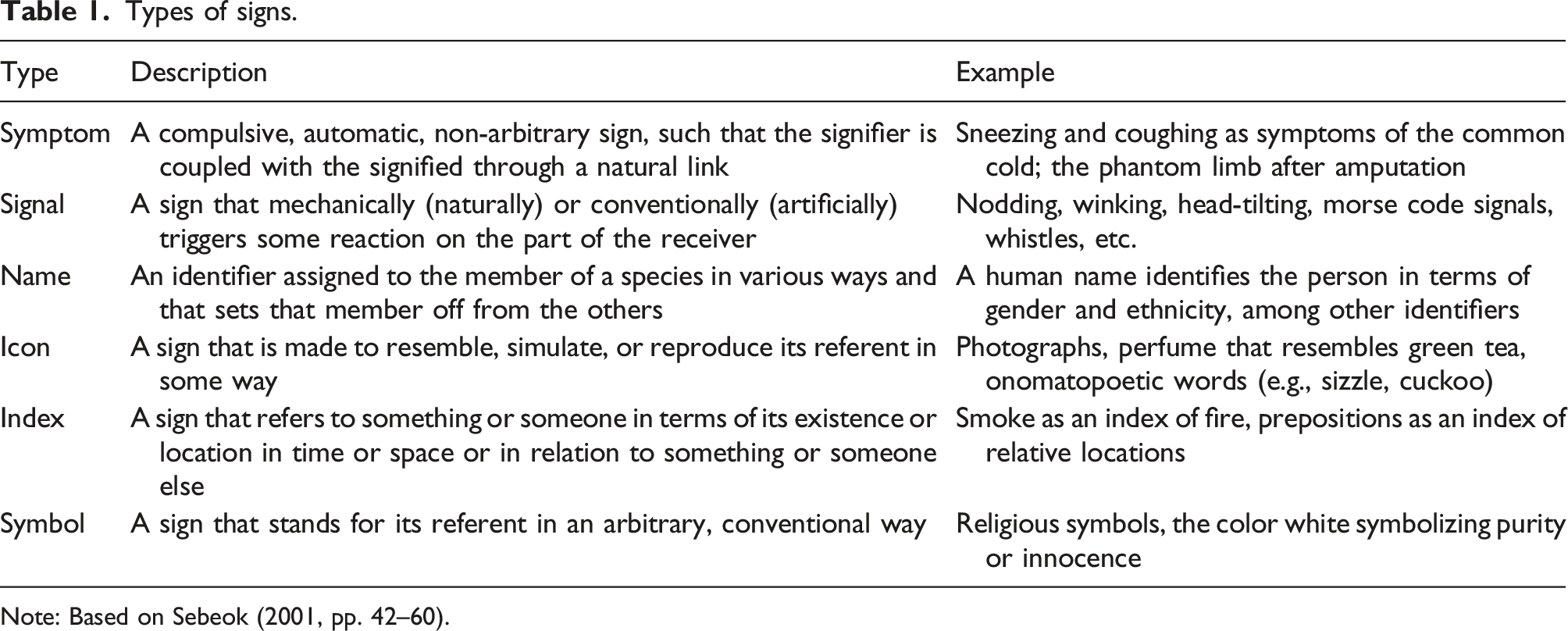
Semiotics is “the study of how signs convey meaning in everyday life” (Cullum-Swan and Manning, 1994: 415). Our main reference is Sebeok (2001), who contends that nonverbal representation is our primary modeling system, while language is secondary, just as composers model their complex auditory compositions in their minds before transcribing them. Sebeok (2001: 3) defines a sign as “any physical form that has been imagined or made externally (through some physical medium) to stand for an object, event, feeling, etc., known as a referent, or for a class of similar (or related) objects, events, feelings, etc., known as a referential domain.” For Sebeok, a semiotic analysis aims to understand both semiosis: “the biological capacity that underlies the production and comprehension of signs,” and representation, “a deliberate use of signs to probe, classify, and hence know the world” (p. 8). We apply semiotics in this study as an analytical tool to help us unpack wine tasting and virtual wine tasting in terms of what they represent.
Types of signs.
Note: Based on Sebeok (2001, pp. 42–60).
Verbal wine descriptors can be both indexical (“leather” as a tertiary aroma, an index of wine maturity) and symbolic (“leather” to symbolize a wine for great admirers only). What we smell in a glass of wine can also be assigned to one of these signs. The aroma we call “leather” is also indexical (it does not smell fresh and young) and symbolic (it does not smell fruity). Someone else in the tasting room may discern something else in the same wine. What we smell as “leather” another taster may perceive as “risky,” reminiscent of a particular experience during or after drinking a wine with similar olfactory notes. Another expert in the room may perceive the aroma as indexical for another reason, hinting at several years of maturation in the cellar.
Collective wine tasting
Émile Peynaud, who is often referred to as the father of modern oenology, positions wine tasting as part of general drinking expertise. To Peynaud, a wine tasting is analytic and descriptive at the same time, as we describe a wine’s “organoleptic (taste and odor) characteristics with a rich yet precise vocabulary” (Peynaud and Blouin, 2013: 10). The most fundamental requirement for tasting wine is one’s “willingness, desire, and ability to focus his or her attention on the wine’s characteristics” (Jackson, 2017: 1).
This paper defines wine tasting as “to taste a wine with care in order to appreciate its quality: to submit it to examination by our senses, in particular those of taste and smell; to try and understand it by discovering its various qualities and defects and putting them into words” (Peynaud and Blouin, 2013: 2). No universal technique of wine tasting suits everyone, and different tasters may have different goals (Jackson, 2017). Wine tasting serves as a means of quality control for wine producers and wine merchants, while wine enthusiasts draw social pleasure from discussing wine with other wine enthusiasts (Peynaud and Blouin, 2013). The appreciation of wine is comparable to the appreciation of art, an esthetic experience (Charters and Pettigrew, 2005). As is the case with experts in any other domains, wine experts can assess and describe wine more consistently than non-experts can (Solomon, 1990; Spence and Wang, 2019).
We focus on collective wine tasting sessions for wine consumers—social drinkers and wine enthusiasts—not on expert panel tastings for the purpose of quality judgment and classification. Wine tasting can be described as an act of translating what we see, smell, and taste in a wine into words (Figure 1). We hold the wine glass, tilting it to see its color well, and inhale the aroma. We take a sip, and then another. During this sequence of actions, the visual, olfactory, and gustative information (e.g., odor molecules, light wavelengths) enters our sensory systems, where it is processed, resulting in our perception of the wine’s visual appearance, smell, and taste. At this point, some may have formed an initial impression of the wine and so describe their impressions in words. Others may want to repeat the sequence before articulating their descriptions. What happens during a collective wine tasting.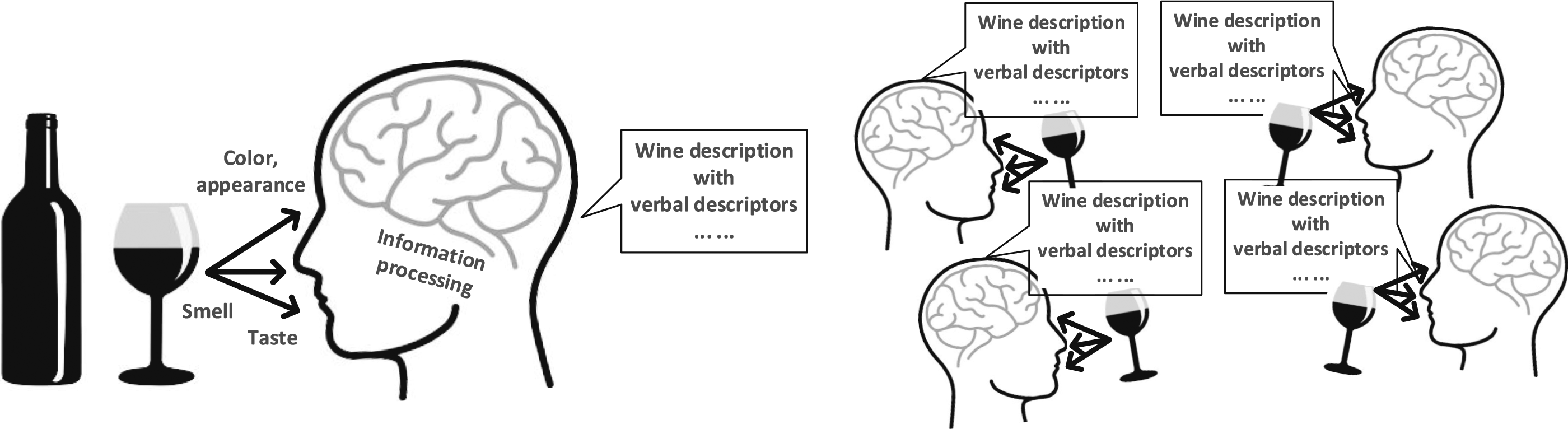
When tasting wine in a group, we are bound to communicate our subjective sensory experience, so it is understandable to others. We articulate the verbal descriptors, to which another person may reply. A discussion may follow. This exercise involves interpersonal communication as much as individual sensory perception. The content of this discussion (i.e., wine talk) is itself worthy of scientific investigation (Solomon, 1990; Lehrer, 2009). But, more importantly, a collective wine tasting involves a shared social experience (Paluch and Wittkop, 2021) that goes beyond the subjective experience of tasting the wine.
Smith (2007) embraces a combination of subjectivist and objectivist approaches to wine appreciation. The associations evoked by a combination of smell, taste, and “mouth feel” are subjective, as captured in the metaphors we use to describe them (i.e., their symbols 1 ). On the other hand, length, tannin, alcohol content, acidity, and perceived sugar level indicate the objective properties of the wine (i.e., their indices), and their perception usually remains comparable across tasters. Charter (2007) differentiates the sensory (physiological responses), affective (pleasure), and cognitive (assessment against a benchmark) aspects of the combination of objective and subjective measures.
What does this combination tell us about collective wine tasting? According to Smith (2007: 64), we have three issues to untangle: “Whether we can describe the taste of wines, whether there is some way to communicate what it is like to drink them, and whether others are able to share the pleasure we take in drinking them.” When tasting wine, we experience the sensory, affective, and cognitive aspects individually, but when we participate in a collective wine tasting, we use verbal means to share our experience with other participants. We may describe the wine itself or discuss another experience evoked by the wine. The notion of a shared experience then has two levels: sharing the tasting experience in time, space, or object (i.e., the tasted wines) and sharing the experience through language (i.e., wine description and discussion).
Representation theory and digital representation of wine tasting
Digitalizing a multisensory collective activity means representing the activity in a digital space. For this reason, we also draw inspiration from representation theory (Burton-Jones et al., 2017; Recker et al., 2019). According to this view, an information system represents the meaning people assign to a certain phenomenon. The assigned meaning can, in turn, be interpreted by applying semiotics as an analytical tool. With a high-fidelity representation, people no longer need to observe the phenomenon directly (Burton-Jones et al., 2017; Recker et al., 2019).
Meaning is represented in the deep structure of an information system (Burton-Jones et al., 2017). According to Wand and Weber (1990), an information system is made up of its physical structure, surface structure, and deep structure. The physical structure refers to the system’s material and technological implementation, while the surface structure is widely known as a user interface, and the deep structure embodies the meaning of a phenomenon an information system represents, referring to ontology. The deep structure can be preserved, while the other two structures follow changes in technology and society. The differentiation of the deep-surface structure is inspired by Noam Chomsky’s explanation of syntax (surface structure) versus semantics (deep structure) (cf. Wand and Weber, 1990: 70).
The physical space and the digital space are increasingly intertwined, and some phenomena are observable in the digital space before they are enacted in the physical space (Baskerville, Myers and Yoo, 2020). Consequently, an information system is not only a representation but also a mediator between the physical space and the digital space. (Recker et al., 2021: 274) define mediation as a “structured process of facilitating understanding, communication, and change to capture, share, and translate among aspects of multiple realities,” and suggest that we can differentiate among four mechanisms of mediation: the representation of the physical space in the digital space, the execution of the digital space within the physical space, the translation between digital spaces, and changes to the physical space through the digital space.
Research approach
We conducted an ethnography to address our two research questions. Ethnography allows researchers to get close to “where the action is” (Myers, 1999: 13) by immersing themselves in the phenomenon to understand it from the perspective of those who experience it (Esterberg, 2002) and is generally understood as “the study of the customary social behaviors of identifiable groups of people” (Wolcott, 1999: 252–253). The term “ethnography” refers to both the study’s product and its process.
Information systems researchers apply ethnography to understand the relationship between information systems and changes in practice, to explore new digital phenomena, and to gain deep insights into design processes (Baskerville and Myers, 2015), as is evident in prominent publications (Schultze, 2010; e.g., da Cunha, 2013; Venters, Oborn and Barrett, 2014; Sergeeva et al., 2017; Salovaara, Lyytinen and Penttinen, 2019). Although we view virtual wine tasting as an instance of multisensory collective activities, and our data provides insights into some sensory aspects of the phenomenon, this paper is chiefly a sensuous storytelling (Vannini et al., 2010) of how wine tasting can be digitalized 2 .
Research context
Our study examines how winemakers and wine merchants moved their wine tasting sessions online in response to Covid-19 distancing measures beginning in March 2020. The distancing measures restricted travel and social gatherings, including cultural, educational, and business events. At the peaks of the Covid-19 crisis—and there were several, due to new variants—schools, universities, and museums were closed, and people were encouraged to work from home. Most non-essential stores were also closed, including restaurants, bars, and tourist lodgings, although the measures differed across countries.
We focused on small artisanal winemakers in five German-speaking countries: Austria, Germany, Liechtenstein, Luxembourg, and Switzerland. These small businesses rely on local restaurants and bars and direct interaction with end consumers. However, distancing measures limited their opportunities for these interactions, as wine fairs were canceled, and wine tourism was restricted. As a result, small winemakers lost traditional key revenue streams.
Virtual wine tastings flourished in response to these challenges. They were offered directly by the winemakers and wine merchants or arranged with the help of dedicated online platforms and professional providers (e.g., influencers, governmental organizations, and organizers of wine fairs). The first virtual tasting sessions took place in April 2020, at the height of the first wave of the pandemic (the first distancing period). The measures were relaxed in the following summer months, but they were imposed again the following winter (the second distancing period) and in 2021 (the third distancing period). Various virtual formats and platforms for wine tasting began to emerge during these periods. Governments gradually lifted the measures as the vaccination rate increased. At the time of writing, people can enjoy in-person collective wine tasting again. But virtual wine tastings brought in new enthusiasts, so that winemakers and other tasting providers still offer virtual tasting sessions.
Data collection
Five phases of our study.
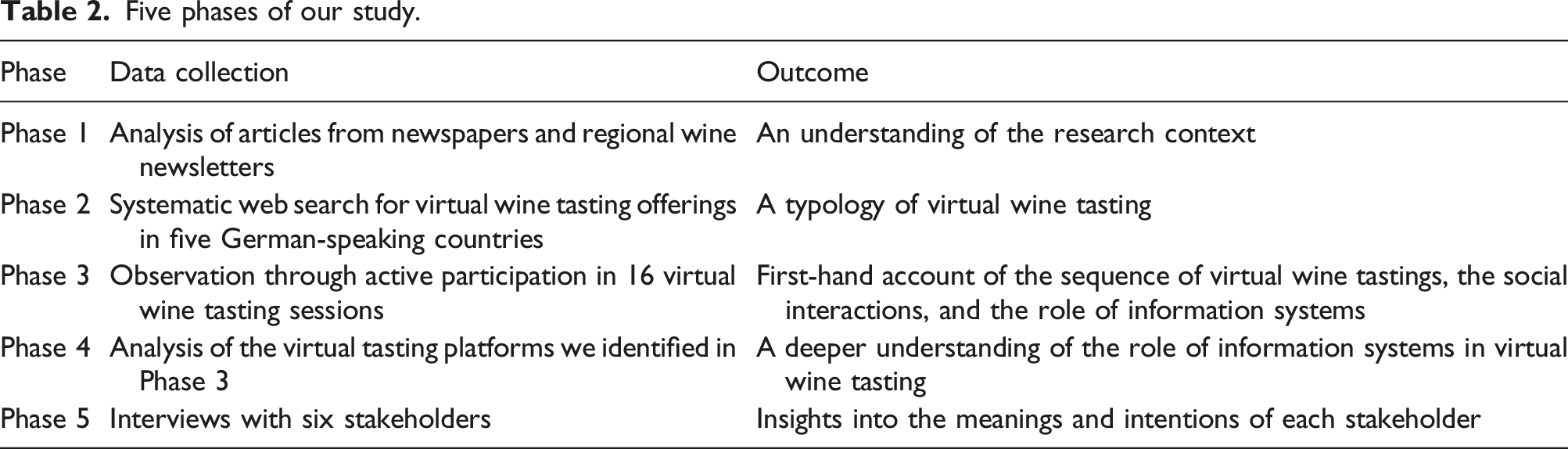
In the second phase, we analyzed the types of virtual wine tasting by searching systematically for virtual wine tasting sessions offered by winemakers in the five countries and collecting information about their formats and platforms to identify their similarities and differences. This analysis resulted in a typology of virtual wine tasting.
In the third phase, we participated in seven synchronous and five asynchronous virtual wine tasting sessions between December 2020 and April 2021 (second distancing period), taking field notes on our observations during and directly after the sessions. We noted the procedures and the social interactions and observed how digital technologies supported or even shaped the sessions, as well as their features and functionalities. In addition to our observations, we took note of our feelings, sensations, and emerging questions. We continued to participate in these sessions as long as we were gaining novel insights. Between September and November 2021 (third distancing period), we participated in four additional virtual sessions to observe the evolution of virtual wine tasting.
In the fourth phase, we explored the virtual tasting platforms, analyzing their websites, offerings, and consumer reviews to deepen our understanding of their use of digital technologies. In the final phase, we interviewed stakeholders of the virtual tasting sessions: two tasting leaders, two wine communication consultants (who helped arranging some virtual tasting sessions), and two participants in virtual tasting sessions. These interviews helped us to triangulate our field notes. Since most of our interviews were not recorded, we asked our interviewees to confirm that our notes reflected their recollections of the interviews.
Data analysis
In the course of our iterative data analysis, we wrote and analyzed our field notes independently before discussing our perceptions and interpretations until we reached agreement. Then we triangulated our field notes with other data sources (i.e., interviews and consumer reviews) to validate our conclusions and complete our picture of the phenomenon of virtual wine tasting, considering our viewpoints as ethnographers and those of tasting leaders and other participants. We reframed and revised our analysis many times before presenting the key insights.
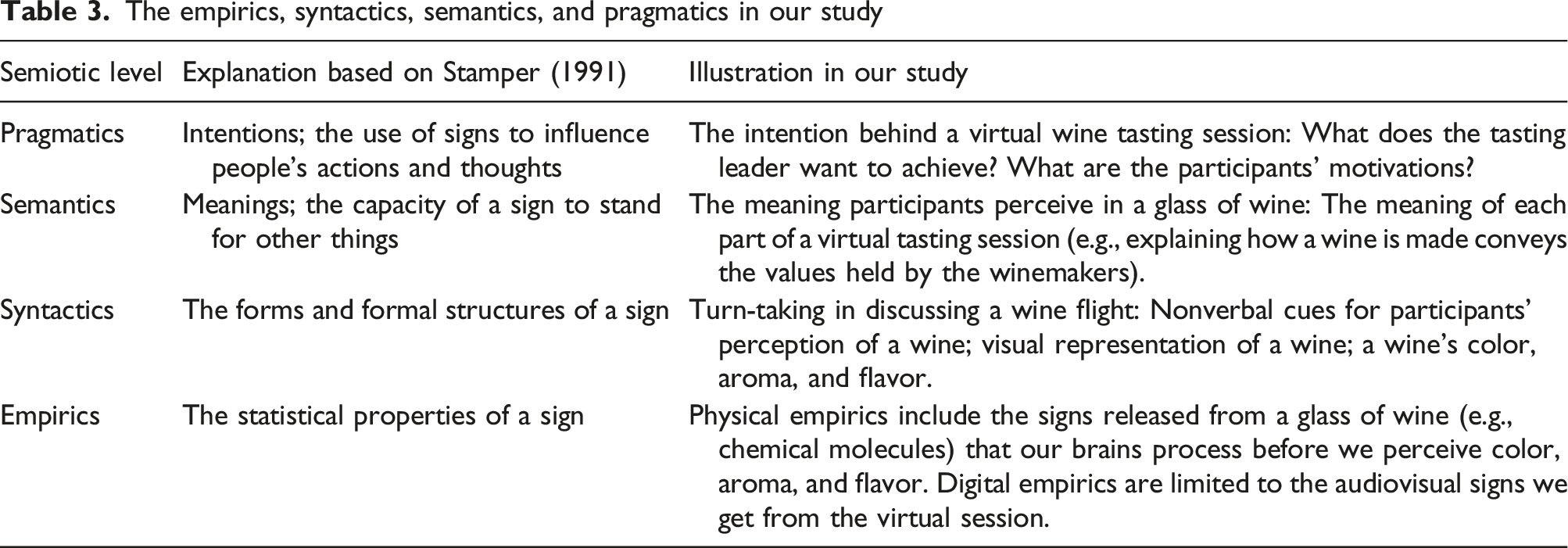
Next, we applied the semiotic analytical technique from Mikhaeil and Baskerville (2019) to analyze the meaning of each virtual tasting session and its components. The technique distinguishes four levels of a semiotic ladder: empirics, syntactic, semantics, and pragmatics (Stamper, 1991). The empirics comprise all physical signs, whereas the syntactics refer to a sign’s form, which we can interpret for meaning. For example, a glass of wine releases chemical molecules, not all of which we can sense or perceive, but we make sense of those we can perceive (e.g., color, aroma, and flavor) by interpreting their forms and structures (e.g., their hue, intensity, and complexity). Then we can interpret their semantics (meaning) and pragmatics (intention).
The empirics, syntactics, semantics, and pragmatics in our study
The digitalization of wine tasting and the evolution of virtual wine tasting
The first virtual tasting sessions did not require advanced digital capabilities from the tasting providers 3 . They were designed and deployed frugally because of time pressure and resource constraints. Over time, however, the digitalization approach changed from a reactive approach to a more proactive one. We developed a typology of virtual wine tastings covering both the reactive and the proactive approaches and continued our analysis by tracing the evolution of virtual wine tasting.
How a virtual wine tasting proceeds
Our participation in virtual wine tasting sessions began with registration and, in some cases, ordering a corresponding wine tasting package of three to six bottles, which arrived within a few days. Some providers also allowed participants to join a virtual tasting session without purchasing a tasting package. We received a confirmation e-mail after the registration that contained a link to the virtual tasting session and that, in some cases, directed us to a pre-recorded tasting video. If pre-recorded tasting videos were available, we watched the videos as soon as we received the corresponding tasting package. When a tasting was to be conducted with a leader and a group of participants, the confirmation e-mail also contained a manual for behavioral (etiquette) and technical requirements for the session, and a date and time to join the session. Figure 2 illustrates the procedure. Participating in a virtual tasting session.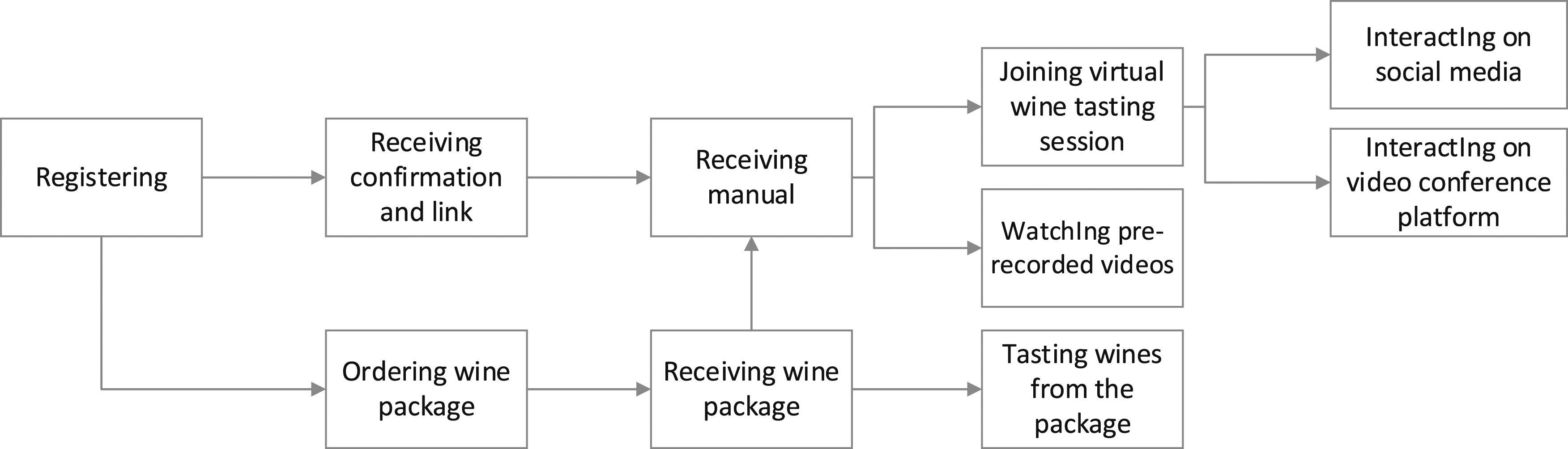
The virtual wine tastings had no single formula, although the storytelling, individual tasting, and collectively describing wine were recurring elements. Tasting leaders usually broke the ice by means of personal narratives from their early memories with wine or their internship at renowned wineries. We found this storytelling element useful in explaining the craft behind the wines. The participants tasted the wines from the tasting package individually at home; then the tasting leaders invited the participants to describe the wines or share their opinions. Figure 3 illustrates the flow of these elements. The flow of a virtual tasting session.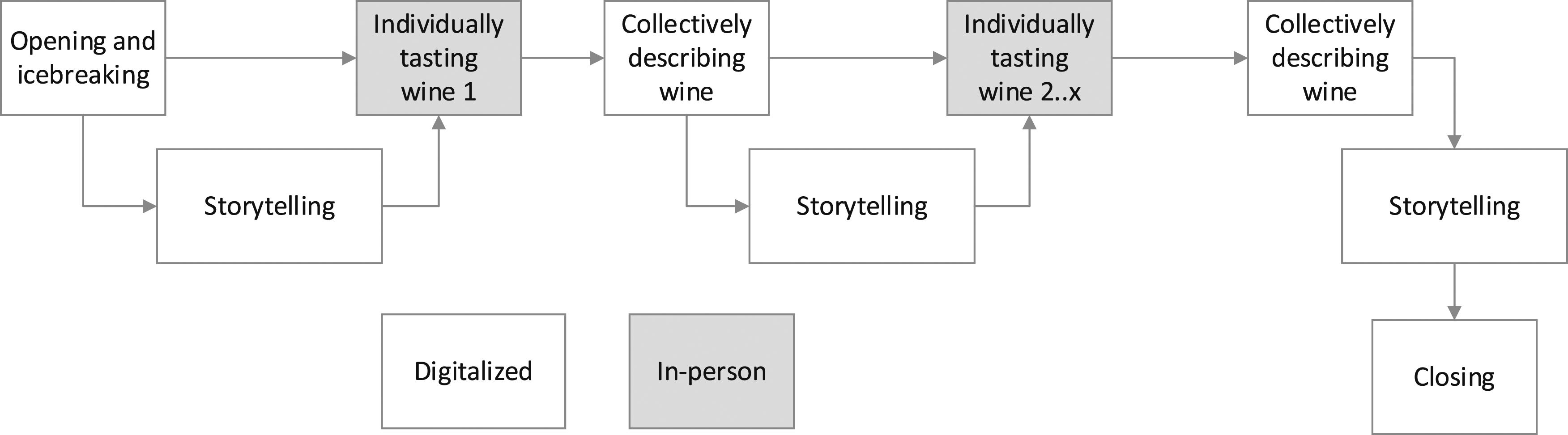
A typology of virtual wine tasting
We identified the formats of the virtual wine tastings along two dimensions: how structured the session was and how much social interaction occurred (Figure 4). Virtual tastings with a pre-recorded video have low levels of interaction and structure, while virtual tastings on a video conference platform have high levels of these elements. Two other formats lie between them: virtual tastings on a social media platform and virtual wine fairs. Our analysis of these formats pointed to two main types: asynchronous and synchronous virtual tasting sessions. A typology of virtual wine tasting.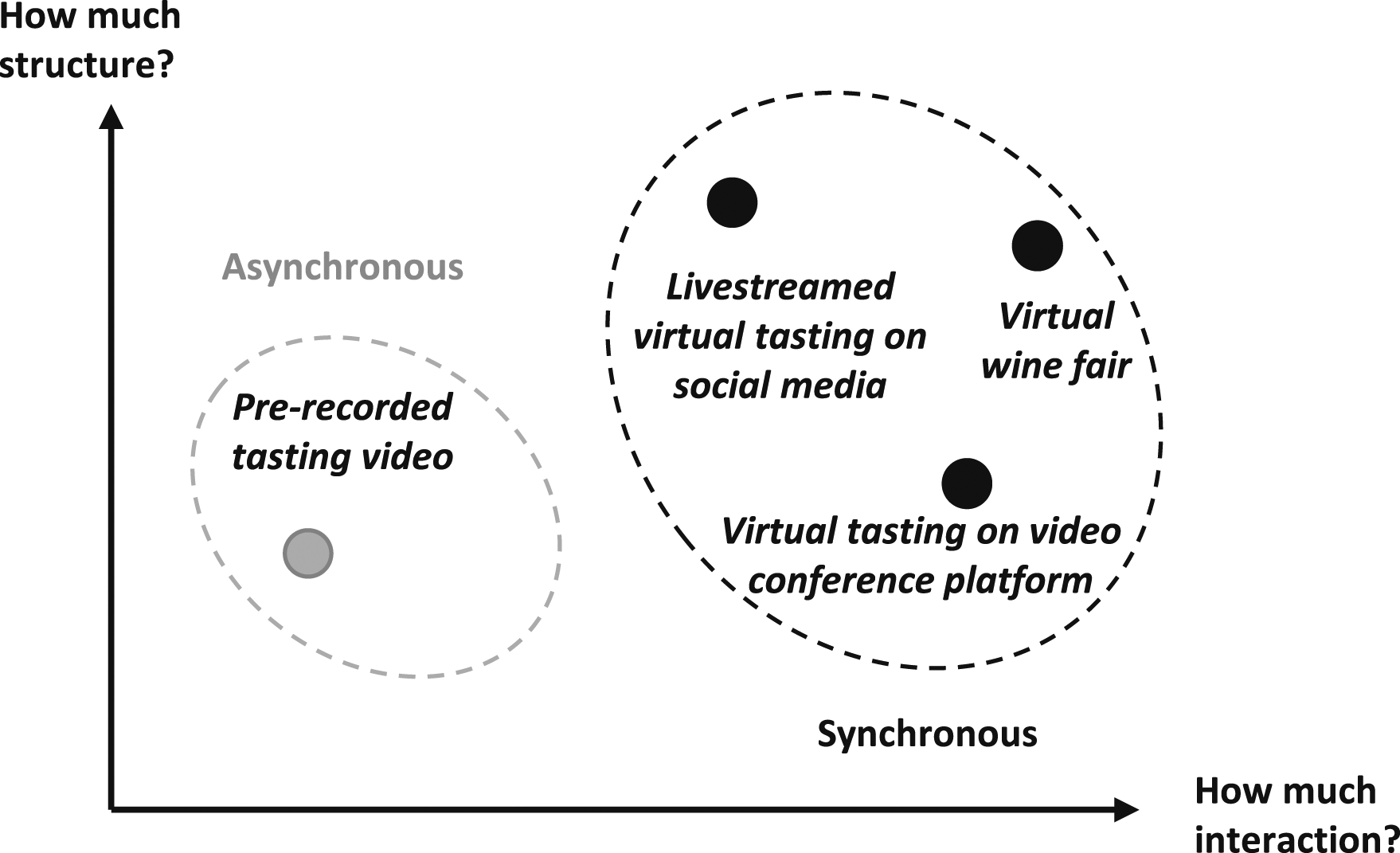
Some tasting providers offered a series of pre-recorded tasting videos, while others offered theme-based wine packages (color, varietal, and occasion) with no video. These types of virtual tastings are individual and asynchronous: tasting wines and reflecting on them individually, sometimes informed by the corresponding tasting video (Figure 5). Virtual wine tasting conducted asynchronously (left) and synchronously (right).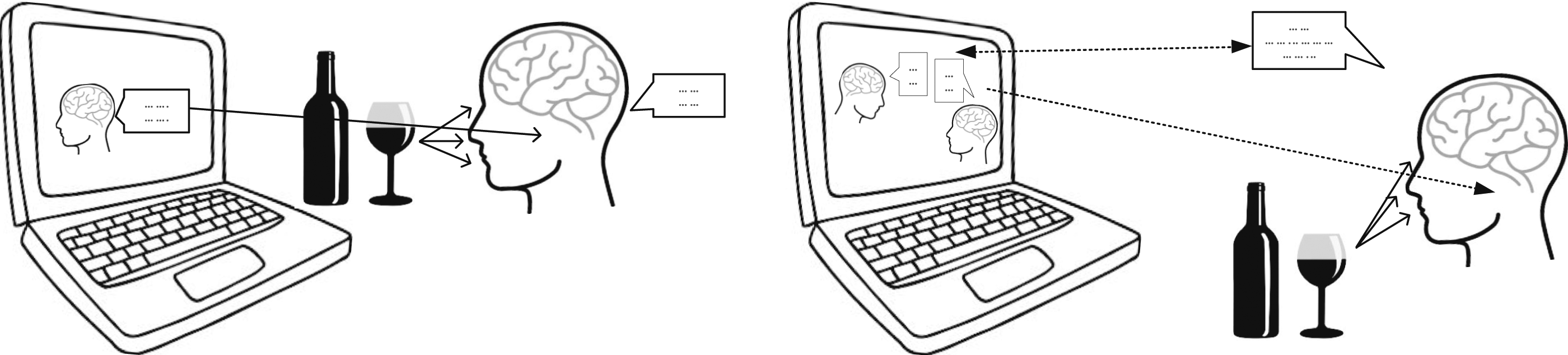
Other providers offered a synchronous wine tasting experience livestreamed on a social media channel like YouTube or Instagram. In this case, we could interact with the tasting leader only by typing chat messages. Although all participants experienced the wine tasting simultaneously, they could not express their impressions and opinions in any great detail.
However, when a virtual tasting session was conducted on a video conference platform, participants could interact with the tasting leader, share their tasting experience, voice their opinions, and ask questions of the tasting leader. We also participated in a virtual wine fair using its dedicated event platform, an online directory of participating winemakers, and a built-in video conference function for private sessions. We observed this more sophisticated format, which was offered by organizers of wine fairs, only in the second half of 2021. Figure 5 shows participants of synchronous wine tasting events sharing their experiences.
The evolution of virtual wine tasting: from reactive to proactive digitalization
The five phases of our ethnography stretched over eighteen months and three distancing periods, during which we observed an evolution in how wine tasting was digitalized, from reactive to more proactive.
During the first distancing period, it was almost impossible for winemakers to interact directly with their customers. Pioneering virtual tasting platforms emerged to support them in coping with the situation. As one of the pioneering platforms recalled, We are so glad to be able to quickly respond to those calling for help […]. In only two months we were able to prove the exact opposite to the skeptics (“wine and online tastings don’t go well together!”) and inspire the wine business. (Field note on Platform A)
The second distancing period brought the same difficulties, but the providers had sufficient experience to re-adopt virtual wine tasting and promote its renaissance: Many winemakers equipped themselves with virtual tasting and other virtual events during the first wave of Covid-19 in the spring […]. These virtual formats regained their relevance now that the temperature is slowly going down and, with it, the possibility of hosting outdoor events. (Field note on Organization Z)
At the end of 2021, some regions faced another distancing period with cancellation of traditional Christmas markets. Two virtual tasting platforms reacted in their social media announcements, implying another renaissance of virtual tasting: Mulled wine markets are OUT. That’s why we have our wine IN. (Field note on Platform B) Christmas market @ home. Advent is approaching. What about a small virtual Christmas market? (Field note on Platform C)
Virtual wine tasting was originally intended to be a short-term survival tool during the distancing periods, and most of our informants emphasized how much they looked forward to in-person wine tasting. Reflecting on our own experience during months of online meetings and virtual tasting sessions, we shared their sentiments back then. However, winemakers still offered virtual wine tasting directly or used tasting platforms during the summer months, and after most of the measures were lifted (e.g., 146 winemakers in Germany alone
4
). Other providers (i.e., non-winemakers) harnessed the long-tail effect (Brynjolfsson, Hu and Smith, 2010) and diversified their offerings by focusing on specific wines (e.g., those made from fungus-resistant grape varieties), pairing wine with other products (e.g., spices, cheese, chocolate), offering themed experiences (e.g., wine and thriller experiences), and targeting certain segments, such as digital “natives”. Some virtual tasting sessions addressed younger participants, led by wine influencers, one of whom described his approach: Wine is uncomplicated […]. I don’t deliver jargon but concrete, useful testimonies and tools […]. No information overkill, no elitist lecturing; instead, joy and fun with wine. I put together the ideal “edutainment” for hardcore wine-lovers as well as newcomers. (Field note on Wine influencer 1)
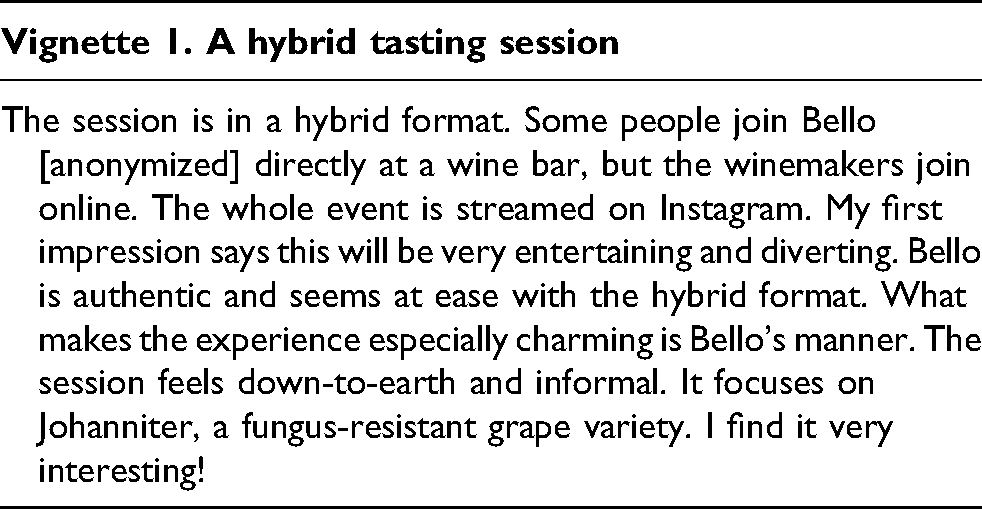
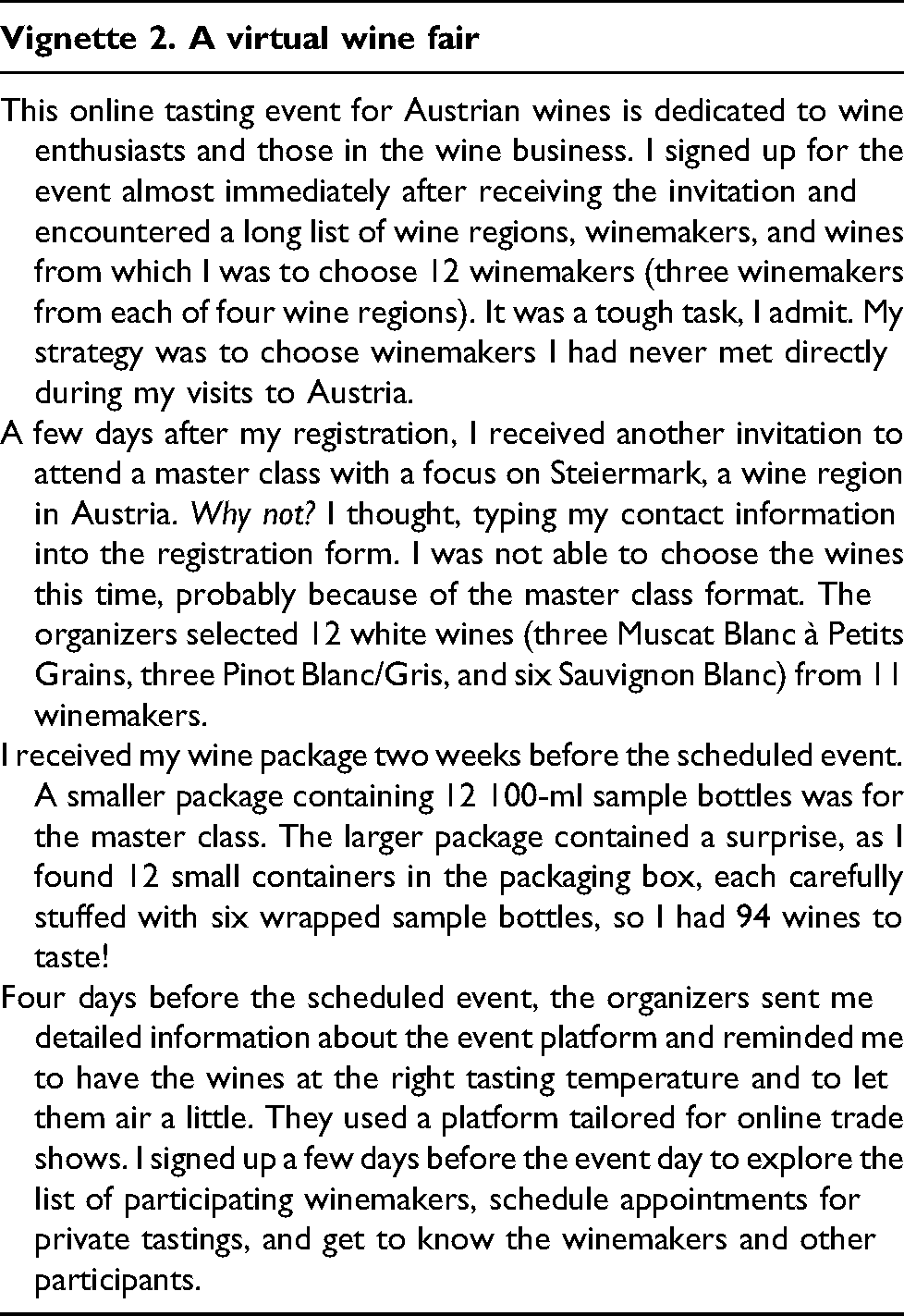
The hybrid tasting session and the digitalized wine fair illustrate the evolution of virtual wine tasting in terms of its naissance, renaissance, and maturity. The providers collected indications of what works with which participants from their trial-and-error reactive approaches. These informed their strategic decisions when designing virtual tasting sessions more proactively. The result was tailored and seamless events which harnessed state-of-the-art digital technologies.
A semiotic analysis of virtual wine tasting: its social space and digitalization strategies
The semiotic analysis allows us to understand the strategies for collective wine tasting in the digital space (Burton-Jones et al., 2017; Recker et al., 2019). Figure 6 portrays wine tasting in the physical space vis-à-vis wine tasting in the digital space. Strategies for digitalized wine tasting. Note: The arrows with solid lines show how people translate what they see, smell, and taste in a wine into words that form parts of a social discourse. The arrows with dotted lines point to digitalization approaches, referring to empirics, syntactics, semantics, and pragmatics.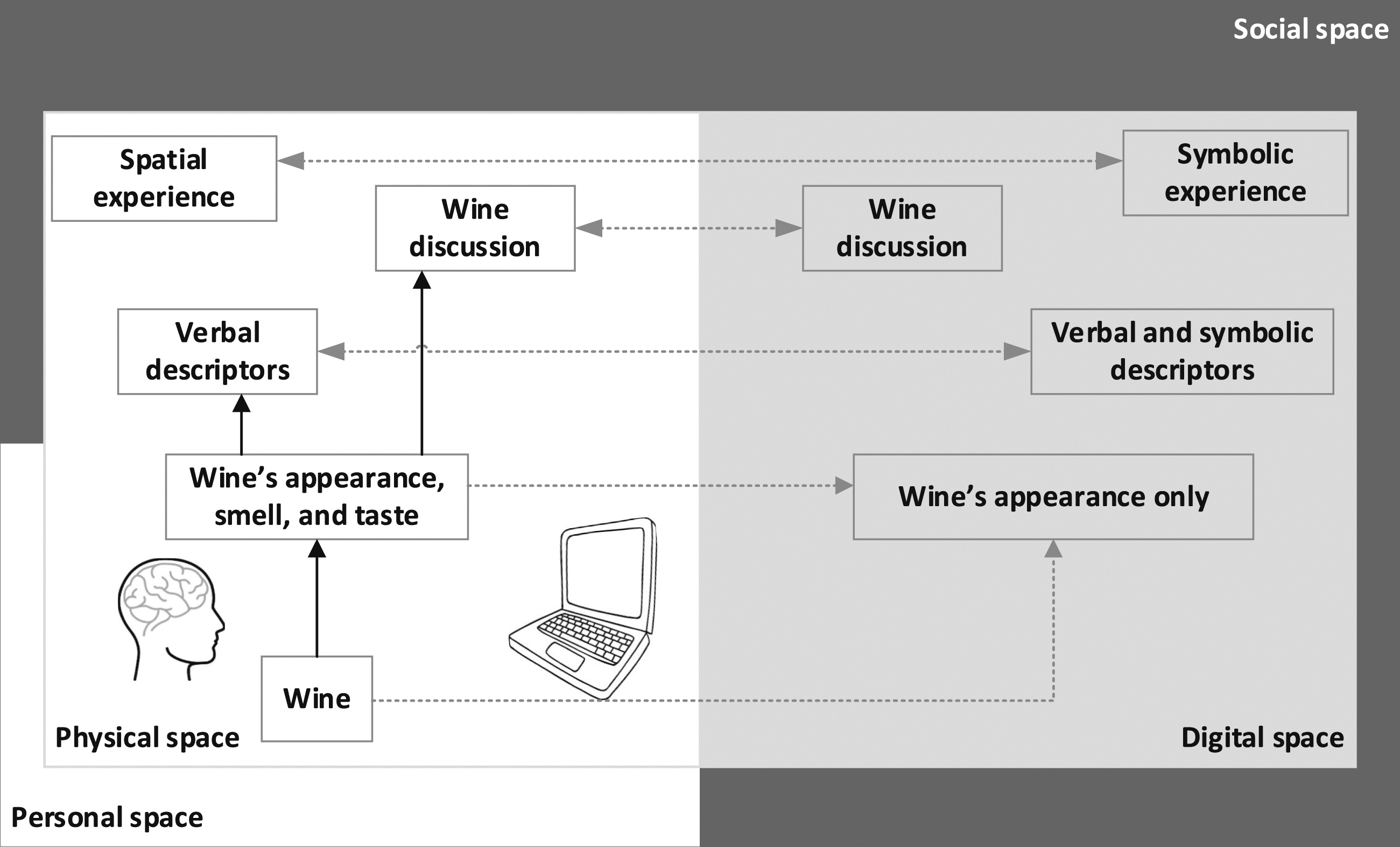
In this section, we characterize the social space in which virtual wine tasting takes place, then describe the social actions, and finally identify the digitalization strategies that are based on the semiotic analysis.
The social space of virtual wine tasting
Virtual wine tasting takes place in a digital space that is social by design. The social space is shaped by the choice of communication channels, event platforms, and event protocols. Being a collective activity, virtual wine tasting involves the participants’ immersion in the subjective sensory experience before they share their experiences with other participants verbally.
At first, only a handful of providers offered virtual tasting events on their dedicated booking platforms, but as virtual tasting became more popular, winemakers and wine merchants began to organize their own tasting sessions and announce them on the websites of wine associations and governmental organizations for wine promotion. The German Wine Institute added “offering virtual wine tasting” as a new filter to the winemaker search function. One such announcement read:
Support your winemakers. One can join a virtual wine tasting comfortably from any location. (Field note on Wine organization Z)
This sample announcement emphasizes a sense of community and the opportunity to support winemakers in difficult times, and perhaps even to build a virtual community. During the three distancing periods, the concept of social life was restricted to sharing home comforts with family members and roommates and occasional virtual meetings. While other social encounters were unlikely, the sense of community among everyone going through the same difficult time also established a social support system. Some tasting providers organized support programs for winemakers who suffered from the flood catastrophe in Germany’s Ahr Valley, while others donated parts of their profits to struggling restaurants in their regions. Wine and wine tasting played a central role in the community, as one interviewee explained: [It was] the concept itself, where each time they invite different winemakers, and the chance to taste different wines, which I could not imagine otherwise. Like, let’s try this now and when I happen to like it, I can order it again online. (Participant Dionysus)
The motivation for participating in the virtual tasting sessions revolved around appreciation for wine, curiosity about wine, and the opportunity to taste different wines. The sense of community was established by the participants, experiencing the wine almost simultaneously and by becoming members of virtual wine tasting platforms.
Pragmatics: symbolic experience substituting spatial experience
The main intention of virtual wine tastings is to recreate the experience of an in-person wine tasting. Our analysis refines this intention into two clusters of virtual wine tastings: venue-specific recreation and business motivation. In-person wine tasting can take place at wine merchants, bars, wine fairs, or at wineries. Our experience with sixteen virtual wine tasting sessions suggests that they provide a symbolic experience to substitute for the venue-specific in-person experience. One of the tasting sessions was reminiscent of wine tourism by conjuring up the image of sojourning at an idyllic vineyard and exploring its vinification premises, guided by a winemaker, while other sessions felt like a visit with a familiar wine merchant. Another tasting session which was staged as a talk show offered yet another experience—something close to a traditional wine festival. The asynchronous options felt like somewhere between a wine bar and the wine department at a large grocery store. The platforms led us to discern symbolic traces of venue-specific experiences and to imagine being in those venues.
Ordering wine packages prior to the virtual tasting session was recommended, but not mandatory. Some participants joined out of curiosity and brought their own wines. For these participants, the virtual tasting session may have increased their brand awareness and affinity, leading to future purchases. Other participants had visited the winery whose wines we were tasting, so the tasting may have strengthened the winery’s consumer relationships and promoted wine tourism.
We observed the use of storytelling in conveying intentions, but the storytelling could be counterproductive. For example, one tasting session was staged as a talk show, where the host and two guest winemakers wore thematic costumes, and the studio decoration reflected the carnival mood. Two pre-recorded videos were aired of the two winemakers’ demonstrating talents other than winemaking, but the approach led to confusion—our own and that of other participants. Clearly, the design of a virtual tasting session can shape participants’ perceptions.
Semantics: verbal exchange of meaning
Verbal communication was dominant in all virtual tasting sessions. Gestures did convey meaning, but the video conference platforms we used did not convey gestures clearly, as we experienced delays and episodic connection issues. When the platform allowed bilateral interaction, participants exchanged their views chiefly using spoken language, but social media platforms allowed participants to send only text messages, and only a few of those messages received real-time responses. Thus, the livestreamed option did not allow much meaningful exchange of opinions about the wines.
However, the challenge in the semantic exchanges was not only in what participants perceived about a glass of wine but in maintaining the flow of the conversation. With proactive moderation, the conversation revolved strictly around a particular wine and its terroir, but when the moderation lapsed, some participants began to demonstrate what they knew about wine and to dominate the discussion, moving the focus from appreciating and discussing a particular wine to presenting themselves as knowledgeable. As one participant noted: It was always the same people who spoke up and asked questions. […] It always happens. The participants are [the winemaker’s] clients, so she cannot interrupt them. But as a moderator, she can always steer the flow and take care that everyone gets the chance to talk. (Participant Bacchus)
We also noticed efforts to engage in self-branding when the winemakers sought to portray themselves as individuals with their own personalities. These efforts also shaped our perceptions of their wines, as we associated experimental winemakers with edgy wines.
Syntactics: audiovisual distillates of multisensory signs
Sebeok (2001) defines six types of signs, but most, if not all of the signs we discerned in the virtual tasting sessions were audio-visual. The almost-real-time transmission of video (iconic representation) provided signals for who was to speak next (turn-taking) in the conversations, as gestures, intonation, pauses, and speed symbolized the messages that were not captured in words. We saw that a pointed finger, a tilted head, and a turn indicated the presence of something, such as a wine press, a vineyard location, and the direction of the university where a winemaker once studied.
Of course, the latest technologies used were not able to digitalize scent, taste, and touch, but we smelled the wine and felt and tasted it on our tongues in our own physical space before translating our perceptions into the words that form part of a social discourse. However, in the digital space we could see only a two-dimensional iconic representation of wine. We looked for nonverbal signs in the other participants about the smell, feel, and taste of a wine to the degree that the video conference platform allowed. We thought a slight pursing of the lips may be symptomatic of partial dissatisfaction, the widening of eyes may indicate high acidity, and a broad hand gesture may be a symbol of the wine’s complexity. One participant explained this idea vividly: I have the wine with me physically. I can’t taste digital wine […]. At an online event, one often cannot perceive the reaction of other participants and, if at all, then only when they speak. Gestures and facial expressions usually say more than words can […]; the impression is more authentic. When talking, people can sometimes be too polite…. […] If people don’t like a particular wine, they usually don’t say it directly to its maker. (Participant Bacchus)
Empirics: Life is too short to drink virtual wine
Jackson (2017) describes what happens when one tastes a glass of wine in the physical space. The chemical and particulate nature of the wine transmits, absorbs, and reflects visible radiation from the light. Our retina reacts to the transmission and sends signals to the brain, which interprets the wine’s color, its intensity, and its hue. We swirl the wine in the glass to release aromatic molecules, a fraction of which enters our nasal passage and reaches our olfactory receptors. The signals are passed on until they reach our brain and finally arrive at the orbitofrontal cortex, where multisensory perception takes place. The cortex recognizes smell patterns and associates them with our memories, enabling us to describe what we smell using analogies and metaphors. Then we appreciate the wine’s taste and mouth feel before forming an overall impression of the wine.
The process differed slightly in our virtual tasting sessions, as the digital empirics were limited to the wavelengths transmitted by our monitor. After tasting the wine that arrived in the package, we compared our perceptions with the tasting leaders and other participants’ descriptions of the wine’s general appearance and color. Depending on how we divided our attention, we interpreted both physical and digital signs for the wine’s appearance, smell, and taste.
Discussion
This section extends the boundaries of our ethnography and discusses our findings in light of a broader conversation. We discuss the evolution of virtual wine tasting as a transition from frugal innovation to pervasive innovation and suggest virtual wine tasting’s potential to become something more than a digital representation of a collective wine tasting session. Our findings offer insights into the process of digitalizing collective wine tasting but can also be generalized to other multisensory collective activities. After outlining four strategies for doing so, we highlight the study’s limitations and propose avenues for future research.
Leveraging frugal innovation and making it pervasive
The reactive approach to digitalization is reminiscent of frugal IT innovation 5 , “a special case of frugal innovation where IT/IS play a pivotal, core role in enabling capabilities to overcome challenges of a resource-constrained business environment” (Ahuja and Chan, 2016: 2). Our conversations with winemakers and other tasting providers revealed that they had little incentive to digitalize prior to the Covid-19 crisis. However, necessitated by the crisis, their quick and frugal approach to digitalizing wine tasting helped them to construct a digital façade (Tumbas et al., 2015) while developing their digital capabilities. By offering virtual wine tasting, they signaled their digital affinity and their willingness to transform their customer interactions.
The transition from reactive to proactive digitalization also showed how frugal innovation can lead to pervasive innovation (cf. Lyytinen, 2019). As virtual wine tasting became a common practice, the urgency to digitalize increased. Early participants might have noticed the frugal nature of the hastily implemented virtual wine tastings, but were forgiving during the first and second distancing periods. However, by the third distancing period, they no longer found frugal digitalization satisfying and demanded a more sophisticated multisensory digital experience.
Leveraging frugal innovation in this context allowed those who offered virtual wine tastings to learn from each session and develop the necessary digital capabilities to provide a better experience. Now, with digital capabilities in hand, winemakers and other tasting providers can rethink their business models and customer interaction strategies such that pervasive innovation may ensue, and those who honed their digital capabilities can benefit from first-mover advantages and network effects (de Reuver, Sørensen and Basole, 2018). Now that stakeholders are acquainted with the potential of digital technologies, they can pave the way for further digitalization in wine making, the wine business, and wine appreciation. Pervasive innovation requires digitalization approaches that go beyond a digital representation of wine tasting and that may also apply to multisensory activities beyond wine tasting. The next sections discuss this extension.
From digital representation of wine tasting to designing a digital phenomenon
At its naissance, virtual wine tasting was designed frugally as a reaction to the social-distancing measures. Several renaissances later, virtual wine tasting has the potential to become something more than a digital representation of collective wine tasting. Dare we call it a digital phenomenon?
Let us use the recent development in representation theory as an inspiration. Responding to contemporary advancements in digital technologies, Recker et al. (2021) propose that an information system not only represents the physical space in the digital space but also mediates the execution of what is observable in the digital space in the physical space and translate between digital spaces to enable exchange. While some of these mechanisms are yet to be developed, others were already observed in our analysis.
Offering virtual wine tasting has become de rigueur in the context of our ethnography. Some virtual wine tasting providers extended their scope by offering other tasting experiences, such as beer-tasting, spirits-tasting, food-tasting, combinations thereof, and tailor-made experiences. Imagine that they analyze participants’ preferences, tasting histories, evaluations, and other data to discern patterns and use these insights to predict the type of experience that would appeal to them. Consider also the potential for tailored and targeted communication to each participant. By learning from preference amplification in recommender systems (Kalimeris et al., 2021), a digital tasting platform may shape our preference for wine, other beverages, and other leisure activities.
While some providers were honing their digital proficiency, others complemented their virtual sessions with in-person sessions (and vice versa). We even observed a few providers experimenting with hybrid tasting sessions (e.g., wine influencer 1 in The evolution of virtual wine tasting: from reactive to proactive digitalization section) that occurred in both physical and digital space, blurring the boundary between the representation and the represented phenomenon. Virtual communities of wine enthusiasts are gaining influence, too. For some, the digital space may be the only space where they can appreciate and discuss wine with like-minded people, as suggested by the self-disclosure phenomenon, where people tend to reveal more about themselves in the digital space than they do in the physical one (e.g., Joinson et al., 2010).
Spence et al. (2014) design a more sophisticated scenario for wine tasting to demonstrate how the color of ambient light and background soundtracks influence the perception of wine’s taste (e.g., red light underlines sweetness). Others experimented with immersive virtual wine tasting before the COVID-19 crisis, where participants can visit an informative virtual vineyard 6 before sipping from their glasses or immerse themselves in a multisensory wine tasting simulation (Carulli, 2018). These scenarios can inspire future strategies for augmenting the experience of virtual wine tasting by harnessing the mediation of information systems. With these strategies, the focal phenomenon—the wine tasting session—could occur in the physical and digital spaces simultaneously (e.g., on an immersive reality platform), and sensory enhancement in one space could be translated into the other (cf. Recker et al., 2021), augmenting the sensory experience.
Digitalizing multisensory collective activities: going beyond virtual wine tasting
We consider wine tasting sessions to be instances of multisensory collective activities that are highly dependent on sensory perceptions currently impossible to be fully digitalized, so our insights can be applied to two clusters of other multisensory collective activities. The first cluster is that of activities that, like wine tasting, involve food and beverages and emphasize participants, discerning these products’ sensory characteristics before describing them. Beer-tasting, spirits-tasting, food-tasting, tea-tasting, and combinations thereof all belong to this cluster. The second cluster is that of activities that place the senses of smell and taste in the foreground but are not restricted to discerning and describing the characteristics of a product. Cooking classes, crafting ambient scents, and guided aromatherapy exercises are examples of activities in the second cluster.
Figure 7 illustrates four strategies with which to digitalize multisensory collective activities. The four strategies combine two criteria: digitalization’s purpose (sensory representation and sensory augmentation) and the direction of mediation between physical and digital spaces (from physical to digital and from digital to physical). Four strategies for digitalizing multisensory collective activities.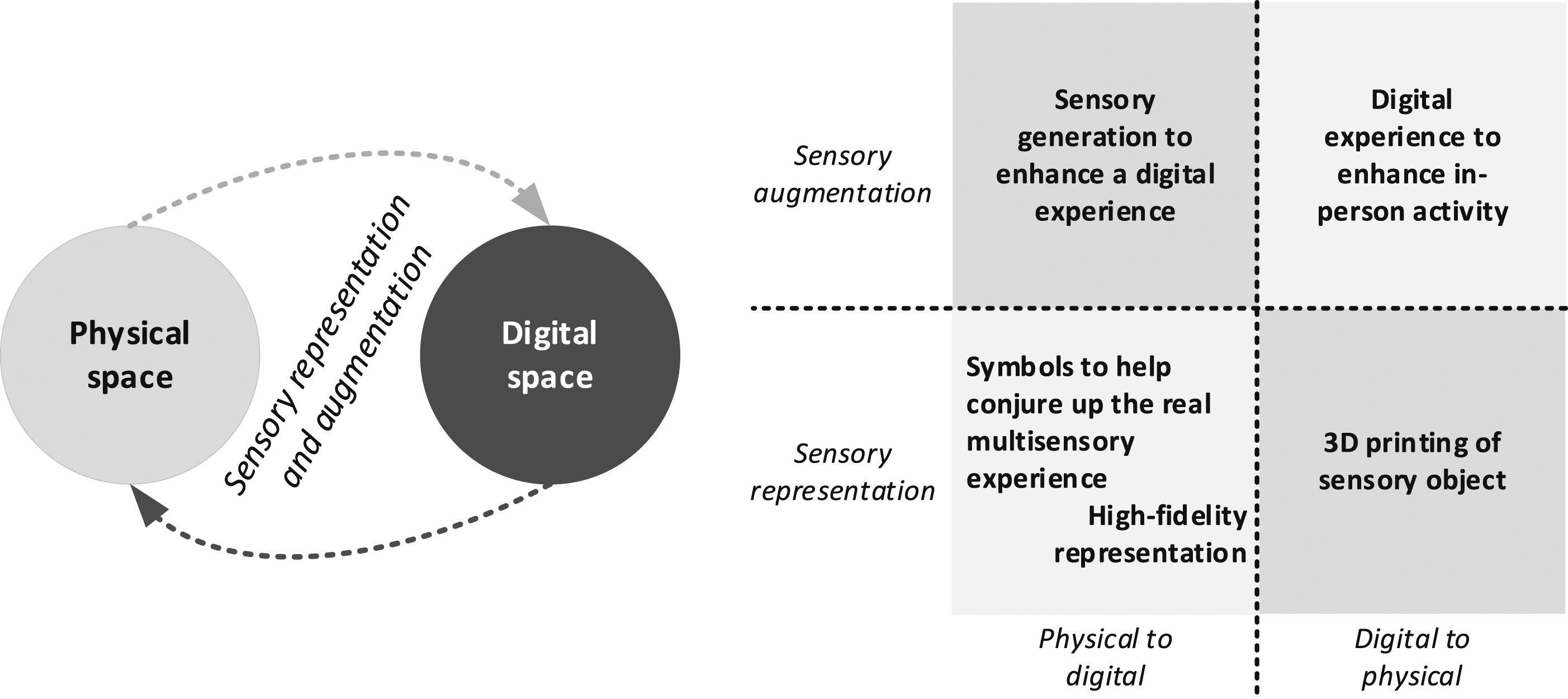
Recall that a sign can be a symptom, a signal, a name, an icon, an index, or a symbol, based on its relationship to what it signifies (Sebeok, 2001). In other words, a phenomenon can be represented realistically (e.g., as an icon) or symbolically (e.g., as a symbol). These representation approaches can be applied in representing in the digital space sensory information from the physical space. Such a physical-to-digital sensory representation is usually accompanied by physically sensory products (e.g., foods, beverages, and scents).
We did not observe any digital-to-physical sensory representation in our ethnography, although the From digital representation of wine tasting to designing a digital phenomenon section captures this strategy to some extent. A better example would be 3D printing of digital sensory objects, such as the freeform fabrication of fluidic edible materials (Luo et al., 2021). Future research may explore this strategy’s potential for digitalizing multisensory collective activities.
Sensory augmentation refers to enhancing the perception of sensory information through the addition of another type of sensory information. Velasco and Obrist (2020: 33) distinguish augmented reality (“digital elements are augmented into real ones”) from augmented virtuality (“real objects are augmented, or merged into, the virtual world”). A digital-to-physical sensory augmentation uses sensory objects in the digital space to enhance an in-person multisensory experience. For example, allowing participants to immerse themselves in a virtual vineyard before tasting real wines helps to augment their wine tasting experience. We can also use sensory objects in the physical space to enhance the digital multisensory experience. For example, spraying wine aromas can augment a virtual-reality-based wine tasting simulation.
Limitations and suggestions for future research
The results and limitations of our study lead to suggestions for future research. The four digitalization strategies for multisensory collective activities manifest the role of information systems as representation and mediation (Recker et al., 2021) in digitalizing multisensory collective activities, but they remain to be validated and refined in future research. Some of the strategies may even involve more mediation mechanisms: not only translating back and forth between the digital space and the physical space but also combining several digital spaces with several physical spaces.
We sought to determine how collective wine tasting and the multisensory elements it involves can be digitalized, so we focused on the aspects of virtual wine tasting that could give us insights into the digitalization approaches and strategies those who offered them used. However, our results cannot explain how the individual participants in a virtual wine tasting immerse themselves in the multisensory experience. Future research could explore the roles of subjectivity and objectivity in virtual wine tasting to complement our sensuous storytelling (Vannini et al., 2010) with rich sensory data. Such a study could follow contemporary perspectives like sensory ethnography (Pink, 2009) and somatic perspectives in information systems (Chughtai, 2021).
Finally, we discussed the evolution of virtual wine tasting using the lenses of frugal innovation and pervasive innovation. Virtual wine tasting has enabled winemakers and other tasting providers to build their digital capabilities as foundations for further digital innovation. However, our conjectures are based on observations that occurred over only 18 months, and most frugal innovations may take longer to become pervasive. Future research could use a longitudinal approach to analyze strategies for leveraging frugal digital innovations and making them pervasive.
Conclusion
Wine tasting is a multisensory collective activity. We conducted an ethnography and applied a semiotic analysis to determine how a wine tasting session can be digitalized. The analysis of sixteen virtual tasting sessions led to a proposed typology of virtual wine tasting based on the degree of interaction and the events’ structure.
Small artisanal winemakers and wine merchants followed four strategies to move their wine tasting sessions online during the distancing periods that took place in the wake of the Covid-19 pandemic: creating a symbolic experience to substitute for a spatial experience, relying on verbal exchanges of meaning, using audiovisual signs to represent multisensory signs, and combining the digital experience with the physical experience of tasting wine. Digitalization also helped them form digital social spaces for wine enthusiasts that were characterized by a sense of community and social support.
Virtual wine tasting started as a reactive, frugal innovation but evolved into a pervasive alternative to in-person wine tasting that may continue to evolve in the future. Our findings have implications beyond virtual wine tasting for other multisensory collective activities based on the purpose of their digitalization and the direction of mediation between the physical space and the digital space.
This paper contributes to the contemporary discourse on the representation of meaning in information systems and digital innovation of small businesses. We hope to spark scientific interest in studying multisensory collective activities and the role of digital technologies in representing and mediating their meaning.
Footnotes
Acknowledgement
We sincerely thank Dr Christoph Schneider for his considerate and thoughtful guidance. We acknowledge the two anonymous reviewers for their thought-provoking yet constructive comments. They challenged us to revisit our assumptions and carve out the contributions of this study. We also thank our interview partners for sharing their insights and perspectives on virtual wine tasting with us.
Declaration of Conflicting Interests
The authors declared no potential conflicts of interest with respect to the research, authorship, and/or publication of this article.
Funding
The authors disclosed receipt of the following financial support for the research, authorship, and/or publication of this article: This work was supported by the Research Fund of the University of Liechtenstein, FFF wi_20_1.

Notes
Asynchronous and synchronous virtual wine tasting
Vignette A1 describes an asynchronous virtual wine tasting experience. The pre-recorded videos in such asynchronous tastings balance knowledge and instructional elements with light stories and are sufficiently short to keep a customer entertained.
Vignette A1: Asynchronous virtual wine tasting
The first wine is a champagne, Moutard Cuvée Royale Brut Blanc de Noirs. Sandro, the presenter, sits on a balcony and describes where the house Moutard is located (100 km south of Epernay). He explains that there is more pressure in a bottle of Champagne than there is in a car tire. He opens the bottle while reminding the audience of the high pressure, suggesting that we secure the cork with a thumb, and recommends pouring it the wine into a glass that is not too slim so we can appreciate the bouquet better. I experience déjà-vu, an image of my wine tutor voicing the exact recommendation. Sandro then describes the wine’s appearance, the nose, and the palate. He also explains concepts like the fizziness, the second fermentation, the sweetness, and the dosage. I enjoy watching him and like the champagne. He ends the session by suggesting some food pairing ideas and quoting Napoléon Bonaparte to express how Champagne goes with everything: “Champagne! In victory one deserves it; in defeat one needs it.”
The second wine is a red from Spain, Don Pascual Ribera del Duero 2016. Sandro sits on the same balcony as in the last video. In his introduction, he reassures the audience that wine appreciation is a personal experience, and he talks about Spanish wines in general and their typical grape varieties. I like his stories; even though they carry marketing intention, they convey valid information and illuminate Sandro’s expertise in a subtle way. Some popular tasting videos tend to focus on describing the wines using sophisticated analogies but, despite their poetic quality, those wine experts can be intimidating. Sandro is different. Following the ice breaker, he pours the wine. He describes its appearance, nose, and palate and explains how to discern its aromas, bouquet, and taste, as well as how to form an overall judgment about its quality. The tasting lasts a little over 11 minutes, and I find it just right—neither too lengthy nor too hasty.
Vignette A2 describes the process of a synchronous virtual tasting session that took place on a video conference platform. We booked this session through a dedicated virtual tasting provider.
Vignette A2: Virtual wine tasting on a video conference platform
February 5 finally comes, and the virtual tasting begins at seven in the evening. I am with one other participant; there are 12 participant groups, including the winemaker. She greets us, introduces herself, and encourages us to introduce ourselves. Only eight of us do so. We can understand each other, even with background noises and delays now and then. The winemaker’s video is slightly blurred, but we can understand her well. We are going to taste and discuss four wines.
The first wine is Müller Thurgau, which comes in a Bocksbeutel bottle. This type of flattened bottle is common in Franconia and in a few other wine regions in Europe. The winemaker tells us the history of Bocksbeutel and explains the story behind this wine, which she named as her first name. She describes the wine and asks us to share our opinions. One group of participants dominates the conversation. I remember them from the first virtual tasting. It seems that the wine world is small. Meanwhile, the winemaker talks about the Gipskeuper formation that brings minerality in the wine, which is discernible in the second wine, the Müller Thurgau Old Vines. The wine comes in a small, regular shape bottle and has been matured in a large barrel (600 liters) made from Spessart oak. A participant expresses admiration for the wine in the chat box, and two other participants describe what they taste in the wine, using interesting descriptors like “sunny,” “extraordinary,” and “ambassador of Müller Thurgau.” The winemaker suggests leaving a bit of the wine in the glass to try again later. She explains us how mature wine like this one continues to evolve after it is uncorked and poured.
Example of a shortened field note (virtual wine tasting on a social media platform)
The livestreamed session begins at 8.30 p.m. Andrea, the house sommelier, greets the participants and waits for the winemaker. While Andrea is uncorking the bottle, the winemaker joins the session. She is from Tuscany but speaks German very well; in fact, she is currently visiting Germany with her family. Andrea and the winemaker converse in a friendly manner while uncorking their three bottles. Then they show us the corks, and the winemaker explains that she uses only certified high-quality corks.
They begin with a rosato that is made from 100% Sangiovese grapes and has 14% alcohol. The aroma of red berries is intensive and well-structured on the palate. The color is a beautiful, translucent red. The winemaker once paired the rosato with Cantonese fried rice and found it more flattering than the alternative of Asian beer. Important to keep in mind that the wine is a rosato from the Tuscan region, not to be mistaken for its lighter French counterpart. The wine resembles a light red wine more than it does a typical rosé. Andrea and the winemaker ask the participants, some of whom are in the F&B business, to share their experience with the wine. A participant finds the wine delightful when accompanied with crudité, but she also likes her current pairing of rosato with sea bream and fennels. Andrea remembers his first bite of deep-fried tripes at the Piazza di San Lorenzo in Florence and believes it would taste very good with this rosato.
The second wine is a Chianti Classico Riserva. It is interesting to taste facets of Sangiovese—as a rosato and as a red reserve. The wine has matured for 30 months in a barrel that is made partly of French oak and partly of German oak from the Black Forest. Three participants express their enthusiasm for the wine, remarking how well it embodies everything that is expected of a Chianti Classico Riserva. Andrea will leave some wine in the bottle and taste it again tomorrow and the day after tomorrow so he can experience its evolution after being in contact with oxygen. I think I will do the same.
The third wine is a Sangiovese Rosso. The winemaker recounts a story: Her family wanted to make the best wine from the traditional local Sangiovese and bought French barrique to follow the Bordeaux approach to crafting a harmonious wine. This red wine is reminiscent of a super-Tuscan, harmonious and round, aromatic and well-structured. The texture is not voluptuous and is reminiscent of plum confit with a touch of tonka bean. It must pair well with red meats and cheese. A participant asks why such a fantastic Sangiovese Rosso does not qualify as a Gran Selezione, so the winemaker explains the geographic requirements of the Italian wine certification agency: Similar to all super-Tuscan wines, this wine is not made of the grapes grown from the designated Chianti Classico DOCG regions. Despite their lack of the DOCG label, super-Tuscan wines are among the highest-valued Italian wines in the world. This wine will definitely age well.
Andrea closes the tasting session with small talk, asking the winemaker about her plans and her work in the vineyard. They invite all the participants to join them again the day after tomorrow. Andrea stays after the winemaker has left to wish the audience a lovely evening.
I liked my first session better, even though this second session was also quite informative. I think I missed the charming authenticity that was effectively transmitted through the use of Italian language. The winemaker in this session sometimes spoke Italian but usually spoke German, which made her sound more pensive and stiffer than the winemaker in the first session. That winemaker sometimes told jokes that lightened up the atmosphere. Andrea could interact with him naturally, joining him in his word play before translating the whole story to German. However, this second session had better live chat interaction. Some participants posed their questions and were open to sharing their evaluations of the wine, so the session felt interactive, as the participants did not passively watch the livestreamed events like watching a film.