



Abstract
In this study, we investigate to what degree radical right parties use social media for pushing a common issue agenda to mobilise voters on a pan-European scale. Using the 2019 European Parliament (EP) election as a case, we analysed radical right parties’ campaign agendas in Austria, France, Germany, Italy, Poland and Sweden and identified the transnationally shared issue repertoire in their Facebook communication. Based on the structural topic modelling we used for analysis, our results reveal a set of shared issues – immigration and blaming elites –which are typical of the populist core of those parties. Moreover, all parties use social media to draw attention to the election itself. While radical right parties mobilise their voters based on a transnationally recurring set of shared issues, national political opportunity structures account for party-specific topics and national adaptations of shared issues in their campaigns on Facebook.
Keywords
Introduction
Radical right and right-wing populist parties’ rise and electoral success throughout Europe pose severe risks to liberal democracy and the process of European integration (Norris and Inglehart, 2019; Zielonka, 2018). While right-wing populism generally appears in nationally specific manifestations, indicators of transnational organisation are apparent as well. Radical right parties (RRPs), movements and media throughout Europe appear increasingly willing to network via conferences and coordinated political events to feature their leaders on a European level. The 2019 European Parliament (EP) election seemed particularly prone to fostering concerted political communication, thereby amplifying Euroscepticism and mobilising voters on a pan-European scale. At the same time, populists’ political communication is inherently oriented toward the nation; likewise, EP elections have frequently been described as ‘second-order’ elections where campaign communication is subject to domestic party competition (Hix and Marsh, 2011).
In our study, it is this puzzling background against which we ask whether the transnational institution-building and networking on the radical right manifest themselves in the social media campaign. To what degree can we observe transnationally shared issue agendas in parties’ communication in the run-up to the election? We expect that a few critical issues drive anti-European discourse coalitions that transcend national borders. Therefore, we analyse the issue agendas of RRPs in Austria, France, Germany, Italy, Poland and Sweden during an EP election campaign period to identify the degree to which their communication converges across different European countries. We aim to identify common topics and assess similarities and differences in their appropriation, as well as the conditions under which they are communicated within countries. Eventually, we want to understand whether the communication dynamics on social media indicate a rather temporary campaign mobilisation pattern or stand for a more stable structure of RRP alliances in Europe.
Theoretically, we relate our study to the literature on transnational communication across Europe (Eder, 2000; Wessler et al., 2008), populist parties’ communication and the specific context of EP elections. As social media platforms are part of digital information ecologies that parties use as strategic tools to communicate their messages and to establish shared epistemologies, our empirical study draws on the Facebook accounts of Austria's Freiheitliche Partei Österreichs (FPÖ), France's Rassemblement National (RN), Germany's Alternative für Deutschland (AfD), Italy's Lega, Poland's Prawo i Sprawiedliwość (PiS) and Sweden's Sweden Democrats (SD). Our research questions are as follows: To what degree do RRPs across Europe establish a shared issue agenda in the EP election campaign? Do we find the same communication dynamics or even a convergence of issues in the run-up to the election? We analyse campaign content and development by comparing country-based topic models of the parties’ Facebook communication from January to May 2019. If we observe a transnationally shared set of similar issues in different national and political contexts at the same time (synchronicity) and the same mobilisation dynamics and their potential convergence over time (Eder, 2000; Wessler et al., 2008), this would indicate the first layer in the transnationalisation of European RRPs’ communication.
Our study is structured as follows: first, we theorise transnational issue agendas using categories of the Europeanisation of public spheres (Eder, 2000; Pfetsch and Heft, 2015; Risse, 2015). Then, we discuss right-wing populism's use of social media to push their issue agenda independently of legacy media's gatekeeping, as well as EP elections’ specific context to do so. Bringing these trajectories together, we argue that shared issue agendas on the right indeed indicate EP election campaigns as forming an opportunity structure to communicate on a transnational European scale. Second, we introduce our study design, data and methods. Third, in the findings section, we start by identifying salient issues across parties before highlighting how issue agendas change over time and whether they converge in the sense that a unified agenda of the RRPs emerges. While these processes are clear-cut in theory, we consider that EP election campaigns also – and sometimes predominantly – account for opportunity structures on the national level. Thus, we introduce the contexts of national politics and public debate as alternative conditions that would hamper transnational communication.
Theory and literature review
Our approach to the question of transnationally shared issue agendas among RRPs is grounded theoretically in the literature on the European public sphere. The conceptualisations of Europeanisation generate a set of distinct dimensions and indicators (Eder, 2000; Risse, 2015; Wessler et al., 2008). They share the claims that the first and basic dimensions of Europeanisation are the synchronicity of the issues discussed in diverse (national) arenas of communication and that they may converge over time (Wessler et al., 2008: 9). Thus, if national publics in various countries discuss the same issues as important at the same time, with the same criteria of relevance, we might expect the emergence of a European public sphere that could provide legitimisation for European integration (Eder and Kantner, 2000: 315; Wessler et al., 2008: 15). Even though discussing the same issues at the same time does not ensure that the same frames are available across publics or that a ‘transnational community of communication’ (Risse, 2010: 126) emerges, synchronicity is an essential prerequisite for any further steps of transnationalisation. Two further aspects are relevant to our study. First, Europeanisation of public spheres is a process that occurs gradually over time, yet it is dynamic and can be influenced by key, short-term events or political crises, political and communication opportunity structures, and specific legacy and digital media conditions (Pfetsch et al., 2019; Pfetsch and Heft, 2015). Second, Europeanisation is also dependent on the construction of narratives that people can affirm in everyday life. Trenz (2014: 9) coined the term ‘Banal Europeanism’, which describes how Europeanisation has replaced the extraordinary and has become a ‘normal’ category of public communication.
In our study, we theorise transnational issue agendas of RRPs and their effects analogous to the study of Europeanisation. If national voter publics are mobilised across European countries at the same time, with an emphasis on the same issues and with the same relevance, we can infer that RRPs’ positions can become banalised in broader public discourse. Indeed, research in the context of the 2014 EP elections finds signs of a ‘Eurosceptic Europeanisation of public spheres’ (Dutceac Segesten and Bossetta, 2019b: 361). The actors who foster such a development are the national parties that operate at a ‘critical juncture’ for transnational political action (Lefkofridi and Katsanidou, 2018: 1463). The prerequisite for parties to pursue common supranational goals across borders and to appear as a unified group is a certain degree of congruence of issues, as well as policies and positions (Lefkofridi and Katsanidou, 2018: 1463). Thus, the emergence of a shared issue agenda might be interpreted as part of a larger discourse coalition. Transnational communication efforts of the radical right undergird the coordinated political action and alignments of leaders in the spring of 2019.
For RRPs, the EP elections provide an excellent opportunity to establish a populist issue agenda. While forming a heterogeneous party family, RRPs share ‘a core ideology that is a combination of nativism, authoritarianism, and populism’ (Mudde, 2007: 26). Mudde conceptualises populism as ‘a thin-centered ideology that considers society to be ultimately separated into two homogeneous and antagonistic groups, “the pure people” versus “the corrupt elite”‘ (2007: 23). Right-wing populist communication styles include emphasising the sovereignty of the people, referencing ‘dangerous others’ and attacking elites (Engesser et al., 2017: 1111–1112; Taggart, 2004: 274). Nativism is defined as an ideology that stresses nationalist inclusion and intranational homogeneity. At the extreme right, this comprises nationalism and xenophobia (Mudde, 2007: 22). Authoritarianism is understood as strict obedience to law and order and moralism (Mudde, 2007: 23).
Against the backdrop of this ideology, RRPs have been found to mobilise on immigration, identity politics and nationalism, anti-globalisation and Euroscepticism, law and order, and immigrants’ criminal conduct (Poier et al., 2017; for the crime aspect, see Smith, 2010) on the national level. However, we lack further evidence on whether RRPs’ communication is confined to national issues or whether they have established a Europeanised agenda with shared issues and positions on a transnational level. We would expect to find transnationally shared issue agendas in 2019 when considering Lefkofridi and Katsanidou’s (2018) study of the 2014 European Union (EU) campaign. It shows that eurosceptic positions function as a cohesive force among groups with nationalist right-wing members (Lefkofridi and Katsanidou, 2018: 1464). Other researchers have also observed that RRPs move closer together (Backes, 2018) and establish a ‘discourse community’ characterised by convergence in their political and communication strategies, geared toward pushing their positions in the EP (Rettig, 2020: 100, own translation).
Thus, while we have reasons to expect that RRPs’ issue agendas in different countries would align on a critical number of common issues, there are also arguments on why this might not be the case. Especially in EP elections, political communication has been shown to focus on domestic issues and party competition (Hix and Marsh, 2011). This has been described as the second-order problem of elections in the multilevel governance system of the EU. Moreover, due to their diverse histories, national voter bases and ideological preferences, the RRPs seem ideologically less homogeneous than other groups in European politics (Ennser, 2012). In particular, populist identity politics is naturally geared toward a national electorate, a national ‘people’ and nationalist inclusion. Distinct national and historical legacies may thus play out in their agendas and prevent transnationalisation. We must also take into account the fact that election campaigns not only concern substantial policies or ideological positions but also relate to tactical and strategic considerations on the national level (Statham and Trenz, 2013: 128).
Finally, even if RRPs share some basic ideological values and goals with respect to the EU, actual campaign issues might differ depending on the political role played by each party in national politics. How strongly a party focuses on an issue is a strategic choice that depends on the given situation of party competition, such as whether a party is part of the opposition or of the ruling government or wants to win governmental power and to avoid conflict with potential coalition partners (Green-Pedersen and Krogstrup, 2008). Thus, while we generally expect RRPs to converge on a transnationally shared set of issues, we consider their national political role as an explanatory variable for their campaign communication.
In today's multifaceted communication infrastructure, parties are no longer subject to legacy media's gatekeeping function. In fact, digital communication platforms, such as social media, have become essential communication channels in political campaigns (Nulty et al., 2016). Studies have observed that political leaders use social media during campaigns more actively to mobilise their followers than between election seasons (Ceccobelli, 2018) and that Facebook is one of the most important tools (Magin et al., 2017). Digital communication technologies are used in particular by emerging and fringe political actors on the right, who are occasionally shunned or, with respect to the extreme right, even excluded from coverage on traditional media (Caiani and Wagemann, 2009). In response, radical right actors on all levels, whether party actors or individual political entrepreneurs, have bypassed traditional gatekeepers and communicated their messages directly to the public (Flew and Iosifidis, 2019). Thus, social media platforms are important communication channels for RRPs because they enable direct access to the public without gatekeepers and their diffusion architectures.
Study design and data
Our empirical study includes RRPs from six European countries: Austria's FPÖ, France's RN, Germany's AfD, Italy's Lega, Poland's PiS and Sweden's SD. Our choice of countries represents northern, central, eastern and southern EU member states and countries where RRPs have become relevant political forces in recent years. The selected parties are positioned on the radical right in their respective countries and have achieved electoral success in previous elections. 1 If acting in a coordinated way, these parties could lead to fundamental changes in the development of European integration and Euroscepticism, which is why we deliberately focus on this specific segment of the party system. Another consideration that guided our party selection was the variation in historical traditions and institutional roles in national political systems. The inclusion of RRPs in the opposition and in government allows us to test our expectations regarding the EU campaign's agenda in different political contexts on the national level. We assume that if RRPs with different historical and institutional roles share the same issue agenda at the same time during the EU campaign and if they converge further in their communication, then we can infer that the Europeanisation has become a significant feature on the political right. We analyse SD and AfD as rather marginalised opposition parties, while RN is rather established in the opposition. FPÖ, PiS and Lega are three government parties. Table 1 provides an overview of the parties’ characteristics; for detailed descriptions of the parties’ backgrounds, see Appendix 1.
Overview of parties and their main characteristics.
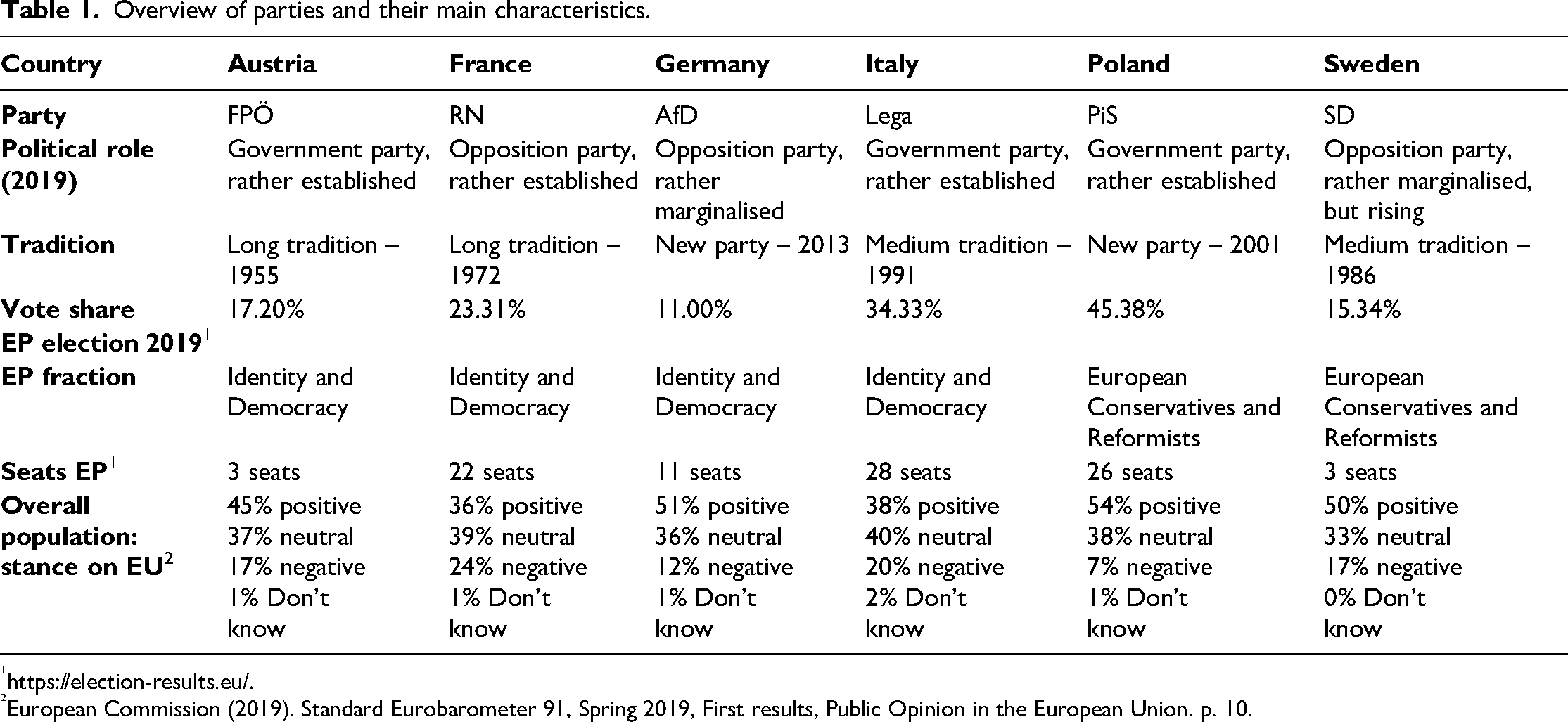
European Commission (2019). Standard Eurobarometer 91, Spring 2019, First results, Public Opinion in the European Union. p. 10.
We used the parties’ Facebook communication as point of entry into their campaign activities. Facebook is the top social media platform in the six countries, with at least 50% of the total population using Facebook, ranging from 50% (Germany) to 77% (Italy and Poland) (Newman et al., 2019). Studies show that citizens with a populist worldview, adhering to homogeneous people, anti-elitism and anti-outgroup attitudes, distrust the reporting of legacy media and degrade their coverage (e.g. Fawzi, 2019), rendering RRPs’ unmediated digital communication even more important. For populist citizens, Facebook constitutes a preferred online source of political information (Schulz, 2019). For each country, we include communication from official party accounts on Facebook, as well as accounts of top candidates (front-runners) of the parties in the EP elections, and analyse all account holders’ official posts. If one of these accounts is unavailable to the public, we use the account of another top politician in the party. Our analysis covers the pre-election and the election periods from the beginning of January to the end of May 2019.
For data collection, we used the Facebook application Netvizz, provided by the Digital Methods Initiative (Rieder, 2013). The Application Programming Interface (API) had several restrictions due to users’ privacy rights; thus, we retrieved only publicly available profiles. The data collection was performed as a continuous task throughout the study period. To ensure completeness of our data collection, download intervals were adjusted to the volume of posts, and the results were verified by manual inspection of the Facebook pages.
One indication of the use of Facebook as a significant campaigning tool in all countries is the generally high number of messages posted between January and May 2019 (see Table 2). The platform is used more extensively in the parties’ official accounts than in those of individual politicians. The distribution over time points to an increase in Facebook communication of almost all parties and politicians in the run-up to the EP election. However, the variation in the number of posts among the parties also highlights individual actors’ specific use of this particular platform. For example, Italy's Lega stands out, as it uses Facebook the most extensively, which is in line with recent research (Albertazzi et al., 2018).
Overview on all posts by page holders.
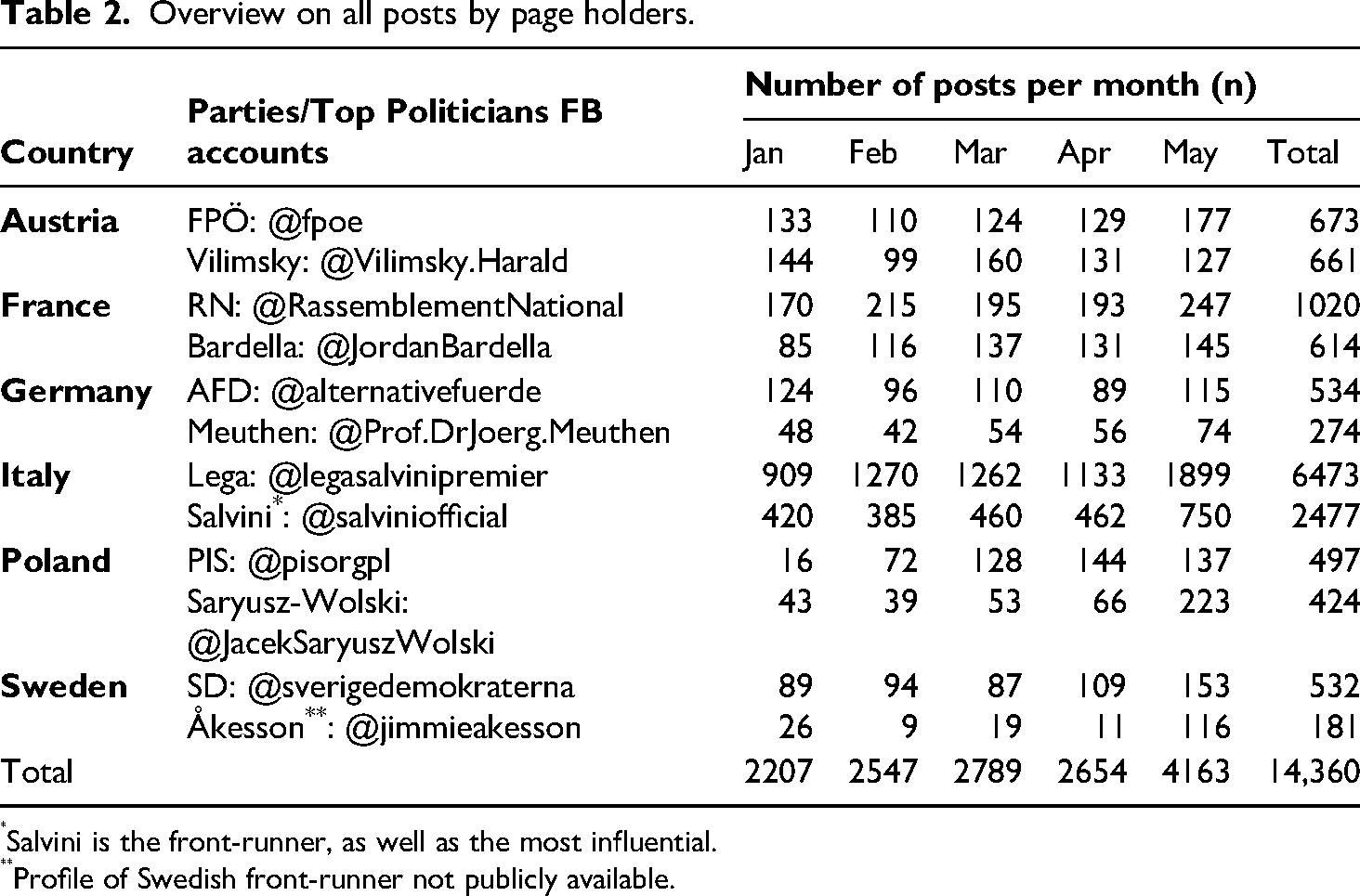
Salvini is the front-runner, as well as the most influential.
Profile of Swedish front-runner not publicly available.
To determine the issues that the parties addressed in their Facebook postings, we applied structural topic modelling using the stm package (Roberts et al., 2018) for the programming software R. Topic modelling is a text-mining algorithm that enables researchers to extract latent themes from large corpora of text. One advantage of topic modelling is that it allows data comparisons despite varying numbers of documents (Dutceac Segesten and Bossetta, 2019a: 1057). Based on the bag-of-words approach, documents’ topical contents are estimated by identifying frequently co-occurring terms, that is, the co-occurrence of words is preserved in the analysis, while the exact order of the words used in the documents is not taken into account (Roberts et al., 2016). Structural topic models allow the use of metadata (e.g. timestamps or author demographics) as covariates in the model (Benoit et al., 2018; Roberts et al., 2016). Such features permit not only the descriptions of topics in an observed text corpus but also the examination of how topic proportions change in dynamics or how topics differ among actors possessing different characteristics. In our analysis, we use the time variable as a covariate. As we are interested in the issue agendas across countries, we collapse parties’ and top politicians’ posts per country to derive better estimates from more extensive text corpora, as some accounts posted considerably less than others during our study period. Since we are also interested in differences on the country level and since both the parties and their candidates come from the same national backgrounds and represent the same parties, we assume that they would address similar issues in their Facebook communication.
All posts were cleaned to remove duplicates and translated into English in order to improve content comparability across countries and to minimise specific linguistic and stylistic elements’ influence (Reber, 2019). 2 Native speakers of each language checked and approved the translations for all countries. Preprocessing of the texts included tokenisation and removing word capitalisations, punctuation and stop words using the quanteda (Benoit et al., 2018) package in R. We further removed posts containing less than five words, as very short texts usually do not provide sufficient information for topic modelling. Additionally, a shared set of typical English stop words was removed from all countries’ posts.
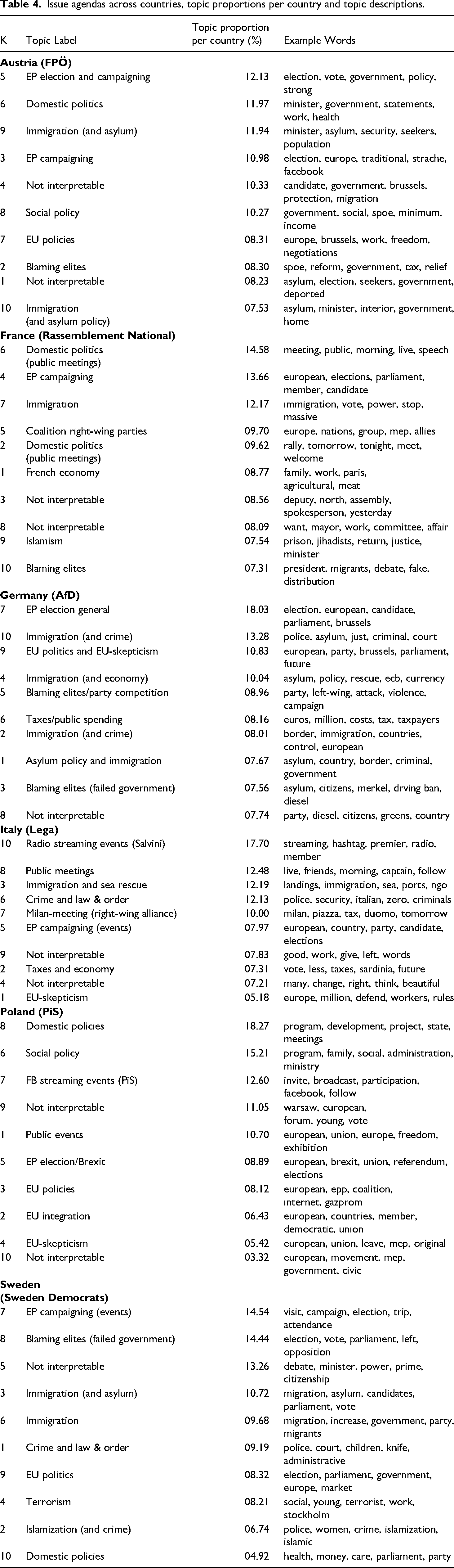
We calculated the topic models on a country-by-country basis to fit the different country contexts. 3 Generally, the number of topics (K) should be chosen on the basis of the granularity of the topics aimed at in a study (dependent on the theoretical construct), the statistical fit of solutions with varying numbers of topics and the best interpretability of topic model solutions (Maier et al., 2018: 98). To that end, we compared the statistical fit of K = 10, 15 and 20 topics using the data-driven approach used by Roberts et al. (2016) (see Appendix 2 for all measures). Moreover, four researchers independently interpreted the topic solutions, based on the words with the highest probability and the most exclusive words (FREX words), as well as text examples, as provided by the stm package (see Table 4 for topic descriptions and word lists). 4 Both inspections (fit measures and interpretation) led us to choose K = 10 topics as the results outperformed those of the other models in all countries. Additionally, this solution's degree of granularity comes closest to our interpretation of topics as issues on RRPs’ agenda, even though due to the method, they were sometimes broader in meaning than very narrow campaign messages. Native speakers with thorough knowledge of the party and the country context checked the topic solutions to verify our results’ validity. Those topics that had inconsistent evaluations by the researchers and the native speakers were discarded.
Issue agendas across countries, topic proportions per country and topic descriptions.
Findings
Transnational issue agendas: emphasising immigration and blaming elites
In our analysis of RRPs’ issue agendas during the EP election, we found a core set of transnationally addressed topics. Nearly all the parties raised these issues on Facebook, albeit with differing levels of salience and country-specific nuances in content. We defined these transnationally addressed topics as shared issues if they occurred in at least four of the six countries that we examined.
Emphasising immigration
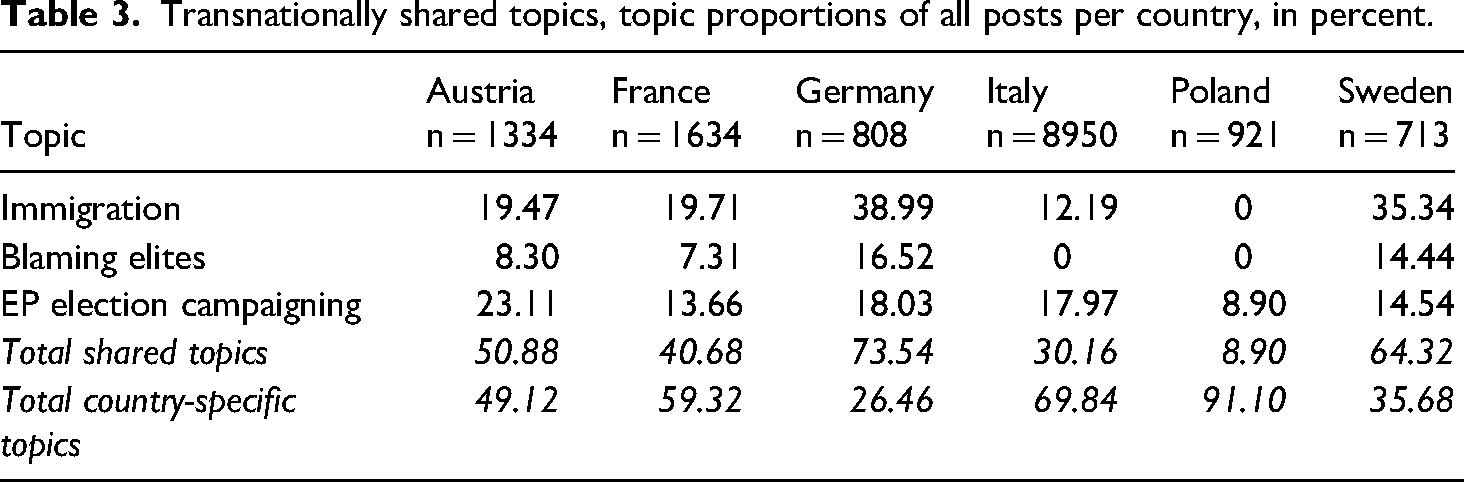
Immigration turned out as a major issue that emerged as a content topic in all countries, except Poland. It was the focus of the transnationally shared issue agenda. The broader topic of immigration was particularly salient in Germany (almost 40% expected topic proportion) and Sweden (35%), but Lega, RN and FPÖ emphasised the topic as well. While we observed a transnational synchronicity in the focus on immigration, the parties addressed the issue in country-specific patterns. Germany's AfD communicated about immigration in various contexts, such as crime, the economy and asylum policy. In Sweden, SD's communication strategy not only addressed asylum policies, crime and public spending but also stood out with its distinct focus on cultural aspects of immigration, such as Islamisation and terrorism. This focus corresponds well with the party's specific ideological position (Widfeldt, 2008: 270). The SD party is known for its rejection of multiculturalism and its (mono)culturalist nationalism, which emphasises the distinction between ‘culturally similar Swedes’ and other groups (Hellström and Nilsson, 2010: 63). We found the Islamisation aspect also in RN's topics, which corroborates its position against multiculturalism (Ivaldi, 2019).
Overall, our data indicate that the RRPs with governmental responsibility were somehow more reserved to communicate extensively against immigration than opposition parties. FPÖ addressed the issue with a stronger focus on the government's asylum policy. Lega focused explicitly on immigration problems and sea-rescue initiatives, mirroring the ongoing discussion among EU member states about solutions for handling immigration via the Mediterranean region. Lega also emphasised crime and law and order, thereby pointing out crimes committed by foreigners. Only PiS avoided any talk about immigration at all.
Blaming elites and party competition
The second issue that united the RRPs across countries refers to the blaming of elites – ranging from opponent parties in general, governing parties and heads of government, to the ‘left’, the media and the banks. The typical blame game, a core feature of ‘thin’ populist ideology (Mudde, 2007), turned out to be a shared issue among the parties in four of the six countries. They communicated the blame-shifting theme similarly, but the subject actors who were viewed as elites varied from case to case. Blaming elites was more salient in countries where RRPs perform as outsiders and in an oppositional role (France, Germany and Sweden). We assume that this issue was a strategic choice for opposition parties without aspirations to join the government; those parties stood out through populist themes and styles. The blame-game communication did not show up in Poland and Italy, where PiS and Lega members, respectively, were in government. However, in their campaign communication, PiS and Lega stood out through their already common EU scepticism (Braun et al., 2016). In more general terms, we found that RRPs in government – and, thus, belonging to the national political elites themselves – used the EU as a scapegoat and target it in their criticism of elites. To a lesser extent, EU scepticism also played a role in Germany and Sweden.
Mobilisation and campaign communication for the EP election
Facebook's role as a prime campaigning tool for RRPs became manifest in the general topic of the EP election campaign. Given traditional media's reluctance to serve as a billboard for RRPs, we interpret the general topic of the EP election and campaigning as instrumental for mobilisation, as it included more general information about the EP election campaign, party manifestos and campaign events. Mobilising voters by communicating about the EP election was the strategic purpose of this topic, which was present in the Facebook communication of all parties. It was the most salient topic of FPÖ, AfD and SD and the second most important topic of RN. Italy's Lega party and its leader, Matteo Salvini, were the exceptions here. Lega demonstrated the most specific use of Facebook overall – primarily for announcements about Salvini's daily and EP campaign-related events on the streets, on radio and on TV appearances. In these announcements, Lega's communication often did not explicitly relate to the election or Europe. Rather, Salvini's events were advertised in more general terms, which fitted well with his all-year campaigning and special leadership style (Albertazzi et al., 2018).
Poland's PiS also took a distinct approach to the topic of the EP election, which was only about half as relevant as in the other countries’ cases. PiS is exceptional for its special involvement in EU affairs, due to Donald Tusk, who served as the European Council president at the time. In this context, the EP election issue in Poland was communicated with recurring references to Brexit and the British referendum.
National specifics in RRPs’ issue agendas
In addition to the topics that emerged across countries – albeit with different ‘national colours’ (Risse et al., 2001: 1) – we found specific domestic focal points in RRPs’ communication. Overall, the parties with positions in the government talked more about their ongoing political activities and concrete policies, such as social policy, which was discussed in Poland, Austria (and Sweden), and EU policies, which played a role in Poland and Austria. Furthermore, EU scepticism was especially prevalent in Italy and Poland. If RRPs were involved in the government, they employed the strategy to blame external elites and the EU. In the Austrian case, the most important target of the blame was FPÖ's coalition partner Österreichische Volkspartei (ÖVP).
SD stood out as the party that focused extensively on immigration in its various topical facets. In Sweden (and in Italy as well), crime and law and order emerged as a significant individual topic. In the Italian case, these topics were always related to immigration by attributing the crimes to foreigners. In the Swedish case, it was an issue both within and beyond the immigration frame. In France, RN addressed the immigration issue in an Islamisation context. Additionally, the right-wing alliance across Europe, promoted particularly by Marine Le Pen and Salvini, turned out as a distinct topic in their party communication. To summarise our analysis, RRPs applied a double strategy; they maintained a transnational populist agenda that consisted of a few core issues, such as immigration and blaming elites, but still kept a national focus on domestic and party-specific issues (Tables 3 and 4).
Transnationally shared topics, topic proportions of all posts per country, in percent.
Converging right-wing mobilisation across borders?
With respect to communication dynamics in the run-up to the EP election, the communication on Facebook did not converge in their thematic repertoires over time. Instead, the specific features of their agendas and the thematic alliances across countries (see Figure 1) remained more or less stable over the six-month period of our observation. Germany and Sweden exhibited the highest proportion of transnationally shared topics (immigration, blaming elites and EP campaigning). These three issues almost completely dominated AfD's Facebook communication and comprised a stable majority in SD's content.
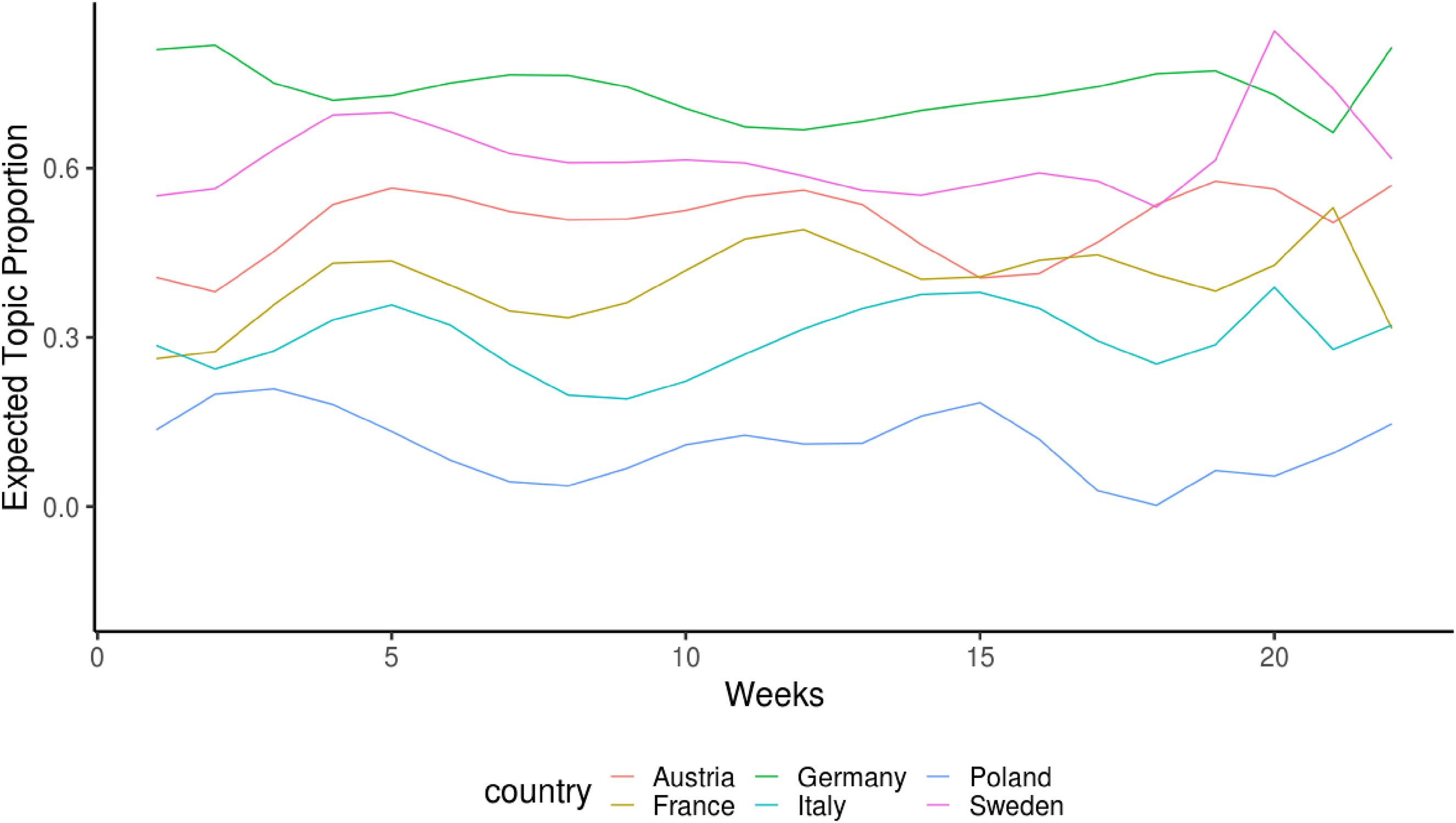
Total share of transnationally addressed topics in parties’ Facebook posts, topic proportions per country, January to May 2019. Note: Expected topic proportions show the combined share of topics relating to immigration, blaming elites and EP campaigning in the weeks from January to May 2019. For example, AfD devotes an expected share of around 80 per cent of their posts to these topics.
In contrast, Poland and Italy had the lowest proportion of transnationally shared issues, since elite blaming was not played out and immigration was also partly absent. Direct EP campaign communication fluctuated over time (see Figure 2). This pattern can be interpreted as a transnational alliance of right-wing outsiders (opposition parties) that focused on shared topics. The government parties used their political role to emphasise specific domestic topics, and they were more cautious in embracing extreme right-wing politicisation.
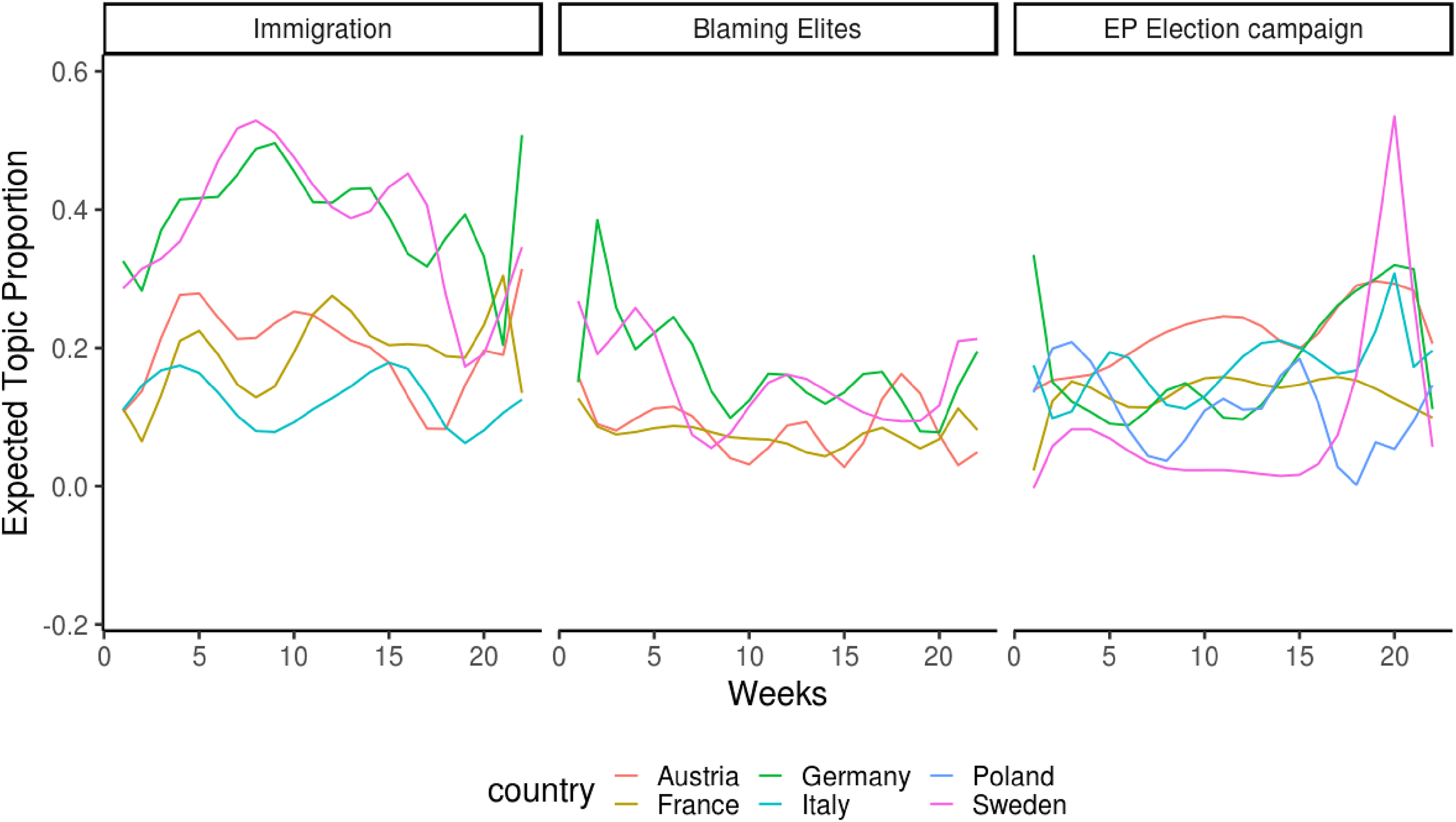
Development of transnationally shared topics in parties’ Facebook posts, topic proportions per country, January to May 2019.
Thus, two factors explain the differences in the levels of attention to transnational issues and nationally specific issues addressed by only one or two parties. First, each party's governmental or oppositional role accounts for differences in the salience and the specific focus on blaming elites. During the studied period, AfD, RN and SD extensively engaged in this practice and focused their criticism on national governments and other national parties. In contrast, RRPs in the ruling government, such as Lega and PiS, avoided a critical view of their respective governments but criticised the EU. Second, the parties’ ideological focal points and positions influence their specific stance on common issues, exemplified in SD's cultural framing of the immigration issue.
Regarding the development of topics over time, we expected the parties to increase their attention to EP campaign issues in the run-up to the election. This pattern was observed in SD only, while the RRPs in Austria, Germany and Italy did not reveal such a significant increase in attention to specific election campaign topics. In Poland, the EP campaigning focus was high from the very beginning. In some countries, such as Germany and Sweden, we observed that the immigration topic grew in importance during the campaign, but in the election week, its salience declined. Only in France was immigration an important mobilising issue for RN until the very last day of the campaign. With regard to blaming elites, we found fluctuating trends in all countries that shared this issue but no significant change in salience over time.
Conclusion
In this study, we have investigated RRPs’ issue agendas during the 2019 EP election campaign. Our assumption was that RRPs communicate a transnationally shared issue repertoire that not only positions them in the electoral competition but also promotes transnational linkages and eventually, Europeanisation on the right across countries. Our idea of transnational issue agendas is that parties address the same issues at the same time, with similar relevance in their Facebook communication. We have chosen social media because this communication channel allows RRPs to escape the gatekeeping by traditional mass media and to mobilise their voters in their genuine voices. We have observed that the issues uniting RRPs transnationally are (1) emphasising immigration, (2) blaming elites; and (3) mobilisation and campaign communication for the EP election, though with varying degrees of intensity. In other words, the transnationally recurring set of common issues reflects their shared ‘thin ideology’ (Mudde, 2007; Poier et al., 2017) of populism, their nativist ideological core that plays out in the immigration issue, and the specific election context. The differences that we have found, for example, regarding the specific appropriations of the immigration topic, are in line with the diverse elements that define nativeness in a party's ideology, such as the strong cultural element of SD's ideology, whereas religious aspects are more important for other parties.
Summarising our findings, we hold two contextual factors accountable for party-specific adaptations of transnationally shared issues, as well as for the intensity of party-specific issues: (1) a party's governmental or oppositional role and (2) a party's specific ideological stances and how these resonate with the national political culture. Parties in government talk more about national policies and their activities and achievements. Furthermore, RRPs in government engage in blame games targeting external elites and the EU. RRPs in the opposition use the typical populist version of elite blaming, referring to a wide range of national actors, such as the government, competing parties, the left, the media or the banks. Parties’ specific ideological blends of nativism and the defining features of the imagined ingroup (e.g. ethnic or religious), of authoritarianism and of populism explain our findings that Islamism and (religious) terrorism are relevant issues addressed by some RRPs, while others focus more on law and order, and so on. Overall, our findings corroborate the results of previous research on RRPs’ agendas in various national contexts (Backes, 2018; Ivaldi, 2019; Rydgren, 2017).
During the 2019 EP election season, RRPs’ transnationally shared focus on the immigration issue and on blaming elites had the potential to steer users from different countries toward perceiving the same issues as relevant for the election, resulting in a partial transnational voter mobilisation on the right. Such transnationalisation of right-wing discourses across Europe might steer populist anti-EU sentiments on a broader scale. However, we have found neither full synchronicity nor convergence of issue agendas due to varying degrees of issue relevance and to the remaining stable part of parties’ communication geared toward nation-specific topics and a national electorate. Thus, while the leaders of the newly formed right-wing alliance in the EP signal transnational collaboration and institution building, their communication on social media appears only partly synchronised. Rather, it highlights the persistent second-order status of the election and its domestic adaptation through RRPs in their campaigns. It remains a question for future research whether ongoing cooperation in the EP might lead to stronger convergence of right-wing issues on the European level and to the transnationalisation of RRPs’ campaign agendas and the more demanding elements of this process, such as discursive integration (Wessler et al., 2008).
At this point, we need to acknowledge our study's use of a specific selection of countries and parties in a given time frame, which has implications for our findings’ reach. We cannot assess to what extent the patterns that we have found are party-specific or reflect election-specific peculiarities. Furthermore, we have studied campaign communication only on Facebook. We argue that Facebook is particularly important in this specific political environment for RRPs and their voters alike. Nonetheless, since platforms’ digital architectures facilitate (political) actors’ specific communication strategies, it would also be worthwhile to investigate other digital platforms in platform-comparative designs. Finally, while structural topic modelling offers many advantages regarding our research interest, it also has some drawbacks. The parties in our analysis differ significantly regarding their posts’ lengths, and longer posts result in better topic solutions. To assess the more fine-grained elements of transnationalisation, such as similarities in problem definitions and justifications or direct cross-referencing among the analysed RRPs, future research could complement the automated approach with a manual content analysis of posts.
Supplemental Material
sj-docx-1-ejc-10.1177_02673231221100146 - Supplemental material for Transnational issue agendas of the radical right? Parties’ Facebook campaign communication in six countries during the 2019 European Parliament election
Supplemental material, sj-docx-1-ejc-10.1177_02673231221100146 for Transnational issue agendas of the radical right? Parties’ Facebook campaign communication in six countries during the 2019 European Parliament election by Annett Heft, Barbara Pfetsch, Vadim Voskresenskii and Vivien Benert in European Journal of Communication
Footnotes
Disclosure statement
The authors do not report any potential conflicts of interest
Biographical notes
Declaration of conflicting interests
The author(s) declared no potential conflicts of interest with respect to the research, authorship, and/or publication of this article.
Funding
The author(s) disclosed receipt of the following financial support for the research, authorship, and/or publication of this article: This work was supported by the German Federal Ministry of Education and Research (grant number funding codes 16DII114 and 16DII125).

Supplemental material
Supplemental material for this article is available online.
Notes
References
Supplementary Material
Please find the following supplemental material available below.
For Open Access articles published under a Creative Commons License, all supplemental material carries the same license as the article it is associated with.
For non-Open Access articles published, all supplemental material carries a non-exclusive license, and permission requests for re-use of supplemental material or any part of supplemental material shall be sent directly to the copyright owner as specified in the copyright notice associated with the article.
