



Abstract
Artificial intelligence (AI) is a new field that leads to change and transformation in the field of education. As AI technologies develop, it becomes more important to investigate these new technologies as a subject to be included in educational levels. The contribution of AI to success in educational settings is closely linked to the preparation of teachers. On the other hand, AI is an important concept that should be learnt by all students regardless of their educational level. Therefore, it is important to understand how prepared future teachers are for AI learning to ensure the effective implementation of AI in schools. Furthermore, addressing the perceived threats and digital citizenship levels arising from the use of emerging AI-based technologies requires individuals to have effective AI-related knowledge, skills and values. The aim of this study is to reveal the relationship between pre-service teachers’ AI readiness levels and various variables. These variables are perceived threats from AI, AI-enhanced innovation, AI literacy, digital citizenship. A total of 816 pre-service teachers participated in the study. PLS-SEM was used to evaluate the relationships between the research variables. In addition, Multigroup Analysis (MGA) was applied to model sub-samples according to gender. It was found that AI-enhanced innovation levels were significantly affected by the dimensions of AI readiness: cognition, vision and ethics in teaching. Perceived threats from AI level was significantly affected by ability and ethics in teaching, which are the dimensions of AI readiness. Perceived threats from AI levels had a significant effect on AI literacy. AI-enhanced innovation was found to have a significant effect on AI literacy and digital citizenship. In addition, differences were found according to gender. The results of this study can also guide pre-professional development programs to be developed for pre-service teachers, which is an important factor to be considered in AI education.
Keywords
Introduction
Artificial intelligence (AI) has a transformative effect on the digital organization of innovation (Canbazoğlu Bılıcı et al., 2024; Haefner et al., 2021; Sarıtepecı and Yıldız Durak, 2024). This effect is also reflected in educational environments. The use of AI technologies in education manifests itself in all areas of education, from materials used in educational environments, teaching methods and techniques, assessment and evaluation services to career guidance (Savaş, 2021; Yıldız Durak et al., 2024; Yıldız Durak and Onan, 2024). Since new technologies that are tried to be integrated into educational environments should be designed to meet a pedagogical need (Durak, 2023), AI should be compatible with pedagogy (Humble and Mozelius, 2022). Although AI systems are created with good intentions, the primary risk in concerns about their use in higher education is the quality of students’ learning outcomes, with unpredictable outcomes or problems may arise (Algabri et al., 2021). The threats that the use of AI can bring should be considered.
The transformation that AI brings to educational settings requires teachers to have a solid foundation in AI literacy as well as pedagogical skills (Ayanwale et al., 2024). Programs to raise AI literacy in adult education are frequently based in universities and attend to certain professional needs (Laupichler et al., 2022). Digital literacy is another literacy that university education seeks to foster. Digital literacy is fundamental to digital rights and digital citizenship, as individuals can’t participate in or claim digital rights if they aren’t literate (Pangrazio and Sefton-Green, 2021). Digital citizenship reflects the level of education and competence to actively participate in civic, professional and social life (Milenkova and Lendzhova, 2021). It is also related to the skills that individuals need to be able to appropriately carry out activities in digital environments and keep a balance between offline and online life (Prasetiyo et al., 2021).
While determining AI strategies, the digital competencies of teachers, one of the most important actors of data entry into this system, should be taken into account and supported with in-service training (Savaş, 2021). Teachers’ readiness to use AI concerns not only themselves but also their students (Wang et al., 2023b). Therefore, in order to promote AI applications in classrooms, teachers’ perspectives should not be secondary (Ayanwale et al., 2022). As AI becomes more important in the world, it becomes necessary to evaluate the AI literacy of pre-service teachers who are the future architects of educational systems (Ayanwale et al., 2024). Knowledge of AI provides a foundation for students to gain confidence in learning AI and reduce their fear of an uncertain future (Dai et al., 2020). Evaluating the readiness level allows for guidance in accordance with the individual's characteristic and individual features, examining the needs of the individual and making preparations, programs and plans based on these requirements (Karaca et al., 2021). The role of pre-service training is important in the success of technology integration in the digital age. This study aims to examine the role of various variables on pre-service teachers’ readiness for AI.
Conceptual framework
Theoretical framework
This research focuses on the relationships of pre-service teachers’ AI readiness with AI literacy, perceived threats from AI, AI-enhanced innovation and digital citizenship. In this context, the theoretical basis of the research is Self Determination Theory. This theory is especially focuses on how social and contextual factors support or hinder people's development through the fulfillment of their basic psychological needs such as autonomy, competence and relationship (Ryan and Deci, 2017).
Artificial intelligence readiness
The level of student readiness determines whether a new behavioral change in education occurs (Karaca et al., 2021). Change readiness to adopt AI also has the potential to minimize resistance to change (Suseno et al., 2022). It is important for students to have knowledge about AI in order to feel ready and position themselves in a future equipped with AI (Dai et al., 2020; Özüdoğru & Yıldız Durak, 2024). Nyaaba et al. (2024) determined three main factors that shape the attitudes of pre-service teachers towards AI applications; teaching, learning, and ethics and advocacy factors. They also expressed concerns about the accuracy and reliability of the information provided by AI applications. Ayanwale et al. (2022) defined teacher readiness as the degree to which an individual is confident in the dissemination of AI education from primary to high school. In the service sector, technology readiness increases customer satisfaction by reducing frustration and encouraging purchase intentions when customers interact with new technologies (Wang et al., 2023b).
Perceived threats from artificial intelligence
With AI rapidly gaining a place in almost every sector, it poses a number of threats as well as the benefits it brings. Perceived AI threat refers to individuals’ perception of the harm or threat resulting from the implementation of AI technologies (Li, 2023). There are studies in the literature that emphasize the privacy, security and ethical issues of using AI (Arık and Zeren, 2023; Bolton et al., 2021; Özdemir and Bilgin, 2021). There are studies that determine the threats that may arise in the integration of AI in education as lack of knowledge and privacy and fear of extinction risk (Humble and Mozelius, 2022), ethics in education, character formation and security of personal data (Saputra et al., 2023). AI technologies threaten the validity and integrity of online exams and assignments that have become common in higher education (Rahman and Watanobe, 2023). Federspiel et al. (2023) addressed the threats related to the potential misuse of AI for health under three headings: (1) democracy, privacy and freedom, (2) peace and security, (3) work and livelihood.
Artificial intelligence-enhanced innovation
The widespread use of AI applications has brought about a number of innovations. With rapid developments in AI applications profoundly affecting the economy and society, the resulting innovations could have a direct impact on the production and characteristics of a wide range of services and products, with important implications in terms of employment, competition and productivity (Cockburn et al., 2019). Supporting innovation processes with AI reduces risk and cost as well as advantages such as responding to the increasing competitive environment and managing increasing knowledge (Haefner et al., 2021).
The success of technological transformation depends on how prepared organizations are for the innovative integration that AI brings about (Alami et al., 2021). The use of AI technologies in educational settings has brought about innovations in terms of research and practice. Guan et al. (2020), in their review of research on AI between 2000 and 2019, found that there was a decline in traditional technology-supported instructional design research and the development of student profiling models and learning analytics. The use of AI in teacher education has the potential to improve the quality of teacher education, enhance teachers’ skills, and facilitate personalized learning when ethical, social, technical, and cultural factors are carefully considered (Jamal, 2023). As reliance on AI technologies in education grows, smart classrooms, adaptive learning systems are becoming commonplace and educators with a detailed understanding of the limitations, capabilities and ethics of AI are needed (Ayanwale et al., 2024).
Artificial intelligence literacy
Although literacy is a concept related to reading and writing, it is used to refer to the knowledge, skills and competencies a person needs to function as a citizen in any field (Stolpe and Hallström, 2024). With the widespread use of technology, various types of literacy have emerged. AI literacy is one of them. Digital, data, and computational literacy are all connected to AI literacy (Chiu et al., 2024). AI literacy is the ability to correctly identify, use and evaluate AI-related products within ethical standards (Wang et al., 2023a). According to Dai et al. (2020), AI literacy means to students’ ability to access and use knowledge and skills concerning to AI. According to Alamäki et al. (2024), AI literacy expresses to the ability that enables people to deal with AI, advanced products or solutions, so that they can use basic AI-enabled software and assess its effect on people, societies and the planet.
There are studies that address the dimensions of AI literacy in different ways. Wang et al. (2023a) addressed AI literacy in four dimensions. These are: awareness, use, evaluation and ethics. Kong et al. (2024) framed the components of AI in four different dimensions. They considered understanding AI concepts as cognitive, using AI concepts for problem solving as metacognitive, psychological readiness to use AI as affective, and ethics of problem solving with AI as social.
Digital citizenship
In the digital age, individuals are expected to fulfill their citizenship responsibilities in digital environments (Avcı and Durak, 2024). Digital citizenship is a key concept in modern era equipped with digital technologies. Ribble and Bailey (2007) described digital citizenship as standards of appropriate and responsible behavior regarding the utilization of technology. They also stated that there are nine elements that constitute digital citizenship. These are: Digital access (1), digital commerce (2), digital communication (3), digital literacy (4), digital etiquette (5), digital law (6), digital rights and responsibilities (7), digital health and wellness (8), digital security (9). Digital citizenship is a concept related to knowledge of digital technology, production content in the digital environment, and comply with ethical rules related to online knowledge and behavior (Milenkova and Lendzhova, 2021).
With the widespread use of technology, it has become a necessity to teach digital citizenship in schools. It is important for educators not only to know digital citizenship but also to put it into practice in educational environments (Walters et al., 2019). However, digital citizenship education is not only the teaching of the use of digital tools, but also the process of preparing students for life in a world filled with many skills (Kim and Choi, 2018). Digital citizenship, which focuses on the behavioral characteristics that individuals exhibit when they engage with digital tools, especially in collaborative environments, is also highly valued by educators and policymakers for its positive impact on children (Searson et al., 2015).
Structural relationships
It is thought that there is a relationship between AI readiness and perceived threat from AI. Wang et al. (2023b) concluded that teachers with a high level of readiness for AI tend to perceive threats from AI at a low level. While the cognition dimension of AI readiness was negatively and the vision dimension was positively related to perceived threats from AI, the ability and ethics dimensions were not found to be related. They also found no significant difference in readiness according to gender. Regarding ability, which is a dimension of AI readiness, Yazdani and Rahimian (2024) concluded that employees’ abilities don’t have a positive and significant effect on perceived threats.
[H1a, H1c, H1e, H1g]
The adaptation of individuals to AI-enhanced innovation is related to their readiness in this regard. Wang et al. (2023b) found that teachers with a high level of readiness for AI tend to show a high level of AI-enhanced innovation. Cognition, ability, vision, and ethics dimensions of AI readiness are all found to be positively associated with AI-enhanced innovation. Similarly, Razavi et al. (2011) found that there is a significant and positive relationship between technological readiness and innovation. In addition, Banjongprasert (2017) found that there is a positive relationship between innovation readiness and innovation performance. Regarding ethics and ability, which are sub-dimensions of AI readiness, Yazdani and Rahimian (2024) concluded that employees’ ability does not have a positive and significant effect on AI innovation, while ethics has a significant and positive effect.
[H1b, H1d, H1f, H1h]
AI literacy is thought to be related to perceived threats from AI. When the studies conducted in different fields between literacy and perceived threat are examined, Özkan et al. (2022) found that the perceived coronavirus threat can be minimized by increasing the e-health literacy levels of individuals. Schmuck and Sikorski (2020) concluded that increasing literacy about social bots through the news reduces perceived threats.
[H2a, H2b, H2c, H2d]
Digital citizenship is thought to be related to perceived threats from artificial intelligence. Digitalized life affects individuals in many ways with the opportunities it offers and the threats it creates (Kaptangil Çalışır and Kaptangil, 2023). The increasing activity of young people on social media and the perceived dangers in online environments have brought the issue of digital citizenship back to the agenda (Kırık et al., 2015). Digital citizenship recognizes that the risks to young people in online environments come from young people themselves (self or peers) and encourages them to be aware of what they can achieve to combat the problems (Johnson, 2015). Considering the dimensions of digital citizenship according to Ribble and Bailey (2007), it is thought that the individual's compliance with the dimensions of digital law, etiquette, rights and responsibilities, security, etc. will affect the perceived threats from AI. If we draw attention to the emphasis of Milenkova and Lendzhova (2021) on complying with ethical rules in information and behavior in digital environments in their explanation of digital citizenship, this situation may affect the perceived threats from AI. Based on these, it can be expected that individuals with a high level of digital citizenship will be more conscious and ethical in the use of AI and have a low perception of threat.
[H3a, H3b, H3c, H3d, H3e]
AI literacy is thought to be related to AI-enhanced innovation. Introducing innovative approaches using different technologies can increase both interest in design and technology and technological literacy . AI innovations are being launched almost daily in both existing and new areas of application (Stolpe and Hallström, 2024). Innovation in education is related to the design of learning environments that develop twenty-first century skills (Erdoğan et al., 2013). When AI technology is considered in the context of preparing the content presented to individuals in media tools, accessing information in the digital world, and incorporating technological innovations; it can be said that it covers literacy areas such as digital literacy, media literacy technology literacy, and computational literacy (Karakuş et al., 2024).
[H4a, H4b, H4c, H 4d]
Digital citizenship is thought to be related to AI-enhanced innovation. Üstün and Engin (2024) found a positive relationship between individuals’ innovativeness levels and digital citizenship skills. In addition, no significant difference was found in innovativeness according to gender. Slavković et al. (2024) found that the effect of digital citizenship on innovation is mediated by digital transformation facilitators.
[H5a, H5b, H5c, H5d, H5e]
The model established within the scope of this research is as shown in Figure 1.
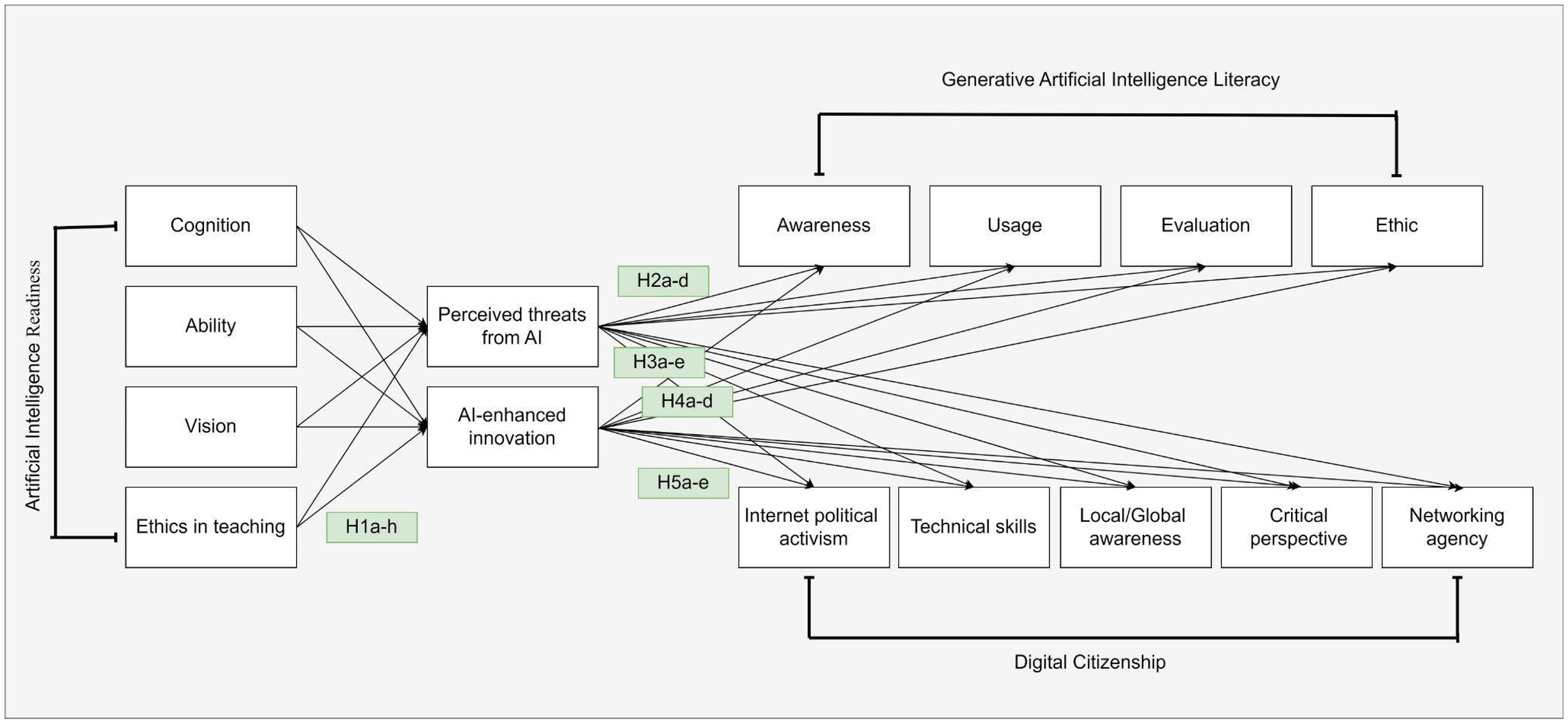
The research model.
Method
Participants
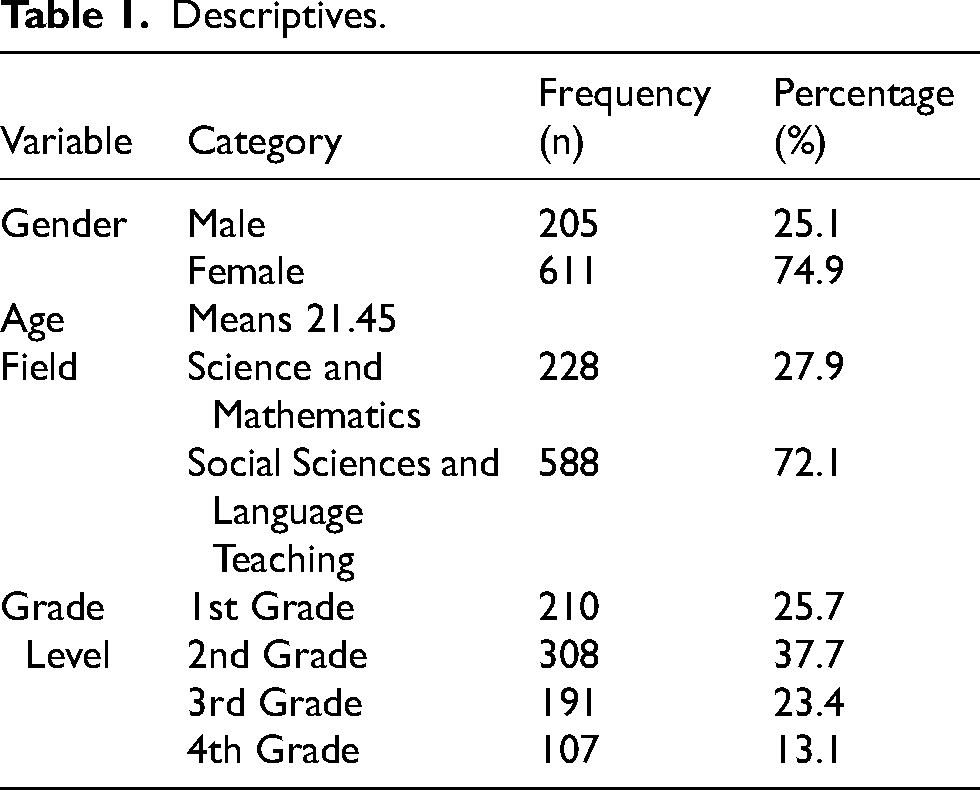
A total of 816 pre-service teachers (205 male students (25.1%) and 611 female students (74.9%) aged between 17 and 24 (means 21.45) participated in the study. The major of 27.9% of the participants was science and mathematics and the major of 72.1% was social sciences and language teaching. 25.7% of the participants were 1st grade, 37.7% were 2nd grade, 23.4% were 3rd grade and 13.1% were 4th grade (See Table 1). Convenience sampling was used to choose the participants. In this method, which accelerates the research, the researcher(s) selects a situation or participants that are close and easy to access (Kılıç, 2013). In this sampling method, the probability of being selected for the sample is uncertain. In the context of the purpose of this study, participants were expected to have a basic knowledge of AI technologies and their applications in education, and this was taken into account in the inclusion of participants in the study. In addition, participants came from a variety of organisational settings and had different levels of access to AI integrated learning environments. Some had previous experience with AI tools in their courses, while others were new to the concept. This distribution is considered to allow for a comprehensive analysis of how pre-service teachers perceive and interact with AI in the context of teaching and learning.
Instruments
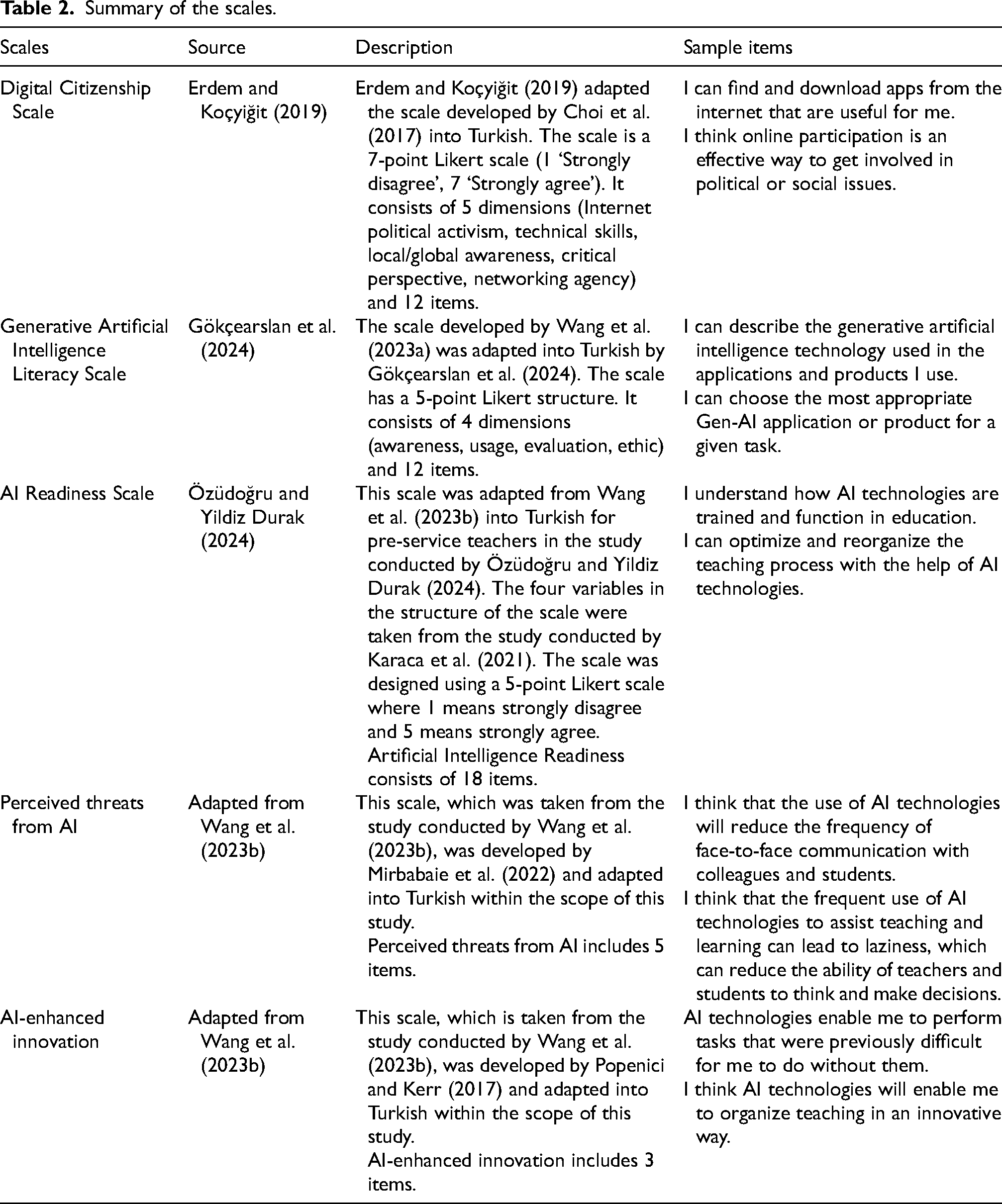
In this study, five scales were used to measure the five constructs. The validity and reliability of two of these five scales have been tested in previous studies, so these two scales were taken from previous studies (see Table 2). Three scales were adapted into Turkish to fit the current study. The analysis of the adaptation process is presented in this section and the design of the scales was validated in Turkish.
Descriptives.
Summary of the scales.
Adaptation of the scales to Turkish
The mean scores of the items for the Perceived threats from AI scale are between 2.80 and 3.42. The standard deviations of the items vary between 1.121 and 1.170. Skewness and kurtosis values calculated for each item are between +1.5 and −1.5. When the normal distribution curve of the items was analyzed, it was concluded that the scores were normally distributed. According to the confirmatory factor analysis results, the fit index values were [χ2 = 92.41, RMSEA = .14, GFI = .96, CFI = .98, NFI = .97, NNFI = 95]. The fit indices examined to reveal the adequacy of the model showed acceptable and excellent fit values. This reveals that the fit level of the one-factor model obtained from CFA is adequate. Factor loadings ranged between .78 and .99 for all items. Based on the results of the t-test, all connections are statistically significant. Factor loadings were above 0.7 for all items. The reliability of this scale was tested regarding internal consistency with Cronbach α coefficient. The Cronbach α internal consistency coefficient of the 5 items of the scale was calculated as 0.899. This value is expected to be higher than 0.70 (Gefen et al., 2000; Hair et al., 1998). In this study, it can be said that the values provide sufficient evidence for the reliability of the scale.
The mean scores of the items for the AI-enhanced innovation scale are between 3.69 and 3.78. The standard deviations of the items vary between 0.895 and 0.933. Skewness and kurtosis values calculated for each item are between +1.5 and −1.5. When the normal distribution curve of the items was analyzed, it was concluded that the scores were normally distributed. According to the confirmatory factor analysis results, the values of the fit index showed acceptable showed acceptable and excellent fit values. This reveals that the fit level of the one-factor model obtained from CFA is adequate. Factor loadings ranged between .71 and .77 for all items. Depending on the results of the t-test, all connections are statistically significant. Factor loadings were above 0.7 for all items. The Cronbach α internal consistency coefficient of 3 items of this scale was calculated as 0.855. The fact that this value is higher than 0.70 can be said to provide sufficient evidence for the reliability of the scale.
Data collection and analysis
During the data collection process, pre-service teachers who have experience in AI applications and their use in education were reached. Data collection tools were presented to the participants online in a single form. The participants voluntarily participated in the study and spent approximately 30 min to fill out the data collection tool.
After data collection, partial least squares structural equation modeling (PLS-SEM) was used to evaluate the relationships between the research variables. PLS-SEM was preferred because of its success in complex models and because it does not require normal distribution assumptions. In addition, Multigroup Analysis (MGA) was applied to model sub-samples by gender. Details of the data analysis are described in section 4.
Findings: PLS-SEM models
In this study, a two-stage analytic procedure was followed in which the measurement model and then the structural model were tested (Hair et al., 1998). Sub-samples were then compared according to gender to examine whether there was a significant difference in terms of path coefficients.
Measurement models
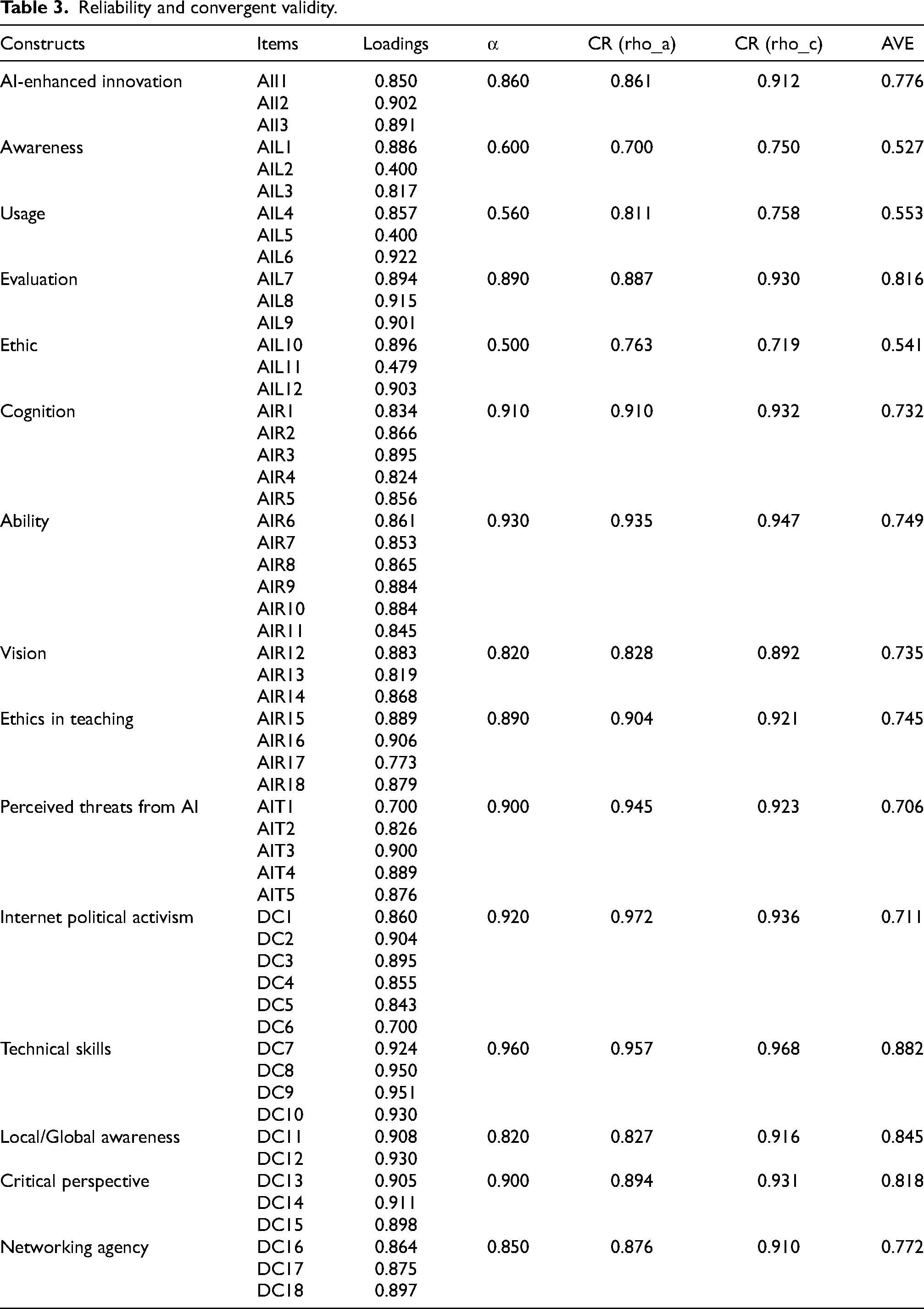
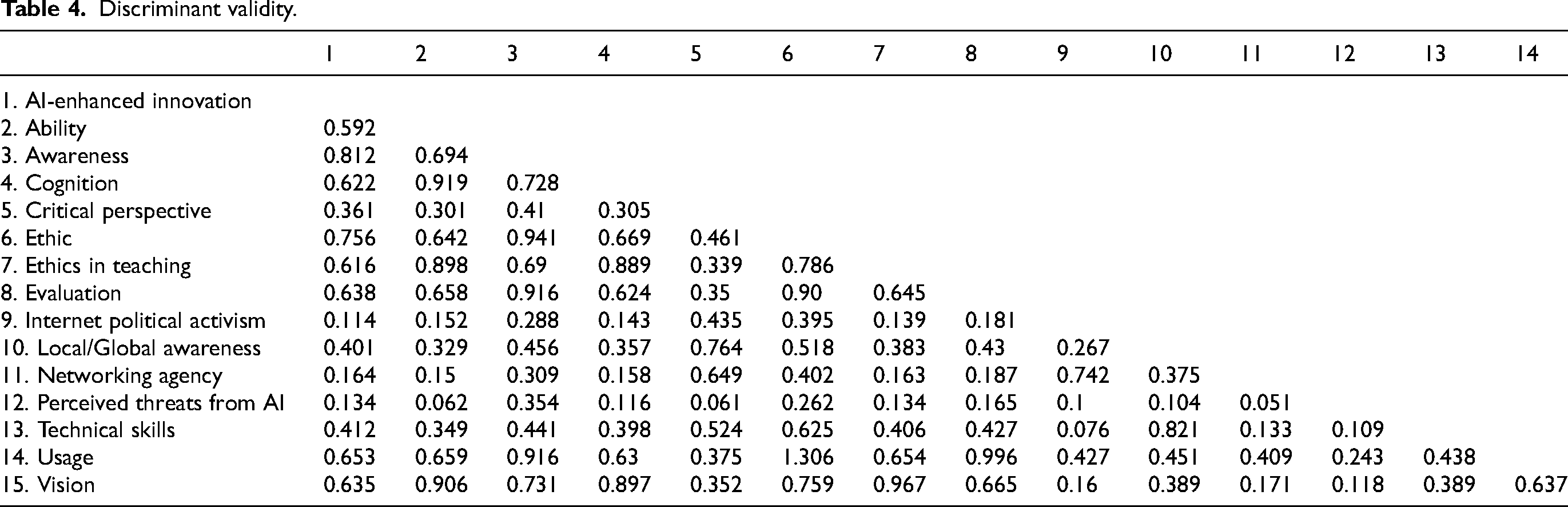
For the measurement models, factor loadings, reliability, convergent validity (see Table 3) and discriminant validity (see Table 4) were examined. The standardized loading of the indicators should be greater than 0.7 (Hair et al., 2019). However, with the exception of AIL2 (0.4), AIL5 (0.4) and AIL11 (0.479), all factor loadings met the requirement, as shown in Table 3. Considering that deleting these items did not increase the robustness of the model, it was decided to keep these three items.
Reliability and convergent validity.
Discriminant validity.
For the internal consistency of the variables, all values for the PLS algorithm results, composite reliability and Cronbach's α should be above 0.70 (Hair et al., 2019), and the values are within this range. This indicates that reliability is ensured.
Discriminant validity of the measurement model was tested using the heterotrait-monotrait ratio (HTMT). HTMT values should not be above 0.90. Values above this threshold indicate problems with discriminant validity. As seen in Table 4, the HTMT ratios were around and below 0.90.
Results of hypotheses testing
The structural models were evaluated by checking the significance levels and explanatory power (i.e., R2) of the path coefficients in the research model. The validation results of the structural models for this research design are presented in Table 5.
Hypotheses testing.
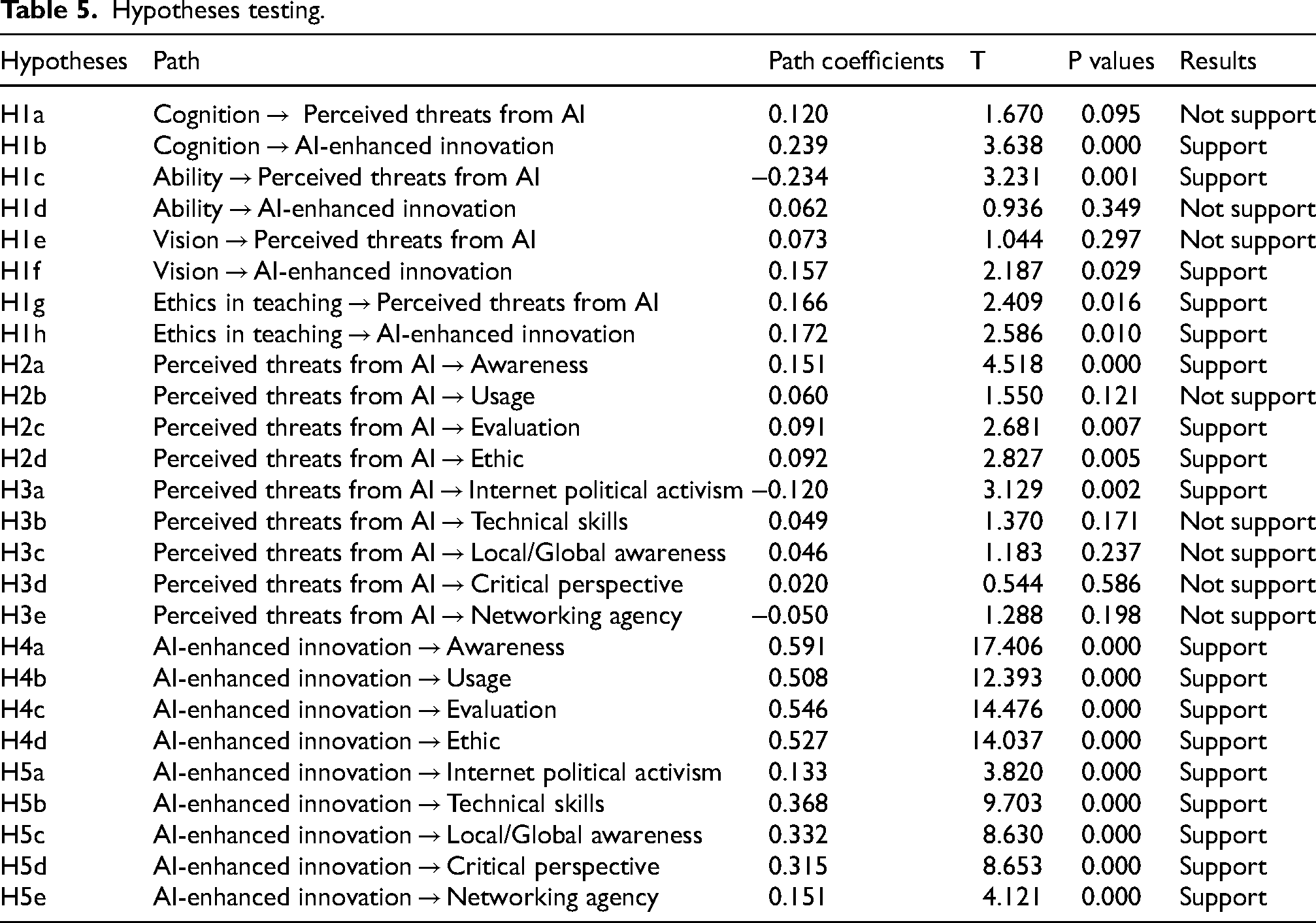
For this study, the number of bootstrapping cases was set to 5000 in order to obtain more precise estimates (Wetzels et al., 2009).SEM results are presented in Table 5. In the structural model, pre-service teachers’ AI-enhanced innovation levels were significantly affected by cognition, vision and ethics in teaching, thus supporting H1b, H1f and H1 h. Pre-service teachers’ levels of perceived threats from AI were significantly affected by ability and ethics in teaching, thus H1c and H1 g are supported.
It was found that pre-service teachers’ perceived threats from AI levels had a significant effect on both AI literacy (except the usage dimension) and Internet political activism dimension of digital citizenship, thus H2a,c,d and H3a are supported. However, Perceived threats from AI were found to have no significant effect on the other dimensions of digital citizenship of pre-service teachers, thus H3b,c,d,e was rejected. AI-enhanced innovation was found to have a significant effect on pre-service teachers’ AI literacy and digital citizenship levels, thus H4 and H5 were supported.
MGA: comparisons between female and male
This study used the bootstrap approach to perform multiple group comparisons. The bootstrap t-test procedure includes first dividing the data into groups and then running bootstrap samples with replacement for each group.
According to the MGA findings presented in Table 6, pre-service female teachers’ AI-enhanced innovation levels were significantly influenced by cognition, while perceived threats from AI levels were significantly influenced by ability, and ethics in teaching, thus hypotheses H1a, H1c and H1 g were supported. The perceived threats from AI levels of female pre-service teachers were found to have a significant effect on both AI literacy (except the usage dimension) and the Internet political activism dimension of digital citizenship, thus H2a,c,d and H3a were supported. However, it was found that perceived threats from AI did not significantly affect other dimensions of digital citizenship of female pre-service teachers, thus H3b,c,d,e was rejected. AI-enhanced innovation was found to have a significant effect on female pre-service teachers’ AI literacy and digital citizenship levels, thus H4 and H5 were supported.
Comparisons between female and male through bootstrapping.
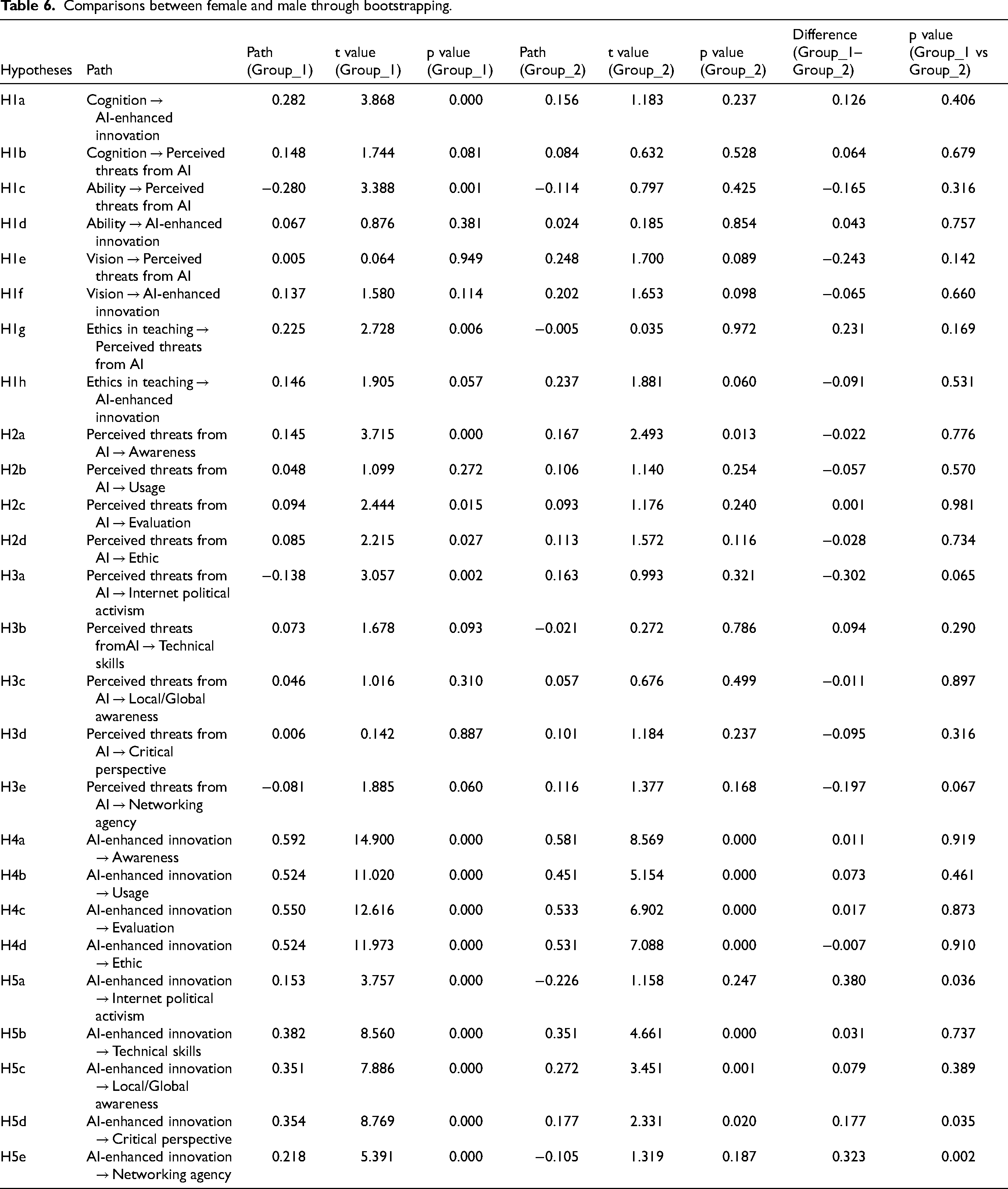
The perceived threats from AI levels of male pre-service teachers were found to have a significant effect on the awareness dimension of AI literacy, thus H2a was supported. However, it was found that perceived threats from AI did not significantly affect male pre-service teachers’ other dimensions of AI literacy and digital citizenship, thus H2b,c,d and H3 were rejected. AI-enhanced innovation was found to have a significant effect on male pre-service teachers’ AI literacy and digital citizenship (except H5a-Internet political activism dimension), thus H4 and H5b,c,d were supported.
As seen in Table 6, there were significant differences between the female and male model regarding the path coefficient of AI-enhanced innovation on Internet political activism, critical perspective and networking agency.
Discussion
The aim of this research is to reveal the relationship between pre-service teachers’ AI readiness and various variables. One of the results of the research is that pre-service teachers’ AI-enhanced innovation levels are significantly affected by the dimensions of AI readiness: cognition, vision and ethics in teaching, but not by ability. It can be said that AI readiness of pre-service teachers’ affects their level of AI-enhanced innovation. Similarly, Wang et al. (2023b) found that teachers with a high level of readiness for AI also had a high tendency to demonstrate AI-enhanced innovation. They did not see a significant difference in AI readiness according to gender. There are also studies that found a significant and positive relationship between technological readiness and innovation (Razavi et al., 2011) and between innovation readiness and innovation performance. Similarly, Yazdani and Rahimian (2024) concluded that ability does not have a positive effect on AI innovation, while ethics has a positive effect. Thus, high AI readiness will enable them to adapt more easily to the innovation that comes with AI. Based on the finding that AI readiness affects AI-supported innovation, it can be suggested that courses on AI-supported teaching tools, course design training, and seminars be added to teacher training programs. Courses on AI applications can be added to the curriculum, and providing support for AI-supported applications projects can be encouraged.
It was found that pre-service teachers’ perceived threats from AI levels were significantly affected by ability and ethics in teaching, which are dimensions of AI readiness. It can be said that AI readiness of pre-service teachers’ affects their perceived threat levels from AI. Similarly, Wang et al. (2023b) found that teachers with a high level of AI readiness tend to perceive threats from AI at a low level. Differently, Yazdani and Rahimian (2024) found no significant effect of ability on perceived threats. It is thought that pre-service teachers’ readiness in a subject will affect their awareness of possible risks related to that subject and thus affect their threat perceptions. Based on the finding that AI readiness affects perceived threats from AI, awareness training can be organized for teacher candidates on the advantages and risks of AI. If a course is added to the curriculum, ethical rules and guidelines can be included in AI applications.
It was found that pre-service teachers’ perceived threats from AI levels had a significant effect on AI literacy (except the usage dimension), while digital citizenship (except the Internet political activism dimension) did not have a significant effect. It can be said that AI literacy affects the perceived threat levels from AI. Research on different topics has found that increasing individuals’ literacy on a topic reduces the perceived threats on that topic (Özkan et al., 2022; Schmuck and Sikorski, 2020). Based on the finding that AI literacy affects perceived threats from AI, courses on AI literacy can be opened or integrated into technology-related courses and workshops can be organized.
AI-enhanced innovation had a significant effect on AI literacy and digital citizenship levels of pre-service teachers. Similarly, Üstün and Engin (2024) found a positive relationship between individuals’ innovativeness levels and their digital citizenship skills. Slavković et al. (2024) found that the effect of digital citizenship on innovation is mediated by digital transformation facilitators. Jiang et al. (2023) found that increasing literacy rate leads to short-term and long-term innovations. AI-enhanced innovation, the impact of AI literacy and digital citizenship on teacher candidates, providing an environment for teacher candidates to carry out AI-supported innovation projects, and organizing training on digital citizenship and AI ethics. The implementation of these suggestions can contribute to the training of conscious and qualified educators in the age of artificial intelligence.
The adaptability of pre-service teachers to rapidly advancing technologies is an important factor in preparing them well for the profession in today's technology-empowered world. It is valuable to reveal the readiness, innovations, literacy, and perceived threats towards technologies whose effects of use in educational environments have been revealed by various studies.
Research findings can guide educational policies and practices. Studies can be conducted to include the dimensions of AI readiness, namely ethics, ability, vision and cognition, in educational programs. Ethics can be included in technology-related courses in teacher training programs, workshops can be organized on AI for vision, project development can be encouraged, practical training can be provided for design for ability, and awareness-raising meetings can be held on the effects of AI use in the classroom on higher-order thinking skills for the cognition dimension. Including AI topics in teacher training programs will not only improve teacher candidates’ technology use skills but also their ethical and pedagogical awareness.
Implications, limitations and future research direction
This research reveals the relationship between pre-service teachers’ AI readiness and various variables. AI-enhanced innovation levels were significantly affected by the dimensions of AI readiness: (1) cognition, (2) vision and (3) ethics in teaching. Perceived threats from AI level was found to be significantly affected by ability and ethics in teaching, which are dimensions of AI readiness. Perceived threats from AI levels were found to have a significant effect on AI literacy (except the usage dimension), while digital citizenship (except the Internet political activism dimension) did not have a significant effect. It was concluded that AI-enhanced innovation had a significant effect on AI literacy and digital citizenship levels. In addition, these relationships were analyzed according to gender.
The results of this research are limited to pre-service teachers. Similar studies can be conducted with different groups to increase generalizability. Future research can also be conducted with teachers and administrators who are stakeholders of educational environments. This research was conducted with quantitative method. Qualitative research can be conducted to obtain more in-depth information on the variables examined related to artificial intelligence. In addition, the variables addressed together with AI readiness in this study are perceived threats from AI, AI-enhanced innovation, AI literacy, and digital citizenship. Research can be conducted with different variables that are thought to be related. This study examined the relationships according to the gender variable. Future research can also address other demographic variables.
Footnotes
Access of data
Our data are not yet available online in any institutional database. However, we will send the whole data package by request. The request should be sent to Professor Hatice YILDIZ DURAK:
Ethical statement
The research was conducted in a school in Turkey and approved by the school administration. Participation was voluntary and anonymous. Informed consent was obtained from all participants.
