




Abstract
Digital governance presents a transformative opportunity for enhancing citizen engagement and improving public service delivery, particularly in South Africa's urban contexts characterized by complex socio-economic challenges. This study analyzes the official city X (formerly Twitter) accounts of Cape Town, Johannesburg, and Tshwane, examining their role in promoting participatory governance. Drawing on 8441 tweets through sentiment analysis, topic modeling, and thematic analysis, the research evaluates engagement trends, content strategies, and city-specific governance priorities. The findings reveal notable disparities in approaches and outcomes across the three cities. Cape Town demonstrates a consistent focus on national challenges, policy communication, and citizen outreach, yet struggles with low engagement levels, potentially due to a lack of dynamic messaging. Johannesburg's approach, centered on utility-specific updates and branding, shows higher engagement but relies heavily on reactive strategies, with negative sentiments driving the most interaction. Tshwane emphasizes technical service delivery, such as escalations and outage management, reflecting a reactive and operational focus. These differences illustrate how varying strategies impact public engagement, providing valuable insights into the alignment, or misalignment, of local digital practices with broader governance objectives. Importantly, these findings offer lessons for the South African government as it seeks to implement the Digital Government Policy Framework (DGPF). By identifying effective practices and their outcomes, the government can develop evidence-based strategies to enhance transparency, inclusivity, and citizen engagement. The study underscores the importance of leveraging diverse municipal experiences to bridge gaps in digital priorities and address the persistent digital divide, contributing to the advancement of participatory governance and urban resilience in the Global South.
Keywords
Introduction
South African cities face many challenges that reflect broader national and global urban issues, demanding innovative governance approaches and solutions. For instance, Cape Town's water crisis from 2015 to 2018, culminating in the “Day Zero” warnings, underscored vulnerabilities to climate change and resource mismanagement (Wolski, 2018). Johannesburg grapples with significant immigration-related pressures, straining urban resources and stoking social tensions (Kihato, 2007), while Tshwane struggles with entrenched corruption that has eroded governance and public trust (Lekubu, 2015). Beyond these city-specific concerns, persistent national issues, such as food insecurity, inadequate public transportation, and rolling power outages due to the ongoing energy crisis, further exacerbate urban governance complexities.
Amidst these compounded challenges, public engagement emerges as a critical tool for building trust, enhancing transparency, and enabling collaborative problem-solving (Lathrop and Ruma, 2010). The rapid expansion of digital technologies has driven their integration into governance systems, reshaping how governments operate and engage with the public. Engvall and Flak (2022) describe digital governance as the incorporation of digital technologies into governance frameworks to pursue structural reforms and achieve normative goals. While cutting-edge technologies like artificial intelligence currently capture significant governmental attention, communication and engagement tools between cities and citizens remain indispensable for addressing governance gaps.
South Africa's National Development Plan (NDP) emphasizes the need to build effective, inclusive, and accountable institutions. Yet, service delivery often falls short of meeting the evolving needs of citizens. Many government services remain misaligned with the principles of Batho Pele – “people first”, neglecting to incorporate citizen input into their design and perpetuating exclusion through various barriers (Ngidi and Dorasamy, 2013). Social media platforms, particularly X (formerly Twitter), have emerged as essential tools for public engagement, breaking down traditional boundaries and enabling citizens to actively participate in governance issues (Gwaka and Smit, 2018). Recognizing this potential, South African cities increasingly leverage these platforms to disseminate information, address public concerns, and foster participatory governance, bridging communication gaps and promoting transparency (Aiseng, 2024; Waxa and Gwaka, 2021).
Despite their increasing prominence, the role and impact of social media platforms in local governance remain underexplored in South Africa, particularly in addressing persistent challenges like inclusivity, responsiveness, and transparency. Key questions persist: How do city governments utilize social media platforms to address urban challenges such as service delivery and citizen engagement? What are the differences in usage patterns across cities with varying socio-economic profiles, and to what extent do these interactions foster two-way communication and responsiveness between governments and citizens (cf. Atad et al., 2023)? Moreover, how do these variations influence South Africa's broader goals of achieving digital transformation and narrowing the digital divide?
Understanding these dynamics is critical for leveraging social media platforms to advance digital governance in ways that are equitable and contextually relevant. As South Africa seeks to align with its Digital Economy Master Plan and other policy frameworks (Republic of South Africa, 2024), analyzing the interplay between social media practices and governance priorities at the city level can provide actionable insights. Such an exploration not only supports the country's digitalization agenda but also highlights how digital tools can contribute to participatory governance and the democratization of urban decision-making processes.
This study investigates the role of Twitter in advancing digital governance in three major South African cities by analyzing the content, frequency, and nature of interactions on their official social media accounts. It aims to uncover patterns of engagement, evaluate the extent of two-way communication, and explore the platform's capacity to enhance transparency and responsiveness. While comparative studies, such as Khan et al.'s (2014) analysis of Twitter use by the central government in Korea and the federal government in the USA, offer valuable frameworks, the South African context demands localized insights into how digital tools can address unique urban challenges. By focusing on Cape Town, Johannesburg, and Tshwane, the study provides localized insights while contributing to broader discussions on digital governance and urban resilience. Given Twitter's historical position as a platform for real-time communication and public discourse, its use by municipal governments offers unique insights into the dynamics of digital governance in urban settings. Platforms like Facebook dominate user numbers but Twitter's public and interactive nature makes it a strategic choice for studying governance. This study underscores the transformative potential of digital tools in addressing urban challenges and fostering meaningful government-citizen interactions.
Background and context
Digital governance and urban challenges in South Africa
South African cities face a myriad of challenges rooted in the nation's socio-economic and historical context. Decades after the end of apartheid, urban areas still grapple with inequities in service delivery, unemployment, and poverty. Access to basic services such as water, electricity, sanitation, and health remains inconsistent, particularly in informal settlements that continue to expand as urbanization accelerates (Vivek, 2024). Additionally, cities struggle with high crime rates, corruption, and inefficient governance structures that hinder the equitable allocation of resources (Chauke, 2017).
These challenges are exacerbated by socio-economic disparities that persist along racial and geographic lines, leaving many residents excluded from both traditional governance processes and digital initiatives (Msenge and Nzewi, 2021). Factors such as limited internet access, low digital literacy, and affordability barriers restrict meaningful citizen participation in urban governance (Kassongo et al., 2018). The digital divide, particularly pronounced between rural and urban areas, underscores the urgency of addressing both infrastructure gaps and systemic inequalities. Initiatives like free public Wi-Fi in Tshwane exemplify efforts to bridge these divides, but their impact requires further analysis to assess their inclusivity and sustainability.
Despite variations in size, resources, and socio-political contexts, South African cities share many of the same fundamental urban challenges. From unreliable service delivery to the persistence of socio-economic inequalities, the difficulties faced by Cape Town, Johannesburg, and Tshwane highlight systemic issues that require collective solutions. While each city tailors its digital governance initiatives to address its unique circumstances, the overarching goal remains aligned with South Africa's national priorities: tackling poverty, reducing inequality, and advancing digital transformation.
Several policies and frameworks have been introduced to address these challenges. The NDP envisions an inclusive economy that reduces inequality and poverty by 2030. Within this framework, digital transformation is identified as a critical enabler of economic and social progress. More specifically, the Digital Government Policy Framework (DGPF) seeks to address policy gaps and enable the coherent integration of advanced digital technologies into governance structures (Republic of South Africa, 2024). In addition, the government seems to be intent on building citizen-centric public service applying the Batho Pele principles, which emphasize transparency, equity, and responsiveness. Yet, despite these frameworks, implementation gaps persist, necessitating innovative approaches to urban governance that prioritize both technology and inclusivity.
While local challenges may differ, the ultimate goal of these digital initiatives is to address national issues through localized interventions. This presents an important opportunity for mutual learning among cities, as each government entity experiments with strategies to integrate digital governance into urban management. By sharing insights, successes, and lessons learned, South African cities can collectively refine their approaches to governance and ensure that digital tools are leveraged to their full potential. Such collaboration could also drive efficiency by reducing duplication of effort and scaling proven solutions across municipalities.
Against this backdrop, digital governance emerges as a potential game-changer for South Africa's cities. By leveraging digital platforms and tools, local governments can overcome some traditional barriers to effective governance. Digital governance reflects the integration of digital technologies into public administration to enhance transparency, efficiency, and citizen trust. Platforms like social media provide mechanisms for real-time communication, feedback collection, and public engagement, complementing traditional methods of citizen interaction (Gagliardi et al., 2017; Linders, 2012).
The DGPF is at the heart of South Africa's digital transformation, driving a digital-first approach across government entities and fostering collaboration to address complex urban challenges (Republic of South Africa, 2024). Cities like Cape Town, Johannesburg, and Tshwane exemplify this shift by using social media platforms such as X to disseminate critical information, engage citizens in policy discussions, and respond to community needs. Haro-de-Rosario et al. (2018) underscore that emerging technologies like big data and social media are revolutionizing governance by reshaping how governments interact with citizens. When aligned with principles like Batho Pele, these technologies can champion transparency, inclusivity, and accountability.
However, poorly executed digital governance risks excluding marginalized populations, such as the elderly or residents in under-resourced areas, who often face barriers to accessing digital services, even in advanced economies (Idzi and Gomes, 2022). To ensure these transformations are equitable and impactful, rigorous evaluations, such as those offered by the United Nations’ Local Online Service Index (LOSI), are essential for measuring digital maturity through accessibility, usability, and mechanisms for citizen feedback (United Nations, 2024). By embedding these evaluative practices, governments can harness digital tools to create a more inclusive, participatory, and responsive governance system.
Digital governance and social media in South African cities
South Africa's major cities play a pivotal role in advancing the nation's digital transformation ambitions. Through comprehensive plans and strategic use of digital technologies, these cities aim to tackle pressing challenges while fostering inclusive and effective governance. This section presents the digital governance aspirations and strategies of Cape Town, Johannesburg, and Tshwane, based on their respective Integrated Development Plans (IDPs): Cape Town's Five-Year IDP July 2022-June 2027, City of Johannesburg IDP 2021–26, and City of Tshwane 2022–2026 IDP.
A comparative analysis of these plans reveals varying emphases on digital technologies. The term “technology” appears 28 times in Cape Town's plan, 60 times in Johannesburg's, and 10 in Tshwane's. The word “digital” is mentioned 19 times in Cape Town's plan, 66 in Johannesburg's, but not at all in Tshwane's. Notably, only Johannesburg explicitly references social media, doing so six times.
City of Cape Town
Cape Town prioritizes collaborative efforts to enhance community safety and service delivery through technology. Its Technology Safety Partnerships project exemplifies this, aiming to develop applications that facilitate communication and information sharing among government entities, private sector partners, and civil society. Initially focusing on neighborhood watches and vetted private security companies, this initiative underscores Cape Town's commitment to using technology for collective impact (City of Cape Town, 2022).
The city also seeks to digitize service delivery processes to improve transparency, operational efficiency, and citizen engagement. Its Public Engagement Project leverages digital consultation tools and staff training to empower residents in decision-making processes. Additionally, Cape Town emphasizes digital and information literacy by modernizing libraries and collaborating with provincial initiatives to promote functional literacy and a reading culture, fostering greater digital inclusion (City of Cape Town, 2022).
City of Johannesburg
Johannesburg's vision for 2040 centers on its “smart citizen, smart service, smart digital economy” framework. The Smart Citizen Pillar encourages active citizen participation, positioning residents as the city's “eyes and ears” to identify problems and co-create solutions. Social media and virtual community-based planning processes play a critical role in realizing this vision (City of Johannesburg, 2021).
To address digital disparities, Johannesburg integrates traditional outreach methods alongside digital platforms to ensure inclusivity for individuals with limited internet access, low digital literacy, or language barriers. Its library programs, including e-learning platforms, digital training, and social media activities, further promote digital literacy and align with the city's goal of fostering a digitally literate population equipped for a smart economy (City of Johannesburg, 2021).
City of Tshwane
Tshwane's digital governance initiatives reflect its focus on modernization and connectivity. The city has implemented online systems for planning applications, virtual customer engagement platforms, and a digitally tracked supply chain management system. The e-Tshwane platform allows residents to manage utility accounts and apply for prepaid meters online, enhancing administrative efficiency and customer experience (City of Tshwane, 2022).
To promote digital inclusion, Tshwane has expanded free Wi-Fi sites across the city. Its IDP and Budget consultation processes use a blend of virtual meetings, in-person gatherings, and traditional media to engage diverse stakeholders. Transparency is a key governance principle, with accessible planning documents and performance information fostering public confidence and oversight (City of Tshwane, 2022).
Tshwane's IDP highlights the importance of multi-channel community engagement, utilizing social media, municipal websites, and local newspapers to address the diverse needs of its population while leveraging digital tools for more inclusive governance. Together, these cities illustrate the diverse ways South Africa's urban centers are adopting digital technologies to enhance governance, service delivery, and citizen engagement (City of Tshwane, 2022).
Social media and urban governance in South Africa
Governments worldwide have recognized the importance of establishing a strong online presence, initially through traditional websites and increasingly through social media platforms (Butt et al., 2019; Manoharan et al., 2023). This shift underscores the growing potential of social media to enhance governance, particularly in urban settings within the Global South. In South Africa, both national and local governments, including municipalities, have adopted social media platforms to communicate with residents and engage with communities (Vivier et al., 2015). While South Africa has not yet fully realized the concept of a smart city, urban centers like Tshwane, Johannesburg, and Cape Town have actively explored the use of digital technologies to improve governance and foster public engagement. Social media plays a pivotal role in this strategy, facilitating more effective communication with citizens, especially those who prefer digital interaction over traditional face-to-face methods or are unsure of which government agencies to contact (Waxa and Gwaka, 2021).
Significant socio-economic disparities in South Africa continue to shape citizens’ access to and engagement with social media platforms. Factors such as income, social status, urban-rural divides, race, age, literacy, and education significantly influence the extent to which individuals can participate in online governance (Kaisara and Pather, 2011). The concept of Black Twitter, a networked cultural identity that originated in the United States, underscores how race can shape the use and role of social media. Black Twitter demonstrates how African American users leverage the platform to articulate shared experiences, advocate for social justice, and construct a distinct digital identity (Sharma, 2013). Similarly, in South Africa, race and socio-economic factors shape the ways in which individuals and communities use social media, reflecting broader societal inequalities (Mpofu, 2019). These disparities temper the potential of social media to foster inclusive engagement, as the persistent digital divide continues to limit equitable access and benefits.
Research into social media's role in South African urban governance has expanded significantly in recent years. Earlier studies speculated on its potential as a “reliable platform for originality, accuracy, and objectivity in reporting and communicating citizens’ concerns about governance and service delivery,” particularly in contexts where mainstream media faced state interference (Sebola et al., 2014). Today, social media is increasingly recognized as a tool for fostering citizen participation, empowering individuals, and expanding democratic practices in traditionally marginalized spaces (Idzi and Gomes, 2022). By enhancing communication, transparency, and trust between governments and citizens, these platforms play an important role towards strengthening democratic processes.
Governments are increasingly leveraging social media to enhance transparency and foster citizen engagement (Engstrand, 2024). In South Africa, there are several examples of social media use in governance. During Cape Town's water crisis, social media platforms were vital for real-time updates, public engagement, and community coordination. Research by Pettersson (2018) and Waxa and Gwaka (2021) highlights how these platforms facilitated interactions between citizens and government, enabling the City of Cape Town to share urgent updates and receive public feedback. Similarly, the City of Tshwane has effectively used social media to address service delivery challenges and promote urban planning initiatives (Molobela, 2023; Terrance, 2023). Initiatives like free Wi-Fi provision in certain areas expand digital access, enabling broader participation in urban governance (Mathane and Gumbo, 2024).
Despite these successes, comparative studies on the use of social media in governance across South African cities remain limited. Further research is needed to evaluate the types of content provided by local governments and their relevance for fostering civic engagement, content accessibility in terms of language, simplicity, and clarity, as well as citizen engagement with the content. Addressing these gaps is essential for ensuring that social media becomes an inclusive and equitable tool for engaging citizens and enhancing democratic governance. As digital governance strategies evolve, leveraging social media to promote equity, transparency, and responsiveness remains a critical priority (DePaula, 2023).
Methodology
This study adopts a comparative approach to explore how Cape Town, Johannesburg, and Tshwane city administrations use their official X accounts for citizen engagement. While the use of social media for government-municipal-citizen engagement is not new (cf. Lerouge et al., 2023; Zappettini and Rezazadah, 2024), this research adopts a comparative approach with a focus on South African cities, an area relatively underexplored. At the time of data collection, X's relatively accessible API facilitated the acquisition of public data, making it an appealing platform for social media research (Lerouge et al., 2023). Other platforms, such as Facebook and Instagram, impose more restrictive data access policies, particularly around scraping and non-public data. X remains a prominent medium for official communication, with city and government accounts often more active on X than on other platforms. However, recent changes to X's API terms and conditions have introduced challenges for researchers attempting to access data.
The data collection process involved using R to scrape tweets from the official Twitter accounts of three cities – i.e., ‘CityofCT’ (Cape Town), ‘CityOfJoburgZA’ (Johannesburg), and ‘CityTshwane’ (Tshwane). The get_timeline function from the rtweet package was used to collect the maximum allowable number of tweets per account (3200 tweets, as limited by the Twitter platform). For example, tweets from CityofCT were collected using the following command: tweets_ct < - get_timeline(“CityofCT”, n = 3200, include_rts = FALSE, parse = TRUE). The resulting dataset contained 8653 tweets, spanning from October 2022 to January 2023. After removing 212 duplicate or incomplete tweets, the final dataset comprised 8441 tweets. Authentication for data collection was managed using Twitter API credentials. However, it is important to note that changes to Twitter's terms and conditions have since affected tweet collection, potentially impacting the reproducibility of this approach in future studies.
The analytical approach included descriptive statistics on tweet distribution over time and interaction metrics (likes and retweets), sentiment analysis to classify tweets as positive, negative, neutral, or other and Latent Dirichlet Allocation (LDA) topic modeling to identify thematic structures within tweets. Before analysis, tweets were preprocessed which involved eliminating punctuation, numbers, and stopwords, converting all text to lowercase, and excluding terms that occurred fewer than five times. The cleaned data was then transformed into a Document-Term Matrix (DTM) for subsequent analysis.
LDA topic modeling was employed to uncover thematic structures in the tweets. The number of topics was determined through optimization metrics: Griffiths2004 for model performance, Arun2010 for topic coherence, CaoJuan2009 for topic similarity, and Deveaud2014 for balancing coherence and distinctiveness. Based on these metrics, five topics were identified as optimal for analysis (the model tested up to 15 topics). Topics were generated for the entire dataset and then for each city. Topics were compared for overlap and divergence, and unique terms were analyzed to capture city-specific communication patterns using the Hellinger distance matrix. The Hellinger distance matrix was used to measure similarity between each pair of topics in the LDA model. Nicolas et al. (2021) indicate that “the Hellinger distance returns a dimensionless output in the range [0,1], with lower values referring to higher similarities.” LDA uses probability distributions over words making the Hellinger distance applicable.
The study also examined the mentioning of national challenges, policy issues, and key stakeholders in the dataset. A predefined list of 106 national challenges, 77 policy items, and 94 stakeholders provided a framework for analyzing tweet content. The analysis explored the extent to which data from each city mentioned national challenges, policy issues, and stakeholders. Further, the study also identified examples of tweets which correspond to the three dimensions.
In terms of ethics, local government pages are fully public, and the research is considered documentary, thus the data is exempted from informed consent (Engstrand, 2024).
Several limitations temper the study's findings. Twitter users in South Africa are not representative of the general population, with platforms like Facebook and WhatsApp being more widely used, potentially excluding significant demographic groups. Data collection was limited to a specific timeframe which may have excluded critical tweets from significant periods. The study analyzed only public tweets, omitting private or direct messages that could provide additional insights. Subjective decisions in text preprocessing, such as stop word removal and threshold settings, could influence the outcomes. Finally, the assumption that LDA topics are uniform across cities may not account for differences in language and conversational patterns.
Findings and analysis
Summary of tweets
South African cities actively use social media platforms to engage with the citizens. The City of Cape Town, City of Tshwane, and City of Johannesburg all operate verified X accounts. The City of Cape Town has the longest presence, launching its account in April 2010 and currently boasting 446,000 followers. The City of Tshwane followed in May 2010, with a current follower count of 797,000. The City of Johannesburg opened its account later, in March 2012, and now has 1.2 million followers. Between October 2022 and January 2023, these three cities collectively posted over 8600 tweets. For this study, 8441 tweets were selected, with their distribution, shown in Table 1, as follows: City of Cape Town (3155 tweets), City of Tshwane (2954 tweets), and City of Johannesburg (2332 tweets).
Distribution of tweets by city and language.a
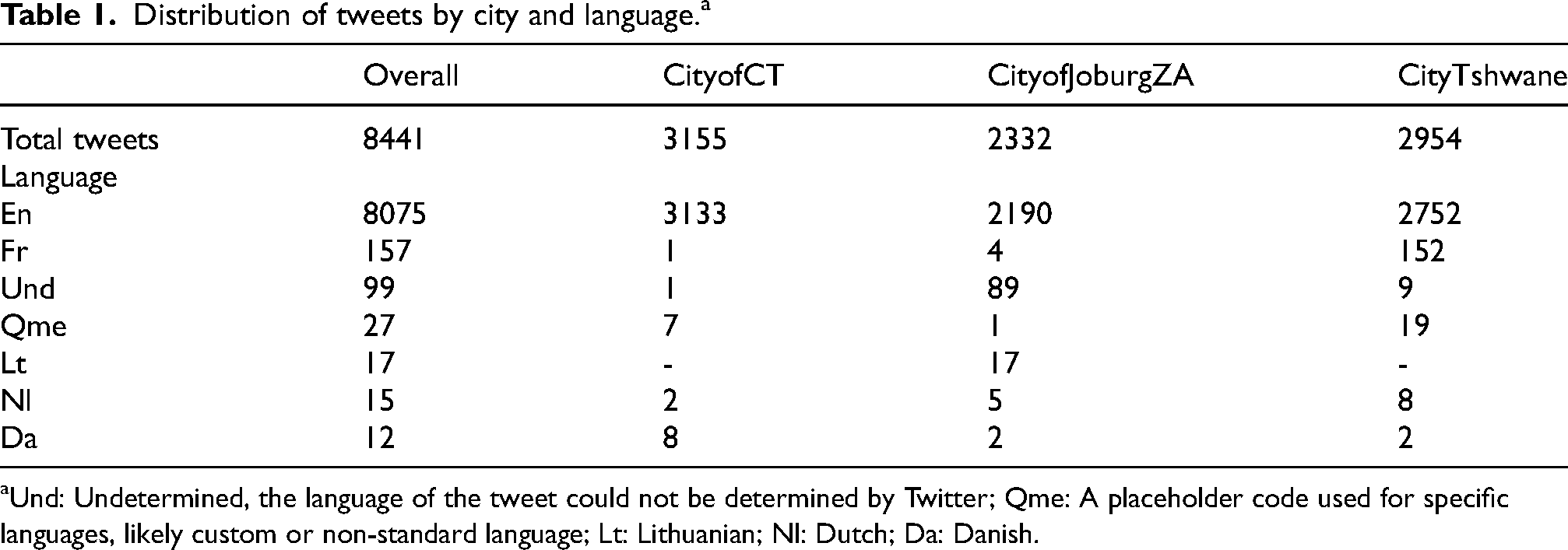
Und: Undetermined, the language of the tweet could not be determined by Twitter; Qme: A placeholder code used for specific languages, likely custom or non-standard language; Lt: Lithuanian; Nl: Dutch; Da: Danish.
Table 1 provides an overview of the distribution of tweets by city and language, revealing a strong predominance of English in the communication strategies of all three cities. Of the 8441 tweets analyzed, 8075 (95.7%) were in English, with minimal representation of other languages. The next most frequent languages, French (157 tweets) and unidentified language (Und; 99 tweets), account for only a small fraction of the total, with the remaining languages such as Qme, Lt, Nl, and Da being almost negligible.
This linguistic trend stands in stark contrast to South Africa's multilingual reality, as highlighted by the South Africa Gateway that South Africa recognizes 12 official languages, and most of its population is fluent in at least two, with isiZulu and isiXhosa being the most widely spoken languages. Notably, English is spoken at home by fewer than one in ten South Africans, and these speakers are predominantly non-Black. This disparity points to a significant underrepresentation of local languages in the cities’ communication strategies on X.
Distribution of tweets by date per city
The study also explored the distribution of tweets by date per city to establish similarities and differences in the use of social media for public engagement. The distribution of tweets over the study period reveals significant temporal and city-specific variations, reflecting potential differences in communication strategies and engagement priorities among the three cities. As illustrated in Figure 1, the City of Johannesburg exhibits the most pronounced variability in tweet activity, with sharp peaks in late November and mid-December, often exceeding 100 tweets per day. These spikes likely correspond to heightened online engagement periods triggered by significant events, announcements, or crises. For example, Johannesburg's elevated activity in late November could align with loadshedding announcements, political developments, or service delivery updates. This pattern highlights the city's reactive communication style, where online engagement is driven by external stimuli rather than a steady, proactive strategy.
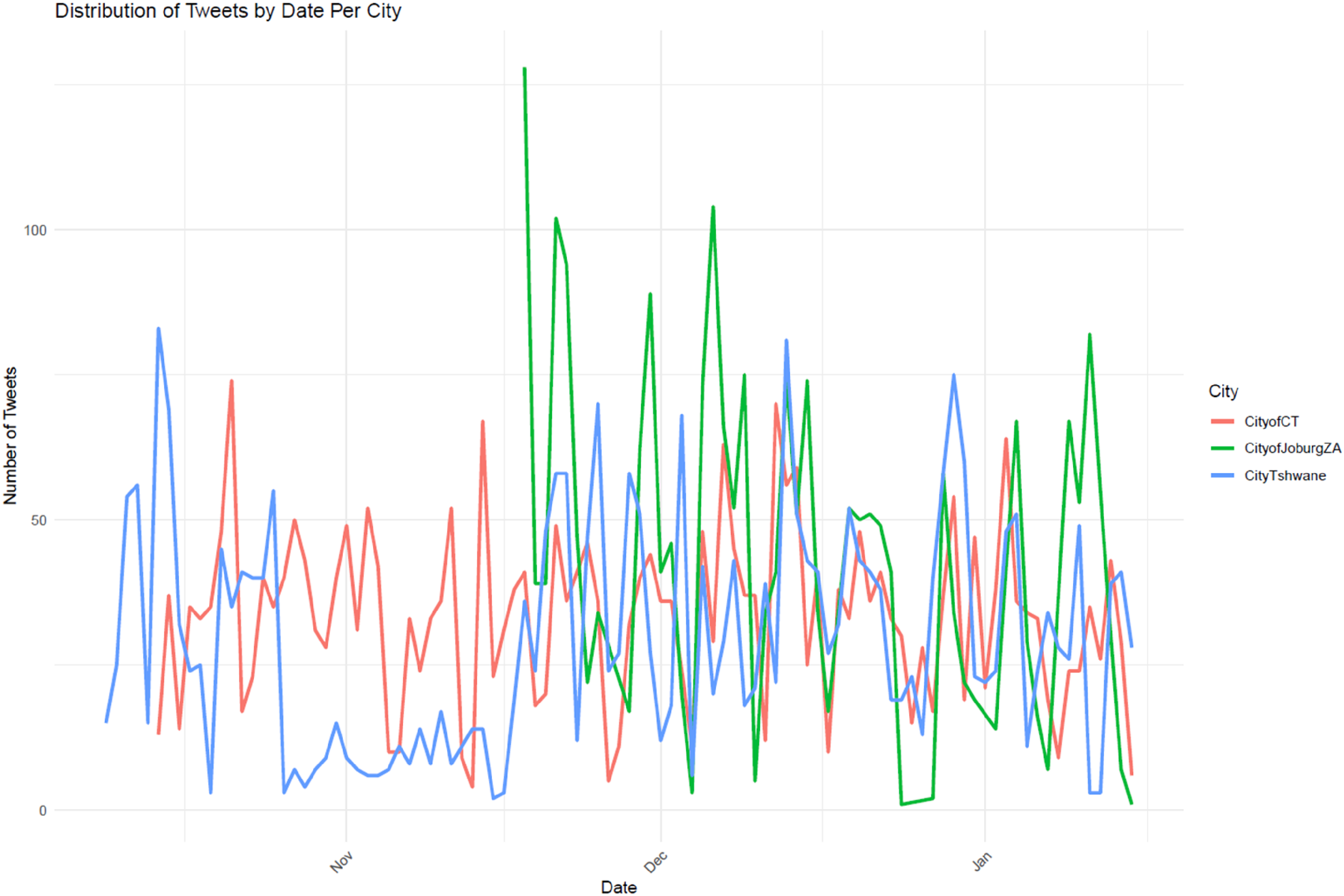
Distribution of tweets by date per city.
In contrast, the City of Tshwane demonstrates a moderately dynamic engagement pattern, characterized by sporadic peaks that suggest event-driven engagement. However, these peaks are less pronounced compared to Johannesburg, indicating either fewer high-impact events or a less aggressive social media strategy during the study period. The absence of sustained high tweet volumes may also point to resource constraints or a strategic focus on targeted communication rather than continuous outreach.
On the other hand, the City of Cape Town displays a consistent and steady flow of tweets, with minimal fluctuations in daily activity. This suggests a deliberate, routine-driven communication approach, possibly aimed at maintaining a stable presence rather than reacting to external events. While this consistency can be seen as indicative of effective planning, it may also reflect a lack of flexibility to adapt to sudden changes or crises. This observation raises questions about the city's ability to leverage social media for responsive governance, especially in comparison to the more dynamic engagement observed in Johannesburg.
These observed patterns underscore key differences in engagement strategies, resource allocation, and responsiveness to citizen needs across the three cities. Johannesburg's reactive peaks suggest a well-resourced social media strategy geared toward addressing high-impact events, whereas Tshwane's more sporadic activity indicates either fewer impactful occurrences or possible constraints in communication resources. Cape Town's steady, consistent approach highlights a commitment to routine communication but raises concerns about adaptability to sudden events or crises.
Engagement patterns
Citizen engagement on social media, measured through favorite (likes) and retweet counts, reflect the effectiveness of city-level communication strategies and the public's responsiveness to their messaging. Figure 2 demonstrates significant differences in engagement patterns across the three cities, underscoring how each city's communication dynamics influence public interaction. The study findings show that the City of Tshwane consistently achieves the highest levels of engagement, with peak favorite and retweet counts observed through mid-December. This sustained engagement suggests that Tshwane's communication strategy resonates strongly with its audience, possibly due to timely messaging or relevant content during critical events.
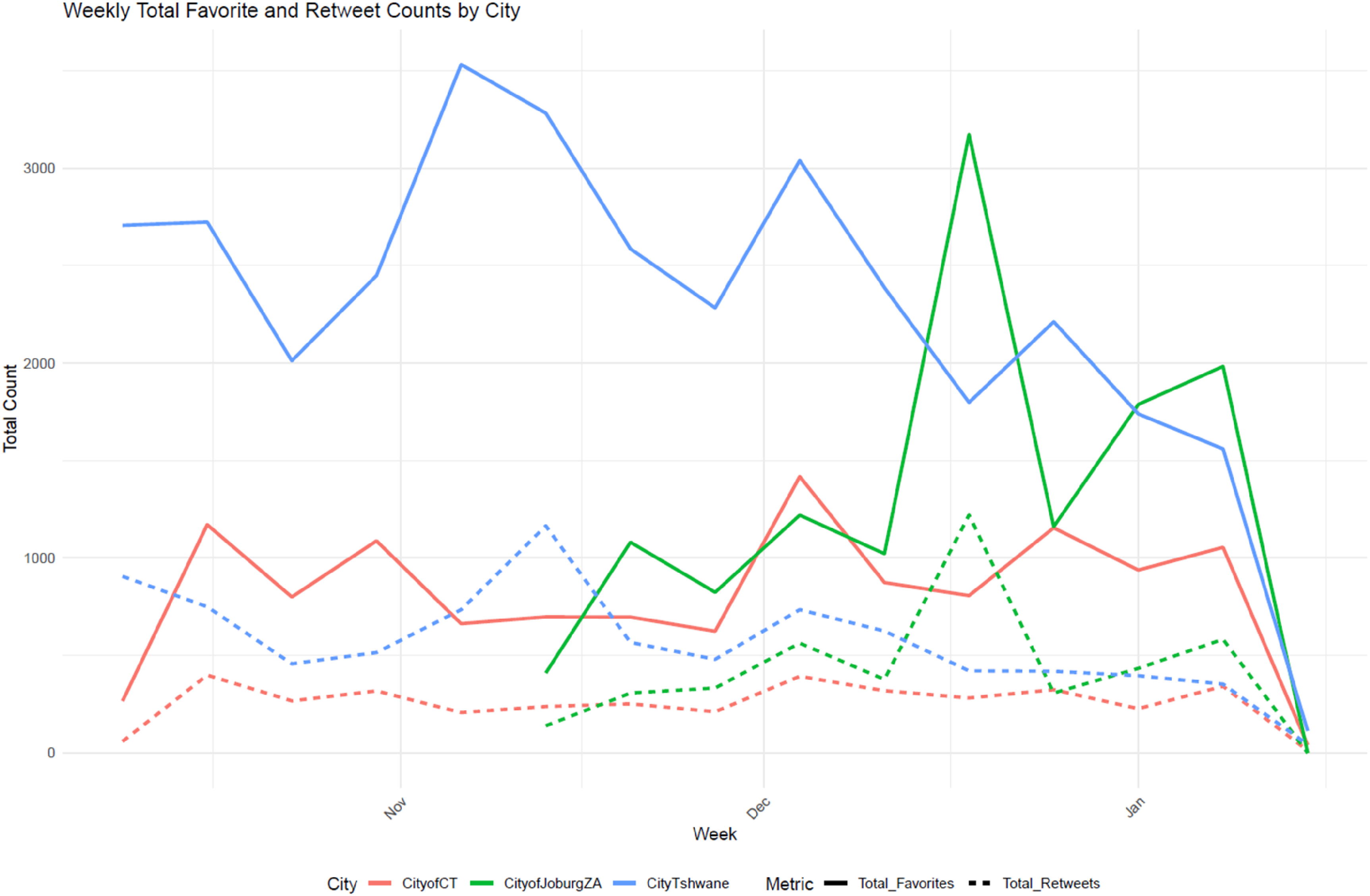
Weekly distribution of tweet favorite and retweet counts by city.
The City of Johannesburg's social media engagement demonstrates a reactive approach, with a significant spike in late December followed by a sharp decline in January. This pattern suggests reliance on high-impact events or campaigns to drive interaction, rather than sustained, strategic engagement. The late-December peak likely corresponds to a major event or campaign, highlighting the city's capacity to leverage moments of heightened public attention. However, the subsequent decline raises critical concerns about the inability to maintain momentum, pointing to gaps in long-term planning and consistency in outreach efforts.
Conversely, the City of Cape Town exhibits consistently low engagement levels with minimal variability throughout the study period. While this stability might suggest a methodical communication approach, the persistently flat trends imply a lack of resonance with the public. This could be attributed to uninspiring content, insufficient effort to stimulate interaction, or an underutilization of social media as a dynamic engagement platform. The absence of impactful messaging reduces the city's capacity to foster meaningful connections with its residents.
These patterns of engagement are particularly salient in light of the South African government's stated goals in the DGPF to “enhance transparency and accountability by utilizing digital tools and technologies to improve transparency in government operations and facilitate citizen engagement and participation in decision-making processes” (Republic of South Africa, 2024: 13). The findings from this study underscore the disparity between these aspirations and current municipal practices. Johannesburg's reactive strategy and Cape Town's flat trends highlight the need for a more nuanced understanding of how digital platforms can be strategically utilized to align with citizen expectations. By addressing the observed gaps, cities can develop tailored, proactive communication strategies to build stronger, more sustained engagement with their constituents.
Sentiment analysis
Sentiment analysis provides valuable insights into the tone and emotional context of the tweets. Tweets can be classified as positive, negative, or neutral and some of the tweets can be unclassified. Examining whether tweets with positive, negative, or neutral sentiments are associated with higher or lower levels of engagement (measured through favorites and retweets), sheds light on how the nature of the content influences public response and engagement. Analysis results are presented in Table 2.
Sentiment analysis of tweets, average favorite and retweet counts.
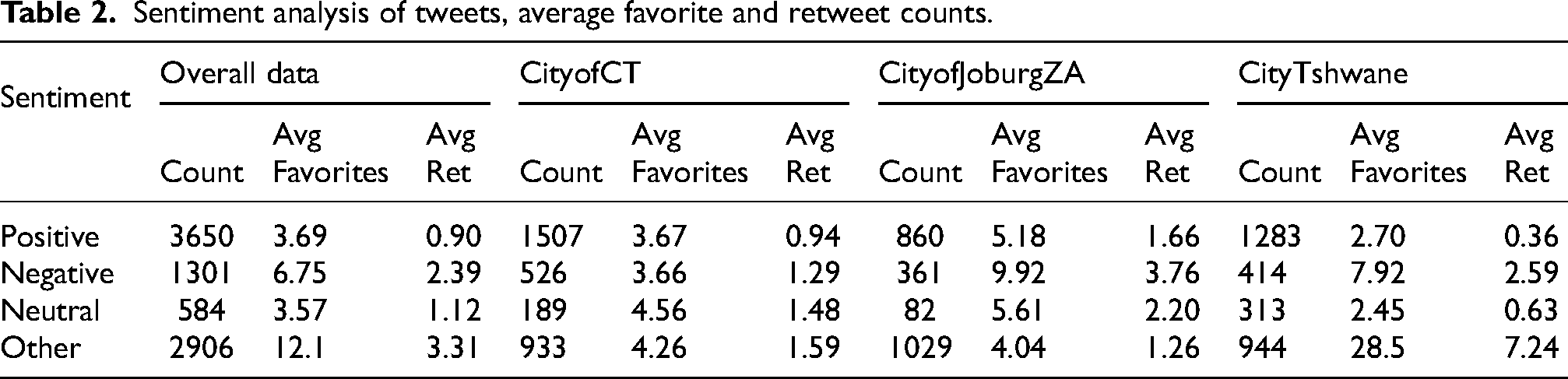
In the overall dataset, tweets with a positive tone had the highest count (3650) followed by those without a specific tone “other” (2906). Despite this, tweets with no identified sentiment (“other”) achieved the highest average of 12.1 favorites and 3.31 average retweet compared to positive sentiment average favorite (3.69) and average retweet (0.90). Tweets with a “negative” sentiment had 1301 occurrences and received an average of 6.75 favorites. “Neutral” tweets garnered 3.57 favorites on average, with 584 tweets.
The study also explored sentiment and engagements patterns per city. The results in Table 2 reveal distinct patterns of engagement across different sentiments across the three cities. In the City of Cape Town, engagement is relatively consistent across sentiments. Negative sentiment had the lowest average favorites (3.66) but relatively comparable retweets (1.29). In contrast, the City of Johannesburg shows that negative sentiment leads in engagement, with an average of 9.92 favorites and 3.76 retweets, significantly outperforming other sentiments. In the City of Tshwane, the “other” sentiment leads with exceptionally high engagement, recording an average of 28.5 favorites and 7.24 retweets, vastly outperforming other sentiments. Meanwhile, neutral and positive display much lower engagement levels.
These findings emphasize the need for tailored communication strategies that align sentiment-driven engagement patterns with broader governance objectives. Johannesburg could leverage its audience's responsiveness to negative sentiment by framing critical issues within a problem-solving or action-oriented narrative. Cape Town may need to experiment with more emotionally resonant messaging to energize its audience, while Tshwane could analyze the drivers behind the “other” sentiment's success to replicate this impact across other types of content.
Topic modeling, distribution, and trends
In addition to analyzing the distribution of tweets and sentiment, the study employed topic modeling to identify themes within the dataset. The keywords for the five identified topics are summarized in Table 3. In terms of the Hellinger distance, topic 3 vs. topic 5 returned a 0.9021 score indicating that the topics are highly dissimilar from each other in terms of their term distribution. Topics 4 vs. 5 scored 0.7428 meaning that they are relatively similar to each other in terms of term distribution.
Identified topics and associated keywords from the complete dataset.
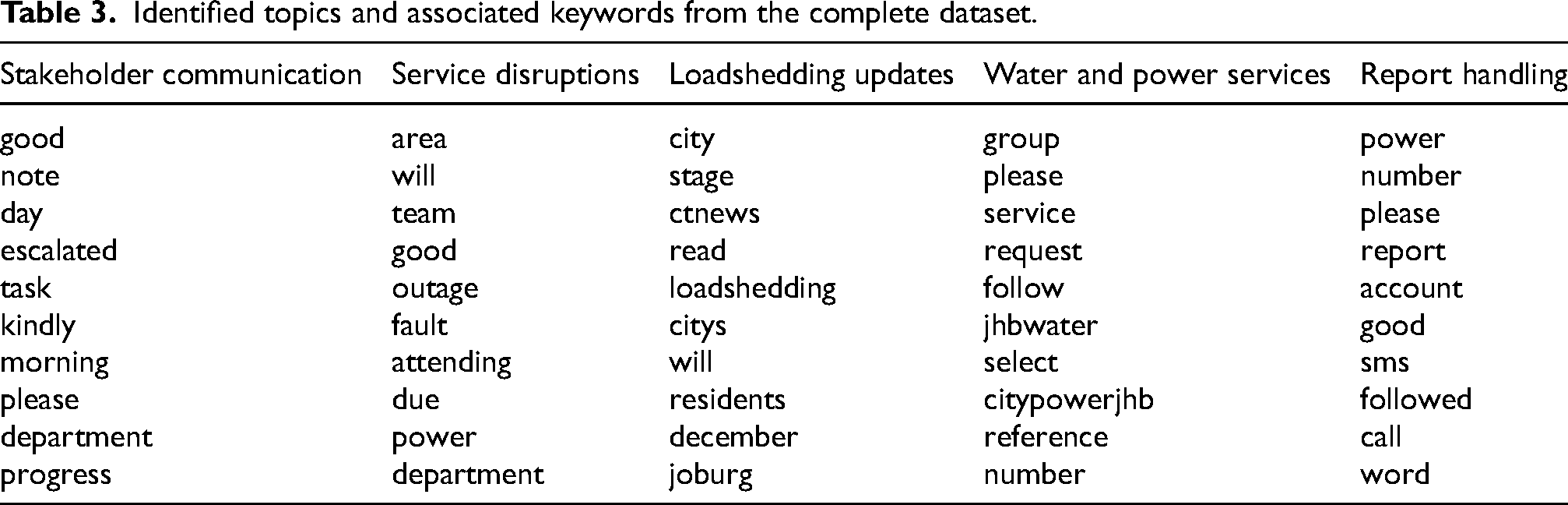
While the LDA algorithm generated keywords for each topic, assigning meaningful topic headings required qualitative interpretation. For example, keywords such as “good,” “note,” “day,” “escalated,” “kindly,” “morning,” “please,” “department,” and “progress” indicate language commonly used in customer and stakeholder interactions. Thus, the topic was labeled as stakeholder communication. Terms like “group,” “please,” “request,” “select,” “citypowerjhb,” “jhbwater,” and “reference” point to issues related to water and power services in Johannesburg, resulting in the topic being labeled water and power services.
Topics were derived from the complete dataset by extracting keywords from individual documents, which, in this study, are individual tweets. LDA generates a topic-document distribution, which is a probabilistic representation of how strongly each document is associated with each topic. Table 4 shows the most representative documents (document index, probability, and document text) for the five topics identified in the study. The document text shows content (tweets) most strongly associated with each topic. However, a qualitative assessment shows that the most representative document (tweet) selected for each topic may not align perfectly with the topic due to various influencing factors, such as the brevity of tweets, overlapping themes across topics, the presence of ambiguous or general language, and variations in the context or tone of the tweets.
Representative document, document index, and topic probability.
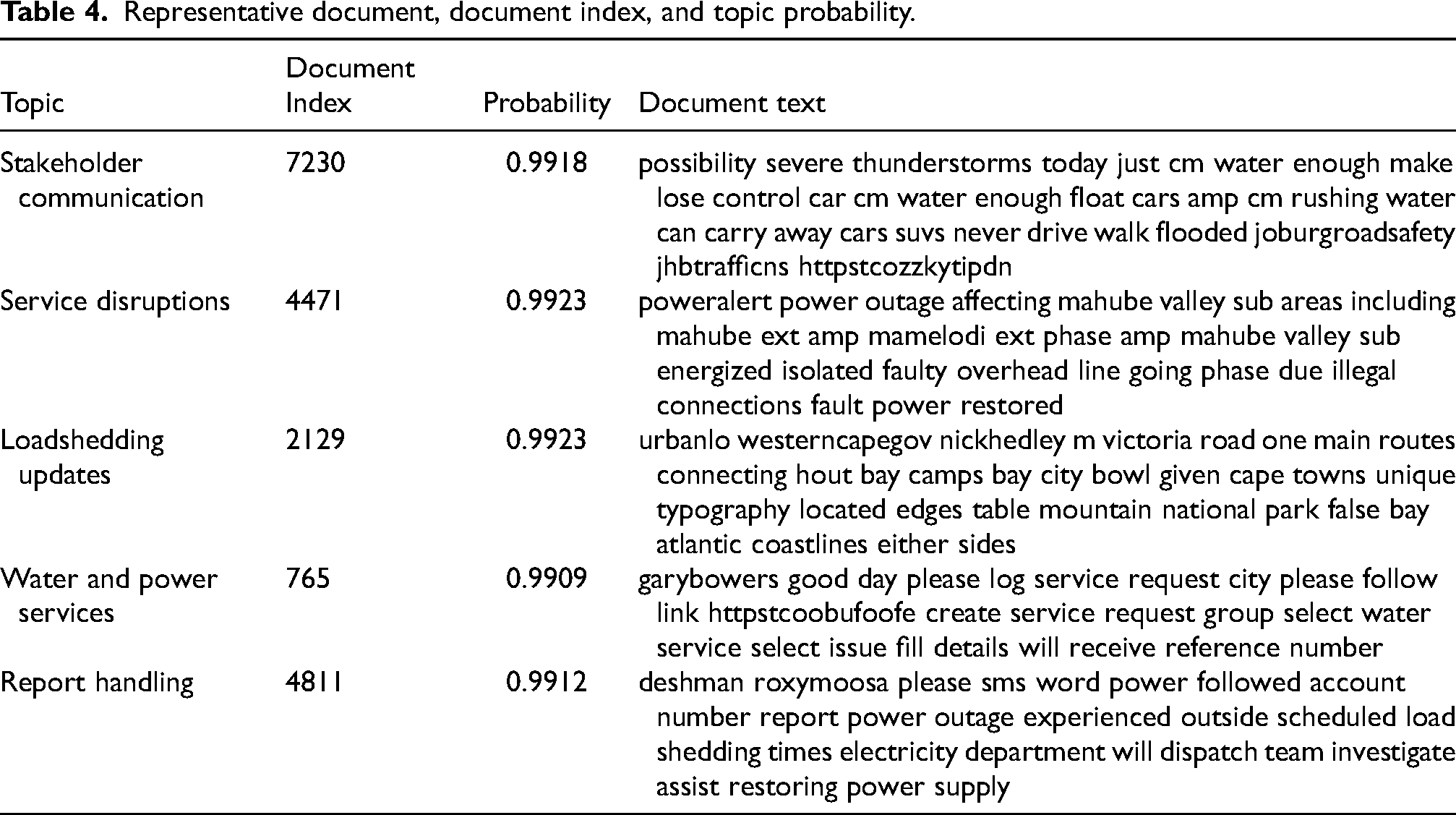
The topic modeling results underscore the critical role of social media as a tool for addressing the multifaceted challenges faced by urban South Africa, particularly in the context of municipal governance and service delivery. The five identified topics, stakeholder communication, service disruptions, loadshedding updates, water and power services, and report handling, highlight the platform's function in enabling timely communication, issue resolution, and citizen engagement. For instance, the stakeholder communication topic reflects the structured and professional tone used to interact with citizens, emphasizing the importance of maintaining rapport and transparency. Similarly, the focus on service disruptions and water and power services reveals the persistent struggles with utility provision in urban centers like Johannesburg, which frequently confronts challenges such as outages, illegal connections, and maintenance delays.
Additional analysis in the study also examined the alignment of each city's topics and unique terms vs. the entire dataset. The results indicate that Cape Town's topics align with general themes, such as loadshedding and urban infrastructure issues. This demonstrates its use of social media to address broad challenges while maintaining consistency with national discourse. Tshwane's inclusion of unique terms, alongside a strong overlap with utility-focused themes, suggests an attempt to balance localized responsiveness with general service delivery concerns. In contrast, Johannesburg's narrower focus on city-specific entities like City Power and Joburg Water illustrates how social media is employed to address hyper-localized concerns, showcasing its potential for targeted engagement in complex urban ecosystems.
These findings illustrate how social media platforms are leveraged to respond to crises, communicate strategies, and engage citizens effectively. The results align with South Africa's urban challenges, including energy insecurity, resource management, and infrastructure strain, indicating that cities use social media not merely for information dissemination but as a critical tool for navigating governance complexities. However, the brevity and ambiguity of tweets occasionally lead to overlapping themes, highlighting the need for clarity in communication strategies to maximize their effectiveness. The insights affirm social media's evolving role in fostering participatory governance and addressing urban challenges in real time.
Cities, national challenges, policies, and stakeholders
In addition to topic modeling, the study explored how national challenges, policies, and stakeholder issues are reflected in the tweets. To achieve this, comprehensive lists of national challenges (106 items), policy issues (77 items), and stakeholders (94 items) were developed through a literature review. Tweets were then analyzed to assess the extent to which they align with the identified topics, offering an approximation of their relevance to key issues. The results are in Table 5.
Distribution of tweets on national challenges, policy issues, and stakeholder identification.

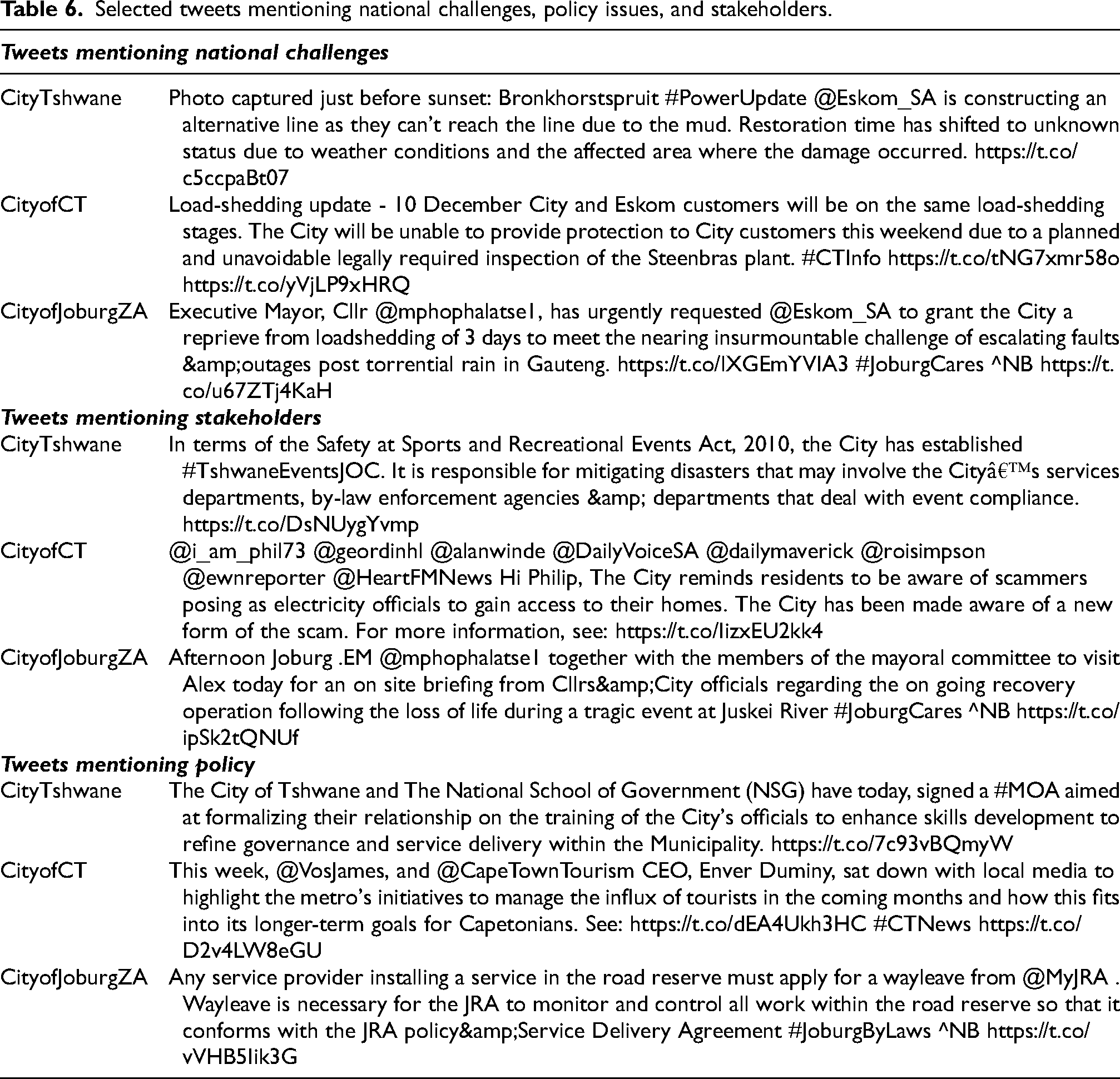
An analysis of tweets in relation to national challenges, policies, and stakeholder engagement reveals significant variations in how South African cities utilize social media to address urban governance issues. Cape Town emerges as the city most attuned to national challenges, with 10.21% of its tweets addressing pressing issues like loadshedding, public safety, and service delivery. This focus reflects the city's strategic use of Twitter to align with broader national narratives while keeping residents informed about critical developments. For example, tweets such as the load-shedding update on the Steenbras plant illustrate Cape Town's proactive communication on energy security, a key challenge in South Africa.
Johannesburg, in contrast, leads in stakeholder mentions, with 4.55% of tweets engaging directly with entities such as utility providers and governance bodies. This highlights Johannesburg's emphasis on fostering collaborative solutions and addressing hyper-localized issues, as seen in tweets involving appeals to Eskom for reprieves from loadshedding or updates on recovery efforts after disasters. By frequently referencing stakeholders, Johannesburg positions itself as a connector between citizens and service providers, emphasizing accountability and responsiveness.
Tshwane, while engaging less with national challenges and stakeholders, demonstrates its focus on policy initiatives, albeit to a limited degree. Tweets highlighting partnerships for skills development and governance refinement reflect the city's intent to frame itself as forward-looking in addressing systemic challenges. However, Tshwane's relatively low engagement across all categories suggests a missed opportunity to leverage social media for broader citizen interaction and issue management.
Sample tweets representing the national challenges, policy issues, and stakeholders in each city are presented in Table 6.
Selected tweets mentioning national challenges, policy issues, and stakeholders.
Overall, these findings highlight that social media serves as a dynamic platform for urban governance, enabling cities to address national challenges, communicate policies, and engage with stakeholders. The differences across the cities underline the role of localized priorities and governance styles in shaping their digital communication strategies. By aligning with key issues and stakeholders, these cities demonstrate the potential of social media to enhance transparency, foster partnerships, and address urban challenges in real time.
Discussion and conclusions
This study examined the use of official Twitter accounts by three major cities in South Africa, focusing on how city governments leverage the X platform to address urban challenges, the variations in usage patterns across cities, and the impact of these variations on city-citizen engagement. The findings underscore the importance of understanding social media dynamics at the city level to support South Africa's broader digitalization goals (Republic of South Africa, 2024). By identifying patterns, opportunities, and challenges in city-level digital governance, the country can use these insights to build a stronger, data-driven case for advancing digital transformation at the national level.
The analysis revealed that the three citys in the study, Cape Town, Johannesburg, and Tshwane, established their presence on X over a decade ago, reflecting a commitment to digital governance. Despite their established online presence and substantial follower bases, the extent of engagement remains limited when compared to the cities’ total populations, which exceed four million each. This disparity potentially highlights the persistent digital divide and the challenges of engaging citizens online. IDPs all the three cities explicitly recognize the need to bridge this divide and improve digital literacy through public libraries as a mechanism to improve and enable citizen digital participation. This echoes Kassongo et al.'s (2018) suggestions that addressing Internet access is key to achieve citizen digital participation in South Africa.
In examining city-citizen engagement, distinct patterns emerged. Cape Town demonstrated a consistent and structured approach, using its Twitter account to focus on service delivery and public communication. This steadiness reflects a governance model that prioritizes continuity and integration over reactive engagement. In contrast, Johannesburg exhibited highly variable engagement, with spikes in activity during major events or announcements. This episodic strategy suggests a reactive approach that may effectively address immediate concerns but lacks the sustainability needed to foster long-term trust and transparency. Tshwane's engagement was characterized by its focus on service escalation and resolution. The differences suggest that throughout South Africa, different government entities are pursuing different digitalization goals.
Sentiment analysis further illuminated differences in communication strategies. Tweets with neutral or no discernible sentiment tended to generate higher engagement, suggesting that citizens prioritize actionable and informative content over emotionally charged messages. However, tweets with negative sentiment also garnered significant engagement, consistent with findings in the literature about human negativity bias. This finding aligns with suggestions that negative information induce a greater of processing and in turn engagement (Soroka, 2014). This pattern underscores the need for cities to carefully balance transparency with constructive messaging, ensuring that their communication strategies are both effective and supportive of public trust.
Additionally, variations in how cities aligned their social media communications with national challenges, policy issues, and stakeholder engagement were apparent. Cape Town's Twitter activity reflected a higher degree of alignment with national issues, engaging citizens on topics of systemic importance. Johannesburg's tweets often highlighted specific stakeholders, such as utility companies, indicating a focus on infrastructure and service delivery. Tshwane, however, showed the lowest level of policy-related engagement, suggesting a gap in broader governance discourse and an opportunity to foster more active participation in policy discussions.
These findings have significant implications for South Africa's DGPF and broader digital governance strategies. The observed disparities in municipal social media engagement underscore the need for clear national guidelines that balance standardization with the flexibility required to address local contexts. The South African government, particularly the Department of Communications and Digital Technologies, can leverage these insights to refine municipal digital engagement policies, ensuring alignment with national digital transformation goals. Additionally, strengthening intergovernmental collaboration through platforms like the South African Local Government Association (SALGA) can facilitate knowledge-sharing and capacity building among municipalities, helping to bridge gaps in institutional readiness and technical expertise. Addressing the digital divide remains a priority, requiring investments in affordable Internet access, digital skills training, and multilingual, accessible content to ensure inclusive participation. Moreover, engagement patterns suggest that cities should contextualize their social media strategies within broader societal and temporal dynamics, adapting their communication efforts to sustain public interest throughout the year. By embedding these insights into policymaking, South Africa can foster a more participatory, transparent, and resilient digital governance ecosystem, leveraging social media as a powerful tool for citizen engagement and public service delivery.
Although this study primarily focuses on South African cities, its findings are comparable to studies on digital governance in global cities. For instance, the study employs similar methodologies to those used by Nicolas et al. (2021), who analyzed the impact of top-down communication on smart city performance in cities like Boston (USA), Helsinki (Finland), Seoul (South Korea), and Taipei (Taiwan). Moreover, the insights gained from this study are also relevant to other African cities that are increasingly utilizing social media platforms for citizen engagement, such as those in Kenya (Muthomi and Thurmaier, 2024). The findings have broader applicability across the globe, including in countries like India (Verma et al., 2017), where social media plays a central role in urban governance and citizen interaction.
While this study provides valuable insights into city-level digital governance, further research is needed to explore the longitudinal impacts of social media engagement on trust in municipal governments, the role of multimedia content in driving engagement, and comparative analyses with other cities in the Global South. Integrating qualitative approaches, such as interviews with municipal officials and focus groups with citizens, could provide deeper insights into the motivations and barriers to digital engagement, enriching the understanding of the interplay between traditional governance and digital innovations.
In conclusion, this research highlights the transformative potential of social media in urban governance. The disparities observed among South African cities underscore both the opportunities and challenges of digital governance. By addressing structural inequities, enhancing strategic communication, and fostering inclusive participation, cities can leverage social media to build more resilient, transparent, and participatory governance systems. These lessons, drawn from city-level practices, offer valuable insights into informing national policies and advancing South Africa's digital transformation agenda.
Footnotes
Declaration of conflicting interests
The author(s) declared no potential conflicts of interest with respect to the research, authorship, and/or publication of this article.
Funding
The author(s) received no financial support for the research, authorship, and/or publication of this article.
