



Abstract
Conventional records management systems are mostly used to support court operations and service delivery in Tanzania despite the substantial development of ICTs. The objectives of this study were to: examine types of e-records managed, explore staff perceptions of the usefulness of e-records management, and analyse factors limiting electronic records management in selected courts. A survey design comprising qualitative and quantitative research approaches was employed to meet these objectives. Standardised questionnaires, followed by semi-structured interviews and observation were used to collect data. The findings of the study suggest that e-records management is still in its infancy stage in the courts studied, since the majority of records are still managed using manual systems. The findings further inform that even though the adoption of e-records is ineffective, staff positively perceive the approach. According to the study, ineffectiveness of e-records management is a result of inadequate qualified staff and training on e-records management, shortage of technical staff to support the use of e-records management systems, inadequate funds, ineffective e-records management legal frameworks, and poor implementation strategies. As such, the study recommends diversification of funding sources, capacity building through training and retraining, formulation of e-records management policies and standards, and motivation of court staff.
Introduction
Substantial advancements in Information and Communication Technology (ICT) have altered the way records are created, used, stored, and deposited (Meru and Kinoti, 2022; Newa and Mwantimwa, 2019). Specifically, increasing use of ICTs, especially the Internet, in government operations around the world, driven by public sector reforms, has accelerated the generation of electronic records. Like paper records, electronic records now support day-to-day operations of governments and ensure their interactions with citizens, and private and public sector partners (Issa and Wamukoya, 2018; Wamukoya and Mutula, 2005; International Records Management Trust [IRMT], 2004). Like other institutions, courts around the world have used electronic systems to manage their records. In fact, ICTs are playing a critical role in reshaping and modernising conventional justice systems (Ahmed et al., 2020). As a result, various progressive changes have been experienced in the sphere of judiciary procedures (Borisova, Soldatkina and Kalmazova, 2020). For instance, e-records management has gained prominence in the judiciary sphere because it is considered systematic, efficient, and organised while others think it guarantees the presence of high quality records that facilitate unbiased court decisions (Mosweu and Mosweu, 2018). E-records management is also known to eliminate transportation costs for court and their workers (Baldwin, Eassey and Brooke, 2020). Besides, the use of e-records in court has been found to enhance service quality, public trust, and confidence in decision-making (Guffin, 2020). On the whole, effective and efficient management of e-records improves court operations, performance, accountability, and transparency (Issa and Wamukoya, 2018; Wamukoya and Mutula, 2005).
Recognising the significance of e-records in the enhancement of access to justice, the judiciary of Tanzania has strived to improve the management of judicial records through introducing ICT usage and more particularly, the Electronic Records Management System (ERMS). Actually, efforts to integrate ICTs in the judicial system appear to date back to the year 2000 when the High Court of Tanzania (HCT) ruled electronic evidence as admissible in Tanzanian courts. The Legislature followed on this decision by enacting the Electronic Evidence Amendment Act 2007 (section 40A), which brought a provision for the reception of electronic evidence in Tanzania's courts of law (Tanzania Legal News, 2008). Accordingly, the Commercial Division of the nation's judiciary system integrated ICTs in its administration of commercial justice in 2007. From there, the court used a computer aided digital recording and transcription system to record, transcribe and manage evidence of proceedings (Kahyoza, 2011). These same efforts were seen in the Court of Appeal of Tanzania (CAT) in 2013 when the court started to implement the electronic system to record proceedings in courtrooms. One year later, the CAT started using ICTs to register cases, enter all case details, and scan old files so as to store them electronically while at the same staff training took place (Mwalusanya, 2005). This demonstrates a comprehensive use of ICTs and ERMS in courts.
While the aforementioned efforts made by the Tanzania judiciary to improve records management are commendable, inadequate adoption of e-records management is documented. The courts still appear to rely on a conventional (i.e. manual) records management system; hence difficulties in accessing records, controlling access to records, and ensuring availability of vital records storage facilities. It is also revealed that there are frequent reports of unnecessary delays, loss of data, and failure to guarantee satisfactory access to required information (see Issa and Wamukoya, 2018; IRMT, 2011). Despite the presence of this evidence, prior studies that have documented the utilisation of e-records in Tanzania courts are very few (e.g. Issa and Wamukoya, 2018). The study by Issa and Wamukoya mainly examined the role of e-records management in promoting the delivery of justice in Tanzania. Studies that have explored the extent of e-records management and staff's perceptions of such practices are not retrievable. As a consequence, it is not clearly understood why the judiciary system still utilises conventional records management systems despite installing new technologies and training staff to use them to manage electronic records. As such, this study sought to examine the extent of e-records management in Tanzania courts. To achieve this, the study aimed to: examine types of e-records managed, explore how staff perceive the usefulness of electronic records management, and analyse factors limiting electronic records management in selected courts. Along these, the present study proposed a model for e-document and records management systems (EDRMS) adoption and application in delivering services to the public. The study was conducted so as to provide current information and contribute to the existing body of knowledge on e-records management in the judiciary. The information generated could inform and influence policy-makers, planners, and other stakeholders on the proper management of e-records created. Doing so could enable them to formulate and implement appropriate policies that would not only ensure the effective management of e-records but also foster effective delivery of the services.
Literature review
Types of e-records
Different types of records are created in courts. Prior studies (e.g. Pratiwi, Steven and Permatasari, 2020; Issa and Wamukoya, 2018; Ghada and Ariffin, 2019) have indicated that records such as case status reports, court conference records, orders, appellate court memoranda, minutes, notices, trial, proceedings, returns, and drawn orders are managed in different e-records management systems. Apart from these, employee performance appraisal and leave records, and letters of promotion, demotion, deployment, and transfer are managed in different e-records systems. In their examination of the application of e-court in the justice administration in Indonesia, Pratiwi et al. (2020) identified diverse e-records managed by the court systems. E-court systems supported various activities such as e-filling, payment, claim management, e-courtroom, and e-cases. These, in turn, have been found to enhance e-records record management, including case down-payment records, notices, proceedings, trial documents, and summons. On a different note, a study by Omehia and Lulu-Pokubo (2020), which explored judicial records management and administrative effectiveness in Nigeria, revealed different formats of records. Specifically, the study revealed records that were kept included land appeals, injunctions, audio-visual records (e.g. audiotape, CD-ROM, video readings of trial proceedings, and witness testimony), transcripts of hearings, and e-mails. In all, the literature suggests that records of different formats such as documents, audio, audio-visual, and pictures are managed through different e-records management systems.
Usefulness of e-records
Courts’ management of e-records presents them with various advantages with respect to improving their efficiency (enhanced court services quality, and better case management) or ability to provide better justice services to citizens (Ahmed et al., 2020). E-records access fosters the delivery of justice in the court, promotes fast retrieval of court records, ensures fast and informed decisions, and reduces unnecessary delays (Issa and Wamukoya, 2018). The records minimise deficiencies in the judicial process, they can be accessed from various locations and using different media, and they allow faster data retrieval (Pratiwi et al., 2020). These records are vital sources of information for the judicial system. They are mainly used by legal researchers, legal practitioners, and policymakers for decision-making. The creation, management, and preservation of e-records reduce delays, improve the economy, enhance efficiency and effectiveness, and promote confidence in the justice system (Mosweu and Mosweu, 2018). In addition, e-records management allows multiple concurrent access to the same. The records are also e-evidence for audits, criminal investigations, civil litigation, and employee disputes (Parrish and Dr Courtney, 2007; Volonino, 2003).
A study by Chinyemba (2011) reveals that records that are maintained in a properly established records management system are an instrument for establishing transparency and accountability. On a similar note, Saman and Haider (2012) assert that records management is the key success factor in the judicial system. To them, a systematic, efficient and organised e-records management system provides comprehensive information for courts to guarantee unbiased decisions. Adding to this, a transparent information system and good records management indirectly hinder misuse of power, corruption, case postponement, and delayed decisions. Besides, proper records management improves the image of the judiciary system and upholds the rights of individuals and society at large. For example, a reliable and accurate case file system is fundamental to the effectiveness of day-to-day court operations and the fairness of judicial decisions. How case records are maintained directly affects the timeliness and integrity of case processing. Evidently, the computerisation of court activities enhances court services to a certain degree but, in real sense, it hardly advances chances of achieving the basic objective of providing speedy, qualitative, and cost-effective justice; and reducing harassment and corruption or enhancing transparency and accountability.
Besides, other extant studies (e.g. Sichalwe, 2010; Maseh, 2015) consider records as fundamental, valuable assets that are vital to every aspect of governance, including justice services. In specific, records management enhances access to evidence and information. On this, studies (e.g. IRMT, 1999; Makwae, 2021) opine that effective court operations and justice systems mainly depend on efficient and effective records management in the public sector. In other words, there can be no rule of law or accountable and transparent justice system without sound records management because records management improves the administration of justice, which in turn fosters protection of citizens’ rights. In fact, both current and noncurrent records are used by different legal agencies to make legal decisions on a daily basis (Motsaatheba and Mnjama, 2007; Maseh, 2015). Generally, records management systems help to ensure economical, efficient, and effective access to current information acquired for timely and informed decision-making (Newa and Mwantimwa, 2019; Albada & Bower, 1989). Along these, the effective management of e-records increase transparency, access to information and reduce costs (Hamid et al., 2019), foster business continuity, preservation of corporate memory, ensure authenticity, integrity, reliability and accessibility (Giba-Fosu, 2020). In all, a good records management system enables the preservation of records for legal, financial, fiscal, administrative, operational, historical, and cultural purposes.
Factors undermining e-records management
Dwelling on extant literature, there are various factors that contribute to poor e-records management. Among these is the inevitable challenge faced when organisations integrate ICTs in their daily activities. In this case, the challenge in question is the expenditure of funds to acquire infrastructure and retrain workers (Borisova et al., 2020; Issa and Wamukoya, 2018; Wamukoya and Mutula, 2005). Regarding infrastructure, preceding studies (e.g. Netshakhuma, 2021, 2019; Ngulube (2007) suggest that infrastructures and human resources are major challenges for organisation looking to employ ERMS because they are usually insufficient, especially in developing regions. Studies (e.g. Mosweu and Kenosi, 2018; Mnjama and Wamukoya, 2004; Makwae, 2021) also outline other challenges faced most East and Southern African countries, which include the absence of organisational plans for managing records, limited awareness of the role of records management in organisational efficiency and accountability, lack of stewardship and coordination in handling records. other factors (OF) include poor security and confidentiality controls and absence of records migration strategies (Issa and Wamukoya, 2018; IRMT, 2004). In study of judicial records management and administrative effectiveness in Nigeria, Omehia and Lulu-Pokubo (2020) revealed lack of staff commitment and poor electricity supply as the main challenges confronting the management of judicial records.
Besides, prior literature has cited a number of factors that undermine effective management of e-records. For example, the absence of legislations, policies, lack of integrity, weak institutional capacity, the lack of effective personnel records management programme, and procedures to guide records management has been cited by many scholars (see Makwae, 2021; Asongwa, 2012; Maroye et al., 2017; Hamid et al., 2019; Mokhtar and Yusof, 2009; Kussainova et al., 2020; Borisova et al., 2020; Issa and Wamukoya, 2018). Judging from these scholars’ work, absence of e-records management regulatory frameworks (RF) such as policies is appears to be a global problem. For instance, in an investigation of e-records management across organisations in Belgium, Maroye et al. (2017) noted the absence of well-established records management policies. This is also documented by Mokhtar and Yusof (2009) in their study that examined e-records management in Malaysia. Their study exposed that “not all government departments possess e-records management policy far from complete, clear and easy to implement. The number of organisations carrying out e-records management without any policy in place was alarming”. According to Makwae (2021), lack of a policy signifies a lack of accountability and awareness of the personnel records management standards. This in turn contributes to poor performance in public organisations and institutions.
Furthermore, other reasons that hold e-record management back include the absence of core competences, resistance to change, absence of dedicated budgets (Ahmed et al., 2020; Maroye et al., 2017; Mosweu and Kenosi, 2018; Makwae, 2021), inadequate storage facilities, limited staffing, lack of capacity, and limited sensitisation programmes (Issa and Wamukoya, 2018). For example, a study by Maroye et al. (2017) exposed that budgets dedicated to e-records systems implementation in public organisations were continuously decreasing. In addition to this, the author revealed strong resistance to change as another reason behind poor e-records management. In particular, studies (Mosweu and Kenosi, 2018; Keakopa, 2007) have identified factors such as inadequate bandwidth, infrastructure, standards and guidelines, computer illiteracy, low level of education, high cost of technology, lack of awareness to undermine effective management of e-records in Botswana's judicial system. Noting from a study by Pratiwi et al. (2020), low mastery of IT by legal professional and advocate accompanies slow the uptake of e-court systems in Indonesia. As a consequence, the majority of courts are still manually operated and paper-based records reliant.
Theoretical framework
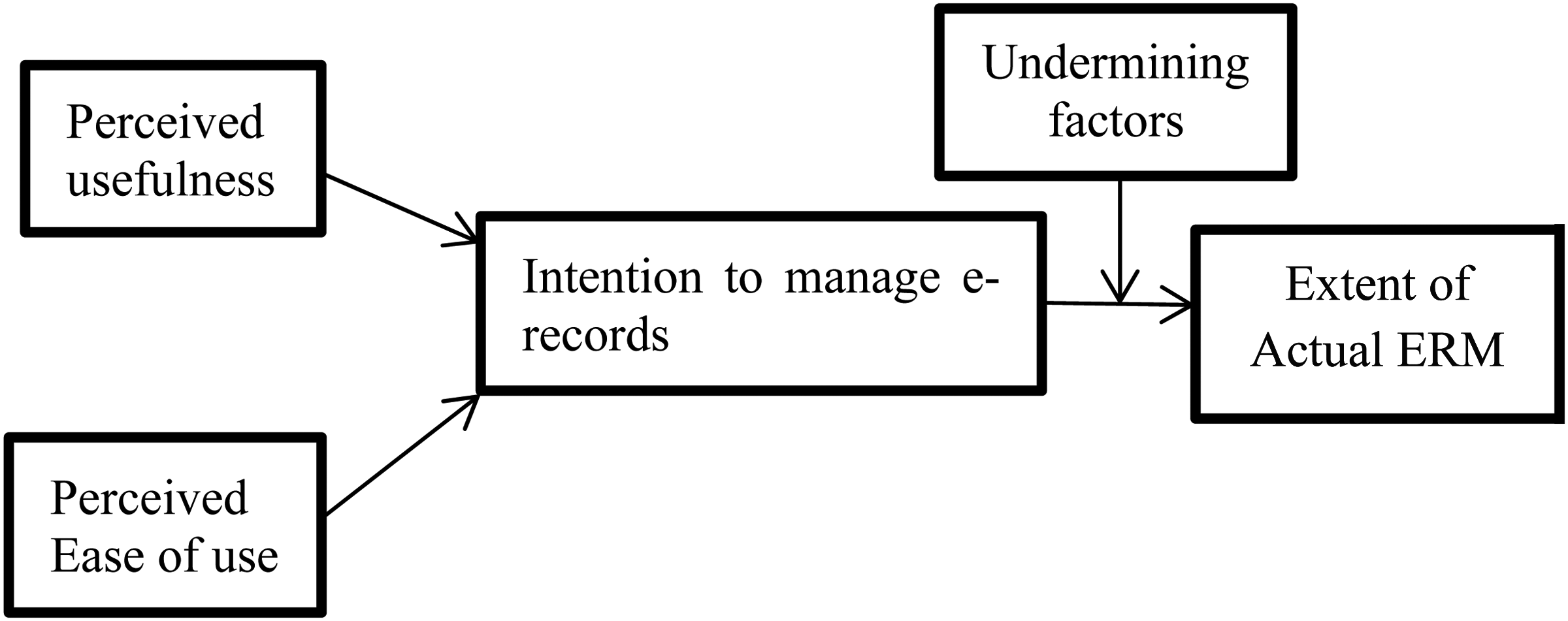
Technological Acceptance Model (TAM) by Davis et al. (1989) and Simplified Technology Acceptance Model (STAM) by Venkatesh and Bala (2008) and other literature were used to formulate an analytical framework of e-records management. It was necessary to formulate the conceptual framework because the TAM and STAM were not adequately responding to all the variables of this study. Whereas TAM emphasises the perceptions, attitudes, and intentions to using technology, STAM adds attributes such as individual differences, system characteristics, social influence, and facilitating conditions to those of TAM. The framework was used to depict the relationships among the variables and achieve the study's objectives. The framework composes different variants such as perceptions, intention, the actual management of e-records, and undermining factors as Figure 1 presents:
Theoretical framework of E-records management.
The extent of actual management of e-records in government or private institutions is mainly depends on perceptions and intentions of staff. When staff perceive e-records management positively, i.e. considering it useful and easy to use, they develop behavioural intentions to adopt the approach. This later translates into actual e-records management. The framework further informs that e-records management is not resistant to challenges. Factors such as lack of e-records management strategies, legal issues, lack of RF, shortage of ICT facilities, rapid changes in technology, lack of capacity, incompatible formats of e-records, and security threats undermine e-records management.
Research design
Study approach
An explanatory research design employing mixed-method approach, which allows researchers to combine quantitative and qualitative approaches, was used to investigate e-records management in Tanzania courts. The study used a mixed-method because mono-method research is often weak in providing comprehensive data and information (Ojebode et al., 2018; Vizcarguenaga-Aguirre and López-Robles, 2020). In particular, mixed methods research provides a broader spectrum of ways to better understand complex research problems in different contexts than could be done through either quantitative or qualitative alone (Mertens et al., 2016; Cresswell, 2012). According to Ojebode et al. (2018), the approach offers multiple and more reliable sources of data that leverage the strengths of qualitative and qualitative approaches. In general, the approach helped the researchers to obtain a variety of data. Through the quantitative part of the approach used, the researchers were able to collect numeric data to determine the number of records management staff and ICT facilities involved in the ERMS of the courts involved. On the other hand, the qualitative side of the approach allowed the researchers to analyse the views, opinions, and perceptions of respondents regarding the adoption and integration of electronic records management systems in the selected courts. Regarding data collection, the quantitative data was collected and analysed first, followed by the collection and analysis of the qualitative data.
Study settings
The study involved the CAT, the HCT, and the Commercial Division. These courts were purposively selected because they have made various ICT related initiatives aimed at improving justice administration and service delivery. For example, in 2013, the CAT started using an electronic system to record proceedings in courtrooms. The court also started using ICTs in tracking all events, case registration, case details entry; and scanning and storing old files and documents electronically. Besides, the Commercial Court is operating electronically. The court digitally records court proceedings using a computer-aided recording and transcription system. The system is used to capture and transcribe evidence. Apart from that, the court has a website (which provides access to case list, case status, and case trend); a display board (which gives information on what is going on in courts at that particular time); case management system (a software that enables the court to prepare a case list, print, and returns). With these substantial developments, the courts were good enough to be the focus of this study that sought to examine the effectiveness of e-records management system.
Sampling and socio-demographic information
The sample size for this study was drawn from populations of three (3) courts: the Court of Appeal, the High Court Main Registry, and the Commercial Division. Out of 445 court staff members, a total of 55 participated in this study. While six (6) of these were key informants (i.e. Court registrars, heads of departments, IT staff, advocates, and judges), 49 included other court staff such as records staff, clerks, secretaries, transcribers, and librarians). Mainly, two sampling techniques (i.e. purposeful and convenience) were used to select the participants. In purposeful sampling, a researcher selects a sample based on his or her knowledge of a population, its elements, and research aims. In contrast, convenience sampling simply picks population elements that are available and appear willing to offer answers to a researcher's questions (Tavakoli, 2012). The study's key informants were selected purposefully by approaching them while in their respective offices. Their selection followed their occupation of professional positions that made them rich in the information on the effectiveness of the ERMS used in Tanzanian courts. The other court staff were selected using convenience sampling technique. With this technique, staff members that happened to be around and willing to participate in the study were selected into the sample. Regarding time orientation in selecting samples, the researchers used a parallel sequential sampling technique whereby two samples were selected sequentially. In this technique, records, secretaries, librarians, clerks, and transcribers were selected first, then key informants such as judges, IT experts, and advocates were purposively selected.
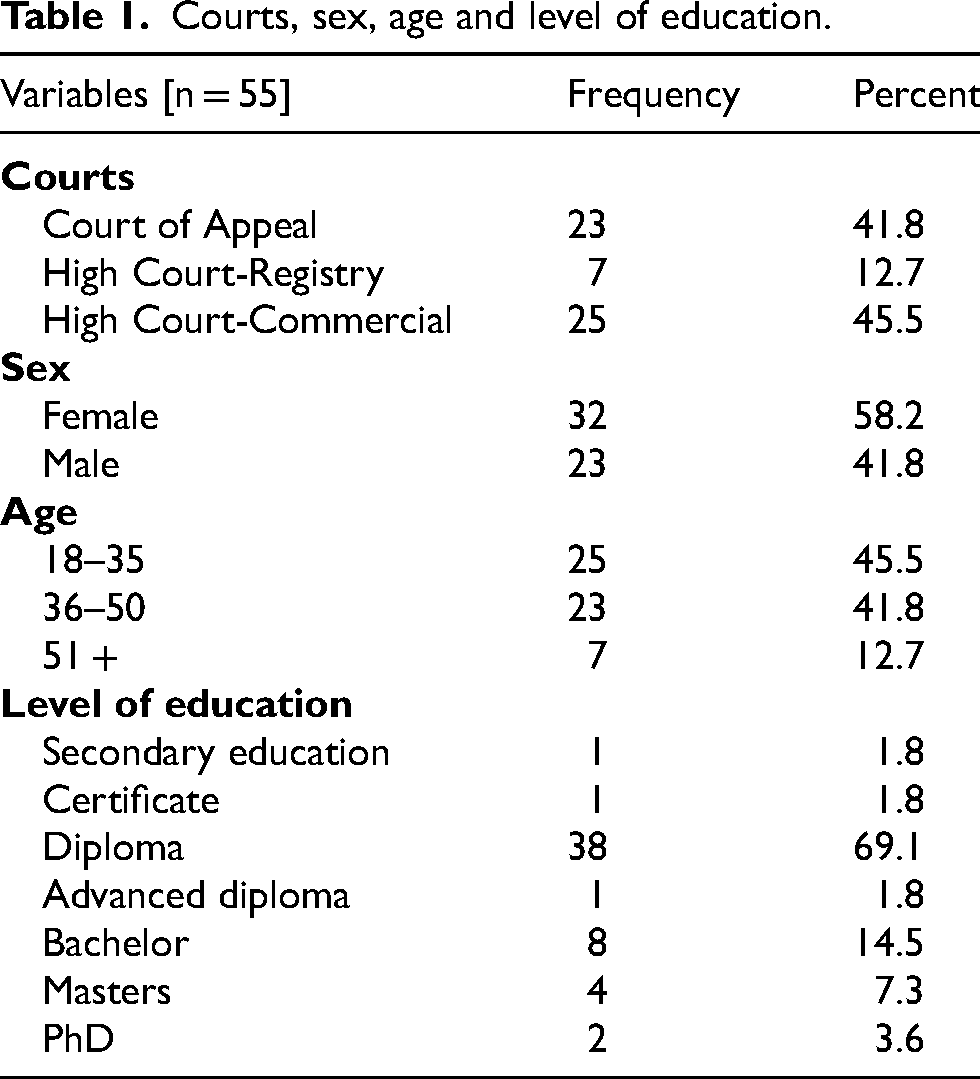
Knowing the socio-demographic characteristics of respondents was important in this study. As such, this information was sought. In particular, in information on the courts respondents worked for; and their sex, age, and level of educational qualification was sought. The study also identified the departments and designations of the respondents. The information was sought for the purpose of establishing the backgrounds of participants so us to create a better understanding of the data they were to provide. While Table 1 presents courts involved; and the sex, age, and level of education qualification of respondents, Table 2 presents respondents’ departments and designations:
Courts, sex, age and level of education.
Department and designation of respondents.
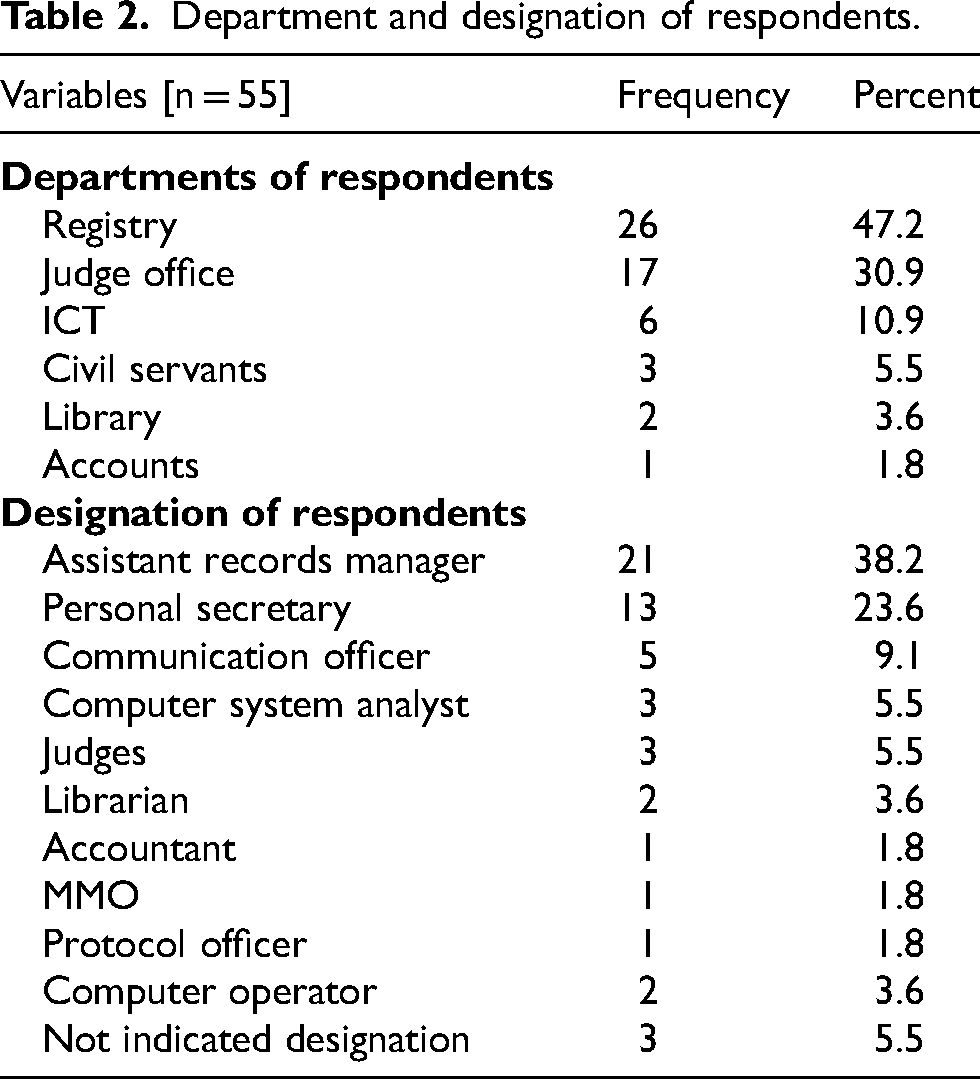
Out of the 49 respondents that participated in the survey, 25 (45.5%) were from Commercial Division, 23 (42.9%) were from the Court of Appeal (CAT), and only 7 (17.2%) were from the High Court-Main Registry (HCMR). On the whole, the number of actual respondents was bigger at CAT and the High Court-Commercial Division (HCCD) than HCMR This was mainly associated with the fact that the study used convenience sampling which banks on availability and willingness of the respondents.
Also, Table 1 shows that moderate percent (45.5) of the respondents were in the age range of 18–35. This suggests that the judiciary system of Tanzania is generally youthful. However, this suggestion is only applicable to professions that were of interest to this study. This age group is generally active, dynamic, and trainable and can effectively participate in e-records management. Regarding sex, it appears that female (58.2%) staff members are the majority of employees in the selected courts. This suggests that the activities (e.g. secretarial, clerical, and records management) associated with the professions that were of interest to this study are dominated by females. Indeed, most secretarial, clerical, and records management courses are mainly preferred by females than males.
Furthermore, Table 1 reveals that majority (69.1%) of respondents were diploma holders while very few staff had other levels of education qualification such as certificate or bachelor and master degrees. This is probably because the study targeted people that performed duties such as secretarial and records management, which on average require such a level of education. These findings imply that the majority of respondents involved in this study were ones that perform routine tasks and have lower levels of education. Apart from these characteristics, respondents’ departments and designations were determined as Table 2 presents:
Table 2 indicates that close to a half (47.2) of respondents were from the registry department, followed by those from judges’ offices (30.9%), and ICT departments (10.9%). Other respondents were drawn from civil service (5.5%), library (3.6%), and accounts (1.8%). In all, the selection of more respondents from registry departments was done because of the departments’ responsibilities of creating, recording, processing, and maintaining court records with the utmost care and security. As such, staff of these departments were believed to have the information needed to meet the objectives of this study.
Designation-wise, Table 2 shows that a moderate percentage (38.2) of respondents were record managers followed by personal secretaries (23.6%). The study focused on these groups of respondents because they directly work with records management systems. This means that these individuals are good sources of information on how records are managed. In fact, in all the surveyed courts, case files were maintained in their records management sections.
Data collection methods and instruments
According to Aina (2002), the choice of research methods depends on the purpose of the research and the research questions being asked. This study used a mixed methods to collect data. This practice minimises the degree of limitedness of certain methods to particular bodies of knowledge, allows triangulation, and enhances the validity and reliability of findings. To capture primary data, a cross-sectional survey (i.e. structured questionnaires) was supplemented by in-depth interviews. Along these, observation method was used. To collect secondary data, analysis of publications such as thesis, dissertations, reports, files, newsletters, magazines, articles, and court proceedings in print and electronic formats was performed.
However, a questionnaire was the main data collection instrument for this study. This questionnaire was structured and standardised and had both open and close-ended questions. Particularly, the questionnaire was used to collect data on the nature of electronic records management systems used, staff perception of the use of electronic records management systems, the extent of utilisation of electronic records management systems, factors influencing the effective use of the electronic records management systems, and challenges faced in the use of the systems.
Apart from the questionnaire, in-depth interviews were used to gather data from key informants. Interviews are particularly useful when one wants to tap into study participants’ experiences to get in-depth information on a topic (McNamara, 2009). Personal interviews were applied to supplement questionnaires; it was conducted purposely to the selected respondents. A personal interview achieves high return and response rates, are flexible, offer opportunities to observe non-verbal behaviour, and allow for correcting respondents’ misunderstandings. The method was used to collect in-depth information using open-ended questions. Sometimes the researchers were obliged to use probing questions to seek clarification from interviewees.
Furthermore, observations were made using a checklist The major purpose of the observation was to supplement important data or information not captured by the questionnaire and interview. Primarily, the method was employed to collect data that can be physically observed. This included places where records are kept and ICT facilities (i.e. computer, scanner, and photocopier) used to manage records. The method has enabled the researchers to compare the realities presented by respondents and that directly observed.
Data analysis
Various methods have been used to organise and summarise data collected, to present and evaluate findings, and come up with conclusions. Both qualitative and quantitative data were processed and analysed in line with the objectives of the study. Qualitative data arising from interviews was analysed thematically by simply playing back the tape recorder used to capture interview conversations. This was listened to for a minute at a time. After every stop, what had been heard was coded before the tape was played again. In quantitative analysis, the data were organised, described, coded, and analysed using Statistical Product and Service Solutions (SPSS) programme, version 19 to derive simple descriptive statistics, such as frequencies, percentages and to draw tables and charts.
Results
Nature and types of records managed
Respondents were asked to indicate the nature and types of records managed by the selected courts. Table 3 summarises the results:
Types of records managed.
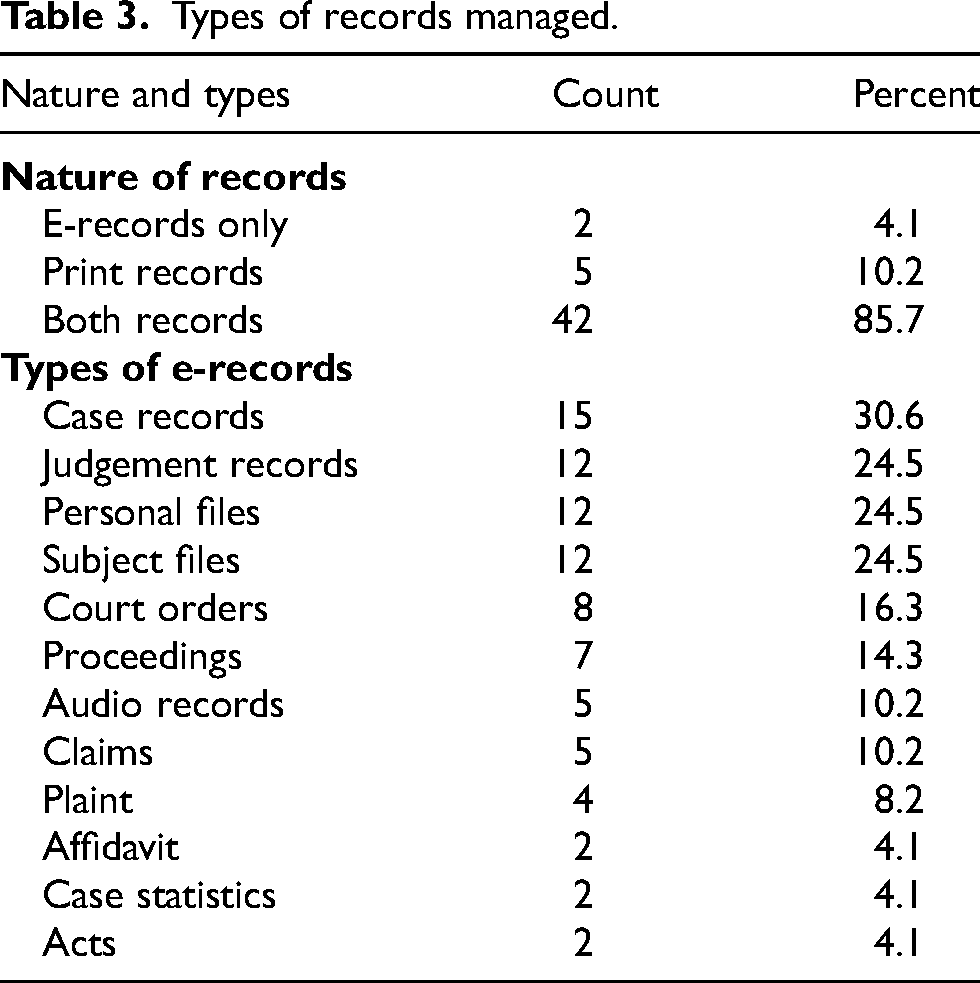
The results in Table 3 reveal that most (85.7%) respondents said they practiced hybrid records management. Along that, the respondents were asked to indicate types of records managed electronically. Their responses show that the selected courts manage various records electronically. The findings also suggest that the surveyed courts create and keep different types of e-records. While close to one-third (30.6%) of the staff who participated in this study said they manage case records, while close to a quarter (24.5%) indicated judgment records, personal files, and subject files. Accordingly, less than one-fifth (i.e. 20%) of the respondents indicated that they manage court orders, proceedings, audio records, claims, plaint, affidavit, case statistics, and Acts electronically. Other records managed in this format by the surveyed courts include personal and subject records, case decision records, summonses, notices of appeal, notices of withdrawal, various acts, and government notices. To gain more insights on the e-records management of the studied courts, two questions (i.e. on the usage of ICTs and types of ICTs use) were asked to determine the types of ICT facilities available. Regarding the usage of ICTs, the majority (95.9%) of respondents agreed to use ICTs to facilitate e-records management. Table 4 records responses on the types of ICTs used to support court operations, or e-records management:
ICT facilities available to support e-records management.
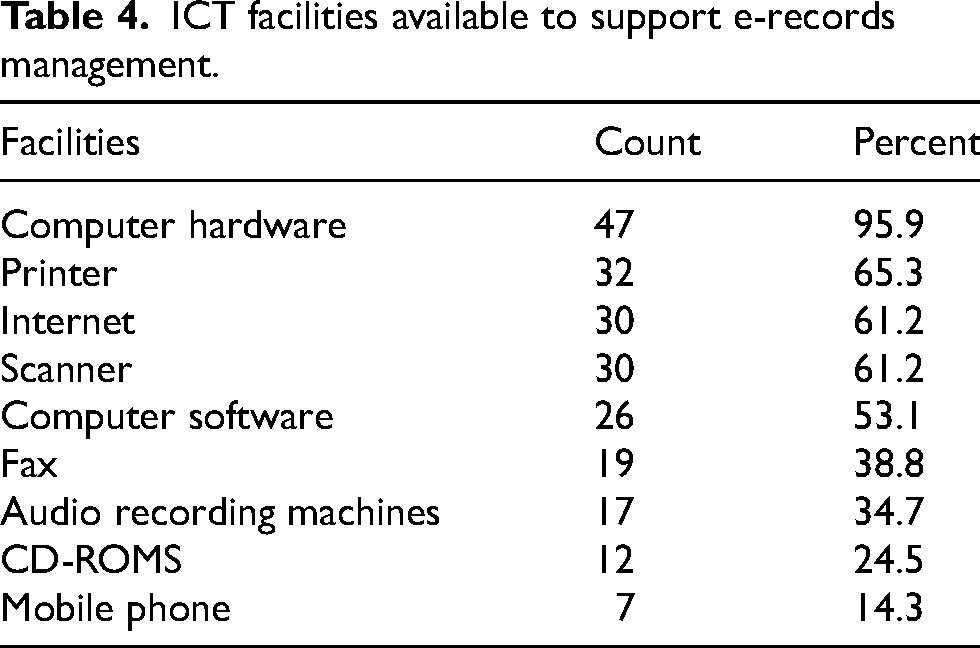
In general, the results suggest that a significant percentage of the staff who participated in this study stated that they use ICTs such as computer (95.5%), printers (65.3%), internet, scanners (61.2%) and computer software (53.1%). Other court staff indicated that they use fax, audio recording machines, CD-ROMS, and mobile phones. The researchers also managed to observe some of the ICT facilities as Table 5 presents:
Observable ICT facilities.
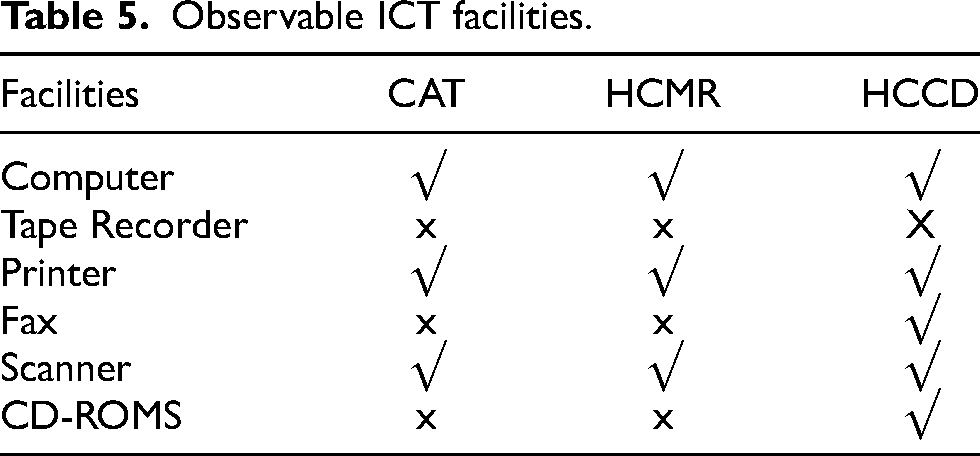
The survey and observation results inform that different types of ICTs are in use at the selected courts. For example, computers, printers, scanners, were observed in the study areas. This tallies what has been noted from interview data. For example, one of the key informants [P5] informed the researcher that: In the Commercial Division, every clerk has a desktop computer in office. Staff that are responsible to record cases in the courtroom are each provided with a laptop to facilitate their duties. In fact, access to computers is not a problem. The problem, however, is effective usage. But, today, most of documents are created using different ICTs.
In addition to this, the Head of ICT [P6] Unit narrated that: In Commercial Court, there are SMS networks (SMS mtandao) and KIOSK services whereby a customer can access case information. Through the mobile phone, a customer can send SMS and get feedback on his or her case. Through KIOSK, a customer can ask for the status of his or her case including the date, judge who manages the case, etc.
These quotations show that the Commercial Court has integrated ICTs to support its operations. Activities such as the creation of documents are now performed using various ICT facilities. To confirm this, one key informant said “in our office, we have specific software for keeping records. We keep customers’ records, case records. ……. hardcopy documents, we scan and upload them into the system.” This shows that apart from creating documents electronically, the selected courts are now converting print records into electronic formats.
Extent of e-records management
The court staff were also asked a question that targeted establishing the extent of e-records management. The responses received show that close to one-third (30.6%) of the staff that participated in this study felt that this was done to a large extent while about a quarter (24.5%) felt it was moderate, 40.8% mentioned to some extent, and only 4.1% it was never done. Table 6 has a summary of these results:
Extent of e-records management.
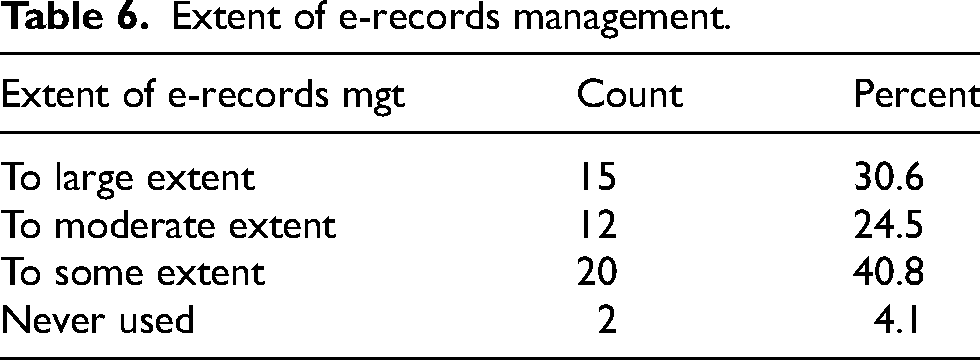
On the extent of utilisation of electronic records management systems in courts of Tanzania, the results suggest that the usage is moderate. This result shows that the use of the system is not as high as necessary. This was testified to by one of the key informants [P5] who said that: To a great extent, we are in the planning stage. We have not really taken off…..we are not fully utilising the electronic records management systems to effectively operate our courts. Paper records are still the dominant format.
This quotation shows that e-records management systems are not fully adopted by the surveyed courts. As a result, manual systems of records management are still dominant. To further gain more understanding, a question with five-point Likert scale (VE = Very Effective, E = Effective, A = Average, I = Ineffective; VI = Very Ineffective) was asked to measure the effectiveness of e-records management. Table 7 summarises the results:
Effectiveness of e-records management.
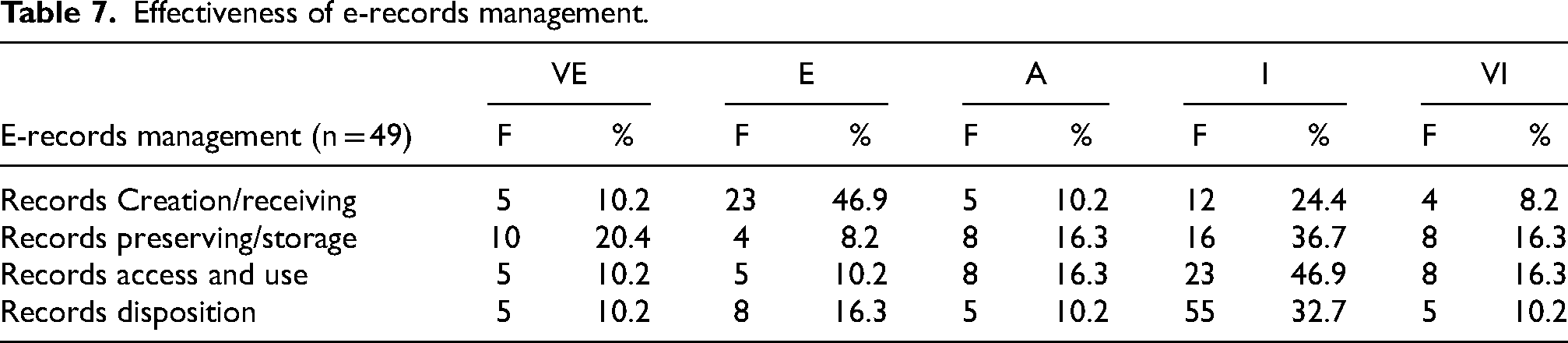
The findings indicate that the electronic system was neither effectively nor ineffectively used to support the role of records management in the selected courts of Tanzania. However, e-records creation (46.9%) appears to be effectively done while preservation (36.7%), and disposition (32.7%) are ineffective. Generally, these findings suggest that e-records management systems are not effectively used in the selected courts of Tanzania. This was confirmed by key informants who argued that the system was not as effective as it is supposed to be. In her words, one of key informant [P3] stated that: The utilisation of the electronic system is still in the infant stage…, we have not reached into the integrated automated system where a judge in one chamber reads reports of other judges in another chamber in the Court at a time. For example, in the UK, if the judgment has taken place around 9.00 o’clock, half an hour later, it will be already uploaded into the system for public access. We, as administrators, have full access to e-files since we are responsible for managing the system. The Registrar and judges have full access to only case records. Judges and advocates can access only records of their cases and case scheduling.
In addition, the majority of the respondents interviewed criticised the ERMS saying that it is not as effective as it was supposed to be. For example, one of the key informants [P2] said: Massive records are created electronically, but few of them remain in electronic format. There is no prompt uploading of judgment reports into the system, and in case the report is uploaded, its abstract is not created and subject matters contained within the report are not analyzed to identify issues that emerged since a judgment normally touches multiple issues in Law.
This statement suggests ineffectively utilisation of ERMSs. This is evident in reports of failure to upload records of cases and other issues to ensure public access and reference. These results show that despite the availability of ICT infrastructure in the courts, the deployment of e-records management system is still ineffective.
Perceived importance of e-records usage
To further create an understanding of e-records management by the selected courts, a question targeting to establish how staff members perceive e-records usage to foster court services and proceedings was posed to respondents. To effectively establish their perceptions, a four points Likert scale (1 = Strongly Agree [SA], 2 = Agree [A], 3 = Disagree [D], 4 = Strongly Disagree [SD]) was used as Table 8 presents:
Perceived importance of e-records usage.
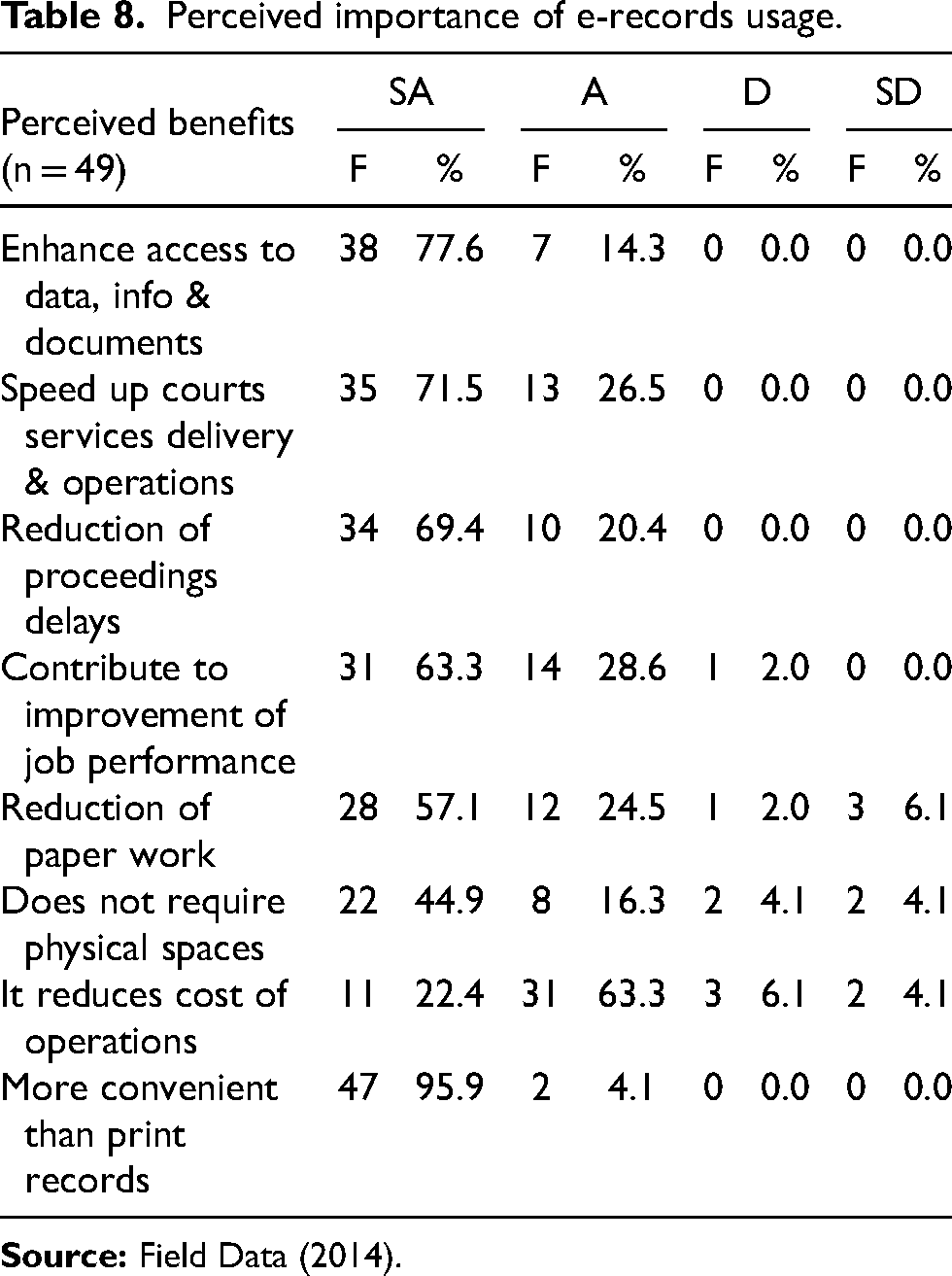
The results in Table 8 show that the majority of the responding staff from the three courts strongly agreed that the utilisation of e-records supports court services and operation, and enhances access to data, information, and documents (77.6%); speeds up court services delivery and operations (71.5%); reduces proceedings delays (69.4%); contributes to the improvement of job performance (63.3%); and reduces paper works (57.1%). Apart from a large majority (95.9%) of respondents strongly agreed that the use of e-records to support court services and operations is convenient than the use of print records. The results further show that most (63.3%) respondents agreed that e-records usage reduces court operation costs while a moderate percentage (44.9%) strongly agreed that doing so minimises requirements for physical spaces. However, interview data have resulted in diverse findings. For example, one of the key informants [P4] narrated that: The commercial court nowadays is experiencing a reduction in delays of proceedings since the introduction of digital recording systems such as digital computer-aided recording and transcription systems. In this system, there is naturally spoken dragon software. So, evidence on a trial is recorded by special computers and then transcribed into text using this software. This has enhanced the efficiency of judges by relieving them of the tedious job of recording evidence manually by longhand.
Further, interview data shows that the use of e-records management systems improves job performance. On this, one key informant [P1] stated the following: With these systems, a case that took up to six months or a year to be determined now can be concluded within three months from its filing. In addition, the future plan of the court is to fully utilise online systems and platforms such as video conferencing to conduct court proceedings….whereby testimony can be made even in the remote area.
These statements clearly inform that the introduction of e-records systems has sped up proceedings in courts. Among the benefits noted is the systems’ facilitation of the recording and transcription of proceeding, which in turn enhances the performance of court judges. Contrary to these perceptions, other respondents have opined that the adoption of e-records management systems increases the cost of operating courts. To them, a manual records system made access to and use of court records easy, cost-effective. To them, this approach facilitates records management. Demonstrating why e-records management is not important, one key informant [P4] said: The integration of electronic systems in the courts is very costly and threatens the security of the data, information, and records managed by our courts. Electronic records require a strong financial base to acquire or subscribe to e-records management systems, network systems, and high bandwidth for access to the Internet. Without a strong financial base, the sustainability of the systems is always questionable. The adoption of electronic systems is always accompanied by diverse demands for capacity building, creation of readiness, lobbying for top management support, policies, and standards.
This quotation reveals that the negative perception of e-records management is a result of the serious investment (financial, staffing, supporting tools, and frameworks such as policies and standards) demanded by the approach. Besides this, staff's readiness to use the system and top management support need to be considered. In addition, interview results have revealed that some judges feel that e-records systems are not useful to them since they did not see direct benefits to court proceedings.
Factors limiting effectiveness usage e-records
The participants of the present study were asked to indicate factors that hamper the effective usage of e-records to support court service delivery and operations. The question was important to shading more on the usage of e-records, particularly to create grounds for establishing recommendations for improving the state of e-records management in courts. The responses received are summarised in Table 9:
Limiting factors for effectiveness usage of e-records.
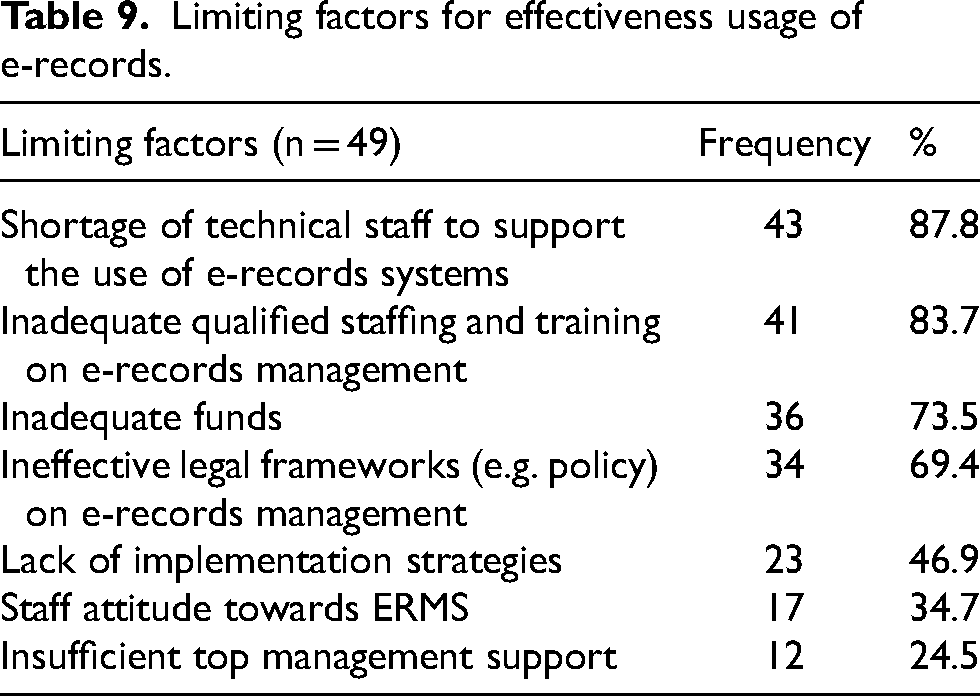
In general, the results indicate that the usage of e-records to support court service delivery and operation is not free from limiting factors. Particularly, the results signify that a significant percentage (>60%) of respondents cited a shortage of technical staff to support the use of e-records systems while 87.8% mentioned inadequacy of qualified staff and training on e-records management. The other majority of staff who participated in the study indicated inadequate funds (73.5%) and ineffective legal frameworks on e-records management (69.4%) as limiting factors. Factors such as lack of implementation strategies, staff's attitudes towards e-records management systems and insufficient top management support also to limit effective utilisation of e-records management systems in the selected courts. Adding to these results, some of the interviewed respondents criticised ERMSs for not being as effective as expected. One of the key informants [P2] strongly states that: ….the electronic system introduced in our court was a donor-funded project. As such, maintaining it using internal funds becomes a bit complicated, which is why our use of it is not effective enough. The budget allocated to the court for e-records management programme is inadequate. The Judiciary entirely depends on government budget and donor funds. Internal sources of funds to supplement the limited budgets and donor help are inadequate. As such, the limited funds are directed to key areas such as purchasing ICT gadgets. To enhance effectiveness and sustain the usage of electronic systems, more investment is quite important.
Another key informant [P3] said that: Our court suffers from shortage of staff. For example, we do not have enough IT staff who can solve problems that arise in the management electronic records and related systems. This holds back efforts to effectively use the systems and records to support court operation. To effectively use the systems, our court has to employ more of these staff and provide training to the existing ones.
These quotations indicate that factors that limit the effectiveness usage of electronic systems by Tanzania's courts are many. Among these, financial constraint is one of the most critical. The courts’ dependence on external sources of funds such as funding agencies and the government is the reason behind this challenge. Apart from that, the results show that shortage of staff limits effective utilisation of electronic systems in the court understudy. Regarding internet connectivity, the findings from the surveys are different from those that have emerged from interview data with some of the key informants. For example, in his words one of the key informants [P5] narrated that: Internet connectivity in our courts is not a big problem. The courts have subscribed to a reliable internet service provider who provides service efficiently and effectively. Bandwidth is not a problem either. The only problem is inadequate storage facilities such as a server.
On a different note, another key informant [P6] said that: We do not have a policy on electronic records management systems but rather we have the ICT road map, rules, and regulations. What we have is an operational policy that governs access to and use of records and documents; not specifically electronic records systems. To come up with a policy on electronic records management systems, there is a need for more political will and seriousness.
This statement signifies that there was no reliable and specific policy to guide the utilisation and disposition of electronic records in the surveyed courts. Court rules and regulations were regarded as frameworks for accessing and using court records. The results also show that staff awareness and attitude was an influencing factor towards the usage of e-records management systems. One of the key informants [P4] interviewed said the following: Negative attitude towards innovation is one of the main challenges face by e-records management. Education and training on the importance of ICT in general, and E-Systems in specific, are lacking. When opportunities pop up, few staff benefit. This is attributed to individual perceptions and fear of technological change. Some people are not ready to accept new developments in our courts. This is also contributed to by inadequate skills and knowledge to manage e-records, shortage of facilities, and lack of interest
Beside unwillingness to accept technology changes, the results show that lack of management support is a challenge for e-records management systems. On the contrary, the top management of the selected courts argued that they provide support to the implementation and utilisation of e-records management system by creating networks that allow stakeholders to meet and have round table discussions to review the status of the court and service provision. Apart from that, some of the records are reported to be destroyed without considering their age and value. This was revealed from interviews with heads of different departments who revealed that some records were destroyed due to limited computer storage space. According to them, the decision to delete or destroy records was mainly influenced by factors such as slowness of the computer, personal judgment, and administrative responsibilities, rather than the established retention schedules.
Discussion
The objective of this study was to investigate e-records management in Tanzania courts. In general, the study's findings suggest that e-records management is still in its infancy in these courts. While the study reveals that there is effective creation of e-records in the courts; other stages are not well done. For instance, e-records storage, preservation, access, use, and disposition have been noted to be ineffectively done. The effective creation of e-records in line with the general knowledge that massive amounts of records are created in electronic format these days. However, in the courts studied, only a small quantity of records (cases, judgments, employee data, court orders, proceedings, audio data, claims, plaint, and case statistics) are being integrated into electronic management systems. Noting from these findings, the majority of court records are managed manually despite the availability and accessibility of ICT infrastructure such as the internet and computers, which are major vital in ensuring records are accessible to most court staff. These findings differ from what has been documented by several prior studies (e.g. Mosweu and Kenosi, 2018; Keakopa, 2007; Ngulube, 2007) that have revealed insufficiency of ICT infrastructure for fostering e-records adoption in most developing countries.
Even though the adoption of e-records is ineffective, staff members of the courts studied perceive this approach to record management positively. Understandably, the adoption of e-records in the courts would enhance access to data, information, and documents; which would in diverse impacts on court operations and service delivery. For example, doing so has been seen to speed up court services delivery and operations or lessen proceedings delays as supported by extant literature (e.g. Mosweu and Mosweu, 2018; Motsaathebe and Mnjama, 2007; Maseh, 2015; Newa and Mwantimwa, 2019). Apart from this, access to e-records saves physical space, lessens paperwork, and reduces operation costs for courts. In fact, these records are more convenient to use than print ones. In all, the use of e-court records contributes to the improvement of job performance.
Ineffectiveness of e-records management has been found to be contributed to by inadequacy of qualified staff and training on e-records management, shortage of technical staff to support the use of e-records management systems, inadequacy of funds, ineffective legal frameworks on e-records management, and poor implementation strategies. The shortage of trained staff can be attributed to lack of staff development policy for career development. This is evident in the study's discovery that in-house training, workshops, and seminars are insufficient among the studied courts. Regarding inadequacy of funds, the findings have identified dependence on few funds sources to implement e-records management as the cause. The problem of lack of RF to foster e-record management seems to be one that is faced by many courts in developed (see Maroye et al., 2017) and developing countries (Mokhtar and Yusof, 2009; Kussainova et al., 2020; Borisova et al., 2020). The study also reveals negative attitudes towards e-records management among staff and insufficient support from top management as challenges. In contrast, Omehia and Lulu-Pokubo (2020) revealed that Nigerian courts faced lack of staff commitment and poor electricity supply in the management of judicial records.
Study implications
The study has different theoretical and practical implications. A better understanding of e-records management among courts of law helps Tanzania courts learn about the extent of their adoption and use of e-records. The findings can be used to guide the responsible ministry and Tanzanian courts’ planning and designing of new programmes and training, which will foster the adoption and use of e-records. Besides, the findings can be used by the managements of courts in their decision-making regarding their acquisition of and investment in viable e-records management infrastructure. Aside from this, the findings can help Tanzania courts’ management to improve their work environment so as to motivate their staff to accept e-records management.
Study limitations
One of the limitations to effectively conducting records management research is limited theories and models. As a consequence, records management researchers adopt and apply theories and models (e.g. TAM) from other disciplines such as technologies. To mitigate this, the present study proposes a model for EDRMS adoption and application in delivering services to the public. Some ideas are adopted from TAM Model (Davis et al., 1989). The proposed model comprises staff's competencies (SC), ICT infrastructure, RF, management readiness (MR), nature of organisation (NO), and other factors (OF). Along with that, it comprises intention for adoption (IA), actual use (AU), and perceived usefulness (PU). Figure 2 presents the proposed model for e-records management systems adoption and use:
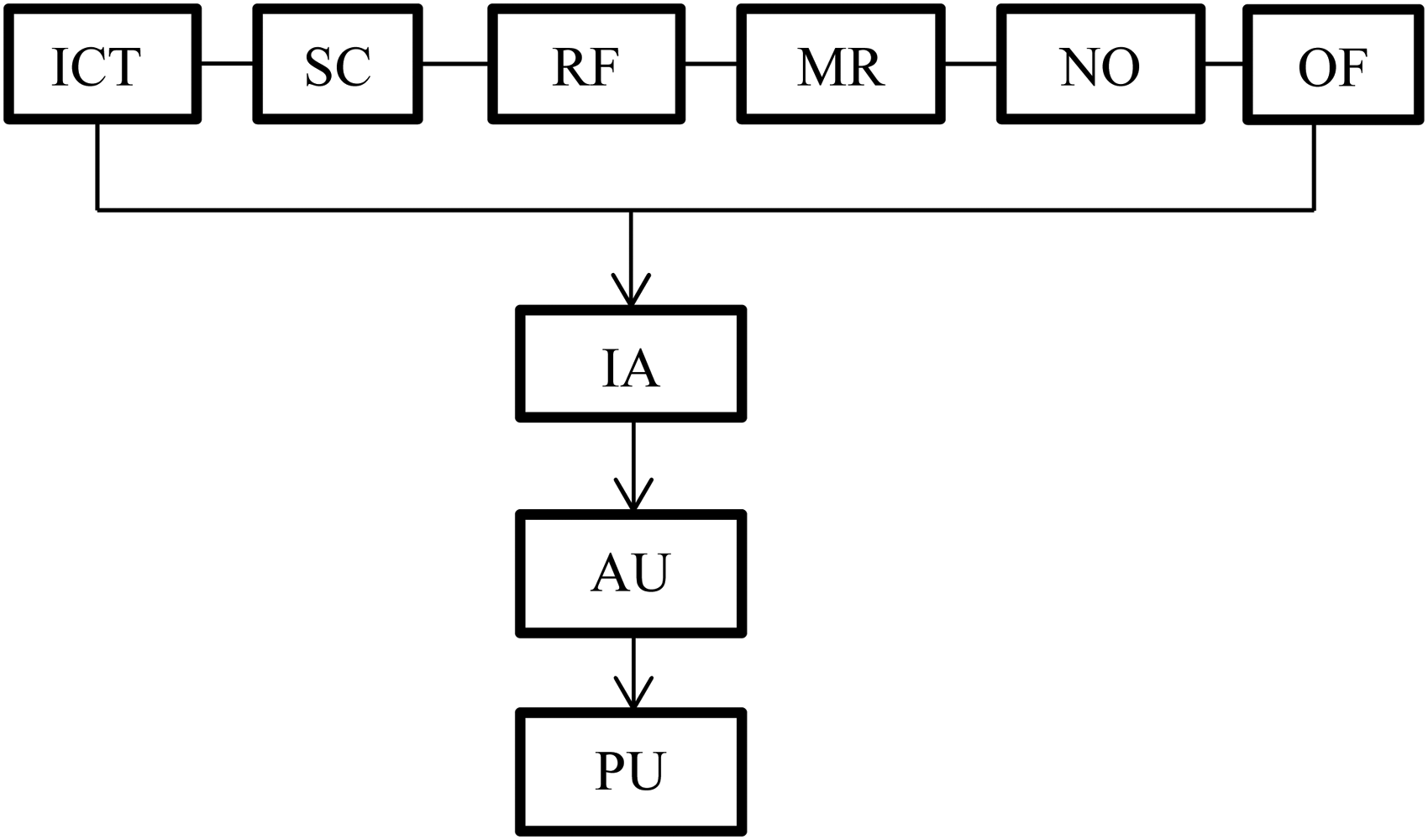
A proposed model for ERMS adoption and use.
The main assumption of the model is that the usage of EDRMS in records management depends on the availability of competent staff to manage records, ICTs (both software and hardware), RF, the MR, nature of the organisation, and OF. These factors predict the intention to use of the EDRMS in records management. For example, effective adoption and actual management of electronic records require top MR to provide financial support, recruitment of skilled staff, capacity development, and ICT infrastructure as Netshakhuma (2021) supports. The system users are more likely to perceive the importance of the systems when the system has the capability of accomplishing multiple tasks. Likewise, the users are more likely to continue the use of the system when they perceive usefulness.
Conclusion and recommendations
To a large extent, the use of e-records management system has been found ineffective. The study's findings have revealed that e-records management systems used in the courts of Tanzania are not as effective as they are expected to be. Despite the introduction of the electronic system in the courts, the use of paper-based records still dominates. The courts’ staff appears to prefer the non-electronic system which they have been using for many years. This shows that attitudes and mindsets have not yet changed to give way for the adoption of e-records management. On the whole, the challenges facing the implementation and utilisation of ERMS appear to be behind the low adoption and use of e-records. As such, the study recommends diversification of funding sources, capacity building through training and retraining, formulation of e-records management policies and standards, and motivation of court staff.
Footnotes
Declaration of conflicting interests
The author(s) declared no potential conflicts of interest with respect to the research, authorship, and/or publication of this article.
Funding
The author(s) received no financial support for the research, authorship, and/or publication of this article.
