



Abstract
This article contributes to the emerging body of knowledge on the role of the private sector in knowledge brokering in international development because very little is known about the role of the private sector. It attempts to validate the findings of the only literature review to date (Kiwanuka et al, In Press) on the subject and other literature on knowledge brokering by consulting international experts in the field of knowledge brokering, identifying policy and research implications. The conceptual lens employed is the ‘extended’ Glegg and Hoens’ (2016) meta-framework of knowledge brokering, in combination with the cognitive, relational and structural aspects of social capital (Nahapiet and Ghoshal 1998). An online questionnaire survey was distributed to international experts in both the private, public and civil society sectors with some 203 respondents. The questions were developed on the basis of the literature. Respondents from the private sector and their colleagues from the public sector and civil society placed considerable emphasis on opportunities to meet, the existence of personal relationships and brokering by third parties as catalysts to working with the private sector. In addition to developing recommendations for policymakers, the paper has added to the emerging body of academic knowledge on the private sector as an unusual suspect in knowledge brokering and provides a conceptual framework linking social capital to knowledge brokering roles. Policymakers and funders can facilitate cooperation between the private sector and other development actors by creating physical spaces and funding instruments to encourage collaboration with the private sector. One of the novel findings is that the public sector needs to be better prepared to collaborate with the private sector.
Introduction
One of the key challenges facing the field of international development is knowledge brokering between the domains of practice, policy and research and across organizations to improve the evidence-base for development policymaking, programmes and projects. Indeed, research on knowledge brokering is increasingly justified because knowledge sharing and collaboration across organizations is argued to be a critical step towards the achievement of Agenda 2030 and the Sustainable Development Goals (SDGs) (United Nations, 2015), the most important international agreement on development until 2030. In 2016, the UN Joint Inspection Unit, a key body which aims to improve the effectiveness of the whole UN apparatus, emphasized the importance of knowledge within the SDG process (Dumitriu, 2016), something with which academics and civil society actors appear to agree (see, for example, Cummings et al 2018b, Brander and Cummings 2019).
The private sector is receiving increasing attention in international development with Agenda 2030 and the SDGs calling upon ‘all businesses to apply their creativity and innovation to solving sustainable development challenges’ (United Nations, 2015). Indeed, Scheyvens and colleagues consider that the private sector has been ‘foregrounded’ in the SDGs in which ‘…businesses, governments and civil society actors are equally called upon to pursue a more sustainable path forward’ (Scheyvens et al, 2016: 372) while Cummings and colleagues consider that the SDGs strongly reflect ‘the pro-private sector discourse espoused by governments of developed countries and the corporate sector’ (Cummings et al 2019b: 11). In functional terms, there is greater emphasis on the private sector because of its potential to ‘scale up the interventions that have proven most effective; to extend these approaches to new fields and unreached people’ (UK Department for International Development, 2011), to employ its considerable financial, technical and technological resources (World Resources Institute/International Institute for Environment and Development - WRI/IIED, 2013) and to contribute to the effectiveness and efficiency of aid (Horn-Phathanothai, 2013; WRI/IIED, 2013). However, this greater focus on the private sector within the framework of the SDGs ignores its contested nature. According to the academic biologist-ecologist-economist Spangenberg:
Business is treated as a per se benevolent actor for the public good, instead of a market based, profit seeking undertaking; the objectives and targets [of the SDGs] include no criteria to distinguish between a positive and a negative role of business for sustainable development (the fact that many sustainability problems have been caused by business activities is not mentioned at all). (2017: 316).
Against this background, this paper aims to be part of an emerging body of knowledge on the role of the private sector in knowledge brokering for international development. Given that there is very little research on this subject to date, we decided to assess the tentative findings of the first literature review of this field (Kiwanuka et al, 2000) by consulting experts. Given that a literature review provides ‘supporting evidence for a thesis (argument) by treating previous authors as “experts” and/or witnesses’ (Metcalf, 2003: 1), we attempt to validate this process by further consulting real-life experts for their opinions, tapping into their experiential knowledge as part of a transdisciplinary approach to this issue. In this paper, we address the following research questions: How does the understanding of these experts compare to the findings in the literature, how do the experiences and opinions of actors from the private and other sectors differ, and what appear to the main barriers to collaboration in knowledge brokering for international development?
Knowledge brokering and the private sector
The dynamics of knowledge brokering processes have been studied extensively in the international literature. Knowledge brokering is conceived as diverse, contextual, complex, diverse and ‘messy’ process (Conklin et al, 2013, Kislov et al 2017), although it is considered to have several discernible features:
Foremost of these is the role of making connections between groups of people to facilitate the use of research evidence in policy making. Knowledge brokers build relationships and networks, and are well informed and up to date on what is happening in their domain. Secondly, knowledge brokers are trustworthy subject experts with a high level of credibility. They are not advocates or lobbyists for a cause, neither is their role simple communication of information. Beyond this, the role varies a great deal. Many more people engage in knowledge brokering activities than have the title knowledge broker. (Jackson-Bowers 2006: 2)
…knowledge brokering can be carried out formally and informally by a variety of people…with a goal of facilitating knowledge sharing within, between, or across groups and organizations, and with a variety of stakeholders. Knowledge brokers bridge different disciplines and sectors by developing a common language, by fostering interactions between individuals that generate a shared understanding of their issues and objectives, and by reshaping knowledge to improve its meaningfulness and applicability across contexts. From this perspective, [knowledge brokers] move among groups fostering collaborative processes, with the aim of generating new ‘brokered’ knowledge that is more robust and readily applicable within its intended local context. (2016: 115).
The private sector itself is defined in many different ways with, for example, some definitions also including civil society organizations. The Organisation for Economic Cooperation and Development - Development Assistance Committee (OECD-DAC) has attempted to provide a comprehensive definition of the private sector as:
Organisations that engage in profit-seeking activities and have a majority private ownership (i.e. not owned or operated by a government). This term includes financial institutions and intermediaries, multinational companies, micro, small and medium-sized enterprises, co-operatives, individual entrepreneurs, and farmers who operate in the formal and informal sectors. It excludes actors with a non-profit focus, such as private foundations and civil society organisations (Crishna Morgado et al., [2017]; Di Bella et al., 2013). (Organisation for Economic Cooperation and Development, 2016. unpaginated).
To our knowledge, Kiwanuka and colleagues’ (2000) forthcoming literature review is the first attempt to examine systematically the literature of the role of the private sector in knowledge brokering in international development. The review employed the methodology of critical interpretative synthesis to analyse the literature on this subject, based on a search of five bibliographic databases. In this literature review, the knowledge brokering roles and activities undertaken by the private sector players, including individuals as well as institutions, were analysed, endeavouring to identify the challenges they encountered in executing these roles. Kiwanuka et al (2000) postulate an additional knowledge brokering role, namely advocacy, and we include it here as part of what we identify as the ‘extended’ Glegg and Hoens’ (2016) meta-framework. The findings of this review and other relevant literature were used to inform the questionnaire survey, and the link between the literature and the specific questions is described in the methodological section.
Conceptual framework
In the literature, social capital has been identified as having several implications for knowledge brokering. First, networks of social relations, particularly those characterized by weak ties or structural holes (disconnections and non-equivalence among actors) are considered to make the diffusion of information more efficient by reducing redundancy (Burt, 1992). Second, social capital has been found to encourage creativity and learning (Burt, 2002; Fischer et al., 2004). Third, it has been shown to support cooperative behaviour, facilitating innovative types of organization and new forms of association (Fukuyama, 1995; Putnam, 1993).
In organizational and management sciences, Nahapiet and Ghoshal (1998) have used the conceptual framework of social capital to examine the role of relational, cognitive and structural aspects of social capital in knowledge co-creation and exchange in firms. This framework has, for example, also been applied to knowledge processes at the grassroots in Bangladesh (Cummings et al., 2019a). In the latter study, gift exchange and trust were found to be more important in a grassroots setting than in firms in developed countries. Although neither of these articles explicitly address knowledge brokering, the relational (who), cognitive (what) and structural or systemic (how) aspects of social capital will be used here (see Figure 1) in combination with the extended Glegg and Hoens’ meta-framework, particularly because of social capital’s explicit emphasis on importance of relationships, structural barriers and on what is being shared. The relational aspect of social capital includes types of actors, roles and relationships, while the cognitive aspect comprises the thematic areas on which the cooperation with the private sector is focused, as well as competencies. The structural aspect focuses on intrinsic and extrinsic challenges.
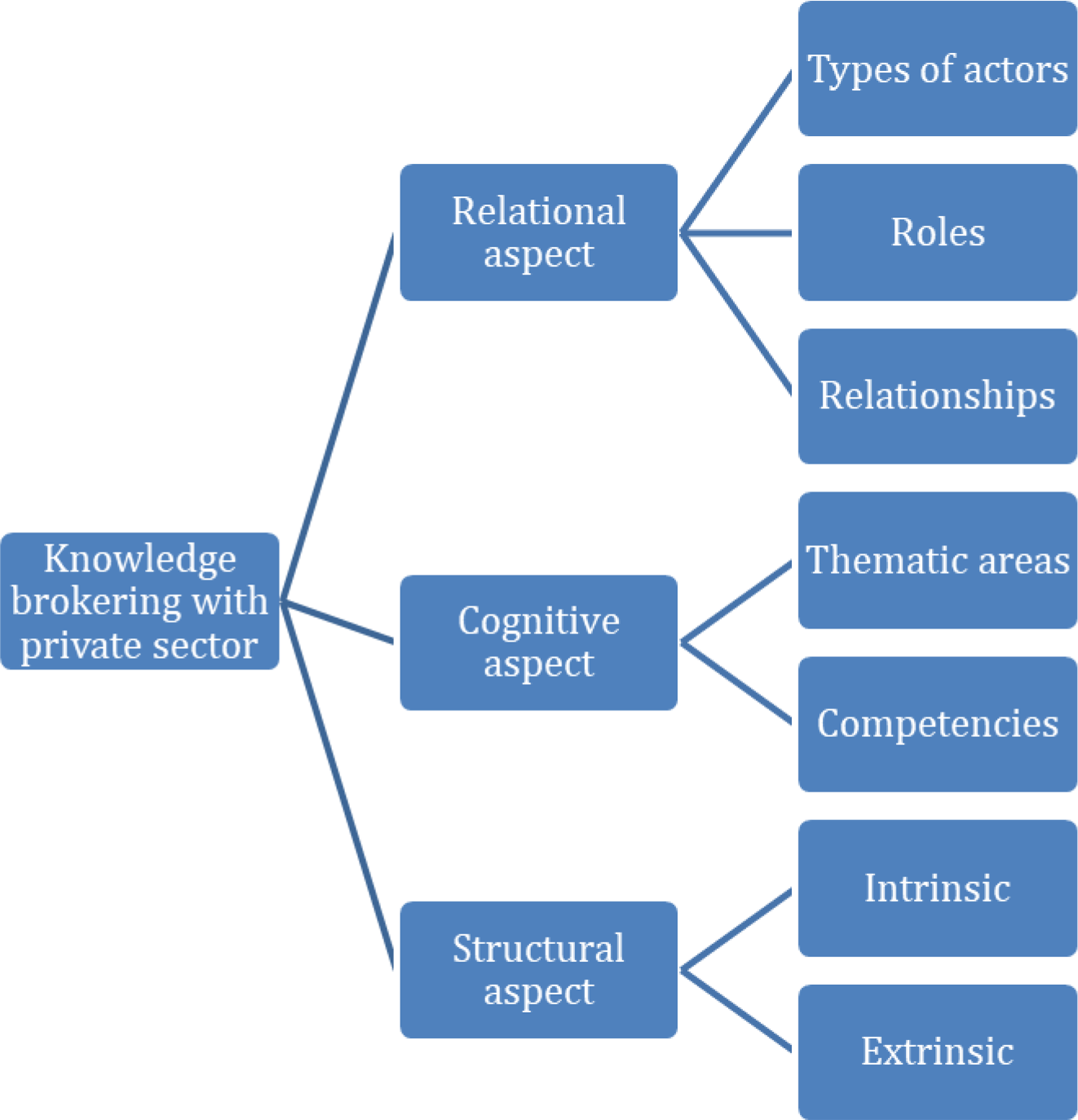
Conceptual framework of knowledge brokering (Source: Authors).
Methods
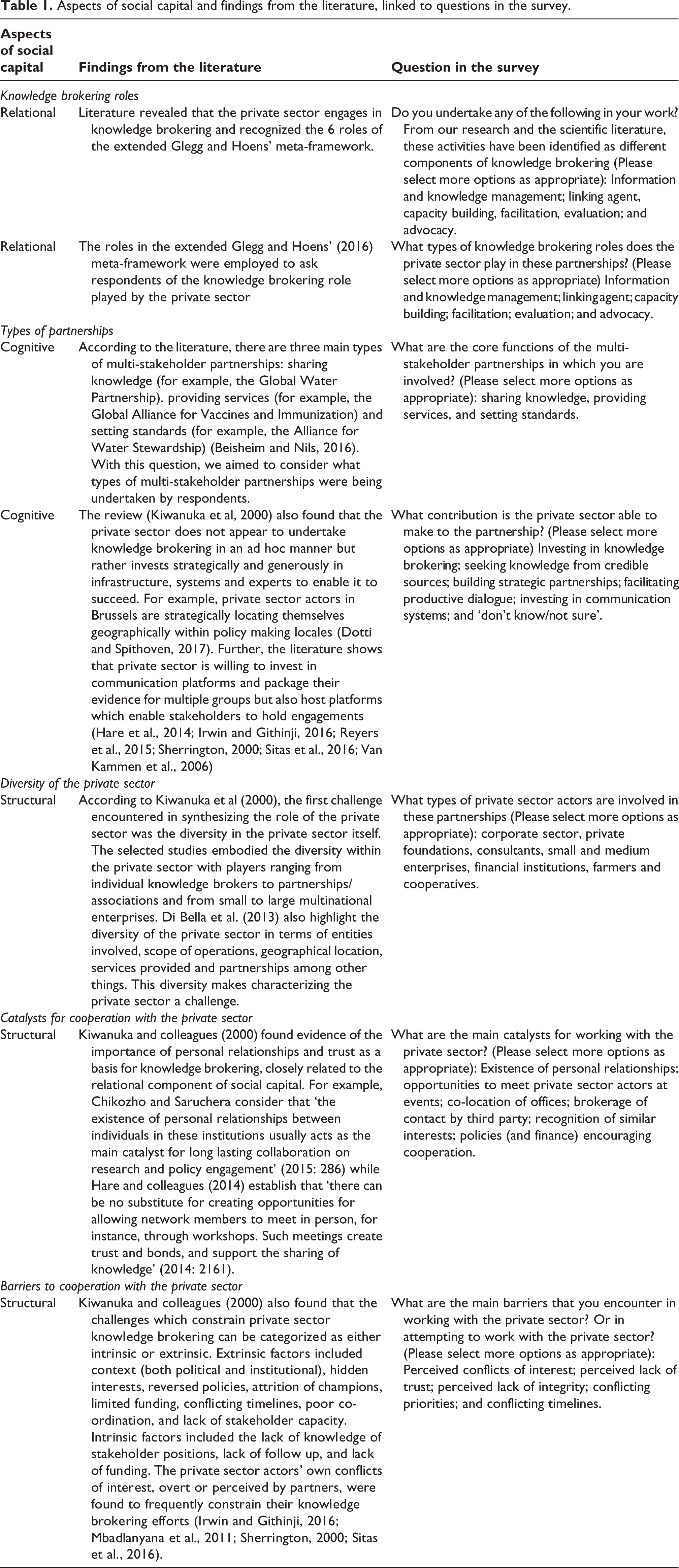
Based on the aspects of social capital discussed in the conceptual framework and the findings of the recent literature review (Kiwanuka et al, 2020) and other relevant literature, a questionnaire survey was developed on the online survey platform, SurveyMonkey, to examine the role of the private sector in international development from the perspective of other sectors, namely the public sector and civil society, but also of the private sector itself. We have taken this approach because we would like to build on the existing literature but also to integrate the concept of social capital which has been demonstrated in previous studies to play an important role in knowledge brokering (see, for example, Nahapiet and Ghoshal, 1998; Cummings et al., 2019a). The link between the aspects of social capital, findings of the literature, and specific questions in the questionnaire can be found in Table 1. In the following sections, we make a distinction between the private sector and non-private sector actors, comprising both the public sector and civil society.
Aspects of social capital and findings from the literature, linked to questions in the survey.
After initial trials with the questionnaire, we decided to reduce the number of questions to a total of 28 questions with separate pathways for private sector and non-private sector actors. SurveyMonkey recommended that we shorten the introduction but we did not follow this recommendation because we considered that the introduction included important information for the respondents, namely, how we had defined the private sector and also information about the study’s ethical clearance. Given that we did not follow this advice, the survey received a ‘Surveymonkey Genius’ rating ii of ‘great’ instead of the ‘perfect’ rating which it would have otherwise received. The survey had a 76% completion rate and it took an average of 12 minutes to complete.
After some experimentation with a trial questionnaire and revision, the survey was launched on 5 February 2019 by email and by posting to online communities. The survey was available from February to March 2019 and was closed on 20 March 2019 when the target of 200 respondents was reached. In total, there were 203 responses, some 117 via the email invitation and 86 via the weblink. Respondents were recruited via two large online communities concerned with knowledge brokering in international development, namely Knowledge Management for Development (80 persons) and Pelican (12), as well as by email (43) and via LinkedIn (8), Capacity4Dev (2), and the research project’s website (1). Efforts to recruit via Twitter were apparently not successful.
To recruit experts on knowledge brokering and particularly knowledge brokers themselves, the questionnaire was clearly labelled as relating to knowledge brokering and one initial question asked respondents to identifying their knowledge brokering activities (information and knowledge management, linking, facilitating, capacity building, evaluation and advocacy). In addition to answering the survey questions, respondents were invited to add further information in the comment fields and, again, at the end of the questionnaire. These comments are also used as evidence and some of them are reproduced below.
Before exiting the survey, respondents were asked if they wanted to be informed about the findings of the research project. Some 91 respondents left their email address to receive information about the study’s findings, demonstrating the respondents’ interest in the subject but, potentially, also the lack of information available on the role of the private sector in knowledge brokering.
Respondents
Respondent characteristics
Respondents came from all continents, representing the global nature of international development (see Figure 2). Of the 203 respondents, almost half (48%) were located in Europe, with North America (14%), Africa (13%) and Asia (12%) also represented (see Figure 3). The vast majority of respondents (99%) had received tertiary education and approximately one third of respondents also held a PhD, reflecting the highly educated character of knowledge brokers in international development and also the expert character of these respondents. The vast majority (85%) were aged 35 years of older with 6.5% being 65 years of over.
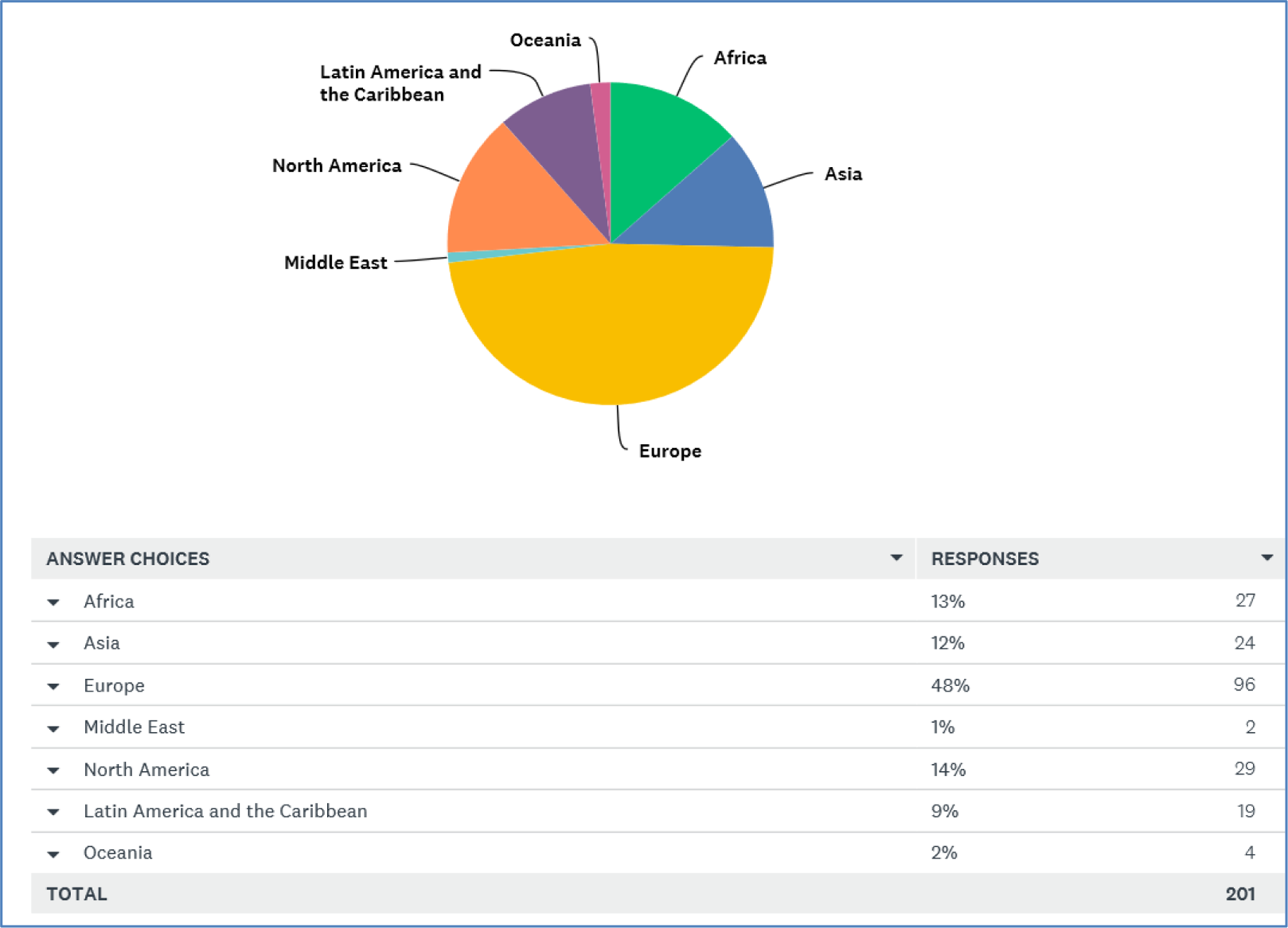
Continent of residence (Source: Authors).
Sectoral distribution of respondents (Source: Authors).
Respondents were working in a great variety of development organizations, including the public sector (international, bilateral, governmental organizations), civil society (NGOs, think tanks) and private sector as defined in this article (multinational companies, small and medium enterprises and consultancies). Some 41% saw themselves as private sector and 51% as other sectors, comprising public sector and civil society. There was a small number of respondents (8%) who were not able to choose between a private or other sector designation, probably reflecting the fact they may have moved in the past between the private and other sectors or that they may have dual roles. This was reflected by one participant working for an NGO and a consultancy in Denmark who commented that she had ‘transitioned from the public (UN/development) sector to the corporate (shipping) sector working on a [multi-stakeholder initiative] that brings largely private sector actors together.’ Those who were unable to choose between the two sectors did not answer further questions.
Relational aspects
Some 91% of respondents were involved in multi-stakeholder processes and partnerships in which civil society organizations, private companies, foundations, intergovernmental organizations and public donor agencies work together, although not all partnerships included all of these types of organizations. Private sector participants in these partnerships included the corporate sector, private foundations, consultancies, small and medium enterprises, financial institutions, farmers and cooperatives. The private sector plays a number of knowledge brokering roles in the multi-stakeholder partnerships, covering all types of knowledge brokering functions as has been identified in the literature (Kiwanuka et al, 2000). However, the information and knowledge management function was the most common (found in 65% of partnerships), followed by capacity building, facilitating, advocacy, linking agent and evaluator in declining order. According to the respondents, the private sector contributes to these partnerships by investing in building strategic partnerships, investing in knowledge brokering, seeking knowledge from credible sources, facilitating productive dialogue, and investing in communication systems.
Respondents considered that building partnerships between different types of actors needed to be based on trust and that this had to be created, highlighted by a respondent based in an international organization in Switzerland. Other respondents emphasized the importance of trust when cooperating with the private sector as demonstrated by this respondent working for an NGO in the UK:
Incentives are key, we should not only think at economic incentives. And above everything there is trust among the parties that can be built only with transparent communication of plans, objectives, costs, benefits, risks etc. The private sector (especially the small-medium) does not invest on that or does not do it effectively.
…I believe the greatest challenge is around communication which results in issues of trust and unmatched expectations. It’s not that hard! I believe [it] is a matter of focusing on and prioritizing personal relationships.
Agreement on the What and Why are easiest. Getting a working collaboration on the How and With Whom are the most difficult, more because of lack of skills and understanding than from conflicting interests.
Time and facilitation (for example during workshops) can enable and strengthen collaboration to generate trust and improve knowledge brokering. A third party, for example a development partner, can initiate opportunities for people to meet and engage.
Cognitive aspects
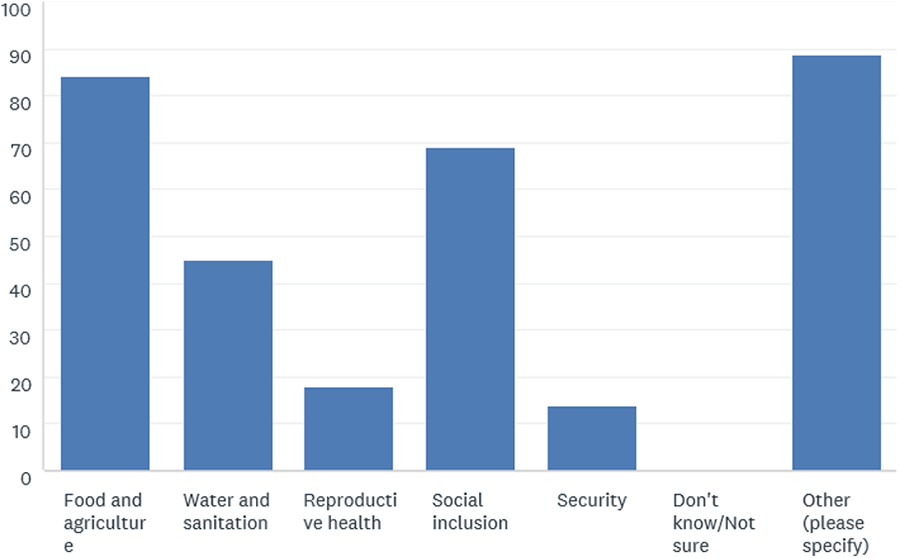
Almost half of respondents worked in the food and agriculture sector (49.7%), while others worked in social inclusion, water and sanitation, reproductive health, security and the rule of law and other sectors (see Figure 3). On average, people were working in more than two different sectors. In terms of the SDGs, participants contributed to multiple SDGs as can be seen in Figure 4.
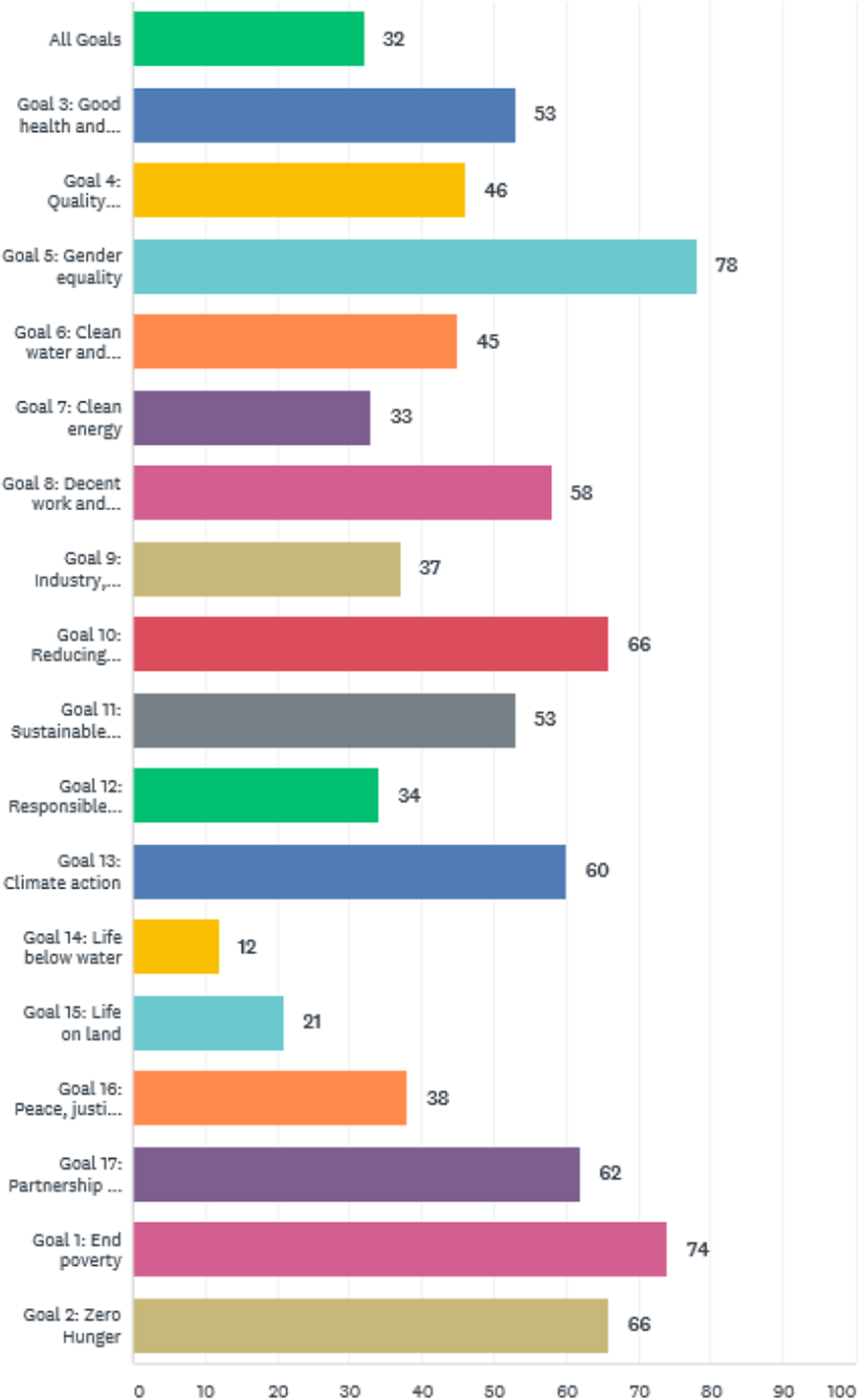
Contribution to the SDGs (Source: Authors).
Respondents undertook the whole range of knowledge brokering activities identified in the extended Gregg and Hoens’ meta-framework. They saw themselves as undertaking information and knowledge management (91% of respondents), acting as linking agents (53%), contributing to capacity building (75%), acting as a facilitator (74%), evaluating (52%), and advocacy (36%).
A number of respondents noted the importance of including the private sector, expressed by a researcher located in the Netherlands:
Despite the many challenges it is important to keep private sector on board and exchange knowledge among various actors. In one of the project we are engaged in, the private sector is interested to pursue a learning platform, after programme closure, despite the many challenges.
…the ‘private sector’ itself is a challenge to clearly define, some stakeholders may be ‘privately-funded’ but with public goods remits. But there is no question that there is an interaction between the public and private, guided by different incentives, in the context of [knowledge brokering].
Structural aspects
According to the other sector actors, recognition of similar interests was the main catalyst to working with the private sector, together with policies and finance encouraging cooperation, identified by of 28% and 26% of respondents respectively. One participant working for an international organization in the UK emphasized the importance of common interests: ‘The main catalyst is the recognition that impact on agricultural development can only really be achieved/sustained with private sector involvement in many ways.’ The existence of personal relationships and the opportunities to meet at events were also rated highly. Co-location of offices, identified in the literature, was not seen as an important issue. For the private sector, catalysts for working with others are more or less identical as can be seen in Figure 5, indicative of a reliable pattern. This is also reflected by comments from a respondent at an international organization in Switzerland who emphasized ‘the importance of facilitated processes to create trust in order to be able to share knowledge/information.’
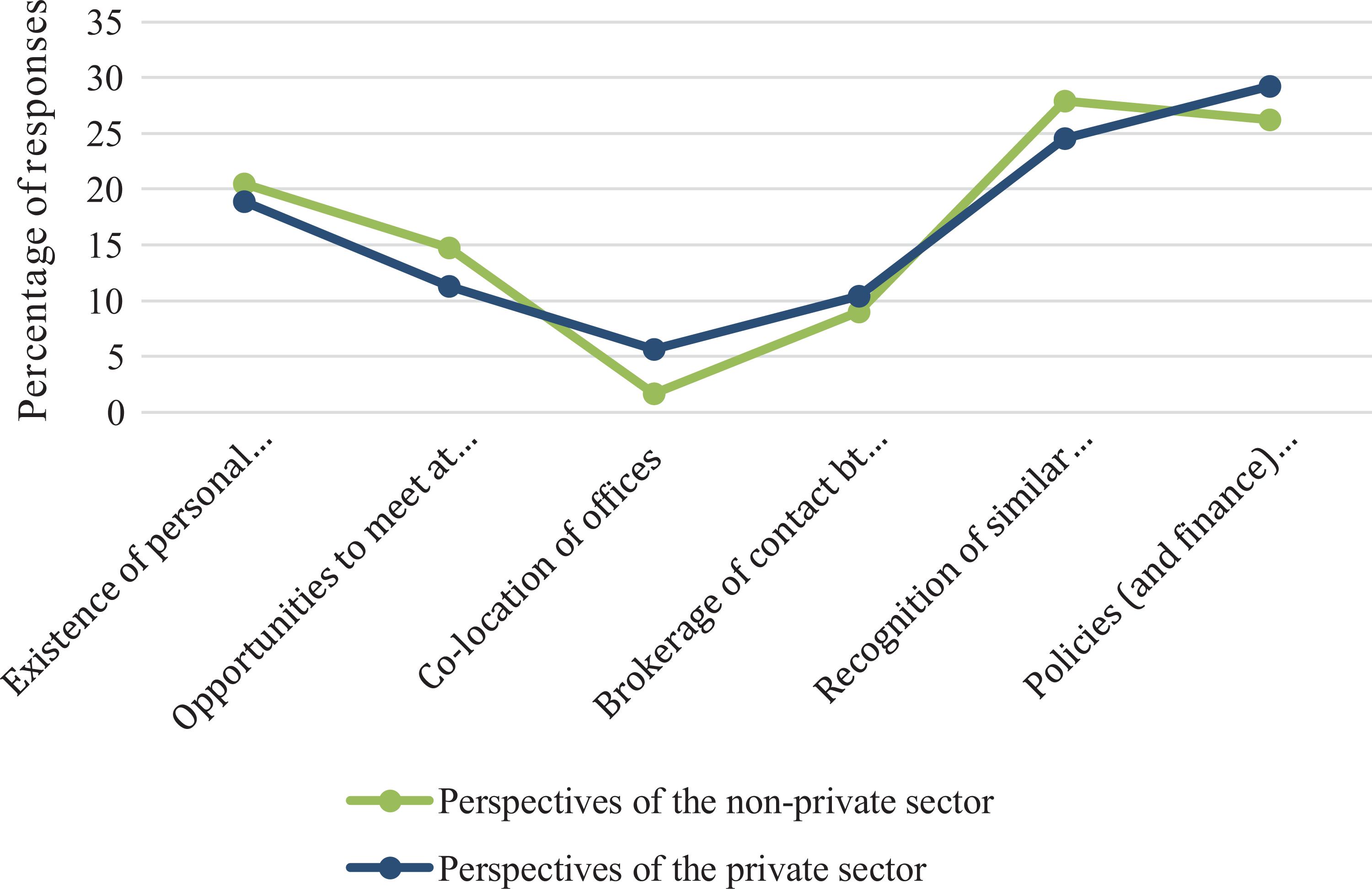
Catalysts for working with the private sector (Source: Authors).
A number of respondents were critical of the public sector, arguing that public sector actors are not sufficiently prepared and do not properly understand their role. For example, respondents working with multiple organizations across the public-private-civil society spectrum noted that:
Representatives of public sector organizations are pulled in different directions and often don’t put the time in to prepare for meetings and then follow up. (USA) [It is] difficult to break conventions/traditions and get full attention and focus of senior most decision makers in public sector organizations. (India)
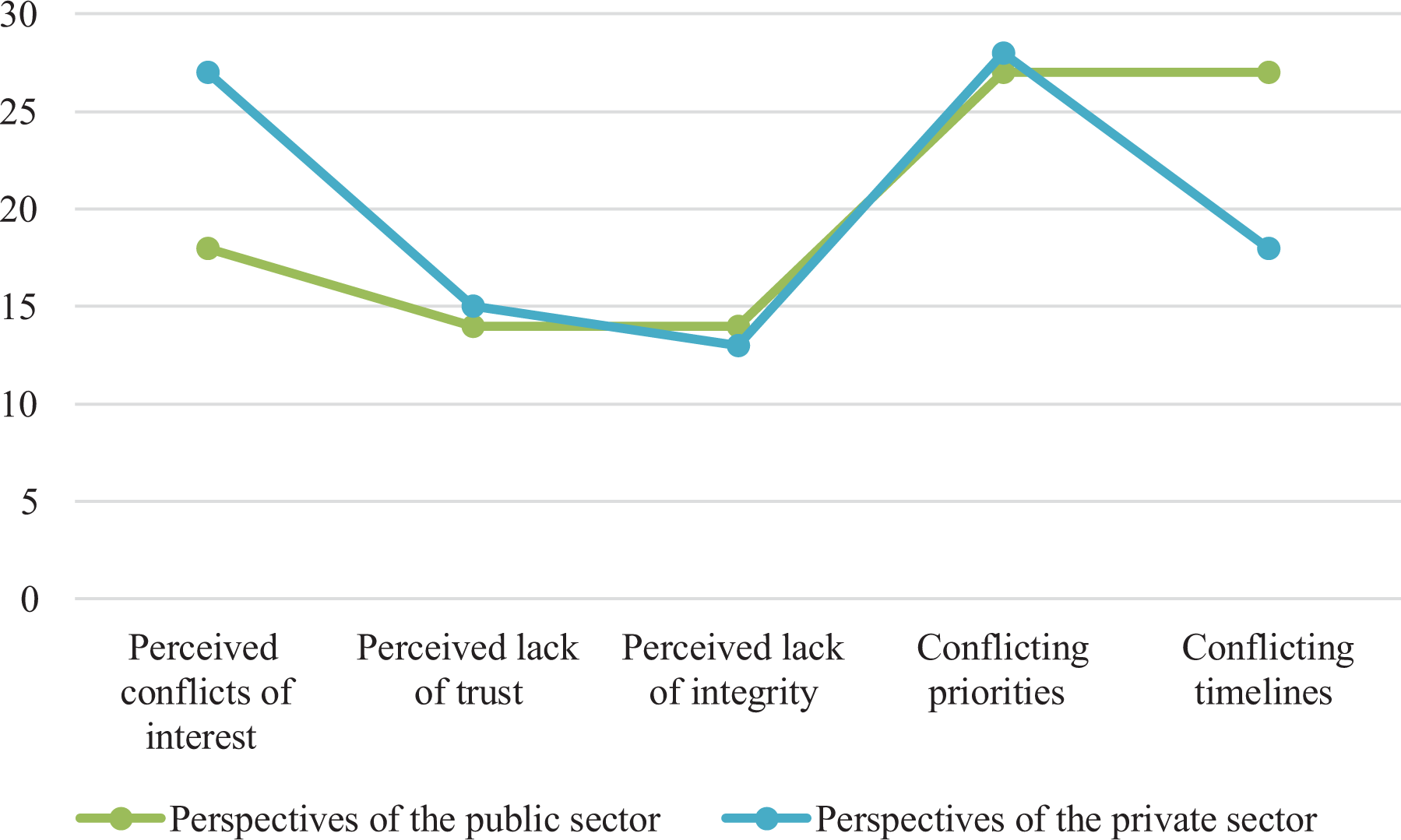
Barriers to working with the private sector (Source: Authors).
Respondents did recognize the ethical challenge of working with the private sector as is demonstrated by comments from a respondent working for a small or medium enterprise in the UK:
The private sector is driven by profit. However, to operate in regions where the SDGs are critical requires a strong ethical stance and a substantial philanthropic culture concerning risk. This is OK with investors so long as there are sound monitoring systems in place to capture the impact of investment. Public sector does not do that well in our opinion - the money is not theirs! However, social impact is measured badly by the private sector compared to the public sector and the latter is not good at it. We depend on detailed local knowledge to select potential investments and thereafter a continuous stream of data and tacit information to track risk and opportunity. We can broker that knowledge, if anyone wants it, but there has to be trust and a mutual benefit if sharing is to happen.
In their comments, respondents noted other extrinsic and intrinsic challenges. In terms of intrinsic challenges, they noted lack of resources, knowledge hoarding and lack of collaborative skills, high turnover of staff in the public sector, poorly organized meetings that take too much time, procurement opportunity costs, the problems of aligned priorities, and lack of motivation. In terms of extrinsic challenges, they noted that these included corrupt officials and political interference and bias. The different barriers led to a complex discrepancy between the private sector and other sectors as was highlighted by a professional working for a government agency in Pakistan who argued that ‘conflict of social objectives of public sector and financial objectives need innovative strategies.’ A management consultant located in Switzerland also highlighted similar issues:
Generalizing here: private sector actors want to scope out the work, sign the contract, get the work done, submit the invoice, get paid and move onto the next mandate. Public sector actors want to appear to be doing things, spending taxpayers’ money, so that their budget won’t be reduced next year, make sure that they don’t achieve their objectives because their remuneration is not related to project implementation or sustainability, all while trying not to upset anyone.
While we had a very nice personal, information and advocacy relationship with one entrepreneur in solar energy, the enterprise went bankrupt and we have lost 100,000 EUR because we were asked to pay in advance…not what we would have done in a proper procurement process with vendors. It is difficult to mix the different functions, but as indicated, much of the relationship is shaped by back donor policies and expectations which doesn’t reflect the potential conflicts of interest that a private firm may have.
Discussion
The results of the questionnaire survey largely support the conclusions of the literature review. They demonstrate a similar, diverse thematic coverage as well as the fact that the private sector was found to play all the knowledge brokering roles identified in the extended Glegg and Hoens (2016) meta-framework. Indeed, as was the case with the findings of the literature review, the information and knowledge management roles were the most commonly identified by respondents. Respondents appear to place an emphasis on the intrinsic barriers to working with the private sector and the extrinsic catalysts. In terms of extrinsic catalysts, the respondents placed considerable emphasis on opportunities to meet, the existence of personal relationships, and brokering by third parties. Policies and finance to support cooperation were seen as particularly important in terms of catalysts for collaboration, indicating that policymakers can facilitate cooperation between the private sector and other development actors by creating spaces for the different sectors to come into contact with each other and through funding opportunities. Neither private sector nor other development actors were, however, convinced about the role of co-location as a catalyst and it is possible that this might be a trait which is particular to Brussels because this finding came from studies of European thinktanks (Sherrington, 2000, Dotti and Spithoven 2017).
The barriers between the private and non-private sectors were symptomatic of a complex disconnect between the two sectors, consistent with ‘messy’ nature of knowledge brokering but also the difficulties of working with the private sector. Since the two sectors are driven by differing priorities, the non-private sector perceives conflict of interest as its barrier for working with the private sector, while the private sector, being profit driven and time limited perceives that timelines in the slow moving non-private sector could be a deterrent to partnerships. In addition, the risks involved in intersectoral collaboration appeared to be a new area which was identified by the real-life experts and was not found in the literature. This difference might be because the literature focuses generally on examples of successful knowledge brokering with the private sector, and does not focus on partnerships which do not work and were undermined by risks. Indeed, the risks of these partnerships and the mitigation thereof might be another interesting area to explore with research.
The theoretical framework of social capital, based on the relational, cognitive and structural aspects, appeared to provide a useful analytical lens for the area under investigation. It was particularly useful because it focused on the relational aspect of knowledge brokering which was found to be an important part of knowledge brokering with the private sector, both in the literature but also by respondents. Trust and personal relationships were also found to be important in the structural aspects because those aiming to facilitate collaboration with the private sector are recommended to create opportunities for the private sector to develop relationships with other development actors, to increase potential trust, and to develop funding instruments. It also became apparent during the study that the roles of knowledge brokering in the extended Glegg and Hoens’ meta-framework can be seen as a sub-component of the relational aspects of social capital (see Figure 7).
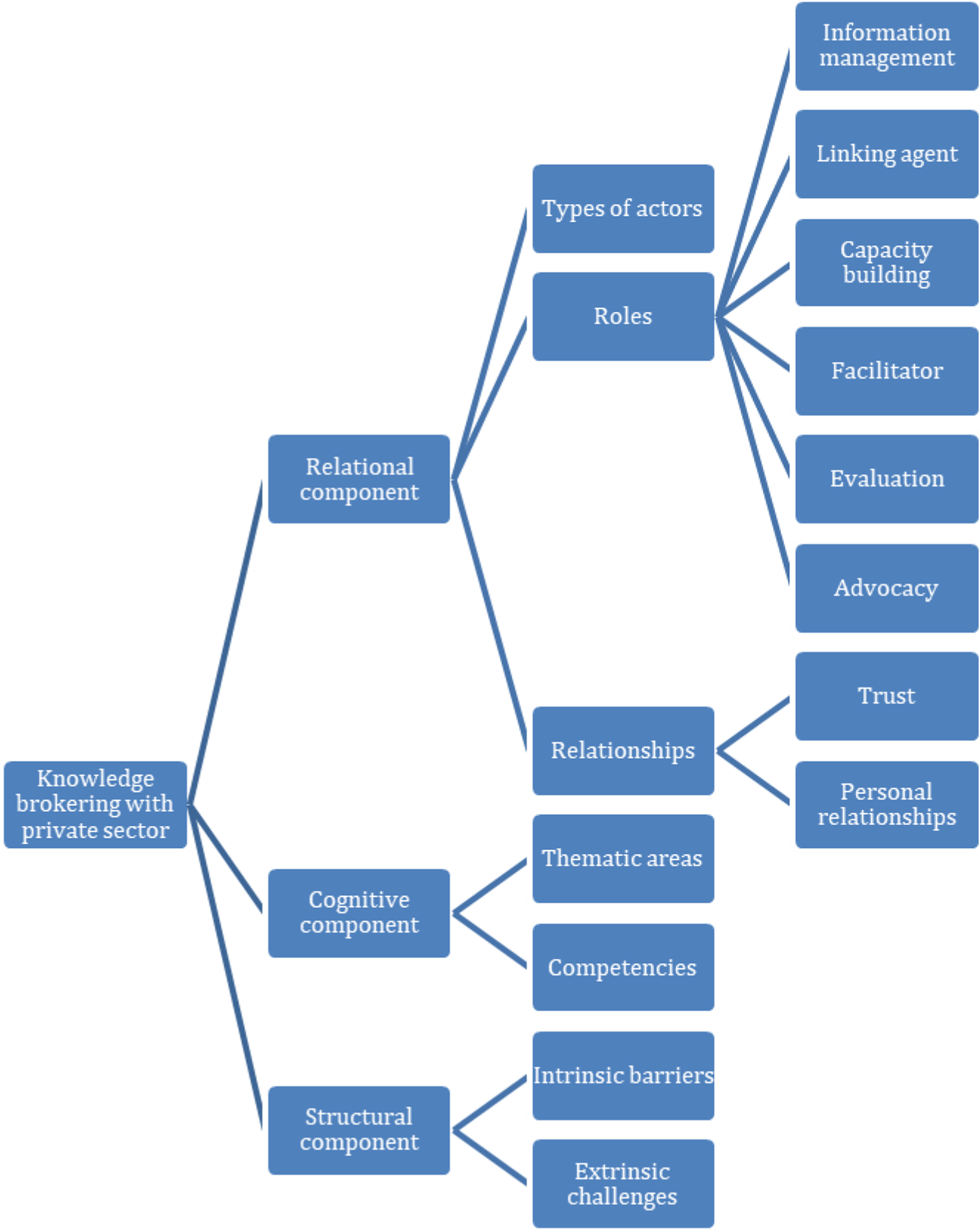
The relational, cognitive and structural aspect of social capital and its links the extended Glegg and Hoens’ meta-framework (Source: Authors).
In terms of limitations of the study, the dearth of literature on the knowledge brokering role of the private sector meant that the study was, to some extent, exploratory in nature and aimed to validate the results of the first known literature review. Although the questionnaire survey made it possible to consult a large number of experts, it is proposed that any follow up study should undertake a more in-depth analysis of perspectives of the private sector using a qualitative methodology such as semi-structured interviews. In addition, as noted in the introduction, one of the problems with analyzing the role of the private sector in international development more generally, rather than only knowledge brokering, is the use of the term private sector which covers such a diversity of institutions with very different objectives, across different contexts. This is consistent with the difficulties that different respondents had as individuals in identifying themselves as private or non-private actors, given that they frequently had multiple roles across the private-public-civil society range. Other respondents found that this confusion was also found at the level of institutions with some private sector organizations having a public good purpose and some public sector ones behaving in a manner more consistent with expectations of the private sector. In this way, it appears to be important to distinguish between different private sector actors in analysis of the private sector’s role, consistent with Cummings and colleagues’ note that:
When development colleagues ask ‘Have you involved the private sector?’ the answer should be ‘Which private sector did you have in mind? And how do you think they will contribute to the economic, social and environmental aspects of sustainable development?’ (2019b: 11).
In terms of the positionality, the first author has worked across the private-public-civil society and continues to identify with a private-public identity, while the second and third authors have a more consistent public sector identity with all three currently institutionally located in universities. When starting to write the paper, they had the expectation that the private sector would be most criticized in knowledge partnerships over, for example, intellectual property. However, only one respondent mentioned the contested nature of intellectual property and, as had been mentioned above, it was the public sector which received more criticism for the ways in which it interacts with the private sector. This was a surprise for the authors and requires more investigation if the potential for collaboration is to be improved.
Conclusions
The private sector is playing an increasingly prominent role in international development and is seen as an important actor in the SDG process. Despite the increasing emphasis on the private sector, very little is known about its role as a knowledge broker in multi-stakeholder partnerships with the public sector and civil society. This paper aims to contribute to this emerging field by undertaking a survey of international experts in the field of knowledge brokering in order to validate and examine the findings in the literature. Respondents from the private sector and their colleagues from the public sector and civil society placed considerable emphasis on opportunities to meet, the existence of personal relationships and brokering by third parties as important catalysts to working with the private sector. It thus appears that development policymakers and funders can facilitate cooperation between the private sector and other development actors by creating physical spaces and funding instruments to encourage collaboration with the private sector. In addition to developing recommendations for policymakers, the paper has added to the emerging body of academic knowledge on the private sector as an unusual suspect in knowledge brokering and provides a conceptual framework linking social capital to the extended Glegg and Hoens’ meta-framework on knowledge brokering.
