




Abstract
Little is known about how mentoring facilitates migrant entrepreneur’s (MEs) host-country integration. This study generates insight by exploring the role of mentoring in bridging the identity differences of MEs. We propose a more nuanced view that accounts for the identity work that occurs during the mentoring process highlighting the mentor’s role in orchestrating (i.e. shaping) mentee identity work via identity prompts and signals. In addition, we find that mentee identity is shaped by the cognitive and behavioural responses to their mentors. Hence, the study presents a dynamic and agentic perspective on migrant entrepreneurship, emphasising the role of the mentor in facilitating ME integration. Exploring qualitative data from 14 mentor–mentee pairs, we find that on an endogenous level, the mentor–mentee relationship is in essence an identity work process. Our model illustrates the mechanisms underlying the endogenous dimensions of the mentoring process, resulting in ME integration in the host country, characterised by their ability to actively read and circulate identity signals across identity groups. Viewing mentor–mentee relationships through social identity work lenses allows for enriching the mentorship field by considering the presence of identity boundaries, dynamics, and signals, which can obstruct or enable ME integration.
Introduction
The number of migrant-owned enterprises has increased; however, these entrepreneurs often encounter additional barriers (i.e. liabilities of foreignness (LOFs)) when starting and running their businesses (Kothari et al., 2022; Zaheer, 1995). Overcoming these barriers necessitates both internal adjustments, such as identity work – defined as adjusting one’s sociocultural understanding to align with other groups for a better organisational fit (Brown, 2022; Kane and Levina, 2017) – and external support mechanisms, such as mentorship. For migrant entrepreneurs (MEs), mentoring is a relevant form of support, as it provides flexible, personalised guidance from a role model (Laukhuf and Malone, 2015), and facilitates integration in contexts where stereotypes or identity differences exist (Stoyanov, 2018; Chevrier et al., 2023). While previous studies highlight the importance of mentoring for business success (Dixon et al., 2012), little is known about the mechanisms through which mentors support ME adaptation to host-country contexts (Sinkovics and Reuber, 2021). Much of the literature focuses on exogenous factors – such as resource distribution or social structure – which, although important, overlook the identity work dynamics inherent in ME–incumbent relationships (Alvesson and Willmott, 2002). Addressing this gap, the study examines how mentoring contributes to bridging identity differences and enabling integration, offering insights for both mentorship and social identity research (Deller et al., 2019), as well as for the development of targeted support programmes.
We focus on endogenous factors underpinning ME integration abroad, namely, their identity fit. In line with Berntsen et al.’s (2022) call to examine personal enablers in migrant entrepreneurship, we consider the identity work that unfolds during the mentoring process. Adopting a social identity lens, we investigate the mentor’s role in orchestrating (i.e. shaping) the mentee’s identity work. ‘Orchestrating’ here refers to the mentor’s active role in guiding, coordinating, and influencing the mentee’s exploration, development, and integration of social identity – emphasising the mentor’s contribution to the mentee’s personal growth and adaptation. This perspective is grounded in a social constructionist approach, recognising that identity is shaped through the cognitive and behavioural responses of mentees to their mentors (Brown, 2022), while also acknowledging mentee agency in reinterpreting, adjusting, or resisting identity adoption. As such, the study contributes a dynamic and agentic view to the ME literature, highlighting the importance of personal identity enablers – such as mentor communication – in facilitating integration (Berntsen et al., 2022). Recent scholarship has also emphasised that mentoring migrants differs from classical mentoring due to the influence of sociocultural differences on the mentor–mentee relationship – an aspect often under-examined in traditional mentoring research (Chevrier et al., 2023; De Cuyper et al., 2019; Reeves, 2017). Consequently, this study responds to recent calls for contextualised research on MEs and the mentoring process by addressing the following research question: How does mentoring contribute to the integration of MEs in host countries?
By exploring 14 MEs from Bulgaria undergoing mentorship support in the United Kingdom, we find that the mentor–mentee relationship is a facilitated identity work process. This allows enriching the mentorship field by considering a mentor’s role in helping mentees navigate identity boundaries and dynamics. We chose a qualitative method to capture the evolving nature of identity dynamics. Data were collected through 34 semi-structured interviews with mentors and mentees, and group interviews with six pairs. Each session lasted 45–90 minutes, providing insights into relational strategies and identity dynamics. Our findings indicate that ME identity work within a mentorship relationship unfolds across three phases that emerged from our data: Phase 1: Exploration: Personal Identity Development; Phase 2: Experimentation: Generating Identity Work Awareness; and Phase 3: Integration: Mobilising Identity Circulation. The first phase of the mentoring process for MEs focuses on helping mentees develop a coherent sense of self, shaped by both individual and societal factors. Mentors guide MEs in this identity development by either helping them deduce their essential features or inducing self-exploration and expression. The second phase involves MEs becoming aware of the identity work in which they engaged, influenced by power dynamics, social norms, and cultural expectations. In this phase, MEs recognise the identity work needed to achieve their goals. The third phase involves strategically adapting aspects of their identity to fit different contexts, which helps their host-country integration. MEs reshape their identities into a hybrid of home and host-country characteristics. Across all three phases, MEs explore, experiment and integrate their identities to adapt to life abroad.
Our contribution provides a departure from the traditional focus on identity construction between rival groups and predominant examples of social identity loss and gains between in-group and out-group members. By examining the process of identity work orchestration, we find that MEs become reflective of their identity work and strategic in their identity boundary spanning. Our findings show that the last stage that MEs undergo (Integration: mobilising identity circulation), is transformative as it enables them to become more independent identity workers who continually adopt, modify and adapt various elements of their identities to suit different social contexts. The concept of identity circulation (used in sociology and cultural studies) refers to how individuals navigate and reshape their multiple identities across diverse social spaces and situations (Stoyanov and Stoyanova, 2022). By practising identity circulation, MEs can emphasise different aspects of their identities, which enables them to integrate and navigate new social environments.
Our contribution is two-fold. First, by examining mentorship through a social identity lens, we highlight the agency role of mentors and mentees and respond to calls for exploration of the interplay between these relational actors (Berntsen et al., 2022) and for ‘actionability’ within mentorship research (Sinkovics and Reuber, 2021). We emphasise the role of the mentor as an identity orchestrator, and that of the mentee as an identity worker. Examining mentorship through a social identity perspective illuminates the mechanisms by which MEs categorise and evaluate social norms for integrating abroad. Second, our study contributes to the identity work literature by highlighting the role of mentors, who (1) guide mentees through the different phases of identity work and (2) facilitate their navigation through the complex interrelationships between the observed emerging phases (see Figure 1). We show that identity work is not a linear process but rather a dynamic, continuous cycle. It involves revisiting and refining phases, where each phase informs the next, and the outcome of one phase can lead to a re-evaluation of earlier stages. This reflects a cyclical model rather than a straightforward, linear progression. For instance, while exploration informs identity experimentation, the outcomes of experimentation often loop back to inform further exploration. This iterative process reflects the non-linear nature of identity work, offering a nuanced understanding of this phenomenon.
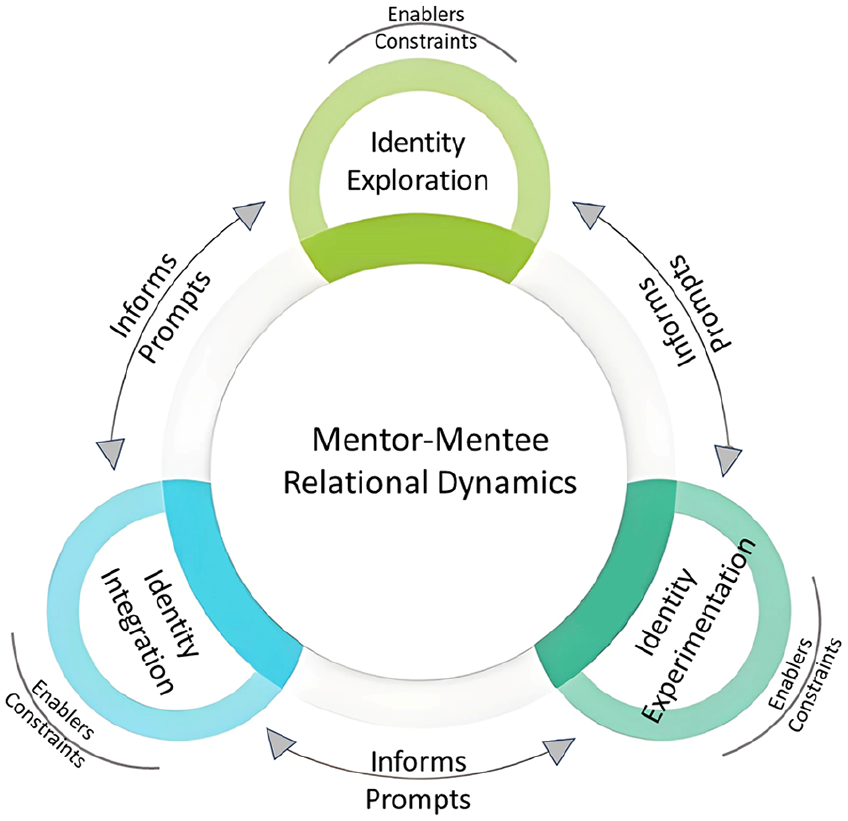
Dynamic identity orchestration model.
Literature review
ME liabilities of foreignness
The LOFs concept is widely used to explain the failure of newly established firms that operate internationally. Extant research analysing the challenages of doing business abroad (Hymer, 1976) argues that such costs arise from the problems of managing country-specific knowledge, mainly economic factors and social pressures, which hinder the desired entrepreneurial efficiency of new actors. Following Zaheer’s (1995) introduction of the concept, Eden and Miller (2004) categorised LOFs into three main types: unfamiliarity hazards, relational hazards and discrimination hazards. However, besides different conceptualisations, there is no one precise definition of the LOFs construct (An et al., 2022; Lu et al., 2022). LOFs emphasise the tacit and social costs that non-native companies incur while conducting business abroad, which native actors do not typically face (Denk et al., 2012; Lu et al., 2022); they relate not only to practical matters but also to social and cultural issues which create intangible barriers to entrepreneurial growth and have tangible effects on business development (Lu et al., 2022). Social identity and cultural differences can hinder an actor’s market integration attempts and undermine their legitimacy (Stoyanov, 2018). Therefore, LOF manifests as both lower integration capacities and weaker legitimacy due to the impact of social and cultural forces. To succeed in a foreign market, firms must navigate these social and cultural forces (Cuervo-Cazurra et al., 2007). Developing a strong social identity and cultural competence can help new actors overcome the barriers to market integration and establish a sense of legitimacy with local stakeholders (Stoyanov, 2018). By recognising the importance of social identity in LOF, firms can better understand the challenges they face in foreign markets and take steps to overcome them (Stoyanov and Stoyanova, 2022). The contemporary business environment is increasingly understood as a complex network of relationships rather than a neoclassical market with independent suppliers and customers (Denk et al., 2012). As a result, social identity barriers can impede MEs from operating within these networks. The traditional home–host-country analysis may no longer apply when examining the causes of business failure. Johanson and Vahlne (2009) argue that ‘outsidership’ in networks creates more uncertainty than psychic distance, challenging conventional views on business failure among migrants. In this study, we acknowledge the interconnectedness of the business environment and build on the LOF debate to address a core issue: social identity barriers.
ME need for mentors
Entrepreneurs face many challenges in building successful businesses, requiring them to quickly develop management skills (St-Jean, 2011; St-Jean and Tremblay, 2020). Mentor schemes connect experienced entrepreneurs with novices, offering a valuable means of transferring knowledge and wisdom (St-Jean and Mitrano-Méda, 2016); these programmes significantly contribute to start-up survival and success by providing advice, guidance, connections, and potential early investments (St-Jean and Tremblay, 2020). Entrepreneurial mentoring has been shown to enhance decision-making, opportunity identification, networking skills and personal identity development, with measurable positive effects on small venture profitability (Assenova, 2020; Meddeb et al., 2024; St-Jean, 2012). The entrepreneur–mentor relationship is a complex social bond, defined as a formal learning relationship where a more experienced individual aids the professional and personal growth of those less experienced (Meddeb et al., 2024). In this article, a mentor is defined as someone who supports and challenges the mentee’s career potential, offers advice, provides professional help, engages in a long-term relationship, shares knowledge and possesses relevant skills and experience (Haggard et al., 2011; Sarri, 2011; Starr, 2014). Successful mentoring relies on a strong mentor–mentee match, with shared cultural or ethnic backgrounds enhancing trust, communication and belonging – crucial for MEs facing challenges like limited capital and market discrimination (Humberd and Rouse, 2016). However, cross-cultural mentoring requires careful navigation of potential power dynamics, highlighting the importance of cross-cultural competence for equitable relationships (Chun et al., 2012).
The knowledge shared within mentorships plays a critical role in their effectiveness. Tacit knowledge, which is harder to articulate or distribute, is best transferred through close relationships such as mentoring, making it distinct from explicit knowledge that is easily shared (Nonaka, 1994). Unlike coaching or apprenticeships, which focus on explicit skills, mentoring emphasises the transfer of tacit knowledge and meaning, crucial for fostering deeper learning and social understanding (St-Jean and Mitrano-Méda, 2016). This aspect is particularly beneficial for MEs, given their need for trust and interrelatedness with mentors to navigate specific entrepreneurial challenges (El Hallam and St-Jean, 2016).
Existing gaps in mentoring research
Mentoring is a critical aspect of entrepreneurial learning; yet, its link to the business success of MEs is underexplored. Research mainly focuses on mentee’s career success, overlooking personal development and identity growth, which are vital for entrepreneurial success (Allen et al., 2008). As Hajro et al. (2021, p. 1138) point out ‘[n]ot all migrants end up being employed by an organisation. Many choose to become entrepreneurs instead’, thus there is a need to explore mentoring within the context of migrant entrepreneurship. Despite several calls in the literature (Haggard et al., 2011), existing research in this area is limited, with only a few studies seeking to establish a direct link between mentoring and long-term success. While it is commonly asserted that mentoring is crucial, the mechanisms through which mentoring leads to sustained success remain unclear (Janssen et al., 2016; St-Jean and Tremblay, 2020). Deepali et al. (2017) argue that mentoring is essential for business survival, helping entrepreneurs combat isolation, avoid mistakes and improve decision-making. Contemporary studies by St-Jean and Jacquemin (2022) also show that mentoring reduces entrepreneurial doubt, facilitating learning and knowledge acquisition. Laukhuf and Malone (2015) suggest that finding a mentor often leads to success, as the entrepreneur recognises the need for assistance and demonstrates confidence in seeking help from others. Despite the positive outcomes attributed to mentoring, research on its long-term effects on mentees and their businesses is limited. Sarri (2011) argues that continuous learning is vital for competitive success and that mentoring facilitates this with previous studies identifing two main critical roles performed by mentors: career and role models, and psychosocial support (St-Jean, 2012; St-Jean and Tremblay, 2020).
The career role model provides business contacts, information, and guidance on choices, while psychosocial support offers reflection, reassurance, motivation, and acts as a confidant. Elaborating on these two main critical roles, St-Jean (2012) developed a more detailed conceptual framework that outlines nine specific roles a mentor can undertake. These more granular roles include a range of psychosocial functions, such as the reflector (offering feedback on strengths and weaknesses), the reassurer (alleviating stress and providing perspective), the motivator (building self-confidence), and the confidant (developing a deep personal relationship). Beyond psychosocial support, mentors also provide crucial career-related assistance by facilitating business integration through networking, sharing knowledge on management, legal, and industry matters, challenging ideas to foster reflection and problem-solving, aiding career navigation, and serving as role models (Haggard et al., 2011). However, this emphasis on the instructive nature of mentorship may limit the understanding of its scope. St-Jean (2012) acknowledges that not only the mentor’s characteristics but also the mentee’s willingness to be open and receptive to change is essential for a successful mentoring relationship. As such, it is important to consider the changes that occur in the mentee, (including social identity changes), which have received little attention (Yitshaki, 2024).
It is also worth exploring the role of the mentor as an orchestrator of this change, particularly with regard to social identity work. While the aforementioned frameworks detail various mentor functions, other perspectives in the current literature on entrepreneurial mentoring more broadly generalise the role of mentors into three distinct categories: facilitative, collaborative, or instructive (St-Jean and Audet, 2013; St-Jean et al., 2018). Despite these categorisations, there are still some gaps and limitations within analyses examining the specific identity work mechanisms within the mentoring process, particularly for MEs (Chevrier et al., 2023; Yitshaki, 2024). Within these categories, the maieutic method, characterised by a non-directive style that emphasises facilitation and collaboration, plays a significant role (St-Jean and Audet, 2013). This method involves asking open-ended questions to help mentees develop their understanding and awareness autonomously, which has been shown to enhance learning, entrepreneurial satisfaction, mentorship satisfaction and self-efficacy (Laukhuf and Malone, 2015). Addressing the aforementioned gaps and building on the understanding that specific prompts and guidance are needed for identity work, we explore the mentor’s role as an identity orchestrator, someone who can initiate and guide the mentee’s identity work process through tailored prompts and cues; as such, we emphasise the importance of mentoring relationships in promoting mentee self-awareness, identity development, and personal growth.
Social identity perspective
According to the social identity perspective, norms are not viewed as external societal pressures on individual attitudes but rather as shared expressions of social identity (Rao et al., 2000). As a result, norms and social influence are critical factors that determine the receptiveness to actor views within organisations. Grounded in the social identity perspective, identity workers adopt and enhance social identities (Alvesson and Willmott, 2002). This perspective allows for the development of models that effectively mentor migrants who wish to integrate into host countries. Examining the mentoring of migrants through a social identity perspective offers valuable insight into how migrants construct and legitimise their identities and views within the host country, and how their mentors can promote this identity work process. Research in this field indicates that migrants engage in the categorisation and comparison of social codes to form perceptions of themselves and others within the social context (Rao et al., 2000). The social identity perspective emphasises the construction of identity through positive in-group and negative out-group stereotyping (Rao et al., 2000) but is criticised for overlooking the potential for collaboration across social identity differences (Rink and Ellemers, 2007). When individuals find themselves in situations where their social identity is at risk, they may use one, or a combination, of the following strategies: social mobility, social creativity, or social change (Hogg and Terry, 2000). Social mobility involves leaving a deprived network for one with a stronger identity. Social creativity entails altering comparisons with rival out-groups to sustain a positive identity. Social change involves direct competition with out-groups, where the outcome affects their status. Within the management field, the social identity perspective has predominantly been explored at the group level, emphasising collective processes while often overlooking the complexity of individual identity (Hogg and Terry, 2000). This group-centric approach can limit the theory’s ability to account for individual agency and the dynamic interplay between personal and social identities within organisations.
The social identity perspective is also criticised for implying stability within identity categories, neglecting the dynamic nature of identity. This static view may not fully capture how mentoring helps MEs navigate shifting identities over time and in different contexts (Pratt, 2020). Nevertheless, this perspective is valuable for identifying deviant behaviour linked to different social identities and addressing it through education and persuasion (Kane and Levina, 2017; Rao et al., 2000). However, categorising views and attitudes as simply correct or incorrect is complex, as it involves factors such as socioeconomic and geographic context (Hogg and Terry, 2000). Effective migrant integration requires exchanging diverse knowledge and attitudes while addressing internal development to address concerns (Lu et al., 2022). This exchange of identity signals that facilitate inter-group comparison results in complementarity and brokerage, suggesting the possibility of a strategy for addressing social identity differences that do not harm either in-groups or out-groups (Stoyanov and Stoyanova, 2022). This unexplored strategy, founded on the circulation of identity signals during interactions, could be characterised by an integrative logic of collaboration between migrants and local entrepreneurs (Stoyanov and Stoyanova, 2022). This differs from the distributive logic emphasised in the social identity perspective based on zero-sum game principles such as competition over fixed resources or rigid beliefs (Raiffa, 1982). Realising a social identity strategy based on an integrative logic is arguably a challenging endeavour for new migrants due to their lack of familiarity and knowledge of the new context; therefore, it is important to understand whether and how migrants can develop the awareness to adopt and implement an integrative social identity strategy. Consequently, we explore the role of mentors in orchestrating migrant’s social identity work; identifying the logic and sequence of mentoring actions between mentors and mentees is crucial in determining the migrant’s ability to develop and adopt a constructive social identity strategy. This article focuses primarily upon this aspect.
Identity work: ‘Inward’ and ‘outward’
Identity work highlights individual agency in shaping personal identities and the influence of micro-processes on macro-outcomes such as knowledge boundary spanning. The concept refers to the activities individuals undertake to create, present and maintain identities that align with their self-concept (Brown, 2022). It involves forming, repairing, maintaining and revising identity constructions to achieve coherence and distinctiveness (Sveningsson and Alvesson, 2003). Performing identity work often entails complex processes – such as communication, diffusion, integration and systemisation of perspectives – which may exceed the capabilities of MEs operating independently (Nonaka, 1994). This study specifically examines how communication and personal connections with a mentor can transfer identity cues, triggering the identity work of MEs. Analyses of identity work suggests there are both internal and external dimensions to this process leading us to assert that identity work can be triggered externally and then, create internal identity ripples. Watson (2008:129) posits that ‘identity work involves the mutually constitutive processes whereby people strive to shape a relatively coherent and distinctive notion of personal self-identity and struggle to come to terms with and, within limits, to influence the various social identities that pertain to them in the various milieus in which they live their lives’. Thus, internal identity work refers to cognitive processes related to identity preservation or justification, while external identity work refers to the process of relating or negotiating one’s identity to others through communication or signalling practices. Identity work is a useful framework for understanding the dynamics of mentoring MEs, as it encompasses the journey for social validation and provides explanatory power for shedding light on the process. Ibarra and Barbulescu (2010) define identity work as an acknowledgement of the complexities of navigating different social domains and addressing identity-related challenges.
Validation of one’s own identity is critical for building legitimacy and embeddedness, which are essential for the ability of MEs to span identity and knowledge boundaries. Ashforth and Schinoff (2016) highlight the potential for conflicts between internal and external identity motives. In the context of mentoring MEs, this means being mindful of the conflicts between preserving ME identity as a strategic asset (as proposed by ‘assets of foreignness research’ Stoyanov et al., 2018) and accommodating one’s identity (i.e. incumbents) to facilitate collaboration with host-country incumbents. Brown (2017) notes that these internal and external identity motives can be in conflict, and substituting identities may prevent MEs from realising the full benefits that their foreignness may bring (Stoyanov et al., 2018). Identity construction is a multifaceted process shaped by exposure to multiple groups (Brown, 2022) and cannot be fully replicated or constructed. Thus, balancing the dynamics between internal and external identity motives requires considering the nuances of identity construction. Our study also explores how these conflicting dynamics can be balanced by examining the interpretive agency of mentors during sensemaking and their efforts to orchestrate ME responses to a dual identity context (Emirbayer and Mische, 1998).
Methodology
Data context and collection
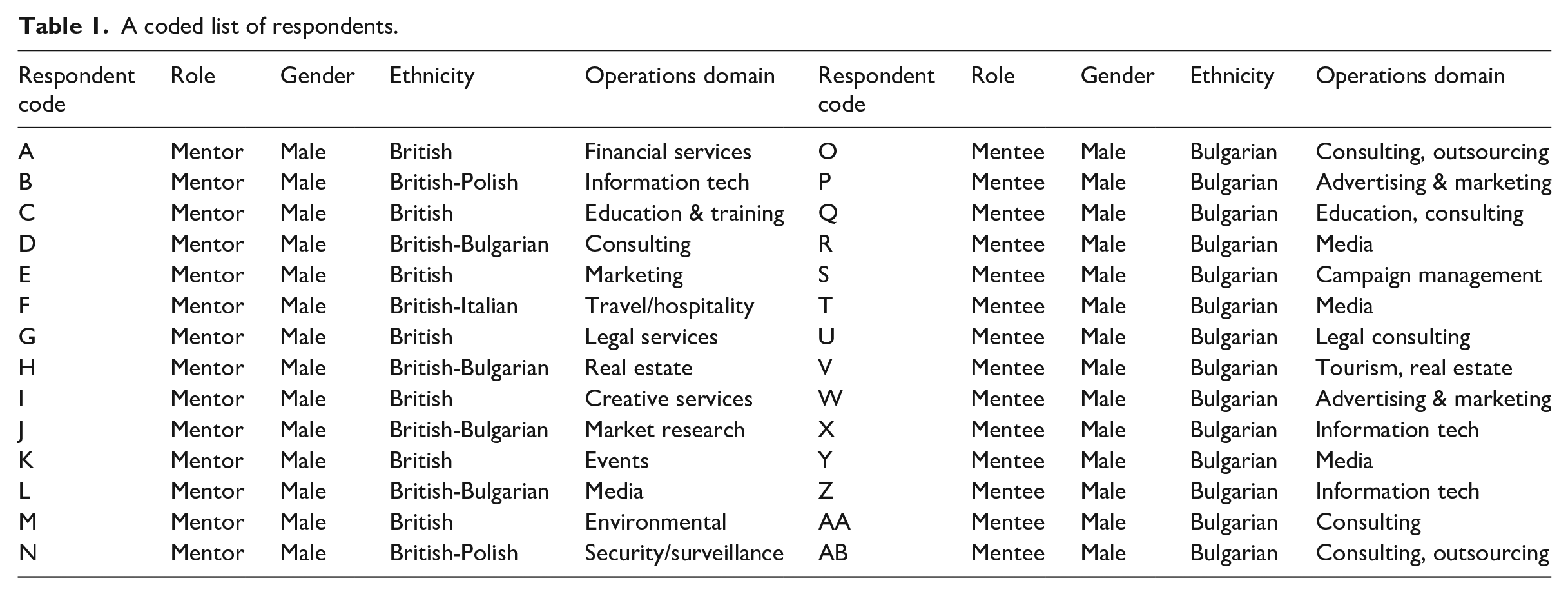
We employed a qualitative, interpretative case-based research approach (Siggelkow, 2007). analysing 14 pairs of mentors and mentees. The mentees are all male MEs from Bulgaria and residing in the United Kingdom; all o are in proximity to each other, which makes their mentor–mentee relationships a suitable case for investigation. Intentional sampling with non-probability techniques was utilised to select research participants; as part of the selection criteria, we ensured that mentors and mentees maintain regular interaction and held a long-term perspective on mentorship. Consequently, we sought mentoring relationships where both the mentor and mentee were committed to maintaining their engagement over an extended period, typically a minimum of one year; this was essential to allow the relationship to evolve and for both parties to achieve significant developmental outcomes. The long-term perspective also implied that both mentor and mentee viewed the relationship as an ongoing process, with goals that extend beyond short-term objectives. The mentee’s period of residence in the United Kingdom varied from one to ten years; they operated in various service or knowledge-based industries and so, they did not have access to easy-to-commercialise tangible assets that could have been used to offset their foreignness (Stoyanov et al., 2018). Most of the identified mentors are operating entrepreneurs who either have a migrant background or are members of various diaspora networks; hence, they have access to and are looked upon favourably by MEs. Participants were identified by approaching mentors, who then facilitated contact with mentees, or vice versa. In the case when mentors have several mentees, we selected a mentee who met the criteria. The identities of mentors and mentees were anonymised to ensure the authenticity of their shared perspectives. While data were collected from all participants, the emphasis was upon the mentors since the study focuses on their ability to orchestrate mentee identity work. We focused on the significance of mentor identity prompts and cues, setting the study apart from previous research that has mainly characterised mentor–mentee relationships from a knowledge transfer point of view. By studying endogenous dimensions of the mentor–mentee relationships (i.e. identity work), we aimed to improve understanding of the strategic identity work processes that characterises how mentors help mentees integrate into the host country. Table 1 presents an overview of the coded list of respondents, which includes both mentors and mentees, along with their respective roles, gender, ethnicity and operational domains.
A coded list of respondents.
We gathered data primarily through semi-structured interviews with the mentors and mentees separately, followed by group interviews with six of the pairs. Mentee interviews provided rich, personal insights into how mentees experience personal and professional growth, giving authentic reflections on the impact of mentoring. The mentor interviews revealed the deliberate strategies and a rationale behind guiding identity work, offering a perspective on mentorship methodologies. The mentor–mentee pair interviews captured real-time dynamics and interpersonal exchanges, showcasing the collaborative process in overcoming challenges; thus, providing data that is both rich in context and reflective of the mentoring relationship’s effectiveness. This layered approach helped ensure credibility by cross-referencing perspectives and led to 34 interviews lasting between 45 and 90 minutes. I addition, participant observations and oral/life stories were used to supplement the data collected. Participant observations were conducted informally during the group interviews and, on occasion, during follow-up meetings with individual mentor–mentee pairs at their business premises or networking events. These observations focused on non-verbal cues, interaction dynamics and contextual factors that informed our understanding of the interview data. Field notes were diligently recorded immediately following these observations. The ‘oral/life stories’ component was intrinsically woven into the semi-structured interviews, where participants were encouraged to narrate their entrepreneurial and integration journeys chronologically, providing a rich, longitudinal perspective on their identity work. These narratives were captured verbatim during the interview recordings and formed a key part of our qualitative data set.
The collected data were transcribed, categorised and analysed. Specifically, interviews allowed for in-depth reflection and assessment of events, particularly when exploring complex phenomena such as identity work and its orchestration during mentoring. This allowed us to explore participant experiences and perspectives. By using interviews, the researchers were able to obtain insights into the relational strategies and identity dynamics of mentors and mentees, which may not have been possible through real-time observations alone. Furthermore, interviews offered a safe, confidential space for participants to share experiences, yielding rich data and insights into their perspectives. To address retrospective bias in the data, the researchers employed a triangulation method. First, mentors were interviewed, followed by the collection of oral accounts from mentees (Van de Ven, 2007). The initial interview contact was facilitated by the former director of the British Bulgarian Chamber of Commerce. This enabled the recruitment of additional participants using the snowball sampling method. The additional group interviews with six mentor–mentee pairs added to the rigour and credibility of the collected data. By using multiple methods and data source triangulation, the researchers were able to cross-validate their findings, thereby strengthening the validity and reliability of the study. This approach allowed obtaining a comprehensive and nuanced understanding of the mentor–mentee relational strategies and identity dynamics, reducing data biases or blind spots. Overall, the use of qualitative data source triangulation enhanced the credibility of the study and provided a thorough and robust analysis of the research.
Research approach
Schutz (1962) argues that participant narratives offer an accurate representation of the social reality that researchers aim to understand. This study focuses on the narratives of mentors to examine the identity work orchestration model in the studied relationships. Following Rogoff’s (1995) recommendation for analysing community interpersonal and personal-shaping environments, we examined three levels of discourse: personal (micro: mentor and mentee experience), interpersonal (meso: mentor–mentee communication), and community (macro: account on how the MEs reflect on their interaction with host-country networks) to comprehend the interdependencies adopting a constructionist philosophy that views realities as socially constructed, and a constructionist epistemology assuming meaning is derived from interaction with social and physical environments (Crotty, 1998).
Data reduction and analytical approach
The process of analysing and reducing data to gain insights is commonly referred to as data reduction and the analytical approach. In this study, interview transcripts and field notes were analysed using a narrative analysis method based on Corley and Gioia’s (2004) three-stage data structuring approach. The field notes were systematically recorded during and immediately following interviews and group interview discussions, enabling us to capture contextual details, participant behaviours, and emerging themes. This practice facilitated the identification of patterns, informed the analytical process, and enriched the interpretation of the data. The three stages of the method include identifying first-order concepts, second-order themes and aggregate dimensions (see Figure 2). Figure 2 visualises the data structure, illustrating how our findings reveal that ME identity work unfolds across three phases: Phase 1: Exploration: Personal Identity Development, Phase 2: Experimentation: Generating Identity Work Awareness and Phase 3: Integration: Mobilising Identity Circulation. These phases represent the overarching aggregate dimensions that emerged from our data, each of which encompasses various mentor-driven strategies and actions that help mentees navigate their identity work in the host country. In Figure 2, the first-order categories in data structure represent observable actions taken by mentors. These categories reflect the mentor’s efforts to guide the mentees through various identity-related challenges. The second-order themes group the first-order categories into broader processes that the mentor’s prompts facilitate. At the highest level, these dimensions capture the overarching phases of identity work that mentees undergo: exploration, experimentation, and integration. These dimensions synthesise the findings into a coherent framework for understanding how MEs develop their personal and professional identity in a host-country context.
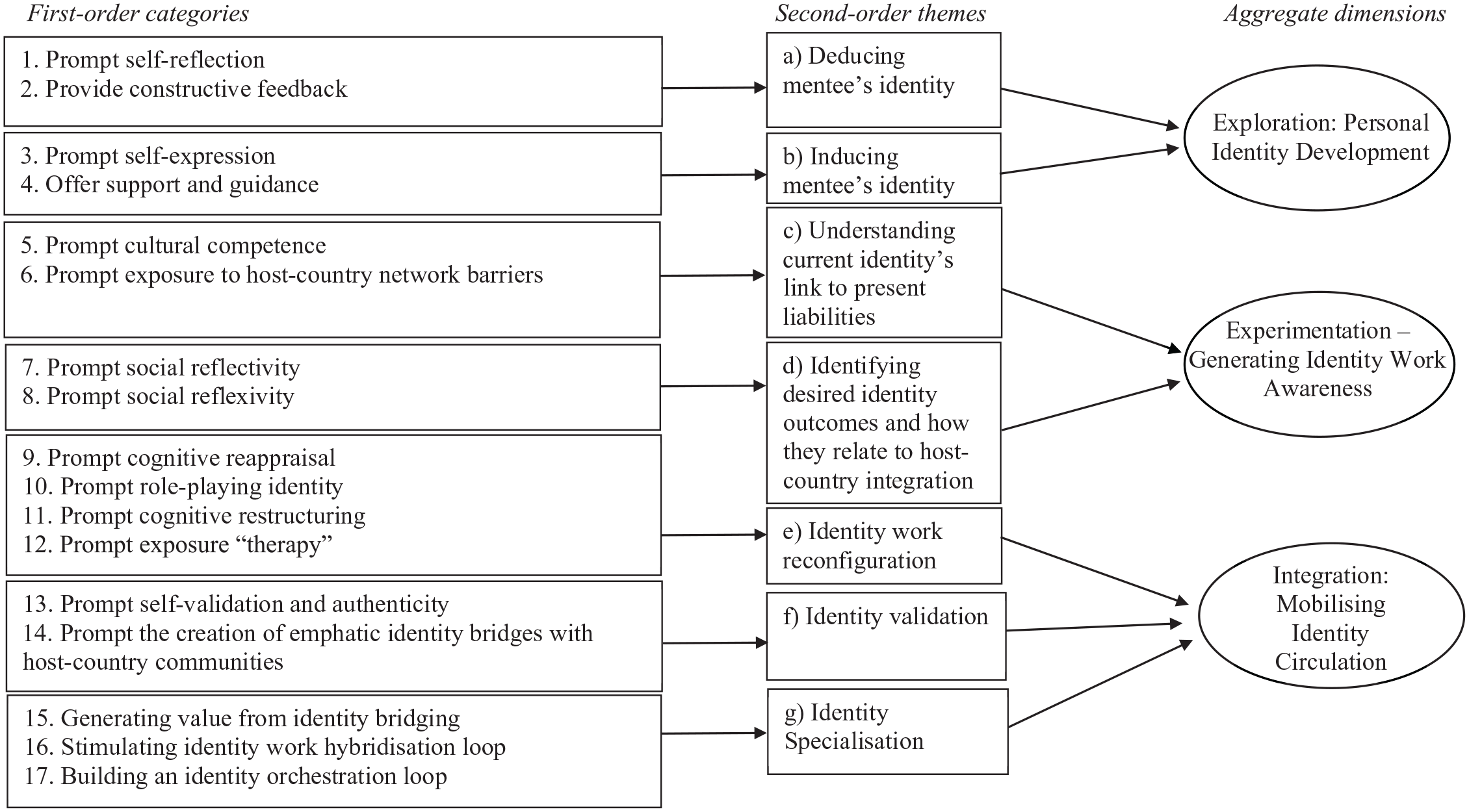
Data structure: Identity orchestration.
In the first stage of open coding, the primary researcher analysed raw data to identify common themes and grouped them into first-order categories, with selected quotes illustrating these patterns. Other authors reviewed the categories for accuracy. In the second stage, axial coding integrated first-order categories into second-order themes, revealing patterns and processes in the entrepreneur’s identity development while checking for individual biases. Finally, in selective coding, the researchers aggregated key theoretical dimensions, continuously reinterpreting the data in light of theory. This iterative coding process continued until theoretical saturation was achieved; this was determined to have occured when no new concepts or categories emerged from the additional data collection and analysis, indicating that the existing themes and dimensions were sufficiently rich and robust to explain the phenomenon under investigation. This rigorous approach, and sample size, ensured the comprehensive capture of relevant data and enhanced the reliability of our findings regarding the identity orchestration process.
Findings
This section showcases and interprets the results and conclusions depicted in Figure 2. It summarises the collected data and discusses its relevance to the research questions.
Exploration: Personal identity development
Personal identity development is the process of forming a coherent sense of self, shaped by environment, culture, experiences and genetics. Mentors can support this by helping individuals deduce their identity by exploring what constitutes their essential features, or by helping them induce their identity by facilitating self-exploration and self-expression.
Deducing identity
Mentors guide mentees through self-reflection and exploration to uncover their core traits. Data shows mentors help mentees identify values, interests, strengths, and weaknesses, while reflecting on how life experiences shape identity and worldview. This process leads mentees to a clearer sense of self. Mentors support this journey by fostering self-understanding and a sense of place in the world. Two key actions are observed to be shared by mentors who help mentees deduce their identity. The first, is Encourage self-reflection, as highlighted below: I encourage them to engage in regular self-reflection. This involves asking them open-ended questions that prompt them to think deeply about their values, interests, goals, and experiences. I encourage them to keep a journal or engage in other forms of self-expression. I believe asking them to write is very important as in that way they can explore their own thoughts and feelings more deeply. (D)
The second actionable point to help mentees deduce their identity is to provide constructive feedback, which is exemplified by the following quote: By helping my mentee identify their areas of strength and areas for improvement, I can provide valuable insights into who he is [i.e. their identity] and how this relates to his goals and aspirations. My role is to offer guidance on how he can leverage his strengths to achieve his goals and develop strategies to overcome his weaknesses. (C)
By promoting self-reflection and offering constructive feedback, mentors help ME mentees deduce their identity and understand their place in the host country.
Inducing identity
Inducing identity refers to mentor goals to help MEs develop a sense of self or personal identity. This involves exploring one’s values, beliefs and experiences to understand oneself better and establish a coherent sense of identity. A mentor can help a mentee induce their identity in several ways. Two actions emerged from the data that show how mentors help mentees induce their identity. The first illustrated below, is ‘encourage self-expression’: If I am to help, then the person needs to open up to me. Mentoring cannot take place without it. The best way is to encourage them to express themselves in the best way they feel. Although I am here to help them with business, I also encourage them to explore their creative interests. I have recommended people [i.e. MEs] to attend workshops on writing, drawing, even music. I want them to do what feels natural to them. I encourage them to participate in activities that go well with who they are and what they value or believe in. (I)
The mentor helps a mentee induce their identity by encouraging them to express themselves in various ways. This could involve encouraging the mentee to explore their creative interests, such as writing, drawing or music, or encouraging them to participate in activities that align with their values and beliefs. These opportunities for self-expression help mentees clarify their sense of self and build a coherent identity. The second is: ‘offer support and guidance’ exemplified by the following quote: I provide feedback on the ideas that are shared with me, but more importantly, I encourage them to take risks and try new things. When I can, I provide resources and guidance to help them develop a stronger sense of self. This helps not feeling lost when coming here. Sometimes the resources I suggest are not strictly business-related. Sometimes just books, workshops, or seminars. All of them are fine as long as they align with the person’s interests and goals. (K)
Support and guidance are key to helping mentees induce their identity by encouraging exploration and self-development. Support, whether emotional or encouraging, creates a safe space for mentees to explore their thoughts and feelings, leading to greater self-awareness. Guidance provides direction and advice, often through sharing experiences and resources. This is particularly valuable for MEs struggling to form a coherent sense of self or relate to host-country identities. Together, support and guidance help mentees build confidence and make informed decisions about their personal and professional paths.
Experimentation: Generating identity work awareness
This aggregate dimension is characterised by the mentor’s attempts to help mentees: Understand current identity’s relationship to present liabilities, as well as identify desired identity outcomes and how they relate to host-country integration. These second-order themes and their relevant first-order categories are discussed below.
Understanding the current identity’s link to present liabilities
Mentors emphasise that the challenges MEs face are not due to their identity. Instead, the connection between identity and liabilities lies in how it affects their ability to develop cultural competence and access host-country networks. Mentors advise MEs to take pride in their identity and avoid imitating host-country identities at the expense of their own. Yet, while no one identity is inherently better than others, individuals from diverse backgrounds and identities can bring unique perspectives (or switch between them) that can contribute to their cultural competence and ability to navigate host-country networks. Two actionable points emerge from this. The first is: ‘prompt cultural competence’, illustrated below: Being competent at interacting with local businesses and groups takes a lot of determination. Developing an awareness and understanding of cultural differences is not something that new people can achieve overnight. Everyone knows that they need to be respectful . . . but being respectful may mean different things to different people. Especially in this country, there are so many different people and cultures. Knowing how to adapt to and work within different cultural contexts is difficult but valuable. This can help him [the mentee] build solid networks so I try to make him think about it. I don’t impose my ways, but I help him see it and then reach it however he can.
What is your role in this process?
I share my experiences, some comical situations as well, and how they worked out or didn’t. These anecdotes, the challenges I had, the lessons I learned, through them, I demonstrate that it is achievable, and also expensive if you don’t get it right. (J)
The mentor helps the mentee build confidence and curiosity about the culture, fostering cultural competence. This awareness is not imposed but transferred informally, motivating the mentee’s interest in developing cultural competence and setting them up for success in their new environment. The second point: ‘prompt exposure to host-country network barriers’ is demonstrated exemplified below: Getting rejected is not the end of the process. It is the beginning. It gives you information to work with. That’s why I ask them [mentees] to just go for it. Then they can think about what didn’t work, what are the key factors or skills that are important to these people [host-country community]? How are these different from what you have? Testing the limits of what is acceptable, knowing the boundaries [. . .] I make them imagine what they would dare to do if they knew they wouldn’t fail. Very often it’s us who put the barriers. It’s our barrier, and not the accent, or the lack of resources. You need to remove personal barriers to find what are the access barriers imposed by others. (N)
The data suggest that the key to identifying desired identity outcomes and understanding their link to host-country integration is to be proactive and intentional in promoting positive outcomes and addressing barriers to integration. The mentor prompts MEs to engage in identity work to develop in-depth cultural competence and gain exposure to host-country networks.
Identifying desired identity outcomes and how they relate to host-country integration
Identifying desired identity outcomes and understanding how they relate to host-country integration is a complex but vital process for subsequent identity work. This process characterises mentee awareness that they need to go through an identity work process to build a better fit with the host country. To define identity outcomes, mentees must think about the attitudes, behaviours, and values that they hope to adopt in the new country. For example, one might want to feel a sense of belonging and connection to their new home, value diversity and tolerance and contribute positively to the host community. Yet, to ensure that these identity outcomes are aligned with the host country (and hence, help MEs integrate), defining identity outcomes requires consideration of social reflectivity and social reflexivity.
Social reflectivity is necessary for identity work because one’s social context and experiences can shape their sense of self and how one understands their place in the world. Through social reflectivity, individuals may come to recognise how factors like race, ethnicity, gender, and class shape their identity, fostering awareness of themselves and their social relationships. Additionally, social reflectivity also involves considering how one’s identity shapes interactions with others and how they are perceived in different social settings. Overall, social reflectivity can be a valuable tool for individuals to develop a nuanced and self-aware understanding of their identity and its relationship to the larger social world. Social reflexivity is the process of reflecting on and questioning one’s social position, experiences, and beliefs concerning the broader social context. It involves recognising how social structures and cultural norms shape identities and experiences and considering how we can challenge and change these structures to create our place in the world.
Social reflexivity is closely related to identity because it encourages us to critically examine the social and cultural forces that shape our identities. This process of self-reflection and critical inquiry can help us to challenge and resist oppressive social norms and structures, and to work towards creating a more just and equitable society. Social reflectivity is often seen as a precursor to social reflexivity. Before engaging in self-reflection and self-examination, it is important to first observe and analyse the social world around us. Social reflectivity allows us to gain an understanding of social structures, norms, and values that shape our experiences and perspectives. Once we have this understanding, we can then engage in social reflexivity, which involves critically examining our own beliefs, values, and behaviours in relation to these social structures. The quotes illustrate how mentors prompt MEs to consider first social reflectivity, and then, social reflexivity.
I prepare my mentees that the first 50 times they want to establish a connection with a local business, they almost certainly fail. Saying that can be quite liberating and it will let them do what I ask them to do – to observe and analyse. I encourage them to critically examine the situations they are in. When they go to a company’s office, I want them to notice the social norms and values that are present in that company. I want them to consider how these norms and values shape the perspectives of these businessmen, to spot even the smallest actions of others, and to analyse how these are influenced by social structures and norms. Being able to reflect on what happens during all kinds of social situations is a great skill, which is valuable for business but also for life here. (E)
By providing these prompts and opportunities, the mentor can help the mentee develop their social reflectivity skills. These skills can then be used to engage in social reflexivity and critically examine their own beliefs, values, and behaviours in relation to the social structures and norms they have observed and analysed.
I encourage him to reflect on his experiences approaching local businesses and how these experiences relate to his background. I often ask questions to provoke him to think about how his experience and background may affect the way he is treated when trying to work with local businesses. It is important to consider how others perceive him and if there are any biases. Recognising bias is very important, being aware of how prejudice limits opportunities too. It is part of self-reflection. But I don’t want him to just accept these biases he faces for being a foreigner. I want him to challenge them internally first, and then externally. It is easy to get people to complain about injustices, but as soon as I notice this happening, I confront with the question ‘What would you do about it?’ Letting someone complain is purposeful, the purpose is letting them convince themselves that there is a reason to act. In this way, it is not me who encourages action directly, it is them who see they need to take action to challenge bias. As soon as the spark is there, it is easy then to discuss what steps need to be taken for them to advocate for themselves. (B)
By engaging in these conversations and activities, mentees can develop their social reflexivity skills, gain an understanding of themselves and their place in the world and work towards creating themselves integrated in host-country networks.
Integration: Mobilising identity circulation
Identity circulation is the process by which MEs adopt and adapt different identities or aspects of their identity depending on the social context and the people they interact with. In other words, individuals may present different versions of themselves in different situations, depending on their perception of what is appropriate or expected. Mobilising identity refers to the process of actively invoking and emphasising a particular aspect of one’s identity to achieve a certain goal. This can involve highlighting aspects of one’s identity that are seen as advantageous or relevant to the situation at hand. This aggregate dimension is characterised by mentor attempts to help mentees adopt and execute identity work reconfiguration, identity validation, and finally identity specialisation. These second-order themes and their relevant first-order categories are discussed below.
Identity work reconfiguration
Identity work reconfiguration refers to the process of redefining or reconstructing the ME’s sense of self in response to changes in personal or social circumstances. This process is found to involve a variety of strategies and techniques as prompted by the mentor, including cognitive reappraisal, role-playing identity, cognitive restructuring and exposure therapy. Cognitive reappraisal is a cognitive-behavioural approach that involves changing the way mentees think about a situation or experience. By reframing negative events or liabilities related to their foreignness in a positive or empowering light (e.g. thinking of foreignness as an asset), MEs can reduce negative emotional responses and increase their sense of control and agency.
The quote below illustrates how mentors prompt MEs to undergo cognitive reappraisal.
Don’t think that having an accent is a bad thing. The second something hears your accent, they immediately know that you know at least two languages. See . . . having an accent is actually a great way to make an impression. It gets people curious about your story. (M)
Role-playing identity is a technique that involves actively exploring and experimenting with different aspects of ME identity, including their ethnicity, culture, expertise or other dimensions that characterise them. By trying out new behaviours or roles, MEs can gain new insights, perspectives and skills that help them to develop a coherent and integrated sense of self in the host country. The following group-interview quote illustrates how mentors prompt MEs to conduct identity role-play.
Okay, since you said it requires confidence. Imagine that you are at that meeting now. How would you behave differently in that situation? What would be your source of confidence? Let’s play it out. (F)
Cognitive restructuring is a technique that involves identifying and challenging prejudice or negative beliefs. By replacing these with more positive and rational beliefs, MEs can reduce negative emotional responses and increase their sense of self-efficacy and control.
The group-interview quote illustrates how mentors prompt MEs to undergo cognitive restructuring.
When you find yourself thinking about not being able to fit in, examine those thoughts. Where is the evidence? Or is it just fear or self-doubt? The minute you challenge those thoughts, you would change your emotions and behaviour. You have already gone through a lot to be here, don’t only look at the challenges ahead, look at all the work done so far . . . then you know you are doing well. (L)
Exposure ‘therapy’ is a cognitive-behavioural strategy that involves getting gradual exposure to people or situations that trigger anxiety or negative emotional responses. By facing these triggers in a controlled and safe environment, individuals can learn to tolerate them more effectively, reducing their overall impact on their sense of self or self-worth.
The group-interview quote below illustrates how mentors prompt MEs to conduct exposure therapy.
If being the only foreigner there makes you uncomfortable. You confront this. Because it makes you feel uncomfortable, not them . . . they don’t care. You can bring a friend next time and see if it makes any difference, but gradually, try to get yourself on the speaker list. If you are the only foreigner, they may want to hear from you more than anyone else. (G)
In the context of identity work reconfiguration, these techniques are used to help mentees adapt to changes in personal or social circumstances (i.e. their entry to the host country) by actively engaging in a process of reflection, exploration, and adjustment. By using these strategies to reframe liabilities, experiment with new identities, challenge negative beliefs and cope with stress, MEs can develop greater resilience, creativity and agency in navigating the complex host-country environment.
Identity validation
Identity validation refers to the process of ME’s acknowledging, affirming and recognising their identity as valid and legitimate; this includes accepting their self-identification, recognising their experiences and perspectives and validating their feelings and emotions. Identity validation from external sources is important for MEs because it helps them to feel seen, heard and understood, and can contribute to a stronger sense of self and host-country integration; such validation can occur in interpersonal relationships and social settings. Self-validation and authenticity and the creation of empathic identity bridges with host-country communities are two important components of identity validation. Self-validation and authenticity refer to the process of acknowledging and accepting one’s own identity as valid and legitimate following the mentor’s prompts. This involves understanding and embracing one’s own values, beliefs and experiences, and recognising them as integral parts of identity. By validating and accepting themselves, MEs can develop a stronger sense of self-worth and self-confidence. The quote illustrates how mentors prompt MEs to conduct self-validation and authenticity.
Let’s not focus on how you are different. Let’s think about how you are like local entrepreneurs. Something made you an entrepreneur. Other people who do business here are the same. They have the same motivation, they also need to make decisions, foreigners or not, everyone wants to do well in business. You have more in common with them than with a farmer back home. [. . .] Trust yourself and your instincts. Stay true to who you are but develop that growth mindset. In this way, your business will grow, but more importantly, it will remain meaningful and fulfilling to you. (A)
The creation of empathic identity bridges with host-country communities involves building connections and relationships with members of the host country who share similar identities or experiences. This can include participating in cultural events, joining community groups or organisations, or forming friendships with individuals who have similar backgrounds. By creating these empathic bridges, individuals can feel validated and accepted by the broader community and can develop a greater sense of belonging and connection.
The quote below illustrates how mentors prompt MEs to create empathic identity bridges with host-country communities.
Some [locals] have similar experiences and interests. You start with them, and if you link well, you will be gradually introduced to more people. Building one strong connection is all it takes to unlock more opportunities. That’s how it took off for me. Building these bridges takes time but you can be smart about it. I invited people to events, although they weren’t my events . . . as soon as that person comes to the event, they stick with me as they don’t know anyone there. It is about turning the table. Then they start feeling like the ones who need to establish the bond and look for things in common. (H)
Both self-validation and authenticity and the creation of empathic identity bridges with host-country communities are part of identity validation as they contribute to a sense of acceptance, understanding, and belonging. By validating one’s own identity and building connections with others who share similar experiences, MEs can develop an authentic sense of self and can feel integrated and accepted in the host country’s social context.
Identity specialisation
Identity specialisation refers to the process by which MEs develop a specialised sense of identity based on their particular experiences and characteristics. It involves identifying and embracing the aspects of oneself that differentiate one from others, and using those aspects to define one’s sense of self, purpose and self-worth. It is important for MEs who may feel excluded from host-country social groups or business opportunities due to their foreignness; by embracing their specific identities and experiences through mentor prompts, MEs can create a sense of empowerment and use that to achieve their business goals and social aspirations. Generating value from identity bridging, stimulating identity work hybridisation loop, and building an identity orchestration loop are all part of the process of identity specialisation. Generating value from identity bridging refers to the idea that by building connections and relationships with individuals from different cultural backgrounds, individuals can recognise the value of their own identity and experiences. By recognising such value, they develop a stronger sense of self-worth and self-confidence - a key component of identity specialisation. This quote illustrates how mentors prompt MEs to Generate value from identity bridging.
I had the opportunity to mentor an entrepreneur who recently moved to a new country and started a consulting business. One of the first things I recommended was attending industry events and networking with other professionals in the field. By building connections with individuals from diverse backgrounds, he gained a broader understanding of the local business landscape and recognised the unique value of her own background and experiences as a migrant. Through these connections, he could identify a gap in the market for consulting services that catered specifically to migrant-owned businesses. He used her specialised knowledge and unique perspective to create a tailored approach to help these businesses navigate the challenges of starting and scaling in a new country. By recognising the value her background brought to the business and mixing this up with the new experiences here, he managed to differentiate herself from other consulting firms and attract clients who valued her unique insights and expertise. (G)
The above quote also illustrates the value mentees get when their mentors stimulate them to establish an identity work hybridisation loop. This refers to the process of combining different aspects of one’s identity to create something new and specific. By bringing together different cultural, linguistic or personal experiences, individuals can create new ideas, products or services that differentiate them from others; this process of hybridisation is an important part of identity specialisation as it allows individuals to create a sense of purpose and meaning based on their own identity. The above migrant recognised the value of identity work hybridisation to the point that he then moved to continue the loop and capitalise from it.
Building an identity orchestration loop involves the process of actively managing and shaping one’s [local] identity over time. This can involve the strategic use of prompts to motivate locals to engage in identity work, for the sake of highlighting the similarity between locals and MEs. In this way, the ME orchestrator can work towards their own centrality within the host-country network or relationships. By building an identity orchestration loop, individuals can develop a flexible sense of self that can adapt to changing circumstances and opportunities.
The quote below illustrates how mentors prompt MEs to build an identity orchestration loop.
As a mentor, I encourage my mentees to be proactive and motivate others to work with them. This requires guiding them in their consideration of what it means to work with a foreigner. This process involves helping them reconsider any prejudice, highlighting any similarities and helping them focus on the value and not the origin. By doing so, they make foreignness irrelevant, or even beneficial. Developing a durable and flexible sense of who you are is essential for adapting to changing circumstances, or for even being the force behind these changing circumstances. (D)
Here is how building an identity orchestration loop looks from the mentee’s perspective.
‘I have changed since coming here, but I have changed others too. I influence locals as well. I’ve been able to foster a sense of similarity between us and create a more receptive atmosphere for sharing knowledge. For example, when I noticed that some local entrepreneurs were hesitant to work with a foreigner, I began to highlight the commonalities between our experiences and interests. By doing so, I was able to build stronger relationships and gain more opportunities for collaboration. Through this influence, I’ve not only strengthened my own position but also contributed to a more diverse and inclusive business community’. (Q)
Overall, these three components are important parts of identity specialisation as they involve recognising the value of one’s own identity, combining different aspects of this identity to create something new and actively managing and shaping local collaborator’s identities over time. By engaging in these processes, individuals can develop a strong sense of self and purpose to assist in achieving greater success in their personal and professional lives.
The non-linearity of identity work orchestration
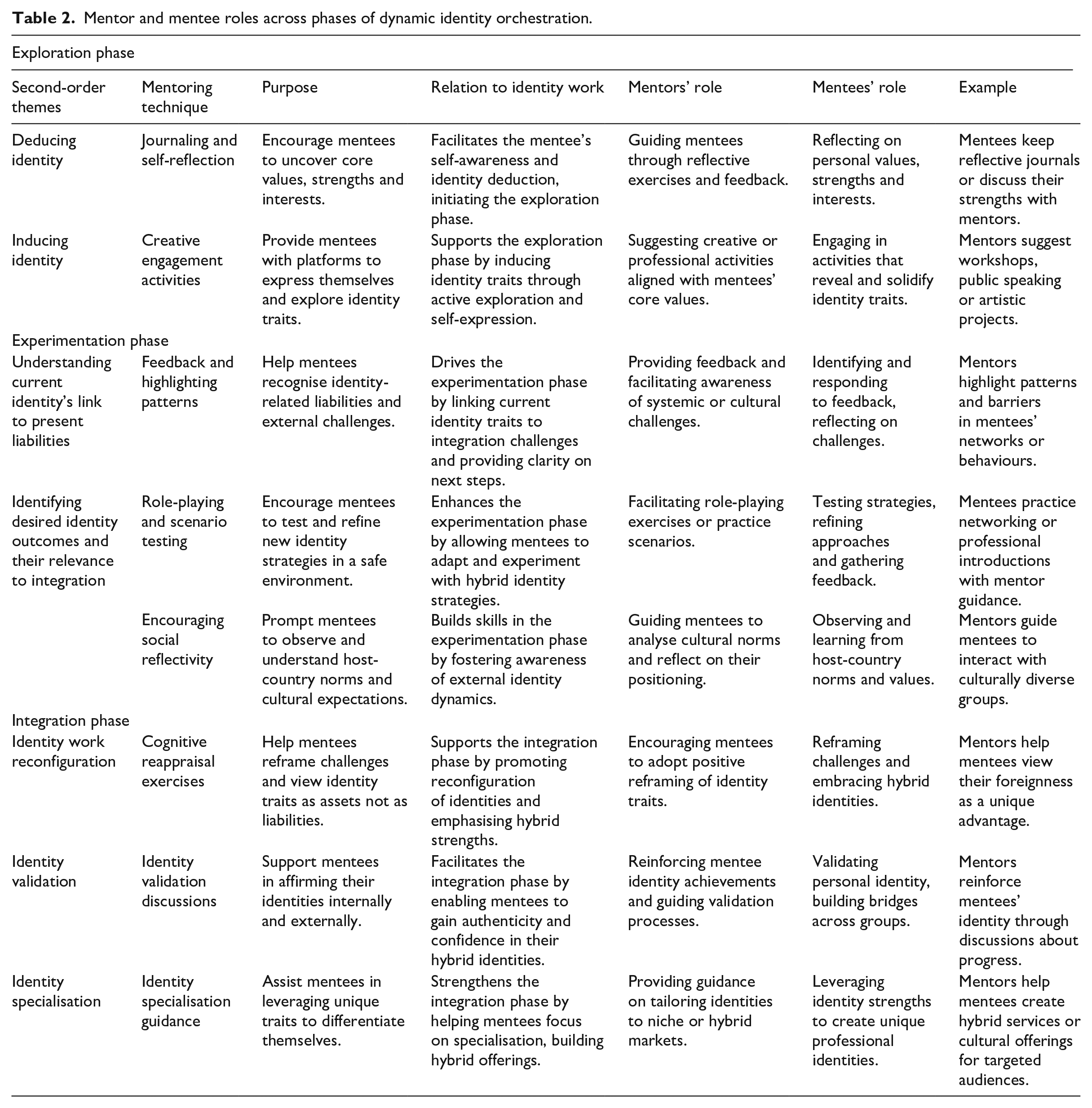
The relationships between identity exploration, experimentation and integration in the context of MEs are deeply intertwined, reflecting a dynamic process of navigating and negotiating social identities in new and challenging environments. In addition to helping mentees go through the identified identity work phases, the mentors were found to play a key role in helping mentees navigate through the intertwined relationship between the three phases, in a way that boosts the identity work depth. Table 2 outlines further the mentor’s role and orchestration efforts (e.g. providing feedback, role-playing, highlighting external constraints) and the mentee’s active responses (e.g. reflecting, adapting, resisting). Going through the identified identity work phases is not a linear process. Below, we find that each phase is often revisited in a way that either informs the following phase or prompts revising the prior one. Informing is a forward process, while prompting is a ‘backward loop’ process that involves an element of the output to be used as input for the previous phase’s operations revision. For example, while ‘identity exploration’ informs ‘identity experimentation’, experimentation’s identity outputs can prompt exploration. How these phases interact (i.e. the forward and backward loops from and to each phase) is presented below.
Mentor and mentee roles across phases of dynamic identity orchestration.
Identity exploration informs identity experimentation
Mentors play a critical role in encouraging MEs to embark on a journey of identity exploration. This phase involves reflecting on their past experiences, skills and cultural background while considering how these elements are relevant and valuable in a new market context. A financial service entrepreneur shared: ‘When I first moved to the UK, I wasn’t sure how my experience in Bulgarian financial markets would translate here. My mentor suggested that I explore the local financial landscape and identify gaps that my unique background could fill. This exploration led me to experiment with offering specialised financial advice to Bulgarian expats, which was something I hadn’t considered before’. (O)
Here, the mentor prompted the entrepreneur to consider how his existing identity as a financial expert from Bulgaria could be relevant in the U.K. market. This exploration was not just an introspective process but was guided towards identifying practical opportunities in the new environment. By guiding this exploration, the mentor helped lay the foundation for the entrepreneur to begin experimenting with his identity in the new context thus, moving forward in the identity development cycle.
Identity experimentation prompts identity exploration
As entrepreneurs begin to explore new facets of their identity, mentors shift their focus to guiding the experimentation phase. This involves testing out the new identities in real-world scenarios, where the entrepreneur can assess the viability and reception of these identities. An information technology entrepreneur stated: ‘After developing a few custom software solutions for small businesses, I realised that my Bulgarian approach to problem-solving – focusing on efficiency and resourcefulness – was highly valued. This success pushed me to explore other areas where my cultural background could offer a competitive advantage, like cybersecurity for Eastern European markets’. (X)
Here, the mentor guided the entrepreneur through the experimentation phase by encouraging him to leverage his Bulgarian problem-solving skills in the development of software solutions. The success of these experiments not only validated the entrepreneur’s approach but also prompted further exploration into how his cultural background could continue to provide a competitive edge. The mentor’s support in this phase was crucial in helping the entrepreneur view experimentation as a pathway to discovering and refining his identity within the new market.
Identity experimentation informs identity integration
Once experimentation yields successful outcomes, the role of the mentor becomes one of helping the entrepreneur integrate these new aspects into a cohesive identity. This process of integration involves synthesising the successful experiments into a stable, coherent identity that the entrepreneur can consistently apply in their business. A consulting and training entrepreneur described his experience: ‘As I started offering online Bulgarian language courses, I realised that integrating cultural context made my lessons more engaging. It wasn’t just about language; it was about offering a cultural experience. Understanding this helped me integrate my identity as both a language educator and a cultural ambassador into my business model’. (Q)
In this scenario, the mentor helped the entrepreneur recognise that his success in offering language courses was closely tied to how he integrated cultural elements into his teaching. By guiding him to fully embrace and integrate this dual identity – educator and cultural ambassador – the mentor facilitated a process of identity synthesis that allowed the entrepreneur to solidify his brand and approach. This integrated identity now serves as a foundation for his business, informing all subsequent strategies and decisions.
Identity integration prompts identity experimentation
Even after an entrepreneur has successfully integrated a new identity, mentors continue to play a crucial role by encouraging them to engage in further exploration and experimentation. This ensures that identity development remains a dynamic, ongoing process. A marketing entrepreneur reflected: ‘After integrating my knowledge of Bulgarian consumer behaviour into my marketing firm’s offerings, I started wondering how else I could leverage my background. This led me to explore emerging markets in Eastern Europe, where my understanding of regional nuances could be a real asset’. (W)
The mentor in this scenario encouraged the entrepreneur to view the integrated identity not as a final destination but as a springboard for further exploration. By prompting the entrepreneur to explore new markets and consider how his unique insights could be applied elsewhere, the mentor ensured that the entrepreneur remained in a state of growth and adaptation. This ongoing cycle of exploration, experimentation and integration is crucial for maintaining relevance and competitiveness in a constantly changing market.
Identity integration informs identity exploration
The stability and clarity provided by a well-integrated identity prompt the entrepreneur to explore new opportunities and contexts. The mentor helps the entrepreneur recognise that a solid identity is a platform for further exploration and innovation.
‘With a clear identity as a cultural consultant, I started exploring how I could apply my insights to different sectors, like environmental sustainability. This new adventure was driven by my established role as a bridge between cultures’. (T)
The integrated identity provides a sense of stability that allows the entrepreneur to confidently explore new areas. The mentor’s role is to guide the entrepreneur in recognising that their established identity is a springboard for further exploration, encouraging ongoing innovation and adaptation.
Identity exploration prompts identity integration
As entrepreneurs explore new facets of their identity, they gather insights that inform how they can integrate these aspects into a cohesive whole. The mentor helps them synthesise these insights into a comprehensive identity that reflects both their past experiences and new discoveries. A tourism and real estate entrepreneur explained: ‘As I continued exploring the London property market, I began to see how my knowledge of Bulgarian real estate trends could be integrated into my business strategy. This deeper understanding of both markets helped me create a unique offering that catered to Bulgarian investors looking for opportunities in the UK’. (V)
Exploration generates insights that are essential for effective integration. The mentor’s role is to assist the entrepreneur in synthesising these insights into a unified identity, ensuring that the integrated identity reflects both past experiences and new opportunities. This process underscores the interconnected nature of exploration and integration, where each phase enriches the other.
The findings demonstrate the role that mentors play in guiding MEs through the phases of identity exploration, experimentation, and integration. By prompting initial exploration, guiding experimentation, facilitating integration and encouraging continuous growth, mentors ensure that entrepreneurs develop a cohesive and adaptive identity that is responsive to the challenges and opportunities of their new environments. The interconnectedness of these phases illustrated the dynamic nature of identity development, where each phase both prompts and informs the next, creating a cycle of ongoing growth and adaptation.
Discussion and conclusion
Research has shown that the mannaer in which MEs identify themselves, in terms of their culture, background and experiences, can affect their ability to establish relationships and networks with local stakeholders and so, influence their access to resources and opportunities (Stoyanov et al., 2018). For example, if MEs identify strongly with their home country’s culture and language, they may struggle to build relationships with local stakeholders and access local resources impeding the growth of their business. Yet, the role of mentoring in shaping ME identities has not been sufficiently explored. Since an ME’s identity can play an important role in how they navigate in host countries and address perceived LOFs, we argue that this is an important research avenue. Exploring ME identity work within a mentorship relationship is a valuable initiative since this complex process can improve their social standing in the host country. We have observed that mentor–mentee communication serves as a medium for identity construction. Through an examination of qualitative data, we showed the phases of identity work that mentees undergo (Figure 1), as well as how mentors orchestrate this process via prompts and identity cues. Furthermore, the study aligns with the identity work literature that highlights the interplay between actors (Kloosterman, 2010) and the agency perspective in identity construction literature, which recognises that identities are open and achieved rather than given or closed, and roles are improvised rather than scripted (Alvesson and Willmott, 2002). In this study, we adopt the metaphor of ‘identity worker’ (Alvesson and Willmott, 2002) to characterise mentees as active agents in the formation of identity. Moreover, we explore the role of the mentor in this process conceptualised as identity work orchestration. By examining the dynamics between mentors and migrant mentees, the study sheds light on the mechanisms of identity work on the one hand and identity orchestration on the other.
As such, we present a comprehensive examination of the mechanisms involved in the construction and alteration of identity, an area identified as meriting conceptual and empirical analysis (Alvesson and Willmott, 2002). Through an analysis of the sequence and nature of the identity work process, we address the observation made by Storey et al. (2005) that there is a lack of empirical research on this process in action.The data suggest that identity work orchestration is the essence of mentorship; this refers to the approach by which mentors promote mentees to engage in re-examining and reworking social identities and beliefs. It is a concept used to describe the micro-foundations of the mentorship process; it explains how mentors orchestrate mentee identity work. In the current study, identity work orchestration is characterised by the use of identity cues for assisting mentees to go through the processes of exploration – personal identity development, experimentation – generating identity work awareness, and integration – mobilising identity circulation.
The final phase MEs undergo (i.e. Integration: Mobilising identity circulation) is one that transforms them into autonomous identity workers who constantly adopt, modify and adapt different aspects of their identities in different social contexts. In identity circulation, MEs may emphasise different aspects of their identities depending on the context, which allows them to integrate and navigate new social environments. As elaborated in the ‘Findings’ section, the progression through these phases is not linear but dynamic and iterative, with each stage informing and prompting the next, creating a continuous cycle of growth and adaptation as illustrated in Figure 1. Figure 2 illustrates the data structure, presenting the first-order categories that represent the processes mentees undergo. These processes form the foundation of the identity work orchestration steps, shown as second-order categories, highlighting the systematic approach mentors use to guide their mentees.
Implications for theory
This research is motivated by three main considerations. First, as highlighted by Weinberg and Lankau (2011), the mentorship literature is criticised for its instrumentalist focus on the benefits and challenges that the process leads to, as well as its lack of a clear theoretical framework that would be useful for future research. By introducing the social identity perspective to the study of mentorship, this article shifts the focus from simply describing the benefits or challenges associated with mentorship, to instead, examining the identity dynamics within that process. The exploration of mentorship as a context of exploration is also welcomed by social identity literature, which suggests that there is a lack of understanding how ‘other contextual influences [not familities, peer groups and communities (Berglund et al., 2016)] shape “who entrepreneurs are” or who they might want to be’ (Radu-Lefebvre et al., 2021). In addition, mentorship can address a known gap in identity literature, namely, exploring ‘how things evolve. . . and why’ and theorising this ‘complex’ phenomena (Langley, 1999, p. 691; Radu-Lefebvre et al., 2021). This complexity is explored by remaining ‘attentive not only to what entrepreneurs themselves do as they construct and enact their identities over time but also to the actions in which they engage together with, or in relation to, others’ (i.e. mentors) (Radu-Lefebvre et al., 2021: 1572). By doing so, we address a gap identified by Radu-Lefebvre et al.’s (2021) review article, hence, remain open to entrepreneurial identity as an evolving, relational construct. Hence, we respond to a growing call in the literature for a systematic exploration of the mechanisms and consequences of identification in mentorship (Weinberg, 2019). Particularly, we add to the literature by following requests for examining how an entrepreneur’s understanding of, and relationships within their most proximal mentorship strata might affect their identity, particularly in moments of uncertainty (Radu-Lefebvre et al., 2021). Cornelissen et al. (2007) have emphasised the need to strengthen identity conceptualisations by systematically exploring identification mechanisms and consequences.
To summarise, while prior studies recognise the influence of different types of contexts on entrepreneur identity development, they often overlook their interplay, fluidity, and possibly multiplicity (Welter, 2011). We have shown the utility of bringing a social identity perspective to mentorship demonstrating that by promoting identity work, mentoring can play an active role in resolving identity friction between MEs and host-country incumbents. By so doing, we contribute to calls for research that recognises the dynamic and fluid nature of ME identities, as well as calls for insight into the processes through which identities are shaped and formed (i.e. identity work orchestration) (Leitch and Harrison, 2016). This article addresses the gap in existing literature by presenting a nuanced model of identity construction, as called for by Pratt (2020) and Sveningsson and Alvesson (2003), who argue that existing approaches fall short in exploring the process of identification.
The mentor as an identity work orchestrator: Advancing mentorship in migrant entrepreneurship
The conceptualisation of the mentor as an ‘identity work orchestrator’ marks a significant contribution to mentorship literature, particularly within the context of migrant entrepreneurship. Traditional mentorship frameworks often focus on functional support, such as providing resources, networks, and advice. However, we illuminate a more nuanced and dynamic role for mentors: actively guiding mentees through the iterative phases of identity work – Exploration, Experimentation, and Integration – to facilitate their personal and professional adaptation within host-country contexts. This orchestration role transcends traditional mentorship paradigms by emphasising dynamic guidance across phases. Mentors are not passive providers of general support; they are pivotal in shaping a mentee’s identity trajectory. The specific strategies and mechanisms mentors employ to achieve this dynamic guidance through the exploration, experimentation and integration phases are detailed in the ‘Findings’ section. Moreover, the concept highlights the relational and contextual dimensions of mentorship. Unlike static models, the orchestrator framework captures the dynamic interplay between mentor and mentee, underscoring how mentors adapt their guidance to the evolving needs of mentees while navigating contextual factors such as systemic biases, cultural norms, and identity boundaries. This relational approach stresses the bidirectional nature of mentoring, wherein both mentor guidance and mentee agency are central to the process. From a theoretical perspective, viewing mentors as identity work orchestrators enriches mentorship literature by integrating insights from social identity work and resource orchestration frameworks. This approach brings attention to the micro-level processes through which mentors enable mentees to read and respond to identity signals, overcome boundaries, and build adaptive identities. As such, our work bridges mentorship and identity work scholarship, contributing a novel perspective to both fields.
Practically, this framework has significant implications for supporting MEs, who frequently encounter complex identity challenges in unfamiliar cultural and professional environments. By framing mentorship as identity work, we offer actionable strategies for mentors to foster the integration and success of MEs. For instance, mentors can guide mentees in transforming perceived foreignness into a competitive advantage or overcoming systemic biases with greater resilience. The framework also promotes inclusivity within mentorship practices by equipping mentors to better support underrepresented and marginalised groups. In today’s globalised and diverse entrepreneurial ecosystems, where identity negotiation often plays a critical role in success, such insights are particularly valuable. In addition to its practical and theoretical contributions, we address calls for deeper exploration of the dialogic dynamics within mentor–mentee relationships, as highlighted by Leitch and Harrison (2016). We examine how mentor identity work prompts illuminate their agency in facilitating these dynamics, thereby responding to calls for actionable mentorship research (Sinkovics and Reuber, 2021). By exploring this interplay, we shift attention from static conceptions of actor positions within host-country contexts to the dynamic processes and actions that drive successful identity work. Following Dhanaraj and Parkhe’s (2006) assertion, it is not merely the position of mentors or mentees that create value, but their entrepreneurial approach to leveraging that position. By positioning mentors as ‘identity work orchestrators’, we advance the mentorship literature within migrant entrepreneurship by offering a dynamic, relational, and context-sensitive perspective. It emphasises the transformative potential of mentorship when explicitly linked to identity work, providing both theoretical depth and practical tools for fostering the integration and success of MEs. Our evidence also illustrates the literature on the relationship between identity construction and adaptation (Ibarra, 1999). We showed that by promoting identity work, mentoring can play an active role in resolving identity friction between MEs and host-country incumbents. Unlike ‘organizational sociologists [who] have typically viewed network formation as driven by exogenous factors, such as the distribution of technological resources or the social structure of resource dependence’ (Gulati and Gargiulo, 1999: 1440), we focus on endogenous factors (i.e. identity work) that could influence an ME’s social integration into the host country. While the exogenous approach to tie formation explains factors influencing organisational ties, it overlooks the challenges social actors face in choosing collaborators (Gulati and Gargiulo, 1999). This limits its ability to fully capture the dynamics when MEs seek collaboration with host-country incumbents. Recognising the difficulty that MEs experience when attempting to cooperate with key local actors is important as it allows us to better capture how MEs manoeuvre in a challenging environment, defined by not only the peculiarities of the host-market environment, but also those of the social context.
Policy implications and the enactment of support mechanisms for MEs
This article contributes to the literature on mentorship by providing a novel perspective on mentor–mentee interactions, as well as illustrating how MEs bridge identity boundaries via identity work. This study offers insights for policymakers and organisations aiming to support MEs through mentorship programmes and identity work facilitation. Recognising the role mentors play in the ME integration process, several policy implications and practical mechanisms can be enacted to ensure that mentorship programmes effectively foster identity exploration, experimentation, and integration, thereby promoting the success of MEs in host countries.
For policymakers, the study highlights the need for mentorship programmes that address the unique identity challenges faced by MEs. Programmes should be tailored to support ME identity exploration and integration, helping them reconcile their origins with the demands of the host society. By incorporating social identity work into the structure of these programmes, mentors can help MEs avoid identity clashes, facilitating smoother integration into the local entrepreneurial ecosystem. Policies should also emphasise the importance of mentors exercising identity work orchestration as a core strategy in mentorship programmes. This approach equips MEs with the skills to engage in identity circulation – an identity development strategy distinct from traditional frameworks like social mobility and change. By enabling MEs to bridge identity boundaries, identity work orchestration promotes greater adaptability and integration into the host countries. Policymakers should also advocate for the institutionalisation of continuous mentorship programmes that go beyond one-time interventions. Identity work is not a static process but evolves as MEs encounter new challenges in their host countries. Continuous mentorship and support structures ensure that MEs remain engaged in the ongoing process of identity exploration, experimentation, and integration. This approach transforms MEs from passive recipients of support to active agents in their identity development, fostering long-term integration and entrepreneurial success. Furthermore, effective identity work and integration often depend on how well MEs are received within the host country’s business community. Policies that nurture inclusion and promote cultural competence in entrepreneurial ecosystems can create environments where MEs feel empowered to experiment with and integrate new identities. This includes encouraging cultural awareness and reducing biases in business support networks, which can significantly enhance a ME’s ability to establish successful ventures and engage meaningfully with local communities.
Limitations and recommendations for future research
This study has several limitations that should be acknowledged. The sample consisted exclusively of Bulgarian male participants, which may limit the generalisability of the findings to other gender, national or cultural groups. Second, the relatively small sample size and the qualitative methodology restrict the extent to which the results can be extrapolated to broader organisational contexts. Moreover, the naturalistic fieldwork setting may have introduced uncontrolled variables that might have affected the results. To enhance the robustness and applicability of future research, studies should seek to replicate this work with more diverse and larger samples across different organisational and cultural environments. Employing experimental or longitudinal designs would also help control for confounding factors and provide a more detailed understanding of identity work orchestration mechanisms. Future research should also examine identity work across different mentoring relationships – particularly those in which mentors represent the dominant culture of the host country. Such studies could yield important insights into how power asymmetries, cultural differences and identity formation unfold in cross-cultural mentoring dynamics.
While this study offers a deep exploration of how mentors orchestrate a migrant entrepreneur’s identity work and support their integration, a promising avenue for future research also lies in examining the reciprocal effects of the mentoring process on mentors themselves. The manuscript highlights the dynamic interplay and bidirectional nature of mentoring. As mentors guide MEs through challenges such as LOFs, developing cultural competence, addressing bias and fostering identity circulation, they too may undergo meaningful transformation. For example, supporting mentees through complex identity work might prompt mentors – particularly those with a migrant background – to reflect on their own integration journeys, refine cross-cultural communication skills, or deepen their understanding of host-country dynamics and social structures. Investigating how these orchestrating efforts influence a mentor’s self-awareness, leadership development, or perspectives on diversity and inclusion would offer a more holistic view of the mentoring relationship. Such research could further illuminate the mutual value created within this dynamic entrepreneurial ecosystem. In addition, it is recommended that future research explore the role of the medium of interaction in social circulation. Case studies, experiments or comparisons of face-to-face versus virtual settings can offer insights into the impact of the medium of interaction on identity work processes. In addition, exploring e-mentoring and the role of technology in remote mentoring, along with the influence of a mentor’s seniority and background, could provide insights into how these factors promote or hinder identity work.
Footnotes
Funding
The authors received no financial support for the research, authorship, and/or publication of this article.
