




Abstract
Cooperatives, particularly those comprising small- and medium-sized enterprises, are crucial in collective entrepreneurship due to their blend of social and economic goals. Mainstream management research often overlooks cooperatives, deeming member-based ownership arrangements as limiting competitiveness. This study uses data from 68 New Zealand cooperatives to examine how different configurations of cooperative principles and knowledge-sharing practices affect entrepreneurial orientation. First, we challenge the notion of the degeneration thesis, which assumes that cooperatives must sacrifice economic performance for social missions. Second, we show that not all principles are equal. By identifying multiple successful configurations of cooperative principles, we show that adherence to cooperative principles is dynamic and contingent on the cooperative’s competitive strategy. Third, our findings highlight the necessity of knowledge sharing to complement the principles and to achieve such competitive strategies. Taken together, we contribute to ongoing discussions about sustainable organisational forms and collective entrepreneurship by highlighting the value of the cooperative form.
Keywords
Introduction
Businesses today face multiple societal, economic and environmental challenges. Many of these challenges require the capacity to simultaneously deliver on social and economic goals, necessitating a collective effort beyond any single organisation. The literature on collective entrepreneurship (Deschamps and Slitine, 2024) discerns two main approaches to achieving these goals. The first focuses on forms of organising among multiple, loosely coupled actors coming together to realise an opportunity and/or address a particular challenge. Here, collective entrepreneurship is relational and often underpinned by systems of shared norms, goals and values (Alvedalen and Boschma, 2017; Spigel, 2017) that increasingly encompass shared social goals alongside economic ones (Dodd et al., 2023; Shepherd and Patzelt, 2011). For example, entrepreneurial ecosystems can collectively tackle social goals while economic actors remain and operate largely independently. However, the informal and relational nature of entrepreneurial ecosystems makes them difficult to institute (Theodoraki et al., 2022). The second body of research, the focus of this article, explores how alternative forms of organising, such as cooperatives, can enable the pursuit of social and economic goals through collective entrepreneurship (Deschamps and Slitine, 2024; Siedlok et al., 2024a, 2024b). Cooperative structures and principles facilitate coopetition among members and between cooperatives (Santos et al., 2025). Such coopetition, defined as simultaneous cooperation and competition between competing firms (Basterretxea et al., 2019), can stimulate entrepreneurial behaviours leading to increased innovation (Santos et al., 2025) and collective action aimed at addressing grand challenges (Basterretxea et al., 2019; Callagher et al., 2022).
As an organisational form, cooperatives offer significant entrepreneurial capacity, productivity and growth potential (Cairns et al., 2024). Although their representation and contribution to local economies varies widely and remains contested, there is general agreement that they are significant players in the socio-economic spheres of life. For example, in the United Kingdom, cooperatives and mutuals comprise less than 1% of all businesses but contribute around 3.4% of the GDP. 1 In New Zealand, their total contribution to the country’s GDP is almost 20%, with a third of the population being members. 2 Beyond economic contribution, research on cooperatives demonstrates their potential in simultaneously addressing multiple social, environmental and economic challenges. Cooperatives contribute to economic emancipation and resilience, social cohesion and sustainable service provision, spanning areas such as housing, healthcare or renewable energy (Bastida et al., 2022; Cairns et al., 2024; Liu and Guenther, 2022; Siedlok et al., 2024b; Stervinou et al., 2021). This potential to deliver both social and economic goals is allegedly enshrined in seven internationally accepted cooperative principles. Cooperative structures and principles can further facilitate knowledge sharing, learning and innovation and, thus, empower small- and medium-sized enterprises to engage in global value chains (Ajates, 2020; Cairns et al., 2024; Siedlok et al., 2024a).
Yet, despite the potential, research has largely overlooked the heterogeneity of cooperative models and the variable role of cooperative principles across different contexts. Thus, our understanding of cooperatives as a means to combine social and economic goals remains incomplete (Gega et al., 2024; Las Heras et al., 2024). Three issues with previous studies contribute to this gap. First, prior studies have been preoccupied with the degeneration thesis (Basterretxea et al., 2019), which assumes that democratic control and member ownership inherently constrain economic performance. While valuable in highlighting the governance challenges, those studies narrow the analytical focus to a single principle of democratic control alone, neglecting how other cooperative principles interact with different competitive environments (Basterretxea et al., 2024; Gega et al., 2024; Las Heras et al., 2024). Second, many studies implicitly assume that cooperatives inherently adhere to cooperative principles, overlooking cases where principles are selectively enacted, deprioritised or even strategically altered. This assumption risks idealising cooperatives rather than critically assessing how they apply principles in real-world competitive contexts. Third, much of previous research treats cooperative principles as a homogenous construct, often combining them into a single measure (Guzmán et al., 2020a; Kyriakopoulos et al., 2004). This approach overlooks that some principles are highly context dependent; widely applicable in some cooperatives but impractical or counter-productive in others (Birchall, 2012; Ghauri et al., 2021). It also ignores the salience and interdependence of cooperative principles, assuming they function in isolation rather than as part of a broader organisational strategy. More recent research shows that economic success and cooperative principles can be mutually reinforcing (Ashforth and Reingen, 2014; Bretos and Errasti, 2017; Bretos et al., 2020; Siedlok et al., 2024a). However, these relationships are not uniform – the strategic role of cooperative principles varies depending on sector, cooperative type and competitive dynamics. This highlights a key limitation of traditional correlational studies, which tend to isolate the effects of democratic control while overlooking how different principles interact in specific configurations (Tsoukas, 2017). Indeed, as Summers and Chillas (2021) argue, the complexity of cooperatives arises from a broader set of causal mechanisms, not just the ownership structure. Moreover, Las Heras et al. (2024) stress the need for studies that go beyond generic discussions of cooperative principles, focusing instead on how cooperatives prioritise and enact these to balance organisational cohesion and strategic sustainability.
To address these gaps, we take a configurational approach, examining how different cooperative principles interact in diverse strategic contexts to shape entrepreneurial outcomes. We surveyed 68 New Zealand cooperatives adopting a set-theoretic approach to analyse which configurations of entrepreneurial orientation (EO)-cooperative principles matter. In line with previous research, we measured performance as EO (Guzmán et al., 2020a, 2020b). We also included knowledge sharing, identified in previous studies as a factor influence performance (see Ashforth and Reingen, 2014; Fiore et al., 2020; Siedlok et al., 2024a). Accordingly, this study contributes to theoretical debates on cooperatives and collective entrepreneurship by revealing how cooperative principles, knowledge sharing and EO interact. First, our findings align with existing literature highlighting the dual role of cooperative principles in fostering social and economic goals. Specifically, we extend the work of Guzmán et al. (2020a) and Kyriakopoulos et al. (2004) by revealing specific configurations that facilitate EO. Our findings refute the notion that pursuing entrepreneurial strategies necessitates abandoning democratic member control (DMC; Bretos et al., 2020; Siedlok et al., 2024a), thereby confirming that competition and cooperative principles are intertwined and dynamic (Las Heras et al., 2024). We show that the enactment of cooperative principles is contingent on the pursued strategy, casting a shadow on the notion that cooperatives are more socially oriented than other organisations. Second, we emphasise the importance of knowledge sharing, transparency and training in enabling sound democratic governance, innovation and internationalisation of cooperatives (Ashforth and Reingen, 2014; Basterretxea et al., 2022). By integrating knowledge sharing into our configurational analysis, we offer a comprehensive picture of factors contributing to cooperative success, expanding our understanding through configurational theorising (Muñoz et al., 2020). Third, our findings inform the growing debate on collective entrepreneurship via alternative ownership arrangements, such as cooperatives, and extend to other forms like entrepreneurial ecosystems, where internal and external communication is crucial for collective action (Hruskova, 2024). Our findings challenge simplistic assumptions about cooperatives and enrich the understanding of the complex factors underpinning the potential for collective action (Cairns et al., 2024; Deschamps and Slitine, 2024; Summers and Chillas, 2021).
Literature review
Socio-economic role of cooperatives and cooperative principles
The International Cooperative Alliance (ICA) defines cooperatives as people-centred enterprises that are owned, controlled and run by and for their members to realise their common economic, social and cultural needs and aspirations (ICA, 2017). Cooperatives have long been acknowledged as significant contributors to both the local and global economy (Fiore et al., 2020; Jaumier, 2016; Ortiz-Miranda et al., 2010), with much to commend in terms of entrepreneurial capacity and support for collective entrepreneurship, especially in rural or low-income communities (Cairns et al., 2024; Tregear and Cooper, 2016). Cooperatives often operate in areas deemed unprofitable by investor-owned firms (Boone and Özcan, 2016; Borda-Rodriguez and Vicari, 2015; Novkovic, 2008), providing employment and training opportunities and contributing to social cohesion (Guzmán et al., 2020b). In competitive contexts, cooperatives can facilitate learning and innovation, enable participation in global value chains, or foster environmental sustainability (Fiore et al., 2020; Las Heras et al., 2024). Furthermore, cooperatives are associated with countering power inequalities stemming from neoliberal capitalist arrangements, including exploitation or alienation of the workforce (Kociatkiewicz et al., 2021; Wiksell, 2020). Cooperatives are not a homogeneous organisational form: multiple types exist, and their representation across industries and geographies varies. Cooperatives are differentiated primarily by their membership structure, scope of operations and primary purpose (for an overview see Bijman and Hanisch, 2012). Primary types of cooperatives include worker, consumer, producer, mutuals (usually in insurance and banking), housing, service and multi-stakeholder. Despite being a distinct legal, organisational form in most jurisdictions, research frequently conflates cooperatives with other organisational forms, such as producer organisations (POs) or associations of POs (Bijman and Hanisch, 2012; Gega et al., 2024). Consequently, member control and ownership become a defining feature of cooperatives (Slade Shantz et al., 2020) at the expense of understanding the role of other cooperative principles (Basterretxea et al., 2019). Regardless of their type, size or location, cooperatives are defined by cooperative principles that influence their behaviour and competitiveness.
Cooperative principles
Originally derived from the seven Rochdale principles, cooperative principles – particularly democratic control and ownership – are fundamental to the collective and social dimensions of cooperatives (Birchall, 2012; Deschamps and Slitine, 2024). Table 1 outlines the generally agreed cooperative principles defined and periodically reviewed by the ICA.
Cooperative principles.
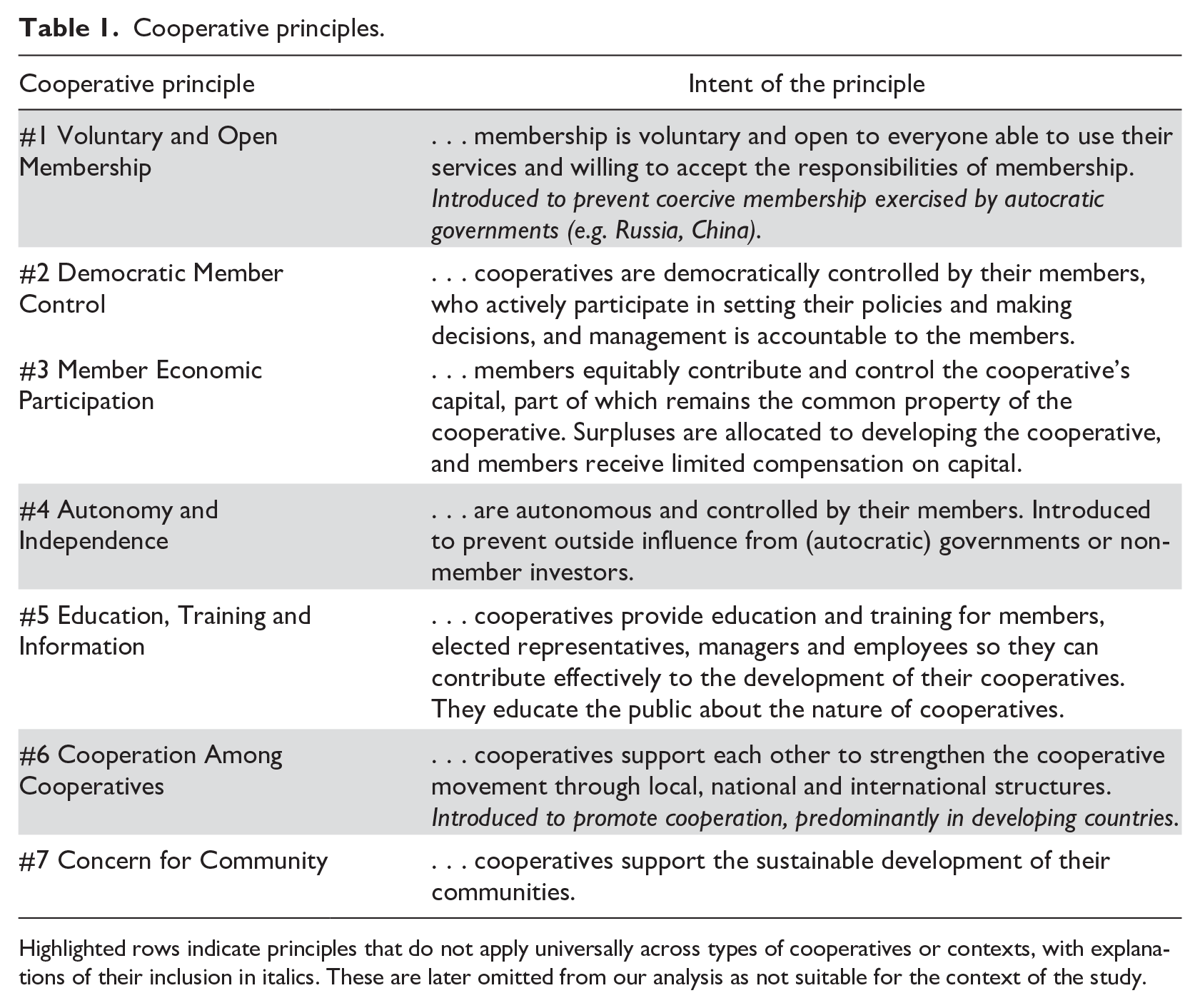
Highlighted rows indicate principles that do not apply universally across types of cooperatives or contexts, with explanations of their inclusion in italics. These are later omitted from our analysis as not suitable for the context of the study.
These principles are not legally binding, and their adoption varies across contexts (e.g. developing vs developed economies) and cooperative types (e.g. worker, producer, energy) (Las Heras et al., 2024; Siedlok et al., 2024b). This study focuses on cooperatives in developed economies, often characterised by high competition dynamics. Regardless of the type, most cooperatives share the core principles of democratic ownership and member benefit (Bijman and Hanisch, 2012; Birchall, 2012). These principles are associated with mobilising local resources to address market failures, promoting sustainable economic growth and resilience during economic downturns (Bastida et al., 2022; Guzmán et al., 2020b; Ortiz-Miranda et al., 2010). Cooperatives also foster local entrepreneurship and strengthen social networks and resource bases (Bastida et al., 2022; Ortiz-Miranda et al., 2010), while the emphasis on community and environment further positions them as vital players in achieving sustainability goals (Liu and Guenther, 2022; Siedlok et al., 2024b).
Worker cooperatives provide stable employment and shield workers from economic shocks (Lambru and Petrescu, 2014). Democratic control and economic participation are associated with just management practices (Ashforth and Reingen, 2014; Jaumier, 2016), increased employee commitment, lower turnover and absenteeism (Jackall and Levin, 2021). Those principles can contribute to more meaningful jobs (Kociatkiewicz et al., 2021) and address work precarity (Wiksell, 2020). Through a focus on education and training, cooperatives can empower and build the capacity of workers to manage their cooperative (Bourlier-Bargues et al., 2022), contributing to more effective governance (Basterretxea et al., 2022) and the ability to attract and retain talent (Basterretxea and Albizu, 2011). Embracing cooperation with other cooperatives in worker cooperatives has been associated with higher rates of collaborative innovation and coopetition (Santos et al., 2025).
Members in producer cooperatives can include individual suppliers, businesses or other cooperatives. Thus, each member constitutes a business with goals that might not align with the cooperative’s (Siedlok et al., 2024a). Producer cooperatives are a significant player in global food chains, allowing members access to and increasing their bargaining power within global value chains (Ajates, 2020; Jentoft and Davis, 1993). They can outperform investor-owned firms in social and environmental metrics, attributed to concern for community in combination with more efficient logistics stemming from a close link between members and the cooperative (Gega et al., 2024). Through encouraging information sharing and provision of training, producer cooperatives facilitate innovation and productivity gains and foster competition among members (Fiore et al., 2020; Siedlok et al., 2024a). As members are more likely to adopt sustainable behaviours suggested by management (Gega et al., 2024), producer cooperatives can contribute toward addressing grand challenges (Callagher et al., 2022).
Cooperatives face distinct challenges rooted in their structure and governance, often seen as the cause of degeneration. Cooperative principles, while fostering equality and shared ownership, are often associated with inefficiencies such as free-riding, short-term decision-making and internal conflicts among members (Ashforth and Reingen, 2014; Ortiz-Miranda et al., 2010; Slade Shantz et al., 2020). Democratic control, intended to ensure fairness, can instead impede effective resource allocation, leading to decisions that reflect the self-interest of dominant members (Basterretxea et al., 2022; Kyriakopoulos et al., 2004: 375). These issues are further compounded in producer cooperatives, where members are independent organisations. Members often hold divergent and conflicting views on the cooperative’s purpose and priorities (Jentoft and Davis, 1993), making it difficult to align their individual goals and operational needs with the cooperative’s overarching objectives (Siedlok et al., 2024a). These tensions exemplify the broader degeneration thesis, which argues that cooperative principles are inherently at odds with the demands of neoliberal economies. This misalignment forces cooperatives to either compromise their foundational values to remain competitive or risk economic failure (Storey et al., 2014). However, emerging research challenges the degeneration thesis, proving that cooperative principles can significantly enhance economic and social performance. Rather than inherently inefficient, cooperative principles, when applied strategically, can drive organisational resilience, innovation and alignment between member interests. For instance, increased economic participation fosters member commitment during downturns (Boone and Özcan, 2016), while strong alignment between owner-members and organisational objectives can lead to greater operational efficiency (Meliá-Martí et al., 2024; Siedlok et al., 2024a). Collective ownership is shown to foster entrepreneurial behaviour (Cairns et al., 2024), while Guzmán et al. (2020a) argues that focusing on the community meant profits were used to create new jobs.
Despite these positive outcomes, the interplay between cooperative principles and performance remains underexplored (Las Heras et al., 2024). Prior research failed to disentangle the individual effects of specific cooperative principles on social or economic outcomes (Basterretxea et al., 2019). Instead, most studies averaged these principles into a single measure (Guzmán et al., 2020a) or focused disproportionately on challenges arising from democratic ownership and governance (Basterretxea et al., 2022; Katz and Boland, 2002; Summers and Chillas, 2021). Studies comparing cooperatives to other organisational forms also focused on ownership structures, neglecting the more nuanced causal mechanisms behind observed performance differences (Gega et al., 2024). This predominantly correlational research falls short of addressing the causal complexity and diversity inherent in cooperatives. A configurational approach offers a more robust theoretical lens by recognising the interdependence, interaction and mutual reinforcement of cooperative principles and contextual factors (Furnari et al., 2021; see also Muñoz et al., 2020). Such an approach allows researchers to identify ‘gestalts’ or equifinal configurations – unique combinations of factors that achieve similar outcomes – rather than assuming universal relationships.
A configurational approach is particularly relevant to cooperatives, as it accommodates the variability in how principles operate across different contexts and types of cooperatives – an issue largely ignored by correlational approaches yet highly relevant in reality. For example, Birchall (2012) highlights that open and voluntary membership (#1), a cornerstone of cooperatives in developing economies for promoting inclusivity and economic emancipation, is not universally applicable. While it applies well to trading cooperatives or financial mutuals, open membership is ill-suited for worker cooperatives. Similarly, in producer cooperatives, membership may need to be restricted to maintain product quality and alignment with organisational goals (Siedlok et al., 2024a; Tadesse et al., 2020). Similarly, the principle of autonomy and independence (#4), initially introduced to prevent political appropriation by Russian and Chinese communist governments, has limited relevance in liberal democratic economies (Birchall, 2012), though, may still be important in contexts where cooperatives face risks of overreliance on external funding or partners (Bijman and Hanisch, 2012). Cooperation among cooperatives (#6), despite its contribution to the success of Mondragon (Basterretxea et al., 2019), also attracted criticism. First, as noted by Fici (2015), the obligations associated with this principle are vaguely defined, having limited impact on cooperative behaviour, resulting in the principle remaining largely unrealised (Ghauri et al., 2021). Second, in competitive markets, cooperatives often compete with one another (Fiore et al., 2020), and collaboration based on socio-political motivations to preserve cooperative structures makes little strategic sense (Fici, 2015). Indeed, dissatisfaction with inter-cooperative solidarity requirements made some Mondragon’s cooperatives leave the group (Las Heras et al., 2024). Thus, there is a need for a more critical and selective treatment of cooperative principles (Birchall, 2012) across different contexts. Concurrently, other factors might be more suitable to consider to fully understand what determines the socioeconomic performance of cooperatives.
In the following sections, we discuss why EO is a suitable measure of performance for cooperatives in our context and elaborate on the importance of knowledge sharing as an additional factor to consider.
EO as a measure of cooperative competitiveness
Traditional performance measures, such as corporate profits, return on investment and solvency, typically used to compare cooperatives with investor-owned firms, inadequately reflect the unique characteristics of cooperatives (Meliá-Martí et al., 2024). These metrics emphasise short-term financial outcomes and fail to account for the multipurpose nature of cooperatives, potentially resulting in a misleading portrayal of cooperatives as underperforming. Martínez-López et al. (2024) further argue that traditional financial measures are inadequate for assessing cooperative performance because the owners, who are also suppliers and customers, seek favourable prices, while cooperatives aim for good economic results to sustain operations, their main goal is to meet member needs. Moreover, these measures do not account for the different types of cooperatives, even though their varying methods and objectives can lead to incomparable outcomes. While financial performance remains crucial, it is intertwined with entrepreneurialism and innovation, which are generally seen as positively linked to market-related performance (Guzmán et al., 2020a; Löffel and Gmür, 2024). Kyriakopoulos et al. (2004) advocate for extending performance measures that incorporate competitive posture and market orientation indicators. Guzmán et al. (2020a, 2020b) further link innovation, risk-taking, proactiveness and ambition to overall performance. EO, defined as a firm’s strategic posture characterised by innovativeness, risk-taking and proactive opportunity-seeking (Covin and Slevin, 1989; Guzmán et al., 2020a), is widely recognised as an antecedent to performance (Rauch et al., 2009). In cooperatives specifically, EO correlates positively with diverse performance measures – financial success and social impact alike – allowing these organisations to achieve economic objectives while fulfilling their social responsibilities (Löffel and Gmür, 2024). Thus, EO offers a comprehensive and appropriate measure to capture the performance of cooperatives, addressing their specific characteristics and the need for a more nuanced understanding of their competitive posture.
Knowledge sharing and cooperative performance
While DMC implicitly suggests that knowledge is more equally shared among members, studies show that this is not necessarily the case (Basterretxea et al., 2022; Smith et al., 2018). Cooperative principles and structures alone often fall short of fostering effective knowledge sharing, necessitating additional mechanisms to support strategic objectives (Ashforth and Reingen, 2014; Fiore et al., 2020; Siedlok et al., 2024a). Through knowledge and information sharing, cooperatives can take advantage of formal or informal networks, joint financing and taking risks under uncertainty with the goal of rent-seeking (Löffel and Gmür, 2024). Previous research shows that knowledge sharing and transparency are essential for implementing market-oriented strategies (Fiore et al., 2020; Las Heras et al., 2024; Siedlok et al., 2024a) and can facilitate collective ideation and learning processes (Cairns et al., 2024). Knowledge-sharing can enhance member-led governance (Basterretxea et al., 2022). However, as argued by Las Heras et al. (2024), management can use it to boost productivity rather than improve the rights or control of members. The literature distinguishes between two types of knowledge shared for strategic goals: operational and strategic. Operational knowledge sharing can enhance the quality and consistency of member outputs, allowing cooperatives to improve their offerings (Tadesse et al., 2020; Tregear and Cooper, 2016). These improvements can contribute to upgrading and strengthening the cooperative’s position in value chains (Fiore et al., 2020). However, operational knowledge sharing, while necessary, is insufficient to support the implementation of competitive strategies by cooperatives or to maintain the balance between social and economic goals. Cooperatives might need to engage in sharing market intelligence or knowledge related to customer needs (Basterretxea et al., 2019) in order to align the strategic objectives of the cooperative and its members, necessary in pursuing long-term competitive strategies (Jentoft and Davis, 1993; Siedlok et al., 2024a).
To summarise, clear, consistent and congruent communication of both operational and strategic knowledge is crucial to harmonise the heterogeneous goals and interests of members (Limnios et al., 2018; Siedlok et al., 2024a; Tregear and Cooper, 2016) and, consequently, affects the potential for collective entrepreneurship. This inclusion of knowledge sharing as an additional factor in our study aligns with the need to incorporate explanatory factors emerging from the extant substantive knowledge relevant to the phenomena, as suggested by Furnari et al. (2021).
Data and method
Data
Data for this study were gathered between October 2015 and March 2016 through a survey targeting all cooperatives in New Zealand. Cooperatives have been part of the country’s industrial organisation since the 1860s, with most cooperatives serving the agricultural industry. These include producer cooperatives focused on processing and marketing dairy, meat and horticulture. The second largest category of cooperatives is purchasing other service cooperatives operating in the agriculture, construction and grocery sectors. Those cooperatives operate mainly as buying groups and have existed since the early 1900s, with growth through the 1960s and 1990s. Worker, housing and consumer cooperatives remain very rare in New Zealand (for a snapshot of NZ cooperative economy, see Garnevska et al., 2017). The population was identified using the New Zealand Companies Office database, where, by law, all organisations registered as cooperatives under the Co-operatives Act 1996 must be listed. Additionally, we utilised the institutional membership list provided by Cooperative Business New Zealand, a local stakeholder organisation, to cross-check our list, identifying a population of 131 cooperatives as of October 2015. 3 The age of cooperatives in the population ranged from 2 to over 100 years, with a mean founding year of 1994. The reported number of members ranged from 2 to over 130,000. Ten organisations were excluded due to demutualisation, business inactivity and unavailability of contact details for the organisation or any of its senior executives, resulting in a final sample of 121 cooperatives.
Given the complex interplay between cooperative principles, knowledge sharing and EO identified in our literature review, we concluded that fuzzy-set Qualitative Comparative Analysis (fsQCA) is a suitable analytical approach. This method aligns with our aim to capture the causal complexity inherent in cooperative performance and facilitates configurational theorising and testing (Furnari et al., 2021), addressing the limitations of previous studies that tended to examine specific principles in isolation or treat them homogeneously.
The survey was directed at CEOs or the highest senior executives of the 121 identified cooperatives. Cooperative Business New Zealand endorsed the project to enhance response rates and promoted the survey to its members through its webpage, newsletters and meetings. Personalised cover letters were sent with each questionnaire, and a prize draw of NZ$500 donation to a charity of the respondent’s choice was offered. Subsequently, six rounds of follow-up phone calls were made to senior executives to encourage survey completion and address any queries. Sixty-eight usable replies were received, resulting in a response rate of 55%. After removing incomplete responses, 34 cooperatives remained for inclusion in the analysis, similar in size to the dataset used by Muñoz et al. (2020) in their fsQCA analysis on entrepreneurial cooperatives in Chile.
Measures
Data on the EO of cooperatives and adherence to relevant cooperative principles were collected using constructs derived from prior research. Before administering the final survey, we shared a draft of the questionnaire with senior members of Co-operative Business New Zealand and an academic expert in research methodology and entrepreneurship for their review. The questionnaire was refined based on their feedback regarding the relevance of items, question wording and the ordering and layout of sections. Special attention was given to ensuring consistency with the questionnaires used by the government agency Statistics New Zealand, as respondents were familiar with those yearly surveys required by law. The list of items and questions can be found in Appendix A. All items were measured on a 7-point Likert scale.
To capture EO, we employed a 7-item scale from Covin and Wales (2012), extended with a question regarding process innovations. The scale includes items on innovation, pro-activeness and risk-taking, and respondents are asked to rate their strategic posture using the two clearly defined anchor points. For the reasons elaborated earlier (see Table 1), we decided to exclude principles #1, #4 and #6 for being incongruous with the context of New Zealand’s economy and cooperative reality. The measures for the four cooperative principles included in the analysis were based on the CoopIndex (Stocki and Hough, 2016; Stocki et al., 2012) and adapted to fit the New Zealand context.
DMC was captured through six questions assessing the extent to which members understand and can influence the cooperative’s operations. Member Economic Participation (MEP) gauged the financial involvement of members using four questions. Training and Development (T&D) incorporated seven questions on the extent of training and education provided to cooperative members. Concern for Community and Environment (CfCE) was based on eight questions related to community involvement and environmental awareness of the co-operative.
Additionally, nine questions were included to capture the Discussion of Operations and Strategy, assessing the extent to which cooperative staff and senior managers communicate about the cooperative’s operations and strategic directions with their members. All items were rated on a 7-point Likert scale from ‘strongly disagree’ (1) to ‘strongly agree’ (7). Descriptive statistics for all constructs are presented in Table 2.
Descriptive statistics.
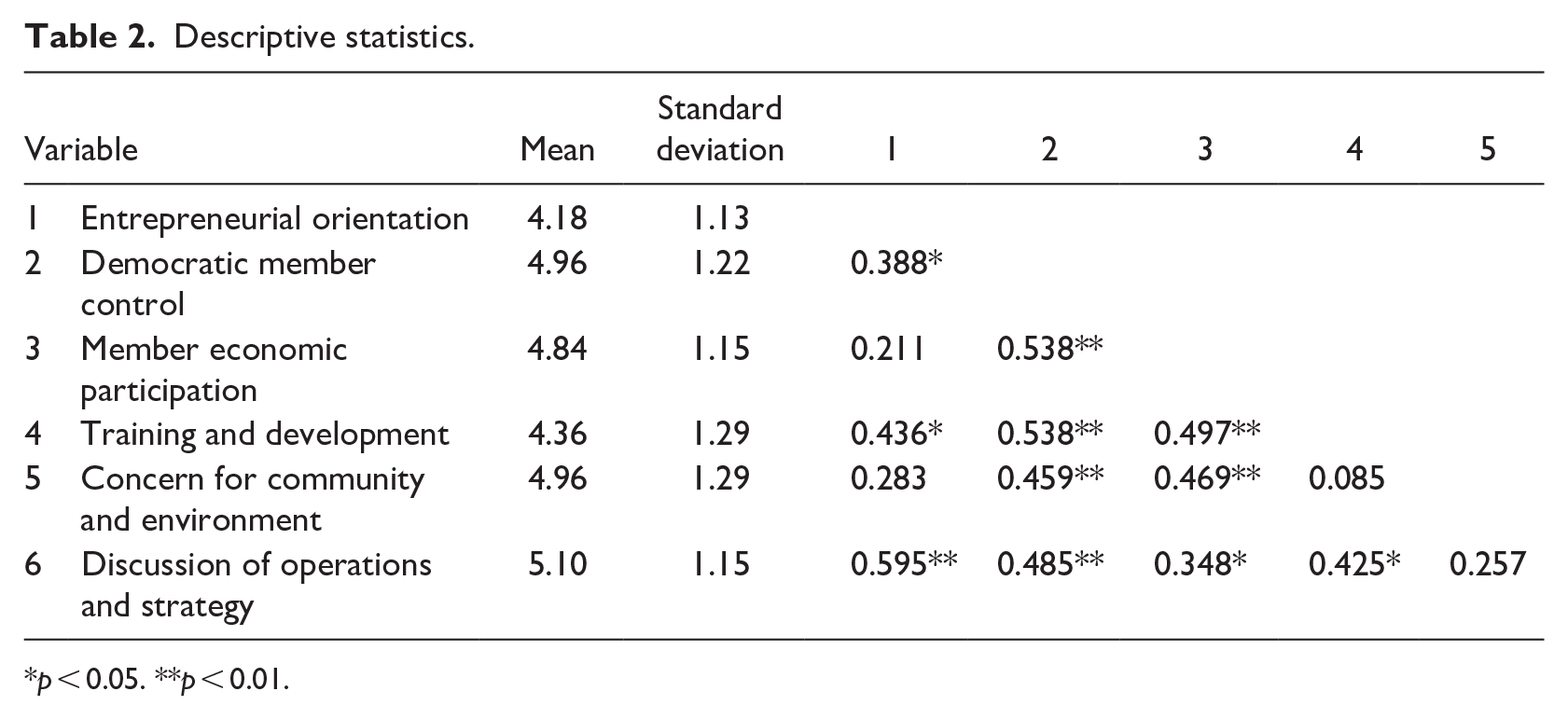
p < 0.05. **p < 0.01.
Approach
We employed a set-theoretic approach to understand the configurations of cooperative principles characterising cooperatives with an EO (Ragin, 2008). Set-theoretic approaches are particularly suited for understanding complex patterns by focusing on case membership in sets and leveraging concepts of equifinality, conjunctural causation and asymmetry. Equifinality refers to the phenomenon that multiple configurations of factors can produce the same outcome. As such, it goes beyond the traditional one-on-one relationships uncovered using correlational methods such as regression analysis. Moreover, single conditions may not lead to the effect on their own but require a combination of different sets, referred to as conjunctural causation. Finally, the configurations that characterise the existence of a particular outcome may not be mirror images of the configurations that characterise the absence of that outcome (asymmetry). Set-theoretic approaches are especially beneficial with smaller samples, making them a suitable alternative in our case due to the limited number of cooperatives in New Zealand.
We adopt a fsQCA as our set-theoretic method. To prepare fuzzy sets as input for qualitative configuration analysis, we calibrated the condition and outcome variables so they fit within the [0, 1] range (Pappas and Woodside, 2021). We used percentile values to determine the three anchors: 0.95 percentile as the threshold for full membership, the 0.05 percentile as the threshold for full nonmembership and the 0.5 percentile as the crossover point (Pappas and Woodside, 2021). After calibrating all variables, we used fsQCA 4.1 (Ragin and Davey, 2022) to conduct the analyses using the truth table algorithm for fuzzy sets. First, we constructed the truth tables, which compute all possible configurations that may occur. Second, we select the cases that meet the criteria that were laid out in the prior literature (Fiss, 2007). We use one as the minimum number of cases required in each configuration and a consistency threshold of 0.8. Next, the truth table configurations are logically reduced using the Quine–McCluskey algorithm. Based on this minimisation, we derive the complex solution (presenting all possible combinations of conditions), the parsimonious solution (including both easy and difficult counterfactuals and presenting the most reduced form of the solution) and the intermediate solution (including easy counterfactuals only). We report both core conditions (part of the parsimonious solution only) and contributing conditions (part of both the parsimonious and intermediate solutions). Table 2 summarises our findings. Additionally, we provide qualitative cases of cooperatives illustrating each configuration to offer in-depth evidence showcasing the integration of common features within each configuration. Case selection and data sources rely on secondary data and nearly 10 years of interaction with the New Zealand cooperative sector by the authors. Cases are reported with pseudonyms to maintain confidentiality and to comply with the ethical approval for the survey (University of Auckland Ethics Approval 015634).
This survey was part of a larger research program focused on innovation and entrepreneurship in New Zealand cooperatives, and we use findings from the broader research program to support the cases presented in this article.
Results
Cooperative principles and EO
Table 3 presents the analysis focused on EO’s presence in cooperatives, suggesting that in only one of the configurations, EO comes at the expense of three (configuration 1 – The Void) or two (configuration 2 – the Emergent) of the cooperative principles. Three cooperative principles are enacted in two configurations (3 – The Decoupled and 4 – The Self-oriented), suggesting that socioeconomic goals can be successfully combined. We discuss each configuration and provide an example of a cooperative representative of each configuration. Vignettes describing each example are based on available secondary data and our research.
Presence of outcome: EO.
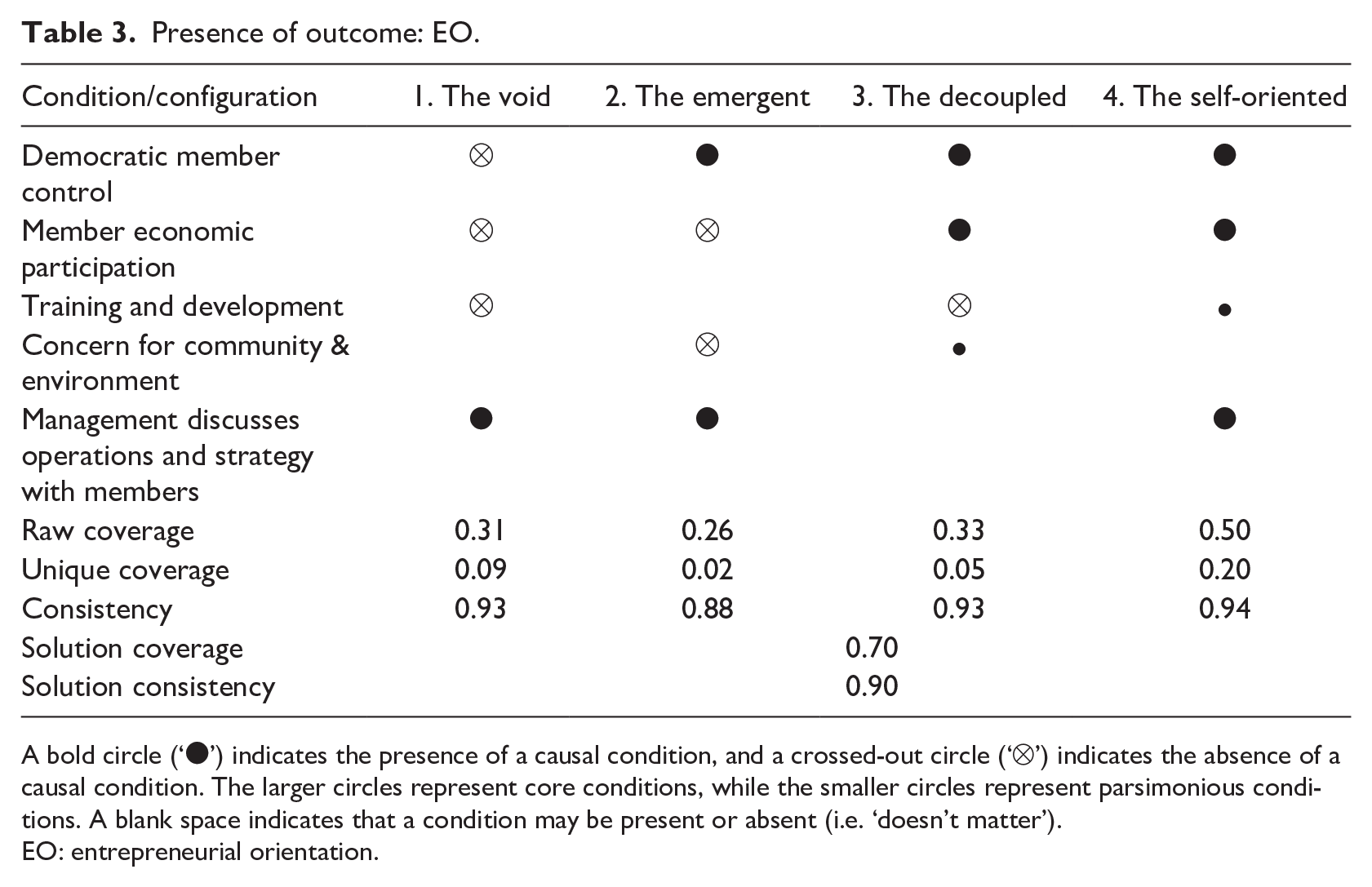
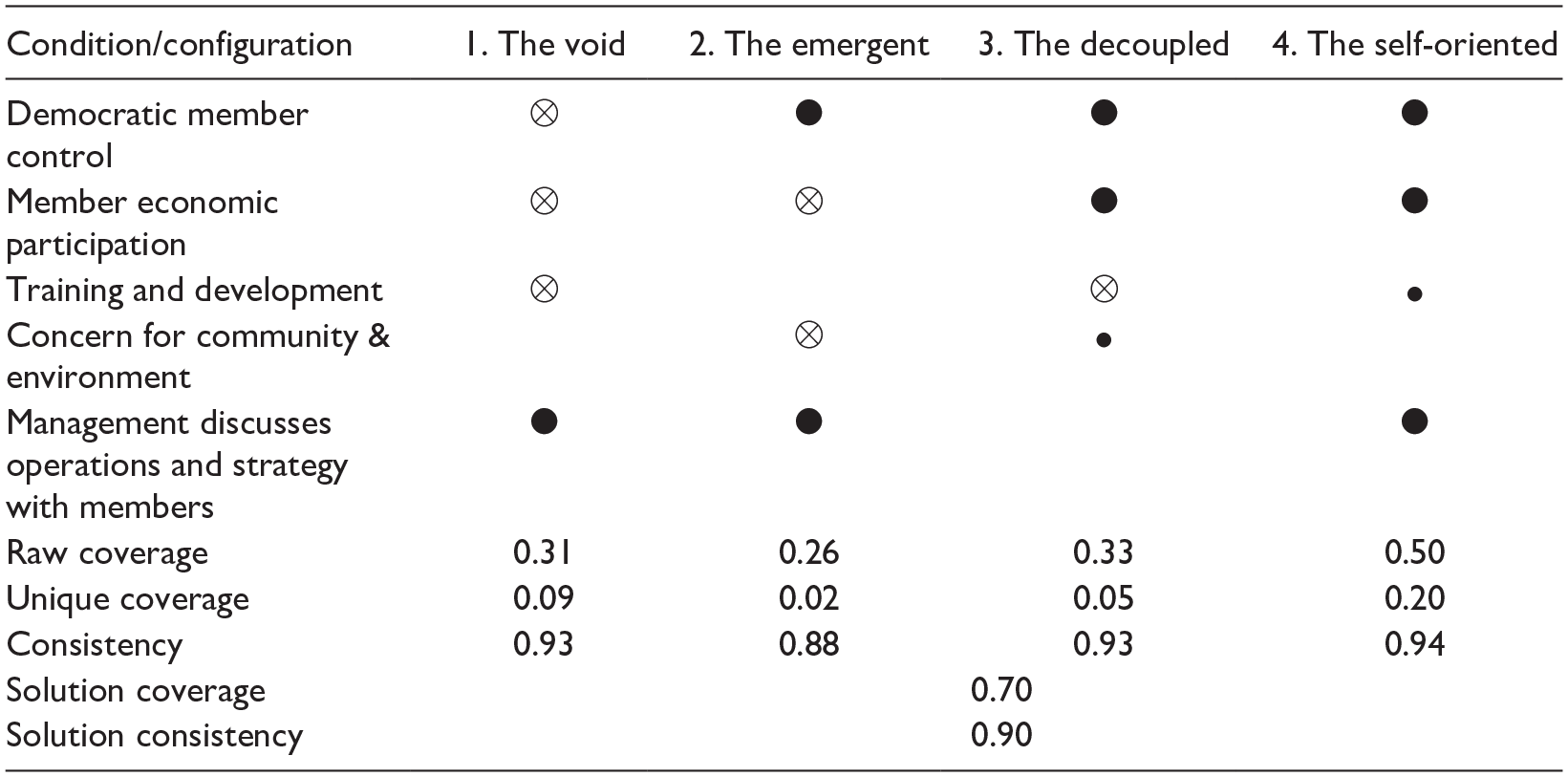
A bold circle (‘ ’) indicates the presence of a causal condition, and a crossed-out circle (‘⊗’) indicates the absence of a causal condition. The larger circles represent core conditions, while the smaller circles represent parsimonious conditions. A blank space indicates that a condition may be present or absent (i.e. ‘doesn’t matter’).
EO: entrepreneurial orientation.
The void
This is the only configuration where the enactment of the cooperative principles is completely absent: DMC, MEP and T&D are absent. At the same time, the presence of Concern for Community and Environment (CfCE) is undetermined. Furthermore, the data shows the presence of Strategic Discussions (SD). A closer examination reveals two distinct groups of cooperatives within this configuration: trading societies where members primarily purchase goods or services from the cooperative and cooperatives on a degeneration pathway. The former usually do not require direct member involvement in the cooperative’s day-to-day management (e.g. purchasing or price setting decisions), and economic participation is low (e.g. membership fees). While, technically, member ownership and democratic control are in place, their enactment is limited to passive shareholder rights at the Annual General Meeting (e.g. voting to approve financial statements and motions, approving or rejecting management’s recommendations). Our personal communication confirms that the member engagement at those forums was low. It is also safe to assume that members would prioritise purchases elsewhere if the price were better.
Degenerating cooperatives tend to restrict the involvement of members in democratic decision-making by withholding information and engaging consultancies in developing strategic plans (e.g. mergers or allowing large, external shareholders). Also missing are rich information channels and forums for discussion, which would encourage members to identify, explore and debate different options available to the organisation. Our cases confirm that members were usually consulted at the last stage of these discussions, where they can exercise their voting rights. In both groups, there is little need for T&D as members are not required to develop new techniques, nor are they expected to undertake governance or management roles within their cooperatives.
A case in point is GoldenFruit, a processing cooperative that faced financial troubles in the period leading up to the survey. Despite multiple attempts to restructure debt and improve operational performance, the cooperative reported financial losses and a declining equity ratio for 2 consecutive years. To stay competitive, the leadership sought external investment to reduce debt, raise capital, and consider selling a minority position via a 50/50 joint venture arrangement with an offshore company or a merger with another cooperative. While either ownership and control change in GoldenFruit’s structure required shareholder approval (as per the principle of ownership and control), any broader processes for participating in the investigation of these options and associated governance and strategy changes were absent. Communication with members was limited to members being asked to vote on options prepared by external consultants – work not discussed with the members prior to the vote. Around the time of our survey, the GoldenFruit constitution required an eight-member board, including three independent directors, indicating that the strategic issues surrounding the cooperative’s ongoing underperformance remained in the purview of the five member-elected directors. While SD was present, it was somehow limited to the management presenting and explaining the options for a vote during the Annual General Meeting. In both cases, cooperative principles tend to fade when exposed to commercial pressures, an issue further compounded by the fact that these are producer cooperatives.
The emergent
This configuration is defined by the presence of DMC and SD while lacking MEP and CfCE. A closer examination indicates that cooperatives in this category are relatively new, striving to establish their presence in highly competitive environments. Building a foundation for collective strategy appears more crucial in these contexts than emphasising CfCE. Operational and SD between cooperative management and members may secure member buy-in and support for collective strategy without significant MEP, possibly due to limited capital accumulation.
The example of MillFoods, a relatively new cooperative at the time of the survey that aimed to emulate the strategies of successful and established cooperatives, illustrates this configuration. MEP involves a relatively low membership fee, enabling members operating as independent businesses to invest in improving their operations and product quality and growing their operations. The cooperative’s primary focus is facilitating growth by exporting its main product. Minimal required processing allows for low economic participation, with key initiatives including improving product quality and consistency, engaging in collaborative R&D and connecting the cooperative’s strategies with those of the members. SD centred on communicating and translating the market’s requirements to member’s operations and strategies. The lack of information about engaging with local communities or calling on members to tackle environmental issues suggests that CfCE was not strategically important then. However, as illustrated by more mature cooperatives, it might become more prominent over time due to customer pressures.
The decoupled
This configuration relies predominantly on DMC and MEP. CfCE is present, but T&D is absent. The examples in this configuration suggest the presence of dynamic and market-oriented cooperatives operating in premium niches. Their growth strategies are tied to export markets, which increasingly demand that the cooperatives incorporate sustainability into their strategies. Members participate both economically and through the governance of the cooperative, but the operational activities of the cooperative and the members remain mostly separated (i.e. members do not engage with the cooperative operations or strategy beyond their own operations).
An illustrative example is Mamski, a geographically concentrated processing cooperative with an extensive marketing function that specialises in value-added products in a crowded, commodity-driven market. High capital spending required higher MEP than in the previous configuration. Despite a heavy reliance on R&D, members have little input or need to understand operational matters around processing and marketing. Rather, what matters is that they understand and support the overall strategy and the related investment decisions, which are often portrayed as customer driven. They remain authorities in their respective (operational) fields. Consequently, T&D is of low importance, as members rely on their existing skills, and there is no need for new technical or business skills to support the operations of the cooperative. Instead, members receive necessary support (e.g. veterinary services or biosecurity assessment) as and when needed. Beyond economic participation, Mamski’s members remain relatively loyal to the cooperative due to the long-lasting, often intergenerational, membership and proximity that facilitate impromptu communication. Concern for the community is driven by tight social networks and the small size of the cooperative, while environmental care is driven by market demand.
The self-oriented
This configuration is characterised by the presence of SD and three cooperative principles (DMC, MEP, T&D), while the fourth, CfCE, is undetermined. A closer examination of the cases in this configuration suggests that focusing on sharing operational and strategic information between the cooperative and its members is crucial. Cooperatives in this configuration invest in T&D as necessary for technical upgrading and better running and governance of the cooperative. They rely on growth strategies that require members to understand the complex relationships between market preferences and product characteristics. Recognising the close interdependence between the cooperative’s strategy and the behaviours and operations of its members, referred by one of the managers as ‘a close-coupling’ or ‘hedgehog strategy’. Cooperatives in this group introduce mechanisms, such as committees, taskforces and market visits, to enable members to engage with the cooperative strategy and develop and share new techniques and best practices aligned with the cooperative strategies and new operational needs. These mechanisms encourage member interest and participation in democratic decision-making, achieving the necessary buy-in for riskier strategies or investments. Thus, we suggest that T&D can, to an extent, be supplemented by SD. CfCE is undetermined as cooperatives in this category are focused on pursuing their growth strategies as a priority.
An illustrative example is WestCraig. Their product requires significant changes beyond the usual member practices, necessitating technical is and aligning member operations with the requirements of the cooperative’s offering. The cooperative’s training and knowledge transfer functions addressed this, but some members were initially reluctant to adopt suggested practices or support significant investment. Those challenges were resolved through extensive consultations, surveys to understand member sentiment, and discussions to explain the rationale. Technical information received from their key client is translated for members so they can understand and meet the market requirements. Strategic plans are presented in formal meetings and discussed during various social events. Purposefully selected members sit on the cooperative’s board, ensuring communication flows from the cooperative to all members. Members manage the Entity Trust, taking responsibility for strategic decisions beyond their operations. As the CEO explained, compared to other companies, the relationship is significantly more intertwined, and the cooperative is ‘very, very open’ in explaining how innovation and investment improve the performance of the cooperative and, as a result, the member’s bottom line. To this end, the management uses benchmarking to facilitate healthy competition among members and aid in adopting strategy-supporting practices. Consequently, ‘members have a much greater desire to make sure that WestCraig performs very, very well’ (Our interview data). While both parties remain authorities in their areas of operations, there is a much greater need for unity at operational and strategic levels.
Discussion
Understanding how organisations can deliver multiple objectives becomes crucial as societies increasingly emphasise socially and economically sustainable goals, many of which require collective entrepreneurship. Cooperatives, grounded in cooperative principles that prioritise economic emancipation, collective entrepreneurship and community support, offer a viable alternative organisational form capable of balancing both social and economic goals and addressing urgent societal challenges (Bastida et al., 2022; Vickers et al., 2024). However, the cooperative principles that supposedly make them capable of delivering on social missions have been cited as reasons that could render cooperatives economically unsustainable. This study investigates this seemingly paradoxical situation by challenging the assumption that cooperative principles operate uniformly across the range of cooperatives. Our study examines how different configurations of cooperative principles influence cooperative performance, specifically EO. By doing so, we offer a counterbalance to the prevailing focus on inefficiencies associated with democratic ownership, highlighting instead the dynamic and contingent nature of cooperative principles. Plus, we address the lack of studies focused on the impact of specific cooperative principles on the performance and growth of cooperatives (Basterretxea et al., 2019), showing that cooperatives adopt these principles per their strategic goals and contexts. We add to the growing critique of studies assuming that cooperatives are inherently community or environment oriented. Finally, we demonstrate the crucial role of knowledge sharing as a vital condition to facilitate sustainable entrepreneurial activities. By so doing, we contribute to the theoretical understanding of cooperatives while arguing that our findings are relevant to the broader debates on collective entrepreneurship.
First, our work enhances the current theoretical understanding regarding the performance of cooperatives. Our investigation into the configurations of entrepreneurial-cooperative principles builds upon the work of Guzmán et al. (2020a), Bastida et al. (2022) and Kyriakopoulos et al. (2004), who established a positive relationship between cooperative principles and entrepreneurialism. Conceptually and empirically measuring the cooperative principles and their relations, we reveal specific configurations that positively influence EO. Our results support earlier findings that collective ownership and decision-making, often associated with high coordination costs, do not necessarily restrict performance (Muñoz et al., 2020). Instead, our findings support prior suggestions that involving members in the running and governance of cooperatives can support the EO of the cooperative, its members and the community (Basterretxea and Albizu, 2011; Guzmán et al., 2020b; Tregear and Cooper, 2016). This configurational framework provides a holistic understanding of how EO and cooperative principles function in a competitive environment.
Second, our data show that adherence to cooperative principles is dynamic and contingent on the cooperative’s competitive strategy. Like any other business, cooperatives pursue distinct strategic objectives, and their legal form does not inherently make them more socially or environmentally conscious. Instead, our findings suggest that cooperative principles are enacted selectively, shaped by competitive strategy rather than ideological commitments. The role of cooperative principles depends on the type of cooperative, its competitive strategy and the competitive strategies of its members (when the members are businesses themselves, as is the case in producer cooperatives). Thus, our findings build on the emerging research showing that cooperatives are not necessarily more committed to environmental or social issues than investor-owned firms (Basterretxea et al., 2024), nor are they inherently worse performers. Instead, we show that the enactment of cooperative principles is contingent on ever-evolving cooperative strategies. For example, as cooperatives evolve, they might reinforce some cooperative principles in response to market signals (Bretos et al., 2020; Guzmán et al., 2020b; Siedlok et al., 2024a). Conversely, some principles might be downplayed when financial stability and honing their strategy often take utmost priority at the early stages of their development. Thus, as argued by Las Heras et al. (2024), cooperative principles need to be considered concerning different types of cooperatives, their strategic position and the goals they are trying to achieve. Just as cooperative principles do not translate to eco-innovation (Basterretxea et al., 2024), these do not automatically make cooperatives a panacea to the ills of capitalism.
Third, our study highlights that cooperative principles alone are insufficient for pursuing competitive strategies. SD and knowledge sharing emerge as critical enablers of cooperative performance, particularly in Configurations 2 and 4. Our findings reinforce prior research (Fiore et al., 2020; Siedlok et al., 2024a) by demonstrating that well-designed knowledge-sharing mechanisms facilitate strategic alignment, enabling cooperatives to navigate complex market conditions while maintaining democratic governance. These results echo studies emphasising the importance of including members in SD (Ashforth and Reingen, 2014; Smith et al., 2018) and suggest that technical knowledge sharing should be supplemented by relevant training in management and governance. Lack of knowledge sharing or training can lead to ineffective governance and degeneration (Basterretxea and Albizu, 2011; Basterretxea et al., 2022; Summers and Chillas, 2021). Our findings highlight that members need access to and understanding of relevant information to make economically sound decisions, requiring new mechanisms for knowledge sharing and translation (Fiore et al., 2020; Siedlok et al., 2024a), along with the necessary knowledge, skills and experience needed to govern the member ownership (Summers and Chillas, 2021).
Finally, our findings contribute to the debate on collective entrepreneurship via alternative ownership models like cooperatives (Ben-Hafaïedh et al., 2024; Deschamps and Slitine, 2024). As cooperatives are increasingly seen as vital for addressing societal challenges (Liu and Guenther, 2022), our configurations provide further details showing how cooperatives can simultaneously deliver on economic and social missions. By highlighting the importance of knowledge sharing and the conjunctural nature of cooperative principles, our findings enrich existing models explaining collective action dynamics (Cairns et al., 2024; Deschamps and Slitine, 2024). For example, discussions with members about the multifaceted mission of a cooperative can increase the capacity of members to be more entrepreneurial, proactive and considerate of the local community – a form of collective animatorship (Deschamps and Slitine, 2024) where the strategic and operational principles become aligned (Siedlok et al., 2024a). These insights are also relevant for entrepreneurial ecosystems where communication is crucial for collective action (Hruskova, 2024) in a less organised manner. We also expand on Cairns et al.’s (2024) findings by illustrating the key factors behind collective ownership in a developed economy and predominantly producer cooperatives. Our findings suggest similar interdependence between collective ownership (as MEP and democratic control) and collective processes (as SD). The relationship between collective ownership and processes in our findings seems to indicate a somewhat different relationship: rather than predating collective ownership, collective processes seem to develop and deepen as cooperatives evolve their strategy and increase co-dependence. Still, these processes can disintegrate due to degeneration or, as in the case of trading cooperatives, not to show up at all.
Conclusion
Cooperatives are increasingly recognised for their ability to balance social and economic goals (Callagher et al., 2022; Liu and Guenther, 2022), positioning them as important actors in collective entrepreneurship (Deschamps and Slitine, 2024). While prior research often assumes a trade-off between cooperative principles and EO, our findings challenge this view. Instead, we show that different configurations of principles enhance competitiveness while maintaining cooperative values.
This article makes three key contributions. First, it challenges the assumption that cooperative principles inherently limit economic performance, showing that their enactment is contingent on competitive strategy (Bretos et al., 2020; Las Heras et al., 2024). Cooperatives are not universally more socially oriented than other organisations; rather, they selectively adopt principles in response to strategic imperatives. Second, we highlight the role of knowledge sharing, transparency and training in enabling sound governance, innovation and internationalisation. Our configurational analysis aligns with prior studies highlighting knowledge-sharing mechanisms as critical enablers of cooperative success (Siedlok et al., 2024a). Third, we extend debates on collective entrepreneurship, illustrating how communication and governance structures shape collective action within cooperatives and other alternative organisational forms (Cairns et al., 2024; Hruskova, 2024). These insights hold practical implications. Cooperative members and managers should avoid assuming that adherence to all principles is always beneficial; rather, they should align principles with strategic objectives. Managers should also invest in effective knowledge-sharing mechanisms, as these shape entrepreneurial capacity and governance. For policymakers, our findings reinforce that cooperatives can be strategically competitive while maintaining their values, but this is driven by market conditions rather than cooperative principles alone.
Like all research, this study has limitations that offer avenues for further inquiry. First, our sample reflects the New Zealand cooperative landscape, where agricultural cooperatives dominate. Future research should examine sectoral and cross-national differences, exploring how principles evolve under different regulatory and market conditions. Second, future studies should include member or partner perspectives to deepen insights into cooperative dynamics. Third, further inquiry is needed into how cooperatives balance principles over time, particularly as they navigate growth, internationalisation and member engagement. Finally, refining CoopIndex measures by integrating additional factors proposed in other studies (Muñoz et al., 2020) would enhance its applicability and reliability. While cooperatives are not a panacea, they offer a compelling alternative to investor-owned firms, demonstrating that entrepreneurial success does not require abandoning cooperative values. Recognising their strategic adaptability can help in fostering sustainable and competitive cooperatives.
Footnotes
Appendix A
Funding
The author(s) disclosed receipt of the following financial support for the research, authorship, and/or publication of this article: This project was funded by The University of Auckland Foundation (Project 3708138).
