



Abstract
This article investigates the relationship between grit, bricolage and venture performance in a sample of 230 entrepreneurs with chronic diseases and physical disabilities. Building on the broaden-and-build theory, we posit that grit influences venture performance through bricolage and that the effect of grit on bricolage is contingent upon varying levels of illness uncertainty (IU). The results demonstrate broad support for our proposed hypotheses. We contribute to the entrepreneurship literature by examining the relationship between grit and venture performance through bricolage. Furthermore, we examine the moderating effect of IU on this relationship, our findings have implications for both practitioners and policymakers.
Keywords
Entrepreneurs encounter numerous uncertainties and obstacles in starting and operating their ventures, as indicated by the high failure rate of such endeavours (Shane, 1996; Stevens and Burley, 1997). To overcome the uncertainties and difficulties inherent in the process, entrepreneurs must possess the ability to overcome challenges and display resourceful behaviour (Ahmed et al., 2022; Williams et al., 2021). One characteristic that encapsulates an individual’s ability to overcome challenges and display resourcefulness is ‘grit’; Duckworth et al. (2007) argue that individuals possessing such grit can accomplish more than others of comparable intelligence, particularly in achieving long-term goals. Grit is defined as: ‘perseverance and passion for long-term goals’ and posit that it encompasses ‘working strenuously toward challenges, maintaining effort and interest over years despite failure, adversity, and plateaus in progress’ (pp. 1087–1088). Building on this conceptualisation, scholars have linked grit to long-term success in various fields such as, academia, professional and extracurricular domains (Aparicio et al., 2017; Duckworth and Quinn, 2009; Usher et al., 2019). Indeed, Duckworth et al. (2007) state ‘that one personal quality is shared by the most prominent leaders in every field: grit’ (p. 1087). Recent insights from the literature suggest that grit is a critical indicator of entrepreneurial activities and venture performance and survival (Mooradian et al., 2016; Mueller et al., 2017; Wolfe, 2021; Wolfe and Patel, 2016). In addition, it is argued that certain behaviours enable individuals to accomplish more than others who have similar, or more such resources; it is noted that resourceful behaviours enable individuals to undertake a range of activities by making do with whatever they have to hand. One such resourceful behaviour, particularly crucial for entrepreneurs who lack resources, is bricolage (Lévi-Strauss, 1962) that Baker and Nelson (2005, p. 333) define as ‘making do by applying combinations of the resources at hand to new problems and opportunities’. Findings from this literature indicate that entrepreneurs engage in bricolage to overcome resource constraints and this positively affects venture outcomes (Senyard et al., 2014; Stenholm and Renko, 2016).
Although recent research suggests that entrepreneur characteristics may influence resourceful behaviours (Michaelis et al., 2022), the relationship between grit and bricolage remains under- explored, this lack of attention limits our understanding of the relationship between an important characteristic and the behaviour of entrepreneurs. Furthermore, the entrepreneurship literature on grit and bricolage has primarily focused on the general challenges and adversity entrepreneurs typically encounter overlooking those who experience even greater adversity due to their health conditions. Indeed, Ng and Arndt (2019, pp. 1–2) note that ‘[s]ave for a few studies on attention deficit hyperactive disorder (“ADHD”), there remains a paucity of research on physically and mentally impaired (“disabled”) entrepreneurs who face extreme challenges’. This is concerning, as individuals with chronic health conditions and disabilities (e.g. amputation, cancer, paralysis and visual and hearing impairments) often have limited professional opportunities due to social exclusion (Altiraifi, 2019; Dibben et al., 2022; Nakaya et al., 2016), and starting a business may be their only viable employment option (Hsieh et al., 2019; Miller and Le Breton-Miller, 2017; Renko et al., 2016; Wolbring, 2016). Moreover, physical health conditions such as disability and chronic diseases can exacerbate the challenges entrepreneurs face and add an additional layer of uncertainty to the already arduous process of starting and operating a venture (Hsieh et al., 2019; Martin and Honig, 2020). As chronic health conditions and disabilities vary between individuals, they in turn, experience different levels of illness uncertainty (IU). Researchers describe IU as ‘a cognitive stressor, a sense of loss of control, and a perceptual state of doubt’ (Wright et al., 2009, p. 133), which could lead to negative emotions such as anger and fear (Neville, 2003; Wright et al., 2009).
Drawing on the broaden-and-build theory as a guiding framework (Fredrickson and Branigan, 2005), we develop a model that examines how grit influences venture performance through bricolage. We posit that grit, which is associated with positive affect that enable entrepreneurs to keep moving forward despite setbacks (Datu et al., 2017; Hill et al., 2016), can broaden an individual’s thought–action repertoire and facilitate creative use of resources (i.e. bricolage) (Fredrickson, 2001, 2013). We also examine how IU moderates the relationship between grit and bricolage. IU occurs when entrepreneurs cannot form a cognitive schema related to the illness and face ambiguity, complexity and unpredictability related to the state of the illness, treatment, care and the course of the illness (Mishel, 1988). IU can be physically and cognitively taxing and limit the ability of entrepreneurs to engage in bricolage. We suggest that IU may negatively affect the relationship between grit and bricolage.
Our study makes three key contributions to the inclusive entrepreneurship literature (Bakker and McMullen, 2023). First, we provide a nuanced understanding of the relationship between grit and venture performance through the mechanism of entrepreneurial bricolage. By illuminating this novel mechanism, we add to the growing body of literature on grit and venture outcomes (Mueller et al., 2017; Stenholm and Renko, 2016). Second, by using a sample of entrepreneurs with a disability, we complement recent studies (Ng and Arndt, 2019) and shed light on the challenges such entrepreneurs experience. In particular, our study examines the moderating effect of IU on the relationship between grit and bricolage, and consequently venture performance. Third, our study enhances the generalizability of the entrepreneurial grit literature and inclusiveness of the entrepreneurship literature by investigating entrepreneurs with disabilities in a sub-Saharan country, Ghana. Entrepreneurs with a disability face additional challenges, such as acute poverty, discrimination etc., (Mitra et al., 2013; Tihic, 2019) with such challenges amplified in the context of developing economies due to pervasive discrimination and limited support (Mfoafo-M’Carthy et al., 2020). There are also substantial contextual differences in support systems available between developed and developing economies, such as Ghana (Ahsan et al., 2021).
Theoretical background and hypotheses
Broaden-and-build theory and grit
The broaden-and-build theory (Fredrickson, 2001, 2013) posits that positive emotions broaden an individual’s thought–action repertoire. Specifically, Fredrickson (2004, p. 1369) states that positive emotions such as joy and interest expand individual thinking and behaviours, creating an urge ‘to play, push the limits and be creative’ and ‘explore, take in new information and experiences, and expand the self’. This widens the range of perspective and opens individuals to new possibilities and ideas, allowing them to explore new opportunities and activities, leading to growth and development. In contrast, negative emotions, such as fear and anger tend to narrow the focus and lead to more rigid, entrenched thinking and behaviour. Individuals possessing grit have a positive disposition which allows them to persist despite encountering difficulties and setbacks (Datu et al., 2017; Hill et al., 2016). This not only helps them cope with challenges (Tugade et al., 2004) but also enables them to creatively solve problems (Isen, 2015).
Grit is particularly important for individuals in environments that are fraught with adversity and failure (Westphal et al., 2008), including health-related challenges. For instance, Klappa et al. (2020) found that patients who survived a stroke and had high grit levels were able to focus on long-term goals; similarly, Sharkey et al. (2018) found that grit was related to increased emotional well-being and decreased anxiety and depressive symptoms in college students with chronic illnesses. In the context of entrepreneurship, grit has been associated with successful venture outcomes; it is argued that grit enables individuals to acquire the necessary skills, knowledge and competencies to pursue entrepreneurship (Wolfe and Patel, 2016) as well as enable those who face adversity to persist with their venture activities (Wolfe, 2021). Recent research also acknowledges that grit plays a critical role in determining entrepreneurial outcomes; for instance, Mooradian et al. (2016) found that grit and innovativeness predict entrepreneurial success in terms of venture growth, profitability and competitiveness; similarly, Mueller et al. (2017) found that the lead entrepreneur’s grit positively affects venture performance in terms of sales growth, profitability, debt, return on assets, gross profit margin, net profit margin and ability to fund growth from profit. In sum, individuals with grit are more likely to start and grow successful businesses and also, are more likely to be successful in the face of adversity.
Resourcefulness behaviours and bricolage
The broaden-and-build theory (Fredrickson, 2001, 2013) posits that individuals with positive emotions have a broader range of thoughts and actions that facilitate creativity. Resourcefulness for example, is reflected by actions employed by entrepreneurs to ingeniously and efficiently employ available resources in pursuit of their goals; Williams et al. (2021) define such behaviours as ‘creatively bringing resources to bear and deploying them to generate and capture new or unexpected sources of value in the process of entrepreneurship’ (p. 2). These researchers state that bricolage is a prime example of resourceful behaviour as entrepreneurs creatively use resources in unorthodox ways to attain unique value. Baker and Nelson (2005) describe bricolage as the art of creating something of substance from minimal resources, ignited by an entrepreneur’s refusal to be constrained by their existing resources whilst Fisher (2012) defines bricolage as an action in which entrepreneurs engage to use resources differently from their original purpose. Furthermore, researchers argue that bricolage is socially constructed through deliberate, constant practice and experimentation (Honig and Hopp, 2019; Senyard et al., 2014). Bricolage represents a crucial means of bridging resource gaps in young and small firms overcoming the drawbacks of newness and enhancing competitiveness (Senyard et al., 2014). Entrepreneurs, particularly those who operate in precarious conditions, are likely to engage in bricolage as they have limited options to avail themselves of necessary resources and as such, draw upon the unique context-specific resources available to adapt and recombine these resources for distinct purposes (Kwong et al., 2019). Empirical evidence indicates that bricolage has a positive impact on firm outcomes such as growth and innovation (Baker and Nelson, 2005; Salunke et al., 2013), and it also enables entrepreneurs to manage adversity (Kuckertz et al., 2020). Furthermore, An et al. (2020), in their examination of the configurations of causation, effectuation and bricolage associated with firm performance, found that bricolage is important for achieving high performance in the early and late stages for all firms. Despite its proven usefulness, particularly in penurious environments (Fisher, 2012), we have an inadequate understanding of bricolage in the context of challenge-based entrepreneurship such as that encountered by entrepreneurs with disabilities (Miller and Le Breton-Miller, 2017).
Entrepreneurs with disability and illness uncertainty
The literature on entrepreneurs with disabilities highlights the challenges and motivations these individuals experience when pursuing entrepreneurship (Antshel, 2018; Renko et al., 2016) with the factors that drive those with a disability towards entrepreneurship described as ‘pull’ and ‘push’ factors (Kitching, 2014; Maritz and Laferriere, 2016). On the one hand, autonomy and flexibility are known to attract disabled individuals to entrepreneurship (Maritz and Laferriere, 2016; Wiklund et al., 2017); on the other hand, discrimination and a lack of job opportunities can force entrepreneurs with disabilities to pursue self-employment (Dhar and Farzana, 2017; Hwang and Roulstone, 2015). Our study builds upon this literature by examining the specific role of grit in the entrepreneurial endeavours of individuals with disabilities and how IU moderates this relationship.
Evidence illustrates the impact of disability on entrepreneurial activities noting that individuals with certain conditions, such as ADHD, may exhibit a heightened inclination towards self-employment (Lerner et al., 2019) yet, they also encounter related challenges, such as limited resources and reduced start-up investments, compared to their non-disabled counterparts (Larsson, 2006; Renko et al., 2016). These disparities have led to the development of challenge-based entrepreneurship models that acknowledge various economic, sociocultural, cognitive, physical and emotional obstacles that the disabled entrepreneurs have to overcome and highlight the need for them to work harder, seek assistance and approach entrepreneurship differently (Miller and Le Breton-Miller, 2017; Ng and Arndt, 2019). In addition to the uncertainty inherent in entrepreneurship, entrepreneurs with disabilities must also contend with uncertainty related to illness. The varied chronic health conditions and disabilities that individuals face leads them to experience different levels of illness-related uncertainty. IU refers to the cognitive processing of illness-related stimuli and the construction of meaning surrounding the illness, treatment, hospitalisation and prognosis. Chronic diseases and long-term disabilities necessitate the development of a cognitive schema and the ability to cope and adapt (Mishel, 1990). The uncertainty associated with these conditions may take various forms, such as a lack of clarity about the state of the disease, a lack of information about treatment and care and unpredictability of the disease’s progression. When individuals perceive uncertainty as a threat, they may engage in strategies such as maintaining high vigilance, seeking more information or managing negative emotions. For individuals with chronic health conditions and disabilities, the uncertainty can persist and may lead to a sense of disorganisation and instability that permeates multiple aspects of their life, including their businesses (Mitra et al., 2013; Tihic, 2019). They must learn to accept IU as a natural part of life and rely on their attributes, resources and healthcare providers to cope (Mfoafo-M’Carthy et al., 2020). While it is suggested that individuals high in grit are more capable of overcoming challenges associated with entrepreneurship and health adversity, it is not clear whether health-related uncertainties impede entrepreneurial activities. Studies such as that of Sharkey et al. (2018) have found that grit can mitigate the negative appraisal of IU. Yet, it is unclear if IU negatively affects an individual’s mental state, potentially hindering their ability to engage in entrepreneurial activities. To address this, we examine the relationship between grit and venture performance through bricolage in our sample of entrepreneurs with chronic diseases and physical disabilities. Furthermore, we investigate how IU modifies this relationship.
Hypotheses development
Bricolage as a mediator of grit and venture performance relationship
Individuals with disabilities encounter many challenges; grit can play an important role in facilitating recovery and improving life quality (Traino et al., 2019) although of course, levels of grit vary (Sharkey et al., 2018) so, for instance, Klappa et al. (2020) found that individuals with higher grit are more likely to survive and recover from a stroke. Similar to how individuals with disabilities overcome life challenges through their grit, entrepreneurs with disabilities can overcome challenges when starting and growing their business. Indeed, prior studies posit that entrepreneurs who possess grit are more likely to persist in the face of setbacks and increase their effort when confronted with obstacles (Mueller et al., 2017; Nambisan and Baron, 2013; Wolfe, 2021). While the literature emphasises the importance of grit, the mechanisms through which grit affects venture outcomes remain unclear. Although individual-level factors are significant in explaining entrepreneurial agency (Adomako & Ahsan, 2022), it is equally important to examine the mechanisms through which they influence outcomes (Ahsan et al., 2023). We posit that the attributes associated with grit align well with a crucial resourcefulness behaviour, bricolage that enables entrepreneurs to overcome resource constraints and lead to positive venture outcomes (Busch and Barkema, 2021; Desa and Basu, 2013).
Individuals with grit are inclined to steadfastly pursue long-term goals and exert sustained effort over an extended period to achieve such goals (Silvia et al., 2013). Nonetheless, attaining these goals, particularly in resource-constrained contexts, is contingent upon whether entrepreneurs accept or reject the resource limitations they encounter. Those who lack grit are more prone to give up easily (Duckworth et al., 2007); such individuals are more likely to accept resource limitations and refrain from engaging in bricolage. In contrast, entrepreneurs with grit are more proactive, driven and competitive (Houston et al., 2021), thereby demonstrating a predisposition for action and motivation to overcome problems, even in the absence of resources (Senyard et al., 2014). Additionally, entrepreneurs who possess grit tend to have a positive disposition that allows them to overcome challenges and setbacks (Datu et al., 2017; Hill et al., 2016). This positive disposition also broadens their thought–action repertoire (Fredrickson, 2004) in that they are more likely to engage in a wider range of actions and ‘make do by applying combinations of resources at hand to new problems and opportunities’ (Baker and Nelson, 2005, p.33). The ‘making do’ aspect of bricolage implies a predisposition for action with available resources, rather than delaying actions to evaluate whether resources are sufficient (Senyard et al., 2014). When they encounter resource challenges, entrepreneurs who have grit tend to consider their available resources across a variety of domains including tangible resources – such as finance, physical assets and human capital, and intangible resources – such as knowledge, culture and social networks and recombine them to suit new purposes. Indeed, as Ng and Arndt (2019) highlight in their study of Adam, who is blind and paraplegic, he attracted support for his entrepreneurial initiatives by leveraging his disabilities and sharing his personal story – he did not allow his disability to hinder him; instead, it motivated him to engage in entrepreneurial actions. This included sharing his story through a film and a TED talk; this was a vital tool for fundraising. This suggests that some entrepreneurs with chronic health conditions and disabilities do not relinquish their pursuits in the face of adversity and refuse to accept resource limitations. Such entrepreneurs, in their determination to pursue their goals, are more likely to use all the resources they have on hand, including their disability experience, to start and grow their businesses. We suggest that entrepreneurial grit is related to bricolage as well as to venture performance through bricolage:
Hypothesis 1. Entrepreneurial grit is positively associated with bricolage.
Hypothesis 2. The positive relationship between grit and venture performance is mediated by bricolage.
The moderating role of illness uncertainty
The challenges entrepreneurs with disabilities encounter are diverse requiring dedicated efforts to surmount them (Mitra et al., 2013; Tihic, 2019). Clearly, some entrepreneurs with a disability experience greater degrees of adversity, a key factor influencing this being IU – the cognitive aspect of illness in which consequences are not predictable and the illness is shrouded in ambiguity (Pai et al., 2007). This ambiguous condition persists until the causes and consequences of the illness are determined (Mishel, 1988). Individuals experiencing IU may have difficulty adjusting to living with their condition, resulting in a lower quality of life (Parker et al., 2016). Research findings also indicate that IU is related to negative emotions such as fear and anger (Neville, 2003; Wright et al., 2009); this can dampen the positive disposition associated with grit. Moreover, IU is associated with loss of control and constant doubts (Wright et al., 2009) as well as behavioural outcomes such as an increased anxiety and depression (Brown et al., 2020; Jiang and He, 2012). Drawing on the insights from the broaden-and-build literature (Fredrickson, 2001, 2004, 2013; Fredrickson and Branigan, 2005), we contend that IU can limit an entrepreneur’s thought–action repertoire. The uncertainty of illness can constrain the ability of entrepreneurs with a disability to make decisions and reduce their desire to act, including limited attention and cognitive resources to undertake bricolage. In other words, IU undermines the drive to make do by assembling resources at hand and recombining them for new purposes. We suggest that IU attenuates the positive relationship between grit and bricolage:
Hypothesis 3. Illness uncertainty moderates the relationship between grit and bricolage, such that the relationship is stronger under low levels of illness uncertainty and weaker under high levels of illness uncertainty.
Based on our previous arguments (H2 and H3), we also expect IU to diminish the positive indirect effect of grit on venture performance through bricolage. Consequently, we propose a moderated mediation hypothesis:
Hypothesis 4. The strength of the indirect effect of grit on venture performance (through bricolage) will vary based on the degree of illness uncertainty, such that the indirect effect will be stronger when illness uncertainty is low and weaker when illness uncertainty is high.
Methods
Sample and data collection in two waves
To test our hypotheses, we collected data in two waves from entrepreneurs with disability in Ghana. We designed the survey questionnaire in English 1 to gather data on grit, bricolage, illness uncertainty and control variables in Wave 1 and the dependent variable (i.e. venture performance) 12 months later in Wave 2. Our Wave 1 data collection, conducted in January 2020, targeted 500 entrepreneurs selected from Ghana’s Presidential Empowerment for Entrepreneurs with Disability (PEED) database, comprising a total of 2000 entrepreneurs with a disability registered to receive funding from the PEED initiative which seeks to promote and support entrepreneurship among individuals with disabilities. Recognising the challenges faced by entrepreneurs with disabilities, the programme seeks to create an inclusive and enabling environment empowering them to start and grow their ventures successfully.
Our sample was composed of entrepreneurs with chronic diseases and physical disabilities such as amputation, cancer, heart and kidney diseases, paralysis and visual and hearing impairments who sought ongoing medication and care from public hospitals across six regions in Ghana. First, we carefully checked this database to ensure the records are complete and eliminated entrepreneurs who had missing or incomplete contact information from our sample. Through this process, we identified 500 entrepreneurs with a disability and complete records in the database. Second, we compared our sample of 500 entrepreneurs with a disability to the entrepreneurs we eliminated to check for sampling bias and found no significant differences. In our correspondence with the entrepreneurs, we assured them about confidentiality and stressed that their identity and individual responses would not be disclosed to any third party. We also stated that there were no good or bad responses and encouraged them to respond to the questions as accurately as possible to reduce desirability bias (Podsakoff et al., 2003). Third, we adopted the procedural remedies suggested by Podsakoff et al. (2012) to control for different sources of method bias ex ante. Specifically, we (1) ensured anonymity and confidentiality of our participants; (2) counterbalanced the survey questions by including negatively worded items (Cooper et al., 2020; Podsakoff et al., 2012); and (3) temporally separated the independent variable from the dependent variable to mitigate common method bias (Tellhed et al., 2018). As such, we implemented these remedies at the instrument design state to mitigate same-source bias (Conway and Lance, 2010).
We sent our survey to the 500 entrepreneurs with a disability through the post along with a stamped addressed envelope for returning completed survey. Despite conducting our study during the COVID period using a postal survey, we found that it was surprisingly free of challenges. This smooth process can be attributed to the fact that the entrepreneurs in the PEED database were registered to receive funding, which ensured they had digital addresses that facilitated easy tracing to their premises. To enhance the survey’s credibility and response rate, we included a letter officially endorsed by the PEED programme. This letter served as an encouragement and endorsement for the sampled entrepreneurs, motivating them to actively participate in the study. During the survey, we adopted a two-wave data collection approach, successfully employed in previous studies within the same research setting of Ghana (see Ahsan et al., 2021; Boso et al., 2013). This approach is known for mitigating common method bias which can be a concern when relying solely on cross-sectional data. The use of a two-wave design allowed us to gather data at two distinct time points, reducing the risk of biases that could otherwise influence our results (Podsakoff et al., 2012).
After sending the survey, we then contacted the entrepreneurs 7–10 days later to inquire if they had received it to request its return if they had not already done so. We received 245 completed responses in Wave 1, discarding three responses because the entrepreneurs had ceased trading or were no longer active in their businesses. Additionally, we discarded six responses due to missing values or instances in which cover letters were mistakenly returned instead of the completed questionnaire. This yielded 236 usable responses in Wave 1, with a response rate of 47.2%. As non-response bias could be an issue with survey-based entrepreneurship research (Scheaf et al., 2022), we conducted checks to assess whether non-response bias influenced our data. We compared respondents and non-respondents using entrepreneur age, gender and venture age and found no significant differences between the two groups. This indicates that non-response bias was not a major issue in this study (Armstrong and Overton, 1977).
In Wave 2, approximately 12 months later, we collected data on the dependent variable (i.e. venture performance). We sent our Wave 2 survey to the 236 ventures that had provided usable responses in Wave 1, along with a stamped return envelope and a cover letter requesting the finance managers/chief accountants to complete the survey. We followed the postal survey with two reminders; the first approximately a week after sending the survey, to request completion, and the second, approximately two weeks later asking those who had not responded to do so. This strategy, as well as the relationship we had established with the entrepreneurs in Wave 1, helped to get a high response rate in Wave 2. We received usable responses from 230 finance managers/chief accountants in Wave 2, for a final response rate of 46.0%. All the ventures in our sample have been in operation for less than 10 years. These ventures primarily operated in the manufacturing (54.8%) and services (45.2%) sectors. Additional information on our data is provided in Table 1.
Demographic and venture characteristics.
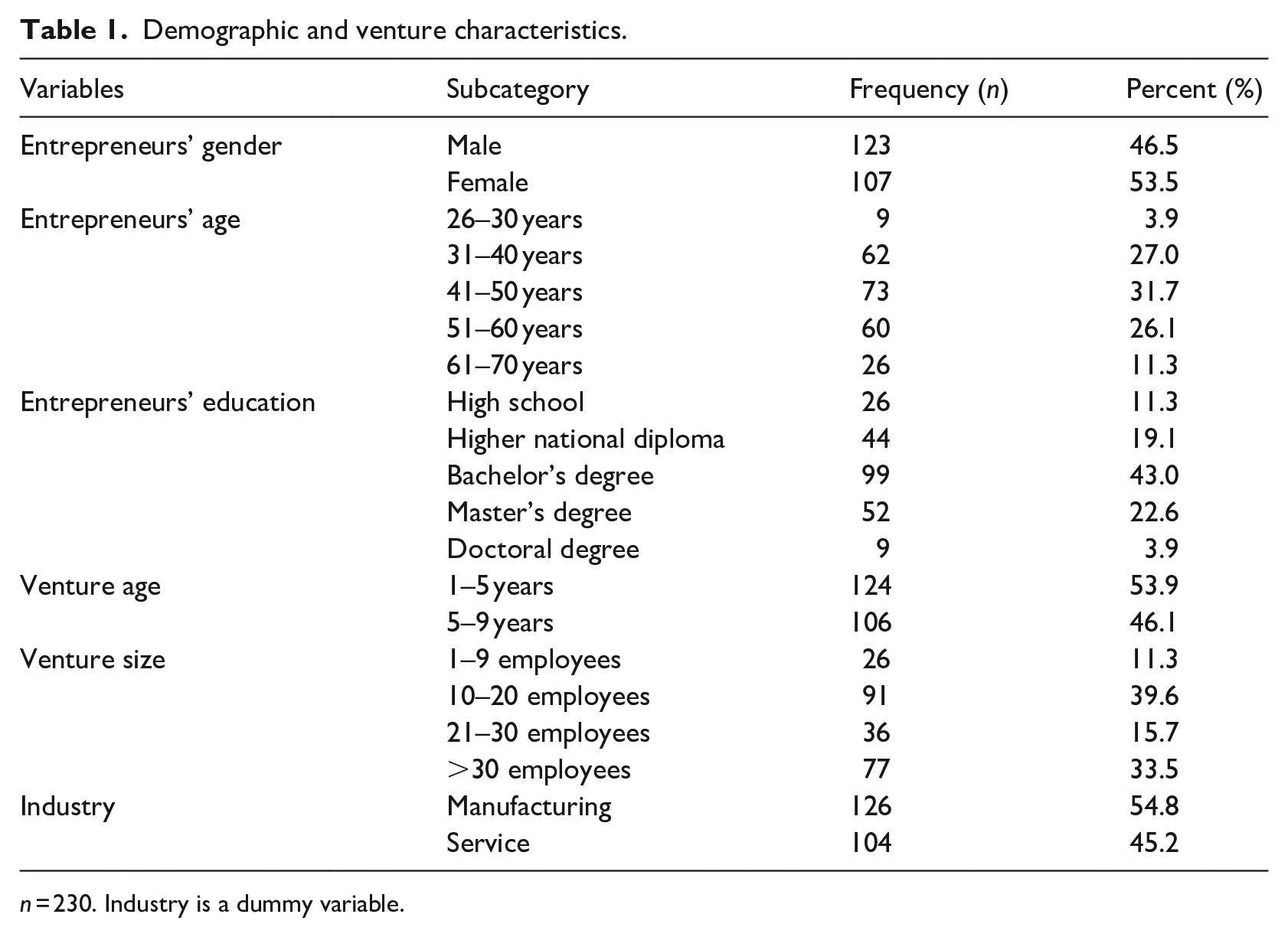
n = 230. Industry is a dummy variable.
Measures
We used scales from prior literature to measure the constructs. Unless otherwise indicated, all multi-item constructs were assessed on a 5-point Likert scale, with 1 indicating ‘strongly disagree’ and 5 indicating ‘strongly agree’. The constructs, items, reliability and validity tests are shown in Table 3. Below we briefly explain the constructs and scales.
Grit was measured with eight items from the Short Grit Scale (α = 0.92), following prior studies (Duckworth, 2016; Duckworth and Quinn, 2009). Respondents were asked to rate their ability to persevere and sustain a passion for long-term goals. High scores indicate higher grit, while low scores indicate lower grit.
Bricolage was measured with eight items (α = 0.86) from Senyard et al. (2014), validated by Davidsson et al. (2017). Sample items include ‘I gladly take on a broader range of challenges than others with my resources would be able to’ and ‘When dealing with new problems or opportunities, I take action by assuming that I will find a workable solution’.
Illness uncertainty was measured with a five-item scale (α = 0.74) from Hagen et al.’s (2015) study. We asked the participants to reflect on their health condition and treatment and respond to the five statements in the scale. High scores represent high uncertainty, and low scores represent low uncertainty.
Venture performance was measured with six items (α = 0.87) from Luk et al. (2008) with the highest factor loadings from prior research (Adomako et al., 2018). Finance managers/chief accountants were asked to compare the performance of their companies with that of their competitors in the last three years.
Control variables were age, educational level of the founder, firm age, firm size, entrepreneurial experience and industry sector, due to their potential effect on venture performance (Boso et al., 2013). Firm size was expressed as the total number of full-time employees, firm age was expressed as the number of years the venture had been in full operation, and the entrepreneurial experience was expressed as the number of businesses previously established, excluding the current business. Firm size, firm age and entrepreneurial experience were expressed as natural logarithms due to skewness.
Analysis
Common method bias
Although the data were collected from multiple informants at different points in time, we controlled for potential common method bias (Podsakoff et al., 2003). We estimated three competing confirmatory factor analysis (CFA) models based on Cote and Buckley’s (1987) approach. Table 2 presents the nested models and goodness-of-fit statistics. In Model 1, we estimated a method-only model. In this model, we loaded all the indicants onto a common factor (χ2(N = 230, df = 350) = 14842.094; χ2/df = 5.263; RMSEA = 0.136; TLI = 0.650; CFI = 0.676; SRMR = 1.000). Further, we also estimated the trait-only model in which all the multiple indicators loaded, respectively, onto their theoretical latent constructs (χ2(N = 230, df = 318) = 568.251; χ2/df = 1.787; RMSEA = 0.059; TLI = 0.907; CFI = 0.916; SRMR = 0.052). Finally, we estimated the method-and-trait model simultaneously (χ2(N = 230, df = 287) = 496.251; χ2/df = 1.729; RMSEA = 0.056; TLI = 0.918; CFI = 0.933; SRMR = 0.043). Comparing the heuristic fit indices of the three competing CFA models reveals that Models 2 and 3 are superior to Model 1. Nonetheless, even though Model 3 was slightly better than Model 2 in terms of the fit indices, Model 3 did not differ markedly from Model 2. This indicates that common method bias was not a problem in our data.
Common method bias nested models.
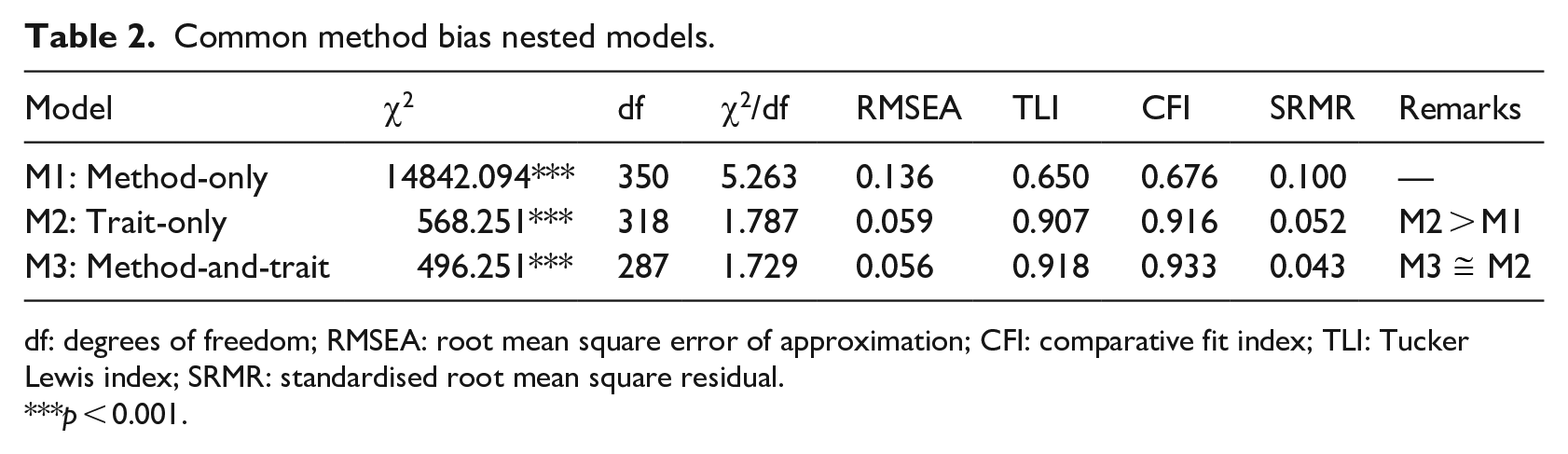
df: degrees of freedom; RMSEA: root mean square error of approximation; CFI: comparative fit index; TLI: Tucker Lewis index; SRMR: standardised root mean square residual.
p < 0.001.
Endogeneity bias
Researchers have suggested that endogeneity bias must be addressed in survey-based data (Cooper et al., 2020; Ullah et al., 2020). Following Zaefarian et al. (2017), we employed the three-stage least square estimation technique to test for endogeneity in our data. In this estimation method, the moderator variable was used as the instrumental variable. In step 1, we regressed grit on bricolage and saved the unstandardised residuals. In step 2, we examined the direct effect of bricolage on venture performance by regressing bricolage_residual on venture performance. In the third step, the moderating influence of IU was assessed by relating grit_residual, bricolage_residual and grit × illness uncertainty_residual on venture performance. The result obtained was significant at 5% and did not differ markedly from the initial structural equation modelling (SEM) results (Table 5). We conclude that issues of endogeneity bias do not undermine the credibility of our findings.
Measurement model estimation
To examine the validity and reliability of our multi-item measures, we employed the CFA with the maximum likelihood estimator and covariance matrix approach. Our four-factor measurement model including grit, IU, bricolage and venture performance offered a good fit to the data: χ2(N = 230, df = 350) = 568.25, p < 0.001, TLI = 0.91; CFI = 0.92; RMSEA = 0.06; SRMR = 0.05. Further, all the factor loadings were above the threshold of 0.50 and significant at the 5% level, providing support for convergent validity (Bagozzi and Yi, 1988, 2012). Additionally, we extracted the estimates from the CFA to compute the composite reliability (CR), Cronbach’s alpha (α) and average variance extracted (AVE) scores. Following recommendations in the psychometric literature (Bagozzi and Yi, 2012; Hair et al., 2019; Vieira, 2011), we inspected the CR, alpha and AVE (see Table 3) and found that all were within the acceptable threshold (Bagozzi and Yi, 2012; Nunnally, 1978). To establish the distinctiveness of our constructs, we compared the AVEs of each of the constructs with the squared correlation between the pair of each construct and concluded that the lowest AVE was higher than the highest shared variance. We conclude that our measures are distinct and discriminant validity is not an issue in our study. Table 4 presents the descriptive statistics and correlation.
Constructs, items, reliability and validity tests.
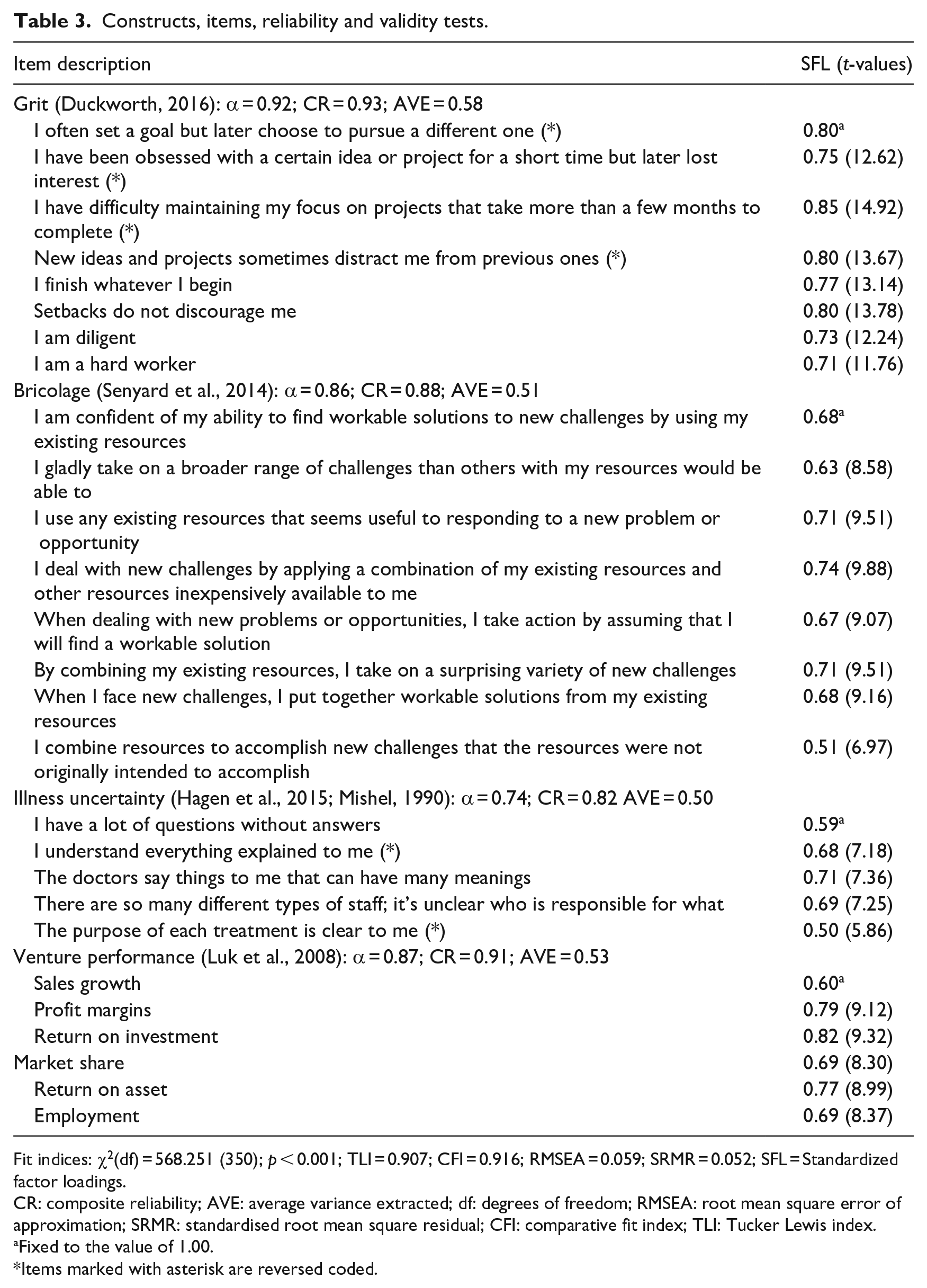
Fit indices: χ2(df) = 568.251 (350); p < 0.001; TLI = 0.907; CFI = 0.916; RMSEA = 0.059; SRMR = 0.052; SFL = Standardized factor loadings.
CR: composite reliability; AVE: average variance extracted; df: degrees of freedom; RMSEA: root mean square error of approximation; SRMR: standardised root mean square residual; CFI: comparative fit index; TLI: Tucker Lewis index.
Fixed to the value of 1.00.
Items marked with asterisk are reversed coded.
Descriptive statistics and correlation.
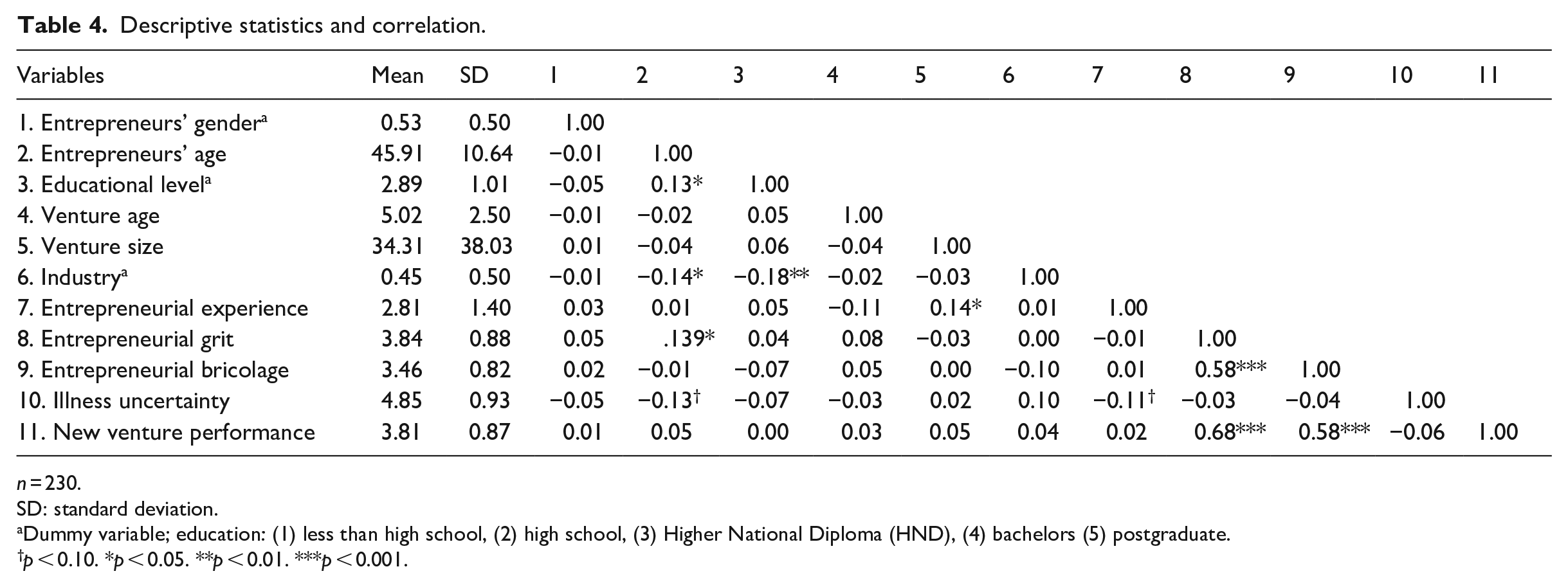
n = 230.
SD: standard deviation.
Dummy variable; education: (1) less than high school, (2) high school, (3) Higher National Diploma (HND), (4) bachelors (5) postgraduate.
p < 0.10. *p < 0.05. **p < 0.01. ***p < 0.001.
Structural model estimation
SEM is a sophisticated tool for testing both predictive and causal hypotheses (Bagozzi and Yi, 2012; Collier, 2020). Specifically, we used covariance-based SEM (CB-SEM) to test our hypotheses instead of ordinary least square (OLS) regression or partial least square SEM (PLS-SEM) for three main reasons. First, CB-SEM incorporates many multivariate techniques such as regression analysis, CFA and path analysis (Zhang et al., 2021). Second, CB-SEM takes into consideration the presence of measurement errors in both predictors and outcomes, resulting in more accurate estimation of model parameters (Cheung and Lau, 2008). Finally, CB-SEM enables the estimation and comparison of nested models and appropriate for testing proposed theoretical models, a capability that is completely absent in OLS regression or PLS-SEM (Bagozzi and Yi, 2012; Williams et al., 2009).
The maximum likelihood technique and covariance matrix were utilised as the method of estimation and input constructs, respectively (Hair et al., 2019). Before estimating the structural model, we assessed two important assumptions that need to be met for using SEM – normality and multicollinearity. Following Kline (2016), we calculated the kurtosis and skewness indices and observed the values were below |3|, indicating that the assumption of univariate normality is supported. To rule out potential multicollinearity in the structural model, we first inspected the variance inflation factors (VIFs) and observed that the highest VIF value is 1.57, which was below the cut-off point of 4 or 10 (O’Brien, 2007; Tabachnick and Fidell, 2013). The results presented in Table 5 indicate that multicollinearity does not present a challenge to our analytical results.
Structural model estimation.
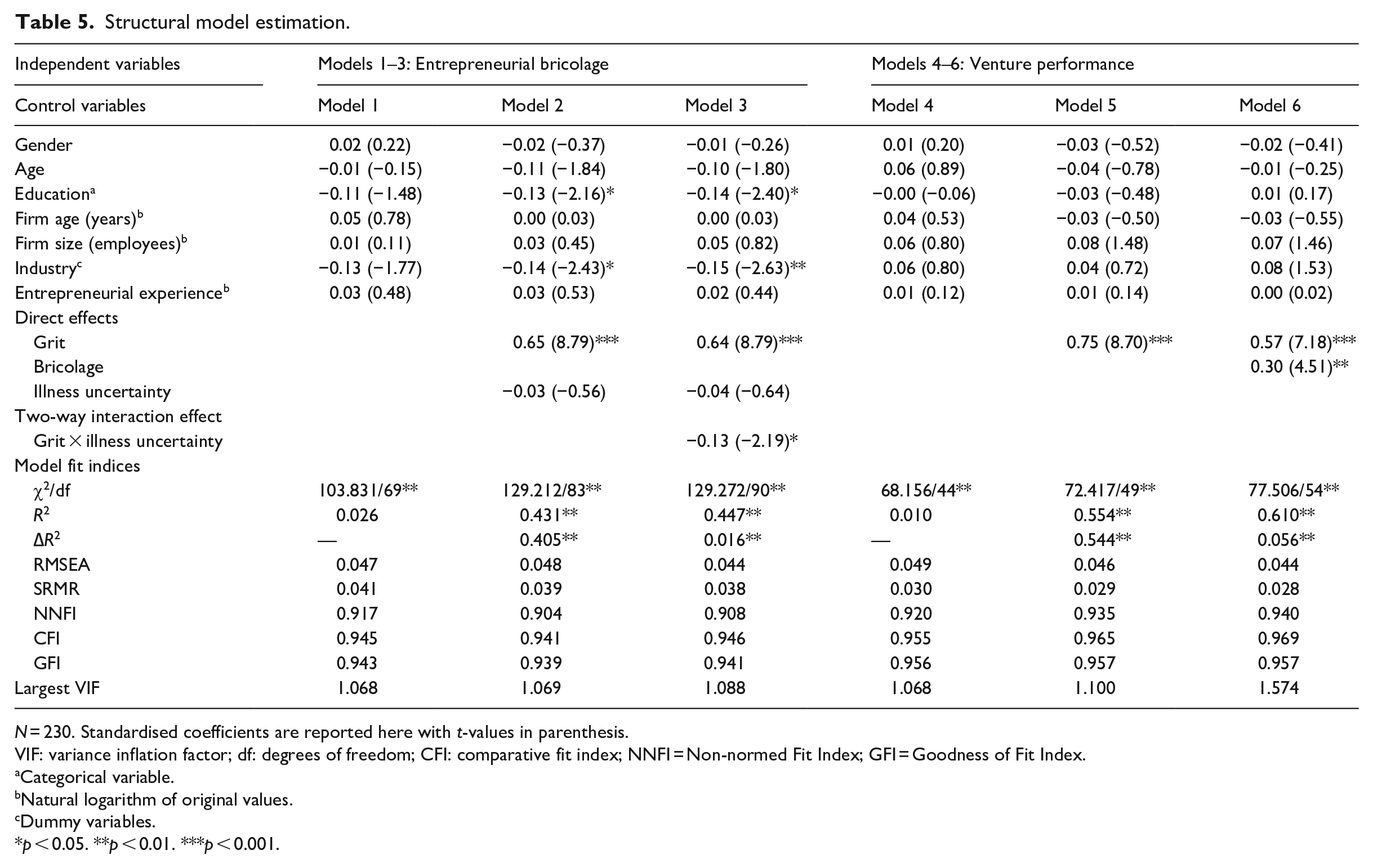
N = 230. Standardised coefficients are reported here with t-values in parenthesis.
VIF: variance inflation factor; df: degrees of freedom; CFI: comparative fit index; NNFI = Non-normed Fit Index; GFI = Goodness of Fit Index.
Categorical variable.
Natural logarithm of original values.
Dummy variables.
p < 0.05. **p < 0.01. ***p < 0.001.
Having ascertained the accuracy of our multi-item constructs, we computed averages for grit and IU. Further, to help ascertain sufficient degrees of freedom (df), we chose to model the endogenous variables (i.e. bricolage and venture performance) using their specific indicators. Since we utilised product term analysis to test the moderation effect, we created a multiplicative variable and included it in the structural model estimation. As such, a product term was computed for grit × bricolage to test Hypothesis 3. To avoid the multicollinearity issue in the product term, the variables that we used were all mean centred (Aguinis & Gottfredson, 2010; Iacobucci et al., 2017). We estimated six hierarchical nested models where bricolage and venture performance were modelled as the dependent variables. First, Model 1 to Model 3 had bricolage as the outcome while Models 4 to 6 had venture performance as the dependent variable. It is important to note that Models 1 and 4 contain the control variables.
The use of the hierarchical nested model estimation approach helped to observe the changes in the R2 and the normed chi-square (χ2/df) as well as to establish the validity of the estimated parameters. Table 5 presents the standardised coefficients, t-values in parenthesis and significant levels using p-values for the six nested models. The path analysis model is presented in Figure 1.
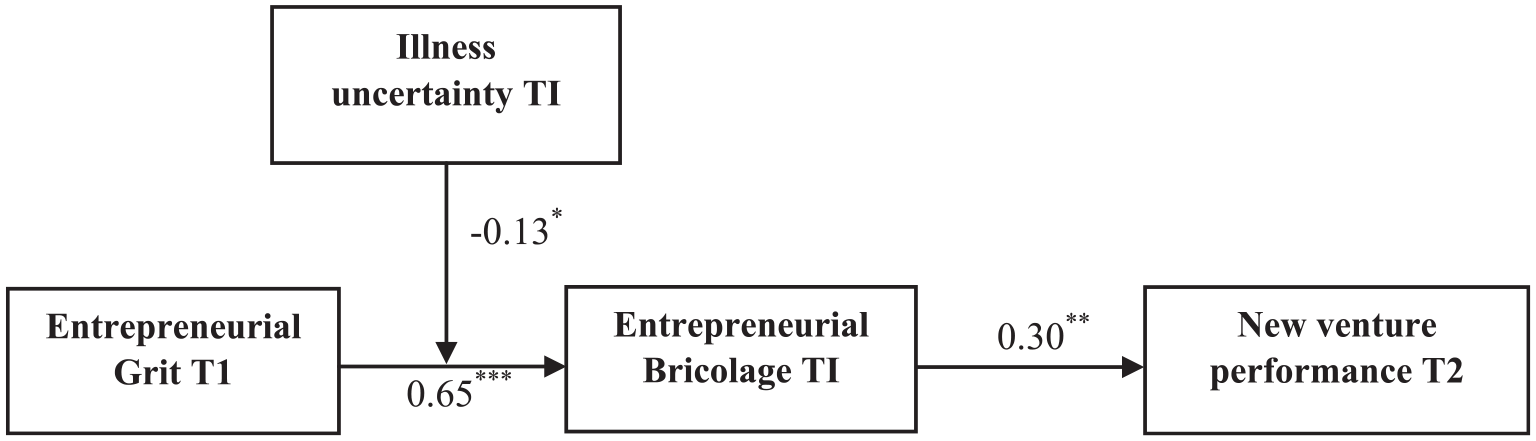
Path analysis model. Mediated effect: Grit → BRIC → NVP = 0.15*.
Results
Main analysis
To test Hypothesis 1, we estimated Model 2 with bricolage as the dependent variable in which the control paths and the structural path from grit to bricolage were unconstrained. We found that grit is positively related to bricolage, supporting Hypothesis 1 (γ = 0.64, t = 8.79, p < 0.001). Hypothesis 2 posited that the positive relationship between grit and venture performance is mediated by bricolage. To test Hypothesis 2, we estimated a mediation-only model using the 95% bias-corrected bootstrap technique in PROCESS (Hayes, 2013). Bricolage mediated the association between grit and venture performance (indirect effect = 0.15, 95% BCCI = [0.06, 0.24]). Results for the indirect effect are reported in Table 6. To augment this result, we further relied on the SEM results. Model 3 presents a better-fit index than Model 2, so we relied on Model 3 and found support for our mediation hypothesis because the structural path from grit to bricolage (Model 3) (γ = 0.65, t = 8.79, p < 0.001) and grit to venture performance (Model 5) (γ = 0.75, t = 7.71, p < 0.001) were both significant, while the path from bricolage to venture performance was also significant (γ = 0.30, t = 4.51, p < 0.001). As shown in the difference between Model 5 and Model 6, the positive and significant path from grit to venture performance reduces (0.75–0.57 = ∆γ = 0.18; ∆t = 1.58) when channelled through bricolage. The SEM results complement the results of the mediation analysis based on the PROCESS macro and indicate that grit is positively associated with venture performance directly and indirectly through bricolage. Hence, a partial mediation model is confirmed.
Mediation model.
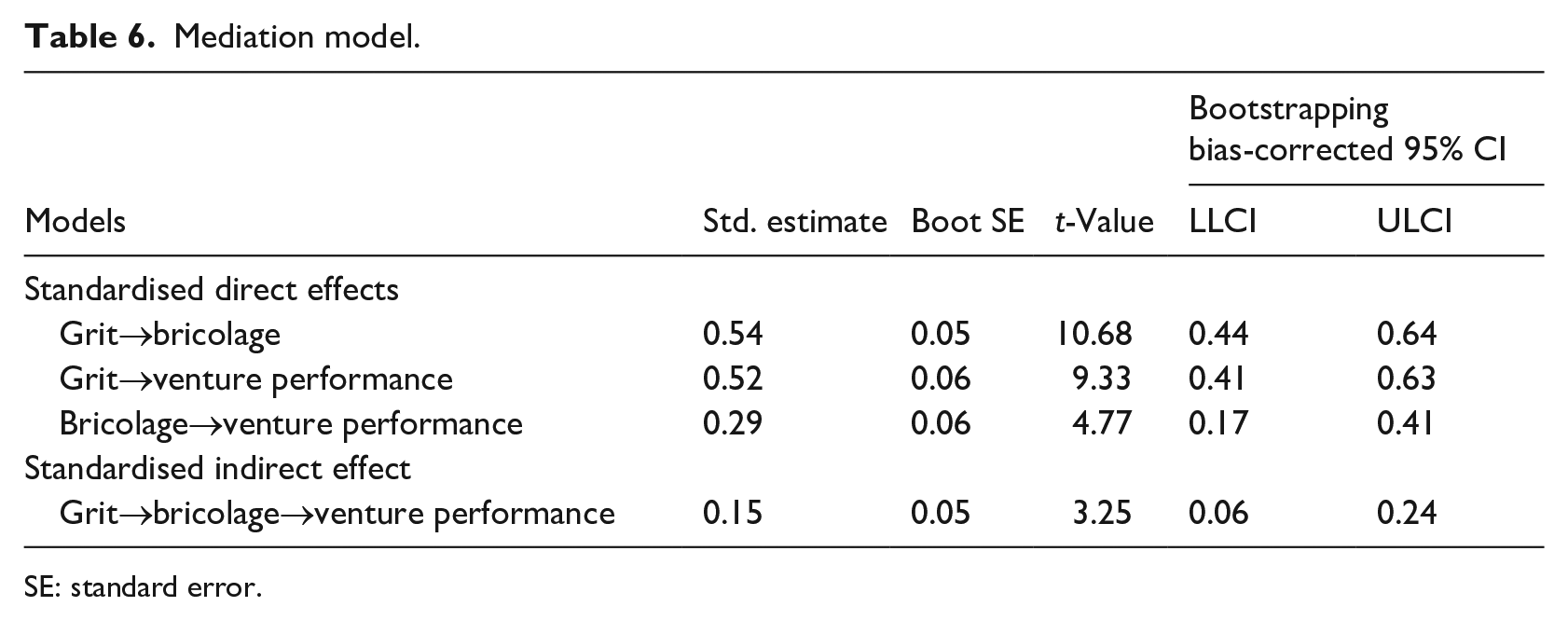
SE: standard error.
In Hypothesis 3, we proposed that IU will negatively moderate the effect of grit on bricolage. In Model 3 of Table 5, we added the structural path from the interaction effect between grit and IU to bricolage and found that the interaction effect is both negative and significant (γ = −0.13; t = −2.19, p < 0.05). Consequently, our findings reveal that IU negatively moderates the positive relationship between grit and bricolage, which supports Hypothesis 3. We further probed the interaction effect graphically by following recommended practice by Aiken and West (1991) and Dawson (2014), in which we plotted the effect of grit on bricolage. As shown in Figure 2, we find that the effect of grit on bricolage is stronger for entrepreneurs with low IU rather than high IU.
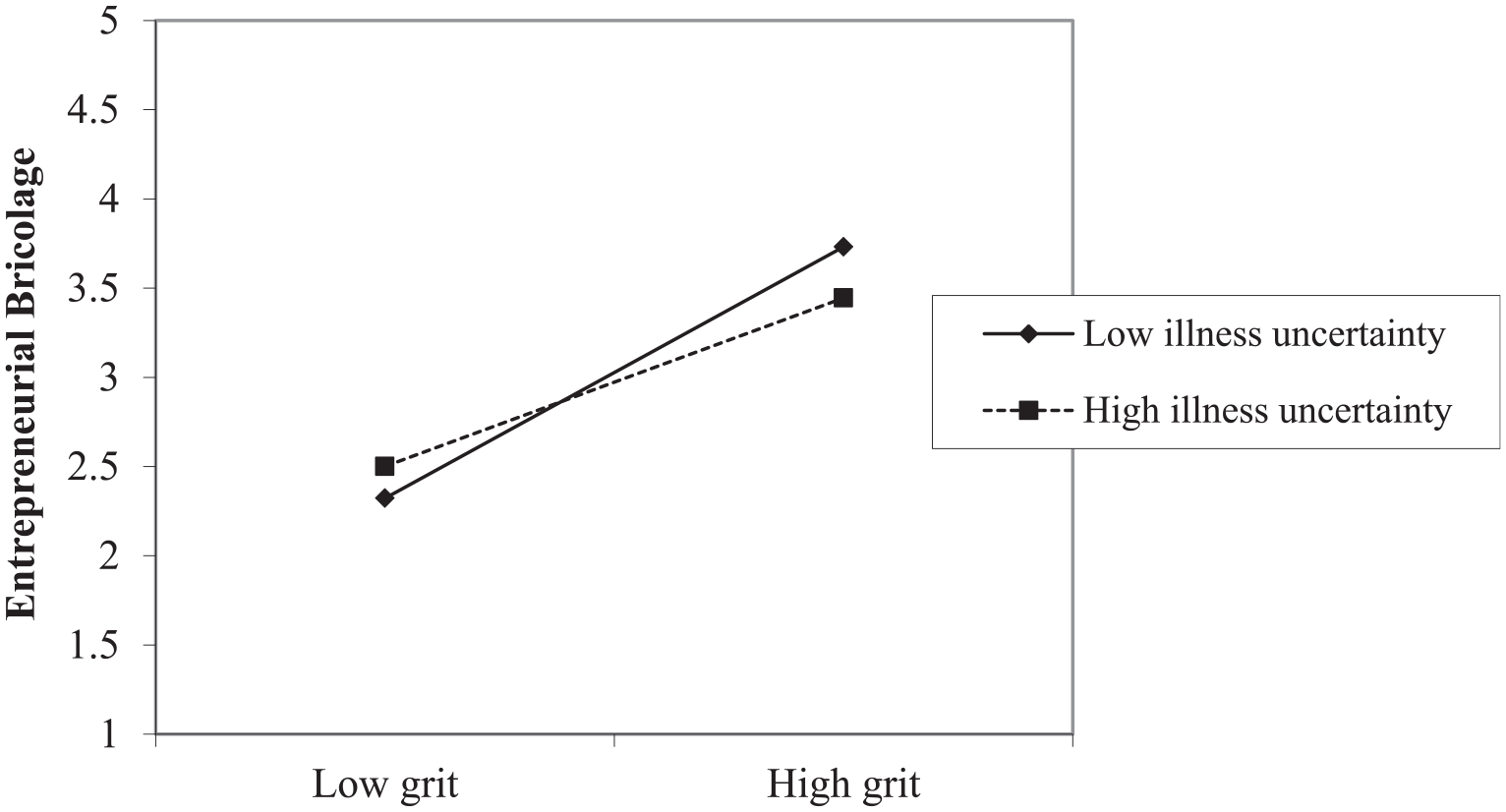
Interaction effect of grit with illness uncertainty on entrepreneurial bricolage.
In Hypothesis 4, we postulated a first-stage moderated mediation effect in which IU moderates the indirect effect of grit on venture performance through bricolage. To test our moderated mediation hypothesis, we examined the indirect effect of grit on venture performance via bricolage at two levels of IU. To do so, we employed Hayes’s PROCESS macro version 3.5 in SPSS (Hayes, 2013; Hayes and Preacher, 2010) to carry out the moderated mediation analysis. Hence, we set high and low levels of IU at one standard deviation above and below the mean of IU. As expected, the indirect effect of grit on venture performance through bricolage was contingent upon the two levels of IU. As shown in Table 7, the conditional indirect effect was significant and stronger (0.20) at low levels of IU (CI ranging from 0.08 to 0.32) but weaker (0.13) at high levels of IU (CI ranging from 0.05 to 0.22), with both values of CI not crossing zero. This indicates that Hypothesis 4 is supported.
Moderated mediation model.
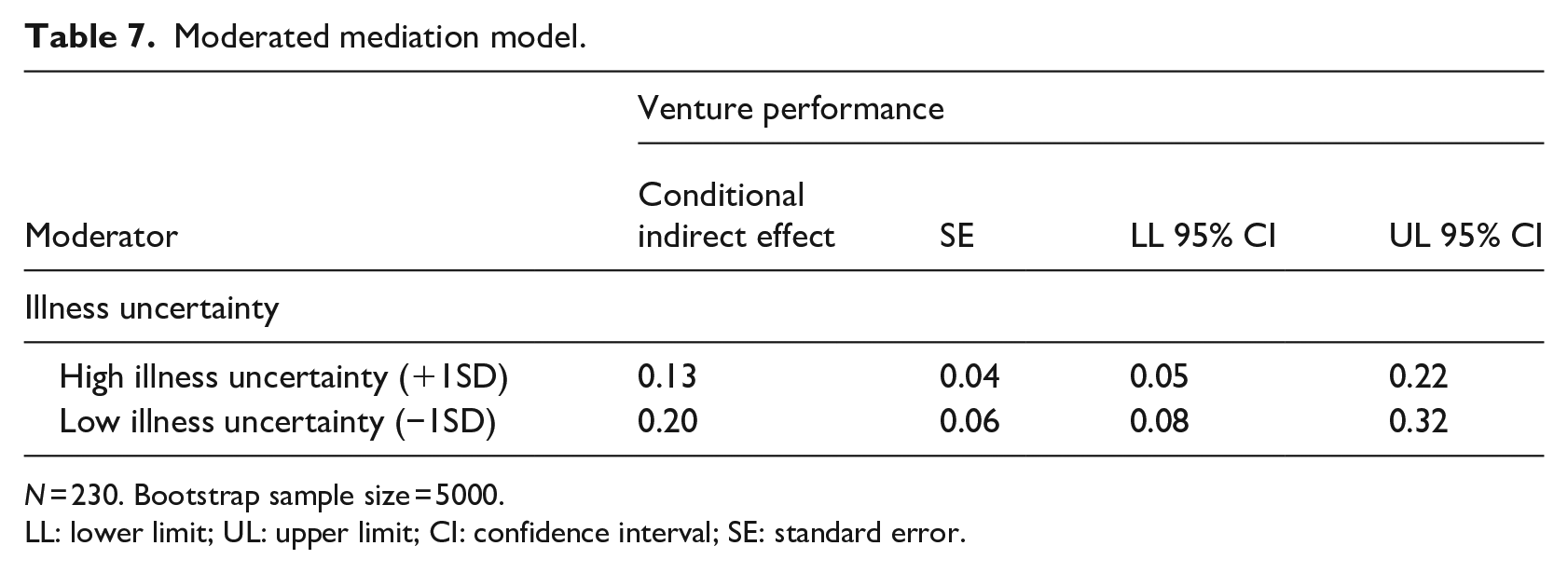
LL: lower limit; UL: upper limit; CI: confidence interval; SE: standard error.
Supplementary analysis
To check the robustness of our mediation analysis from the bootstrap and SEM analysis, we used the necessary condition analysis (NCA). According to Dul (2016), the NCA helps to identify the factors that are necessary for the occurrence of the outcome. In the post-hoc analysis, the NCA provides evidence about causal relationships (Aguinis et al., 2020; Arenius et al., 2017; Gyensare et al., 2024). Table 8 and Figure 3 present the results of NCA. The NCA creates ceiling lines to demarcate the observation area from the non-observation area. The ceiling lines are established using the ceiling envelopment with free disposal hull and ceiling regression with free disposal hull (CR-FDH). The range of the effect size of the necessary condition (d) is 0–1 (0 ⩽ d ⩽ 1). Dul (2016) identified four categories of necessary condition effect size: small (0 ⩽ d ⩽ 0.1), medium (0.1 ⩽ d ⩽ 0.3), large (0.3 ⩽ d ⩽ 0.5) and very large (d ⩾ 0.5). Results of the NCA with the CR-FDH revealed grit as a necessary condition for bricolage (d = 0.234, p = 0.000) and venture performance (d = 0.182, p = 0.000). In a similar vein, bricolage was found to be a necessary condition for venture performance (d = 0.052, p = 0.015). But IU was not found to be a necessary condition for bricolage (d = 0.108, p = 0.814).
Result of the necessary condition analysis for the study constructs.
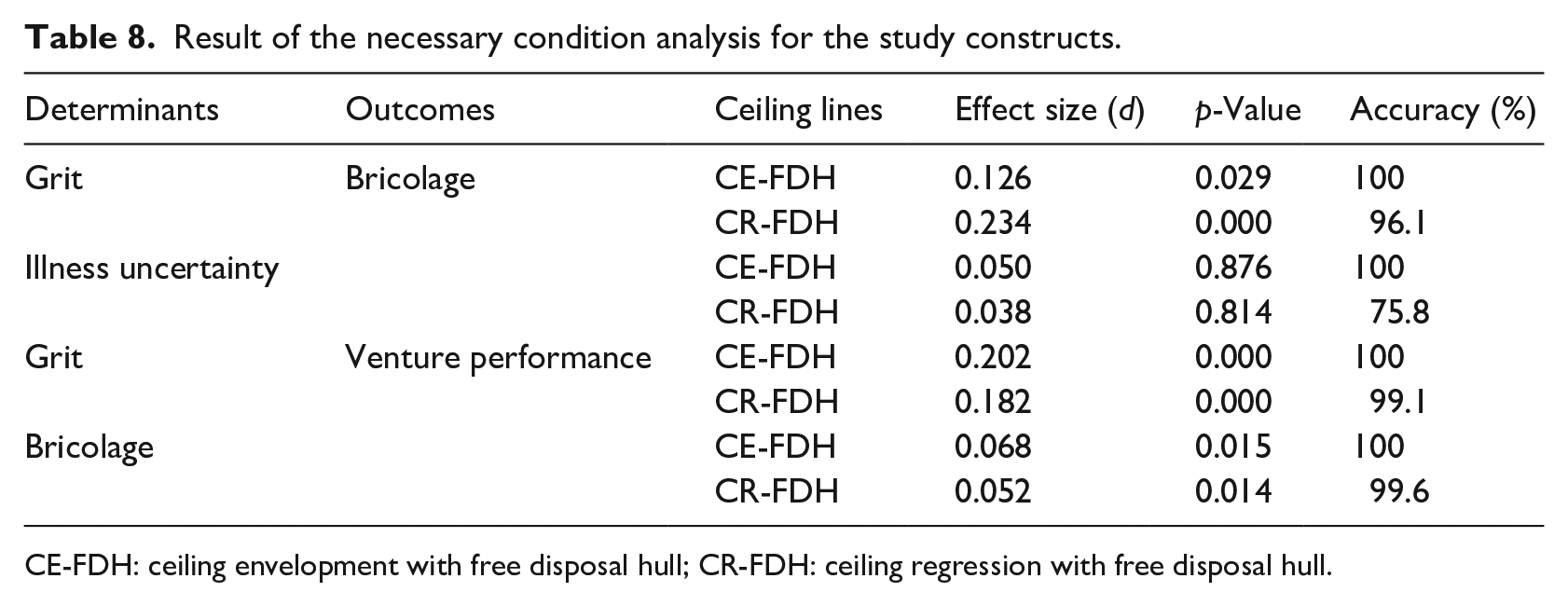
CE-FDH: ceiling envelopment with free disposal hull; CR-FDH: ceiling regression with free disposal hull.
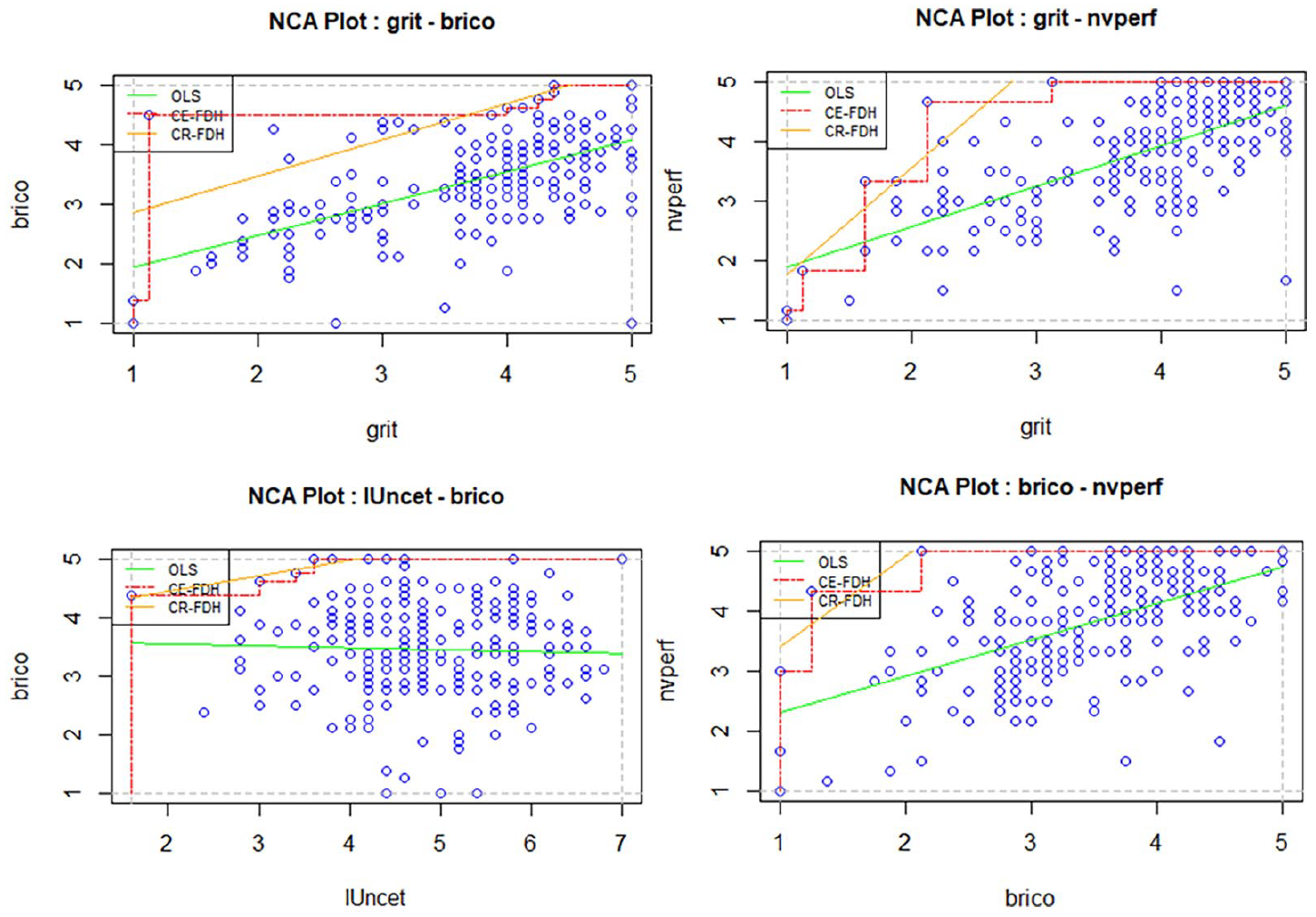
Scatterplots with ceiling lines. Necessary effect size (d) corresponds to the size of empty space in the upper-left corner above the red linear line (CR-FDH).
Discussion
Individuals with disabilities encounter a myriad of obstacles, foremost among them being the limited availability of employment opportunities. In such circumstances, entrepreneurship emerges as a potential conduit towards empowerment and independence. Pursuing an entrepreneurial pathway can be a formidable task for these individuals (De Clercq and Honig, 2011; Renko et al., 2016). In addition to the standard challenges faced by entrepreneurs, such as time constraints, cash flow issues and business setbacks, individuals with disabilities grapple with specific difficulties arising from chronic illnesses and physical impairments. In particular, entrepreneurs with a disability in emerging economies may face more substantial challenges due to lower human capital and limited support (Mitra et al., 2013). Our findings indicate that entrepreneurs with a disability who possess a higher level of grit are more likely to over come such challenges and enhance venture performance.
Miller and Le Breton-Miller (2017) proposed a challenge-based entrepreneurship model, which posits that entrepreneurs with disabilities must incorporate distinctive adaptive strategies, such as increased effort and seeking assistance, to overcome these additional challenges. Hsieh et al. (2019) expanded upon this model, identifying specific challenges, adaptive prerequisites and expected outcomes for entrepreneurs with disabilities. These mechanisms, such as supportive networks, resource access, positive individual motivation and personal qualities, significantly enhance personal effectiveness enabling them to achieve success in their entrepreneurial pursuits. Our findings complement this literature and reveal that bricolage behaviours are important for enhancing venture performance. This ability to engage in bricolage behaviours is contingent on the entrepreneur’s health condition, as measured by IU. Entrepreneurs with appropriate knowledge and understanding of their illness experience lower IU enabling them to devote more time and attention to their venture activities. Conversely, those who lack full information about their illness can be less able to manage it and experience increased uncertainties, diverting their attention from their venture activities.
Implications for research
Our research contributes to the emerging field of challenge-based entrepreneurship in several significant ways. First, we extend the existing literature on the relationship between mental health and entrepreneurship by examining the impact of physical health issues such as chronic diseases and physical disabilities, on entrepreneurial pursuits. Previous research has explored the connection between mental health characteristics, such as ADHD, and entrepreneurial endeavours (Gunia et al., 2021; Moore et al., 2021; Wiklund et al., 2017; Yu et al., 2021). These studies have shown that the resilience individuals develop to overcome the challenges associated with mental health conditions, such as ADHD, can help to address the obstacles involved in starting and running a business. Similarly, insights from Ng and Arndt’s (2019) qualitative study highlight the determination exhibited by entrepreneurs with visual impairments in overcoming their challenges and pursuing entrepreneurial activities. Moreover, Wolfe and Patel (2016) have found that grit is particularly crucial for entrepreneurs facing specific challenges, such as gender related issues for women entrepreneurs. It is essential to note that not all individuals who face challenges demonstrate the same level of grit; it varies with related impacts upon outcomes. As noted above for example, Klappa et al. (2020) found that those with higher levels of grit were more likely to survive and recover from a stroke. Similarly, Sharkey et al. (2018) found that grit is linked to positive psychological outcomes in adolescents and young adults with chronic medical conditions. Our findings complement this body of literature and reveal that entrepreneurs with higher levels of grit are more likely to develop better performing ventures.
Second, we explore the mechanism through which grit affects venture performance. While grit can assist in overcoming adversity (Duckworth et al., 2007), entrepreneurs still require resources to engage in entrepreneurial activities. This is particularly challenging for entrepreneurs with disability in developing countries as they often face greater poverty compared to the general population (Asuman et al., 2021; Opoku et al., 2019). To overcome these issues, entrepreneurs with disabilities need to adopt creative approaches to move their ventures forward such as, for instance, leveraging their physical disability to secure critical resources necessary for venture development (Ng and Arndt, 2019). This is consistent with research that suggests that bricolage is particularly crucial in challenging and improvised conditions (Fisher, 2012). Additionally, resource recombination and repurposing require creativity and experimentation (Bacq et al., 2015), which may involve encountering failures. Entrepreneurs with disabilities often find themselves unable to perform essential tasks in the same manner as those without such challenges, this compels them to find alternative methods or alter the nature of tasks (Miller and Le Breton-Miller, 2017, p. 11). Individuals who possess the determination to persist despite facing setbacks have a positive disposition, which broadens their thought–action repertoire and facilitates creative repurposing of resources. Our findings reveal that entrepreneurs who exhibit high levels of grit are more likely to demonstrate resourcefulness and achieve positive venture outcomes, compared to entrepreneurs with lower grit levels.
A significant number of individuals with disabilities engage in entrepreneurship due to limited employment opportunities (Pagan, 2009). Interestingly, research indicates that the management of illness can influence venture activities. For instance, Greidanus and Liao (2021) discovered that ADHD treatment is linked to a decrease in business ownership. They posited that treatment enables individuals to manage their disorder, thereby potentially providing them with more employment opportunities. Notably, in their post-hoc analysis, they also discovered that depression negatively modulates the association between ADHD and business ownership, as it likely diminishes the action-orientation behaviours associated with ADHD. Although disability could also be an active ‘opportunity-seeking endeavour’ that enables entrepreneurs with disability to create ventures based on their unique attributes (Ng and Arndt, 2019), health-related uncertainty can lead to negative emotions such as anger and fear (Neville, 2003; Wright et al., 2009). This can impede entrepreneurial action and negatively affect venture performance. Our findings indicate that the relationship between grit and bricolage is contingent on the entrepreneur’s IU and this consequently, affects venture performance. These insights add significant value to the literature examining the effects of mental and physical health on entrepreneurial activities and outcomes by introducing and exploring a major source of uncertainty that has not been examined in previous literature (Ahsan, 2017; Magnani and Zucchella, 2018).
Finally, our study sheds light on entrepreneurs with disabilities in a developing country context. This contributes to the inclusivity of the broader entrepreneurship discourse by focusing on entrepreneurs with disabilities, a demographic that is largely underrepresented in academic research (Bakker and McMullen, 2023; Ng and Arndt, 2019). Entrepreneurs with disabilities face significant challenges, such as acute poverty and discrimination, when compared to entrepreneurs without disabilities (Mitra et al., 2013; Tihic, 2019). Additionally, entrepreneurs in developing countries generally lack the support available to entrepreneurs in developed nations (Ahsan et al., 2021). Indeed, recent findings indicate that in Ghana, individuals with disabilities often encounter more pronounced discrimination and receive minimal support (Mfoafo-M’Carthy et al., 2020). Our study complements a recent study by Salamzadeh et al. (2022) that emphasises the importance of government involvement and a shift in societal perspectives to enhance the economic engagement of individuals with disabilities. They recommend prioritising the participation of entrepreneurs with disabilities in the economic and social spheres, facilitating self-employment, and promoting the exchange of knowledge and experiences among them. Our findings illustrate that grit and IU varies in individuals with chronic health conditions and disabilities, and this can influence their engagement with entrepreneurial activities.
Implications for practice
Our findings also provide crucial practical implications for entrepreneurs and policymakers. First, our findings imply that entrepreneurs with grit are more prone to engage in entrepreneurial behaviours, which improves venture performance. This highlights the significance of grit, particularly for individuals facing challenges. As grit is contingent on passion and perseverance, entrepreneurs should be encouraged to concentrate on their interest when contemplating the types of businesses. As entrepreneurs with grit persist despite setbacks, providing them with support can help in achieving success. Second, we establish that bricolage mediates the relationship between grit and venture performance. It is well-documented that entrepreneurs with disabilities encounter greater resource constraints than the general population (Goodman et al., 2017). Although entrepreneurs with grit are more likely to surmount constraints through bricolage, those who lack grit may experience significant disadvantages. Given the limited employment opportunities available to individuals with a disability (Hsieh et al., 2019; Miller and Le Breton-Miller, 2017; Renko et al., 2016; Wolbring, 2016), it would be judicious for policymakers to provide grants and loans to entrepreneurs with disability to alleviate the challenges they encounter, particularly in developing economies (Ahsan et al., 2021).
Third, entrepreneurs with disabilities may encounter a high degree of uncertainty regarding their health, which could have a detrimental effect on their mental state and quality of life (Brown et al., 2020; Jiang and He, 2012; Wright et al., 2009). Entrepreneurs who are experiencing uncertainty about their illness should consider bringing in a trusted partner to assist them with the business. This would allow the entrepreneur to focus on their well-being as well as ensure the sustainability of their ventures. In addition to providing entrepreneurship resources such as workshops, loans and mentors, policymakers should develop resources to offer psychosocial support for entrepreneurs with disability to help them manage their health challenges. Such programmes can ensure the well-being of entrepreneurs with a disability and aid them in leading dignified lives. It is also crucial for policymakers to appreciate that entrepreneurs with a disability encounter varied challenges, and even those with similar disabilities may experience different levels of uncertainty regarding their illness. As such, ‘one-size-fits-all’ programmes are unlikely to be effective; policymakers are encouraged to devise flexible programmes to cater to the diverse needs of entrepreneurs with disabilities and foster inclusive entrepreneurship.
Limitations and future research
While our study provides valuable insights into a topic that has received limited attention in the entrepreneurship literature, it is not without limitations and provides opportunities for future research. First, based on prior studies, we argue that IU creates ‘a sense of loss of control and a perceptual state of doubt’ (Wright et al., 2009, p. 133), which could adversely affect mental and physical health. A recent study implies that entrepreneurship can improve the mental and physical health of entrepreneurs (Nikolova, 2019). Our data limitations prevent us from acquiring a nuanced understanding of whether entrepreneurship reduces behavioural outcomes such as anxiety and depression in entrepreneurs who experience high uncertainty about their illnesses. Second, given our study context, we focused on one type of resourcefulness behaviour, bricolage. We did not examine how the entrepreneurs in our sample engage in bricolage. Future research could undertake a qualitative study to examine how entrepreneurs with disabilities creatively combine the available resources to move their ventures forward. Furthermore, future research could examine other types of resourcefulness behaviours such as bootstrapping. For instance, entrepreneurs with disability in developed countries may receive financial assistance from social service programmes and could use these funds to start and grow their businesses. Similarly, future research could examine other individual factors such as entrepreneurial orientation and entrepreneurial passion that could affect venture activities and outcomes.
Third, although our dependent variable is time-lagged, we cannot make causal claims about the relationship between grit, bricolage and venture performance. We do not examine the dynamics of the relationships over time. Future research can address this issue by collecting data at multiple points to better understand the dynamics of the relationships in our model. We believe that a longitudinal mixed-methods study could enable researchers to gain nuanced insights into these relationships over time, particularly by examining how they change with the evolution of IU (Thompson et al., 2021). Furthermore, our study relies on self-reported measures. Although we have conducted several statistical checks to minimise common method and endogeneity bias, future research could address these issues by gathering data from multiple sources over time. Additionally, our dependent variable is a subjective measure of venture performance. Although our conceptualisation is appropriate given the challenges of obtaining objective performance data for small firms in developing countries (Ahsan et al., 2021), future research could enhance our understanding by using objective measures for venture performance. It is also important to note here that we measured our dependent variable, venture performance, during the peak of the COVID-19 pandemic (January 2021). As many businesses were adversely affected during this period, we believe that our measure of performance is a conservative estimate. It is also important to note that our study focuses on a single developing country, Ghana. The challenges experienced by firms in developing countries are distinct from those in developed countries (Adomako et al., 2021). Future research could enhance the generalizability of our findings by conducting multi-country studies as well as comparative studies of firms in developed and developing countries.
Finally, we employ a broad category of chronic diseases and physical disabilities as defined by the government of Ghana. Although our measure of illness uncertainty enables us to capture the stress, loss of control and doubts individuals face due to their impairments, we did not control for the type and level of disabilities among the sampled entrepreneurs due to privacy concerns. Collecting data on the type and level of disabilities could provide important nuances and variations in how individuals navigate their health challenges and engage in entrepreneurial activities. Future research could address this limitation by incorporating a comprehensive assessment of the types and levels of disabilities experienced by entrepreneurs with chronic health issues. This would involve collecting data on the specific impairments or conditions that individuals face, such as physical disabilities, sensory impairments, chronic illnesses and mental health challenges.
Conclusion
Using a sample of entrepreneurs with chronic health conditions and disabilities, our study contributes to the inclusive entrepreneurship literature by examining the indirect effects of grit on venture performance through bricolage. Our findings illustrate the pivotal role bricolage plays in mediating the relationship between grit and venture performance. Additionally, our study establishes that the relationship between grit and bricolage is moderated by IU. Entrepreneurs who experience IU are likely to be cognitively distracted, and this could affect bricolage. Specifically, they face additional ambiguity and complexity in everyday life, which could diminish their attention span and cognitive resources to undertake bricolage. This implies that the health conditions of the entrepreneur and their knowledge of how to manage them affect entrepreneurial action. In conclusion, our study augments the recent literature examining the relationship between disability and entrepreneurship. We hope that the insights of our study will inspire researchers to closely examine the challenges that entrepreneurs with disability face.
Footnotes
Funding
The author(s) received no financial support for the research, authorship, and/or publication of this article.
