




Abstract
Purpose
This pilot study aimed to evaluate a new structured interview tool, the Digital Dialogues Interview (DDI), which was designed to amplify the voices of 12- to 17-year-olds with communication disability by examining how and why they use social media.
Method
A three-phase design was adopted. In Phase 1, the structured interview was developed. In Phase 2, a youth advisory group of young adults (n = 4) was consulted on the project's design and materials to be used in Phase 3. In Phase 3, structured interviews with adolescents with communication disability (n = 5), characterised by language and/or literacy difficulties, were conducted. To evaluate both the feasibility of the DDI and the challenges associated with administering it, data were gathered on the usefulness of the data collection procedures and usability of the tool.
Results
The DDI posed minimal challenges for use in qualitative research with young people with communication disability. The primary theme produced through reflexive thematic analysis was that participants use social media to foster connection, while facing challenges including communication difficulties and technology issues.
Conclusion
This project was an important initial step in creating a tool to investigate how and why young people with communication disability use social media. The findings informed adaptations to the DDI and research procedures, highlighting the value of thorough piloting for improving trustworthiness, the depth of data generated, and ultimately listening to the experiences of young people with communication disability.
Keywords
Introduction
One in six mainstream secondary-age school children in Australia is impacted by communication disability (McLeod and McKinnon, 2007), which may be understood as difficulties comprehending and/or producing verbal, nonverbal, and graphic symbol systems (Gillam, 2024). Communication disability may impact a person's speech, language, pragmatics, fluency, and/or voice (American Speech-Language-Hearing Association, 1993). It may be associated with developmental or acquired conditions, for example, developmental language disorder (DLD) or traumatic brain injury, respectively (Simeonsson, 2003; Ylvisaker and Feeney, 2007).
Language disorders are one of the most common forms of communication disability (DeThorne et al., 2023). Young people with language disorders often struggle with various linguistic elements, which impacts their communication. They may have a limited vocabulary or difficulty with word retrieval (Starling et al., 2011); their sentences may be shorter and less complex (Conti-Ramsden et al., 2001; Leonard and Schroeder, 2023); and they may also face challenges in abstract reasoning, logical thinking, and using appropriate discourse structures (Hill et al., 2021). These difficulties can lead to challenges such as emotional and behavioural issues (Forrest et al., 2020; Lindsay and Dockrell, 2012), mental health issues (Botting et al., 2016; Tamayo et al., 2024), reduced employment outcomes (Clegg et al., 2005; Whitehouse et al., 2009), quality of life concerns (Feeney et al., 2017; Johnson et al., 2010), and social and relationship difficulties (Mok et al., 2014; St Clair et al., 2011). Specifically, young people with language disorders often struggle with understanding and using language in social settings, which can make it difficult for them to form and maintain friendships (Ekström et al., 2023; Wadman et al., 2011).
Capturing the voices of people with communication disability
Young people with communication disability have a right to express themselves, and have their perspectives valued and acted upon (Lyons et al., 2022). Two recent reviews have examined the methods used in research to elicit the voices of children with communication disability regarding their educational experiences. Bloom et al. (2020) critically analysed six elicitation techniques: The Diamond Rank Sorting Task, focus group elicitation, Talking Mats, The Mosaic Approach, The Ideal School Drawing Technique, and In My Shoes. They found that these tools offered valuable ways to explore children's experiences by incorporating child-centred features, such as visual supports, and enabling participants to express themselves in multi-modal ways, such as by talking, drawing, or sorting. Further advantages include the elicitation of rich data, their ability to include young people with literacy and/or cognitive difficulties, and being liked/enjoyed by the children and young people taking part. More recently, Lewis-Dagnell et al. (2023) reviewed methods used in research with children and young people with complex needs, such as those associated with autism or speech, language, and communication needs. The review identified 14 qualitative papers that used a range of methods, including observation, adapted interviews, adapted questionnaires, Digital Stories, visual elicitation methods (including use of photographs and artefacts), videos, drawings, and sign language. The authors recommended using a “toolbox” of methods, rather than relying on a single method, to elicit the voices of children with communication disability. Such an approach enables children to participate in different ways, by accommodating their communication needs and preferences.
In addition to the challenges of adapting tools originally designed for children more generally for use with those with communication disability, there are broader barriers to the use of these methods. Bloom et al. (2020) argue that these include: the time-consuming nature of some tools, the degree of assistance required for young people to participate (e.g., in sorting tasks, which require a high degree of reasoning skill), unpredictability (e.g., of focus groups), lack of operational clarity in terms of how to implement a method, lack of usable data generated, the necessity for appropriate training for administrators, and being unsuitable for certain groups (e.g., those with more severe difficulties and those with motor co-ordination difficulties). Furthermore, the lack of formal evaluation of a number of these tools means that any evidence about their effectiveness for eliciting the voices of young people with communication disability is only suggestive.
In a speech-language pathology context, tools for sourcing data have traditionally been designed for face-to-face administration, although many are now used (sometimes with adaptations) in online contexts (Nelson et al., 2021). Face-to-face methods, particularly in qualitative research, have several limitations, including accessibility issues, and high demands on time and resources (Reñosa et al., 2021). To the best of our knowledge, there is currently no qualitative digital tool that offers participants a multimodal experience by presenting questions in both spoken and written formats, complemented by visual imagery. Such a tool could elicit information in an inherently different way by leveraging the unique capabilities of a digital platform (e.g., Qualtrics) to enhance participation and inclusivity.
The limitations of existing methods for capturing the voices of people with communication disability are particularly pertinent when there is a strong mandate to conduct research with people who have communication disability (Lyons et al., 2022). The meaningful participation of young people with communication disability within the speech-language pathology field is developing, but is still not commonplace. Additionally, there is a lack of tools specifically designed to capture the opinions and experiences of young people with communication disability regarding their use of social media. This study aimed to address this gap in the research by presenting results of a co-designed study that sought to develop a new structured interview tool and utilised the participation and input of young people and young people with communication disability in research.
Social media use by young people
Social media has become a crucial part of the everyday lives of young people (Nesi et al., 2018), with many young people viewing access to it as a fundamental right (Goodyear et al., 2018). In 2024, 90% of 13- to 17-year-olds in the United States used at least one social media app/website, with 46% reporting using the Internet “almost constantly” (Pew Research Center, 2024: 20). Social media presents young people with opportunities for social interactions, especially for marginalised/socially excluded populations (Notley, 2009). Research by Raghavendra et al. (2015b) found that young people with disabilities, including those with communication disability, wanted to learn how to use social media to connect with others. In the scoping review of social media use in young people with communication disability conducted by Shelton et al. (2024), only 44 papers were found with respect to young people and language disorders. The review found that using social media may be crucial for the social participation and wellbeing of young people with communication disability. While the Shelton et al. (2024) review did not specify how young people's perspectives were captured, it did report that none used a co-participatory design.
Co-Designing the Digital Dialogues Interview
The National Institute for Health and Care Research (NIHR) defines public involvement in research as, “research being carried out ‘with’ or ‘by’ members of the public rather than ‘to’, ‘about’ or ‘for’ them” (National Institute for Health and Care Research, 2021: 1). A review of co-designed research in health (Slattery et al., 2020) identified that the benefits of co-designed research are that the research topics, research questions, and design of materials are more relevant and acceptable to end-users of research. Several frameworks aim to conceptualise both the degree of involvement of end users in the research process and the stages of the research process at which co-design occurs (e.g., Bird et al., 2021; Smits et al., 2020). Here, we use the adapted Involvement Matrix (Power and Morrow, 2024), which evaluates co-design based on the extent of end-user participation in the research process.
Power and Morrow's (2024) framework presents seven levels of end-user involvement in research. Of these seven levels, the first two (Not Involved and Research Participant) are where end users are either excluded from research processes or take part in data collection only. The next two levels (Listener and Co-Thinker) involve participants as someone for whom we are doing the research; involvement may include being asked to give a one-off opinion. The final three levels constitute co-design (doing research with end users), with the roles of Advisor, Partner, and Decision Maker. This project utilised a youth advisory group as Advisors, whereby they were included on an advisory committee that provided opinions and were told how those opinions would be used.
Purpose and research questions
The voices of young people with communication disability are largely excluded from the conversation regarding their social media use. This research addresses a critical gap in the literature through the development of a structured interview tool that seeks to understand how young people with communication disability use social media, why they use it, and what activities they engage in when using social media. The purpose of this research was to conduct an exploratory pilot study with young people who have a communication disability. The study aimed to pilot the Digital Dialogues Interview (DDI) and evaluate its feasibility for use in a larger-scale study. The study aimed to answer the following research questions (RQ):
(RQ1) How feasible (e.g., participant engagement, usability of the interview, time/resources) was the DDI to implement in research with young people with communication disability? (RQ2) What challenges were encountered when administering the DDI? (RQ3) What does the DDI tell us about how and why young people with communication disability use social media?
Method
This project primarily employed qualitative methods, namely a focus group and structured interviews. The research was completed in three phases, as described below. This study was approved by The University of Sydney Human Research Ethics Committee (project number 2023/HE000774).
Researcher positionality
Researchers’ identities shape qualitative research. Guided by an interpretivist paradigm, we recognise that knowledge is co-constructed. Our approach was driven by the goal of understanding the subjective experiences of young people in their social and communicative contexts. NS, NM, JS, and RS are cisgender female speech-language pathologists (SLPs) with experience working with adolescents with communication disability. LT, a cisgender female linguist, specialises in psycholinguistic methods, while MK, a cisgender female psychologist, focuses on eHealth and social media's impact on wellbeing. AW, a cisgender male undergraduate SLP student, conducted the interviews with young people. The team acknowledges their positionality's influence on the development of the DDI, data generation, and data analysis.
Phase 1: The development of the DDI
The development of the DDI was informed by literature in the following areas: (a) accessibility of language for young people with language disorders, (b) frameworks of social media use, and (c) communication partners.
Language accessibility
In developing the DDI, four of the five points in the five-point written language checklist, which is included in the Linking Language with Secondary School Learning (LINK-S) Program (Starling et al., 2012), were applied. These points help simplify written language, to make it more accessible to people with language difficulties. The interview protocol incorporated modification techniques to address text complexity (e.g., using one idea per sentence), accessibility of vocabulary (e.g., use of a glossary to explain key concepts, using simpler terms), clarity of instructions (e.g., bolding key words in instructions), and use of visuals (e.g., use of pictures to support written text). Further, two frameworks informed the development of this tool.
Kaye framework
The Kaye (2021) framework proposes four categories of social media use: interactive, reactive, broadcasting, and passive. These categories are based on two dimensions. The first is the level of interactivity (two-way interactive vs one-way non-interactive), and the second is the user's position in the communication (sender vs recipient/audience). Passive social media use includes activities like scrolling through feeds, checking others’ accounts, and consuming information, while active social media use involves producing and publishing content, making it more social in nature (Winstone et al., 2023). Consequently, young people's social media use can be for both communicative and non-communicative purposes (Best et al., 2014). There is ongoing debate about whether the terms active and passive are nuanced enough descriptors of social media use (Livingstone, 2015), and we acknowledge that attributes of social media platforms in and of themselves inform the ways in which users interact in online contexts (Davis and Chouinard, 2017). However, these dimensions parallel a user's position in communication, along a continuum from an active sender or creator of content to a recipient consuming the message or content. Additionally, digital health research has shown that the distinction can be meaningful. For example, users have reported differences in depressive symptoms depending on whether they were browsing compared to liking and posting on Instagram (Frison and Eggermont, 2017). The Kaye (2021) framework informed the development of how concepts were presented, how questions were asked, and what response options were offered with respect to the ways in which young people use social media (see Page 19 of the DDI Interview Tool in Supplementary Material).
Circles of Communication Partners
The Circles of Communication Partners (CCP) framework (Blackstone, 2003), while originally developed for use in the augmentative and alternative communication (AAC) sphere, has been used in research with other populations, such as adults with aphasia (Vickers, 2010) and people with Prader-Willi syndrome (Daniell, 2024). The CCP is embedded in the Social Networks Communication Inventory (Blackstone and Hunt Berg, 2012) assessment. In this study, the CCP framework informed questions that sought to understand the communication partners of young people with communication disability.
The CCP is composed of five concentric circles, with the person with communication disability at the centre. It can be used to gather information on the variety of communication partners in a person's life, to shed light on the social networks of individuals. Circle 1 (innermost) represents lifelong communication partners, such as family and close relatives (e.g., parents, siblings, spouse, children). Circle 2 denotes close friends and extended family members (e.g., good friends, aunts/uncles, cousins). Circle 3 represents acquaintances (e.g., schoolmates, neighbours, colleagues). Circle 4 denotes paid communication partners (e.g., teachers, health professionals, hairdressers). Circle 5 represents everyone else, that is, unfamiliar people (e.g., people at shops). Raghavendra et al. (2015b) added an additional circle to this framework to account for online interactions; hence, Circle 6 represents online communication partners. Online communication partners include individuals with whom a person interacts both offline and online, as well as those they communicate with exclusively online (Raghavendra et al., 2015a). While Circle 5 could include those in Circle 6, the specific focus on social media in this study aligned with this additional circle being used.
The DDI was so named to highlight three key aspects of the tool: its digital format (utilising Qualtrics), its purpose (to explore the experiences of young people with communication disability in digital environments), and its focus on communication, both in terms of interactions between young people and their communication partners on social media, and the dialogue between interviewer and interviewee.
Structure of the DDI
To account for the anticipated difficulties with language and/or literacy of interview participants, a structured interview schedule was developed. It employed easy-to-understand language and was supported by visual imagery. Additionally, we elected to present the interview in both oral and written format, which meant participants were able to read the questions while they were simultaneously being spoken by the investigator. The DDI was hosted on Qualtrics (qualtrics.com), which is typically a survey tool. However, it was not used in this way. Rather, Qualtrics was chosen as this platform allows questions to be formatted in a particular way, which supports interactive engagement and the use of graphics.
The interview was comprised of nine sections: assent, demographics, rapport building, social media used, communication partners, why participants used social media, activities conducted on social media, what makes using social media hard, and feedback on the structured interview itself (see Table 1). It followed an Information, Activity, Question structure, which was designed to prime participants’ thinking about the interview question(s). For example, background information was provided as to what we mean by social media. An activity was then presented, which allowed young people to indicate the social media apps/websites they use. Finally, open-ended interview questions about social media use were presented (see Figure 1). Multiple-choice questions (e.g., for the demographic section) were also included. Activities made use of Likert response questions (matrix tables); pick, group, and rank questions; and rank order drag and drop questions.
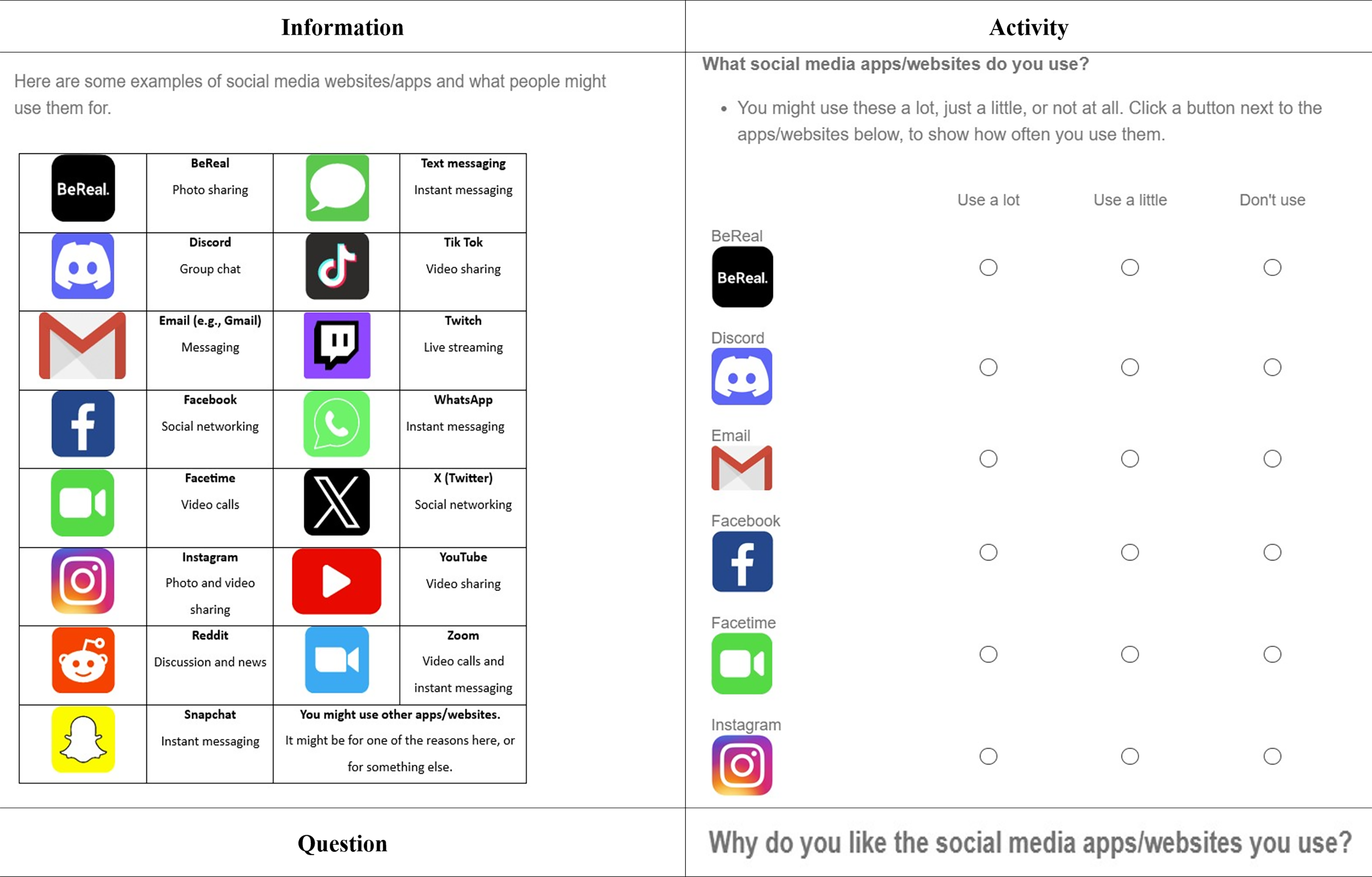
Screenshots of the DDI, showing the information, activity, question structure.
Number of items in each section of the Digital Dialogues Interview.
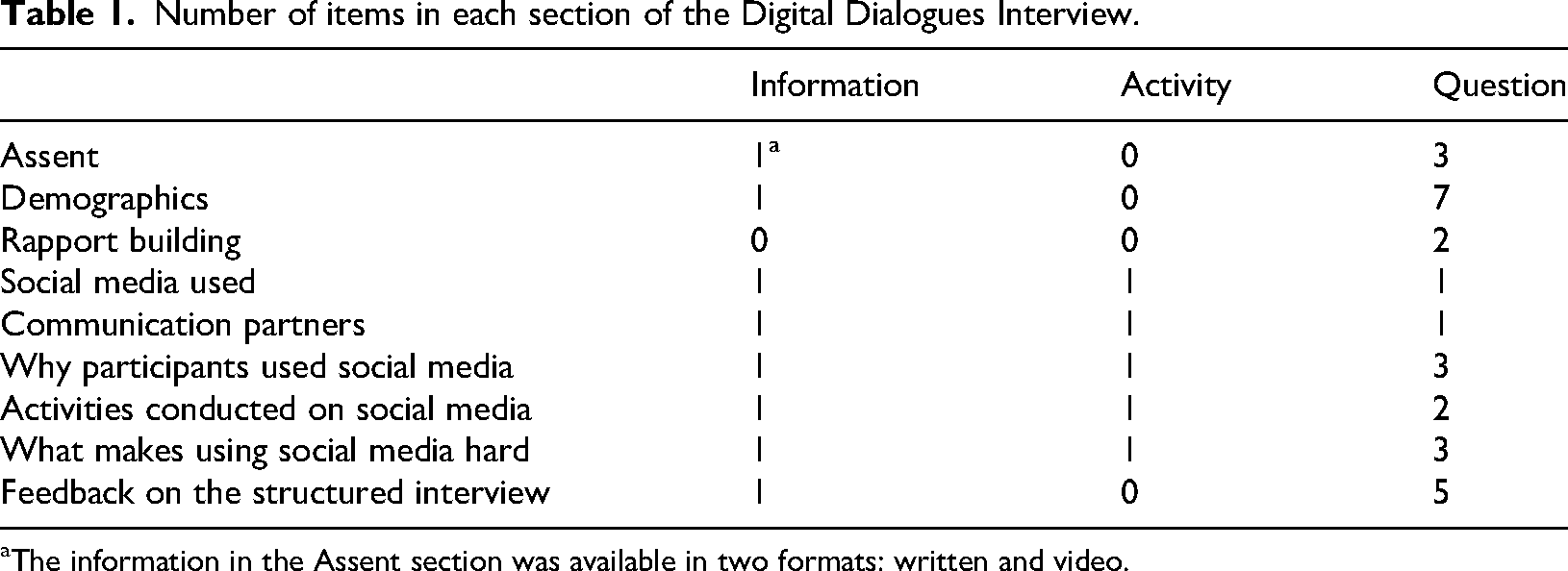
The information in the Assent section was available in two formats: written and video.
In Phase 2, a youth advisory group (YAG) was recruited via convenience sampling, via the researchers’ social media profiles, and snowball sampling. The group consisted of four young adults (two males and two females), aged 20 and 21 years old, of whom two had attention-deficit/hyperactivity disorder (ADHD) and three spoke a language in addition to English at home. All participants were current students at The University of Sydney.
Participants attended a half-day (4-hours) workshop and were asked for their feedback on both the Phase 3 research design (e.g., recruitment strategies, structured interview) and materials (e.g., information sheet, consent form). This consultation helped to ensure Phase 3 was relevant and appropriate for adolescents with communication disability, by tailoring the research to better meet the needs and preferences of this population.
All YAG members were asked to complete a consent form prior to participation and were compensated AUD$30 per hour for taking part in the research, in the form of a shopping centre gift card.
The workshop with young adults was conducted as a focus group, facilitated by the first and second authors. Following an introduction to both communication disability and the speech-language pathology profession, the first author introduced the current research and the role of the YAG in it. Topics for discussion were introduced by the first author and included recruitment and consent materials, as well as the structured interview schedule. All participants were encouraged to interact, share their thoughts, and build on one another's responses by the moderators who asked open-ended questions and redirected the conversation if it became off-topic. Both facilitators kept notes to ensure that key points were captured, with the main discussion points/actions to be taken summarised at the end of the workshop to ensure accuracy.
A Mentimeter quiz was employed to support engagement, with questions presented after each discussion topic. For example, following a discussion of a video to be used to recruit interview participants, Mentimeter quiz questions included “The graphics of the video are appropriate” and “The length of the video is appropriate,” with YAG participants indicating their disagreement/agreement on a Likert scale (1 = strongly disagree, 5 = strongly agree). Topics for discussion in the workshop, along with Mentimeter quiz questions, are included in the Supplementary Materials.
After the workshop, changes were made to the study and materials to be used in Phase 3. These changes included revisions to the recruitment materials, study documentation, and interview tool. Additionally, the YAG participants were provided with the opportunity to give additional feedback on the changes made following their input; no further feedback was provided.
Phase 3: Interviews
In Phase 3, five young people (12- to 16-year-olds) with communication disability, characterised by language and/or literacy difficulties, were recruited via purposive sampling using the researchers’ professional networks to participate in a supported, structured interview. All had received speech pathology services in the past 2 years (reference point = date of recruitment). Interviews took place between February and April 2025. Each young person's parent/guardian was also invited to participate in a semi-structured interview; their perspectives will be reported in a separate paper.
Participants chose whether to be interviewed in person or via video call, specifically Zoom. A research assistant conducted interviews with the young people, while the first author conducted interviews with their parent/guardian. Both the young person and their parent/guardian each received an AUD$30 shopping centre gift card for taking part in the research.
Participants were supported to provide assent through a research study information sheet that used accessible, easy-to-understand language accompanied by visual imagery. The same information was also available as a narrated animated video, which was created in Powtoon and hosted on YouTube (see Supplementary Material). Parents received both the information sheet and a link to the video via email and were encouraged to review these materials with their child. Before beginning each interview, the facilitator watched the Powtoon video with the young person and checked whether they had any questions about the study. All young people provided assent to participate, and written consent was obtained from their parents. Demographic details of the participants are shown in Table 2.
Demographic data of participants—young people with communication disability.
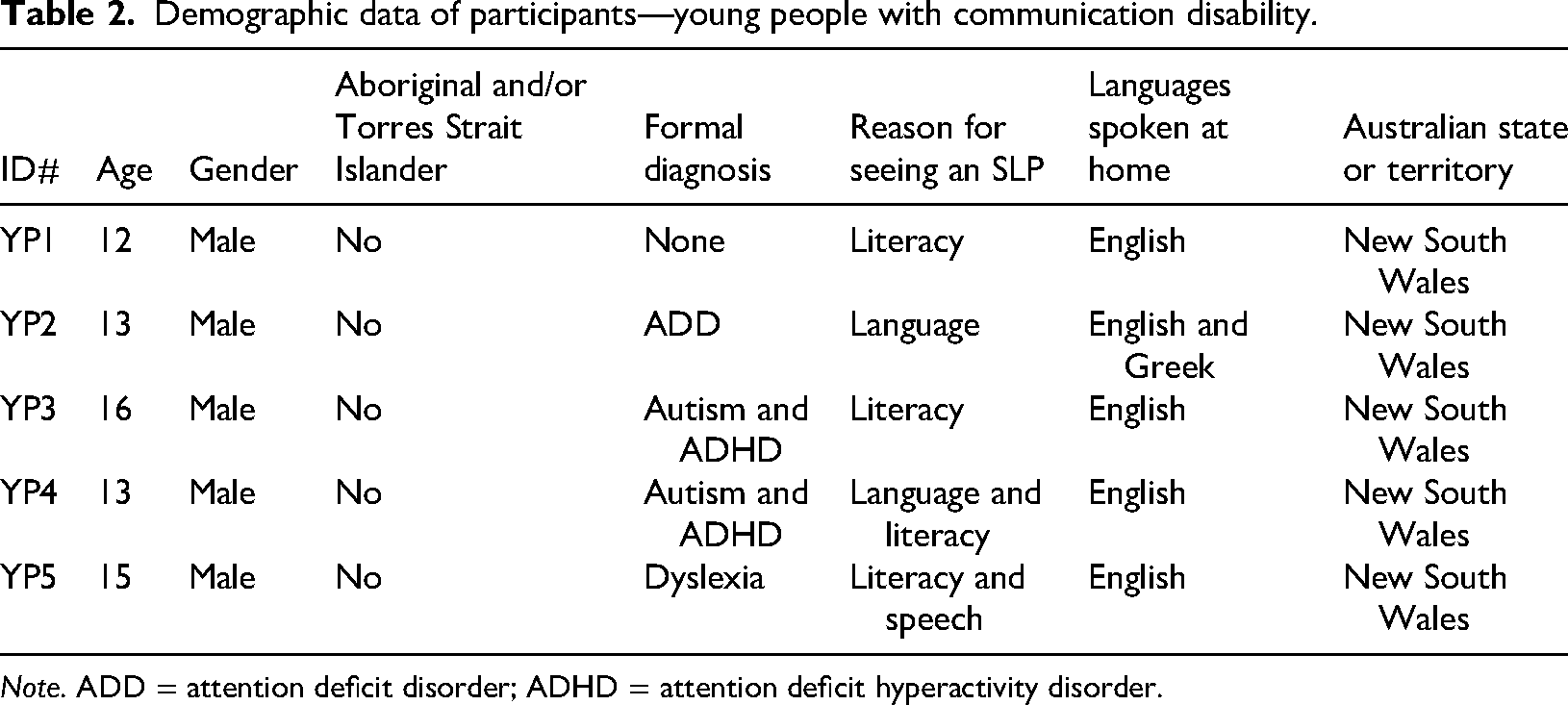
Demographic data of participants—young people with communication disability.
Note. ADD = attention deficit disorder; ADHD = attention deficit hyperactivity disorder.
A soft copy (PDF version) of the interview was provided to participants ahead of the interview to enable them to prepare answers. Interviews were audio or video recorded on Zoom, in accordance with participants’ preferences, regardless of whether interviews were held on Zoom or in person. Zoom's auto-transcription feature was used to generate transcripts of interviews, which were then manually checked and edited, as needed, by the first author to ensure their accuracy and reliability.
Due to the challenges they faced with language and/or literacy, young people were not provided with the opportunity to review their interview transcript. This decision prioritised participants’ comfort and aimed to avoid potential misunderstandings or stress during the review process.
To ensure methodological rigour in this phase of the study, several processes were employed. First, we used purposive sampling by inviting individuals who were well positioned to share valuable and relevant insights to participate. Second, regular investigator meetings were held, which facilitated reflexive exploration of conceptual lenses, preconceptions, assumptions, biases, and values. Finally, team meetings, raw data, transcripts, and coding decisions were documented; this helped to ensure transparency by keeping a record of both the research process and outcomes.
To address the first research question, about the feasibility of the DDI, three types of data were collected. Firstly, participants completing the DDI were asked for feedback on the structured interview itself, with a section of the Qualtrics interview dedicated to questions such as “The pictures helped me understand the questions” and “The questions were easy to understand.” Participants indicated their disagreement/agreement via a Likert scale (1 = disagree a lot, 5 = agree a lot). These responses are reported in the Supplementary Materials as frequency counts or means but were not subject to further quantitative analysis. Secondly, interview data were analysed according to three topics, as per the procedure of Malmqvist et al. (2019): “questions to be added,” “questions to be removed,” and “questions to be changed.” Finally, data about how long interviews took and which format was used (i.e., Zoom or in person) were also considered.
To address the second research question, about the challenges associated with administering the DDI, meta-discussions between the research team members were conducted throughout the pilot study. Additionally, recordings of the interviews and the subsequent transcripts were reviewed by the first author, enabling the identification of both instances of good practice and mistakes being made (Malmqvist et al., 2019).
Finally, to address the third research question about what the DDI tells us about how and why young people with communication disability use social media, interview data were thematically analysed using a semantic, inductive approach (Braun and Clarke, 2006). The reporting of results for this research question is informed by the Reflexive Thematic Analysis Reporting Guidelines outlined by Braun and Clarke (2024). Our orientation to thematic analysis aligns with the reflexive approach outlined by Braun and Clarke (2020). Instead of relying on a predefined codebook or coding framework, our process of data coding evolved organically. Consequently, our analysis was inherently contextual, interpretative, and reflexive, culminating in themes that were developed iteratively. The YAG did not contribute to the data analysis process.
Results
RQ1: Feasibility of the DDI
Most interview participants (n = 4) agreed that both the information and the activities helped them understand the questions, although one was neutral. Three participants agreed that the pictures helped them understand the questions, while two neither agreed nor disagreed. Three participants agreed that the questions were easy to understand, with a further two participants indicating they “agreed a lot.” Three participants agreed that they “liked being interviewed in this way,” while two were neutral.
Several modifications were made to the DDI following analysis of the interview format, as per Malmqvist et al. (2019). While no additional questions were suggested, it was agreed during meta-discussion amongst the research team that a rapport-building question could be removed due to redundancy. In terms of changing questions, it was decided that Likert responses with only three options were somewhat limiting. For example, responses to the Activity question “What social media apps/websites do you use?” were originally “Use a lot,” “Use a little,” and “Don’t use.” Following piloting, “Use sometimes” was added as an option. Additionally, minor changes were made to some wording: The “I don’t know” option in response to the question, “Why do you use social media?” was changed to “Neither.”
The interviews took between 23 and 46 min to conduct. All participants elected to be interviewed via Zoom. The DDI required the clinician to access an Internet-enabled device and, if remote participation was requested, participants also needed to be able to access Zoom. Participants were not required to access a device for face-to-face interviews.
RQ2: Challenges of administering the DDI
Examples of good practice included the interviewer showing a genuine interest in participants and their responses through active listening (e.g., verbal responses, body language), the use of follow-up questions, and the voluntary sharing of experiences related to common interests to facilitate rapport building. Further, the interviewer ensured that the different parts of the interview were both identified and presented orally (in addition to being presented in written format on screen), for example, by drawing the participant's attention to different parts of the screen and verbally explaining a task.
Examples of areas to improve were also demonstrated. Some instances of complex language being used verbally (e.g., preface, resonates, clarify) were evident, which could be the result of the interviewer's lack of experience in working with young people with communication disability (as an undergraduate student of speech-language pathology). Additionally, there were instances where additional clarification of a participant's response would have been useful (e.g., “Can you tell me more about that?”), but meta-discussions identified that the interviewer was trying to be faithful to the structured interview format. Having completed the pilot, procedures have been updated to confirm that prompts and/or clarification questions may be posed, as needed.
RQ3: How and why young people use social media
Three themes with subthemes (detailed in Table 3) were generated in response to the third research question. Results of activities that were completed as part of the interview process are presented in the Supplementary Material.
Themes and subthemes generated via thematic analysis.
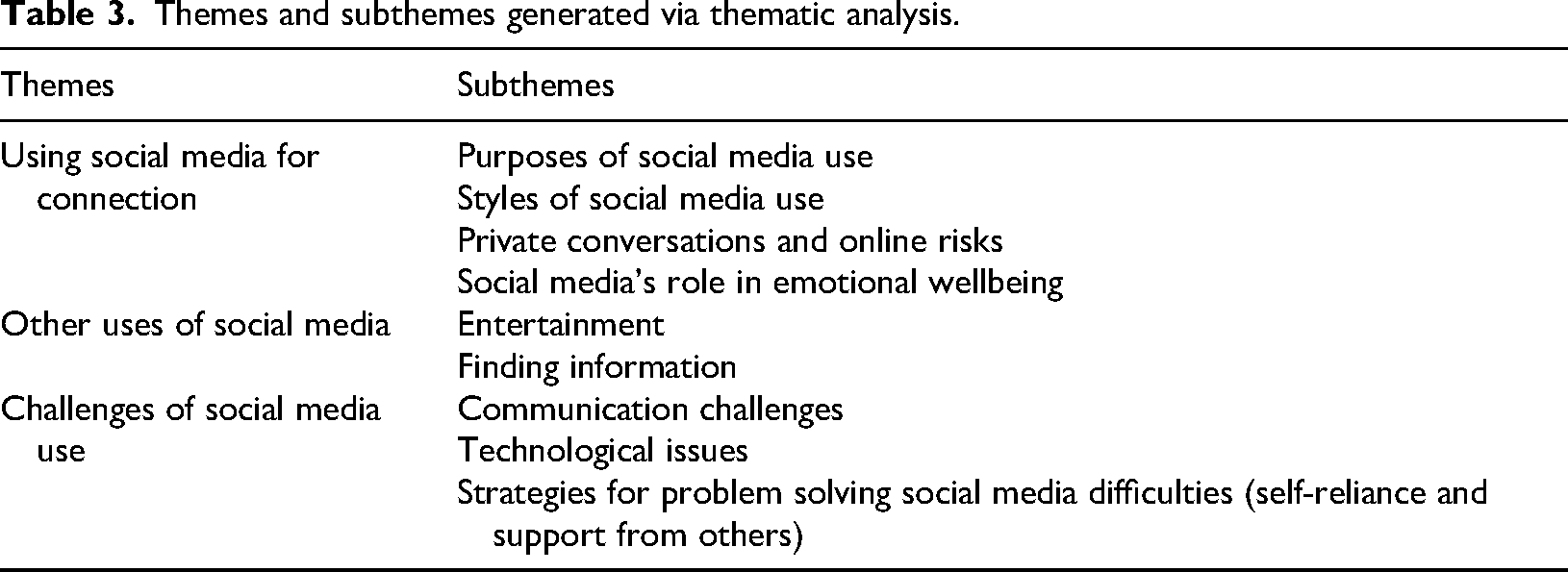
Themes and subthemes generated via thematic analysis.
Participants primarily reported using platforms like Snapchat, WhatsApp, and text messages to maintain social relationships with friends and both immediate and extended family, whether through personal or group chat channels. Participants highlighted that keeping in touch with people was important, with social media being a way to stay updated on “what other people are up to like your friends” (YP1). YP5 reported, “I like using Snapchat because it just makes me feel more connected to my friends, when I can't be around them.”
Purposes of social media use
Social media was used for a range of purposes: (a) to both give and receive support (for example, checking in on relatives or getting help with schoolwork), (b) to socialise (e.g., “talking to my friends” [YP4]), and (c) to support practical, everyday communication (e.g., “Can you grab some bread?” [YP3]). For example, participants reported using platforms such as text messages and WhatsApp for activities such as arranging to meet friends and checking on the status of school tasks (such as group projects and assignments).
Styles of social media use
Participants reported mainly an interactive type of social media use: “Being able to snap photos of yourself to them [friends] and like them being able to snap those back kind of, makes it more social” (YP5). Examples included using Snapchat to video chat with existing friends and using WhatsApp to help establish new friendships on transitioning from primary to high school. A participant who indicated they primarily enjoyed a passive style of social media use described watching YouTube videos with friends, “we'd all gather around, we'd go for a little bit of a laugh and stuff” (YP2), indicating a social element is possible for this type of social media use. This suggests that social media serves as a link between maintaining connections and having fun; watching videos with a friend or sending a meme to a friend may serve as a way to socialise with others by sharing experiences.
Private conversations and online risks
Participants described “talking” (YP3) via social media as being “private” (YP4) and between “friends that I actually know in real life” (YP2), with such conversations being a way for them to maintain relationships through discussions of shared interests. Meeting new people online was not a typical experience for this group, “it doesn’t happen too much” (YP4), and it was flagged as potentially risky: “they could be catfish” (YP1).
Social media's role in emotional wellbeing
Social media may be used to support the emotional wellbeing of the user and/or their communication partner. One participant reported using social media for “keeping you up with friends, when you’re a bit sad” (YP2), while another used it as a memory aid to remind a relative with dementia of their shared experiences: “then, like, he was there. So he remembers” (YP1).
Theme 2: Other uses of social media
Platforms like YouTube and Instagram were used for entertainment, such as by watching videos (whether for personal enjoyment or social interaction) and sharing memes. Participants reported watching funny videos as a way that “fills up the time” (YP3) and for “having like a good laugh” (YP2). As reported by YP5, “you can just use it [social media] for so many things like curing boredom and just learning things.” Social media was used both for acquiring knowledge and exploring interests. For example, it could be used to learn about “important things on the news” (YP4) or interests such as metalwork and science (YP2), although there was some awareness that not all information is reliable: “it's not always accurate” (YP3).
Theme 3: Challenges of social media use
Communication challenges were described, including difficulty expressing oneself (e.g., “we sometimes find it hard to express ourselves” [YP2]) and pragmatic difficulties: “you can't really get the right tone over social media, like by messaging. Yeah. And you don't really, like the social cues aren't really there” (YP5). Social media conventions such as textese (i.e., the register specific to texting) were also highlighted as difficult, for example, acronyms being “a bit hard to figure out” (YP1).
One participant highlighted technological issues as a challenge (e.g., “when I'm typing in my password for things login, I often forget it” [YP4]). However, one participant felt that using social media was not hard, stating, “so far, to be honest with you, there hasn't been an example of that yet” (YP3).
Two categories of strategies for problem solving social media difficulties were created: self-reliance and support from others. Self-reliance strategies included online searches, incorporating the use of technology such as Alexa to facilitate this, trial-and-error, and either changing or removing the social media platform being used, “either video call or meet in person” (YP5). Only one participant described using family members to help him when he encountered difficulties using social media.
The relevance and complexity of the themes generated demonstrate that the DDI elicits rich data on how and why young people with communication disability use social media. Further, positive feedback from interview participants about the interview tool (e.g., with respect to clarity of questions) alongside researchers’ observations (e.g., on the need for modifications to interview questions) indicates that the DDI is a promising tool for capturing the experiences of this population.
Discussion
This study aimed to: (a) evaluate the feasibility of implementing the DDI in research involving young people with communication disability, (b) explore the challenges associated with its administration, and (c) determine what the DDI tells us about how and why this population use social media. The findings demonstrate that the DDI is both feasible and poses minimal administration challenges. Additionally, it is a promising tool for generating insights into the social media usage patterns and motivations of young people with communication disability.
Collaborating with a YAG to develop the DDI enabled us to incorporate the viewpoints of a population closely aligned with the target population, ensuring the DDI is appropriately designed for young people with communication disability. Further, in following an Information, Activity, Question format, the DDI was structured to better prepare participants to respond to interview questions. These measures have resulted in the DDI being a feasible tool, which elicits rich insights into the experiences of young people with communication disability.
Our pilot interview data indicated that young people with communication disability are primarily using social media for social connection, particularly with existing communication partners who are friends and family. Their purposes for using social media include giving and receiving support, socialising, and practical communication (for example, letting a parent know their location). Our results indicate that online communication is nuanced and social; it is not simply an active and passive exchange between users. Even when seen as a passive exercise, there may still be an interactive social element to this type of activity, such as watching a YouTube video with friends. Participants’ challenges with both communication (e.g., difficulties expressing oneself, pragmatic difficulties such as with tone and social cues, and difficulties such as navigating textese) and technological issues (e.g., remembering login details) were highlighted as negatively impacting this population's use of social media.
The findings of the current study align with existing literature. The scoping review conducted by Shelton et al. (2024) identified that young people with language disorders use social media to foster social connection, which included online chatting, organising social events, offering social support, finding acceptance and a sense of belonging, and enhancing offline relationships. Notably, these connections mainly involved strengthening existing offline relationships with friends or family, rather than forming new relationships online. Additionally, the review highlighted barriers to social media use by young people with language disorders included (a) the language and/or literacy difficulties of young people and (b) resource limitations, with respect to both technology and the skills or knowledge required for its effective use.
A preliminary model (see Figure 2) has been developed, which summarises the potential relationships between key concepts, based on the themes generated from the five pilot interviews. This conceptual model (Naeem et al., 2023) was developed through the authors’ discussions of the themes generated via analysis of interview data and in consideration of findings from the Shelton et al. (2024) scoping review. It holds potential for guiding our future larger-scale study, as the themes and subthemes created during analysis of pilot study data will be examined in greater depth and refined as part of the main research.
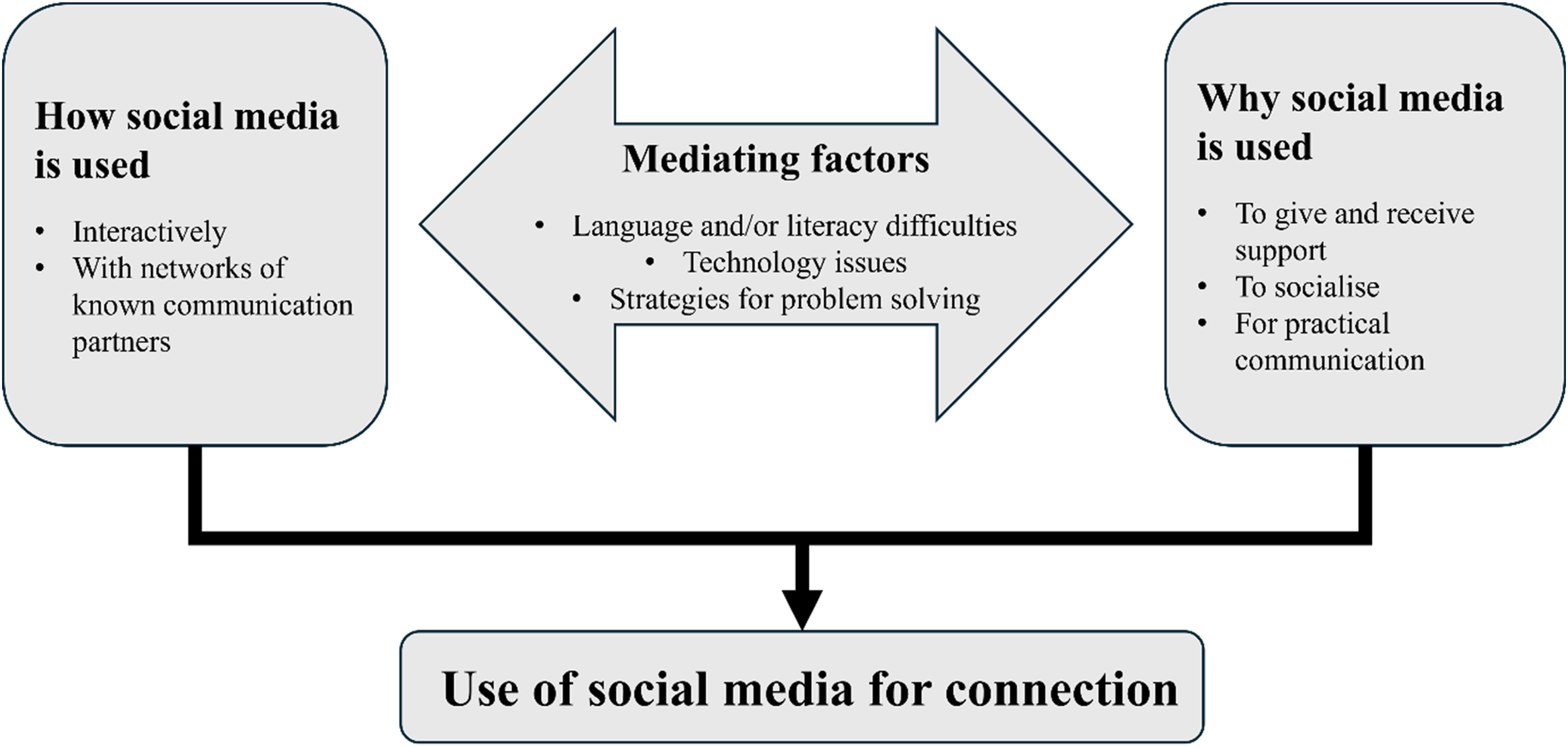
Conceptual model of how young people with communication disability use social media for connection.
The conceptual model details how young people with communication disability use social media for connection. It recognises that how young people are using social media is interactively (Kaye, 2021) with known communication partners, particularly friends and family, as per the Circles of Communication Partners (CCP) framework (Blackstone, 2003). Further, why they are using social media is to give and receive support, to socialise, and for practical reasons. These two dimensions of social media use (how and why) are mediated by the language and/or literacy difficulties of a young person, technology issues, and the strategies (self-reliance and support from others) that a young person makes use of to problem solve any use difficulties.
The findings from this study contribute to refining the DDI to better accommodate the diverse communication profiles of participants with language and/or literacy difficulties. As argued by Gudmundsdottir and Brock-Utne (2010), the piloting process can enhance the reliability and validity of research results. Through careful documentation, reflection, and adaptation, the piloting process not only mitigates potential methodological challenges but also elevates the overall quality of qualitative research practices.
Our study contributes to improving the methodological literature on qualitative research practices within speech-language pathology. These pilot data underscore the importance of interviewer strategies, such as active listening and follow-up questions, which not only foster meaningful engagement with participants but also demonstrate respect for their lived experiences, ensuring they feel heard and understood throughout the research process. This aligns with previous studies, such as Luck and Rose (2007), which highlight the importance of these strategies in interviewing individuals with communication disability.
The success of this project, including the role of the YAG as Advisors (Power and Morrow, 2024), validates that co-designing projects with young people is not only feasible but results in outcomes that are more relevant to research participants (Slattery et al., 2020).
A scoping review by Lipton et al. (2025) identified six interconnected domains that influence the engagement of young people in co-designed research: resources, communication, process, agency, investment, and relationships. These domains functioned as both facilitators and barriers throughout this project. Resources played a key role in enabling meaningful participation, with funding allowing for compensation of YAG members and interview participants, staff support provided through a grant-funded research assistant, and existing networks aiding participant recruitment. Communication further supported engagement by using accessible, tailored materials and actively valuing feedback from YAG members.
However, the processes involved in the project introduced notable barriers. Ethics committee requirements mandated specific procedures, such as informed consent, which were necessary but also restrictive, most notably by excluding under-18s from participating in the YAG. The challenges of navigating ethics committee's processes have been documented (Thabrew et al., 2018). The domains of agency, investment, and relationships were complex, acting as both facilitators and barriers. For example, constrained opportunities to hear from the YAG over the course of the pilot reduced the ability for members to reaffirm or change ideas that were initially presented. These learnings highlight the nuanced dynamics of engaging young people in co-designed research and reinforce the need for flexible, responsive approaches that ensure authentic participation to meaningfully integrate young people's voices in the research process.
Limitations and future directions
Several limitations of this study warrant consideration. Although two members of the YAG identified as neurodivergent, none reported having a communication disability. Additionally, to meet ethical requirements, all YAG participants were young adults rather than teenagers. For the same reason, young people were not members of the research team and were not involved in the initial construction of the DDI.
All participants chose to be interviewed via Zoom, therefore, how well the DDI performs in a face-to-face interview format remains to be tested. Further research including participants of diverse genders, Aboriginal and Torres Strait Islander backgrounds, and who are multilingual is also required. Additionally, while participants in this research experienced both oral and/or written language difficulties, they do not represent the full range of severity or types of communication disability; further research should investigate the effects of these variables on the interviewing process.
In the future, further research could also seek to examine the acceptability and usability of the DDI across a broader range of real-world contexts (e.g., different clinical settings or community organisations). Exploring how different facilitators use the tool would also help determine what training or scaffolding is needed to support consistent and accessible administration.
Conclusion
This project has been an essential first step in the development of a new co-designed tool designed to explore how and why young people with communication disability use social media. Collaborating with a YAG enabled us to integrate diverse perspectives and ensured the DDI was tailored to the target population. Thoroughly testing instruments through a piloting process enhances confidence in the trustworthiness of the data generated, especially when aiming to achieve a deeper level of understanding (Malmqvist et al., 2019). Results of this project have informed adaptations to the DDI tool, along with refinements to research procedures. Young people with communication disability, particularly where oral and/or written language skills are impacted, may benefit from a more structured interview to better support their participation in sharing their voice and experiences in using digital communication.
Footnotes
Acknowledgements
We thank Aaron Wong for his help in facilitating the interviews with young people. We extend our gratitude to Speech Pathology Australia for their generous support. This study was completed as part of the first author's doctoral degree studies.

Ethical approval
This study was approved by The University of Sydney Human Research Ethics Committee (project number 2023/HE000774).
Informed consent
Written parental consent and verbal assent from young people, including informed consent for publication, was provided by all participants.
Author contributions
NS, NM, JS, and MK led the design of the methodology. NS and RS led the data analysis. All authors contributed to the writing of the original draft and subsequent review and editing of the manuscript.
Funding
The authors disclosed receipt of the following financial support for the research, authorship, and/or publication of this article: This research was supported by a Nadia Verrall Memorial Research Grant from Speech Pathology Australia.
Declaration of conflicting interests
The authors declared no potential conflicts of interest with respect to the research, authorship, and/or publication of this article.
Data availability
The data supporting the findings of this study are not publicly available due to ethical restrictions. However, they can be accessed upon reasonable request from the corresponding author, subject to approval by the relevant ethics committee.