




Abstract
The participatory rights of children in consenting to receive services, and for including children in feedback processes on the services that they receive, are well established in international standards and laws. However, children with disability often experience barriers to participating in these processes. Tools and strategies have been developed to facilitate accessible processes, however these approaches typically assume that the person is able to provide direct and unambiguous responses. Drawing on qualitative interview methodologies, with insights from intellectual disability literature and the authors’ experiences as speech-language pathologists, a combined methodological approach to conducting a single interview with two children with intellectual disability was explored to capture the children's feedback on a speech-language pathology service. Using situated discourse analysis, the results demonstrate the dynamic and responsive journey towards shared co-construction of meaning and voice between each child, their parent and the interviewer. Further, a continuum of ambiguity was evident in the children's messages, and communication partners were observed to use a range of strategies to explore this ambiguity and co-construct meaning. This study has implications for the realisation of children's participatory and health-related rights, qualitative interview methodologies, and speech-language pathology practice with children and adults with intellectual disability or communication differences.
Keywords
Introduction
Children's participation and health-related rights
The right to health stipulates that everyone is entitled to live in conditions that enable the highest attainable standard of health (Tobin and Barrett, 2020). Health-related rights place obligations on States Parties to international declarations and treaties, including the Universal Declaration of Human Rights (UDHR) (United Nations, 1948) and the International Covenant on Economic, Social and Cultural Rights (ICESCR) (United Nations, 1966), to support constituents to realise those conditions. In the case of children, most national governments are further bound by the United Nations Convention on the Rights of the Child (CRC) (United Nations, 1989), which imposes specific obligations regarding children's participatory rights on healthcare service providers (Tobin, 2019). Taken together, these provisions establish a legal foundation for extending patient and client rights frameworks to specifically address the participatory rights of minors in consenting to receive healthcare services, and for including children in consultation and feedback processes regarding the services that they receive.
Processes for enacting health-related rights typically involve seeking written consent or feedback from healthcare consumers. For children, whose legal capacity to make healthcare-related decisions is not recognised until the age of 16 in most jurisdictions, written consent to receive service is typically obtained by proxy. As the primary facilitators of children's rights, it is also expected that parents and legal guardians will engage in feedback and complaints processes regarding healthcare services on behalf of their children, and in accordance with the child's views (United Nations, 1989). However, procedures that rely on proxy representation alone may fail to adequately fulfil children's participatory rights. Instead, meaningful engagement of children in such processes may more appropriately honour the rights of children to express their views and to have those views taken into consideration (Lundy et al., 2019). Accessible ways of doing this therefore warrant exploration.
Accessible participatory processes
For children and adults who experience barriers to participation in written consent and feedback processes due to physical, cognitive, communication and/or literacy differences, accessible alternatives may be considered by healthcare providers. Guidance on how to do this can be found in the literature on accessible processes in qualitative research, both for individuals with intellectual disability (e.g. Chinn and Balota, 2023) and individuals who communicate using augmentative and alternative communication (AAC) modes, such as pictures, body language or text-based communication (e.g. Dee-Price et al., 2021; Pennacchia et al., 2025; Walsh et al., 2024).
Across this broad literature, two primary approaches to communication-inclusive participatory processes can be described. First, the use of targeted visual supports can provide structured scaffolding for discussion of specific topics. For example, qualitative research methods such as photo elicitation can provide additional context cues and a point of focus for discussion in response to a question (Sigstad and Garrels, 2021), while methods such as diagrams and visual scales can be used to represent relationships between abstract concepts (Murphy and Cameron, 2008; Teachman and Gibson, 2018). Visual methods may also be used to support multimodal expression, such as through drawing, or taking photos using methods such as Photovoice (Carroll and Sixsmith, 2016; Chinn and Balota, 2023).
Second, communication partners or assistants can provide expressive support for individuals whose communication may be unconventional or idiosyncratic. This is predominantly described as an interpretive role, where familiar communication partners mediate to either revoice, decipher, confirm or clarify the meaning of a person's message (Dee-Price, 2023; Lutz et al., 2016; Pennacchia et al., 2025). Teachman and colleagues (2018) have also advanced an approach to the inclusion of familiar communication partners in the interview process, whereby responses may be co-constructed by the communication supporter through extension and contextualisation. In this approach, the participant and their communication partner are considered as a communication dyad, working interdependently to create and convey meaning to the interviewer (Teachman et al., 2018).
Meaning-making, co-construction, interpretation and ambiguity
Exploring collaborative processes of meaning-making in communication with individuals who communicate in unconventional, idiosyncratic and/or potentially non-symbolic ways presents both methodological opportunities and ethical considerations. Fundamentally, they require communication partners to explicitly acknowledge ambiguity in messages and the role of inference and interpretation in interactions, rather than viewing communication as transmission of a fixed meaning (Bredewold and van der Weele, 2025; Grove et al., 1999; Thurman et al., 2005). Indeed, dialogic theory describes making and sharing meaning as a dynamic, interactional, interdependent and inherently contextual process, characterised by continuous approximations toward mutual understanding, wherein neither communication partner can claim definitive interpretive authority (Linell, 2009; Smith, 2018). This framing positions meaning-making within a nuanced space of continual negotiation by interlocuters, both within interactions and within relationships over time.
In the AAC literature, there is explicit acknowledgment of the partnership and shared responsibility in communication success. This has been varyingly described as partner-assisted communication (Loncke, 2022), facilitating the development of joint meaning (Alant, 2017), or co-construction (Brekke and von Tetzchner, 2003), and is typically understood as communication partners working together to mutually assemble a message, or to infer meaning and clarify understandings in conversation. Co-construction strategies used in multimodal communication dyads across studies include collaborative utterance completion; verification techniques such as asking yes/no questions; checking interpretations and requesting clarification; incorporation of repair mechanisms; and the use of scripts, narratives and structured conversations to establish topics efficiently and then prompt elaboration (Brekke and von Tetzchner, 2003; Hörmeyer and Renner, 2013; Loncke, 2022; Smith, 2003; Solomon-Rice and Soto, 2011). Targeted strategies to scaffold the construction of discrete utterances include linguistic strategies, such as providing carrier phrases (Brekke and von Tetzchner, 2003), phonological strategies, such as ‘I think the word you’re looking for sounds like’ (Soto and Seligman-Wine, 2003), and strategic support, such as ‘can you find what you need on this page?’ (Loncke, 2022). Additional interactional strategies include utterance expansion, topic extension, multimodal models and prompts, recasting multimodal communication verbally, and recognition of multiple meanings of symbols beyond conventional interpretations (Brekke and von Tetzchner, 2003; Loncke, 2022; Smith, 2003).
This literature has also begun to explore the making and negotiation of meaning by communication dyads in situated interactions over time. For example, Ibrahim and colleagues (2024) explored how children who use AAC and their educators achieved mutual understanding and realised child agency in communication over 14 weeks of observations. Findings suggested that the child–educator partnerships were best able to establish mutual understanding when educators were sensitive and responsive to the meaning potential of all communicative acts (Ibrahim et al., 2024). They also found that this was most successful in realising child agency when children were able to clearly use embodied actions, such as gaze, orientation, movement or vocalisations, and combine these strategies multimodally (Ibrahim et al., 2024). Conversely, difficulties in establishing mutual understanding were more likely to occur when educators exerted more control over the interaction, which may have led them to be looking for specific communication responses and overlook communicative attempts, particularly very subtle embodied cues, such as a pause in movement or a shift in eye gaze (Ibrahim et al., 2024).
Another collaborative approach that acknowledges the role of ambiguity and co-construction in communication is a consensus-based approach to interpretation. This approach involves interpretation by a group of communication partners, who explore together the range of potential meanings of a communicative act or behaviour, and agree on the most likely interpretation based on their knowledge of the person (Thurman et al., 2005). Predominantly used in clinical practice to enhance everyday communication support, this method has been applied in the context of realising legal capacity through supported decision-making for people with severe to profound intellectual disability (e.g. Watson, 2016). Application of a consensus-based approach to other participatory processes has, however, been limited.
Co-construction and partner involvement in facilitating children's voice and participation rights
These understandings and approaches to co-construction, interpretation and allowing for ambiguity in meaning-making align with broader scholarship on children's voice, which argue that it is not possible to ‘give voice’ to children or simply ‘access’ a child's ‘authentic’ voice (e.g. Facca et al., 2020; Papadopoulou and Sidorenko, 2022). Rather, these perspectives describe that voice is inherently intersubjective and co-constructed. Recognising partner involvement as amplifying rather than undermining voice has the potential to reframe conceptualisations of supported communication (Dee-Price 2023; Howery, 2017). However, it is crucial that this process is undertaken knowingly and carefully by communication partners, so that researchers and others seeking to understand children's perspectives do not overly direct or interpret communicative acts (Ibrahim et al., 2024; Wickenden, 2011).
Additionally, existing methods for facilitating voice and participation have limitations for broader application. For instance, both dialogic qualitative interviews and consensus-based approaches typically describe the need for an extended and repeated interview or observation and reflection process, whereby meaning can be explored and understandings built on over time (Teachman et al., 2018; Watson, 2016). Best practice would also recommend that interview questions and visual supports should be individually customised (Walsh et al., 2024). However, in many contexts, the time required for an extended process and the pre-development of individualised resources may not always be feasible. It could also present an ethical concern, as repeated and extended processes could constitute a significant time burden for families and children, potentially impacting their participation in services and other life activities.
While methods to facilitate inclusion in single interviews have been proposed (e.g. Teachman and Gibson, 2018), children with more significant communication disability, including children with intellectual disability, may still find these processes inaccessible. For many children with intellectual disability, multimodal communication may comprise limited use of aided communication tools and conventional symbols, and they may predominantly communicate using embodied and non-symbolic communication modes (Benson-Goldberg et al., 2025; Fried-Oken et al., 2025). Additionally, when interactions yield ambiguous meanings, without the possibility of clear confirmation, in a standard interview or feedback process, such messages are likely to be dismissed. This risks the perspectives of many children who communicate in unconventional ways remaining unacknowledged. In healthcare contexts, this has significant implications for the realisation of voice, participation and health-related rights.
A potential alternative approach may be to conduct a multimodal single interview, using principles drawn from dialogic and consensus-based approaches, and applying scrutiny in the interpretation and analysis. Discourse analysis approaches, such as conversation analysis, also have the potential to be useful here. Long utilised in communication sciences research (e.g. Solomon-Rice and Soto, 2011), there is increasing recognition of the utility of these methods in speech-language pathology practice, including for the validation of unconventional communication (e.g. Sterponi and de Kirby, 2016; Yu and Sterponi, 2023).
The current study
The current study formed part of a larger project evaluating a camp for children who use AAC.
This paper focusses on the application of an accessible and responsive feedback process to two camp participants with intellectual disability who predominantly communicated in embodied and non-symbolic ways. Visual supports were utilised for the conversations alongside a combined dialogic and consensus-based approach to discussion, which acknowledged and explored the possible meaning of all potential communicative acts that occurred within the interaction. This approach sought to address gaps in the application of co-construction, dialogic, and consensus-based approaches when conducting a single interview or feedback session with a person whose use of aided, symbolic AAC comprises only a small component of their communicative repertoire. The aims were, therefore, to:
Explore a process that might be applied by service providers and qualitative interviewers when seeking the perspectives of children who predominantly communicate in embodied and non-symbolic ways, and Explore the following aspects of multimodal, unconventional, embodied and non-symbolic interactions in the context of a single interview:
The nature of ambiguity in the children's messages, The strategies that communication partners use to explore ambiguous messages, and The strategies that communication partners use to support and co-construct meaning.
The study design, implementation and analysis was informed by the positionality of the research team, who are all speech-language pathologists with extensive clinical experience with individuals who communicate in embodied and non-symbolic ways, as well as researchers with theoretical knowledge of communication interactions and the co-construction literature. This research received ethics approval from the University of Melbourne Human Reserch Ethics Committee.
Method
Participants
For the focus of this study, two child-parent dyads participated in an interview at the conclusion of the camp. Both children were 11 years old and had a formal diagnosis of intellectual disability consistent with a genetic condition. Both children's communication was characterised by infrequent use of spoken words, and both were, throughout their time on camp, observed to engage with others across a variety of contexts and for a range of purposes using a broad range of communication modes. These included paper-based symbols and embodied modes, such as manual signs, conventional and unconventional gestures, body movements and vocalisations.
Both children also had access to a dedicated electronic speech generating device (SGD) with graphic symbol software. Preferred communication modes for both children in non-structured activities around camp were gestures and non-symbolic interactions, with occasional use of their SGDs for single word messages.
Data collection
A semi-structured interview was conducted with each child–parent dyad by the first author, a speech-language pathologist experienced in working with children with intellectual disability. Written consent to participate was obtained from each parent. Assent was sought from both children through the reading of a script which was developed to explain the research aims and process in an accessible way (Appendix 1). Assent was judged through considered interpretation by the parent and interviewer of each child's response to the script, and was continuously monitored throughout the session. This included attending closely to indications such as the child appearing content to be in the room, and demonstrating regulation and engagement in response to the interviewer's questions.
Each interview was conducted in a quiet room on the final day of camp and lasted for approximately 20 min. The interview guide suggested four topics for discussion that were aligned with the aims of the camp evaluation, including potential prompts (Appendix 2). The prompts were written as statements, inviting a closed response, rather than the open questions that are more typical of a semi-structured interview. This is because a closed question is both a more accessible linguistic form and supports the use of a visual scale as a response tool. The interview guide was devised prior to camp in order to seek appropriate ethical oversight and approval.
Each interview incorporated a range of communication supports. A visual rating scale, based on the top-scale of a Talking Mat(TM) was available to each child (Appendix 3), along with their own personal SGD. The visual rating scale was novel to both children, and was explained to them at the beginning of the interview. Throughout each interview, all potential communicative acts by the child were acknowledged and responded to, including conventional and unconventional gestures, body movements, exchanging of objects, and vocalisations. This meant that all elements of the environment, including the physical space, items, objects and symbols within the room, and the embodied acts of the child, parent and interviewer were utilised as communicative resources throughout the interview process in addition to the formal visual supports.
The approach taken in each interview was a combined dialogic and consensus-based approach to interpreting communication. All instances of communication during the interactions were acknowledged, regardless of modality, and the potential meaning of ambiguous responses or messages was discussed and explored. Interviews were videorecorded to allow for comprehensive transcription of all communicative acts, inclusive of visual symbols and body movements.
Data analysis
The analysis applied situated discourse analysis (Hengst, 2020) to the interview genre. This approach aligns with previous studies utilising discourse analysis at the utterance level to examine the microstructure of communicative interactions, including non-spoken communication turns (e.g. Ibrahim et al., 2024; Solomon-Rice and Soto, 2011).
Transcripts of each interview were generated exclusively by the first author to maximise participant anonymity. A transcription key was used to differentiate between speakers as well as the communication modality used for each message, including use of the SGD, signs, gestures and body movements. Notation of suprasegmental communication features such as pitch, prosody or speed were not included, as this level of analysis was not determined to be required for the research aims.
The process for analysis of individual utterances involved a combined deductive and inductive coding approach. A deductive coding schema was developed to align with the research objectives (Hengst, 2020) and the functional expectations of utterances within the interview genre (Bazerman, 2023). This defined three primary foci for analysis of each interview, (1) the clarity or ambiguity of messages communicated by the child, as experienced by the communication partners, (2) strategies for exploring ambiguity and consensus-building used by the interviewer and parent, and (3) strategies for communication support and co-construction used by the parent as the familiar communication partner. These are reported on below as global themes one, two and three. The deductive schema was applied to the full transcripts by the first author, in close consultation with the research team.
Inductive thematic analysis was then undertaken to identify specific strategies and message types within each global theme. Coding was undertaken by the first author in an iterative and reflexive process, involving repeated analytical passes through the data to refine codes (Braun & Clarke, 2021). Consistency and reflexivity in coding were supported by regular discussions amongst the research team, with detailed notes taken to describe interpretations and reasoning in the generation and application of codes. This nuanced and collaborative approach was grounded in the constructionist theoretical framework underpinning the investigation, and allowed the researchers to build a shared insight and understanding of the patterns of meaning across the interviews. Following coding, individual strategies were then collapsed into organising themes for global themes two and three. For global theme one it was determined that the codes could not be further conceptually reduced, and so global theme one reports only the raw codes.
Results
To address research aim one, a transcript excerpt, presented in Table 1, illustrates the process used for the interviews. The global and organising themes generated by the analysis in accordance with research aim two and its sub-aims are depicted in Figures 1 and 2, Table 2, and described below.
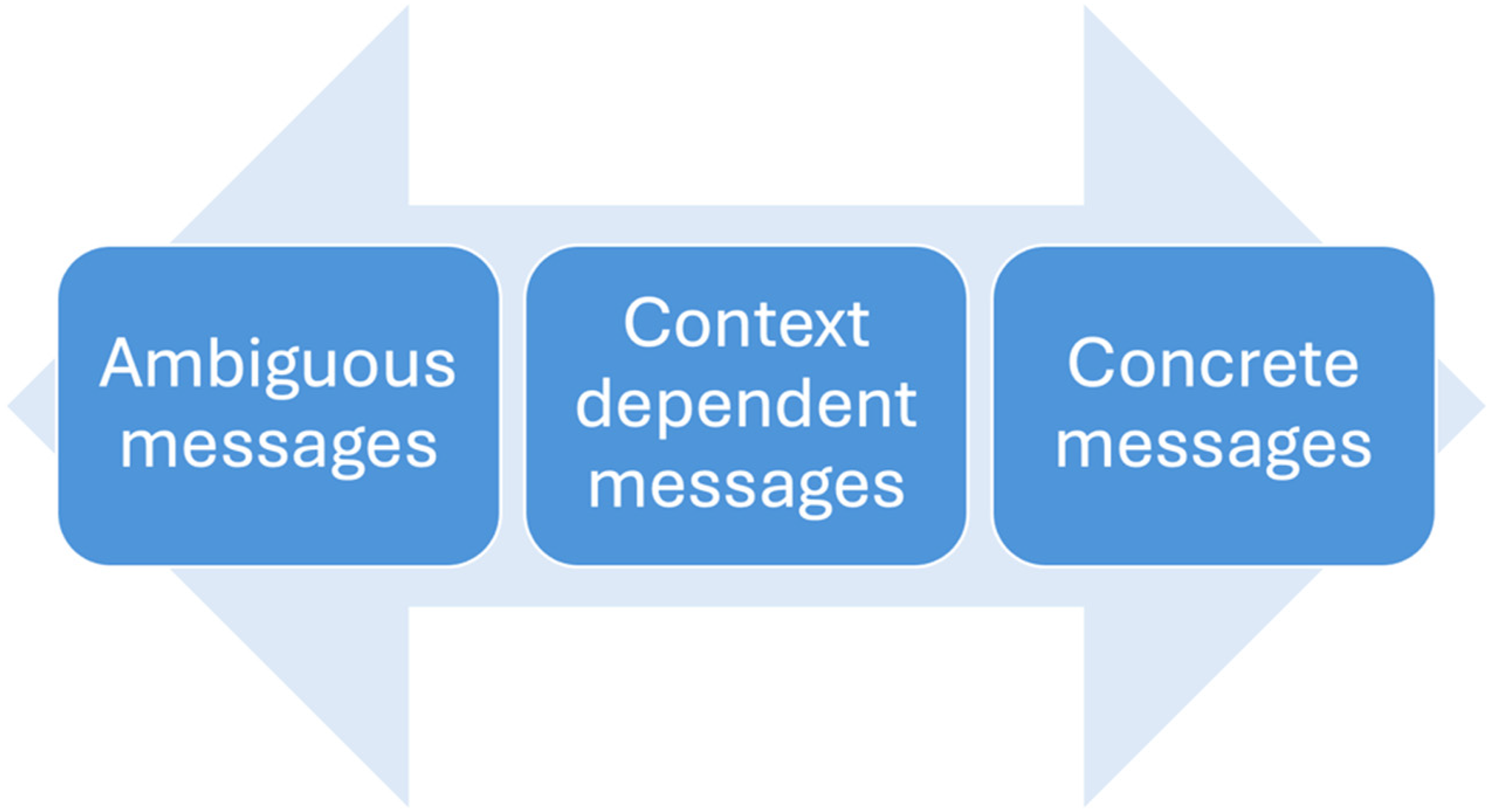
Levels of ambiguity in messages.
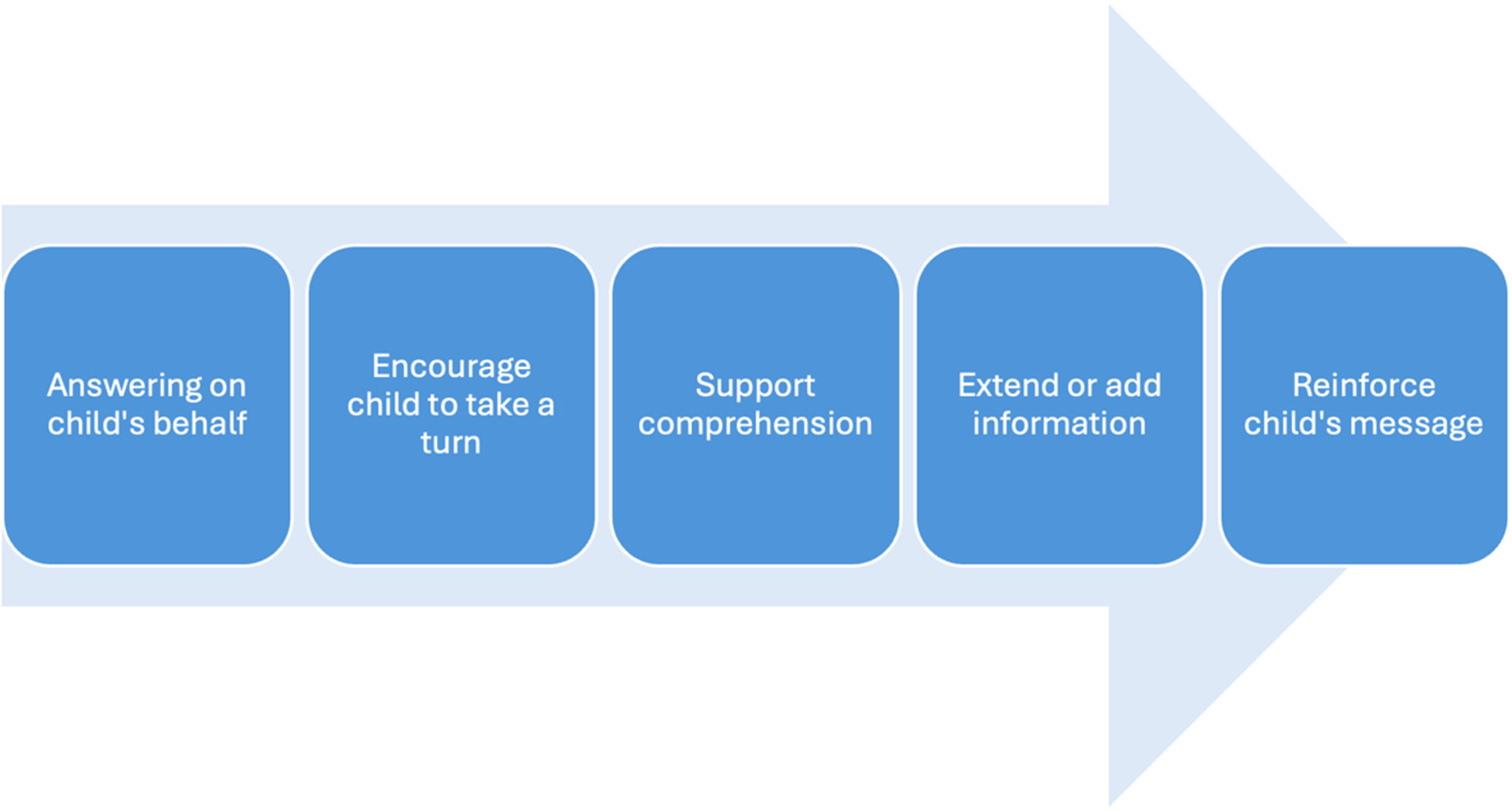
Directiveness in co-construction strategies.
Table 1 shows a section of the interaction between one child (C), their parent (P) and the interviewer (I).
Transcript excerpt.
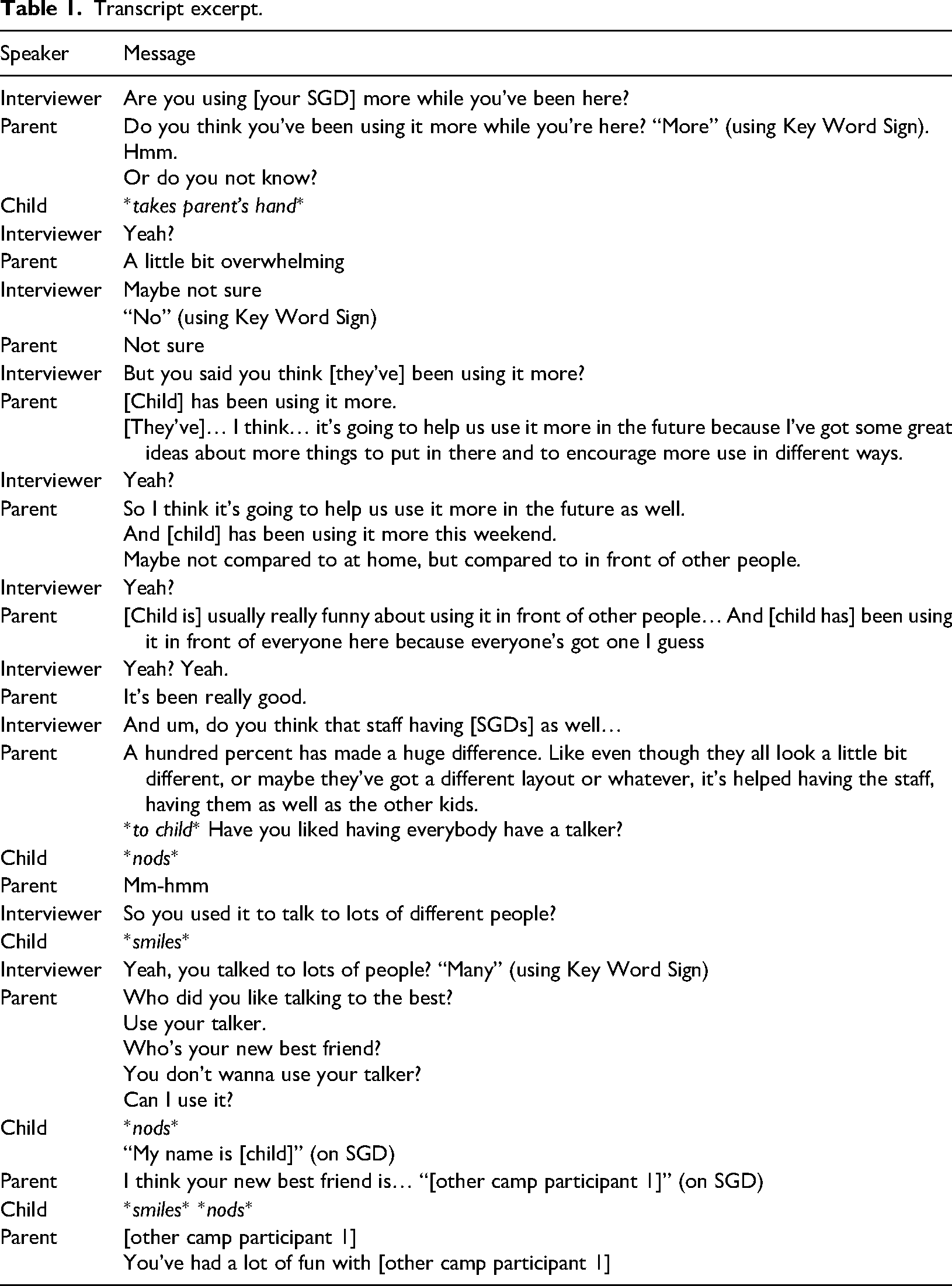
Transcript excerpt.
In this excerpt, two questions are posed by the interviewer from the interview guide in relation to the child's SGD use and social connectedness on camp. The dynamic journey of the conversational participants towards the generation of shared meaning shows how a perspective can emerge collaboratively when a person is not always able to provide a direct response to a pre-developed question. In this case, through the discussion, the interviewer understood that the child most likely found camp to be an environment that encouraged their use of their SGD, and facilitated the development of social connections.
The excerpt demonstrates how the use of strategies for exploring ambiguity and co-constructing meaning by the communication partners was responsive to the child's immediate support needs. For instance, the concept of social connectedness was modified by discussing specific people, allowing the child to contribute direct responses in relation to friendships. The question regarding amount of SGD use was more conceptually abstract, and therefore more directive co-construction strategies were used alongside a consensus-based discussion, which led to the collaborative generation of a perspective.
Analysis identified a continuum of ambiguity in the children's messages, as depicted in Figure 1.
Concrete messages
Messages were identified as having concrete meaning when the child used formal symbols, gestures and/or behaviours that were clear and cohesive within the conversation turn and so were interpreted unambiguously by both communication partners. Examples included using a formal symbol to provide a direct, cohesive response to a question: P: What did you like doing at camp? C: “Painting” (using Key Word Sign)
And using formal symbols to take cohesive conversation turns: C: *points at a yellow picture* “Same” (using Key Word Sign). I: Oh I see, yeah. Look, it's the same, same colours. There's red. C: *points at a red picture* P: Red, yeah. I: Yeah. And yellow. C: *points at a yellow picture* P: Yellow. C: “Yellow” (using Key Word Sign)
Context-dependent messages
Context-dependent messages were messages that were able to be interpreted due to shared knowledge and experiences between the child and communication partner(s). For example, in the following interaction, both the parent and interviewer immediately understood the meaning of the child's informal gesture due to shared experience of a past event: I: And were you able, … to use your talker when you were painting? P: We did C: *laughs* *gestures to forehead and wipes hand down each side of face* P: *laughs* Yeah [staff member] got it on her face. I: *laughs* I know, on her face! That was very funny.
In another example, the meaning of an informal gesture and formal gesture combination was unclear to the interviewer, but immediately clear to the parent based on shared experience of the event and the context of the preceding question: P: Who else did we meet? C: *taps chin* *points at chair* P: Yeah, [other camp participant] was sitting there wasn't he? C: *smiles* *nods*.
Ambiguous messages
Ambiguous messages were messages that could be interpreted in multiple ways, which may or may not be accurate. For instance, in the following example, while the child used a formal gesture to communicate about the playground, it's unclear what is being communicated about the playground: I: So, [parent] says you've been pretty happy to do things on camp. P: Have you had a good time? C: *points at playground outside*
While it's possible that the child could be agreeing that they had a good time and then elaborating with a comment that they liked the playground, they could also be indicating to the interviewer that there is a playground, without specific reference to the preceding statements. Equally, they could be communicating that they would like to leave the room and go to the playground.
At other times, these types of messages indicated to communication partners that the child didn’t understand or was unable to respond to the preceding question or statement and an alternative approach was required. For example, in the following exchange, while the child smiled and selected a symbol on their SGD, the symbol did not provide a conceptually coherent response to the question asked: I: So, the first thing that I'd like to talk to you and [parent] about [child], is about your time on camp. Did you have a good time on camp? C: *smiles* *rocks* “Welcome to Nova Chat” (on SGD)
Global theme 2: Strategies to explore ambiguous messages
Ten strategies were used to explore ambiguity in the children's messages across the two interviews (see Table 2). Some strategies were used only by the interviewer, some only by the parent, some by both communication partners individually, and, consistent with a consensus-based approach to interpretation, some in collaboration.
Global themes, organising themes and basic codes.
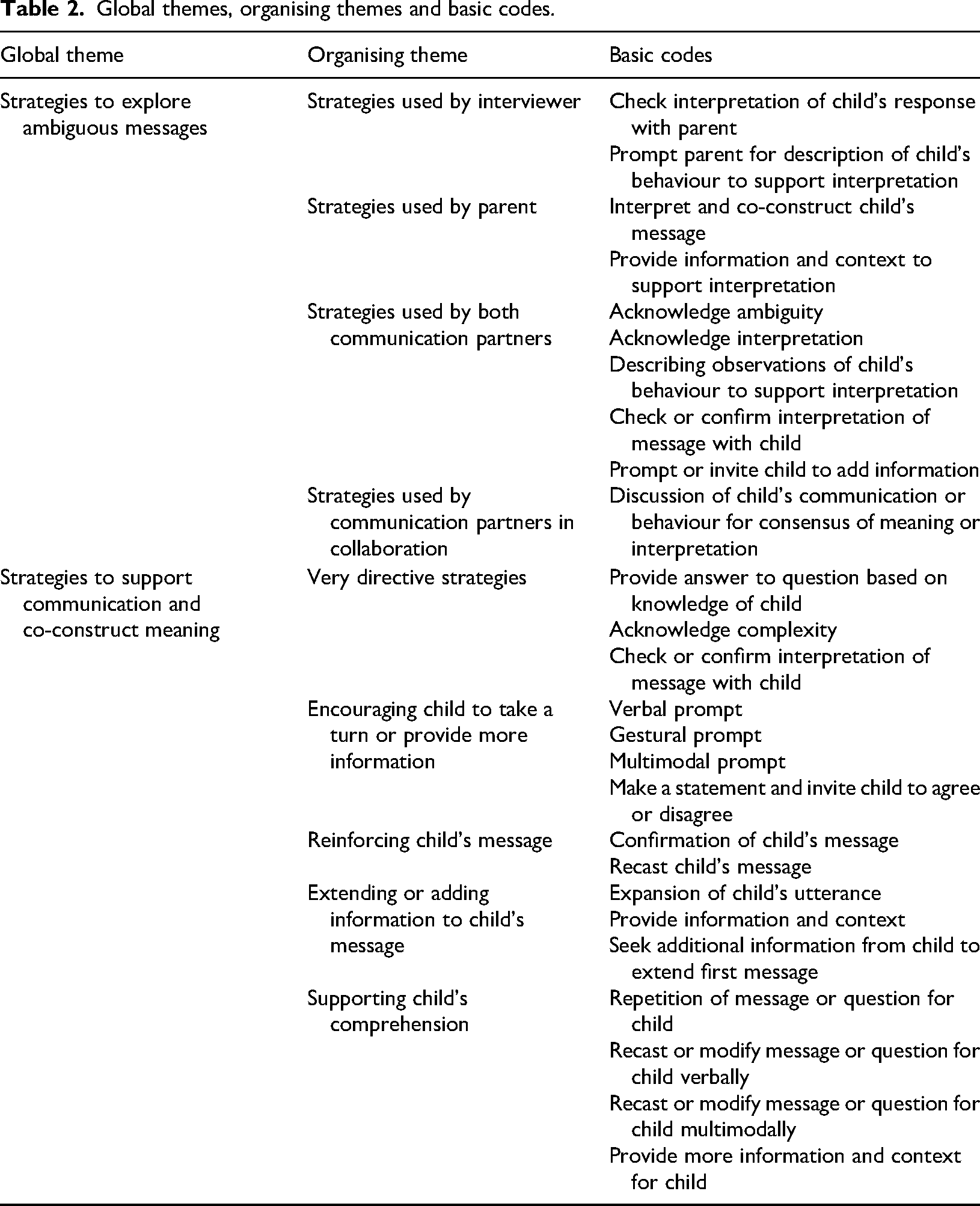
Global themes, organising themes and basic codes.
Strategies to explore ambiguity used exclusively by the interviewer involved gathering information from the parent as the familiar communication partner to inform potential interpretations. For example, in the following exchange, the interviewer follows up the child's ambiguous message by asking the parent an exploratory question, seeking descriptive information: I: So, the first thing that I'd like to talk to you and [parent] about [child], is about your time on camp. Did you have a good time on camp? C: *smiles* *rocks* “Welcome to Nova Chat” (on SGD) I: Why do you think [parent], do you think [child] has enjoyed it here?
Strategies used by parents
Strategies to explore ambiguity used predominantly by the two parents as familiar communication partners involved providing information and context to support an interpretation or co-construct a response. For example, in the following exchange, the parent provides an observation of the child's behaviour: I: Do you think [child] has enjoyed it here? P: I think so, yeah. Overall, absolutely. Some of [child's] behavior when [they] doesn't like to do things at home involves a lot of yelling and we haven't had that. At all.
Strategies used by both communication partners
Strategies used by both parents and the interviewer individually to explore ambiguity acknowledged the ambiguity in the message and the need to explore this, or that an interpretation had been advanced and needed to be checked, clarified or explained. For example, in the following exchange, the interviewer acknowledges the ambiguity in the child's gesture and their role as interpreter by asking a clarifying question: C: *hands SGD to interviewer* I: Oh, is that for me? My turn to say something?
In this exchange, the parent acknowledges their interpretation of the message by checking with the child: P: Would you like to do camp with [me] again? C: *shakes head* P: Oh? No? C: *points at interviewer* P: Oh you want to do camp with [interviewer]? C: *nods* *smiles* P: Oh, there we go!
Strategies used in collaboration
Strategies to explore ambiguity used by all communication partners in collaboration involved discussions and contributing observations to advance an interpretation for potential consensus. For instance, in the following exchange, the interviewer, parent and child discuss the child's behaviour over the days of camp to explore a potential consensus of meaning together: P: [Child has] had an amazing time. I've never seen [them] use [their] [SGD] so much, [and] interact with so many people. [They’ve] been calm, [they’ve] been, I don't even know how to explain it. [They’ve] been obviously engaged enough to enjoy [themselves], that [they’re] not cranky about anything. So… I: And that's not typical at home? P: No, sometimes [they] can butt heads with me over doing certain things or… even things that [they] enjoys sometimes will get kicked back for some reason. P: *to child* But you've had a great time. I think you've had a great time. Do you think you've had a great time? C: *nods* P: *laughs* I: I think so too. I think every time I've seen you this weekend, you've had a big smile on your face!
Global theme 3: Strategies used to support communication and co-construct meaning
Sixteen co-construction strategies were identified in the interactions of both parent–child dyads to support the child's understanding and expression for a range of purposes (see Table 2). The strategies varied in amount of directiveness provided by the communication partners (see Figure 2). Where some strategies exerted a high level of direction, such as answering a question on the child's behalf, other strategies were more responsive to the child's self-initiated communication.
Very directive strategies
These strategies typically involved the parents providing an answer on the child's behalf, based on their knowledge of the child, or checking an interpretation with the child for confirmation.
Encouraging child to take a turn or provide more information
Strategies used to encourage the child to take a turn or provide more information mostly involved the use of prompts. In the following exchange, the interviewer and parent use verbal and gestural prompts to elicit the child's response: I: Hi [child], I'm [interviewer]. And your name is… P: What's your name? *gestures to SGD* C: “My name is [child].” (on SGD)
While in this example, the parent invites the child to agree or disagree with a statement: I: What do you think about using your [SGD]? Do you feel more comfortable using [it] than you were on Friday? … P: I'd, I'd say [child] probably is using it the same amount as you normally use it at home? *looks at child* C: *nods*
Reinforcing child's message
Strategies used to reinforce the child's message mostly involved confirmation of the message for the interviewer by the parent, either through repetition or recasting the child's multimodal message verbally. For example: I: And what about meeting [other camp participant]? Did you like [other camp participant]? C: *smiles* *nods* P: [child] loved [other camp participant]
Extending or adding information to child's utterance
Strategies used to extend or add information to an utterance included expansion, providing additional information and context, or seeking additional information from the child to extend on the first message. For example: P: Did you like the other people here? C: *smiles* *nods* P: Yeah? Who else did you like? Did you like silly [staff member]? C: *smiles* *nods*
Supporting child's comprehension
Strategies used predominantly to support the child's comprehension within the interaction included repetition of a message or question, or recasting messages by modifying, extending, or using other modes of communication to augment the verbal message. For example: I: And, do you think that staff having [SGDs] as well… P: A hundred percent has made a huge difference. … P: *to child* Have you liked having everybody have a talker? C: *nods*
Finally, communication partners often combined co-construction strategies to achieve multiple purposes. For example, when Child 1 was asked ‘did you have a good time on camp?’ and responded with an affirmative nod, the parent first
Discussion
Overall, many of the co-construction strategies identified in this study align with those described in previous studies (Brekke and von Tetzchner 2003; Hörmeyer and Renner 2013; Smith 2003; Solomon-Rice and Soto, 2011). Indeed, some strategies, such as early topic establishment followed by jointly constructed elaboration may be particularly well-suited to the interview genre, where topics and lines of questioning are inherently determined at the outset of the interaction. Additionally, many of the co-construction strategies used by communication partners, such as probing questions, invitations to expand, and prompts for clarification, can be similarly identified as standard interview techniques. This emphasises that the process of co-construction is not unique to communication disability or unconventional communicators, rather that all human communication is interdependent (Linell, 2009; Teachman et al., 2018).
A novel finding in this study is that, in addition to expressive co-construction, communication partners were observed to employ strategies to support and co-construct comprehension for the two children. Indeed, on several occasions, conversation turns were interpreted to fulfil multiple purposes. For example, rephrasing or recasting a question could serve the purpose of supporting the child to understand it, while simultaneously enabling the child to respond to the question asked, thus also serving to support expression. This multiplicity exemplifies the inherent negotiation in the meaning-making process.
Additionally, it is important to note the distinguishing macro-structure of the interview discourse, as this may have influenced the nature and purpose of the strategies used by communication partners. In comparison to other communicative contexts, such as learning activities or narrative tasks, where communication supports specific, task-related outcomes to be achieved (e.g. Ibrahim et al. 2024), qualitative interviews fundamentally seek to explore participants’ thoughts, experiences and beliefs, and promote participant voice. Interviews are also more structured and focused than an open conversation. This unique communicative context may provide some explanation for the combination of directive and more responsive co-construction strategies observed in these interactions.
However, unlike standard interviews, the approach taken here explicitly acknowledged the role of communication partners in co-constructing meaning through prompting, expanding and supporting messages to clarify, enhance or extend responses. While this has been acknowledged in other studies by exploring co-construction and collaboration within the communicative interaction (e.g. Teachman and Gibson, 2018), the additional process applied in this study was consensus (Watson, 2016). As exemplified in the excerpt provided, for the children in this study, the addition of this process appeared to be crucial to facilitating their participation in this interview and feedback process.
The implications of this and other research is that communication partners must be attuned and attentive to the varied, diverse and unique forms of communication that carry meaning for an individual (e.g. Ibrahim et al., 2024). This may require a deep understanding of which specific signs, gestures, vocalisations or other behaviours function as communication markers for a person within a multimodal interaction. Similarly, when the intended meaning of a symbol or embodied act is unclear, communication partners may actively explore the ambiguity and observe the strategies that the individual employs to generate meaning (Brekke and von Tetzchner, 2003). This process involves collaborative investigation, and, in many instances, may require communication partners to become comfortable with interpretive uncertainty (Antaki et al., 2017; Finlay et al., 2008).
A further implication is that interpretation of unconventional communicative acts may benefit from familiarity and shared contextual knowledge between communication partners, as this may provide useful referential information to explore possible meanings (Teachman et al., 2018). Accurate co-construction and consensus requires avoiding both underestimation of communicative competence and also over-attribution of meaning, because both errors have the potential to lead to communication partners speaking on behalf of individuals (Bunning 2004; Watson 2016). This is also why processes for exploring ambiguity, including the explicit acknowledgment of interpretation, were included and examined so thoroughly in this study.
Implications for interview and feedback processes
This study poses several implications for interviewers and others engaging in formal processes with individuals who communicate in multimodal and unconventional ways, including non-symbolically. These include, checking for context and meaning with communication partners, prompting partners to share observations to support interpretations, and, where possible, drawing on their own observations and knowledge of the individual to interpret communicative acts. Additionally, an important observation in these transcripts is that, although it was demonstrated to them, neither child made meaningful use of the visual scale in providing their responses. Therefore, interviewers may also consider matching the individual's communication style, and, as much as possible, asking questions and scaffolding interactions using modes and symbols with which the individual is already familiar, rather than introducing novel symbols or visual supports. Most importantly, interviewers should recognise their shared responsibility to interpret and support communication and co-construct the child's voice by acknowledging, exploring, and working with ambiguity, rather than dismissing ambiguous messages (Bredewold and van der Weele, 2025).
Implications for consent
These findings also have important implications for processes of obtaining consent or assent from children and adults who communicate in unconventional ways, both within interview contexts and healthcare service provision. In addition to the strategies outlined above, and consistent with dialogic philosophy, interviewers and healthcare providers should consider that consent to participate cannot be understood as occurring at a single time point, nor can the terms of consent be considered fixed and unchanging. Rather, consent requires continual monitoring throughout engagement in both service delivery and interview processes, and, while it was not the case in these short interactions, may necessitate renegotiation.
Clinical implications
The approach used here, the strategies identified, and the models proposed also have the potential for application to speech-language pathology clinical practice. By focusing on messages, and the strategies used by communication partners to support messages within an interaction, rather than on the skills or challenges of the individual who communicates differently, these frameworks facilitate acknowledgment of interdependent and relational communication. This has substantial potential for transforming clinical practice by enabling clinicians to orient assessment and goal-setting processes on coherence and success within communication partnerships, rather than focusing exclusively on individual skill development or remediation of perceived deficits. This framing aligns with contemporary strengths-based and diversity-affirming approaches to assessment and discourse analysis (e.g. Sterponi and de Kirby, 2016; Yu and Sterponi, 2023), and extends them by acknowledging the contribution of all communication partners to communicative success. This also has the potential to offer valuable affirmation for parents and other communication partners through explicit recognition of their contributions to supporting communication.
Considerations and future directions
Several points warrant consideration in interpreting the findings of this study and pose implications for future research. First, the method, themes and strategies identified here were applied to only one interview each with two parent–child dyads, constituting a preliminary exploration. Further analysis of more individuals and their interactions with multiple communication partners, and across multiple interactions and contexts, would likely identify more strategies and message types, and allow for greater nuance in interpretations and analysis.
Additionally, because this investigation sought to describe the strategies that communication partners use to support ambiguous communication, and to explore a process that might be applied to make feedback processes and qualitative interviews more accessible to unconventional communicators, the approach to analysis aligned with these aims. An alternative approach could have been to examine the coherence within communicative interactions by viewing each parent–child dyad as a functional unit responding to interviewer questions (Teachman et al., 2018). Such an approach would allow for an exploration of how both communicators contributed to co-constructing responses and built upon each other's contributions throughout the interaction. Future studies may wish to explore this.
Finally, there were some instances where communication partner statements could have been coded by the research team as either a strategy for co-construction or exploring ambiguity. It is likely that this multiplicity reflects the dynamic and ongoing process of negotiating meaning in context, where acknowledging and exploring ambiguity serves itself as a co-construction strategy, and co-construction supports the exploration of ambiguity. Indeed, from a dialogic perspective, these would likely not be categorically distinguished, but rather considered interdependent processes of meaning-making that are simultaneously engaged by all participants in the interaction (Smith, 2018). While we maintained conceptual distinction in this study to conduct a finer-grained analysis of specific communication interactions relative to our research aims, we acknowledge that other studies may choose an approach with greater conceptual coherence.
Conclusion
The strategies identified here, the approach used and the models proposed contribute to the existing literature on ambiguity, partner interpretation, co-construction and communication support for individuals who communicate in unconventional ways. They also offer practical applications across multiple domains, including qualitative interview methodology, consent and feedback processes, and speech-language pathology clinical practice.
While repeated measures approaches, such as those advocated in dialogic interview methods and supported decision-making procedures, are considered best practice, and may yield more quality and depth to co-constructed and consensus-based responses, extended interview procedures are not always feasible or ethical, nor may the prior development of customised communication supports be possible. The method explored here shows promise as a potential alternative to ensure that individuals who communicate in unconventional ways are not excluded from important participatory processes as a result. Grounded in the understanding that voice is inherently interdependent, and that meaning is dynamic, contextual and co-created between communication partners, this approach provides an option for children's meaningful participation in interviews and consent and feedback processes, potentially enabling communication partners to enhance and extend voice for children with intellectual disability and communication differences.
Footnotes
Data availability statement
In accordance with the parameters of the ethics approval and the terms of the consent provided by the children's parents, data cannot be made available to third parties or shared to a data repository.
Declaration of conflicting interest
Dr Clendon and Dr Forster declare that they have no known competing financial interests or personal relationships that could have appeared to influence the work reported in this paper. Ms Weir declares a potential conflict of interest in that she is also employed part-time by the organisation that delivered the camp service about which the children were interviewed, presenting a potential conflict of interest in her evaluation of the service. This potential conflict is minimised by the fact that this paper does not discuss the findings of the camp evaluation, but the method used to involve two children in the evaluation process. Ms Weir declares no relationship with any of the research participants prior or subsequent to camp.
Ethical approval and informed consent
This research received ethics approval from the University of Melbourne Greater than Low Risk STEMM3 human research ethics committee in April 2023, approval number 26128. Written consent to participate in an interview and for dissemination of interview findings through publication was obtained from each child's parent. Assent was sought from all children through the reading of a script which was developed to explain the research aims and process in an accessible way. Assent was judged by the interviewer through considered interpretation by both the parent and interviewer of each child's response to the script.
Funding
The authors received no financial support for the research, authorship, and/or publication of this article.
