



Abstract
Collaborative practice is essential for supporting students with additional needs in schools and often requires working across multiple disciplines. We explored the collaborative interactions of two professions in an interdisciplinary problem-solving task. Teacher candidates and speech pathology students were audio and video recorded working through a structured case study together in small groups. Survey data elicited perceptions of the learning experience. Collaborative argumentation (proposing a claim, giving examples and evidence, and stating a position) was key to problem-solving, alongside seeking clarification and explaining. Specific, realistic experiences in interdisciplinary argumentation like this may support future professional collaborative practice.
This is a visual representation of the abstract.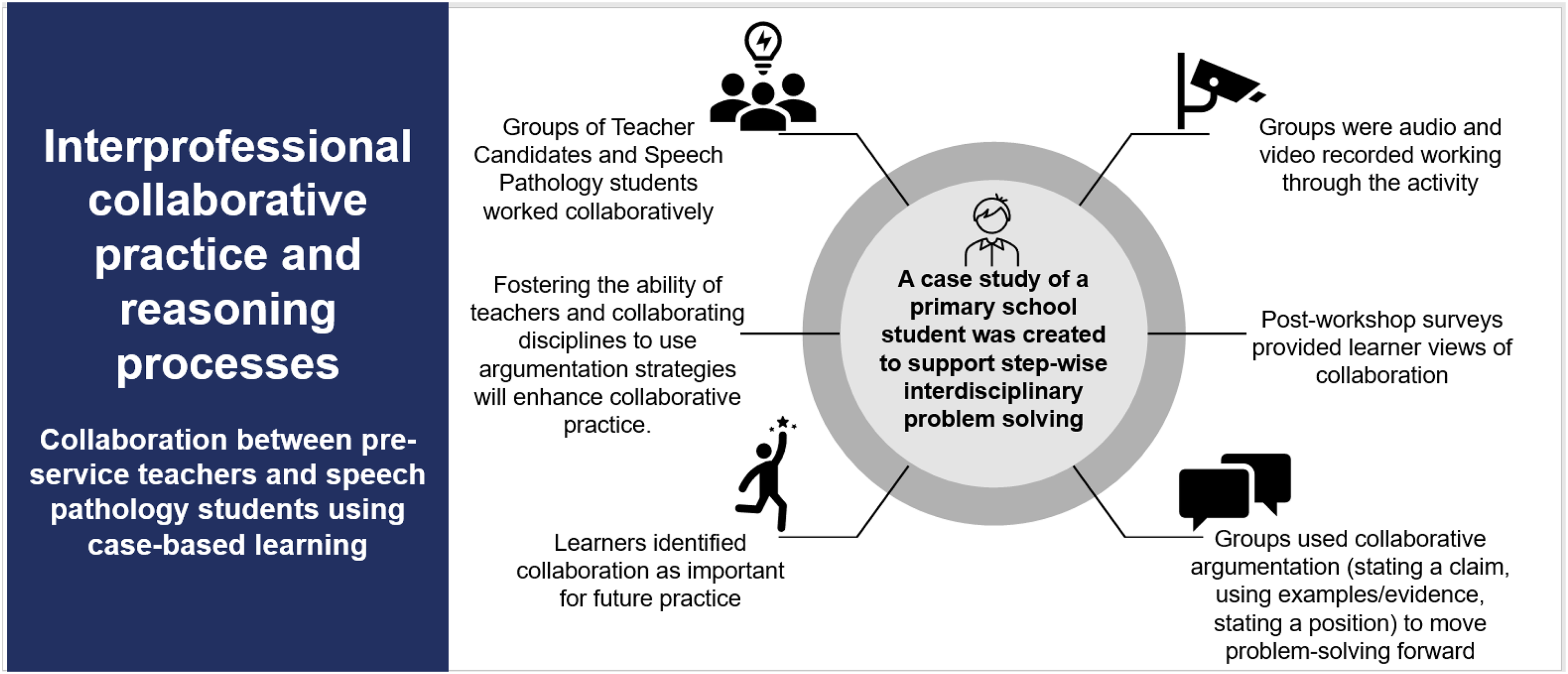
Introduction
Fostering child development is a shared responsibility across different professions and central to the current policy emphasis on inclusion and education for all (Nochajski, 2002; Suleman et al., 2014). Collaboration between teachers and speech pathologists to leverage complementary skills and knowledge can lead to interventions that best support children's communication and literacy skills (Bauer et al., 2009; Baxter et al., 2009; Glover et al., 2015; O'Toole and Kirkpatrick, 2007). However, studies have shown that collaboration requires raising teacher awareness of speech pathology expertise regarding communication disorders and how this knowledge can be used most effectively in school situations (Glover et al., 2015; Nochajski, 2002). Similarly, many speech pathologists are unfamiliar with the demands of the curriculum and functioning of modern classrooms that can constrain teachers’ capacity to fully support individual students with learning needs (Glover et al., 2015). While there are many models of speech pathology service delivery in school settings that cover in classroom and outside classroom options (Suleman et al., 2014), speech pathologists are often engaged across many schools and can tend to work one-on-one with children outside the classroom, sometimes leading to perceptions of being ‘visitors’ to schools that can hinder true equal footing collaboration (Baxter et al., 2009; Suleman et al., 2014). Nevertheless, collaborative work between speech pathologists and teachers is considered ‘best practice’ (Speech Pathology Australia, 2017) and is recognised to work better when speech pathologists are viewed as part of the education team rather than a treatment team (Glover et al., 2015; Mathers et al., 2024), and where teachers and speech pathologists have greater opportunity to blend their areas of expertise (Birro et al., 2024; Wilson et al., 2015). A clear understanding of each profession's role in support of children with learning needs is crucial for this (Mathers et al., 2024; Poll and Hoffman, 2023). Other barriers to collaboration between these professions include time constraints, planning and scheduling issues, workload and inadequate resourcing and funding arrangements (Bauer et al., 2009; Glover et al., 2015). Collaboration is also hampered by the use of profession-specific terminology (Suleman et al., 2013).
The Australian Professional Standards for Graduate Teachers explicitly specify capabilities for inclusive teaching of students across the full range of abilities, yet many pre-service teachers will have limited exposure to working with students with disabilities and additional needs, and to allied professionals such as speech pathologists during their initial teacher education. Often, this depends on the arbitrary circumstances of their practicum placements or their own prior experience during their education. This is also the case for speech pathology students (SPSs), who may or may not undertake a school-based placement during their training. Wilson et al. (2015) surveyed final-year pre-service teachers and SPSs in New Zealand, revealing that both groups had limited understanding of the other's expertise in literacy curriculum and spoken language concepts, and had limited exposure to teacher and speech pathologist collaborative practice during their education. As Glover et al. (2015) argue, provision of joint learning experiences for pre-service teachers and SPSs are necessary to help foster a common understanding of communication development, potential ways to integrate support for children's speech and language skills within the school curriculum, and importantly to recognise and respect the contributions and roles of each profession in their future practice. These experiences may take place as collaborative assignments (Poll and Hoffman, 2023), as workshops within a tertiary education setting (Suleman et al., 2014; Wilson et al., 2015, 2016), or as part of professional practice placements (Wilson et al., 2017; Wilson et al., 2019).
One way to explore collaborative learning experiences is to focus on the functions of interactions during group discussions. In order to address complex needs in a classroom environment, interdisciplinary discussions should incorporate reasoned argumentation. At a basic level, argumentation is characterised by stating a position and a supporting reason, while more complex argumentation can incorporate evaluating the evidence, judging the validity of claims and presenting contra-evidence (Chinn et al., 2000). Productive argumentation as a feature of collaborative reasoning is of particular interest because it can provide a map of the discussion, highlighting different perspectives that move the discussion and reasoning process forward to reach a point of evidence-based decision-making (Ziebell and Skeat, 2020).
Choi and Pak (2006: 359) state that ‘interdisciplinary brings about the reciprocal interaction between (hence “inter”) disciplines, necessitating a blurring of disciplinary boundaries, in order to generate new common methodologies, perspectives, knowledge, or even new disciplines.’ When working in classroom contexts, there is significant complexity when planning to meet individual learning needs. Collaborative reasoning has the potential to extend and enrich the scope of practice of professionals by drawing together different disciplinary perspectives, knowledge and approaches. Furthermore, Lawson (2004: 229) asserts that ‘collaboration may be a defining feature of competent and optimal practice, and the failure to collaborate may be indicative of negligence’.
Methodology
Case study development
A comprehensive case study that could be used to support an understanding of collaborative practice between pre-service teachers and SPSs was initially developed and trialled with final-year graduate students during separate workshops in 2018. Students in both cohorts worked through the case study and the lecturers shared responses from the other cohort to support ‘parallel’ collaboration. During the trial, it became evident that some participants were making assumptions based on initial intuitive responses, for example, heading towards ‘diagnosis’ of specific issues in a way that extended beyond their scope of practice.
For future iterations of the collaborative case study, we used a tool that guided student reasoning processes, initially to slow down the decision-making process, but also to ensure that all the necessary information had been generated and analysed to support valid decision-making. Ziebell and Skeat (2020) used research evidence from education, psychology and nursing to develop the evidence-based reasoning model. This theoretical framework for reasoning consists of a four-step process (Ziebell and Skeat, 2020):
Intuition and Early Perceptions, where teachers notice students who need additional support in their learning and share their perceptions with others (e.g. speech pathologists) to initiate collaboration; Data Generation and Interrogation, where assessment data are sought by both teachers and speech pathologists, and collaboratively used to create an evidence base; Representation and Interpretation, where the case is articulated together, data are interpreted and key targets for intervention identified; and finally, Decision-making, where decisions are made about what intervening actions to take by whom, and how.
The Evidence-based Reasoning Model was used to develop a detailed case-based learning experience for teacher candidates (TCs) and SPSs to undertake together. This was a carefully scaffolded case study, creating a simulation of an interdisciplinary collaboration. The initial case was drafted by two of the authors based on the previous work noted above. The case was further developed through a workshop held with experienced educators and speech pathologists who work in education settings. The workshop outcome was a concordance mapping exercise drawing on the reasoning processes that expert teachers and speech pathologists used to analyse the data, and to identify goals and strategies that could be used in a classroom setting with the case study of a student. This resulted in a number of modifications to the case descriptors and the instructions provided to TCs and SPS.
The final case was presented in three parts. TC and SPS were provided with initial impressions of an 8-year-old boy, David, who was demonstrating difficulty participating fully in classroom learning. Together, TCs and SPS discussed their intuition and early perceptions of what the issue could be, based on the case information. They then discussed assessment and data collection strategies across both disciplines. In part two, they were provided with detailed discipline-specific assessment data, work samples and information that they needed to interpret and share with each other, working as a group to identify what the exact issues were or might be. In part three, they were challenged to articulate their findings, and to consider what strategies could be taken to address these issues, and how these strategies could be implemented in a classroom setting. The TCs and SPS drew on the provided information and their own experiences in coming to a collaborative consensus about what actions to take. These finding were used to contribute to the development of an Individual Education Plan for the student that was shared with both cohorts. Individual Education Plans, or their equivalent, are used in Australia to define short-term and/or long-term educational goals with targeted support for a specified time period, and are regularly reviewed to support student's needs. The case-based activity took approximately 90 min.
Participants
Students were recruited from the final-year TC and SP student cohorts in the Master of Teaching and Master of Speech Pathology courses at the University of Melbourne. All students in the cohort were offered the opportunity to be involved, and participating students provided consent for involvement in the research project. Across both cohorts, 25 students agreed to participate. All other students in these cohorts were offered a similar learning experience with the same case provided in parallel (with cohorts exploring it separately and lecturers providing the answers/discussion points of the other profession) as was conducted in previous years. At the time of the tutorial, TCs had completed two practicum placements in primary schools and were partway through their final placement. SPS had completed two practicum placements and some had commenced a third; these placements were not necessarily in education settings. The tutorial was designed and managed by two of the authors, experienced lecturers from the education and speech pathology faculties. Their role within the tutorial was to ensure that groups were on task, to clarify any questions, and to support students to work collaboratively. However, they aimed to be as unobtrusive as possible to allow students to engage with the case study materials and to allow collaboration between TCs and SPS.
Methods
The collaborative tutorial was conducted in May 2019 in the Science of Learning Research Classroom at the Faculty of Education, which is a purpose-built facility containing 16 high-definition video cameras and microphones positioned unobtrusively to enable the recording of interactions. The 25 students were seated at five tables, with three TC and two SPS at each table. Tables were approximately round, so students were able to sit equal distances from each other, but each group chose their own configuration for seating.
Data generated during the tutorial included the collective written output and video recordings of each group, and a post-implementation survey. Technical issues with audio quality limited the transcription of video footage of two groups, so data from three groups with high-quality audio was transcribed and analysed in detail.
Coding schema
After initial viewing of the video footage, a coding schema was developed to categorise student contributions in the transcribed discourse.
The analysis of functions was framed by the concept of argumentation, the process of presenting reasons and evidence to support different positions and evaluating this evidence, validity of claims and contra-evidence (Chinn et al., 2000; Sadler, 2006), in the context of a problem with multiple plausible solutions that can be viewed from many perspectives. This was considered an appropriate model, given the task provided was about reasoning based on evidence, aiming for collaborative decision-making about appropriate solutions for implementation in classroom setting. Argumentation is about forming conclusions and a position about those conclusions while explaining your reasoning and evaluating evidence that supports or disproves your conclusions.
Initially drawing on Chinn et al. (2000)'s framing of argumentation as forming a conclusion, taking a position about that conclusion, then offering reasons and evidence for taking that position, the schema consists of ‘Proposing claim’, ‘Examples and evidence’, ‘Stating position’. These three categories constitute the ‘core’ argumentation categories. We additionally created categories to define other functions of interactions within the transcripts (Table 1). The ‘Seeking clarification’ category encompasses both the seeking of additional information and more directed questioning as part of critique or counter argument. We included the ‘Explaining’ code for occasions where students explained professional terms or concepts to those from the other professional background. During discussion, many students routinely used what we have classed as an ‘Affirmative statement’ to show that they were listening and following the line of reasoning, without explicitly stating their position. Some dialogue focussed on the requirements and logistics of the task itself, which we called ‘Task completion’, while ‘Social chat’ covered conversation that was not immediately related to the task or the subject content. It was important to include Social chat in this scheme as Langer-Osuna et al. (2020) and others have demonstrated that off-task activity can be used by students to manage collaborative dynamics around attention, access and authority, as well as support warming up to collaboration or task extension.
Coding scheme for student contribution types, used in transcript analysis.
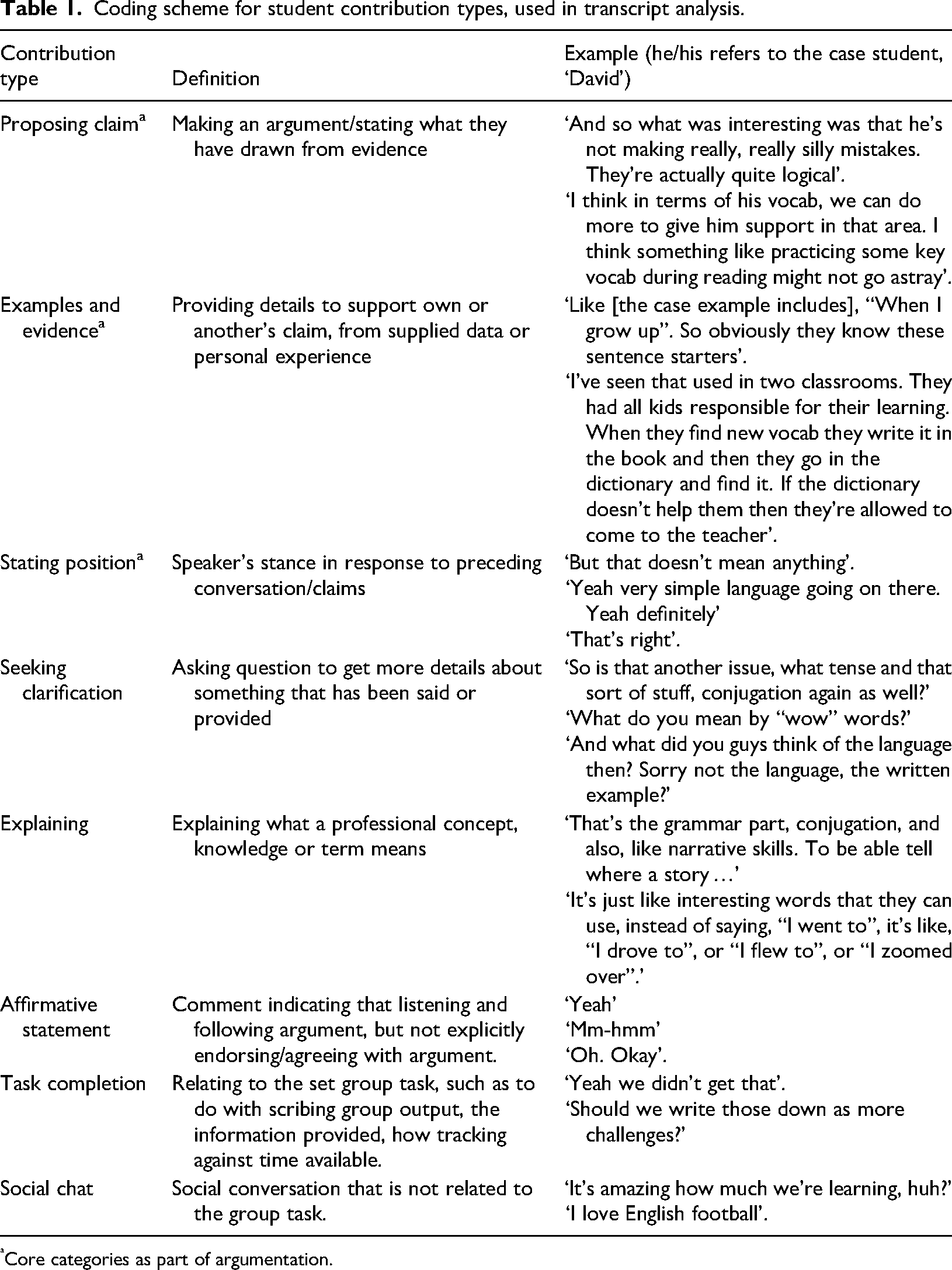
Coding scheme for student contribution types, used in transcript analysis.
Core categories as part of argumentation.
While viewing the video footage and analysing the transcripts, it became clear that some participants were more vocal and possibly dominating the group discussions. Engle et al. (2014) showed that access to the conversational floor is one of four critical factors contributing to an individual's influence during group discussion. In collaborative problem-solving, interaction patterns at the group level constrain and enable what any individual member can contribute to the group and what the group members can carry away in the form of new experiences and learning (Ricca et al., 2020). This was investigated further by tracking the number of interactions between participants using turns of talk from the transcript. Sociograms were constructed to capture the interactions between each pair of participants in a group and also their respective physical locations around the table, as this might influence observed behaviour (Patterson et al., 1979; Vujovic et al., 2020).
In addition to coding the post-implementation survey, we used the audio and video recordings from the three table groups to analyse: (1) The number of contributions in total within and across table groups by each stage of the tutorial; (2) The number of contributions within and across table groups of each interaction type in our schema; (3) The number of interactions between participants within each group; and (4) Tutor interactions and their impact on interactions between participants.
Results
Participants
The 25 participants comprised 15 TCs (12 female) and 10 SPS (9 female). This is broadly representative of the gender balance in the cohorts from which these students were recruited (approximately 87% female TC cohort and 90% female SP cohort). Of the three groups analysed in detail, each had four female participants and one male.
Interaction analyses
In these results, we first present the overall analyses described above. We then present detail about the interaction types in our schema and how these were used within and across groups.
Overall trends
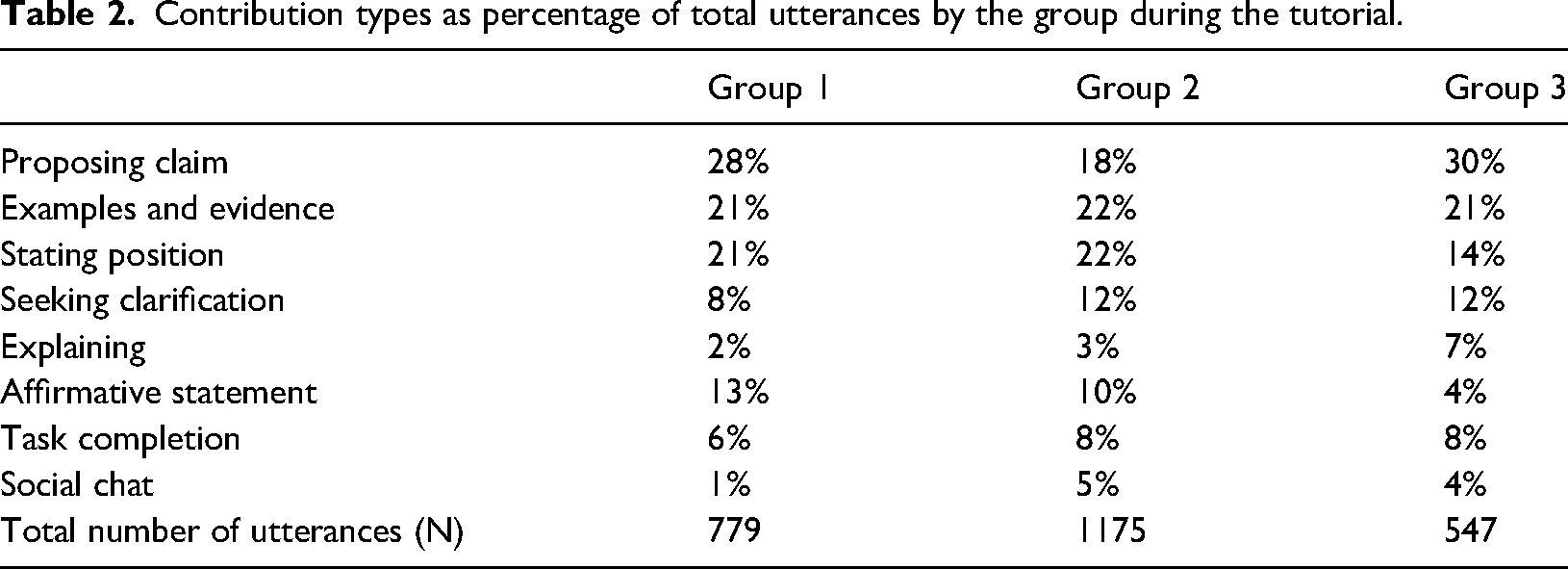
The quantity of talk used by groups over the tutorial varied strongly, with Group 2 making twice as many utterances as Group 3 (Table 2). For Groups 1 and 2 most talk occurred during the ‘Early perceptions’ and ‘Representation and interpretation’ stages, while for Group 3 most talk occurred in the ‘Representation and interpretation’ and ‘Decision-making’ stages (Figure 1). Proposing claims, providing examples or evidence, and stating positions accounted for most utterances by groups during the tutorial (Table 2) and within each stage (Figure 1). This is expected when people are engaging in reasoned problem-solving activity.
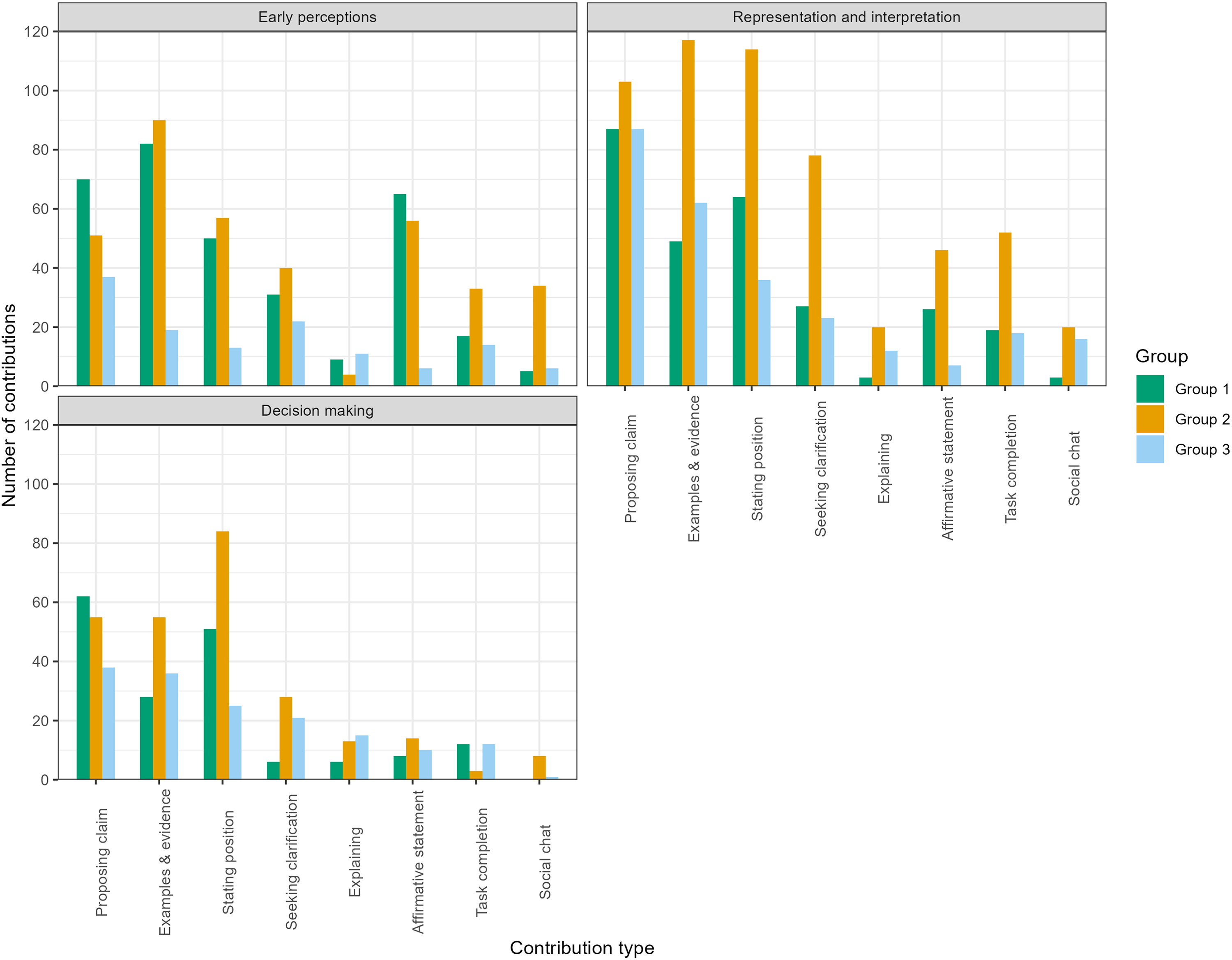
Use of different contribution types by the groups during the three stages of the tutorial.
Contribution types as percentage of total utterances by the group during the tutorial.
Participation within and across groups: Within each group, there tended to be one or two participants who made more contributions than others (Figure 2) and at least one relatively ‘silent side participant’ (Anderson, 2006). The sociograms presented in Figure 3 show the interactions between participants; in Group 1 and Group 3, the greatest number of interactions occurred between three people (Figure 3), whereas for Group 2 interactions occurred more evenly between participants. Interestingly, in Group 1, the dominant pair were from differing professional backgrounds, whereas in Group 3 the greatest number of interactions occurred between the pre-service teachers. This is explored in more detail later. Although participants were positioned on round tables, there may have been a slight ‘spatial advantage’ (Engle et al., 2014) for the person in the ‘TC_B’ position during discussions, as this person made the most contributions in Group 2 and Group 3 (Figures 2 and 3). Being physically positioned as the central pre-service teacher may have unconsciously influenced how that person behaved or was perceived by the group. There was no obvious gender bias in the number of contributions; male participants were positioned as follows: in Group 1 and 3, TC_B, and in Group 2, SP_B.
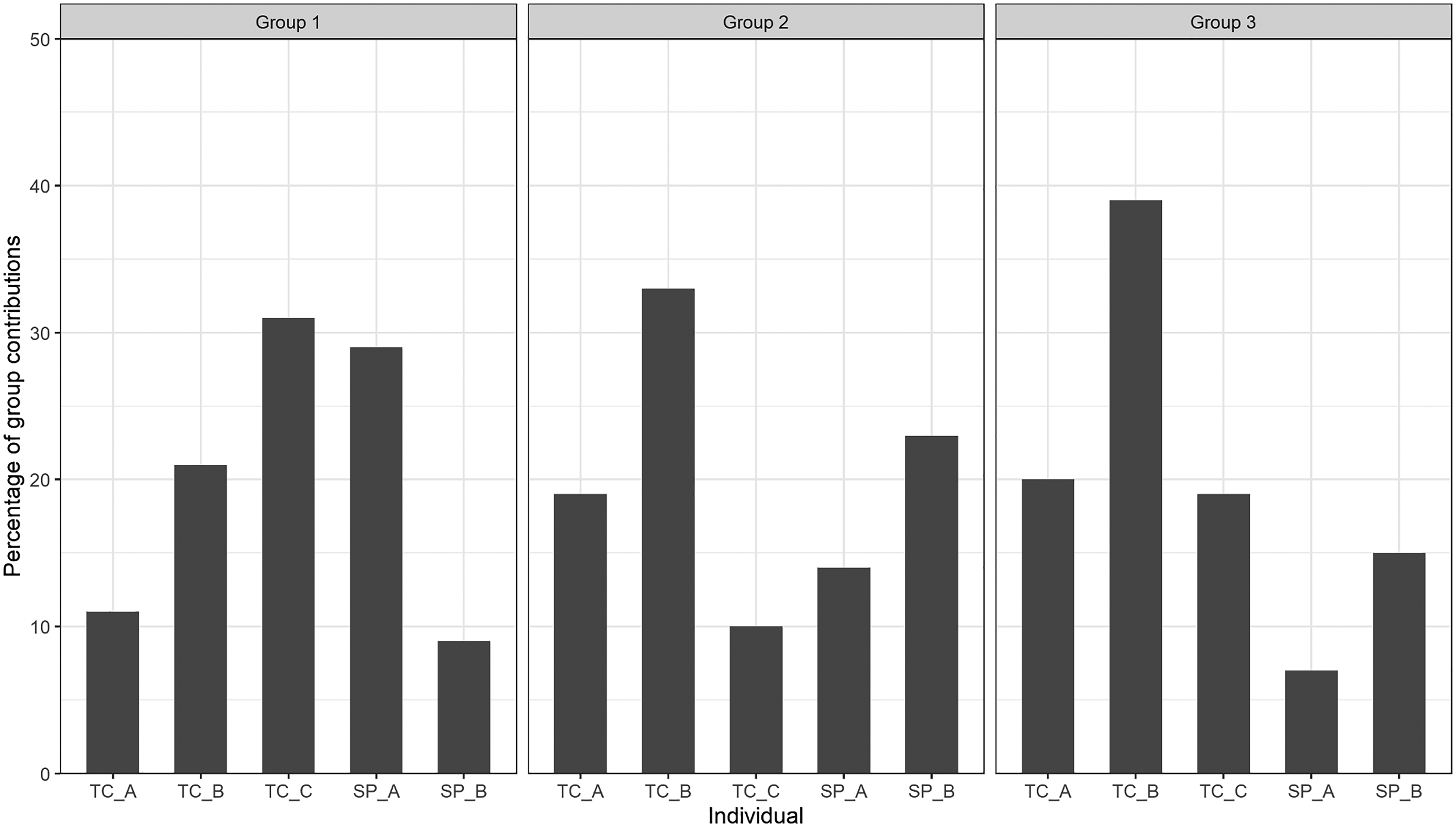
The contribution by individual participants as a percentage of the total contributions by the group, for the three groups. TC_A, TC_B, TC_C were pre-service teachers while SP_A and SP_B were speech pathology students.
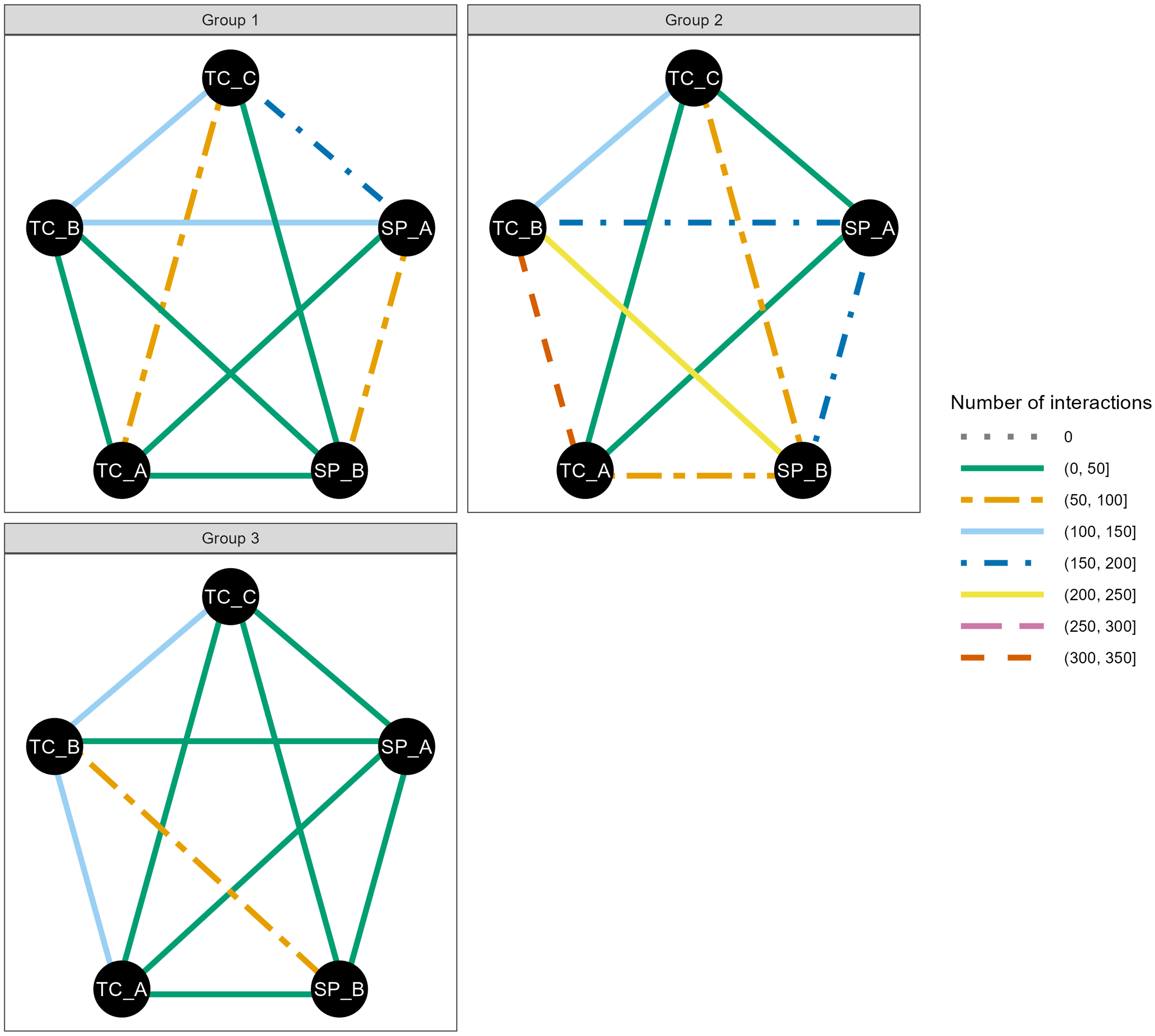
Number of interactions between the various participants within a group over the tutorial. TC_A, TC_B, TC_C were pre-service teachers while SP_A and SP_B were speech pathology students. The position of each person in these sociograms corresponds to their physical position around each group's table during the tutorial.
Constructing an argument
Using the schema outlined in Table 1, the categories of proposing claims, providing examples and evidence, and stating positions were considered to be evidence of students ‘constructing an argument’. Proposing claims accounted for between 18 and 30% of utterances by the groups, with 21–22% of utterances being examples and evidence, while between 14 and 22% of utterances were participants stating their position (Table 2). The individuals within Group 1 and Group 3 made claims more often than they stated their position about an argument or provided examples and evidence, while the individuals in Group 2 tended to proffer examples and evidence or state a position rather than make a claim themselves (Figure 4). As noted earlier, the pre-service teacher sitting in the TC_B position made the most contributions overall in Group 2 and 3, yet in Group 2 this was mainly through providing evidence and examples, while in Group 3 this manifested as proposing claims (Figure 4). Individuals tended to agree rather than disagree when stating a position about a claim, with agreements accounting for 85%, 79% and 85% of all position statements in Groups 1, 2 and 3, respectively.
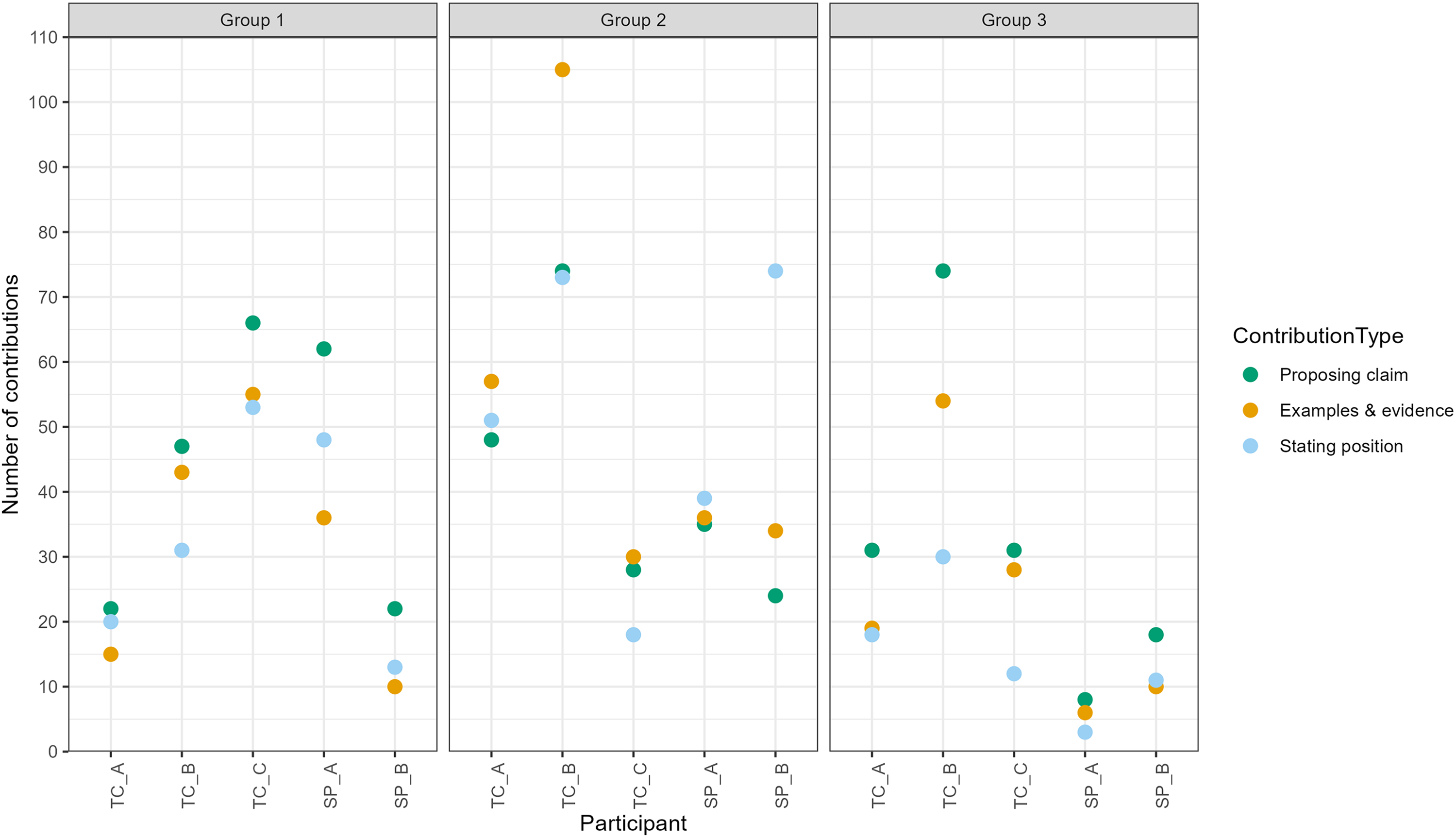
Differing use of the core components of argumentation by individuals within the three groups.
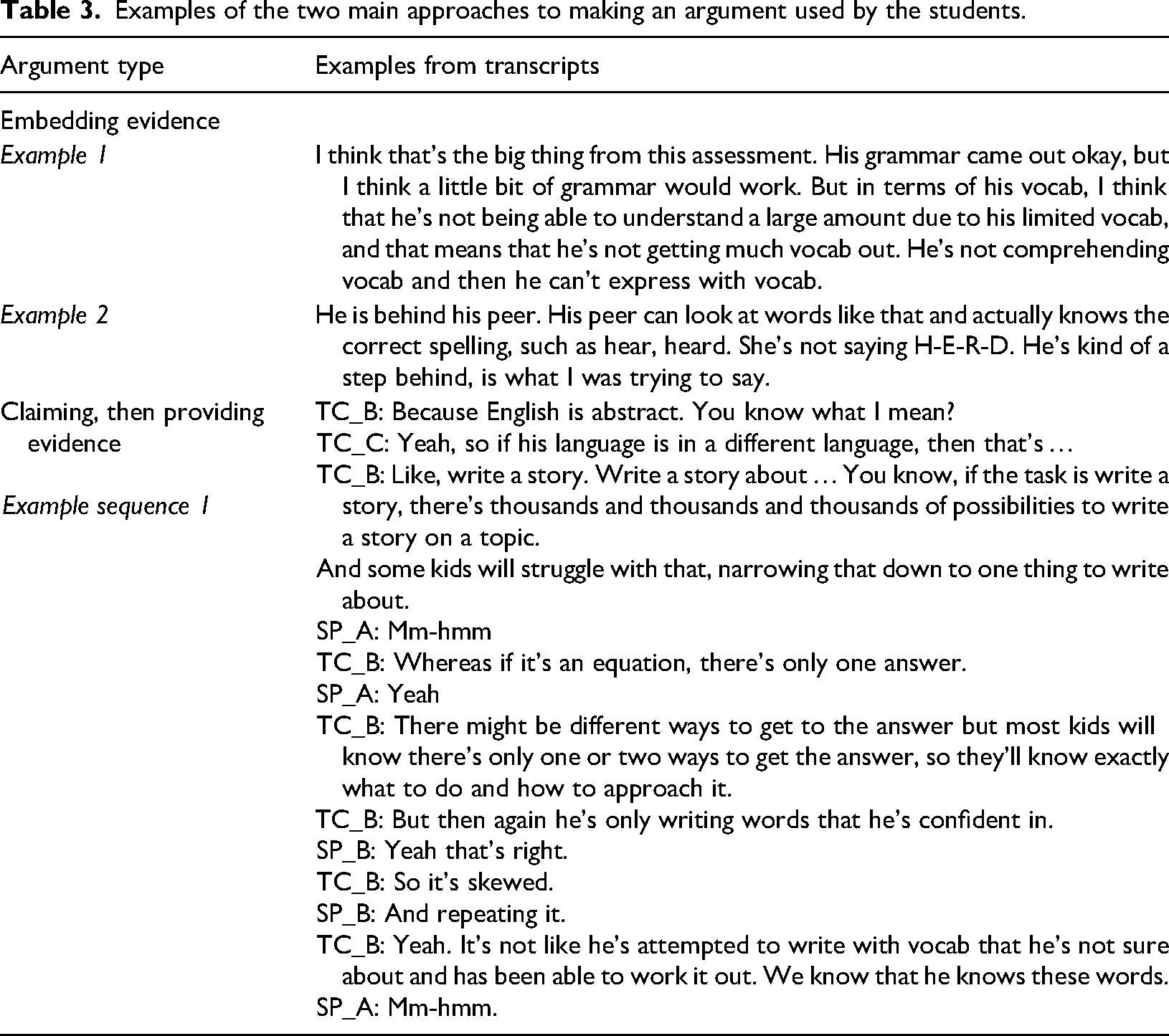
Two main approaches were used by students in constructing an argument during the group discussions. Most made a claim and embedded the use of examples or evidence within their claim, while others made a claim but provided examples or evidence as a follow-up action, particularly if pressed by others for clarification. Examples of each approach are shown in Table 3. As many students adopted the first approach to constructing an argument, i.e. embedding evidence within their claim, the identified instances of ‘examples and evidence’ in the transcripts mostly occurred when people provided additional information to support another's argument. This, combined with the high percentage of agreement with positions, suggests that the three groups worked collegially in reaching a group consensus.
Examples of the two main approaches to making an argument used by the students.
The act of seeking clarification is a core activity in assessing and critiquing arguments or posing a counter argument. Students used questioning to seek clarification for five distinct purposes during the tutorial (Table 4). These included seeking an explanation about specific terminology or a concept, checking something they had heard, seeking evidence to support a claim raised by another, seeking evidence to support their own argument or emerging diagnostic hypothesis, and clarifying a procedural aspect relating either to the tutorial or to professional practice. Of these, seeking evidence to support their own argument or emerging diagnostic hypothesis was the most common form of clarification deployed for two of the three groups (Table 5). All forms of clarification were used by both professional cohorts over the course of the tutorial, with no distinct patterns in use observed. The students in Groups 1 and 2 appeared genuinely interested in learning more about each other's assessment tools, knowledge and professional practice by seeking explanations or procedural details. In contrast, while the speech pathologists in Group 3 sought explanations from the pre-service teachers throughout the workshop, the pre-service teachers tended to ask questions of each other and rarely sought explanations or procedural information about speech pathology practice.
Examples of different types of clarification sought by students.
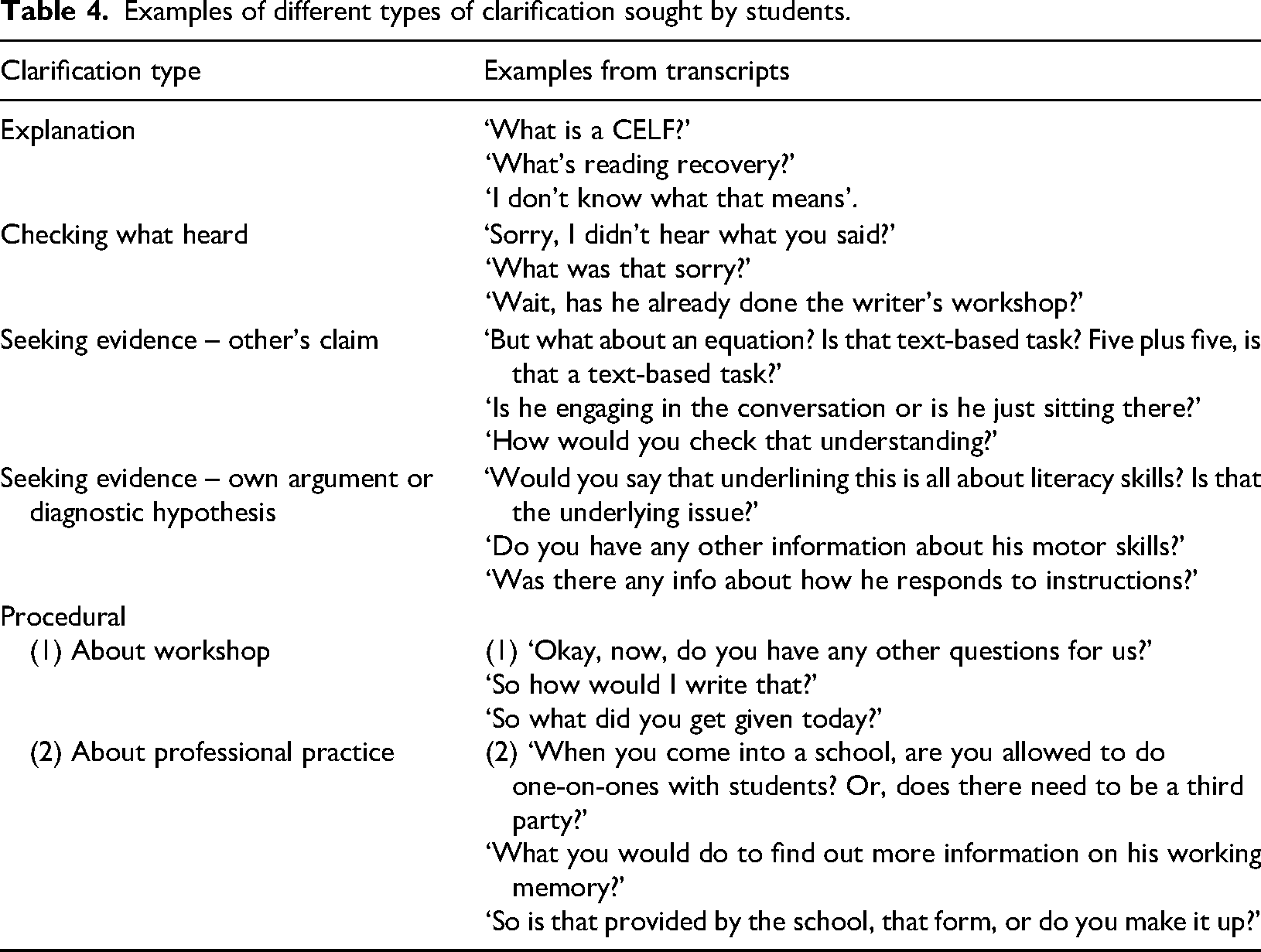
Examples of different types of clarification sought by students.
Number of times each clarification type was used by groups during the workshop.
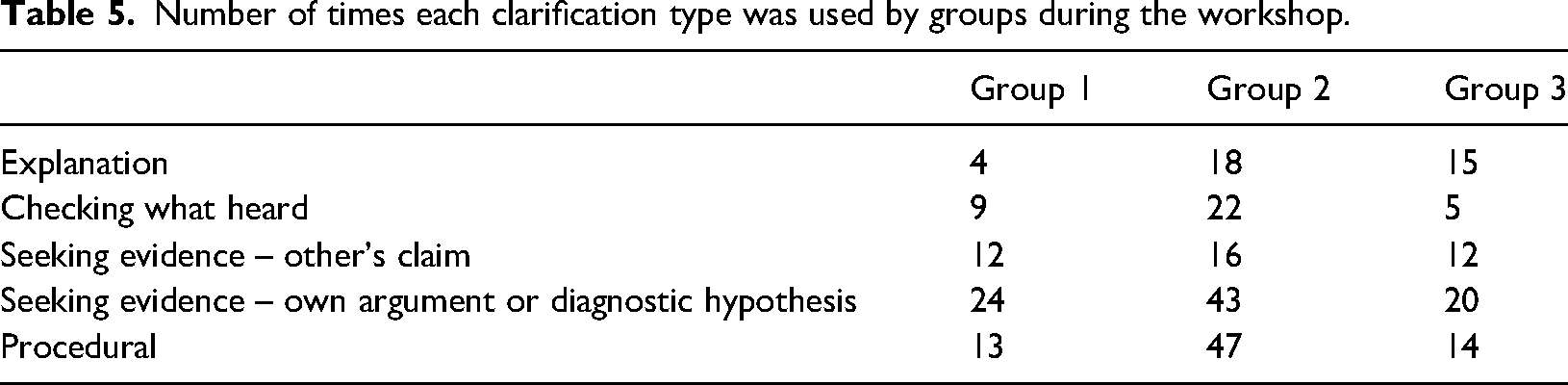
Across all groups, pre-service teachers were more likely to explain profession-specific concepts or terminology than speech pathologist students, supplying 89%, 68% and 58% of all explanations in Groups 1, 2 and 3, respectively. Most explanations by pre-service teachers concerned aspects of classroom teaching practice observed or used on placement, while explanations by SPSs concerned specifics of child language development or diagnostic assessment tools. Occasionally the explanations were directed at colleagues from the same profession. For each group, there was one case study component where SPSs did not make any explanations, but this occurred in the ‘Early perceptions’ stage for Group 1 and the ‘Decision-making’ stage for Groups 2 and 3. Fewer explanations were used by Group 1 than the other two groups (Figure 1). There was no consistent pattern in the timing of explanations between groups: for Groups 1 and 2 there were distinct stages when more explanations were used than others, but these were inconsistent, while in Group 3 about the same number of explanations occurred in each stage. Most explanations were self-triggered or initiated, rather than responding to a direct request for clarification (Table 6). This suggests both cohorts were actively avoiding terminology becoming a barrier to their collaboration, unlike the students described by Suleman et al. (2013).
Percentage of explanations that were self-triggered rather than in response to a query.

Percentage of explanations that were self-triggered rather than in response to a query.
Use of affirmative statements during sharing of information by Group 1 and Group 2.
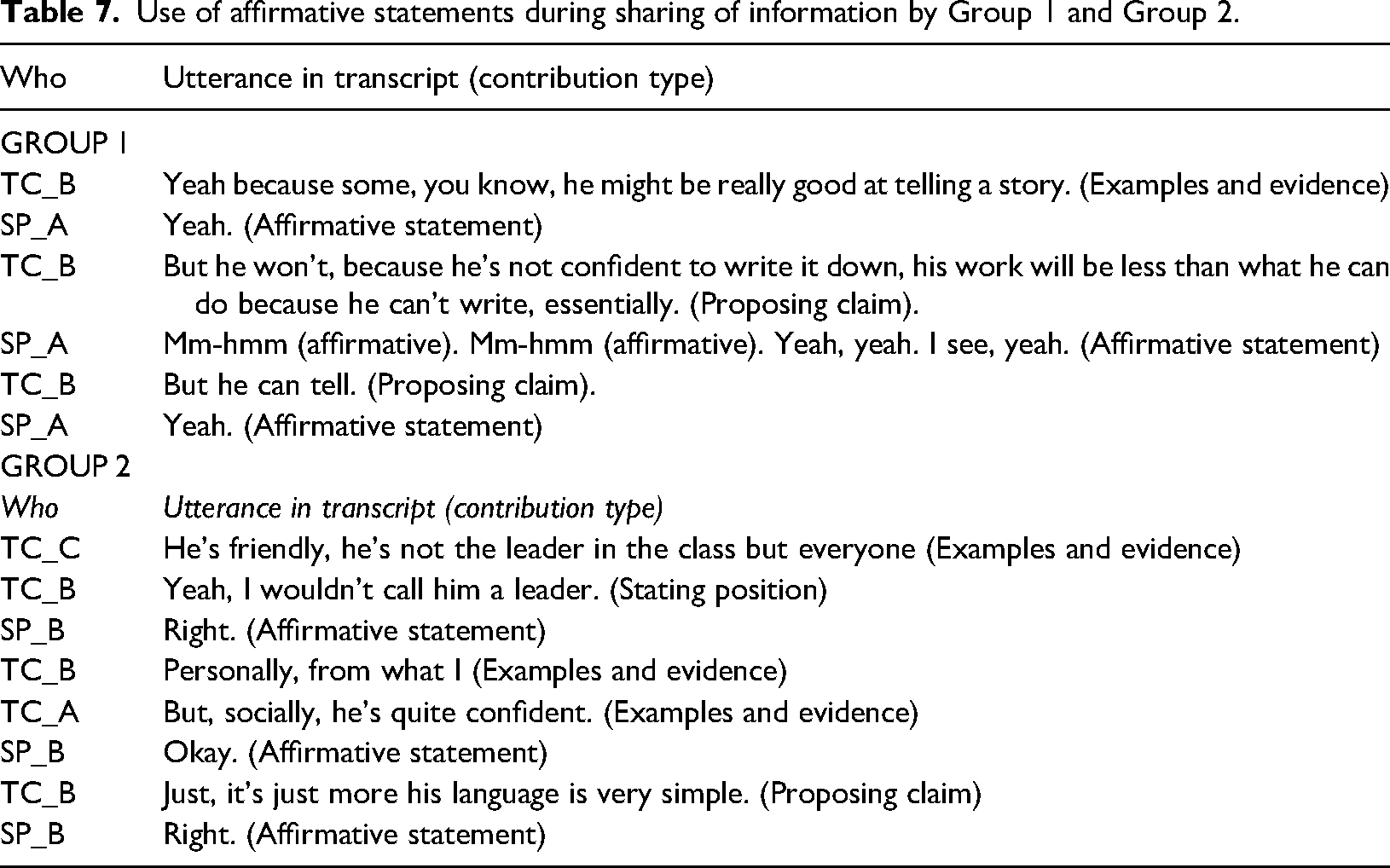
Affirmative statements were a feature of dialogue in Groups 1 and 2 (Figure 1 and Table 7), particularly during the ‘Early perceptions’ and ‘Representation and interpretation’ stages, where the two professions shared with the others their summary and interpretation of the provided profession-specific evidence. Illustrative examples of this are contained in Box 3. Affirmative statements accounted for 13% and 10% of utterances for Group 1 and Group 2, respectively (Table 2), whereas Group 3 used affirmative statements sparingly, at only 4% of all utterances.
Task completion
The amount of task completion dialogue was similar across the three groups, accounting for around 6 to 8% of all utterances (Table 2). Use of ‘task completion’ dialogue was dominated by the dedicated scribe for that stage, concerned with the logistics of accurately capturing discussion details and finishing the assigned task. In Groups 1 and 2, the different professions took it in turns to act as scribe for a whole stage. Group 3 behaved quite differently to the other groups during the first and second stage, with a TC scribing up to a point, then one of the speech pathologists adding more details. A tutor remonstrated with the group about this during the second stage, with all scribing undertaken by a speech pathologist in the final stage. For Group 3, task completion dialogue was dominated by the pre-service teachers but not always by the scribe.
Social chat
Social chat was used sparingly during the tutorial (Table 2, Figure 1) and did not appear to be deliberately deployed by most participants in order to change collaborative group dynamics. Most social chat occurred fleetingly within a professional cohort rather than encompassing the whole group. The exceptions to this were introductory dialogue within Group 1 at the very start of the tutorial, which Langer-Osuna et al. (2020) would classify as ‘warming up to collaboration’, and a discussion by Group 2 about the phrase ‘teacher candidates’ that occurred after they completed their initial task near the end of the first stage. Minimal social chat occurred for any group in the tutorial's final stage.
For Group 3, no whole group social chat occurred over the course of the tutorial. During the second stage one SPS used social chat to build rapport with the pre-service teachers, for example ‘I see all those teacher marks there’ and ‘Oh, your handwriting, it's fine. You can read it.’. However, within 10 minutes of the student making those comments, the two cohorts had shifted to recording their contributions separately, with the speech pathologists focussed on identifying core challenges and the teachers thinking ahead about strategies to implement. This suggests that the SPS may have been trying to alter the group dynamics using social chat but gave up rather than persisting.
Interactions with tutors
The two tutors present during the tutorial spent most of their time unobtrusively roaming around the room monitoring the group discussions. Occasionally they came close to a group, read their output, watched or listened and then moved off with no overt interaction taking place, but at other times they deliberately intervened in the discussion. This could be to get the speaker to elaborate further about ideas, to invite other non-vocal participants to share their opinions, to redirect the group's focus to address specific aspects of the task or avert misinterpretation of data, to clarify a particular concept or piece of evidence, or to provide direction about task completion. Overall, the tutors intervened a similar number of times in the Group 1 and Group 3 discussions, with fewer interventions in Group 2 discussions. While most interventions were regarding task completion, the tutors also intervened several times to redirect the focus of Group 1 and 3. It was only with Group 3 that a tutor felt it necessary to invite other voices to contribute, in this case the speech pathologists.
Post-intervention survey
Twenty-four of the 25 students participating in the collaborative case study completed the post-intervention survey. In response to the prompt, ‘Rate your agreement with the statement I feel more confident now than I did previously about my ability to work with the other profession', 35% of students strongly agreed, 52% agreed and 13% selected ‘neutral’. When asked to rate agreement with the statement: This experience was useful for my future practice, 56.5% chose ‘strongly agree’ and 43.5% selected ‘agree’. Students were asked to identify what they had enjoyed most from the experience and responses were positive overall, including:
- Working in a professional setting around a real student experience. - Being able to learn more about the role and strategies being used in classrooms to serve as foundations/ ideas for tier 1 level interventions. - Gaining different perspectives, learning more about how teachers assess language and academic ability. - Discussing with the teaching students challenges they identified based on their experiences on placement. It was an interesting and enjoyable collaboration. - Getting a better understanding of what a SP is and does. - It was extremely beneficial working with the SP students who were able to share their knowledge with us. - The different terminology used by speech pathologist students took time to understand. - Too many voices and opinions at time which made it challenging to offer input. - Having some input into their thoughts because they [TCs] are very confident in what to do. - Not jumping to formulating strategies. - Trying to offer support without disrupting the classroom dynamics or telling the TCs how to conduct their classroom. Also considering the needs of the 27 other students within the class. - Time constraints, could have talked about each stage for longer! - Narrowing down strategies to the most relevant and practical. - The differences in knowledge. For example: oral language underpinning written language, how auditory comprehension informs vocabulary development.
Students were also asked to reflect on what they found most challenging. The responses covered the following issues:
Students shared their attitude towards collaboration using a Likert scale (Table 8). 100% of respondents either strongly agreed or agreed that collaboration is something they would seek to do in practice and that collaboration should be taught using direct experiences. Overall, there was a positive attitude towards collaboration with 96% of respondents agreeing that collaboration is achievable. Despite these positive responses, 45% of respondents identified that collaboration is difficult.
Rating agreement with statements about collaboration.
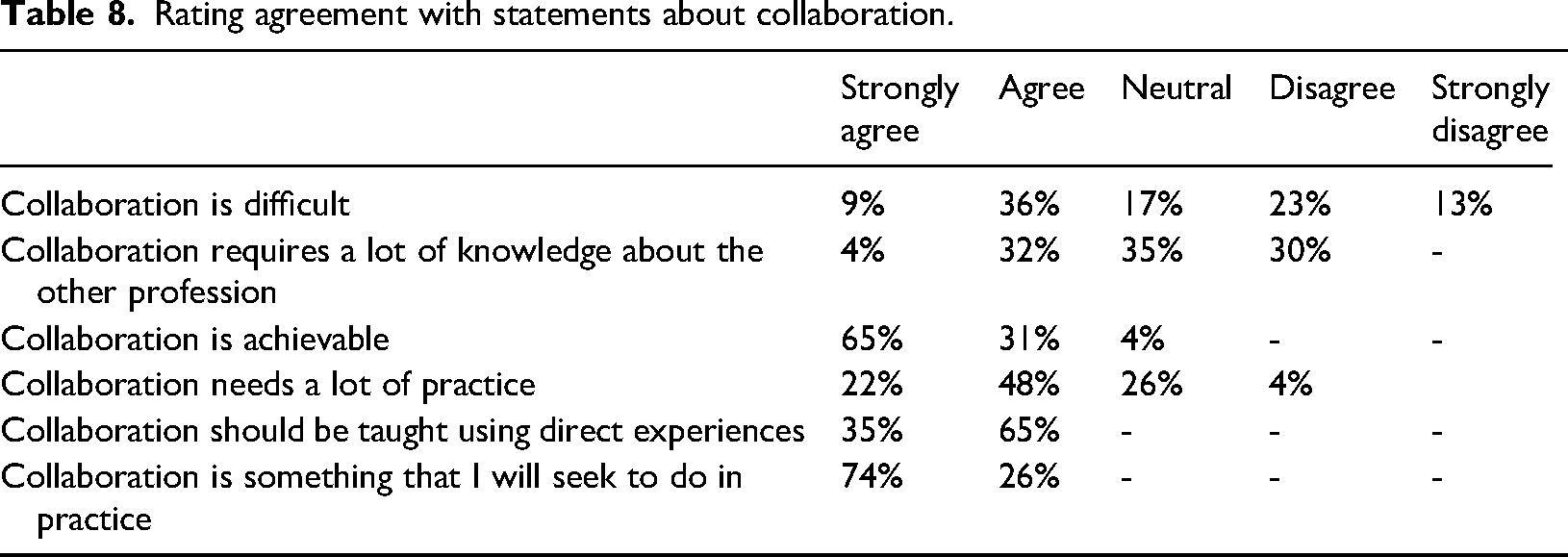
Rating agreement with statements about collaboration.
The findings are the result of the development of a carefully scaffolded case study for the purposes of creating a simulated interdisciplinary collaboration experience between TCs and SPSs. Choi and Pak (2006) note that interdisciplinary collaboration can resolve real-world problems that are complex, with each discipline contributing a certain perspective through which the problem can be analysed and solved. The case study aimed to simulate a real-life problem that requires the intervention of both professions, giving them an experience of direct collaboration. This supported learning outcomes for TCs and SPSs. During the case study, the students took on the roles of their respective professions by engaging in professional dialogue, and by individually and collaboratively constructing argumentation specific to their discipline. However, it is important to note that the experience had some elements that are unlikely to mirror practice in school settings. The students worked in groups of five (3 TCs and 2 SPS), but in a school setting, it is likely that these interactions would occur between one teacher and one speech pathologist. This was a decision made in the design of the case study due to the experience of the students involved in the case study. Additionally, we deliberately ‘fed’ information to students as they worked through the study. While this was designed to mirror the gradual process of problem-solving (Ziebell and Skeat, 2020), it was also contrived to move them through the problem-solving exercise to some extent. For example, all students got the same assessment data about David in part 2, regardless of what they had determined was necessary to know about him in part 1.
As we would expect from a problem-solving activity of this nature, student interactions varied across groups based on how they collectively approached the task and the individual contributions that guided the reasoning process. Nevertheless, there were clear patterns to the functions of interactions in these groups, and argumentation as discussed by Chinn et al. (2000) was evidenced by all. Argumentation has many similarities to the functions of clinical reasoning; that is, drawing on existing knowledge, pairing this with evidence or examples from the case in question and assessment data, and developing a position about what is likely to be happening (Simmons, 2010). For collaboration to occur, however, reasoning cannot be a largely silent process that professionals go through as they problem-solve and weigh up strategies. As this study demonstrates, argumentation needs to happen ‘out loud’, as this is what moves collaborative problem-solving forward. TCs and SPS, as well as other professionals who work collaboratively, need practice in the skills required to articulate their reasoning, and in making this articulation relevant to other disciplines. Additionally, this research highlights the value of fostering other key collaborative skills, such as questioning and explanation, which allow for the sharing of professional vocabulary, values, cultures and knowledge bases (Hartas, 2004; Suleman et al., 2013).
It is interesting to note that the dominance of up to three participants that was observed during the analysis is consistent with Fay et al. (2000)'s argument that in groups of five or less, most discussion occurs as pairwise interactions with group consensus arising from bilateral processes between pairs of communicators. We did not note a bias toward male participants either contributing more or less compared to female participants. However, the amount of group contribution, as well as the type (for example, feeling confident to state a position) may be impacted by gender (Meadows and Sekaquaptewa, 2013), as well as other uncontrolled factors such as ethnicity, ability, and in the case of SPS exposure to classrooms in previous placements. For example, the collaborative dynamics observed in Group 3 could reflect some of these uncontrolled factors in this study. Within every group, there was a SPS that interacted quite confidently with the TCs. However, in Group 3, the TCs led the group discussion, with SPSs actively listening and involved, yet having difficulty taking the conversational floor. This could be due to perceived unfamiliarity with classroom settings or cultural norms where entering a conversation without an invitation to contribute could be seen as being inappropriate or rude. While Group 3 was able to reach a conclusion similar to other groups, the SPSs may have felt unsatisfied with their capacity to contribute to the process, particularly when the intention of this activity was to build inter-professional relationships, and show respect for each other's complementary skills and knowledge. Quigley and Smith (2021) highlight the importance of nurturing relationships and reaching an ‘epistimology common ground’ across both professions through sharing knowledge, sharing different opinions and encouraging respectful debate. Future research could explore both interactions and collaborative practice outcomes of a larger number of groups, variously composed, facilitated and supported.
A consideration for future research is how active engagement in collaboration and communication can be monitored by participants in the group as a metacognitive activity to support collective accountability (Jackson et al., 2014). This is particularly important as the results showed that some students were challenged by the collaborative group work, despite all students identifying that collaboration should be taught using direct experiences and that they valued collaboration as an important aspect of their future practice.
The results highlighted the lack of knowledge each respective profession had about the other profession, which could have a significant impact on graduates of both professions. Initially, in the classroom environment, it is critical that teachers ‘notice’ when a student might need additional support and then know where to seek additional expert assistance. Targeted short-term interventions can be extremely beneficial for students that are experiencing difficulty engaging with the curriculum at their level. In particular, language and communication challenges can be successfully addressed with early intervention, which is important for supporting student learning in all subject areas of the curriculum. However, it is critical that the discipline-based resources are utilised and applied in practice. The case study aimed to support the development of skills and confidence for designing effective, evidence-based interventions by engaging in collaborative reasoning. An outcome of the study, as reported by participants, is that they had a deeper understanding of each other's respective professions. The most significant outcome of this project was for TCs and speech pathologists to participate in collaborative problem-solving that has the potential to significantly impact on vulnerable student populations they will work with in the future. These interdisciplinary collaborations are crucial for teachers because it provides an opportunity to draw on the expertise of professionals from different fields, providing a more holistic approach to supporting children with complex needs. It is evident that the structure of the case study promoted interactions between the students and extended their understanding of each respective discipline; however, further research is needed on the long-term impact and transferability of this specific type of intervention to collaborative practice in classroom settings and as practising professionals. Wilson et al. (2019) noted some promising results related to inter-professional placements. Future research initiatives could examine ways to strengthen collaboration, and further integrate coursework with professional experience placements for pre-service teachers and SPSs. Additionally, there is also an opportunity to extend this approach to other inter-professional relationships across allied health and education.
Conclusion
This project sought to create the conditions for collaborative problem-solving that reflected a situation that teachers and speech pathologists could encounter in a school setting. Students with communication difficulties often present with complex and unique needs, and in school settings, collaboration across professional disciplines can have a significant impact on targeting interventions appropriately to meet a student's needs. Engaging with a structured reasoning process model to support TCs and SPSs allowed the participants to work methodically through the case study and guided them to focus on specific tasks deliberately to support their reasoning processes. The analysis of interactions during group work highlighted the flow of conversation and argumentation, and the key actors and patterns of discourse that guided the reasoning process. These factors impacted on the performance of the groups in relation to collaboration, problem-solving, reasoning and decision-making.
Highlights
Argumentation furthers problem-solving in interdisciplinary professional groups Argumentation includes: proposing claims, giving evidence, stating positions These functions are similar in nature to clinical reasoning strategies Students need experiences that foster collaborative argumentation
Footnotes
Credit author statement
Declaration of conflicting interests
The author(s) declared no potential conflicts of interest with respect to the research, authorship, and/or publication of this article.
Funding
The author(s) disclosed receipt of the following financial support for the research, authorship, and/or publication of this article: This work was supported by The University of Melbourne Learning and Teaching Initiative Grant.
