




Abstract
Interprofessional practice between speech and language therapists and teachers involve sharing knowledge and experiences to achieve a common goal of improving child outcomes. Although interprofessional practice has widespread support from both disciplines, it is not always easily implemented in day-to-day practice and numerous challenges have been documented. This study attempts to address these challenges through an epistemological perspective of interprofessional practice between teachers and speech and language therapists. Action research methodology was employed for this inquiry that spanned the duration of a school year. Data analysis placed an explicit focus on the experiences of interprofessional practice between the speech and language therapist and teachers, including an examination of how action was agreed and the processes underpinning collaborative working. An epistemological lens facilitated a more in-depth consideration of the diverse ways of knowing implicit in interprofessional practice and provided guidance on how to overcome the barriers, and realise the potential, of collaboration between speech and language therapists and teachers in daily practice. Four factors, rooted in an epistemological perspective, were generated from the analyses as core tenets of effective interprofessional practice. These included securing a participatory space; actively facilitating power-sharing; balancing the status of practical knowing with propositional knowing and anchoring interprofessional practice in collaboratively designed, practical activities that integrate ways of knowing. The former four factors, and their implications, offer concrete and practical direction for practitioners and educators on how to achieve effective interprofessional practice to help improve child outcomes collaboratively.
Introduction
Interprofessional practice
During childhood, school can be a critical language learning environment both for children at risk of language learning difficulties as well as children with identified Speech Language and Communication Needs (SLCN). For this reason, speech and language therapists (SLTs) and teachers frequently work together to target the needs of individual children in accessing the curriculum, or to design rich language learning environments to benefit all pupils, but especially those deemed at risk of communication difficulties. The term ‘inter-professional practice’ (IPP) describes a wide variety of practices, from sporadic networking to intensive joint working (Ray, 2002). Numerous other terms are used interchangeably to denote IPP, including multidisciplinary, multi-professional, multi-agency, interdisciplinary, teamwork, collaboration, partnership, integrated working, seamless services and boundary-crossing provision (Morrison and Glenny, 2012). Despite the plethora of terms that exist, there are several established, core features that characterise IPP.
First, IPP involves individuals from different professional backgrounds working together (Nancarrow et al., 2013). For example, SLTs who are predominantly employed and located in the health services may work with teachers who are employed and located in educational settings (Glover et al., 2015). Second, IPP involves focusing on shared goals and objectives, usually related to improving outcomes for an individual for whom both professionals have a duty of care (Friend et al., 2010). In the context of teacher and SLT collaboration, improving the speech, language, communication, literacy and educational outcomes of school-aged children is a common goal of both educators and SLTs (Snow and Powell, 2011). Third, IPP is dynamic and involves sharing knowledge and experiences (Nancarrow et al., 2013). When supporting children with communication difficulties, teachers may share knowledge and expertise relating to literacy, curriculum, and pedagogy, while SLTs share knowledge and expertise of language structures, language development, language disorders and language enrichment practices (Glover et al., 2015; Hartas, 2004). This transfer of competencies between teachers and SLTs can lead to more creative solutions of shared problems, a more holistic approach to addressing children's needs, and an increased sense of personal and professional support (Wright et al., 2008). Finally, IPP is described as a non-hierarchical process, where power is shared and decisions are made through negotiation, cooperation, and consensus building (Friend et al., 2010). The World Health Organization (WHO) (2010) refers to the creation of a new shared understanding in IPP, extending beyond the understanding that either participant previously held. This translates to drawing on the complementary skills of teachers and SLTs to influence decisions and generate new understandings, rather than one profession's perspective dominating (Tollerfield, 2003).
Many international reform agendas for children's services place an emphasis on IPP (Forbes and McCartney, 2010). Furthermore, the inclusion movement for children with disabilities has led to legislative and discipline support for collaboration between educational professionals and therapeutic professionals, such as SLTs, to ensure the needs of all pupils are met within the mainstream school setting (Shaddock et al., 2007). Numerous policy objectives across health, education and social care systems seek to provide services for children that are integrated and are built on the premise of IPP (Mecrow et al., 2010). The prominence of IPP in national policy aims also resonates with the core competencies required of graduating professionals across the globe in numerous disciplines, including SLT and teaching (Morrison et al., 2011).
While IPP has widespread endorsement and is strongly promoted across many sectors and professionals, it is not easily implemented (Cameron, 2011). Challenges to IPP are compounded by systemic barriers as SLTs are typically employed by health services while teachers are employed by schools, and each system has distinguishable frameworks of operation, practices, priorities and expectations (McCartney, 1999; Tollerfield, 2003). Loosening professional boundaries requires a level of trust and familiarity that can take considerable time to develop (Forbes and McCartney, 2012). Perhaps because of these challenges, IPP is operationalised in many different ways, incorporating varied levels of collaboration. One report (IASLT, 2007) suggests that in Ireland the most common SLT-teacher collaborative working practice involves an SLT sending an assessment report and recommendations to a school. This form of distant consultation often operates alongside ‘pull-out models’, where SLT intervention is provided for pupils outside the classroom or face-to-face consultation in the school setting to share advice and guidance (Ebbels et al., 2017).
Despite broad policy-level support for IPP, there is a consistent lack of detail in many of these policies on
Epistemology
Epistemology is a branch of philosophy that is concerned with the nature of knowledge, the limitations of knowledge and how knowledge is justified (Hathcoat and Nicholas, 2014). Epistemologists consider what knowledge is, how we know what we know, how knowledge claims are validated and the relationship between the knower and the known (Coleman, 2015). Within epistemology, an important distinction is between knowledge that is external to the knower (e.g. knowledge generated through objective observation and collection such as scientific research) and knowledge that is internal to the knower (e.g. knowledge generated through doing or practising) (Eikeland, 2015). Similar distinctions can be found in Ryle’s (1968) separation of ‘knowing that’ from ‘knowing how’ and Polanyi’s (1966) delineation between ‘knowing what’ and ‘knowing how’.
Hofer and Pintrich (1997) contrast ‘knowledge’ (i.e. accumulated independent or interrelated facts and concepts), with ‘knowing’ (i.e. an individual's beliefs about how knowledge is developed, evaluated and substantiated) and this distinction is maintained in this paper. Heron and Reason (2008) also espouse the concept of multiple ways of knowing in their ‘extended epistemology’ framework encompassing four forms of knowing: propositional knowing; experiential knowing; presentational knowing and practical knowing (Figure 1).
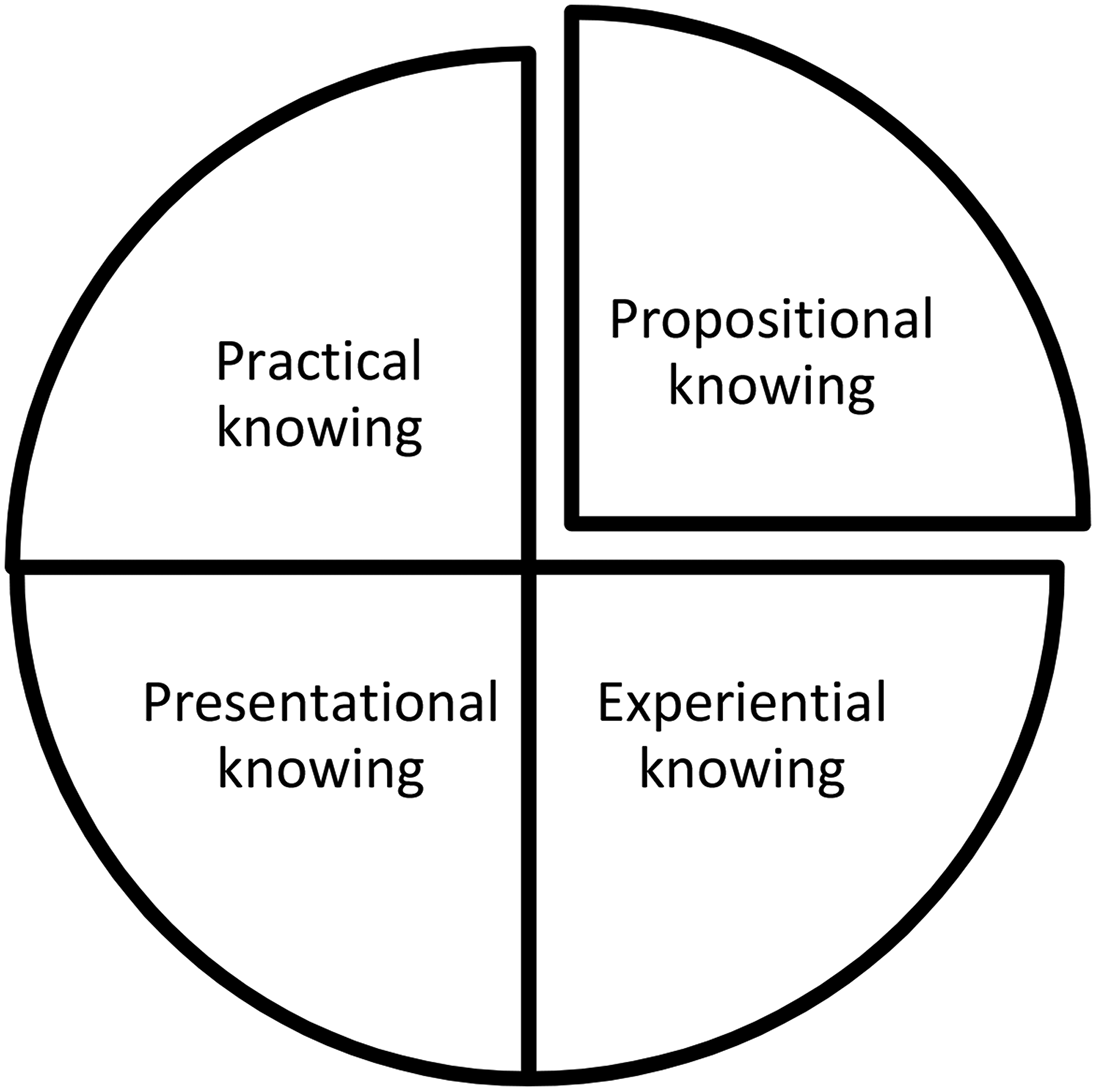
Heron and Reason’s (2008) extended epistemology framework.
In Heron and Reason’s (2008) terms, propositional knowing involves knowing conceptually and knowing intellectually. Propositional knowledge is articulated in theories, facts, propositions, statements and arguments, where the known is external to the knower. In their view, this form of knowing dominates modern scientific and social research. By contrast, experiential knowing implies knowing through experience, perception, empathy and encounters with others, objects or places. Experiential knowing is felt by the individual and encoded in how the individual handles the phenomenon that they have encountered. Presentational knowing draws on, and is grounded in, the tacit nature of experiential knowing. Presentational knowing symbolises and expresses experiential knowing, both discursively and non-discursively, through the arts, including through storytelling, poetry, drama, music, dance, drawing or painting. Practical knowing involves knowing how to do something and relates to skills, knacks and competencies that are backed up by a community of practice. In experiential, presentational, and practical knowing, the known (i.e. knowledge) is internal to the knower. Heron and Reason (2008) suggest that that these different ways of knowing are mutually enhancing; they interact and connect with each other.
Distinctions between ways of knowing, and claims that forms of knowing augment each other, are echoed in classifications of evidence-based practice (EBP). Three diverse forms of knowing are typically included in every concept of EBP: knowing from systematic research, knowing from clinical practice and expertise and knowing from client preferences (Dollaghan, 2007; Justice, 2006; Spencer, Detrich and Slocum, 2012). Differences between empirical evidence and clinical expertise espoused in EBP are comparable to the distinctions between the multiple ways of knowing discussed above. They centre on the premise that knowing drawn from research findings is general, formal, and explicit, whereas knowing derived from clinical expertise is the opposite: personal; informal and implicit (McIntyre, 2005; Tonelli, 2006) – it is internal to the knower and many not be easily externalised. The recurring and well-established definition of EBP proposed by Sackett et al. (1996) captures the importance of engaging with and integrating different ways of knowing. They state EBP is ‘the conscientious, explicit and judicious use of current best evidence in making decisions about the care of individual patients’ and involves ‘integrating individual clinical expertise with the best available external clinical evidence from systematic research’ (Sackett et al., 1996:71). They go on to claim that ‘neither alone is enough. Without clinical expertise, practice risks becoming tyrannised by evidence…without current best evidence, practice risks becoming rapidly out of date to the detriment of patients’ (p.72).
Applying epistemology to IPP may help us to consider how an SLT or teacher develops, evaluates and justifies the knowledge they draw on to inform their IPP. Is the SLT/teacher relying on ‘know-what’ (e.g. propositional knowing, systematic research), ‘know-how’ (e.g. practical knowing, clinical expertise) or both to work collaboratively? Is the knowledge for IPP legitimised by empirical research or by years of trial-and-error through clinical practice, or both? Is the relationship between the SLT/teacher and the knowledge they draw on for IPP separate and objective, whereby knowledge is collected without influencing it or intervening with it? (Eikeland, 2012). Conversely, is the relationship between the SLT/teacher and the knowledge they employ for IPP more personal, whereby the practitioner's knowledge is generated through doing, practising or reflecting? (Eikeland, 2015). What are the enablers and facilitators of IPP from an epistemological perspective?
Epistemological perspectives of IPP are pertinent because of the diverse ways of knowing implicit in the fundamental, four key features of IPP described earlier – different professionals work together towards common goals by sharing knowledge through a non-hierarchical process. What appears to be a simple knowledge swap within IPP leading to a plethora of benefits can be difficult to achieve and may be fraught with epistemological challenges in everyday practice.
For instance, SLTs and teachers are trained separately and practise within different ‘cultures’ (Paradice et al., 2007). Schools, where teachers are employed, and health services, where SLTs are typically employed, have distinguishable frameworks of operation, practices, priorities and expectations (Law, 2000). It is suggested that SLTs’ positioning as a healthcare profession within a medical model frequently results in SLTs’ theories and practice being rooted more in scientific investigation and empirical evidence than their teaching colleagues, whose theory and practice has its foundations nested more within social constructivism (McLean et al., 2021; Snow, 2016). In addition to diverse theoretical and practical perspectives, McLean et al.’s (2021) recent exploration of professionals working in schools who are dual-qualified SLTs and teachers confirmed findings of others that there also appears to be a knowledge gap between teachers and SLTs in relation to supporting language and literacy development. That is, each profession may have distinct epistemological perspectives on how to practice (i.e. distinct knowledge and ways of knowing), which may impact negatively on designing and implementing IPP.
This disparity can develop early as part of the ‘us-and-them’ socialisation process of undergraduate education. A previous survey of student teachers and student SLTs indicated that each cohort had limited understanding of each other's role and few opportunities to collaborate during their training (Wilson et al., 2015). In contrast, on rare occasions when student SLTs and teachers were afforded the chance to work collaboratively at undergraduate level, sharing knowledge and co-constructing goals and interventions, they become more aware of each other's role, more prepared for IPP and more willing to engage in IPP when they graduate (Brandel and Loeb, 2011; Miolo and DeVore, 2016; Wilson et al., 2017; Wilson et al., 2019). Therefore, the foundations of enablers and barriers to IPP may go as far back as pre-service education.
Challenges to IPP can also surface later on in the workplace if there is an absence of trust, or if practitioners attempt to guard their knowledge base in order to protect their status (Cameron, 2011). The closely held specialist knowledge of each professional group may be safeguarded to maintain their status, while at the same time other professionals’ ‘alien’ ways of knowing may be rejected (WHO, 2010). An epistemological closed circuit of uni-discipline knowledge flow may emerge and hinder effective IPP. On the other hand, there have been concerns expressed within IPP that if practitioners accept others’ knowledge without validation, they may lose some of their own discipline-specific expertise, autonomy and abandon practices that have been proven to lead to effective outcomes (Dunsmuir et al., 2006). This occurs despite claims that each discipline's knowledge, regardless of its status, can contribute towards and facilitates effective IPP (Friend et al., 2010). Linked to these concerns, other challenges documented in implementing IPP between teachers and SLTs may also be classified as epistemological in nature: fears of losing expertise; having decisions interrogated and ‘territory’ invaded (Hartas, 2004). Resentment may also seep in if a practitioner feels that IPP is simply transferring knowledge, and ultimately workload, to another practitioner (Forbes and McCartney, 2012).
This paper describes findings from a research study that was set in the context of an epistemological consideration of IPP between SLTs and teachers. The study was an action research inquiry aimed at exploring the process of implementing changes to classroom practices to support language development of primary school children, through teacher and SLT collaboration. The action research question was: ‘How can classroom practices be changed to support effective language enrichment?’. The focus of this paper is to share findings about how an epistemological perspective on IPP can facilitate realising the potential of collaboration between SLTs and teachers in daily practice and help to address inherent challenges in the IPP process.
Method
Design
Ethical approval for the inquiry was obtained from the School of Linguistic, Speech and Communication Sciences, Trinity College, Dublin.
Action research methodology was employed to address the overarching question of how classroom practices might be changed through IPP to support language enrichment. An action research process, from design to implementation to evaluation is democratic. There is an explicit commitment to respecting the experience and knowledge of others to collaboratively bring about change (Dick and Greenwood, 2015). Relevant stakeholders are not simply participants in the research or sources of data, but are co-definers of problems, co-designers of solutions, and co-implementers of action (Bradbury, 2015). The emphasis is on ‘mutual learning and co-production of new ways of knowing’ (Gaventa and Cornwall, 2015: 469). Action research facilitates the dynamic engagement of participants’ multiple ways of knowing in the research process through iterative and collaborative cycles of change (Figure 2) (Dick and Greenwood, 2015). Thus, it could be said that action research explicitly supports many of the hallmark features of IPP.
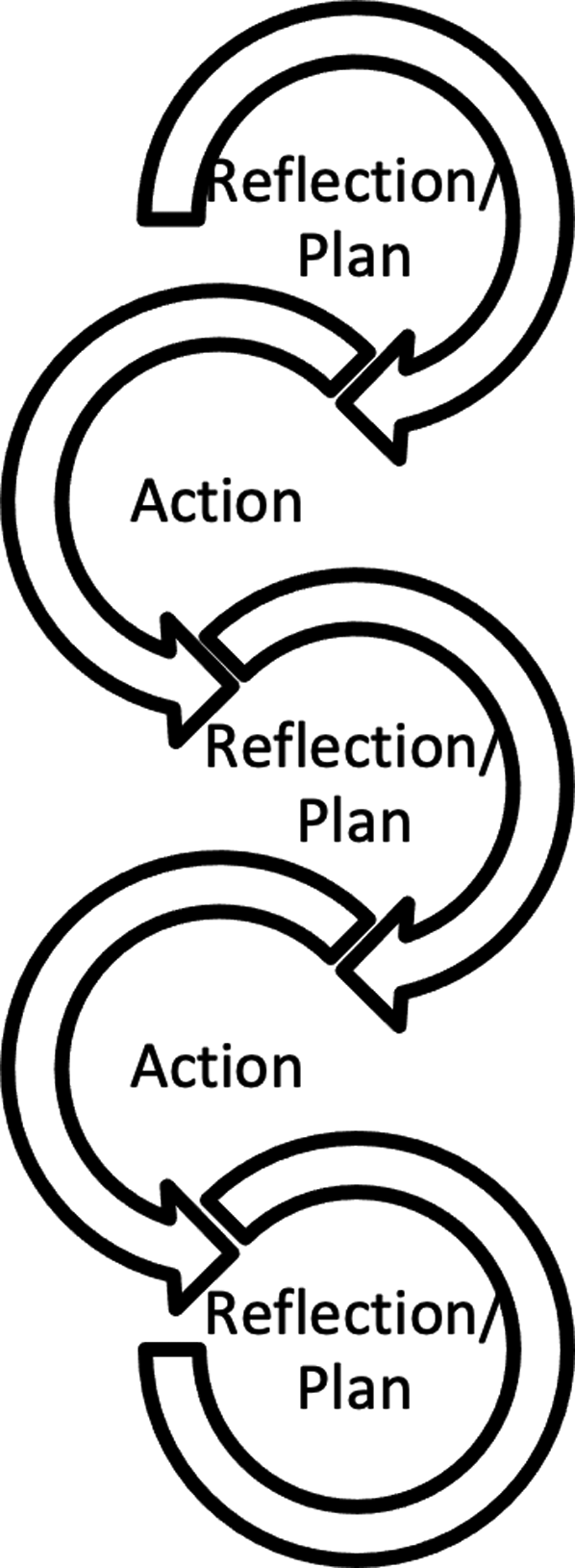
Cycles of change within action research.
This IPP inquiry was carried out in an area of low socio-economic status in the Republic of Ireland (ROI). The national census data at the time indicated that most households in the area lived in local authority housing (52%) and consisted of lone parent families (60%), with unemployment rates ranging from 26% (women) to 37% (men) (Central Statistics Office, 2012). There are 11 mainstream primary schools in the area.
All 11 primary schools were invited to participate. The first school that responded positively to the invitation was selected as the location of the research inquiry. While all teaching staff was eligible to participate, three teachers were selected by the principal to be involved. Therefore, four co-researchers participated: three primary school teachers and one SLT (first author). While this ratio of one SLT working with a small group of teachers reflects typical collaborative working practices in a school setting (Ebbels et al., 2019), we recognise this may have led to imbalances in the contributions from each discipline and a potential for co-researchers to construe the inquiry as an expert-led model whereby education staff deliver interventions following training and support from an SLT (e.g. Fricke et al., 2017; McCartney et al., 2011). However, this potential misconstruing was counterbalanced by weekly collaborative meetings as described below.
All three teachers had eight years’ post-qualification teaching experience. The SLT had 12 years’ post-qualification experience working with children with communication difficulties. All co-researchers worked in the same community where the study took place for comparable amounts of time when the inquiry commenced (i.e. approximately 7 years), and had similar amounts of contact with pupils and families who lived in the community. The first author (SLT) had working relationships with the three participating teachers prior to the study, through delivery of professional development workshops on the topic of oral language to the school staff over a two-year period. McArdle (2008) observed that all action research inquiries require the co-researchers to ‘get in’, ‘get on’ and ‘get out’. Established working relationships in this study supported co-researchers’ robust discussions and reflections in the early phases of design, facilitated co-researchers to read each other's responses to plans and make necessary adaptations, and assisted the group to be open and honest with one another from the outset.
Procedure
Data for this inquiry were gathered primarily through weekly interprofessional meetings of the four co-researchers, after school hours, over an entire primary school year (i.e. September–June). In line with an action research inquiry (Figure 2), there was no pre-prescribed script or set structure for each weekly meeting. Instead, the interprofessional group meetings were woven into iterative cycles of individual and group reflection to define perceived issues, collaboratively plan and design potential solutions and reflect on action implemented (Bradbury, 2015). A summary of the key content, events and achievements of each action research cycle is shown in Figure 3 overleaf.
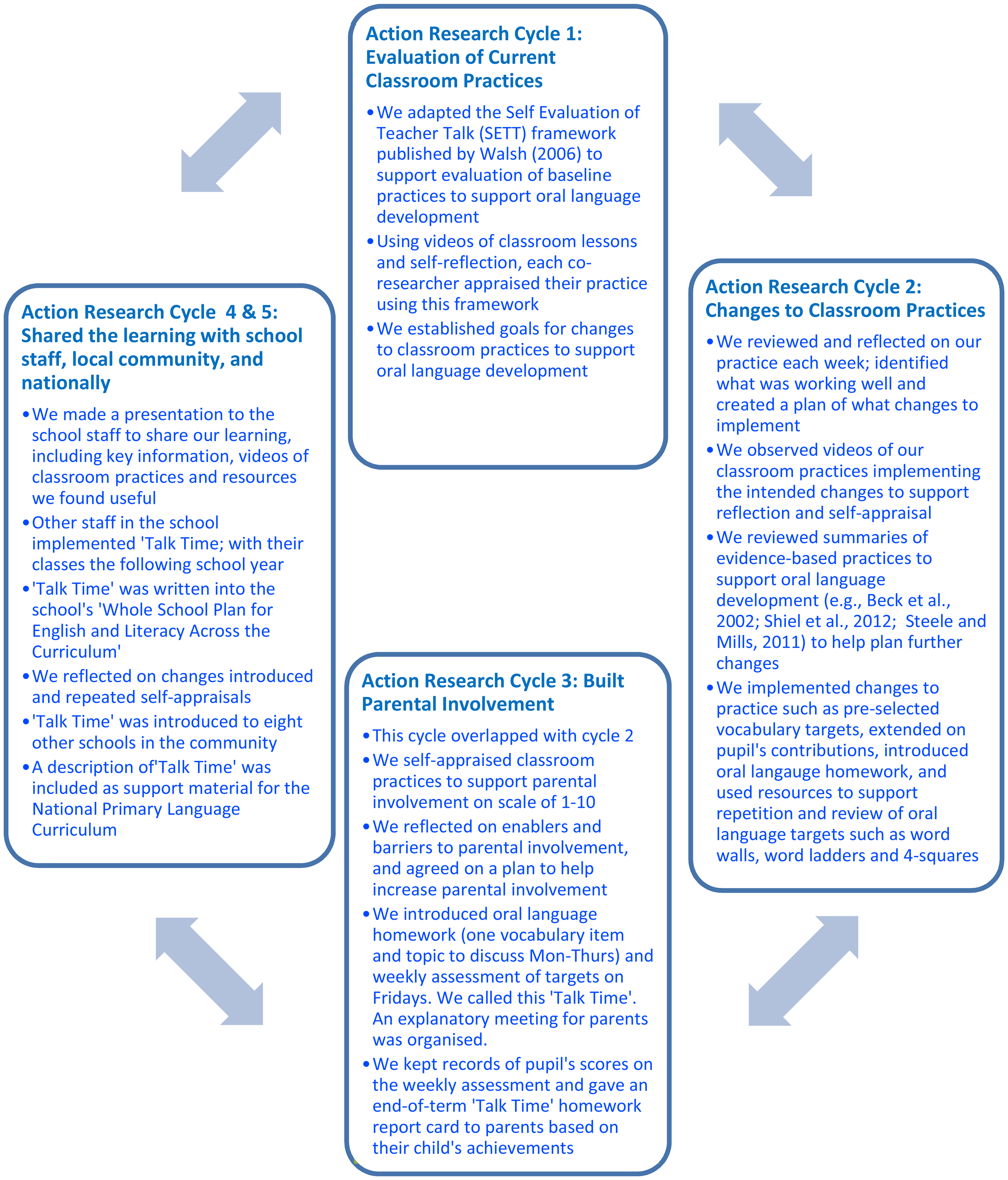
Summary of key content, events and achievements of each action research cycle.
Frequent topics of discussion centred on the teachers and SLT sharing their experiences of supporting language development within a classroom setting in the past, expressing opinions and proposing ideas for changing classroom practices to ensure effective language enrichment, and reflections on the new practices implemented, including barriers and enablers of change. In total, the co-researchers met 28 times over the school year and almost 14 h of audio recordings of these meetings were collected.
In cycle 1, a baseline of each co-researcher's classroom practices to support oral language development was collected through the completion of a self-reflective checklist, adapted from Walsh’s (2006) Self Evaluation of Teacher Talk (SETT) framework (Figure 4). Self-appraisal on the checklist was supported by each co-researcher watching a video of themselves implementing an oral language lesson in the classroom. Co-researchers set initial goals for change based on their self-appraisals on this checklist at the beginning of term 1. This process was repeated at the beginning of term 2 to set new goals, and at the end of term 2 to evaluate changes.
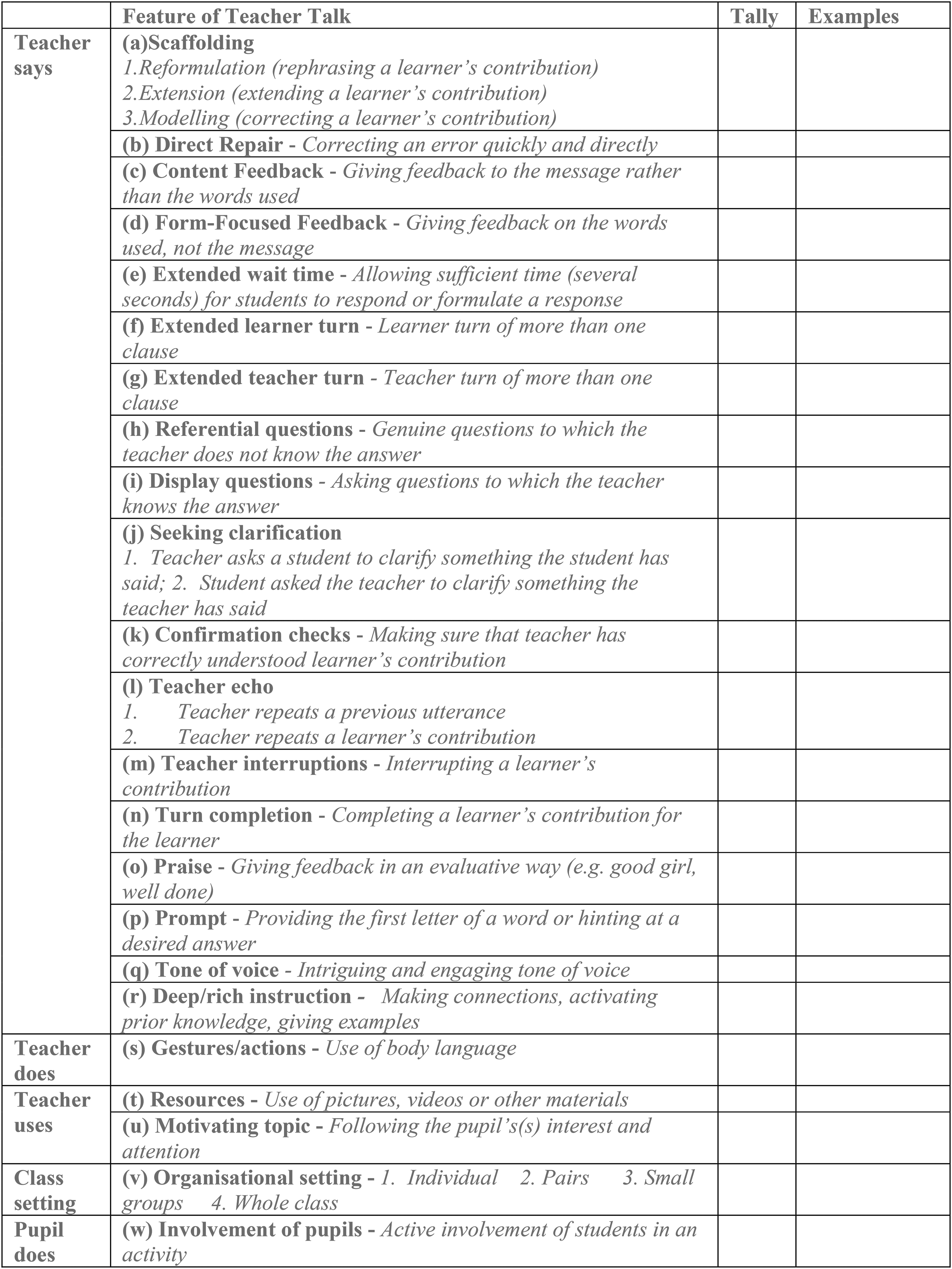
Classroom practices checklist (adapted from Walsh, 2006).
Furthermore, co-researchers engaged in numerous verbal reflective activities to support the iterative cycles of reflection, planning and action. For example, reflecting on what was working well, what factors were responsible for changes and what further action were necessary. At the end of the school year, each co-researcher also completed a written reflection piece with the following question/title: ‘What was it like for you?!: My Personal Reflections on Being Involved in this Shared Oral Language Project’.
Copious research notes were entered into a journal immediately after each meeting that took place. In addition, six interprofessional group meetings that spanned the action research cycles of the school year were transcribed verbatim. Classroom practices were also video recorded at various times during the school year to capture existing and new practices and evaluate revisions to practices supporting pupils’ language development. Other data collected included collaboratively designed checklists (Figure 4), templates for oral language homework (Figure 5), assessment results, and resources to support oral language instruction (Figure 6).
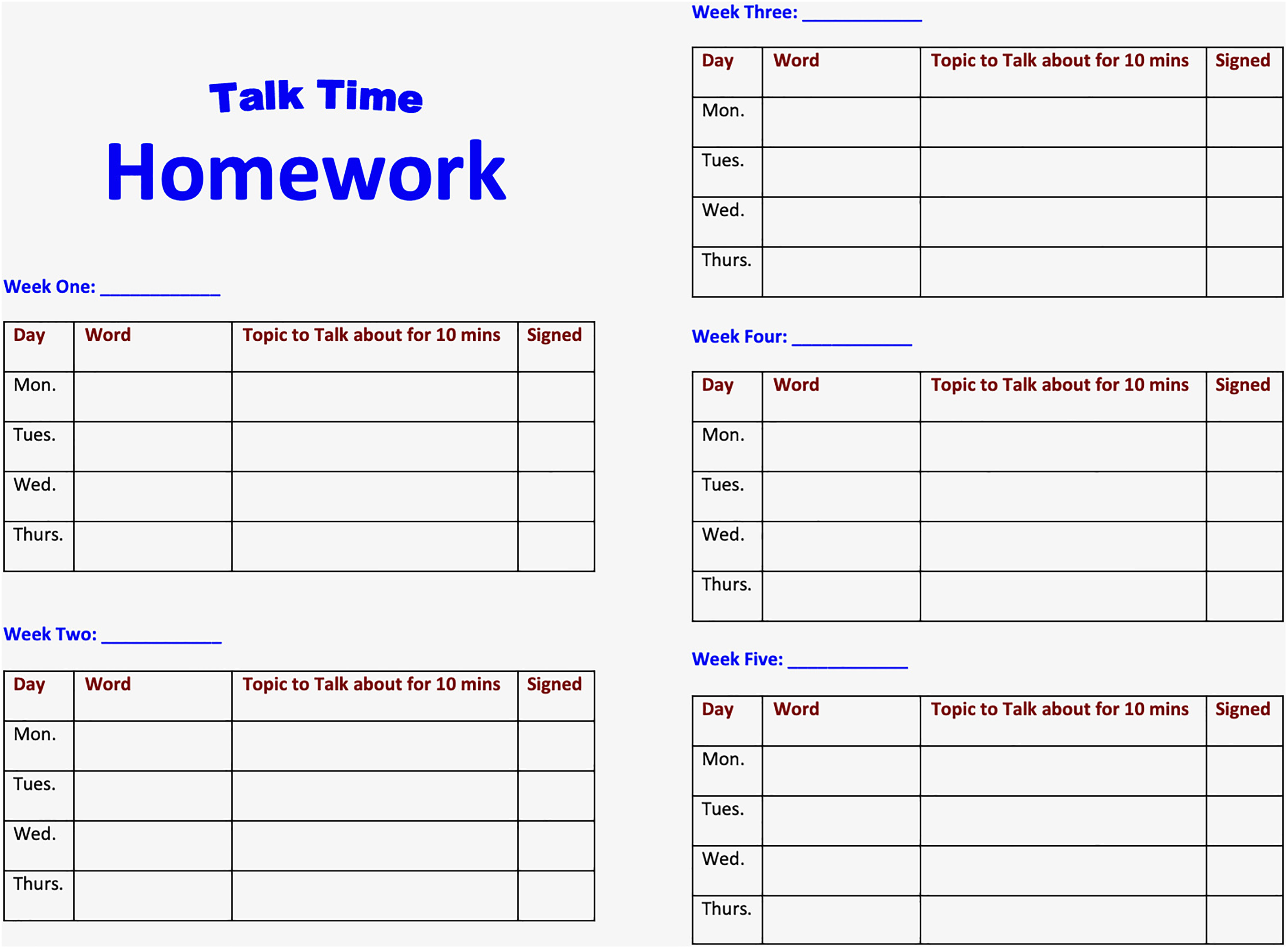
Example of ‘talk time’ resource for recording oral language homework.
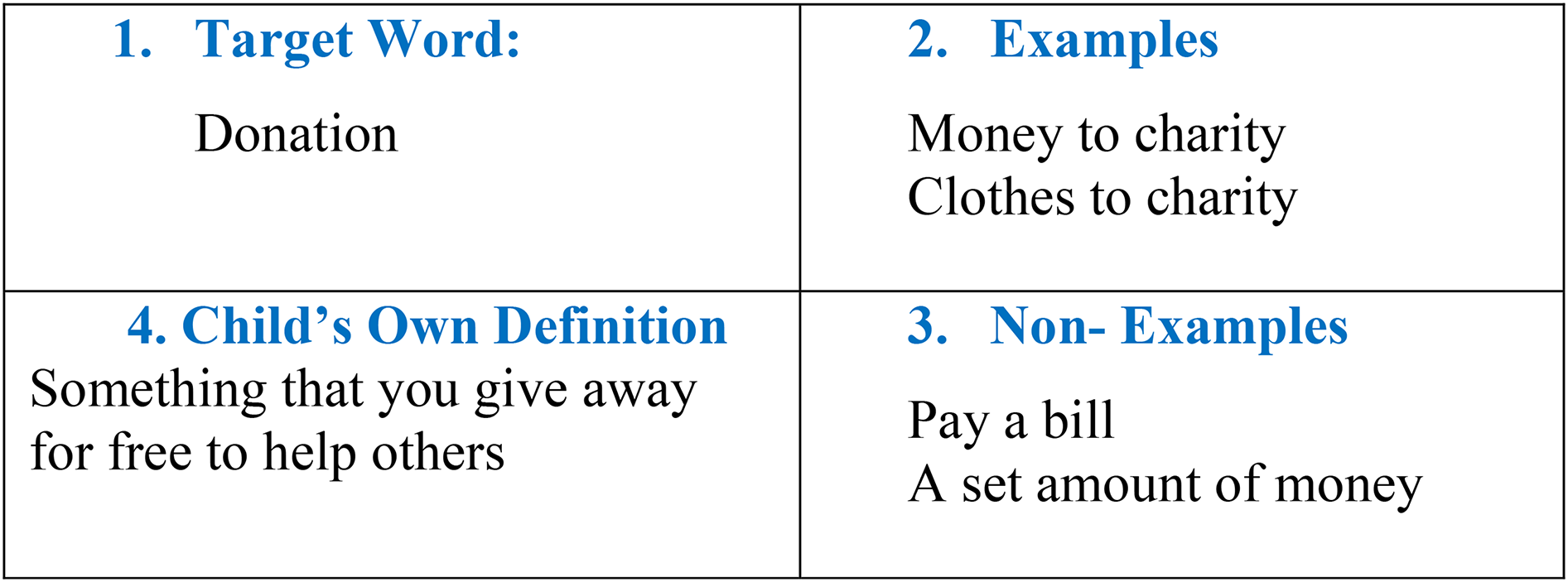
Example of resource to assist with evidence-based instruction (4-square template).
In all action research inquiries, there are two action research projects running in tandem, the core action research project and the thesis action research project (Zuber-Skerritt and Fletcher, 2007). In this inquiry, the core action research focused on changing classroom practices to support effective language enrichment through IPP between teachers and a SLT. Analysis of the core action research project included a written, chronological, factual account of what happened in each action research cycle that transpired and the decisions and events that evolved. Operating in parallel, the thesis action research project focused on the processes involved in supporting these changes, concentrating and reflecting on the experiences of IPP between the SLT and teacher co-researchers within the core study. Thematic analysis was applied to the transcribed data of the meetings over multiple phases to examine the processes underpinning IPP. Thematic analysis is ‘a method for identifying, analysing and reporting patterns (themes) within data’ (Braun and Clarke, 2006: 79). Each theme refers to an individual pattern of meaning, capturing something salient in the data in relation to the research inquiry (Braun and Clarke, 2006). Details of each phase of thematic analysis are summarised in Figure 7 and further detail can be found in Quigley (2018).
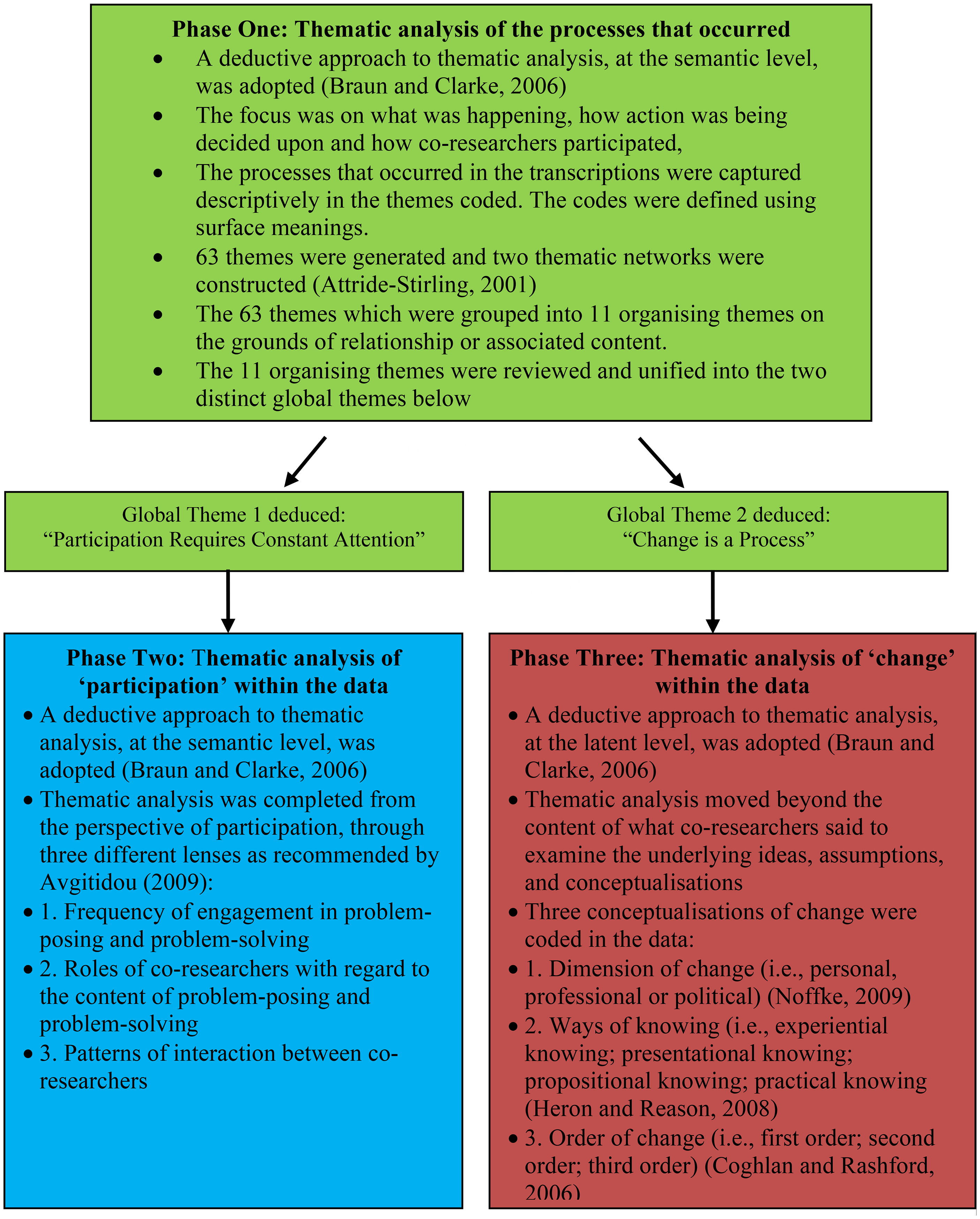
Summary of each phase of thematic analysis completed.
The current paper reports on the analyses from the core and thesis action research projects that explored IPP between SLTs and teachers through an epistemological perspective (i.e. analyses from the documented account of what happened and relevant phases of thematic analyses that were completed).
In one phase, one of thematic analysis, processes that occurred in the transcriptions of the interprofessional meetings were captured descriptively. The focus was on what was happening, how action was being decided upon, and how SLT and teacher co-researchers worked collaboratively. Transcripts were coded line by line and themes were defined using surface meanings at the semantic level, as described by Braun and Clarke (2006). At all times, themes were comprehensively analysed and refined to ensure they were ‘specific enough to be discrete’ and ‘broad enough to encapsulate a set of ideas contained in numerous text segments’ (Attride-Stirling, 2001: 392). Reliability of coding was ensured through independent coding of one-sixth (17%) of the transcriptions by a second researcher, who had no contact at any time with the participating teachers. Conflicts were resolved through discussion and consensus. For an example of coding in this phase, see Table 1.
Examples of coding interprofessional meetings regarding processes that occurred.

Findings were presented using thematic networks to help organise and structure identified themes, illustrating how relationships between themes were construed and how interpretations were gleaned from the data (Attride-Stirling, 2001). See Figures 9 and 10 in Supplemental Material.
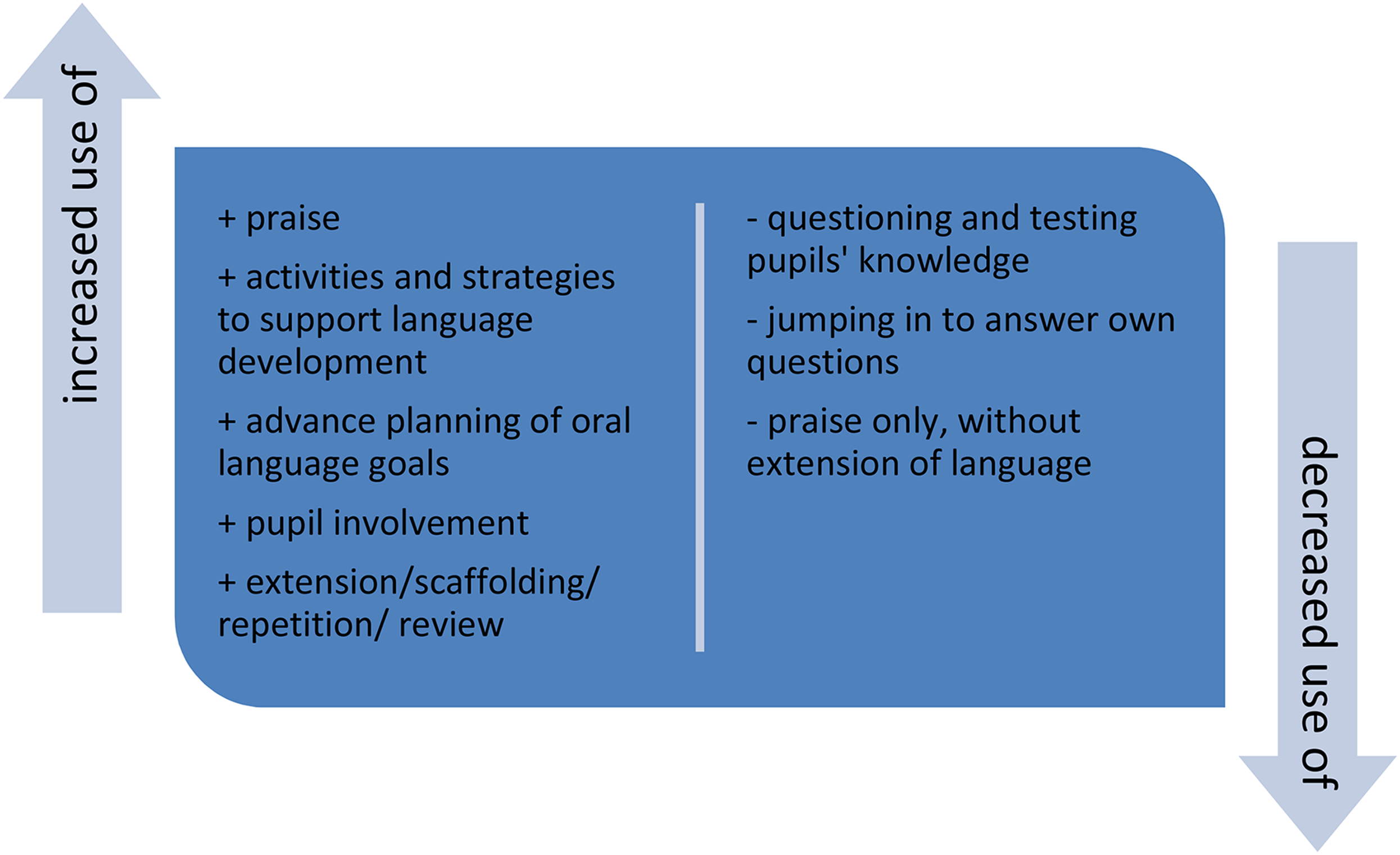
Summary of changes indicated on the classroom practices checklist.
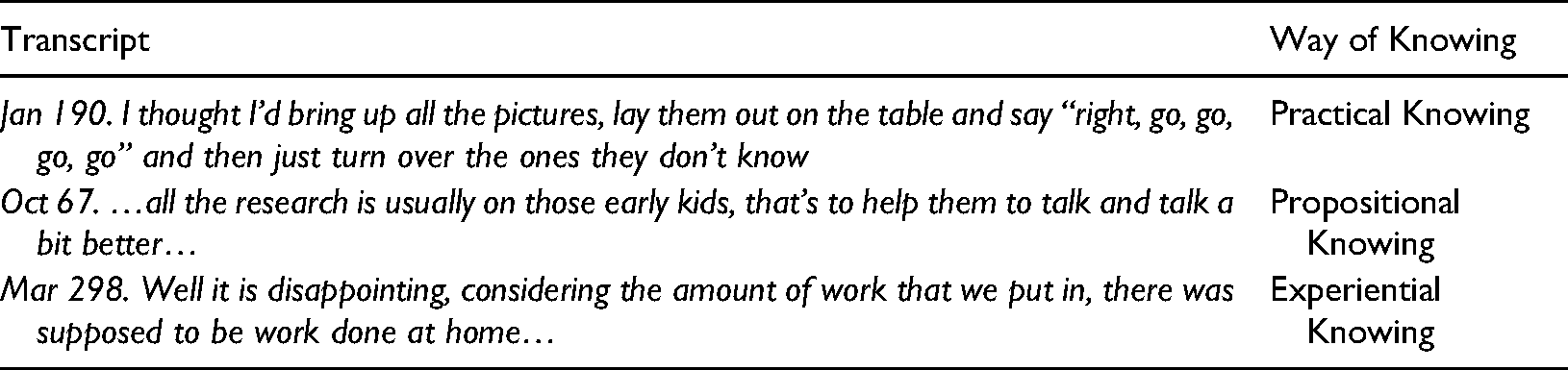
Phase three of thematic analysis enabled action discussed within the IPP context of the study to be examined more directly from an epistemological perspective. This thematic analysis was conducted at the latent level, as the analysis moved beyond the content of what co-researchers were saying to explore the underlying conceptualisations shaping the content of the data (Braun and Clarke, 2006). Hence, a thematic analysis was completed of epistemological factors underpinning and shaping the co-researchers’ reflections, discussions, plans, and reviews of change within the IPP context. To this end, evidence of instances of Heron and Reason’s (2008) four forms of knowing were identified and examined within the transcribed data (for an example, see Table 2).
Examples of coding action discussed in interprofessional meetings regarding way of knowing.
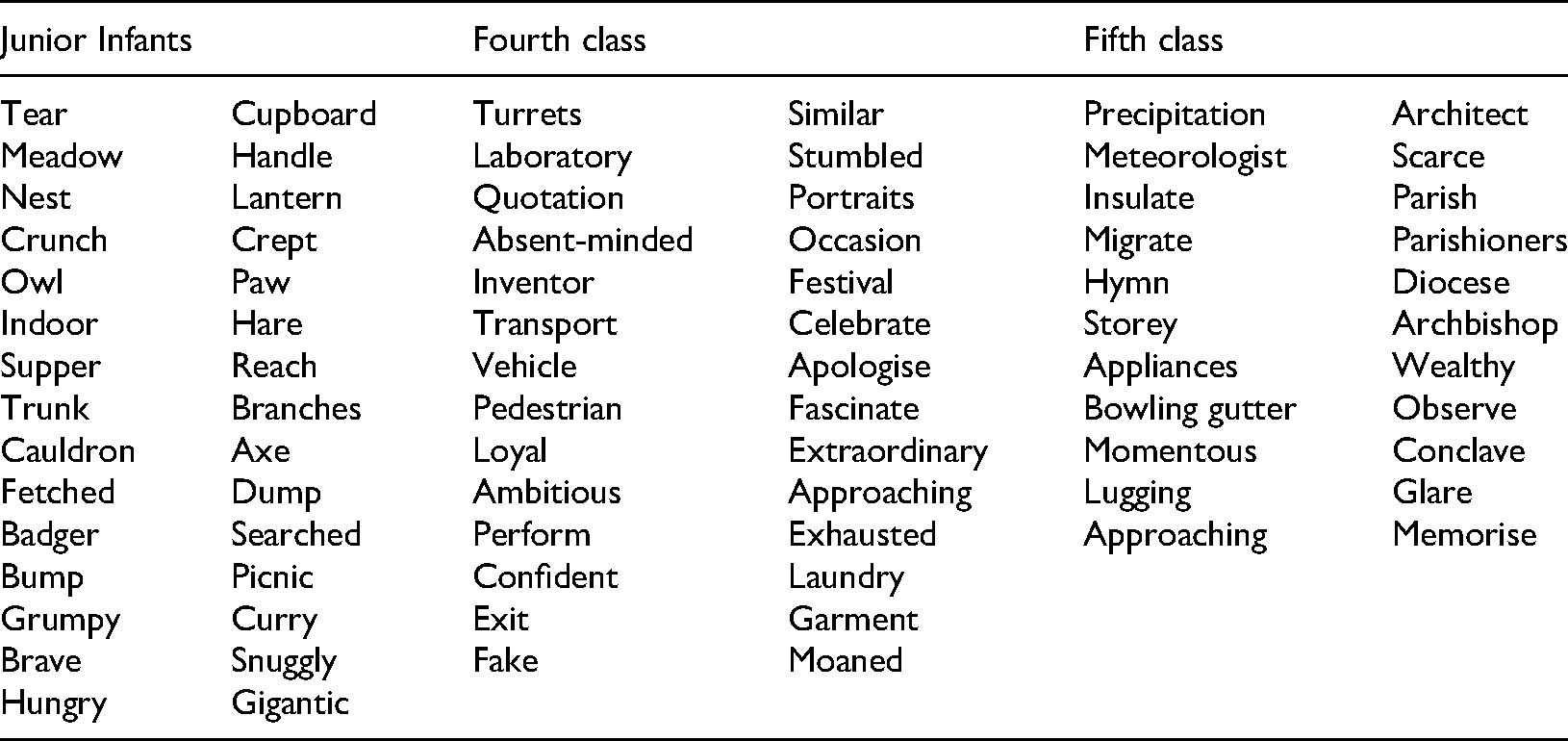
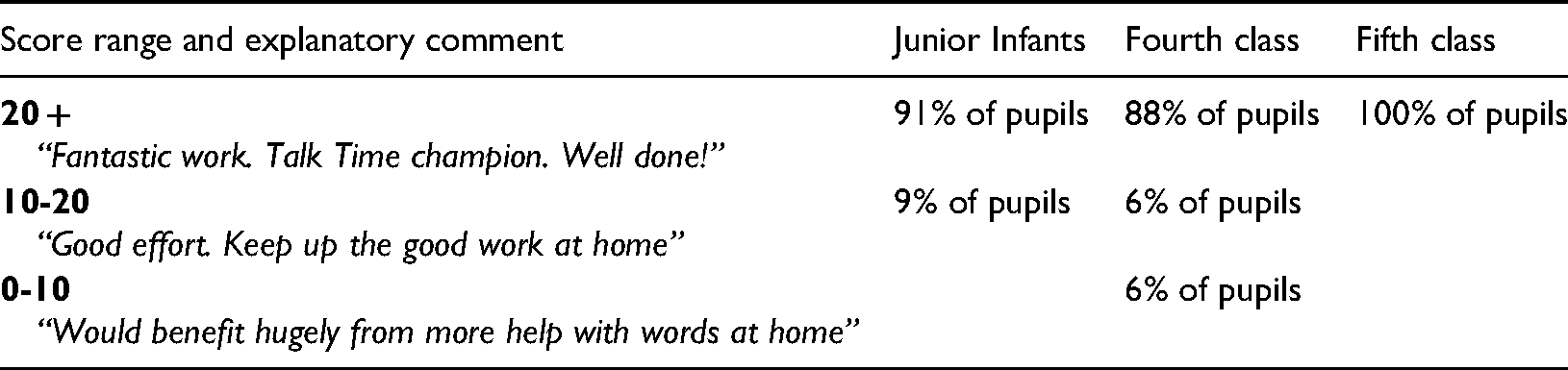
The aim of this action research inquiry was not to test effectiveness of language interventions introduced, or to compare pre-and post-measures of pupil outcomes, but to explore how classroom practices might be changed through IPP to support language enrichment. Nevertheless, vocabulary items taught during ‘Talk Time’ were assessed weekly by the participating teachers and scores indicate positive outcomes (Tables 3 and 4).
Vocabulary items taught in each class.
Vocabulary items taught in each class.
Assessment results of each class.
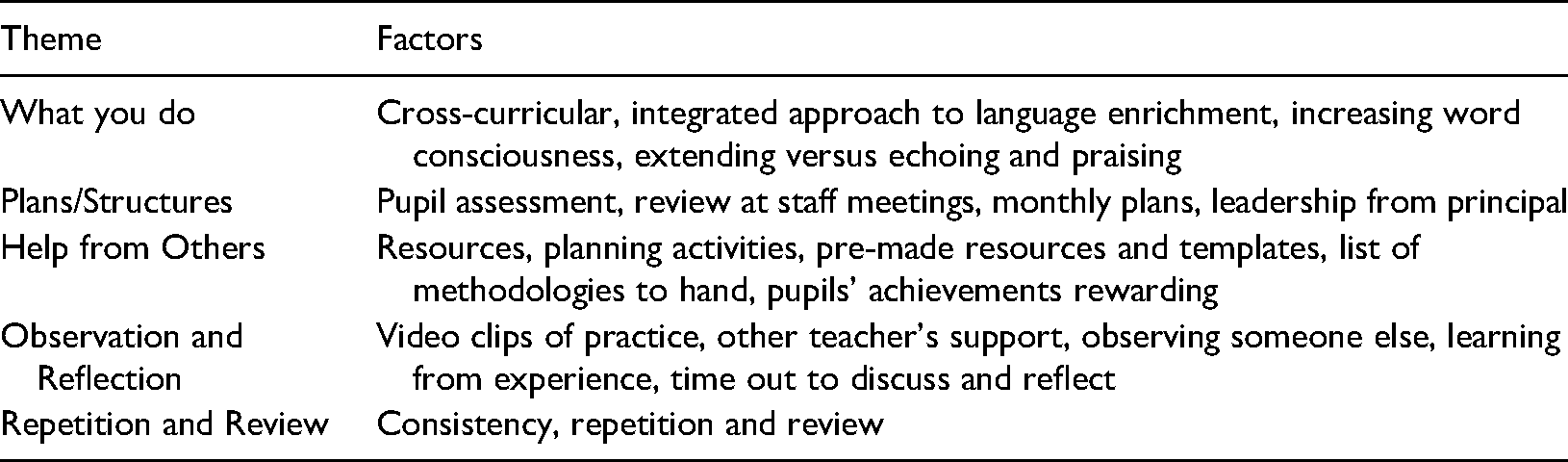
Comparisons of co-researchers’ self-appraisals on the Classroom Practices Checklist at the start and end of the school year, based on video examples and self-reflections, also indicated increases in the use of language enrichment strategies in the classroom (Figure 8). Co-researchers identified a number of factors that were deemed responsible for positive pupil outcomes and changes to classroom practices, which were categorised into five broad themes (Table 5).
Themes and factors responsible for positive pupil outcomes and changes to classroom practices.
The phases of thematic analysis, coupled with analyses of the core action research project, resulted in numerous insights from an epistemological perspective on how to realise effective IPP between teachers and SLTs (i.e. successful SLT–teacher collaboration). The analyses also provide key aspects for consideration in addressing potential challenges that can arise within IPP. The following four factors, rooted in an epistemological perspective, were generated from the analyses as central tenets of effective IPP between SLTs and teachers.
A participatory space, that is, a physical, confidential space that supports diverse epistemological perspectives to be aired, debated and blended over time underpins effective IPP. Co-researcher 4: One of the things I found beneficial …was discussing [different language enrichment methodologies]
Co-researcher 1: a chance to chat about it altogether, about what we’re going to do
One of the most frequently cited barriers to IPP between teachers and SLTs is competing demands and the lack of time or space for discussion, planning, and reviewing (Glover et al., 2015). The participatory space in this inquiry (i.e. weekly interprofessional meetings in a confidential school area that was separate from the classroom) provided recurrent, protected time away from the busy demands of daily school life. It was the foundations on which IPP was successfully built, paving the way for genuine power sharing, authentic amalgamation of expertise and creation of practical resources that were collaboratively designed. It helped to ensure working relationships were formed, information was exchanged, assumptions about practice were questioned, knowledge was socially constructed, plans were cooperatively devised, evaluations were shared and theories were collectively generated (Cornwall, 2008). This necessitated support from the respective SLT manager and school principal, alongside a range of facilitation skills to optimise the use of the space and ensure balance of contributions through power sharing.
Power sharing must be actively and purposefully facilitated within the participatory space for effective IPP
In this study there were numerous examples of power infiltrating discussions between co-researchers. This helped to advance some decisions over others and was deduced in the thematic analyses through themes such as ‘polite challenge of opinion’, ‘polite challenge to proposed action’ or ‘challenging proposed action’ (see Figures 9 and 10 in Supplemental Material). Nov 432. …that's what the research is saying HELPS them, their OWN definition, not us saying ‘look up the dictionary’, their own words, that's what they’re saying works [theme: polite challenge of opinion]
Mar 231.… that would be my worry that you’d have the four words they did the first week and they wouldn’t remember them and then you’re kind of like, the problem isn’t the teaching then, it's the retention [theme: challenging proposed action]
However, the thematic analysis of the data also pointed to the essential function of facilitation in democratically illuminating multiple perspectives within IPP and ensuring power was shared when ratifying changes or substantiating claims. The thematic analyses also demonstrated that facilitation does not refer to a single method. Instead it is a multitude of skills, tactics and methods to optimise genuine participation within IPP. For example, themes generated from the data included ‘asking for opinion’, ‘clarifying’, ‘paraphrasing’, ‘reassuring researcher’, ‘acknowledging negative opinions’ and ‘polite challenge of opinion’ (see Figures 9 and 10 in Supplemental Material). Sept 195. So, what do you think having now looked at the checklist? [theme: asking for opinion]
Moreover, the importance of relationship building as a facilitative skill surfaced repeatedly in this inquiry. This involved the teachers and SLT learning more about each other, nurturing informal relationships and maintaining open channels of communication in relation to expectations. Jan 1. One of the things that we did before the meeting last week was, we just kind of thought about, what did you think the outcome will be? [theme: setting the scene]
This explicit focus on building relationships, mutual respect and power sharing enabled value judgements about knowledges that are typically privileged (e.g. propositional knowing) and those that are not (e.g. experiential knowing, practical knowing, presentational knowing) to be challenged, debated and negotiated without repercussion. Numerous scholars have stressed that different forms of knowing are complimentary and therefore should be given the opportunity to interact and integrate with each other (Dollaghan, 2007; Heron and Reason, 2008; Schön, 1991; McIntyre, 2005). Foucault (1972) also asserts that diverse viewpoints should be interrogated and given the opportunity to emerge as potentially valid following critical consideration. To illustrate, purposefully facilitated power sharing ensured one co-researcher's suggestion was embraced and afforded the opportunity to be critically considered in the interests of IPP and ultimate student success. In the extract below, the participants evaluate the relative merits of items on a classroom practices checklist, coming down in favour of items they themselves had added based on personal reflections and individual competencies, and that they now considered more applicable and relevant than the items published by a respected researcher (in the extract below, ‘ticks’ denoted useful items). Sept 178. Well we started off with that one [Walsh’s (2006) framework]. Your man's book there, Steve Walsh… but we added all these ones, didn’t we? … [theme: teaching with explanation]
Sept 179. And that's where most of the ticks are, I hate to say [theme: asserting expertise]
This circulation and distribution of power nurtured IPP and enabled claims made to be respected, tentatively accepted and subsequently tested through applying the checklist to videos of classroom practices and comparing it with summaries of research evidence.
The status of practical knowing must be balanced with that of propositional knowing for effective IPP
In this inquiry, many changes implemented to classroom practices as a result of collaboration were attributed to developing or mastering the skills and competencies inherent in practical knowing, rather than empirical evidence from propositional knowing (e.g. see Figures 9 and 10 for themes generated from the data included ‘observing someone else’, ‘watching video clips’, ‘trying out different methods’,’ drawing on list of methodologies’ and ‘putting ideas into practice’). Of note, ease of practical implementation in the classroom was frequently valued above theoretical foundations when co-researchers were deciding on action in this study. For instance, in the extract below a co-researcher emphasises the need to avoid jargon (e.g. ‘teacher echo’, ‘extension’) when designing a presentation for the school staff. This advice was actively respected, accepted and implemented. May 268: If you go with words like that to a staff meeting then they’ll switch off…leave them out, don’t go there
May 269 ‘Add on’…does that sound, is everyone happy with that?
May 270. No, ‘add on’ to what the child says, yeah
This recommendation is reinforced by a co-researcher when describing an A4 handout with practical ideas for language enrichment that was collaboratively designed for the staff presentation. May 391. It's friendly looking [A4 handout], you’d want to pick it up and have a look at it as opposed to those bloody black and white things [research reports]
Therefore, by listening and respecting the teachers’ insider perspectives about how dense, text-heavy reports are typically received by their colleagues, we successfully avoided a situation where staff members may have potentially ‘switched off’ when listening to ways to support language enrichment. A simple translation of jargon to accessible language helped to ensure more educators in the school and wider community engaged successfully with the topic of supporting oral language development in the classroom and ultimately planned and delivered practices and activities to assist improved pupil outcomes (Figure 3; action research cycles 4 and 5).
The findings of the thematic analyses confirmed that practical knowing dominated the collaborative discussions within this study. Within the data, there were almost five times more instances coded as practical knowing than as propositional knowing, and almost three times more instances coded as practical knowing than as experiential knowing (i.e. 64% instances of practical knowing, 23% of experiential knowing and 13% of instances coded as propositional knowing). For example, theoretical assertions and established EBP to support vocabulary development (i.e. propositional knowing) such as the importance of increasing exposure to the target vocabulary, highlighting semantic relationships with other known words, demonstrating the wider application of the target vocabulary in a variety of different contexts, discrimination and generalisation tasks and scaffolding opportunities to practise using the target vocabulary (Coyne et al., 2007, Zipoli et al., 2011), were translated into classroom practices (i.e. practical knowing) through the use of visual organisers that incorporated those methods (e.g. 4-square, word ladder, Venn diagram, semantic feature analysis). May 88…like I know I changed. Remember at the start we were just trying to see if they knew a word and get them to say a word, whereas then we decided we were going to actually PICK the words from a book, or from something to focus it
The following extract illustrates how the co-researchers drew on their practical knowing for supporting repetition and retention of the vocabulary target ‘precipitation’. These suggestions were then given the opportunity to be implemented, tested, reviewed and compared with empirical evidence. Jan 383. Maybe every time it rains ‘oh look at the
Jan 384. You kind of get storybooks and you’d be like ‘oh look, precipitation’
Maximising the benefits of practical knowing, and translating propositional knowing into language that was accessible to practical knowing, may help to address frequently documented challenges of IPP related to fears of losing expertise, having territory invaded or worries about having to abandon established practices (Dunsmuir et al., 2006; Hartas, 2004).
Collaboratively designed, practical activities that integrate ways of knowing provide an anchor for effective IPP
A common mode of IPP between SLTs and teachers currently applied internationally often entails an educational meeting to share knowledge. The evidence to date suggests that this approach to IPP result in consistent, non-significant effects (Scott et al., 2012). Instead, this study suggests effective IPP is best achieved when anchored in activities that integrate ways of knowing and are collaboratively designed and implemented. That is, through creation of practical activities that are concrete and tangible and are designed in partnership, combining and integrating propositional and practical ways of knowing. Co-researcher 3: I’ve really enjoyed the classroom practice – putting ideas into practice and using the resources
Co-researcher 4: One of the things I found beneficial…was discussing and trying out the different methods involved when teaching target words
In this inquiry, assertions of empirical evidence were transformed into something doable – propositional knowing was amalgamated with practical knowing to create collaboratively agreed classroom practices. For example, each discipline in this inquiry contributed to an adaptation of a published classroom checklist (Walsh, 2006) to identify practices that support language enrichment in the classroom (Figure 4). Teacher and SLT expertise were also amalgamated with empirical evidence on what constitutes effective language enrichment and translated into a format aligned with customary and preferred teaching methods (e.g. word walls, daily homework (Figure 5) or worksheets designed to translate empirical evidence about rich vocabulary instruction into a practical student learning activity (Figure 6)). Co-researcher 2: Like even the word wall up there is handy for YOU….just for you to use it in your own everyday….when you see it you say, ‘oh yeah, I’m going to put that in there now’
Dedicated oral language classroom instruction and homework activities were co-designed and named ‘Talk Time’. By blending knowledge from each profession, numerous practical suggestions that integrated more seamlessly into the classroom environment were generated, as they aligned more to established and familiar methods. For instance, ‘Talk Time’ incorporated visual organiser templates and worksheets that focused on a language learning objective, provision of homework, and assessment of pupils’ learning through a weekly oral language test May 127: …using resources such as the ‘4 Square’[
Figure 6
]… you didn’t have to sit down at a computer, you didn’t have to come up with it, like I literally got a pen and broke it in 4, you know, it's doable…
Jan 143: And then (name of pupil) said to me this evening “can I do one of these for ‘meteorologist’ when I go home?”, and I looked at it, what was it? It was the 4 square… So that's kind of cool that she was thinking of using that herself then.
Therefore, through assimilating SLT and teacher knowledge, well established and familiar teaching practices were grounded in established EBP to support language development, such as highlighting semantic relationships with other known words (Zipoli et al., 2011). Following a peer review process, ‘Talk Time’ was subsequently accepted as part of a national toolkit for the Primary Language Curriculum (Quigley, 2020), thus endorsing the applicability of collaboratively designed practical activities.
Discussion
It has been demonstrated that enhanced IPP can lead to increased professional knowledge, improved practices, and ultimately better outcomes for school-aged children with communication disorders (Glover et al., 2015; Hartas, 2004; Snow and Powell, 2011; Wright et al., 2008). The findings of this study provide concrete direction on enhancing successful IPP between SLTs and teachers to support the objectives articulated in national policies and guidelines for increased collaboration in day-to-day classroom practice. The implication of each finding is rooted in an epistemological perspective of IPP.
First, dedicating time and protecting participatory space for IPP is fundamental. In this study, the protected time and space provided the teachers and SLT with regular opportunities and support to assimilate their perspectives and ways of knowing, in a place where it was safe to reflect, create and innovate (Wade, 2004). Hence, appropriate organisational, technological and instrumental infrastructures for IPP, particularly time and space, are required to facilitate the knowledge exchange and epistemological assimilation necessary for IPP (Grimshaw et al., 2012). For many practitioners, this request for time and space will require negotiation with management, generation of consensus of the foundations required for IPP, re-alignment of timetables and adjustment of indicators of productivity and effectiveness from quantity to quality indicators. In essence, the support of management for such dedicated space and time implies a valuing of IPP within an organisation beyond the level of the individuals involved.
Second, explicit and dynamic facilitation is required to achieve epistemological common ground and power-sharing within IPP. Facilitation can help ensure open inquiry, honest sharing of different opinions, encouragement of discussion, and invitations to debate. For example, openly addressing colleagues’ fears around status, losing expertise or having their professional decisions interrogated (Cameron, 2011; Wright et al., 2008). McArdle (2008), highlights the important role of facilitation within a participatory endeavour in ‘getting in, getting on, getting out’. She describes facilitation as working energies, reading participants’ responses, make adaptations, letting go of the reins and supporting independence – all power-sharing actions. MacKewn (2008) also has recommendations for facilitation that are relevant for IPP and steeped in power sharing, that is, for the polarity and paradox in facilitation to be valued, along with an appreciation of all the points in between. For example, facilitation involves appraising the need to follow with the need to lead, the need to listen with the need to tell, the need to nurture with the need to challenge, the need to provide structure with the need to provide flexibility, and/or the need to notice with the need to ignore. It may prove useful to draw on established tools and methodologies that encompass high quality facilitative skills and strategies in a participatory space, such as inquiry circles, case analyses, World Café, focused conversations, mind mapping or consensus tasks (Heft, 2014; Roulstone, 2001). It may also be beneficial for practitioners to draw on seminal theories of power that suggest how the circulation and balance of power may be maximised (e.g. Foucault, 2000; Freire, 1972; Lukes, 2005). For example, Lukes’ (2005) faces of power provides a useful analogy to examine how power may be exercised within IPP and address how it may be shared: ‘public face’ (i.e. power to make decisions), ‘hidden face’ (i.e. preventing certain topics reaching the agenda) and ‘insidious face’ (i.e. shaping the beliefs and values considered acceptable).
Third, the status of practical knowing needs to be balanced with that of propositional knowing within IPP to enable each discipline's distinct ways of knowing to be assimilated and epistemological common ground to be achieved. Instead of routines where each profession takes turns to share their respective expertise with little follow-through from their audience (Scott et al., 2012), the findings recommend amalgamating ways of knowing in routine IPP encounters. This will require blending theories and empirical assertions (propositional knowing) with skills, knacks and competencies (practical knowing) from each discipline (Heron and Reason, 2008). This assertion echoes previous calls for clinical expertise, in the form of practical knowing, to be valued in the delivery of EBP (Dollaghan, 2007). The benefits of amalgamating distinct forms of knowing is also supported by epistemological research (Heron and Reason, 2008). The implication is that SLTs and teachers need to strive to reach epistemological common ground to prevent and overcome challenges of IPP outlined by WHO (2010), such as one discipline's knowledge being rejected or perceived as alien. Achieving this common ground may require greater awareness and self-reflection about what forms of knowing are currently contributing to collaborative practice, and whether there are any imbalances.
This is not to suggest that commonly subjugated practical knowing is resurrected and transformed into the new dominant form of knowledge (Hodges et al., 2014). This could lead to significant potential for bias, practices becoming idiosyncratic, or practices becoming restricted to what professionals find plausible, practices that may not be as effective as those that have been robustly evaluated (Justice, 2010; Kamhi, 2011). However, Dollaghan (2007) champions the value of clinical expertise, practitioners’ knowledge, skills and judgement, all of which are needed to effectively apply theory to practice and fine-tune interventions to meet the specific needs and circumstances of individuals and contexts (Schön, 1991). Therefore, the recommendation is that the practical knowing of each discipline is given the opportunity to compete with other forms of knowing and afforded equal critical consideration to be considered valid for IPP (Foucault, 2000).
Fourth, anchoring IPP around activities that integrate ways of knowing through collaborative design and implementation creates a neutral space, within which different ways of knowing can be shared and valued. Others have also reported that strategies to translate research to practice are more successful when they are tailored to the priorities and preferences of the users and when application is to the fore when sharing knowledge (La Rocca et al., 2012). In the same way that reading and writing classroom instruction has particular compendiums of accepted activities that support the development of pupils’ literacy skills, tangible and accessible activities to promote and support the necessary skills to assist pupils’ communication development may be useful for IPP between SLTs and teachers. The importance of grounding the collaboratively designed activities in the processes outlined above is paramount, that is, ensuring time and space, dynamic facilitation, power sharing and balance of propositional knowing with practical knowing.
Finally, once effective IPP is established, the benefits for school-aged children with communication disorders are more likely to be realised (Wright et al., 2008). Therefore, the former four foundational steps, rooted in epistemology, can help pave the way for success.
Limitations
There are a number of limitations of this study that must be considered in evaluating the findings. The single setting and the small number of co-researchers involved limit the extent to which the findings and the propositions can be generalised. However, Greenwood (2015) argues that important learning often stems from unique and specific experiences, and that the results of an action research inquiry have a higher likelihood of being generalised because the findings are founded on the optimum amalgamation of research knowledge and local knowledge. A further potential limitation is a risk of bias due to the first author's positionality as co-researcher in this inquiry (Rowe, 2014). In addition, the thematic analysis applied to the data drew heavily on what was explicit in the data and did not capture every nuance of the context or every subtle activity or process in which the data were couched. To address potential bias and limitations of the thematic analyses, findings were triangulated with other sources of data to add rigour, such as copious field notes, video recordings of classroom practices and the analysis of the story of the core action research study. An added limitation may have been that the scope of the inquiry was limited to the perspectives of the co-researchers and did not capture possible valuable insights of IPP from pupils, parents or the school principal. Moreover, the effectiveness of the language enrichment strategies and activities introduced was not robustly and objectively measured. Instead, their impact was evaluated through informal measures (i.e. weekly and end-of-term assessments) and co-researchers’ feedback and reflection. While the use of proximal measures of language outcomes is a common practice in efficacy studies (Coyne et al., 2007; Zipoli et al., 2011), comprehensive standardised outcome measures would have been informative and helped to substantiate co-researchers’ perspectives. However, the aim of this inquiry was not to test effectiveness of language interventions, but rather to explore how changes could be implemented in classroom settings through effective IPP.
Implications and recommendations
This study sets out many implications for IPP between SLTs and teachers with concrete suggestions on how to translate policy objectives into practice through adopting an epistemological perspective of IPP. For example, we stress the importance of assimilating each discipline's ways of knowing within IPP through creating participatory spaces that are afforded the necessary time and facilitation to enable genuine sharing of power, ideas, ways of knowing, and perspectives. We acknowledge that this may require challenges related to infrastructures, motivation, time, and support from management to be surmounted. Also, we propose that IPP may benefit from balancing the focus between propositional knowing (e.g. facts, theories, know-what) and practical knowing (e.g. skills, competencies, know-how) though the creation of collaboratively designed activities that are rooted in EBP. That is, we argue that the achievement of epistemological common ground is fundamental to successful IPP. The former recommendations strengthen the case for interprofessional education (IPE) at undergraduate level, whereby early exposure to other disciplines is secured, perspectives are widened, knowledge and skills are shared, understanding of roles is increased, stereotypes are reduced and intervention models that incorporate exchanging of ideas and blending of professional roles are promoted (WHO, 2010; Wilson et al., 2015). Likewise, IPE may help to address the documented knowledge gap between teachers and SLTs about how best to support language and literacy development in order to secure optimal child outcomes (McLean et al., 2021).
Supplemental Material
sj-docx-2-clt-10.1177_02656590211064544 - Supplemental material for Achieving effective interprofessional practice between speech and language therapists and teachers: An epistemological perspective
Supplemental material, sj-docx-2-clt-10.1177_02656590211064544 for Achieving effective interprofessional practice between speech and language therapists and teachers: An epistemological perspective by Duana Quigley and Martine Smith in Child Language Teaching and Therapy
Footnotes
Acknowledgements
The authors would like to thank the co-researchers, children and families who participated in this study.
Declaration of Conflicting Interests
The author(s) declared no potential conflicts of interest with respect to the research, authorship, and/or publication of this article.
Funding
The author(s) received no financial support for the research, authorship and/or publication of this article.

Supplemental Material
Supplemental material for this article is available online.
References
Supplementary Material
Please find the following supplemental material available below.
For Open Access articles published under a Creative Commons License, all supplemental material carries the same license as the article it is associated with.
For non-Open Access articles published, all supplemental material carries a non-exclusive license, and permission requests for re-use of supplemental material or any part of supplemental material shall be sent directly to the copyright owner as specified in the copyright notice associated with the article.
