




Abstract
Conflict between mothers and their children is normal but for some it can escalate to become hostile during adolescence and disrupt healthy social development. This study aimed to understand the prevalence of hostile child-parent conflict in adolescence (16–17 years), and identify associations with mother, child, and family factors during childhood (4–5 years). Participants were 3,021 mothers and their children (49% female) involved in the Longitudinal Study of Australian Children. Multivariate regression analysis demonstrated that interparental conflict, maternal hostility, consistency, as well as child reactivity, behavioural difficulties, and neurodevelopmental condition at age 4–5 years were positively associated with hostile child-parent conflict at age 16–17 years. These early childhood conditions may act as important initial inputs into the development of coercive child-parent cycles and conflict into late adolescence.
Keywords
Introduction
Conflict between parents and their children is normal and an expected part of family life (Branje, 2020; Montemayor, 1983). In most families, this involves low intensity confrontation, argument, or negotiation (Hill, 2013). Conflict is particularly likely as the young person develops autonomy into adolescence where the boundaries and expectations within the relationship are continually re-negotiated (Hadiwijaya et al., 2017). In well-regulated and well-adjusted family environments, conflict creates opportunity for adaptive changes to relationship dynamics (Adams & Laursen, 2007; Branje, 2018; Granic et al., 2003). However, in some cases, these interactions become hostile (e.g., involving substantial anger) and even violent (e.g., verbal or physical abuse; Granic & Patterson, 2006; Patterson et al., 1984) and can transform conflict into an overtly negative experience which generates substantial shame and guilt for those involved (Bobic, 2002; Williams et al., 2017). Child-parent conflict creates strain on the developmentally important child-parent relationship (Agnew & Huguley, 1989; Granic & Patterson, 2006; Johnson & Giordano, 2013; Paulson et al., 1990), which is key to a young person’s future functioning (Ranson & Urichuk, 2008).
Hostile child-parent conflict can be common in families. Up to 1 in 5 Australian families may experience such conflict (Fitz-Gibbon et al., 2022), which primarily implicates mothers (likely because, despite shifts towards more gender-balanced caregiving roles, women remain the primary caregivers in most Australian families; Department of the Prime Minister and Cabinet, 2024). Despite being prevalent and consequential, hostile conflict between parents and adolescents (compared to operationalisation as general disagreement or degree of negative affect) has only been measured in approximately 3.7% of child-parent conflict studies to date (Marshall et al., 2023). Understanding and interrupting the processes that lead to hostile child-parent conflict is important for protecting healthy development during a critical developmental period.
Developmental-ecological models (i.e., theories which represent the interaction between individuals and their environmental contexts) would suggest that child-parent conflict emerges via dynamic and reciprocal interactions between the individual(s) and their various ecological systems (e.g., micro-, meso-, and macro-systems; Bronfenbrenner, 2000). Within the microsystem, the family system is highly influential, where both intrapersonal factors at the individual child and parent level (such as mental health), as well as interpersonal factors (such as parenting behaviours), can all contribute to conflict. For example, a family members mood can spread through the system and impact on others mood (Chi et al., 2019), creating tension and conflict between family members. According to family systems theory, the family unit can also be a complex system with multiple sub-systems (Bowen, 1993), where the interactions within one sub-systems (e.g., between parents) can impact or ‘spill over’ into other sub-systems (e.g., the child-parent dyad; Martin et al., 2017; Stroud et al., 2011). For example, conflict between parents can generate conflict between parents and their children (Sherrill et al., 2017). The family system operates within a ‘chronosystem’ (i.e., the influence of time; Bronfenbrenner & Morris, 2007), whereby earlier interactions between family members shape the nature of later interactions. Overall, in line with developmental ecological and family systems theory, individual and interpersonal factors within the family in childhood could increase or decrease the risk for hostile child-parent conflict in adolescence.
A number of individual child factors may make hostile conflict with parents more likely during adolescence. For example, young people with less ability to regulate emotions (Cano-Lozano et al., 2020), or who have conduct problems (Calvete et al., 2011), substance use problems (Ruiz-Fernández et al., 2021), or mental health problems like depression (Calvete et al., 2011) are more likely to be hostile toward their parents. Some nascent studies indicate that neurodevelopmental conditions may also be implicated in child-parent conflict. Autism spectrum disorder (ASD) and attention deficit hyperactivity disorder (ADHD) may be common amongst young people who use aggression against parents (Harries et al., 2024; Holt, 2023). Indeed, externalising behaviours such as aggression are a prominent reason why caregivers of young people with ASD seek professional help (Locke et al., 2020). The presence of comorbid ADHD can intensify symptoms of ASD, particularly oppositional behaviours such as tantrums (Goldin et al., 2013; van der Meer et al., 2012), potentially leading to hostile conflict with parents. Additionally, sensory differences (such as avoiding or seeking) are also associated with challenging caregiving interactions that can be stressful and sometimes hostile (Griffin et al., 2022).
Maternal factors also contribute to the risk of hostile child-parent conflict. Mothers who experience stress, depression, and anxiety, as well as helplessness in their parenting role, are more likely to experience aggression from their children in adolescence (Harries et al., 2024; Jiménez-Granado et al., 2023). Many of these individual factors influence conflict by reducing the quality of dyadic interactions. For example, parental stress and helplessness can have a negative effect on parenting behaviours, which may increase the risk of hostile child-parent conflict. Anxious parents may lack self-efficacy (Jiménez-Granado et al., 2023), while highly stressed mothers may use more punitive discipline techniques (Martorell & Bugental, 2006), such as corporal punishments (Harries et al., 2022), as well as use positive discipline techniques less, such as the use of reasoning (Rudnova & Kornienko, 2024). Such parental hostility is a robust predictor of child hostility in childhood and adolescence, particularly where the young person is temperamentally reactive or anxious (Leve et al., 2005). Indeed, individual child factors also feed into these interactions to form coercive processes that entrench and escalate hostile conflict over time (Granic & Patterson, 2006). Mothers with children who display more frequent challenging behaviour may feel helpless in their parenting role and become inconsistent in response to hostility or challenging behaviour from the young person (Granic & Patterson, 2006); sometimes power-assertive, but also withdrawing and permissive (Harries et al., 2024). This process then creates risk for later conflict as the strategy becomes viable for the young person throughout childhood (Patterson et al., 1984).
The influence of individual factors and family processes on child-parent conflict is well-supported across research and theory to date. However, the field lacks longitudinal consideration of the early conditions which lead to child-parent conflict in adolescence. Most studies are cross-sectional, or longitudinal but limited to either adolescence (e.g., Calvete et al., 2020; Shek, 2002) or childhood (e.g., Stover et al., 2016). However, exploring child-parent interactions and dynamics within an extended chronosystem (i.e., longitudinally over childhood and adolescence) has important implications for understanding hostile child-parent conflict. For example, the norms, boundaries, and interactions within the child-parent dyad evolve over time, flexing within the developmental stage of the young person and the natural adaptations to parenting across development (Oosterhouse et al., 2020). The transition from childhood to adolescence is a time of substantial re-organisation within the child-parent dyad (Paikoff & Brooks-Gunn, 1991), where the risk profile for conflict may also shift. Despite substantial re-organisation, the nature of conflict may still be informed by enduring problems within the dyad evident from childhood. For example, Kjeldsen et al. (2014) found that a pattern of persistent externalising behaviour from toddlerhood (age 18 months) into adolescence (age 14 years) could be predicted by different ecological factors (such as maternal depression, family stress, and child emotionality) when the child was 18 months old.
Longitudinal investigation that spans childhood and adolescence may provide novel insights into the most influential targets for early intervention and prevention of hostile child-parent conflict. However, studies on hostile child-parent conflict are scarce, particularly with longitudinal designs. The objective of the current study was to explore the long-term predictors of child-parent conflict. The first aim was to explore the prevalence of child-parent conflict in late adolescence (16–17yrs) in Australian mothers and their children. The second aim was to identify child, mother, and family factors in childhood (4–5 years) associated with child-parent conflict in late adolescence (16–17 years). We predicted that child-parent conflict in adolescence would be: (1) Positively associated with maternal psychological distress, hostility, stress and negatively associated with maternal self-efficacy, warmth, disciplinary consistency, and use of reasoning in childhood (2) Positively associated with child reactivity, neurodevelopmental condition, and emotional-behavioural difficulties in childhood (3) Positively associated with interparental conflict and negatively associated with coparenting support childhood
Method
Study design and sample
This study focuses on secondary data analysis drawn from the Growing Up In Australia: the Longitudinal Study of Australian Children (LSAC), a nationally representative study of children’s health, wellbeing and development initiated by the Australian Government Department of Social Services. Ethics approval for LSAC was granted by the Australian Institute of Family Studies Ethics Committee (Soloff et al., 2005). The study tracks two cohorts of children recruited (1) in the first year of life (baby [B] cohort) and (2) at age 4–5 years (kindergarten [K] cohort). Data collection began in 2004 with nine biennial follow-ups currently available. The sampling frame is detailed extensively elsewhere (Soloff et al., 2005). Briefly, approximately 10% of all Australian postcodes were selected (stratified by state of residence and urban versus rural status). Next, children proportional to population size were randomly selected from each postcode using the Medicare database (Australia’s universal health insurance scheme), which includes over 90% of all Australian infants. Data is collected through face-to-face and telephone interviews, self-completed questionnaires, and direct assessments. Study respondents include children, parents, carers and teachers. The current study used data reported by the study child’s mother. LSAC collects limited demographic data on other family members including siblings and grandparents, however there is only on ‘study child’ that is the sampling unit of interest. That is, only one child per family is the focus. Data collection began in 2004 and is collected every two years, with nine waves of data currently available.
The present study used data from the K-cohort when the children were 4–5 years (wave 1, 2002) and 16–17 (wave 7, 2016) as reported by the study child’s mother. Wave 7 was selected because this was the earliest timepoint where child-parent conflict was measured. At wave 1, the cohort consisted of 4,983 children (50% response rate). Single parents, families living in rental properties, and children from non-English speaking backgrounds were slightly underrepresented compared to the Australian population. Retention from wave 1 was excellent across each wave, including 62% at wave 7. Retention was lower for families of Aboriginal and Torres Strait Islander and non-English speaking backgrounds, parents with low education, and those living in rental properties (Sipthorp & Misson, 2007). Of the 4,983 children from the K-cohort at wave 1, data was available on the outcome of interest for 3,032 children/mothers. Cases were removed if the ‘mother’ was not the biological, adoptive or step-parent of the study child (n = 11). The final sample consisted of 3,021 mothers and their children.
Measures
Hostile child-parent conflict was measured by the Argumentative Relationship Scale (ARS; LSAC) at wave 7 (16–17 years). LSAC derived this scale based on the Quality of Coparental Interactions Scale (Ahrons, 1981). Mothers were asked two items: (a) “Is there anger or hostility between you and Study Child?” and (b) “Do you have arguments with Study Child that end up with pushing, hitting, kicking or shoving?”. Mothers responded on a 5-point scale (1 = Never to 5 = Always). Items were summed to provide a total score, where higher scores indicate a greater level of conflict in the relationship. To estimate the proportion of mothers reporting high anger/hostility and arguments with violence, we also analysed the endorsement of ‘often-always’ on each item. As an indicator of child violence towards parents, mothers were also asked if they have: (a) ever been, and (b) currently afraid of their child (dichotomise: Yes/No).
Measures of interest.
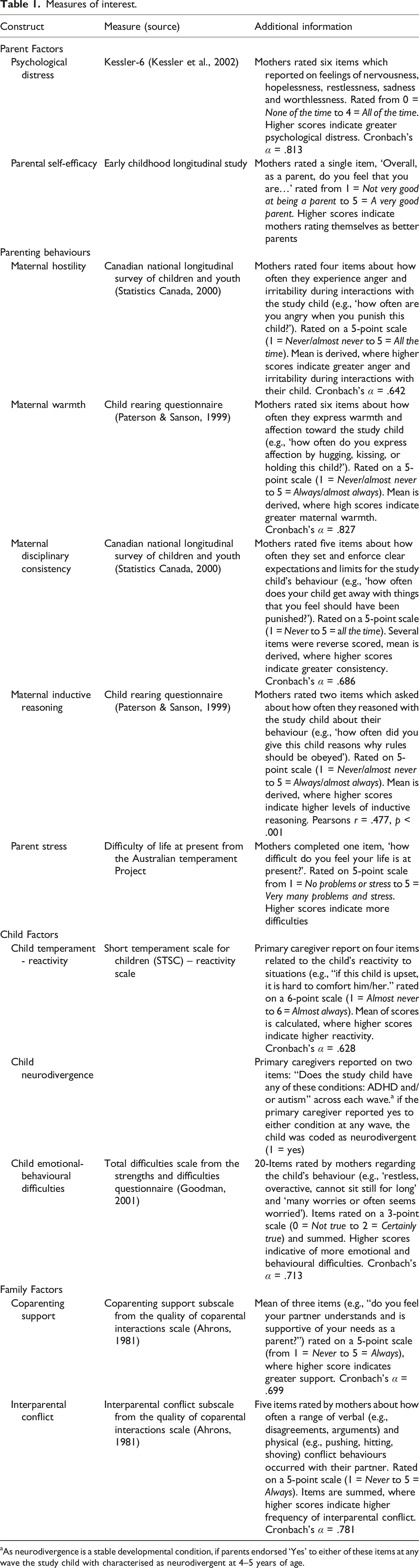
aAs neurodivergence is a stable developmental condition, if parents endorsed ‘Yes’ to either of these items at any wave the study child with characterised as neurodivergent at 4–5 years of age.
Demographics
A range of child, maternal and family characteristics were collected at each wave, including child and maternal: age (years), country of birth (dichotomous: Australia, other), main language spoken at home (dichotomous: English, other), Aboriginal and/or Torres Strait Islander status (dichotomous: yes, no); study child’s parents are partners (dichotomous: yes, no); maternal education (dichotomous: did not complete-/completed secondary school) and employment (dichotomous: not in-/in paid employment); number of children in the house (continuous); and family experience of financial pressure (dichotomous: yes/no). Socio-economic status was based on Socio-Economic Index for Areas – Index of Relative Socio-Economic Disadvantage (SEIFA; ABS, 2013). The SEIFA is based on population census data including income, educational attainment and employment. The SEIFA is based on a mean of 1000 (SD = 100) where lower scores are indicative of a local area being relatively disadvantaged (used as a continuous measure).
Data analysis strategy
Data were analysed in SPSS version 29 (IBM Corp, 2021). First, descriptive statistics for sample demographics and child-parent conflict were obtained. Next, to identify early childhood (wave 1; 4–5yrs) factors associated with later child-parent conflict (wave 7; 16–17yrs), bivariate and multivariate linear regression analyses were conducted. Variables selected for inclusion in the multivariate model had significant bivariate associations with child-parent conflict at p < .05 (all correlations are reported in the supplemental material). Demographic characteristics from wave 1 were also explored as above and included in the final multivariate model as covariates if they had significant bivariate associations with child-parent conflict at p < .05 (see supplemental table 1).
Missing data for child-parent conflict at 16–17 years was 41.7%. Little’s MCAR test was on the margins of significance, χ2 (2) = 5.99, p = .05. Given that the chi-square tests are over-powered in larger samples, we interpreted this result as not significant, and that the data were likely MCAR. Missing data for all descriptive and regression analyses were handled using multiple imputation. Fifty complete datasets were imputed using a multivariate normal model using all variables used in the analysis. Pooled estimates for all proportions and model parameter estimates were obtained using Rubin’s rule (Rubin, 1987). Multiple imputation in SPSS provides regression estimated for pooled data for unstandardised B, t and p-values. For the remaining estimates (R2, F-statistic), the range across the imputed datasets are reported.
Results
Sample characteristics
Demographic characteristics, complete data.
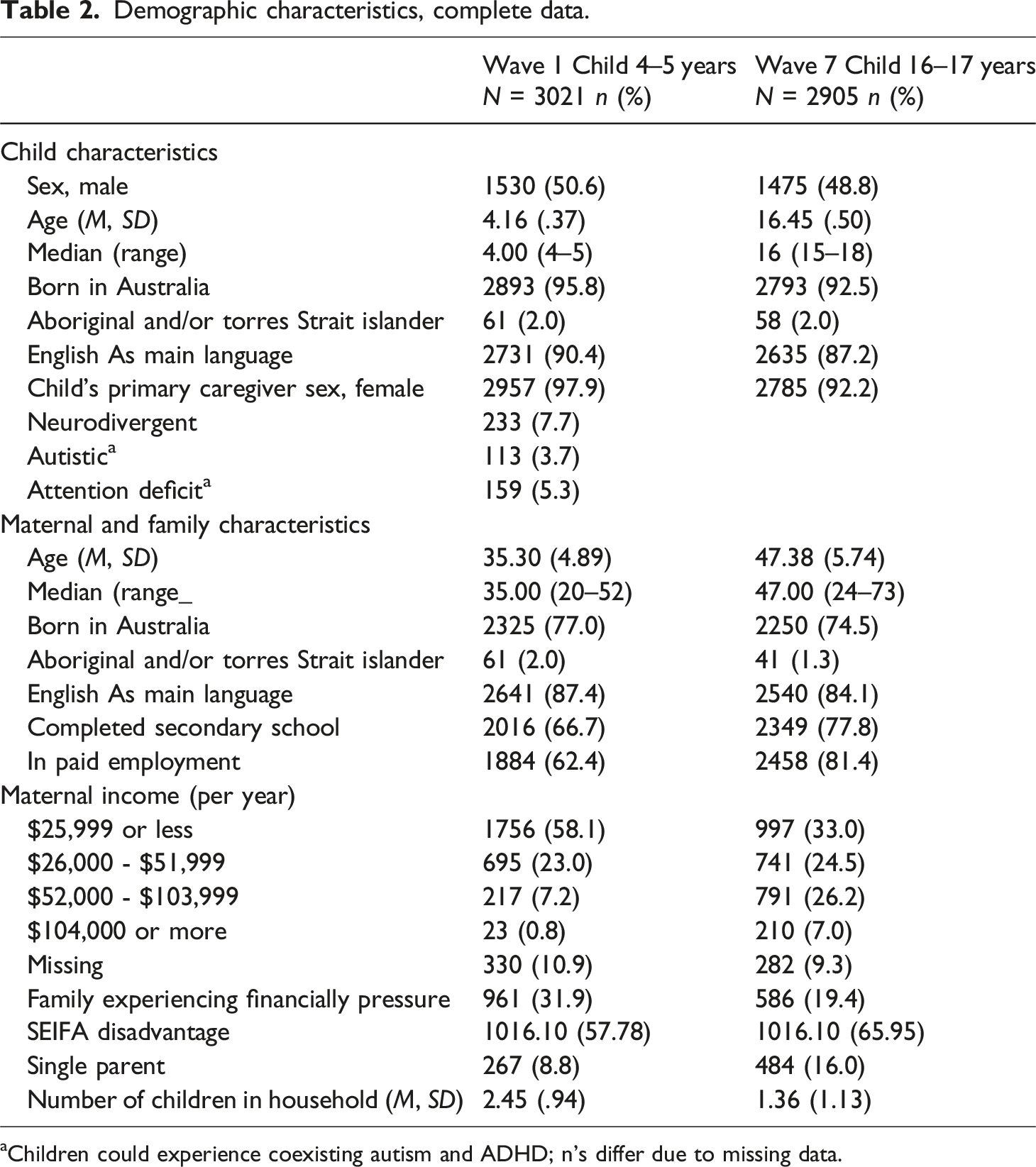
aChildren could experience coexisting autism and ADHD; n’s differ due to missing data.
Descriptive statistics
Descriptive statistics for all study variables – complete cases (n = 2905).
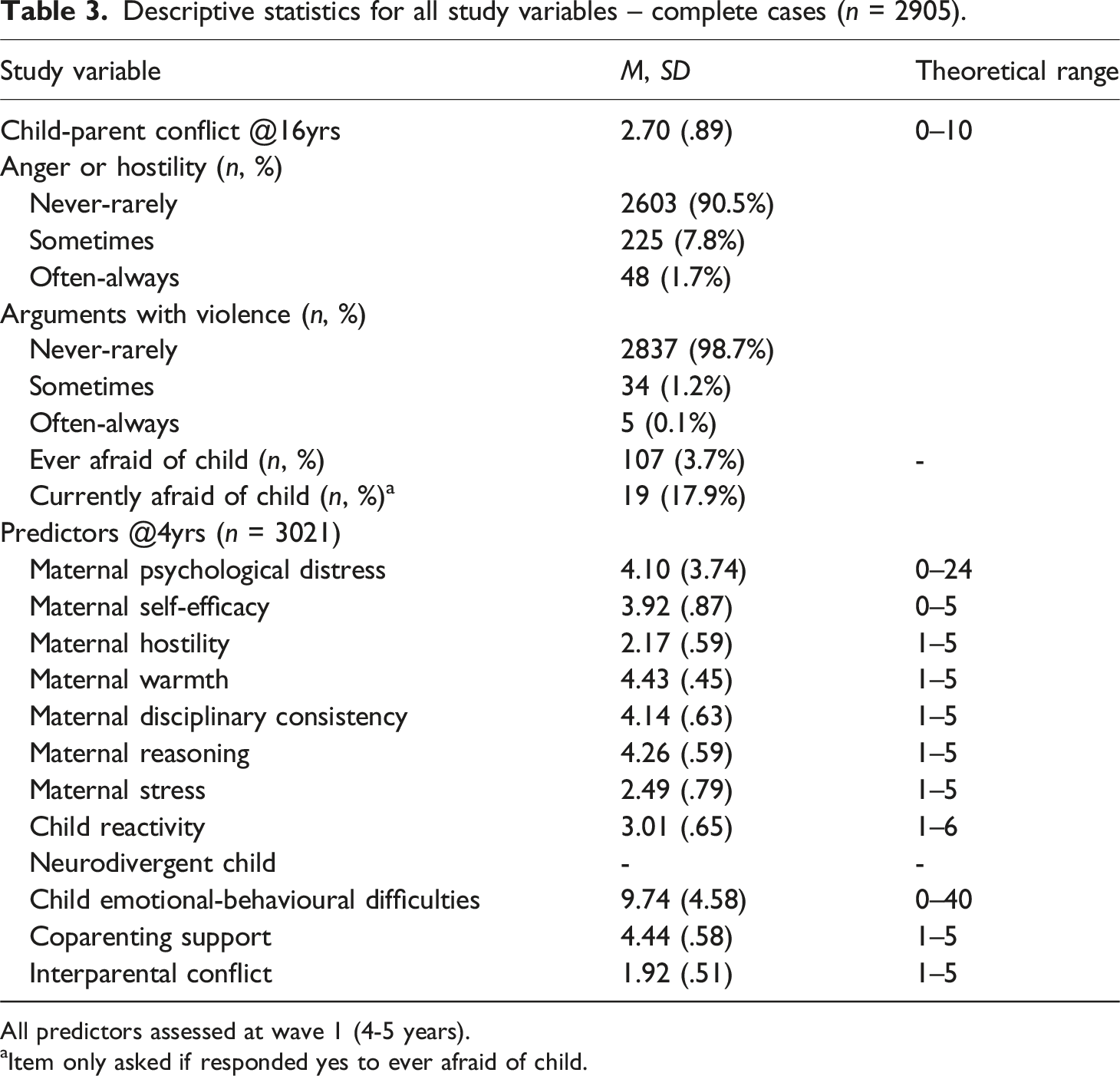
All predictors assessed at wave 1 (4-5 years).
aItem only asked if responded yes to ever afraid of child.
Predictors of child-parent conflict
Multiple Linear Regression analysis examining early childhood (4–5yrs) factors associated with child-parent conflict (16–17yrs), pooled across 50 imputed datasets (N = 1893).
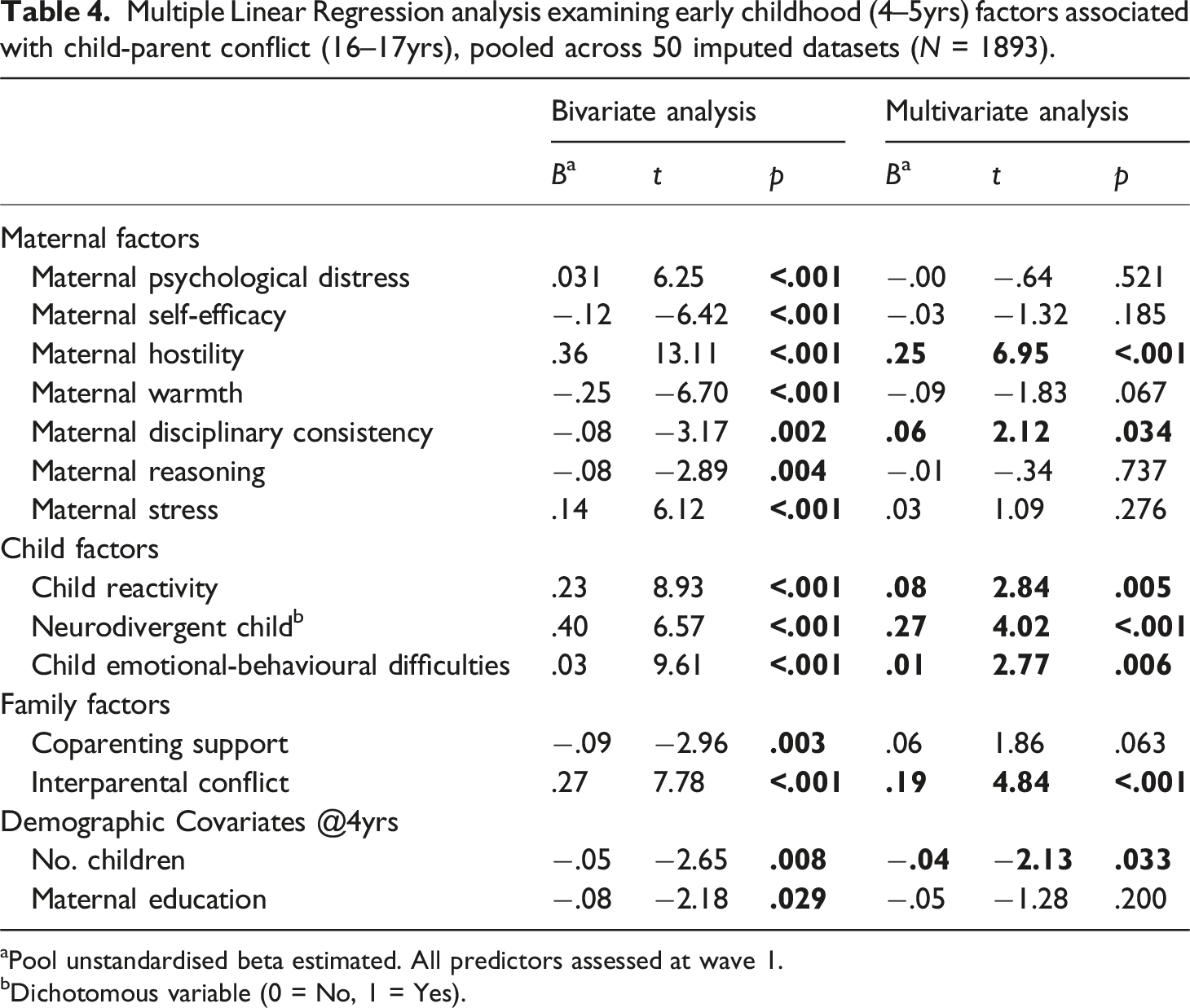
aPool unstandardised beta estimated. All predictors assessed at wave 1.
bDichotomous variable (0 = No, 1 = Yes).
In the adjusted multivariate model, only a subset of variables remained independently associated with child-parent conflict at 16–17 years. In this model, maternal hostility (β = .25, p < .001), maternal disciplinary consistency (β = .06, p = .034) and interparental conflict (β = .19, p < .001) when children were 4–5 years, emerged as robust predictors of child-parent conflict at 16–17 years, even after accounting for the broad ecological context. Child level factors also remained salient, including child neurodivergent status (β = .27, p < .001), child reactivity (β = .08, p = .005), and child emotional-behavioural difficulties (β = .01, p = .006). Number of children in the household remained a significant demographic covariate (β = −.04, p = .033), whereby having less children was associated with greater child-parent conflict.
Discussion
The aims of the current study were to (a) determine the prevalence of hostile child-parent conflict in late adolescence in an Australian population-based sample, and (b) identify mother, child, and family factors in early childhood associated with child-parent conflict in late adolescence. We found that around 8% of mothers reported child-parent conflict in adolescence which involved anger or hostility (more than ‘rarely’), and approximately 1.3% reported that their conflicts involved physical aggression. This prevalence is lower than what was reported by Fitz-Gibbon et al. (2022) for Australian’s aged 16–20 years, however their estimate included conflict tactics such as verbal aggressions which are more common than physical aggression, as well as potential conflict with other family members. In the current study, just under 4% of mothers reported ever being afraid of their child, and of those, approximately 18% reported currently being afraid of their child at 16–17 years. The low prevalence of fear in the sample may suggest that most mothers in our study retain authority in the child-parent dyad, where much substantial child-parent hostility (including physical aggression) occurs in the context of a loss of control and subsequent fear (Harries et al., 2024).
Maternal factors
We found that a range of maternal factors during childhood were associated with hostile child-parent conflict in adolescence. Mothers who reported greater parenting hostility, stress, and distress, as well as lower parental self-efficacy, warmth, and disciplinary reasoning with their young person in early childhood were more likely to experience hostile child-parent conflict in adolescence. Our multivariate model indicated that, of these factors, maternal hostility may be the most important factor (based on the strength of the association). This aligns with evidence that maternal hostility is associated with a range of negative social development outcomes which can increase the likelihood of aggressive behaviours (Khaleque, 2017). This could also be because hostility can have the most direct effect on situations of child-parent conflict, that may then escalate over time and into adolescence. Hostility can instigate conflict (where it is perceived by the child as a threat or irritation) but can also intensify conflict, for example, where the young person is initially non-compliant to a request. In these ways, hostility may feed directly into interactions involving conflict. Factors such as stress or low self-esteem may make the use of hostile or ineffective discipline more likely (Leerkes & Crockenberg, 2002; Martorell & Bugental, 2006), but themselves do not directly cause the dyad to enter a hostile interaction. Similarly, a lack of warmth and less frequent use of positive discipline strategies (like reasoning) may occur within a broader pattern of negative parenting where hostility is central (Wang et al., 2015). Our findings are consistent with studies which demonstrate the negative impact of hostility on the child-parent relationship and child development (Kawabata et al., 2011; McLeod et al., 2007; van Dijk et al., 2020). To this, we add that early hostility could have a lasting impact on child-parent interactions into adolescence, where it is a risk for greater hostile child-parent conflict.
We also found that mothers who were more consistent with discipline in early childhood experienced more child-parent conflict in adolescence. Disciplinary consistency is generally considered positive, in that it can contribute to a broader pattern of responsive parenting (Campi et al., 2024). However, it may be that the consistent application of discipline in the context of high maternal hostility is negative for development. While we did not explicitly test for an interaction, consistent discipline where there is also high maternal hostility may expose the child to greater hostile interactions than where there are inconsistent boundaries enforced. Alternatively, it may be that parents at the high end of consistency lack the flexibility to adjust boundaries as the young persons’ need for autonomy develops, leading to strain and conflict. However, this finding does go against literature which suggests that inconsistent application of boundaries can ‘train’ hostility in the young person (Barry et al., 2009; Patterson, 1986). This may also be due to the nature of our sample, which is representative of the general population, rather than an ‘at-risk’ population of families experiencing substantial hostile conflict (i.e., families characterised by harshness and unpredictability; Conger et al., 2010; Marsh et al., 2020). In at risk families, the young person can gain significant power over the parent over time, who may have less capacity to be consistently responsive, due to fewer support resources (Gülseven et al., 2018). Alternatively, it could be that our initial timepoint (at 4–5 years) represents the early stages of coercive training of the child, where mothers are still able to retain greater control and have not yet withdrawn. At this age, parents have substantial resource in their physical size and cognitive ability relative to the child (Maccoby, 1999; Sherman, 1983), a balance which shifts as the young person becomes older (Selwyn & Meakings, 2016; Straus et al., 2017).
Family factors
Processes within the executive subsystem during childhood impacted the likelihood of hostile child-parent conflict in adolescence in our model. Our results suggest that, in families where there was more interparental conflict during childhood, there is more hostile child-parent conflict in adolescence. Parental helplessness and stress often occur in the context of inter-parental conflict (Huth-Bocks et al., 2016; Krishnakumar & Buehler, 2000), which was consistent with our model. Interparental conflict can spillover into the parent-child dyad (Erel & Burman, 1995; Sherrill et al., 2017), effect caregiver representations and subsequent harsh treatment of the young person (e.g., via ‘spousification’; Harries et al., 2024; Kerig, 2005). Children can also become directly involved in interparental conflicts, broadening these to triadic or child-parent conflicts (Fosco et al., 2014), as well as model and reproduce hostile behaviours (Abbassi & Aslinia, 2010). Further, our model indicated that positive co-parenting support in childhood may reduce the risk of child-parent conflict in adolescence, likely through a ‘buffering’ effect (McRae et al., 2021). However, this was not significant in our multivariate model, perhaps because parents who are often in conflict are likely not highly supportive of one another 1 (Katz & Gottman, 1996), and, like maternal hostility, conflict between parents has the potential to more directly impact on child-parent conflict. Nonetheless, co-parenting support may still play a role in the development of child-parent conflict. There is evidence that co-parenting may interact with other risk factors for child-parent conflict. For example, co-parenting may mediate the effect of partner conflict on child outcomes (Camisasca et al., 2019; Katz & Low, 2004). Future studies should explore if this is also relevant to hostile child-parent conflict.
Child factors
We also found that many child factors were related to hostile child-parent conflict. Specifically, emotional-behavioural difficulties and child reactivity in childhood were both positively associated with hostile child-parent conflict in adolescence. More frequent challenging behaviours from the child may create more opportunity for conflict around discipline and boundary crossing, as well as create stress for mothers (Solem et al., 2011), who may then respond negatively (e.g., with hostility). A child who is more temperamentally reactive may be more likely to push back against disciplinary attempts, particularly if these are negative (Van Zeijl et al., 2007), creating further disciplinary interactions. Over time, this pattern could entrench and become habitual into adolescence. This is especially likely given that emotional and behavioural problems tend to persist from childhood to adolescence, as well as augment into mood disorders (Roza et al., 2003), which themselves are associated with child-parent conflict (Harries et al., 2024). Considering this from a family systems perspective alongside the family factors we observed, it may be that the child’s challenging behaviours and temperament also feed back into the broader family system, exacerbating stress and conflict between parents, or contributing to general household chaos (Marsh et al., 2020), which then impacts on child-parent interactions. However, according to our multivariate models, it could be that the influence of child behavioural factors on child-parent conflict processes may not be as strong as that of the maternal factors (i.e., hostility). This suggests that, when looking to prevent or intervene early with child-parent conflict in adolescence, it may be more important to focus on parenting behaviours during early childhood, rather than the behaviours of the young person. Doing so may create a safer developmental environment and inadvertently reduce child behavioural difficulties and reactivity (which may actually be functional adaptations in a hostile environment), thus reducing both inputs into the development of coercive cycles.
We found that neurodivergence was the strongest childhood correlate of child-parent conflict in adolescence. Family systems where there is substantial interparental conflict and parental hostility can be unpredictable and sometimes chaotic, conversely, neurodivergent young people can have a strong preference for predictability and routine (Goris et al., 2020). Therefore, a ‘controlling’ response to this family environment could be particularly acute in this population (Teague et al., 2017), and may manifest as oppositionality or hostility within conflict. However, this pathway is currently speculative and requires targeted investigation. Parenting a young person with a neurodevelopmental disorder can also present ongoing challenges and stress (Seymour et al., 2013, 2024), which can impact parents capacity for positive parenting (Ooi et al., 2016), as well as the parents’ relationship quality (Chan & Leung, 2020). For example, traits of ASD and ADHD in the young person may increase the risk of parental helplessness (Bozkurt et al., 2019), which is a risk for hostile child-parent conflict (Harries et al., 2024). In the child-parent conflict space, there is emerging consideration of neurodivergence (Holt, 2023) and our results emphasise this as a research imperative. Further studies specific to this population are required to avoid a one-size-fits-all conceptualisation of child-parent conflict, which may obstruct effective and responsive intervention for families of young people with neurodevelopmental conditions.
Strengths, limitations, and future directions
The current study has strength in its longitudinal design and large nationally representative sample of the Australian population. However, there are noteworthy limitations to our findings. First, while the sample was nationally representative, our analyses were not weighted which restricts the generalizability of the findings to the broader population. This was due to the exploratory nature of the study. As noted within the study design, there is an under-representation of diverse family structures, including single-parent and separated families, LGBTQIA + families and families from Aboriginal or Torres Strait Islander and non-English speaking backgrounds. We could also not explore different gender identities. Given the importance of cultural, social, and family dynamics in shaping child-parent conflict, this lack of diversity limits the generalizability of the current findings. The LSAC is a comprehensive study covering many domains of child health and development and their social context, and as such, measures are necessarily brief. Given this, we cannot determine directionality from our measure of hostile child-parent conflict; we do not know whether the child or the parent are the primary drivers of hostile conflict. However, we note that behaviours and outcomes for members of a family unit are highly interdependent (Galovan et al., 2017), and much hostile child-parent conflict in adolescence is mutually hostile and bidirectional (Gallego et al., 2019; Van Doorn et al., 2008). As such, the issue of directionality becomes difficult to model, as well as of less clinical importance. Finally, the internal consistency of some measures (maternal hostility, child reactivity) were acceptable, but less than ideal. These findings should be interpreted with this in mind, though we note that the findings related to these measures were consistent with expectations derived from past research.
Regarding the influence of parent behaviours on child-parent conflict, this study was limited to maternal factors. It was important to focus on maternal factors given that mothers are the most likely to report experiencing child-parent conflict. However, decades of research indicates that mothers and fathers parent differently (Yaffe, 2023), each unique role shaping child behaviour, emotional development, and family dynamics. These differences are also relevant when exploring conflict, as fathers are likely to perceive, engage in, and cope with conflict differently compared to mothers (Gao et al., 2019). Given this, it is important that the experiences of mothers and fathers are investigated separately to further enhance our understanding of how parenting contributes to child-parent conflict. The results from our study are limited to maternal experiences, and future studies should replicate this in a sample of fathers to enhance the applicability of findings to the wider family unit. Additionally, research should also consider exploring the combined impact of co-parenting dynamics on child-parent conflict.
The current study had strength in consideration of variables across the family system. In this way, we have demonstrated the necessity of using a family systems lens to understand the early ecological context that child-parent conflict may develop within. Despite this, child-parent interactions operate within a chronosystem, where they develop and change over time, particularly when both the young person and the parent encounter new developmental stages or milestones (e.g., the transition to adolescence, or the birth of another child). While we have demonstrated the general point that early child-parent interactions and conditions influence the likelihood of conflict over time, our study was limited to investigating factors at a single point in childhood. It is likely that influential factors interact and perhaps change over time. For example, mothers who use hostile disciplinary strategies may start to withdraw from disciplinary interactions as the young person learns to use more coercive strategies in return, and they grow larger and stronger (Harries et al., 2024). Future studies could look at how these factors interact over the full period of childhood, to influence hostile child-parent conflict in adolescence.
Conclusions
Overall, using a longitudinal design over 12 years of child development, this study indicates that the risk of hostile child-parent conflict in late adolescence is increased by factors related to both the mother and the child, as well as factors within the executive subsystem during early childhood. In particular, maternal hostility in early life interactions could have a long-term effect on the parent-child dyad and the nature of interactions in adolescence, particularly where the young person has a neurodevelopmental disorder. These factors may be important set-points or initial inputs into the development of coercive and hostile cycles that escalate and entrench into adolescence. It is important to support mothers to have positive and warm interactions during the early childhood years, perhaps via reducing stress and improving their self-efficacy beliefs about parenting. Such support may be most critical in families where the young person has a neurodevelopmental condition. In addition, supporting parents to improve communication and reduce conflict within their relationship during the early parenting years might help prevent the development of hostile conflict within the child parent relationship in adolescence. Working with parents in these environments could help to prevent the development of hostile interactions with their children into adolescence where harm to the parent-child relationship can negatively impact on the child’s development and functioning in future close relationships.
Supplemental Material
Supplemental Material - Longitudinal associations between mother, child, and family factors in childhood and hostile child-parent conflict in late adolescence
Supplemental Material for Longitudinal associations between mother, child, and family factors in childhood and hostile child-parent conflict in late adolescence by Travis Harries, Monique Seymour, Alison Fogarty, Rebecca Giallo, and Ashlee Curtis in Journal of Social and Personal Relationships
Footnotes
Declaration of conflicting interests
The authors declared no potential conflicts of interest with respect to the research, authorship, and/or publication of this article.
Funding
The authors received no financial support for the research, authorship, and/or publication of this article.
Ethical approval
Ethics approval for LSAC was granted by the Australian Institute of Family Studies Ethics Committee. Approval references can be found here: https://aifs.gov.au/growing-australia/study/ethics. Participants provided informed consent to participate and publish in a manner consistent with the National Statement on Ethical Conduct in Human Research (https://www.nhmrc.gov.au/about-us/publications/national-statement-ethical-conduct-human-research-2023#download). Ethics approval for the Longitudinal Study of Australian Children (LSAC) was granted by the Australian Institute of Family Studies Ethics Committee (ID: 09–05; Soloff et al., 2005).

Data Availability Statement
Supplemental Material
Supplemental material for this article is available online.
Note
References
Supplementary Material
Please find the following supplemental material available below.
For Open Access articles published under a Creative Commons License, all supplemental material carries the same license as the article it is associated with.
For non-Open Access articles published, all supplemental material carries a non-exclusive license, and permission requests for re-use of supplemental material or any part of supplemental material shall be sent directly to the copyright owner as specified in the copyright notice associated with the article.
